WP_Post Object
(
    [ID] => 11150
    [post_author] => 15
    [post_date] => 2026-10-13 12:27:12
    [post_date_gmt] => 2026-10-13 12:27:12
    [post_content] => 

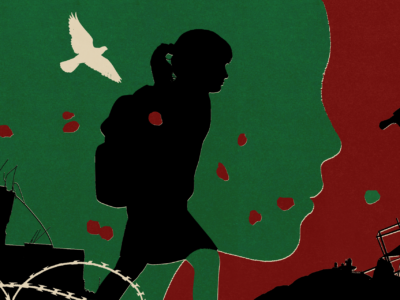
A day in the life of Misk and her Hello Kitty backpack at one of Gaza's makeshift schools.

Amid the ruins of destroyed buildings and the weathered tents that have become home for more than one million displaced people in Deir al-Balah’s camps, 11-year-old Misk walks alongside her classmates, carrying her Hello Kitty school bag. Along the way, she encounters just a few of the human realities of displacement: families searching for water and food; children carrying yellow plastic jerrycans as they take on daily responsibilities far beyond what they should or can.  

But for Misk, this path represents the road to being a student again. She is feeling eager and excited. In her backpack, she carries a couple of things she had been without for some time: a notebook and a pen.

Since 2023, hundreds of thousands of children in Gaza have lost access to formal education amid the ongoing genocide and displacement of Palestinians. Israeli military operations have destroyed and continue to destroy many school buildings, while others have been converted into shelters for displaced families. Temporary learning spaces began popping up in early 2025 as teachers and volunteers transformed displacement tents into classrooms, adding desks, chairs, and blackboards so children could return to learning despite the ongoing violence. These spaces have offered more than a place to study: They have given children a chance to regain a part of their daily routines, a community of peers, and something resembling the normal life they'd lost. 

Misk was in the third grade in May 2024 when Israel Defense Forces (IDF) issued evacuation orders—paper slips that were airdropped over entire neighborhoods ordering people to vacate their homes and leave town. In southern Gaza, her city of Rafah  welcomed over a million displaced residents overnight, while Misk and her family ended up in the center of the Gaza Strip at Deir al-Balah, where they still share a single small room in her relative's house—a room where they all sleep, eat, study, and work, in circumstances that have changed nearly every part of their daily lives. Amidst all this, Misk’s new school at the Deir al-Balah displacement camp, while temporary, has become a refuge. 

On a recent September day, Misk sits with eight other children inside a small room. There is no school gate, no morning assembly, and no bell marking the beginning or end of their lesson. Yet children still arrive at 9 a.m., with whatever basic supplies they can find. Some carry old notebooks or loose papers, and the few pens they have. They sit at simple wooden desks facing the board, enthusiastically raising their hands as their teachers—sisters Jumanah, 24, and Shahd Al-Naouq, 22—guide them through lessons in Arabic, English, and mathematics. The scene resembles an ordinary classroom, where children listen, answer questions, and learn together. But instead of concrete walls and a permanent building, their class takes place in a single tent inside a displacement camp.

This one-room school did not start from big plans or with help from a fully-funded institution. It started with a question. Last year, Jumanah was an ambitious university graduate with an accounting degree preparing to begin her career. But the war had changed that path. Job opportunities were scarce and starting a career in accounting seemed increasingly out of reach as she was forced to navigate the daily challenges of an uncertain future.

Then, earlier this year, Jumanah visited a friend whose relatives were hosting a displaced family. There, she noticed a young girl drawing. She could not stay focused for long. Every so often, the girl’s mother would ask her to help wash clothes by hand or with other chores, and she would get up. After finishing, she would return to her pen and paper and continue drawing.

“When I saw Misk trying to draw despite everything happening around her, I thought we needed to do something,” Jumanah tells me. “I felt that children had not only lost their schools; they had lost a part of their daily lives.” 

She thought about the children living in the area and in the nearby displacement camps, probably tens of thousands of them, who were growing up without education or a place to return to after losing their homes. Then came her question: If children could no longer safely reach their school due to displacement, long distances, and Israeli bombardments, what if their school came to them? 

Her sister, Shahd, agreed to be a part of it.  

“We did not have a school or big resources, but we had children who wanted to learn. I said, ‘Let’s start with what we have.’ Even if the place is simple, the important thing is that they have a place to come back to,” Shahd says.

When they first opened the school, Jumanah welcomed their students inside their Deir al-Balah home, a small structure made of corrugated metal. She put a single table in a room and bought a small chalk and marker board. Shahd, an English literature student at the Islamic University of Gaza, joined her, and together the sisters spoke to their neighbors and asked for small donations to help pay for the necessary supplies. Before long, children from the neighborhood and the nearby camps came. Misk was among the first to join.

At that point, there were no more than ten students from six to 12 years old. Jumanah took on most of the responsibility for organizing the space and putting together lessons on basic Arabic, math, and other topics. Shahd, meanwhile, taught the children letters and numbers in English. 

At first, their goal was not to complete a full school year or make up for everything the children had lost during the past three years of war. “The most important thing for us was to make children connected to learning and make them feel that there was still a place waiting for them every day,” Jumanah says. 

As more families learned about the school, more children began attending. Within four months, Jumanah and Shahd were able to move to a newly designated area in their neighborhood, where not one but three rows of tents were set up as classrooms, allowing them to welcome even more children. They have since been joined by additional teachers, who also volunteer their time to teach the students.

A few simple wooden desks and learning materials were added, including notebooks, textbooks, pens, and another blackboard. Children sat in rows next to one another, with the chalkboard at one end, like a traditional classroom. It became known as the Al-Itqan (Excellence) School.

Al-Itqan has provided a refuge for children, but it is not separate from the reality of the camp—it is at its heart. Daily life continues outside its main entrance, as people push water carts between the tents, walking back and forth as they try to secure their basic needs. The children, too, also carry different stories with them—stories of the years they've lived without access to education.

For Misk, returning to the classroom has meant more than just the opportunity to sit in front of a book or complete an exercise. It has also been a chance to be with other children who have lived through the same experience. It has meant she can finally build new friendships; that once again, she can belong.

“I was happy,” Misk says about the chance to return to school again. “I felt like I was living the way I used to. I had a place to go, meet other children, and learn again.”

The school has offered something similar to other children, too, while still presenting challenges shaped by the realities of life in the camp. There is a twelve-year-old, Farah Al-Harazin, who always sits in the front, not because she chooses to, but because she needs to be close enough to see what’s written on the board. Due to limited access to medical care, she hasn't yet been able to get treatment for her weak eyesight. Still, Farah is now in a space that understands her needs and has allowed her to participate with the other children.

Other students, like nine-year-old Yousef and his seven-year-old sister Aseel, were regular students until Shahd noticed that Yousef had been absent for several days.

“I asked Aseel, ‘Where is Yousef? Why hasn’t he come for a few days?’" Shahd says. That's when Shahd learned that every morning he had to fetch water for his family living in the camp.

There is also Issa, who always comes to the classroom with an empty pot inside his backpack. The pot is his way of providing food for his family: Classes begin at 9 a.m., but every day, Issa leaves to the community kitchen (takiya) to fill the pot with whatever food is available at 10 a.m. He then brings the pot home before returning to class.

Among the children is also Ahmad Nasrallah, who lives with a kidney condition, making everyday life especially difficult. The stifling heat, poor ventilation, and lack of electricity in the classroom made the space feel exhausting and suffocating for him. During lessons, Ahmad often struggles to breathe and finds it difficult to concentrate. 

Earlier this year, Jumanah tried to move him to a better spot, where some air could reach him without him having to walk out of the classroom. “Sometimes I felt that I was not only their teacher," Jumanah tells me. "I felt like I was a mother to them. Every child has their own circumstances.” 

What the sisters-turned-teachers have witnessed in their students are not isolated cases, happening only in Al-Itqan. According to the United Nations and education organizations like Save the Children, there are around 700,000 children aged four to 17 who have missed nearly three academic years of in-person learning, while around 93% of schools in Gaza require major repairs or reconstruction.

But these numbers do not show the small ways that conflict and dispossession continue to shape the lives of children.

Three years ago, before the war, Misk’s Hello Kitty backpack was simply part of her daily journey to school. After losing her family home, she used it to carry the few clothes and personal belongings she could take with her. Today, she walks between the tents with the same backpack, carrying a notebook, a pen, and a bottle of water. The makeshift school that started with eight children has grown, too, and now welcomes nearly 100 students across its three tent classrooms.

After more than two years away from her old school, Misk now attends classes every day, with friends her own age. 

Amidst so much, it's like she is living part of her childhood again.

[post_title] => The Things Children Carry [post_excerpt] => A day in the life of Misk and her Hello Kitty backpack at one of Gaza's makeshift schools. [post_status] => publish [comment_status] => closed [ping_status] => closed [post_password] => [post_name] => gaza-palestine-makeshift-schools-deir-al-balah-camp [to_ping] => [pinged] => [post_modified] => 2026-10-13 12:30:40 [post_modified_gmt] => 2026-10-13 12:30:40 [post_content_filtered] => [post_parent] => 0 [guid] => https://conversationalist.org/?p=11150 [menu_order] => 0 [post_type] => post [post_mime_type] => [comment_count] => 0 [filter] => raw )
An illustration of the silhouette of a girl walking through an abstract background with her backpack.

The Things Children Carry

WP_Post Object
(
    [ID] => 11126
    [post_author] => 15
    [post_date] => 2026-10-08 20:19:47
    [post_date_gmt] => 2026-10-08 20:19:47
    [post_content] => 

Why you should pay attention to Alabama's Statewide Amendment 3 this election.

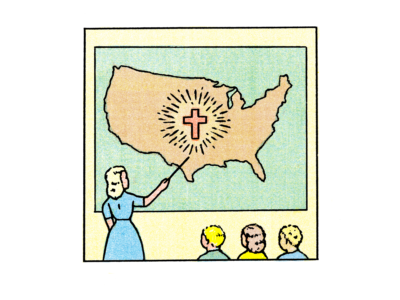
On the ballot in Alabama this November is a proposed constitutional amendment to policies on prayer and the Pledge of Allegiance in public K–12 schools.

Statewide Amendment 3 would compel local school boards to adopt rules requiring the Pledge of Allegiance at the beginning of each school day and allow student-initiated and student-led prayer. However, the amendment would not require students to participate in either the Pledge or prayer. If passed, students would have the right to opt out based on their beliefs and would be allowed to leave the classroom during either. 

On February 5, 2026, the U.S. Department of Education issued updated Guidance on Constitutionally Protected Prayer and Religious Expression in Public Elementary and Secondary Schools, replacing previous guidelines from 2023. The update states that students, teachers, and school employees retain their constitutional rights to freedom of speech and expression, which includes engaging in personal, visible prayer. Although the United States Supreme Court previously determined that public schools and their employees (including teachers, coaches, and principals) cannot lead, organize, prescribe, or endorse prayer or religious exercises during school activities, Alabama has leaned into the Department of Education’s newest recommendations, which have created a voluntary religious expression loophole.   

Back in May, the Alabama legislature approved the proposed amendment by attempting to explicitly enshrine student-led prayer into their state constitution to shield it from future legal challenges. Since April, Alabama law has required public K-12 schools to conduct the Pledge of Allegiance at the start of each school day. Additionally, students are permitted to “pray or engage in religious activities or religious expression before, during, and after the school day.” 

The bill was introduced by Republican State Representative Reed Ingram, who says the United States was founded on Christian principles. He also says that today, there are families who don’t have time to implement faith-based activities, like prayer at home, because they are too busy working. (Though he notes he doesn’t personally know a family struggling with this.)  

Both Republicans and Democrats  in the Alabama House of Representatives and Senate have expressed support for the proposal.

“This is an opportunity, not mandatory; it's a voluntary basis, student-led only,” Ingram explains. “Nothing is going over the PA, and it’s nothing that’s going to be led by a teacher or principal. The student only prays if they stand up and tell the teacher they want to pray this morning, and the class will have that option.” 

Ingham adds that student-led prayer can be led by students of all religions and faiths, not limited to just Christianity, but that’s not clearly written into the bill. 

Following the 2024 presidential election, Baptist News Global reported that the conservative thinktank, the Heritage Foundation, does not propose a mandatory federal school prayer program. However, its conservative framework aligns with efforts like this one to expand and protect individual religious expression in public schools. (The Heritage Foundation wrote the infamous Project 2025, a conservative blueprint to transform the federal government and social structures of the country at large.)

Other people of fath, including Christians, are against implementing this type of bill into state law, like Rev. Julie Conrady, Minister at Unitarian Universalist Church of Birmingham and Tuscaloosa. She says that this kind of amendment imposes or forces a religion onto individuals who may not believe in the faith being practiced during student-led prayer. 

“Alabama has plenty of churches. If folks are not getting what they need on Sunday morning, Wednesday night, and all the other opportunities they have for religious freedom and expression during the week, then they need to choose a different school for their children,” Conrady says. “Because Alabama public schools should remain available for every student to be themselves, without being coerced to subjective practices, including this bill.” 

About 25% of Alabamians do not identify with Christianity, according to a  Pew Research report from 2025. Conrady says this amendment  dismisses that figure.

“The Universalist Church is included in the fourth of [Alabamians of other faiths], which also includes Jewish, Muslim, Buddhist, Hindu, nones, and the atheist, and the humanist,”  she says. 

The minister adds she’s been talking with other religious leaders who oppose this type of bill in other red states, and they are planning to take action up to the Supreme Court if the bill passes in November. 

“There will never be a separation between church and state,” says Zareen Dodwad-Khan, 46, who lives in Leeds, Alabama. Khan is Muslim and has three kids in public schools. “If the majority of people want prayer in school, I’m not gonna fight it and say I'm totally against it, because I’m a minority. And I teach my kids about their religion and identity at home.” 

However, Khan also says she will likely vote “no” for the amendment in November. 

Christy Johnson, 43, a mother of three kids who also lives in Leeds, says the amendment is all part of the growing Christian nationalist movement and MAGA. 

“I’m a Christian, who believes in Jesus Christ. We pray every night before dinner. It’s like church, politics, and school have all been mashed together and rolled into one. Instead of the way it was intended to be, which is all separate things and separate parts of our lives,  they’re trying to make it all part of the same,” she says.  “As a parent and a Chrisitian, I think that’s very concerning, and even for people who don’t believe the same way I do.”

Alabama voters will decide if they agree on November 3, 2026.

[post_title] => "There Will Never Be a Separation of Church and State" [post_excerpt] => Why you should pay attention to Alabama's Statewide Amendment 3 this election. [post_status] => publish [comment_status] => closed [ping_status] => closed [post_password] => [post_name] => 2026-election-united-states-midterms-down-ballot-alabama-statewide-amendment-3-pledge-of-allegiance-student-led-prayer-church-religion [to_ping] => [pinged] => [post_modified] => 2026-10-09 22:25:12 [post_modified_gmt] => 2026-10-09 22:25:12 [post_content_filtered] => [post_parent] => 0 [guid] => https://conversationalist.org/?p=11126 [menu_order] => 0 [post_type] => post [post_mime_type] => [comment_count] => 0 [filter] => raw )
An illustration of a teacher pointing to a map of the United States with a cross in the middle and three children looking on.

“There Will Never Be a Separation of Church and State”

WP_Post Object
(
    [ID] => 10823
    [post_author] => 15
    [post_date] => 2026-08-03 15:56:25
    [post_date_gmt] => 2026-08-03 15:56:25
    [post_content] => 

Beyond the classroom and in real life, a teacher-student friendship can be one of the best and most enduring kinds there is.

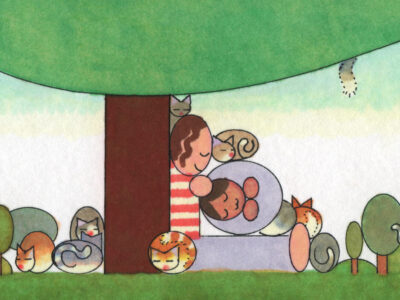
A card arrived in the mail last week, my name written in a cursive I know well. It had been a couple of weeks since her last letter, and I eagerly sat down on my couch to read it. She told me how everyone at home, “both human and animal,” was doing well, how many cats she was currently fostering (thirteen), and yet, that she didn’t mind the label that came with it. “The Crazy Cat Lady is definitely somebody I identify with,” she wrote, and of course, that made me giggle. Her playful way with words paired with self-deprecation have always been uniquely hers. This I’ve known since long before we became friends.

My penpal and I met one morning more than three decades ago, when I walked to the end of a high school hallway full of lockers and into her classroom. I can only imagine how confused I looked to everyone on that first day of school: Shy and slightly awkward, I spoke no English and was dressed very differently from my peers. I’d only landed in that small New Jersey town a couple of weeks prior, from my home in Caracas, Venezuela. I was fourteen years old, and had attended the same school for most of my life. Suddenly, I was one of the “new kids,” and only one of three in the high school who spoke Spanish, who had the great luck of being assigned to Mrs. Boutin’s English-as-a-Second-Language (ESL) class.

I don’t remember her being a Cat Lady in those years. In fact, in one of her many letters this year, she told me she used to be a dog person until she’d helped a neighbor trap, neuter, and return a bunch of feral cats, then decided to keep doing it. She found the work humbling. It made her feel useful. I guess it wasn’t much different than teaching English to a bunch of deer-in-the-headlights scared and somewhat feral adolescents who had come from all walks of life and many corners of the world, including Vietnam, Argentina, India, and China, in my class alone. Some of us had experienced trauma, others came from families seeking work, but no matter how we ended up in that New Jersey high school, every one of us took refuge in her classroom. I’d like to think we all needed it.

We all looked up to Mrs. Boutin because she was patient, laughing off our teenage drama and championing us as we uttered our very first English words, thick accents and all. Like many of my classmates, I’d often swing by after the school bell rang just to talk. She would ask me about my old life. Did I miss it? Would I get to visit home again, and if so, what would be on the top of my list of things to do? Who did I most want to see? She listened intently to my melancholy answers like few others did. It kept me emotionally present at a time in my life when it would have been much easier to push my complex feelings under the rug and simply do whatever I could to fit in (which I did anyway).

Within a year, I was able to defend myself in English; in another three years, I graduated and left for college. I discovered journalism, moved around—within the U.S. and abroad—got married, and, almost twenty years after leaving high school, had a kid. Now that I think about it, becoming a parent must have prompted my search for her: caring for a new life made me appreciate the old ones all the more. I found her through social media. When she responded a day or two later, she insisted that I call her by her first name: Juanita.

In Sister Outsider, poet and essayist Audre Lorde says that being a teacher means learning to talk to students to get “through to them” so that “their own processes would start.” She likens it to a fire, something you could “literally incite, like a riot." By the time I found Juanita again in 2014, I’d been teaching storytelling for a few years, trying my best to incite my students like she had me. Until then, I hadn’t realized how teaching could be political, both an act of kindness and of rebellion. How, beyond the classroom and in real life, a teacher-student friendship could be one of the best and most enduring kinds there is.

After a few email exchanges, we realized snail mail was much better for us both. Juanita would often finish her letters with an invitation to visit until, four years ago, I decided to accept and travel to Mississippi, where she lives with her husband, dog, and a rotating crew of at least a dozen former street cats she’s trying to find homes for. She was the same Juanita I remembered—with her Puerto Rican Spanglish, her hair short and her skirts long—except both she and I were a few decades older. She insisted I stay at their home and sleep in a hot pink guestroom she’d dubbed the “Pepto-Bismol.” That first night, I dreamt I was back in high school; it was a good dream. 

Even though she’s long retired, Juanita still works most weekdays as a volunteer for local trap, neuter, and release efforts, which are few and far between in Mississippi. The morning after I arrived, I came along as she drove us around town to all the spots where she knew there were feral cat populations. I watched as she counted how many cats were in each, gave them food and water, and took note of any new litters or sick animals. Most of the cats scampered away as soon as they saw me. But they knew and trusted Juanita, just like the workers we ran into at the University of Mississippi campus, and the man at the gas station where she and I grabbed “the best fried chicken on a stick in all of Mississippi” after her volunteer shift. And just like me and my fellow classmates who used to seek her out after school. 

I left Mississippi feeling grateful and whole. In just three days, we’d visited three art museums, ate obscene amounts of delicious fried food, went on long sightseeing drives, discussed religion and politics and race, and visited her friends who seemed delighted to hear that I, Juanita’s former high school student, was now her friend, too.

Sometimes I think the term “friend” doesn’t quite do our relationship justice, though. Not because of our age difference or the deep respect I continue to feel for her as my former teacher. Juanita knows me like a parent; her gentle yet no-nonsense life advice has always reminded me of my late grandmother whose Spanish-language proverbs were just as funny and true. But she also continues to be a source of comfort, like she was many years ago. “Be at peace,” she texted recently, when I told her I needed to put our beloved cat to sleep. “You will know what to do as each moment arrives.” She was right. 

Can a fairy godmother be a “friend”? Absolutely. We are lucky to find (and keep) even one such friend over the course of a life, and I believe Juanita is mine. Her letters arrive in the mail with printed out poems or books I haven’t yet read that seem to address my moods in ways that sometimes spook me. Like the Mary Oliver poem, “How Would You Live Then?,”  which she’d cut down to a four-by-five piece of paper and slipped inside a card that arrived last week. “What if the mockingbird came into the house with you and became your advisor?” its third line read, which I happened to scan early one evening while I sat on my bed, listening to our resident mockingbird sing in the front yard. 

I am still drafting my latest snail mail response to her, in our now-customary English mixed in with Spanish, following our thread, asking about summers in Mississippi, her garden, and her foster cats. I am also planning another visit, already knowing which room she’ll insist I stay in when she replies, in that playful way that’s uniquely hers, and never fails to make me laugh.

[post_title] => Friendship as a Second Language [post_excerpt] => Beyond the classroom and in real life, a teacher-student friendship can be one of the best and most enduring kinds there is. [post_status] => publish [comment_status] => closed [ping_status] => closed [post_password] => [post_name] => old-friends-adult-friendship-esl-english-second-language-teacher-student [to_ping] => [pinged] => [post_modified] => 2026-08-03 15:56:27 [post_modified_gmt] => 2026-08-03 15:56:27 [post_content_filtered] => [post_parent] => 0 [guid] => https://conversationalist.org/?p=10823 [menu_order] => 0 [post_type] => post [post_mime_type] => [comment_count] => 0 [filter] => raw )
An illustration of two people sitting under a tree, surrounded by cats curled up napping.

Friendship as a Second Language