WP_Post Object
(
    [ID] => 1181
    [post_author] => 2
    [post_date] => 2019-06-28 16:16:18
    [post_date_gmt] => 2019-06-28 16:16:18
    [post_content] => Even peaceful, prosperous Canada is not immune from the populism that thrives on tribal anxiety and prejudice. 

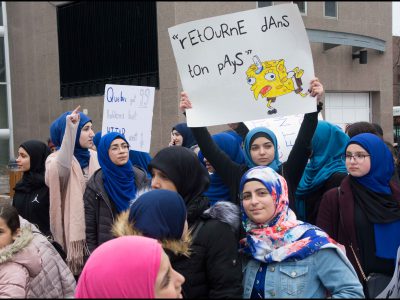
Last week Quebec, Canada’s second most populous province, passed a law that bans public employees from wearing religious symbols at work. Known as Bill 21, the law would force public school teachers, police officers, Crown attorneys, and judges who wear hijabs, turbans, or yarmulkes, to choose between their religion and their profession.

Quebec is not the only democracy to enforce this type of ban in the name of separation of religion and state: France bans Muslim women from wearing a burqini to the beach or a headscarf to teach in public schools; and Turkish law prevented women who wore the hijab from working as public servants or even attending university until 2013.

But Canada’s international reputation is, not unjustifiably, one of tolerance and acceptance. The federal government has pursued a policy of multiculturalism since 1971, and more recently Prime Minister Justin Trudeau set a widely lauded example when he opened Canada’s doors to over 25,000 Syrian refugees.

Across Canada, Quebec’s new law is controversial at best. Legal scholars have suggested that it violates Canada’s Charter of Rights and Freedoms, while the city of Brampton in the neighboring province of Ontario has voted to support a legal challenge against the law. Meanwhile, the vast majority of Quebecois — beyond the multicultural city of Montreal — approve of the new law. 

Why do Quebec attitudes toward multiculturalism and religious practice differ so starkly from those held in the rest of Canada? The complex answer is found in Quebec’s post-World War Two history.

During the 1960s Quebec underwent a radical social transformation known as the Quiet Revolution. In a single decade, the once impoverished and largely agrarian province transformed itself from a society dominated and controlled by the Catholic church, which overwhelmingly dictated public mores and laws, to a modern, staunchly secular province that rejected religion and its institutional power. Between 1960 and 1970, Quebec’s birth rate declined from Canada’s highest to its lowest; and its once heavily attended churches are now used as restaurants, gyms, and performance spaces.

The process of secularization applied to all of the province’s public institutions, from its schools and universities to its hospitals and welfare system. It was accompanied by a resurgent national identity that rested on the twin pillars of the French language and secularism. Quebec is today a prosperous middle class society with a comprehensive social welfare system administered by the province rather than by the Church.

Sixty years later, many in Quebec see Bill 21 as the next necessary step in that evolution and an extension of that same social project. But nothing could be further from the truth.

The Quiet Revolution was a peaceful social movement that forever altered Quebec’s political and social landscape. It allowed the French-speaking majority to establish its primacy on the political, social, economic and cultural stage at both the provincial and the federal level. But the current movement is not about promoting the rights of the majority. Rather, by seeking to establish secularism as part of Quebec’s national identity, the provincial government is sacrificing the rights of the province’s minorities. A movement that was once about positive self-affirmation is now simply a reactionary rejection of others.

Ignoring its critics and refusing to debate, the government’s center-right Coalition Avenir Quebec (CAQ), led by Premier François Legault, rammed Bill 21 through the legislature by preemptively invoking Section 33 of the Canadian Charter of Rights and Freedoms, which is a rarely-used override power often referred to as the “notwithstanding” clause. In other words, the CAQ circumvented both the Quebec and Canadian Charter of Rights and Freedoms, thus preventing the new law from being struck down in court for the next five years. It also shut down debate by invoking closure, and by introducing last-minute amendments that outline surveillance powers for the ministry and rules of enforcement.

The secularism championed by Quebec’s Quiet Revolution stemmed from a deep-rooted and understandable desire by the French-speaking majority to rid itself of the Catholic Church’s asphyxiating control over the government and reaffirm its proud transformation into a modern, secular French-speaking state. In sharp contrast, Bill 21, a far more restrictive form of secularism imported from France, is primarily motivated by Quebecers’ antipathy for religion — primarily non-Christian faiths. This is not religious neutrality: it is religious persecution. The overwhelmingly white French speakers of Quebec are succumbing to anti-Muslim prejudice.

The populist CAQ tapped into this prejudice during the November 2018 election campaign; it now bases many of its legislative decisions on people’s fears rather than on facts.

Bill 21 is a response to the zeitgeist. The fear of Muslims that started with 9/11 spread to Quebec, bringing with it the impression that the government was making too many concessions to religious minorities. In 2006, Quebec created a special commission to study the “reasonable accommodation” of cultural minorities’ religious practices, in response to the perception that religion was making a comeback in the public sphere. In 2013, the Parti Quebecois, the nationalist party that ascended to power on the back of the Quiet Revolution in the mid-1970s, attempted to implement their questionably named Charter of Quebec Values, which sought to ban “ostentatious” religious symbols. The initiative failed miserably and the party was defeated by the Liberals. In 2015, Quebec’s Liberal government introduced their own version of secularism in Bill 62, which would prevent Muslim women wearing a burqa or a niqab from receiving government services. That, too, failed.

In 2019, Premier Legault’s government decided to circumvent the democratic process and put an end to long-standing debates on how to accommodate cultural minorities, by basically not bothering to accommodate them at all. His party’s goal is a homogeneous public face.

Legault, who denies that systemic racism or Islamophobia exist in Quebec, readily admitted in an interview with Radio Canada, Canada’s French-language public broadcaster, that Bill 21 “was a concession to people who are a little racist and don’t want to see religious symbols anywhere in public.” In a follow-up televised interview with the English-language CBC, Legault side-stepped the question of whether he felt empathy for a public school teacher who would have to remove her hijab if she wanted to keep her job. 

Exclusionary populism is defined by pandering to irrational fears and “solving” non-existent problems. Quebec has seen no incidents of religious proselytism or registered any complaint of bias by a public servant wearing a visible religious symbol. And yet hate crimes against Muslims have increased. Only three years ago, Alexandre Bissonnette entered a Quebec City mosque and gunned down six worshippers. 

In a brazen display of hypocrisy, the same Quebec government that demands concessions from people who wear visible religious signs has decided that schools and hospitals will not have to remove the crucifixes from their walls because they’re classified as “heritage” items. Private schools, most of which are Christian, are also exempt from Bill 21. In the meantime, a crucifix still hangs on the walls of the National Assembly and most schools and city streets are still named after Christian saints. 

Despite the CAQ’s insistence that the new law is meant to further Quebec’s commitment to secularism, a recent poll clearly points to prejudice against Muslims as the main motivator. Numerous French-language columnists and TV shows routinely discuss the “Muslim invasion” and a need for Quebecers to reassert themselves “before its too late.”

Meanwhile, Quebec’s largest French-language school board has announced that it will not apply the religious symbols law until it studies it further. The English School Board of Montreal has also said it will not comply with the law, although the government insists that it will not accept any delays. Civil liberties and Muslim groups have already vowed to challenge the bill and have filed an injunction in Quebec Superior Court, where a hearing is scheduled for July.

Bill 21 might feel like a win for the Legault government and its supporters, but it has created a divisive and contentious social climate. The legislation has been met with many legal challenges and by stinging criticism around the world. It could lead to a brain drain, as people who feel unwelcome in Quebec decide to live elsewhere. The CAQ might soon discover this “win” is more akin to a smugly defiant Pyrrhic victory.

In many ways, the legislation is an unfortunate manifestation of increasing concerns over immigration and its impact on Quebec’s national identity. But populism, which often seeks to provide simplistic solutions to complex problems and encroaching fears, is all the rage these days and certainly not unique to Quebec. From Brexit in the U.K., to The League in Italy, to Trumpism in the U.S., to Marine Le Pen in France, homogenous majorities struggle to come to terms with increasing diversity and religious plurality. In a 2005 opinion piece for The Times, Salman Rushdie writes:

In the age of mass migration and the internet, cultural plurality is an irreversible fact. Like it or dislike it, it’s where we live, and the dream of a pure monoculture is at best an unattainable, nostalgic fantasy and at worst a life-threatening menace.

The shifting relationship between nationalism, religion, and secularism continues to inform current debates about Quebec’s identity. Unfortunately, the deep-seated anxiety French-speaking Quebecers feel about their demographic future has caused it to justify exercising the same dogmatic social control on people’s appearance and way of life that, ironically, the Church once held. [post_title] => In Quebec, a new law forces minorities to choose between their religion and their profession [post_excerpt] => Despite the government' insistence that the new law is meant to further Quebec’s commitment to secularism, a recent poll clearly points to prejudice against Muslims as the main motivator. [post_status] => publish [comment_status] => open [ping_status] => open [post_password] => [post_name] => in-quebec-a-new-law-forces-minorities-to-choose-between-their-religion-and-their-profession [to_ping] => [pinged] => [post_modified] => 2026-08-07 15:59:52 [post_modified_gmt] => 2026-08-07 15:59:52 [post_content_filtered] => [post_parent] => 0 [guid] => https://conversationalist.org/?p=1181 [menu_order] => 317 [post_type] => post [post_mime_type] => [comment_count] => 0 [filter] => raw )
In Quebec, a new law forces minorities to choose between their religion and their profession

WP_Post Object
(
    [ID] => 771
    [post_author] => 11
    [post_date] => 2019-03-29 15:21:53
    [post_date_gmt] => 2019-03-29 15:21:53
    [post_content] => While the world praises Prime Minister Jacinda Ardren and the people of New Zealand for their compassionate, inclusive response to the Christchurch mosque attack, a more complex and nuanced conversation about the flaws in their society is taking place at home 
(with contributions from Brannavan Gnanalingam, Laura O’Connell-Rapira, Lamia Imam, and Jess Berentson-Shaw)
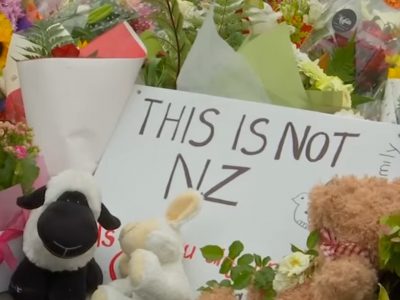
The world has been riveted by New Zealand’s response to the terror attack committed on March 16 by a white nationalist, who murdered 50 Muslims attending Friday prayers at two Christchurch mosques. Prime Minister Jacinda Ardren’s response, from her “they are us” to her insistence that she will not say the name of the attacker, has been heralded as a new standard in how to respond to such events. Meanwhile the public reaction — with New Zealanders gathering spontaneously in their thousands to stand in silent vigil around mosques all over the country for the first Friday prayers after the attack, has been praised as an example of compassion and tolerance. But in New Zealand, the public conversation about our response to this attack and what enabled this to take place in our country is more complex. Many New Zealanders have been challenged by what appear to be two mutually exclusive stories about who we are, as individuals and as a nation, in the wake of these attacks. On the one hand, our Prime Minister rapidly assured us and the world that this attack was an abomination against the values of tolerance and inclusiveness that we as a nation hold dear. In her first public statement after the attack, Ardern was unequivocal: the person who carried out the massacre was not ‘us’. Many New Zealanders were more than ready to believe her, and to identify with Ardern as a representation of who we really are — compassionate, empathetic, inclusive. Resolute in the face of hatred and terrorism. But there is another story being told in these days of grief and reckoning. It’s the story of Muslim New Zealander Lamia Imam’s experiences as a student in Christchurch, learning to stomach racism because ‘it wasn’t a big deal.’ “When white nationalists were congregating in Christchurch I was alarmed but let it go because ‘it is their country and they can choose to hate people'," she said. Anjum Rahman of the Islamic Women’s Council of New Zealand has written about the lengths her group went to, over five years and two governments, to draw attention to the growing threat of anti-Islamic and racist activity in New Zealand.

"We begged and pleaded, we demanded. We knocked on every door we could. … We told them about our concerns over the rise of vitriol and the rise of the alt-right in New Zealand. We asked them what resources were being put in to monitoring alt-right groups."

So which is it? Is New Zealand a country, as our prime minister has asserted, in which there is no place for the ideologies espoused by the Christchurch mosque terrorist? Or are we a country in which Islamophobia and racist hatred has been directed towards Muslim women for years, with little apparent action from our government? The mosque massacre has forced many New Zealanders to face this gap between who we want to believe we are and who we actually are.

A tale of two New Zealands

It’s the gap between the New Zealand that stood in silence outside mosques all over the country as our national radio station played the Islamic call to prayer, and the New Zealand that provides a man who compared immigrants to a snake with one of the largest media audiences in the country. It’s the gap between the New Zealand in which thousands of people stood together at vigils over the past two weeks to sing traditional Māori songs of peace, lament and love, and the New Zealand in which people regularly complain about te reo Māori — an official language of our country — being spoken on public radio, or taught in our schools. Some commentators in New Zealand have responded defensively to these competing stories, decrying it as a ‘narrative of self-loathing that wants us to think the worst of ourselves’. As one writer put it, we have to choose whether the true version of our country was to be represented by ‘a few misanthropic cranks who haven't yet got their heads around the new multicultural New Zealand, or the countless thousands of New Zealanders who attended vigils, donated money or quietly grieved at home for fellow citizens who happen to be Muslim’. But perhaps both these things can be true. For many New Zealanders, this tension has always been apparent, as has the fact that racism in New Zealand exists well beyond ‘a few misanthropic cranks’. New Zealand lawyer and writer Brannavan Gnanalingam, who was born in Sri Lanka, says that growing up, he thought Aotearoa (the Maori name for New Zealand) had a curious form of racism.

"Most people on a day-to-day basis were generally friendly to your face, but also subscribed to racist narratives that meant structural racism got embedded, particularly towards Māori. It meant we put up with casual racist jokes from friends and colleagues or faced racism from complete strangers without warning. The thing was, the discursive frameworks used in all of those 'light' situations were the same discursive frameworks used by those with far more nefarious motives."

For others, like Lamia Imam, the mosque massacre meant she could no longer maintain the illusion of the ‘better version’ of New Zealand.

“I looked at my New Zealand passport with pride and told myself I came from a country that was more compassionate and kind, a country that was slightly better. Today we are no better. We as a country failed to stop something horrific, because we like to believe we are better.”

One of the reasons these two competing narratives have taken so many by surprise, suggests Gnanalingam, is because of the highly segregated nature of New Zealand society.  

"We've got a very segregated society — class-wise, racially, politically. Christchurch took some Pākehā (white New Zealanders) by surprise because their everyday life didn't come into contact with people who subscribed to the terrorist's views. It meant they were very complacent. It also meant insidious narratives get embedded because there's no-one challenging it. Our mainstream culture is far too anti-intellectual and monocultural for that."

A leader who reflects her people

Reconciling this tension has been a challenge for Jacinda Ardern. Her first instinct — to reassure New Zealand and the world that this attack was entirely out of character for our country — was met with widespread approval at home and abroad. But as the narrative here in New Zealand has become more nuanced, and as time has passed since the attack, Ardern has begun to find ways to acknowledge the racism and intolerance that exists in our country. Ardern’s leadership has been seen by many New Zealanders to represent and reflect the best version of ourselves. She has shown very genuine empathy for the survivors and the families of those killed. She has been clear on the nature of this attack and resolute in her commitment to not naming or in any way elevating the profile of the attacker. She has demonstrated rare political skill in negotiating the support of both her more populist coalition partner and the opposition party for gun law reform. In the widespread, and justified, global admiration of Ardern’s empathy and compassion in the wake of the Christchurch attacks, her determination and political skill have perhaps been underplayed. Behind her ability to reflect back to us the best of who we want to be, is there something particularly ‘Kiwi’ about our Prime Minister? Ardern grew up in a small, working class rural town. Her father was a police officer, her mother worked in the school-cafeteria. They were members of the local Mormon congregation and Ardern has credited her upbringing as the source of her relatability, empathy and compassion. But as commentator Jess Berentson-Shaw has pointed out ‘there is something more important than our prime minister's empathy and compassion’ being demonstrated in her response to the mosque attack.   

"It is this: she has inhabited a role that was thrust upon her, and responded with a style of leadership that is guided not by a desire for personal recognition, but by a very clearly articulated set of collective values. She seems utterly genuine about putting others' needs before her own. Jacinda Ardern is restoring, in a uniquely 21st century way, the old-fashioned notion of public service."

That this public service leadership feels extraordinary, and so different from other leaders, says Berentson-Shaw, speaks volumes at how far we have travelled from what leadership should be. However, as she goes on to say, this commitment to serving the collective good is not without precedent in New Zealand. It has been demonstrated, ‘for decades, centuries even’ by Māori.

"Many Māori have made endless attempts to work with the Crown, and all New Zealanders, to find resolution and repair for violence and hate, intolerance and theft, enacted against them for decades. ... Yet they have been prepared to rebuild relationships. Māori have shown tolerance, and a willingness to work with Pākehā [white New Zealanders], even when Pākehā  refuse to see those efforts."

Maori lessons in grieving

In the immediate days following the attacks in Christchurch, it was to the example set by Māori that New Zealand looked for a guide on how to conduct ourselves. Māori campaigner Laura O’Connell-Rapira explains:

"In Māori culture, one of the most important aspects of losing a loved one is the tangihanga or tangi. The word means to weep and sing a lament for the dead. People travel from all around the country and world to these funerals to share in grief and memories of those who pass. The vigils that have been attended by tens of thousands of New Zealanders serve very much the same purpose."

In the wake of the attack, Māori from across New Zealand and Australia have also been captured, and shared across social media, performing haka to express solidarity with the Muslim community. The haka, popularised by the All Blacks, and often mistranslated as a ‘war dance’ is so much more than that. Haka can be a way of expressing grief, love, support, mourning. The week following the terror attack, Christchurch iwi (tribe) Ngāi Tahu opened their marae (spiritual meeting homes) to the Muslim community to sleep, pray and mourn their loved ones. This concept of opening up your home to others is based on a principle called manaakitanga, which means to ‘care for and uplift a person’s mana,’ or well-being in a holistic sense. So, if we turn so readily to traditional Māori values and practises to guide us in how to deal with grief and loss and prioritise collective care in our response to Christchurch mosque attack, asks O’Connell-Rapira, why haven’t we listened to Māori when they have repeatedly told us about the need to address our country’s racism? Countless commentators of colour including Muslims, Māori and migrants have been calling for New Zealanders to make the connection between this act of white supremacist terror and colonization. So much so it prompted a walk-out at an Auckland vigil. As wise elder and Māori lawyer Moana Jackson points out, “In many ways, today’s white supremacists are the most recent and most extreme colonizers." Laura O’Connell-Rapira adds:

"The person who killed 50 Muslims did so because he believes white people are superior to people of colour and he (and we) live in a society that promotes that message in a number of ways. Early colonizers also believed white people were superior to people of colour, so much so they kill(ed) us."

Recognizing colonial history

If we really want to do everything we can to ensure that this kind of violence is ‘never again’ perpetrated in our country, this may be the painful bridge we have to cross — a recognition that this is not the first time we’ve seen this scale of white supremacist violence in our country. That, in fact, the modern nation of New Zealand was built on such violence. Pākehā New Zealanders don’t have a good track record when it comes to having the ugly truths of our nation’s history pointed out to us. So the burning question is whether, as we reach for the best versions of ourselves in the wake of the Christchurch attacks, we will find the courage to look beyond the surface story of a compassionate, inclusive and tolerant New Zealand, to face the fuller, more complex story of our colonial history and its remnants, which continue to shape our country today. Marianne Elliott is co-director of The Workshop, an independent, non-profit policy and communication think tank based in Wellington, New Zealand. Follow her on Twitter @zenpeacekeeper.  [post_title] => After Christchurch: A tale of two New Zealands [post_excerpt] => Over the two weeks since the Christchurch mosque massacre, Prime Minister Jacinda Ardern has begun to find ways to acknowledge the racism and intolerance that exists in New Zealand. [post_status] => publish [comment_status] => open [ping_status] => open [post_password] => [post_name] => a-tale-of-two-new-zealands-and-the-journey-toward-reconciliation [to_ping] => [pinged] => [post_modified] => 2026-08-07 16:45:14 [post_modified_gmt] => 2026-08-07 16:45:14 [post_content_filtered] => [post_parent] => 0 [guid] => https://conversationalist.org/?p=771 [menu_order] => 344 [post_type] => post [post_mime_type] => [comment_count] => 0 [filter] => raw )
After Christchurch: A tale of two New Zealands