WP_Post Object
(
    [ID] => 10467
    [post_author] => 15
    [post_date] => 2026-05-17 05:51:48
    [post_date_gmt] => 2026-05-17 05:51:48
    [post_content] => 

How women impacted by incarceration are building new futures for themselves and their communities.

This article originally appeared in Ms. magazine as “Breaking the Cycle,” a three-part series on how women impacted by incarceration are building new futures—from education and job training, to debate teams and book clubs inside jails. 

For Women Leaving Prison, Education Can Be a Way Out

Standing at the bottom of the steps, waiting for her name to be called, Stephanie King took a deep breath. She was ready to walk across the stage at Tulane University and receive her diploma.

“At that moment, I knew it was a bigger deal than I had allowed myself to believe,” she told Ms.

King was 63 years old. She had spent 27 years, seven months, and 24 days in prison. She had never attended a graduation ceremony outside a corrections facility. As a teenager, she dropped out of high school after becoming pregnant. It would be 13 years before she obtained her high school diploma—and that was in jail.

“I just wanted to walk across that stage,” she says.

King was the first person to graduate from the college-in-prison program offered by Tulane University and Operation Restoration, a Louisiana-based organization that provides education, housing, and other resources to women impacted by the criminal justice system.

A photo of Stephanie King at her graduation.
(Courtesy of Stephanie King.)

Syrita Steib, who herself spent nearly 10 years in prison, started the organization in 2016. Upon her release in 2009, she found no reentry resources specifically for women in New Orleans. She applied to college and was initially denied after disclosing her conviction. Two years later, she reapplied without revealing that history; she was accepted.

While completing her degree to become a clinical lab scientist, Steib applied for a lab assistant license. As part of her licensing application, she once again had to disclose her conviction history. But the Louisiana State Board of Medical Examiners considers each case individually and, fortunately, several of her professors were on the board. Her conviction was not held against her.

Female incarceration increased by more than 600 percent between 1980 and 2023. While women and girls make up approximately 10 percent of the nation’s imprisoned population, they have far fewer opportunities than their male counterparts—both inside and upon release.

For years, Louisiana was considered the nation’s “prison capital.” There, efforts to reduce incarceration largely focused on Black men and boys. Steib founded Operation Restoration to address this gender disparity, and it’s one of a growing number of programs across the nation serving women impacted by the justice system.

Steib graduated college. She became a clinical laboratory scientist. She started a family.

She also joined the National Council for Incarcerated and Formerly Incarcerated Women and Girls, a network of justice-impacted women advocating for state and federal policy changes. Through the council, she met Vivian Nixon, a formerly incarcerated woman and then-executive director of College and Community Fellowship, which works to help justice-impacted women in New York City pursue higher education, and assists formerly incarcerated women in other cities working on reentry.

Meeting women in these nonprofits gave Steib blueprints for how to create a nonprofit that addresses women’s incarceration in Louisiana in ways that are impactful, sustainable, and long-lasting.

Operation Restoration began with direct services, providing clothing for women returning home from incarceration and GED tutoring for women in jail and out in the community. By then, Steib was working in a supervisory role at a hospital. Whenever applicants checked the box disclosing their criminal history, she made sure to walk them through what to expect during the interview process and how to present themselves so that board examiners saw past their conviction.

From there, Steib’s organization grew to include a lab assistant training program open to women both inside prison and outside in New Orleans. It developed its Safety and Freedom Fund to post bail for people who could not afford it and to connect them with other resources needed while awaiting trial. The organization also joined advocacy efforts to remove barriers to reentry, including amending the question about criminal history on public college application forms.

In 2017, Operation Restoration began a partnership with Tulane University to offer college courses at the Louisiana Correctional Institution for Women in St. Gabriel, just south of Baton Rouge.

By then, King had already been imprisoned for more than 20 years. She had taken other courses at the prison, including a degree program offered by the New Orleans Baptist Theological Seminary. But she knew that when she finally did walk out of the prison gates, she needed as many skills and as much education as she could get.

“I knew that the answer to breaking the cycle that I had been going in since I was 15 was going to come through education,” she says.

But getting an education in prison has a unique set of challenges. Students struggle to acquire basic supplies, like pens, calculators, paper, folders, notebooks, erasers, and highlighters. Operation Restoration had to provide these—as well as textbooks.

Students cannot conduct their own research. Instead, they rely on Tulane students, who are sent lists of research requests written out on paper. Often what the women get in return isn’t what they were looking for. Once, King intended to write a paper about the disparity in educational programs in men’s and women’s prisons. But the materials she received weren’t what she needed, so she had to pivot to a different topic.

The actions of others, even if they aren’t enrolled in the program, affect the students as well. During a semester when students were studying movies and TV shows, a woman in the prison was caught watching a show on someone else’s tablet—a violation of the institution’s rules. In response, the prison removed movies from all prison tablets. The students and instructor managed to get through the rest of the class, but without access to the shows and films they had intended to watch and analyze.

In October 2023, King was released from prison. She had been in the middle of two classes and had nine more to go. Tulane allowed her to finish her classes online. Federal student aid paid for her tuition; Operation Restoration paid for her books and other materials. King, who was incarcerated in 1996 when beepers were the latest technology, had to learn 21st century tools.

Lacking a computer, King figured out how to use her cell phone to Zoom into classes and turn in her papers. The professors worked to accommodate her, but she no longer had access to the peer support system she had built inside prison, where she and five other students in her housing unit frequently turned to each other with questions or for support. Outside, and in Baton Rouge—far from Tulane’s New Orleans campus—she had to figure out everything on her own. Still, if not for Operation Restoration, King wouldn’t have had that opportunity at all. Now approaching its 10th year, the organization reportedly provided 22,650 direct services and worked with 2,058 women from 2020 to 2024 alone.

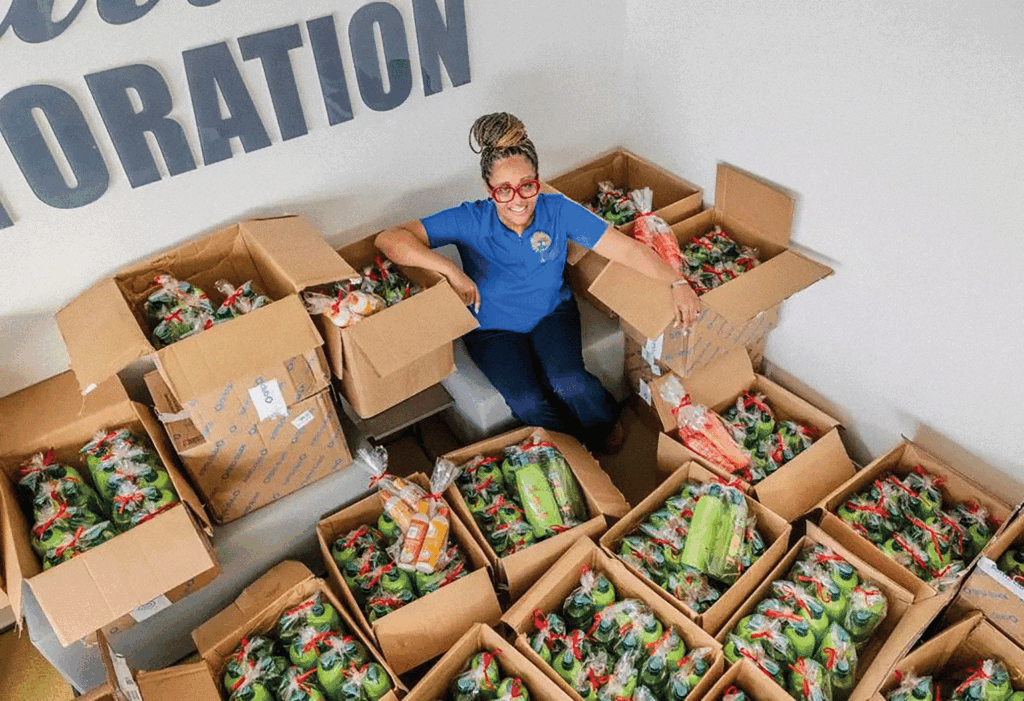
A photo of a woman surrounded by cardboard boxes with packs of shampoo and conditioner.
(Courtesy of Operation Restoration.)

M.D., who asked that only her initials be published, learned about Operation Restoration when her mother went to bail her out of jail. Members of the organization’s Safety and Freedom Fund paid M.D.’s bail. They also gave her mom information on the organization. When M.D. contacted them, she learned about the lab assistant program. (M.D.’s charges were later dropped.)

“I didn’t even know what [being a lab assistant] was,” she says.

Still, as a single mother, she knew she needed a career that paid better than what she earned as a restaurant hostess. Operation Restoration provided childcare, allowing her to bring her 3-year-old, who played while she learned.

M.D. says she was intimidated by some subjects, but her classmates motivated each other and the cohort learned together. After graduating, she was hired at a local hospital.

“She came in with green scrubs,” Steib recalls. “She was dancing, and she was so excited. That was such a drastic change from us bailing her out and her and her daughter living in this one room at her mom’s house.”

Later, M.D. was arrested again after her ex-boyfriend’s new girlfriend called the police on her. Operation Restoration not only bailed her out, but spoke with her hospital supervisors so that she didn’t lose her job.

They also spoke with M.D., encouraging her not to jeopardize the new life she had built.

“We had those tough conversations with her, like, ‘You can’t put yourself in that position for a man. You got to figure out how to control your emotions,’” Steib says. “She appreciated that we didn’t quit on her.”

M.D. attended an expungement workshop, applying to remove the arrest from her record. (She is currently awaiting the judge’s approval.)

Kendreka, who asked that only her first name be published, has never been incarcerated. But her children’s father cycled in and out of jail, leaving her to raise their two sons. During one of his absences, she lost her job. A friend told her about Operation Restoration and its lab assistant program.

“I had always wanted to be in the medical field,” Kendreka told Ms. But drawing blood scared her, so she never pursued that avenue.

She enrolled in the eight-week program and became a licensed lab assistant. She stopped juggling three jobs and instead found a position at a local hospital. The schedule is still grueling—12-hour shifts for seven days followed by seven days off work—but having every other week off allows her to spend time with her sons, now ages 10 and 12.

“If it wasn’t for Operation Restoration, I don’t know where I’d have ended up,” she says. “It has set me up to be where I am now.”

Inside the DC Jail Debate Team, Women Find Their Voice

“I know of a woman who spent the majority of her first prison bid in isolation. She didn’t have access to any programs to help her heal from her childhood trauma, abuse, neglect and depression,” Chelsee Wright wrote in remarks she prepared for a February debate. “The lack of mental health treatment led her to self-mutilate and multiple suicide attempts.”

Wright is part of the DC Jail Debate Team. Started in 2024, it’s the first coed team of the National Prison Debate League. Each semester, up to 20 participants—many of whom have no previous debate experience—meet twice a week at the Washington, D.C., jail where they are incarcerated.

Each semester starts with a mini-debate on questions like “Is a hot dog a sandwich?” or “Is ice cream the best dessert?” From there, the participants vote on 10 potential topics related to incarceration and prepare for a debate against a university team.

Like people in prisons, those in jails do not have access to research materials. Law students at Georgetown University put together evidence packets—typically 200 pages for the affirmative and 80 pages for the negative. Each member of the jail debate team is responsible for reading the entire packet and coming to class prepared to discuss what’s missing and whether more research is needed.

A photo of London Teeter walking to the stand to argue against mandatory minimum sentences.
London Teeter takes the stand to argue against mandatory minimum sentences. (Courtesy of Sarah Istel.)

“They’re really mastering the material,” says Sarah Istel, a cofounder of the debate program and volunteer coach. Once they’ve done so, they fill out their preferences for debate roles: affirmative speakers, rebuttal speakers or closers.

“There are different kinds of roles,” Istel notes. “Some require thinking on your feet more. Some require more lengthy [arguments] written in advance.”

Participants write the first drafts of their arguments and refine them through practice debates in class.

But conditions in jail are often unconducive to preparation. They cannot do their own research or type their drafts. They cannot have binders or paper clips to organize their notes. Cell searches scatter their papers. Still, students not only persevere, but support one another, encouraging and helping each other with their arguments.

Inside or out, coed classes carry the potential for male students to dominate at the expense of their female classmates. The coaches strive to ensure that women aren’t overlooked. At least two of each semester’s six speaking roles go to women.

London Teeter, now 22, joined the team after giving birth behind bars. She had spent her third trimester on the medical unit, where she was locked in her cell for 22 hours a day. Only one other woman was on the unit (their babies were born 15 days apart) and other than those two hours outside her cell, Teeter had nothing to do and no one to talk to.

At first, she didn’t want a speaking role in the debate. “I have really bad speaking anxiety,” she says.

But with her coaches’ encouragement, Teeter agreed to speak in the debate about mandatory minimums, laws that require judges to impose specific minimum prison sentences for certain crimes, regardless of the defendant’s circumstances. She asked for the closing, which, at 90 seconds, was the shortest role. Istel and the other coaches persuaded her to take on a larger role—and she did.

Teeter went through the packet and pulled out the most meaningful arguments. She also worked her own story into the materials.

“It was tricky because I’m not great at talking about myself,” she says. “I also wanted to make sure it included my team.”

A photo of London Teeter
London Teeter. (Courtesy of Sarah Istel.)

When she presented her first draft, her classmates were brought to tears. Last May, Teeter stepped up to the podium in the debate against Towson University.

“I currently face a mandatory minimum, as does every speaker on my team. And in total, our team faces a minimum of 198 years behind bars,” she began.

She went on to enumerate her arguments against mandatory minimums: their failure to prevent crime, their diversion from more effective resources, the devastation of families, the colossal price tag of long sentences, and prosecutors’ weaponization of mandatory minimums to coerce guilty pleas.

“Imagine being a 20-year-old woman, a first-time offender, no criminal background and 24 weeks pregnant when arrested. To exercise her fundamental right to trial, she faces a mandatory minimum of 49 years and even eventually was forced to give birth while incarcerated."

“This woman is me,” she said as she drew her argument to a close. “Before my team and I leave today, we ask that you remember, each of us is more than the worst thing we’ve ever done. Each of us deserves a chance to be considered as an individualized person, not a statistic, and it starts by abolishing mandatory minimums.”

The jail team won the debate.

~

The only time Chelsee Wright had ever attempted a public speaking role, she was so nervous that she stuttered.

Joining the debate team gave her an opportunity to overcome her fears. “I wanted to be able to stand up in front of a lot of people without stuttering,” the 31-year-old told Ms.

After she delivered her first speech to the group, her teammates gave her feedback: read slower, make more eye contact, emphasize certain words. She followed those suggestions, and by the time she read her final speech, she could look at her teammates and coaches and deliver a powerful argument. They gave her a standing ovation.

Wright’s sentencing was originally scheduled for this past December, but she requested that it be postponed so she could finish the debate program.

Wherever she’s transferred to serve her sentence, she plans to attend college.

“I didn’t attend [in jail] because I thought it was too hard for me,” she says.

The debate team taught her otherwise. Being part of the team, she says, “gave me confidence. It made me realize who I am and how far I can go, and that my voice can always be heard.”

At a February debate about solitary confinement, Wright used her voice in her closing remarks: “When her release date was near, she intentionally assaulted numerous officers. She needed more time."

“Three years later, she thought she was ready … but the outside world was intimidating. Now this individual is back in jail on a charge that could have been avoided if she had learned healthier outlets. Being home felt uncomfortable. You wouldn’t believe this, but solitary felt like home. Being controlled, degraded and caged in was what she was used to. They don’t feel deserving of freedom. No human should feel like this, to the point where human contact is frightening.”

She paused for a few seconds, then added, “And by the way … the woman I just described is me.”

At Rikers, a Book Club Is Helping Women Imagine Life Beyond Bars

In 2024, comedian Nora Fried started the Rosebuds Reading Collective, a monthly book club for women incarcerated at Rikers Island, New York City’s island jail.

After considering local volunteer opportunities, Fried set out to start a jail reading group to find a way to make a difference using literature as an outlet and a lifeline. She put out feelers about a book discussion group to several organizations and was surprised when the director of volunteer programs at Rikers Island responded.

Fried purchased copies of Tara Westover’s Educated, a memoir about a woman’s journey from a Mormon survivalist family in rural Idaho to earning her Ph.D. at Cambridge University, and in February 2025 she sat with nine women in a jail classroom to talk about it.

Rosebuds quickly became a popular program (22 women attended the last meeting). Discussions aren’t limited to the book. “Women cry, share personal stories about their cases,” Fried told Ms. “I always make it very clear that what happens in this room stays in this room.”

Jails are transitory. Each week, some women are sentenced and either transferred or released. Each day, new women arrive to await adjudication. Books must be approved and ordered in advance, and not every woman receives the book before the meeting. Fried estimates that 80 to 90 percent of attendees are new. But Fried, who performs stand-up, is used to reading and winning over an audience, a skill set she uses each month.

“I was looking forward to this all month,” Fried recalls multiple women telling her. “This is the only thing I had to look forward to.”

The women read Down the Drain, a memoir by actor Julia Fox. After the discussion, Fried tagged Fox on Instagram. Fox, whose brother was incarcerated at Rikers at the time, agreed to visit the group.

Although Fox had visited friends and family at Rikers many times before, this time was different. “I felt like I’d known these girls my whole life,” she says. “They are amazing, remarkable, intelligent young women [who] made mistakes. We’ve all made mistakes. Some of us are lucky enough not to get caught.”

A photo of Julia Fox faciliating a creative writing workshop.
Julia Fox facilitates a monthly creative writing workshop at Rikers Island. (Courtesy of Rosebuds Reading Collective.)

Fox learned that her book was a particularly hot commodity and that one woman’s copy had been stolen. Still, all were curious about how a girl like them had become a published author. The room resonated with laughter, from both the incarcerated women and the guards.

“It made me think to myself, I would do this every weekend. I want to come back. I love these girls,” Fox says.

“I’ve been there,” she recalls. “I have been in trouble with the law. I was facing a lengthy jail sentence if I didn’t turn my life around. … We’re cut from the same cloth, but I got really lucky. I want to make sure that they’re awarded the same opportunities and grace that I was given.”

After Fox’s visit, Fried added a 15-to-20-minute creative writing component. “A lot of women were really inspired by Julia’s book to start writing,” she notes.

Now Fox facilitates a monthly creative writing workshop. She had her own brushes with the legal system as a teenager. She says she found creative writing to be a therapeutic, cathartic release and she wanted to share that. Fox creates prompts from the books the group has read, such as Cheryl Strayed’s Wild about reinventing your life.

“You wake up in your dream life. What does it look like?” Fox asks the group.

Then, she encourages participants to read their writing aloud. Some stride to the front of the classroom. Others read aloud from their seats, while the shiest writers only allow Fox to read over their shoulders.

Fox is awed by the women’s willingness to share and show vulnerability, especially in a setting where vulnerability is often seen as weakness. She marvels at their bravery in standing before a group of near-strangers and sharing their deepest desires.

“My dream is that they each write something and we get it published somewhere,” Fox says. Reflecting on her own life, she adds, “For me, that was huge.”

That’s not the only goal that Fried and Fox have for Rosebuds. They hope to eventually expand, partnering with other organizations to offer more. For now they’re providing books and a safe space to dream of life beyond bars.

As Fox says, “Aim for the moon and land in the stars.”

*This article originally appears in the Spring 2026 print issue of Ms. magazine. Join the Ms. community today to get issues delivered straight to your mailbox.

[post_title] => Breaking the Cycle [post_excerpt] => How women impacted by incarceration are building new futures for themselves and their communities. [post_status] => publish [comment_status] => closed [ping_status] => closed [post_password] => [post_name] => breaking-the-cycle-women-incarceration-jail-education-operation-restoration-national-prison-debate-league-rosebuds-reading-collective [to_ping] => [pinged] => [post_modified] => 2026-05-18 05:54:54 [post_modified_gmt] => 2026-05-18 05:54:54 [post_content_filtered] => [post_parent] => 0 [guid] => https://conversationalist.org/?p=10467 [menu_order] => 0 [post_type] => post [post_mime_type] => [comment_count] => 0 [filter] => raw )
Illustration of a woman sitting on a bench with a graduation cap beside her, looking out a window shaped like a book.

Breaking the Cycle

WP_Post Object
(
    [ID] => 10558
    [post_author] => 15
    [post_date] => 2026-05-15 19:59:48
    [post_date_gmt] => 2026-05-15 19:59:48
    [post_content] => 

Why intersex activists are fighting for constitutional protections in Ghana.

To get ahead of the odds against them—an unsympathetic media, a punitive legislature influenced by the American Christian right, and a public uninformed about biological diversity—the intersex movement in Ghana has had to get crafty. 

In January 2025, the Ghanaian government announced a new constitutional review process, instituted by President John Mahama shortly after he was sworn in. Its main aims were to “propose reforms to enhance transparency, limit executive power, strengthen checks and balances, and improve judicial and local government structures."

In it, however, the intersex movement saw an opportunity: All of Ghana’s constitution could be reviewed. This included Article 17, which states that all are equal before the law and no one is to be discriminated against on the basis of race, place of origin, political opinions, color, gender, occupation, religion, or creed. If the movement could propose a review of Article 17, they reasoned, perhaps they could amend it to explicitly include that no one could be discriminated against based on their sex characteristics, or if they are of indeterminate gender (intersex). 

It seemed like a solid plan. 

After several strategy meetings, legal review, and input from constitutional law experts, however, the leaders of the movement realized it would not be so straightforward. Article 17 represented an “entrenched position," meaning a long-held view that was unlikely to change. As such, not only would it be difficult to convince the public of the importance of including intersex people for protection under the constitution, socially; legally, it would also require a referendum to pass.

The intersex movement already had only a few allies among the political class, and based on their findings, they also knew a majority of the public did not understand the concept of indeterminate gender—that someone may be born male with female sex organs, for instance, and should not be discriminated against for something out of their control. Making matters worse, the media also regularly conflated sexuality with gender in bad faith: A slate of investigations by friendly NGOs had revealed some major media organizations had even received funding from anti-LGBTQIA+ rights groups. 

They changed tack. 

Instead, the movement decided to seek an intervention through Article 28, which provides for the protection of children’s rights. They proposed that the provision be updated to explicitly ensure the recognition and protection of intersex children, who, in Ghana, are currently subjected to “corrective” and “forced” surgeries and medical procedures, according to firsthand accounts reported to Intersex Ghana, the country’s first intersex-led human rights organization. 

Specifically, the group hoped to protect intersex children from “medically unnecessary, nonconsensual and irreversible procedures, intended to alter their sex characteristics.” These speculative procedures—sanctioned by doctors and parents without due consideration for the well-being of the child—can have lifelong physical, psychological, and even economic consequences, impairing the child’s ability to make a living in the future, says Lawrence Shone Edem Adjei, director of Intersex Ghana, over a video call. 

"At age 14, I have undergone more than six surgeries after non-consensual procedures were performed on me at birth. I feel like the doctors used me for studies,” intersex advocate Emmanuella Kwarteng shared in one testimonial. 

Kwarteng’s experience is not an uncommon one, and Intersex Ghana has had to intervene in a number of medical cases gone awry. In one particular case, Adjei recounts that a child had gone through up to eight surgeries over a span of ten years. Initially, their testes were removed, and the child was identified as female. Years later, doctors realized their initial procedure had caused the child to begin bleeding internally during menstruation. An additional surgery then had to be performed to remove the child’s womb. 

“It's like just trial and error," Adjei says. 

To make the case for intersex children in front of the constitutional review committee, and to prevent this from happening again, the intersex movement put together a murderer’s row of accomplices. Alongside activists like Adjei, this included two doctors, three lawyers, a High Court judge, and families with intersex children who could share their lived experiences. 

It was a particularly precarious time: The intersex rights movement was working with significantly fewer resources than it had ever had. Intersex Ghana and other NGOs had been depleted by the U.S.-led funding cuts to pro-LGBTQIA+ rights advocacy groups all over the world, and philanthropic support had dried up. 

The movement was throwing everything it had left at this case. Before the constitutional review committee, it had a few propositions. First, that the Ghanaian government provides an additional gender “I” (or intersex) on its Birth and Death registry upon discovery at birth that a child is not identified with one gender. Second, that the Ghanaian government outlaws and criminalizes forced surgeries to deter doctors from performing them, regardless of the demands of the child’s parents. Controversially, by Adjei’s own admission, “We are not in favor of the parents serving consent.” Instead, the movement proposed that the intersex individual be allowed to develop naturally. When the child is of age, they can then make an informed decision on their own bodies. 

The advocates made their case to the constitutional review panel, drawing precedent from a case in Kenya. In the 2014 case, Baby A v Attorney General, an intersex child was denied a birth certificate because their sex had been marked with a question mark, effectively barring them from participating in civic life. The court, hedging, declined to admit a human rights violation, but still ordered the state to issue the birth certificate and begin the slow work of collecting data, developing medical guidelines, and contemplating a legal framework for intersex people. As a result of the case, the Kenyan government is now mandated to collect data on intersex individuals, and consider legal reforms and protections for them more broadly. 

This landmark court case eventually resulted in an Intersex Persons Bill in 2024 which, among other things, guaranteed the “prohibition of harmful medical practices” against intersex people—including children. 

The advocates argued that Ghana should follow Kenya’s example and recognize intersex people as a distinct legal entity, allow for intersex markers in civil documentation, include intersex persons in national census and data gathering, and establish a national commission for intersex individuals. They further argued that the condition of being “intersex” is not in conflict with Ghanaian cultural values by demonstrating support from religious and traditional leaders.

After months of deliberation, which included hearing from anti-intersex and anti-LGBTQ+ groups opposed to the proposed changes, Ghana’s constitutional review committee reached a decision. They recommended to the government that the constitution be amended to “provide for the right of every child to bodily integrity, including freedom from irreversible, non-consensual medical or surgical interventions that are not strictly necessary to preserve life or prevent serious and immediate harm; that the best interests of the child shall override social, cosmetic, cultural or expediency-based justifications for invasive medical procedures; for protection for intersex children, recognising their distinctive vulnerability to medically unnecessary ‘normalising’ interventions carried out before informed consent is possible.” 

The movement was thrilled.

Their excitement, however, was short-lived. Soon after the committee submitted its recommendations, anti-intersex rhetoric started appearing in the press. On a national news show, Ghanaian legislator Nana Agyei Baffour Awuah called the proposed protections the “most crucial” part of the constitutional review, claiming the changes would “transform our constitution”—but not for the better. 

“We know that these things can be the entrance of LGBTQ,” Awuah said, repeating a common trope widespread in the media that conflates sexuality with gender.  “You want to sneak this into the constitution!” 

Awuah was not accusing anyone in particular with his statement, but turned to fellow guest Oliver Barker-Vormawor, an activist and lawyer involved in the constitutional deliberations. In response, Barker-Vormawor defended the committee’s recommendations. 

“We're saying that these are medical decisions that must be made, not parents using cultural basis to demand for surgeries to be imposed on children,” Barker-Vormawor said, reiterating their intentions. 

In reality, the intersex movement in Ghana has gone to great lengths to distance itself from the LGBTQ+ movement as a safety and security strategy. It is also one of the biggest criticisms the movement faces from its potential allies. When an anti-LGBTQ+ bill was first introduced in Ghana in July 2021, intersex advocates campaigned tirelessly for the removal of intersex persons from the law, which included recommendations for surgery and hormonal treatments to “correct” them. Later that year, Intersex Ghana sent a memo to the Ghanaian legislature’s Committee on Parliamentary Affairs, asking for the bill to be thrown out in its entirety. But overall, the movement continues to tread the line between distinction and solidarity with its LGBTQ+ allies as best it can. 

Still, some argue the two movements are ultimately inseparable because of their intersections: There are people who are intersex and trans; or intersex and gay. 

“The movement has become too medicalized,” intersex and trans activist Awo Dufie Fofie says. 

Dufie, assigned male at birth, later discovered she was intersex in her 20s, and initially went great lengths to reverse the growth of breast tissue in her body. At some point, she was taking fifteen pills a day. Upon meeting a queer elder—who had also been born a hypereffeminate male, but had socially transitioned to female in the 1950s—Awo stopped blocking estrogen in her body and instead let her body develop as it would without pharmaceutical intervention. 

The intersex movement often has to make its case through visual aids of intersex bodies, Dufie argues, and as such, she believes it has created “a system that becomes a bit puritan about who can rightfully call themselves intersex and who is intersex enough to represent the community.” When Awo decided to transition, she was even advised by a fellow advocate that if she made it public, it would make the intersex movement “look bad."

"It is my sincere hope that intersex advocacy…adopts a much more decolonial framework and approach which embodies and centers the entire experiences of intersex people, such as their everyday lives,” she says. “Not only what medical conditions we have and how much intersexphobia we experience.”

Adjei acknowledges the catch-22 the intersex movement finds itself in, and understands why it believes it has to advocate for itself by providing distinctions between sexuality and gender. But she also believes it must also be in solidarity with the queer movement because of their overlap and intersections—including continued discrimination. “Ghanaians will not differentiate between an intersex person walking by and an LGBT person,” Adjei says. An effeminate but masculine-presenting intersex person is just as likely to be attacked—as has happened in many cases across the country—as a gay man expressing himself in a way that might be considered feminine. 

“I was not seen as human growing up… because I had two genitalia,” Comfort Bugre, an intersex person, shared in a testimonial presented to the review committee. 

“Growing up, I was isolated from people due to my intersex condition. I was relocated because people found out and started calling me names,” Elorm Enne, another intersex advocate, shared in a separate testimonial. 

Currently, the hard-won constitutional review recommendation is in the implementation stage, and the Presidency has set up a committee to see how proposals may be effected. 

The intersex movement is counting on seeing three things: First, large scale research on intersex people across the country, both to shed light on the quantitative heft of these protections, and to better understand the prevalence and diversity of intersexuality. Second, mass sensitization and public education across the country’s 16 regions on the harms of corrective child surgeries, in partnership with key institutions such as the Human Rights Commission and the National Commission for Civic Education. And perhaps most importantly, the legitimacy of intersex as its own gender, and protection for all intersex people in the country. 

The movement is tempering ambition with pragmatism. Advocates are also preparing for an outcome where the recommendation is struck down, or isn’t implemented, either in whole or in part. But if this comes to pass, the movement—with whatever funding it has left—plans to play its trump card. There are a number of government agencies and offices that should be involved in protecting intersex children: medical boards, the Attorney General’s office, the Ministry of Health, local government administrations. 

It plans to sue all of them. 

~

Additional Research by Nyameye Kiki Akumia.

[post_title] => "I Was Not Seen as Human Growing Up" [post_excerpt] => Why intersex activists are fighting for constitutional protections in Ghana. [post_status] => publish [comment_status] => closed [ping_status] => closed [post_password] => [post_name] => intersex-ghana-constitution-protection-lgbtqia-childrens-rights [to_ping] => [pinged] => [post_modified] => 2026-05-15 20:00:07 [post_modified_gmt] => 2026-05-15 20:00:07 [post_content_filtered] => [post_parent] => 0 [guid] => https://conversationalist.org/?p=10558 [menu_order] => 0 [post_type] => post [post_mime_type] => [comment_count] => 0 [filter] => raw )
A photo illustration by Ricardo Tomás of Ghana's flag on a toothpick. It is covering the intersex flag (also on a toothpick), starting to rise behind it.

“I Was Not Seen as Human Growing Up”

WP_Post Object
(
    [ID] => 7086
    [post_author] => 15
    [post_date] => 2024-07-29 07:42:52
    [post_date_gmt] => 2024-07-29 07:42:52
    [post_content] => 

Now that the Democrats have chosen a nominee, it's time to focus on reversing the damage done by the Supreme Court.

Corrupted by years of dark money, political attacks, and propaganda, the United States' democratic institutions aren't holding, and nowhere is this more apparent than in the protracted lead-up to the 2024 election. In the last couple weeks alone, Donald Trump was shot at, Hillbilly Elegy’s JD Vance was announced as his running mate at the Republican National Convention, and President Joe Biden withdrew his bid for reelection after a geriatric debate performance led to weeks of bullying from media, donors, and party leadership, all demanding he drop out. What's worse, all of it happened under the backdrop of the extremist, unaccountable Supreme Court taking a sledgehammer to rule of law right before summer recess.

Despite a bleak election year thus far, there’s been a surge of new hope and enthusiasm amongst Democrats after Biden immediately endorsed Vice President Kamala Harris for the nomination, spurring a flurry of endorsements from party leaders and potential opponents, and a record-setting $81 million spike in small donations in the first 24 hours. By Monday night, Harris had garnered enough delegates to clinch the nomination—and thank fuck she did. Contested conventions are good for ratings, but historically, they’re also election losers, and it was far from obvious we’d avoid the chaos of a mini-primary, which was supported by heavy hitters like Barack Obama, Mike Bloomberg, and the New York Times and Washington Post editorial boards, plus a slate of pundits with inflated egos and billionaires with their own personal preferences. (Obama has since given Harris his endorsement.) 

Safely on the other side, the party will inevitably face questions about how this went down come November, but for now, time is precious, and the looming, ongoing threat to democracy remains. Biden's withdrawal was, for all the rifts it created, the right move, and seemingly, a calculated one. For a man alleged to be incompetent, he deftly outplayed Republicans and the media by timing his announcement after the RNC and Sunday morning talk shows, depriving them of a splashy platform to respond. In one afternoon, he orchestrated his succession, neutralized GOP and media attacks against him, and reinforced the most fundamental of democratic norms—the peaceful transition of power. Coup-loving Republicans are furious and scrambling, having wasted their convention trashing a candidate that's no longer running. They have also recommitted to a convicted felon who, with Biden out of the race, is now the oldest candidate in history, with zero plans for how to face an energetic, younger, Black and South Asian woman who intends to run on protecting abortion. Trump, hilariously, has asked for his money back

It comes as a huge relief that the public infighting among Democrats is largely over, because it allows us to focus on the bigger story of the past few weeks, which is the far-right entrenching itself via the judiciary and gutting the state from within. What the extremist hacks on the Supreme Court have accomplished at the behest of their fascist mega-donors this summer has virtually remade our government overnight: The Federalist Society just delivered a judicial coup, and didn't even need the executive branch to do it.

Thankfully, there's fresh hope now that with a Harris candidacy, various factions on the left and center will align, as France just did, to rebuke the far-right. But even if the Democrats win in November, and Republicans don't start a civil war in response, it’ll be a long road to undo all the damage that’s been done in the last couple months alone. The decisions in Trump v. United States and Loper Bright Enterprises v. Raimondo, in particular, are two of the worst opinions in Supreme Court history—which is wild considering the Roberts era already has so many doozies to choose from, like Dobbs, Shelby v. Holder, and Citizens United, along with more recent disgraces like Grants Pass v. Johnson or Snyder v. United States. 

I've been raising the alarm about plutocrat-funded Christian nationalism for close to a decade, but there's no satisfaction in being right, only sorrow that we're here. Political instability is an eater of dreams and a threat to people's lives. The uncertainty of this moment is overwhelming, the losses too large to digest, and it's created a rush to prophesize and pronounce definitive outcomes. Deniers, doomers, and accelerationists have all entered the chat, and all of them risk self-fulfillment. Our only option is to form a unified front against them and get to work.

In Trump v. United States, a case most legal experts thought the Court would dismiss outright, the far-right majority delivered their delayed decision on Trump's coup,  inventing presidential immunity from criminal liability for official acts, while retaining the right to decide what counts as "official." It's a self-destructive move that undermines the most basic tenet of rule of law, which is that everyone is subject to it. The majority's reasoning focused entirely on hypotheticals, deliberately ignoring the very real January 6th coup attempt that precipitated the charges, and greasing the way for more far-right political violence, particularly as trigger-happy Republicans warn in advance of the 2024 election that they won't accept a loss. 

Years spent reading Soviet legal documents prepared me for the smug, dishonest, means-to-an-end mindfuck that is Trump v. US, though we don't have to look outside American legal tradition for our own authoritarianism. The United States is infamous for treating people as property and corporations as people: We're seeing the active legacies of the Fugitive Slave Act, Jim Crow, and the Comstock Act in the GOP's endless voter suppression efforts, attempts to ban abortion medication by mail, and tracking of people seeking abortions across state lines. And still, Trump v. US lowers the bar. The opinion is a grotesque power grab that fundamentally upends the Constitution by magically bestowing criminal immunity on a criminal president, effectively making it legal for a (Republican) president to stay in power by any means “officially” necessary. (Richard "When the president does it, that means it's not illegal" Nixon was ahead of his time.) 

It's a curious feature of American exceptionalism that headlines on the decision jumped immediately to monarchy, not autocracy. It suggests a romanticism about domestic authoritarianism as something British we defeated in the 18th century—a period piece rather than a contemporary dystopia. In reality, we're poised to elect an autocrat for the second time, not crown a king or queen for the first. 

As I've written about before, the US brand of white Christian fascism is both unique and on trend: Demonizing migrants, trapping women, and persecuting the LGBTQ community is the glue binding the global anti-rights movement. Republicans have been open about their desire to emulate far-right Prime Minister Viktor Orban's success at purging Hungarian universities, media, and business sectors. The people who wrote Project 2025, the 900-page Heritage Foundation manual for dismantling the country, looked explicitly to other autocrats for strategic advice on how to better end democracy. 

King George is certainly self-referential, but he's far less relevant to our situation than Prime Minister Benjamin Netanyahu addressing Congress to a standing ovation with Elon Musk as his guest, Orban visiting Mar a Lago earlier this month, or Jared Kushner promoting ethnic cleansing while drooling over Gaza's "waterfront property." President Vladimir Putin and Sergey Lavrov are openly celebrating Trump's pick of JD Vance for VP because Vance has loudly advocated for letting Russia devour Ukraine and, relatedly, letting husbands abuse their wives. Former president of the NAACP Legal Defense Fund Sherrilyn Ifill recently posted on Threads about the formative influence of apartheid South Africa on the grievance-driven tech billionaires Peter Thiel, David Sacks, and, again, Elon Musk—all of whom have thrown in for Trump, not that Musk's support lasted long. Trump himself has been the least subtle of all, shouting out President Xi Jinping and Kim Jong Un at rallies, and ominously referencing Nazi talking points about Weimar Germany's inflation in his acceptance speech at the RNC. 

The influence of oligarchs like Harlon Crow and Peter Thiel—who personally nurtured Vance—is especially insidious within the judiciary. If the immunity case demonstrates the Supreme Court's open alliance with Trump, they similarly delivered for their billionaire backers with the end of Chevron deference last month and the corruption of our federal regulatory system. Loper Bright covers less sexy subject matter, but its impact on the functioning of our government is arguably as tremendous as the immunity case. Decided in 1984, Chevron created a separation of powers between the judiciary and federal agencies, who employ thousands of career civil servants to administer the vast majority of federal rules that affect our lives, whether related to food and drug safety, air quality, or any number of rules that prevent corporations from preying on people. Under Chevron, courts deferred to agency interpretations of statutes for policymaking purposes. Now, thanks to Loper Bright, the judiciary has the last word on even the most minute agency rules, and any schmuck with enough money can sue and ask a judge with limited staff and zero technical expertise to veto federal regulation. If you think the US is scammy now, just wait

The challenges we face from Federalist Society co-chairman Leonard Leo and Justice Sam Alito wouldn’t feel so daunting if corporate media weren't also on their side. David Zaslav, CEO of Warner Bros Discovery, the parent company to CNN, was recently quoted saying that what mattered most in this election is that the next president is friendly to business. "We just need an opportunity for deregulation, so companies can consolidate," Zaslav told reporters in Sun Valley, Idaho. How embarrassingly short-sighted to throw away the rule of law, and to treat press freedom as a nice to have, not a necessity. Does he expect to survive autocracy intact? 

The hypocrisy is not new. At the same time that Wall Street Journal reporter Evan Gershkovich was sentenced to another 16 years in Russian prison for doing his job, the WSJ editorial board was copying Putin's playbook and accusing Democrats who pointed out Trump's dictatorial ambitions of being responsible for his getting shot by a fellow Republican. It's hard to trust that the same corporate media that has soft-pedaled fascism and developed tunnel vision a la Hillary's emails over Biden's debate performance won't also find new ways to tear down Harris, who will face horrifying levels of misogynoir and disinformation that, for obvious reasons, other candidates will not. Media coverage of Harris’ campaign launch has so far been positive, but already there are rumblings of people who "just don't like her for some reason," not to mention a birther campaign, reviving all the greatest hits from Clinton ‘16 and Obama ‘08 and ‘12, respectively. The conservative mediasphere is taking the cheapest shots, accusing her of being a DEI candidate, of sleeping her way to the top, and, horror of all horrors, of laughing too much.

It's generally bad news for democracy when the far-right captures essential institutions, staffs them with loyalists, and threatens political violence, all while aligning with big business and media for profit. Republicans are also itching to make legal trouble over any changes to the ballot, with Rep. Andy Ogles filing articles of impeachment against Harris, and Speaker Mike Johnson threatening to sue to keep Biden in the race. Considering the switch happened before the convention and before state deadlines have passed, this seems to be mostly posturing. That said, there's still real concern that any case arising from this election ends up before a corrupt SCOTUS, giving them another opportunity to hand down a breathtakingly bad decision. The last thing we need is another Bush v. Gore, but on steroids.

So what can be done? A lot, actually. The goal in drawing attention to rising fascism has always been to catalyze opposition, precisely because resignation is so tempting. Harris, who is already walking off to Beyonce's "FREEDOM" at her rallies, has provided a much needed contrast to the gerontocracy, and is generating the excitement American voters look for. Her campaign has moved quickly to calling out her opponents as creepy losers, delighting Democrats who've longed for the party to stop pulling their punches. And she’s gaining momentum. The Divine Nine Black frats and sororities are mobilizing for their AKA sister. Singer Charli XCX tweeted "Kamala IS brat." Zoom's Indian American COO, Aparna Bawa, made it possible for 44,000 Black women to join an organizing call the night Harris announced. Young people are signing up to vote for the first time, and the campaign has already seen an influx of over 100,000 volunteers. With Harris set to secure her party’s nomination at the DNC, the future feels less grim today, which is good because the fight is so far from over. 

The Democrats’ sudden return to life brings to mind Miracle Max from The Princess Bride: "There's a big difference between mostly dead and all dead… Mostly dead is slightly alive." The boring truth is: Harris can win if people vote for her. She has a lot going for her as the incumbent VP, and as the prosecutor taking on an aging gangster, and as a woman running on reproductive rights against a rapist. Crucially, she and Biden both take court reform and expansion seriously—a necessity for us reversing the damage wrought by an extremist Supreme Court, and for preventing it from happening again in the future. She can also take credit for Biden's strong legislative record, low unemployment, rising wages, and record-low violent crime rates—conditions that get incumbent administrations re-elected. 

Harris is, like any political candidate, an imperfect one; her prosecutorial record has earned her the leftist badge of "imperialist cop," and uncommitted voters who’d been boycotting Biden for Gaza have vocalized outrage with Harris following her meeting with Netanyahu this week. Others are concerned that she's been set up to fail via the so-called "glass cliff," where women are only given responsibility in a crisis after men have made a mess of things. Because we are still a democracy, voters can and should be able to vocalize these concerns without fear, and to hold our representatives to account. But as even some of her critics have pointed out, Harris has the chance to not just be a strong candidate, but a genuinely decent one, simply by addressing voters’ concerns directly, righting the wrongs she can, calling out the far-right’s bullshit, and delivering on her campaign’s promises in order to preserve our democracy. Our job is to support her in these efforts and get us through November. Then we can fall apart.

The far-right is taking a victory lap, but it’s premature. Republicans are overplaying their hand after their court victories, with the Heritage Foundation president announcing a second American revolution and threatening violence unless the left rolls over. How quickly the creators of Project 2025 forget how much they’ve relied on plausible deniability, credulous institutionalists, and media normalization to get this far. As Harris said of Project 2025 in Milwaukee last week, "Can you believe they put that in writing?"

Let them mistake arrogance for invincibility. Abortion bans have been destroying Republicans electorally, including in red states. Trump is now saddled with an unpopular, brutish, 900-page manifesto that is penetrating popular consciousness across generations—on TV, social media, in conversation—and a thirsty VP "with the integrity of a Boeing 737" whose primary contribution to his campaign is more white male resentment and unpopular views on ending no-fault divorce. Even Appalachia doesn't claim him. As Kentucky Governor and VP hopeful Andy Beshear said of Vance, "He ain't from here." And let's never forget that Trump needed a new VP because he tried to have the last one murdered. Even Kim Jong Un won't be his friend. Nobody especially cared that Trump almost got assassinated, either. 

The bigger issue is not that Trump is poised to win, but that Republicans are unwilling to lose. They've already shown their support for coups and stochastic terror, and they've captured the court. If we're going to have any shot at undoing their grip and saving what's left, court reform and expansion have to be the highest priority. And to have any hope of that, we have to vote our people in while we still have the chance, because with democracy on the line, the right to vote itself is on the ballot, too. So is bodily autonomy, and LGBTQ+ rights, and concealed carry laws, and Obamacare, and countless other policies that people depend on to live. We already exist in a violently racist status quo: Sonya Massey's murder by police is a heavy reminder that Black people and other communities of color are especially vulnerable to state violence. A second Trump administration would further politicize the Justice Department to target prosecutors who investigate police abuse. Trump himself is personally promising to deport 20 million people who are "poisoning" the country via expulsions and camps. 

When I saw Masha Gessen speak several months ago, they described people lining up for Alexei Navalny's funeral with power banks, water, and food, expecting to be arrested for expressing condolences. It was a bleak reminder that things can always be worse. We don't have to end up that way, but that requires us to not be fucking stupid about dictatorship. Look at French voters who turned against Marine Le Pen once the threat of a far-right government sunk in. Last year in Poland, voters ousted the Law and Justice party and began trying to heal the damage, including plans to restore independence to a stacked judiciary. It's harder to rebuild the rule of law once it's gone, so it's essential we prevent further backsliding. It’s doable for us to stave off fascism and reinforce our democracy, but only if we can keep the presidency, regain the House, and expand the Supreme Court. We have no choice but to aim big—and to demand that our representatives deliver on what they’ve promised.  

So gather your courage, your rage, your despair, and channel it into something for your community. Don't be scared of good news, or to feel hopeful about the future. It's in imagining better that we grow and move forward. Get active locally when national politics feel like too much. Sign people up to vote, knock on doors, and tell your people about the dangers of Project 2025. We have momentum against the threat of autocracy. Let's get this done.

[post_title] => The United States v. The Rule of Law [post_excerpt] => Now that the Democrats have chosen a nominee, it's time to focus on reversing the damage done by the Supreme Court. [post_status] => publish [comment_status] => closed [ping_status] => closed [post_password] => [post_name] => kamala-harris-2024-election-nominee-democrats-republicans-supreme-court-rule-of-law-trump-loper-bright-autocracy-democracy [to_ping] => [pinged] => [post_modified] => 2024-08-28 21:11:27 [post_modified_gmt] => 2024-08-28 21:11:27 [post_content_filtered] => [post_parent] => 0 [guid] => https://conversationalist.org/?p=7086 [menu_order] => 52 [post_type] => post [post_mime_type] => [comment_count] => 0 [filter] => raw )

A black and white photo of the United States Supreme Court Building, with the pieces scrambled out of order. In color, there is a photo of VP Kamala Harris laughing and clapping down the center.

The United States v. The Rule of Law

WP_Post Object
(
    [ID] => 6095
    [post_author] => 15
    [post_date] => 2023-10-20 19:49:22
    [post_date_gmt] => 2023-10-20 19:49:22
    [post_content] => 

One hundred years after the ERA was first introduced, we've never needed it more. So what's the holdup?

Most Americans believe that the United States Constitution guarantees equal rights to women under the law. It’s only natural. Women in the U.S. can vote, own property, drive cars, fly planes, serve in the military, get divorced, and establish credit in our own names. We make up around 47 percent of the workforce and have held senior positions in business, law, and government for decades. From 1973 to 2022, we even had federally protected abortion rights. We continue to be underpaid, mistreated in low-wage jobs, and underrepresented in the highest-paying professions, but most Americans believe that women are—and should be—equal citizens.

Under current law, however, we are not: For women to attain the legal status most assume we already have, the U.S. would need to adopt the Equal Rights Amendment (ERA), first introduced in Congress 100 years ago this year, and introduced in every session of Congress since.

Depending on who you ask, American women do have some constitutional protection already. Some legal scholars and Supreme Court justices have asserted that women are “persons” and thus covered by the Equal Protection Clause of the 14th Amendment, which reads, “No State shall make or enforce any law which shall abridge the privileges or immunities of citizens of the United States; nor shall any State deprive any person of life, liberty, or property, without due process of law; nor deny to any person within its jurisdiction the equal protection of the laws.” But others disagree, and figures as diverse as the late archconservative Supreme Court Justice Antonin Scalia and the late liberal Justice Ruth Bader Ginsburg believed that the Constitution does not explicitly guarantee sex equality—something Ginsburg saw as an obstacle to full and lasting equality for women and Scalia saw as a fact not necessarily in need of a remedy.

In the wake of the Supreme Court’s 2022 Dobbs decision, which overturned Roe v. Wade, the stakes are higher than they have been in 50 years. The ERA would make gender equality explicit—which has been its purpose since it was first introduced. In 1923, women’s rights crusader Alice Paul authored what was originally known as the Lucretia Mott Amendment, in honor of the Quaker abolitionist and women’s rights activist. The text declared that, “Men and women shall have equal rights throughout the United States and every place subject to its jurisdiction.” Over the years, this text has evolved, and today, the amendment reads, “Section 1: Equality of rights under the law shall not be denied or abridged by the United States or by any state on account of sex. Section 2: The Congress shall have the power to enforce, by appropriate legislation, the provisions of this article. Section 3: This amendment shall take effect two years after the date of ratification.” But the spirit and purpose remain the same. (Supporters say that “sex” is synonymous with “gender” for the purposes of the amendment, which would apply to women of all gender identities and sexual orientations.)

It very nearly came to pass in the 1970s. Rep. Emanuel Celler (D-NY), then the powerful long-time chair of the House Judiciary Committee, had refused to hold a hearing on the ERA for over 30 years, when he finally succumbed to pressure from a new group of younger female legislators. The ERA passed both houses of Congress in 1972 and was sent to the states for ratification, at which point 22 states voted to ratify it. By 1977, that number had increased to 35 of the 38 states required for it to become part of the Constitution. After around 100,000 supporters—described at the time by right-wing activist Phyllis Schlafly, the ERA’s bitterest foe, as “a combination of Federal employees and radicals and lesbians”—marched in Washington in 1978, Congress voted to extend the original ratification deadline by three years. As supporters scrambled to reach the required threshold, lawmakers in five states—Idaho, Kentucky, Nebraska, South Dakota, and Tennessee—voted to rescind their states’ initial ratification. The extended deadline expired in 1982.

A major cause of this disrupted momentum was Schlafly herself. Books and television series have told the story of Schlafly, a vicious bigot who led the well-orchestrated opposition campaign that defeated the ERA, at least temporarily, at the dawn of the Reagan era. Schlafly is widely credited with having halted the amendment at a time when it enjoyed broad bipartisan support, including from then President Richard Nixon, and was all but guaranteed to pass. But the ERA foundered in that era for other reasons, too. While supporters were going on weeks-long hunger strikes and selling their blood to raise money for the cause, opponents had personal wealth and possible assistance from shadowy corporate interests and far-right organizations like the John Birch Society on their side. Motivated by religious zeal, fear, and a feeling of being disrespected, opponents of the ERA caught supporters off-guard and, ultimately, out-organized them.

Why the ERA hasn’t become a recognized part of the Constitution in the last 30 years is less well-known, but not necessarily difficult to deduce. In recent years, it has often felt like society is moving backward and forward at the same time. The election of Donald Trump and elevation of alleged attempted rapist Brett Kavanaugh to the Supreme Court, the cratering of women’s workforce gains and deepening of the child care crisis that accompanied a global pandemic, and the overturning of Roe have made earlier eras look positively rosy in comparison. At the same time, social media has fueled and distorted a limited feminist resurgence. This new wave delivered the #MeToo movement, a renewal of feminist organizing around abortion rights and the ERA, and a predictable cycle of counterreaction, an earlier manifestation of which Susan Faludi memorably documented in her 1991 classic, Backlash. (American women might reasonably wonder if that backlash ever ended.)

Still, there has been progress. Fueled in part by anger at Trump’s election, organizers successfully pursued ratification of the ERA in Nevada in 2017, Illinois in 2018, and Virginia in 2020, bringing the total number of states that have ratified the amendment to the required 38. (Some argue that certain states’ decision to rescind ratification means the ERA has never achieved the required number; others say those rescissions are legally invalid and should be ignored.) President Biden affirmed his support for the ERA as recently as August. While running for president, Kamala Harris vowed to get it done in her first 100 days in office. With Trump out and Biden/Harris in, what’s holding it up?

Today’s advocates believe that the ERA deadline, which only appears in the preamble and not the text of the amendment itself, can be removed or extended by Congress, or even, if the threshold for ratification has been met, ignored altogether. Yet the Biden administration—which published a new memo in 2022 essentially punting the issue to Congress and the courts—has indirectly prevented this by failing to withdraw a 2020 Trump administration memo which stated, in part, “Congress has constitutional authority to impose a deadline for ratifying a proposed constitutional amendment…Congress may not revive a proposed amendment after a deadline for its ratification has expired.” Additionally, there is enduring opposition to the ERA from the reactionary right, which now includes nearly every senior GOP leader; behind-the-scenes opposition from the business interests that fund both major parties to varying degrees; and the reluctance of top Democratic officials to make it a priority.

The ERA has always had bipartisan support, but in the modern era, most of its advocates are Democrats. Sens. Susan Collins (R-ME) and Lisa Murkowski (R-AK) and Rep. Brian Fitzpatrick (R-PA) are the only congressional Republicans who support it today. Yet a 2016 poll found that 90% of Republicans support the ERA, which suggests that the Republican Party is, on this issue, profoundly out of step with its base. Still, it shouldn’t matter: Even with the GOP’s lurch to the right and subsequent withdrawal of support, the Democratic Party—which controlled at least one branch of government from 1992 to 2001, 2006 to 2016, and 2020 to today—should theoretically have been able to deliver by now on an amendment that most Americans want.

One theory as to why they haven’t is that if the ERA is finally adopted, it could diminish Democrats’ ability to raise money and swing elections by emphasizing ever-present threats to abortion, LGBTQ, and women’s rights. Those rights are indeed under threat, but adopting the ERA would strengthen them considerably—which is why the modern GOP so strongly opposes it, and why Democrats should rally behind it. Enshrining gender equality in state constitutions has already helped protect abortion rights at the state level; New Mexico’s state supreme court recently struck down a state law banning the funding of abortion-related services, citing the state’s ERA, which guarantees “equality of rights for persons regardless of sex.” If finally adopted, it would do the same at the national level. But without the ERA, it will be difficult and potentially impossible to safeguard those rights for the long term.


While the GOP has been largely hostile to abortion rights since Roe v. Wade, the Democratic Party has not defended them nearly as forcefully or consistently. Although many activists urged top Democrats to pass a federal law protecting abortion rights before the Dobbs decision, they essentially said that their hands were tied: Although they could and did pass such legislation in the House, it would never survive in the Senate. Right-wingers are as or more committed to banning abortion today as they were 50 years ago, while pro-choice supporters haven’t been as consistent, motivated, or likely to base their vote on abortion—although that is beginning to shift in light of Dobbs. As recently as 2019, some advocates insisted that the ERA has nothing to do with abortion rights; today, one of its main selling points is that it will protect them.


Corporate opposition to the ERA has remained steady, if covert. The amendment would make it easier to sue companies that pay women unequally or otherwise discriminate against them, which is why the insurance industry has historically opposed it. As Eleanor Smeal, then the president of the National Organization for Women, explained in 1982, “The real opposition [to the ERA], behind the visible political opposition, has been the special corporate interests that profit from sex discrimination.” In 2010, a blogger for the U.S. Chamber of Commerce approvingly quoted a characterization of equal pay advocates as possessing a “Scrooge-like fetish for money.” And as late as 2019, a Chamber of Commerce spokesman declined to comment on the ERA’s prospects, citing instead the organization’s support for the Equality Act, which would prohibit discrimination on the basis of sexual orientation and gender identity but would not provide protection as durable as the ERA—and which continues to languish in Congress.

Other dynamics are evolving, slowly but surely. While the causes that motivate the religious right haven’t changed much in 50 years—aside from a shift from attacking gay marriage to attacking trans children—the ERA opponents of today have had to pivot from overt sexism to co-opting the language of equality. In 1970, you could say of ERA advocates, as then Sen. Sam Ervin (D-NC) did, “Now, if you want to convince me that ladies desire to be drafted, you send me some sweet young things in here of draft age and let them tell me that.” Today, opponents are often reduced to arguing that the ERA is unnecessary because American women already have equality under the law, or, in some cases, mimicking the language of advocates in an effort to sound more mainstream and modern. (See anti-ERA Republican Sen. John Kennedy’s recent declaration that, “Radical lawmakers cannot erase women or their rights from our Constitution,” which is, not coincidentally, similar to what a supporter might say of him.)

How can we move forward today? Modern supporters argue that the ERA has already been ratified and U.S. archivist Colleen Shogan, the head and chief administrator of the National Archives and Records Administration, need only recognize and publish it. This year lawmakers have introduced two major resolutions which support that interpretation. In January, Sens. Ben Cardin (D-MD) and Lisa Murkowski and Reps. Ayanna Pressley (D-MA), Cori Bush (D-MO), and others introduced a joint resolution to affirm the ratification of the ERA by removing what supporters see as an arbitrary and rescindable ratification deadline. In July, Sen. Kirsten Gillibrand (D-NY) and Rep. Cori Bush (D-MO) introduced a joint resolution stating that the ERA has already been ratified as the 28th Amendment to the Constitution and calling on Shogan to certify and publish it. “In terms of which strategy is better, in my view, it's 100% the publication strategy,” Nicole Vorrasi Bates, executive director of the pro-gender equality nonprofit Shattering Glass, Inc., told me.

In response to questions about the best strategy for getting the ERA into the Constitution, what she sees as the primary obstacles to doing so, and why the Biden administration has not prioritized it, Rep. Pressley’s office sent a written statement which read, in part, “[T]he only thing standing in the way of the ERA becoming the 28th Amendment is the arbitrary deadline imposed decades ago.” The statement also explained that she was both a co-lead on Rep. Bush’s July resolution and had introduced her own because, in her opinion, “We must use every tool available to get this over the finish line.”

Gillibrand has said that she also hopes to compel the Biden administration to call on Shogan to act or change the Senate’s filibuster rules so that measures like the ERA would need only a simple majority to move forward. Kate Kelly, author of Ordinary Equality: The Fearless Women and Queer People Who Shaped the U.S. Constitution and the Equal Rights Amendment, said the “most charitable interpretation” of the Biden administration’s foot-dragging is that the president is “waiting for the moment where enough people care, where enough of the next generation pick up the fight [and] turn it into an electoral issue, that its power and potential will be fully realized.” From the administration’s perspective, she explained, there may be some risk of creating a “constitutional crisis” if the president affirms that the ERA is part of the Constitution and the Supreme Court rejects that view. “Until the groundswell of support for the [ERA] in the modern day is equal to that potential risk, there is [from Biden’s point of view] no advantage to proceeding,” she said.

As it has in the past, a strong nationwide feminist movement with a coherent set of demands and demonstrated ability to disrupt business as usual and withhold or deliver votes could exert meaningful pressure on Congress and the White House. We don’t have that. Although support for abortion rights is stronger than it has been in decades, the movement to defend abortion rights—a critical component of the U.S. feminist movement from the 1960s to today—remains divided on vision and strategy. The task of the coming years is to build a cohesive one. As we learned from the partially successful battle for abortion rights in the 1960s and the heartbreaking defeat of the ERA in the 70s, progress is neither inevitable nor irreversible. Even constitutional amendments can be undone. The ERA, like anything of value, is worth fighting for. And American women of all stripes can’t wait another century for the law to give us our due.

[post_title] => It's Time to Pass the Equal Rights Amendment [post_excerpt] => One hundred years after the ERA was first introduced, we've never needed it more. So what's the holdup? [post_status] => publish [comment_status] => closed [ping_status] => closed [post_password] => [post_name] => equal-rights-amendment-history-era-united-states-constitution-gender-equality [to_ping] => [pinged] => [post_modified] => 2024-08-28 21:11:27 [post_modified_gmt] => 2024-08-28 21:11:27 [post_content_filtered] => [post_parent] => 0 [guid] => https://conversationalist.org/?p=6095 [menu_order] => 73 [post_type] => post [post_mime_type] => [comment_count] => 0 [filter] => raw )
A black and white vintage photo of people protesting. In the foreground, a woman holds a sign that says "ERA WON'T GO AWAY!" and another holds a sign that says "ERA NOW." They are in front of an office building.

It’s Time to Pass the Equal Rights Amendment

WP_Post Object
(
    [ID] => 5880
    [post_author] => 15
    [post_date] => 2023-05-18 17:06:31
    [post_date_gmt] => 2023-05-18 17:06:31
    [post_content] => 

Under international criminal law, apartheid only applies to discrimination based on race. A new open letter argues it should apply to gender discrimination, too.

In March of this year, a group of over 100 Iranian and Afghan women signatories published an open letter calling for the end of gender apartheid. The purpose of the letter was threefold: to raise awareness of what gender apartheid is, and how it's affecting women in Iran and Afghanistan; to encourage public statements and policy responses condemning these regimes; and to expand the definition of apartheid under international law. As the letter explains, currently, under international criminal law, use of the word apartheid is limited to race; but for years, activists around the world—and more specifically, in Iran and Afghanistan—have been using it to describe extreme, gender-based persecution, and the regimes that perpetrate it. The letter makes the case for why it's time we update the word's definition on the global stage.

Below, we spoke to one of the people behind the campaign, human rights lawyer Gissou Nia, on the letter's longterm goals, its challenges, and why language matters when it comes to gender persecution and apartheid.

~

How did the open letter come to be? How did you get involved?

The open letter came about with a core group of Iranian and Afghan women signatories. The genesis of this is that women's rights activists in Afghanistan and Iran have been using the term "gender apartheid" for years to describe, essentially, a system of subjugation and oppression that they are being repressed by. [But] when I spoke to some of these activists, not all of them had actually been aware that gender apartheid is not currently a crime under international law. Gender was not a part of that definition.

Apartheid, as defined under international criminal law—whether it’s a part of crimes against humanity or not—only applies to racial apartheid. So, [we] thought, why don’t we just change the definition? There have been incredible legal academics and jurors who have [already] been working on this, like Karima Bennoune, and what we wanted to achieve with the campaign is to supercharge [their] efforts. It’s an unbranded campaign—so there’s no one organization attached to it.

I’m curious what differentiates an apartheid regime from other forms of gender discrimination.

It’s a great question. One of the main things that people have asked is how is this distinct from gender persecution, let’s say. With gender persecution, which is a crime against humanity as defined under the ICC Rome Statute, that’s a more broadly defined crime. There may be some instances of something that you could charge as gender persecution that would amount to gender apartheid, but gender apartheid describes a certain type of treatment. It really focuses on the structures. The word “apartheid” comes from the word “apart” in Afrikaans, born out of the historical experience of South Africa—but it’s really about keeping one group separate from another. Here, you could say that [it’s] men subjugating and dominating women for purposes of entrenching power. I think that’s the distinguishing factor. Certainly, that would amount to a case of gender persecution, as well, and we’re not saying that it’s either/or—we think these are all complementary. In the case of race, we have both racial apartheid and racial persecution; so there’s no reason that we can’t have gender apartheid, as well.

I’d also say that gender apartheid, as opposed to gender discrimination, is much more extreme. Certainly misogyny and patriarchy exist everywhere. There are gender discriminatory laws in many different countries, including in the US. But a gender apartheid regime is something that’s quite distinct and different. It basically is saying that women are not worth a man. In the case of Iran, a woman’s value is worth half that of a man, legally. So they’re removed from public spaces. That’s why in Afghanistan, women and girls are not allowed to be educated, [why] they’ve been taken out of employment. The Taliban recently said that Afghan women cannot work for the UN in Afghanistan. So it’s essentially the removal of women from public spaces and from public life. And that’s enshrined in the law: You are formally not worth a man, and we are going to repress you, because that’s how we’re going to keep this regime in power.

When you say their value is less, how is that defined?

So, for example—I’m a lawyer, so this one for me is especially grating—if I was to give testimony in a court in Iran, my testimony would be worth half that of a man. I also wouldn’t be able to travel outside of Iran without the permission of my husband or my male guardian. I couldn’t ride a bike, I couldn’t go to sporting stadiums. I would be barred from certain types of higher education. Women do not have equal capacity, inheritance, divorce, marriage rights—anything that relates to the family, they’re unequal. And, of course, there’s the mandatory hijab laws, which we know sparked the outrage over Mahsa Amini’s murder.

For this particular campaign, why did you choose Iran and Afghanistan specifically? There are other countries where, arguably, [gender apartheid] would apply.

Because we were campaigning [and] were successful in removing the Islamic Republic from the UN Commission on the Status of Women. Obviously all of that came about because of the Woman, Life, Freedom movement in Iran after Mahsa was killed at the hands of the Islamic Republic’s morality police. There were a lot of Afghan women activists that wrote me after that and were congratulating me. [But] Afghanistan was still on the UN Commission on the Status of Women. True, the Taliban is not formally recognized before the UN, so the representative is from the former government and basically doesn’t represent anybody. Nonetheless, they’re still there.

And it really struck me, that while we’re speaking about Woman, Life, Freedom in Iran, and while there’s been such a global outpouring of attention and action and policy engagement and energy, right across the border, our Afghan sisters are dealing with a horrendous situation, of which the globe is exhibiting some form of paralysis, and a lack of direction on how to improve their circumstances.

I think a lot of Iranian women who are championing women’s rights have been thinking about our Afghan sisters, who we’re tied to through shared borders, shared culture, and in some cases shared language. These issues are interlinked and they’re not separate, and so we’ve been keen to do some joint activism. It’s something a bit new in terms of campaigning, and certainly once the law is adopted or as discussions continue, there may be other women that choose to engage with it who feel that they’re living under gender apartheid regimes. This was a campaign that Iranian and Afghan women came together to launch, but it doesn’t preclude other groups of women wanting to [sign] or get involved with this advocacy or get behind this mission. Anybody can sign, and support. But the number of gender apartheid regimes in the world is actually pretty few.

How many people have signed it so far?

I haven’t checked lately to see what the tracker is, but it was something like 5000.

Can you talk me through the three chief demands the letter makes?

So basically, the [three demands] are the way that we envision [passing the law] would happen. I’ll just walk you through the timeline. In the immediate, first of all, there’s a lot of people who are not familiar with what the term apartheid is even, [especially] under the age of 35. However, most of the decision makers that we are seeking to engage with are above the age of 35, and they’re in government, and they have direct recollection of those events in the eighties [in South Africa] until the dismantling of the apartheid system in 1990. It has a real moral and resonant power for those decision makers, so part of this campaign is aimed around introducing the term gender apartheid, so people are familiar with what that actually means. What does apartheid refer to, what does it refer to in the context of Iran and Afghanistan, and why is this still going on.

The second thing is, we want parliaments around the world to issue resolutions condemning the apartheid in Afghanistan and Iran. That’s moving forward in Canada, in the UK, in New Zealand, and now we’re doing a lot of outreach to states in South America and Africa because we think that will be very important to have a global frame. This isn’t just a Western effort, and we want to make sure that is understood.

The ultimate goal is to have some of the legal frameworks that apply to apartheid amended or introduced to include gender apartheid. One of our main goals is to have gender apartheid included in the definition at the upcoming global convention on crimes against humanity. It should be adopted at the end of 2024, with any luck, and we want to be included.

Do you think the history of the term being so associated with race helps or hinders the movement?

Well, it’s not called racial apartheid. It’s just called apartheid. The reason that apartheid doesn’t include gender is because it was created in the 20th century out of the South Africa experience. I [also] think a lot of international criminal law [has been] created by men in small rooms, and not necessarily with women’s input and that’s changing. We see that there is an increased focus on gendered crimes. There’s even a reevaluation of the crime of genocide to focus more on the gendered aspects of it. Historically, people have assumed that genocide has to be mass killing, not realizing that actually, it could also just be sterilization, and those forms of genocide are much more focused around women.

The point is a lot of crimes that we grapple with are really viewed through more of a male lens, and there’s been a concrete effort to apply a gender lens to that. I think this ties into the reason why apartheid didn’t focus on gender. It wasn’t because there weren’t gender apartheid regimes. It was just because of the kind of dialogue that was happening in the 70s and the 80s and the 90s.

Longer term, what happens if you succeed in changing international law? What happens if [gender apartheid] is criminalized?

The biggest thing is just that then it’ll be possible to be prosecuted, and there’ll be a lot of new pathways for accountability. It also ultimately will enforce prosecution of crimes like gender persecution, as well, because prosecutors will start to think more deeply about the gender aspects of crime. But while the end goal might be to have this legally enshrined, really, the goals are all along the way. Because what we want to do is raise awareness about what this crime is, but also drive policy actions.

I mean, with South Africa, the ask was really to financially isolate that regime and to get people—governments, companies—to stop doing business with them. With Iran and Afghanistan, they’re already very isolated, they’re already very sanctioned. It’s not about introducing new sanctions or dissuading companies from working with these states, because they already aren’t. It’s about reframing the discussion. Those sanctions are issued for nuclear proliferation, for WMDs, for ballistic missiles, for terrorism; they are not issued for human rights violations, and they’re definitely not issued for gender apartheid. So we want to start to reframe why it is that we’re saying that governments should not engage with these governments [so] they need to change their behavior. It makes it unacceptable.

The crime of apartheid as distinct to the crime of gender persecution, gender apartheid would introduce more of a question about third party actors. Because of the historical example of South Africa apartheid, there’s a question of liability. If governments and companies are complicit, or doing business with regimes that are perpetrating gender apartheid, are they willingly aiding and abetting this regime? It’s a bit more expansive than what’s currently on the books, in our view.

We’re not asking for increased sanctions as part of this campaign. What we’re asking for is that there clearly are demands that gender apartheid come to an end.

For more information, you can read the letter in its entirety, and join in signing it, at endgenderapartheid.today.

You Should Give a Sh*t About is an ongoing column highlighting local stories with a global impact. This interview has been edited and condensed for clarity.

[post_title] => You Should Give a Sh*t About: Gender Apartheid [post_excerpt] => Under international criminal law, apartheid only applies to discrimination based on race. A new open letter argues it should apply to gender discrimination, too. [post_status] => publish [comment_status] => closed [ping_status] => closed [post_password] => [post_name] => end-gender-apartheid-today-open-letter-interview-gissou-nia-human-rights-lawyer [to_ping] => [pinged] => [post_modified] => 2024-08-28 21:11:28 [post_modified_gmt] => 2024-08-28 21:11:28 [post_content_filtered] => [post_parent] => 0 [guid] => https://conversationalist.org/?p=5880 [menu_order] => 82 [post_type] => post [post_mime_type] => [comment_count] => 0 [filter] => raw )
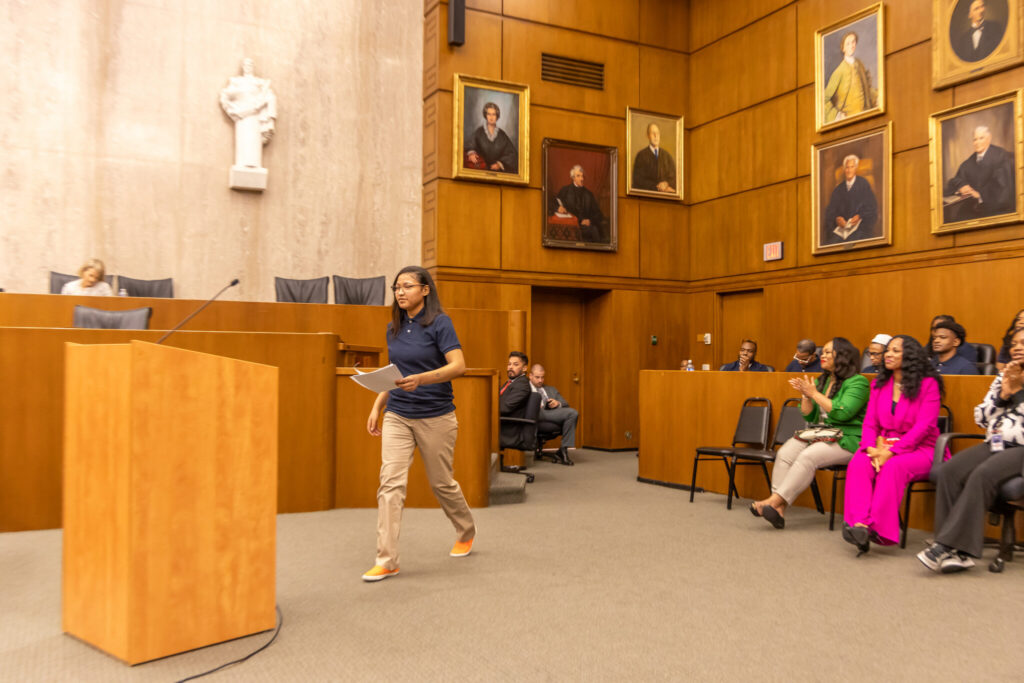
An old black-and-white photo of women protesting in Iran in the 80s. Many of them are yelling, with their fists in the air. They're protesting an (at the time) newly enforced dress code for women in Iran, requiring women to dress a certain way or else lose their jobs.

You Should Give a Sh*t About: Gender Apartheid

WP_Post Object
(
    [ID] => 4739
    [post_author] => 15
    [post_date] => 2022-09-01 23:27:00
    [post_date_gmt] => 2022-09-01 23:27:00
    [post_content] => 

Pregnancy and parenting will never "just work out” for everybody.

Nine years ago, I told my mother that the man I was seeing didn’t want children. I wasn’t yet sure what I wanted, and at the time his certainty was both comforting and concerning: I appreciated that he knew his own mind but wanted to keep my options open. “Oh, well,” my mom said. “Sometimes certain people meet, and someone gets pregnant, and—BOOM!—everybody's happy.” She was sort of joking, and sort of not. I knew she hoped that he, and I, would change our minds about becoming parents. Nine years later, for a variety of reasons, we haven’t.

Despite her Catholic education, my mother is fervently pro-choice. Having suffered a difficult miscarriage and carried three pregnancies to term, she is not cavalier about the toll pregnancy and labor take on the body and soul. She recognizes what most people—including anti-abortion activists, who get abortions when they need them—intuitively know: that forcing someone to remain pregnant and give birth is an act of brutality.

Yet, like many Americans, my mother also wants to believe that even unexpected pregnancies can sometimes turn out for the best, especially when those involved are ready, willing, and able to become parents.

It’s not wrong to wish this were always the case. It would certainly be better if it were impossible to make a baby unless you were ready and willing to parent, and always possible when you were; if every pregnancy and delivery were complication-free; and if every baby were painlessly ushered into a stable and functional family unit at birth. But that’s not the world we live in, and pregnancy is not the peaceful, glowing, rose-tinted fantasy so many want to believe it is.

Even under the best of circumstances, pregnancy can be grueling. Some people, including celebrities like the comedian Amy Schumer and Duchess of Cambridge Kate Middleton, experience hyperemesis gravidarum, or extreme, persistent nausea and vomiting. In 2019, Schumer, then in her second trimester, estimated that she’d vomited around 980 times since becoming pregnant. The Duchess, meanwhile, described her own experience with the condition as “utterly rotten.” And while hyperemesis gravidarum is relatively rare, around 70% of pregnant people still experience nausea and vomiting. 

Pregnancy can also lead to a host of other debilitating symptoms, including depression, insomnia, and/or difficulty concentrating. “My body was heavy, tired from the insomnia that kept me awake from three until seven in the morning, exhausted from the constant vomiting, and bloated from all the eating, which fended off the unrelenting nausea,” writer Miriam Foley wrote in an essay for Parents.com. “I felt sick all day and woke up to be sick or eat during the night. I vomited in public on street corners, at roundabouts, beside parked cars, in the bin, in basins, in the toilet, in the sink…emotionally I was even worse; delicate, jumpy, tearful.”

This was Foley’s second pregnancy, one she and her husband had “very much wanted.” Imagine dealing with those symptoms when you don’t want or aren’t ready to be pregnant, give birth, or raise a child.

In the U.S., we force those who undergo childbirth to choose between solvency and recovery. Because the overwhelming majority of people who become pregnant and give birth are women, and we take women’s pain and suffering for granted, we have largely failed to ease it via public policy. Many see pain and danger as inescapable conditions of women’s lives, particularly Black and brown women, as demonstrated by our maternal mortality rates. In 2015, I wrote a column about the shocking number of U.S. women who return to work just two weeks after giving birth, a decades-long problem we lack the political will to solve. I’ll never forget the stories I heard. Two weeks after giving birth, one mom told me, she still looked six months pregnant and felt like her vagina was “inside out.” A then 34-year-old mother of two said her first baby tore her perineum, anus, and sphincter muscles “badly"; it was 10 days before she could even walk. Her legs and feet were so swollen she thought her skin was going to split open, and she developed mastitis in her left breast, which felt like the “jaws of life” were ripping her chest apart. Pregnancy and childbirth may always involve some degree of discomfort. But they could certainly be easier to endure and recover from than they are in the U.S.

The everyday agonies people who choose to be pregnant are expected to tolerate become a form of torture when those who had no choice are forced to endure them, too. A surprising number of well-meaning but clueless Americans join the right-wing religious fanatics in proffering adoption as a seamless alternative to abortion, despite the fact that the former is far riskier, costlier, and more physically and psychologically painful than the latter. As was true before Roe, and will keep happening in the wake of its repeal, many birth parents in states where abortion is illegal are forced to carry pregnancies to term and undergo childbirth against their will—a trauma with potentially life-long consequences for birth parents, babies, and adoptive families.

Even those who want and consciously decide to become parents know how hard it is to raise kids in an atomized, every-family-for-itself country with no universal health or child care, no paid family leave, and no guaranteed income. They suffer near-constant levels of stress, anxiety, and fear, both about big-picture existential threats and everyday survival. There are only four countries in the world where couples with young children who earn the average wage spend more than 30 percent of their salary on child care, and the United States is one of them—along with New Zealand, the U.K., and Australia. (By contrast, the average couple in Austria, Greece, Hungary, and Korea spends less than four percent.)

The same Republican officials who worked so tirelessly to overturn Roe have also fought tooth and nail against providing basic public goods and services to ease the considerable burdens the U.S. imposes on women and families. The states most hostile to abortion rights have no paid family leave and some of the worst maternal mortality rates in the nation. All except Louisiana are run by anti-abortion Republicans; meanwhile, Louisiana’s legislature is Republican-dominated, and its governor, a nominal Democrat, is staunchly anti-abortion, in defiance of his party’s platform. Earlier this year, the state’s lawmakers tried to classify abortion as homicide under state law and allow prosecutors to criminally charge patients. If anti-abortion legislators wanted to make it safer, easier, and more inviting to raise a family, they would have done so. Instead, they’re busy trying to figure out how to jail pregnant people.

When even the willing feel ensnared by the increasingly unmanageable demands of pregnancy and parenting, no one is free. Not every accident is a happy one, nor can it always be made so through sheer force of will. If individuals and families were not buried, alone, under the crushing burdens of pregnancy, childbirth, and childrearing, more Americans might choose to start families. And others still wouldn’t. As New York Magazine reporter Sarah Jones recently wrote, “I am childless because that’s what I’ve chosen for myself...Congress could pass Medicare for All tomorrow, and paid family leave, and all the other policies I support, and if I became pregnant right now I would still have an abortion.” 

And that is her right, whether or not a stranger or a state legislator or a Democratic governor approves it.

[post_title] => "Happy" Accidents [post_excerpt] => [post_status] => publish [comment_status] => open [ping_status] => open [post_password] => [post_name] => happy-accidents-pregnancy-parenting [to_ping] => [pinged] => [post_modified] => 2024-08-28 21:11:28 [post_modified_gmt] => 2024-08-28 21:11:28 [post_content_filtered] => [post_parent] => 0 [guid] => https://conversationalist.org/?p=4739 [menu_order] => 113 [post_type] => post [post_mime_type] => [comment_count] => 0 [filter] => raw )
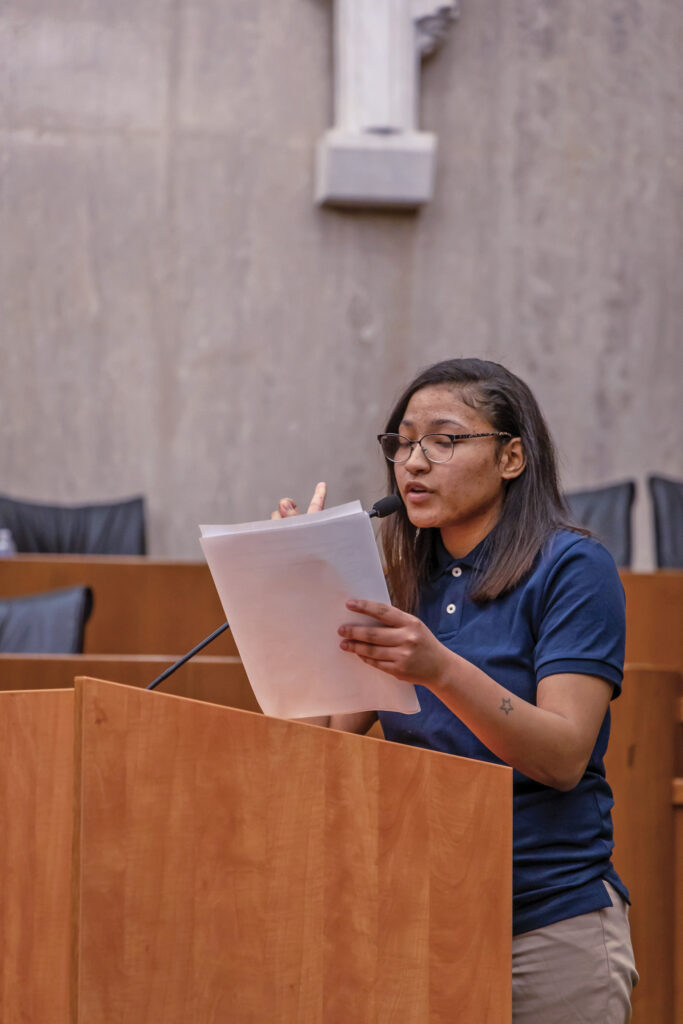
An illustration of a woman wearing sunglasses, looking down at her stomach. In the reflection, you can see that she's pregnant.

“Happy” Accidents

WP_Post Object
(
    [ID] => 4008
    [post_author] => 2
    [post_date] => 2022-04-08 12:01:03
    [post_date_gmt] => 2022-04-08 16:01:03
    [post_content] => 

A non-exhaustive list of cruel, corrupt, and extreme actions taken by Republicans of late.

With so many overlapping global crises happening at once, and Democrats in charge of the Presidency and Congress, it's especially hard to keep track of all the ways the US GOP continues to radicalize. This is partly by design. The cascade of oppressive laws and disinformation from Republican legislators and media is meant confuse and overwhelm. The following is a list of GOP and related far right news worth your attention.

  • Jamelle Bouie, Ezra Klein, Jane Coaston and Lulu Garcia-Navarro discuss how the GOP fringe took over American politics for the New York Times.
  • Gabriel Rosenberg, Duke Professor of Gender, Sexuality and Feminist Studies, wrote a Twitter thread about how the latest "groomer" panic is categorically different and more violent than what we've seen before.
  • Writer Jude Doyle does a deep dive into the growing connections between anti-trans feminists and the far right. “It’s a grim irony that, by insisting on a ‘feminism’ without any trans women in it, TERFs have wound up constructing the tool by which fascists aim to destroy feminism altogether.”
  • Roxanna Asgarian writes in NY Mag about how Texas became the most virulently anti-trans state in America, including directing the state’s child-welfare agency to conduct abuse investigations of parents who provide their children gender-affirming care.
  • For the Editorial Board, Mia Brett writes about how Republicans are close to legalizing child marriage in Tennessee. 
  • Also in the Editorial Board, John Stoehr speaks with NYU Law Professor Melissa Murray about Ginni and Clarence Thomas and how their relationship affects perceptions about the Supreme Court's legitimacy. 
  • The editorial board of the Boston Globe wants the January 6 Committee to subpoena Ginni Thomas already.
  • Elie Mystal argues in The Nation that post-Roe, Republicans are coming for marriage equality next.
  • Gerren Keith Gaynor interviews Preston Mitchum about the harm to Black LGBTQ youth of the "Don't Say Gay" Laws.
  • The Oregon GOP is running three QAnon and Proud Boy candidates. 
  • Trump admitted to speaking to key Republican figures at the time of the riot on 1/6. Greg Sargent argues that Merrick Garland should use this admission to launch a full investigation into Trump's communications that day.
  • Speaking of which, there are 7 hours missing from Trump's phone records that day. Historian Tim Naftali writes in The Atlantic that Trump can't just erase history like Nixon did.
  • On the bright side, the DOJ plans to investigate the boxes of records Trump illegally brought with him to Mar a Lago.
  • The Child Tax Credit expiring is pushing voters towards the GOP. Meanwhile the GOP plus Joe Manchin are why it expired in the first place.
[post_title] => What has the radicalized GOP been up to? [post_excerpt] => [post_status] => publish [comment_status] => closed [ping_status] => open [post_password] => [post_name] => media-roundup-what-has-the-radicalized-gop-been-up-to [to_ping] => [pinged] => https://www.editorialboard.com/while-republicans-in-florida-debate-dont-say-gay-republicans-in-tennessee-are-close-to-legalizing-child-marriage/ [post_modified] => 2024-08-28 21:11:28 [post_modified_gmt] => 2024-08-28 21:11:28 [post_content_filtered] => [post_parent] => 0 [guid] => https://conversationalist.org/?p=4008 [menu_order] => 126 [post_type] => post [post_mime_type] => [comment_count] => 0 [filter] => raw )
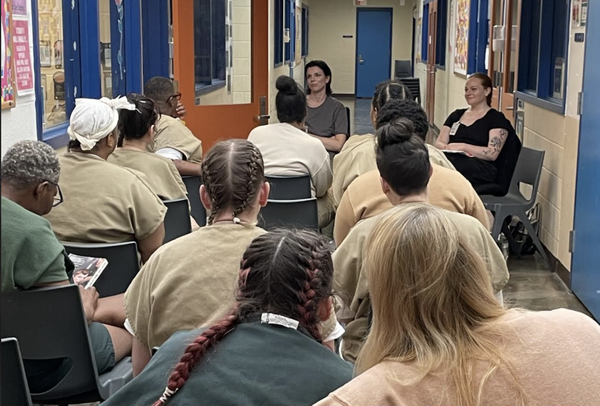
What has the radicalized GOP been up to?

WP_Post Object
(
    [ID] => 3993
    [post_author] => 2
    [post_date] => 2022-04-01 12:01:52
    [post_date_gmt] => 2022-04-01 16:01:52
    [post_content] => 

Judge Ketanji Brown Jackson performed admirably before the Senate Judiciary Committee, despite attacks on her historic nomination to the Supreme Court by Republican conspiracies, racism and sexism.

Last week, the Senate Judiciary Committee held hearings on the appointment of Judge Ketanji Brown Jackson to be the first Black female justice to sit on the Supreme Court. The hearings were a circus of QAnon conspiracies and racist dog whistles, with little pushback on Republicans from Democrats. This week Executive Director Anna Lind-Guzik highlights recurring themes in the commentary on Jackson's nomination: Republican abuses and complicity, Jackson's unwavering composure and respectability politics, Democrats' abandonment of their nominee, rampant misogynoir (misogyny specifically targeting Black women), and in spite of everything, pride at Jackson's historic nomination, both as a Black woman and a former public defender.

Republican misbehavior, politicization and complicity

So far the only one Republican, Susan Collins, has said she will vote to confirm Judge Jackson. Longtime Supreme Court reporter Linda Greenhouse writes for the New York Times: "every Republican who votes against her confirmation will be complicit in the abuse that the Republican members of the Judiciary Committee heaped on her." She concludes, "the Republicans’ role in the Jackson hearing was not remotely about Ketanji Brown Jackson. It was about concocting a scary version of a Black woman to serve up to their base."

Also in the New York Times, Emily Bazelon refutes Republican attacks on Judge Jackson for her sentencing decisions in child pornography cases, even citing the National Review for calling Senator Hawley's line of questioning ​​“meritless to the point of demagoguery.”

Related Posts

Democrats' failure to support Judge Jackson

Dahlia Lithwick wrote in Slate about how Democrats stranded Ketanji Brown Jackson at her hearings. "Jackson looked alone fending off the QAnon smear brigade for much of these hearings because she was alone, at least until Sen. Cory Booker took it upon himself in his last colloquy to offer up a powerful corrective to the hatred being leveled at her." 

Here is a video of Cory Booker telling Judge Jackson that no one will "steal his joy" at her nomination. When Black women were asked how they felt watching the hearings, many expressed a range from pride and hope, to pain and disgust. 

Racism, misogyny, and misogynoir

In Teen Vogue, Anna Gifty Opoku-Agyeman and Katie Camacho Orona argue that the attacks against Judge Ketanji Brown Jackson mirror those used against Justice Sonia Sotomayor. They compare the disingenuous critical race theory attacks on Judge Jackson to accusations of "reverse discrimination" made against Sotomayor. 

In Oprah Daily, legal scholars Madiba Dennie and Kate Kelly speak to the misogynoir Judge Jackson faced at the hearings. ​​"Misogynoir is a term coined by queer feminist scholar Professor Moya Bailey that encapsulates the specific hatred directed toward Black women, who face discrimination on the basis of both race and gender." 

In Ms. Magazine, Bonnie Stabile writes about misogyny's gatekeeping role at the hearings.

Composure and respectability in predominantly white spaces

Coming on the heels of Will Smith and Chris Rock's dust-up at the Oscars, Roxane Gay wrote an essay "In defense of thin skin" where she describes her pain watching Judge Jackson's hearing. She notes, "the Senate Judiciary Committee apparently valued decorum over Judge Jackson’s dignity."

For The Nation, Elie Mystal delves into Judge Jackson's pause after Ted Cruz rudely asked her, “Do you agree…that babies are racist?” He writes, "In that pregnant moment, everybody in the whole country who was watching got to see whiteness at work. Everybody knew that Ted Cruz got to stand up there and call Ketanji Brown Jackson whatever he wanted to, and nobody would stop him. Everybody knew that Jackson could not respond in kind if she wanted the job. And everybody knew that, in the same situation, Kavanaugh could and did sneer at his questioners, threaten the Senate with political retribution, and declare his undying love for beer, without hurting his chances at unaccountable lifetime power. Power he now holds."

Celebrating Ketanji Brown Jackson's accomplishments and experience

In the New York Times, Erica Green reports on how Ketanji Brown Jackson reacted to Confederate flag displays in her time at Harvard. 

For Teen Vogue, public defender Alexzandria Poole writes about her excitement at seeing a former public defender represented on the Supreme Court.

In Grid News, Chris Geidner writes that Jackson's history of acknowledging people's humanity is precisely what Republicans don't like about her.

Finally, check out Madiba Dennie and Elizabeth Hira's discussion of what Judge Jackson's nomination means to women of color in the legal profession.

[post_title] => Ketanji Brown Jackson's road to the Supreme Court [post_excerpt] => [post_status] => publish [comment_status] => closed [ping_status] => open [post_password] => [post_name] => media-roundup-ketanji-brown-jacksons-road-to-the-supreme-court [to_ping] => [pinged] => [post_modified] => 2024-08-28 21:11:28 [post_modified_gmt] => 2024-08-28 21:11:28 [post_content_filtered] => [post_parent] => 0 [guid] => https://conversationalist.org/?p=3993 [menu_order] => 127 [post_type] => post [post_mime_type] => [comment_count] => 0 [filter] => raw )
Ketanji Brown Jackson’s road to the Supreme Court

WP_Post Object
(
    [ID] => 3908
    [post_author] => 2
    [post_date] => 2022-03-01 08:30:39
    [post_date_gmt] => 2022-03-01 08:30:39
    [post_content] => 

Fired from their jobs, their bank accounts frozen, facing death threats, the country's 270 female judges are in exile or in hiding.

Only six months ago Tayeba Parsa, 34, a female judge in Afghanistan, was determined to keep advancing women’s rights despite threats that Kabul would soon fall to the Taliban.

“There were times when I was really scared, but I always went to work,” Parsa tells me by phone from Warsaw. She has been living there with her elderly father and husband since last August, when the Taliban took over Kabul, waiting for news of a student visa from a country willing to take her in. “It was my profession, I loved my job, I studied for years to become a judge. I didn’t want to give it up.”

In the six months since the Taliban took over, the rights of women in Afghanistan have been all but eliminated. Girls older than 12 have few opportunities to obtain an education, while women fighting to hold on to any progress made over the last two decades face threats, prison, and often death. In this reality, women who not only have a higher education than most, but also practiced law in a position of authority over men, run the risk of execution without trial. In January 2021, unknown assailants on a motorcycle gunned down two Afghan women judges who were on their way to work.

When Parsa fled Afghanistan she gave up not only her career, but her entire life as she knew it.

“I was at home for three days when we heard news that the Taliban were at all checkpoints,” she says. “I collected all my documents and started destroying case notes to hide my identity.”

A former judge in the commercial division of the appeals court of Kabul province, Parsa is a member of the International Association of Women Judges (IAWJ) and volunteered to act as communications officer for the local branch. This association automatically placed her at higher risk. 

“The Taliban consider every Afghan who collaborates with foreigners an infidel, a traitor,” she says. “When I was a judge, I was receiving constant anonymous death threats.” To avoid being targeted by the Taliban, Parsa and her fellow judges hid their identities when going to work and avoided riding in officially marked cars. She says she knew the dangers and accepted them. 

“You never knew if you were going to come home,” she said.

In Taliban-controlled Afghanistan, all women and girls are at risk. But no one is more in danger than women lawyers, judges, journalists, and police officers. Women in key positions of power were especially targeted by this regressive militant group, which seeks to enforce an extremist interpretation of Islam. As soon as the Taliban took over, the women lost their jobs and saw their bank accounts frozen. They knew their lives were in imminent danger. 

Afghan women judges were instrumental in challenging their deeply patriarchal society by demonstrating that violence against women and girls is not only wrong, but a punishable criminal offence. Putting aside fears for their own safety, they convicted and sentenced the men who stood trial in their courtrooms for rape, kidnapping, murder, forced marriage, or preventing women from going to school. 

The new Taliban government has released criminals whom Parsa, and approximately 270 other female judges, had sentenced to prison after they were convicted of crimes. With these men now free to take revenge, the women were in grave danger.

Nabila, who requested that her last name be withheld, was a family court judge who granted divorce petitions to many women. 

“Afghan law stipulates that a wife can request a divorce if her husband has been jailed for more than five years,” she tells me. “Some of these men were dangerous criminals who had committed serious crimes like murder and kidnapping. I granted these divorces according to the rule of law, but when the Taliban arrived, they released many of these criminals who came looking for me. I was no longer safe.”

Nabila is one of 26 female Afghan judges and lawyers who, along with their families, arrived in Athens from Afghanistan via Georgia this past September. While she, her husband, and their three children were eligible for evacuation, their immediate families remain behind. They fear reprisals against them and worry about their day-to-day living conditions, with a worsening humanitarian crisis on the ground.

“We’re always calling them, always checking up on them,” she said, adding that her relatives have had to change homes frequently for their safety. 

International sisterhood 

The International Association of Women Judges, which represents more than 6,500 judges in over 100 countries, has been instrumental in helping their Afghan colleagues get out of the country and in amplifying their message. 

Mona Lynch, a Supreme Court judge in Nova Scotia and regional director of the International Association of Women, emphasized the urgency of getting those women out of Afghanistan. 

“We have been trying to assist them in any way we can over the past few months,” she says. “These brave women have contributed for 20 years to maintaining the rule of law and stable governance in Afghanistan.” 

“None of them wanted to leave their country, they simply had no choice,” said Judge Lynch. “And the ones still left behind are getting more and more desperate as the circumstances deteriorate. They need help and we need to be their voice.”

Education is everything 

While waiting in Poland, Parsa has been using her free time to improve her English. After applying for scholarships at German, French, and American universities she obtained a visa for the UK, which she accepted—but at a cost. 

“I’m happy because it’s an English-speaking country, and I can’t imagine the additional hurdle of learning another language right now, but the visas are only for me and my husband. I would have to leave my father behind. I don’t know what to do.” 

She hopes to return to Afghanistan one day and help rebuild the country, but right now it’s only a vague dream, fueled by cautious optimism.

“The situation as it is right now won’t stand,” she says. “It’s intolerable, there’s no rule of law. Trials are being conducted by illiterate people. I want to be the voice of all Afghan women judges, those who are still there, still in hiding, still in danger, and those who have been evacuated but haven’t been offered visas,” she said, making a plea for the international community to help extricate the women still in hiding in Afghanistan, and to help settle permanently the women who got out but are still waiting for visas.

Nabila’s husband Asadullah, who is a construction engineer, has been translating parts of the conversation in his fluent English. In answer to the interviewer’s question, he described Afghanistan’s immediate future as “dark,” adding that this was the case “especially for women."

“I believe in women’s rights, they’re half of society,” he says. “I have three daughters and I saw a dark future for them there. My girls would not have been able to attend school. The Taliban may have promised that they can go, but I don’t believe them.”

Life in Limbo in Athens

Some 200 female Afghan judges, Nabila among them, are hoping Canada will fast-track their arrival, since they qualify under a resettlement program for Afghan refugees in danger for having held leadership or human-rights positions. 

Greece has welcomed more women fleeing Afghanistan than any other country so far. Amed Khan, an American philanthropist who was instrumental in helping many Afghan judges find a temporary home in Greece, said in an article for The Greek Reporter that it reflected an openness he saw from smaller governments that was missing from the world’s biggest economic powers.

“The only political leadership I’ve seen is from smaller countries like Greece, Albania, Qatar, North Macedonia; it’s not the G7,” said Khan. “A lot of countries made a lot of money in Afghanistan and now they want to wash their hands and look for the next opportunity.”

Despite her gratitude, Nabila wants to put down permanent roots and is waiting eagerly for news of permanent resettlement. She is worried about the children being unable to attend school in Greece, because they are in the country on temporary visas.

A painfully slow process 

Few countries have provided easy pathways for these women. They are scattered with their families in more than 17 countries around the world, and only a small number have been resettled permanently in their final destinations. 

The American Bar Association has created the Afghanistan Response Project and the International Association of Women Judges has launched a fundraising campaign, but these efforts rely more on individual goodwill than government assistance.

The Canadian government has expanded its special immigration program to include women leaders and human rights defenders, as well as persecuted minorities, but advocates say the process is too slow. Immigration Minister Sean Fraser recently suggested that it could take up to two years for the government to meet its promise of resettling 40,000 Afghan refugees. Fewer than 7,000 have arrived in Canada so far. 

And so these women wait, stuck in limbo. They can’t dream or plant roots in a temporary home. They worry about their future.

“These are professional, talented, brave women,” Parsa tells me. “They fought for the rule of law in Afghanistan. They stood strong against threats and political pressure. They’re educated and driven, they deserve to be offered scholarships and a new life, they are the future of Afghanistan.”

[post_title] => Afghanistan's female judges lost everything when the Taliban took over [post_excerpt] => In Taliban-controlled Afghanistan, all women and girls are at risk. But no one is more in danger than women lawyers, judges, journalists, and police officers. Women in key positions of power were especially targeted. [post_status] => publish [comment_status] => closed [ping_status] => open [post_password] => [post_name] => afghanistans-female-judges-lost-everything-when-the-taliban-took-over [to_ping] => [pinged] => [post_modified] => 2024-08-28 21:11:29 [post_modified_gmt] => 2024-08-28 21:11:29 [post_content_filtered] => [post_parent] => 0 [guid] => https://conversationalist.org/?p=3908 [menu_order] => 135 [post_type] => post [post_mime_type] => [comment_count] => 0 [filter] => raw )
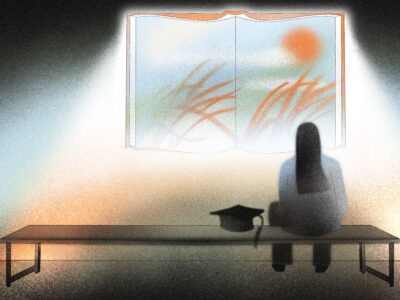
Afghanistan’s female judges lost everything when the Taliban took over

WP_Post Object
(
    [ID] => 3864
    [post_author] => 2
    [post_date] => 2022-02-17 19:32:44
    [post_date_gmt] => 2022-02-17 19:32:44
    [post_content] => 

Canadians tend to see the extremism expressed by the truckers and their supporters as a fringe movement imported from the U.S., but that is a gross oversimplification.

The so-called “Freedom Convoy,” a highly disruptive protest organized and led by Canadian truckers who oppose vaccine mandates and other pandemic-related restrictions, is now entering its third week. Protesting truckers drove their rigs into downtown Ottawa and set up camp, blowing their horns at eardrum-shattering decibels for hours each day and holding tailgate parties, making the downtown area of Canada’s usually placid small capital city unlivable. City residents are incensed by the noise and disruption, while the chief of police has resigned under fire for his failure to disperse the demonstrators.

The protesters are deeply unpopular in Canada, which has one of the highest vaccination rates in the world with 90 percent of the population overall—including truckers— having received at least two doses. And yet, the Freedom Convoy has managed to dominate the news cycle and paralyze Canada’s capital city, forcing Prime Minister Justin Trudeau to take the unprecedented step of invoking the Emergencies Act, which gives law enforcement expanded powers to arrest protesters and break up demonstrations.

The angry, anti-vax truckers have harassed residents to the point that older people are afraid to leave their homes; they have committed multiple acts of vandalism and violence, some targeting journalists; and in one egregious incident were spotted lighting a fire in the lobby of a residential apartment building. They have blockaded roads, and not only in Ottawa. The freedom convoy participants have also shut down multiple border crossings as the protest has spread west, with particularly large presences elsewhere in Ontario and in Alberta, an oil-rich province known for cattle ranching and the prevalence of strong right-wing views, including secessionism—a combination that often elicits comparisons with Texas.

On Sunday police cleared and reopened the Ambassador Bridge, where protesters had for a week choked off a critical commercial route that connects Detroit, Michigan, to Windsor, Ontario. But the authorities have not yet found the stomach to forcibly break up the protest in Ottawa. As the siege drags on, journalists, pundits, and the public have been digging into the ideological motivations, funding sources, and cross-border networks of the protesters.

Protesters have displayed swastikas, Canadian flags, Confederate flags, Gadsen flags, Trump flags, U.S. flags, and QAnon messaging. Observers have also reported conservative Christian messaging and symbols that were likewise present at the U.S. protests against the 2020 election results that culminated in the January 6 insurrection. The elements clearly inspired by American right-wing Christians include “Jericho marches” around the parliamentary precinct in Ottawa, in a symbolic reenactment of the Hebrew Bible tale about God causing the city of Jericho’s walls to collapse after the Israelites marched while blowing ram’s horns, or shofars. Right-wing Christians have in recent years appropriated these Jewish ritual instruments, blowing them during church services and at “Jericho marches” in both the U.S. and Canada. The organizer of the Canadian “Jericho marches” is Benita Pedersen, an Albertan.

As Jorge Barrera reports for the CBC, “Christian faith — with an overtly evangelical feel — flows like an undercurrent through the Freedom Convoy in Ottawa.” But how much of this represents the direct influence of the American Christian Right, as opposed to an expression of homegrown, if fringe, Canadian extremism and majoritarian grievance?

Catherine Porter, the New York Times’s Canada bureau chief, observed that “many believe the unrest is essentially a U.S. import,” but this is an oversimplification. The discourse reminds me of how, when I first began researching networks involving U.S. Christian Right actors and right-wing, pro-Putin Russians (many associated with the Russian Orthodox Church) in 2013, the spread of illiberal, socially conservative policies in the global South, Eastern Europe, and Russia was often framed in terms of the exportation of America’s culture wars. A few years later, when the connections between Donald Trump’s campaign for president and various Russian actors became apparent, many liberals embraced the simplistic and frankly absurd notion that the U.S.’s right-wing extremism and deep social and political divisions had been essentially manufactured by Russian disinformation. The reality is that Russian influence operations managed to exploit and exacerbate problems that already existed.

Throughout those years, while monitoring the various networks and connections between American, western European, and Russian right-wing extremists, eventually in my capacity as a senior research associate with the Postsecular Conflicts project based at the University of Innsbruck in Austria, I stressed agency among actors from all factions and rejected temptations to view the efforts of organizations like the World Congress of Families (now known as the International Organization for the Family) as sites of unidirectional influence.

By the same token, the international ties between Canada’s right-wing extremists and those from other countries, primarily the U.S., must be seen in terms of multidirectional influence and feedback loops. The U.S. Christian Right does have ties to Canadian extremist groups, and at least a diffuse connection to the convoy wreaking havoc in Ottawa. Whereas transatlantic connections are usually limited to elite, higher-level actors, Canada and the U.S. share the world’s longest undefended border, making it easy for less well-funded, less sophisticated, less easily monitored actors to connect with one another—people who are ready to engage in street violence, or ideologues and agitators who are happy to appear alongside street brawlers.

Proud Boys Canada may have officially dissolved itself after Ottawa declared it a terrorist organization last spring, but the organization was founded by a Canadian. And, while the Proud Boys have become mainly an American group, some Canadians have been involved in violent right-wing protests on the U.S. side of the border. These include the January 6, 2021 insurrection in Washington, D.C., where at least one Canadian flag was spotted, and where a group of Proud Boys knelt in an unmistakably evangelical prayer that was captured on video before playing a prominent role in the violence. Canadian actors have also been present at right-wing protests and incidents of street violence in Portland, Oregon—a city frequently targeted by the Proud Boys and similar far-right group Patriot Prayer.

The most well-known Canadian who has frequented Oregon is the notorious Artur Pawlowski, a Polish-born evangelical pastor based in Calgary, Alberta, who has led raucous protests and direct actions against public health mandates in Canada throughout the coronavirus pandemic, claiming that public health protections violate his “religious freedom.” In one such protest, Pawlowski and other participants carried tiki torches in a clear nod to the August, 2017 white supremacist “Unite the Right” rally that took place in Charlottesville, Virginia. Pawlowski was recently arrested in Coutts, Alberta, in connection with his support for the protesters blockading the border crossing there.

As for the American Christian Right’s connections to the trucker protest in Canada, major figures such as Franklin Graham—world-famous evangelist Billy Graham’s son and head of the Billy Graham Evangelistic Association—have spoken out in support of it. Although they are not household names, prominent “prophets” and “apostles” associated with the radical charismatic movement known as the New Apostolic Reformation—the kind of Christianity espoused by former Trump spiritual advisor Paula White—are also broadcasting their support, as researcher Bruce Wilson, who has published numerous articles documenting Christian Right and NAR activities and networks, confirmed when asked for comment.

The man holding the sign told 'The Catholic Register' that Pope Francis is a heretic and that the government is forcing people to take vaccines.

But perhaps the most significant U.S. Christian Right connection to the so-called “Freedom Convoy” is represented by the explicitly Christian crowdfunding site GiveSendGo, which has become infamous in recent years for funding white supremacist causes, including the legal defense of Kyle Rittenhouse, who gunned down supporters of Black Lives Matter at a protest in Kenosha, Wisconsin. Crowdfunding has allowed massive amounts of dark money to flow to the Canadian extremists behind the protest at a rate that dwarfs typical Canadian political fundraising, a worrisome development that could continue to undermine the country's civil society and democracy after the current protests are over.

Last week hackers broke into GiveSendGo’s network, releasing donor names, email addresses, and other information to journalists and researchers. One scholar looking into where the money originates is Dr. Thomas Lecaque, an associate professor of history at Grand View University. Lecaque posted a Twitter thread of messages from donors (without disclosing their names or other personally identifying information), as well as the countries (and in some cases states/provinces and cities) they come from. Eight of these messages “explicitly discuss Jericho,” Lecaque tweeted. The donations referenced in his thread mostly stemmed from the United States and Canada, but one came from the UK and another from France.

Lecaque told The Conversationalist that while the donors came from a broad geographic range, a high proportion were from the U.S. His keyword search of the messages donors posted brought up “a lot of religious themed entries, some more extreme than others.” Most of them were of the anodyne “God bless” variety, but there were some violent ones as well, with “themes of spiritual warfare or QAnon.” Lecaque acknowledged that explicitly religious messages were in the minority, but their presence nevertheless stood out.

The mostly white, racially aggrieved, conspiracy-theory believing crowd in the U.S. and Canada espouse unpopular views and support unpopular policies, but by using technology to connect and crowdfund internationally, they have managed to punch politically above their weight. Both countries have homegrown extremists and their own respective racist and colonialist realities to confront, but right-wingers from either side of the border are also influencing each other, probably more through media (including social media) than through direct cross-border interactions.

But what is it exactly that facilitates the mutual admiration and networking? That factor seems to be affiliation with conservative Christianity—especially, although not exclusively, evangelical Protestantism. This tracks with what I’ve observed in my own research both with respect to the domestic Christian Right and international right-wing networks. We are living through a moment of surging right-wing populism in North America, Europe, Australia, and some other parts of the world—a massive backlash against civil rights gains and the rise of multicultural democracy by the heirs of European colonialism and genocide.

A sense that they are outnumbered has contributed both to these individuals’ radicalization, and to the easing of traditional theological, cultural, and geopolitical enmities between various Christian and ethnic groups, paving the way for aggrieved (and mostly white) hardline Catholics, Protestants, Mormons, and Orthodox Christians to band together in attempts to assert dominance through the promotion of a “traditional values” agenda—whether in the European Court of Human Rights, the U.S. Supreme Court, or the streets of Portland and Ottawa. While most American, Canadian, and European Christians are not right-wing extremists, most American, Canadian, and European right-wing extremists identify with Christianity, and find in it a justification for their bigotry and anti-social, anti-government, and anti-democratic actions. For democracy to prevail, we must find more effective ways to counter the diffuse international threat of Christian extremism.

[post_title] => Conservative Christianity's influence on the 'Freedom Convoy' indicates global spread of authoritarianism [post_excerpt] => The protesters are deeply unpopular in Canada, which has one of the highest vaccination rates in the world with 90 percent of the population overall—including truckers— having received at least two doses. And yet, the Freedom Convoy has managed to dominate the news cycle and paralyze Canada’s capital city. [post_status] => publish [comment_status] => closed [ping_status] => open [post_password] => [post_name] => freedom-convoys-extremism-poses-long-term-damage-to-canadian-civil-society [to_ping] => [pinged] => [post_modified] => 2024-08-28 21:15:12 [post_modified_gmt] => 2024-08-28 21:15:12 [post_content_filtered] => [post_parent] => 0 [guid] => https://conversationalist.org/?p=3864 [menu_order] => 139 [post_type] => post [post_mime_type] => [comment_count] => 0 [filter] => raw )

Conservative Christianity’s influence on the ‘Freedom Convoy’ indicates global spread of authoritarianism

WP_Post Object
(
    [ID] => 3748
    [post_author] => 2
    [post_date] => 2022-01-20 20:18:54
    [post_date_gmt] => 2022-01-20 20:18:54
    [post_content] => 'When there’s ambiguity, some governments will take advantage of that and try to use it to clamp down on speech.' —Human Rights Watch

Cybercrime is on the global agenda as a United Nations committee appointed to develop a treaty on the topic plans for its first meeting amid pandemic-related delays. The process is slated to take at least two years, but experts warn that such a treaty–initially proposed by Russia–could hand new tools to authorities looking to punish those who report the news.

The issue stems from competing definitions of cybercrime—one narrowed on malicious hacking of networks and data, the other encompassing any crime facilitated by a computer. It matters because many authorities around the world already invoke cybercrime or cybersecurity laws to punish journalists— not for secretly hacking into networks or systems, but for openly using their own to publicize wrongdoing.

“When there’s ambiguity, some governments will take advantage of that and try to use it to clamp down on speech,” Deborah Brown, senior researcher for digital rights at Human Rights Watch (HRW), told the Committee to Protect Journalists (CPJ). Brown has written about a global surge in national cybercrime laws undermining human rights. “It’s important to look not just at what’s being proposed at the global level, but at how national governments are interpreting their own laws,” she told CPJ.

Cybercrime laws criminalize topics like false news in NicaraguaNigeria, and Sudan, among other countries. Journalists have been arrested on cybercrime charges in Iran for reporting on the economy; in Pakistan for investigative and political commentary; and in Benin, for alleged defamation.

In 2011, CPJ warned about Russia’s push, along with China and a handful of other UN member states, to propose an “information security” code to combat online information that could incite terrorism or undermine national stability, charges both countries have levied against journalists.

“This has been part of Russia’s agenda for a while, and China has also been pushing for a treaty that would achieve similar goals—simply to extend more state control over the internet,” said Sheetal Kumar, head of global engagement and advocacy at Global Partners Digital, a London-based organization advocating digital rights.

CPJ emailed the Russian and Chinese permanent missions to the UN in New York to request comment but received no response.

Cybercrime measures can affect the press even if they don’t explicitly criminalize speech. According to Kumar, some seek to undermine encryption, a privacy feature that helps journalists protect files and communicate privately with sources and colleagues. CPJ has reported on journalists facing trumped-up hacking charges in retaliation for reporting, like Egypt’s Nora Younis. Journalists in the U.S. have told CPJ that the federal Computer Fraud and Abuse Act criminalizes data-gathering and verification activities that ought to be considered a routine part of reporting the news. In one recent local U.S. case, Missouri governor Mike Parsons said on December 29 that he expected prosecutors to charge St. Louis Post-Dispatch reporter Josh Renaud under a state anti-hacking statute for publicizing a local government website vulnerability that had exposed teachers’ Social Security numbers.

But journalists could be even more vulnerable if a global convention entrenches a broader definition of computer-enabled cybercrime, according to Brown at HRW. “The [UN] treaty has the potential to criminalize certain behavior and content online,” she said.

“Jordan, Indonesia, Russia, China, and others want to see a much broader scope [for the treaty] with so-called morality crimes, disinformation – more content-based crimes,” Kumar said, citing national statements submitted ahead of the convention. CPJ has documented journalists imprisoned under both Jordan’s Cybercrime Law and Indonesia’s Electronic Information and Transactions Law in the past.

Three journalists who have been arrested under cybercrime laws:

[caption id="attachment_3752" align="alignleft" width="400"] Maria Ressa at the International Journalism Festival in Perugia, Italy, April 4, 2019.[/caption]
  • Filipino journalist Maria Ressa, who was awarded the Nobel Peace Prize in October, is battling a spate of spurious libel charges under the Philippines’ 2012 Cybercrime Prevention Act in connection with reporting by her news website, Rappler, and could face a six-year prison sentence if one conviction from 2020 is not overturned on appeal.
  • Bangladeshi reporter Ruhul Amin Gazi has been jailed for over a year without trial because a 2019 report about an executed opposition leader published by his employer, the Bangla-language Daily Sangram newspaper, was available on the internet, triggering a criminal complaint under the Digital Security Act, Rezaur Rahman Lenin, an independent academic and activist based in Dhaka who has followed the case, told CPJ. Local courts deny bail to those charged under the law so often that the prosecution itself is a punishment, Lenin said.
  • Nigeria’s Cybercrimes Act criminalizes using computers to transmit information that could cause annoyance or that the sender knows to be false; Luka Binniyat, a Nigerian journalist who contributes to the U.S.-based outlet The Epoch Times, was arrested under the Cybercrimes Act in November 2021 and continues to be held in advance of a February 3 court hearing.
Many UN member states are calling for increased international cooperation in cybercrime investigations, which could see more information about alleged criminals shared across borders, according to Kumar. “What’s good is that a number of states have said they want a rights-respecting approach,” she said. “But the devil is in the detail. You’re asking for increased [law enforcement] powers, you’re also saying human rights need to be protected. That’s where the issues will lie.” This article was originally published by the Committee to Protect Journalists.  [post_title] => The UN's push for a cybercrime treaty could endanger the security of journalists [post_excerpt] => 'When there’s ambiguity, some governments will take advantage of that and try to use it to clamp down on speech.' —Human Rights Watch [post_status] => publish [comment_status] => closed [ping_status] => open [post_password] => [post_name] => the-uns-push-for-a-cybercrime-treaty-could-endanger-the-security-of-journalists [to_ping] => [pinged] => [post_modified] => 2024-08-28 21:11:29 [post_modified_gmt] => 2024-08-28 21:11:29 [post_content_filtered] => [post_parent] => 0 [guid] => https://conversationalist.org/?p=3748 [menu_order] => 146 [post_type] => post [post_mime_type] => [comment_count] => 0 [filter] => raw )

The UN’s push for a cybercrime treaty could endanger the security of journalists

WP_Post Object
(
    [ID] => 3712
    [post_author] => 2
    [post_date] => 2022-01-13 21:30:06
    [post_date_gmt] => 2022-01-13 21:30:06
    [post_content] => The trials of the women, though on vastly different charges, demonstrate clearly that there are two classes of victims: those for whom the wheels of justice grind slowly; and those for whom they move quickly.

On the first weekday of the new year a California jury handed down a verdict in United States vs. Elizabeth Holmes, finding the Theranos founder guilty of four counts of wire fraud and conspiracy to commit fraud against investors. Just a few days earlier, a New York City jury found Ghislaine Maxwell, the disgraced British socialite who procured girls for Jeffrey Epstein to abuse sexually, guilty of sex-trafficking. The timing of the two decisions aimed at powerful women made them collectively feel like a good omen, as if 2022 was shaping up to be the Year of Accountability. 

According to the evidence presented by prosecutors in both cases, the verdicts seemed fair and the juries thoughtful. (John Carreyrou, the former Wall Street Journal reporter whose investigative series on Theranos brought down the company, said in the final episode of Bad Blood, his podcast series about the Elizabeth Holmes trial, that the jury had been “unusually thoughtful.”) Holmes was found guilty of defrauding investors but cleared of the charges against patients. Maxwell, for her part, was convicted of five of the six counts with which she was charged for aiding and abetting Jeffrey Epstein’s sexual abuse of minors in the 1990s. 

As different as the charges were, both trials raised uncomfortable questions about gender, underscoring how seriously our legal system takes protecting the interests of rich white men. Remember that Maxwell is the only person to have faced federal prosecution for her involvement in Epstein’s vast criminal enterprise—besides Epstein, who died in prison in what was ruled a suicide. Holmes is a “unicorn”—the first Silicon Valley CEO to be convicted of white collar crime, who also happens to also be a female founder, an under-represented demographic that receives just 11 percent of VC funding. “I wonder if [Holmes would] be going to prison if she didn’t have ovaries,” mused NYU marketing professor Scott Galloway on his podcast, Pivot

Like the last prominent female CEO convicted of white collar crime—Martha Stewart, who in 2004 was found guilty of obstruction of justice and sentenced to five months in prison—Holmes became a cautionary tale about a woman who flew too close to the sun, inspiring both a media frenzy and a content extravaganza. The rise and fall of Holmes, a billionaire (on paper) entrepreneur who was once heralded as the next Steve Jobs, has generated two prominent podcasts, a best-selling book, a documentary, a TV series on Hulu debuting March 3 that stars Amanda Seyfried, and a recently announced Apple Original Films adaptation of Carreyrou’s book, Bad Blood, starring Jennifer Lawrence. (Martha Stewart’s case, which took place before the podcast revolution, also inspired best-selling books—including a how-to guide written by Stewart herself while she was under house arrest—and a made-for-TV movie starring Cybill Shepherd.)    

Things get a bit more complicated—both with the Stewart comparisons and the idea that Holmes’s case contains broader lessons for the tech industry—when you consider the specifics of what she promised, and what Theranos actually delivered. As I have noted before, Theranos wasn’t a tech company, despite how it was pitched to investors. Holmes wasn’t trying to hawk a ride-sharing app or a social network or a coworking space. She was pitching a medical device that purported to diagnose diseases from a drop of blood with greater accuracy than traditional laboratory tests requiring larger samples. And unlike Martha Stewart, whose crime was relatively minor—she lied to investigators about a suspiciously well-timed sale of stock—Holmes lied to patients and investors, with life-altering implications.  

Theranos’s product never worked, which set Holmes apart from her Silicon Valley peers. Holmes told investors that Theranos’s “minilab” device could run thousands of blood tests, even though it never could run more than 12. She implied that it was being deployed on the battlefield and in Medevac helicopters, when she never had a deal with the Department of Defense beyond an exploratory conversation. One patient, Erin Tompkins, testified that she ordered a Theranos test at Walgreens, and was misdiagnosed as having HIV. “I was quite emotional about it,” she said, adding that she tried to call the company but never got beyond a customer service representative. Another patient, Brittany Gould, took the stand to say that a Theranos test result indicated that she was miscarrying, which would have been her fourth miscarriage in a row. Thankfully, a nurse practitioner encouraged her to get a second test, which confirmed that Gould’s baby was healthy. 

[caption id="attachment_3721" align="alignleft" width="640"] (l to r): Bill Clinton,
Elizabeth Holmes, and Jack Ma at the Clinton Global Initiative on September 29, 2015.[/caption] As disturbing as that all sounds, it was the charges that stemmed from lying to the investors—not to the patients—that caused the jury to return a guilty verdict. To be sure, the defense successfully blocked testimony about the emotional impact of getting false test results, so it may have been harder to convince the jury to convict on those counts. Juror number six, a man named Wayne Katz, explained to ABC News that the jury ultimately felt that the CEO was “one step removed” from patient victims, so they weren’t directly defrauded in the same way as investors like the billionaire DeVos family, which put $100 million into Theranos; Daniel Mosley, a lawyer who invested $6 million; or PFM Health Sciences LP, a hedge fund that invested $96 million. For whistleblower Tyler Shultz—grandson of former Secretary of State George Shultz, who was on the company’s board—the verdict was mostly cause for celebration. But, as he told John Carreyrou on his Bad Blood podcast, he and his former colleague Erika Cheung were not motivated to put their “necks out on the line” so they could avenge aggrieved billionaires. They were trying “to save patients from potentially getting bad medical results.”   It would be a travesty if Elizabeth Holmes were to wind up being the only Silicon Valley hype artist called to account for lying to investors or a range of other crimes. Elon Musk, for example, got a slap on the wrist for tweeting that he was taking Tesla public—a lie that sent the stock soaring—settling with the Securities and Exchange Commission for $40 million and agreeing to make some performative changes at the company. Travis Kalanick never faced criminal charges for any of the multiple scandals at Uber, which included price gouging, a culture of rampant sexual harassment and a failure to vet drivers, which led to high profile incidents of drivers committing sexual assault on female passengers. Neither has Facebook’s Mark Zuckerberg, even though his platform’s algorithm has weaponized disinformation, leading to disastrous outcomes ranging from a genocide in Myanmar, manipulation of the 2016 U.S. presidential election by a Russian troll farm, and the coordination of the assault on the Capitol by white nationalists on January 6, 2021.   Holmes has yet to be sentenced. Each of her four fraud counts carries a 20-year maximum, but those sentences are likely to be served concurrently. She will probably get off with a much lighter sentence, as the judge takes into consideration factors such as her being the mother of an infant. Maxwell, who faces up to 65 years in prison, is awaiting sentencing, though her lawyers are currently trying to throw the whole verdict out on a technicality after a juror told a media outlet that he was a victim of sexual abuse. 
It has long been said that “the wheels of justice turn slowly,” but by looking at these two cases it’s clear that the relative slowness of that turning seems to depend on who the victims are. In the Maxwell case, where the victims were sexually abused underage girls, the crimes went uninvestigated for decades, until Julie K. Brown, a journalist with the Miami Herald, wrote a series that led to Epstein’s second arrest in 2019. (In 2008, Epstein famously cut a deal with prosecutors in Palm Beach, in which he pleaded guilty to soliciting a prostitute and served just 13 months in jail with extensive “work release.”) By contrast, Holmes was indicted for fraud more quickly–about three years after the first of John Carreyrou’s troubling reports were published in the Wall Street Journal Ultimately, it is a good omen that Maxwell and Holmes, with their fleets of high-priced lawyers to match their unjustified entitlement, were both charged with crimes they obviously committed. But going forward, unless the complaints of teenage sex-trafficking victims and patients who got bad, potentially life-altering test results are treated with the same urgency as those of billionaire investors who lost money on a scam, the Year of Accountability will just have to wait. [post_title] => The year started out well for justice, but less so for accountability [post_excerpt] => The trials and convictions of Ghislaine Maxwell and and Elizabeth Holmes show us that there are two classes of victims: those for whom the wheels of justice grind slowly; and those for whom they move quickly. [post_status] => publish [comment_status] => closed [ping_status] => open [post_password] => [post_name] => the-year-started-out-well-for-justice-but-less-so-for-accountability [to_ping] => [pinged] => https://conversationalist.org/2021/09/27/elizabeth-holmess-legal-strategy-part-svengali-part-cant-touch-this/ [post_modified] => 2024-08-28 21:11:29 [post_modified_gmt] => 2024-08-28 21:11:29 [post_content_filtered] => [post_parent] => 0 [guid] => https://conversationalist.org/?p=3712 [menu_order] => 148 [post_type] => post [post_mime_type] => [comment_count] => 0 [filter] => raw )

The year started out well for justice, but less so for accountability