WP_Post Object
(
    [ID] => 7313
    [post_author] => 15
    [post_date] => 2024-10-22 19:07:12
    [post_date_gmt] => 2024-10-22 19:07:12
    [post_content] => 

Why you should pay attention to Massachusetts's Question 5 this election.

This article is a part of Down-Ballot, a weeklong series highlighting state measures worth watching in the 2024 United States election.

A contentious ballot question has Massachusetts wait and bar staff fearing a dramatic change in their hourly take home pay following this November. For Corri DePatra, a bartender and server since 2001, the potential industry change is maddening.

“They’re trying to pull on heartstrings,” DePatra says. “I just think it is very emotionally manipulative.”

Question 5 on the Massachusetts ballot this election year is an initiative proposed by One Fair Wage, a national nonprofit and NGO. If the measure passes in the state, it would lead to a gradual rise in the minimum wage base pay for tipped workers from its current $6.75 to $15 an hour in the next five years. Eventually, the change would also allow for a shared tip pool between the front and back of the house to be managed by restaurant owners. But many restaurant workers have come out in opposition to its passing, arguing it would likely actually decrease their take home pay. 

“We were all at city hall and I went in to listen to the hearing,” DePatra says, noting that she was particularly outraged by One Fair Wage’s closing arguments, which pointed to discrimination against women as a driving factor for the initiative. As a waitress standing with others at the hearing, DePatra felt they were invalidating her experiences as a woman working as a tipped restaurant worker, and misrepresenting the amount of hard work that goes into being a part of the restaurant industry.

DePatra works at The Kenmore, a Boston pub specializing in fresh pregame eats and draft beers, where signs to “vote no” adorn the walls in hopes of informing customers of how their restaurant workers feel. To learn more, all signs point to a website for a coalition of small and large restaurants known as the Committee to Protect Tips.

The Committee is spearheaded by two of the largest groupings of restaurant leaders in the state: Massachusetts Restaurants United (MRU), a coalition of industry leaders from various sized restaurants and cafes that began after the peak of the Covid-19 pandemic, and the Massachusetts Restaurant Association (MRA), a not-for-profit lobbyist group. Their joint mission against Question 5 has so far been endorsed by eight local mayors, the Greater Boston Chamber of Commerce, and hundreds of Massachusetts restaurant workers.

“A lot of people are going to lose their jobs if this passes,” says Ryan Lotz, president of MRU and leader at Traveler Street Hospitality. “We’re going to see secondary and incurred costs go up for the restaurant operators and owners.”

Earlier this year, an MRU poll about industry crises noted that 85% of restaurant leaders said they are one surprise expense away from having to close. According to Lotz, restaurants are going to see an increase of over $18,000 per year per employee if the initiative is fully deployed, something most simply can’t afford. Restaurants will be forced to shift to models with fewer servers but quicker service, he argues, implementing functions like QR code menus or counters. And for guests, it will also mean higher menu prices and more fees on their checks when it comes to processing service. 

“I think that people don't really understand the restaurant industry, and don't really understand how slim the margins are,” Lotz says.

These profit margins typically fall in the 0-15% range, with the bulk of restaurants falling around the 3-5% mark, according to national restaurant system Toast. Most of those restaurants are only able to stay open, Lotz argues, because of tips.

Currently, Massachusetts, like the majority of the United States, operates on a tip credit across the restaurant industry. This translates to every server or bartender making a base pay and tips filling in the rest of the minimum wage and more. Server Adam Dougherty has been in the industry for seven years and currently works at Fenway sports bar Cask ‘N Flagon. Even on a slow day, he says he already surpasses the $15 bar.

“People will probably tip less,” says Dougherty. “I’m going to be voting no.”

Advocates for the ballot question, meanwhile, argue that tipped wages need to become a thing of the past, and allege that the tip credit model is particularly harmful for women and people of color across the industry. This is because it can allow restaurants to get away with paying staff less than a livable wage without consequence, while putting the burden on customers to make up the difference. 

One Fair Wage, which is headquartered in California, champions the initiative across the country via satellite organizing heads which advocate for tipped worker payment changes state-by-state. According to Grace McGovern, one of two Massachusetts full-time state organizers working for One Fair Wage, who has been a tipped worker herself, combating misinformation has been difficult. 

“So many people are just so surprised that a subminimum wage is still in place,” says McGovern.

She adds opposition from the Committee to Protect Tips has also weaponized their research.

“Even if 90% of the 300 people that they had completed their survey answered that they want things to stay the same, there are still 124,700 tipped workers in Massachusetts—at least—without their voices heard,” McGovern says.

Massachusetts is one of six active campaign efforts targeted at raising the minimum wage this year, with other states including Rhode Island, Arizona, and Missouri. But in total, One Fair Wage has initiated 16 total targeted campaigns in states or territories, according to their website

One place where the campaign has been successful is Washington, D.C., where according to McGovern, there has been a positive increase in the earnings of workers. Lotz, on the other hand, sees it as a tragedy.

“This passed recently, and when it did, we saw approximately 6,000 jobs lost and restaurants closing,” Lotz says.

Another hotly debated aspect of the Massachusetts ballot question is the change to the shared tip pool. Currently, Massachusetts does not have comprehensive shared tips legislation. According to McGovern, the initiative would eventually allow for tip sharing with front and back of house, but it is not immediately required. Its ultimate purpose, however, is to move us away from tipping culture as a whole, and instead make a higher minimum wage the norm. 

Jay Zagorsky, professor of public policy and law at the Questrom School of Business, agrees that tips should be eliminated, but thinks Question 5 is not the answer.

“Question 5 is poorly written and poorly thought out,” he says. 

According to Zagorsky, one of the biggest indicators of Question 5’s failure comes in the form of the legislative committee’s comments in the ballot guide, which states in all capital letters that it "OUGHT NOT TO BE ENACTED BY THE LEGISLATURE AT THIS TIME."

So if Question 5 is not the answer, what is? Those voting no are not quite sure.

“Eliminating the sub-minimum wage for tipped workers on a state-by-state basis is not the right way to go,” says Zagorsky, pointing out how rising labor costs will directly lead to fewer jobs and those that remain will be “worse off.”

For Lotz, fighting the current initiative remains his first priority. He can’t quite think of anything else before that’s resolved.

“I would be more than happy to start working on that if this doesn’t pass,” Lotz says. “What keeps me awake at night is that people are going into the voting booth in November with a lack of knowledge. We need to get as many people to understand the gravity of this question before November.”

[post_title] => The Tipping Point [post_excerpt] => Why you should pay attention to Massachusetts's Question 5 this election. [post_status] => publish [comment_status] => closed [ping_status] => closed [post_password] => [post_name] => massachusetts-question-5-minimum-wage-tips-restaurant-workers-initiative-one-fair-wage-state-election-2024 [to_ping] => [pinged] => [post_modified] => 2026-08-04 16:44:26 [post_modified_gmt] => 2026-08-04 16:44:26 [post_content_filtered] => [post_parent] => 0 [guid] => https://conversationalist.org/?p=7313 [menu_order] => 41 [post_type] => post [post_mime_type] => [comment_count] => 0 [filter] => raw )
An illustration of interchanging layers of dollar bills and paper checks, getting smaller and smaller with each layer. On top are a few pieces of candy and some loose change. In the left top corner is a red, white, and blue button that reads 2024.

The Tipping Point

WP_Post Object
(
    [ID] => 7316
    [post_author] => 15
    [post_date] => 2024-10-21 11:04:00
    [post_date_gmt] => 2024-10-21 11:04:00
    [post_content] => 

Why you should pay attention to California's Proposition 6 this election.

This article is a part of Down-Ballot, a weeklong series highlighting state measures worth watching in the 2024 United States election.

When you’re incarcerated in California and the prison system says you have to work, you can’t say no. It’s the law.

Some prison jobs are basic, like cleaning the showers or the mess hall. Other assignments are more dangerous, such as in 2020, when women at a Chino prison in San Bernardino County said they spent as many as 12 hours a day during the COVID-19 outbreak stitching masks they were forbidden from wearing. Injuries are common, with everything from cuts and bruises and carpal tunnel syndrome all the way up to amputations of fingers and hands. Sometimes, the risks are even higher. When she was incarcerated, Leesa Nomura of Koreatown, Los Angeles, remembers other women crying in fear when ordered to join the prison crews fighting the state’s wildfires, a dangerous and occasionally deadly assignment with pay topping out at $10.24 a day. That’s on the high end. Some prison assignments pay as low as eight cents an hour.

“How do you want your neighbor to come home from prison? You want them to come home beaten down and broken by a system that doesn’t care about them?” asks Nomura, a membership organizer for the nonprofit California Coalition for Women Prisoners. “Something that is breaking down their bodies, that is breaking down their internal resolve over time? Involuntary servitude to a system that is totally, 100% benefiting off of them at cents on the dollar?”

The fundamental power of every worker against dangerous or unfair working conditions is the right and the ability to quit. But on the inside, work stoppages are “serious rule violations” on par with trying to escape. To advocates, that’s why prison work has a likeness to an older practice, especially given that a vastly disproportionate share of prisoners are Black.

“Slavery is slavery, whether you are on the plantation picking cotton, or doing work at the CCWF [Central California Women's Facility] or at San Quentin,” says Katie Dixon, Policy & Campaign Coordinator for the California Coalition for Women Prisoners.

On November 5, Golden State voters could complete the unfinished business of 1865, when states like California followed the lead of the U.S. government in banning chattel slavery but not forced prison work under the 13th Amendment after the Civil War. Approval of Proposition 6 would remove the “involuntary servitude” exemption in California’s state constitution and trigger a companion law, AB 628, that requires the California Department of Corrections and Rehabilitation to develop a voluntary system where prison work can be rewarded, but not punished. 

Currently, nearly 60,000 of the roughly 90,000 people incarcerated in California state prisons have work assignments, and “when assigning an individual to work, academic, therapeutic or other institutional programs, the individual’s expressed desires and needs are among the factors that are considered,” Terry Hardy, press secretary for the state prisons, said in an email, declining to comment on the ballot measure. But this doesn’t mean these considerations are without consequences: Saying no to work can mean punishments, such as less time out of your cell, and fewer privileges, including losing out on an early release

Still, many people who are incarcerated want to work for reasons of their own, and some studies have suggested participation in the California Prison Industry Authority, which runs prison manufacturing and training programs, is associated with lower recidivism. “The alternative to not being out of your cell is being in your cell 24 hours a day,” Donald Hooker, who prefers to be called “C-Note,” says in a phone interview from the Los Angeles County state prison in Lancaster. “You’re in the cell, how far can my thoughts really go? My body, I’m freer. That’s the incentive. Not being cooped up in what is in essence 9 by 15 inches [feet] of cell space, and you’re sharing this with another person. That alone, being in that environment, is incentive enough for many people.”

But when he recently received an assignment for kitchen duty, he refused. “This is intense, intense manual labor, and I’m turning 59 in December,” C-Note says. “I would have been exhausting the remainder of my life force in the service of Gavin Newsom or whoever the governor is. And I can’t see the rest of my limited days on planet Earth exhausting my life force for the state.”

C-Note received corrective action but didn’t realize until later that the notation in his personnel file could have an even bigger impact. “If you have to go to the parole board, as I do, they’ll see that,” he says. “And those could make you stay in prison longer.”

Banning forced prison work altogether has also been a major objective of California’s advocates for reparations to Black Americans. While it would not make prison work illegal, including for pennies an hour, Proposition 6 would allow inmates the option to say no and to have a choice in participating in work.

“People talk about California being a free state [before the Civil War], but we had a law on the books: If someone had slaves when they moved to California, they could continue to own slaves,” says Assemblymember Lori D. Wilson, the Democratic chair of the legislature’s Black Caucus, who sponsored the legislation creating the ballot measure. “We, as Californians, have done historic harm.”

It’s a criminal justice issue where often-progressive California is a follower, not a leader. The state is one of 16 with an involuntary servitude provision on the books even as seven have issued repeals since 2018. An initial effort by California lawmakers stalled in 2022 after a provision to mandate minimum wage for prison work was estimated to cost $1.5 billion annually. The wage demand was dropped for the version on this November’s ballot, which has bipartisan support and little official opposition apart from a couple of newspaper editorials. 

“Inmates should not be legally empowered to dictate what chores they’re willing to do while behind bars,” the Mercury News and East Bay Times wrote. “The fundamental question here is whether inmates should be required to provide work that contributes toward their room and board. We believe they should, just as the rest of us on the outside who have not committed crimes must also do.” (The cost of incarcerating each person in California is now $132,860, having skyrocketed in recent years.) 

Voters are also skeptical. Fifty percent of likely voters said they oppose Proposition 6, while 46% said they would vote yes, according to a recent Public Policy Institute of California (PPIC) poll. Supporters chalk up some voters’ caution to the ballot measure’s adjacency to another, far more hotly contested criminal justice ballot measure, Proposition 36, which would increase penalties for drug and theft crimes.

“Our polling was very similar to PPIC’s,” says Esteban Núñez of the consulting firm Actum, one of the lead campaign consultants on the Anti-Recidivism Coalition’s ballot push. “We knew this from the gate, but nobody knows what the fuck ‘involuntary servitude’ was. It’s a legal term.”

Proposition 6 supporters are still optimistic they can pull out a victory on Nov. 5 by putting in campaign work in the coming weeks. And a win in the nation’s most populous state could add momentum to the national movement to repeal similar policies at the state and federal levels. 

“It’s about making the case between now and then. People are getting their ballots,” says Wilson. “I just don’t want to wake up the day after election day and find out California voters said it was okay to have slavery on the books.”

[post_title] => California Voters Can End Forced Prison Labor [post_excerpt] => Why you should pay attention to California's Proposition 6 this election. [post_status] => publish [comment_status] => closed [ping_status] => closed [post_password] => [post_name] => california-proposition-prop-6-indentured-servitude-prison-slave-labor-incarcerated-peoples-rights-state-election-2024 [to_ping] => [pinged] => [post_modified] => 2026-08-04 16:45:18 [post_modified_gmt] => 2026-08-04 16:45:18 [post_content_filtered] => [post_parent] => 0 [guid] => https://conversationalist.org/?p=7316 [menu_order] => 42 [post_type] => post [post_mime_type] => [comment_count] => 0 [filter] => raw )
An illustration of three incarcerated people standing in front of a yellow police lineup wall with heights listed on the left. The face of each inmate is cropped out, but each is wearing an orange jumpsuit. The two on the outside are holding white pieces of paper, one with a check mark and the other with an x. The inmate in the center is holding a ball and chain, with a check mark on it.

California Voters Can End Forced Prison Labor

WP_Post Object
(
    [ID] => 6915
    [post_author] => 15
    [post_date] => 2024-05-10 18:37:13
    [post_date_gmt] => 2024-05-10 18:37:13
    [post_content] => 

In hiring a babysitter of my own, have I become the mother I used to nanny for?

When the young woman appeared at my door, braless, pink-haired, and smelling faintly of cigarettes, the only thing I could think about were my shoes. 

My daughter had recently gone from being a baby to a toddler, and for the first time in her short life, I’d landed a dream job that would require me to return to the office after a year off. As preparation, I’d spent hours looking for a specific pair of clog boots, the exact shoes I believed I needed to walk into my new office as a new(ish) mom, newly 40, finally in her power era. They had to be either Swedish Hasbeens or from the No. 6 Store—the ones with the shearling on the inside that came to the top of the ankle. Even though I couldn’t really justify spending $400 on a pair of shoes, I was obsessed. Something deep inside me told me these boots would complete a vision of myself that I had been fantasizing about for over a decade: practical but stylish, sophisticated but understated. I felt a primal need to have them. 

Then, this manic pixie dream babysitter, complete with the prerequisite tattoos and dyed hair that changed color every week, knocked on my door, and showed me all at once where my girl boss fantasy had come from. I hadn’t put it together until that moment, but my new shoes were the exact same clogs that belonged to the mother I used to nanny for when I was my sitter’s age. Instantly I was transported back to the long oak table in their dining room, the one where I’d linger after my duties for the day were completed. For years, I’d watched this mom strut around Brooklyn in those clogs, living the life I’d desperately wanted. And somewhere in my subconscious, the boots had buried themselves as a symbol—of adulthood, of success, of stability. All the things that seemed so far away from me in my early twenties, when I first started working for her. 

And in a way, they were. Fresh out of drama school in London, I had moved to New York at 23 with hopes of becoming a working actress, but instead had become what I call a “professional auditioner.” On average, I would go to something like four auditions a week, but nothing ever stuck. I was terrified of failure, terrified of everything—but more than anything else, paralyzed by what I would do if I actually got any of the parts I went in for. 

Like most struggling actors, I was also broke. To make rent, I worked as a babysitter for a family in Brooklyn Heights, watching their two boys over the course of three years. Really, I was their nanny, but that word was verboten in the wealthy creative enclave that I worked under. The title would have legitimized my work, and no one—not the parents who paid me under the table, not the children I watched, and especially not me—wanted to admit that it was an actual job. 

To be honest, the kids and I were never a great match; they were devoted to sports, obsessed with talking about soccer and basketball, while my athletic acumen was limited to a two hour yoga class. This didn’t seem to matter much, and the kids didn’t seem to mind, either. I would shepherd them from whatever practice they’d begged to sign up for to whatever music lesson they were being forced to take, make them dinner, give them their bath, kiss their scraped knees—and the whole time, I’d wait for her to come home.

Whenever I babysat, whether I was making broomsticks for a quidditch match in the park or listening to the same joke for the hundredth time, I was mentally elsewhere; rehearsing lines, begging my agent to get me an audition, texting some boy. But the moment Mom walked through the door, I was present; and suddenly, I never wanted to leave. At seven each night, she would swoop in from her job as a commercial producer, dressed in clothes that were always subtle but expensive, on trend but never tacky. She’d kiss the tops of her boys’ heads, take her coat off, and start telling me about her day. 

Her stories about office life, about school meetings, her gossip about other parents, left me enraptured. I would study her with a mix of curiosity and fear; I wanted a version of her life, and at the time, it felt painfully unattainable. 

When she was at work and the boys preoccupied, I’d spend my days gazing at the awards on her shelves, the artwork on her walls, the beautiful crown molding in her apartment. But it was more than that. As she showed me the secret corners of an adult woman’s existence, I in turn revealed my own desires, not only to her, but to myself. She listened to my ideas with respect and responded to my opinions with interest, allowing me the space to begin to think I might have some big potential I hadn’t yet realized. That maybe I, too, was in possession of the same exceptionality that I saw in all the parents at pick up at her children’s fancy alternative elementary school: the playwrights, the performance artists, the Pulitzer winners. I wanted to make something that mattered to the world—because I wanted to matter, and felt like I didn’t. 

It was in those thrilling ten minutes that I spent with her each night, trying to soak up everything, that I felt like my life could finally have direction. In those brief interludes between her taking off her coat and me putting on mine, she was a confidante, a mentor, a hopeful oracle giving a glimpse of my future—and, I realize now, a mother to me, as well, in a time where I needed it. 

Even so, I found myself battling a dark depression for about a year, flailing and miserable, grappling with the fact that my career wasn’t going anywhere. Eventually, it began bleeding into my work. There was a devastating moment when the nine-year-old, home sick with a stomach bug, caught me crying over yet another rejection. I thought he’d been asleep, and when he walked in on me, it seemed so taboo, I told him I was only practicing for an audition. I felt guilty, like I might have introduced something dark and scary into his perfect childhood—but truthfully, I was humiliated. I could have been so many things, and in that moment, I was a failed actress who wasn’t even allowed to call herself a nanny.

Eventually, I decided to go back to school, to change course. I gave up on acting at the same time I stopped working for the family. Leaving was fine, healthy even, for all of us. The kids, their parents—especially Mom and me—had quickly discovered that we had outgrown the need for each other.

Still, she left her mark. Eleven years later, I’d walk into my new job as a TV producer, in a secondhand version of her clog boots; in a way, a secondhand version of the woman I believed I was supposed to become. I’d amassed my own awards, my own crown molding—but it hadn’t really hit me how much I’d replicated my former boss’ life until my own babysitter showed up, a mirror image of my younger self, now reflecting back who I’d become on the other side. 

I was working from home when our sitter first started with us, and watching her sleepy, wrinkle free eyes gaze upon my child was jarring. Not only because it’s always strange to watch someone else mother your baby, but also because I’d only ever played the babysitter’s part, and now, I’d been cast in the titular role, the one I’d always wanted. I suddenly found myself performing a kind of character, speaking a little too loudly when I was on a work call, hoping to impress the 22-year-old rocking my daughter to sleep in the next room. 

Each night, before she left, I began to ask her about her life. How long had she been with her boyfriend: Several years, and they planned to get married. What did she want in the future: To work with kids in a small town away from the city. She told me she couldn’t wait to live without roommates and asked my opinion on her next tattoo. Once she gave me a handmade bracelet made of special crystals she had sourced herself. They’d help me through my next big pitch meeting, she said. I almost cried at the thoughtfulness. (She never gave my husband anything.) Was I becoming to this young woman what my former boss was to me, I wondered? Did I even want that? 

While I mostly feel grateful towards my previous employer, I still harbor some resentment towards her, too. It was clear to me that while she’d likely had her own salaried caretaker when she was little, the mother I’d worked for had never taken on that job herself. She hadn’t needed to. As such, she’d never given a second thought to the intricacies of my well-being once I stepped foot outside of her apartment, and hadn’t ever really cared for me beyond those ten minutes she gave me each night. I made $20,000 a year working for her, and never had health insurance the entire time. She never offered it to me, and I couldn’t afford it. She trusted me with her children’s safety, with their lives—and yet there was no one I could trust with mine, no one to cover my urgent care bill when I got the flu, no one I could turn to when I needed someone to take care of me.   

Of course, my relationship with my sitter is imperfect in its own ways. Like all 20-somethings, she’s subjected to her own hardships; friends let her down, great apartments pass her by, she works a second job catering while her peers all seem to get full time jobs with benefits. Sometimes she arrives at our home with a cloud of sadness that I know too well. Once settled, however, the fog disappears, replaced with a supernatural ability to be present with our baby; then, the next week, she’ll be wishy-washy, often canceling right before she’s supposed to come over. 

Recently, she flaked on us again during a stressful moment when she was very much needed. My mother in law told me that there was always something a little off, something a little “unreliable about the kinds of girls drawn to these jobs.” Even though in part, I agreed with her, I was also offended—not only on her behalf, but on behalf of my younger self, too. I knew intimately how precarious this time in a young person’s life could be; how, for me, being “the babysitter” was fun and easy at first, then slowly became a twisted reflection of the life I didn’t have, the life that felt so far away, no matter how hard I tried to get to it.

So I try to extend some grace to the girl who has come to look after my child. Whenever she’s late, I remind myself that this is not what she felt put on this earth to do, that for all of us, this is temporary. While I can’t give her the opportunities she’s chasing, the life she’s running towards, I hope to give her the same ten minutes a day that, with enough accumulation, might make their own kind of guidance, draw their own kind of map, like the one that had been given to me. Sometimes I wonder if one day she might go through the same thing I’m experiencing now, and hire a babysitter of her own, continuing this cycle of nannies and mothers, mothers and nannies. 

Often I find myself surprised by the largeness of these maternal feelings—how far they can extend out from my daughter towards everyone around me, how they extend to her, too. Once, I came home and found the babysitter asleep on our bed, the baby tucked against her, both of them breathing peacefully, their eyes flickering back and forth beneath their lids. I was almost dizzy looking at her, a vision from my past come to sleep in her future self’s bed. All these versions of who I was, who I am, and who I have yet to become, were suddenly in the room with me, asking me to take off my clogs before finding a way to nestle against these tender bodies. But of course, I did not do that. Instead, I covered them both with a blanket, closed the door gently behind me, and let them sleep.    

[post_title] => The Babysitters Club [post_excerpt] => In hiring a babysitter of my own, have I become the mother I used to nanny for? [post_status] => publish [comment_status] => closed [ping_status] => closed [post_password] => [post_name] => babysitter-nanny-mother-mom-relationship-childcare-motherhood-care-work-labor [to_ping] => [pinged] => [post_modified] => 2026-08-04 17:10:42 [post_modified_gmt] => 2026-08-04 17:10:42 [post_content_filtered] => [post_parent] => 0 [guid] => https://conversationalist.org/?p=6915 [menu_order] => 58 [post_type] => post [post_mime_type] => [comment_count] => 0 [filter] => raw )
An illustration of seven different illustrations of the same woman through different stages in her life, in a color gradient of reds and burgundies. They are all looking down at a semi circle underneath them, where tiny children toddle around.

The Babysitters Club

WP_Post Object
(
    [ID] => 5947
    [post_author] => 15
    [post_date] => 2024-03-07 18:56:22
    [post_date_gmt] => 2024-03-07 18:56:22
    [post_content] => 

Meet the women creating new life from arid land in India.

It was a day of joy and relief for Kamla: Her daughter was getting married—and the night before, it had rained.

Far from a bad omen, the downpour had been ever welcome. Kamla is a farmer, whose livelihood is directly dependent on the land she cultivates, the land that gives her and her family a variety of vegetable crops to eat and to sell, like beetroots, tomatoes, beans, and chilis. For much of the year, however, the weather works against her: She and her family live in Khajraha Khurd, a village in the Jhansi district of Bundelkhand, Uttar Pradesh—an otherwise drought-prone region in India’s most populous state.

In Kamla's home that morning, preparations were being made for the wedding. Women were singing folk songs and cleaning the freshly picked vegetables from her farm to prepare meals for their guests. Young girls were making roti on the earthen stove burning with a wood fire. Other children were jumping in muddy puddles as cows grazed in a nearby pasture. The entire scene resembled a Satyajit Ray film, portraying their small, Indian village as a mosaic of intertwining agrarian lives.

Kamla was overjoyed. Because of the savings she’d earned through farming, she would be able to gift her daughter two heavy, embroidered sarees with matching glass bangles, heels, and bindis as a wedding gift. She wouldn’t have been able to afford them otherwise. “When I got married, nobody asked me about my choices,” she says. “But today, at my daughter’s wedding, I have made sure her choices are taken care of.”

Farming is a path that has opened many new doors for Kamla, one she first chose to walk in 2020, when the outbreak of the COVID-19 pandemic led to the imposition of a country-wide lockdown. In cities across India, migrants who worked as daily wagers—Kamla included—suffered the most, as their jobs were eliminated overnight. Their very livelihoods came to a complete standstill, and few to none could meet their personal needs, let alone those of their families.

At the time, Kamla was working as a construction worker on a site in New Delhi. After the lockdown was announced, she stuffed her things into a sack and started the journey back to Bundelkhand—where she was born and raised—along with her three children and husband. Without employment, the couple had to exhaust all their savings simply to return home.

Once in Bundelkhand, Kamla was desperate for work. She was not alone: During the pandemic, Uttar Pradesh experienced one of the largest reverse migrations in India. More than 3 million workers returned to their villages from the cities, many of them living below the poverty line—and for women freshly out of work like Kamla, their options were especially limited.

Even before the pandemic, women had been at a disadvantage. According to the dozens of people that I spoke to for this piece, women in India often work more than men, keeping households and raising children in addition to some form of employment outside of their homes—all while being paid less than their male counterparts. In cities, women frequently worked as concrete mixers, diggers, stone breakers, and brick haulers; climbed unstable scaffolding carrying bricks; and were exposed to pollution at their work sites—as were their children, who they often brought to work because there was no one at home to provide childcare. Despite these women doing equal (if not more) work, the people I spoke to estimated that a male laborer usually makes up to 500 Indian rupees (US$7) a day at a construction site, while a woman only makes up to 300 (US$4).

This disparity in pay and promotions, along with regular sexual harassment, a lack of maternity leave, and the absence of toilets, are all an everyday reality for most working women in the informal and unorganized labor market in India. These factors are predominantly driven by patriarchal norms, as well as social, economic, and cultural restrictions, and often feel impossible to avoid. Overworked and underpaid—and now facing a global pandemic—many women didn’t want to migrate to new cities where they would again be forced to compromise on the health, hygiene, and education of their children, or to continue living without community support. With a pandemic at their doorstep, there had to be another option.  

Luckily, at home in Bundelkhand, women like Kamla had access to a resource they did not have in the cities: land. Many of their husbands were in possession of inherited land once ripe for farming, but long abandoned in the past due to drought.

Historically, farming in the region had been a challenge. For the past several decades, Bundelkhand has faced a crisis due to uncertain rainfall patterns, causing severe crop damage and sometimes total crop failure. If they could revive this land, however, it could be a tremendous opportunity for financial security. Putting their heads together, these women regularly met three or four times a week to share their household and financial troubles, brainstorm ways to address their issues, and identify how to achieve their financial goals. Farming quickly became one of them.

Kamla expressed an early interest in farming for two reasons: She wanted a sustainable source of food for her family, and she wanted a fair way to earn a livelihood. This is why, in 2022, she decided to join the Basant Mahila Farmer Producer Organisation, a collective of about 3,000 women entrepreneurs across forty villages in the Jhansi, Mahoba, and Lalitpur districts in Bundelkhand. The program was founded in 2020 by ActionAid India through Work4Progress India to create and promote more livelihood opportunities for women, especially those pushed to migration due to the effects of climate change.

The majority of farming-related policies and programs in Uttar Pradesh are not women-friendly, but Basant aimed (and aims) to change that. Rajendra Nigam, a district coordinator at Basant, tells me, “We trained women like Kamla to produce organic seeds, and they successfully produced seeds of wheat, groundnut, pea, and urad (black gram), which are always in high demand in the region.” Through Basant, Kamla learned how to grow her own organic vegetables and fruits, how to prepare cow manure as organic fertilizer, and how to grow multiple crops on the same land in a year. Soon after completing her training, Kamla also received about eleven types of vegetable seeds and some farming tools, spray machines, drums with which to prepare fertilizers, and material for farm fencing to continue farming independently.

“I came back from Delhi tired and empty handed,” says Kamla, who in the past often hid her face in front of local village elders as a mark of modesty and respect when in the presence of men. Now, she fearlessly calls herself “an organic woman” who has successfully and continuously grown vegetables and grains on her 1.5 acres of land since 2022.

It wouldn’t be the only skillset that Kamla gained from Basant. The program isn’t just about teaching women the skills necessary to begin farming, but also to give them the financial literacy and independence necessary to make financial decisions of their own—in India, a realm traditionally dominated by men. To that end, Basant has worked as an intermediary between the government and farmers to educate the latter on various insurance protection plans and credit opportunities specific to their work. These local solutions, according to Khalid Chaudhry, an associate director at ActionAid India, contribute to helping women reach financial independence, some for the first time. And Kamla is just one of many women benefiting from it.

Deva, an older Indian woman, is crouched down in a field of sprouting green leaves. She is wearing a navy blue sari with a colorful geometric pattern of greens and yellows and oranges; round glasses; and red bangles on her wrists.
Deva. Photo courtesy of Aliya Bashir.

“I didn’t know how to grow home-grown food. It felt like a dream,” says Deva, a mother of three sons, who recently began farming a “nutrition garden” on her 1.5 acres of land. She decided to join Basant after she’d seen some women in her community benefit from it, and was particularly interested in learning about the cultivation of various vegetables and fruits, what plants to grow in what season, how to prepare manure and a compost pit, and how to save her produce from pests. Before long, she could do all of this herself.

“Now, I teach women to prepare organic manure, pesticides, and fertilizers at a very low cost by using the material usually available on our farms,” she says.

Prior to returning to Bundelkhand in 2020, Deva worked for three years in the brick kilns of Delhi and Uttar Pradesh. Now, she grows organic beetroot, bottle gourd, tomato, fenugreek, cucumber, brinjal, and other vegetables, and is able to sell them at fair prices compared to commercial farming. In addition, she hopes to begin selling her organic manure in the market to better maintain the soil health of other local farms.

Equipped with so much new agricultural knowledge, Deva has become an advocate for nutritious food in her village, and takes great care with her family’s diet, always feeding them a variety of fruits and vegetables. In 2022, she was also able to purchase six chicks and four goats from her earnings.

“Earlier, we would always have less availability of food. But now, we are not only having chemical-free food, but also eggs and chicken and dairy at home,” she says.

Her care has proven profitable: In a recent harvest, Deva earned a profit of 66,600 Indian rupees (~US$800) by cultivating a wide variety of vegetables and fruits in her garden. When she was working as a manual laborer, she wasn’t able to save anything—but now, she hopes to give her grandchildren the good education she couldn’t afford to give to her children before them.

Kamla has similar hopes and dreams. Although she couldn’t afford her elder daughters’ education due to limited financial resources, she is determined to pay for her youngest daughter’s schooling, and farming has allowed her to save more money than she could have ever imagined when she was working in construction.  “In Delhi, we would work for almost ten hours a day and would earn 20,000 Indian rupees (~US$240) per month,” Kamla says. “The place is very costly to live in—around 15,000 (~US$180) would go into rent and other expenses. Saving a few thousand rupees was difficult.” In comparison, in the past three months, Kamla has sold 30,000 Indian rupees (~US$365) worth of eggplants alone; the cost for cultivation for which was just 5,000 rupees (~US$60).

“We are expecting the eggplant production to increase three times in this season,” she adds.

Over the last few months, Kamla has sold 80,000 Indian rupees (~US$965) worth of produce through multiple vegetable cultivation, growing high yield vegetables like beetroot, bottle gourd, chickpeas, and cucumber simultaneously. The overall expenses were 13,000 Indian rupees (~US$155), which meant a profit of 67,000 Indian rupees (~US$810), much of which she has been able to put into savings.

“I grew up with the thought that a woman can’t have big dreams,” she says—but still, she’d always refused to give up on them. Customs and tradition taught her that only men have the capability to manage food security in a rural Indian family, and she’s already proven this doesn’t need to be the case. “My family is very happy with my farming work,” she says. “When I am busy on the farm, my husband not only takes care of the children, but also helps in preparing meals.”

This domestic bliss feels prescient. One of the founding members of the Balant program, Laxmi Devi, chose its fitting name upon its founding: In Hindi, basant means happiness and prosperity. With their new skillset, Kamla—and Deva, and so many other women—seem to have found just that.

[post_title] => A Farm of One's Own [post_excerpt] => Meet the women creating new life from arid land in India. [post_status] => publish [comment_status] => closed [ping_status] => closed [post_password] => [post_name] => india-women-farmers-basant-bundelkhand-farming-agriculture-climate-change [to_ping] => [pinged] => [post_modified] => 2026-08-04 17:40:16 [post_modified_gmt] => 2026-08-04 17:40:16 [post_content_filtered] => [post_parent] => 0 [guid] => https://conversationalist.org/?p=5947 [menu_order] => 61 [post_type] => post [post_mime_type] => [comment_count] => 0 [filter] => raw )
A woman in a colorful patterned sari, rich with bright oranges and blues and golds. She is holding vegetables she has grown on her farm, and is surrounded by bright greenery.

A Farm of One’s Own

WP_Post Object
(
    [ID] => 5457
    [post_author] => 15
    [post_date] => 2023-02-07 09:31:00
    [post_date_gmt] => 2023-02-07 09:31:00
    [post_content] => 

Nothing bristles against whorephobia and class shame like a bunch of fierce strippers unionizing a strip club and then becoming a union collective.

"You live through that little piece of time that is yours, but that piece of time is not only your own life, it is the summing-up of all the other lives that are simultaneous with yours. It is, in other words, History, and what you are is an expression of History."

—Robert Penn Warren

I stripped in nude clubs before I could legally drink. It was the early nineties, in San Francisco, and my friends were unkempt, chain-smoking queer punks who wore beat-to-shit ripped slips that looked like they were stolen from some grandma’s dumpster. I wasn’t chic grunge like Courtney Love, who stripped on Hollywood Boulevard at Jumbo’s Clown room back then. I was broke. I was undone. I worked at a used clothing store on Haight Street for minimum wage, which, in 1992, was $4.25 an hour. I spent my lunch break selling T-shirts I found in trash piles on put-out night, hoping to make enough for a burrito next door. If I lucked out, I scored a burrito and bus fare. When I couldn’t afford bus fare, I walked straight to the Century, a grubby nude club where drugs were plentiful and twenty-dollar bills were rare. 

Some of the strippers at the Century gave grand performances, with boas and whips and choreographed moves like in Fame. I merely darted to the dressing room before my stage set to put on something I could take off. The dressing room was down many narrow steps and through a low door, a smoker’s basement with a dirt floor that we called “the Crypt.” Luscious, Micky, Destiny, and I ashed our cigarettes on loose planks of wood. I was addicted to meth, but heroin was big then. My coworkers slid in the dark theater from lap to lap, or nodded off, or went to law school. 

The Century was where I fell for stripping. Stripping is a hard, taxing job. It entails waiting, hustling, and negotiating personal physical boundaries in a place where strangers assume access to your body. As an art form, stripping is joyful, magical, and adrenaline-inducing. But it was also emotionally and politically confusing. Stripping contained that tension for me and has held me in its grip for twenty-nine years. 

On the one hand, stripping was a public-facing revolt against demure femininity and heterosexual norms. Monetizing straight desire and performing as patriarchy’s plaything was fun and lucrative; lap dancing was fast money earned in the dark. At the time, feminist performance artists like Karen Finley, Laurie Anderson, Diamanda Galás, and Lydia Lunch challenged second-wave feminist ideals by performing desire and rage as a poetic disruption. They used their bodies as a site of protest against sexual shame, misogyny, and homophobia. 

Stripping felt powerful back then, but not every second was an empowering feminist orgy. The job was not something I advertised to my friends or family. Deeply puritanical ideas about sex and class informed our cultural lives and affected dancers’ feminist visions of ourselves as deviants, artists, or societal failures. Among my peers, my life as a queer stripper was considered sleazy, even if it was rebellious. Dykes I dated were skeptical or downright disapproving of the sex industry, and they let me know it. Deep down, they believed the patriarchal party line that sex work was intrinsically wrong, even if they refused to admit it. One of my girlfriends threatened to break up with me if I continued full-contact lap dancing; she preferred my tenure in the live peep show behind glass at the Lusty Lady. She followed through with that promise eventually—but not before I joined a group of startlingly intelligent live nude girls who began unionizing the Lusty Lady in 1996 and eventually became the Exotic Dancers’ Alliance. 

Stripping is a working-class grind. 

Over the next decade, my customers became regulars, which turned me into a professional stripper who had the audacity to keep a schedule. I stripped on holidays, on weekends, and during sports events. I squirreled away cash in envelopes under my bed. My lust for financial security and love for travel led to many road trips on the search for gold mines; I stripped in Las Vegas, Hawaii, and New Orleans with only the tips and tricks of other stripper friends to guide me. This was five years before Facebook and nine years before the creation of the iPhone, which granted every sex worker the ability to screen a client in the palm of their hand. 

I learned everything I know about where and how to strip by talking to seasoned strippers I befriended on the job. Strippers know where to find the money clubs and which shifts are the best ones there. They know how the fees and fines work and which managers to avoid. They know which clients to talk to and who is a time waster. I highly recommend talking to veterans in person, at work, about what they’ve learned. They are a part of my history, just as I am a part of yours. 

Not only did we not text back then, but we also communicated without apps, websites, email, or the terminology strippers now use to accurately discuss the complexity of client relationships that progress outside the strip club. The fact was that I simply trusted certain clients to take me shopping or out to dinner. I indulged some of my clients in their fantasy that I was their girlfriend, their human vacation. And I charged as much as I could while maintaining a straight face. 

When I moved to Los Angeles in 2004, I searched the vast whorescape that is the San Fernando Valley and Hollywood for a strip club to call my home—to no avail. Clubs in Los Angeles County were miserable, empty places with no use for a chubby, tattooed thirty-four-year-old with a women’s studies degree from Mills College. I did strip briefly at Cheetahs, Pleasures, Knockouts, and Nicholas, but the hustle baffled me; Los Angeles clients were cheap, unreliable, and awful. Unlike in San Francisco or New Orleans, where strippers are culturally relevant VIPs, Los Angeles treats non-famous strippers like the least favorite gum grabbed on the way out of the gas station. Perhaps this is due to the cultural prevalence of the porn industry that dominates the field here, rendering strippers an afterthought. 

That same year, my mother was diagnosed with aggressive bile duct cancer. I was panicked and stressed, untethered by her illness. I constantly drove back and forth from LA to where my mother was hospitalized in my hometown. I switched from stripping to other types of sex work that required less of me, timewise and commitment-wise, where I could snatch as much cash as possible and still answer my phone in case my mother called. 

Stripping outside the club entailed risks that were hard to anticipate, like depending on strangers to pay when they say they will and having no security whatsoever from violence. One night I stripped as “Ginger” at a Gilligan’s Island–themed fortieth birthday party. Shit-faced party guests grabbed my friend, a petite, impeccable “Maryanne,” and threw her in the pool, despite her frantic, screaming pleas that she couldn’t swim. I jumped in the pool after her, carried her out fully clothed, and scolded the organizer. I told them the least they could do was pay for her lost contact lenses and vintage clothing. A woman wrote me a check, and we left. But what if my friend had drowned? I had assumed the gig would be an easy one-off. No one knew where I was that night. 

The next day, the check was canceled. 

~

In 2007, at the age of sixty-two, my mother died. That same week, I attended my first class in an MFA program she had encouraged me to apply to before her illness. “Get that degree,” she said. I was heartbroken, and I was alone, but I got my MFA. 

Around this time, the club in Pasadena where I stripped shut down. I was out of options and broke as fuck. My friend Kara told me about her lucrative “massage” hustle. She showed me how to put up photos and ads on sites like Backpage and Eros and—lickety-split—I was a hand job whore. At first, we mostly saw her regulars, like CJ, a chipper guy in his sixties. He’d eat her pussy while I jerked him off, and he always said the same shit: “What exemplary customer service.” Eventually, he gave Kara trichomoniasis. I had to convince her to get tested, which was not  easy, because she believed she was in a constant state of orgasm—sex cult stuff she said she learned from OneTaste, an orgasmic meditation retreat up in San Raphael. It was also not easy to tell my ex, whom I was still fucking, that we had been exposed to trich. Soon after that incident, I saw CJ at Trader Joe’s piling lunch meat into a shopping cart. “Hey,  CJ,” I said, before I could catch myself or think twice.  

Kara had faith in her ability to stack cash safely. I did not, but I didn’t care. Blind faith, dumb luck, good timing, and magical thinking are markers of the sex trade. Similar to gamblers or stand-up comics, sometimes we lucked out. Sometimes we were on fire, sometimes we tanked. Unlike gamblers or stand-up comics, though, sometimes we got arrested. Sometimes we got STIs from our coworkers. Sometimes we got robbed or thrown in a pool. Sometimes we went missing. Sometimes we were murdered. 

Class shame and whorephobia are rampant in our culture. Institutions, banks, and media platforms are denied to sex workers as punishment for trying to survive late capitalism in resourceful, clever ways. Sex workers and strippers themselves are not immune to whorephobia, in the same way that Black folks are not immune to anti-Black racism. I want to communicate the specific ethos of the deeply abusive landscape of strip clubs in order to unlearn it and to stop it. 

Some commonalities in every strip club that I’ve witnessed and/or have experienced directly: the business model of theft, wage theft specifically; tip stealing; the acute lack of safety from violence inside the club; racism; anti-trans antagonism; whorephobia; anti-worker hostility; extortion; coercion; the negligence of any bookkeeping by employers; sexual assault; blame casting; misclassification; drugging of workers; unfair termination; racist hiring and firing policies; harassment. Nothing bristles against whorephobia and class shame like a bunch of fierce strippers unionizing a strip club and then becoming a union collective. The tide changed in 1996, but the labor war has dragged on since we won that battle. 

I haven’t stripped inside a club since 2020; I’ve stepped away due to Covid-19 and the fact that I’m in a PhD program for literature that fills my time and pays me to show up. Clients and friends sometimes ask if I’ve retired, as if I long to quit the one job that has supported my life for nearly thirty years.  

I miss stripping. Not just pole tricks and sliding from lap to lap, but being good at a thing and getting paid well to do it. Watching dancers twirl and fly on the pole like muscular ribbons. Ripping on clients and talking shit. Making money hand over fist, mid-shift. Counting dances and money under my breath while strippers pull customers from their chairs with a yank. Locking eyes with other dancers while they grind and guessing how long they will last on certain laps. I miss the grubby red theater chairs with gum residue, the zigzag carpet. I don’t miss the migraines, the wage theft, or the tired two-hour drive home.

Since April 30, 2018, I’ve been trying to organize strippers, sex workers, and allies from California to New Zealand to fight for safer and more humane working conditions. I will continue to fight for this cause because I answer to my community. My coworkers over the past twenty-nine years are a collection of intersectional, dynamic people, and my life is better for knowing them and their stories. 

I was still in high school when my friend and mentor Lizzie Borden premiered Working Girls, a fictional film that shows the complex relational field sex workers navigate while also exploring class differences and queer relation ships within the industry. When I met Lizzie, in 2015, she mentioned an anthology of memoir pieces she was collecting that centered on strippers. I was delighted that she chose strippers as the group to focus on, because strippers are usually depicted as mere background, as invalids awaiting rescue, or as sociopaths. I think the best stories and films are ones where strippers/sex workers try to do right by one another, which has not happened much since Pretty Woman

The essays and interviews Lizzie Borden has curated and collected here were written with a burning desire to share honestly about the landscape of stripping, the camaraderie and artfulness, without delighting in our demise; to celebrate our small and large triumphs, our rage, our sadness, our hope, and our love for stripping. We are living in the truth of our shared experiences together as strippers. We share that truth, and so we share our stories here. When we share our stories, we build our collective archive. When we share our collective history, we articulate our presence. And when we articulate and assert our presence, we can attempt to change our lives for the better and change the future we create. This is my history, which is part of yours. This is our history.

From “Whorephobia: Strippers on Art, Work, and Life,” edited by Lizzie Borden. Excerpted with permission of Seven Stories Press. Copyright 2022 Antonia Crane.

[post_title] => Stripper Archive [post_excerpt] => Nothing bristles against whorephobia and class shame like a bunch of fierce strippers unionizing a strip club and then becoming a union collective. [post_status] => publish [comment_status] => closed [ping_status] => closed [post_password] => [post_name] => stripper-archive-whorephobia-book-excerpt [to_ping] => [pinged] => [post_modified] => 2026-08-04 19:34:25 [post_modified_gmt] => 2026-08-04 19:34:25 [post_content_filtered] => [post_parent] => 0 [guid] => https://conversationalist.org/?p=5457 [menu_order] => 95 [post_type] => post [post_mime_type] => [comment_count] => 0 [filter] => raw )
Book cover for Whorephobia: Strippers on Art, Work, and Life, edited by Lizzie Borden. The cover is a bright pink with an abstract fishnet design in a darker pink, with a fun 70s font on top.

Stripper Archive

WP_Post Object
(
    [ID] => 5446
    [post_author] => 15
    [post_date] => 2023-01-28 08:44:15
    [post_date_gmt] => 2023-01-28 08:44:15
    [post_content] => 

As if the gig economy wasn’t exploitative enough, it’s now filling a gap in another exploitative industry that values profits over human lives—both the lives of those needing the service and the lives of those providing it. 

When I was in college, I worked with California’s In-Home Support Services (IHSS) as an aide in the homes of disabled people. My job was to support people in completing activities of daily living (ADLs): I swept and mopped, did dishes and laundry, dusted blinds, decluttered bedrooms, grocery shopped, picked up medication, gave rides to doctor’s appointments. I was proud of my work; I made it possible for people to stay in their homes, rather than having to enter long-term care. I liked my work. I was also paid low wages for my work. 

But even at minimum wage, the people I worked for would never have been able to afford to pay me, relying instead on state assistance. Today, ten hours of “homemaker” services like those I provided would be around $1,127 a month. The average monthly disability payment—for those who manage to qualify—is $1,234. Not all disabled people qualify for Social Security disability programs or for state programs like IHSS, however, and those that do often do are often not assigned enough hours to meet their needs, if they can even find workers. People do not like the pay, the hours, the conditions; it’s hard work. 

Because society does not provide disabled people with the support they need to live independently and safely, many people have been forced to fill the gaps for themselves via services that weren’t designed for them, but have become a lifeline. As a result, gig economy workers, such as rideshare drivers and shoppers, are now inadvertently assisting with ADLs and entering the care and support workforce. An Instacart driver is buying supplies someone can’t access because they’re bedbound, can’t go to the store, and don't have a support worker or a social network to help. A Taskrabbit worker is putting a mobility device together because it wasn’t delivered assembled, and the client can’t do it independently, even if she could get it up the two flights of stairs to her apartment. A Lyft driver takes someone to the doctor because there’s no public transit, and no paratransit service. 

Technology has already profoundly destabilized labor. It’s changed the way we eat, access medical care, interact, and lead our daily lives. But nowhere is this destabilization more striking than in the form of an army of gig workers across the globe meeting our every conceivable need, including, inevitably, care for elders, children, and disabled people. The gig economy has been a tremendous boon for the disability community, opening pathways of connection, communication, resources, and employment to people who are more at risk of being socially, economically, and medically isolated. But while the rise of the gig economy has expanded access to society for disabled people, it has become a double-edged sword: that access has been at the expense of gig workers, some of whom are disabled themselves. As if the gig industry wasn’t exploitative enough, it’s now filling a gap in another exploitative industry that values profits over human lives—both the lives of those needing the service and the lives of those providing it. 

For the time being, it is necessary to recognize that among its many functions, and in the midst of an inherently exploitative and harmful business model, the gig economy can assist some people with ADLs in a way that is not currently replicated by any other usable option. In some cases, the gig economy itself has problematically replaced those other options, such as stores relying on Instacart instead of staff to shop for customers, or Uber and Lyft pushing out the taxi industry, including legally required accessible cabs—often claiming this will result in lower costs for consumers while actually increasing pricing via surge metrics or simple rate increases once they choke out the competition. We must engage with this understanding in order to effectively criticize the gig economy and the way people use it: If a disabled person orders groceries from an app, taking advantage of a discount to make them affordable, telling them to “order directly from the store” is useless if the store no longer offers delivery, or doesn’t take SNAP for delivery orders, or has additional charges that make the groceries too expensive. The question is not “why are you ordering via app when you know it’s bad” but “what are the barriers to alternatives, and can we solve them.”

Conversation about the gig economy’s role in the disability community often ends up highly individualistic, targeting people rather than the system and implying that disabled people are uniquely exploitative or unwilling to look for alternatives. But talking about app-based end issues (e.g., Uber exploits people) rather than the problem that needs to be solved (e.g., people need to be able to get around) elides the option of discussing whether better solutions exist, and if they do not, whether it is possible to make them happen as a community, acknowledging a collective social responsibility rather than blaming individuals for forced choices. 

These conversations also notoriously sour very quickly, and tend to skirt the larger implications of what it means to become part of the care economy, one designed to generate profits for a few at the expense of many, and one where disregard for disabled and elder lives makes that profit possible. The collapse of one exploitative industry into another should be decried, but the problem is not the people who need these services. Some disabled people need support to lead full lives, and that support requires workers who deserve justice and respect. 

According to a 2021 Pew poll, nine percent of workers in the U.S. were current or recent gig workers, and while not all were involved in care, a not insignificant portion were, or were using their gig jobs to support unpaid care work. These workers join 3.6 million health and personal care aides as well as other care professionals, a number that is projected to grow with an aging population. Among them are many disabled people taking advantage of the “convenience” of gig work—flexible days, hours, and tasks that come, of course, with the same exploitation, including harsh ratings and penalty systems, abuse from customers, and being forced to use their own equipment for work. 

Both traditional and gig care workers are underpaid, expected to work long hours, provided with minimal benefits, and not offered protections from workplace hazards such as harassment or abuse. On-the-job injuries are very common in traditional care work and a serious risk for gig workers, as well. These workers lack access to health insurance, disability insurance, paid leave, sick leave, and other benefits that might help them manage existing or work-acquired disabilities, unless they are unionized, which is rare. They are treated as disposable. The gig economy’s entry into this field is a feature, not a bug, for shareholders and executives, another source of throwaway labor they can charge a premium for.

This exploitation is also bound up in racism; Black people, Southeast Asians, and Latinx workers are more likely to be employed in these economies, where they are paid less and treated worse than their white colleagues, viewed again as a source of cheap, easy come/easy go workers. Wage theft is rampant across the care industry, even as gig apps constantly change payment policies to cheat workers. In New York State, for example, more than 100 care workers won a historic $450,000 wage theft judgment in 2021, after working 24-hour shifts that could extend over as many as five days at a time. Poor working conditions, abuse, and low pay are also driving a home health worker shortage

This is an entire economy of capitalist abuse, enabled because society does not view disabled people as worthy of dignity, and therefore does not respect the workers who support them. This includes workers who are indirect care workers and who would not necessarily describe themselves as such if asked.

Historically, there has been a resistance within the disability community to talking about exploitation in this context. Even as workers organize and some disabled clients support them, there’s a lingering hesitancy and fear to engage with an unavoidable tension: If you agree that gig workers, home health providers, and others who assist with ADLs are being exploited, and you use these services, you are admitting that you contribute to that exploitation. That’s a sobering and uncomfortable statement to make, but it is a necessary one to engage with when considering solutions to this problem—especially since worker exploitation does not begin or end with disability services, illustrating a broader social issue that requires a response from everyone. 

This issue is also largely not within the control of disabled people themselves. Unless disabled people are independently wealthy, the hours and wages of people such as in-home care providers are generally set by the state or an agency, if they are available at all—forcing disabled people to choose between accepting exploited help, or accepting no help at all, and potentially going into a long-term care facility, where workers are notably not treated well, either. All of this—lack of access to formalized care workers, poverty that constrains options, and few available resources—is pushing people toward the gig economy. 

Sometimes, there is no good choice, because of decisions society has made about whose life has value and should be accommodated. This is a no-win exploitation situation, and it’s one many disabled people who need these services find profoundly unjust. Some people like to evoke “no ethical consumption under capitalism” here, misusing the phrase to suggest there’s nothing to be done and we should all throw up our hands. But perhaps people who commonly opine on how we are collectively trapped in capitalist systems that we can only escape through collaboration should acknowledge that when they are targeting disabled people for being trapped in, and relying upon, those systems. The focus specifically on disabled people who use these services rather than other clients is also…striking. Especially when the move instead should be to discuss what collective action one could embark upon to secure independence for disabled people AND justice for workers. 

People who benefit from these services are not powerless to change care workers’  circumstances when they work collectively. Disability mobilizations in solidarity with home care workers and aides calling for better pay, benefits, hours, and working conditions have proven effective. Caring Across Generations, for example, has modeled a collaborative approach to fighting exploitation in caregiving settings. Similarly, disabled service users can and have mobilized to support gig workers, as when Instacart shoppers called for an app boycott in 2021. Many are eager to live in a world where their liberation is not dependent upon others’ oppression, but they can’t get there by themselves. 

All workers deserve fair pay, safe working conditions, and dignity, and that should be a common goal that unites all of us. The notion that there is inherent opposition between disabled people and the workers (many likely to be disabled themselves) who provide them with the services that they need to survive is predicated on the incorrect belief that these two groups aren’t on the same side, and it is a deep distraction from the real enemies: Capitalism, disablism, and racism, and their relentless consumption of humanity for profit. 

While working with IHSS, many of my clients didn’t like having to ask for help, especially those who were newly disabled; our intake conversation was often one of push and pull, what’s available, what’s imaginable, and what the two of us could improvise together regardless of what the state said was possible. The act of helping my clients was not exploitative, and their desire to get that help was not wrong. A just world for workers requires an end to capitalism, not disabled people: My state-determined wages and hours were the real enemy, and ultimately exploited us both. 

Disabled people are worthy. The people who help them are not automatons. Disabled people collaborating to meet their needs will lift everyone up, but they also need to be listened to and respected when they express their needs and ask for sustainable and just help with meeting them. When those needs are unfamiliar, rather than pushing back, it’s an opportunity to learn, grow, and collaborate—with both sides equally valued. Neither care workers nor disabled people are at fault for the system they are trapped in, and they are better served by fighting that system together than they are apart.

[post_title] => When Gig Workers Inadvertently Become Care Workers [post_excerpt] => As if the gig industry wasn’t exploitative enough, it’s now filling a gap in another exploitative industry that values profits over human lives. [post_status] => publish [comment_status] => closed [ping_status] => closed [post_password] => [post_name] => gig-economy-care-work [to_ping] => [pinged] => [post_modified] => 2026-08-04 19:35:16 [post_modified_gmt] => 2026-08-04 19:35:16 [post_content_filtered] => [post_parent] => 0 [guid] => https://conversationalist.org/?p=5446 [menu_order] => 96 [post_type] => post [post_mime_type] => [comment_count] => 0 [filter] => raw )
An illustration of a variety of hands reaching upwards from a turbulent body of water, clearly drowning. Above the water is a frazzled spiral of sky. No one is coming to their aid.

When Gig Workers Inadvertently Become Care Workers

WP_Post Object
(
    [ID] => 3778
    [post_author] => 2
    [post_date] => 2022-02-09 08:00:59
    [post_date_gmt] => 2022-02-09 08:00:59
    [post_content] => 

Finding the legal means to put children to work is another attempt to compensate for the 'great resignation,' with four million American adults declining to return to their low-paid jobs after the pandemic lockdown ended.

At the start of 2022, the United States set a global record with over one million Covid-19 cases reported each day—worse than at any time since the start of the pandemic. Just at this catastrophic moment, the government rolled back public assistance, which had become essential for millions of people struggling to deal with unemployment, the death of family members, and soaring food prices. This ongoing crisis has been particularly cruel to children, who have borne a disproportionate burden with the now-dominant Omicron variant.

Recent reports from the American Academy of Pediatrics show 11.4 million children have tested positive for the virus since the beginning of the pandemic, with 3.5 million pediatric cases reported in January alone.

Meanwhile, several Republican-controlled state legislatures want to weaken laws that limit child labor—even as Congressional Republicans oppose a continuation of Biden’s Child Tax Credit, which saw millions of children lifted from poverty virtually overnight. Those federal payments ended in December. As of January low-income parents are already in crisis and millions of children are poised to fall back into poverty.

At the federal level, the Biden administration is weakening child labor protection laws with its recently launched apprenticeship program, which lowers the minimum age for interstate long-haul trucking from 21 to 18, in an effort to ease supply chain backlogs by increasing the number of truckers. This is despite CDC research that shows motor vehicle accidents are highest among 16 to 19-year-olds. The director of the Truck Safety Coalition told the Huffington Post that putting teenagers behind the wheel of long-haul trucks was not safe, adding: “This is putting lipstick on a pig. They’re gaslighting the American people.”

The push to weaken child labor protection laws in an effort to fill what lawmakers call “labor shortages,” and which economists say is a shortage of jobs that pay a living wage, is most pronounced in Wisconsin. State lawmakers pushed a bill through the senate that would have expanded dramatically the number of hours 14 and 15 year-olds were allowed to work, to 11 p.m. on evenings that were not followed by a school day and as late as 9:30 pm on school nights.

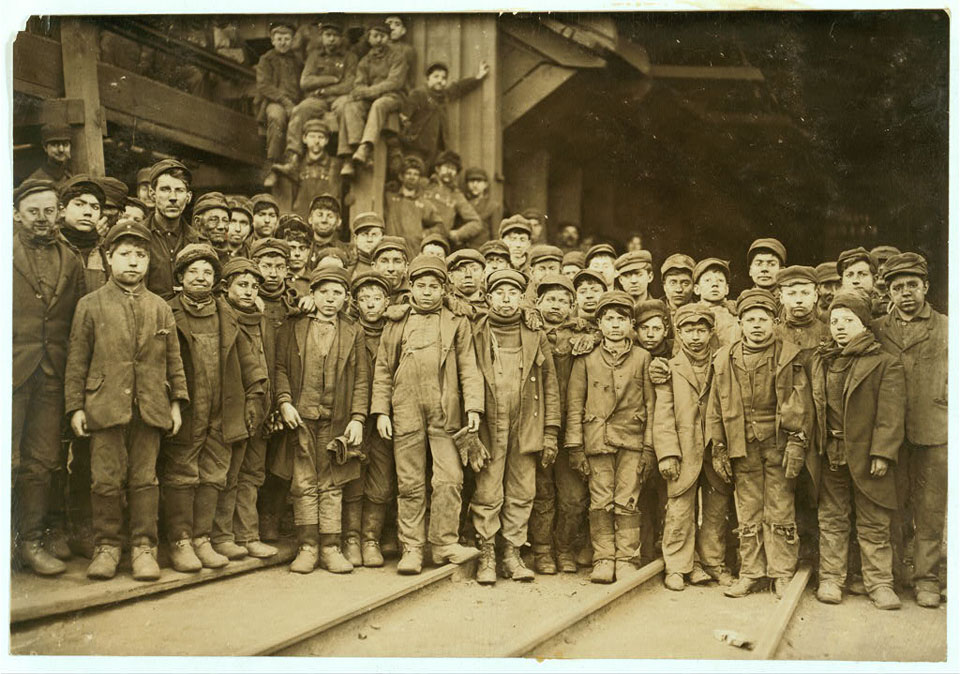
This 1911 photo of children working in a Pennsylvania coal mine led Congress to pass child labor protection laws. Now government is rolling those protections back, undoing a century of progress.

The Wisconsin law only applies to businesses that are not covered by the Fair Labor Standards Act, which established a federal minimum wage, overtime pay, and flagship child labor provisions. Adolescents who are 14 and 15 years old may not, for example, work more than 18 hours per week during the school year in a job covered by federal law—i.e., which take in less than $500,000 in revenue and are not engaged in interstate commerce.

Wisconsin State Senator Mary Felzkowski (R-Irma), who introduced the legislation, said in a press release that “The idea for this bill came from a small business owner in town who ran into staffing issues during summer hours due to their young employees not being able to work past 9 p.m.”

In an op-ed for the Milwaukee Journal Sentinel, Wisconsin AFL-CIO President Stephanie Bloomingdale wrote, “The proposed change is the latest attempt by Wisconsin Republicans to solve the state’s so-called labor shortage on the backs of children.” The AFL-CIO, Wisconsin Education Association Council, and Wisconsin School Social Workers Association have all issued statements condemning the new law, saying it rolls back child labor protection laws.

Governor Tony Evers apparently agreed with the AFL-CIO: on February 4 he vetoed the bill.

Finding the legal means to put children to work is another attempt to compensate for the “great resignation,” with four million Americans declining to return to their low-paid jobs when the pandemic lockdown ended. The Wisconsin law allows businesses to keep wages low and fill job vacancies with adolescent employees—who should be focusing on their studies instead of working late on school nights—rather than increasing wages to attract adult employees. Another incentive for employers is that federal law allows them to pay workers younger than 20 as little as $4.25 an hour for the first 90 consecutive days of employment, which they can describe as a training period. Wisconsin is one of 20 states that have maintained the federal minimum wage of $7.25 an hour since 2008.

Small businesses have notoriously opposed attempts to raise the minimum wage, arguing that the increased labor costs would put them out of business. But big corporations are also capitalizing on the so-called labor shortage, in an effort to hire younger workers for low wages.

“They would like to see these hours of work change nationwide,” President Bloomingdale, who recently debated the head of the Wisconsin Restaurant Association, tells The Conversationalist. “We need to renew our collective efforts to make sure that when people go to work, they have the ability to sustain a family.”

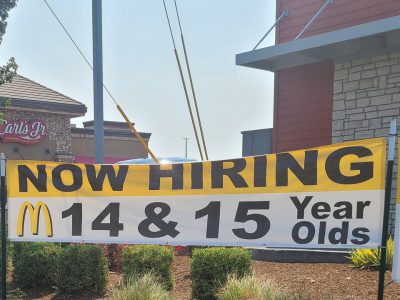
McDonald’s has come under fire in recent months for allowing a franchise owner in Medford, Oregon, to hang a banner outside that read “NOW HIRING 14 & 15 year-olds.” Job postings that advertise positions for 14, 15, and 16-year-olds at McDonald’s are still up online with a reminder that “during the summer months when school is out of session you are actually allowed to work up to 5 days a week and 38 hours a week.” Other fast-food chains have taken similar steps in a desperate attempt to alleviate staffing shortages.

Reid Maki, the Director of the National Consumer League’s Child Labor Coalition, said the government does not keep strong data on child labor. “There’s good reason to fear that the numbers could climb,” he said, adding that rising poverty caused by the pandemic could “drive kids to early work” rather than staying in school.

The Department of Labor warns that “the pandemic and subsequent economic downturns threaten to reverse decades of progress on child labor.” Labor disruptions, the death of family members, and school closures are listed as some of the key factors aggravating the situation. But this data is outward-facing and treats child labor as an international issue among developing nations.

In the U.S., one in seven children lives in poverty. They account for one-third of impoverished Americans, according to data from the Center for American Progress. The U.S. ranks third in child poverty rates among OECD nations, after Israel and Chile.

“The [American] public doesn’t really perceive that child labor is a thing of contemporary times,” Maki says.

Asked about the Wisconsin legislation, Maki said, “One issue is that kids who work a certain number of hours don’t do as well in school.” But he was also concerned about the safety issues that come with working later hours, both on the job and while driving home.

Maki is not opposed to teens working part-time jobs for some pocket money. His concern is for children who are compelled to work because the family needs their income to meet basic expenses. “We need to get to a point where all adults make a living wage and don’t need the income of their kids to help the family get by,” says Maki.

But with soaring inflation and millions newly cut off from unemployment benefits, the risk that children will have to go out and work in order to help their parents put food on the table is now very real.

Under Biden’s Covid relief package, the Child Tax Credit (CTC) provided families with $3,600 per year for each child under the age of six and $3,000 for each child 17 and under, with the funds paid out in monthly checks of up to $300 per child. These payments went furthest among families who typically don’t make enough money in a fiscal year to receive a full CTC under normal circumstances. The December expiration has now cut off a critical source of cash-in-hand for the poorest families.

For Republicans, that seems to be the point. The GOP Ways and Means Committee published a blog post in October 2021 denying that the Child Tax Credit had reduced child poverty by half and claiming that it discourages people from working. They cite a University of Chicago study that claims the CTC would cause 1.5 million workers to exit the labor force.

At the beginning of the pandemic, we believed children were largely “immune” to the virus. Now we know this isn’t the case. Children are contracting Covid, just not at numbers that register at the policy level. Our elected officials have shown that they’re willing to let children be the collateral damage of an ongoing crisis in more ways than one.

[post_title] => Republicans want to solve the labor shortage problem by putting children to work [post_excerpt] => Weak labor laws combined with poverty and soaring inflation could result in millions of children leaving school to help put food on the family table. [post_status] => publish [comment_status] => closed [ping_status] => open [post_password] => [post_name] => republicans-want-to-solve-the-labor-shortage-problem-by-putting-children-to-work [to_ping] => [pinged] => [post_modified] => 2026-08-05 17:58:45 [post_modified_gmt] => 2026-08-05 17:58:45 [post_content_filtered] => [post_parent] => 0 [guid] => https://conversationalist.org/?p=3778 [menu_order] => 141 [post_type] => post [post_mime_type] => [comment_count] => 0 [filter] => raw )

Republicans want to solve the labor shortage problem by putting children to work

WP_Post Object
(
    [ID] => 3583
    [post_author] => 2
    [post_date] => 2021-12-09 23:56:55
    [post_date_gmt] => 2021-12-09 23:56:55
    [post_content] => Famous for its delicious honey, Kashmir has seen a decline in artisanal apiculture due to a confluence of political and environmental factors.

GANDERBAL, KASHMIR –Clusters of beehives dot the sprawling lawns outside the Rizvi family home in the Kashmiri village of Shalhar. Bees swarm the flowers and suck the marrow out of colorful petals. Towseefa Rizvi, 49, clad in protective gear, walks toward her hives; she manages 200 colonies of Apis mellifera, often referred to as the European or western honeybee. This district, located about a half-hour’s drive from Srinagar, boasts diverse flora, sprawling apple orchards, and extensive forests that are the reason Kashmir is famous for its uniquely delicious honey.

“I had never thought of doing something like this,” she says, gently opening a hive. “But this unusual job has both challenged and fascinated me.”

A mother of three, Rizvi has been beekeeping for more than a decade. She taught herself the necessary skills by researching online, watching and consulting with local apiarists, and through trial and error. In addition to running her own honey production busines, she now trains and supports new apiarists, especially women in her community. Beekeeping is a popular enterprise, she explained, because startup costs are low.

The average annual turnover from Rizvi’s 200 colonies is about $10,698 (monthly income in rural Kashmir is between $66 and $133). She retains an income of about $4,012 and puts the difference back into the business.

This part of Kashmir is deeply conservative. Women typically look down while walking outdoors; they do not speak in public or visit the homes of strangers unless accompanied by a male family member. Rizvi’s decision to become the first women in her district to launch her own business, let alone in this traditionally male-dominated occupation, was thus deeply unusual. But her husband, Syed Parvaz, 42, has supported her from the beginning; he is now a production manager in Kashmir Valley Agro Industry, which includes their honey-making business (Jammu and Kashmir is the only place in India that produces a rare variety of wild bush honey, he explained.) The couple are committed to releasing the untapped potential of the honey production industry in their region.

Inspired by Rizvi’s example, an increasing number of women from poor families are starting their own apiaries. They look up to her for showing them an income-earning business that they can run from home, a fact that was particularly relevant during the pandemic lockdown. Rizvi and her husband have registered around 500 beekeepers and have trained thousands of beekeepers in neighboring districts.

“I tell them if I can be an entrepreneur with limited education and skills, why can’t they,” says Rizvi. “I started beekeeping when there were hardly any women in the trade, but now we have so many around and if we cannot inspire and support each other then it would be our collective failure.”

The pandemic provided Rizvi with unexpected opportunities. During the lockdown she launched an online school to teach beekeeping, and then a website to sell a variety of products ranging from honey to herbal tea mixtures. She also renewed her commitment to sustainable farming practices, starting with cultivating her own vegetables to compensate for soaring prices and spotty access to markets. Bees, she pointed out, play “a major role” in sustainable agriculture.

[caption id="attachment_3585" align="aligncenter" width="840"] Towseefa Rizvi and Syed Parvez at their honey production facility.[/caption]

Some hope that, with an infusion of knowledge and skills, beekeeping could help revitalize Kashmir’s economy.

Unemployment in the territory is the highest in India, a fact that has particularly hurt people younger than 35, who are 70 percent of the population, and women—72.6 percent of whom are without work. More than two years of political upheaval, military curfews, the longest internet blackout in history, and then the pandemic lockdown, have had a devastating impact. The Kashmir Chamber of Commerce and Industries estimates that the regional economy has lost $7bn since 2019.

But the road to expanding beekeeping into a lucrative business is littered with obstacles, explained Sajad Hussain Parey, professor of entomology at Baba Ghulam Shah Badshah University. The government provides no social security to beekeepers—i.e, they are not insured—or training in modern methods. Most traditional beekeepers are unaware of critical  skills like seasonal hive management and bee pollen collection. As a result, honey production is low; a lack of marketing opportunities further undermines the earning potential of beekeeping. Quality control is also a problem, said Parey, because there is no central institution to monitor and test the honey for purity.

But an infusion of government funding could unleash the potential of Kashmir’s honey industry. What’s needed are training and market access to allow sustainable exploitation of Kashmir’s climate and natural vegetation. With honeybees around the world becoming increasingly vulnerable to climate change and the chemicals used in industrial apiaries, training local people in artisanal beekeeping and modern scientific methodology could create significant employment opportunities. A return to sustainable beekeeping methods would also encourage ecological awareness and rural development, promote small village industry, increase biodiversity —and could double farmers’ income from fruit and vegetable cultivation by complementing it with beekeeping.

Since almost everyone in Kashmir has a house and land, they have the space and means to engage in small and medium scale beekeeping at home, with minimal financial investment.

The regional government is working to generate new business opportunities in the production of bee byproducts like beeswax, propolis, bee venom, and royal jelly. In addition, it is attempting to expand the apiculture sector by increasing the number of beekeeping units, obtaining a GI tag for the region’s honey, and helping farmers increase their incomes by introducing modern technological methods.

Parvez and Rizvi have begun working on Integrated Pest Management to train apiarists in protecting their bees from pests and predators.

“A person should be confident to take care of bees,” says Syed, adding that the couple is in constant touch with institutions, research departments, and independent beekeepers across the world. Through their networks they are learning about skill training, trust building measures, and procurement of plants and machinery, as well as how to diversify their honey products and expand their market opportunities. By setting up sales outlets, they are also learning how to improve the income and employment of the beekeepers, assure sustainability and inspire more young unemployed people to take up the craft.

Rizvi explains that her ambition goes beyond just growing her own business. “The participation of more and more women in this field is my dream,” she said, adding that she is working to create “a sustainable revenue opportunity” for local people.

As Rizvi prepares to inspect her hives, which she does during the evenings, when the bees are less aggressive, she puts on her protective cap and coat. “A blooming garden is my office,” says Rizvi as bees buzz and hum in the hive. “And bees are like my family.”
    [post_title] => ‘Bees are like my family’: A female beekeeper is reviving honey production in Kashmir
    [post_excerpt] => After years of political upheaval, military curfews, months-long communications blockades, and then the devastating pandemic, Kashmir's economy is on its knees. Could beekeeping save it?
    [post_status] => publish
    [comment_status] => closed
    [ping_status] => open
    [post_password] => 
    [post_name] => bees-are-like-my-family-how-a-female-beekeeper-is-redefining-honey-production-in-kashmir
    [to_ping] => 
    [pinged] => 
    [post_modified] => 2026-08-05 18:20:35
    [post_modified_gmt] => 2026-08-05 18:20:35
    [post_content_filtered] => 
    [post_parent] => 0
    [guid] => https://conversationalist.org/?p=3583
    [menu_order] => 157
    [post_type] => post
    [post_mime_type] => 
    [comment_count] => 0
    [filter] => raw
)
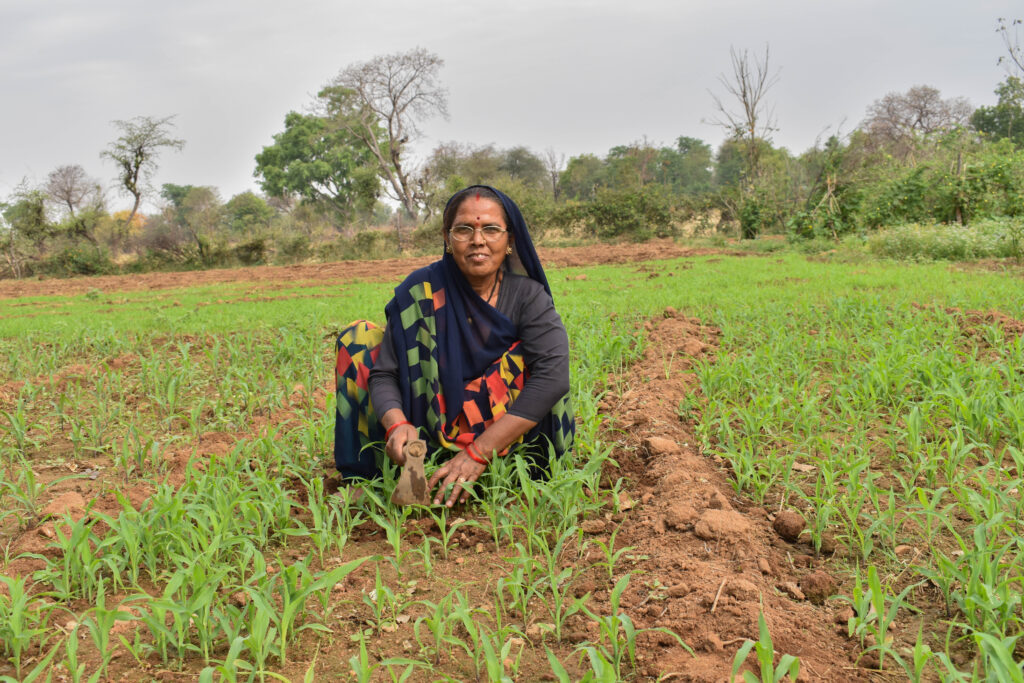
‘Bees are like my family’: A female beekeeper is reviving honey production in Kashmir

WP_Post Object
(
    [ID] => 3121
    [post_author] => 2
    [post_date] => 2021-09-01 05:29:48
    [post_date_gmt] => 2021-09-01 05:29:48
    [post_content] => The regional economy is in a free fall due to political unrest, military closures, and the pandemic.

Five minutes’ walk from Srinagar’s Jamia Masjid, the largest mosque in Kashmir, is a modest two-story house. This is where Sakeena, 73, lives—and where she has been spinning pashmina wool by hand for more than a decade. She’s well known for her skill in spinning the finest and most delicate yarn from the region’s world-famous wool.

Zain-ul-Abidin, the fifteenth-century Sultan of Kashmir, introduced the art of pashmina weaving. He brought craftsmen from Persia to teach the local population various skills, which included making the wool shawls that are to this day a sought-after luxury item around the world. Kashmiri women have long been artisans of this heritage craft.

For Sakeena, weaving was a means of achieving economic stability. Her mother taught her and her two sisters to spin when she was an adolescent; when she married, she bought a spinning wheel (called a “yinder” in Kashmiri) for RS24, or about $0.32, and used her income to supplement the earnings of her husband, who was a tailor. “I used to earn RS150 ($2) for working five hours a day,” she said, explaining that “back then, that was enough for two proper meals.”

Until the 1990s pashmina wool was spun and woven at artisanal centers all over Kashmir. But with the rise of the Kashmiri armed struggle and the Indian government's military response, curfews and lockdowns led to a shift: people are now working primarily from home. A few remaining traditional spinners live in pockets of Srinagar, the capital of Kashmir. Sakeena is one of them, but she said that now there is “either no work or the wages paid are not enough to pay for one proper meal.”

The long military lockdowns of the past few years precipitated the decline of the pashmina industry by preventing or discouraging buyers from visiting the disputed territory. As a result, the number of female spinners has declined from a high of 100,000 in 2007 to just 15,360 in 2021, according to The Directorate of Handicrafts & Handlooms in Kashmir.

“Foreign tourists used to come to Kashmir to buy the shawls,” said Sakeena. But no longer. “My daughters have three yinders that have been lying unused for the last year in our attic,” she lamented, adding that they will sell them if the current situation continues much longer. “The Indian government promises to empower people, but in Kashmir, they are doing the opposite by making us economically weaker,” she said.

The politically unstable situation, the prolonged military lockdowns, and now the pandemic, have pushed the regional economy into a free fall. According to a 2020 report issued by the Kashmir Chamber of Commerce and Industry, more than 100,000 private sector jobs were cut after August 2019, when the Modi government precipitated an ongoing political crisis by revoking the Muslim-majority territory's limited autonomy.

Adnan Bashir, who owns a pashmina showroom on the banks of Dal Lake, one of Kashmir’s most renowned natural beauty spots, said that the months-long communications shutdown had severely undermined his business. “Around eight international orders were canceled because I was not able to contact the customer [due to the suspension of internet and mobile connectivity],” he said. One customer from Germany canceled a buying trip due to the military curfews. Bashir described his business’s condition as “critical,” and said he might have to look for another way to make a living.

Fahmeeda, a 67-year-old widow who asked that her real name be withheld, reluctantly sold her yinder last year for financial reasons. It had been a gift from her mother, she said, but she needed the money to buy medicine for her son. “This used to be a blessed craft for women like me,” she said, adding that she had supported her children with the money she made from spinning. “Last year, when Kashmir was under strict lockdown, I went out to purchase raw wool but soldiers chased me away by hitting me with their sticks,'' she wept. She now works as a cleaner in a private school for RS800 (just over $10) a month—compared to RS2600 ($35) before the lockdown that began in August 2019.

A recent shortage of raw pashmina has dealt yet another blow to the industry. Ordinarily the wool is imported from Ladakh, which lies on the disputed and ill-defined border between India and China; but in June long-simmering political tension erupted in a military clash that left 20 Indian soldiers dead and caused the suspension of trade between the two regions.

The introduction of power looms presents yet another threat to the 600-year-old pashmina craft. Merchants and artisans led a protest in late June to demand a ban on these looms, which pose a threat to the livelihoods of thousands of Kashmiris. The 1985 Handloom Protection Act forbids the industrialization of pashmina production, said Muhammad Lateef Salati, an activist from a family long engaged in artisanal pashmina production. The government, however, has failed to enforce the law.

Industrially produced pashmina is often sold falsely as authentic traditionally produced wool—a practice that undermines the value of the brand. By failing to enforce the law against manufacturers of mass-produced pashmina, the government shows that it is “not serious” about protecting the craft, said Salati.

Some Kashmiris are trying to safeguard traditional pashmina production by empowering local artisans.

Murcy, the daughter of a family long engaged in traditional pashmina production who divides her time between New Delhi and Srinagar, recently launched Fair Share Cashmere, a socially conscious online business initiative to sell hand-spun shawls made by local artisans. She said that she pays traditional female spinners the highest rate the market will bear. “We have been successful in bringing eight women back to this craft,” she said, adding with a smile that this “feels like a victory.”

The decline of traditional pashmina production in Kashmir has created a vacuum of employment for women who could once depend on the income they made from spinning wool to ensure that their families were fed. Now they are unemployed and, for the most part, voiceless. Murcy is one of a handful of locals who are trying to preserve the remnants of a once-thriving artisanal craft, despite the enormous political and economic challenges.
    [post_title] => 'This used to be a blessed craft for women': In Kashmir, artisanal pashmina weaving is disappearing
    [post_excerpt] => For hundreds of years, Kashmiri women could count on the artisanal craft of spinning, handed down from mother to daughter, to feed their families. Then came martial law and a pandemic. 
    [post_status] => publish
    [comment_status] => closed
    [ping_status] => open
    [post_password] => 
    [post_name] => this-used-to-be-a-blessed-craft-for-women-in-kashmir-artisanal-pashmina-weaving-is-disappearing
    [to_ping] => 
    [pinged] => 
    [post_modified] => 2026-08-06 19:33:39
    [post_modified_gmt] => 2026-08-06 19:33:39
    [post_content_filtered] => 
    [post_parent] => 0
    [guid] => https://conversationalist.org/?p=3121
    [menu_order] => 183
    [post_type] => post
    [post_mime_type] => 
    [comment_count] => 0
    [filter] => raw
)
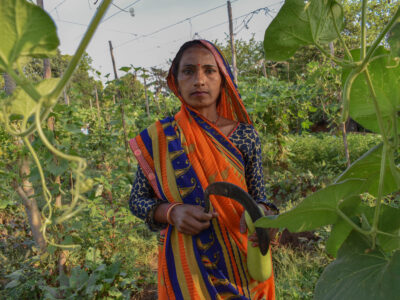
‘This used to be a blessed craft for women’: In Kashmir, artisanal pashmina weaving is disappearing