
WP_Post Object
(
    [ID] => 5693
    [post_author] => 15
    [post_date] => 2023-03-20 17:53:11
    [post_date_gmt] => 2023-03-20 17:53:11
    [post_content] => 

How my culture's food brought me closer to myself.

“That’s the whitest pronunciation I’ve ever heard before.” My friend, Kian, stood to my left, joking or maybe humiliated, while a smiling Persian kid spooned a scoop of faloodeh and a scoop of pink rose ice cream into a cup, passing it to me over the register at Saffron & Rose.

“Fuh-LOO-duh,” Kian mimicked.

“You know I don’t speak Farsi,” I laughed, joking but actually humiliated. The kid handed a cup of Saffron Pistachio, described as a “love potion of Middle Eastern flavor,” to Kian. As we walked out, it occurred to me that while everyone in the shop had been Iranian, myself included, I had still been the other. I couldn’t even pronounce what was allegedly the first frozen dessert in the history of mankind, a delicious ancestral treat of paper-thin rice noodles and chilled rosewater sorbet. But I could learn, right? It was in my blood.

“Ok… so, how do you pronounce it?” I asked.

“FAH-loo-deh.”

FAH-loo-deh. Got it. I practiced a few times — and fucked up a few times — as I inhaled my pink rose ice cream and FAH-loo-deh. Being cultureless is so embarrassing sometimes. I promised myself the next time I ordered it, I’d be able to pronounce it, too.

~

I’m convinced I’m on this earth to eat. While adulthood has insurmountably jaded me, food is the one thing I still have child-like adulation for. I spend nearly a third of my waking life debating what to cook next, the ingredients I’ll experiment with, and which new restaurant I’ll make a sweaty, 40-minute, gridlocked-Los-Angeles-traffic drive for. I’m a proud member of probably 30 recipe subreddits. On TikTok, I’ve strategically lassoed my algorithm into serving me solely food-related content where I watch people cook with pride and eat with joy, just like I do. All Day Long I Dream About Food.

But as a half-Iranian raised by two white parents, I grew up more on hot dogs, steamed veggies, and the occasional Pennsylvania Dutch indulgence—like apple dumplings, or pork chops with sauerkraut—than anything with even a remote nod toward my Middle Eastern heritage. For a long time, I honestly didn’t even know what Middle Eastern food was.

Growing up, I never wanted to disappoint the people who raised me with excitement for something they weren’t or couldn’t understand. But naturally, I never felt my parents understood me, either. I was an insecure, unibrowed, deeply tan, and raccoon-eyed kid supremely confused about her identity. I’d stare at maps and wonder what it meant to be from “I-Ran,” as my folks and other Pennsylvanians pronounced it. Was I Asian? I wasn’t fully white. Was I Arab? Kids at school told me I was. Was any of this the reason why my hair was so thick and my eyebrows so nauseatingly connected? I liked to think I looked like Princess Jasmine with a plait down my back, but her legs weren’t nearly as hairy as mine were at eight years old. I couldn’t ask my parents questions, either, so if someone said “what are you?” and then looked at me funny when I replied “Iranian,” I’d quickly correct myself and say that actually, I was German. It was technically true, on my mom’s side. And the Pennsylvania Dutch are, after all, also German. So for me to be singularly German was easier for everybody.

While it took me much less time to admit I was also definitively Iranian, it took me nearly 30 years to explore Persian food. In a way, I was scared of what I’d find, or how much I’d enjoy it. I’d always wondered what I’d been fed during the months I’d spent in Iran as a baby. If I tried those foods again, would some small part of my soul recognize the flavor; the texture; the feeling it invoked? Would it trigger something inexplicable in me, good or bad? Would it just make sense? Would I finally become Persian?

When I first sought it out, I found Iranians are happy to share their culture of food with you, and through it, their love. They’ll also readily accept you as their brother or sister even when you know nothing about it. If you’re Persian—even half, like me—you’re unequivocally part of the tribe, fused by some ancestral chemistry and recognition I can’t quite explain. It’s like we’re all aware of the possibility we’ve known each other in previous lives and in previous, ancient lands. There within lies some familial bond.

“I don’t really know much about Iranian food,” I told my friend Nilu, who was visiting from London, over a lunch of raw onions, Persian naan, beef koobideh, and chicken kabob at Glendale’s Shamshiri Grill. It was still early in my cultural food odyssey, and we were celebrating Nowruz, the Persian New Year, which marks the beginning of spring equinox and the start of Farvardin, the first month of the ancient Solar Hijri calendar. Despite knowing nothing about it at the time, I’d already been kindly greeted with “Norooz pirooz!” and “Nowruz Mobarak!” (both roughly translate to “Happy New Year”) by several Persian friends that morning, simply for existing and being Iranian. I did not feel like I deserved it.

“Doesn’t matter. You’re Persian, and it’s Persian New Year. That’s why we’re here!” Nilu said, having admonished me just moments ago for not knowing Iranians eat plain, raw white onions the way some people might bite into an orange. “NOW TRY MY CHICKEN!” She’d ordered chicken marinated in saffron and yogurt over saffron rice with green veggies. I eyed it suspiciously. 

I knew to “become Persian” I’d have to get over my immense dislike for chicken. My mom, god bless her, fed me and my family boneless, lightly seasoned, baked chicken breasts with steamed veggies several nights a week, though in my memory, it felt like every night. Pair that with a nightmare I had in college where I bit down on a chicken nugget filled with human teeth, and you’ll find chicken and I don’t have the best relationship.

I begrudgingly forked the chicken up with some rice and bit into it like a child taking a bite of asparagus. Hm, I thought, chicken’s not half bad when it’s seasoned properly. Maybe the onions would grow on me, too.

~

The next step in my journey was cooking a fully Iranian meal. Even though I cooked all the time, this was uncharted territory; and while I could do it myself, I knew who to call to help. My friend Jasmine (Yasi) had lived in Tehran until she was seven, and, unbeknownst to her, had given me the kindest gift a few years prior: She’d taken me to my first ever Iranian restaurant, Café Glacé, a Persian pizza spot in Westwood. There, I’d eaten a popular Iranian street food for the first time: pizza with thick bread, minced meat, loads of cheese, and no tomato sauce. Delicious. Chef’s kiss. Five stars. The stomach ache I had afterward was worth it. 

Yasi had also recently given me a handful of Persian fruit leather and candies from Tehran that I think may have caused my entire awakening. So when it came time to actually try cooking something, I asked her if she wanted to make her favorite childhood meal with me, her mom’s Iranian macaroni, or spaghetti tahdig, an upside-down cake of thick noodles with tomato sauce and ground beef, seasoned with traditional Persian spices like turmeric, cumin, and cinnamon. I knew Yasi had the recipe because her mom had recorded a video of herself making it for her at the beginning of the pandemic.

“Duh,” she replied.

We dumped a can of Carbone pasta sauce into a Dutch oven already simmering with diced onions and minced garlic. After adding spices, we broke up a pound of ground beef into the sauce and let it simmer for 45 minutes, boiling bucatini in a pot for the last 15. We then filled the empty Carbone jar with boiling pasta water and dumped it into our sauce. I felt like a kid watching Yasi prepare our dinner. She was Mother at that moment, telling me how to break up the ground beef or stir the bucatini, and how much seasoning to add into the sauce. More turmeric, less cinnamon. Okay, even more turmeric.

I stirred both the sauce and the noodles individually, and watched the water evaporate along with many of my cultural anxieties. I am Iranian. It wasn’t my choice to grow up without any of the culture, and it’s fine that I was just now learning about it. I was done feeling embarrassed at my lack of knowledge. It’s not like the Persians in my life hadn’t been patient, kind, and generous with theirs.

After seasoning the sauce generously with cinnamon one more time and draining the pasta, it was time to form it into a traditional tahdig, which literally translates to “bottom of the pot” in Farsi. The point is to create a hard shell of pasta on the bottom that becomes a crispy crown once you turn it over and onto a plate. Yasi drizzled some olive oil on the bottom of the saucepan and started layering the bucatini as I heaped spoonfuls of our sauce over it. Once the pasta crisped up, we awkwardly placed a plate over the saucepan and used all four of our hands to topple it over. We ate it on her back porch with olives. She snapped a photo for her parents and I snapped one for myself.

~

My appreciation for this food is now indelible. Saffron has become a pantry staple and rosewater pistachio ice cream can always be found in my freezer. I intend to try a new Persian meal each month until the words, flavor combinations, and textures become second nature — this month, it was Albaloo polo: rice and sour cherries. Maybe by next year I’ll have developed an affinity for raw onions. Or maybe just a tolerance.

I live in Los Angeles, cheekily dubbed Tehrangeles, as it actually has the largest Iranian population outside of Iran. I’m in no better place to “become” Persian, because I’m in no better place to eat my way there. The beauty of food being at the center of culture is that food is a language everybody understands and, thus, can bring everybody together. When you’re breaking bread, you don’t have to speak. You all know what you’re tasting. And — outside of the idiom — I don’t need to “become” Persian. I am as Persian as my Safavid era ancestors who cut pomegranates from their trees and scooped sweet-and-sour stews up with their hands. But you can only be so close to a culture without knowing its food. Food is the dock in a harbor that guides your boat in and grounds it back to the earth. It’s a holy connector. It unifies and reunifies and is one of the only things everyone needs and enjoys. It’s home.

Now that I’ve learned them, Iranian flavors feel almost inherent to my palate. Some, in fact, taste so familiar I wonder if, as a tot, I’d ever been given a spoonful of ghormeh sabzi, Iran’s national dish of meat and kidney bean stew loaded with herbs and dried limes, or a spoonful of rosewater ice cream, which has been one of my favorites since I tried it for the first time as a teenager. Maybe I’d even had a taste of FUH-loo-deh as a baby. I know someday my children will. And I know I’ll be able to pronounce it then, too.

[post_title] => Becoming Persian [post_excerpt] => How my culture's food brought me closer to myself. [post_status] => publish [comment_status] => closed [ping_status] => closed [post_password] => [post_name] => persian-iranian-food-culture-identity [to_ping] => [pinged] => [post_modified] => 2026-08-04 19:29:54 [post_modified_gmt] => 2026-08-04 19:29:54 [post_content_filtered] => [post_parent] => 0 [guid] => https://conversationalist.org/?p=5693 [menu_order] => 90 [post_type] => post [post_mime_type] => [comment_count] => 0 [filter] => raw )
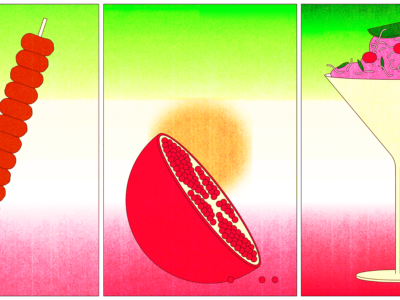
A triptych of illustrations of Persian/Iranian foods in bright colors: a kebab, a pomegranate, and faloodeh (a traditional Iranian desert of vermicelli noodles in frozen sugar and rosewater syrup). The background is a bright but blurry Iranian flag, a stripe of green, white, and red.

Becoming Persian

WP_Post Object
(
    [ID] => 5633
    [post_author] => 15
    [post_date] => 2023-03-03 12:01:00
    [post_date_gmt] => 2023-03-03 12:01:00
    [post_content] => 

Last year, all eyes were on the Kurdish exile turned Swedish MP. Now that she's left parliament, here's what she plans to do with the attention.

Amineh Kakabaveh is stumbling over her words as she lists the things representatives of the regime in Iran and their families can still do, despite local authorities’ brutal crackdown on the nationwide protests for democracy that started in September. “They can still put their money in foreign banks, their children can still study abroad, they can still travel,” she says. Sure, she is glad that Iran was thrown out of the UN Committee for Women’s Rights last December. But, Kakabaveh says, it’s far from enough—and it won’t be, as long as they remain a connected member of the international community.

What adds a painful layer to her anger is the fact that she hasn’t seen her own family in Iran in years, and can’t even freely talk on the phone with them out of fear of retaliation by the regime. “Can you imagine I haven’t seen my father for 23 years?,” she says. “My mom told me on the phone she feels for the mothers. That’s all she can say without getting in trouble.”

Kakabaveh, 48, is a Kurdish-Swedish woman who was only 13 years old when she ran away from suppression and threats by Iran’s then still fairly new Islamic regime to join the armed Kurdish opposition group, the Komala Party. After six years in the mountains of Kurdistan in both Iran and Iraq, she crossed the border into Turkey at 19. From there, she was re-settled to Sweden, where she started getting a formal education for the first time in her life. She made it to university, studying both sociology and philosophy, before entering the Swedish parliament for the Green Party at the age of 35. 

Through it all, her resistance against the regime has never faded. But while she has always been rather well-known in Sweden for her political work, the outside world only got to know her last year, when she was suddenly in the eye of a geopolitical storm. Sweden had applied for NATO membership to protect itself against Russian threat after the invasion of Ukraine, but met objections from NATO member Turkey, which wouldn’t give permission for Sweden’s acceptance if it kept supporting Kurdish “terrorists.” They even have one in their parliament, Turkey’s president Recep Tayyip Erdoğan fulminated, referring to Kakabaveh.

She had irritated him, to say the least. After years as an MP for the Green Party, she had become an independent MP in 2019, and as such had power to make or break any government plans: Her one vote defined whether it would get a majority or not. She used that power to force the Swedish government to express its support for the Kurds in Syria, who have been building an autonomous region in the country’s northeast since 2012. There have even been pictures of Swedish officials with what Turkey considers “terrorists” as a result of her work, not to mention the Swedish government’s decision to stop selling arms to Turkey because of the country’s invasion into Syria in 2019. (The embargo has since been lifted.) In retaliation, Erdoğan pledged that Sweden would never become a NATO member until it stopped this support.

The power play between states continues. And while the attention has shifted away from Kakabaveh, who is no longer a member of parliament since the elections in September last year, her attention hasn’t shifted away from politics. Today, she travels throughout Europe, speaking in parliaments from Belgium and Spain to Greece and France, drawing attention to the plight of the Iranian people in general, and that of the Kurds specifically.

Kakabaveh grew up in Seqiz, a town in Kurdistan in northwest Iran—the same town Jina Mahsa Amini was from, the girl who was murdered by Iran’s “morality police” for not properly wearing her hijab when she visited the country’s capital city of Tehran last September, sparking protests around the world. Kakabaveh’s family was so poor that having any kind of childhood was impossible for her. In her memoir, “No bigger than a Kalashnikov”: A Peshmerga in Parliament, she shared how she started working at age six to contribute to the family income. She spun wool, she wove and embroidered, and she did seasonal work in fields and orchards, for which she was paid in fruit and beans. Then, on the radio, a very young Kakabaveh heard about the armed communist opposition group, Komala—and decided that one day, she would join. “An uncle of mine had joined them when I was very small,” she says. “I dreamed about that. I knew that Komala had female peshmerga, too,” referring to the Kurdish fighters whose name literally means “those who face death.”

While Kurdish groups initially supported the revolution in 1979, the new government hadn’t lived up to its promises to them: Kurds didn’t get more rights, or even autonomy. A Kurdish uprising was brutally put down. Amineh was 7 years old when it happened. Soon, the regime started targeting her family after several of its members joined the resistance. Repression increased. “In some media I have been described as a child soldier,” Kakabaveh says, “because I joined the peshmerga when I was 13. But that term doesn’t do justice to reality and to our traumas. The regime abused me, they wanted to lock me up and rape me, they tortured and humiliated my father. They suppress Kurdish culture and rob us of our dignity.” Kakabaveh adds that, while formally, members must be 18 to join Komala, she felt the group “tried to create a place that was as safe as possible for their young members.”

Initially, Komala was based inside Iranian borders, but when that became too dangerous, it retreated to Kurdistan in Iraq. The group is still based there. Although the current demonstrations in Iran are not organized by Komala or other Iranian-Kurdish groups, they are still targeted by the mullahs: Since the protests started in September, their camps and villages have been shelled several times, leading to dozens of deaths, including civilians. 

Kakabaveh’s life as a 13-year old peshmerga in the mountains of Kurdistan seems to be light years away from her life as an academically educated former MP in Sweden. But she says her experiences as a young girl in Iran and later as a Komala guerrilla fighter define what she fights for now as a politician and activist. “My mother was forced to marry my father, and that was the same for all the girls,” she says. “All Kurds are suppressed by the regime, but women are also suppressed by the patriarchy. Especially when the Swedish minority government needed my support to govern, I have been able to do a lot to put the Kurdish struggle and the women’s resistance on the international agenda.”

She isn’t sad, she says, that she no longer has a place in the country’s most important meeting hall. In her many years of parliamentary work, she built an enormous international network, which she uses now to draw attention to the situation in Iran from across the world. 

In direct contact with her family, though, she still must be extremely careful. “I have talked to my mother only twice since the protests started, very shortly via the phone of one of her neighbors,” she says. “That she said that she is sorry for the mothers tells me a lot. The regime takes children away, takes them to prison, rapes them, tortures them, and sentences them to death.”

What angers her is that the international community doesn’t act decisively enough against the regime in Tehran. That is her most important message now: If she could stand up to it at 13, if people everywhere in Iran continue to pour into the streets in protest despite the suppression, the torture, and the death penalty—why aren’t they getting more support? Canada and Australia have issued sanctions, but that’s about it, she says. “Freeze their money, stop giving visas to them and their families, make them pariahs.”

The protests have been going on for almost six months now. Initially, international media reported on them extensively, but that has been fading away. Are the demonstrations fading away, too? “Not at all,” Kakabaveh says in a fierce voice. She mentions Kurdistan as one of the centers of the demonstrations in the northwest, but another region, Baluchistan, in the southeast, too. “Every Friday after prayers thousands of people protest in Zahedan, the biggest city in Baluchistan,” she says. “Also in Kurdistan the protests are ongoing. Kurdistan and Balochistan are the light and the eyes of Iran. But the militarization is intensifying. There are more Pasdaran [Revolutionary Guards] outside schools than students.”

Describing these two communities, the Kurds and the Baluchs, as “the light and the eyes” of Iran explains the depth of the current wave of demonstrations. According to reports by human rights organizations like Amnesty International and Human Rights Watch, it’s the minority groups who suffer the most, and in multiple ways. Both Kurds and Baluchs are not only ethnic minorities, but also predominantly Sunni Muslim, while the regime is Shia. All Iranians suffer under the dictatorship, but communities who don’t fit the default identity of Persian Shia Muslim suffer more. It was not a coincidence that the protests started with the death of a Kurdish girl, whose funeral marked the first big outpouring of grief and anger over the regime’s brutality. That’s why it’s important to name her as Jina Mahsa Amini: Jina is her Kurdish name, which only her family used, because Kurdish names are not officially accepted. It is written on her gravestone.

This dynamic was one of the topics addressed during a recent panel in the Flemish parliament, in which Kakabaveh spoke alongside two other Iranian women in exile. Kakabaveh stressed that ethnic and religious minorities would still be suppressed if the current regime was to be replaced by a secular but still nationalist one. After all, the current regime is not the first to suppress Kurds, a group that resisted the previous regime, as well. “You know, I am 48 years old and in my lifetime I have never seen democracy in Iran,” she said. “So what can we expect? For example, one of the things the women are protesting against, is the forced wearing of the hijab, but do they know the fundamental freedoms underlying this demand? That remains to be seen.”

But in her speech, Kakabaveh drew hope from her past experiences as well. She reflected on her discussions with her male comrades when she was still a peshmerga in the mountains, and how they treated her differently without realizing it. “They accepted women as peshmerga fighters, but their mentality was still male-focused and the leading positions were taken by men,” she said. “I criticized them for it. They said they supported women’s rights but had to learn. And they have learned a lot since.”

Now that what she calls a “revolution” has broken out in Iran, Kakabaveh says she is actually glad that she is no longer an MP. As an activist with a network, with a story to tell and a vision to share, she has all the freedom to travel and speak however she pleases, reaching both loyal and new audiences. In the coming months, she’ll be returning to Greece, as well as France and Germany. And while to the outside world, it may seem as if the protests don’t really have leadership, Kakabaveh believes otherwise. “The people themselves, the women who are fighting for their rights so bravely, are the leaders of this revolution,” she says. She is just hoping to help serve them. 

[post_title] => What Will Amineh Kakabaveh Do Next? [post_excerpt] => Last year, all eyes were on the Kurdish exile turned Swedish MP. Now that she's left parliament, here's what she plans to do with the attention. [post_status] => publish [comment_status] => closed [ping_status] => closed [post_password] => [post_name] => amineh-kakabaveh-profile-kurdistan-iran-sweden-government [to_ping] => [pinged] => [post_modified] => 2026-08-04 19:30:57 [post_modified_gmt] => 2026-08-04 19:30:57 [post_content_filtered] => [post_parent] => 0 [guid] => https://conversationalist.org/?p=5633 [menu_order] => 91 [post_type] => post [post_mime_type] => [comment_count] => 0 [filter] => raw )
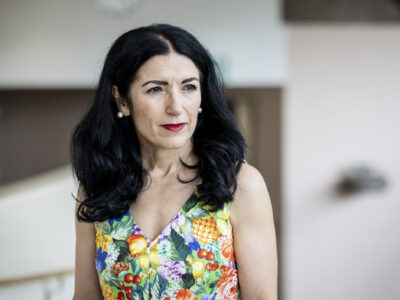
Photograph of Kurdish exile and former Swedish Parliament member Amineh Kakabaveh, a woman in her early 50s with black wavy hair below her shoulders. She's wearing red lipstick and pearl earrings, and a colorful dress with a pattern of various fruits and flowers. She is looking off to the right.

What Will Amineh Kakabaveh Do Next?

WP_Post Object
(
    [ID] => 5246
    [post_author] => 15
    [post_date] => 2022-10-18 21:35:02
    [post_date_gmt] => 2022-10-18 21:35:02
    [post_content] => 

Why the protests in Iran are about more than just women's rights.

Zan. Zendegi. Azadi.

Woman. Life. Freedom.

This is the rallying cry on the streets of Iran as the people clamor not just for women’s rights and justice for Mahsa Amini, but for a different world order—for the right to live under conditions of their own making.

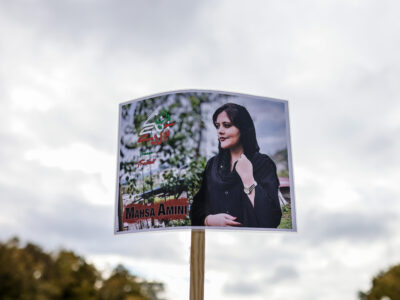
On September 16, 2022, 22-year-old Amini died in the custody of Iran’s “morality police,” who (allegedly) beat her to death for inappropriately wearing “hijab,” or the veil. In direct response, the Iranian people have taken to the streets to protest not just gender violence, but decades-long violences of empire that survive in Iran despite the Islamic Republic’s break with the West. While galvanized by Mahsa’s murder, these protests highlight accruing grievances against the Islamic regime, as well as an empire that birthed and underwrites the state’s terror tactics. 

As those of us in the West begin to make sense of Iran’s senseless state violence, we must refrain from pathologizing Islam as the source of this violence, or the veil as a sign of oppression that revokes women’s agency. We must also be careful not to reproduce the colonialist logic whereby we task ourselves, as “good liberal subjects,” with “saving” these brown women from brown men, as cultural anthropologist Lila Abu-Lughod warns. 

This is not the first time that Iranian women have used the veil—in other words, gender politics—to mobilize a demand for the people. In 1979, at the height of what was then an anti-imperialist uprising, Iranian women donned the veil not because they wanted to give up their agency, but because they wanted to take it. These women had suffered for years at the hands of a puppet government that imposed Western standards of being and doing and knowing, including but not limited to mandatory unveiling—obscuring their lived experiences as a people who want to know themselves outside of the West’s phallic gaze. 

As the handmaiden of empire, this gaze pretends to “know” the people it Others, making Iranians, in this case, the West’s antecedent and foil; a people in need of Western patronage and intervention in order to animate their political will. But the women of Iran are not awaiting our verb to make their demands known and felt. Neither are the Iranian children who sing about the possibility of “enghelab”—revolution—as they join their teachers to burn effigies of the Ayatollah. 

Today, Iranians across gender, racial, ethnic, religious, and class lines are risking their lives in refusal of what iconic feminist scholar bell hooks describes as “imperialist white supremacist capitalist patriarchy.” Even as the state’s violence is totalizing, these women and children and those who stand with them courageously and collectively dream of an Otherwise. And it isn’t the first time: Jalal Al-e Ahmad, whose writings galvanized the 1979 revolution, called the Iranian state’s obsession with emulating the West a disease, which he termed “Gharbzadegi,” or Westoxification. He implored Iranians to seek alternative modernities outside of imperialist white supremacist capitalist patriarchy’s phallic, penetrating violence, so that they might make their own lives (and ours) matter. Indeed, the revolution that the Iranian people sought then and continue to seek today cannot be contained by a demand for gender justice alone. 

I have often wondered, in the hour of bell hooks’ passing, what she might say about the uprisings in Iran. She argued that feminism is for everybody; in other words, that feminism helps us understand how society and its dis/contents function. In her final years, hooks expressed concern that feminism is dying in today’s society. As her friend and confidant, I would like to think that the protests in Iran today would give her hope, because Iranian women and their co-conspirators are strategically leveraging feminism, using a critique of patriarchy to challenge empire. 

Shervin Hajipour’s song “Barayeh,” described by popular media as the “anthem” of Iran’s protests, enumerates many of these intersectional violences, and how they animate the Iranian government’s iron fist. The people are protesting, Hajipour writes, “for the child laborer and [for] his dreams”; he adds, rather poetically, that they are also protesting for a crumbling economy, for the imprisoned, for the polluted air, for the dying trees, for the extinction of Persian cheetahs, and for “the murdered and innocent forbidden street dogs.” 

Interestingly, rather than get caught up in the humanist exceptionalism of Western empire, Iranians protesting on the streets today know that revolution for their people is impossible without a change in the valuation of life. Their demand is not that all lives matter, but rather, that all life—human and non-human—matters. 

What’s happening in Iran today isn’t (just) the stuff of gender violence, which is a Western import, anyway. It is about survivance in the face of the imperialist white supremacist capitalist violence that remains in Iran. It is about poverty. It is about Western sanctions that make medical care impossible. It is about, as political theorist Michel Foucault wrote in a November 1978 article for the Italian daily Corriere della serra, “breaking away from…global hegemonies.” It is about a people who, “with bare hands who want to lift the fearful weight, the weight of the entire world that bears down on each of us, but more specifically on them, these oil workers and peasants at the frontiers of empire.” 

In “Barayeh,” Hajipour goes on to describe the protests as a revolution for “the embarrassed fathers with empty hands,” for “the missing and murdered kids,” for “the students and their future,” for “the Afghan kids.” His list is long, because, as Foucault notes, Iranians are clamoring for all of us. While Iranian women and girls are certainly leading this charge, there has been no shortage of men who stand with them or, indeed, who follow their lead, understanding that the feminism these women employ to clamor against patriarchy will better their living conditions, too.

What we’re seeing today is a long history of Iranians demanding a freedom with empty hands, for the world that suffers, still, because—as hooks implores—imperialist white supremacist patriarchy devastates all of our living conditions. 

Let us stand with Iranians now as they stand with us, as they bear this weight: the “fearful weight…of the entire world.”

This piece has been adapted from a speech given by M. Shadee Malaklou at a vigil hosted by the bell hooks center.

[post_title] => The Fight for an Otherwise [post_excerpt] => Why the protests in Iran are about more than just women's rights. [post_status] => publish [comment_status] => closed [ping_status] => closed [post_password] => [post_name] => iran-protests-mahsa-amini [to_ping] => [pinged] => [post_modified] => 2026-08-04 20:18:34 [post_modified_gmt] => 2026-08-04 20:18:34 [post_content_filtered] => [post_parent] => 0 [guid] => https://conversationalist.org/?p=5246 [menu_order] => 106 [post_type] => post [post_mime_type] => [comment_count] => 0 [filter] => raw )
The Fight for an Otherwise

WP_Post Object
(
    [ID] => 1554
    [post_author] => 2
    [post_date] => 2020-01-10 15:40:52
    [post_date_gmt] => 2020-01-10 15:40:52
    [post_content] => As Americans worry about suffering reprisals for the killing of Iran's top general, they overlook the civilians who have already been paying for many years — with their blood.

In an Egyptian political satire play called al-Za’im (The Chief), a military dictator who is an archetype representing the Middle East’s various tyrants dies of a sudden heart attack. His inner circle scrambles to replace him with a two-bit actor who looks exactly like the deceased president, so they can buy time to consolidate their power.

When told that he would be the new leader because the real one had perished, the actor smirks and lets out a derisive laugh. “Are there presidents who die, Sir?”

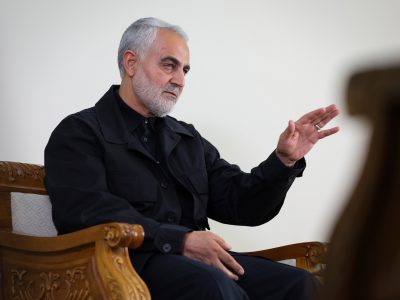
Many of us Middle Easterners and observers of the region had a similarly incredulous reaction to the death of General Qasem Soleimani, Iran’s top military general, who was killed in a US airstrike over the weekend. Analysts and experts claimed that his death would change everything and nothing, that it would lead to World War III; it had the American president vowing to commit war crimes just a few days into the new decade.

These predictions appear to be overblown. Soleimani’s legacy of violence and dispossession in Syria and Iraq will, however, endure. For his many victims, there is momentary relief at his passing.

Soleimani was the leader of the Quds Force, the unit responsible for external operations of the Iranian Revolutionary Guards Corps. The IRGC’s remit is protecting the Islamic Republic’s political system from internal and external threats. Soleimani gained his formative experience fighting on the frontlines of the cruel eight-year war between Iran and Iraq, during which Saddam Hussein deployed chemical weapons with impunity while continuing to enjoy western backing. He witnessed the enormous loss of life – more than half a million, including children and soldiers who were sent into minefields as human detonators, in what was ultimately a pointless war of attrition. 

By 1998 Soleimani was head of the Quds Force; and in 2011 he was promoted to major general. Meanwhile the Arab Spring was sweeping through the region, with Syria the focal point of the Islamic Republic’s paranoia.

Soleimani loomed large as the face of Iran’s campaign for regional dominance, a figure of mystique and mythical brilliance and strategic wisdom. He was the second-most powerful man in Iran, after Supreme Leader Ayatollah Ali Khamenei; he battled the US for influence in Iraq during the American occupation, arming and backing Shia militias in order to guarantee a weak Iraqi state that functioned under the shadow of Iranian influence.

Though he was always an elusive figure, Soleimani had grown less wary of the limelight in recent years. He allowed himself to be photographed and took selfies with Shia militias on the frontlines in Iraq and Syria. 

In Iraq, he organized militias that defeated ISIS; but then those militias turned around and launched military reprisals against ordinary Sunni civilians, thus alienating the very people they had just liberated from the jihadi terror group. 

In Syria, the Iranian general’s self-appointed mission was to save the dictator Bashar al-Assad’s regime from collapse. In doing so, he presided over the country’s destruction, the displacement of millions of civilians, the greatest refugee crisis since the Second World War, and the survival of a tyrannical regime.

All the while, he was portrayed as a master strategist who foiled American designs in the region at every stage.

Iran’s pro-Assad policy is based on its desire to maintain regional influence. The Islamic Republic needs Syria to be stable in order to maintain a secure overland avenue for the transportation of military supplies to Hezbollah in Lebanon, which is its most powerful proxy force. Iran also needs to maintain an overland route to ports on the Mediterranean. When the Arab Spring of 2011 spread to Syria from Egypt, where protesters set a precedent by forcing the resignation of long-time ruler Hosni Mubarak, Iran sent advisors to Syria. Soon after that, it sent proxy militias to fight alongside Assad’s forces. In 2013, Hezbollah forces entered Syria to fight for the regime as well.

These proxy forces were responsible for some of the cruelest tactics of the war. In early 2016, I reported on the siege of Madaya, a border town that was home to 30,000 civilians who were being systematically starved to death by Hezbollah in an effort to force their surrender. To survive, people ate grass, leaves, and spiced water instead of soup.

These starvation sieges were replicated throughout the country, with Soleimani’s proxy forces often leading the charge into areas held by anti-Assad rebel troops. In addition to using hunger as a weapon of war, the pro-regime militias used scorched earth tactics. To recapture Aleppo, they bombarded from the ground while the Syrian and Russian air forces bombed from the air; as they reclaimed territory from the rebels, they carried out extrajudicial killings.

When the rebel forces eventually surrendered, tens of thousands of civilians, fearing the regime would persecute them for suspected anti-government sympathies, were forcibly displaced. Soleimani’s tactics are responsible for rendering countless Syrians destitute and homeless, and for driving many to seek refuge abroad. The ensuing refugee crisis contributed enormously to sectarian tensions in the Middle East. Those who stayed inside Syria continue to suffer from the violent tactics of the Assad regime and its Russian and Iranian allies.

In 2015 Soleimani traveled to Moscow and personally convinced the Russians to intervene on Assad’s behalf. Russian warplanes have carried out dozens of attacks on hospitals in rebel-held areas, and they have killed thousands of Syrian civilians in various air strikes.

In Iraq, the extent of the atrocities carried out by Soleimani’s proxy forces in Sunni communities liberated from ISIS was so extreme that, according to cables leaked by rivals, the intelligence services worried they were undermining Iran’s popular reputation.

More recently, Soleimani was reportedly involved in the crackdown on the popular protest movement against government corruption in Iraq. Security forces and Tehran-backed militias killed hundreds of Iraqi protesters in the weeks leading up to Soleimani’s death. According to reports, the Iranian general attended key security meetings in Iraq; he advised his counterparts to learn from Iran, where security forces killed over a thousand civilians in anti-government demonstrations that took place in December.

In the weeks and months before the Trump administration assassinated Soleimani, the Iranian regime carried out several calculated provocations against the US, as payback for their having pulled out of the multilateral nuclear deal. They threatened and disrupted shipping in the Persian Gulf and bombed Saudi oil installations; more recently, Iran launched rocket attacks against Iraqi bases housing American troops and attacked the US embassy in Baghdad on New Year’s Eve.

The question of whether assassinating Soleimani was legal or not is an academic one. Not just because it is already done and nobody will be held accountable for it, but because Soleimani had been waging an overt and covert war against the US and its allies for years. He orchestrated the death and displacement of hundreds of thousands of civilians over nearly a decade of war in Syria, against a backdrop of a broad violence and civil warfare in Yemen and Libya, as well as political crackdowns and resurgent authoritarianism throughout the region. 

The Middle Eastern conflagration that American pundits claim to be so concerned about Soleimani’s death sparking has already been raging for a decade, with hundreds of thousands of civilians paying in blood.

For now, the worst predictions of the alarmists have not been realized. World War III has not started, and Tehran responded with a calculated attack that didn’t kill any Americans. It did kill or injure Iraqi soldiers stationed on the military base housing American troops, but this was a matter of indifference to both Iran and the United States. As we have seen since the invasion of 2003, America places little value on Iraqi lives.

If there is a future escalation, it will take place on the backs of Arab civilians, because Iran does not have the capacity to match American military aggression. If it does respond further, it will do so through its proxies, further destabilizing the region and risking war. Tehran and Washington will never allow Arab civilians to stand between them when it comes to pursuing their foreign policy goals in the Middle East.

Trump does not care about Arab lives — about this, there is little doubt. Nor is he concerned about human rights, international law, or even having an actual strategy for his foreign policy in the most volatile part of the world. 

But amid the hand-wringing, spare a thought for Soleimani’s victims. For a brief moment, their suffering has been eased.

 
    [post_title] => Dear America: The death of Qasem Soleimani is not all about you
    [post_excerpt] => For now, the worst predictions of the alarmists have not been realized. World War III has not started, and Tehran responded with a calculated attack that didn’t kill any Americans. It did kill or injure Iraqi soldiers stationed on the military base housing American troops, but this was a matter of indifference to both Iran and the United States. As we have seen since the invasion of 2003, America places little value on Iraqi lives.
    [post_status] => publish
    [comment_status] => closed
    [ping_status] => open
    [post_password] => 
    [post_name] => dear-america-the-death-of-qassem-soleimani-is-not-all-about-you
    [to_ping] => 
    [pinged] => 
    [post_modified] => 2026-08-06 23:11:15
    [post_modified_gmt] => 2026-08-06 23:11:15
    [post_content_filtered] => 
    [post_parent] => 0
    [guid] => http://conversationalist.org/?p=1554
    [menu_order] => 287
    [post_type] => post
    [post_mime_type] => 
    [comment_count] => 0
    [filter] => raw
)
Dear America: The death of Qasem Soleimani is not all about you