WP_Post Object
(
    [ID] => 9889
    [post_author] => 15
    [post_date] => 2026-01-08 00:16:00
    [post_date_gmt] => 2026-01-08 00:16:00
    [post_content] => 

While reporting on climate change isn’t always hopeful, the women I've met along the way are forging a path forward for intergenerational resilience.

In the dim flicker of a kerosene lantern on a fog-wreathed houseboat, I watched Nazia Qasim’s reed-scarred hands pierce threadbare fabric with her needle, weaving colored abayas as her eyes fixed on Dal Lake’s silt-choked horizon, diesel haze mingling with the sour tang of rotting lotus stems, where vibrant beds once bloomed. 

I’ve heard endless tales from Nazia—and Qudisa, and Bano, and their sisters—about how the lake’s relentless shrinkage has mirrored their own lives’ contracting. Yet the women have overcome: As the lake withers, under absent snows and dying streams, the water now polluted and undrinkable, they have found new work and purpose through their weaving. For hours last January, I watched their hands move in the lantern’s glow, transforming loss into livelihood. This sisterhood, which once thrived on an endless, ancestral bounty of lotus, water chestnuts, and fish, now scraps stitched tight, the women’s quiet knots a fierce stand against the fade.

As a climate reporter based largely out of India, I am often tasked with telling stories on the frontlines of disaster. I have crouched in Pampore’s parched Karewas at dawn, watching farmers Farida Jan and Snobar Ahad recount the decline of saffron, a visceral dirge for disappearing traditions I could feel in the cracked earth underfoot. I’ve seen women shoulder jerry cans under a merciless sun, irrigating wilted bulbs past cobwebbed government drip lines, turning the world’s most prized spices into frantic wagers against the sky, where one failed season means debt for entire villages. And in countless moments, I’ve watched with growing frustration how easily the world abandons the Global South, which disproportionately bears the brunt of climate change, and how rarely the countries most responsible seem to face the same consequences. 

This work necessitates exhaustive fieldwork in fragile ecosystems, sifting through scarce data amid conflict, and confronting the grief of vanishing landscapes and livelihoods. But in my writing on the realities of climate change, I’ve also made a conscious effort to find stories of resilience, rather than just stories of despair. Stories that not only show there are still people who haven’t given up on the fight, but who have made a meaningful difference in changing the tides.

These changemakers are often women. 

Perhaps because of this, my work has always felt inherently hopeful: Despite climate theft splintering families—stealing not just saffron yields and Dal Lake’s bounties, but the heartbeat of a country’s soul—these women persist as resilient guardians, weaving their survival with fierce tenderness from the shattered threads. 

This has also made it all the more important to me that I get their stories right. As a writer, I prioritize women’s agency and consent, letting them narrate their own stories however I can. This approach shatters poverty tropes, spotlighting their resilience and innovation over the victimhood stereotypes that dominate mainstream coverage of rural Indian women. It also imbues my work with deeper meaning, in hopes that harmful narratives might begin to shift as more of these women’s stories are allowed to take up space.

Over the years, I’ve chased India’s climate fury, from Kashmir’s vanishing glaciers to Maharashtra’s cracked fields and Tamil Nadu’s drowned coasts. And the women I’ve met along the way light a fire in me: Their grit isn’t survival, it’s rebirth for a warming world. 

~

“When I got married, nobody asked my choices,” Kamla told me on her daughter’s wedding day, now nearly two years ago. “Today, I ensure hers.”

The message was loud and clear: Economic independence is agency in a patriarchal script. And for Kamla, it had allowed her to reclaim this agency on her own terms, and to give her daughter a chance at a better life.

I first met her in early 2024, while reporting my story “A Farm of One’s Own” for The Conversationalist. Kamla is a farmer from Khajraha Khurd’s sunbaked fields, in parched Bundelkhand’s Jhansi district, Uttar Pradesh. She leads local farming techniques to combat drought, something that has helped pull families in the region out of poverty, proving climate adaptation thrives on female ingenuity.  

In the days we spent together, I crouched beside Kamla as she worked, enveloped in the mud’s earthy scent. Her eyes were sweat-stung, her fingers plunged into the sun-warmed soil. As she crunched freshly picked beetroot, she explained to me how she uses neem traps to ward off pests amid erratic rains. Her father-in-law burst out laughing, teasing her for explaining farming to me like she knew anything at all. 

But it was clear she knew more than he understood. When the global coronavirus pandemic rapidly swept across India, some of the most vulnerable, and climate-vulnerable, migrant women were robbed of their work, Kamla included. She not only found meaningful work in the aftermath, but self-reliance, trading callused hands for hoe and seed, wresting millet, broccoli, and lentils from her own organic farm.

Kamla’s resilience was magical to witness. I spent many days with her, seeing how she started her day, plunging into compost heaps steaming with kitchen scraps and dung, spreading the fertilizer across her garden. Watching her wipe soil from her weathered palms, spinach bunch in hand, I saw her rooted at last from laborer to earth-tender, peace in every leaf, life hers again.

In the afternoon, she tiptoed through the fields and quickly kneaded the dough for lunch and put it on the tawa, slapping it thin and golden and slathering the sizzling ghee, serving it with a tin cup of frothy chai brewed strong over a chulha fire. We ate together in the rows of a multi-cropped farm, the air humming with neem leaves. This wasn't just a meal; it was a window into resilience in motion, women and girls weaving nourishment from the land. Nearby, her great-grandmother sat cross-legged on the earthen floor, her gnarled fingers deftly cleaning a mound of fresh red chillies in the sun—plucking stems, wiping dust, and muttering local songs on the front porch of her house, a visual treat to witness a silent hymn to preservation in a world of fleeting harvests.

As we ate, I thought of these women, whose callused hands not only yield the wisdom and knowledge of saplings and sickles, but carry it forward, forging an intergenerational resilience against climate chaos that exists beyond immediate harvests, or even lifetimes—ensuring the next generation endures.

~

Over the years, I’ve met countless women enacting change like Kamla, often without credit or acknowledgement. In India’s northern Haryana state, I met Sunita Dahiya, a woman pioneering eco-friendly menstrual products, and training rural women to produce organic pads that decompose rapidly, slashing microplastic pollution and the burden of billions of plastic disposables in landfills each year. In north Kashmir’s Bandipora district, I met Phula Bano, who manages large herds of wild dogs, cattle, and horses through daily treks in the Himalayas, helping to sustain a low-carbon, resilient ecosystem.

For an early story for The Conversationalist, I also met the beekeeper Towseefa Rizvi—a living embodiment of sisterhood in action. As the first female beekeeper in Ganderbal district, Kashmir, Towseefa has demonstrated, again and again, how one woman’s rise can create pathways for others to join her. Within her community, she also demonstrated that beekeeping could be a profitable path, as well as a productive response to ecological despair. Today, she still trains and supervises village women in the tender art of queen-rearing and swarm management, and sells local honey through various haats and online.

When I visited her home in Bandipora district in north Kashmir, I saw apple groves dotted with buzzing apiaries in her backyard, as she coaxed her bees into new, modern hives. She viewed her bees as family, and over the years, dedicated herself to learning about the restoration of biodiversity, pollination of resilient crops, and climate vagaries. 

Her journey was also proof that true climate hope lies not in flashy summits, but more often, in one woman’s quiet and relentless work.

~

Centering hope in my reporting, of course, hasn’t saved me from the realities of writing about and from regions affected by climate change.

What started as whispers of women-led mangrove safaris while researching another story last year eventually evolved into a gruelling quest, marked by relentless weather delays and elusive sources. For months, I chased the story of Sindhudurg’s mangrove guardians—fierce women from one of Maharashtra’s pioneering women-led self-help groups (SHGs). And for months, I wondered if the story I hoped to tell would ever come to fruition.

Weather changes were unforgiving foes. Monsoons flooded coastal paths and stranded my sources with switched-off phones for weeks. Out of anxiety, I’d chase them via voicemail. Officials also proved phantoms as the network dropped along eroding coastlines.

It wasn’t easy to convince the women to entrust me with their stories; their promises fading with each storm surge and postponed boat trip. But visiting the coast and sharing chai in salt-lashed homes finally broke the ice last fall, and resulted in my final piece from the year, “Guardians of the Mangroves”, about how Maharashtra’s crab farmers are spearheading women-led coastal restoration amid local climate chaos. 

Late in my visit, I stood with farmer Sonali Sunil Acharekar amid the hushed mangroves, her rough hands parting their roots in silent vigil, as cries of herons and egrets filled the skies. She paused mid-story about lost fish, her fingers sifting through the silty tides to snare a scuttling fiddler crab.

She grinned. “See? Even the birds know we’re guardians.” 

I felt a spark of wonder that, despite rough weather nearly killing this story, I could still bring these women’s unbreakable strength into the light. As we enter a new year, I am ending the last with gratitude for their efforts, and the stories these women have shared. I hope, too, I continue to push myself to amplify excluded voices, to craft stories of climate hope that counter the despair-dominating headlines, and to show women as stewards of India’s Global South.

When we lose sight of hope, we risk nihilism that doesn’t allow us to see ingenuity amidst climate chaos—something women in the Global South have delivered time and time again, and something that has made me feel consistently hopeful in my work. While reporting on climate change itself isn’t always hopeful, there is always hope—and at the center of that hope are the women who bend, rise, and persist, their strength illuminating the fragile edge where water meets earth.

[post_title] => Planting the Seeds of Climate Hope [post_excerpt] => While reporting on climate change isn’t always hopeful, the women I've met along the way are forging a path forward for intergenerational resilience. [post_status] => publish [comment_status] => closed [ping_status] => closed [post_password] => [post_name] => hope-week-climate-change-resilience-action-profile-economic-independence-global-south-india [to_ping] => [pinged] => [post_modified] => 2026-08-03 21:01:04 [post_modified_gmt] => 2026-08-03 21:01:04 [post_content_filtered] => [post_parent] => 0 [guid] => https://conversationalist.org/?p=9889 [menu_order] => 0 [post_type] => post [post_mime_type] => [comment_count] => 0 [filter] => raw )
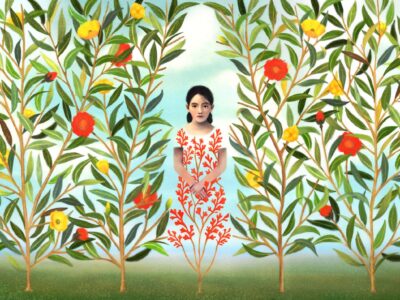
An illustration of a girl surrounded by a growing flower bush, with a cut-out around her in the shape of a woman.

Planting the Seeds of Climate Hope

WP_Post Object
(
    [ID] => 9839
    [post_author] => 15
    [post_date] => 2025-12-17 18:25:59
    [post_date_gmt] => 2025-12-17 18:25:59
    [post_content] => 

How women crab farmers along India's coast have linked their livelihoods to environmental conservation.

A soft current ripples near Jamdulwadi Island as 15-year-old Prachi Santosh Acharekar guides her canoe through the gnarled trunks of a mangrove forest.

The afternoon sun warms the surface of the water, revealing a familiar scene to local communities around India’s Konkan coast: clusters of mud-covered crabs, basking on branches.

As she approaches them, she slows her boat. Prachi, a 10th-standard student, doesn’t just see mud crabs: She sees her future. Her focused gaze and deft handling of the boat are part of her autodidactic training, a testament to a burgeoning passion that runs deep within the Acharekar family. 

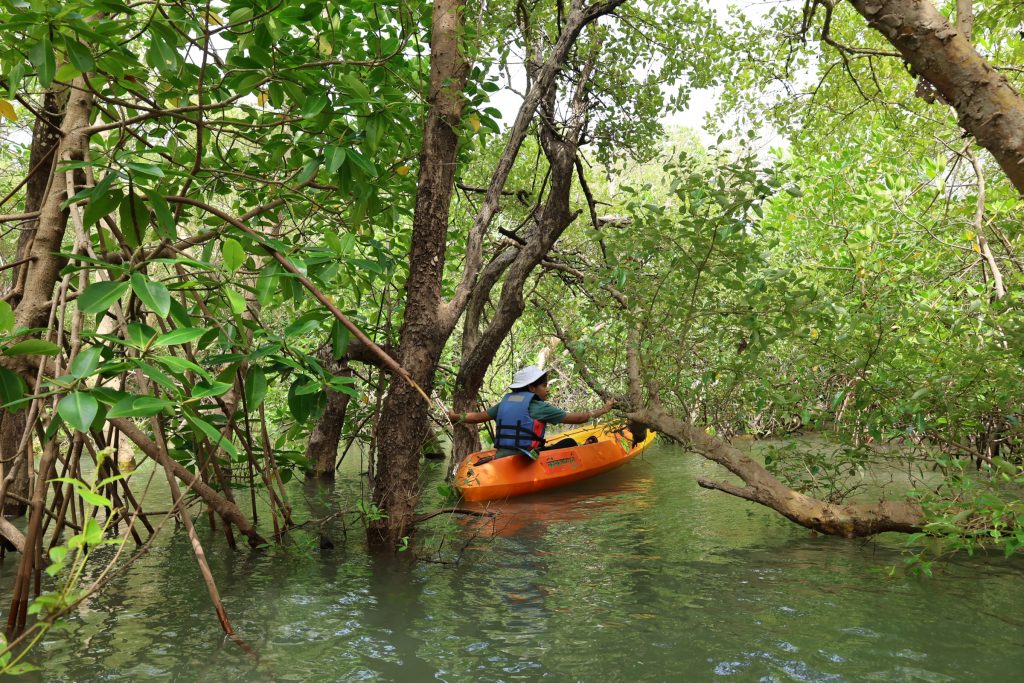
Prachi Santosh Acharekar navigating her canoe through the mangroves, a part of her crab farming training.

Champions of the Mangroves

In Achara village, where she lives, crab farming season typically runs from October to May. When Prachi is fully inducted into her family’s business in about three years, during this time, she’ll be busy with preparations, stocking seed, feeding the crabs, and folding boxes to safely transport them once they’ve been harvested. 

All of it will also formalize her role in a grassroots movement, led by women from India’s coastal belt: In Sindhudurg, women fisherfolk have become champions in linking their livelihoods with environmental conservation. Through crab farming, they’ve created a strong incentive to protect local mangroves, which serve as critical nursery habitats for mangrove crabs. The benefits of this are both economical and ecological: Alongside generating sustainable income for the women, the mangroves’ preservation stabilizes shorelines and mitigates erosion, enhancing coastal resilience against the impacts of climate change. 

At the heart of this enterprise is Prachi’s aunt, 55-year-old Sonali Sunil Acharekar, a proud entrepreneur and leading member of Konkansparsh, one of Maharashtra’s pioneering women-led self-help groups (SHGs). Like all women of this SHG, for her, the mangrove is not just an ecosystem, but a dynamic marketplace.

“Be it dolphin safari, trekking, birdwatching, or traditional fishing, we do it all at Konkansparsh,” says Sonali, sitting in a charpoy at her home, surrounded by a vast area of mangroves. “But crab farming is our speciality. It is something we feel deeply attached to.”

Sonali and other leaders manage the entire crab farming supply chain, from feeding and harvesting the crabs to selling them. The process is meticulous but straightforward. Crab seeds are carefully placed one-by-one into fiber boxes. Each box is then deployed within the protected mangrove territories of Sindhudurg district, which boasts 6,940 hectares of mangroves perfectly suited for farming. Sonali also feeds the small raw fish stock twice daily, in the morning and evening. Then, once the crabs are ready, they’re harvested, boxed, and sold. 

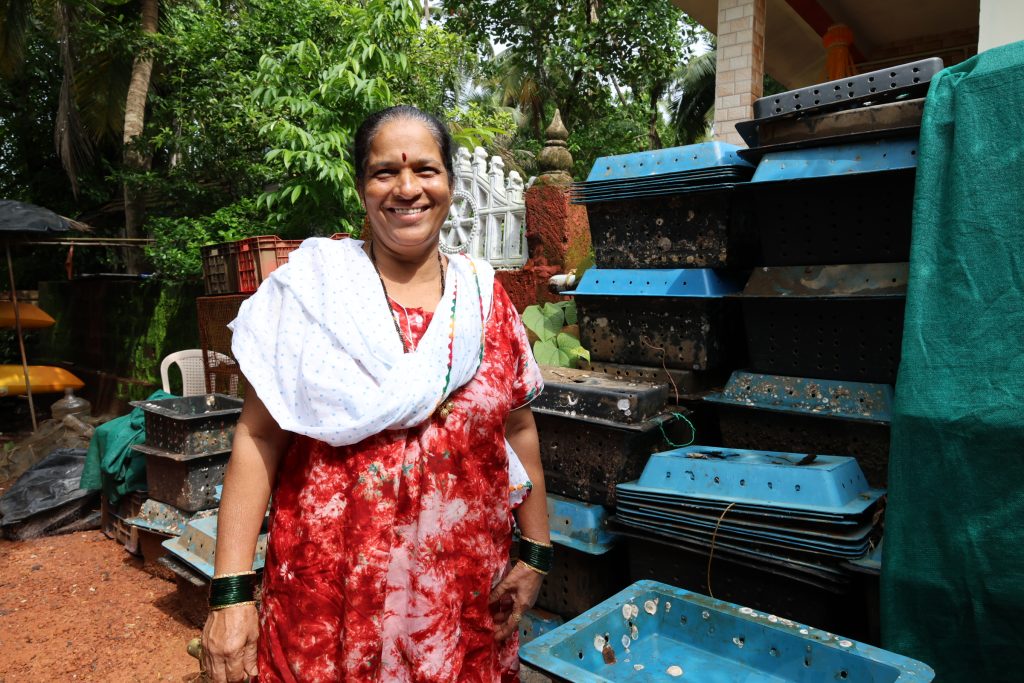
Sonali Sunil Acharekar in the backyard of her home in Achara village.

Overseeing the entire operation in this way has significantly enhanced the women’s access to resources, as well as to the market. The payoff is also demonstrable, including as a sustainable model: Last year, the Acharekar family, a seven-member unit that works in tandem, generated an impressive 150,000 INR ($1,706 USD) from the sale of 180 crabs. They also earned an additional 130,000 INR ($1,466 USD) from running mangrove safaris. 

“It feels so good to partake in the process,” says Sonali. “This year, we intend to maintain 200 boxes fully. More boxes mean more business and more business means more prosperity.”

Their success also reinforces a crucial ecological benefit: According to research published in the Marine Biological Association of India, mud crab farming is not only a sustainable—and profitable—livelihood, but an essential strategy for mangrove conservation, supporting the region’s climate resilience through ecosystem protection. The mangroves provide a conducive natural habitat for raising mud crabs, or green crabs, commonly from the species Scylla serrata, which are indigenous to the region. By breeding and harvesting crabs, and building and tending to crabs pens in mangrove creeks, the women have both created a financial incentive for the mangroves' protection and helped to increase the local crab population.

In coastal areas, crabs are considered an economically significant species due to their huge demand. The crabs themselves can also tolerate a wide range of temperatures and salinities without destroying local ecosystems. But over the years, sand mining, saltwater intrusion, and rising water temperatures have contributed to a declining mud crab population, and are just a few of the ongoing stresses and trends that fisher communities have dealt with, and that local SHGs hope to tackle. 

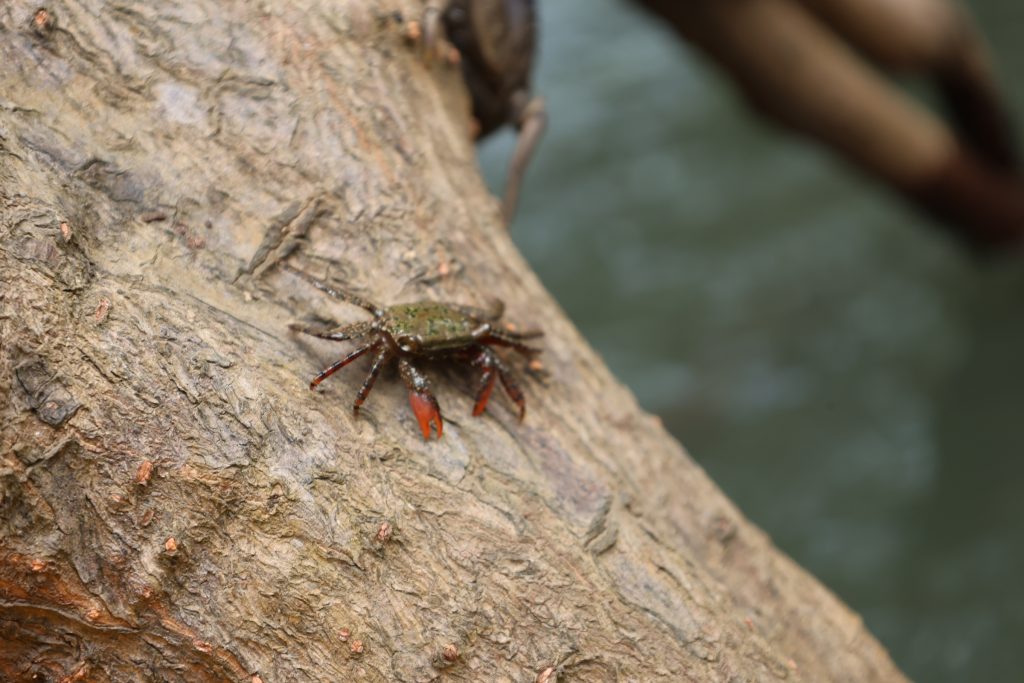
A wild baby crab crawls on the trunk of a mangrove tree.

In other coastal communities like Kerala, Maharashtra’s neighboring state, crab farmers who once caught wild juvenile crabs and had plentiful stock are grappling with rising costs and dwindling returns, as crabs have become scarce and stressed. Their annual incomes have dropped by 50,000 INR to 100,000 INR (around $600 USD to $1,200 USD) due to poor water quality, causing frequent disease outbreaks, pushing many farmers to downsize or cease operations altogether, largely due to reduced harvests linked to environmental degradation.

Sustainable crab models in coastal communities in Maharashtra aim to address the pressing problems of overfishing, habitat loss, and food insecurity through long-term economic stability. But without such practices, crab harvesting may yield fleeting profits, triggering ecological collapse and harm to a region’s inhabitants.

In addition to boosting the economy, this is part of why the SHG’s endeavors have been such a great boon to the area.

According to Kedar Palav, Livelihood Specialist at Sindhudurg’s Mangrove Foundation, women-led groups comprising 40 women have been active in Sindhudurg district during the 2024-25 crab farming season. “Our aim,” he notes, “is to facilitate strong livelihood opportunities for the women.”

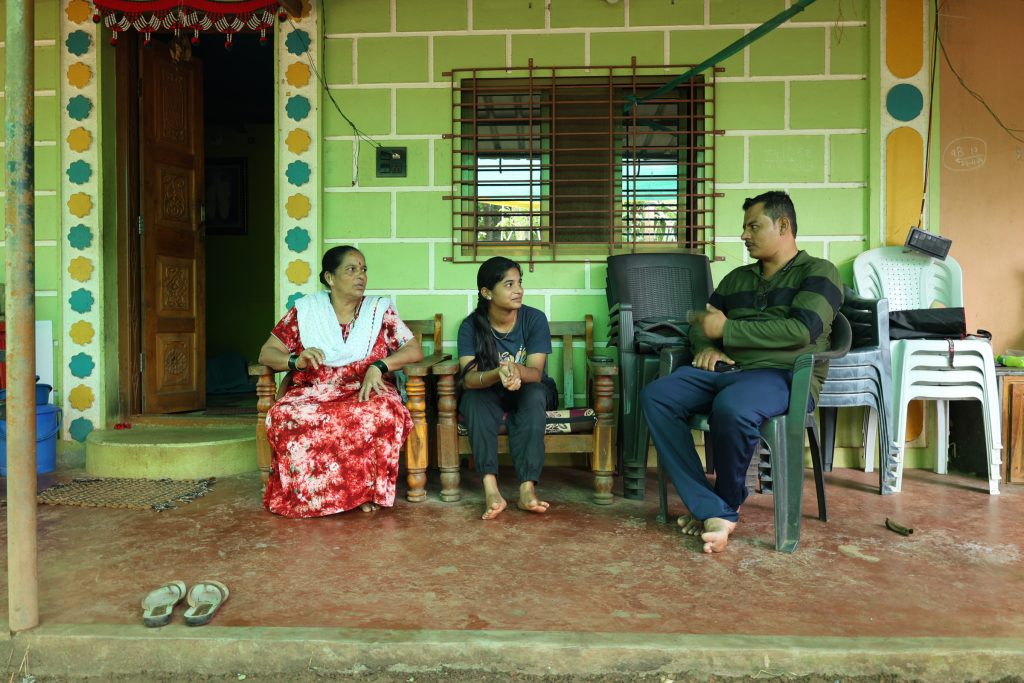
Sonali Sunil Acharekar (left) and her niece Prachi Santosh Acharekar (center) in conversation with Mayur Pansare (right), a Project Assistant for the Mangrove Foundation.

But even those with formal careers are drawn to the potential. Sonali’s 32-year-old son, Omprakash Sunil Achrekar, an engineering graduate, has embraced crab farming full-time; and Manish Tari, 22, an undergraduate in fisheries science, launched Manish Agro & Seafood with his father during the Covid-19 pandemic, specializing in vertical crab farming.

“We deal in red and green crabs,” says Tari. “A single piece per kilo can go up to 2,400 INR. It’s very lucrative.”

Navigating the Tides

Despite the economic potential, the journey is not without profound risks and hurdles. The most immediate occupational hazard, however, is theft.

“Theft of crabs is a big problem here,” says Sonali. “Sometimes diseases can spread in the backwaters, as well…A mortality rate of 20 percent is considered normal.”

It’s a challenge that has historically forced some farmers out of business. Samiksha Gaonkar, 50, from Pirawadi village, recalls being part of Sindhudurg’s very first crab culture group, which operated between 2014 to 2019. Despite each group member earning around 5000 INR per month, they were forced to shut down.

“Our crabs got suddenly stolen,” says Samiksha. “We could not keep a check on the thefts and then we had to pull out.”

Anagarajan Joshi, 58, a former crab farmer, at her friend’s home in Pirawadi village.

Another hurdle is the scarcity of crab seed. According to Palav, there is only one hatchery in India: the Rajiv Gandhi Centre for Aquaculture (RGCA) in the southernmost state of Tamil Nadu. 

Sanjeevni Santosh Mithbavker, 43, a member of the Vedoleshwar SHG, says crab farming has become more difficult as a result. “We lack seed,” she says. “If the supply of seed becomes easy, we can take this business forward.” 

Despite the scarcity, Sanjeevni sold crabs worth 60,000 INR last season. But while business is “great,” seed still costs 25 to 30 INR for a single piece—makings it an expensive venture for the average crab farmer.

A Wave of Resilience 

To counter these challenges, government and non-governmental efforts have actively focused their support on the most vulnerable communities, placing women at the forefront.

Government initiatives such as the Mangrove Conservation and Livelihood Generation Scheme, alongside international projects like Enhancing Climate Resilience of India’s Coastal Communities (ECRICC), have been instrumental in fostering local interest in Sindhudurg’s coastal villages, including Achara and Hadi. As part of the Mangrove Foundation’s intervention, women’s groups also receive substantial training and support, including expert talks, presentations, and hands-on workshops that offer extensive practical training. 

On the ground, additional support comes from 34 Sagar Mitras—fisheries graduates who act as vital resources for the women. Mayur Vinayak Pansare, Project Assistant with the Mangrove Foundation, sees themselves in a family-like role. While they occasionally help fix issues, like crabs breaking through fiber boxes, he says, “It’s heartwarming to see these women coming forward and taking steps towards self-reliance.”

Sanjeevni Santosh Mithbavker, 43, mends nets at her home in Hadi village.

The financial assistance is also significant: The Achrekar family, for instance, received a substantial 90 percent subsidy from the Department of Fisheries and the Mangrove Foundation. Between 2021 and 2025, larger initiatives like the Pradhan Mantri Machi Sampada have backed an additional 124 fisheries projects, with women as a remarkable 60 percent of beneficiaries between 2021 and 2025, says Bahar Vithala Mahakal, Sindhudurg District Program Manager at the Fisheries Department.

This focus is clear across other programs, too: The Sindu Ratna Samrudhi Scheme saw a 70 percent rise in female beneficiaries in a single year, between 2022 and 2023.

Planting the Future

Women’s presence as crab sellers in Sindhudurg’s main fish market signals a generational shift in the industry: They’re taking center stage in an otherwise male-dominated marketplace. For Dakshita (who asked we only use her first name), her presence here is about more than selling her own yield—she’s also reclaiming a little more of herself. 

“What is the need for middlemen when I can run my own business?” she says, waiting for customers.

Dakshita, 50, sells green crabs at the Malvan fish market in Sindhudurg.

In Prachi’s case, the journey towards self-reliance began slowly. She initially “harbored no interest in crab farming.” But witnessing her family’s dedication and serving as a guide for tourists through the vibrant backwaters transformed her perspective, converting her initial disinterest into a passion.

In the shifting tides of the Maharashtra coast, Prachi represents the strong voice of a younger generation, seamlessly blending tradition with science to carve a new path forward. For them, crabs are the ‘green gold,’ promising economic returns.

While elder members strengthen their place in the market, Prachi is now articulating a dream that links her environment to her education, which she plans to pursue further by studying Marine Science.

“By protecting the mangroves, my crabs thrive,” she says. “The mangroves in return protect my family from storms, erosion, and the rising sea.”

A view of a mountain village in Sindhudurg.

In the nearby pond, Prachi and Sonali have also started to plant new mangrove saplings. Other efforts at sustainability have only grown. In 2017, scientists visited the area and told local crab farmers that in order to have a better catch, they needed to maintain cleaner water. To boost women’s participation in local water and pond management, women farmers are now being trained to regularly flush water through the crab ponds for freshness, monitor water quality, and prevent overcrowding. Since then, they’ve seen the return of many new birds in the area, from cattle egret to common sandpiper and Indian pond heron.

The tides speak louder than people in Sindhudurg’s coastal communities, and for these powerful women, mangroves stand like guardians along the coast. The more they nurture the mangroves, the more the mangroves give back to them, too. It’s a quiet partnership in nature, this connection between crab farmers and the mangrove forests, and a small step in healing the Earth.

[post_title] => Guardians of the Mangroves [post_excerpt] => How women crab farmers along India's coast have linked their livelihoods to environmental conservation. [post_status] => publish [comment_status] => closed [ping_status] => closed [post_password] => [post_name] => crab-farmers-farming-aquaculture-india-mangroves-conservation-climate-change-ecosystem [to_ping] => [pinged] => [post_modified] => 2026-08-03 21:03:35 [post_modified_gmt] => 2026-08-03 21:03:35 [post_content_filtered] => [post_parent] => 0 [guid] => https://conversationalist.org/?p=9839 [menu_order] => 0 [post_type] => post [post_mime_type] => [comment_count] => 0 [filter] => raw )
Guardians of the Mangroves

WP_Post Object
(
    [ID] => 8378
    [post_author] => 15
    [post_date] => 2025-05-13 19:09:37
    [post_date_gmt] => 2025-05-13 19:09:37
    [post_content] => 

How a company in Kanpur is giving India's flower waste a second life.

It’s a sweltering April afternoon in Bhaunti village, about an hour’s drive from the heart of Kanpur, India. Inside a large hall, shaded from the harsh sun, the air is thick with the scent of marigold and rose. Groups of women, dressed in bright cotton sarees and salwar suits, work with quiet concentration. Some sit in circles, carefully sorting flower offerings collected from nearby temples; others pluck delicate petals with practiced hands. At one end, a few women lift heavy tubs of freshly washed blooms, carrying them outside to spread on large sheets, where the sun will slowly draw out their moisture, preparing them for the next stage of transformation.

Inside the factory, 38-year-old Preity Mishra moves with quiet efficiency, neatly packing incense boxes with an ease that comes from years of practice. She first joined the factory seven years ago, after unexpectedly losing her previous job, where she had worked for nine long years. At first, Preity admits, she was hesitant. Preity, along with the other women, works for Phool, a company that converts flower waste into incense sticks, cones, essential oils, and dyes. “I thought it would be dirty work,” she recalls, brushing a speck of sandalwood dust from her sleeve. But her perspective quickly changed once she learned where the flowers came from. “When I found out the waste came from temples, I began to see it differently,” she says. “These flowers are sacred and offered in prayer. It felt like I was giving them a second life, which is noble work.”

Preity Mishra inspecting a box of incense sticks.

The story of Phool traces back to 2016, when Ankit Agarwal, a computer engineer turned entrepreneur, accompanied a visiting friend on a trip to Kanpur’s ghats along the Ganga River. It was the time of Makar Sankranti, an Indian festival marked by ritual river dips. Though the water appeared visibly polluted, devotees continued to bathe as part of the tradition. “My friend began asking me questions about the purity of the water, why people still took dips despite the pollution,” Ankit recalls. “I realized I didn’t have the answers. In the meantime, a huge tractor of flower waste came and was dumped into the river.”

That moment planted the first seed of what would eventually become Phool, which means “flower” in Hindi. “I returned to my job, but I couldn’t focus. I was working, but I wasn’t content,” Ankit says, sitting in his office in Kanpur. “I eventually quit and came back to research how this flower waste could be reduced or stopped entirely from polluting our rivers.”

India, with its countless festivals and year-round celebrations, generates a significant amount of solid waste, including an estimated 800 million tons of flower waste per year. As many of these flowers are grown using pesticides and insecticides, when this floral waste is dumped into water bodies, it begins to decay, producing a foul odor and contributing to serious water pollution—much like what Ankit and his friend witnessed in the Ganga River. 

After he returned home to Kanpur, Ankit began crunching the numbers, calculating how many temples were in the region, how much flower waste was generated daily, and the scale at which it was being dumped. The results were staggering. According to government data, there are about 108,000 temples and mosques in India where flowers are offered every day, before being dumped in landfills or bodies of water, contributing significantly to the country’s water pollution and ecological damage. 

A worker scatters flower petals on a plastic sheet to help them dry.

Ankit began reaching out to temples, hoping to convince them to hand over their floral waste so that it might have a second life. “It was difficult to convince them,” he says. “Flowers offered at temples hold deep religious significance, so naturally, there was hesitation.” The temples weren’t resistant out of indifference, but an abundance of caution. “They were sincere in their concerns,” Ankit acknowledges. “They wanted to know why I wanted the flowers and what exactly I intended to do with them.”

Once Ankit succeeded in securing the flower waste, he spent the next several months immersed in research, exploring different ways the discarded blooms could be transformed into something meaningful. “I spent around eight months studying how this waste could be turned into compost or used in other sustainable ways,” he says. Then, he had a breakthrough. “Incense sticks are usually made from charcoal,” he recalls thinking. “Why not try making them from temple flower waste instead?” 

Ankit and his co-founder, Prateek Kumar, began operating out of IIT Kanpur, slowly putting their idea into action. Every day, Ankit would ride his two-wheeler to find a daily-wage laborer to help with tasks like sorting flower waste and basic processing. But the pair struggled to find reliable help—a new worker would show up each day, and rarely would anyone return, even when Ankit personally asked them to come back. It became clear that if the project was to grow, they needed a more stable workforce.

Then, by chance, a woman came to their office one morning looking for work, and Ankit offered her a day’s job. As with many others, he asked her to return the next day—and to his surprise, she did. 

A group of women rolling incense sticks by hand.

While they worked side by side, he started a conversation. Could she come regularly? Could she help bring in other women like her? She readily agreed. “It would be better to come here and work with flowers,” she told him, “than to go to seven or eight homes every morning to clean toilets. Even then, we don’t always get paid—just some leftover food or old clothes.”

Ankit was struck by her words. The next day, they visited nearby neighborhoods together, and soon, 35 women had joined the initiative. He trained them, helped them get their Aadhaar cards for the first time, assisted them in opening bank accounts, and taught them how to use mobile phones—all small but powerful steps toward economic empowerment and independence.

“It wasn’t easy at all,” Ankit says. “But we conducted a three-day workshop to teach them the basics. I didn’t want them to remain stuck in the informal sector. I wanted to bring them into the formal workforce, with dignity, stability, and skill.”

A worker monitors one of the factory's machines.

This commitment is fundamental to Phool’s success, and remains an important part of their work culture. “When we established the company, one thing was clear: There would be transparency. That’s why you’ll see there are no walls in the office—just glass partitions to divide the teams,” Ankit explains. “We also made a conscious decision to ensure that the women working with us have a clear path to grow. That’s why we move them from sorting to incense stick making, and then to packaging—so they not only feel a sense of progression but also develop leadership qualities in the process.”

Another important aspect, he shares, is supporting his employees in sending their children back to school. “We currently have 500 people working with us, and 490 of them are women,” Ankit says. “Around 60% of them have enrolled their children back in school. Our mission is to support all of them so that [over the next few years], 5,000 children return to classrooms. This is something we’re intentionally working on, even if we don’t speak about it publicly.”

As for the company itself, Ankit and his team remain dedicated to product innovation and exploring new possibilities with flower waste. Recently, the team even succeeded in creating sustainable “leather” from discarded flowers.

Workers dividing and sorting incense cones for packing.

Nachiket Kuntla, who heads the research and development division at Phool, believes this innovation could be a major breakthrough for the leather industry and the broader sustainable market. “We spent a good 7–8 years researching and experimenting with this idea,” says Nachiket. “We’ve now developed a product that is sustainable and matches leather in terms of texture, quality, and feel. We’ll be launching a pilot product in collaboration with a fashion brand by the end of this year.”

Phool’s journey is a reminder that sustainability doesn’t have to come at the cost of tradition—it can actually grow from it. What began as a simple act of questioning river pollution has now bloomed into a movement that empowers women, preserves faith, and protects the environment. As the world looks for other, cleaner ways forward, perhaps it’s time we ask ourselves: What else are we throwing away that could bloom again?

[post_title] => The Sacred Cycle [post_excerpt] => How a company in Kanpur is giving India's flower waste a second life. [post_status] => publish [comment_status] => closed [ping_status] => closed [post_password] => [post_name] => phool-kanpur-india-flower-floral-waste-temples-sustainability-water-pollution [to_ping] => [pinged] => [post_modified] => 2026-08-03 22:50:55 [post_modified_gmt] => 2026-08-03 22:50:55 [post_content_filtered] => [post_parent] => 0 [guid] => https://conversationalist.org/?p=8378 [menu_order] => 18 [post_type] => post [post_mime_type] => [comment_count] => 0 [filter] => raw )
Two women workers wearing sarees, gloves, and blue face masks sort a pile of orange and yellow flowers into a large blue bucket.

The Sacred Cycle

WP_Post Object
(
    [ID] => 5947
    [post_author] => 15
    [post_date] => 2024-03-07 18:56:22
    [post_date_gmt] => 2024-03-07 18:56:22
    [post_content] => 

Meet the women creating new life from arid land in India.

It was a day of joy and relief for Kamla: Her daughter was getting married—and the night before, it had rained.

Far from a bad omen, the downpour had been ever welcome. Kamla is a farmer, whose livelihood is directly dependent on the land she cultivates, the land that gives her and her family a variety of vegetable crops to eat and to sell, like beetroots, tomatoes, beans, and chilis. For much of the year, however, the weather works against her: She and her family live in Khajraha Khurd, a village in the Jhansi district of Bundelkhand, Uttar Pradesh—an otherwise drought-prone region in India’s most populous state.

In Kamla's home that morning, preparations were being made for the wedding. Women were singing folk songs and cleaning the freshly picked vegetables from her farm to prepare meals for their guests. Young girls were making roti on the earthen stove burning with a wood fire. Other children were jumping in muddy puddles as cows grazed in a nearby pasture. The entire scene resembled a Satyajit Ray film, portraying their small, Indian village as a mosaic of intertwining agrarian lives.

Kamla was overjoyed. Because of the savings she’d earned through farming, she would be able to gift her daughter two heavy, embroidered sarees with matching glass bangles, heels, and bindis as a wedding gift. She wouldn’t have been able to afford them otherwise. “When I got married, nobody asked me about my choices,” she says. “But today, at my daughter’s wedding, I have made sure her choices are taken care of.”

Farming is a path that has opened many new doors for Kamla, one she first chose to walk in 2020, when the outbreak of the COVID-19 pandemic led to the imposition of a country-wide lockdown. In cities across India, migrants who worked as daily wagers—Kamla included—suffered the most, as their jobs were eliminated overnight. Their very livelihoods came to a complete standstill, and few to none could meet their personal needs, let alone those of their families.

At the time, Kamla was working as a construction worker on a site in New Delhi. After the lockdown was announced, she stuffed her things into a sack and started the journey back to Bundelkhand—where she was born and raised—along with her three children and husband. Without employment, the couple had to exhaust all their savings simply to return home.

Once in Bundelkhand, Kamla was desperate for work. She was not alone: During the pandemic, Uttar Pradesh experienced one of the largest reverse migrations in India. More than 3 million workers returned to their villages from the cities, many of them living below the poverty line—and for women freshly out of work like Kamla, their options were especially limited.

Even before the pandemic, women had been at a disadvantage. According to the dozens of people that I spoke to for this piece, women in India often work more than men, keeping households and raising children in addition to some form of employment outside of their homes—all while being paid less than their male counterparts. In cities, women frequently worked as concrete mixers, diggers, stone breakers, and brick haulers; climbed unstable scaffolding carrying bricks; and were exposed to pollution at their work sites—as were their children, who they often brought to work because there was no one at home to provide childcare. Despite these women doing equal (if not more) work, the people I spoke to estimated that a male laborer usually makes up to 500 Indian rupees (US$7) a day at a construction site, while a woman only makes up to 300 (US$4).

This disparity in pay and promotions, along with regular sexual harassment, a lack of maternity leave, and the absence of toilets, are all an everyday reality for most working women in the informal and unorganized labor market in India. These factors are predominantly driven by patriarchal norms, as well as social, economic, and cultural restrictions, and often feel impossible to avoid. Overworked and underpaid—and now facing a global pandemic—many women didn’t want to migrate to new cities where they would again be forced to compromise on the health, hygiene, and education of their children, or to continue living without community support. With a pandemic at their doorstep, there had to be another option.  

Luckily, at home in Bundelkhand, women like Kamla had access to a resource they did not have in the cities: land. Many of their husbands were in possession of inherited land once ripe for farming, but long abandoned in the past due to drought.

Historically, farming in the region had been a challenge. For the past several decades, Bundelkhand has faced a crisis due to uncertain rainfall patterns, causing severe crop damage and sometimes total crop failure. If they could revive this land, however, it could be a tremendous opportunity for financial security. Putting their heads together, these women regularly met three or four times a week to share their household and financial troubles, brainstorm ways to address their issues, and identify how to achieve their financial goals. Farming quickly became one of them.

Kamla expressed an early interest in farming for two reasons: She wanted a sustainable source of food for her family, and she wanted a fair way to earn a livelihood. This is why, in 2022, she decided to join the Basant Mahila Farmer Producer Organisation, a collective of about 3,000 women entrepreneurs across forty villages in the Jhansi, Mahoba, and Lalitpur districts in Bundelkhand. The program was founded in 2020 by ActionAid India through Work4Progress India to create and promote more livelihood opportunities for women, especially those pushed to migration due to the effects of climate change.

The majority of farming-related policies and programs in Uttar Pradesh are not women-friendly, but Basant aimed (and aims) to change that. Rajendra Nigam, a district coordinator at Basant, tells me, “We trained women like Kamla to produce organic seeds, and they successfully produced seeds of wheat, groundnut, pea, and urad (black gram), which are always in high demand in the region.” Through Basant, Kamla learned how to grow her own organic vegetables and fruits, how to prepare cow manure as organic fertilizer, and how to grow multiple crops on the same land in a year. Soon after completing her training, Kamla also received about eleven types of vegetable seeds and some farming tools, spray machines, drums with which to prepare fertilizers, and material for farm fencing to continue farming independently.

“I came back from Delhi tired and empty handed,” says Kamla, who in the past often hid her face in front of local village elders as a mark of modesty and respect when in the presence of men. Now, she fearlessly calls herself “an organic woman” who has successfully and continuously grown vegetables and grains on her 1.5 acres of land since 2022.

It wouldn’t be the only skillset that Kamla gained from Basant. The program isn’t just about teaching women the skills necessary to begin farming, but also to give them the financial literacy and independence necessary to make financial decisions of their own—in India, a realm traditionally dominated by men. To that end, Basant has worked as an intermediary between the government and farmers to educate the latter on various insurance protection plans and credit opportunities specific to their work. These local solutions, according to Khalid Chaudhry, an associate director at ActionAid India, contribute to helping women reach financial independence, some for the first time. And Kamla is just one of many women benefiting from it.

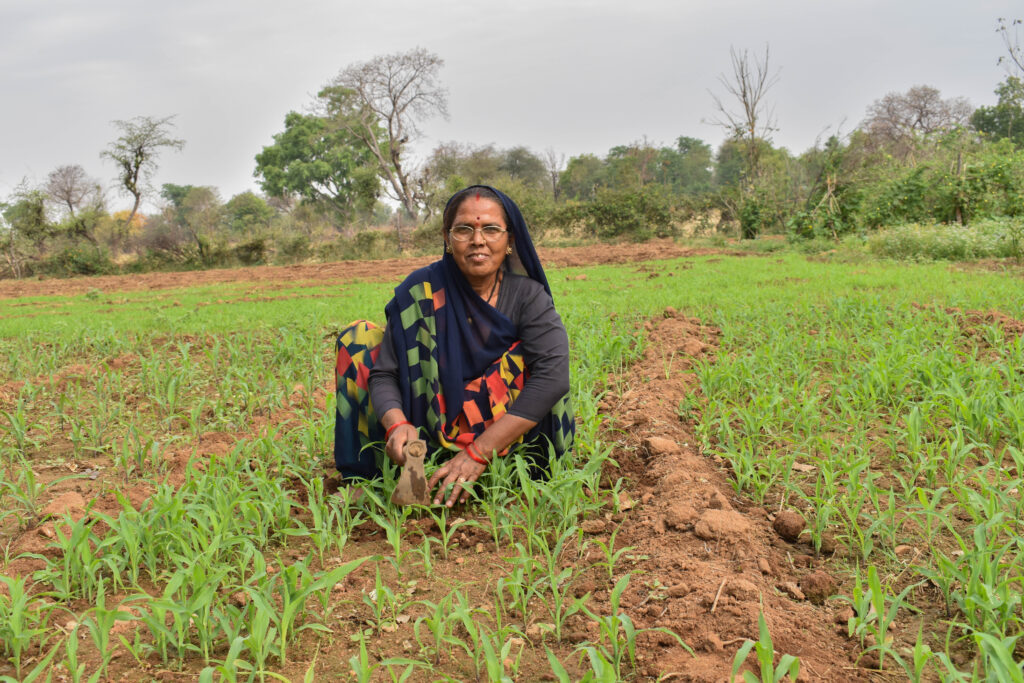
Deva, an older Indian woman, is crouched down in a field of sprouting green leaves. She is wearing a navy blue sari with a colorful geometric pattern of greens and yellows and oranges; round glasses; and red bangles on her wrists.
Deva. Photo courtesy of Aliya Bashir.

“I didn’t know how to grow home-grown food. It felt like a dream,” says Deva, a mother of three sons, who recently began farming a “nutrition garden” on her 1.5 acres of land. She decided to join Basant after she’d seen some women in her community benefit from it, and was particularly interested in learning about the cultivation of various vegetables and fruits, what plants to grow in what season, how to prepare manure and a compost pit, and how to save her produce from pests. Before long, she could do all of this herself.

“Now, I teach women to prepare organic manure, pesticides, and fertilizers at a very low cost by using the material usually available on our farms,” she says.

Prior to returning to Bundelkhand in 2020, Deva worked for three years in the brick kilns of Delhi and Uttar Pradesh. Now, she grows organic beetroot, bottle gourd, tomato, fenugreek, cucumber, brinjal, and other vegetables, and is able to sell them at fair prices compared to commercial farming. In addition, she hopes to begin selling her organic manure in the market to better maintain the soil health of other local farms.

Equipped with so much new agricultural knowledge, Deva has become an advocate for nutritious food in her village, and takes great care with her family’s diet, always feeding them a variety of fruits and vegetables. In 2022, she was also able to purchase six chicks and four goats from her earnings.

“Earlier, we would always have less availability of food. But now, we are not only having chemical-free food, but also eggs and chicken and dairy at home,” she says.

Her care has proven profitable: In a recent harvest, Deva earned a profit of 66,600 Indian rupees (~US$800) by cultivating a wide variety of vegetables and fruits in her garden. When she was working as a manual laborer, she wasn’t able to save anything—but now, she hopes to give her grandchildren the good education she couldn’t afford to give to her children before them.

Kamla has similar hopes and dreams. Although she couldn’t afford her elder daughters’ education due to limited financial resources, she is determined to pay for her youngest daughter’s schooling, and farming has allowed her to save more money than she could have ever imagined when she was working in construction.  “In Delhi, we would work for almost ten hours a day and would earn 20,000 Indian rupees (~US$240) per month,” Kamla says. “The place is very costly to live in—around 15,000 (~US$180) would go into rent and other expenses. Saving a few thousand rupees was difficult.” In comparison, in the past three months, Kamla has sold 30,000 Indian rupees (~US$365) worth of eggplants alone; the cost for cultivation for which was just 5,000 rupees (~US$60).

“We are expecting the eggplant production to increase three times in this season,” she adds.

Over the last few months, Kamla has sold 80,000 Indian rupees (~US$965) worth of produce through multiple vegetable cultivation, growing high yield vegetables like beetroot, bottle gourd, chickpeas, and cucumber simultaneously. The overall expenses were 13,000 Indian rupees (~US$155), which meant a profit of 67,000 Indian rupees (~US$810), much of which she has been able to put into savings.

“I grew up with the thought that a woman can’t have big dreams,” she says—but still, she’d always refused to give up on them. Customs and tradition taught her that only men have the capability to manage food security in a rural Indian family, and she’s already proven this doesn’t need to be the case. “My family is very happy with my farming work,” she says. “When I am busy on the farm, my husband not only takes care of the children, but also helps in preparing meals.”

This domestic bliss feels prescient. One of the founding members of the Balant program, Laxmi Devi, chose its fitting name upon its founding: In Hindi, basant means happiness and prosperity. With their new skillset, Kamla—and Deva, and so many other women—seem to have found just that.

[post_title] => A Farm of One's Own [post_excerpt] => Meet the women creating new life from arid land in India. [post_status] => publish [comment_status] => closed [ping_status] => closed [post_password] => [post_name] => india-women-farmers-basant-bundelkhand-farming-agriculture-climate-change [to_ping] => [pinged] => [post_modified] => 2026-08-04 17:40:16 [post_modified_gmt] => 2026-08-04 17:40:16 [post_content_filtered] => [post_parent] => 0 [guid] => https://conversationalist.org/?p=5947 [menu_order] => 61 [post_type] => post [post_mime_type] => [comment_count] => 0 [filter] => raw )
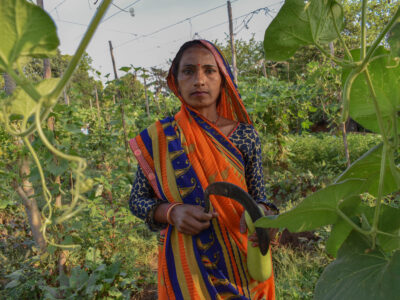
A woman in a colorful patterned sari, rich with bright oranges and blues and golds. She is holding vegetables she has grown on her farm, and is surrounded by bright greenery.

A Farm of One’s Own

WP_Post Object
(
    [ID] => 2914
    [post_author] => 2
    [post_date] => 2021-07-15 20:11:07
    [post_date_gmt] => 2021-07-15 20:11:07
    [post_content] => The Modi government placed Kashmir under the longest internet shutdown ever imposed in a democracy. 

Two prolonged lockdowns in Indian-administered Jammu and Kashmir have taken a toll on the region’s children. The first began on August 5, 2019, when the Modi government unilaterally revoked Article 370 of the constitution, which had guaranteed autonomy for the disputed region since 1947. To pre-empt protests, the government blocked internet access and phone connectivity, while the army deployed soldiers on the streets to implement draconian policies that included arrest and detention without charge, curfews, and mandatory home confinement. Schools and universities were closed for about six months. Two weeks after the military closure was lifted and schools reopened, the government in New Delhi announced a country-wide pandemic lockdown that closed all the schools and colleges in India—indefinitely. But while children in the rest of India were able to attend school online, the government refused to restore internet access in Kashmir.

The two million children of Kashmir missed nearly two years of formal schooling. Meanwhile, those from disadvantaged backgrounds had no means of accessing the internet even when the government restored access. The pandemic has exacerbated the digital divide between India’s rich and poor, since very few parents of children who attend public schools can afford smartphones to access online classes.

For those who live in remote areas that lack infrastructure, internet and mobile connectivity are poor even under normal circumstances. Now, with the pandemic keeping the schools closed, a recent BBC News report shows children in rural villages walking miles and even traversing mountains for an internet signal that might allow them to access their online schoolwork. But the signal is so weak that downloading tutorials can take hours. At that speed, online video classes are impossible.

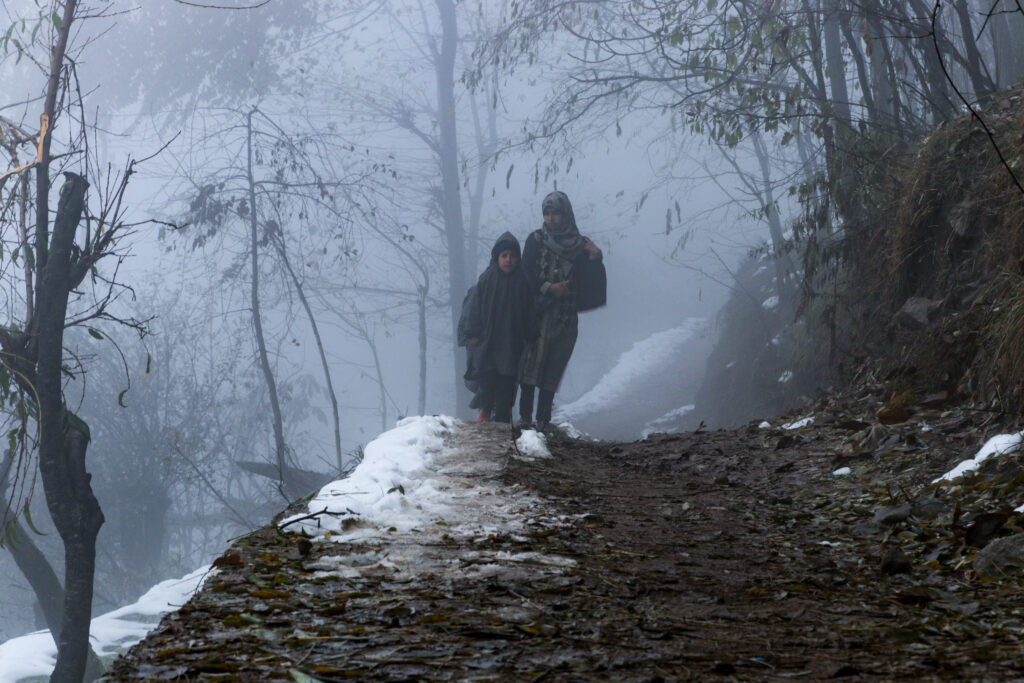
[caption id="attachment_2923" align="aligncenter" width="740"] Kashmiri children walking home from school in winter.[/caption]

Mental health experts and teachers report that the lockdowns have also exacerbated pre-existing physical and mental health problems, causing trauma that could take generations to heal.

Dr. Majid Shafi, a clinical psychiatrist who treats children and adolescents in the central and southern districts of Kashmir said restrictions on children, who are confined to their homes for long periods during extended lockdowns, has adversely affected their physical, emotional, and cognitive health.

“Almost every parent of kids and teenagers in Kashmir is complaining these days about increased behavioral issues in their children,” said Dr. Shafi, adding that he had seen an “appreciable increase” in symptoms such as a feeling of hopelessness, anxiety, mood disorders, and a decline in academic performance

Isha Malik, a clinical psychologist at a government-run children’s hospital in Srinagar, said the months-long suspension of phone and internet connectivity had severely hampered delivery of mental health-care services. As a consequence, she said, many of her patients had relapsed or seen their symptoms worsen.

Ms. Malik, who also treats psychosocial and mental health problems in children and women at her own clinic in Srinagar, said that drug abuse among adolescents has increased with the lockdowns because they could not “release their pent-up emotions” by meeting up with friends. Data collected by physicians at Kashmir’s Institute of Mental Health & Neurosciences (IMHANS) shows that heroin consumption in Kashmir increased an astonishing 1,500 percent between 2016-19. There are only three addiction treatment centers for the region’s population of 12.5 million.

During the same period of 2016-19, IMHANS found that the number of children hospitalized in psychiatric wards increased from 17,000-30,000. One small survey conducted by a psychologist in Srinagar showed that 72 percent of school-age children said they felt a lack of purpose in life.

But even before the current lockdowns, Kashmir suffered from high rates of mental illness due to ongoing political unrest and repeated military incursions, going back to the 1990s.

According to a 2016 report, co-authored by psychiatrists and researchers from IMHANS and ActionAid International, the mental health situation in Kashmir was already “alarming.” The researchers found that 11.3 percent of the adult population suffered from mental illness, which is significantly higher than the Indian national average of 7.3 percent.

A 2015  study—jointly prepared by Doctors Without Borders, IMHANS, and the University of Kashmir—found that Kashmir was suffering from a mental health crisis of “epidemic proportions,” with 50 percent of women and 37 percent of men suffering from depression and/or PTSD.

In 2019, shortly after the Modi government revoked Kashmir’s autonomous status, the People’s Union for Civil Liberties (PUCL), roughly equivalent to the ACLU in the United States, released a fact-finding report that found the suspension of internet and phone communication had “hugely hampered” the medical system in its efforts to provide mental healthcare to patients in Kashmir—which mirrors the experience of Ms. Malik, the clinical psychologist in Srinagar.

Amit Sen, a New Delhi-based child and adolescent psychiatrist who was part of the PUCL fact-finding team that visited Kashmir in 2019, described his deep concern for the welfare of the region’s children in a powerful essay for The Indian Express. The city of Srinagar had become a ghost town, he wrote, with the children he had seen playing on the street during previous visits now absent. The minority of children who could access mental healthcare were suffering from “acute anxiety, panic attacks, depressive-dissociative symptoms, post traumatic symptoms, suicidal tendencies and severe anger outbursts.” The violent aggression and abuse perpetrated by the military on civilians, wrote Dr. Sen, could take “generations” to heal.

History of school closures 

School closures are a familiar aspect of life in Kashmir. Students have called for academic strikes in response to political unrest—particularly after the army and government forces killed civilians. In 2016 there was a student strike to protest the military’s killing of Burhan Wani, a popular 21-year-old militant commander in southern Kashmir. In March 2018, the government closed academic institutions for 32 days, when protests erupted after military shelling resulted in the deaths of five members of a single family, along with two militants. In other words, the more recent lockdowns have only exacerbated long-simmering political tensions.

Digital divide, unequal access     

Access Now, an international advocacy group that tracks internet shutdowns across the world, reported in March that the government’s seven-month suspension of Kashmir’s internet access in 2019-20 was the longest in any democracy. According to the group’s analysis, the Indian government blocks internet access more than any country on earth. The Jammu-Kashmir Coalition of Civil Society, a prominent civil rights group, called the government’s communications blackout “digital apartheid.” Only in February 2021 did the government finally restore 4G mobile data service. Umar Rashid Bhat, a public school teacher in Chandoosa, a village in northern Kashmir, says that 60 percent of his students are from households living below the poverty line, and thus cannot afford smartphones that would allow them to access online tutorials—or to participate in online classes via conference calls, which some private schools offered during the internet shutdown. About one in five children attended private schools before the pandemic, but enrolment is dropping because the pandemic has put so many parents out of work and has thus made them unable to pay tuition. Meanwhile, 175,000 children have dropped out of public schools. Sharif Bhat, who heads the Jammu and Kashmir office of Save the Children, said the organization believes many of those children left school in order to find odd jobs that would help support their families during the precipitous economic downturn caused by the long lockdowns. Shah Fozia Hussain, a government middle school teacher in Seer Shaksaz, a village about 37 miles from Srinagar, noticed that one of her eighth-grade pupils joined her online class after an absence of more than a month. The student told her privately that he had been out working with his father, who had been unable to earn a living for months due to the lockdowns. After saving for several months, the son had been able to buy a smartphone that enabled him to rejoin his class. “I was in tears when I heard his story,” said Ms. Hussain. For the hundreds of thousands of Kashmiri children who are suffering under the government’s decision to place nationalism over their welfare and the ongoing ravages of the global pandemic, owning a smartphone that allows them to access their basic right to an education has become a privilege. [post_title] => Kashmir's lost generation of children [post_excerpt] => Deprived of internet and phone access, cooped up at home under military lockdown and then a pandemic lockdown, Kashmiri children are under severe mental stress that is putting them in psychiatric words and causing them to turn to heroin. [post_status] => publish [comment_status] => closed [ping_status] => open [post_password] => [post_name] => denied-school-internet-access-for-2-years-kashmiri-children-are-anxious-depressed [to_ping] => [pinged] => [post_modified] => 2026-08-06 20:38:21 [post_modified_gmt] => 2026-08-06 20:38:21 [post_content_filtered] => [post_parent] => 0 [guid] => https://conversationalist.org/?p=2914 [menu_order] => 188 [post_type] => post [post_mime_type] => [comment_count] => 0 [filter] => raw )
Kashmir’s lost generation of children

WP_Post Object
(
    [ID] => 2696
    [post_author] => 2
    [post_date] => 2021-06-04 03:39:59
    [post_date_gmt] => 2021-06-04 03:39:59
    [post_content] => Changing attitudes and mentorship programs are nurturing an emerging generation of young women. 

Numana Bhat, 34, is a postdoctoral researcher at the La Jolla Institute for Immunology in San Diego, where she focuses on understanding the biology that underlies the immune response to vaccines. Her husband, Raiees Andrabi, is Institute Investigator at the Department of Immunology and Microbiology at Scripps Research, a prestigious non-profit medical research center. Both are from Kashmir, the India-administered Muslim majority territory that has been convulsed by political violence for decades.

India and Pakistan have fought three wars over Kashmir, which is claimed by both countries. Meanwhile, the Indian military has put down popular insurgencies, which began in the late 1980s, with tactics that Amnesty International and Human Rights Watch have described as human rights abuses. Since 1989, more than 70,000 Kashmiris have been killed during these government crackdowns, while more than 8,000 have disappeared. Thousands of people have been detained without charge under the draconian Public Safety Act.

On August 5, 2019, Prime Minister Narendra Modi’s BJP government unilaterally revoked the constitutionally guaranteed autonomous status of the region, further dividing it into two federally governed union territories. The military imposed an unprecedented lockdown, blocking internet access and phone lines and intimidating journalists. As a result, seven million people were cut off from the outside world for several months.

Given the obstacles created by the political turmoil and violence in Kashmir, Dr. Bhat’s academic success is remarkable. And she is not alone; a notable number of Kashmiri women have become prominent scientists, despite periodic and unpredictable outbreaks of militarized violence, a lack of resources, and the pressure of traditional expectations.

After completing her B.A. and Master’s degrees in Kashmir, Dr. Bhat earned a PhD in biomedical sciences from Sanford Burnham Prebys Medical Discovery Institute, a non-profit medical research center in La Jolla, California. There she discovered that “a fascinating molecule called Regnase-1 acts as molecular brakes in antibody producing cells and prevents autoimmunity.”

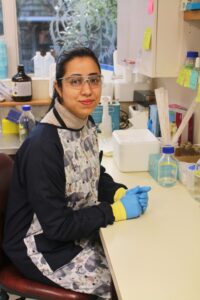
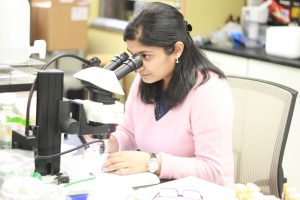
[caption id="attachment_2698" align="alignnone" width="300"] Numana Bhat in her laboratory.[/caption]

She credits her mother and a dedicated high school biology teacher for endowing her with the tools and curiosity to pursue a career in biomedical science. But other gifted young women are not as fortunate: opportunities and resources for higher education in scientific research are scarce in Kashmir, “although the people themselves, both students and mentors at the university level, are capable of doing great things,” she said.

She added that she had heard about “people in mentoring positions” who made “discouraging remarks” to female students— including explicit pressure to channel their energy into getting married and having children rather than into post-graduate studies.

Nevertheless, Dr. Bhat said, she has noticed an increasing number of young Kashmiri women pursuing graduate studies and careers in scientific research both in India and abroad. She added that younger people were going outside the sciences to choose careers in humanities, journalism and the arts, “which is also quite refreshing to see.”

More challenges for women

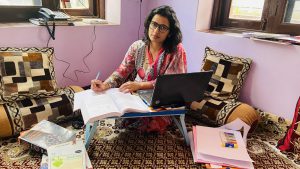
Masrat Maswal, 33, is an assistant professor in chemistry at a government college in central Kashmir’s Budgam district. She grew up middle class in an extended family where attention and money were scarce. Her parents paid more attention to her in high school, where she excelled academically and won praise from her teachers. But she said that Kashmiri society does not make it easy for young women who want to pursue post graduate work and demanding research positions in the sciences. “From the day you are born as a girl in a family in Kashmir, they start to prepare for your marriage; so choosing a career—particularly in science, which needs patience, persistence, hard work, sacrifices and an ample amount of time—is really hard,” she said. [caption id="attachment_2704" align="alignnone" width="300"] Masrat Maswal at home in Kashmir.[/caption] Her female students are often deterred from pursuing graduate work in the sciences by social pressures to marry and settle down when they are in their twenties. “We are losing a lot of talent,” she said, “Due to the prevailing socio-cultural norms of our society.” The lack of proper infrastructure and lab facilities in Kashmir’s colleges also undermines the enthusiasm of both students and teachers, she added.

Family support matters

Amreen Naqash, 31, moved to New Zealand in 2019 to study for a doctorate in pharmacology and toxicology at the University of Otago. In her spare times she mentors students in her native Kashmir who want to pursue graduate studies either in India or abroad. Women, she observed, are showing more interest in looking for fellowships and pursuing graduate work in the sciences at universities outside India. [caption id="attachment_2702" align="alignnone" width="200"] Amreen Naqash in her lab.[/caption] “I’m in touch with some promising female undergrads from Kashmir, which makes me so glad,” she said. “It is such a wonderful feeling to guide them as they are in their prime career stage.” Omera Matoo, 38, has a PhD in marine biology. She is an assistant professor in evolutionary genetics and physiology at the University of Nebraska in Lincoln, where her research is funded by the National Science Foundation (NSF). Born and raised in Kashmir, Dr. Matoo earned her B.A. and Master’s degrees at Bangalore University, where she became friends with two classmates from different parts of India, both of whom came from families of scientists. [caption id="attachment_2703" align="alignnone" width="300"] Omera Matoo in her lab.[/caption] “Looking back, I realize that played a very big role in my career,” she said. All three of them decided to pursue doctorates in the sciences.

Limited opportunities

When Dr. Matoo applied in 2007 for a doctoral program at a university in the United States, she had to travel to New Delhi and Bangalore to take her GRE and TOEFL exams; at the time, there wasn’t a single coaching or test center in Kashmir. The situation for prospective graduate students has since improved. Thanks to the internet, they can take standardized tests online. Mentoring initiatives like JKScientists have been established, with volunteers offering would-be graduate students help and advice. “And then there are other Kashmiri scientists across the world who struggled along similar paths before making a mark in their chosen fields; and now they are giving back to their society by mentoring and guiding young students and aspiring researchers.” Role models and social support structures, said Dr. Matoo, provide positive feedback for young people; this is especially true for female university students in Kashmir, who benefit from having their academic interests nurtured. Dr Seemin Rubab, a professor of physics at the National Institute of Technology in Srinagar, is regularly approached by young girls from Kashmir for career guidance and counseling. “Many times I’ve had to counsel their fathers and brothers to let them pursue their academic careers and avail themselves of opportunities outside Kashmir and India,” said Dr. Rubab. Professor Nilofer Khan, acting Vice Chancellor at the University of Kashmir who has also served as Dean of Student Welfare and founder coordinator of Women’s Studies Centre, confirmed that for years a lack of family support has been a serious obstacle for women who wished to pursue doctoral studies, particularly when they were married with children. “Very few females used to go for research studies in science subjects,” she said, adding that times were changing and female students were “proving their mettle” in the sciences. The frequent government-imposed internet shutdowns are a serious problem for students facing application deadlines, said Dr. Matoo. Delayed exams and the lack of access to resources—“all these limiting things have a scale up effect, not to mention the consequences for mental health,” she said. But somehow these obstacles have not undermined the enthusiasm and academic focus of the young women from Kashmir who regularly reach out to her for guidance on making a career in science. “I am constantly impressed and humbled by their resolve to make a bright future for themselves against all odds,” said Omera. “That gives me a lot of hope and in a way keeps me grounded.” [post_title] => Kashmiri women defy patriarchy & politics to pursue careers in the sciences [post_excerpt] => A notable number of Kashmiri women have become prominent scientists, despite periodic and unpredictable outbreaks of militarized violence, a lack of resources, and the pressure of traditional expectations. [post_status] => publish [comment_status] => closed [ping_status] => open [post_password] => [post_name] => kashmiri-women-defy-patriarchy-politics-to-pursue-careers-in-the-sciences [to_ping] => [pinged] => [post_modified] => 2026-08-06 21:00:05 [post_modified_gmt] => 2026-08-06 21:00:05 [post_content_filtered] => [post_parent] => 0 [guid] => https://conversationalist.org/?p=2696 [menu_order] => 199 [post_type] => post [post_mime_type] => [comment_count] => 0 [filter] => raw )

Kashmiri women defy patriarchy & politics to pursue careers in the sciences

WP_Post Object
(
    [ID] => 2565
    [post_author] => 2
    [post_date] => 2021-05-04 16:36:54
    [post_date_gmt] => 2021-05-04 16:36:54
    [post_content] => As their home country is engulfed by a raging second wave of the pandemic, Indians living abroad feel helpless and guilty.

The live-in domestic help at my parents’ house in Mumbai got COVID-19. My neighbor’s entire family was infected. So was my husband’s elderly aunt in Ahmedabad. My friend's father was hospitalized for 12 days. Everyone in India knows someone who has been affected by the raging second wave of the pandemic.

And no wonder—as of today, India is the only country other than the U.S. to have 20 million coronavirus cases, and that is likely a vast undercount.

Crematoriums across India have so many bodies piling up that some are running out of wood to build funeral pyres. At Mumbai hospitals there are long waiting lists for beds; at one, the chief medical officer died of complications from COVID-19. She was 51 years old.

There is a thriving black market for medical supplies. In Mumbai, an oxygen concentrator is selling for Rs. 75,000 to Rs. 150,000 ($1,000 to $2,000) while in the capital city of Delhi, which has been even harder hit by the pandemic, it can cost as much as Rs. 250,000. ($3,400)—in a country where the monthly per capita income just before COVID hit was less than $150. But even at these inflated prices, demand far outpaces supply.

All over social media, people are posting their desperation, sharing shaky videos and pleading words, begging for a hospital bed, for oxygen, for someone to come and help. More than 100 Indian journalists have died of COVID, with one, Vinay Srivastava, live tweeting his declining oxygen levels until he died. Meanwhile, the Modi government ordered Facebook, Twitter, and Instagram to take down posts critical of its handling of the pandemic.

We hear about the tragic stories of the sick and dying in India’s cities, but almost nothing from the rural areas, where roughly two-thirds of the population lives.

Meanwhile New York City, where I live, is opening up. It’s been opening up. Indoor dining. Theaters. Gyms. Now the CDC says the vaccinated don’t need to wear masks outdoors. After a year of living in sweats, I went shopping for sundresses last week. Awkwardly, we hug each other again.

In New York City, a return to normal

On a warm Saturday in April, Mayor Bill DeBlasio made a surprise appearance at the Brooklyn Children’s Museum where we were celebrating Holi, the Indian festival of color, with live musicians, dancers, and samosas for guests to snack on. During the last half hour of our time slot, which was limited to comply with COVID precautions, the mayor and a dhol player led a procession to the park next door. We played Holi, flinging colorful powder in the air and smearing each other’s clothes and hair with red, green, yellow, and pink, while catchy Bollywood songs playing in the background. But even as I laughed and shrieked with friends, grateful that the receding threat of COVID had allowed me to enjoy my favorite festival, I celebrated with a clammy feeling of guilt. How could I turn my face to the sun while my country was being battered by a vicious second surge of the virus?

How India's second wave happened

About 10 days before I celebrated Holi in Brooklyn, the Kumbh Mela took place in the northern Indian city of Haridwar. Government authorities estimate that approximately 3.5 million Hindu pilgrims traveled to the banks of the holy Ganga River for the days-long festival, despite a sharp increase in COVID cases in the country—and amid calls for the government to cancel the event. But Narendra Modi, the Hindu nationalist prime minister, had already declared victory over the pandemic at the World Economic Forum’s Davos Dialogue in January. While the rest of the world warned that the number of cases was set to increase precipitously, Modi boasted that India had not only looked after its own population but was also saving lives by exporting 60 million doses of domestically produced vaccines around the world. Even as the country was making global front-page headlines for its rising infection numbers, Modi and his home minister appeared without masks at massive political rallies leading up to state elections in West Bengal, where Modi expressed admiration for the size of the crowds. (The election results were announced Monday and Modi’s party, the BJP, suffered a major loss in the state.) Last week, the Madras High Court handed down severe criticism of the Election Commission of India (ECI) for permitting political rallies during the pandemic. In response to a claim from a spokesperson for the ECI that COVID safety protocols had been enforced at the mass rallies, the chief justice asked, "Were you on another planet when political rallies were being held?" The justice underlined his outrage by adding that the ECI was “singularly responsible” for the massive second wave of COVID-19 in India, adding that commission officials “should be booked on murder charges” for sponsoring mass political rallies that turned into super spreader events.

Living in fear

At around the same time in Mumbai, the older sister of a close friend was running ragged trying to take care of her family. Her husband works at the airport and the docks, in “import-export.” His job is essential, since he oversees the import of critical supplies into the country, including oxygen, which is in desperately short supply. A colleague in the customs division has already succumbed to COVID-19. He himself is not fully vaccinated. “He’s endangering himself every day, he has to travel for his job, and he can’t get the second dose, because they’ve run out,” my friend said. My friend’s sister lives in a multi-generational home with her in-laws; recently, two of her in-laws’ cousins also came to stay with them. For a time, there were four elderly people at home, with 10 human beings squeezing into the three-bedroom apartment. Last week, one of the cousins, who was in her 80s, tested positive. One of my friend’s nieces has juvenile diabetes, which puts her at increased risk from the virus; her sister asked the elderly cousin to isolate at her own house. The woman died the next day. Karna Basu’s maternal grandmother passed away before the second surge hit. His grandmother had COVID, but it was the cancer that took her life. The COVID made it hard for her to access treatment, though. They were close, and he regrets not being able to travel from New York, where he lives, to see her before she passed. The news from his wife’s family is worse. For the last several weeks, the WhatsApp group of her extended family in Ahmedabad, Gujarat, has been bringing news of two new deaths from the virus each week. “The family is getting depleted,” Basu says. “It’s so painful you don’t even want to think about it.” An old classmate of mine in Mumbai is on a WhatsApp group full of wealthy professionals—the kind of people who, in India’s deeply unequal society, usually know someone in authority and thus are able to jump the queue. But even they are having trouble accessing resources. “I’m reading their messages of desperation—they’re not able to get their hands on medicine and oxygen,” my classmate told me over the phone. “If they can’t do it, what is happening to the middle class and lower middle class in the country?” When she had to get a hospital bed for her cousin, who tested positive a week before the state of Maharashtra went into lockdown, my friend realized just how dire the situation had become. “We were hearing that there were no beds available, but only when I started calling hospitals did I realize how bad it was,” she said. The only reason they were able to secure a bed, she added, was because they knew someone high up in a hospital. Even before the world had heard of COVID-19, India ranked 155 out of 167 countries in hospital bed capacity. A New York friend spent a recent morning trying to find either medical oxygen or an oxygen concentrator, a device that take in ambient air and increases its oxygen concentration by stripping away the nitrogen, for a former employee of his in Delhi. He made 23 calls, only to be put on waitlist after waitlist. Eventually the employee found a hospital bed; she is now on a ventilator. Aid is now coming into India now from several countries, including the United States, but President Joe Biden has been criticized for hoarding vaccines, while other wealthy countries continue to store vaccines in excess of their needs. In India, meanwhile, many states have run out. My New York friend is angry at Modi’s government for not doing enough. “It’s all fucked up,” he says. “Not stockpiling enough vaccines is fucked up. Not having more structured lockdowns is fucked up. Silencing anyone who says anything bad about them is fucked up.” Last year, the central government tried to force independent news outlets to submit their pandemic coverage to authorities for approval before publication. Just last month Yogi Adityanath, the chief minister of Uttar Pradesh and a key Modi ally, directed police to confiscate the property of anyone who posted about oxygen shortages online. Meanwhile an increasing number of countries have limited or suspended travel from India, with Australia even criminalizing its own citizens for returning home from the subcontinent. Indians who live abroad can’t go back to be with loved ones during their last days or mourn with their families. Ann, an American woman married a South Indian man, is now barred from traveling to northern India to finalize the adoption of a teenage girl. This would have been the family’s second adoption, and fourth child. Meanwhile, the young girl they were supposed to bring back to Texas this month is having a hard time in her orphanage. She’s the oldest one there, close to aging out of care. Every time they speak on the phone, Ann says, the girl is either crying or holding back tears. “The only thing I have to say to you is come get me,” she says on their weekly calls. “When are you coming?”

Sending money is the only thing you can do

On the WhatsApp groups that I’m a part of, we exchange the names of aid organizations on the ground. “Is it vetted?” people ask. “Can you send me a list of reputable groups?” When you’re 9,000 miles away, sending money is about the only thing you can do. Meanwhile, I got my second dose of the vaccine last week. In New York, the tulips are blooming. Over the weekend, I met friends for an outdoor lunch and then enjoyed the sun on my shoulders at a nearby park. Around us picnickers spread out on blankets; a guitarist riffed nearby. I felt the grass brushing my bare legs and played mock battles with my son. The shoulder where I got the jab was still sore, and I was glad for the pain. Here is a list of 12 places you can donate to help India.  [post_title] => I celebrated Holi in New York while in India friends and family begged for hospital beds [post_excerpt] => The author's joy in celebrating the Hindu festival of Holi, which in her adopted city of New York coincided with spring weather and a recovery from the pandemic, was tempered by guilt and disquiet over the raging second wave of the pandemic in her home country. [post_status] => publish [comment_status] => closed [ping_status] => open [post_password] => [post_name] => i-celebrated-holi-in-new-york-while-friends-and-family-begged-for-hospital-beds-in-india [to_ping] => [pinged] => [post_modified] => 2026-08-06 21:04:59 [post_modified_gmt] => 2026-08-06 21:04:59 [post_content_filtered] => [post_parent] => 0 [guid] => https://conversationalist.org/?p=2565 [menu_order] => 208 [post_type] => post [post_mime_type] => [comment_count] => 0 [filter] => raw )
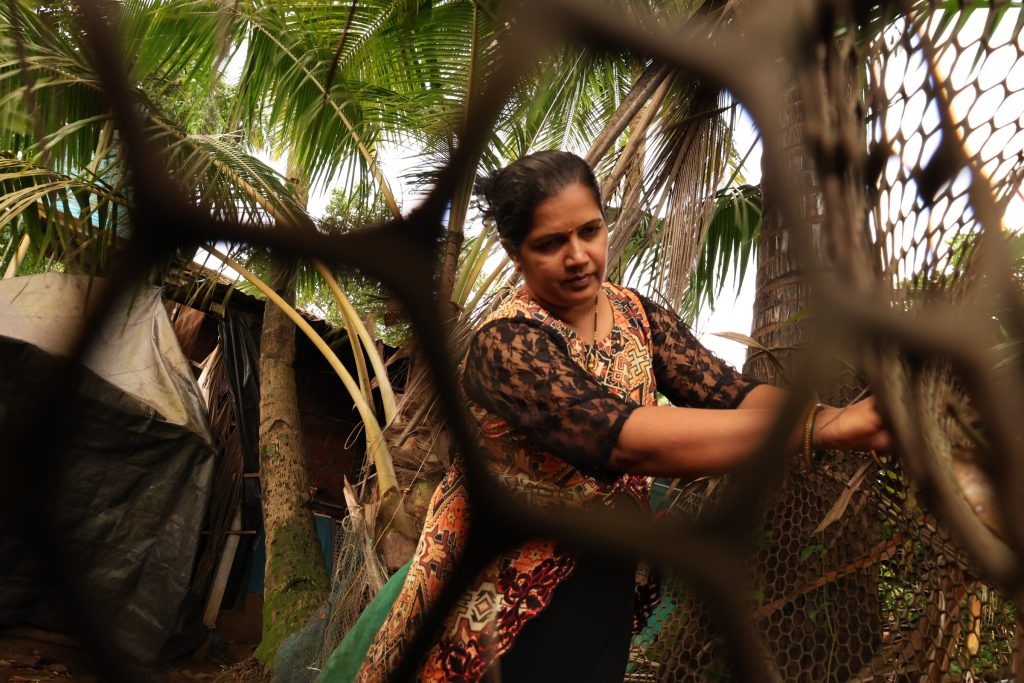
I celebrated Holi in New York while in India friends and family begged for hospital beds