WP_Post Object
(
    [ID] => 9177
    [post_author] => 15
    [post_date] => 2025-09-02 20:19:11
    [post_date_gmt] => 2025-09-02 20:19:11
    [post_content] => 

How one word has birthed a globe-spanning tradition of resistance.

A few months ago, I was at a protest in Washington, D.C. This was not unusual. Gaza burns. The president deports with impunity. Respect for the rule of law—notably and especially by the government—now seems like the nostalgic artifact of a more innocent era, an era merely months ago. Unsurprisingly, for those of us moved by these simultaneous horror shows, expressing our anger through protest has become almost unremarkable. I’ve lost count of the number of protests I’ve attended, the catchy homemade signs I’ve crafted and seen, and the clever chants I’ve memorized. But at that particular march, something unusual happened: a chant-leader exhorted us to cry a word in my mother tongue, Urdu.

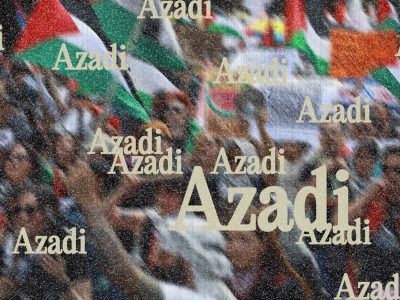
“Azadi!” she called.

“Azadi!” the crowd responded in unison.

Suddenly, the word seemed everywhere: scrawled in chalk across sidewalks and columns; emblazoned across signs. In the heart of the nation, the seat of its power, everywhere, that old watchword of uprising—Azadi.

~

Azadi, or freedom, is a small word. A scant five letters in both English and its original Farsi (آزادی), these five letters have birthed a globe-spanning tradition of resistance, having been shouted by students in Srinagar and Tehran, whispered in prison cells in Ankara, and sung by women in Kashmir and Delhi. A cry familiar to all children of the Middle Eastern and South Asian diaspora, myself included, Azadi is hymn, music, and lifeline. It’s a demand for dignity from its callers and from all those who answer the call. 

This demand is expansive in scope and depth, inclusive of the dignity of life, of identity, and of the ability to govern your own political destiny. Azadi evokes our collective memory that freedom is claimed, not given, while narrating a people’s unified struggle for systemic social change. For those who seek the protection of the most vulnerable while preserving the dignity of all, Azadi is always within reach. 

Still, for all that Azadi is, we must be clear about what it is not. It is not a slogan to be selectively invoked. It is not a justification for state violence. Azadi cannot mean the protection of innocent life only when politically convenient. Moreover, it becomes meaningless when uttered by those who do not uphold a politics grounded in human dignity. Nowhere was this distinction starker than in a recent televised address, in which Prime Minister Benjamin Netanyahu briefly switched from English to Farsi while commenting on Israel’s bombing of Iran. “Women, life, freedom. Zan, zendagi, azadi,” he said—invoking the slogan of the Iranian women’s rights movement. In that moment, the language of liberation was co-opted to justify the machinery of war. It was surreal to hear a feminist chant—professed often by Iranian women defying authoritarian rule—repurposed by the very man overseeing the brutally indiscriminate bombing of thousands of women and girls in Gaza. The slogan, stripped of its radical roots and repurposed as rhetorical cover, stood in direct contradiction to the grassroots movements that had once breathed life into it. 

Creeping autocracy in the United States has for too long been ignored and shrugged off as a dysfunction that happens only in the Middle East and elsewhere in the Global South—the lawless other. But this careless, arrogant posture can no longer be supported, nor can the dangers of autocracy be reduced to a foreign export; and so, Americans chant Azadi now, because America needs it now. The past 100+ days have exhibited what the marginalized in this country have always known: that the greatest repression within America’s borders remains homegrown. Despotism collapses the political distance between nations and times, and just as fascism is rising globally, it has risen here. The myth of American exceptionalism falsely preached that our democracy was immune to the spell of demagoguery. But we know that Americans are just as capable of voting themselves into tyranny as any other people. White supremacy, toxic masculinity, and violent inequalities in rights and liberties were always part of the country’s domestic architectures. Now, from the streets to digital silos, they are plain for all to witness. 

From Hungary to India, Israel to the U.S., authoritarian regimes the world over are in conversation, looking admirably upon each other. They swap notes in class, sharing tactics of repression, like aggrandizing executive power and politicizing independent institutions. But just as authoritarian regimes learn from each other, so too must we build solidarity across movements. The rhymes of history—from the surveillance of Black radicals in the U.S. to the targeting of Kashmiri students in India—demand collective study. And along with any new lessons that may arise, we must continue to echo the lessons of some of our most beloved visionaries. From Angela Davis to Edward Said to Arundhati Roy, we are reminded that global resistance is strongest when deeply rooted in local struggle. 

In fact, therein lies Azadi’s greatest power: It crosses borders, languages, and faiths, moving between nations without itself becoming nationalized. It is a global grammar of defiance.

~

Language lives. It breathes, grows, reproduces. Azadi has done so, too, absorbing every movement and tongue it touches: Farsi, Urdu, Kurdish, Pashto, Punjabi, English. The precise journey of the word is contested; after all, linguistic borrowing is never an isolated event. Still, it carries an expansive genealogy of struggle through its travels: against gendered violence, against settler colonialism, against religious nationalism.

While I heard cries for Azadi in D.C. for the first time this year, in Indian-occupied Kashmir—the most militarized zone on earth—Azadi has been invoked for decades, having been part of the Kashmiri liberation movement since its inception. Yet as Modi’s India forbids conversations about the region and brands it as sedition, as students and organizers are arrested for expressing their desire for freedom, as the indigenous Kashmiri struggle for self-determination persists—Azadi remains the movement’s heartbeat. 

Long serving as the anthem of the Kashmiri separatist movement, now that Azadi can no longer be expressed in the open, it hides itself in art or in niche digital spaces not yet subject to state discipline. Digital speech, however, is increasingly policed. On platforms like X (formerly Twitter), Indian authorities now block, geofence, or suspend accounts that challenge its narrative. Content from advocacy groups like Stand With Kashmir is censored using the same tools of repression that platforms in the U.S. deploy against pro-Palestinian activists—algorithms, shadowbanning, keyword suppression. Surveillance and censorship, previously characterized as exclusive to so-called illiberal regimes, are now a feature of the liberal democracies just catching up. 

As all this occurs, state actors escalate their repression of dissent in the United States. Trumpism has made it clear what can and cannot be said: speech critical of the Trump administration is met with swift retribution; and speech challenging domestic and foreign policy is quickly vilified, as seen by the vicious response to ICE protests in California earlier this summer. Meanwhile, students protesting for Palestine in the U.S. now face the same brutal state retaliation we’ve long associated with authoritarian regimes abroad—even though the U.S. has always had its own archive of violent suppression, from the surveillance and silencing of civil rights activists and abolitionists to the the crackdown on anti–Vietnam War protesters after them. Today, much to Trump’s delight, some of the most prestigious law firms have capitulated to executive pressure, agreeing to perform approximately $1 billion worth of pro-bono labor for Trump’s retributive pet projects. Activists and pro-Palestine advocates have been doxxed, fired, expelled, and/or blacklisted. All the while, institutional liberalism bends the knee: DEI offices that once promised safe harbor for marginalized voices now fall silent or side with power; liberal media outlets fire staff who speak out against atrocities in Gaza. The suppression of speech, criminalization of protest, surveillance of dissent—these are global patterns, and we are not exempt. Arguably, if American exceptionalism matters here at all, it will be in its ability to normalize this authoritarian bent worldwide.

And yet resistance continues. The same dignity Azadi rallies for abroad is now demanded here. On the steps of American universities. In its hallowed institutions. At the foot of the Capitol. 

~

For all that Azadi gives, it demands something of us—namely that we do more than simply bear witness. When we chant Azadi, we are not just echoing other movements, past and present, but entering into dialogue with them, from Kashmir to Kabul to Tehran. This is not mimicry, but lineage, as Azadi reminds us in every generation that our rights are not guaranteed and must be renewed through struggle. 

It is not enough, then, to be the appreciative, passive inheritor of a tradition of resistance; one must mobilize. This means texting rideshares, learning how to administer basic first aid for those whose names you don’t yet know, and tracking jail releases of those who you just met and marched alongside. This means disagreement without collapse, and accountability without exile. This means spending hours in rooms with bad lighting and too many opinions, trying to move toward consensus anyway. 

If Azadi is to continue to mean something lasting, we’ll need to carry it beyond the chants—into policy fights, mutual aid networks, protective kinship, and more. Because Azadi is not metaphor, it is mandate, and requires all of us to answer its call. 

~

Call and Response: 

Hum kya chahte? Azadi!
What do we want? Freedom!

Chheen ke lenge—Azadi!
We will snatch it—Freedom!

Hai haq hamara—Azadi!
It is our right—Freedom!

Zor se bolo—Azadi!
Say it louder—Freedom!

Hai jaan se pyaari—Azadi!
We love it more than life—Freedom!

Tum kuch bhi kar lo, hum leke rahenge—Azadi!
Do what you want, we will still win it—Freedom!

[post_title] => America Needs Azadi [post_excerpt] => How one word has birthed a globe-spanning tradition of resistance. [post_status] => publish [comment_status] => closed [ping_status] => closed [post_password] => [post_name] => america-united-states-azadi-freedom-protest-palestine-gaza [to_ping] => [pinged] => [post_modified] => 2025-09-03 10:27:10 [post_modified_gmt] => 2025-09-03 10:27:10 [post_content_filtered] => [post_parent] => 0 [guid] => https://conversationalist.org/?p=9177 [menu_order] => 4 [post_type] => post [post_mime_type] => [comment_count] => 0 [filter] => raw )
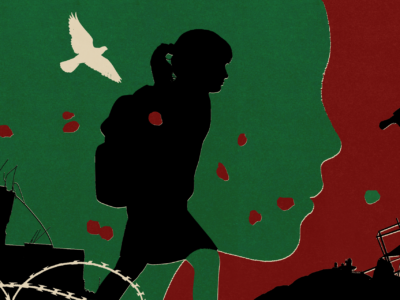
America Needs Azadi

WP_Post Object
(
    [ID] => 8581
    [post_author] => 15
    [post_date] => 2025-05-29 00:10:24
    [post_date_gmt] => 2025-05-29 00:10:24
    [post_content] => 

Stories from my friends still trying to survive.

It begins with a panicked message on Bluesky in October 2024. Someone is messaging me with a link to a fundraiser and stilted English that reads as though it came from a bad translation app. The picture on her GoFundMe shows a young woman with a pale face and shocking green eyes. 

It’s been seven months since the borders of Gaza were sealed. She says she is in Zeitoun, a pocket of north Gaza under siege. I respond in colloquial Arabic, to see if this person can even speak the language, to see if she is real. I ask her for a WhatsApp number. She gives me one. It starts with +972.

She is real. Her name is Hayat. She, along with her husband and children, did not flee south as the siege on north Gaza tightened. Where to go? she says. 

Hayat is pregnant. Eventually she will give birth—by c-section, without anesthesia—to a little girl with blue-green eyes as brilliant as her own. She names her Fatima. Now, I have a namesake in Gaza. 

I meet Mohamed next. A farmer and a teacher, he has lost his sheep and rabbits, but even living in al-Mawasi refugee camp, he persists in growing plants and crops in a little garden by his shelter so there may be something fresh to eat amid the siege. Al-Mawasi, a cruelly named “safe zone,” has witnessed regular attacks and bombardments since Mohamed arrived there in March 2024. 

This same siege today, almost three months since all aid to Gaza has been cut off, has driven people to famine. The cost of flour, if you can find it, careens wildly, swinging from an already farcical $100 USD to an impossible $700 USD. The bread bakeries have shut down. The World Central Kitchen says its warehouses are bare. Children have been dying of malnutrition and under bombs all at once, like fish in an increasingly shrinking barrel. To quote a DC pundit, “The war in Gaza is not really that different than other wars.” A beat. “Well, except I guess they can’t run away.” 

My keeping a bunny as a pet amuses Mohamed. One day, he shares a story about missing his animals, and a farmer in Texas donates $500 to his fundraising campaign. Mohamed is saving every penny for his eventual evacuation from Gaza, now a distant hope. Meanwhile, the cost to survive continues its inhumane inflationary spiral. Funds meant for escape are now hoarded for food, any food, which is becoming harder and harder to find.

After Hayat and Mohamed, I meet Obada. Obada is a lawyer with three children. He considers his youngest, Zain, a gift from God, as his other two children required medical intervention to exist. Zain did not. On Eid, Obada shares a photo of Zain in his little white thobe, a dignified and serious garment for adults that is adorable on a baby. 

The calls for help swirl thick and fast—other families realize they can build lifelines beyond the walls of Gaza, that someone, anyone, is willing to hear out their agony. There are Naser and Amal, with their children Rolan and Omar. Naser currently lies in one of Gaza’s last functioning hospitals with a breathing obstruction, and needs surgery. I try to help them a little. Rolan sends me a thank you photo: a young girl of seven, sitting on a pile of rubble against a blue sky, holding a sign that reads, “My love for you (heart) Fatima Ayub.” 

Before Israel sealed the Rafah crossing with Egypt in March 2024, it cost $5000 USD per adult, and $2500 USD per child, to organize an evacuation from Gaza. Those figures, as extortionate as they were, are meaningless now. No one can leave, and if they do, it will be as part of the deliberate depopulation of the strip. Yet, as my friends in Gaza keep telling me, nothing is left. Virtually no school, clinic, hospital, or mosque in Gaza has been left standing. Gaza has been bombed more heavily than London, Dresden, and Hamburg in World War II, combined. Children keep arriving in the few remaining hospitals with bullets in their heads.

I meet multiple Ahmads. There is Original Ahmad, who braved the migration boat passage under Israeli gunfire to escape Gaza to Europe—but is distraught because his mother and the rest of his family are still in the north. There’s Child Ahmad, who returned to Gaza to marry his lifelong sweetheart Samar, and was trapped when the war came. There’s Other Ahmed, whose siblings are all frantically trying to survive in a tent. Then, comes Another Ahmad, who shares a photo of himself in the rain, barefoot with already too-thin legs. 

There is Suad, who is only 24, and mother to a little boy, Omar. She’s taken to calling me mom, having lost her own mother before the war. I have no maternal experience, but try to hear her story. Among the most common injuries in Gaza unrelated to war wounds are burns—made worse by so many people cooking on unsafe, open fires. She shows me a bad burn that needs medical treatment. Her little boy has broken his leg, an ordinary childhood tragedy compounded infinitely by the horror. 

I meet Malak and Maali, who are sisters. Maali is disabled and needs a new wheelchair and special care. Malak labors hard on an unwelcome internet and on an unforgiving planet to help her sister retain her life and dignity.

Then comes Majd, 17, only just a child himself. Still, he shoulders the responsibility of trying to help his sisters and mother survive. He feels he has no choice.

Moataz is a shy and kind young man whose beloved father is ailing from kidney disease. Moataz doesn’t understand online fundraising, doesn’t understand social media, doesn’t understand this bizarre dystopia where he talks to a woman on the other side of the planet to try and outmaneuver a siege of biblical proportions. 

Rumors circulate in the aftermath of hostage Edan Alexander’s release that food aid will be permitted to enter Gaza. So far, these are only rumors. The siege grinds on. The ground invasion begins in earnest. An Israeli MK tells the world, “Last night, almost 100 Gazans were killed. And the question you asked me just now had nothing to do with Gaza. Do you know why? Because it doesn’t interest anyone. Everyone has gotten used to [the fact] that [we can] kill 100 Gazans in one night during a war and nobody cares in the world.”

Does anyone care? Does caring matter? 

Hayat, too, has burned herself. She tells me a pack of diapers for baby Fatima costs $70. 

Still, no aid comes.

Obada sends me photos of his dear friend, killed just last night with his wife and baby daughter. “My heart hurts, Fatima,” he tells me. “With his baby in his arms. He was only married a year.” 

Still, no aid comes. 

A friend asks me if I can help Hanadi, a still-young woman with eight children. I give what I can. 

Still, no aid comes. 

Even good news comes tainted. Naser is out of the hospital, but now, his neighborhood in Khan Younis is under evacuation orders following the latest assault. He decides not to evacuate. “I’m tired,” he tells me. “Rolan came to me crying asking why we are staying when everyone else is fleeing. It cut my heart.”

Child Ahmad, meanwhile, is fleeing, also pushed into al-Mawasi. He says he will not be online so much. When I do not hear from him for a day, I worry. I think of the al-Hol concentration camp for some 55,000 wives and children of ISIS fighters in Syria.

The US undertakes a farcical “aid delivery attempt,” under the eye of mercenaries who take selfies against a backdrop of starving Palestinians. The effort is about as successful as the floating pier to deliver aid that sank into the sea, a perfect grotesque metaphor, almost as perfect as letting children die while hundreds of thousands of tons of food rots within sight. 

Now that the ghastly end game for Gaza has been laid bare, this is what we—the Western world—have done to the Palestinians. When will it end? my friends ask me. How much more can we be expected to take? they ask. Until when? they ask. 

It is May 28, 2025. I have no answers for anyone. 

If readers wish to help any of these or other families trying to survive in Gaza, they may contact the author on Signal at fatimaayub.01 or by email at fsayub@gmail.com.

[post_title] => To Live and Die in Gaza [post_excerpt] => Stories from my friends still trying to survive. [post_status] => publish [comment_status] => closed [ping_status] => closed [post_password] => [post_name] => gaza-palestine-israel-war-survival-siege-aid-embargo [to_ping] => [pinged] => [post_modified] => 2026-08-03 22:49:02 [post_modified_gmt] => 2026-08-03 22:49:02 [post_content_filtered] => [post_parent] => 0 [guid] => https://conversationalist.org/?p=8581 [menu_order] => 15 [post_type] => post [post_mime_type] => [comment_count] => 0 [filter] => raw )
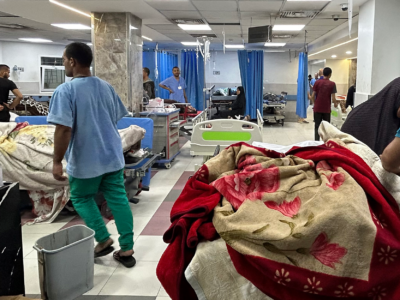
GAZA CITY, GAZA - MAY 17: Palestinians, struggling with hunger due to Israeli embargo, wait in line to receive hot meals distributed by the charity organizations as Israeli attacks continue, in Jabalia Refugee Camp in Gaza City, Gaza on May 17, 2025.

To Live and Die in Gaza

WP_Post Object
(
    [ID] => 6919
    [post_author] => 15
    [post_date] => 2024-05-23 17:24:38
    [post_date_gmt] => 2024-05-23 17:24:38
    [post_content] => 

Since October, over 100 Palestinian journalists have been killed by the IDF. They deserve our endurance—and our diligence.

War rages on in the months since Hamas’ assault against Israel and its ongoing retaliatory punishment of the blockaded Gaza Strip. It has been agonizing to witness. As of May, Israeli military actions are estimated to have killed more than 35,000 Palestinians, the majority of them women and children. Almost the entire population of Gaza has been displaced from their homes. A quarter of the population—more than half a million people—are at imminent risk of catastrophic famine, a number projected to surpass one million by July. For the average outside observer, myself fully included, it is impossible to track the dizzying onslaught of information emerging from the warzone without feeling some degree of despair, and even harder to do so with reliable accuracy. Social media is awash with falsehoods, mainstream American media demonstrably biased, and foreign press barred from entering Gaza independently. Further preventing vital access to information is the disproportionate number of Palestinian journalists who have been killed during the conflict so far, particularly compared to other instances of conflict reporting: Since October 7, at least 105 Palestinian journalists and media personnel have been killed by the Israeli Defense Forces (IDF), more than any other country at war. 

At the moment, Gaza is the most dangerous place in the world to be a reporter—and also one of the most consequential. As this war continues, it only becomes clearer to me that we must do everything in our power to protect these journalists and their work.

Since the war’s beginning, now the deadliest conflict of the 21st century, I’ve been reflecting on the word “indiscriminate,” on what it highlights and hides. It’s the word most reached for when attempting to describe the scale of civilian destruction in Gaza, a blanket term that fails to capture its intentionality in full. If you are well-versed in international human rights law, you know there are rules that distinguish between legitimate and illegitimate military actions, and these rules dictate what makes a death “indiscriminate.” These rules are governed by principles of proportionality: Warfare cannot result in the loss of civilian life excessive to the marginal military advantage it might achieve. Translated for the layperson, warfare is not open season, and a warzone is not a shooting range. Measures must be taken to mitigate civilian casualties. But even casual observers of this war have largely come to an uncomplicated understanding: It is difficult to describe what is happening in Gaza as anything but indiscriminate. Too many children are being killed. Too many civilians. Too many aid workers. Too many medical staff. Simply put, too many protected classes of noncombatants. 

In the case of journalists killed, however, the word “indiscriminate” also obscures something alarming. It’s an axiom of conflict reporting that death is an occupational hazard. But what is happening to journalists in Gaza goes beyond the normal range of risk. The watchdog group Committee to Protect Journalists (CPJ) has decried the behavior of the IDF, declaring this war “the deadliest conflict for journalists it has recorded since it started collecting data,” with more journalists “killed in the first three months of the war than have ever been killed in a single country over an entire year.” The CPJ has also brought charges against the IDF for the alleged killing of journalists’ families as retribution for critical reporting. And although Israel denies deliberately targeting members of the media—a war crime—they have been sharply criticized by the UN for failing to ensure their protection, and for failing to create real or meaningful safety measures to prevent further deaths.  

They’ve also openly attacked the media in other ways, and not just in their attempts to ban it. Journalists are noncombatants protected by international law, and their reporting serves a fundamental public interest. They must be able to report freely and without fear of retaliation, not just for the sake of a free press, but more importantly, to provide Gazans access to life-saving information. This work has been made all the more difficult by Israel’s targeted destruction of the infrastructure necessary to disseminate it. We tend to forget that the internet is rooted in the physical, and that direct attacks on journalists aren’t the only way to measure acts of aggression against the media. Cables, cell towers, internet and telecom networks; all these components are necessary for a story to reach the rest of the world. But many have been destroyed by Israeli airstrikes, causing communications systems to collapse—and what the world cannot see dies in the dark. 

With telecommunications compromised, on-the-ground journalists have collectively turned to social media as the primary vehicle for their work. It is, in many ways, their last connection to the outside world, and the outside world’s last connection with Gaza. Using donated eSIMs and shared phone chargers as lifelines, Palestinian journalists have fearlessly persisted in sharing what the Israeli government seemingly does not want us to see. But with such high stakes, I’ve found myself thinking about how we can engage most ethically with their work when our main platform for consuming it—social media—has the power to do as much, if not more, harm as it does good.  

Much has been rightly criticized about the pernicious role of social media in disseminating misinformation over the years. Social media is designed to sustain users’ attention in order to maximize advertising revenue, encouraging and rewarding us for sharing whatever posts elicit the most engagement—regardless of accuracy or potential for harm. But over the years, it has also become the internet’s town square; an accessible means of sharing information and finding first person perspectives that fill the gaps mainstream media often leaves behind. It would be reductive to cast social media as simply a peddler of falsehoods, particularly when it comes to what is occurring in Gaza. Social media now plays the role of historical record, collecting and preserving invaluable primary source material from journalists and civilians alike. 

As users of these platforms, particularly for Americans, it should be our duty to bear witness responsibly—which, at minimum, means utilizing basic media literacy and being mindful of what we choose to post and share. According to the Pew Research Center, half of U.S. adults get their news from social media at least some of the time; but four in ten of those same adults cite inaccuracy as their biggest concern when doing so. At a time of extreme and unrelenting dehumanization, social media has an outsized influence on the way this conflict has been interpreted abroad, and what we choose to share matters. For the ordinary online user, there is an almost emotional peer-pressure to rapidly engage on social media in the face of tragedy and injustice. Posting, after all, can be a necessary catharsis. We post in spite of and because of our utter helplessness in a world that seems indifferent to large-scale human suffering, railing against the seeming futility of our protests. In this case, Palestinians have also explicitly asked us to do it, to bear witness to their suffering, to not allow them to be forgotten, and to tell their stories of joy and resilience—largely via social media. Journalists, too, have made it clear: Our continual engagement with their work is what motivates them to keep reporting in the face of this incalculable tragedy. But when the abstract act of sharing online has direct consequences on real human lives, it becomes essential that we treat it with care. 

To be clear, I’m not advising you to stop posting, or even to post less. On the contrary, please post, please amplify, please share—so long as it’s done with a critical eye to impact. In moments of crisis, it can become easy to slip into what might be called pathos posting, posting that comes from the gut and not the mind. I see it in my followers and I, too, feel its lure. It’s the instant, unthinking tap to repost when confronted with images of the latest unbearable atrocity. It’s the incredibly human impulse to alchemize all our anguish, grief, and rage into action, however small it might be. Little to no caution is exercised in checking for doctored footage, manipulated video, or false contexts. In fact, the emotional weight behind these posts leads to an unwillingness to entertain the possibility of error or your own complicity in the potential spread of misinformation. Cries of caution are met with accusations of disloyalty. This unforgiving attitude siphons nuance and compassion from the public discourse, and further silences attempts at honest reporting. It also puts the people most affected by this conflict at risk of greater harm. Researchers and watchdog groups warn that in this moment of hair-trigger violence, misinformation will result in greater acts of aggression and potential escalations of violence against innocent civilians. We should be doing everything in our power not to contribute to it. 

Social media has the potential to bring out the best of our online selves, but so often instead summons our worst, most tribal, unreflective, and hardened. To honor the Palestinian journalists that are risking life and limb to report (only to not even be honored by name), I believe that we can and must push ourselves to engage with their work in ways that are principled, empathetic, and judicious. We achieve this by holding ourselves to account, and asking simple, but difficult, questions: Why are we sharing this? Is it from a reliable source? If the post contains misinformation, could someone believing it result in harm to someone else? 

Right now, caution can feel impotent and vastly unequal to the scale of the human tragedy unfolding. It feels right to post totalizing messages of condemnation and rage without a second thought. But this online posturing is myopic and counter-productive: Civilians, including journalists, are not served by misinformation that foments further aggression. I know that it can be tiring to constantly separate fact from fiction, but as the Palestinian-American activist Hala Alyan put it, we owe Gaza endurance. When language and rhetoric pose existential threats to the safety and security of Palestinians and Israelis alike, there is a moral obligation to do better. To not engage indiscriminately.
The duty of the journalist is to clarify the stakes; the duty of the reader is to respect them. But when journalists are literally putting their lives on the line to report from Gaza, we owe them more than our respect. It can be challenging to thread the needle of engaging with emotionally charged content while remaining discerning. It can be hard to treat posts with intelligence and sensitivity; and impossible to sniff out bad faith actors among the good. All these are tasks easier described than accomplished, but this doesn’t mean we should cease our efforts to achieve them. We have to try for the journalists risking their lives to report, and the over 100 journalists who have died doing the same. We owe all of them our endurance. 

[post_title] => What We Owe Gaza's Journalists [post_excerpt] => Since October, over 100 Palestinian journalists have been killed by the IDF. They deserve our endurance—and our diligence. [post_status] => publish [comment_status] => closed [ping_status] => closed [post_password] => [post_name] => gaza-palestine-israel-journalists-killed-idf-war-conflict-reporting-media-literacy [to_ping] => [pinged] => [post_modified] => 2026-08-04 17:09:57 [post_modified_gmt] => 2026-08-04 17:09:57 [post_content_filtered] => [post_parent] => 0 [guid] => https://conversationalist.org/?p=6919 [menu_order] => 57 [post_type] => post [post_mime_type] => [comment_count] => 0 [filter] => raw )
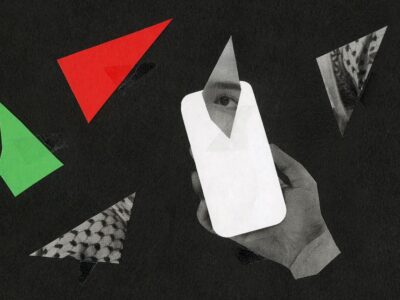
A collage on a fuzzy black background, with a disembodied hand holding a white cutout in the shape of a phone. There are fractured pieces scattered over the image, including one green triangle, one red triangle, and two triangles that show pieces of a keffiyeh. There is a fractured shard of an eye layered over the phone.

What We Owe Gaza’s Journalists