WP_Post Object
(
    [ID] => 10038
    [post_author] => 15
    [post_date] => 2026-01-21 20:59:24
    [post_date_gmt] => 2026-01-21 20:59:24
    [post_content] => 

A new community gathering, coming February 2026.

We’re kicking off a new gathering for our community, and you’re invited! Starting in February, we’re launching Conversation Club, a special new way to spotlight some of our favorite stories, by hosting conversations where writers can answer your questions and share more about how their stories came to be. It’s kind of like a book club, but you don’t have to read a whole book!

Read the article, come with questions (or not—just bring your mug of tea if that’s what you’re feeling), and be in community with us. It’s a casual, friendly discussion group and an encouraging space to stay curious, informed, and connected with fellow Conversationalist readers. 

Our first Conversation Club will feature our Executive Director Erin Zimmer Strenio’s recent piece “A Helping of Something Hopeful”, about her weekly neighborhood potlucks and how they've nourished her community on multiple levels. How did she get the potluck up and running? How did she keep it going? How can you get one started in your own community? Erin will chat with our Executive Editor Gina Mei, sharing what she’s learned and answering other questions from the community, including readers just like you. 

You can RSVP to our first Conversation Club below, and read Erin’s piece right here. We can’t wait to be in conversation with you. See you there! 

RSVP: Add your email to the list and we’ll send you a calendar invite and Zoom link.
Date: Friday, February 20th, 2026
Time: 11-11:45 AM PT // 2-2:45 PM ET

[post_title] => Join the Conversation Club! [post_excerpt] => We’re kicking off a new gathering for our community, and you’re invited. [post_status] => publish [comment_status] => closed [ping_status] => closed [post_password] => [post_name] => conversation-club-event-series-announcement-rsvp-discussion-group [to_ping] => [pinged] => [post_modified] => 2026-01-21 20:59:26 [post_modified_gmt] => 2026-01-21 20:59:26 [post_content_filtered] => [post_parent] => 0 [guid] => https://conversationalist.org/?p=10038 [menu_order] => 0 [post_type] => post [post_mime_type] => [comment_count] => 0 [filter] => raw )
An illustration of six pairs of hands holding out various dishes of food over a grassy expanse, with a "conversation club" sticker in the corner.

Join the Conversation Club!

WP_Post Object
(
    [ID] => 9910
    [post_author] => 15
    [post_date] => 2026-01-06 06:39:32
    [post_date_gmt] => 2026-01-06 06:39:32
    [post_content] => 

How committing to a weekly neighborhood potluck has both fed and strengthened my community.

There’s a certain serendipity that happens at a potluck. Foods that have never mingled together find themselves side by side: jambalaya in a crockpot, a cardboard pizza box, a plastic tub of Trader Joe’s hummus, a platter of gluten-free brownies. None of it really makes sense when scooped together onto a plate, but all of the flavors blend like fast friends—and if you’re lucky, oftentimes, the people do, too.

It’s another Monday night, which for me, means another neighborhood potluck. Every week, a group of us meets in the same grassy area by the bay in our neighborhood outside of Providence, Rhode Island. This week, I brought a pesto pasta salad with random veggies I found in our fridge; last week, it was leftover ribs my husband made over the weekend; the week before, a bag of chips and salsa. As we set up shop on a foldout table, I can see the curious faces of people driving and biking by, wondering what the heck is going on. But for us, it’s just another Monday night. People start trickling in around 5:30pm and stay until the sun goes down. We catch up on each other’s lives, and watch the kids run around while helping ourselves to a second plate. Then, we pack up our things and say our goodbyes, knowing we’ll see each other again next week.

While these gatherings now feel like a staple in my life, I first learned the magic of weekly potlucks a few years ago, in my old neighborhood in New Orleans, Louisiana. It was 2022, and we were still feeling a bit socially raw, fresh out of our Covid bubbles. A neighbor friend started a group text, inviting us to gather every Monday at the playground for a whatever-you-have-lying-around potluck dinner and a good hang.  

At first, the weekly cadence sounded like… a lot. Weekly? Really? Could my social battery handle it? 

Yet after the first few months, it started feeling like an important ritual, and after the first year, it felt like a sacred space. The regular cadence was key. It allowed us to check in on each other and get to know our week-to-week rhythms. I could ask how Jen’s doctor’s appointment went last week, or if Joel had recipe-tested the chicken and dumplings he was planning for his upcoming popup restaurant. When I wanted someone to be my accountability-buddy to do that yoga class I kept swearing I’d do, I could ask if anyone else had been looking for an accountability-buddy, too. And with the standing weekly gatherings, all of this could happen in an intentional way, our commitment to a weekly meal slowly blossoming into something more. 

After spending a couple of years social-distancing and mostly avoiding group gatherings, our neighborhood potlucks also felt like a joyful and much-needed form of social fitness, something scientifically proven to be just as important to our well-being as physical exercise. Maybe you’ve heard of Harvard's 85-year happiness study? It started in 1938 and followed 724 participants from their teens to old age. The participants regularly answered questions about their health and habits, their income and relationships, their joys and disappointments. The study also incorporated insights from their spouses and 1,300 of their descendants. 

What did the study find to be the most important factor in determining a long and happy life? Strong, supportive relationships. Not cholesterol levels, or how many kettlebells you’ve lifted (although those things are important, too!)—but genuine human connection. It was a stronger indicator for happiness than even genetic predispositions, social class, or IQ. 

This was also precisely what many of us were so starved for back in 2022. As the weeks went by, it felt like we had cracked the code to maintaining a genuine closeness with our neighbors. I also realized it wasn’t just the shared meal that was feeding us and allowing for deeper relationships to grow: It was our commitment to having it in the first place. 

In New Orleans, I experienced the fruits of this firsthand. A group of us kept showing up, kept checking in on each other, kept extending the invite to other neighbor friends, and kept feeling the goodness of our Monday merriment spilling into the rest of the week. It was something to look forward to, something that consistently got our weeks started on a hopeful note. The Sunday scaries felt almost cured by the Monday potluck magic. 

It was also a weekly reminder that, no matter what else was happening in the world, we were all still here, still showing up, and still feeding each other—with food, with friendship, with community, with care. 

This commitment never felt burdensome, but instead, like a newfound necessity. In the age of TikToking your way down the street and scrolling in bed until you fall asleep, people are overconnected but undercommitted. Relationships, however, are built on commitment—and at least according to the Harvard study’s findings, that means our happiness is built on commitment, too. It’s a muscle to exercise like any other, and when we allow it to atrophy, our communities tend to suffer. But when we put the effort into consistently exercising it, our relationships and our communities begin to bloom.

It still impresses me that we managed to meet up every week for over a year, even with small kids and busy jobs and all the rest. I believe a big part of this was probably the fact that we met in a public space (the neighborhood playground), that was walking distance for all of us (no driving required), which also meant that nobody had to host (no need to clean your house).

The not-hosting part felt especially important. Nobody had to stress about people coming over and nobody had to deal with washing the dishes since we BYO’d our own plates and cutlery. We also never felt the pressure to bring anything fancy, a rule we established early on. One week it might be a bag of chips and the next it might be leftover birthday cake and maybe the next it would be homemade enchiladas if you had a little more time to cook. It all evens out in the potluck wash. And when everyone brings something, everyone leaves full. 

When I moved to Rhode Island in 2024, I knew I had to keep my potluck muscles active in order to keep this little bit of magic alive, too.

I started a Whatsapp group and kept adding new neighbor friends to join as I met them. I scheduled the first potluck as a test run, just a couple months after we’d moved into our house. Given the big turnout (close to 40 people), I knew it could be a regular thing, so we started it up in earnest in the summer when the weather was more reliably outdoor-friendly. My husband and I began sending out a reminder on Monday mornings. And for the regular crew that started showing up each week, and telling other people to join, the potluck magic alchemized just as it had in New Orleans. I felt especially proud when I started seeing people I didn’t recognize who had heard about it through the neighborhood grapevine.

Every Monday, we’d arrive at the park with our foldout table and gingham tablecloth (adding a tablecloth instantly makes any gathering feel more special). For a quick second, I’d worry that nobody would show up. I’d feel a bit self-conscious, then I’d remember that even if nobody came, I’d still be outside eating with my family, which is a gift on its own. 

I wouldn’t take it personally if people couldn’t make it (although a younger version of myself probably would have). But sure enough, people always did, and a mishmash of dishes would start appearing on the table. Hot dogs and mini quiche? Sure, why not! Barbecue ribs and a mountain of edamame? I mean, yeah, let’s do this! The neighborhood kids would run around on the grass and inevitably start piling on top of each other, like a Polaroid snapshot from 1995. No iPads or AI or any other tech-y shenanigans. Just some good ole wholesome potluck fun.

After a full summer of weekly potlucks, however, it became clear that one major difference between New Orleans and New England is, well, winter. In New Orleans, we could keep the weekly cadence humming along for most of the year. The summer heat and storm season did force some cancelations, but in Rhode Island, the days started growing dark by 6 p.m. and it was puffy coat season by Halloween, so we had to “close for the season” in October. 

“I really miss our Monday potlucks,” neighbor friends have told me recently. Some have even offered to host in their homes, but this feels like breaking a key tenet. Removing the hosting pressure is a big part of what keeps our potlucks running so smoothly and solidly, so inclusively and so stress-freely. 

While I know it’ll come back in full force once the weather warms up and the sunlight stretches back into dinner hours, I can still feel my potluck muscle craving exercise. We’ve been looking into community spaces that might be willing to host us during the winter, such as the library or the masonic center a few blocks away. Or the old-school bowling alley, which has some tables in the back. We’ve also been brainstorming other ways to stay connected during the colder, darker months. Perhaps a weekly walking club around the neighborhood? Or a soup swap (like a cookie swap, but for soup)? 

But I also know that rest is important when it comes to exercise, too. And it’s during this wintry off-season that I’m discovering how much the seedlings of our summer potluck friendships have sprouted. People are still texting each other to check in, still asking each other for HVAC repair advice and babysitter recommendations. And thankfully I still have my accountability buddy checking in on how we might move our bodies this winter — she just suggested a 30-day “gentle burn workout” with short daily videos, asking if we could text each other once we’ve finished each as motivation and a healthy bit of peer pressure.   

A potluck, of course, isn’t the only way to nurture and maintain our relationships, but it’s one that’s made me feel particularly hopeful. Commitment begets commitment, and makes the muscle stronger, something we can feel even when it’s not in use. 

Bringing people together on a regular basis is also a reminder that small rituals can add up to something much bigger. In the months since our last potluck, our Providence community has been deeply hurting following the horrific mass shooting that took place at Brown University in December. We’ve been checking in on our neighbors, and feeling a wide range of emotions: grief, sadness, anger, anxiety, and heartbreak. But as we continue to grieve, our commitment to holding space for each other gives me hope that we’ll live another day, and share another meal, and continue to show up for each other, again and again.  

[post_title] => A Helping of Something Hopeful [post_excerpt] => How committing to a weekly neighborhood potluck has both fed and strengthened my community. [post_status] => publish [comment_status] => closed [ping_status] => closed [post_password] => [post_name] => hope-week-weekly-neighborhood-potluck-community-food-personal-essay [to_ping] => [pinged] => [post_modified] => 2026-01-14 02:30:14 [post_modified_gmt] => 2026-01-14 02:30:14 [post_content_filtered] => [post_parent] => 0 [guid] => https://conversationalist.org/?p=9910 [menu_order] => 0 [post_type] => post [post_mime_type] => [comment_count] => 0 [filter] => raw )
An illustration of six pairs of hands holding out various dishes of food over a grassy expanse.

A Helping of Something Hopeful

WP_Post Object
(
    [ID] => 9905
    [post_author] => 15
    [post_date] => 2026-01-05 08:02:34
    [post_date_gmt] => 2026-01-05 08:02:34
    [post_content] => 

How door-knocking for Mayor Mamdani restored my faith in the power of organized people to defeat organized money.

The thought of knocking on a stranger’s door once filled me with dread. It sounded uncomfortable at best, and potentially humiliating, or dangerous, at worst. What if someone slammed the door in my face or said something memorably vicious? I’m a 43-year-old white woman, raised in an upper-middle-class home in Buffalo, New York. My parents, respectively descended from Eastern European Jews and Sicilian Catholics, discussed politics and occasionally attended protests, but knocking on strangers’ doors wasn’t a big part of my childhood. 

Yet in the last eight years, as I’ve gotten older and more politically active, I've begun to grasp the value of pushing through that discomfort. In April, before the summer’s Democratic primary, I started knocking on doors for then-New York City mayoral candidate Zohran Mamdani, and continued through Election Day in November. Altogether, I knocked on approximately 2,000 doors, usually with a partner, which was more fun and comfortable, if less efficient, than going alone.

Door-knocking shifts for Mamdani regularly drew dozens of New Yorkers, even in terrible weather, and on Monday and Tuesday nights, when fewer people are motivated to go out after work. I mostly knocked on doors in Brooklyn, where I live, but my fellow canvassers came from all over the city. Some were ideologically motivated, while others had concrete, pragmatic reasons for showing up, like the woman I met who joined a canvass because “the bus I took to get here took 40 minutes to make two stops.” (Making buses fast and free was one of Mamdani’s signature campaign promises.) Or the 40-something Afro-Latino couple who said they came out for the sake of their children’s future, because “right now, things aren’t looking so good.” Other first-time canvassers I encountered included a soft-spoken young woman named Fatima, a heavily tattooed, outgoing 20-something Asian-American guy, a shy middle schooler with her immigrant dad, and a young white man who praised the campaign's “immaculate vibes.”

Together, we reportedly knocked on over 3 million doors

One reason Mamdani means so much to so many New Yorkers is that he assembled a 100,000-person volunteer army—the largest in municipal history, and one of the most diverse. His volunteer base included young and middle-aged progressives of all stripes, and a substantial subset of Jewish New Yorkers, South Asians, and Muslims. Getting to know my fellow canvassers for hours and months at a time as we worked to expand that coalition was an extraordinary project in a perilous time for democracy. It demonstrated the hope that tens of thousands of us still feel, and how hard we are willing to work to make life better for ourselves and our neighbors. 

Given how many doors we knocked throughout the city's five boroughs, the New Yorkers we reached were even more varied than the volunteers. During one general election canvassing shift in Kensington, a young Black woman opened the door to me and my friend Tania, who is Jewish. Although she didn’t initially recognize Mamdani’s name, as we went into our spiel, she realized he was the candidate her boyfriend had urged her to vote for. “Normally I wouldn’t tell a woman to do what her boyfriend says, but in this case, he’s right!” Tania said. (Our new friend smiled.) 

Another striking moment came when an older man in South Brooklyn’s Sunset Park unsmilingly asked if I were Mamdani’s daughter. He seemed to be trying to determine why I was volunteering for a man to whom I had no apparent ethnic or religious ties. Why else would I be doing this? Mamdani was not, in fact, my father, I explained, but I believed so strongly in his agenda that I was volunteering anyway. The man kept his face blank. I wondered when someone had last knocked on his door. 

Another day in Sunset Park, an older Spanish-speaking woman thanked me and my partner, who also spoke Spanish, for volunteering. She invited us into her home, where she and a small circle of relatives were celebrating her 90-year-old father’s birthday with balloons and cake. I’ll never forget the warmth and intimacy she offered us as total strangers.

In the last eight months, I’ve met Mamdani fans from Ireland, Germany, Sweden, Australia, and Canada. None could vote or contribute to the campaign, but some shadowed canvassers and interviewed volunteers, most commonly because they belonged to left-wing political parties and hoped to reproduce his success at home. Although he often emphasized that he was running a local race to benefit New Yorkers, it was clear Mamdani was also inspiring admirers around the world.

In addition to many happy, surprising, and rewarding encounters, I had my share of the awkward, unsettling, and agitating. There was the woman who saw my “New York Jews for Zohran” shirt and pretended to retch; when I moved toward her, thinking she might need help, she screamed, “That was about you, because you want my children dead!” There was the super who ordered us out of his building because we were supporting a candidate who, he falsely believes, “wants to kill all the Jews.” Another woman called my friend Allie “Nazi scum” and said she should just “put on the burqa [Mamdani will require] right now.”

Moments like these were reminders of the ugly racism our politics so often exposes. They shook me: I am rarely around people who would speak this way to anyone, let alone a stranger. But they also strengthened my resolve to work for and with people who lead with love, respect, and decency, and model those traits for others.

As of last week, New Yorkers have made one such person our mayor.

Just before the polls closed on Election Night, Tania and I met a man with two little girls with him on the street in Park Slope. He hadn’t planned to vote and realized he couldn’t make it to his polling site in time with the kids. After he left, I joked that we should have offered to babysit: “We can start delivering on Mamdani’s promise of free child care right away!” We were giddy with pre-election anxiety, and desperate to turn out every last vote.

A short time later, once it was clear Mamdani had won, my friends and I experienced one of the happiest moments of our lives. We were weeping and hugging and singing and cheering at what we’d accomplished together. All the neighbors we’d met on the ground were reflected in the voting blocs he’d won: older, moderate Black voters; young voters, including but not limited to white socialists; and immigrants, Muslim and non-Muslim alike. I’d knocked on doors before, but Mamdani’s campaign showed me just how powerful it could be.

Later, I wondered if we’d ever find a way to recapture that feeling and use it to drive ourselves forward in less happy and hopeful times. Could we love each other enough to keep doing the work that only occasionally produces such moments, even in times when there’s no end, and no payoff, in sight?

I’m still not sure how we’ll navigate this fundamental challenge of organizing. But being part of a political project that attracted the passionate support of New Yorkers in all five boroughs, and sympathizers around the world, has restored my faith in the power of organized people to defeat organized money. And although a huge part of Mamdani's appeal is that he ran on improving New Yorkers' daily lives, he also showed that grassroots campaigning works—and that contemporary politics can be a joyful and loving project that brings people together, rather than an ugly spectacle that thrives on negative attention, exploits our fears, fills us with anxiety, turns neighbors against each other, and leaves us feeling empty, sad, bitter, and alone.

In canvassing for Mamdani and other DSA-backed candidates, I saw how much people are craving community, connection, and fun. We need to create more opportunities like this—to move joyfully toward something, rather than slogging through a sales pitch for a mediocre candidate who’s better than their opponent in hopes of slowing what feels like an endless parade of horrors. In the last year—still emerging from the long shadow of a global pandemic—I’ve embraced more near-strangers than I had in the previous five. Now, there’s a bracing sense of possibility in the air—the unfamiliar feeling that good things can still happen, and we can make them.

[post_title] => Knocking On Hope's Door [post_excerpt] => How door-knocking for Mayor Mamdani restored my faith in the power of organized people to defeat organized money. [post_status] => publish [comment_status] => closed [ping_status] => closed [post_password] => [post_name] => hope-week-door-knocking-new-york-city-mayor-zohran-mamdani-politics-election [to_ping] => [pinged] => [post_modified] => 2026-01-13 18:46:44 [post_modified_gmt] => 2026-01-13 18:46:44 [post_content_filtered] => [post_parent] => 0 [guid] => https://conversationalist.org/?p=9905 [menu_order] => 0 [post_type] => post [post_mime_type] => [comment_count] => 0 [filter] => raw )
An illustration of a woman facing a man and opening a door where the front of his face should be.

Knocking On Hope’s Door

WP_Post Object
(
    [ID] => 9839
    [post_author] => 15
    [post_date] => 2025-12-17 18:25:59
    [post_date_gmt] => 2025-12-17 18:25:59
    [post_content] => 

How women crab farmers along India's coast have linked their livelihoods to environmental conservation.

A soft current ripples near Jamdulwadi Island as 15-year-old Prachi Santosh Acharekar guides her canoe through the gnarled trunks of a mangrove forest.

The afternoon sun warms the surface of the water, revealing a familiar scene to local communities around India’s Konkan coast: clusters of mud-covered crabs, basking on branches.

As she approaches them, she slows her boat. Prachi, a 10th-standard student, doesn’t just see mud crabs: She sees her future. Her focused gaze and deft handling of the boat are part of her autodidactic training, a testament to a burgeoning passion that runs deep within the Acharekar family. 

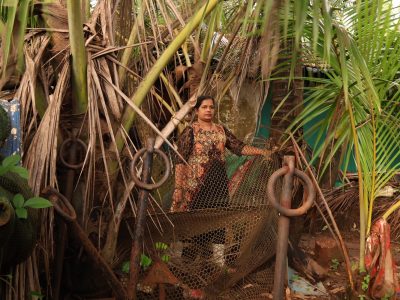
Prachi Santosh Acharekar navigating her canoe through the mangroves, a part of her crab farming training.

Champions of the Mangroves

In Achara village, where she lives, crab farming season typically runs from October to May. When Prachi is fully inducted into her family’s business in about three years, during this time, she’ll be busy with preparations, stocking seed, feeding the crabs, and folding boxes to safely transport them once they’ve been harvested. 

All of it will also formalize her role in a grassroots movement, led by women from India’s coastal belt: In Sindhudurg, women fisherfolk have become champions in linking their livelihoods with environmental conservation. Through crab farming, they’ve created a strong incentive to protect local mangroves, which serve as critical nursery habitats for mangrove crabs. The benefits of this are both economical and ecological: Alongside generating sustainable income for the women, the mangroves’ preservation stabilizes shorelines and mitigates erosion, enhancing coastal resilience against the impacts of climate change. 

At the heart of this enterprise is Prachi’s aunt, 55-year-old Sonali Sunil Acharekar, a proud entrepreneur and leading member of Konkansparsh, one of Maharashtra’s pioneering women-led self-help groups (SHGs). Like all women of this SHG, for her, the mangrove is not just an ecosystem, but a dynamic marketplace.

“Be it dolphin safari, trekking, birdwatching, or traditional fishing, we do it all at Konkansparsh,” says Sonali, sitting in a charpoy at her home, surrounded by a vast area of mangroves. “But crab farming is our speciality. It is something we feel deeply attached to.”

Sonali and other leaders manage the entire crab farming supply chain, from feeding and harvesting the crabs to selling them. The process is meticulous but straightforward. Crab seeds are carefully placed one-by-one into fiber boxes. Each box is then deployed within the protected mangrove territories of Sindhudurg district, which boasts 6,940 hectares of mangroves perfectly suited for farming. Sonali also feeds the small raw fish stock twice daily, in the morning and evening. Then, once the crabs are ready, they’re harvested, boxed, and sold. 

Sonali Sunil Acharekar in the backyard of her home in Achara village.

Overseeing the entire operation in this way has significantly enhanced the women’s access to resources, as well as to the market. The payoff is also demonstrable, including as a sustainable model: Last year, the Acharekar family, a seven-member unit that works in tandem, generated an impressive 150,000 INR ($1,706 USD) from the sale of 180 crabs. They also earned an additional 130,000 INR ($1,466 USD) from running mangrove safaris. 

“It feels so good to partake in the process,” says Sonali. “This year, we intend to maintain 200 boxes fully. More boxes mean more business and more business means more prosperity.”

Their success also reinforces a crucial ecological benefit: According to research published in the Marine Biological Association of India, mud crab farming is not only a sustainable—and profitable—livelihood, but an essential strategy for mangrove conservation, supporting the region’s climate resilience through ecosystem protection. The mangroves provide a conducive natural habitat for raising mud crabs, or green crabs, commonly from the species Scylla serrata, which are indigenous to the region. By breeding and harvesting crabs, and building and tending to crabs pens in mangrove creeks, the women have both created a financial incentive for the mangroves' protection and helped to increase the local crab population.

In coastal areas, crabs are considered an economically significant species due to their huge demand. The crabs themselves can also tolerate a wide range of temperatures and salinities without destroying local ecosystems. But over the years, sand mining, saltwater intrusion, and rising water temperatures have contributed to a declining mud crab population, and are just a few of the ongoing stresses and trends that fisher communities have dealt with, and that local SHGs hope to tackle. 

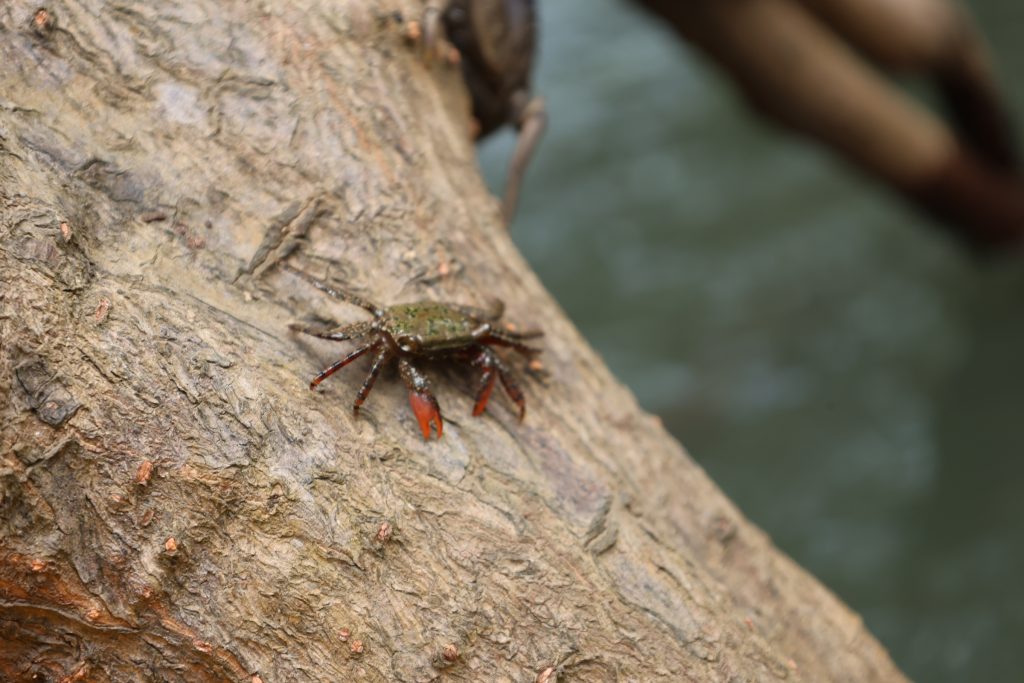
A wild baby crab crawls on the trunk of a mangrove tree.

In other coastal communities like Kerala, Maharashtra’s neighboring state, crab farmers who once caught wild juvenile crabs and had plentiful stock are grappling with rising costs and dwindling returns, as crabs have become scarce and stressed. Their annual incomes have dropped by 50,000 INR to 100,000 INR (around $600 USD to $1,200 USD) due to poor water quality, causing frequent disease outbreaks, pushing many farmers to downsize or cease operations altogether, largely due to reduced harvests linked to environmental degradation.

Sustainable crab models in coastal communities in Maharashtra aim to address the pressing problems of overfishing, habitat loss, and food insecurity through long-term economic stability. But without such practices, crab harvesting may yield fleeting profits, triggering ecological collapse and harm to a region’s inhabitants.

In addition to boosting the economy, this is part of why the SHG’s endeavors have been such a great boon to the area.

According to Kedar Palav, Livelihood Specialist at Sindhudurg’s Mangrove Foundation, women-led groups comprising 40 women have been active in Sindhudurg district during the 2024-25 crab farming season. “Our aim,” he notes, “is to facilitate strong livelihood opportunities for the women.”

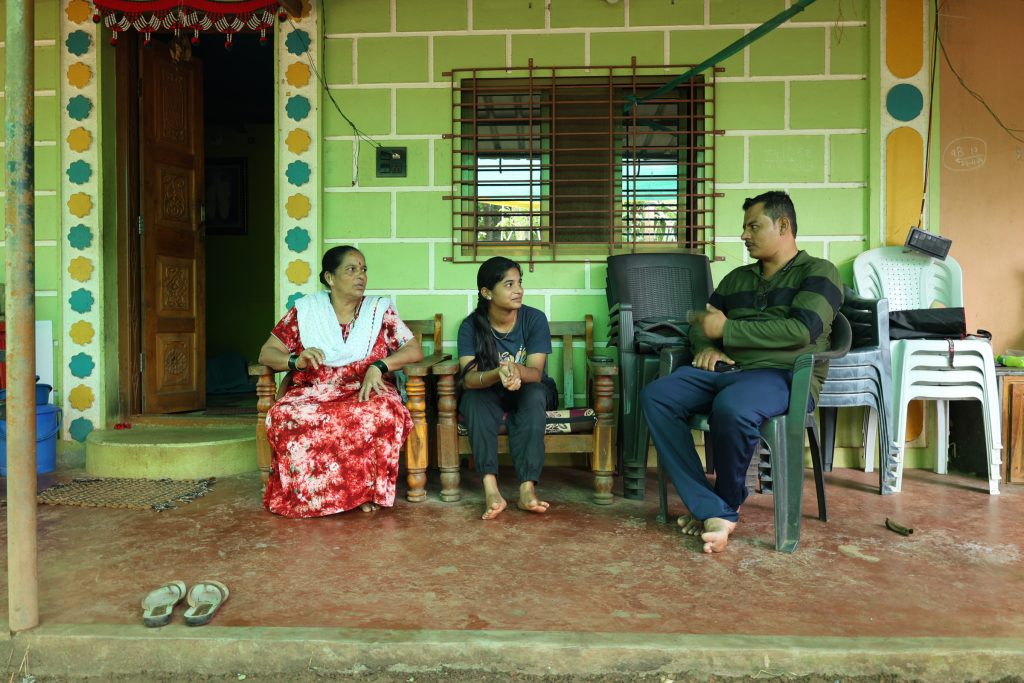
Sonali Sunil Acharekar (left) and her niece Prachi Santosh Acharekar (center) in conversation with Mayur Pansare (right), a Project Assistant for the Mangrove Foundation.

But even those with formal careers are drawn to the potential. Sonali’s 32-year-old son, Omprakash Sunil Achrekar, an engineering graduate, has embraced crab farming full-time; and Manish Tari, 22, an undergraduate in fisheries science, launched Manish Agro & Seafood with his father during the Covid-19 pandemic, specializing in vertical crab farming.

“We deal in red and green crabs,” says Tari. “A single piece per kilo can go up to 2,400 INR. It’s very lucrative.”

Navigating the Tides

Despite the economic potential, the journey is not without profound risks and hurdles. The most immediate occupational hazard, however, is theft.

“Theft of crabs is a big problem here,” says Sonali. “Sometimes diseases can spread in the backwaters, as well…A mortality rate of 20 percent is considered normal.”

It’s a challenge that has historically forced some farmers out of business. Samiksha Gaonkar, 50, from Pirawadi village, recalls being part of Sindhudurg’s very first crab culture group, which operated between 2014 to 2019. Despite each group member earning around 5000 INR per month, they were forced to shut down.

“Our crabs got suddenly stolen,” says Samiksha. “We could not keep a check on the thefts and then we had to pull out.”

Anagarajan Joshi, 58, a former crab farmer, at her friend’s home in Pirawadi village.

Another hurdle is the scarcity of crab seed. According to Palav, there is only one hatchery in India: the Rajiv Gandhi Centre for Aquaculture (RGCA) in the southernmost state of Tamil Nadu. 

Sanjeevni Santosh Mithbavker, 43, a member of the Vedoleshwar SHG, says crab farming has become more difficult as a result. “We lack seed,” she says. “If the supply of seed becomes easy, we can take this business forward.” 

Despite the scarcity, Sanjeevni sold crabs worth 60,000 INR last season. But while business is “great,” seed still costs 25 to 30 INR for a single piece—makings it an expensive venture for the average crab farmer.

A Wave of Resilience 

To counter these challenges, government and non-governmental efforts have actively focused their support on the most vulnerable communities, placing women at the forefront.

Government initiatives such as the Mangrove Conservation and Livelihood Generation Scheme, alongside international projects like Enhancing Climate Resilience of India’s Coastal Communities (ECRICC), have been instrumental in fostering local interest in Sindhudurg’s coastal villages, including Achara and Hadi. As part of the Mangrove Foundation’s intervention, women’s groups also receive substantial training and support, including expert talks, presentations, and hands-on workshops that offer extensive practical training. 

On the ground, additional support comes from 34 Sagar Mitras—fisheries graduates who act as vital resources for the women. Mayur Vinayak Pansare, Project Assistant with the Mangrove Foundation, sees themselves in a family-like role. While they occasionally help fix issues, like crabs breaking through fiber boxes, he says, “It’s heartwarming to see these women coming forward and taking steps towards self-reliance.”

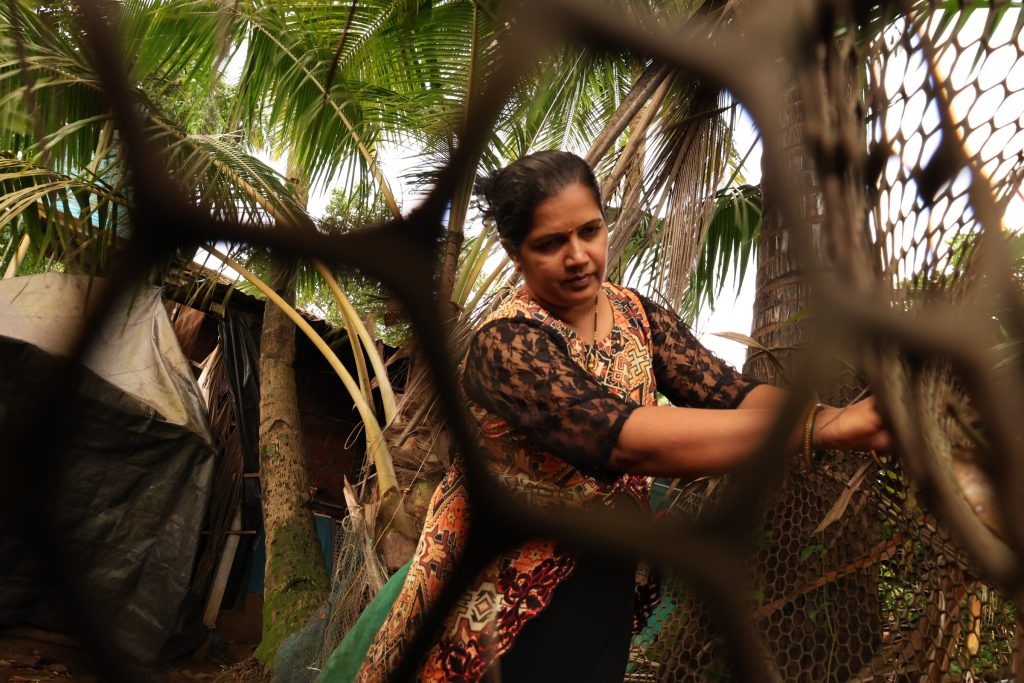
Sanjeevni Santosh Mithbavker, 43, mends nets at her home in Hadi village.

The financial assistance is also significant: The Achrekar family, for instance, received a substantial 90 percent subsidy from the Department of Fisheries and the Mangrove Foundation. Between 2021 and 2025, larger initiatives like the Pradhan Mantri Machi Sampada have backed an additional 124 fisheries projects, with women as a remarkable 60 percent of beneficiaries between 2021 and 2025, says Bahar Vithala Mahakal, Sindhudurg District Program Manager at the Fisheries Department.

This focus is clear across other programs, too: The Sindu Ratna Samrudhi Scheme saw a 70 percent rise in female beneficiaries in a single year, between 2022 and 2023.

Planting the Future

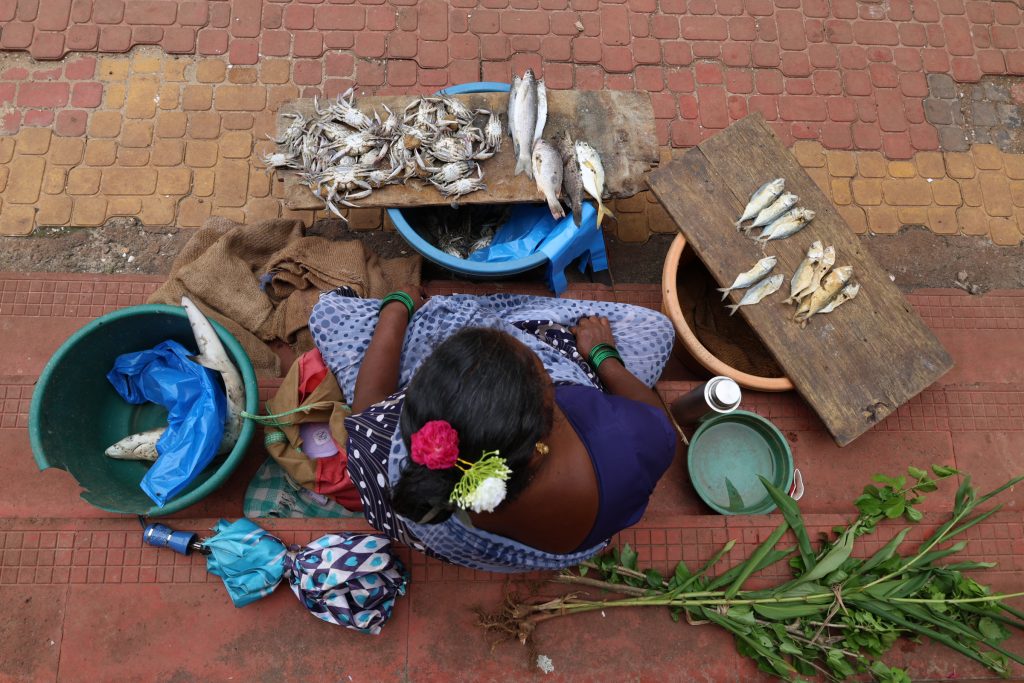
Women’s presence as crab sellers in Sindhudurg’s main fish market signals a generational shift in the industry: They’re taking center stage in an otherwise male-dominated marketplace. For Dakshita (who asked we only use her first name), her presence here is about more than selling her own yield—she’s also reclaiming a little more of herself. 

“What is the need for middlemen when I can run my own business?” she says, waiting for customers.

Dakshita, 50, sells green crabs at the Malvan fish market in Sindhudurg.

In Prachi’s case, the journey towards self-reliance began slowly. She initially “harbored no interest in crab farming.” But witnessing her family’s dedication and serving as a guide for tourists through the vibrant backwaters transformed her perspective, converting her initial disinterest into a passion.

In the shifting tides of the Maharashtra coast, Prachi represents the strong voice of a younger generation, seamlessly blending tradition with science to carve a new path forward. For them, crabs are the ‘green gold,’ promising economic returns.

While elder members strengthen their place in the market, Prachi is now articulating a dream that links her environment to her education, which she plans to pursue further by studying Marine Science.

“By protecting the mangroves, my crabs thrive,” she says. “The mangroves in return protect my family from storms, erosion, and the rising sea.”

A view of a mountain village in Sindhudurg.

In the nearby pond, Prachi and Sonali have also started to plant new mangrove saplings. Other efforts at sustainability have only grown. In 2017, scientists visited the area and told local crab farmers that in order to have a better catch, they needed to maintain cleaner water. To boost women’s participation in local water and pond management, women farmers are now being trained to regularly flush water through the crab ponds for freshness, monitor water quality, and prevent overcrowding. Since then, they’ve seen the return of many new birds in the area, from cattle egret to common sandpiper and Indian pond heron.

The tides speak louder than people in Sindhudurg’s coastal communities, and for these powerful women, mangroves stand like guardians along the coast. The more they nurture the mangroves, the more the mangroves give back to them, too. It’s a quiet partnership in nature, this connection between crab farmers and the mangrove forests, and a small step in healing the Earth.

[post_title] => Guardians of the Mangroves [post_excerpt] => How women crab farmers along India's coast have linked their livelihoods to environmental conservation. [post_status] => publish [comment_status] => closed [ping_status] => closed [post_password] => [post_name] => crab-farmers-farming-aquaculture-india-mangroves-conservation-climate-change-ecosystem [to_ping] => [pinged] => [post_modified] => 2026-08-03 21:03:35 [post_modified_gmt] => 2026-08-03 21:03:35 [post_content_filtered] => [post_parent] => 0 [guid] => https://conversationalist.org/?p=9839 [menu_order] => 0 [post_type] => post [post_mime_type] => [comment_count] => 0 [filter] => raw )
Guardians of the Mangroves

WP_Post Object
(
    [ID] => 9098
    [post_author] => 15
    [post_date] => 2025-08-01 17:42:22
    [post_date_gmt] => 2025-08-01 17:42:22
    [post_content] => 

As immigrants, my friends and I depend on each other in ways I've never needed back home.

Old Friends” is an ongoing series exploring the many ways that friendship changes shape in adulthood. 

For months, I thought coming to New York City was a mistake. I’d accepted an unpaid internship in the city, leaving my home in Bogota to try living abroad. I dreamed of going to Broadway shows, dining out at different restaurants—enjoying all the fun New York had to offer. But instead, in addition to my internship, I ended up taking another job, just to afford rent. I worked sixteen hours a day, six days a week, with little time to socialize. I was burned out and deeply lonely. Then, one day, my friend Carolina suggested we go out after our internship and do something fun.

“We should go rollerskating at Rockefeller Center,” she said.

I used to skate for fun back in Colombia—my home country—when I was a teenager, but hadn’t gone in years. Still, I thought it was a great idea. Carolina was a talented skater, and we had so much fun looping around the rink that I was reminded of the joy skating had once made me feel. 

For the first time in months, I was completely at ease. Then, as we were leaving the rink, I fell. When I looked down, my arm was shaped like the letter “s”: I’d broken my left wrist. Carolina, somehow, found the strength to pull me up, call an Uber, and take me to the nearest hospital. She waited with me for hours in the emergency room, where I learned I’d need nails and a cast to fix my broken bones. 

As my arm healed, Carolina took the subway with me to work every day, protecting me from accidental bumps. She brushed my messy hair, pulled down my pants so I could pee, and dressed me up again; all things I’m not sure I’d ask even my closest friends to do for me back home. 

At the time, we had only known each other for four months. 

~

I once read an Instagram post that said being an immigrant is like becoming a dog: one year as an immigrant equals seven years of life experience. Friendships, then, become intense and profound more quickly than they might back home. Sometimes, out of necessity, they become deeper than our friendships back home, too.

Adult immigrants often find themselves profoundly alone. Our families and closest friends usually remain in our home countries, hundreds or even thousands of miles away. The friendships we form in our new lives, then, become everything to us: our support network, our first call, our emergency contacts. 

In an unfamiliar city, we also seek familiarity. As immigrants, we tend to connect more deeply with people from similar cultural backgrounds, something especially meaningful when we suddenly become the “other” after a lifetime of living in a country where we are the “norm.” Sharing a language, traditions, and social cues lowers the barriers to intimacy: When someone understands the way you were raised, you don’t have to justify or over-explain everything you do. 

Carolina was from Bogota, too, and had started at the same internship a week before I had. We had a lot in common: We both came from Catholic-conservative backgrounds, needed to be very mature at a young age, identified as feminists, had issues making friends, and wanted to start life from scratch in the city. We shared similar experiences growing up, and similar experiences since coming to New York. But our friendship deepened after I broke my wrist: I knew then that we could rely on one another. That if something ever happened to me again, she would take care of me—and if something ever happened to her, I’d take care of her, too. 

Carolina isn’t the only immigrant friend I’ve felt this immediate intimacy with. One day, I was hiking with Nicol, a Peruvian friend. The trail was rocky and we had to march in rhythm just to move forward. Suddenly, a memory popped into my head: In primary school, I used to march like a soldier with the rest of my classmates. Military culture is deeply ingrained in Colombia because of our near century-long history of war and internal armed conflict. It felt silly, but I decided to share my memory with Nicol.

“Oh, yeah, we did that at my school, too,” she said. “It was so ridiculous. Our parents would come watch us march in squared formations.”

Of course. Peru, too, has a history of armed conflict, and military culture was a part of her primary school indoctrination as well. She didn’t make fun of me for what I thought might be a strange confession. Instead, she took my memory and treated it with care—turning it into something funny and shared. 

I immediately felt closer to her, something unusual for me. I’ve always considered myself introverted. During my undergrad years in Colombia, I experienced severe social anxiety. I was trapped in an internal monologue that told me I was boring, strange, and hard to love. For nearly two years, I didn’t make a single friend. I built high walls around myself that kept everyone out. After a while, I made meaningful connections that have stayed with me, but I’d never found it easy.

When I migrated, I assumed I’d again struggle to make friends—especially since, on top of everything else, I now had to add “not fluent enough in English” to my long list of self-demeaning adjectives.

But when I started grad school in the States, I made friends within the first two weeks. At the time, I thought maybe I had changed somehow; become more at ease within myself, more confident. But looking back, I can see it was something else: My deep, human need to belong—and the comfort I felt around other Latin American students—had activated parts of me that had been frozen. 

A couple of weeks ago, I spent the afternoon with María, a friend from Mexico. Before coming here, I had never had friends like her—extroverted, party lovers, heavy users of dating apps, full of energy. After a long conversation about how Latina diet culture has shaped our relationship to food and our bodies, I realized our friendship had grown strong, in spite of our differences, because it was rooted in something larger than us. Like with Carolina, and Nicol, and countless other immigrant friends, we were united by our need to resist a homogenizing environment. We were united by our shared confusion about U.S. social cues. We were united by our warmth, our humor, and our overlapping memories, even if we didn’t grow up in the same country.

“I’ve noticed you’re literally like my younger sister,” she told me. “The good girl who wants to fit in and carries the weight of your lineage. We’re very different, but there’s a strong emotional connection between us.” I realized then that she is, indeed, a lot like my older sister, too.

I’ve been in the U.S. for almost two years now, and I still find it hard to make American friends. Sometimes, people make xenophobic comments to me in the streets. When I meet people who grew up in the States, I quickly find myself running out of conversation topics, unable to find much common ground—something that still makes me feel out of place. But my immigrant friends are part of the reason I still want to stay, to put down roots. 

At the end of the day, home is where you feel safe, loved, and cared for, rather than where you grew up. If I have friends who look after me, who resist the harshest expressions of discrimination and exclusion by my side—then here, I’ve found a place to call home. 

Don’t get me wrong: I have beautiful, loyal friendships in Colombia, too. But my friends there don’t need me to survive. In Colombia, if I got sick, I could call my parents or sisters, and they would drop everything for me. But there, I had never been anyone’s emergency contact. My friends back home already had someone else to call—their own parents, siblings, partners. 

In contrast, my friendships in New York became lifelong within months. I’m now the emergency contact for two friends. I’ve been the caregiver for one of them coming out of a medical procedure that needed anesthesia. Here, my friends and I depend on each other to be each other’s version of family, to be a shoulder to cry on, to be someone reliable for medicine delivery; as a party plus-one, a caregiver, a babysitter (or cat sitter!), among many other things. 

The need to survive, to resist, to belong, and to be comforted—that’s what first pushed us together. But it’s the care, love, and familiarity that’s kept us bonded.

[post_title] => Emergency Contact [post_excerpt] => As immigrants, my friends and I depend on each other in ways I've never needed back home. [post_status] => publish [comment_status] => closed [ping_status] => closed [post_password] => [post_name] => immigrant-friendships-migrant-friends-relationships-home-emergency-contacts-shared-language-culture-latin-america-immigration-personal-essay [to_ping] => [pinged] => [post_modified] => 2026-01-15 19:22:16 [post_modified_gmt] => 2026-01-15 19:22:16 [post_content_filtered] => [post_parent] => 0 [guid] => https://conversationalist.org/?p=9098 [menu_order] => 3 [post_type] => post [post_mime_type] => [comment_count] => 0 [filter] => raw )
Illustrator of the silhouettes of two women, one braiding the hair of the other. They are in shadow, standing in front of a window with a sunrise, while the rest of the room is shrouded in darkness.

Emergency Contact

WP_Post Object
(
    [ID] => 9113
    [post_author] => 15
    [post_date] => 2025-07-28 20:48:44
    [post_date_gmt] => 2025-07-28 20:48:44
    [post_content] => 

How younger generations are turning knitting and crochet into a community building affair.

The first known knitted project was a pair of socks. Discovered in Egypt, the socks featured colorwork made from indigo and white cotton, and were believed to date back to the 11th century, although the craft itself has likely existed for much longer. In the many decades since, knitting, crochet, and other fiber arts have become widespread and global, evolving from the work of artisans to a beloved pastime across generations, while still staying true to the original techniques used in the very first woven fabrics. And now, the craft has evolved once more—this time, at the hands of young people seeking a comforting hobby that gets them out of the house. 

This is what led Virginia Meinhausen, 28, and Lea Engler, 31, to take the leap and start Knitting Club Potsdam in Germany earlier this year. “Being part of a community in person is something [meaningful], not only just to speak to each other, it's also… Wow, so many people are doing this and we are doing this together,” says Meinhausen. “We are now meeting each other in a huge group once a month.” 

Since launching the club in March, Meinhausen says it’s grown to over 100 members. But this quick success isn’t unique to just Knitting Club Potsdam. In recent years, the age-old practice has found new meaning amongst Gen Z and Millennials, who have turned to knitting as a means of bringing back the “third place” and reconnecting with their peers. 

“I remember thinking, it’s crazy how many people don’t have a real hobby anymore,” says Isabelle Mann, textile business expert and owner of knitwear brand Fable and Failure. But she says this started to shift during the pandemic, as younger generations sought more analog ways to pass the time.

The trend first began online, rising to prominence through influencers like Petite Knit and platforms like Ravelry, with younger generations taking ancient techniques and adapting their garments and patterns to match modern trends. “People do appreciate knitting more again,” Mann says. She sees fiber arts as a community building affair for those between 25 and 35, and started her own club through her business in 2019 as a means of teaching and preserving the craft. She also believes that fiber arts skipped a generation, and that parents in the 90s and early 2000s simply never taught their Millennial and Gen Z children how to do it. Instead, these generations taught themselves—and eventually, as COVID lockdowns lifted, these same knitters decided it was time to take things offline. 

Craving human interaction and a break from their screens, hobbyists began coming together post-pandemic as a means of bringing back the “third place”: a neutral, physical space separate from home and work (or school). The concept is set on community building in-person, without having to spend much or any money to participate—something Gen Z feels that they’ve missed out on, and Millennials frequently mourn, as social media has increasingly replaced it online. 

Knitting clubs, in particular, have gained global interest in recent years, with communities expanding rapidly, even in small cities. The industry is expected to grow by $10.69 billion between 2024 and 2028, according to Technavio, a company that specializes in market research reports and industry analysis. 

In addition to creating bonds through a like interest, in-person knitting clubs are also helping young fiber artists learn new techniques faster and more effectively. When they began Knitting Club Potsdam, Meinhausen was a beginner and Engler was a seasoned knitter, having learned from her mother starting at 8 years old. The club currently has 60% beginner knitters and 40% advanced, according to Engler. Meinhausen, still a beginner herself, says she can’t believe the intricate project she’s working on now, which she credits to how quickly she’s learned since starting the club. She adds that advanced members “love to help,” which gives those just starting out the confidence to continue attending—and makes everyone joyful in the process. 

“I told Gini [Virginia] after the first meeting, for me, it was very calm. Everyone was smiling. Everyone [was] so, so happy,” Engler says. “I think this feeling is the best part.”

According to Meinhausen and Engler, knitting and crochet is very popular amongst young people in Germany, but the hobby has gained traction amongst 20- and 30-somethings in other places, as well. In New York, crochet designer Michelle Palacio is creating garments for her brand Venganza using crochet techniques from her Colombian grandmother. In Nepal, the Nepal KnotCraft Centre, founded in 1984, aims to help women of all ages build traditional skills in fiber arts. In Paris, Avril Bas, 26, and her co-president Alice Pierre-François, 28, launched a crochet club called Club Crochet Tricot in 2024, a club that is now officially recognized by the French government. She says membership is growing every week. 

“It's really incredible to have [this] place where a common hobby links people, and it helps us find similarly minded people that want to [enjoy] the same activities,” Bas says. “It's really beautiful.”

Bas says that starting the club, combined with her passion for knitting and crochet, contributed to her pursuing fiber arts full time. She fell in love with the tight-knit nature of the community, and now, their club’s efforts have “blossomed into something massive.”

“I started this club and all of a sudden I had like quadrupled my number of friends,” she says. 

Club Crochet Tricot meets on Sundays four times a month, with locations varying from scenic park picnics, local cafes, public libraries, and even the cinema. Between 40 and 100 people regularly attend their in-person crafting sessions, and there are always new and interested attendees week to week. Bas feels like younger generations long for this kind social interaction, building community around creativity—and her club is an outlet for that. She also says that she’s more than happy to be a “third place” for those who have been seeking it—and perhaps, that it’s a sign of more “third places” to come. 

“Everybody around our age wants to open a bookstore, plant store, cafe,” Bas says. “I feel like it’s going to happen.”

[post_title] => Weaving a New Third Place [post_excerpt] => How younger generations are turning knitting and crochet into a community building affair. [post_status] => publish [comment_status] => closed [ping_status] => closed [post_password] => [post_name] => third-place-fiber-arts-knitting-circles-clubs-crochet-weaving-community-crafts-artists-artisan [to_ping] => [pinged] => [post_modified] => 2026-08-03 22:33:13 [post_modified_gmt] => 2026-08-03 22:33:13 [post_content_filtered] => [post_parent] => 0 [guid] => https://conversationalist.org/?p=9113 [menu_order] => 5 [post_type] => post [post_mime_type] => [comment_count] => 0 [filter] => raw )
An embroidered illustration on fabric of a tree with women and sheep sitting or standing on the branches. In the background are rolling hills, and clouds in the sky.

Weaving a New Third Place

WP_Post Object
(
    [ID] => 8116
    [post_author] => 15
    [post_date] => 2025-04-04 16:06:16
    [post_date_gmt] => 2025-04-04 16:06:16
    [post_content] => 

In immigrant families, sometimes your cousins can be your earliest friends.

Old Friends” is an ongoing series exploring the many ways that friendship changes shape in adulthood. 

“You don’t seem like an only child,” people often tell me after I reveal to them that I was raised without siblings. Unsure if this comment is a compliment or a backhanded remark, I usually shrug and reply with something like, “Well, I grew up with cousins…” But what I don’t often say is my cousins didn’t quite feel like siblings, either. They felt like something else. 

The truth is I don’t have an unusual amount of cousins. Five first cousins in the U.S., and one in Estonia, who I’ve never met. A growing number of second cousins once removed (the children of my first cousins). And a scattered few second cousins twice or three times removed (my parents' cousins and their offspring, respectively). It’s my first cousins, though, that I’m closest with—in large part because, as is true for many immigrant families, they were also my first friends. 

As new immigrants from the former Soviet Union, my parents relied on the built-in community of care provided by our extended family: an old-world-style network of grandparents, aunts, uncles, and cousins. But while the adults in my family did play a role in my Los Angeles upbringing, it was my cousins who did the majority of the caretaking. 

Only seven years older than me, two of my cousins in particular were somewhere between my babysitters, part-time siblings, and friends. Together, we would spend long sun-soaked summer days playing outside my aunt and uncle’s apartment. We’d make up elaborate games based on movies we rented from Blockbuster or 20-20 Video, where an older cousin worked. Sometimes, we were the “karate family,” influenced by none other than The Karate Kid. In silent agreement, we’d transform into a group of vigilante karate enthusiasts, climbing parked cars and saving stray cats from danger; cats that my uncle would rescue and bring home from his job as an LAX cab driver. Sometimes we would write our own Nightmare Before Christmas-style songs, practice obsessively, and perform them for the whole family. OOOo spooky, oooo spooky….I see a big fat moon…in the skyyy….a very big fat mooon. Sometimes, we’d be aspiring horror film producers. We would borrow my dad’s precious camcorder and record over family home videos with our very own renditions of the Blair Witch Project, nostrils and all. We even made our own version of the movie Hocus Pocus, which we titled, “The Heart of a Little Girl.” I was the little girl.

Then, the sun would set and my aunt would come home from her job as a cashier at the local grocery store, and my mom and dad would pick me up after a day of English and bookkeeping classes at the community college; or after a day of driving rich kids around. And I would always, without fail, break into tears, grabbing onto the leg of one of my cousins as they would obediently lead me to the door. 

Only other only-children can relate to the loneliness. The pit of despair that formed each time, as a child, you were plucked from a social event and brought back to your parents’ apartment where you were forced to find creative ways to entertain yourself. Before we had the internet (and even after), I would spend long hours talking to the bathroom mirror, pretending my reflection was someone else. When I was with my cousins, the loneliness disappeared. When I left them, it would come back heavier than before. 

The research is shoddy, but it is believed there is a correlation between only-childness and loneliness. In fact, studies have found that, compared to adults who grew up with siblings, only children often become adults who have significantly less interaction with their relatives. This may be true for some onlies, but not for me. I still, to this day, have remained close to my cousins. Even the older ones who had no interest in me when I was a toddler and they were teenagers. The ones who acted more like older siblings than friends by simply ignoring me, or making fun of my unibrow because it would “build character.” The ones who drew sharpie tattoos on my favorite doll’s face in between shifts at the video store, and made up for it by buying me a coveted “Diana’s Parking Only: Keep Out” sign for my bedroom door. And I’m still close with the ones who played “karate family” with me, too. 

Cousin in Russian translates directly to “once removed sibling”; but often, the term is just abbreviated to brother or sister. Same goes for other Eastern languages like Chinese, Japanese, Arabic, Thai, and Korean. This must have something to do with Western Individualism vs Eastern Collectivism. The cultural values placed on the community, rather than the individual, have slowly been eroded from Western society, leading to recent phenomena like the loneliness epidemic. But many immigrant families never fully abandon the cultures they came from, including mine—and ultimately, cousins have an important role to play in keeping it that way. They are role models. They are siblings. They are caretakers. They are friends. They preserve family traditions, like avoiding the aspic and playing Monopoly on Thanksgiving. They step in and help out when a family member is in the hospital; and when you get in a fight with your mom, they are one of the only people on earth that truly understands. Because that’s what families are for. 

Of course, not every American family looks like mine. We are apparently in the middle of The Great Cousin Decline, coined by Faith Hill for The Atlantic. This is due to the usual suspects: U.S. population decline, women choosing to have children later in life, and parents having fewer children in general. As of 2022, about 55% of Americans live an hour away from their extended families, while highly educated Americans live even further. Immigrant families remain the exception. My own very American husband has little interaction with his cousins, mostly due to their geographical distance. But there is much to be lost in living apart. Hill reminds us that the often overlooked reason why cousins are especially important is that “they share something rare and invaluable: They know what it’s like to be part of the same particular family.” Growing up, that’s why the loneliness never stuck around too long: I always knew that my cousins were only a phone call away.  

In the Oscar-nominated film A Real Pain (2024), a pair of cousins, Benji and David Kaplan, embark on a journey to Poland funded by their shared grandmother’s inheritance. It is meant to be a cathartic trip to both honor and witness where she came from and bear the weight of the concentration camp she survived. But the cousins could not be more different. David (played by the film’s writer-director, Jesse Eisenberg) chooses to settle into modern society and accept that life is suffering, while still doing what he can to enjoy it. Benji (played by Kieran Culkin, who won Best Actor in a Supporting Role for his performance) is the more nostalgic feeler, who cannot seem to settle down and process pain in a modern sense. He is overwhelmed by his grandmother’s loss, and, as it’s revealed later in the film, even tried to overdose on sleeping pills a few months before the trip. In Poland, Benji cannot stomach the juxtaposition of privileged American Jews riding first class on a train to tour concentration camps, and lashes out at the group. Eventually, David reaches his limit:

David Kaplan: ...I love him and I hate him and I wanna kill him... and I wanna be him, you know? And I feel, like, so stupid around him, you know, because he is so fucking cool and he just does not give a shit. And then... just, like, being here with him is just so fucking baffling to me, you know? It's just baffling, 'cause it's like: How did this guy come from the survivors of this place, you know?

Diego Alburez-Gutierrez, who studies kinship dynamics at the Max Planck Institute for Demographic Research in Germany, tells Hill in an interview that, “Cousins are essentially peers who can stretch your assumptions—without as much fear of the relationship ending if debates get heated.” In A Real Pain, we watch this play out: Once inseparable as children, the two cousins have since drifted further and further apart. But the cousins are also connected by their shared ancestral trauma and their unique perspectives on how to survive in modern society despite its contradictions. No matter their differences, neither will ever abandon the other. 

My own relationships with my cousins have shifted over the years. I’ve become closer to some and drifted apart from others. There are religious differences, socio-economic differences, and the fact that we are simply in different stages of life. But when times get tough, we always reconnect. Like when my second cousin was diagnosed with Leukemia at a young age and I would visit her at the children’s hospital, or when our maternal grandmother who survived WWII died a few months before the pandemic, or when the most recent wars in the region broke out. 

Cousins have our backs. They are our built-in friends. And from an evolutionary perspective, they have a biological stake in our survival. Our cousins are our companions for all of life’s curveballs. And while sometimes, we don’t get along, like siblings, cousins share both our family secrets and genetics. They share our lives.

I recently got married in Las Vegas by an Elvis impersonator at the famed Little White Chapel. This wasn’t an elopement, although that was our original intent. Once we started telling our friends and family about our plan, however, some insisted on coming. 

Our wedding happened this past January, in the wake of the devastating Los Angeles wildfires that almost burned down my high school and destroyed so many homes of friends and acquaintances, I’ve lost count. My cousin, who was supposed to make a speech at the wedding, was evacuated from her home the night before her flight to Las Vegas. In a last ditch effort, she ended up driving with her husband, young son, and mother-in-law with nothing but the clothes on their back to make it in time for my ceremony, like a true cousin, sister, or friend, or maybe, something even better.

[post_title] => First Friends, Once Removed [post_excerpt] => In immigrant families, sometimes your cousins can be your earliest friends. [post_status] => publish [comment_status] => closed [ping_status] => closed [post_password] => [post_name] => first-old-friends-cousins-immigrant-families-los-angeles [to_ping] => [pinged] => [post_modified] => 2026-08-03 23:15:08 [post_modified_gmt] => 2026-08-03 23:15:08 [post_content_filtered] => [post_parent] => 0 [guid] => https://conversationalist.org/?p=8116 [menu_order] => 24 [post_type] => post [post_mime_type] => [comment_count] => 0 [filter] => raw )
An illustration in colored pencil showing photos taped to a wall. The background photos are muted, but the center photo is in vivid color, showing three children of different ages sitting on top of a white car. One is a young girl wearing a blue shirt and pink socks, and next to her is a boy with a backwards green cap with his arm around her. On the hood of the car, a girl with blonde hair in a pink shirt and green shorts holds a black cat.

First Friends, Once Removed

WP_Post Object
(
    [ID] => 7425
    [post_author] => 15
    [post_date] => 2024-11-20 02:58:45
    [post_date_gmt] => 2024-11-20 02:58:45
    [post_content] => 

On building something better than what we've been given.

I was a young writer relatively early in my career when Donald Trump won the presidency in 2016. Based out of California with most of the team in New York, I was also the only writer still online at the magazine where I worked when the election was called. In a fugue state, I wrote the story I’d been assigned: a neutral news piece laying out the facts. Then, I drank a Miller High Life and went to bed, knowing there wasn’t much else I could do until morning.

Two election cycles later, and again, I was the only one still online at my job when they announced the results of the race. But this time, my mother was sitting next to me. It was her fourth presidential election cycle as an American citizen, and watching the television screen, we both held our breath—not just in anticipation of the results, but for everything before and beyond them, and the chaos we knew would follow, regardless of who won. 

When it was finally called, we both exhaled. Despite whatever other feelings we might have had as individuals, neither of us, I think, was surprised: Between us, there was a mutual understanding that anything is possible in America—for better but, more often, for worse. 

~

It is impossible to convince someone who has bought into their own delusions that what they see in front of them is, in fact, a delusion. This fact is non-partisan, and applies as much to the Democratic Party as it does to the millions of Trump supporters who voted in favor of a candidate whose policies would cause them harm. If you are surprised by Trump’s victory this year, then you, too, have bought into a delusion—an idea of security either afforded to you by privilege or passivity or both. This is different from being disappointed, or scared, or even angry about it, although sometimes they can all feel the same. 

“A system of supremacy justifies itself through illusion, so that those moments when the illusion can no longer hold always come as a great shock,” Ta-Nehisi Coates writes in his new book, The Message, which grapples with the narratives we tell ourselves in order to maintain our sense of moral righteousness when confronted with an immoral reality. Coates cites the Trump years as proof of this: The illusion of America has been crumbling for years, but accepting this requires facing your complicity in the facade—something not everyone chooses to do, particularly those that benefit from it. 

Our democracy has long been broken. The 2024 election just tore down the last vestiges of the veneer for those still unable to see it. Now, the US must reckon with what remains. We cannot call ourselves a democracy when we live in a country where nearly 38 million people live below the poverty line, where basic healthcare isn’t a human right, and where ordinary citizens have no say in what wars we participate in and who we send weapons to. Nor can we call ourselves a democracy when the salary for a sitting member of Congress is more than twice the average total household income, and when the judges that sit on the nation’s highest court are appointed for lifelong tenures, able to change the fate of an entire generation, and entirely dependent on the political party in power when a justice either steps down or dies. Perhaps most obviously, we also cannot call ourselves a democracy when we elect a president based on an electoral college rather than a popular vote—and the outcome of any election, including this one, should not change our stance that this is fundamentally undemocratic; as is the frequent redlining, gerrymandering, redistricting, and voter suppression that happens openly and without shame. 

This is not the track record of a country with a functioning moral compass, although it begs the question if a country can even have one. Morality is a thing for people, not for nation-states. Change in this country, in perhaps all countries, has almost always been reactionary. So, too, will change be on the other side of this, whatever shape “this” takes; something I would have said even prior to the election, because no amount of voting has ever been enough to save us from ourselves, to guarantee the safety of the millions affected by our government’s actions, or to definitively “fix” things for good. 

A “functioning” democracy is dependent on the buy-in of its people, but I’d argue also on an electorate's collective desire to do what’s best for the majority of its populace. This baseline isn’t automatic, but built through its foundations, which are fortified by the choices we make each day in showing up for one another, far beyond the ballot box. When we treat voting as our only tool against oppression, we’ve already lost. When we only engage, and demand, and pay attention every two or four years, we’ve already lost. This doesn’t mean that voting isn’t important, just that we cannot solely rely on something that was originally designed to exclude the vast majority of us to enact meaningful change for that same majority. 

“For the master’s tools will never dismantle the master’s house,” Audre Lorde said, something I see quoted time and time again. But people rarely seem to include the rest of the sentiment, and its context: “They may allow us temporarily to beat him at his own game, but they will never enable us to bring about genuine change. And this fact is only threatening to those women who still define the master’s house as their only source of support.” The reality, should we choose to see it, is our toolbox is often much larger than we believe it to be, our sources of support much wider. It is, I believe, our moral obligation to utilize both. 

To do so, however, requires us not to do the work of our oppressors for them. “Without community there is no liberation, only the most vulnerable and temporary armistice between an individual and her oppression,” Lorde said in the same speech. “But community must not mean a shedding of our differences, nor the pathetic pretense that these differences do not exist.” 

If a diverse people’s history of the country is our guide, when has the United States ever been a beacon of morality? When has what is ethically sound ever been achieved in this country without an uprising or without violence, or at least some degree of incivility? The modern Republican Party has always understood—and, arguably, romanticized—this in a way the Democratic Party has not, because the latter fundamentally believes the system works when it has continuously proven it doesn’t. (At least, never for all of us, or even for most.)  

The real work, then, is in building the world we want to live in through organizing and action and care, not by solely relying on systems of bureaucracy and government that depend on our dysfunction and discord to keep us reliant on their mercurial benevolence in order to continue funding themselves. The work is in taking care of each other when the systems that purport to have our best interests at heart continuously fail to protect them. The work is in not only dreaming that something better is possible, but realizing it, every day, in our actions and in our communities, both close to us and far away. We achieve this by investing in our communities, not just financially, but through the creation of long-term, sustainable support systems and networks of care; by establishing community processes that encourage collaborative, collective decision-making and problem-solving; by sharing responsibility for our communities’ well-being and safety; and by making resources accessible to anyone who needs them, whether healthcare, food, or otherwise. 

In spite of everything, we have done this. We are doing this. Even before the election, I saw the fruits of these efforts in my community every day: people rallying to find breastmilk for a baby who needed it, someone looking for help doing their dishes while struggling with their mental health, another person looking for housing leads after their current living situation proved unsafe. All three found the support they needed, not from the government, but from their neighbors.

So if you are seeking comfort right now, this is the one thing that has given some to me: We still have each other. 

~

The day after the election, I text back and forth with a friend. He is disappointed, hungover, knee-deep in political analysis, doomscrolling. 

“I left one country 15 years ago because I tried to be a part of something, and ultimately it led to me having to flee, and then everything got a lot worse than I even anticipated at that time,” he says. “Now I see the same thing happening here, but this time I don’t actually believe that anything will get better.”

What do you say to someone who’s already lived through worse? I tell him that I’m sorry and I love him and he deserves more. 

~

In the lead-up to this year’s election, I am often very angry. Around me, a lot of people are, too. While some of this anger seems to circle around the election specifically, much of it does not—and it might be more accurate to say it is actually the election which is orbiting around the anger, and not the other way around. This is mostly because there’s been so much to be angry about: the way the United States continues to fund a genocide; the catastrophic reality of climate change; the endless threats to abortion and bodily autonomy; the rampant racism, transphobia, and xenophobia; how quickly the world has backslid into fascism, embracing right wing extremism in elections around the globe. All of it feels impossible to ignore, an endless cacophony of horrors; but still, some people manage, and this makes me angry, too. 

None of this goes away after the election is over. 

I’ve spent a lot of time thinking about anger since Trump was first elected in 2016; about its manifestations, its purpose. This curiosity began, in part, because of my own relationship to it: Historically, I’ve never been good at holding on to interpersonal anger, yet I’ve always felt it, deep and terrifying, in response to the world’s seemingly endless capacity for injustice, violence, and other forms of harm. I see it everywhere, notice the various shapes it takes. I learn that rage can be a guiding force when we really listen to it, or a parasite that hollows us out when we don’t. I ask my friends what pisses them off, discuss what our anger tells us about ourselves, and try to better understand what my anger might tell me about me. 

What enrages us often reveals something that terrifies us, anger and fear just two sides of the same coin. People often vote (or don’t vote) because they’re angry about something. But fear, too, drives people to the polls: fear for how their lives might change if it goes one way or the other, fear for their livelihoods, their family, their friends, their safety, themselves, the world; and, inversely, fear of other people—although history suggests this isn’t anything new. “The sad truth of the matter is that most evil is done by people who never made up their minds to be or do either evil or good,” Hannah Arendt writes in The Life of the Mind, her final unfinished work. But somehow, this has always felt scarier to me, more dangerous, more unpredictable than the alternative. When morality is an afterthought, evil is gradual, more insidious, a slow burn that starts small, until eventually we’re so deep into it, it feels impossible to close the gap between where we are and where we were and where we want to be. 

How, then, do we push back? The most optimistic answer I can come up with is by making the “good” so obvious a choice that there are actual consequences to being “evil,” rather than a deepening of the status quo. Rather than moving the threshold for what we accept, for how we categorize and define “good” and “evil,” we make up our minds not to waver from what we know is right—critically, not just in our elections, but in how we move through the world every day. It is stoking the fire of our anger, and our terror, and actually using it for good.

Back in 2020, I read On Anger, a Boston Review forum led by philosopher Agnes Callard. The book was released just before COVID shut everything down, a few months before that year’s election. “Maybe anger is not a bug of human life, but a feature—an emotion that, for all its troubling qualities, is an essential part of being a moral agent in an imperfect world,” editors Deborah Chasman and Joshua Cohen write in the book’s introduction. Some of the writers agree; others less so. There is debate on whether it is possible to be both justifiably angry and morally sound; whether anger is “useful” from an evolutionary standpoint; whether anger is, in fact, what makes us human. All seem to agree that it’s a powerful emotion; Callard, perhaps, most of all.

“When people commit injustice against us, we feel it: our blood boils,” she writes in the book’s seminal essay. “At that point, we have to decide how much we want to fight to quell our anger, how much effort we are going to put into repressing and suppressing that upswell of rage.”

“The answer,” she concludes, “is rarely none.”

~

The night of the election, a friend calls me, afraid and alone in her grief, her husband already asleep. “I feel guilty for calling,” she says. I tell her not to, that I’m glad she did. The next day, another friend calls. He asks why I sound so calm. “Aren’t you worried about NATO?” he asks. “I’m worried about NATO.” 

“Well,” I say. “Everything is shit.” 

“Everything is shit,” he repeats. 

Another friend and I text back and forth on Election Day. “I’m so deeply jaded by this country at this point,” she says. “I feel like politicians aren’t as scared of us as they should be.” My response is immediate. “Well, to be fair, I don’t think we’ve given them enough reason to be.”

~

Much like America itself, the American Dream has always been one of deluded and individualistic self-exceptionalism, selling itself as a meritocracy when in reality, it is a lottery stacked in favor of a very small minority, the buy-in rarely worth the pay-out.

While American exceptionalism is unlikely to be the death of us all, it’s already been the death of too many of us, the vast majority not even American, but people whose greatest sin was being born somewhere the US had a financial and/or political interest in, a Venn diagram that I’m pretty sure is just a circle. But to believe this type of unfettered power through violence could be limitless and without consequence is foolish: Global imperialism is a cancer, and like all cancers, it ultimately feeds on the host. “Nobody is exceptional, we are all just people worthy of life and dignity,” writer Fariha Róisín posted in a message on Instagram. “US Americans made domination a world order and what they didn’t realize was that fascistic glean would rear its ugly head and turn inward.” It should come as no surprise that fascism is now in full bloom on American soil: Its keepers have been watering it for years. 

There is little we can do but try to plant something better that might outgrow it, by not abandoning our humanity when it may feel “easier” to give it up. I often revisit Muriel Rekeyser’s poem, “Elegy in Joy,” as a reminder it is always possible to grow something new: “Not all things are blest, but the / seeds of all things are blest. / The blessing is in the seed.” Each choice we make is a seed, each choice a new beginning. Not all will bear fruit, but that doesn’t mean the planting is fruitless.

I know we—the collective we—will survive this, in part because there isn’t much of a choice. What devastates me and enrages me is how many will suffer unnecessarily in the process, how many already have; and the people who won’t survive this at all, who already haven’t. “Where there is power, there is resistance,” writes Foucault. And it’s true: As long as people give a shit, there will be resistance. As long as there are people who haven’t given into their own complacency, there will be resistance. And for all my own disillusionment, I’m not so far gone that I can’t see it’s there: Right now, there is despair, but despair is just a reminder there’s still something human left in you yearning for better, that there’s still some sliver of hope, kicking and screaming and furious and terrified, buried underneath the muck.

“Our roots are in the dark; the earth is our country,” Ursula K. Le Guin said during her commencement address at Mills College in 1983. “Why [do] we look up for blessing—instead of around, and down? What hope we have lies there…Not in the light that blinds, but in the dark that nourishes, where human beings grow human souls.”

It is also in this darkness where we must grow a backbone, because the longest stretch of the fight is always still to come. 

~

Late Thursday afternoon, two days after the election, my mom’s phone dings. Looking at it, she groans.

“Forget it, Nancy Pelosi,” she says. “Jesus. It’s over!”

~

In the early afternoon, long before any of the polls closed on Tuesday, I began donating. Not to any political campaign (despite the onslaught of texts, I never understood what possible use my $20 would do in changing an election on Election Day), but to Palestine, to Sudan, to mutual aid. I signed up to make lunches for my unhoused neighbors. I spoke with friends. I chose to respond to a situation that felt dependent on the cooperation of millions, many not interested in mutual liberation, with small choices that felt, comparatively, within my control—a practice I try to keep in my everyday life. These actions may have been insignificant in the grand scheme of things, but they felt more significant than any vote I’ve ever cast, more fortifying. Closer to a version of the world I want to live in, but don’t. 

At the 2001 Connecticut Forum, Toni Morrison was asked, “How do you survive whole in a world where we’re all victims of something?” She took a moment to gather her thoughts. “Sometimes you don’t survive whole, you just survive in part,” she said. “But the grandeur of life is that attempt. It’s not about that solution. It is about, you know, being as fearless as one can, and behaving as beautifully as one can, under completely impossible circumstances.”

For the last few years, so much has felt impossible. So much has felt enraging, and heartbreaking, and terrifying, and worse. But I’ve seen enough jokes about the relentlessness of living in “unprecedented times,” and counter-jokes from historians that the times are not, in fact, unprecedented at all, to know that what feels impossible is less impossible than we might believe. 

“The worst thing about being human is our ability to adapt,” a friend tells me. But maybe it’s one of the best things, too. Even if we are no longer whole, we are changed—and it's precisely because of this change that we can begin to build a new whole from our parts.

[post_title] => Fear and Rage and Grief and Joy [post_excerpt] => On building something better than what we've been given. [post_status] => publish [comment_status] => closed [ping_status] => closed [post_password] => [post_name] => united-states-2024-election-community-building-american-exceptionalism-fascism [to_ping] => [pinged] => [post_modified] => 2026-08-03 23:47:16 [post_modified_gmt] => 2026-08-03 23:47:16 [post_content_filtered] => [post_parent] => 0 [guid] => https://conversationalist.org/?p=7425 [menu_order] => 36 [post_type] => post [post_mime_type] => [comment_count] => 0 [filter] => raw )
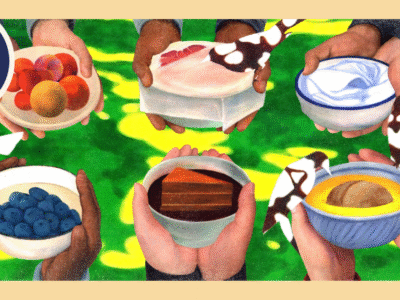
A paper collage of blue, green, and red cutouts, with a red swirl cutout overlayed on the green.

Fear and Rage and Grief and Joy

WP_Post Object
(
    [ID] => 6971
    [post_author] => 15
    [post_date] => 2024-06-04 21:04:41
    [post_date_gmt] => 2024-06-04 21:04:41
    [post_content] => 

In her new memoir "Rebel Girl," riot grrrl pioneer Kathleen Hanna reckons with her mistakes.

When I first saw Bikini Kill perform live in 2022, it felt like a long time coming. The groundbreaking feminist punk band hadn’t toured in two decades, and in the intervening years, legions of listeners like me had become devout fans, and frontwoman Kathleen Hanna something of an unwitting feminist icon. Most of us figured we’d never actually get the chance to see her, Kathi Wilcox, Billy Karren, and Tobi Vail together on stage again—at least, not like in the band’s heyday. Bikini Kill’s live shows were the stuff of legends: brash refutations of macho-dude punks, where the band tore through fierce odes to feminist solidarity, and Hanna yelled into the mic about wanting “revolution, girl-style, now”—famously demanding, at every show, that the crowd make space for young women to come up to the front of the room. 

But that was 20 years ago. The three women I watched on stage in New York (Karren didn’t join the reunion tour) were not the same young punks who’d played in grungy basements in the ’90s. They were a couple decades older and wiser; still committed to their feminist principles, but changed, years of experience and new perspectives now coloring their rallying cries. At the show I saw, Hanna’s slogan—“Girls to the front!”—got an overdue, if slightly clunky, corrective. It wasn’t just girls who deserved space at these shows, Hanna explained. Nonbinary people deserved to occupy that space, too, as did trans men—anyone who usually got shoved aside. It made sense to me that Hanna would reject—or at least reframe—her original sentiment, even if it temporarily robbed the iconic phrase of some of its power. The context around Hanna had changed, and punk had, too: Where she used to look out from the stage and see only a handful of young women, their views blocked by a moshpit of guys, she now saw a respectful, diverse crowd who didn’t have to be asked to make space for each other, because they’d already done it themselves.  

I thought about this shift in punk feminism while reading Rebel Girl, Hanna’s new memoir, released last month. It’s a dense, often chaotic book that careens through Hanna’s fascinating life: her difficult childhood, her entrée into the punk scene, her early days on tour with Bikini Kill, then later as a solo artist and with Le Tigre and The Julie Ruin. Throughout, Hanna grapples with what it means to be an artist and an activist, and how the sexist conditions for women in rock music have—and haven’t—changed since she first started making music. Hanna makes it clear that she never set out to become a feminist icon (she started a band, she writes, simply because she wanted “to be heard”), and that riot grrrl was always intended to be an anti-hierarchical movement, without a clear, singular leader. Maybe this is why what struck me most while reading Rebel Girl wasn’t Hanna’s righteousness, or her many triumphs, but the way she acknowledged her shortcomings—and the failures of the riot grrrl movement she helped pioneer. 

With startling honesty, Hanna reflects over and over on the ignorance afforded to her by her privilege, a rare thing to witness from a celebrity of her magnitude. In one incident, she writes about offending Kurt Cobain, whom she’d initially befriended over their shared feminist politics. He’d gotten icy after she gifted him a copy of an inflammatory manifesto, and Hanna realized he may have felt like she was lording her expensive college education over him—“acting like Ms. Smarty Pants College Girl who had come to educate dumb working-class Kurt,” as she puts it, despite having worked as a stripper to make ends meet when she was a student. It was a crucial moment in her early understanding of intersectionality. “Being constantly put down as a woman,” she writes, “had blinded me to my own power to hurt people.” 

Eventually, she’d witness this same lack of awareness in her peers. On one occasion, she writes about organizing a workshop called “Unlearning Racism” at a riot grrrl conference, and quickly realizing how few of her fellow white feminists had begun to think about—never mind concretely take action against—the intersecting oppressions women of color faced within the punk scene and more generally. Again, Hanna acknowledges her ignorance. “I realized that day that many BIPOC women were as disappointed in white punk feminists as I’d been by white male punks,” she writes. “And that was the problem…I hadn’t seen how so much of our punk feminism was really just white feminism.” 

It’s not an entirely self-recriminating book. Hanna, too, has suffered plenty under the patriarchy, and more than anything else, her main nemesis throughout Rebel Girl is the unending violence she’s experienced at the hands of men: the abusive behavior of her father, betrayal and assault from trusted friends, and all manner of stalkers, creepy sound guys, and violent showgoers on tour. The book, too, is filled with moments of joy: Hanna finding her voice as a singer, witnessing her music connect with young women around the world, falling in love, starting a family. Hanna has long sat among my personal pantheon of feminist heroes, and it was enthralling to encounter the magic and power of her art throughout the book, and to peek behind the curtain of a creative life I’ve long admired. 

But it’s the moments of tension, disappointment, and misjudgment in Rebel Girl that I still keep returning to. When I first fell in love with the moral certitude of Bikini Kill’s lyrics, it was easy to assume a certain kind of ethical perfection on the part of their author. These stories—laced with choices I didn’t always agree with—reveal a bigger, more complicated picture, one that was deeply humanizing and, in its own way, comforting to me as a reader. Over the years, I’ve loved Hanna’s creative output and been inspired by her commitment to feminism. But like her, I’ve made plenty of my own mistakes and failed to live up to my values innumerable times. Rather than absolution, Hanna’s confessions function as an honest acknowledgement of an uncomfortable truth: staying true to your values in a world that doesn’t always align with them means constantly making hard decisions. By her own admission, she didn’t always get it right. 

When I finished reading Rebel Girl, I thought again about that moment when Hanna talked about “girls to the front” in New York. The fact that times have changed doesn’t mean the slogan had been unimpeachable in the ’90s; if anything, Hanna’s relatively tame qualifiers of today would have been far more punk if she’d said them then. But just because her rallying cry wasn't perfect doesn’t take away from the many people it inspired—and just because Hanna didn’t notice its limits then doesn’t disqualify her from seeing them and changing things now. Riot grrrl was a flawed movement, and Hanna a flawed person. Any version of history that ignores that fact erases the reality of what the feminist struggle actually looks like: exhilarating and empowering, yes, but also messy and filled with mistakes, both individual and collective. Rebel Girl feels all the more encouraging for its admissions of imperfection, as a humanizing reminder that even the most luminous icons have their flaws, and that striving for perfection at any cost can grind momentum to a halt. Instead, maybe it’s more powerful to take the mic when we have it, admit when we didn’t get things right, and make our way to the front, where we all belong.

Rebel Girl: My Life as a Feminist Punk by Kathleen Hanna is available now.
[post_title] => Imperfect Feminists to the Front [post_excerpt] => In her new memoir “Rebel Girl,” riot grrrl pioneer Kathleen Hanna reckons with her mistakes. [post_status] => publish [comment_status] => closed [ping_status] => closed [post_password] => [post_name] => kathleen-hanna-rebel-girl-my-life-as-a-feminist-punk-memoir-review-bikini-kill-riot-grrrl [to_ping] => [pinged] => [post_modified] => 2026-08-04 17:09:19 [post_modified_gmt] => 2026-08-04 17:09:19 [post_content_filtered] => [post_parent] => 0 [guid] => https://conversationalist.org/?p=6971 [menu_order] => 56 [post_type] => post [post_mime_type] => [comment_count] => 0 [filter] => raw )
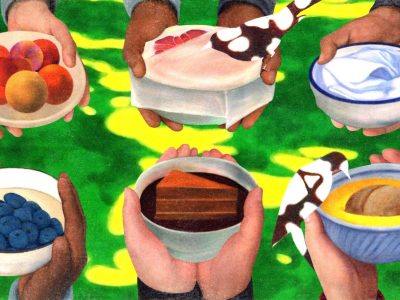
2TDF8H6 KATHLEEN HANNA, BIKINI KILL, NEWPORT TJS, 1993: Kathleen Hanna the singer of Bikini Kill playing at the Legendary TJs in Newport, Wales, UK on 8 March 1993. This Bikini Kill/Huggy Bear Tour came at the peak of the Riot Grrrl scene and was to promote the two bands combined 1993 album Yeah Yeah Yeah Yeah (Kill Rock Stars). The gig started with a music workshop for women only. It is a black and white film photo, with Kathleen Hanna wearing a mesh white button down over a black bra. Her dark hair is cut short with bangs, and she's holding a microphone slightly to the side, looking up to the ceiling. Behind her, a few fans watch. They appear to be underground.

Imperfect Feminists to the Front

WP_Post Object
(
    [ID] => 6857
    [post_author] => 15
    [post_date] => 2024-04-05 17:52:00
    [post_date_gmt] => 2024-04-05 17:52:00
    [post_content] => 

When reading the news feels like staring into the sun, restorative narratives provide a lens to bear witness without burning our eyes.

On April 8, the moon will pass directly between the Earth and the sun, shrouding parts of the world in darkness, and creating a tempting void we're told not to look at directly. It’s a relatively rare but well understood phenomenon, full of portents; the sun and the moon aligning just so—a haloed, shadowy abyss that is astonishing to behold, but harmful to observe without the right protection. 

Going out on a limb here: The eclipse is not the only collective experience that's currently harming us without the right lens with which to see it.

To read the news today is an exercise in patience, in heartbreak, and in fury. It is overwhelming. Each day we bear witness, however shallowly, to rising authoritarianism and declining democracy, to climate crises, to war, mass death, human-made famine. All variables aligning at once to create a total eclipse of despair. Meanwhile, we are expected to continue life as normal, to pretend the void isn’t there, tempting us to lose ourselves in it—all while the people responsible for its existence insist it isn’t there at all. Is it any wonder so many people are losing their bearings? How are we supposed to look at what’s in front of us when it feels like staring directly into the sun? 

Trying to engage with what's happening in the world—in a time where media layoffs are constant, where publications are shuttering, where suppression is rampant and journalists are killed and jailed with impunity—is a fraught exercise, even for those who pride themselves on media literacy and sourcing good journalism. Cowardly headlines, rampant disinformation, and clickbait crap are exhausting people to the point of nihilism. When the NYT is normalizing witness tampering, and Elon is openly promoting race wars and eugenics on X (née Twitter), as 30,000 Palestinians, killed by the IDF, die in passive voice, it can feel maddening trying to figure out where to turn without losing yourself in toxic sludge. Cory Doctorow calls this the "enshittification" of the internet, the transformation of social media platforms from user friendly to user abusive, ultimately harming both its consumers and its bottom line. All the while, endless ads and propaganda continue to short circuit our brains.

None of this means we're doomed. But it does mean that we can't allow ourselves to check out. On the contrary, we have to keep finding stories of hope, and truth, and resilience if we want to sustain ourselves in the fight for democracy, our communities, the planet, and each other. The real balancing act we face when absorbing and coping with the news isn’t between observable reality and alternative facts. It is emotional: How do you stay engaged with the world, while also maintaining the hope necessary to stave off nihilism? 

It can be hard to see it, but there are still substantive reasons for hope: You just have to put on your protective glasses first. 

There's a backlash to the backlash, and it's happening all around us. Following the targeted killing of seven humanitarian aid workers from World Central Kitchen in Gaza, President Joe Biden finally threatened to condition US support to Israel. In India, rural women driven home from the cities by COVID are reviving drought-stricken farmland with the help of NGOs, and making a sustainable income for themselves and their families. At last month's Commission on the Status of Women at the United Nations, the current and all former Special Rapporteurs on violence against women and girls—together with four nations (Democratic Republic of Congo, Sierra Leone, Costa Rica, Antigua and Barbuda)—called for a new global treaty to end gender violence, citing the global crackdown on women's rights as impetus for moving forward immediately. 

Restorative narratives like these are essential: They are a way to help regulate our emotions around the news, rebuild trust in good journalism, and stoke hope for a better tomorrow. This is because these stories are focused on people, resilience, and solutions—communities making progress despite the bullshit. Restorative narratives help us differentiate fact-based trends from moral panics, and genuine threats from trauma responses. They're a means for collective engagement with the world, but with the right tools to protect us. Because who doesn't want to see the eclipse? People are traveling from all over the world to get closer to totality, tracing the eclipse's path from Mexico to Canada. It's a striking phenomenon, and worth our attention. Just don't burn your eyes when you see it.

[post_title] => Total Eclipse of Despair [post_excerpt] => When reading the news feels like staring into the sun, restorative narratives provide a lens to bear witness without burning our eyes. [post_status] => publish [comment_status] => closed [ping_status] => closed [post_password] => [post_name] => eclipse-2024-metaphor-news-restorative-narratives-protection [to_ping] => [pinged] => [post_modified] => 2026-08-04 17:38:25 [post_modified_gmt] => 2026-08-04 17:38:25 [post_content_filtered] => [post_parent] => 0 [guid] => https://conversationalist.org/?p=6857 [menu_order] => 59 [post_type] => post [post_mime_type] => [comment_count] => 0 [filter] => raw )
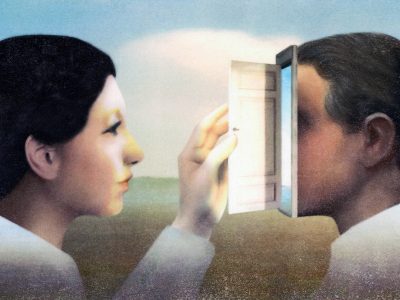
An illustration of a woman in a purple sweatsuit at the top of a mountain, climbing into the solar eclipse (a black circle overlapping with a yellow border, representing the moon and sun). In one corner, there's a inserted illustration of a woman looking up into the sky with protective glasses on, in the other corner, there's a close-up illustration of an eye where the iris is replaced by the eclipse.

Total Eclipse of Despair

WP_Post Object
(
    [ID] => 6756
    [post_author] => 15
    [post_date] => 2024-03-15 23:25:43
    [post_date_gmt] => 2024-03-15 23:25:43
    [post_content] => 

Women from one of Turkey's most affected regions share how little has changed—and how much still needs to be done.

Inside a prefabricated house atop a hill in Antakya, Turkey, Saniye Yılmaz is sitting on a beige velvet sofa, charging the beeping pill installed in her heart. She is shaking, and struggles to speak.

“Everything got worse after the earthquake,” she says, adding that the stress has made the symptoms of her Parkinson’s disease even more unbearable. “We’re the living dead.”

It’s been over a year since the Hatay region of Turkey, where she lives, faced a colossal trauma: On February 6, 2023, two catastrophic earthquakes initiated the collapse of over 160,000 buildings across 11 provinces in Turkey’s south and southeast, killing more than 50,000 people, injuring more than 107,000, and directly impacting over 13 million. The two earthquakes—with a magnitude of 7.8 and 7.5, respectively—happened only nine hours apart, with many aftershocks in between and after.

Shortly following, ahead of the centennial elections, President Recep Tayyip Erdoğan promised to “mend the scars” of this devastating tragedy while on a tour of the quake zone, telling his citizens: “Give me a year.” With the anniversary come and gone, he has so far failed to deliver on his promise—and many are outraged over it.

“We were left out in the cold and rain for five days, and I couldn’t charge my pills,” Saniye says, still stirred by the memory. “I nearly died.”

Her anger for having been abandoned by the government can be felt in her gaze, her brown eyes dark and furious. It is a feeling shared by many, especially in Antakya, where rescue workers first arrived three days after the quakes, as thousands froze or bled to death under the rubble. It has felt impossible to regain any sense of normalcy since.

“It’s very difficult, being a woman,” Saniye’s 76-year-old mother, Sakine Yılmaz, says. “But after the earthquake, everything became much harder.”

Because Saniye’s father also has Parkinson’s, Sakine is the sole caretaker of their household. The family lost their house and all their belongings to the earthquakes, and as Sakine speaks, she’s washing donated dishes by hand, as her husband eats the bulgur balls she’s prepared with yogurt. When she’s finished, she will start on the laundry. Her exhaustion from the last year is legible in the many lines on her face.

Saniye Yilmaz, who lives with her elderly parents in a prefabricated city in Hatay and has Parkinson's disease, sits on an orange sofa. Saniye Yilmaz's 76-year-old mother Sakine Yilmaz kisses her daughter on the forehead. Saniye is wearing a navy knit hat, long sleeved navy shirt, and floral print navy pants. Her mother is wearing a blue patterned scarf on her head, a beige sweater vest, and navy long-sleeved shirt and pants. Photo: Can Erok
Saniye Yılmaz (left) and her mother Sakine Yılmaz (right). Photo: Can Erok

The desperate mood seen in their cramped living quarters is reflective of the almost 700,000 other people living in temporary shelters across what’s today called “the quake zone.” According to Hatay’s governor, Mustafa Masatlı, nearly 200,000 people live in “container cities” in Hatay alone. Thousands more are living in plastic tents, which you see set up on side streets and in the yards of cracked houses.

“My children can’t shake out their energies,” a distressed 31-year-old Yazgın Danışman says. “They don’t sleep at night. Their sleep and eating schedule is messed up.”

Danışman is a tired mother, housewife, and survivor, who lives in a container with her husband and three of her children. As we speak, she tries to soothe her 1-year-old to sleep in her lap. She is upset with the government for not keeping them safe against the earthquakes by promoting rapid gentrification, and for only acknowledging their hardships prior to the elections, when it could benefit them politically. “I will not vote,” she says, referring to the local elections on March 31. Her newfound friends—her neighbors—share her fury and resolve. They say they don’t want to “have to wait in these [containers]” for an unseeable future.

Still, it remains unclear just how much longer they will be trapped there. Before last year’s presidential and parliamentary selections, President Erdoğan initially vowed to totally solve the housing problem by “constructing quality and safe structures” for all affected by the earthquakes within a year. When he spoke again in August, the number was reduced to 319,000 safe new homes to be built—again, “in a year.” So far, he has only been able to deliver 46,000, according to the Environment and Urbanization Minister Mehmet Ozhaseki.

Yazgın Danışman drinks tea with Kadriye Zaran (center) and Mevlüde Aydın (right), her neighbors and now close friends. Photo: Can Erok

Critics, including the Union of Chambers of Turkish Engineers and Architects (TMMOB), have accused the government of favoring political motivations over sustainable solutions in this crisis, and have pointed out it’s making unrealistic promises to the public. Many citizens, meanwhile, blame the government not only for their lack of response to the tragedy, but for directly contributing to the extent of the damage in the first place. Although officials, including President Erdoğan, have repeatedly described the earthquakes as “the disaster of the century,” attempting to pin responsibility on divine forces, scientists suggest it was in fact the corruption and greed of local and central governments that killed the masses. Turkey had been expecting an earthquake of this magnitude for well over two decades, yet the government continuously moved forward with building projects that lacked the proper techniques, inspections, and planning to withstand the inevitable disaster. One notable example is the 2018 zoning amnesty granted by the Erdoğan government ahead of the elections, which condoned many illegal structures in a highly seismic country—a move seen as a way to gain votes over his opponents. In another case, the mayor of Hatay, a member of the main opposition party, received $200,000 worth of bribes to allow a lush apartment complex to be built three years before the earthquakes, only for it to collapse, killing more than 60 residents.

It would be one apartment complex of thousands: Lale Korkmaz, 50, lost both her husband and her 22-year-old son, Isa Baris, when their building collapsed, its foundations failing against the 4:17 AM earthquake. At the time, she had been at the hospital with her 26-year-old daughter, Buket, who was being treated for leukemia; Isa had been her marrow donor.

Buket would lose her life just one week after Korkmaz lost her husband and son. But, she says, Isa had been her daughter’s support system until the very end—not just as a donor, but as a poet, a vivid storyteller, and a bright spirit.

“He loved the Beatles; we would watch movie after movie,” Korkmaz says, her eyes tearing up. “We even had a WhatsApp chat that included only us three. One of us would message to let them know when the coffee was ready. I just really miss our conversations.”

Now, Korkmaz lives with her older daughter’s family in one of the prefabs, mounted by a private Turkish company and given to the government’s emergency and disaster management agency, AFAD. “[My granddaughter and I] blow kisses at the stars when they stand aligned,” she says, in hopes that her two late children are on the receiving end.

Korkmaz finds a small sliver of solace in her daily coffee dates with other women neighbors, each going through their own tragedies. She also holds out hope that a hospital somewhere will name one of its rooms after her daughter, and that the purple tulips she’s planted in her honor will bloom in the near future. That’s what her daughter’s name means—tulip.

Lale Korkmaz, 50, who lost her son and daughter in the earthquake, shows the flowers she grew in memory of her son and daughter in front of the prefabricated house where she lives. She is wearing a black long-sleeved shirt, a dark unzipped puffy vest, taupe pants, and light pink Crocs. Her hair is tied back. Photo: Can Erok
Lale Korkmaz shows the flowers she grew in memory of her son and daughter. Photo: Can Erok

But besides these brief moments of peace, the future is bleak both for her and for millions across the deprived quake zone, and in Antakya’s case, it is especially horrific. Prior to the earthquakes, it had been known around the globe as a culture and gastronomy hub, and as a prime example of coexistence, with Sunnis, Alewites, and multiple different Christian communities all living in harmony. Now, the earthquake’s name is all over the wrecked city, first called Antioch in the Bible, its many unique historic heritage sites almost totally wiped out.

Today, the city is so dusty, you see tired people covering their noses and mouths as they walk amidst what seems like a doomsday plateau. You can physically see the high risk of asbestos in the layer of dust that gathers on your clothes and your car. Out of 911,000 apartment units and homes, more than 266,000 were destroyed or severely damaged in Antakya, according to Mayor Lutfu Savas. The city feels like a giant construction zone, with excavators still scooping away mountains of rubble that once stood as buildings made of feeble concrete, some of which had been approved to be  mixed with sand, per court documents. Where the rubble has been cleared, large patches of empty land remain, haunting locals while silently breaking their hearts.

But while everyone suffers deeply in Antakya, for women, the toll is even heavier, according to Canan Gullu, president of the Federation of Women’s Associations of Turkey, who’s been traveling between the quake-stricken provinces over the past year to implement various projects focused on helping women.

“Turkey already ranks very low on the Gender Gap Index,” Gullu says, referring to the 2023 World Economic Forum report, which puts Turkey at 129 out of 146 countries. “So, we are seeing this divide deepen further here now.”

Part of the problem is the lack of space, leading to pressure cooker domestic situations. “Imagine a life that fits 21 square meters [or about 225 square feet],” she explains, referring to the containers. “Women lack their private spaces. In that tightness, women are expected to cook, do the laundry, look after the children, serve the rest of the family.”

She has called for immediate psychosocial rehabilitation in the region, and for more training and employment options for women. The federation has also opened 30 “Purple Sites,” containers among the temporary settlements, where women can meet with psychologists, midwives, and child education specialists. They are seeing a rise in the number of girls dropping out of school, girls and women forced into marriage due to economic reasons, and of child abuse, Gullu says. “Children must be able to go to school or kindergarten,” she urges, noting that educational costs remain sky-high. She has also called for the government and private funding to help bring small businesses back on their feet as quickly as possible to help alleviate this, but there is a long way to go.

Children play in a prefabricated city west of Antakya. A psychologist and "social welfare officers" accompany the children as they play nursery rhymes outside one of the women's federation's "Purple Sites." You can see their reflection in the window, which has colorful paper streamers on the inside. Photo: Can Erok
One of the "Purple Sites." Photo: Can Erok

Turkey’s crippling inflation rate stands at around 83 percent, independent economists say. And in Hatay, many items are more expensive than ever due to lack of resources. According to the Treasury and Finance Minister, the cost of the damage from the earthquakes stands at $104 billion US dollars; but so far, only around $30 billion has been spent. And the clock is ticking for female freedoms under these destitute conditions.

“We are up against a tremendous increase in cases of violence, as well, because of poverty and unemployment,” Gullu says.

Aysel*, who asked to remain anonymous for security reasons, has experienced this firsthand.

“He beats me all the time, for any reason,” she says, referring to her abusive husband. She says she married him when she was 48, and that he has been violent throughout their marriage, choosing to spend almost all of their retirement stipend on drinking all day. But after February 6, her life only got worse.

“I want to get out,” Aysel says. “I built a little hut, and I’m going to move there, and wait for him to divorce me.” She hopes he will have to pay her alimony if that happens.

Still, Aysel is afraid that he could track her to her new home, and assault her there, and is considering trying to get a restraining order against him—but is also scared of what might happen if she does. “He’s been sleeping with a knife under his pillow for the last two months,” she says, sobbing.

What Aysel has survived is heartbreakingly common in the region, even before last year. “According to the official data on domestic violence against women, available from prior to the earthquakes, the affected regions have a relatively lower rate of reporting to authorities and higher level of acceptance in cases of violence,” a recent UN Women report says. But Aysel is determined to get out.

Now over 60, she wants to start over, if she’s able to find the opportunity to do so. She hopes to begin working soon, but is worried about the lack of opportunities in the city, and knows she will struggle finding a job. “I’m willing to do any work just to stay away from him,” she says. Her resolve is reflective of many other women in the region, in spite of all that has been taken from them.

For hundreds of thousands—if not millions—of women and girls, the obstacles of the earthquakes’ aftermath stand tall, and brighter times lay too far out in the horizon to be seen. But without the government coming to save them, each will continue doing all that they can to persevere on their own.

A woman living in a prefabricated city sits on a bench and talks on the phone. She is wearing all black and sandals, her hair tied in the bun. In the background, the homes are all small and light gray with dark red roofs and a line of blue. Some have satellites. Photo: Can Erok
A woman sits on a bench in front of an expanse of prefabricated homes. Photo: Can Erok
[post_title] => One Year After the Earthquake [post_excerpt] => Women from one of Turkey's most affected regions share how little has changed—and how much still needs to be done. [post_status] => publish [comment_status] => closed [ping_status] => closed [post_password] => [post_name] => turkey-antakya-hatay-earthquake-zone-year-anniversary-disaster-erdogan [to_ping] => [pinged] => [post_modified] => 2026-08-04 17:39:28 [post_modified_gmt] => 2026-08-04 17:39:28 [post_content_filtered] => [post_parent] => 0 [guid] => https://conversationalist.org/?p=6756 [menu_order] => 60 [post_type] => post [post_mime_type] => [comment_count] => 0 [filter] => raw )
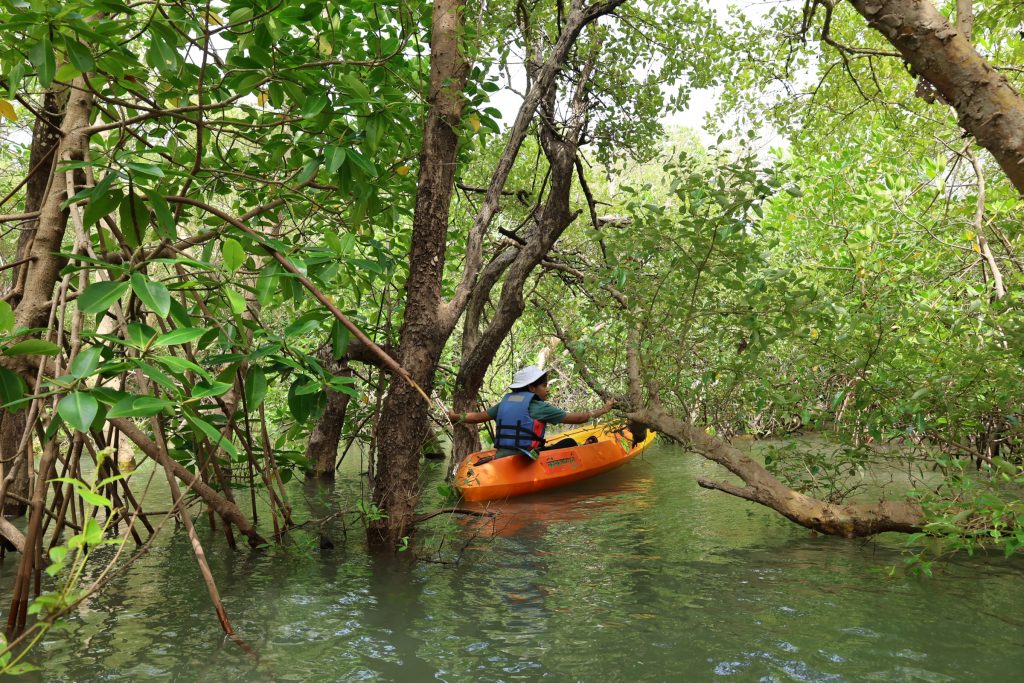
Two women who've collected iron from the rubble in Antakya, Turkey on a makeshift cart cover their faces to protect themselves from the dust as they walk through the center of the city. Everything around them is gray, nearly all buildings flattened or crumbling. Photo: Can Erok

One Year After the Earthquake

WP_Post Object
(
    [ID] => 6555
    [post_author] => 15
    [post_date] => 2024-01-19 18:15:47
    [post_date_gmt] => 2024-01-19 18:15:47
    [post_content] => 

When my grandad died, I didn't know how to process it. Then I met others who felt the same.

There is an episode of Buffy the Vampire Slayer that I think about often, still as gut-wrenching today as it was when it first aired. “The Body” follows the immediate aftermath of the death of Buffy’s mother, Joyce: her cold face, her stiff limbs; the crack of her ribs when her daughter attempts CPR. It also follows each character’s individual response to grief, a reminder that there is no right way to process death. I cry every time I watch “The Body”, moved by everyone’s outpouring and quiet devastation. But I perhaps relate most to Anya, an ex-demon who is new to human mortality and feeling, and unable to process what has happened. She seems to be clinical, cold even, when asking if the group will see the body. Buffy’s best friend Willow gets upset by this, believing that Anya isn’t in pain like the rest of them.

Anya loses it in response—her first outburst ever. “I don’t understand how this all happens; how we go through this,” she says. “I mean, I knew her, and then she’s—there’s just a body, and I don’t understand why she just can’t get back in it and not be dead anymore! It’s stupid! It’s mortal and stupid!It’s the illogical nature of death that has shaken her; that death is constant and permanent, as is the pain and need to go on no matter what. The very fact of being human is unpalatable and beyond comprehension to her—and when my grandad died, I felt exactly the same.

I do not handle grief well. Autistic people, much like ex-demons, are often assumed to have no feelings at all—but the reality is the opposite: We often feel things very deeply, on a cellular level that impacts every aspect of our functioning. Because of this, it can take us a while longer to process things, or even just to express them outwardly. Death and grief are no exception.

When my grandad was dying, just weeks before he was due to walk me down the aisle, I thought I had a handle on it. I dropped everything, avoiding work and most people, so that I could take the time I needed to try and process it. It was futile. Death is illogical, and unfair, and stupidly mortal. I know a person is not their body, but when their body dies, they are no longer here, no longer able to get back into it. My grandad was here, and then he was sick, and then I could no longer call him to talk about the birds in his garden. I couldn’t accept it. 

After speaking with a few other autistic people, it seems many have faced a similar struggle when processing the death of loved ones, sometimes grieving long before the death itself, in hopes of better preparing for it. “With my grandad I grieved years before he was even ill, when [it was] just a hypothetical,” Reb, 23, told me. “When I was a kid I imagined what it would be like when he died. I knew it was inevitable and something I couldn't control, so I tried to prepare for it.” With my grandad, I’d done the same: His death was my greatest fear, and I wrote about it constantly, in hopes it would help lessen the sting when it inevitably happened.

These attempts at preparation for future heartbreak, often at the expense of present joy, make sense to me. I read once that autistic people experience all time simultaneously: the past, future, and present, all wrapped up in the current moment. I can’t let myself enjoy the fact that the people I love are here, because I know one day they won’t be. It’s like an unconscious self-preservation. Sitting at dinner with my grandad before he died, I would hurtle through time, the inevitable pain becoming stronger the closer we got to its reality. I knew, even then, it would destroy me. 

Autistic people experience everything in our bodies to an extreme extent—every sound, every smell, every touch. We often get sensory overload, which can lead to meltdowns and burnout. There are ways to mitigate this. My biggest trigger in public is sound, so I often wear earplugs. I can’t tolerate most fabrics, so I wear cotton. But over the months after my grandad died, a sensitivity stronger than anything I’d felt before crept up on me and made it impossible to do anything. I couldn’t go to restaurants, the gym, or even supermarkets without teetering on a full-blown meltdown. I spent most evenings curled up in a ball playing Zelda, but every day, it got worse, until inevitably, I was in my first burnout in years. I’d completely shut down. 

I wanted so badly to grieve well, to process healthily, but my body disagreed. “My autism is getting worse,” is how I put it to my husband, but how I would never want anyone to put it to me. I felt angry, and weird, and mean. I didn’t feel like myself, but I did—I felt like the kind of person I fear I am. At some point, I realized that what I was experiencing was grief, that I wasn’t just angry or “wrong” or struggling for no reason, but that my loss had sunk into my bones. 

It was only with time, and some recovery, that I realized this. Tess, 26, told me that she  experienced a similar shut down while grieving. “Stressful situations like bereavement can disable our usual coping mechanisms,” she says. “I’m upset about losing this person, so now the floodgates have opened because I’m too fragile to block out sounds and feelings from other things. It makes you want to withdraw, and it’s very isolating.”

For many autistic people, these feelings can develop into more extreme difficulties to function. Anwen, 31, shared that when she lost multiple members of her family in 2019, she became a “sensory mess.” “My short term memory was shot. I have issues with that on the best of days, but I started having to make lists of everything, printing out itineraries, texting myself reminders,” she says. She was used to hiding her sensory difficulties, so she was able to seem fine to those around her, but for months, she was so distraught she couldn’t even eat. “All of my texture issues ramped up tenfold and I just ate chips for a year because anything else made me feel sick,” she says. 

Grief affects every single person differently, and sometimes even for allistic (non-autistic) people, that might mean a similar, complete cognitive shutdown. But autistic people, particularly women, already spend a lot of time “masking”: concealing any difficulties they may have with existing in a world not built for them. When we experience grief, this urge only compounds. The subconscious need to display grief in a “good,” appropriate way means that we might not express it at all, and if we aren’t dealing with it privately, it’ll sneak up on us through our ability to function, obliterating any and all of our coping mechanisms.

For much of this year, my first without my grandad, I felt very angry. Seeing litter on the ground was enough to send me into a spiral, my preexisting grief coalescing with climate grief and a general distrust of humanity. Someone FaceTiming in a restaurant? Always enraging, but with my increased sensitivity, enough to ruin my entire night, leaving me curled up at home with the screech of the offending iPhone speaker still rattling around in my ears. I couldn’t look at anyone I loved without thinking about death, without thinking, What is the point? They’re going to die. They could die now. Why build these bonds, spend this time together?

As an autistic person, I am prone to forming incredibly deep connections. I know how to love and how to nurture relationships. But to love someone at all is to anticipate grief, and I don’t have the tools to manage the inevitable loss. I’m not confident that I ever will. But speaking to other autistic people for this piece, I finally feel, if not normal, at least not wrong for how I’ve processed my grief. As Tess put it to me, “Autistic people have the most special bond [with each other], because it’s like you spend your whole life thinking you’re so bad at being a goose, and then you find out you’re a duck.” We are all victims of the same mortal rules, but it is a relief to have found other ducks, and to not be alone in how I experience death in life.  

If you are struggling with grief, I found some helpful resources on https://www.autismandgrief.org/.

[post_title] => How Grief Affects Autistic People Differently [post_excerpt] => When my grandad died, I didn't know how to process it. Then I met others who felt the same. [post_status] => publish [comment_status] => closed [ping_status] => closed [post_password] => [post_name] => grief-autism-processing-death-buffy [to_ping] => [pinged] => [post_modified] => 2026-08-04 17:49:46 [post_modified_gmt] => 2026-08-04 17:49:46 [post_content_filtered] => [post_parent] => 0 [guid] => https://conversationalist.org/?p=6555 [menu_order] => 66 [post_type] => post [post_mime_type] => [comment_count] => 0 [filter] => raw )
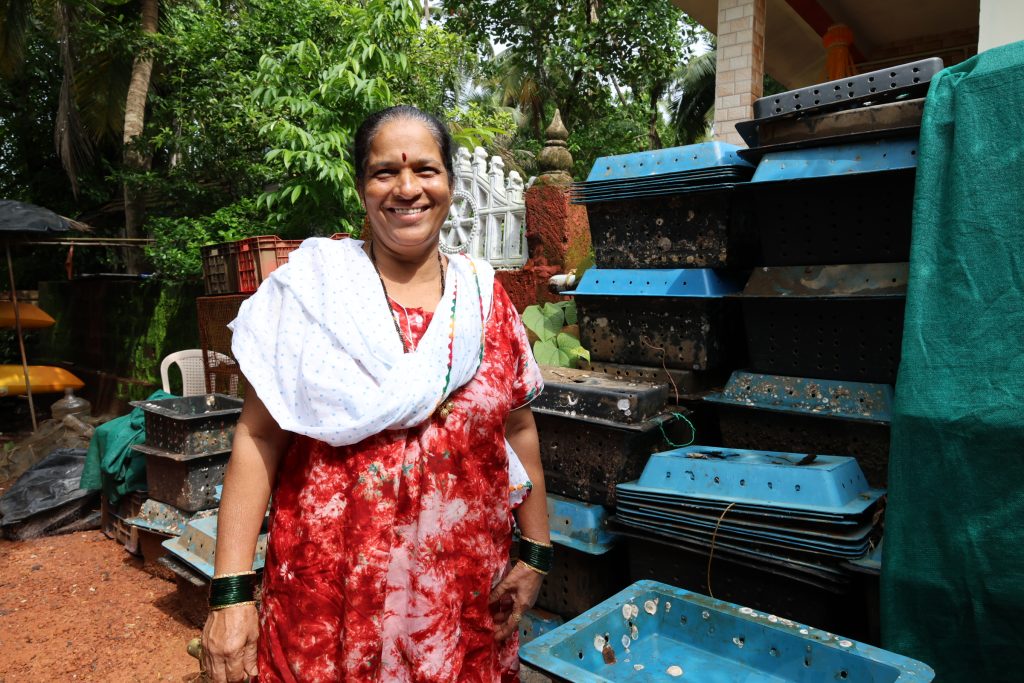
A surreal illustration of someone crying, with one hand covering most of their face, and the other held out in front of them in a "stop" gesture. They are looking downwards and you cannot see their eyes, but a tear escapes between their fingers on the hand covering their face.

How Grief Affects Autistic People Differently