




How the archival work of librarians and other activists helps preserve more than just history.
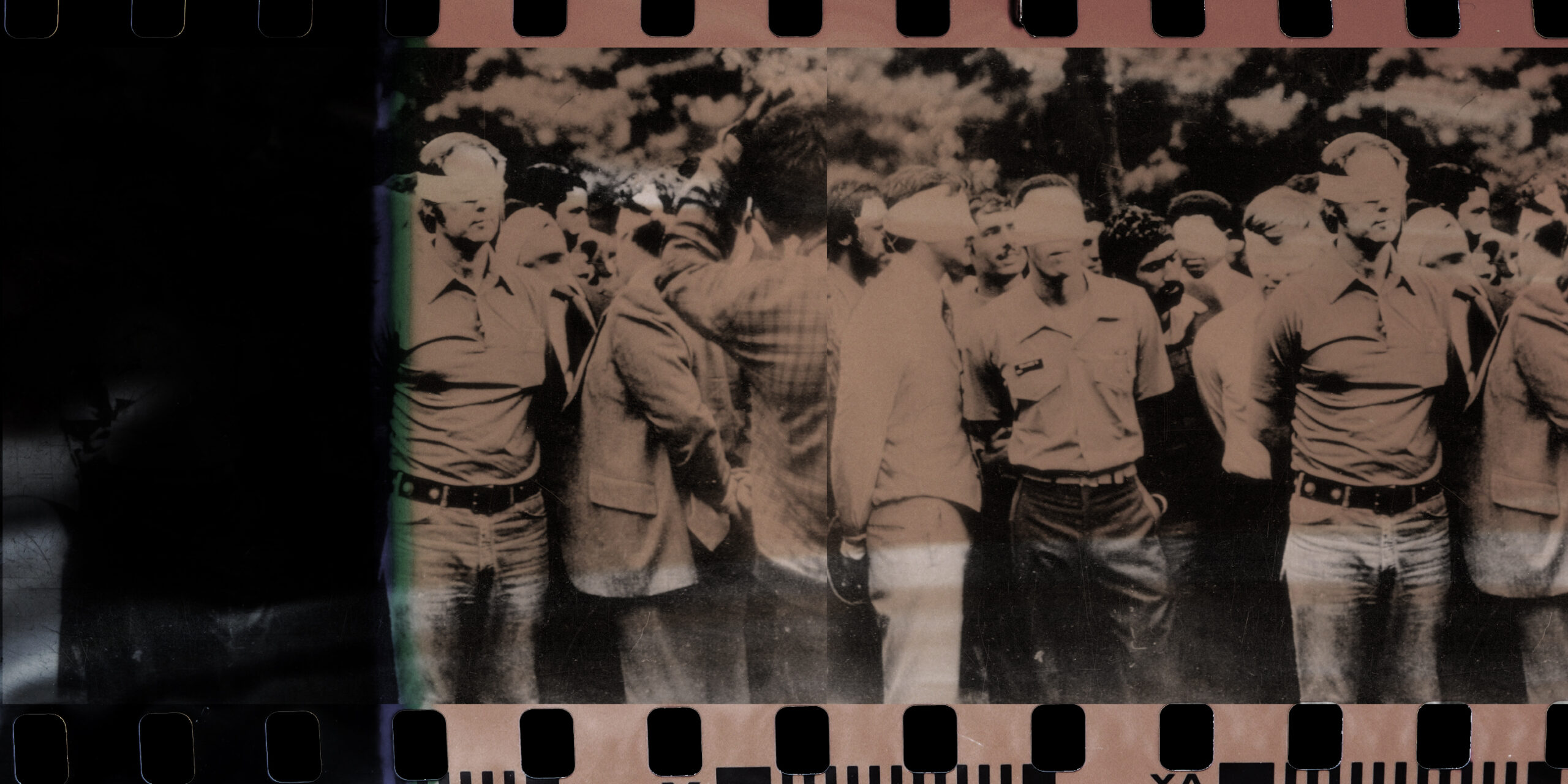
In 1979, as the Iranian hostage crisis played on American television screens 24/7, the television producer, librarian, activist, and intellectual Marion Stokes began recording the news broadcasts on tape. The live coverage—across all channels, at all hours—launched what we now recognize as the never-ending, ambient flow of media. Simultaneously, Stokes recognized a shift in the narrative America was telling about itself, and the role of media manipulation toward pro-American policies. So, for the next 30 years, she recorded any and all TV news broadcasts, commercials included. All of it was then archived, stacks of VHS tapes quickly accumulating in her Philadelphia apartment, as portrayed in the 2019 documentary Recorder: The Marion Stokes Project.
This kind of project by an individual who operates outside of an institution was a radical endeavor: When Stokes began, broadcast channels didn’t archive their own material, often erasing tapes so they could reuse them due to cost. But Stokes’ project and its often innocuous content would also foreshadow the long-term value of guerrilla archives, both in preserving an accurate historical record and holding the media—and government—to account. Activist archives began as a practice in the 1960s, when organizers filled in the historical gaps where universities and institutions could not. These, however, were collective efforts; Stokes operated individually, until eventually, her son donated the recordings to the Internet Archive, where digitized selections are now available online. “By [Stokes] having that collection, it means the scholars, artists, and researchers have access to the information without paying for it,” says Shola Lynch, filmmaker and Professor of the Art and Visual Culture at Spelman College. “Because when our history is bound up in commercial hands, that’s problematic.”
Stokes’ practice of recording any and all materials resembles the history of what is now called “memory work,” or individuals who preserve the photographs, documents, and ephemera of a community. A relatively recent tradition, this form of archiving has taken on new meaning in a digital era where data sets can be wiped and personal data sold, seemingly without consequence. Following the start of the second Trump presidency in January 2025, more than 2,000 datasets suddenly disappeared from Data.gov, the U.S.’s government’s data portal. Since then, the Trump administration has overhauled even more data, including entire web pages and important coding tools for researchers and climate scientists.
Over the last five decades, open source tools and government data have been integral to preserving the historical record and maintaining public infrastructure in the United States. According to America’s Essential Data, New Orleanians received smoke alarms because fire departments used American Community Survey (ACS) data to identify neighborhoods most in need. School districts could (previously) make the case for increased teacher salaries using the Department of Education’s Civil Rights Data Collection (CRDC) to highlight underpaid teachers. Residents could avoid scams in their community based on federal Consumer Sentinel data. Now, these records are liable to disappear from the internet, possibly forever.
The government is ultimately responsible for preserving a record of its own actions. But when federal agencies are unable to preserve all their data, or willfully choose not to, it begs the question if this work is best done by civil society and those outside of the government. Guerrilla archives—whether digital or analog like Stokes’—are generally nonpartisan acts of preservation to serve the public good. There’s the Internet Archive, which has been archiving the web and other cultural artifacts since 1996, and Vanderbilt Television News Archive, which provides the most comprehensive chronicling of evening television news broadcasts in the world. There’s also the End of Term Archive—one of the largest of these projects in progress—which downloads all government information at the end of each presidential term. It’s a grassroots alternative to the National Archives and Records Administration (NARA), which notoriously did not receive all of the presidential records from the first Trump administration in 2021 as mandated under the Presidential Records Act. (Trump promptly fired the head of NARA when he re-entered office in 2025.)
Despite having distributed its data more digitally over the last 20 years, the government has not issued any dedicated preservation or access strategy for its information. Additionally, the current laws and policies around government data preservation are outdated and inadequate. This hole in the system has compelled librarians to join the race to copy digital federal archives, beginning in 2016 with the Data Rescue movement, which drew over 1500 volunteers for dozens of hackathon-style events throughout the year. “Distrust re-orients care,” researcher Laura Rothfritz wrote in her analysis of these early efforts for Big Data & Society. When a public distrusts a system and a possible threat is identified, however, anxiety can be mobilized into producing future forms of infrastructure.
As the situation becomes more dire, these efforts have only expanded. Today, the Public Data Project runs within the Library Innovation Lab at Harvard Law School, collecting and authenticating all federal datasets, more recently including the Smithsonian Institute’s public domain data. So far, they have downloaded the entirety of Data.gov, copied it, and digitally signed it with a provenance mark to authenticate its origins. The project launched in early 2025 as part of Harvard Law School’s repository system, which dates back centuries.
“I think a lot of us in the library and technology communities are sort of waking up to the fact that we need to have a strategy in place for the preservation and access of government data beyond what the government provides,” says Molly Hardy, the Project Lead for the Public Data Project. Their team also works closely with the Data Rescue Project, a grassroots nonprofit preserving massive data sets and consisting entirely of volunteers.
“Public data infrastructures have long been considered essential components of democratic governance, scientific accountability, and civic participation,” Rothfritz continues in her Big Data & Society piece. Much like our city’s infrastructure, however, we don’t recognize its value until it’s broken. It is the invisible fiber that holds democracy together, from our roads and postal service to job numbers and environmental data. Increasingly, its preservation is also a task that has been left to individuals and communities. In October 2025, the nonprofit organization Internet Archive celebrated archiving its trillionth web page on its most popular service, the Wayback Machine, an initiative that allows users to find web page screenshots from specific dates. It has become an essential tool and digital service for independent organizations and guerrilla archivists alike. (The largest archive on the internet, dedicated to “universal access to all knowledge,” has not been without its setbacks however: In 2024, it suffered a data breach affecting millions of users and a copyright infringement case over its digital lending library.)
The Invisible Histories Project, a nonprofit organization based in North Carolina, has been preserving the digital history and cultural memory of LGBTQ+ life in the South using tools like the Wayback Machine. “We could no longer trust institutions to protect marginalized histories,” says Maigen Sullivan, the Co-Executive Director of Invisible Histories. She recalls a community effort at the start of last year to preserve government and university pages with references to diversity offices, along with flyers and photos. According to Sullivan, by August and September 2025, when universities returned to term, about a quarter of those pages were already gone. “This is the only evidence, other than what individuals might hold, that exists,” she says.
Invisible Histories has also built its own server because of mistrust in corporations like Google and Microsoft that store and hold onto their data, another issue facing digital archivists. The organization has endured two cyberattacks—one in 2023, and the other in 2025—since its founding in 2017. Because of this, they’ve considered cybersecurity training and increased security for potential threats against the archive. “If you feel like you’re hopeless and helpless and have nothing to do, archiving is a tool of resistance and anyone can do it,” says Sullivan.
These examples of digital mutual aid have become essential for documenting history, and are one way to combat historical revisionism. Activist archives also continue to challenge which institutions have a say in the historical record, nationally and beyond. Zakiya Collier, a Brooklyn-based archivist, says individual archives preserve more than just data. “I think that memory work has a liberatory capacity to it,” she says. “I use that term because it calls on a legacy of people who dedicated their time and energy to preserving history in their homes, communities, churches, attics, and basements. They decided something was important to document and keep.”
Collier, who has worked as the digital archivist in the Schomburg Center for Research in Black Culture in the New York Public Library, now works with the organization Archiving the Black Web, which trains archivists to document a more inclusive history of the internet. Its potential to create more live archives and documentations of the web aims to contribute to a more equitable historical view of how we catalogue our lives online.
As data and information is getting purposefully disappeared from the internet—an increasingly fertile ground for fascist ideology—archiving becomes increasingly necessary, or else, the public cannot bear witness to itself. In April 2025, the National Park Service erased references to Harriet Tubman on its webpages. The following month, Trump issued an executive order sanitizing federal cultural institutions by accusing the Smithsonian Institute of promoting “race-centered ideology” in its exhibit, “The Shape of Power: Stories of Race and American Sculpture.” The USDA ended its annual survey of hunger in America two weeks before the government shutdown in October 2025, affecting the distribution of food stamps.
Data is information and has become a weapon in the digital age. But both individuals and communities are not powerless to fight back. With the rapid monopolistic takeover of media platforms, it’s no surprise that users are beginning to archive their own data and leaning towards physical media. Sales of vinyl are up, print book sales are rising, and DVD collections are in.
“All archives create futures,” says a voiceover in Recorder: The Marion Stokes Project, as news broadcasts and infomercials from Stokes’ archive flash in rapid pace onscreen. The organization of information by the lay person may help overcome barriers of the institutionalized index and history, as the threat of excessive online information and its disappearance still looms large for activist archives. But this work has become even more critical, not only for deciding how the past will be remembered, but how an imagined future might pull from its past to mobilize this kind of anticipatory care in the present.