WP_Post Object
(
    [ID] => 5880
    [post_author] => 15
    [post_date] => 2023-05-18 17:06:31
    [post_date_gmt] => 2023-05-18 17:06:31
    [post_content] =>
Under international criminal law, apartheid only applies to discrimination based on race. A new open letter argues it should apply to gender discrimination, too.


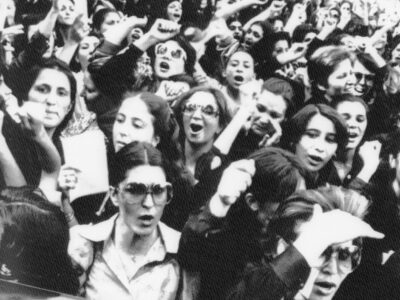
In March of this year, a group of over 100 Iranian and Afghan women signatories published an open letter calling for the end of gender apartheid. The purpose of the letter was threefold: to raise awareness of what gender apartheid is, and how it's affecting women in Iran and Afghanistan; to encourage public statements and policy responses condemning these regimes; and to expand the definition of apartheid under international law. As the letter explains, currently, under international criminal law, use of the word apartheid is limited to race; but for years, activists around the world—and more specifically, in Iran and Afghanistan—have been using it to describe extreme, gender-based persecution, and the regimes that perpetrate it. The letter makes the case for why it's time we update the word's definition on the global stage.


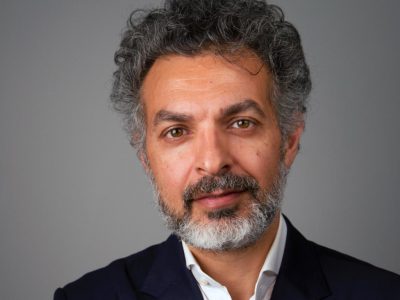
Below, we spoke to one of the people behind the campaign, human rights lawyer Gissou Nia, on the letter's longterm goals, its challenges, and why language matters when it comes to gender persecution and apartheid.


~


How did the open letter come to be? How did you get involved?


The open letter came about with a core group of Iranian and Afghan women signatories. The genesis of this is that women's rights activists in Afghanistan and Iran have been using the term "gender apartheid" for years to describe, essentially, a system of subjugation and oppression that they are being repressed by. [But] when I spoke to some of these activists, not all of them had actually been aware that gender apartheid is not currently a crime under international law. Gender was not a part of that definition.


Apartheid, as defined under international criminal law—whether it’s a part of crimes against humanity or not—only applies to racial apartheid. So, [we] thought, why don’t we just change the definition? There have been incredible legal academics and jurors who have [already] been working on this, like Karima Bennoune, and what we wanted to achieve with the campaign is to supercharge [their] efforts. It’s an unbranded campaign—so there’s no one organization attached to it.


I’m curious what differentiates an apartheid regime from other forms of gender discrimination.


It’s a great question. One of the main things that people have asked is how is this distinct from gender persecution, let’s say. With gender persecution, which is a crime against humanity as defined under the ICC Rome Statute, that’s a more broadly defined crime. There may be some instances of something that you could charge as gender persecution that would amount to gender apartheid, but gender apartheid describes a certain type of treatment. It really focuses on the structures. The word “apartheid” comes from the word “apart” in Afrikaans, born out of the historical experience of South Africa—but it’s really about keeping one group separate from another. Here, you could say that [it’s] men subjugating and dominating women for purposes of entrenching power. I think that’s the distinguishing factor. Certainly, that would amount to a case of gender persecution, as well, and we’re not saying that it’s either/or—we think these are all complementary. In the case of race, we have both racial apartheid and racial persecution; so there’s no reason that we can’t have gender apartheid, as well.


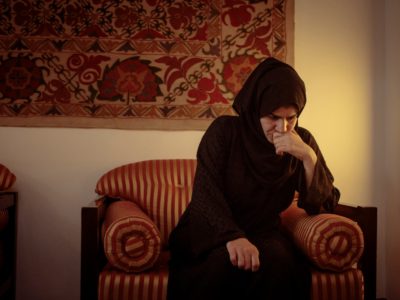
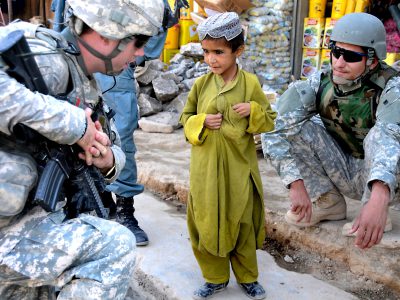
I’d also say that gender apartheid, as opposed to gender discrimination, is much more extreme. Certainly misogyny and patriarchy exist everywhere. There are gender discriminatory laws in many different countries, including in the US. But a gender apartheid regime is something that’s quite distinct and different. It basically is saying that women are not worth a man. In the case of Iran, a woman’s value is worth half that of a man, legally. So they’re removed from public spaces. That’s why in Afghanistan, women and girls are not allowed to be educated, [why] they’ve been taken out of employment. The Taliban recently said that Afghan women cannot work for the UN in Afghanistan. So it’s essentially the removal of women from public spaces and from public life. And that’s enshrined in the law: You are formally not worth a man, and we are going to repress you, because that’s how we’re going to keep this regime in power.


When you say their value is less, how is that defined?


So, for example—I’m a lawyer, so this one for me is especially grating—if I was to give testimony in a court in Iran, my testimony would be worth half that of a man. I also wouldn’t be able to travel outside of Iran without the permission of my husband or my male guardian. I couldn’t ride a bike, I couldn’t go to sporting stadiums. I would be barred from certain types of higher education. Women do not have equal capacity, inheritance, divorce, marriage rights—anything that relates to the family, they’re unequal. And, of course, there’s the mandatory hijab laws, which we know sparked the outrage over Mahsa Amini’s murder.


For this particular campaign, why did you choose Iran and Afghanistan specifically? There are other countries where, arguably, [gender apartheid] would apply.


Because we were campaigning [and] were successful in removing the Islamic Republic from the UN Commission on the Status of Women. Obviously all of that came about because of the Woman, Life, Freedom movement in Iran after Mahsa was killed at the hands of the Islamic Republic’s morality police. There were a lot of Afghan women activists that wrote me after that and were congratulating me. [But] Afghanistan was still on the UN Commission on the Status of Women. True, the Taliban is not formally recognized before the UN, so the representative is from the former government and basically doesn’t represent anybody. Nonetheless, they’re still there.


And it really struck me, that while we’re speaking about Woman, Life, Freedom in Iran, and while there’s been such a global outpouring of attention and action and policy engagement and energy, right across the border, our Afghan sisters are dealing with a horrendous situation, of which the globe is exhibiting some form of paralysis, and a lack of direction on how to improve their circumstances.


I think a lot of Iranian women who are championing women’s rights have been thinking about our Afghan sisters, who we’re tied to through shared borders, shared culture, and in some cases shared language. These issues are interlinked and they’re not separate, and so we’ve been keen to do some joint activism. It’s something a bit new in terms of campaigning, and certainly once the law is adopted or as discussions continue, there may be other women that choose to engage with it who feel that they’re living under gender apartheid regimes. This was a campaign that Iranian and Afghan women came together to launch, but it doesn’t preclude other groups of women wanting to [sign] or get involved with this advocacy or get behind this mission. Anybody can sign, and support. But the number of gender apartheid regimes in the world is actually pretty few.


How many people have signed it so far?


I haven’t checked lately to see what the tracker is, but it was something like 5000.


Can you talk me through the three chief demands the letter makes?


So basically, the [three demands] are the way that we envision [passing the law] would happen. I’ll just walk you through the timeline. In the immediate, first of all, there’s a lot of people who are not familiar with what the term apartheid is even, [especially] under the age of 35. However, most of the decision makers that we are seeking to engage with are above the age of 35, and they’re in government, and they have direct recollection of those events in the eighties [in South Africa] until the dismantling of the apartheid system in 1990. It has a real moral and resonant power for those decision makers, so part of this campaign is aimed around introducing the term gender apartheid, so people are familiar with what that actually means. What does apartheid refer to, what does it refer to in the context of Iran and Afghanistan, and why is this still going on.


The second thing is, we want parliaments around the world to issue resolutions condemning the apartheid in Afghanistan and Iran. That’s moving forward in Canada, in the UK, in New Zealand, and now we’re doing a lot of outreach to states in South America and Africa because we think that will be very important to have a global frame. This isn’t just a Western effort, and we want to make sure that is understood.


The ultimate goal is to have some of the legal frameworks that apply to apartheid amended or introduced to include gender apartheid. One of our main goals is to have gender apartheid included in the definition at the upcoming global convention on crimes against humanity. It should be adopted at the end of 2024, with any luck, and we want to be included.


Do you think the history of the term being so associated with race helps or hinders the movement?


Well, it’s not called racial apartheid. It’s just called apartheid. The reason that apartheid doesn’t include gender is because it was created in the 20th century out of the South Africa experience. I [also] think a lot of international criminal law [has been] created by men in small rooms, and not necessarily with women’s input and that’s changing. We see that there is an increased focus on gendered crimes. There’s even a reevaluation of the crime of genocide to focus more on the gendered aspects of it. Historically, people have assumed that genocide has to be mass killing, not realizing that actually, it could also just be sterilization, and those forms of genocide are much more focused around women.


The point is a lot of crimes that we grapple with are really viewed through more of a male lens, and there’s been a concrete effort to apply a gender lens to that. I think this ties into the reason why apartheid didn’t focus on gender. It wasn’t because there weren’t gender apartheid regimes. It was just because of the kind of dialogue that was happening in the 70s and the 80s and the 90s.


Longer term, what happens if you succeed in changing international law? What happens if [gender apartheid] is criminalized?


The biggest thing is just that then it’ll be possible to be prosecuted, and there’ll be a lot of new pathways for accountability. It also ultimately will enforce prosecution of crimes like gender persecution, as well, because prosecutors will start to think more deeply about the gender aspects of crime. But while the end goal might be to have this legally enshrined, really, the goals are all along the way. Because what we want to do is raise awareness about what this crime is, but also drive policy actions.


I mean, with South Africa, the ask was really to financially isolate that regime and to get people—governments, companies—to stop doing business with them. With Iran and Afghanistan, they’re already very isolated, they’re already very sanctioned. It’s not about introducing new sanctions or dissuading companies from working with these states, because they already aren’t. It’s about reframing the discussion. Those sanctions are issued for nuclear proliferation, for WMDs, for ballistic missiles, for terrorism; they are not issued for human rights violations, and they’re definitely not issued for gender apartheid. So we want to start to reframe why it is that we’re saying that governments should not engage with these governments [so] they need to change their behavior. It makes it unacceptable.


The crime of apartheid as distinct to the crime of gender persecution, gender apartheid would introduce more of a question about third party actors. Because of the historical example of South Africa apartheid, there’s a question of liability. If governments and companies are complicit, or doing business with regimes that are perpetrating gender apartheid, are they willingly aiding and abetting this regime? It’s a bit more expansive than what’s currently on the books, in our view.


We’re not asking for increased sanctions as part of this campaign. What we’re asking for is that there clearly are demands that gender apartheid come to an end.


For more information, you can read the letter in its entirety, and join in signing it, at endgenderapartheid.today.


You Should Give a Sh*t About is an ongoing column highlighting local stories with a global impact. This interview has been edited and condensed for clarity.

    [post_title] => You Should Give a Sh*t About: Gender Apartheid
    [post_excerpt] => Under international criminal law, apartheid only applies to discrimination based on race. A new open letter argues it should apply to gender discrimination, too.
    [post_status] => publish
    [comment_status] => closed
    [ping_status] => closed
    [post_password] =>
    [post_name] => end-gender-apartheid-today-open-letter-interview-gissou-nia-human-rights-lawyer
    [to_ping] =>
    [pinged] =>
    [post_modified] => 2026-08-04 19:11:25
    [post_modified_gmt] => 2026-08-04 19:11:25
    [post_content_filtered] =>
    [post_parent] => 0
    [guid] => https://conversationalist.org/?p=5880
    [menu_order] => 82
    [post_type] => post
    [post_mime_type] =>
    [comment_count] => 0
    [filter] => raw
)