WP_Post Object
(
    [ID] => 405
    [post_author] => 2
    [post_date] => 2019-01-22 14:45:38
    [post_date_gmt] => 2019-01-22 14:45:38
    [post_content] => 


Why don’t Trump supporters care that their leader seems more sympathetic to the Kremlin than he does to, say, his own intelligence community? Take a look at the numbers.

Among Republican voters, Putin is literally more popular than Obama. This trend didn’t didn’t come out of the blue. Republican leaders have been actively promoting Putin for some time.

There are many reasons why Putin is attractive to conservative voters — both obvious and not-so-obvious.

As Terrell J. Starr has repeatedly pointed out on Twitter (if you’re on Twitter, you should really follow his account, btw), Putin is particularly beloved by Americans who have a lot of anxiety around race issues/nonwhite leaders (*cough* Obama *cough*)/the idea of whites becoming a minority, etc.

While some of them know that Russia is a diverse country, they also see it as a country where “minorities know their place” (they may have heard as much from notorious racist David Duke to various right wing websites).

That’s just one piece of the puzzle— but it’s important, and rarely discussed by cable news. There is a lot of discomfort around this issue.

As for Trump himself, even if you discard the wilder allegations against him, including the idea that the Kremlin is literally blackmailing him, his line of work and his personality can clue you in as to why he wants to cozy up to the Kremlin.

Trump is a good salesman. He tells people what they want to hear.

Instinctively, Trump understood that what millions of people wanted to hear is that there is a country — a big country with imperial ambitions and nuclear might— where white people are in charge and make no apologies for it.

There is no pesky “political correctness” in this alleged white paradise. This image of Russia and its leader was a product that Trump could sell to voters. It worked. It’s still working.

(The reality of life in Russia is different from the fantasy, but we at the Anti-Nihilist Institute will get to that in our subsequent articles on the topic)

Trump is also just a narcissist. There is no getting around it — this man feeds off of the spotlight, he needs to be adored, and he believes that now that he is president, it is everyone’s job to adore him. He’s going to respond favorably to a Kremlin that’s making overtures to his ego, national security be damned.

On cable news, we keep hearing the excuse that Trump merely wants to normalize relations with Russia. If you know anything about foreign policy, this should strike you as odd. Normalizing relations ≠ siding with foreign officials over your own officials (the Russians know it too, which is why I recently told Marco Werman that I bet Putin is laughing at us right now).

What can be done about this hot mess? It pays to be realistic and play the long game.

  1. Don’t think that facts will convince Trump or his most fervent supporters. If facts mattered to him or his base, he would have never become president. Facts don’t matter to the Kremlin at all, and it’s doing just great (for now).
  2. Remember that people who bought into Trump mania are just as feverishly excited (if not more so) as a different section of the electorate was excited for Obama. The pendulum swings both ways — first there is the euphoria, and then the inevitable letdown.
  3. When the letdown begins it’s important to remember that these excited people were, in many instances, motivated by rage. Many of them may be looking to turn to even more aggressive right-wingers as the result. A lot of right-wing leaders (particularly those who promote Russia as a white man’s paradise) who have flocked to Trump understand this.
  4. This is why it’s important to begin the process of reconciliation sooner rather than later. If you know anti-Trump conservatives or even Trump voters who are beginning to have doubts, check out the Anti-Nihilist guide to reaching out to them. Only do it if you are able & think it is safe. Fellow white people, it’s time to step up to the plate and reject white supremacy. Use your privilege for good.
  5. Remember that the majority of the American public did not vote for this man. How did the Bolsheviks win in Russia? They convinced everyone that they were the majority. “Bolshevik” comes from the Russian word “bolshinstvo,” or “majority”. (They did so, in part, by stealing isolationist, populist platforms to rouse the peasants and soldiers returning from WWI into a bloody civil war at home.) They were NOT even the majority of their own party, and if people never fell for their BS, Russia may have been a different country. The Trump White House is already using Kremlin-like tactics of distorting numbers in order to make support for Trump seem bigger than it is. Simple ideologies spread easily. Don’t fall for it.

As scholar Mark Galeotti explains, a Trump-Putin summit may torpedo the friendship between Trump and Putin faster than any intelligence dossier featuring kinky sex stuff.

It won’t be an issue of their differences, it will be an issue of their similarities. Putin depends on his image as a strongman. Trump depends on his image as an all-powerful corporate boss. They may never admit it in public, but in private the two are bound to clash.

Meanwhile, here is the main reason why Trump admires Putin — Putin does what he wants and is held accountable by no one inside his own country.

That kind of power comes at the cost of freedom for millions of people.

Watch out for anti-protest measures, for crackdowns on civic activity, for even more spying on Americans, for, well, classic authoritarian tactics.

Don’t expect the majority of Republicans in Congress to automatically revolt against this — they have proven themselves to be craven and self-serving.

Repealing the Affordable Care Act with no viable replacement is another measure that serves authoritarian interests. As any good authoritarian will tell you, when you have citizens who are literally struggling to survive, it’s much easier to do whatever the hell you want.

This is why it’s important to:

a) Keep up the pressure on your officials. Remember, they don’t like pressure — especially not when they have to face it publicly. Phone calls and e-mails will not be enough.

b) Hold the media to high standards. Access journalism is overrated when the people journalists are trying to access will only lie to their faces. Media sycophants will be used to advance Trump’s agenda.

c) Forge new alliances. Trump is impulsive and alienates people. He alienated his own intelligence community before he was sworn in (now he’s saying that he “loves” them — that just looks like more inconsistency to them). Meanwhile, your conservative neighbors down the street may not be as comfortable with the Trump-Putin bromance (not to mention Trump saying “grab them by the pussy”) as they pretend to be. You can use Trump’s impulsiveness against him.

d) Recall the lessons of self-isolating Russian liberals. The tactics of divide & conquer work. Don’t let them work on you.


This is not going to be an easy battle. But it will be slightly easier if we come prepared, with realistic goals on the agenda. Remember, a lot of the Democrats in Washington are not ready to hear any of this right now — and keeping pressure on them as a way of making them understand what’s happening is also important.


[post_title] => Russia as a “White Man’s Paradise” & Other Scary Reasons Why Trump Adores Putin (and what to do about it) [post_excerpt] => [post_status] => publish [comment_status] => open [ping_status] => open [post_password] => [post_name] => russia-as-a-white-mans-paradise-other-scary-reasons-why-trump-adores-putin-and-what-to-do-about-it [to_ping] => [pinged] => [post_modified] => 2024-08-28 21:11:31 [post_modified_gmt] => 2024-08-28 21:11:31 [post_content_filtered] => [post_parent] => 0 [guid] => https://conversationalist.org/?p=405 [menu_order] => 365 [post_type] => post [post_mime_type] => [comment_count] => 0 [filter] => raw )

Russia as a “White Man’s Paradise” & Other Scary Reasons Why Trump Adores Putin (and what to do about it)

WP_Post Object
(
    [ID] => 401
    [post_author] => 2
    [post_date] => 2019-01-22 14:44:10
    [post_date_gmt] => 2019-01-22 14:44:10
    [post_content] => 

By American exceptionalist logic, the United States is rich because Americans are good people who make good choices. Russians suffer because they’re dirty liars who don’t want to be happy.

As the Trump-Russia scandal continues to unravel, no one blinked when former Director of National Intelligence James Clapper said, “It is in [the Russian people’s] genes to be opposed, diametrically opposed to US and western democracies.” Excuse me? I had no idea that my DNA depended on an outdated, racist clash of civilizations. Tell me, sir: as a Russian-American Jew, will medical tests show trace amounts of Fifth Column in my blood?

Many will argue that statements like Clapper’s should be taken seriously but not literally. Even metaphorically, however, the statement is crap. The Russian people cannot be reduced to Putin’s regime, nor do they have an inherited cultural defect which can cured by exporting American capitalism or rule of law. Above all, their pride won’t allow them to submit to a culture that openly disdains them. What meeting of minds can there be when the likes of Vanity Fair and Louise Mensch treat the name “Vladimir” as an expletive?

According to a family anecdote, my father worked as a television engineer for the Soviet team taping the 1959 “Kitchen Debate” in Moscow between then Vice-President Richard Nixon and Soviet General Secretary Nikita Khrushchev. The exhibition of kitchen appliances as the fruits of American capitalism was meant to foment envy in Soviet households over Americans’ superior lifestyle. The whole episode was recorded in color using American technology.

When Nixon boasted about America’s technological prowess, Khrushchev angrily responded that the Soviets would soon catch up. And so they did. In my father’s retelling, his team got the American camera crew so drunk that the chumps didn’t notice when their equipment was stolen. The Soviet team copied down blueprints of the technology before returning the equipment.

I told this story in a class discussion years ago and the professor, a humorless Cold Warrior, looked at me and retorted, “Ah, now you make sense!” It wasn’t a compliment.

We agreed that the Soviets broke the rules, didn’t respect American property rights, and didn’t innovate as quickly. With his backhanded shade, however, he turned a tricky historical situation into a moral failing, a defect passed down to me by my family.

His judgment came with all the moral weight of a sheltered American who’d never been forced to choose between bad and worse. Black and white thinking is for people who’ve never lived in grey.

Many Americans hear that story and see American capitalism rising above the Soviet saboteurs who would undermine democratic norms just for kicks. My takeaway was that the Americans were arrogant idiots for thinking they could out-drink the Russians that day. To each their own.

Americans of every political stripe enjoy shitting on the Russians to make themselves feel superior. They’re rough around the edges, hahaha! They’ve lived through horror and had to make ugly choices to survive. The women are whores and the men will bury you. As Dan Soder’s comedy bit goes, “Russians are the scariest white people.” And some people seriously believe that — and wouldn’t want them dirtying our democracy.

By American exceptionalist logic, the United States is rich because Americans are good people who make good choices. Russians suffer because they’re dirty liars who don’t want to be happy.

The political sentiment on Trump-Russia in 2017 can be summed up as: “Americans got Trump because shady Russians got him elected — not because of racist nativists and political corruption. Russians got Putin because they’re ignorant animals who don’t believe in human rights.”

Democrats and Republicans are playing up ignorant stereotypes to deflect from America’s institutional collapse. Democrats don’t want to admit to themselves that there is a vicious contingent of Americans who want white supremacist dictatorship.

That must be the Russian influence, they say. Pshh. The Republicans, meanwhile, are glorifying Russia as a haven for corporate malfeasance and white supremacist patriarchy. Someone should tell Ann Coulter that Muslims make up the second largest religious population in Russia before she tries to move there.

Russophobia, like any irrational hatred, plays directly into unscrupulous hands. Vladimir Putin exploits American condescension in order to bolster power at home. Propaganda works best when it contains a kernel of truth. Russians haven’t forgotten the American journalists in Sochi who laughed at the poverty and corruption ruining their lives. Imagine the schadenfreude Russians felt when Lavrov rubbed Comey’s firing in our faces before playing our president for a fool in the Oval Office itself.

Even in our current situation, Americans still live in a richer country with a vastly better quality of life, but instead of acting maturely, we’re sitting poolside like ladies who lunch, teasing Russia mercilessly for daring to apply to the same country club. The European Union did the same to Turkey with equally disastrous results.

Mar a Lago-style diplomacy will steer us all off a cliff

When we don’t take the time to relate to our geopolitical adversaries, or we call their inferiority complexes stupid, we‘re rubbing salt in old wounds. No one responds well to that kind of behavior.

The other day a young conservative mentioned to me how much he loved that Russia “doesn’t care about human rights” — a dangerous sentiment we’re hearing echoes of from Trump and Theresa May. When I told him that Russians do care about rights — socioeconomic rights, for example— he was shocked that Russians aren’t a mythical people built to suffer in order to make us feel superior. He preferred to rationalize his prejudice rather than debate me, but he’d be better served letting go and sitting for an episode of The Americans. That show knows that Soviets were people too.


[post_title] => American Russophobia is real — and it’s helping Putin. [post_excerpt] => Russophobia, like any irrational hatred, plays directly into unscrupulous hands. Vladimir Putin exploits American condescension in order to bolster power at home. [post_status] => publish [comment_status] => open [ping_status] => open [post_password] => [post_name] => american-russophobia-is-real-and-its-helping-putin-2 [to_ping] => [pinged] => [post_modified] => 2024-08-28 21:11:31 [post_modified_gmt] => 2024-08-28 21:11:31 [post_content_filtered] => [post_parent] => 0 [guid] => https://conversationalist.org/?p=401 [menu_order] => 366 [post_type] => post [post_mime_type] => [comment_count] => 0 [filter] => raw )

American Russophobia is real — and it’s helping Putin.

WP_Post Object
(
    [ID] => 398
    [post_author] => 2
    [post_date] => 2019-01-22 14:38:04
    [post_date_gmt] => 2019-01-22 14:38:04
    [post_content] => 

Donald Trump is a criminal, just not in the spy-game fever dream you’ve imagined.

The real trick to making sense of Trump lies in understanding the black market. You know who gets this dual mentality? Vladimir “Panama Papers” Putin. The chaotic narrative of Trump’s actions gains some coherence when you frame his dealings as either legitimate or on the side. It’s a kind of double-speak Russians are familiar with.

Once known primarily for fraud, including allegations of money laundering and labor trafficking, Trump has leveled upwards in the gangster world. As president, his social set now includes mercenary billionairesbanking oligarchs and oil tycoons. Men who considered him small fry just months ago are knocking down Mar-a-Lago’s door.

Some have likened this presidency to "House of Cards,” but Trump can’t hold a candle to Frank Underwood’s brilliant maneuvering. As has been noted before, Trump is a Batman villain rampaging through a Gotham with no Batman. He’s the Queens construction boss with a short fuse, mob ties, a penchant for stiffing workers and a predatory appetite for women. Bankrupt morally and financially, he becomes a reality star and ultimately President. Next step, attempted global domination.

Is it any wonder that Americans jumped at the mention of Trump Escorts being trademarked in China? Never mind the Trump lawyer’s reasonable statement that it was done to circumvent notorious Chinese piracy. On some level, however, we were hoping for a new twist in the drama, for some kind of evidence that our president is a glorified pimp.

After all, human trafficking, defined by the use of force or coercion to extract labor, including sex work, is the second-most lucrative transnational crime after drugs. Trafficking often occurs when migrants are forced from their homes in search of opportunities elsewhere, whether due to poverty, violence or increasing geopolitical and environmental instability. Long before he was president, Trump had a track record of intimidating vulnerable immigrants, his wives included.

Trump has previously capitalized on women through beauty pageants and his modeling agency, which is alleged to have trafficked women into the country on incorrect visas, subsequently taking their passports and withholding wages. Boasting about spying on underage women doesn’t help his case. Meanwhile, whether the sensational Steele dossier is true or not, one thing it did reveal is how comfortably Putin and Trump laugh when characterizing Russian prostitutes as one of Russia’s great natural resources.

Trump stinks of corruption. Even if we don’t know what he is up to exactly, we do know something about his scene. The tourism industry has come under increased scrutiny over its unique position with regard to human trafficking. Hotels, not pizza parlors, are known hot spots for many forms of trafficking. Victims range from the construction workers who build them and the house keepers who clean them to the sex workers who service men in them.

To use the earlier example of China, the 2016 Global Study on Sexual Exploitation of Children in Travel and Tourism says that increased business travel in East Asia has increased the likelihood of children being sexually exploited. “Corporate culture in these [East Asian] countries often calls for after-hours “meetings” characterized by alcohol and sex to cement social and business relations.” The study further notes that some Chinese men value sex with children because virginity brings youthfulness and good fortune in business.

More generally, the 2016 U.S. State Department Trafficking in Persons Reportnotes that like many countries, criminal syndicates and local gangs run trafficking networks in China. Meanwhile, the One Child Policy and cultural gender bias has created a lopsided number of male children. Women from poorer regions and neighboring countries have been trafficked in to make up the difference.

Some international hotel chains like Marriott International and Wyndham Hotels have taken note of the larger problem and partnered with anti-trafficking groups ECPAT-USA and Polaris to create the Code, a specific set of practices and guidelines for the tourism industry to combat the sexual exploitation of children. The new training guidelines were implemented by Marriott in Rio de Janeiro during the Olympics and has gained traction since.

As for Trump, there has been no sign of his hotels’ participation in these tourism initiatives. Trump may have left Atlantic City for the White House, but he’ll never be better than Trump Taj Mahal.

Take for instance Vice’s report from Dubai about Trump paying migrant workers poorly, keeping them in squalor while they build his new golf course. The New Yorker’s investigation into Trump Tower Baku opens up the possibilities that Trump was in bed with the Iranian Revolutionary Guard through a partnership with the Mammadov family, paid for in cash and personally supervised by his daughter Ivanka.

As president, Trump continues to exploit workers while paying lip service to human trafficking and sexual assault. His current reign of terror against undocumented immigrants in the U.S. is reminiscent of the time Trump threatened to deport the undocumented Polish workers who cleared the land for Trump Tower. Mexican and Central American construction workers are still victims of trafficking here in America.

Trump has preyed on vulnerable communities his whole life, as the repeated labor violations and discriminatory practices show. As President, he’s vowed to fight the epidemic of human trafficking though he openly promotes policies which exacerbate its root causes. Banning refugees, closing our borders, and stirring up global and environmental chaos benefits the criminal underground, as Trump well knows.

Time to face it — we’ve put a thug in the Oval Office because we’re racist snobs about crime and who constitutes a “criminal.” When Trump strikes, his tailored suit doesn’t in any way mean that he hurts people less; it just helps conceal who he actually is. If you don’t believe me, ask the Russians.


[post_title] => Trump Underground [post_excerpt] => The chaotic narrative of Trump’s actions gains some coherence when you frame his dealings as either legitimate or on the side. It’s a kind of double-speak Russians are familiar with. [post_status] => publish [comment_status] => open [ping_status] => open [post_password] => [post_name] => trump-underground-2 [to_ping] => [pinged] => [post_modified] => 2024-08-28 21:11:31 [post_modified_gmt] => 2024-08-28 21:11:31 [post_content_filtered] => [post_parent] => 0 [guid] => https://conversationalist.org/?p=398 [menu_order] => 367 [post_type] => post [post_mime_type] => [comment_count] => 0 [filter] => raw )
Trump Underground

WP_Post Object
(
    [ID] => 394
    [post_author] => 2
    [post_date] => 2019-01-22 14:34:21
    [post_date_gmt] => 2019-01-22 14:34:21
    [post_content] => 

This interview was conducted and originally published in June 2017.

Tim Hardin is a United States Army veteran who served on active duty for 12 years. He deployed twice to Iraq with the 3rd Infantry Division and 3 times to Afghanistan as a USASOC soldier. Now he’s a full-time student-veteran in upper Manhattan attending a CUNY school thanks to the Post 9/11 GI Bill. Tim organizes with his New York City chapter of the Democratic Socialists of America, where he’s also a part of the DSA Veterans Working Group.

Natalia: Did 9/11 influence your decision to join the military? I’ve heard from a lot of veterans about how it was a formative event.

Tim: I grew up in rural western North Carolina, I’m from a pretty poor family. Neither one of my parents graduated from high school — they got their GEDs after I was born. So I joined the military to escape poverty and get money for college.

And I was in high school when 9/11 happened. It influenced me, but it didn’t leave a scar on my psyche as it did for some people. I understand it was a formative event for a lot of people, but I don’t like the romanticism that’s attached to it. Look at all the frustrating and harmful ways that the romanticism [surrounding the War on Terror] is used to manipulate Americans into getting behind the jingoism which runs through so much of our discourse.

Natalia: So we’ve had all of these years of war, war that you served in. And now a lot of people I know who are ex-military or still in the military are saying that the rules of engagement have changed under Trump. Do you see it this way?

Tim: In a broad sense, all indications are that the rules of engagement have changed. This doesn’t surprise me.

This administration has shown a complete disregard for civilian casualties. It damages our standing abroad and it really hurts our mission. It’s self-defeating.

You know, I actually still have my rules of engagement card from when I was deployed the first time in 2003. [I remember] the first time I got into a firefight in 2003, when we invaded [Iraq]. You know, it’s an extremely unnatural thing, I think, to try to kill another person. At least for the broad majority of people who are not sociopaths.

Can you really hesitate if you’re questioning whether there is a threat in front of you? This is why there are so many critical protections that we have — they’re to keep us from making a situation worse. 
 
I’ve had some people tell me off the record — who can’t go on record because they’re still [on] active duty — that the signal to military command from the White House is that “we’re not going to care so much if a bunch of Iraqis die,” or whatever.

Obama obviously had his flaws as president and leader, but he was also more conscious of the fact that we’re killing people. I’m not seeing that [level of] care with the Trump administration.

Reporting on civilian casualties [quickly] evaporates from the public’s memory. This hurts [the mission]. But we forget so quickly.

Natalia: A lot of people in the military are conservative, so I’m always being told that, hey, they don’t care about any of this stuff, they’re just happy that a Republican is president. That’s interesting to me, because of course Trump is not a real conservative. He used the conservative platform to his advantage to get to the White House, but that’s it. Do you think some people in the military are starting to see him for what he is?

Tim: I was in the Army for 12 years on active duty, and for major events that impacted broad swathes of the public — take for example the crisis of 2008 — there was such a signifiant buffer for me there.

Most people on active duty are insulated from a lot of the events happening to the general public, so it’s actually very easy to be straight up apolitical.

I was generally apolitical for most the time I was in the military, until my last four years — when I started developing my own personal politics.

Most people in the military are young and impressionable, and they’re lacking an education. So you can have a lot of toxic masculinity. Or, for example, racism. And they’re insulated from the public, so there are significant obstacles to having a culture of accountability. I think that’s the real issue.

Natalia: Do you encounter anger from other veterans when you say stuff like that? Some of my veteran friends are upset with me for doing this series, for example. Because, well, we’re touching on issues that can be very upsetting.

Tim: Most of my interaction with other veterans now comes via Facebook. And I’ve been in my own little bubble with veterans who I knew and worked with. [But] last November I really took a more socialist turn. So there have been some mean and hateful things said to me. A [former] Green Beret told me, “I want to split your gristle.” And this was in response to what I think is really mild socialist stuff.

Yeah, I’ve been threatened and criticized by other veterans, not even dyed-in-the-wool conservatives, for that matter.

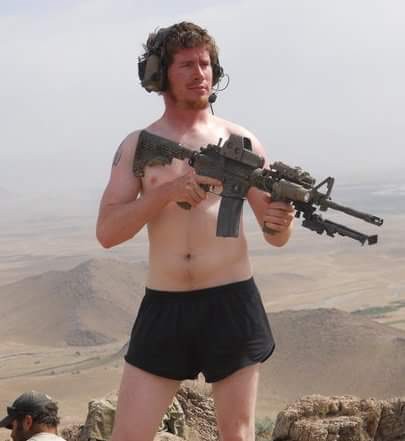
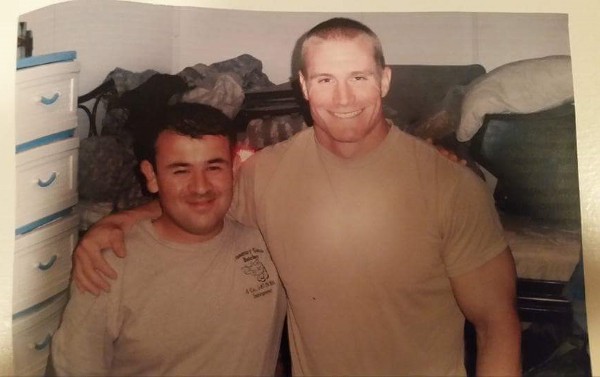
Our favorite picture from Tim Hardin’s Army days, hands down. Courtesy of Tim Hardin.

Natalia: I’m one of those people whose life — let’s admit this — has basically been ruined by student debt. And when I talk about how education should be a right, I’ve definitely had veteran friends say things like, “I had to fucking go to fucking Iraq because I wanted an education. Now some privileged assholes will get it for free?” And I completely see their argument, I’m not trying denigrate what they went through — but I also see a flaw in that logic, and I’m wondering if you see it too, or if you think I’m completely off-base to point it out.

Tim: That’s a refrain that I’ve seen out there multiple times as I advocated for free public higher education.

I tell people that when fighting for this country, I got put in some really bad situations that no one should be put in. People shouldn’t have to risk their lives so they can have access to higher education.

The system rewarded me because I risked my life for it, but education is a human right. You’re investing in your citizens when you give them the right to an education. It’s very simple stuff, and I don’t understand why we haven’t figured that out as a country.

There are people who come out of combat who are human husks. How many thousands of people who signed up to get free college are dead now? We live in the richest country in the world, and we could choose to empower Americans and invest in them.

I don’t understand why the richest country in the world does not have this shit figured out. I mean, there’s lots of reasons for it, but I just get so angry about it.

Natalia: So we were talking earlier about how there’s lots of young men in the military, and how that determines a lot of things. In this interview with Task & Purpose’s Adam Linehan we also discussed age, and how a lot of these young guys, for what it’s worth, are not going to get radicalized by the current administration and are not going to want to let Trump use the military against the American people. But I think we can all see someone like Steve Bannon just itching for that. Do you have any thoughts on that? Is this a possibility under Trump?

Tim: Well it didn’t take long for Homeland Security to go after undocumented immigrants under Trump, did it? And it could be a trial balloon — like, “How much will the American public be willing to take?”

I’m a pretty positive person, but I’m also a realist, and the young enlisted guys? They can be impressionable. And it doesn’t help that, like I said, a lot of people who have been in the military for a long time can feel isolated from the general public. It’s difficult with no cross-dialogue, no moderating influence, and people creating their own bubbles.

In my old unit, Fox News was always playing at the battalion headquarters. I see the same people who were my superiors just Breitbarting it up on Facebook right now.

So I’m not super hopeful. Maybe I’m hopeful on a regional basis. I don’t have a good read on what might happen, but I think that whatever happens would be very different from place to place.

I think Trump might try to turn the military [against the American people] if he comes close to being impeached.

And impeachment doesn’t necessarily mean the end of his presidency, but that there are legal clouds gathering above his head. Even though our system is slow, it does eventually process these things. Should Trump realize he might get booted from the White House, he could turn aggressive. But I think by that point the people on his side would also be like rats leaving a sinking ship.

Natalia: There is a lot of indication that Trump wants a war. He’s like a little boy who thinks its all a big game, and the military is his big boy toy. What do you think renewed armed conflict would look like under Trump?

Tim: I don’t think we’re headed into a new World War or anything like that. Like with Russia — it’s in the Trump administration’s interests to placate them, because of business interests.

But he’s itching to be a wartime president. Maybe [an attack on] North Korea? Maybe lots of limited strikes all over the place?

But [the Trump administration] also has a lot of turnover, and maybe that turnover will continue, and the chaotic shitshow will continue.

I mean, who’s really advising him on these issues? People like Jared Kushner? God, just think about it.

The bottom line is that they’re trying to run this government like a business, so they’ll do whatever is good for their business interests. Maybe they’ll just keep launching fucking Tomahawks for show.

[post_title] => Woke Vets: 'Disregard for civilian casualties hurts our mission' [post_excerpt] => How many thousands of people who signed up to get free college are dead now? We live in the richest country in the world, and we could choose to empower Americans and invest in them. [post_status] => publish [comment_status] => open [ping_status] => open [post_password] => [post_name] => woke-vets-disregard-for-civilian-casualties-hurts-our-mission-2 [to_ping] => [pinged] => [post_modified] => 2024-08-28 21:11:31 [post_modified_gmt] => 2024-08-28 21:11:31 [post_content_filtered] => [post_parent] => 0 [guid] => https://conversationalist.org/?p=394 [menu_order] => 368 [post_type] => post [post_mime_type] => [comment_count] => 0 [filter] => raw )

Woke Vets: ‘Disregard for civilian casualties hurts our mission’

WP_Post Object
(
    [ID] => 389
    [post_author] => 2
    [post_date] => 2019-01-22 14:32:41
    [post_date_gmt] => 2019-01-22 14:32:41
    [post_content] => 

This interview was originally published in March 2017.

Dylan Park is a United States Air Force veteran who served for six years in a Pararescue unit in Iraq and Afghanistan among other places. He’s now a writer and music video director living in Santa Monica . A sci-fi nerd who signed up for Mars One, he’s written a graphic novel (Zombiraq) and worked on tv shows including AMC’s The Walking Dead. His Twitter thread about his Iraqi teenage interpreter, Brahim, recently went viral. We discussed issues ranging from North Korea and military rape to cancer and the KKK.

Anna: One theme I’ve seen through all of your work is the issue of violence in society. You draw parallels between being at war and life in America. A lot of Americans haven’t experienced violence at home. You haven’t been so fortunate, your family especially.

Dylan: I think it’s a misconception that a lot of Americans haven’t experienced violence.

I think it’s around 30,000 people a year dying from gun violence. That’s astronomical.

I grew up in an affluent, upper-middle class area. My house literally had a white picket fence. But mom is an orphan from North Korea. My dad was growing up in Texas and Louisiana during the civil rights movement. When he was a kid they were still lynching people. He witnessed that. That’s super traumatic.

His father was murdered by the KKK. I tell people that and they think I’m joking. I have to explain to a lot of my peers that slavery and all that stuff was not that long ago.

So I never met my grandfather because he was murdered by the KKK. I never met my other grandfather because he was a North Korean defector. 

I did six years in the military in Iraq, Afghanistan, and Africa. There was a lot of violence, a lot of trauma there. I got back and a few years later, my brother was murdered in a carjacking. It’s a sad story, but I try not get down on myself. I know a lot of Americans, a lot of people in the world, have had it so much worse.

Anna: While studying to be a historian, I looked at postcards of lynchings people sent to one another. You look at some of the photos and see the sheriff standing there. If the sheriff is supervising, how much of mob justice is separate from state violence? Is this really an extrajudicial killing?

Dylan: A lot of people don’t realize that racism was state-sponsored. It was essentially law. When I talk about my grandfather being murdered in Killeen, Texas in 1972, that’s not that long ago.

The Killeen Police Department listed it as a cold case, an unsolved mystery. My father says, “That’s bullshit. We watched two cops walk into our house and shoot my father.”

So of course it’s not going to be solved. They threatened my father and uncles, saying “If you don’t get out of here, we’re going to kill you too.” This all happened because my grandfather had remarried [to] a woman from an affluent white family. They weren’t happy with a black guy getting in on the wealth.

Anna: I’d like to ask you about the different political administrations. What kind of changes have you seen in the military over time?

Dylan: When I first signed up for the military, George W. Bush was still president. We still had a lot of blind nationalism, a kind of gross patriotism after 9/11. If you weren’t for the red, white, and blue, you were the enemy. As an 18-year old, I got caught up in that.

I wanted to go fight the fucking terrorists. They promised me action, adventure and a little bit of money. There were a lot of teenagers my age that were all about that.

We’re a country that glorifies violence. We romanticize it.

When I had a recruiter telling me that I’d get a $15,000 bonus to go blow shit up, I said awesome, that sounds great.

This was in 2004. A year later, I was in Iraq and wondering, what are we even doing here?

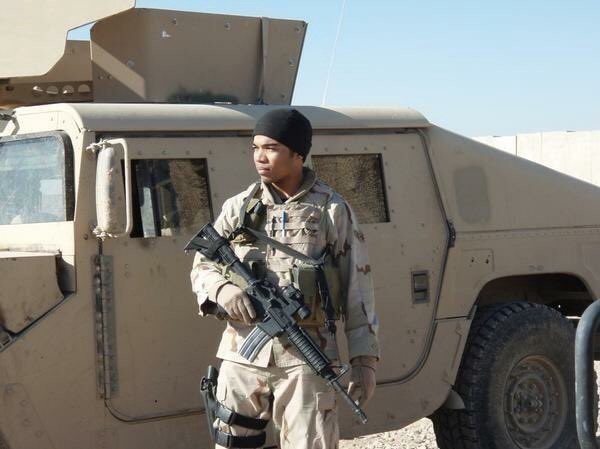
Dylan Park in his “blowing shit up” days

And the Iraqis are normal people, but now all of a sudden they have these Americans occupying their country. Of course they’re going to be hesitant and defensive.

When I admit this a lot of my veteran buddies get pissed, but we had no right to be in Iraq.

It was such a sham. They literally had us fighting over an oil town. They weren’t even trying to hide it. We were occupying an oil town while American contractors did whatever they needed to do to get the oil.

A couple of years later, Obama became president. That was great. My veterans benefits immediately increased.

Anna: I didn’t realize that he passed a law on veteran’s benefits.

Dylan: Oh yeah, Barack passed a lot of laws for veterans.

It’s crazy when you think about how Republicans say that Obama hates vets. The amount of attention I was receiving, the healthcare, everything was exponentially better.

Barack often gets criticized for pulling our troops out of Iraq, and in the long run, that might have been a mistake. I still don’t think that’s his fault, though, because we shouldn’t have been there in the first place.

He also gets criticized for the drone program. I get that too, but essentially he’s using drones instead of having boots on the ground. There’s no real difference, besides fewer Americans dead. Either way, the war machine is not going to stop.

Anna: In that sense, to what extent is U.S. foreign policy this juggernaut with a figurative head to be replaced each time there’s a new president? What influence does the president have over how our military force is used?

Dylan: You can see it right now. Before Trump got in office, he was talking about killing civilians. That’s a war crime.

Anna: Right, already we’re seeing the number of civilian deaths shoot up, like in Mosul and Yemen.

Dylan: He’s basically gotten rid of rules of engagement. He’s usurping the Geneva Conventions.

Trump’s been in office for 65–70 days and he’s already killed 1000 civilians? It’s crazy, but that puts him on a record pace.

You read the articles and the quotes from the commanders or generals that are leading these troops into battle and they say, “It’s disgusting, but these are our orders. If we’re told to level a city, we’re going to do it.”

Anna: Theres a lot of talk about Mattis and his influence over Trump. Their relationship has been framed as Trump needing Mattis in order to keep the military loyal to some extent. If Trump decided he was through with Mattis because he’s said “no” one too many times, what happens? Does it work that way?

Dylan: There’s a large population of liberal veterans and service members, but we’re never going to be larger than the conservative side. You’ll always have this group of service members that would do anything for their commander in chief, including war crimes, which is the problem. I don’t think replacing Mattis would make a difference, and I don’t see a military coup happening. It is what it is.

Anna: You’ve tweeted about civil war. I’m worried about that, too, honestly. I don’t think it’s that far-fetched to think about, especially given Steve Bannon and Trump’s threats to use the National Guard in Chicago. I think that his base will follow him no matter what and also that he won’t go quietly.

Dylan: It’s scary. I joke around about it, but usually when you’re joking it’s because it’s somewhere in the back of your head. I don’t think we’re close to that yet, but who knows?

You know we’re gonna start talking about impeaching Donald Trump, and you know the dude is going to be a psychopath on his way out.

The guy is in bed with the Kremlin, which is crazy in itself. Not to be a conspiracy theorist, but America is more ripe for attack than we’ve ever been. We’re messing up really badly right now.

Anna: Yeah, we’ve also sort of taken apart our entire State Department, which is not helpful. I worry about us getting attacked as well, and what kind of things they could use that as an excuse for.

Dylan: Donald Trump is attacking all these people in the defense services, the NSA. So now all of a sudden, all the guys who are protecting us don’t want to work for him. He’s not going to his security briefings. This is unprecedented.

It’s crazy because we have North Korea firing missiles off while Trump is golfing.

Russia’s saying, we’re going to expand our nuclear program, and Donald Trump is like, no you’re not, we’re going to have a better nuclear program.

[In general], Donald Trump is the type of leader who has a short temper and an ego. That is something that could potentially get a lot of Americans killed.

Anna: I’ve spent a lot of time in Russia. Half my family are Russian Jews who emigrated from the Soviet Union. My dad was alive for World War II. That affected how I was raised, and gave me some perspective. The thing that I’ve seen change the most since he took power is that America became like everyone else.

Dylan: That’s exactly what it is.

Anna: I’m waiting for everyone else to catch up to that fact. It’s hard when people don’t want to deal.

Dylan: [Trump’s] actually making our country a bigger target. ISIS is using this as a recruiting tool to say, “look how America hates Muslims.” And it’s true, America does hate Muslims. It’s not going to get better, it’s only going to get worse… ISIS is ramping up their hate for America, and so more attacks are going to happen. It’s a sick cycle.

Anna: I wanted to talk to you about the VA. You just had a procedure, you’re alright?

Dylan: I have some stomach complications, but I’m okay. When I was in Iraq, I was in Kirkuk, an oil town. Imagine the worst smog you’ve ever seen in your life. The sky was black. [And then there was] the depleted uranium, burning corpses, burning fecal matter, chemicals.

It was a bad environment. A crazy number of people in my detachment were getting sick.

The VA couldn’t figure out what was going on, people were getting cancer. A couple of smart doctors figured out, oh, we had these awful conditions. They set up this thing called a Burn Pit Registry. If you had been on certain bases or at certain locations at certain times you went to the VA.

My best friend went back to Iraq for another tour. He came home and was diagnosed with Stage IV stomach cancer the same day that his daughter was born. He was in the hospital feeling really sick. They pulled him to another room and did tests on him. The day his daughter is born he finds out he has a year to live. It was really fucked up.

Anna: That’s so messed up, how old was he?

Dylan: He was 30 years old. This was 2014. It’s very sad. It happens to a lot of guys. I have a lot of problems too, but I’m one of the lucky ones.

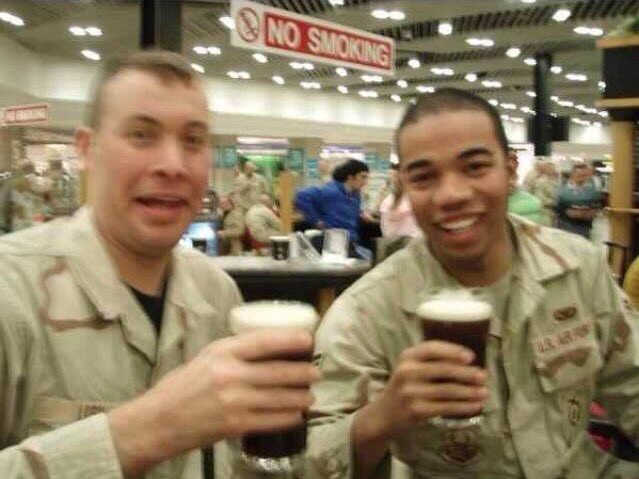
From Dylan Park’s Twitter: “Me and Allen (RIP) walked into the Shannon airport terminal in our uniforms and we got a standing ovation. Free Guinness & Jameson for days.”

Anna: The story of Brahim, your translator, was so touching. I’m wondering if the response to that story gives you hope that people aren’t totally terrible?

Dylan: I had just written a proposal for that book. I was about to start shopping it. I’ve actually told that story before but I decided to retell it because it was so relevant to the Refugee Ban. It just blew up. The amount of attention it received, couldn’t have seen that coming. For a week straight, my phone would not start beeping. I had tens of thousands of strangers telling me that I made them cry.

And there were dozens of deplorables in my mentions, too, calling me a liar. But it was heartwarming to see that not everyone’s a complete piece of shit.

Anna: You’ve tweeted about sexual assault in the military. To what extent is the military just a microcosm of society?

Dylan: The military is worse than society because the military is a fraternity. The U.S. military is basically the biggest gang in the world. It’s a big frat with the good ole boys. They keep everything on the inside, they don’t want any bad publicity.

There were two women in my unit who were raped, and the unit buried it. They actually forced the women to work alongside their rapist for almost two years before he got court-martialled.

If you can imagine that trauma having to work with the guy who assaulted you. When guys like me would go around and cause a fuss, I got blacklisted essentially. Dudes started treating me completely differently. Started calling me a narc, a snitch… It was like high school. I was in a clique and then all of a sudden I was an outcast. Don’t talk to Dylan.

And again not everyone in the military is like that. It’s the same parallel with law enforcement. We know that not all cops are shitty cops. I’d say 90% of cops aren’t shitty cops. But the fact that they protect shitty cops makes them a shitty cop. That’s exactly the situation in the military.

Anna: They become complicit. What do you think about militarized police?

Dylan: Did you just see the video of that machine they’re using? It’s like a protest sweeper. I definitely could have used that in Iraq.

Police departments in the U.S. are armed better than I was in Iraq in a war zone. I grew up in Campbell, CA. It’s the cutest little town. Their police department has a fucking tank. It’s just sitting there in a parking lot. There’s been one homicide in Campbell in five years. What are they going to do with that? You’re giving police departments military equipment so they’re going to start acting like the military.

It’s not about law and order anymore. It’s not about justice. It’s about suppression and intimidation.

You’re seeing peaceful protesters getting tear gassed, beaten and shot. On the flip side, you can have a KKK rally and they’ll get police protection. A neo-Nazi rally, the police will protect them because of their First Amendment rights. I get it, they have freedom of speech, but what happens to freedom of speech when you’re a brown guy and you’re speaking out against the system? Then you’re the enemy.

Anna: Knowing what you know now, would you do it again? Would you have joined?

Dylan: Even though they were some of the worst times of my life, they were also some of the best times too. I got to do things, experience things, meet people and go places that I had never been before and never would have had the chance to go. In the military I went to every continent but Antarctica.

I traveled a lot. A lot of it was — humanitarian missions, peacekeeping missions. My unit was a pararescue unit. We weren’t an offensive force.

We were the 129th rescue wing. Pararescue units are combat rescue units who pick up downed troops, downed civilians behind enemy lines. We’re equipped as military, so if we need to fight we can do that too.

My first mission when I signed up was New Orleans, Hurricane Katrina. We had gotten intel that there were militias running around raping women and shooting people, shooting our helicopters. They armed us up and said get ready for a fight. We’re going to fight gangbangers.

We fly out there and its not that at all. It’s just a bunch of scared black people. On their roofs, trying to survive.

There was no violence whatsoever but we had been conditioned to believe we were going to fight people. Our mission was a rescue mission so we were pulling scared people off roofs. But we were ready for a fight, had our guns loaded up.

Anna: Why would they say that about those people on the roofs?

Dylan: When you have a group of disenfranchised minorities they are the enemy no matter what. That’s how the United States has always been. It took 5 days to send help. And then when we did go, they said the people on the ground were enemies. It was absurd.

Anna: How did you feel as a person of color serving in the military?

Dylan: I had never really experienced real racism until I got into the military. There was a little bit of racism in private Catholic school: as a 5th grader if some kid calls you the n-word , what are you going to do?

But in the military people have real control over you and can send you to your death. That was an issue.

In Iraq, I found myself working the Suicide Gate more often than not. They call it the Suicide Gate because that’s where all the suicide bombers would go blow themselves up.

I always found myself working that station. It was not a coincidence. If everything had been fairly distributed, I would have only been there a few times. I found myself there nightly.

To answer your question, I often say that I’m, I don’t know if ashamed is the right word, but sometimes I’m ashamed to have been a part of the war machine. But if I had not gone through that experience, I wouldn’t have been as “woke” as you would say.

Anna: You saw a lot — and that changes you. When you were talking about the racism, I was thinking about “Get Out.”

Dylan: Oh my god that movie was insane. Not to spoil anything, but I kinda knew from the beginning that there was double-sidedness going on.

Anna: What projects are you working on right now?

Dylan: I’m working on a book based on the Twitter story, and there’s already interest in making it into a movie. Being a veteran that writes is rare thing in Los Angeles, so that’s my niche. Coming up there’s a reboot of “Behind Enemy Lines” with Owen Wilson and a “Call of Duty” TV show. They want people with experience to write for them. I also have a couple of comic books that I’m working on. And I do music videos.

Anna: Oh, right! I saw your pictures with Wyclef Jean.

Dylan: Yeah, I write and direct music videos now. Wyclef is one of my favorite artists ever, and I’ve been working with him.


[post_title] => Woke vets: black skies and the suicide gate [post_excerpt] => "There’s a large population of liberal veterans and service members, but we’re never going to be larger than the conservative side. You’ll always have this group of service members that would do anything for their commander in chief, including war crimes, which is the problem. I don’t think replacing Mattis would make a difference, and I don’t see a military coup happening. It is what it is." [post_status] => publish [comment_status] => open [ping_status] => open [post_password] => [post_name] => woke-vets-black-skies-and-the-suicide-gate-2 [to_ping] => [pinged] => [post_modified] => 2024-08-28 21:15:15 [post_modified_gmt] => 2024-08-28 21:15:15 [post_content_filtered] => [post_parent] => 0 [guid] => https://conversationalist.org/?p=389 [menu_order] => 369 [post_type] => post [post_mime_type] => [comment_count] => 0 [filter] => raw )

Woke vets: black skies and the suicide gate

WP_Post Object
(
    [ID] => 383
    [post_author] => 2
    [post_date] => 2019-01-22 14:29:05
    [post_date_gmt] => 2019-01-22 14:29:05
    [post_content] => 


Justin 'Judd' Lienhard is a former U.S. Army Ranger officer who did multiple tours in Iraq and Afghanistan. The Conversationalist interviewed him in 2017 for its 'woke vets' series.

Natalia: I’ve read your excellent pieces on The Humanist — including your take on America refusing refugees and the gut-wrenching story of your last combat mission. It struck me that what you’re discussing, among other things, are realities of war that make the average civilian really uncomfortable — so uncomfortable that they would rather shut these stories out. Do you find that most Americans don’t want to know? Or has that not been the case?

Judd: In my experience, Americans are fine with the gory details in my stories as they’ve been desensitized pretty well. They are even OK with hearing about our soldiers’ suffering. They really like the the stories I share that humanize our soldiers in a good way.

What they don’t like to hear are my stories that humanize the enemy or even the locals that collude or sympathise with them. They change the subject quickly when I describe civilian deaths or tribulations that we were responsible for. They often try to interject and exonerate me and my compatriots from blame — and maybe themselves as well, by extension.

Judd Lienhard during his days with the Army Rangers

I think it’s important for everyone’s psyche to dehumanize the people we kill or maim.

There must be absolutely no righteousness in anyone’s cause but our own, it is simply not enough to fight for our nation’s own best interests, our enemies’ interests must be entirely deviant as well. That is nothing new however.

What has changed is that we are deep in an era of war romanticism. We almost deify our soldiers, especially our special operators, they are becoming a class to themselves, almost like a warrior elite that are beyond reproach. It’s comparable to the Janissaries or the Samurai. It’s unfair, even to them. They are very good at what they do but they are also very human.

When you begin to treat men like gods they can only disappoint.

Unless their exploits are fabricated or at the very least embellished — which is what is happening in Hollywood right now.

Natalia: I once worked with a wealthy narcissist, and a lot of what Trump is doing now has, to me, seemed predictable. I think that men like him see other human beings in terms of how they can be used. So there are beautiful women to exploit, powerful businessmen to forge beneficial relationships with, and as for the military, he sees it as an extension of his, uh, manhood. I don’t think it was an accident that he wanted to parade missile launchers on Inauguration. I am with those people who say that he has used fallen SEAL William Owens and his widow as props. So that’s my take on it. But how do you read Trump’s relationship with the military? And how do you think our military command sees Trump? I’ve seen a lot of speculation, for example, that he makes them less than comfortable, though they obviously won’t show as much in public.

Judd: Of course Trump is a narcissist, but I’m hesitant to build him up into some evil genius. He, more than anything else, wants to be liked. He’s dangerous because he’s so pliable. His mental acuity has declined greatly in the past decade, and he’s being guided by ideologues. He is probably the anti-ideologue in that he’ll back whatever side or position that will get the most people to like him.

I believe our military command sees Trump much differently than the rank and file, who are more attracted to the tough, blunt, and simplistic rhetoric of the president (this doesn’t mean they aren’t intelligent, many are extremely bright, but their areas of interest and aptitude reside more on the tactical level rather than in the intricacies of history, geopolitics and macroeconomics).

Military command sees a bumbling idiot with no grasp on the nuances of operational or strategic level planning.

Not only does Trump lack military experience, he lacks the attention span to absorb complex situational briefings.

I hate to compare Trump to Hitler, because there are many differences, but in that respect they are very similar. I believe that both lacked the respect of the military establishment and were otherwise surrounded by misfits, ideologues, and outcasts.

[The military establishment] followed Hitler nonetheless, because those generals thought they were playing the long game and wanted to be in a good position when that wave of populism passed. It wasn’t until 1942 that they realized his decisions would mean the end for Germany and not until 1944 that they organized an assassination attempt.

Our generals want to use Trump’s increases in military funding to further their own limited aims — many aren’t fully considering the damage it will do to the other two pillars of our national security triad, which are diplomacy and development.

Natalia: Everything I know about men like Trump leads me to believe that he would love to go to war. I see him thirsting for it as much as his chief strategist, Steve Bannon, is thirsting for political chaos and martial law. I think a lot of people right now are under the impression that if Trump goes to war, it will be very similar to when George W. Bush went to war — but I believe that Trump makes W look like a wise elder statesman by comparison. Am I being too apocalyptic? And how do you think a military conflict under Trump might play out?

Judd: Trump absolutely wants to go to war because wartime presidents are popular, at least at first. And Bannon wants to go to war because he has a strange obsession with military conflict. I think you are being too apocalyptic however — because you overestimate this administration’s ability to build coalitions and underestimate their utter incompetence.

Congress is protecting them right now because they want to push through their legislation.

As soon as that happens they will turn on them. Their visions of America’s role in the world diverge far too much.

Natalia: I think because we no longer have a draft, and because our military is so powerful, a lot of civilians brush off the reality of what the military deals with with a kind of, “Oh, but they signed up for it, they’re professionals, they have helicopters and cool gear, so whatever, I don’t care, what they do has nothing to do with me.” I personally agree with someone like Phil Klay when he says that — sorry, no, that’s not how it should work. But would you agree or disagree? And can anything be done to make American civilians less apathetic to the risks and dilemmas of modern military service?

Judd: I believe that because there is no draft and because the conflicts of the last generation have resulted in relatively light casualties that Americans see our military adventures as a spectator sport. It’s almost expected that we “mourn” our hero warriors, but relatively few Americans have felt the personal loss of a loved one to conflict.

They don’t relate to those Americans whose sons and daughters signed up to escape poverty rather than out of patriotic reasons.

I mean, expensive college and the GI Bill/VA Loan serve as a de-facto draft anyway. Wait until we start getting carrier groups decimated by surface skimming supersonic missiles and we start losing tens of thousands a year. The human face of war will hit us hard then.

It’s always been that way. The average Roman cared little about the legionary until Hannibal was tossing their severed heads over the gates of Rome.

Natalia: There has been a lot of dehumanization of Muslims in our public discourse. You’ve written beautifully about how awful and misleading stereotypes of Muslims are. What do you think can be done to combat such stereotypes? Besides writing, which is obviously really important, but, as a lot of psychologists point out, only reaches certain people and at certain times.

Judd: I’m a realist and I understand that our tribal nature needs mysterious foreign threats to bind itself together, especially when other social units are falling apart. There is always an enemy that poses an “existential threat” — be it Jews or Blacks, or Catholics, or Communists.

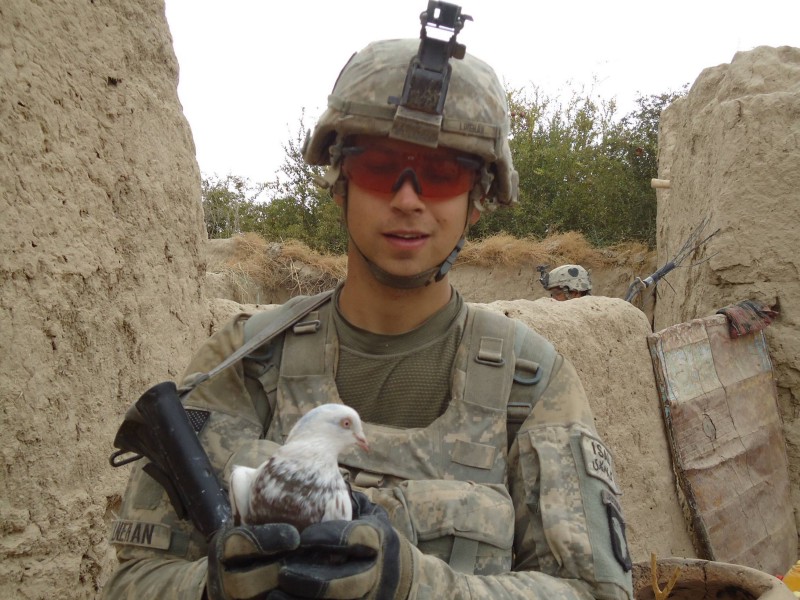
Judd Lienhard with an Iraqi interpreter. who, Lienhard has reason to believe, did not survive the continuing conflict in Iraq.

Honestly, the best cure is exposure and normalization, we fear what we know the least about and propagandists with an agenda exploit those fears for their own gains, that is nothing new.

We must avert catastrophe, let the old fear-mongers that rose up as Iran fell apart die off. Then, once there’s a mosque down the street and your Muslim neighbor feeds your dogs for you while you’re on vacation, it won’t be such a big deal anymore.


[post_title] => 'Americans see our military adventures as a spectator sport,' says former U.S. Army Ranger [post_excerpt] => "I hate to compare Trump to Hitler, because there are many differences, but in that respect they are very similar. I believe that both lacked the respect of the military establishment and were otherwise surrounded by misfits, ideologues, and outcasts." [post_status] => publish [comment_status] => open [ping_status] => open [post_password] => [post_name] => 383 [to_ping] => [pinged] => https://thehumanist.com/commentary/refusing-refugees-former-army-ranger-shares-shame [post_modified] => 2024-08-28 21:11:31 [post_modified_gmt] => 2024-08-28 21:11:31 [post_content_filtered] => [post_parent] => 0 [guid] => https://conversationalist.org/?p=383 [menu_order] => 370 [post_type] => post [post_mime_type] => [comment_count] => 0 [filter] => raw )

‘Americans see our military adventures as a spectator sport,’ says former U.S. Army Ranger

WP_Post Object
(
    [ID] => 378
    [post_author] => 2
    [post_date] => 2019-01-22 14:24:07
    [post_date_gmt] => 2019-01-22 14:24:07
    [post_content] => 

Valid criticisms of Melania Trump have been taken as a license to mock her marriage.

It’s hard to feel sympathy for Cersei Lannister, the icy queen from Game of Thrones. She’s a vindictive, murderous woman whose only redeeming quality is her love for her children (until it isn’t.) Still, I cannot rejoice when her character is paraded naked before crowds shouting “Shame! Shame!” nor when her brother rapes her or her father brutally dismisses her. Her humiliation in those instances is too familiar. It’s not fantasy. The thing about those scenes is that Cersei is not being punished for the evil she’s committed — she is being punished because she’s a woman. Gender violence is like an invisible cage, and no amount of money or status can free you from it. I won’t ever cheer for it.

This is why the recent attacks on Melania Trump, an unsympathetic character, give me chills.

It’s not because she’s immune from criticism, whether for enabling Donald Trump or for her own bigotry, far from it. It’s because those valid criticisms have been taken as license to mock her unfortunate marriage to DJT.

Trump is an abuser. He himself has made that clear. That makes him dangerous to his wife. And she likely won’t be able to redeem herself without putting herself and her child in harm’s way.

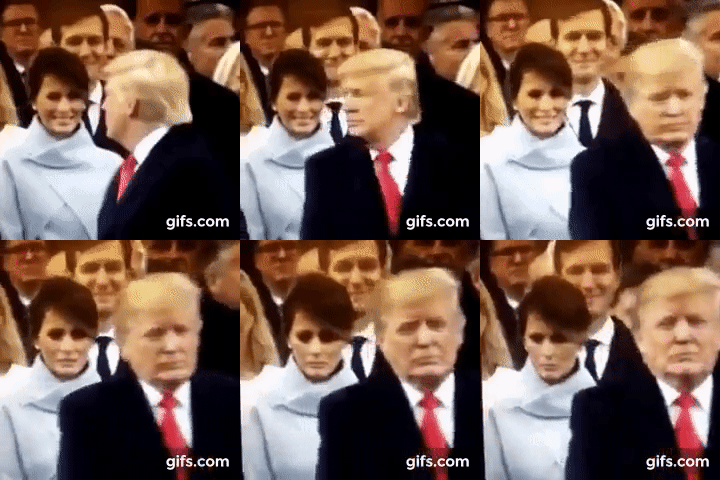
The viral video of Melania’s face falling as her husband turns his back to her during the inauguration made many people laugh. But while you’re mocking their marriage, he’s likely terrorizing her for letting her face slip on television.

How do I know that?

1)The news is already filled with White House leaks about his uncontrollable narcissistic rage.

2) An abuser’s greatest fear is that his victim might tell on him. Around the world, women and children in abusive situations are killed over revelations far smaller than what this GIF reveals:

Your denial of the stakes involved only isolates abused women and children further.

Believe me, they feel your indifference. They know that you don’t believe them. Their worst fears are realized every time people turn their heads, close their eyes and refuse to bear witness.

Victims of domestic violence, if they’re lucky, find strength in good samaritans — people who are disturbed and refuse to look away — people like Michelle and Barack Obama, who graciously waited for Melania on inauguration day and escorted her inside the White House. Even then, the relief is temporary. Eventually she’ll be alone with him again.

Don’t fear intimate violence in your daily life? Lucky you. Now shut up, because you know nothing.

The comedian Russell Peters has a famous bit about immigrant parents beating their children. “White people, please beat your kids,” he says. Why? Because immigrant kids want what white kids have — no real consequences for their behavior.

In Peters’ bit, a white kid tells little Russell, “next time your parents try and beat you, threaten Child Protective Services.” Little Russell goes home, threatens his Indian dad and gets his ass whooped like never before. Never adopt that angry white kid’s advice, Peters warns — it’ll get you killed.

Think about that the next time you judge Melania for staying with Trump. Imagine what kind of threats he uses to make her stay. It’s hard to understand them if you’ve never been subjected to them. It’s easy to be like the white kid in the Peters bit.

Remember, this country was so indifferent to Trump’s abusive ways, it elected him President. He has the lawyers, the money, and the muscle. He is free to humiliate any member of his family — whether it’s publicly agreeing that his daughter Ivanka is a “piece of ass,” or making it obvious that he cheats on his wife.

Once upon a time, Melania was literally an illegal immigrant, and while the hypocrisy of that fact in light of Trump’s racist, anti-immigrant campaign is obvious, her vulnerability should be too.

After multiple divorces, it’s no accident that Trump eventually seduced a much younger, poorer immigrant woman who could not defend herself publicly for fear of being kicked out of the country.

Though Melania consented to marry him, liberals who claim she therefore deserves whatever comes next are adopting Trump’s logic.

Meanwhile, Melania’s famous nude photos are empowering to Trump but not to her. He shows his wife off like a thoroughbred. She, on the other hand, can’t win. If she’s proud of them, she’s a whore. If she’s not, she’s a prude and a hypocrite.

Either way, Melania is stuck with a conman who raped his first wife, Ivana, because he was enraged about a bald spot, and whose idea of consent is to grab first and never apologize. Let me remind you that, according to this man’s lawyer, “you can’t rape your spouse.”

Speaking of which, where have Ivana and Marla been hidden? Ivana has been conspicuously silent about her daughter, Ivanka, essentially playing First Lady for her ex. Marla has reportedly been begging for hand-outs.

Finally, if you think Trump wouldn’t forcibly separate his youngest son Barron from his mother, you’re naïve.

Trump, like other narcissists, gets off on the impunity with which he transgresses norms. He wants you to think that Melania “deserves” whatever she gets.

Appearances can be deceptive. #BlackLivesMatter, for example, has disrupted white Americans’ benevolent view of “nice police officers who are only doing their jobs.” Melania, meanwhile, disrupts the commonly held belief that “a wealthy lifestyle means you’re safe.”

For abused women and children, the family home is not a refuge — it’s a prison. Despite what you think, prisons can come in gold.

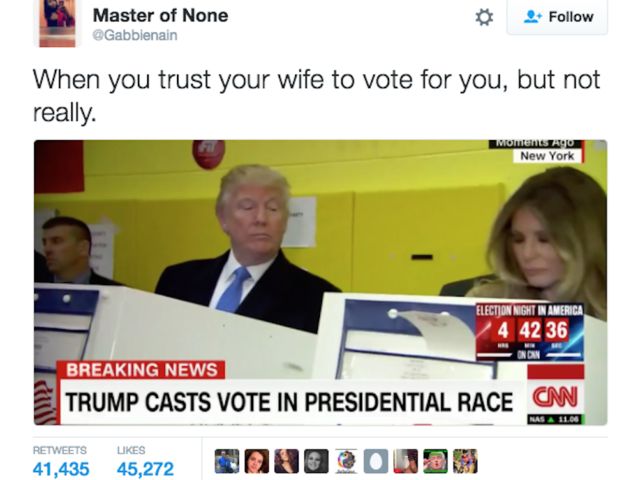
I never felt for Melania more than when she was allowed to remain in New York with Barron. She didn’t want to see Trump every day — who would? And my stomach flipped when Trump looked over Melania’s shoulder as she voted. We turned that image into another fun meme — but ignored the darker implications:

Trump wasn’t just checking to see that Melania voted for him. He was threatening her should she hesitate.

Why? Because monsters hate being reminded that they’re monsters. Abusers beat you harder when you wince.

Forgive the frankness, but despite what you think, Melania’s job isn’t to get fucked by her husband; it’s to smile and scream that she loves it when he hurts her. He relishes her forgiveness of the unforgivable; her total submission.

Remember how he embarrassed her for laughs at the Al Smith dinner? It was played as a warm-hearted joke — but Trump never makes jokes like that about himself. And while Trump’s base may laud “Empress Melania”, her stunning good looks, and her submission to her husband, none of that makes her safe from him or his well-documented rage.

Don’t think this is just a private matter between husband and wife. Humiliating those closest to him gives Trump the energy to screw this country. Abuse makes him feel like a king. Not just Melania’s king anymore. Our king.

So don’t trash Melania just to get to Trump. He already tells her she’s trash every day.

If you don’t have the energy to go to bat for Melania, I respect that. There are many underprivileged victims of abuse in this country who need our support. I believe that we can support them without kicking a woman who, in one way or another, gets kicked every day, fancy clothes and shoes be damned.

Attack Melania’s birtherism. Criticize the fact that she hung journalist Julia Ioffe out to dry and didn’t care about the anti-Semitic attacks that followed. But please don’t talk about how she “deserves” her abusive marriage. You’re only empowering Trump when you do that.

For more information about domestic and gender violence: https://www.sanctuaryforfamilies.org/


[post_title] => Think Melania 'deserves what she gets'? Guess what, you’re helping Trump [post_excerpt] => Don’t trash Melania just to get to Trump. He already tells her she’s trash every day. [post_status] => publish [comment_status] => open [ping_status] => open [post_password] => [post_name] => think-melania-deserves-what-she-gets-guess-what-youre-helping-trump-2 [to_ping] => [pinged] => [post_modified] => 2024-08-28 21:14:03 [post_modified_gmt] => 2024-08-28 21:14:03 [post_content_filtered] => [post_parent] => 0 [guid] => https://conversationalist.org/?p=378 [menu_order] => 371 [post_type] => post [post_mime_type] => [comment_count] => 0 [filter] => raw )

Think Melania ‘deserves what she gets’? Guess what, you’re helping Trump

WP_Post Object
(
    [ID] => 368
    [post_author] => 2
    [post_date] => 2019-01-22 14:19:09
    [post_date_gmt] => 2019-01-22 14:19:09
    [post_content] => 

This remarkably prescient and insightful analysis was originally published on January 10, 2017. 

Early on in Ridley Scott’s movie Gladiator (2000), an overwhelming Roman force is poised to slaughter assorted Teutonic tribes, with the aging emperor, Marcus Aurelius wearily looking on from a gloomy, snow-covered hilltop. As the tribesmen raise their defiant clamor in anticipation of battle, a young Roman commander wryly opines: “A people should know when they’re conquered.” Within minutes, that point is brought home with bone-crushing vividness as the tribesmen are utterly decimated and consigned to a blood-soaked earth and to historical oblivion. Only then, however is the movie’s underlying conceit revealed.

For no sooner have the “civilized” Romans vanquished their barbarian foes than the Romans’ own, inner barbarian is released. Thus the old, philosophically inclined Marcus Aurelius is dispatched, no less violently, by his upstart son Commodus, a type who at this precise moment in our nation’s time will seem distressingly familiar: suffused with petty resentments, vacillating between bouts of insecurity and sudden imperiousness, and a narcissist who consistently blurs the lines separating crude gladiatorial spectacle from the craft of politics.

The scene comes to mind as our country awaits the transfer of political power, from a cool, articulate, and circumspect rationalist to a man of Commodus-like temper who by force of his personality and a lifetime record of fraudulent dealings has at last seized the presidency.

In this, the president-elect ended up being supported by party leaders who, temporarily caught up in a struggle between fading “principles,” stung pride, and native opportunism, predictably resolved that conflict in favor of the latter.

Having concluded its long journey from initial disbelief at an improbable candidate to groveling support of the president elect, the GOP is now poised to seize control of all three branches of government and to enjoy the spoils of a post-democratic order whose contours Trump so vividly drew throughout his seemingly endless and intensely divisive campaign.

Ideological purity and personal integrity have been sacrificed to the prospect of unchecked political power and economic interest. Meanwhile, the president-elect traverses his realm on a “thank you tour,” declares himself immune to conflicts of interest, declines intelligence briefings, stokes the passions of his fanatical supporters with irrelevant tweets at 3 a.m., and generally refuses to distinguish between fact and fantasy, promise and fulfillment.

Predictably, there has been vehement opposition, not just to Trump’s often lurid pronouncements during the campaign (a “beautiful wall” to be built; an opponent to be jailed) but also to his policy proposals: to undo his predecessor’s executive orders aimed at protecting the environment; to strip employee rights and protections; to dismantle the Affordable Care Act; to unweave the delicate fabric of legal restrictions governing business and finance and aiming to establish some semblance of parity between the haves and the have-nots of our society.

Both prior to and since November 8th, 2016, opposition to the looming deregulation of this country’s established social contract has mainly originated from what has been so dismissively and (as we now see) effectively been labeled the “liberal media.”

Facebook and Twitter accounts remain awash with conversation groups and anxious posts recalling or uncovering pertinent statistics and “facts” (a quaint word, it now seems); and social media are deluged with well-meaning advice about how to “fight back” or, more realistically, how to “survive” the coming Trump administration. And, underneath it all, the basso continuo is always the same: “How could it all have gone so wrong so suddenly?”

Which brings me back to my initial quote: “A people should know when they’re conquered.”

For so consumed have Americans been with the startling sea-change in national politics here, that they are only now, and arguably too late, beginning to realize that the shift to an autocratic form of politics in this country is part of a global pattern that has been unfolding ever since Vladimir Putin rapidly transitioned from Prime Minister (1999) to President (2000) of a crumbling and shrinking, post-Soviet empire.

Putin’s ascent was nothing if not Commodus-like as his charismatic machismo obscured unpleasant economic and geopolitical realities. As has often been observed, facts have had little or no standing during the Putin era (nor, indeed, during the eight decades or so preceding it); and anyone attempting to rouse an increasingly apathetic public with details about Russia’s pervasive corruption, the brazen manipulation of the judiciary by a small elite of oligarchs, or the staggering costs of state-sponsored violence in Chechnya and elsewhere, was silenced quickly and decisively. Anna Politkovskaya and Boris Nemtsov could tell us all about that if they were still alive.

In the context of U. S. politics, raising the tragic fate of Russian journalists and politicians who paid the ultimate price for exposing their leaders’ countless depredations may seem groundlessly alarmist. Unburdened by first-hand experience or detailed knowledge of twentieth-century totalitarianism, most Americans may yet prefer to dismiss, even ridicule, any suggestion that similar state-sponsored killings and repression could ever play out on the streets of Washington or Dallas. Time will tell. Still, evidence is mounting that a similar campaign of intimidation has already begun in this country.

Consider hundreds of documented instances of hate-speech and violent attacks that followed the 2016 election or such the president-elect’s decision to invite CEO’s of the major news organizations for a widely-reported dressing-down at Trump Tower in NYC less than two weeks after the election. The proposition so unsubtly extended on the occasion was plain enough: give up your claim to independent and critical reporting, or lose all access to information.

Meanwhile, having steadily expanded his game plan, Putin for the past several years has systematically, and lately in increasingly brazen fashion, sponsored Western Europe’s far-right parties as they plot to overturn democratic institutions and processes across Europe. He has acted as an ideological and financial sponsor of Marine Le Pen’s far-right National Front in France and, just this week, has signed a cooperative agreement with Austria’s far-right Freedom Party.

Putin’s autocratic style has served as the template for ultra-nationalist leaders in Poland and Hungary, and it shapes the aspirations of other far-right politicians diligently working to destabilize and, in time, overthrow a seemingly threadbare and irresolute liberal-democratic framework in Italy, Holland, and Germany.

Yet the consummation of Putin’s carefully orchestrated destabilizing of his Western competitors must surely be this country’s election on November 8th. Already, the president elect and his foreign policy advisors have removed Russia from the list of this country’s major threats; and all indications are that Putin’s strategy will pay off handsomely as the reputed bastion of liberal democracy (and Russia’s greatest geo-political competitor) is poised, starting January 20th, to join the post-democratic order that he has patiently been forging across Eastern and Central Europe.

Still, it would be a mistake to credit Putin with unilaterally bringing about this fateful denouement in American politics. More accurate would be to say that he has patiently and systematically exposed and exploited the deterioration of democratic process and the self-sabotage of this country’s major institutions, a pattern that has been unfolding since September 11, 2001.

If you want to blame Putin for everything — you’re taking the easy way out

The way stations of our democracy’s by now palpable demise are many: a frivolous and ruinous war waged against a far-away country starting in 2003; accelerating gerrymandering across many of the fifty states driving a wedge between popular vote counts and effective representation; a Citizens United Supreme court decision equating money and speech, and thus drowning out the voices of those without significant financial means; the rise of disinformation networks (right-wing talk radio and social media), all of which have cumulatively erased the one capacity that Plato had regarded as indispensable to a just state: being able to distinguish between truth and opinion.

So, if “a people should know when they’re conquered,” they should also acknowledge their own responsibility for that outcome and, most importantly, should understand the full magnitude of their defeat. Those intent on thwarting Mr. Trump, our nation’s Commodus, need to begin by letting go of all the old verities: traditional demographics of the electorate have proven deeply flawed; the dignified and stubborn appeal to “facts” has clearly proven an ineffectual strategy; judicial redress against the expected depredations and potentially unconstitutional actions of an autocratic president and his administration seems a long shot; and expecting congress to do anything other than what it has always done, namely, take care of its own, would be downright foolhardy.

Here, too, the rise of Putin offers an instructive analogue. For it was his predecessor’s violent 1993 siege of parliament and dismantling of an independent judiciary that had laid the foundation for Putin’s autocratic style.

To be sure, not every coup d’état is sudden and marked by conspicuous loss of life. It can also take the form of protracted legislative and judicial inertia or outright obstructionism, such as we have seen in this country for the past decade: a Congressional majority deciding not to make law but, instead, to thwart all legislative proposals for eight years; a Federal judiciary crippled by countless vacancies (currently numbering 107) that have gone unfilled for years; and a protracted degrading in word and deed of the very idea of institutions (Congress, the judiciary, the media) as agents needed to sustain a viable and balanced social order. Such, after all, has been the daily bread of Americans over the past decade or so, with talk radio, Fox News, and alt-Right websites spewing disinformation and paranoid fantasies on a daily basis. Unsurprisingly, then, distrust in congress, the judiciary, and indeed the presidency is now at an all-time high.

Hence, with this country’s key institutions having long betrayed and discredited their intrinsic purpose, recourse to traditional politics and constitutional remedies will no longer prove effective when it comes to checking a small and rapacious financial and political elite single-mindedly pursuing its interests.

In less than a month, Americans will learn the hard way that their notion of democracy, long thought to be an eternal covenant, has become an empty shell whose institutional pillars have long been crumbling. Four years from now, the oligarchs and kleptocrats about to enter through the gates of our nation’s capital will likely have reduced the Jeffersonian ideal to a fading memory. To be sure, one may hope that America and the democratic ideals it has long taken itself to embody will rise again from the ashes of 2016, hopefully as a covenant of genuinely communitarian spirit and capable of geo-political restraint.

Yet whether post-democratic America turns out a Phoenix or just the latest in a long history of empires fading into the twilight, this much seems clear now: the institutional foundations of our democracy no longer furnish viable grounds for effectively opposing those who have just conquered the Republic.


[post_title] => The Republic Conquered: on America entering the post-democratic era [post_excerpt] => So consumed have Americans been with the startling sea-change in national politics here, that they are only now, and arguably too late, beginning to realize that the shift to an autocratic form of politics in this country is part of a global pattern that has been unfolding ever since Vladimir Putin rapidly transitioned from Prime Minister (1999) to President (2000) of a crumbling and shrinking, post-Soviet empire. [post_status] => publish [comment_status] => open [ping_status] => open [post_password] => [post_name] => the-republic-conquered-on-america-entering-the-post-democratic-era-2 [to_ping] => [pinged] => [post_modified] => 2024-08-28 21:11:31 [post_modified_gmt] => 2024-08-28 21:11:31 [post_content_filtered] => [post_parent] => 0 [guid] => https://conversationalist.org/?p=368 [menu_order] => 372 [post_type] => post [post_mime_type] => [comment_count] => 0 [filter] => raw )
The Republic Conquered: on America entering the post-democratic era