WP_Post Object
(
[ID] => 1297
[post_author] => 2
[post_date] => 2019-08-09 15:36:13
[post_date_gmt] => 2019-08-09 15:36:13
[post_content] => Human rights organizations warn that northwestern Syria is on the brink of a humanitarian catastrophe unprecedented in the twenty-first century.
On July 22 Russian jets bombed the market in Maarat al-Numan, a town near Idlib in northwestern Syria, killing 40 civilians. According to an eyewitness named Um Abdullah, the bombing was so devastating that rescue workers struggled to find corpses left intact. “They filled entire bags with body parts,” she said.
Idlib and the surrounding area is now the last remaining territory in Syria still controlled by opposition forces. Over three million people live there, including over 1.5 million children. They are nearly all civilians, with about half displaced from other parts of Syria. After Russia intervened directly in the civil war in late 2015 on the side of the Assad regime, pro-regime forces, including Iran-backed militias, recaptured all the other rebel-held areas. Those who refused to surrender to the regime were deported to Idlib, where they now await their fate. Since the end of April Bashar al-Assad’s regime forces and their Russian allies have been pounding the area with air strikes, killing nearly 800 people so far. The UN and human rights NGOs warn of an impending “humanitarian nightmare,” as regime forces decimate cities, pushing civilians to flee toward the sealed Turkish border.
https://www.youtube.com/watch?v=HFAZ_FsKxmg&feature=youtu.be
Syrian and Russian militaries renewed their assault on Idlib in late April, recycling tactics they used in places like Aleppo: in addition to heavy indiscriminate attacks on population centers, they destroy essential infrastructure and services such as hospitals, ambulances, schools and markets with targeted strikes from the air. They also kill civil defense teams while they are trying to rescue civilians trapped under rubble. Between heavy airstrikes, shelling, and a ground assault, more than 452,000 people have been displaced over the last three months.
But neither the dire warnings from humanitarian workers and UN agencies, nor the devastating death and destruction, have received significant media attention. The world has turned its attention away from the war for many reasons, but the main factor seems to be that there is essentially nothing new about Syrian civilians dying in indiscriminate airstrikes. Hundreds of thousands have died in such attacks over the last eight years. Activists on the ground disseminate graphic and disturbing images of the carnage and destruction in the hope of shocking the outside world into taking action; but those disturbing images achieve the opposite of their intended purpose, with the news-consuming public feeling helpless and thus increasingly reluctant to look and to know.
Another factor behind the scant reporting from Idlib is that journalists have extremely limited access. All entry of foreign journalists into Idlib requires coordination with the Islamist group Hayat Tahrir al-Sham (HTS), an offshoot of al-Qaeda, which is the dominant power in the region. Even when journalists do gain access to the area, they face enormous challenges that include limitations of time and space: it’s almost impossible to explain the complex international negotiations and power plays over the fate of this densely populated region in a succinct 750-word news item or a three-minute report for television news.
[embed]https://www.youtube.com/watch?v=c4I4tthapJw[/embed]
Aftermath of the Russian airstrike on Maarat al-Numan, July 22, 2019.
The significant media coverage of the atrocities in Aleppo, eastern Ghouta and the city of Homs did not alter the fate of these regions: they all fell to the regime, after ferocious military campaigns. The saturation coverage did, however, make it more difficult for Russia to claim that the regime was killing “terrorists” while the wire services were publishing photos and videos of wounded children undergoing painful medical treatment in bombed out hospitals that had run out of anesthesia.
Media coverage also increased international empathy for the people living in areas that were under siege, with activists organizing demonstrations around the world. Syrians followed the online support campaigns and solidarity protests held across the west, feeling that even if their predicament remained unchanged, at least their humanity and suffering were acknowledged. The current silence, despite the ongoing humanitarian catastrophe, makes them feel abandoned. Perhaps, if the assault on Idlib had received the kind of media attention given to Aleppo in 2015, public pressure would have affected western government policy; perhaps those governments would have reconsidered their decision to cut essential funding for civil society organizations in the opposition-held areas of Syria.
Despite the world’s indifference and the dearth of foreign reporters on the ground, local journalists continue to cover events. Samer Daabol, a photojournalist in Idlib, sees his work as an act of defiance against the Syrian regime. He explained that he felt a “responsibility to amplify the voice of civilians,” adding: “No one can do this except us, living in this war zone.” He tried to explain what it’s like to live with a complete absence of physical security. “There is no safe place during the day or night,” he said, adding that the air strikes “create immense pressure, anxiety, sudden precipitation, insomnia, headaches.” He and the rest of Idlib live “a life that revolves around death.”
Idlib’s fate is now in the hands of Turkey, Russia, and, to a lesser extent, Iran. The three countries have negotiated several “de-escalation” deals, but all the armed actors in the conflict — the opposition, the Assad regime, and its ally Russia — have repeatedly violated those agreements.
The Assad regime has vowed to retake every inch of Syria. In pursuit of this goal, it has ignored deals to de-escalate the conflict. Turkey, meanwhile, is determined to prevent the area from falling into the hands of the regime, largely because Ankara knows that as Assad’s forces re-take control of Idlib, a massive number of Syrian civilians will rush to the Turkish border, which has been sealed since 2016. Only a very few have the means to escape by paying smugglers thousands of dollars. Turkish border police routinely shoot and kill Syrian asylum seekers, while others have been caught and deported back. Turkey already has 3.6 million Syrian refugees and they don’t want any more — particularly not if they are jihadi militants. In order to preempt this scenario, Ankara has increased military assistance to the National Liberation Front, a conglomeration of Islamist and mainstream rebel groups.
Umm Yazan, 28, is one of the Civil Defense employees who helps rescue civilians and provide them with medical care. I spoke to her after she had been displaced from her hometown in southern Idlib due to intense airstrikes.
Umm Yazan explained that she joined the Civil Defense, also known as the White Helmets, because she could never abandon her people. White Helmets work under extremely perilous conditions: they are routinely targeted in “double tap” attacks, with bomber planes first hitting a target and then swooping back for a second time to kill rescue workers while they are working to drag survivors out of the rubble. Um Yazan’s five year-old son, Yazan, was killed in an airstrike in 2015. “When I rescue someone’s son, I feel I am recovering my son’s spirit. This gives me such great positive energy to continue my work,” she said.
In recent years I have spoken to hundreds of Idlib residents and met with refugees who managed to escape to Turkey. The dire living conditions in the region — the near-constant shelling, loss of loved ones, poverty, absence of basic amenities, instability, and displacement patterns from and into Idlib, have left an indelible mark on the region’s inhabitants, forging a unique temperament. They have strong communal solidarity, are dogged, fatalistic, fearful, angry and bitter toward the outside world; they also suffer from unyielding, but usually repressed, mental anguish.
“People have changed a great deal,” said Mohammed, a commander with the Free Syrian Army who was displaced from his home in Hama several years ago. “We never expected [when the uprising began in 2011] to be targeted with barrel bombs and missiles.” He added: “These people have been sentenced to death.” While in other regions of Syria the population often pressured the rebels to surrender to the regime, in Idlib half the population is composed of people who chose displacement over “reconciliation.” Many original inhabitants of the region are also opposed to surrender.
[caption id="attachment_1303" align="aligncenter" width="5184"]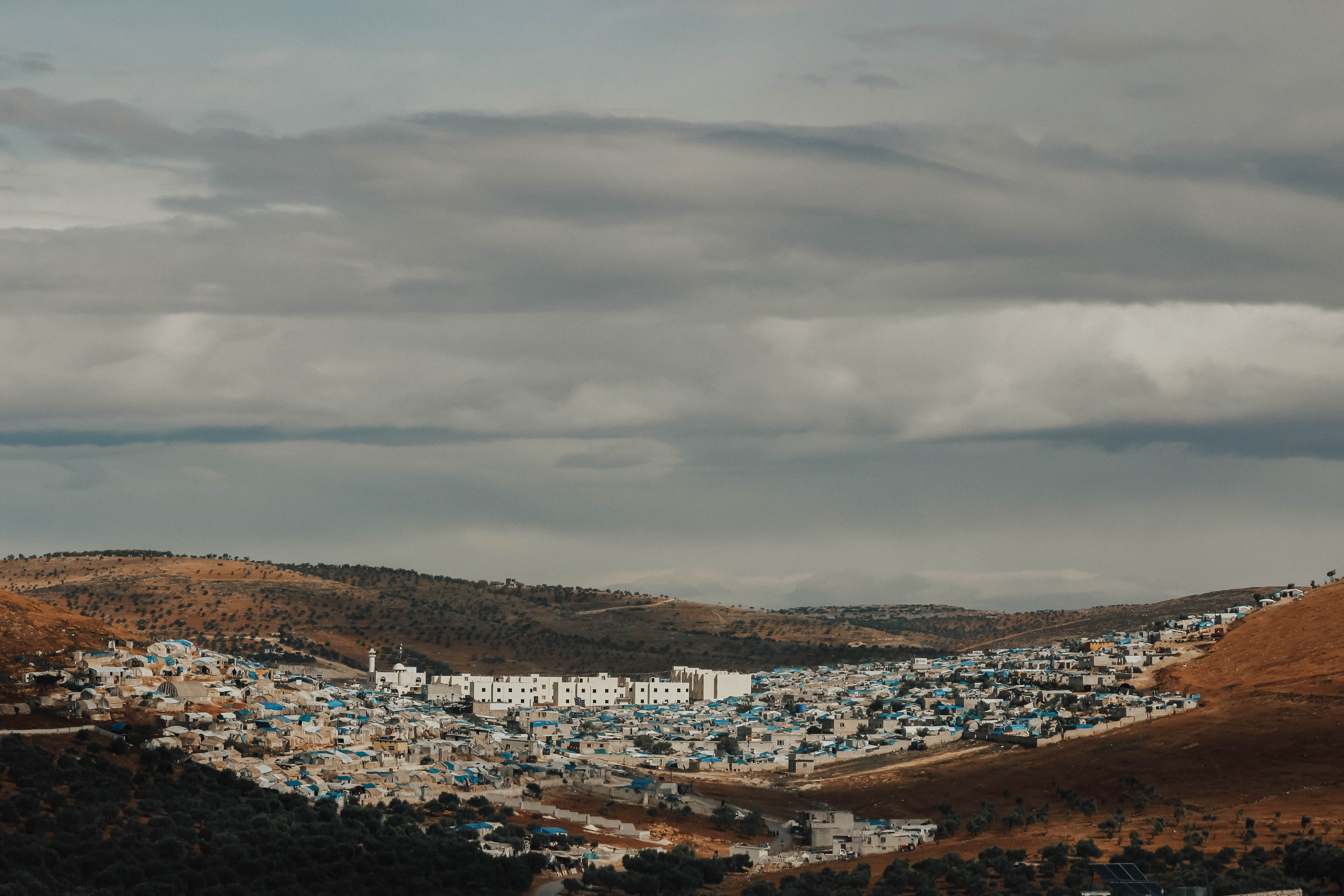 Atmeh border camp in Idlib, near the Syrian border. Over 800,000 internally displaced people live here in tents, with neither running water nor toilets.[/caption]
“Civilians saw with their own eyes what happened in areas that reconciled with the regime. People there are suffering humiliation, detention and torture,” said Mohammed, the FSA commander. In previous “reconciliation” deals, those who refused to surrender were bussed to Idlib, which was the last stronghold of the opposition. These internally displaced people have seen and heard what the Assad regime’s soldiers do to civilians in formerly opposition held areas — i.e., they rape the women and slaughter indiscriminately. Many people in Idlib believe that opposition factions are implementing the agendas of their foreign sponsors. They also acknowledge that the opposition forces can be abusive toward civilians. And yet, they need their protection.
Yasin (not his real name), a resident of Khan Sheikhoun, said that about 150 members of his extended family had been killed during the eight-year war. “The international community and all countries, Arab and Western, do not care about [us],” he said, adding that he believed the Arab and western governments wanted the Russians to help the Assad regime kill all the people of Idlib. Yasin barely survived the April 2017 Sarin gas attack on Khan Sheikhoun, which killed about 100 people. The UN’s chemical weapons watchdog, the OPCW, held the Syrian regime responsible for the strike. “The entire world abandoned us — Turkey, the world, the West. Nothing is before us except death,” said Yasin. He spoke rapidly, rushing to unload his pain, inhaling and exhaling audibly.
Yasin works as a monitor tracking Syrian and Russian jets. He informs the Syrian Civil Defense of approaching planes, so that they can warn civilians to find shelter, or escape the crowded locations that are routinely targeted by Russian forces and the Syrian regime. His immediate family fled to northern Aleppo, which is under Turkish control and thus safe from airstrikes. Khan Sheikhoun has been largely depopulated, with civilians seeking cover in nearby orchards or fleeing further north. “The Russian jets are chasing people wherever they escape,” Yasin said. But he refuses to leave, insisting that the regime will come for him no matter where he goes. “Let me die when I’m here, on my land.” Yassin’s resolve is not predicated on hope, but on fatalism. “No one hears us. Our blood is the cheapest on earth. Whether a Syrian dies or lives, it does not matter,” he said.
Umm Abdullah is a math teacher and prominent anti-regime activist in her city, Maarat al-Numan, an epicenter of civil society activism in Idlib. She joined the early protest demonstrations in 2011. Today she leads several associations, advocates for the rights of detainees in regime prisons and supports their families. “If you walk around Maarat al-Numan, you will see buildings with floors collapsed atop each other, stores with metal gates blown out. Jets do not leave the sky. Strikes are ongoing... Our children are dying.” She wept as she said, “I have not seen my son in seven years. He was my happiness. My eldest. He had a flame inside him. He was full of life.” ِAbdullah, her son, was arrested in February 2012 and detained in the notorious Sednaya Prison for participating in anti-regime protests. The family was informed only this year that he died under torture back in 2014. Like many other relatives of detainees, they sold property to pay exorbitant bribes for the release of their child, but to no avail.
For the past three years, Idlib has been stuck in an impossible, deadly situation. The frozen low-intensity conflict escalates every few months, resulting in mass casualties; the influence of the jihadis has expanded under the increasingly pragmatic Hayat Tahrir al-Sham; and humanitarian conditions have deteriorated as a consequence of a reduction in international funding. In the west, we are not reading about Idlib in the headlines — or even in the back pages. Because the media is barely reporting the story, many people have the mistaken impression that the war in Syria is over. The people of Idlib have become somewhat accustomed to having their intense suffering ignored — but still, they do feel dehumanized. “We are human beings. We have feelings, just like you,” said Umm Abdullah. “You in the west call for animal rights, for dogs and cats, so first demand our rights, us human beings.”
[post_title] => Who will write our history? The world looks away while Idlib awaits its fate
[post_excerpt] => Because the media has largely stopped reporting the war in Syria, there is a widespread misunderstanding that the war in Syria is over. In fact, it has escalated.
[post_status] => publish
[comment_status] => closed
[ping_status] => open
[post_password] =>
[post_name] => who-will-write-our-history-the-world-looks-away-while-idlib-awaits-its-fate
[to_ping] =>
[pinged] =>
[post_modified] => 2026-08-06 23:25:10
[post_modified_gmt] => 2026-08-06 23:25:10
[post_content_filtered] =>
[post_parent] => 0
[guid] => https://conversationalist.org/?p=1297
[menu_order] => 307
[post_type] => post
[post_mime_type] =>
[comment_count] => 0
[filter] => raw
)
Atmeh border camp in Idlib, near the Syrian border. Over 800,000 internally displaced people live here in tents, with neither running water nor toilets.[/caption]
“Civilians saw with their own eyes what happened in areas that reconciled with the regime. People there are suffering humiliation, detention and torture,” said Mohammed, the FSA commander. In previous “reconciliation” deals, those who refused to surrender were bussed to Idlib, which was the last stronghold of the opposition. These internally displaced people have seen and heard what the Assad regime’s soldiers do to civilians in formerly opposition held areas — i.e., they rape the women and slaughter indiscriminately. Many people in Idlib believe that opposition factions are implementing the agendas of their foreign sponsors. They also acknowledge that the opposition forces can be abusive toward civilians. And yet, they need their protection.
Yasin (not his real name), a resident of Khan Sheikhoun, said that about 150 members of his extended family had been killed during the eight-year war. “The international community and all countries, Arab and Western, do not care about [us],” he said, adding that he believed the Arab and western governments wanted the Russians to help the Assad regime kill all the people of Idlib. Yasin barely survived the April 2017 Sarin gas attack on Khan Sheikhoun, which killed about 100 people. The UN’s chemical weapons watchdog, the OPCW, held the Syrian regime responsible for the strike. “The entire world abandoned us — Turkey, the world, the West. Nothing is before us except death,” said Yasin. He spoke rapidly, rushing to unload his pain, inhaling and exhaling audibly.
Yasin works as a monitor tracking Syrian and Russian jets. He informs the Syrian Civil Defense of approaching planes, so that they can warn civilians to find shelter, or escape the crowded locations that are routinely targeted by Russian forces and the Syrian regime. His immediate family fled to northern Aleppo, which is under Turkish control and thus safe from airstrikes. Khan Sheikhoun has been largely depopulated, with civilians seeking cover in nearby orchards or fleeing further north. “The Russian jets are chasing people wherever they escape,” Yasin said. But he refuses to leave, insisting that the regime will come for him no matter where he goes. “Let me die when I’m here, on my land.” Yassin’s resolve is not predicated on hope, but on fatalism. “No one hears us. Our blood is the cheapest on earth. Whether a Syrian dies or lives, it does not matter,” he said.
Umm Abdullah is a math teacher and prominent anti-regime activist in her city, Maarat al-Numan, an epicenter of civil society activism in Idlib. She joined the early protest demonstrations in 2011. Today she leads several associations, advocates for the rights of detainees in regime prisons and supports their families. “If you walk around Maarat al-Numan, you will see buildings with floors collapsed atop each other, stores with metal gates blown out. Jets do not leave the sky. Strikes are ongoing... Our children are dying.” She wept as she said, “I have not seen my son in seven years. He was my happiness. My eldest. He had a flame inside him. He was full of life.” ِAbdullah, her son, was arrested in February 2012 and detained in the notorious Sednaya Prison for participating in anti-regime protests. The family was informed only this year that he died under torture back in 2014. Like many other relatives of detainees, they sold property to pay exorbitant bribes for the release of their child, but to no avail.
For the past three years, Idlib has been stuck in an impossible, deadly situation. The frozen low-intensity conflict escalates every few months, resulting in mass casualties; the influence of the jihadis has expanded under the increasingly pragmatic Hayat Tahrir al-Sham; and humanitarian conditions have deteriorated as a consequence of a reduction in international funding. In the west, we are not reading about Idlib in the headlines — or even in the back pages. Because the media is barely reporting the story, many people have the mistaken impression that the war in Syria is over. The people of Idlib have become somewhat accustomed to having their intense suffering ignored — but still, they do feel dehumanized. “We are human beings. We have feelings, just like you,” said Umm Abdullah. “You in the west call for animal rights, for dogs and cats, so first demand our rights, us human beings.”
[post_title] => Who will write our history? The world looks away while Idlib awaits its fate
[post_excerpt] => Because the media has largely stopped reporting the war in Syria, there is a widespread misunderstanding that the war in Syria is over. In fact, it has escalated.
[post_status] => publish
[comment_status] => closed
[ping_status] => open
[post_password] =>
[post_name] => who-will-write-our-history-the-world-looks-away-while-idlib-awaits-its-fate
[to_ping] =>
[pinged] =>
[post_modified] => 2026-08-06 23:25:10
[post_modified_gmt] => 2026-08-06 23:25:10
[post_content_filtered] =>
[post_parent] => 0
[guid] => https://conversationalist.org/?p=1297
[menu_order] => 307
[post_type] => post
[post_mime_type] =>
[comment_count] => 0
[filter] => raw
)


 Quite a few of these men tried to fast track a comeback, circumventing both apology and expressions of contrition. Charlie Rose approached feminist editor Tina Brown with the idea that she produce a program with him interviewing prominent men who had been toppled by #MeToo (she declined). Louis CK received a standing ovation when he appeared unannounced to do a stand up set at New York’s famous Comedy Cellar, only a few months after he acknowledged that he had on several occasions stripped naked and masturbated in front of female comedians whose nascent careers were predicated on his goodwill. And last October The New York Review of Books published a 3,000-word, first person essay by Jian Ghomeshi, the disgraced Canadian former radio show host. The CBC fired Ghomeshi in 2014 after learning that the Toronto Star was about to publish an investigative report detailing credible accusations that he had for years battered women during sexual encounters, and had abused women who worked for him. Titled “Reflections from a Hashtag,” the essay is redolent of narcissism and self-pity. It begins:
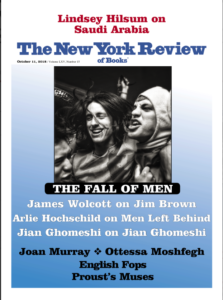 Reaction to the essay was swift and negative, rising to a crescendo of outrage after Ian Buruma, then editor of the NYRB, made some egregiously tone deaf remarks in a follow-up
 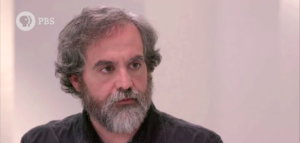 Devin Faraci (screencap)[/caption]
While Salbi’s separate interviews with Caroline and Faraci are short and somewhat superficial, they do provide insight into the impact of sexual assault and the power of a sincere apology. A victim who receives an acknowledgement of wrongdoing and a heartfelt expression of contrition from the perpetrator can experience a powerful physical and emotional response. In the interview, Contillo tells Salbi that while the assault itself was terrible, a “larger psychological pain had lodged itself” in her body.
Caroline Contillo highlights one of the less understood effects of trauma — that it invades the body and stays there, long after the physical act. Ensler says the same thing to Maron: that when a victim receives an apology that carries empathetic recognition by the perpetrator, it causes a physical reaction. Contillo said that Faraci’s apology provided relief not only because she could let go of the pain, but because she now felt that she was “living in a culture that suddenly seemed to care about” women who had been sexually assaulted or preyed upon.
Faraci offered his
Devin Faraci (screencap)[/caption]
While Salbi’s separate interviews with Caroline and Faraci are short and somewhat superficial, they do provide insight into the impact of sexual assault and the power of a sincere apology. A victim who receives an acknowledgement of wrongdoing and a heartfelt expression of contrition from the perpetrator can experience a powerful physical and emotional response. In the interview, Contillo tells Salbi that while the assault itself was terrible, a “larger psychological pain had lodged itself” in her body.
Caroline Contillo highlights one of the less understood effects of trauma — that it invades the body and stays there, long after the physical act. Ensler says the same thing to Maron: that when a victim receives an apology that carries empathetic recognition by the perpetrator, it causes a physical reaction. Contillo said that Faraci’s apology provided relief not only because she could let go of the pain, but because she now felt that she was “living in a culture that suddenly seemed to care about” women who had been sexually assaulted or preyed upon.
Faraci offered his