WP_Post Object
(
    [ID] => 10449
    [post_author] => 15
    [post_date] => 2026-04-29 23:09:07
    [post_date_gmt] => 2026-04-29 23:09:07
    [post_content] => 

The writer's new memoir is a feast, exploring how food can be both deeply personal and impacted by forces much larger than ourselves.

Our appetites are deeply personal, a reflection of our idiosyncratic tastes. They’re shaped, too, by what our communities feed us, by what’s available or accessible or shared. Growing up in New England, you might develop a love of fried clams; raised in Hong Kong, you might hunger for congee; spend enough time in France and you’ll probably become a pastry snob. In every extended family lies one recipe that’s an instant passport to time spent with a beloved matriarch, or a meal that feels like home. And who doesn’t have a dish they’ve sworn they’ll never eat again because it reminds us too much of an ex? 

Food writer Alicia Kennedy knows these contours well. In her writing—including in her fantastic history of vegetarian eating, 2023’s No Meat Requiredshe explores how our relationships to food can be deeply personal, yet impacted by forces much larger than ourselves, from local climates and family histories to global supply chains and government policies. Her work illuminates the ethical and sociopolitical elements of what we eat and why, yet sacrifices none of the thrills our appetites expose us to. And her latest, On Eating: The Making and Unmaking of My Appetites, is a feast, exploring her personal relationship to food and cooking as she journeys from an adolescent gourmand to vegan baker to established food and culture writer.  

In her new memoir, Kennedy organizes each chapter around a specific food—beans, lamb, bread, pumpkin, and more—tying each to a moment in her life. She writes about developing culinary preferences via the plentiful apples of Long Island, where she grew up; about the Proustian power of a box of Entenmann’s doughnuts. When she goes to college, her coursework inspires her to think more critically about the systems of power that ensnare us all, and naturally, this leads her to consider how the food she loves has made its way to her plate. 

She begins with a childhood obsession. “Chocolate, the first true object of my longing and love,” she writes, “was the way I learned about exploitation in the global food system.” When she reads about the enslaved child labor and exploited farmers up and down the cocoa supply chain, she starts seeking out fair trade-certified chocolate—then bananas, and sugar, and coffee. She goes vegan, then falls in love with baking, and stumbles into running a vegan bakery out of her home kitchen alongside her day job as a copy editor. As Kennedy traces her winding path to meatless eating, she continually challenges the reader to consider food as an extension of our ethics. But her clear moral stance—her assertions that one’s choices around food ought to reflect one’s principles—never feels didactic; instead, it offers a blueprint for self-interrogation that can help lead the reader to their own conclusions. 

When a long romantic relationship dissolves in the face of her ambition, she shuts down the bakery and moves to Brooklyn. There, she immerses herself in the city’s vegan food scene while picking up assignments as a freelance writer, endeavoring to normalize vegan coverage in the world of food journalism—an especially difficult task given its love of meat and masculinity. After several reporting trips bring her to Puerto Rico, she decides to move there—in part, because she’s fallen in love with her now-husband, whom she meets by chance while reporting on a rum distillery. 

From Puerto Rico, she tells the story of their romance through wine. She walks through the island’s sugarcane fields, considering the crop’s relationship to slavery and colonialism. In her chapter on plantains, she also reflects on her own Puerto Rican heritage: Her paternal grandmother was born on the island, but rarely spoke about her childhood, forcing Kennedy to negotiate her understanding of her identity after she moves there. “Here, in my Puerto Ricanness, was something I couldn’t disappear into,” she writes; “this was something I had to seek in order to claim.” In part, she ultimately achieves this via her relationship to food, incorporating the island’s seasonality and culinary history into her kitchen.

Writing many years and miles removed from her childhood, Kennedy also finds newfound perspective on her home and the food that grows there—and the indelible way it has shaped her. Most of all, she grows to appreciate Long Island’s oysters, which she devours in a period of mourning following the death of her younger brother: They had been his least favorite food. “Maybe that urge for an oyster, and all the urges after it, were a way of reclaiming my appetite from the immense sadness,” she writes. “A way of saying, ‘I’ll live, and I’ll live enough for both of us, but because I’m mad at you, I’m going to eat the food you hated most.’” Her grief rips a hole in the metaphysical center of the book, a wound she can’t repair but which colors the way she looks at everything—eventually prompting a renegotiation of the strictures of her veganism to allow for her newfound craving. 

Much of Kennedy’s work evokes the complex systems and philosophical concepts underpinning how we nourish ourselves; her writing about grief—and love—offers a moving reminder of the deeply personal, human scale of these choices. We ought to consider how far food traveled to get to our plates, Kennedy argues; we should know how much work it takes to grow crops, to slaughter animals, to cut down sugarcane. But these are not merely ideological considerations—nor are they simply a setup for a joyless life, a way of prioritizing our principles over our pleasures. To truly consider our own appetite is a way of connecting us to ourselves and to each other. Seen through that lens, the ethical choices we make about our food aren’t a burden, but a gift.  

The day after I finished reading On Eating, I made dinner for my sister and her husband, who had just welcomed their first child. They’re omnivores; meanwhile, I haven’t eaten meat in over a decade, drawn to vegetarianism’s respect for animals and the planet. I worried, as I cooked, whether they’d enjoy the meat-free, bean-centric dish I was preparing. But as I made it, I also kept thinking of Kennedy’s belief that “inevitably … cooking becomes care: for self, for others”—her insistence that the delights of a well-made meal and our responsibility as stewards of this planet are inseparable. Food is a means of tending to our own bodies; it’s something we share with those we love; it’s a way of putting our values into practice. Her words echoed in my head as I cooked, feeling nourished by each of these overlapping versions of care, and the many appetites we feed when we embody them.
[post_title] => Book of the Month: "On Eating" by Alicia Kennedy [post_excerpt] => The writer's new memoir is a feast, exploring how food can be both deeply personal and impacted by forces much larger than ourselves. [post_status] => publish [comment_status] => closed [ping_status] => closed [post_password] => [post_name] => book-of-the-month-on-eating-the-making-and-unmaking-of-my-appetites-alicia-kennedy-memoir-botm [to_ping] => [pinged] => [post_modified] => 2026-04-29 23:09:09 [post_modified_gmt] => 2026-04-29 23:09:09 [post_content_filtered] => [post_parent] => 0 [guid] => https://conversationalist.org/?p=10449 [menu_order] => 0 [post_type] => post [post_mime_type] => [comment_count] => 0 [filter] => raw )
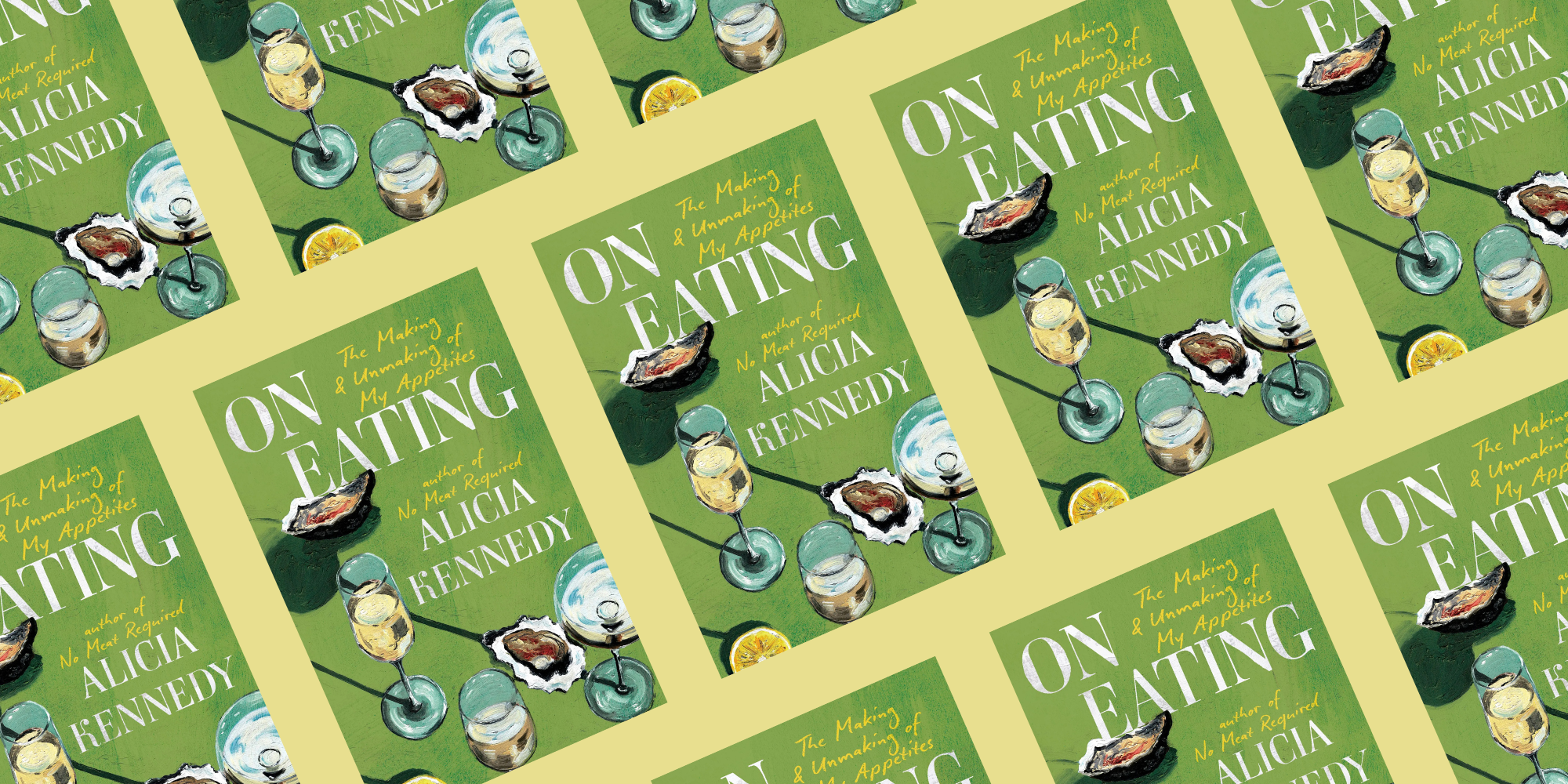
The book cover for "On Eating" by Alicia Kennedy.
Balance

Book of the Month: “On Eating” by Alicia Kennedy

The writer’s new memoir is a feast, exploring how food can be both deeply personal and impacted by forces much larger than ourselves.

Our appetites are deeply personal, a reflection of our idiosyncratic tastes. They’re shaped, too, by what our communities feed us, by what’s available or accessible or shared. Growing up in New England, you might develop a love of fried clams; raised in Hong Kong, you might hunger for congee; spend enough time in France and you’ll probably become a pastry snob. In every extended family lies one recipe that’s an instant passport to time spent with a beloved matriarch, or a meal that feels like home. And who doesn’t have a dish they’ve sworn they’ll never eat again because it reminds us too much of an ex? 

Food writer Alicia Kennedy knows these contours well. In her writing—including in her fantastic history of vegetarian eating, 2023’s No Meat Requiredshe explores how our relationships to food can be deeply personal, yet impacted by forces much larger than ourselves, from local climates and family histories to global supply chains and government policies. Her work illuminates the ethical and sociopolitical elements of what we eat and why, yet sacrifices none of the thrills our appetites expose us to. And her latest, On Eating: The Making and Unmaking of My Appetites, is a feast, exploring her personal relationship to food and cooking as she journeys from an adolescent gourmand to vegan baker to established food and culture writer.  

In her new memoir, Kennedy organizes each chapter around a specific food—beans, lamb, bread, pumpkin, and more—tying each to a moment in her life. She writes about developing culinary preferences via the plentiful apples of Long Island, where she grew up; about the Proustian power of a box of Entenmann’s doughnuts. When she goes to college, her coursework inspires her to think more critically about the systems of power that ensnare us all, and naturally, this leads her to consider how the food she loves has made its way to her plate. 

She begins with a childhood obsession. “Chocolate, the first true object of my longing and love,” she writes, “was the way I learned about exploitation in the global food system.” When she reads about the enslaved child labor and exploited farmers up and down the cocoa supply chain, she starts seeking out fair trade-certified chocolate—then bananas, and sugar, and coffee. She goes vegan, then falls in love with baking, and stumbles into running a vegan bakery out of her home kitchen alongside her day job as a copy editor. As Kennedy traces her winding path to meatless eating, she continually challenges the reader to consider food as an extension of our ethics. But her clear moral stance—her assertions that one’s choices around food ought to reflect one’s principles—never feels didactic; instead, it offers a blueprint for self-interrogation that can help lead the reader to their own conclusions. 

When a long romantic relationship dissolves in the face of her ambition, she shuts down the bakery and moves to Brooklyn. There, she immerses herself in the city’s vegan food scene while picking up assignments as a freelance writer, endeavoring to normalize vegan coverage in the world of food journalism—an especially difficult task given its love of meat and masculinity. After several reporting trips bring her to Puerto Rico, she decides to move there—in part, because she’s fallen in love with her now-husband, whom she meets by chance while reporting on a rum distillery. 

From Puerto Rico, she tells the story of their romance through wine. She walks through the island’s sugarcane fields, considering the crop’s relationship to slavery and colonialism. In her chapter on plantains, she also reflects on her own Puerto Rican heritage: Her paternal grandmother was born on the island, but rarely spoke about her childhood, forcing Kennedy to negotiate her understanding of her identity after she moves there. “Here, in my Puerto Ricanness, was something I couldn’t disappear into,” she writes; “this was something I had to seek in order to claim.” In part, she ultimately achieves this via her relationship to food, incorporating the island’s seasonality and culinary history into her kitchen.

Writing many years and miles removed from her childhood, Kennedy also finds newfound perspective on her home and the food that grows there—and the indelible way it has shaped her. Most of all, she grows to appreciate Long Island’s oysters, which she devours in a period of mourning following the death of her younger brother: They had been his least favorite food. “Maybe that urge for an oyster, and all the urges after it, were a way of reclaiming my appetite from the immense sadness,” she writes. “A way of saying, ‘I’ll live, and I’ll live enough for both of us, but because I’m mad at you, I’m going to eat the food you hated most.’” Her grief rips a hole in the metaphysical center of the book, a wound she can’t repair but which colors the way she looks at everything—eventually prompting a renegotiation of the strictures of her veganism to allow for her newfound craving. 

Much of Kennedy’s work evokes the complex systems and philosophical concepts underpinning how we nourish ourselves; her writing about grief—and love—offers a moving reminder of the deeply personal, human scale of these choices. We ought to consider how far food traveled to get to our plates, Kennedy argues; we should know how much work it takes to grow crops, to slaughter animals, to cut down sugarcane. But these are not merely ideological considerations—nor are they simply a setup for a joyless life, a way of prioritizing our principles over our pleasures. To truly consider our own appetite is a way of connecting us to ourselves and to each other. Seen through that lens, the ethical choices we make about our food aren’t a burden, but a gift.  

The day after I finished reading On Eating, I made dinner for my sister and her husband, who had just welcomed their first child. They’re omnivores; meanwhile, I haven’t eaten meat in over a decade, drawn to vegetarianism’s respect for animals and the planet. I worried, as I cooked, whether they’d enjoy the meat-free, bean-centric dish I was preparing. But as I made it, I also kept thinking of Kennedy’s belief that “inevitably … cooking becomes care: for self, for others”—her insistence that the delights of a well-made meal and our responsibility as stewards of this planet are inseparable. Food is a means of tending to our own bodies; it’s something we share with those we love; it’s a way of putting our values into practice. Her words echoed in my head as I cooked, feeling nourished by each of these overlapping versions of care, and the many appetites we feed when we embody them.