WP_Post Object
(
    [ID] => 10374
    [post_author] => 15
    [post_date] => 2026-03-27 21:37:14
    [post_date_gmt] => 2026-03-27 21:37:14
    [post_content] => 

How the ephemerality of the internet and the many ways we present ourselves online has warped our ability to know who we really are.

Will the Future Like You? Reflections on the Age of Hyper-Reinvention begins with a declaration: Our personal identities have not kept pace with the tempo of technology. And, according to author Patricia Martin, this imbalance has made us wholly unprepared to explore—let alone answer—the age-old question of who we really are.

In her book, Martin, a cognitive psychology-informed cultural analyst and host of the podcast Jung in the World, frames many of her arguments using Carl Jung’s theory of archetypes, applying them to identity formation in the digital age. If Jung’s original thesis proposes that humans rely on universal themes and inherited behaviors in the psyche to present who we are across self, shadow, persona, and anima, Martin contends the ephemerality of the internet has warped our inheritance. Her primary concern are the selves we present to the world via our various performances online, often manufactured as authentic while being anything but. Carrying out numerous ethnographic approaches including content analysis, narrative interviews, and sorting and coding “15,000 online users across 500 million posts,” she concludes these performances are also occurring at an exorbitant rate never experienced before in human history, sowing mass identity confusion in the process. 

Having become increasingly skeptical (and weary) of internet self-presentation via social media, I devoured Martin’s latest work, which utilized psychoanalytical language and frameworks to explore observations I’ve mainly considered through a cultural and anthropological lens. But even those who don’t agree with Martin (or me) about the current state of affairs will likely find instructive value in the book’s summations about our ever brave new technological era and its effects on identity. 

According to Martin, there are three main elements contributing to our modern distortions of self-construction and development: “personal fog,” “chronic self-doubt,” and “cascading crossroads.” Borrowing from Jung’s definition of the persona as a complex system that helps the individual relate with the world socially by wearing a kind of mask, Martin argues that personal fog comes from the continuous amplification and proliferation of various personas online, which obliterate our sense of who we are. Chronic self-doubt, meanwhile, delineates the distances between our digital presentations, which rely on external validation, and the selves we present offline, a gap that can cause tremendous self-uncertainty. Finally, cascading crossroads is characterized by how previously reliable identity anchors—such as family and work, or even other modes, such as class, gender, and where we consider home—now fluctuate more frequently, making our shape-shifting far more incessant. 

Among the many examples Martin offers of this increasing ephemerality, she cites the story of the trailblazing confessional blogger, Heather Armstrong. In the early aughts, Armstrong’s blog, Dooce, was a “mommy tell-all” magnet to millions, especially young mothers, who regularly consumed her relatable personal accounts of raising two children in Salt Lake City, Utah. But even before Dooce’s eventual decline due to the rise of social media, Martin points out that as Armstrong “matured, she found her light waning,” and the blogger increasingly divulged more serious confessions, including daily alcohol consumption and marital issues, not to mention the details of her history with depression. Martin isn’t explicit about whether Armstrong’s solemn shift was a cry for help or an effort to reinvigorate the blog. She does, however, add that “Dooce attempted several comebacks. But traffic never bounced back.” In 2023, Armstrong died by suicide. Examining how she was remembered, Martin notes “how little was said about her massive output of content, the effort it took, and the emotional toll of constant reinvention…”

While Armstrong’s story is a particularly dire case, there are others—admittedly less tragic—throughout the book that still speak to the toll our relationship to having an audience is taking on our relationship to ourselves. Martin also makes clear this goes beyond those who are, in some shape or form, attempting to be influencers: All of us online are liable to the emotional struggles of trying to juggle various presentations at cost to our psyche and identity development. 

However, the book doesn’t propose that we all abandon the internet (to the extent that we can) to counter these identity disruptions. Nor does Martin suggest that we wholly desert digital performance and presentation altogether. Rather, she asks the reader to more carefully consider the repercussions to our relationships—both to ourselves and others—online, where our identities are overwhelmed by seemingly endless transmutations, and ultimately underpinned by digital spaces extorting our identity confusion for profit. 

This inevitably has affinities with Karl Marx’s concept of the alienation of the factory worker from anything that could give their work meaning. But for me, it brought to mind Aimé Cesaire’s Discourse on Colonialism, and its thesis that the thingification of the colonized subject turns them into a commodity, isolating a person from themselves and the other. Transposing Cesaire’s contentions onto Martin’s begs questions worth probing further: Are we being colonized by the internet? Or by the tech bros that run it? 

Luckily, Martin doesn’t leave us without specific resolutions for alleviating our identity disruptions, the greatest of which is—perhaps surprisingly—a spiritual recommendation: that we reconsider the soul. Some anecdotes in the book are even dedicated to people who've been able to subvert identity confusion by relying on time-honored means of transformation and soul-enrichment: insulating themselves offline, and leaning on close bonds in the flesh. 

Martin also challenges us not to render onto technology what cannot be done by technology. Instead, she encourages us to create and honor our most true selves beyond the curations the internet can only offer. “We set boundaries, we verify claims, and we don’t give ourselves away too easily for the sake of a little fawning attention,” Martin writes in the concluding chapters of the book; to me, sound advice regardless of which continuum of internet identity discourse you choose to be on. She also offers perhaps one resolve for the question the book’s title proposes, Will the Future Like You?: Ultimately, the quest to answer this in the digital space is a hollow endeavor, because it requires an endless reconfiguration of selves, often to our own detriment. So, whatever selves we do offer up as performance in digital spaces, at the very least, we should refuse to give in fully—saving us perhaps not only from ourselves, but for ourselves.


[post_title] => March Book of the Month: "Will The Future Like You?" by Patricia Martin [post_excerpt] => How the ephemerality of the internet has warped our ability to know who we are. [post_status] => publish [comment_status] => closed [ping_status] => closed [post_password] => [post_name] => march-book-of-the-month-botm-will-the-future-like-you-patricia-martin-identity-online-social-media-nonfiction-psychology [to_ping] => [pinged] => [post_modified] => 2026-03-27 21:38:46 [post_modified_gmt] => 2026-03-27 21:38:46 [post_content_filtered] => [post_parent] => 0 [guid] => https://conversationalist.org/?p=10374 [menu_order] => 0 [post_type] => post [post_mime_type] => [comment_count] => 0 [filter] => raw )
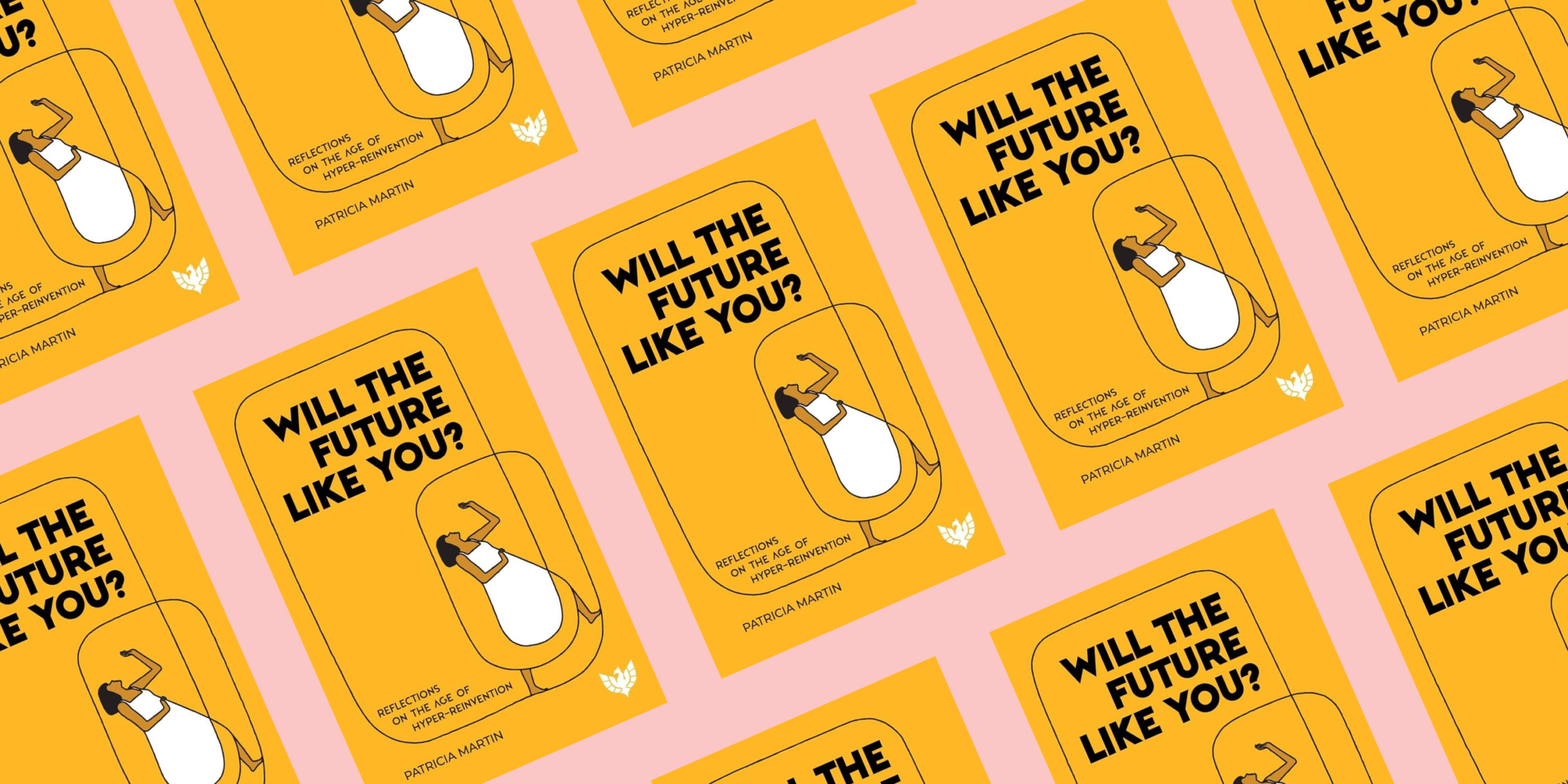
Book cover for "Will The Future Like You?" by Patricia Martin.
Karnac Books

March Book of the Month: “Will The Future Like You?” by Patricia Martin

How the ephemerality of the internet and the many ways we present ourselves online has warped our ability to know who we really are.

Will the Future Like You? Reflections on the Age of Hyper-Reinvention begins with a declaration: Our personal identities have not kept pace with the tempo of technology. And, according to author Patricia Martin, this imbalance has made us wholly unprepared to explore—let alone answer—the age-old question of who we really are.

In her book, Martin, a cognitive psychology-informed cultural analyst and host of the podcast Jung in the World, frames many of her arguments using Carl Jung’s theory of archetypes, applying them to identity formation in the digital age. If Jung’s original thesis proposes that humans rely on universal themes and inherited behaviors in the psyche to present who we are across self, shadow, persona, and anima, Martin contends the ephemerality of the internet has warped our inheritance. Her primary concern are the selves we present to the world via our various performances online, often manufactured as authentic while being anything but. Carrying out numerous ethnographic approaches including content analysis, narrative interviews, and sorting and coding “15,000 online users across 500 million posts,” she concludes these performances are also occurring at an exorbitant rate never experienced before in human history, sowing mass identity confusion in the process. 

Having become increasingly skeptical (and weary) of internet self-presentation via social media, I devoured Martin’s latest work, which utilized psychoanalytical language and frameworks to explore observations I’ve mainly considered through a cultural and anthropological lens. But even those who don’t agree with Martin (or me) about the current state of affairs will likely find instructive value in the book’s summations about our ever brave new technological era and its effects on identity. 

According to Martin, there are three main elements contributing to our modern distortions of self-construction and development: “personal fog,” “chronic self-doubt,” and “cascading crossroads.” Borrowing from Jung’s definition of the persona as a complex system that helps the individual relate with the world socially by wearing a kind of mask, Martin argues that personal fog comes from the continuous amplification and proliferation of various personas online, which obliterate our sense of who we are. Chronic self-doubt, meanwhile, delineates the distances between our digital presentations, which rely on external validation, and the selves we present offline, a gap that can cause tremendous self-uncertainty. Finally, cascading crossroads is characterized by how previously reliable identity anchors—such as family and work, or even other modes, such as class, gender, and where we consider home—now fluctuate more frequently, making our shape-shifting far more incessant. 

Among the many examples Martin offers of this increasing ephemerality, she cites the story of the trailblazing confessional blogger, Heather Armstrong. In the early aughts, Armstrong’s blog, Dooce, was a “mommy tell-all” magnet to millions, especially young mothers, who regularly consumed her relatable personal accounts of raising two children in Salt Lake City, Utah. But even before Dooce’s eventual decline due to the rise of social media, Martin points out that as Armstrong “matured, she found her light waning,” and the blogger increasingly divulged more serious confessions, including daily alcohol consumption and marital issues, not to mention the details of her history with depression. Martin isn’t explicit about whether Armstrong’s solemn shift was a cry for help or an effort to reinvigorate the blog. She does, however, add that “Dooce attempted several comebacks. But traffic never bounced back.” In 2023, Armstrong died by suicide. Examining how she was remembered, Martin notes “how little was said about her massive output of content, the effort it took, and the emotional toll of constant reinvention…”

While Armstrong’s story is a particularly dire case, there are others—admittedly less tragic—throughout the book that still speak to the toll our relationship to having an audience is taking on our relationship to ourselves. Martin also makes clear this goes beyond those who are, in some shape or form, attempting to be influencers: All of us online are liable to the emotional struggles of trying to juggle various presentations at cost to our psyche and identity development. 

However, the book doesn’t propose that we all abandon the internet (to the extent that we can) to counter these identity disruptions. Nor does Martin suggest that we wholly desert digital performance and presentation altogether. Rather, she asks the reader to more carefully consider the repercussions to our relationships—both to ourselves and others—online, where our identities are overwhelmed by seemingly endless transmutations, and ultimately underpinned by digital spaces extorting our identity confusion for profit. 

This inevitably has affinities with Karl Marx’s concept of the alienation of the factory worker from anything that could give their work meaning. But for me, it brought to mind Aimé Cesaire’s Discourse on Colonialism, and its thesis that the thingification of the colonized subject turns them into a commodity, isolating a person from themselves and the other. Transposing Cesaire’s contentions onto Martin’s begs questions worth probing further: Are we being colonized by the internet? Or by the tech bros that run it? 

Luckily, Martin doesn’t leave us without specific resolutions for alleviating our identity disruptions, the greatest of which is—perhaps surprisingly—a spiritual recommendation: that we reconsider the soul. Some anecdotes in the book are even dedicated to people who’ve been able to subvert identity confusion by relying on time-honored means of transformation and soul-enrichment: insulating themselves offline, and leaning on close bonds in the flesh. 

Martin also challenges us not to render onto technology what cannot be done by technology. Instead, she encourages us to create and honor our most true selves beyond the curations the internet can only offer. “We set boundaries, we verify claims, and we don’t give ourselves away too easily for the sake of a little fawning attention,” Martin writes in the concluding chapters of the book; to me, sound advice regardless of which continuum of internet identity discourse you choose to be on. She also offers perhaps one resolve for the question the book’s title proposes, Will the Future Like You?: Ultimately, the quest to answer this in the digital space is a hollow endeavor, because it requires an endless reconfiguration of selves, often to our own detriment. So, whatever selves we do offer up as performance in digital spaces, at the very least, we should refuse to give in fully—saving us perhaps not only from ourselves, but for ourselves.