WP_Post Object
(
    [ID] => 10165
    [post_author] => 15
    [post_date] => 2026-02-18 19:45:31
    [post_date_gmt] => 2026-02-18 19:45:31
    [post_content] => 

In an era of rising authoritarianism and billionaire autocrats, defenders of human rights cannot afford to retreat.

There's a moment in every struggle when retreat seems like the only rational option. When dictators grow bolder and democracies grow weaker; when the funding dries up and the threats are mounting.

For even the staunchest of human rights defenders, this is often the moment when the temptation to step back, to compromise, to "wait for better times" becomes almost irresistible. But it’s also the moment when it’s most crucial that we hold the line.  

The Illiberal Surge

The numbers tell a grim story. According to the 2025 Democracy Without Borders report, the proportion of the world’s population living in a liberal democracy is now the lowest it’s been in 50 years—less than 12% of people worldwide. In contrast, 72% of the population—equivalent to 5.8 billion people—live under autocratic rule. Even countries once considered democratic beacons are sliding backwards, their institutions hollowed out by leaders who exploit fear, weaponize division, and dismantle checks and balances with disturbing efficiency. Increasingly, even the United States—long regarded as a democratic anchor—is exhibiting patterns of autocratic drift, marked by the concentration of executive power, the erosion of institutional constraints, and the normalization of political coercion and violence.

Across every continent, we are witnessing an unprecedented assault on human rights, rule of law, and democratic norms. According to Freedom House, global freedom has declined for 19 consecutive years. In Russia, Vladimir Putin has transformed a nuclear superpower into a revisionist rogue state, waging wars of conquest under the banner of Russkii Mir (“the Russian World”)—an imperial doctrine that frames violence as civilizational reunification. In practice, this entails the imposition of totalitarian control over territory, society, and political life through authoritarian systems of governance abroad; and at home, the total, systematic elimination of political opposition. In Turkey, Recep Tayyip Erdoğan has hollowed out judicial independence and imprisoned tens of thousands to entrench personal rule. In China, Xi Jinping has constructed the most advanced surveillance state in human history, fusing cutting-edge technology with unapologetic repression. In Hungary, Viktor Orbán has perfected the model of so-called “illiberal democracy,” an oxymoron that now functions as a practical manual for aspiring autocrats.

Even in formerly Soviet Central Asia, where expectations were never high, the trajectory is alarming. Kyrgyzstan, once celebrated as the region's freest country, now jails journalists, suppresses protests, and coordinates with Russian security services to hunt down dissidents. Kazakhstan, despite its carefully cultivated image as a modernizing state and economic powerhouse, brutally crushes peaceful protests, including inviting Russian troops to massacre its own citizens—killing over 200 people in what the government euphemistically called "anti-terrorist operations" in January 2022. Uzbekistan continues to restrict civil liberties, while the EU prepares to reward it with enhanced trade deals; and Tajikistan and Turkmenistan remain totalitarian nightmares that don't even try to pretend otherwise.

The Billionaire Autocrat: Democracy's New Nemesis

Making this era particularly dangerous is not just the rise of traditional autocrats, but the emergence of a new breed: the billionaire strongman who wields wealth as a weapon and treats nations like personal subsidies.

These are not just politicians who happen to be rich, but oligarchs who view governance as an extension of their business empires, who treat public office as private property, and who recognize no distinction between state resources and personal assets. Unlike traditional dictators, who seize power through military coups or revolutionary movements, this modern autocrat often arrives through elections—then uses his power for self-enrichment and for dismantling democracy from within, ensuring he can remain in power indefinitely.

Look at Donald Trump’s return to the U.S. presidency, backed by the world’s richest man, Elon Musk, who has used his ownership of X (formerly Twitter) to amplify destructive and hateful narratives and undermine democratic discourse while on his path to becoming the world’s first trillionaire. Look at the tech billionaires who increasingly view themselves as above the law and accountable to no one, while wielding unprecedented influence over information flows and public opinion. Intoxicated by this unchecked power, some have gone further—intervening in the domestic politics of other countries, amplifying or aligning with extremist and openly fascist movements, and actively threatening democratic processes far beyond their own borders. This concentration of power is not accidental: It is built on decades of privileged access to public resources, publicly funded research, state subsidies, regulatory forbearance, and the extraction of value from user-generated data and public infrastructure.

This marriage of authoritarian governance and extreme wealth has created a feedback loop of power consolidation, where wealth buys political influence, and political influence protects and expands wealth—a cycle that continues until the very concept of public interest becomes quaint and obsolete.

These billionaire autocrats also work in tandem, threatening human rights both in their home countries and abroad: They fund each other's regimes, help evade sanctions, provide safe havens for each other's stolen assets, and create international networks of corruption that transcend borders.

The result is a global ecosystem of kleptocracy where the rules apply to ordinary people but never to the powerful. When a Kyrgyz president is overthrown for corruption, he flees to Belarus or Russia. When Russian oligarchs need to launder money, they find willing accomplices in London, Dubai, and New York. This is not limited to traditionally authoritarian states, either. Under Donald Trump, the United States also recently adopted a recognizably autocratic maneuver: Shortly after kidnapping President Nicolás Maduro, proceeds from the sale of Venezuelan oil—reportedly totaling $500 million—were routed into multiple offshore accounts, the largest held in Qatar.

The Funding Crisis

The cruel irony is that, as threats of global authoritarianism continue to multiply, the resources to defend against them are evaporating.

The organizations that document war crimes, defend political prisoners, expose corruption, and provide legal aid to vulnerable populations are being forced to cut staff, close offices, and scale back operations. Small grassroots groups—often the most effective, because they're closest to the communities they serve—are disappearing entirely.

Human rights organizations across the world are facing unprecedented funding cuts. Governments that once supported civil society are redirecting resources to "national priorities"—often code for building walls and buying weapons. Private foundations are "pivoting" to other issues. International donors are suffering from "democracy fatigue," as if defending basic rights were a trend rather than a fundamental imperative.

Why We Cannot Retreat

In the face of these challenges, some have argued for strategic retreat. "Wait for the political climate to improve," they say. "Focus on less controversial issues." "Don't antagonize powerful governments." "Be realistic about what's achievable."

This advice is seductive precisely because of its supposed practicality. But it's also wrong.

History teaches us that authoritarianism, once given space to breathe, metastasizes. Dictators interpret hesitation as weakness and compromise as surrender. When human rights defenders go quiet, they don't buy time—they lose ground.

The window for resistance doesn't widen with patience; it narrows with delay.

Every time we soften our demands for accountability, every time we accept "reforms" that are purely cosmetic, every time we prioritize short-term economic interests over long-term democratic values, we hand authoritarians another victory. Consider the trajectory of Russia. In the 1990s and early 2000s, Western governments believed they could moderate Putin through engagement and economic ties. But each concession, each instance of looking the other way, each prioritization of "stability" over justice only emboldened Putin further. By the time the West decided to take a firm stance, Russia had already become the authoritarian menace it is today—and Ukraine is still paying the price for it in blood.

It is imperative, then, that we do not repeat our predecessors’ mistakes: Where they ceded ground, we must now hold the line.

What Holding the Line Means

Holding the line doesn't mean mindless stubbornness, or a refusal to adapt. Instead, it means refusing to compromise on core principles, regardless of the circumstances—a collective effort that requires each of us.

It means human rights organizations should continue documenting abuses even when governments threaten their staff. It means journalists investigating corruption even when they risk imprisonment or death. It means activists organizing protests, even when they’re banned and participants are beaten.

Holding the line means attaching real, enforceable human rights conditions to every cooperation agreement, trade deal, and aid package. It means wealthy democracies cannot allow their financial systems to become laundromats for dictators' stolen wealth. It means tech companies cannot provide surveillance tools to authoritarian regimes. It means universities cannot accept money from kleptocrats seeking to buy respectability. It means investigating and sanctioning corruption, regardless of whose feelings it hurts.

It also means confronting the uncomfortable truth that extreme wealth concentration must be dismantled. A world where a handful of billionaires wield more power than elected governments is inherently incompatible with democracy and human rights. When individuals accumulate resources equivalent to national budgets, they become unaccountable centers of power that can manipulate democracies, fund authoritarian movements, and evade any meaningful oversight.

To truly hold the line, then, we also need wealth taxes that prevent the emergence of quasi-monarchical fortunes. We need to abandon the fiction that billionaires are somehow more enlightened, more competent, or more deserving of power than democratically elected officials. We need corporate governance reforms that prevent oligarchs from treating companies as personal fiefdoms. We need to close the legal loopholes that allow the ultra-wealthy to operate in regulatory twilight zones.

We need to hold not just one line, but all the smaller lines that make up the whole.

The Cost of Retreat

And if we don't?

In the 1930s, democracies chose appeasement over confrontation, economic interests over moral clarity. They told themselves that engaging with fascist regimes would moderate them, that war could be avoided through compromise—and millions died because of it.

Today's authoritarians are learning the same lesson their predecessors did: Democracies will tolerate almost anything if you frame it as "stability" or "economic necessity." And they've adjusted their behavior accordingly—becoming bolder, more brutal, and more brazen in their contempt for human rights and international law.

If we retreat now, the next generation won't just face an "illiberal surge"—they'll face an illiberal world order where authoritarianism is the norm, the powerful answer to no one, and human rights are quaint historical curiosities.

Hope Is a Discipline

Make no mistake: Holding the line is exhausting. The victories are small and the setbacks are devastating. There will be moments when continuing seems impossible, when the challenges we face feel insurmountable.

But hope is not about believing everything will work out. Hope is the discipline of continuing the fight even when the odds are terrible. Hope is understanding that the line we hold today creates and protects the space where tomorrow's resistance will grow. And sometimes, against all odds, that resistance succeeds.

We’ve seen it in our lifetimes: the fall of the Berlin Wall, the collapse of the USSR, the end of apartheid, the Arab Spring’s brief flowering, the popular uprisings across Latin America and Central Asia, Ukraine’s Revolution of Dignity. These weren't inevitable—they happened because people refused to accept authoritarianism as permanent.

They happened because people held the line until the moment came to advance.

A Call to Action

To human rights defenders everywhere: When funding disappears, innovate. When governments threaten you, document everything. When allies waiver, remind them what's at stake.

To democratic governments and international institutions: Stop the charade of believing trade will transform autocrats. Attach real conditions to every agreement. Support civil society unreservedly. Sanction corruption aggressively. And recognize that your credibility depends not on what you say but what you do when authoritarians call your bluff.

To citizens of global democracies: Recognize that your freedoms are not guaranteed. They exist because previous generations fought for them and current defenders maintain them. Support human rights organizations. Find your people. Build coalitions. Hold your governments accountable when they prioritize profits over principles. And understand that authoritarianism will eventually come for you if it is allowed to flourish unchecked.

To journalists: Keep investigating. Keep publishing. Your work is dangerous precisely because it's effective. Every investigation you complete, every truth you reveal, chips away at the foundations of authoritarian power.

And to those who have already retreated, who have compromised, who have gone quiet: It's never too late to return to the fight. The line is thinner than it should be, and we need everyone who still believes in human rights and rule of law to stand with us.

The Choice Before Us

We stand at an inflection point. The choices we make now—as individuals, organizations, and societies—will determine whether the 21st century becomes an era of hard-won freedom or deepening oppression.

The authoritarians are betting we'll fold. They're counting on our exhaustion, our divisions, our tendency to prioritize short-term comfort over long-term principles. They believe that funding cuts will silence us, that threats will intimidate us, that time is on their side.

They're wrong.

We will hold the line. Not because it's easy, but because it's necessary. Not because victory is guaranteed, but because surrender is unthinkable.

The line we hold is not just a metaphor. It's the space where lawyers defend political prisoners. Where journalists expose corruption and abuse. Where activists organize communities. Where ordinary people refuse to accept injustice as inevitable.

We see this in action with every political prisoner who receives legal representation because a human rights organization refused to close. Every corruption scandal exposed because a journalist refused to be silenced. Every protest that happens because activists refused to give up. These are not marginal victories—these are the threads that keep the fabric of resistance intact.

This line is under assault from authoritarians, oligarchs, and billionaire autocrats who recognize no limits to their ambition and no accountability for their actions. They have money, power, and momentum.

But we have something stronger: the conviction that human dignity matters, that our rights are not negotiable, and that no amount of wealth or power places anyone above justice.

So we hold the line. Today, tomorrow, and for as long as it takes.

Because if we don't, there won’t be one left to hold onto.

[post_title] => We Must Hold the Line [post_excerpt] => In an era of rising authoritarianism and billionaire autocrats, defenders of human rights cannot afford to retreat. [post_status] => publish [comment_status] => closed [ping_status] => closed [post_password] => [post_name] => hold-the-line-fascism-autocracy-kleptocracy-billionaires-threats-authoritarianism-protest-activism-preserving-democracy-politics-human-rights [to_ping] => [pinged] => [post_modified] => 2026-02-18 19:45:33 [post_modified_gmt] => 2026-02-18 19:45:33 [post_content_filtered] => [post_parent] => 0 [guid] => https://conversationalist.org/?p=10165 [menu_order] => 0 [post_type] => post [post_mime_type] => [comment_count] => 0 [filter] => raw )
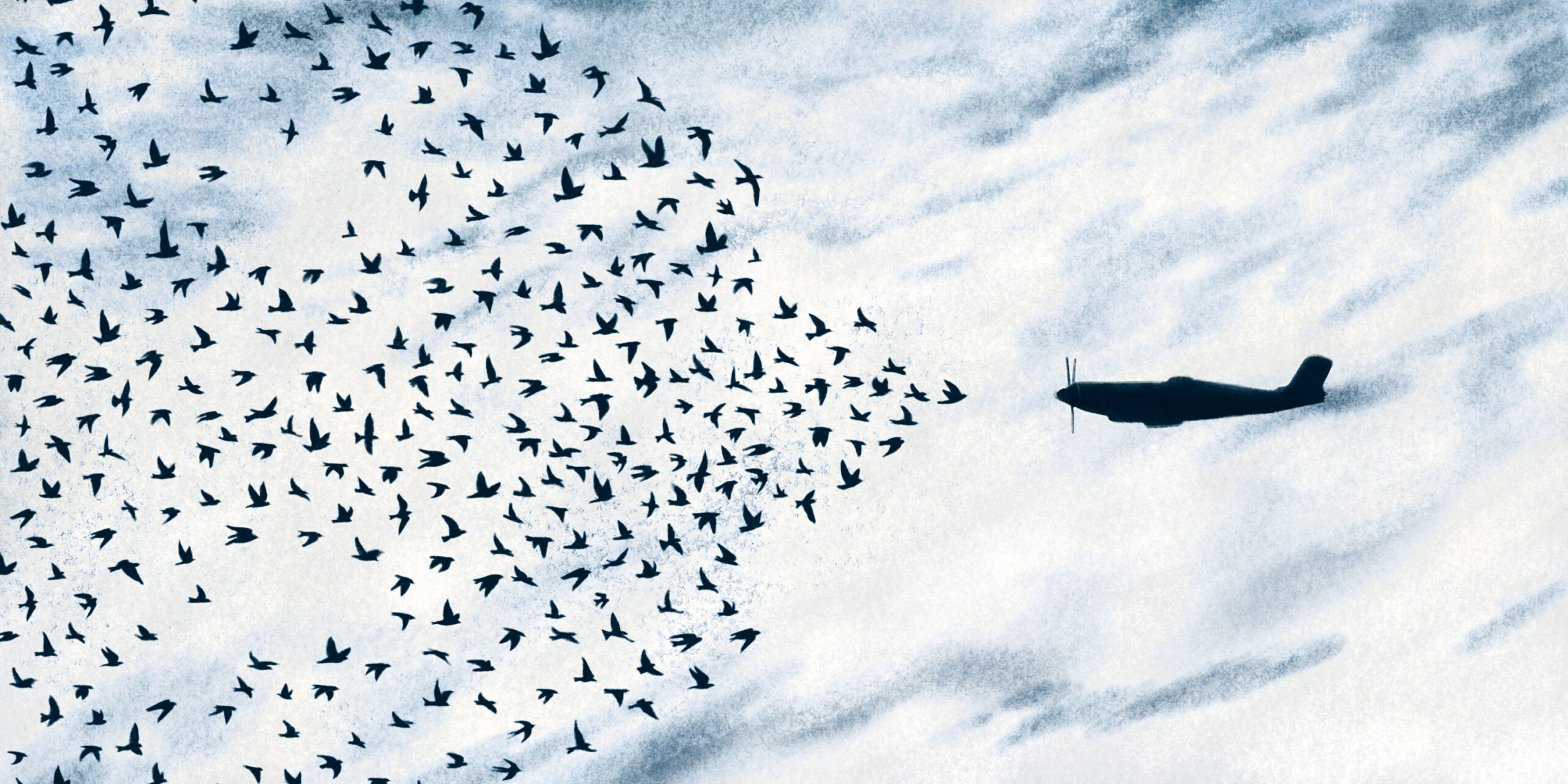
An illustration of a flock of birds in formation to form a bigger bird, facing off against a fighter jet.
Lucia Catalini

We Must Hold the Line

In an era of rising authoritarianism and billionaire autocrats, defenders of human rights cannot afford to retreat.

There’s a moment in every struggle when retreat seems like the only rational option. When dictators grow bolder and democracies grow weaker; when the funding dries up and the threats are mounting.

For even the staunchest of human rights defenders, this is often the moment when the temptation to step back, to compromise, to “wait for better times” becomes almost irresistible. But it’s also the moment when it’s most crucial that we hold the line.  

The Illiberal Surge

The numbers tell a grim story. According to the 2025 Democracy Without Borders report, the proportion of the world’s population living in a liberal democracy is now the lowest it’s been in 50 years—less than 12% of people worldwide. In contrast, 72% of the population—equivalent to 5.8 billion people—live under autocratic rule. Even countries once considered democratic beacons are sliding backwards, their institutions hollowed out by leaders who exploit fear, weaponize division, and dismantle checks and balances with disturbing efficiency. Increasingly, even the United States—long regarded as a democratic anchor—is exhibiting patterns of autocratic drift, marked by the concentration of executive power, the erosion of institutional constraints, and the normalization of political coercion and violence.

Across every continent, we are witnessing an unprecedented assault on human rights, rule of law, and democratic norms. According to Freedom House, global freedom has declined for 19 consecutive years. In Russia, Vladimir Putin has transformed a nuclear superpower into a revisionist rogue state, waging wars of conquest under the banner of Russkii Mir (“the Russian World”)—an imperial doctrine that frames violence as civilizational reunification. In practice, this entails the imposition of totalitarian control over territory, society, and political life through authoritarian systems of governance abroad; and at home, the total, systematic elimination of political opposition. In Turkey, Recep Tayyip Erdoğan has hollowed out judicial independence and imprisoned tens of thousands to entrench personal rule. In China, Xi Jinping has constructed the most advanced surveillance state in human history, fusing cutting-edge technology with unapologetic repression. In Hungary, Viktor Orbán has perfected the model of so-called “illiberal democracy,” an oxymoron that now functions as a practical manual for aspiring autocrats.

Even in formerly Soviet Central Asia, where expectations were never high, the trajectory is alarming. Kyrgyzstan, once celebrated as the region’s freest country, now jails journalists, suppresses protests, and coordinates with Russian security services to hunt down dissidents. Kazakhstan, despite its carefully cultivated image as a modernizing state and economic powerhouse, brutally crushes peaceful protests, including inviting Russian troops to massacre its own citizens—killing over 200 people in what the government euphemistically called “anti-terrorist operations” in January 2022. Uzbekistan continues to restrict civil liberties, while the EU prepares to reward it with enhanced trade deals; and Tajikistan and Turkmenistan remain totalitarian nightmares that don’t even try to pretend otherwise.

The Billionaire Autocrat: Democracy’s New Nemesis

Making this era particularly dangerous is not just the rise of traditional autocrats, but the emergence of a new breed: the billionaire strongman who wields wealth as a weapon and treats nations like personal subsidies.

These are not just politicians who happen to be rich, but oligarchs who view governance as an extension of their business empires, who treat public office as private property, and who recognize no distinction between state resources and personal assets. Unlike traditional dictators, who seize power through military coups or revolutionary movements, this modern autocrat often arrives through elections—then uses his power for self-enrichment and for dismantling democracy from within, ensuring he can remain in power indefinitely.

Look at Donald Trump’s return to the U.S. presidency, backed by the world’s richest man, Elon Musk, who has used his ownership of X (formerly Twitter) to amplify destructive and hateful narratives and undermine democratic discourse while on his path to becoming the world’s first trillionaire. Look at the tech billionaires who increasingly view themselves as above the law and accountable to no one, while wielding unprecedented influence over information flows and public opinion. Intoxicated by this unchecked power, some have gone further—intervening in the domestic politics of other countries, amplifying or aligning with extremist and openly fascist movements, and actively threatening democratic processes far beyond their own borders. This concentration of power is not accidental: It is built on decades of privileged access to public resources, publicly funded research, state subsidies, regulatory forbearance, and the extraction of value from user-generated data and public infrastructure.

This marriage of authoritarian governance and extreme wealth has created a feedback loop of power consolidation, where wealth buys political influence, and political influence protects and expands wealth—a cycle that continues until the very concept of public interest becomes quaint and obsolete.

These billionaire autocrats also work in tandem, threatening human rights both in their home countries and abroad: They fund each other’s regimes, help evade sanctions, provide safe havens for each other’s stolen assets, and create international networks of corruption that transcend borders.

The result is a global ecosystem of kleptocracy where the rules apply to ordinary people but never to the powerful. When a Kyrgyz president is overthrown for corruption, he flees to Belarus or Russia. When Russian oligarchs need to launder money, they find willing accomplices in London, Dubai, and New York. This is not limited to traditionally authoritarian states, either. Under Donald Trump, the United States also recently adopted a recognizably autocratic maneuver: Shortly after kidnapping President Nicolás Maduro, proceeds from the sale of Venezuelan oil—reportedly totaling $500 million—were routed into multiple offshore accounts, the largest held in Qatar.

The Funding Crisis

The cruel irony is that, as threats of global authoritarianism continue to multiply, the resources to defend against them are evaporating.

The organizations that document war crimes, defend political prisoners, expose corruption, and provide legal aid to vulnerable populations are being forced to cut staff, close offices, and scale back operations. Small grassroots groups—often the most effective, because they’re closest to the communities they serve—are disappearing entirely.

Human rights organizations across the world are facing unprecedented funding cuts. Governments that once supported civil society are redirecting resources to “national priorities”—often code for building walls and buying weapons. Private foundations are “pivoting” to other issues. International donors are suffering from “democracy fatigue,” as if defending basic rights were a trend rather than a fundamental imperative.

Why We Cannot Retreat

In the face of these challenges, some have argued for strategic retreat. “Wait for the political climate to improve,” they say. “Focus on less controversial issues.” “Don’t antagonize powerful governments.” “Be realistic about what’s achievable.”

This advice is seductive precisely because of its supposed practicality. But it’s also wrong.

History teaches us that authoritarianism, once given space to breathe, metastasizes. Dictators interpret hesitation as weakness and compromise as surrender. When human rights defenders go quiet, they don’t buy time—they lose ground.

The window for resistance doesn’t widen with patience; it narrows with delay.

Every time we soften our demands for accountability, every time we accept “reforms” that are purely cosmetic, every time we prioritize short-term economic interests over long-term democratic values, we hand authoritarians another victory. Consider the trajectory of Russia. In the 1990s and early 2000s, Western governments believed they could moderate Putin through engagement and economic ties. But each concession, each instance of looking the other way, each prioritization of “stability” over justice only emboldened Putin further. By the time the West decided to take a firm stance, Russia had already become the authoritarian menace it is today—and Ukraine is still paying the price for it in blood.

It is imperative, then, that we do not repeat our predecessors’ mistakes: Where they ceded ground, we must now hold the line.

What Holding the Line Means

Holding the line doesn’t mean mindless stubbornness, or a refusal to adapt. Instead, it means refusing to compromise on core principles, regardless of the circumstances—a collective effort that requires each of us.

It means human rights organizations should continue documenting abuses even when governments threaten their staff. It means journalists investigating corruption even when they risk imprisonment or death. It means activists organizing protests, even when they’re banned and participants are beaten.

Holding the line means attaching real, enforceable human rights conditions to every cooperation agreement, trade deal, and aid package. It means wealthy democracies cannot allow their financial systems to become laundromats for dictators’ stolen wealth. It means tech companies cannot provide surveillance tools to authoritarian regimes. It means universities cannot accept money from kleptocrats seeking to buy respectability. It means investigating and sanctioning corruption, regardless of whose feelings it hurts.

It also means confronting the uncomfortable truth that extreme wealth concentration must be dismantled. A world where a handful of billionaires wield more power than elected governments is inherently incompatible with democracy and human rights. When individuals accumulate resources equivalent to national budgets, they become unaccountable centers of power that can manipulate democracies, fund authoritarian movements, and evade any meaningful oversight.

To truly hold the line, then, we also need wealth taxes that prevent the emergence of quasi-monarchical fortunes. We need to abandon the fiction that billionaires are somehow more enlightened, more competent, or more deserving of power than democratically elected officials. We need corporate governance reforms that prevent oligarchs from treating companies as personal fiefdoms. We need to close the legal loopholes that allow the ultra-wealthy to operate in regulatory twilight zones.

We need to hold not just one line, but all the smaller lines that make up the whole.

The Cost of Retreat

And if we don’t?

In the 1930s, democracies chose appeasement over confrontation, economic interests over moral clarity. They told themselves that engaging with fascist regimes would moderate them, that war could be avoided through compromise—and millions died because of it.

Today’s authoritarians are learning the same lesson their predecessors did: Democracies will tolerate almost anything if you frame it as “stability” or “economic necessity.” And they’ve adjusted their behavior accordingly—becoming bolder, more brutal, and more brazen in their contempt for human rights and international law.

If we retreat now, the next generation won’t just face an “illiberal surge”—they’ll face an illiberal world order where authoritarianism is the norm, the powerful answer to no one, and human rights are quaint historical curiosities.

Hope Is a Discipline

Make no mistake: Holding the line is exhausting. The victories are small and the setbacks are devastating. There will be moments when continuing seems impossible, when the challenges we face feel insurmountable.

But hope is not about believing everything will work out. Hope is the discipline of continuing the fight even when the odds are terrible. Hope is understanding that the line we hold today creates and protects the space where tomorrow’s resistance will grow. And sometimes, against all odds, that resistance succeeds.

We’ve seen it in our lifetimes: the fall of the Berlin Wall, the collapse of the USSR, the end of apartheid, the Arab Spring’s brief flowering, the popular uprisings across Latin America and Central Asia, Ukraine’s Revolution of Dignity. These weren’t inevitable—they happened because people refused to accept authoritarianism as permanent.

They happened because people held the line until the moment came to advance.

A Call to Action

To human rights defenders everywhere: When funding disappears, innovate. When governments threaten you, document everything. When allies waiver, remind them what’s at stake.

To democratic governments and international institutions: Stop the charade of believing trade will transform autocrats. Attach real conditions to every agreement. Support civil society unreservedly. Sanction corruption aggressively. And recognize that your credibility depends not on what you say but what you do when authoritarians call your bluff.

To citizens of global democracies: Recognize that your freedoms are not guaranteed. They exist because previous generations fought for them and current defenders maintain them. Support human rights organizations. Find your people. Build coalitions. Hold your governments accountable when they prioritize profits over principles. And understand that authoritarianism will eventually come for you if it is allowed to flourish unchecked.

To journalists: Keep investigating. Keep publishing. Your work is dangerous precisely because it’s effective. Every investigation you complete, every truth you reveal, chips away at the foundations of authoritarian power.

And to those who have already retreated, who have compromised, who have gone quiet: It’s never too late to return to the fight. The line is thinner than it should be, and we need everyone who still believes in human rights and rule of law to stand with us.

The Choice Before Us

We stand at an inflection point. The choices we make now—as individuals, organizations, and societies—will determine whether the 21st century becomes an era of hard-won freedom or deepening oppression.

The authoritarians are betting we’ll fold. They’re counting on our exhaustion, our divisions, our tendency to prioritize short-term comfort over long-term principles. They believe that funding cuts will silence us, that threats will intimidate us, that time is on their side.

They’re wrong.

We will hold the line. Not because it’s easy, but because it’s necessary. Not because victory is guaranteed, but because surrender is unthinkable.

The line we hold is not just a metaphor. It’s the space where lawyers defend political prisoners. Where journalists expose corruption and abuse. Where activists organize communities. Where ordinary people refuse to accept injustice as inevitable.

We see this in action with every political prisoner who receives legal representation because a human rights organization refused to close. Every corruption scandal exposed because a journalist refused to be silenced. Every protest that happens because activists refused to give up. These are not marginal victories—these are the threads that keep the fabric of resistance intact.

This line is under assault from authoritarians, oligarchs, and billionaire autocrats who recognize no limits to their ambition and no accountability for their actions. They have money, power, and momentum.

But we have something stronger: the conviction that human dignity matters, that our rights are not negotiable, and that no amount of wealth or power places anyone above justice.

So we hold the line. Today, tomorrow, and for as long as it takes.

Because if we don’t, there won’t be one left to hold onto.