WP_Post Object
(
    [ID] => 10961
    [post_author] => 15
    [post_date] => 2026-08-18 19:09:53
    [post_date_gmt] => 2026-08-18 19:09:53
    [post_content] => 

As the genre continues to diversify, it's time for K-pop to reckon with its relationship to Blackness.

BTS’s long-awaited comeback was controversial from the start. 

In March, following a year-and-a-half hiatus to fulfill their mandatory Korean military service, the seven-member boy group reunited with a short animated trailer teasing their new album Arirang. Inspired by a nationally beloved and UNESCO-recognized folk song of the same name, the album was positioned as somewhat of an homage to the group’s Korean roots. In the trailer, the group spotlights the “profound cultural significance” of the original song—believed to be over 600 years old—through a “modern reimagining” of the seven Korean students at Howard University who first recorded it in 1896. 

But many fans noticed something strange: For a few seconds, BTS can be seen portraying the students while singing, on campus, to a mostly white audience. 

“Who are [these] white folks at a historically Black college built so Black Americans could actually go to college because white people would not allow them into their schools?” one fan commented on YouTube. Others followed suit.

Upon release, the 14-track album followed the standard K-pop formula: a mix of Korean and English songs with a bit of AAVE slang thrown in, and a slew of high-profile Western producers and writers, including Mike-Will-Made-It, Tezzo Touchdown, and Diplo. In short, Arirang was less an homage to an unofficial national anthem than it was a catchy hip-hop album—a nod to the group's cultural influences, but not necessarily their Korean ones. Only the leading track (“Body to Body”) sampled parts of the historic song.

This wasn’t unusual: Over time, as the genre has diversified, K-pop groups have made music with expanding influences, ranging from house to trap. In recent years, the genre has only further loosened, often following global trends rather than strictly adhering to what’s popular in Korea. 

It’s an identity crisis that’s been plaguing the genre since the beginning of the decade. While the earliest iterations of K-pop groups (also known as first generation K-pop) occasionally produced songs in English, such tracks didn’t determine a group’s popularity, nor did they dominate the genre like they do now. As K-pop reaches a critical mass of popularity among international audiences, with groups not only sometimes singing exclusively in English, but also branding themselves as “global groups” with members from around the world, the lines have started to blur on what specifically makes K-pop, K-pop. It’s also why it’s become increasingly necessary for the genre as a whole to reckon with its relationship to Blackness, both historically and today.  

The word K-pop itself was a bit of an accident. Dr. Stephanie Choi, Assistant Professor of Ethnomusicology at the University of Colorado Boulder, says that the label was “coined by outsiders, not by the K-pop industry itself.” Popularized in the 90s by Japanese and Chinese media, the term was used to refer to the global popularity of Korean dance pop, before Western media began using it throughout the decade. “Only by the early 2000s was the term introduced to Korean media,” says Dr. Choi. 

It was around this time that Lee Soo-man, the architect of what's known as contemporary K-pop, created the idol trainee system that now defines the genre. Inspired by the assembly line approach of 60s Motown, Soo-man brought the same model to Korea, founding SM Entertainment in 1995, carefully crafting and turbocharging each trainee’s talents in dance, vocals, and visual identity through bootcamps notorious for their intensity. 

This tradition has endured, eventually evolving into idol trainee reality TV-style competitions that have since produced some of the biggest K-pop groups in the world, including TWICE and Stray Kids. Like the rest of the genre, the success of these shows has now moved beyond Korea to the international stage, which is where The Debut: Dream Academy—the hit show behind the global girl group Katseye—was born.  

In addition to commercial success, equally pivotal to defining K-pop is the loyalty of its fandoms, something that’s endured even as the genre has continued to diversify. All K-pop groups thrive on the intimate relationship fostered between idols and their fans, and through social media, this relationship has only intensified. But as the genre has globalized, this intensity has also proven to be a double-edged sword for idols of color. While there's, of course, virtue in national and ethnic representation, for idols, this has often manifested as overexposure to racism and bigotry—sometimes including from fans of color who project themselves onto what they believe an idol of their culture should look like. 

It’s a part of why in late February, when Manon Bannerman, the only Black-identifying member of the global girl group Katseye, announced a temporary hiatus from group activities for unspecified reasons, the internet was abuzz with shock, confusion, outrage, and genuine concern on her behalf. Others, meanwhile, were suspicious.

“Definitely some anti-Blackness going on behind the scenes & you can’t tell me otherwise,” one fan commented on Reddit amidst all the speculation. “It’s very textbook.” 

For an industry that has roots in Black entertainment, you’d think Black idols would be more common in K-pop. But while K-pop groups have always had members from other East Asian countries, having visibly non-Asian members is still rare. Alexandra Reid of girl group BP Rania was the first Black idol in K-pop history, debuting in 2015. After BP Rania disbanded and re-debuted as Blackswan in 2020, Senegalese-Belgian member Fatou joined her in the lineup. In 2025, Girlset (formerly known as VCHA) rebranded into a multinational four-person girl group, including a Venezuelan-Trinidadian member. But otherwise, Katseye remains the exception rather than the rule when it comes to racial diversity.

The Katseye girls hail from three continents and several different ethnicities and nationalities. Sophia, the group leader, is from the Philippines. Manon is Ghanaian and Swiss. Lara, Daniela, and Megan are all from the States, representing Indian, Cuban-Venezuelan, and Chinese-Singaporean heritages respectively. The only member born and raised in Korea is Yoonchae, who is also the youngest of the six. Their diversity has long been their strength—carefully engineered to capture the hearts of millions of fans, starting from their debut on 2023’s The Debut: Dream Academy, then in 2024, through their intimate Netflix docu-series Pop Star Academy. Following multiple successful commercials for Jollibee, Glossier, and The Gap (the latter of which went viral as a perceived response to Sydney Sweeney’s rather tactless American Eagle ad), the group became seen by fans as a paragon of what the future of K-pop could be.  

“I found it interesting that there was a member with the same name as mine who also has Venezuelan ancestry,” says Daniela Bottini, a self-identified Eyekon, as the group’s fans are known. “It was refreshing to see that when they said global, they really meant it. They took the best parts of the K-pop training system, but also recognized that the rigid rules that govern it couldn’t work in a group mainly comprised of young Gen Z women raised in more liberal countries.”

Indeed, on paper, Katseye checks off every K-pop box: rooted in the trainee system, with a deeply interpersonal fandom, challenging choreography, and catchy songs perfect for a 30-second TikTok. Unfortunately, their success has also shed light on the uncomfortable ways global groups are still perceived—and treated—in K-pop compared with their all-Korean peers.

Unlike her Korean contemporaries, Bannerman has not been offered the same grace nor protection she might otherwise have found from fans, even before she announced her hiatus. Throughout her trainee days and well into her debut, she received online hate and death threats and was often called “lazy” and “ungrateful” for someone in her position. It’s an unfortunate reality that all idols, Korean or not, have to go through; but coupled with xenophobia and racism, often rampant against non-Korean idols within fandom spaces, the insults compound. 

While anti-Blackness is a worldwide phenomenon, it feels especially glaring in an industry that has long been inspired by Black American culture. Historically, the genre has borrowed heavily from Black aesthetics and practices while divorcing them from the bitterness of Black history, thus turning them into something more “palatable” for a broader audience to enjoy. Across the genre, Black culture is simultaneously commodified while its originators go unrecognized—something increasingly harder to ignore when Black idols like Bannerman exist. Katseye and other global groups, then, present an interesting tension point within the genre, ultimately forcing K-pop’s global audience to reconcile its conflicting ideas of fetishized exotic orientalism—its own form of racism—with its disdain for Black people. It's also what makes BTS’s Arirang trailer snafu—intentional or not—so glaring.

As the genre continues to diversify and to innovate, we’ll likely see more attempts at recreating Katseye’s success, and songs that are not just in English, but in Spanish, French, and other languages, too. Maybe there will be a K-pop group that only produces house music and dance. Perhaps the next trend in K-pop will be country guitar riffs. Jeff Benjamin, a K-pop contributor at Billboard, made the prescient prediction that 2026 will be a defining year for how the genre shifts and how global audiences perceive K-pop overall.

“At this year's Grammy Awards, we saw Katseye as well as Rosé of Blackpink perform; additionally, KPop Demon Hunters won an award—but the bodies of work that these three acts were nominated for aren't traditional K-pop,” says Benjamin. 

It’s likely we’ll see a shift happen sooner rather than later. As of June 2026, the Grammys have introduced a new award: Best Asian Pop Music Performance, a category recognizing pop music performances originating from or widely known in Asian markets. It isn’t limited to just K-pop, but J-pop, C-pop, and music from other countries across the Asian diaspora, too. Shortly after the category was announced, BTS said they would not submit Arirang for consideration in the 2027 awards.

“We hope our music can be heard and loved for what it is, rather than being divided by region or language,” reads a statement from all seven members of the group, explaining their decision. “We thank Army [the group's fandom] and everyone who has always stood by us.”

As barriers between cultures and languages break down on our screens, and the world as we know it inevitably changes, it’s clear that K-pop has the potential to be a bright spot in a new world order. It’s already crossed the boundaries of race, ethnicity, and language to become an international genre. Its music resonates and inspires millions of fans across the world. But if the genre wants to reach its full cultural potential, it will also have to reckon with its relationship not only to idols of color, but xenophobia towards idols outside of Korea, once and for all. 

As of today, Katseye is a de facto four-member girl group with Bannerman’s hiatus ongoing, and Sophia's recent announcement she would be stepping back from the group until September. Prolonged hiatuses aren’t uncommon in K-pop groups, usually due to illness or injury or just the need for a mental health break. But whether Bannerman comes back to the group or not, one thing is for certain: the issue of anti-Blackness in K-pop remains, and it’s up to both the industry and its fans to dismantle it.

[post_title] => The Globalization of K-Pop [post_excerpt] => As the genre continues to diversify, it's time for K-pop to reckon with its relationship to Blackness. [post_status] => publish [comment_status] => closed [ping_status] => closed [post_password] => [post_name] => globalization-k-pop-music-genre-anti-blackness-katseye-manon-bannerman-idols [to_ping] => [pinged] => [post_modified] => 2026-08-19 12:34:00 [post_modified_gmt] => 2026-08-19 12:34:00 [post_content_filtered] => [post_parent] => 0 [guid] => https://conversationalist.org/?p=10961 [menu_order] => 0 [post_type] => post [post_mime_type] => [comment_count] => 0 [filter] => raw )
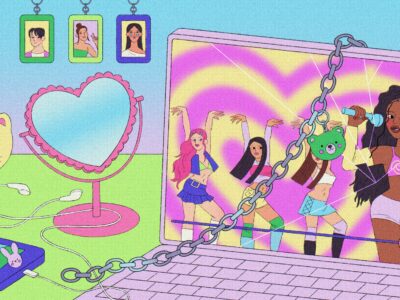
A colorful illustration of a laptop playing a YouTube video featuring a K-pop global group.

The Globalization of K-Pop

WP_Post Object
(
    [ID] => 10772
    [post_author] => 15
    [post_date] => 2026-07-22 19:39:36
    [post_date_gmt] => 2026-07-22 19:39:36
    [post_content] => 

It's been over four years since I moved to Japan, and I'm still baffled by the country's food sexism.

My first visit to Japan was a flurry of city lights, fresh sushi, and cherry blossoms in 2017. Between crying (joyful tears) three times in the Studio Ghibli Museum, and chasing down a cotton candy rainbow in Harajuku, I returned to the U.S. thinking, That was the best trip of my life. But on my second visit two years later, I started seeing the societal cracks I’d initially overlooked. While talking to a local near Tokyo’s Arakawa River about our favorite Japanese foods, I excitedly shared my love for strawberry shortcakes.

“That’s for women,” he replied.

I was stunned.

It’s been over four years now since I moved to Tokyo. My early ignorant bliss of Japan being a fantasyland—when it is in fact a very real place with very real problems—has long subsided. But my echoing bafflement over the country’s food sexism has remained and only grown over time. 

Japan has a misogyny problem. In June 2023, the country faced international criticism for sending a male minister, instead of a woman, to lead a G7 meeting on women's empowerment. According to the 2024 Global Gender Gap Report (a way to measure gender equality across categories like economic participation, education, health, political empowerment, and more), Japan ranked 118th out of 146 countries. And despite electing its first female prime minister in 2025, which on the surface, seemed like a win for equality, it was a superficial victory: Prime Minister Sanae Takaichi ascended to power as a hardline conservative who championed traditional gender roles. She even voted against a woman becoming Emperor in 2021, echoing her political party’s stance on maintaining the country’s sexist male-only succession rule. The decision risks the end of Japan's 1,500-year-old monarchy, the oldest continuous hereditary dynasty in the world.

In a society built upon patriarchy (and actively maintaining it), these entrenched beliefs have far-reaching ripple effects that seep into the fabric of everyday life. Groping on packed commuter trains and notorious workplace harassment are just the tip of the misogynistic iceberg. From lingering high heel mandates to the negative social stigmas around showing cleavage, there are countless other everyday instances that feel like never-ending microaggressive daggers, magnifying the depths of the country’s prejudice and discrimination against women. It shouldn’t be surprising, then, that this bleeds into the country’s relationship with food. It’s even unusual for women to be sushi chefs, due to false beliefs that women’s hands are too warm to handle raw fish and that menstruation can impact a person’s ability to taste. 

As a professional food writer, I’ve long been privy to how sexism impacts dining culture. But in Tokyo, it’s something I’ve seen and experienced firsthand. Recently, while working on a restaurant guide, I pushed my normal ramen-eating limits by visiting 10 different shops in a month, continuously finding myself in a line of mostly, if not all, men. It’s common to see queues of men in business suits waiting for hot ramen throughout the city, but it was only after seeing it so often up-close that I picked up on—and felt—the stark gender imbalance.

Reading restaurant reviews in Japanese only further confirmed my growing suspicions. “This ramen isn’t good for women because it’s too big” was a common theme; or on the flip side, “This place is amazing! Even I, as a [mere] woman, can eat the whole bowl!!!” There was also a constant pattern of reviewers mentioning whether it was acceptable for women to dine alone at certain ramen shops, or if the ramen was “light” enough for women to eat. 

The message across these reviews was clear: Women can have ramen, but it can’t be too large, or too fatty, and must be somewhere acceptable to the male gaze.

What I’ve seen for ramen is the same for sweets, but the inverse. Inside many dessert shops, a sea of women customers quietly sit and enjoy their cakes and other pastries, without a man in sight. The bare walls, minimal decor, and ambient slurping sounds of a standard ramen shop are replaced with detailed crown modeling and the clinking of tiny forks on floral porcelain plates. Lines of men in business suits are swapped with lines of women in dresses and skirts. While I have also seen men in these shops on occasion, they are often accompanied by a woman on what appears to be a date. 

As an “outsider,” especially as an American living in Japan, I recognize it’s easier to notice and be critical of a culture that’s not my own. After all, the U.S. has its own sexist food norms, and is far from immune to toxic stereotypes around food. Remember Women Laughing Alone with Salad? Or when tall, bearded men were wrapping meat logs in bacon? Today, guys are slapping raw meat down on countertops so hard and so often that it’s become background noise on TikTok, all while the current administration uses MAHA and MAGA to strengthen the stereotype of meat consumption as a cultural symbol of “traditional” masculinity. The U.S. might have slightly greater gender parity with regards to desserts (even though they still lean more heavily towards women), but like many countries, we are not exempt from our own forms of food misogyny. 

This is to say, Japan’s culturally-specific gendered relationships with food do not live in a void. There is home-grown food sexism in Japan, yes, but there are just as many beliefs that have developed via global influences, including its diet culture amongst women.  

Despite the ongoing patriarchal stronghold, cultural shifts in food have also started to emerge here. There’s a rise in a movement called ramen girls (or ramen joshi in Japanese), where some women make a concerted effort to slurp down as much ramen as they can. Women ramen influencers have also attracted large audiences in recent years, like Satoko Morimoto, who proudly claims to eat more than 600 bowls of ramen a year and has amassed over 53,000 Instagram followers. More men are leaving the post-war “carnivorous” image behind and are embracing the sweeter things in life, too. Some refer to them as “herbivore men,” a term that can carry a derogatory image because of its outward rejection of old masculine ideals—but they persist all the same. 

When I do witness a man enjoying dessert alone in a room full of women, or a woman dining solo going ham on a bowl of tsukemen—I think to myself, YES! To me, it’s a small, quiet act of resistance against gender expectations. There’s a lot of room for progress, but these small changes can have a snowball effect in changing not just Japan’s food culture but more widely, its entrenched national sexism. I believe anyone, regardless of their gender, should be able to eat ramen, little cakes, and whatever else they want, whenever they damn well please. The food doesn’t care, so why should we? 

When I think back to my second trip to Japan, I always remember my chat with that Tokyo local. After he told me that cake was only for women, I asked him, “Do you not like shortcakes? They’re so good!” He looked away shyly. “I do,” he said, “but I don’t tell people.”

Wherever he is, I hope he’s more than just occasionally throwing down on the tallest, thickest slices of strawberry shortcake out there, fully owning his sweet tooth for all to see.

[post_title] => Let Men Eat Cake (and Women Eat Ramen) [post_excerpt] => It's been over four years since I moved to Japan, and I'm still baffled by the country's food sexism. [post_status] => publish [comment_status] => closed [ping_status] => closed [post_password] => [post_name] => japan-food-sexism-culture-ramen-cake-desserts-tokyo-eating-sanae-takaichi-soapbox [to_ping] => [pinged] => [post_modified] => 2026-08-03 20:28:01 [post_modified_gmt] => 2026-08-03 20:28:01 [post_content_filtered] => [post_parent] => 0 [guid] => https://conversationalist.org/?p=10772 [menu_order] => 0 [post_type] => post [post_mime_type] => [comment_count] => 0 [filter] => raw )
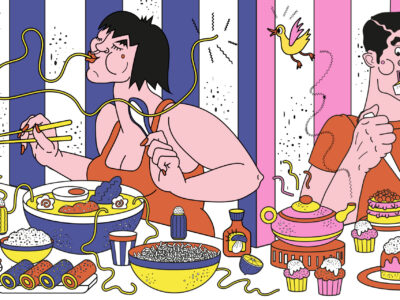
An illustration of a woman on a blue striped background eating a bunch of ramen, next to a man on a pink striped background eating a bunch of desserts.

Let Men Eat Cake (and Women Eat Ramen)

WP_Post Object
(
    [ID] => 10165
    [post_author] => 15
    [post_date] => 2026-02-18 19:45:31
    [post_date_gmt] => 2026-02-18 19:45:31
    [post_content] => 

In an era of rising authoritarianism and billionaire autocrats, defenders of human rights cannot afford to retreat.

There's a moment in every struggle when retreat seems like the only rational option. When dictators grow bolder and democracies grow weaker; when the funding dries up and the threats are mounting.

For even the staunchest of human rights defenders, this is often the moment when the temptation to step back, to compromise, to "wait for better times" becomes almost irresistible. But it’s also the moment when it’s most crucial that we hold the line.  

The Illiberal Surge

The numbers tell a grim story. According to the 2025 Democracy Without Borders report, the proportion of the world’s population living in a liberal democracy is now the lowest it’s been in 50 years—less than 12% of people worldwide. In contrast, 72% of the population—equivalent to 5.8 billion people—live under autocratic rule. Even countries once considered democratic beacons are sliding backwards, their institutions hollowed out by leaders who exploit fear, weaponize division, and dismantle checks and balances with disturbing efficiency. Increasingly, even the United States—long regarded as a democratic anchor—is exhibiting patterns of autocratic drift, marked by the concentration of executive power, the erosion of institutional constraints, and the normalization of political coercion and violence.

Across every continent, we are witnessing an unprecedented assault on human rights, rule of law, and democratic norms. According to Freedom House, global freedom has declined for 19 consecutive years. In Russia, Vladimir Putin has transformed a nuclear superpower into a revisionist rogue state, waging wars of conquest under the banner of Russkii Mir (“the Russian World”)—an imperial doctrine that frames violence as civilizational reunification. In practice, this entails the imposition of totalitarian control over territory, society, and political life through authoritarian systems of governance abroad; and at home, the total, systematic elimination of political opposition. In Turkey, Recep Tayyip Erdoğan has hollowed out judicial independence and imprisoned tens of thousands to entrench personal rule. In China, Xi Jinping has constructed the most advanced surveillance state in human history, fusing cutting-edge technology with unapologetic repression. In Hungary, Viktor Orbán has perfected the model of so-called “illiberal democracy,” an oxymoron that now functions as a practical manual for aspiring autocrats.

Even in formerly Soviet Central Asia, where expectations were never high, the trajectory is alarming. Kyrgyzstan, once celebrated as the region's freest country, now jails journalists, suppresses protests, and coordinates with Russian security services to hunt down dissidents. Kazakhstan, despite its carefully cultivated image as a modernizing state and economic powerhouse, brutally crushes peaceful protests, including inviting Russian troops to massacre its own citizens—killing over 200 people in what the government euphemistically called "anti-terrorist operations" in January 2022. Uzbekistan continues to restrict civil liberties, while the EU prepares to reward it with enhanced trade deals; and Tajikistan and Turkmenistan remain totalitarian nightmares that don't even try to pretend otherwise.

The Billionaire Autocrat: Democracy's New Nemesis

Making this era particularly dangerous is not just the rise of traditional autocrats, but the emergence of a new breed: the billionaire strongman who wields wealth as a weapon and treats nations like personal subsidies.

These are not just politicians who happen to be rich, but oligarchs who view governance as an extension of their business empires, who treat public office as private property, and who recognize no distinction between state resources and personal assets. Unlike traditional dictators, who seize power through military coups or revolutionary movements, this modern autocrat often arrives through elections—then uses his power for self-enrichment and for dismantling democracy from within, ensuring he can remain in power indefinitely.

Look at Donald Trump’s return to the U.S. presidency, backed by the world’s richest man, Elon Musk, who has used his ownership of X (formerly Twitter) to amplify destructive and hateful narratives and undermine democratic discourse while on his path to becoming the world’s first trillionaire. Look at the tech billionaires who increasingly view themselves as above the law and accountable to no one, while wielding unprecedented influence over information flows and public opinion. Intoxicated by this unchecked power, some have gone further—intervening in the domestic politics of other countries, amplifying or aligning with extremist and openly fascist movements, and actively threatening democratic processes far beyond their own borders. This concentration of power is not accidental: It is built on decades of privileged access to public resources, publicly funded research, state subsidies, regulatory forbearance, and the extraction of value from user-generated data and public infrastructure.

This marriage of authoritarian governance and extreme wealth has created a feedback loop of power consolidation, where wealth buys political influence, and political influence protects and expands wealth—a cycle that continues until the very concept of public interest becomes quaint and obsolete.

These billionaire autocrats also work in tandem, threatening human rights both in their home countries and abroad: They fund each other's regimes, help evade sanctions, provide safe havens for each other's stolen assets, and create international networks of corruption that transcend borders.

The result is a global ecosystem of kleptocracy where the rules apply to ordinary people but never to the powerful. When a Kyrgyz president is overthrown for corruption, he flees to Belarus or Russia. When Russian oligarchs need to launder money, they find willing accomplices in London, Dubai, and New York. This is not limited to traditionally authoritarian states, either. Under Donald Trump, the United States also recently adopted a recognizably autocratic maneuver: Shortly after kidnapping President Nicolás Maduro, proceeds from the sale of Venezuelan oil—reportedly totaling $500 million—were routed into multiple offshore accounts, the largest held in Qatar.

The Funding Crisis

The cruel irony is that, as threats of global authoritarianism continue to multiply, the resources to defend against them are evaporating.

The organizations that document war crimes, defend political prisoners, expose corruption, and provide legal aid to vulnerable populations are being forced to cut staff, close offices, and scale back operations. Small grassroots groups—often the most effective, because they're closest to the communities they serve—are disappearing entirely.

Human rights organizations across the world are facing unprecedented funding cuts. Governments that once supported civil society are redirecting resources to "national priorities"—often code for building walls and buying weapons. Private foundations are "pivoting" to other issues. International donors are suffering from "democracy fatigue," as if defending basic rights were a trend rather than a fundamental imperative.

Why We Cannot Retreat

In the face of these challenges, some have argued for strategic retreat. "Wait for the political climate to improve," they say. "Focus on less controversial issues." "Don't antagonize powerful governments." "Be realistic about what's achievable."

This advice is seductive precisely because of its supposed practicality. But it's also wrong.

History teaches us that authoritarianism, once given space to breathe, metastasizes. Dictators interpret hesitation as weakness and compromise as surrender. When human rights defenders go quiet, they don't buy time—they lose ground.

The window for resistance doesn't widen with patience; it narrows with delay.

Every time we soften our demands for accountability, every time we accept "reforms" that are purely cosmetic, every time we prioritize short-term economic interests over long-term democratic values, we hand authoritarians another victory. Consider the trajectory of Russia. In the 1990s and early 2000s, Western governments believed they could moderate Putin through engagement and economic ties. But each concession, each instance of looking the other way, each prioritization of "stability" over justice only emboldened Putin further. By the time the West decided to take a firm stance, Russia had already become the authoritarian menace it is today—and Ukraine is still paying the price for it in blood.

It is imperative, then, that we do not repeat our predecessors’ mistakes: Where they ceded ground, we must now hold the line.

What Holding the Line Means

Holding the line doesn't mean mindless stubbornness, or a refusal to adapt. Instead, it means refusing to compromise on core principles, regardless of the circumstances—a collective effort that requires each of us.

It means human rights organizations should continue documenting abuses even when governments threaten their staff. It means journalists investigating corruption even when they risk imprisonment or death. It means activists organizing protests, even when they’re banned and participants are beaten.

Holding the line means attaching real, enforceable human rights conditions to every cooperation agreement, trade deal, and aid package. It means wealthy democracies cannot allow their financial systems to become laundromats for dictators' stolen wealth. It means tech companies cannot provide surveillance tools to authoritarian regimes. It means universities cannot accept money from kleptocrats seeking to buy respectability. It means investigating and sanctioning corruption, regardless of whose feelings it hurts.

It also means confronting the uncomfortable truth that extreme wealth concentration must be dismantled. A world where a handful of billionaires wield more power than elected governments is inherently incompatible with democracy and human rights. When individuals accumulate resources equivalent to national budgets, they become unaccountable centers of power that can manipulate democracies, fund authoritarian movements, and evade any meaningful oversight.

To truly hold the line, then, we also need wealth taxes that prevent the emergence of quasi-monarchical fortunes. We need to abandon the fiction that billionaires are somehow more enlightened, more competent, or more deserving of power than democratically elected officials. We need corporate governance reforms that prevent oligarchs from treating companies as personal fiefdoms. We need to close the legal loopholes that allow the ultra-wealthy to operate in regulatory twilight zones.

We need to hold not just one line, but all the smaller lines that make up the whole.

The Cost of Retreat

And if we don't?

In the 1930s, democracies chose appeasement over confrontation, economic interests over moral clarity. They told themselves that engaging with fascist regimes would moderate them, that war could be avoided through compromise—and millions died because of it.

Today's authoritarians are learning the same lesson their predecessors did: Democracies will tolerate almost anything if you frame it as "stability" or "economic necessity." And they've adjusted their behavior accordingly—becoming bolder, more brutal, and more brazen in their contempt for human rights and international law.

If we retreat now, the next generation won't just face an "illiberal surge"—they'll face an illiberal world order where authoritarianism is the norm, the powerful answer to no one, and human rights are quaint historical curiosities.

Hope Is a Discipline

Make no mistake: Holding the line is exhausting. The victories are small and the setbacks are devastating. There will be moments when continuing seems impossible, when the challenges we face feel insurmountable.

But hope is not about believing everything will work out. Hope is the discipline of continuing the fight even when the odds are terrible. Hope is understanding that the line we hold today creates and protects the space where tomorrow's resistance will grow. And sometimes, against all odds, that resistance succeeds.

We’ve seen it in our lifetimes: the fall of the Berlin Wall, the collapse of the USSR, the end of apartheid, the Arab Spring’s brief flowering, the popular uprisings across Latin America and Central Asia, Ukraine’s Revolution of Dignity. These weren't inevitable—they happened because people refused to accept authoritarianism as permanent.

They happened because people held the line until the moment came to advance.

A Call to Action

To human rights defenders everywhere: When funding disappears, innovate. When governments threaten you, document everything. When allies waiver, remind them what's at stake.

To democratic governments and international institutions: Stop the charade of believing trade will transform autocrats. Attach real conditions to every agreement. Support civil society unreservedly. Sanction corruption aggressively. And recognize that your credibility depends not on what you say but what you do when authoritarians call your bluff.

To citizens of global democracies: Recognize that your freedoms are not guaranteed. They exist because previous generations fought for them and current defenders maintain them. Support human rights organizations. Find your people. Build coalitions. Hold your governments accountable when they prioritize profits over principles. And understand that authoritarianism will eventually come for you if it is allowed to flourish unchecked.

To journalists: Keep investigating. Keep publishing. Your work is dangerous precisely because it's effective. Every investigation you complete, every truth you reveal, chips away at the foundations of authoritarian power.

And to those who have already retreated, who have compromised, who have gone quiet: It's never too late to return to the fight. The line is thinner than it should be, and we need everyone who still believes in human rights and rule of law to stand with us.

The Choice Before Us

We stand at an inflection point. The choices we make now—as individuals, organizations, and societies—will determine whether the 21st century becomes an era of hard-won freedom or deepening oppression.

The authoritarians are betting we'll fold. They're counting on our exhaustion, our divisions, our tendency to prioritize short-term comfort over long-term principles. They believe that funding cuts will silence us, that threats will intimidate us, that time is on their side.

They're wrong.

We will hold the line. Not because it's easy, but because it's necessary. Not because victory is guaranteed, but because surrender is unthinkable.

The line we hold is not just a metaphor. It's the space where lawyers defend political prisoners. Where journalists expose corruption and abuse. Where activists organize communities. Where ordinary people refuse to accept injustice as inevitable.

We see this in action with every political prisoner who receives legal representation because a human rights organization refused to close. Every corruption scandal exposed because a journalist refused to be silenced. Every protest that happens because activists refused to give up. These are not marginal victories—these are the threads that keep the fabric of resistance intact.

This line is under assault from authoritarians, oligarchs, and billionaire autocrats who recognize no limits to their ambition and no accountability for their actions. They have money, power, and momentum.

But we have something stronger: the conviction that human dignity matters, that our rights are not negotiable, and that no amount of wealth or power places anyone above justice.

So we hold the line. Today, tomorrow, and for as long as it takes.

Because if we don't, there won’t be one left to hold onto.

[post_title] => We Must Hold the Line [post_excerpt] => In an era of rising authoritarianism and billionaire autocrats, defenders of human rights cannot afford to retreat. [post_status] => publish [comment_status] => closed [ping_status] => closed [post_password] => [post_name] => hold-the-line-fascism-autocracy-kleptocracy-billionaires-threats-authoritarianism-protest-activism-preserving-democracy-politics-human-rights [to_ping] => [pinged] => [post_modified] => 2026-02-18 19:45:33 [post_modified_gmt] => 2026-02-18 19:45:33 [post_content_filtered] => [post_parent] => 0 [guid] => https://conversationalist.org/?p=10165 [menu_order] => 0 [post_type] => post [post_mime_type] => [comment_count] => 0 [filter] => raw )
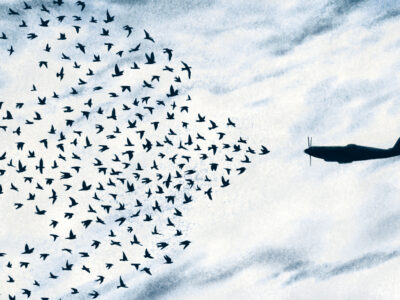
An illustration of a flock of birds in formation to form a bigger bird, facing off against a fighter jet.

We Must Hold the Line