WP_Post Object
(
    [ID] => 4811
    [post_author] => 15
    [post_date] => 2022-08-31 10:30:00
    [post_date_gmt] => 2022-08-31 10:30:00
    [post_content] => 

A survey of 12-year-olds to early 20-somethings in the US.

This article is a companion piece. If you’re curious to learn how older people feel about the state of the world, click here.

We’re more than two years deep into a pandemic, and if it feels like we’re moving backwards, it’s because in many ways, we are. 

In 2022 alone, there have been over 300 mass shootings in the US. Earlier this summer, in a historic decision, the Supreme Court overturned Roe v. Wade, immediately impacting the reproductive rights of millions. Meanwhile, global temperatures have reached dangerous, record-breaking highs, and if we squint into the horizon, all signs point to an imminent recession, where young people seeking employment will undoubtedly be among those hit the hardest. 

Oh, and did we mention we’re still living amid a deadly virus that continues to take lives each day? 

The Conversationalist asked young people from various parts of the country their thoughts on the state of the world right now. Which issues are overwhelming them the most? What kinds of discussions are they having with their friends? How do they feel about the future? Is it all doom and gloom? 

Here’s what they had to say, in their own words. 

~

“Turning on the news and seeing the violence in this world is not a surprise anymore. It's not even sad because I expect it. What scares me now is going to places where I can't find the nearest exit if I need to flee quickly. My home city of Chicago is now looked down upon by America as crime central. When I tell people I live in the suburbs of Chicago they gasp as if I'm in danger. 

I remember flinching at school when I heard a student squeeze open their chip bag, resulting in a loud popping noise. My heart skipped a beat and my mind immediately thought of the worst. Within seconds I was asking myself, Where is the noise coming from? Is it safe to stay where I am? How did the intruder get into the school? All from a kid’s chip bag making a loud popping noise. I shouldn't be thinking that way. It shouldn't be a habit for me, a 17-year-old, to look for the nearest exit in every public place I go to. 

I just want to be shocked when I turn on the news channels again.”

—Amanda, 17, suburbs of Chicago 

“Not only is there more fear in the world with monkeypox currently, specifically in New York, climate change is also only giving us about eight more years before there is no turning back. This is extremely worrisome because Americans aren’t doing anything about this and we only have so much time before our ecosystems become more fragile than ever. 

Overall, as someone within the generation that has to suffer most from these current issues, this is very concerning for not only our well-being but our physical health. We need to take the appropriate measures to prevent further conflict.”

Juliette, 15, New York, NY

“I’m finishing up my senior year in the fall at Penn State University. From my vantage point, the recent Dobbs decision has stirred up an immense amount of emotion from all sides of the spectrum and both sides of the coin, so to speak. College-aged women and female students that I interact with are overwhelmingly disturbed and frightened—they are fired up and want to help right the ship to protect abortion access for themselves and, in the case of the few pro-life women, for others. I work in local political organizing and one way to communicate with pro-life women in particular is to remind them that while they may not choose to have an abortion, their friends may face situations where they need one—and bringing the hot-button issue to a hyper-personal level really helps some people understand that they should not be so anti-choice. 

For men, a general sense of confusion and passive worrisome behavior is the vibe that I’m getting. My guy friends in particular tend NOT to be split among party lines with abortion—a lot of them think it’s stupid to tell women they can’t do something, while others are afraid that their female partners may not have the birth control/contraceptives they need to continue a sexual relationship. 

My fear is that despite the level of concern and anger at this decision, people my age will not care enough to vote in the large numbers that we need to actually change things. [We] can’t change SCOTUS, but can sure as hell change our state legislatures and Congress. That’s why I’m getting as involved as I can to spread the word to students and folks my age that this election is undeniably the most important of our lifetimes, and that at the very least you need to vote.”

Josh, 21, State College, PA

“With everything happening in our political climate, the one word that can't escape my mind is 'division.’ With all of the constant discord going about through the media, it's hard to ignore. 

I've noticed that the in-person conversations I've shared with people of differing views from me have been much more productive than online ones, whether it be in my classes or at group hangouts. I believe a considerable problem our generation is facing is a lack of personal connection stemming from social media playing a much more significant role in our day-to-day lives. The more that I've realized the adverse side effects of social media, the more attempts I've made to stray away from it. I've deleted Twitter, TikTok, and Facebook with the goal of doing away with it entirely. It's too stressful and time-consuming, and I've also found my mental health to be better in my time away from it. 

I can't help but have my worries about our society's collapse. It's very taxing on me to see so much nonstop negative news.”

Tommy, 18, Worthington, OH

“I’m feeling a bit agitated with how we talk about mental health on the internet and social media lately. I’m not saying that mental health awareness is bad. I just think that with anything that becomes mainstream, it loses any much-needed nuance and seriousness. And that’s what has happened with mental health awareness. You can see it happening in so many forms, whether it’s brands trying to capitalize off of it, down to those stupid ‘Little Miss Whatever’ memes, or any other insert-yourself-here gimmick. All of it totally downplays how serious mental health is and buries any useful resources, turning mental health awareness into another throwaway talking point.”

Margot, 19, Boston, MA

“I live in Jacksonville, Florida but attend school in Ohio. I’m pursuing a degree in fashion and am thankful that most opportunities in fashion do take place in more blue states like New York and California. However, that doesn’t take away my fear of what the future holds. 

While New York, specifically NYC, and California are states that I believe do well in protecting the rights of their citizens, they are also some of the most expensive places to live. Fashion is not one of the best industries in terms of high salaries and affordable wages––at least compared to the cost of living in the places where the industry is best established. 

But even more than that, reproductive rights are a major concern for me. The mere thought of me unintentionally getting pregnant and not even having the option to decide how I want to go about my health has me petrified and runs through my mind constantly. I’m truly at the point where I don’t think I’m even going to consider looking into jobs and companies that are located in red states. To make matters worse, we’re living in a system ruled by a Supreme Court that just took a major blow to combating the climate crisis and agreed to hear a case that heavily impacts voting rights, which would just be another major step in the seemingly decline of democracy. 

I’m very worried about the future, which really sucks because I feel like this is the time that I should be looking forward to it the most.”

Janelle, 21, Jacksonville, FL 

“Over the past few years, the world has felt pretty bad and it’s not getting much better. The government is corrupt; politicians are bad. I’m just resigned to it. I don’t really know how I could change anything. All politicians suck (sorry). It feels like things have been bad forever.”

—Charlotte, 12, Los Angeles, CA

“Everything and everyone right now is so polarized. Most people are arguing for or against things that they don’t know the half about. We are being served all of our information through the media and most of it is altered and incorrect. People form opinions on misinformation and stick to them while being blind to any opposing information. We have to be more open to hearing others' ideas in order to function as a united front.”

Kate, 18, East Lyme, CT

“It's pretty easy to feel despair about the big national issues as it really seems like there is nothing we can do to stem the flow of environmental and human rights catastrophes coming down from a federal and corporate level. That said, I feel hopeful about local politics. 

I hear a lot of talk about urban issues in my peer groups, mainly how to deal with cars-as-default politics in urban planning and policy while promoting alternatives for local transport. While this also feels futile sometimes, there are always silver linings and improvements being made to help bring American cities up to snuff, which in turn seems like a way to help the battle against climate change AND improve quality of life across the board.”

Nicholas, 21, Memphis, TN

“After the events of the last few months I have really felt a crushing fear settle under my skin, wherever I am––at a parade, my school, or the grocery store. It has become harder and harder to listen to the news, to force myself to feel the reality of the crushing headlines, both afraid of the state of the country and afraid of becoming numb to it. 

Being a teen right now is a minefield of double edged swords; between finding comfort in social media and absorbing yourself in saddening discussions, and learning how to become an adult while having massive gaps in the teen experience from the pandemic. I feel young and afraid to grow up in a world where my rights are in question and where there is not a path in sight leading to true freedom. I am as helpless as our elected president, sadly tweeting about what I wish I could fix about our country.”

Carley, 17, Romeoville, IL

“I feel like the world is moving forwards and backwards in different ways. Some things are being improved such as tech and medicine, and some things may be struggling to improve such as plastic in the ocean or people littering. [But] I believe that people should still take precautions with COVID.”

Spencer, 13, New York, NY

“I think it’s impossible not to feel somewhat hopeless at the moment, especially if you’re an activist or politically ‘in-the-know’ circle. I work in education consultancy and research and have done so since I was 15, so I am no stranger to a challenge. Kentucky was not exactly the most conducive environment to the work I was attempting to do. So I guess today's current state of affairs does not strike me as too abnormal. 

I understand this is not the prevailing view amongst my peers, especially in California. But I honed my chops in this work when Kentucky had a governor who openly wondered about drowning teachers, who loosened gun restrictions, and who attempted to gut our teacher pension system. Today's battles are not any different from yesterday’s; they are just as severe and not any more severe. But that assumes you were fighting yesterday’s battles and a lot of my peers weren’t. A lot of them gained political and social consciousness relatively recently and have nothing to compare today's climate to. I would never blame them for that, and I do not think that lessens the importance of their voices. But it does mean these activists need to take a step back from their work to frame it in historical context. 

The Civil Rights Movement, the LGBTQ movement, the fight for Roe; these movements led to large scale social changes in the face of unprecedented challenges. We should be taking strategic guidance from these movements to provide us with that roadmap to social change. It’s like if we were playing chess and constantly losing to the same guy, yet when we stopped and looked at the table next to us, we see the same guy losing to someone else. By taking that step back, we are able to observe a successful strategy to counter that would not have come out of our frustration. If we just keep attempting the same strategies over and over to create social change, without drawing from successful historical examples, we are destined to lose. 

This is why I have hope in the midst of such despair. Because I understand much of our despair has to do not with the particular situation we find ourselves in and more with our outlook on this situation.”

Will, 21, Somerset, KY

[post_title] => How Do Younger People Feel About the State of the World? [post_excerpt] => [post_status] => publish [comment_status] => open [ping_status] => open [post_password] => [post_name] => how-do-younger-people-feel-about-the-state-of-the-world [to_ping] => [pinged] => https://conversationalist.org/2022/08/31/how-do-older-people-feel-about-the-state-of-the-world/ [post_modified] => 2026-08-04 20:42:06 [post_modified_gmt] => 2026-08-04 20:42:06 [post_content_filtered] => [post_parent] => 0 [guid] => https://conversationalist.org/?p=4811 [menu_order] => 124 [post_type] => post [post_mime_type] => [comment_count] => 0 [filter] => raw )
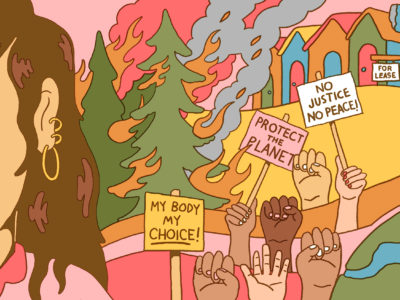
An illustration of a young woman looking out over representations of the state of the world

How Do Younger People Feel About the State of the World?

WP_Post Object
(
    [ID] => 3778
    [post_author] => 2
    [post_date] => 2022-02-09 08:00:59
    [post_date_gmt] => 2022-02-09 08:00:59
    [post_content] => 

Finding the legal means to put children to work is another attempt to compensate for the 'great resignation,' with four million American adults declining to return to their low-paid jobs after the pandemic lockdown ended.

At the start of 2022, the United States set a global record with over one million Covid-19 cases reported each day—worse than at any time since the start of the pandemic. Just at this catastrophic moment, the government rolled back public assistance, which had become essential for millions of people struggling to deal with unemployment, the death of family members, and soaring food prices. This ongoing crisis has been particularly cruel to children, who have borne a disproportionate burden with the now-dominant Omicron variant.

Recent reports from the American Academy of Pediatrics show 11.4 million children have tested positive for the virus since the beginning of the pandemic, with 3.5 million pediatric cases reported in January alone.

Meanwhile, several Republican-controlled state legislatures want to weaken laws that limit child labor—even as Congressional Republicans oppose a continuation of Biden’s Child Tax Credit, which saw millions of children lifted from poverty virtually overnight. Those federal payments ended in December. As of January low-income parents are already in crisis and millions of children are poised to fall back into poverty.

At the federal level, the Biden administration is weakening child labor protection laws with its recently launched apprenticeship program, which lowers the minimum age for interstate long-haul trucking from 21 to 18, in an effort to ease supply chain backlogs by increasing the number of truckers. This is despite CDC research that shows motor vehicle accidents are highest among 16 to 19-year-olds. The director of the Truck Safety Coalition told the Huffington Post that putting teenagers behind the wheel of long-haul trucks was not safe, adding: “This is putting lipstick on a pig. They’re gaslighting the American people.”

The push to weaken child labor protection laws in an effort to fill what lawmakers call “labor shortages,” and which economists say is a shortage of jobs that pay a living wage, is most pronounced in Wisconsin. State lawmakers pushed a bill through the senate that would have expanded dramatically the number of hours 14 and 15 year-olds were allowed to work, to 11 p.m. on evenings that were not followed by a school day and as late as 9:30 pm on school nights.

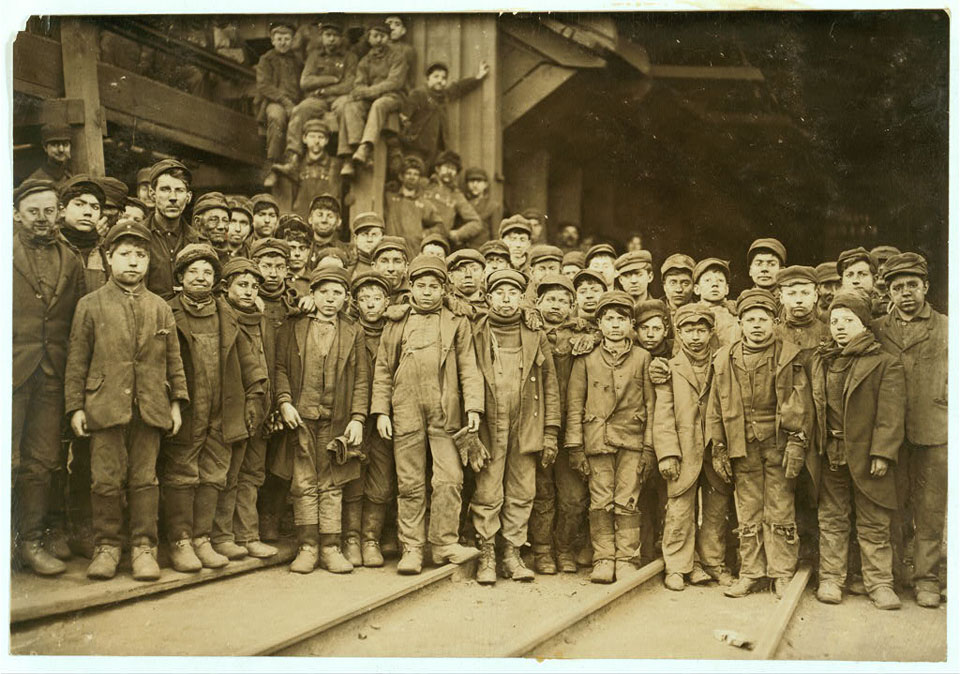
This 1911 photo of children working in a Pennsylvania coal mine led Congress to pass child labor protection laws. Now government is rolling those protections back, undoing a century of progress.

The Wisconsin law only applies to businesses that are not covered by the Fair Labor Standards Act, which established a federal minimum wage, overtime pay, and flagship child labor provisions. Adolescents who are 14 and 15 years old may not, for example, work more than 18 hours per week during the school year in a job covered by federal law—i.e., which take in less than $500,000 in revenue and are not engaged in interstate commerce.

Wisconsin State Senator Mary Felzkowski (R-Irma), who introduced the legislation, said in a press release that “The idea for this bill came from a small business owner in town who ran into staffing issues during summer hours due to their young employees not being able to work past 9 p.m.”

In an op-ed for the Milwaukee Journal Sentinel, Wisconsin AFL-CIO President Stephanie Bloomingdale wrote, “The proposed change is the latest attempt by Wisconsin Republicans to solve the state’s so-called labor shortage on the backs of children.” The AFL-CIO, Wisconsin Education Association Council, and Wisconsin School Social Workers Association have all issued statements condemning the new law, saying it rolls back child labor protection laws.

Governor Tony Evers apparently agreed with the AFL-CIO: on February 4 he vetoed the bill.

Finding the legal means to put children to work is another attempt to compensate for the “great resignation,” with four million Americans declining to return to their low-paid jobs when the pandemic lockdown ended. The Wisconsin law allows businesses to keep wages low and fill job vacancies with adolescent employees—who should be focusing on their studies instead of working late on school nights—rather than increasing wages to attract adult employees. Another incentive for employers is that federal law allows them to pay workers younger than 20 as little as $4.25 an hour for the first 90 consecutive days of employment, which they can describe as a training period. Wisconsin is one of 20 states that have maintained the federal minimum wage of $7.25 an hour since 2008.

Small businesses have notoriously opposed attempts to raise the minimum wage, arguing that the increased labor costs would put them out of business. But big corporations are also capitalizing on the so-called labor shortage, in an effort to hire younger workers for low wages.

“They would like to see these hours of work change nationwide,” President Bloomingdale, who recently debated the head of the Wisconsin Restaurant Association, tells The Conversationalist. “We need to renew our collective efforts to make sure that when people go to work, they have the ability to sustain a family.”

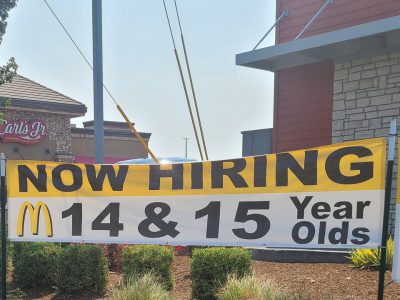
McDonald’s has come under fire in recent months for allowing a franchise owner in Medford, Oregon, to hang a banner outside that read “NOW HIRING 14 & 15 year-olds.” Job postings that advertise positions for 14, 15, and 16-year-olds at McDonald’s are still up online with a reminder that “during the summer months when school is out of session you are actually allowed to work up to 5 days a week and 38 hours a week.” Other fast-food chains have taken similar steps in a desperate attempt to alleviate staffing shortages.

Reid Maki, the Director of the National Consumer League’s Child Labor Coalition, said the government does not keep strong data on child labor. “There’s good reason to fear that the numbers could climb,” he said, adding that rising poverty caused by the pandemic could “drive kids to early work” rather than staying in school.

The Department of Labor warns that “the pandemic and subsequent economic downturns threaten to reverse decades of progress on child labor.” Labor disruptions, the death of family members, and school closures are listed as some of the key factors aggravating the situation. But this data is outward-facing and treats child labor as an international issue among developing nations.

In the U.S., one in seven children lives in poverty. They account for one-third of impoverished Americans, according to data from the Center for American Progress. The U.S. ranks third in child poverty rates among OECD nations, after Israel and Chile.

“The [American] public doesn’t really perceive that child labor is a thing of contemporary times,” Maki says.

Asked about the Wisconsin legislation, Maki said, “One issue is that kids who work a certain number of hours don’t do as well in school.” But he was also concerned about the safety issues that come with working later hours, both on the job and while driving home.

Maki is not opposed to teens working part-time jobs for some pocket money. His concern is for children who are compelled to work because the family needs their income to meet basic expenses. “We need to get to a point where all adults make a living wage and don’t need the income of their kids to help the family get by,” says Maki.

But with soaring inflation and millions newly cut off from unemployment benefits, the risk that children will have to go out and work in order to help their parents put food on the table is now very real.

Under Biden’s Covid relief package, the Child Tax Credit (CTC) provided families with $3,600 per year for each child under the age of six and $3,000 for each child 17 and under, with the funds paid out in monthly checks of up to $300 per child. These payments went furthest among families who typically don’t make enough money in a fiscal year to receive a full CTC under normal circumstances. The December expiration has now cut off a critical source of cash-in-hand for the poorest families.

For Republicans, that seems to be the point. The GOP Ways and Means Committee published a blog post in October 2021 denying that the Child Tax Credit had reduced child poverty by half and claiming that it discourages people from working. They cite a University of Chicago study that claims the CTC would cause 1.5 million workers to exit the labor force.

At the beginning of the pandemic, we believed children were largely “immune” to the virus. Now we know this isn’t the case. Children are contracting Covid, just not at numbers that register at the policy level. Our elected officials have shown that they’re willing to let children be the collateral damage of an ongoing crisis in more ways than one.

[post_title] => Republicans want to solve the labor shortage problem by putting children to work [post_excerpt] => Weak labor laws combined with poverty and soaring inflation could result in millions of children leaving school to help put food on the family table. [post_status] => publish [comment_status] => closed [ping_status] => open [post_password] => [post_name] => republicans-want-to-solve-the-labor-shortage-problem-by-putting-children-to-work [to_ping] => [pinged] => [post_modified] => 2026-08-05 17:58:45 [post_modified_gmt] => 2026-08-05 17:58:45 [post_content_filtered] => [post_parent] => 0 [guid] => https://conversationalist.org/?p=3778 [menu_order] => 141 [post_type] => post [post_mime_type] => [comment_count] => 0 [filter] => raw )
Republicans want to solve the labor shortage problem by putting children to work

WP_Post Object
(
    [ID] => 3409
    [post_author] => 2
    [post_date] => 2021-11-05 05:51:15
    [post_date_gmt] => 2021-11-05 05:51:15
    [post_content] => Nevertheless, she persisted.*

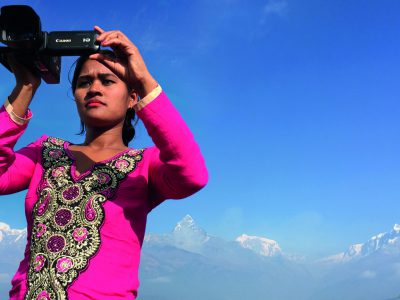
The first five minutes of “I Am Belmaya,” a feature documentary set in Nepal, could be a stand-alone short film. A young woman goes about her morning chores, sweeping the courtyard outside her one-room home and washing dishes at the outdoor water tap as chickens peck nearby and a rooster crows. Her face is closed; her posture speaks of drudgery and poverty. The camera then switches to street scenes in Pokhara, which lies under the stunning Annapurna Mountain. Diesel buses roar; a sidewalk barber gives a shave to a man reclining in an old-fashioned chair; and everywhere, women are engaged in backbreaking physical labor—stirring the contents of a pot at a roadside café while holding a baby with one arm, squatting on the ground to spin wool by hand, staggering as they carry impossibly heavy loads of bricks on their backs. From high above, a drone camera pans over the sprawling city and then zooms in on the tiny shack, the little courtyard, the chickens, the outdoor water faucet, and the young woman. This is Belmaya.

In a scant two minutes the young woman narrates her life story: born low caste in a poor village; orphaned by age nine; deprived of an education by brothers who thought girls were more useful working in the fields; and then, finally, some joy and hope at a boarding school for disadvantaged girls. A British woman named Sue Carpenter gave a photography workshop at the school, distributing little automatic cameras to all the girls and arranging an exhibition at the British Council in Kathmandu for the most talented ones—of whom Belmaya was one. Seven years later, Carpenter returns to Nepal and reconnects with her former protégé.

Belmaya is now 21 years old, unhappily married and the mother of a two-year-old daughter. She has not realized her ambition to become a photographer or finish high school. The school confiscated the cameras after Sue left, implementing corporal punishment that made the young girl resentful and angry. In 2006 she was full of hope for the future; but in 2014 she is mired in deep regret at not having obtained the education that would have allowed her to be independent and financially secure. Smiling sadly, she tells Carpenter that she’s never found happiness and does not expect to find peace.

The contrast between the subdued, pensive 21-year-old Belmaya of 2014 and her younger iteration, as seen in clips Carpenter filmed at the school in 2006, is stark and telling. At 14 she was a charismatic presence, laughing loudly and voicing strong opinions about the unjust position of women in her deeply patriarchal society. She loved photography, explaining that she felt free when she took pictures and that everything looked different through the camera lens. But at 21 life seems to have beaten her down.

One of the points the film makes is that Belmaya’s life could indeed have stayed stuck at the five-minute mark, in that bleak place of grinding poverty and hopelessness—but it did not. "I Am Belmaya" documents the eponymous heroine's journey to becoming a documentary filmmaker in her own right. She achieves this with remarkable resourcefulness, resilience, and hard work, despite obstacles that include a drunken husband who beats her and the 2015 earthquake that devastated Nepal.

Over the next five years, Belmaya learns filmmaking through rigorous mentoring programs that start with learning how to use a tripod. “Practice every day for at least 30 minutes,” says the director who is teaching her the craft of filmmaking. And she does, with an expression of deep focus as she repeatedly collapses and re-opens the tripod. The film shows her learning how to do closeups and storyboards; we see her smile with pleased surprise when she is told that she has a bright mind. She shows a natural talent for conducting interviews. Gradually, as she acquires skills and knowledge, a confident, ambitious woman emerges.

The film within the film is Belmaya’s making of her first documentary, a short called “Educating Our Daughters.” In one of the most poignant scenes, while interviewing two girls at their school, she asks: “Being a woman, do you believe I will be able to make a film?" Smiling warmly at her, the two girls answer: “Of course you will! What does a girl lack?” Belmaya’s expression shows wonder at their self-confidence; one can almost hear her listing all the things she lacks.

“Educate Our Daughters” was rapturously received at the Kathmandu Film Festival. It went on to win critical acclaim and awards on the international festival circuit, and Belmaya with it. The scene of her striding confidently along a street in London, where she will present her film at the UK Asian Film Festival, can only be called triumphant. But the most brilliant success of this absorbing, touching documentary is in its telling of Belmaya’s story from her own perspective, with no hint of a white savior tale. She shares director’s credit with Sue Carpenter, in an explicit assertion that she controls her own narrative.

*On December 15 The Conversationalist will screen this film live online, with a follow-up Q&A with the directors. Click here to register
    [post_title] => 'I Am Belmaya': Film review
    [post_excerpt] => The film follows the life of Belmaya Nepali over a period of 14 years, as she takes up a camera to tell her story. Silenced for years by poverty and the patriarchy, the young woman transcends her circumstances and reclaims her voice through filmmaking.


    [post_status] => publish
    [comment_status] => closed
    [ping_status] => open
    [post_password] => 
    [post_name] => i-am-belmaya-film-review
    [to_ping] => 
    [pinged] => 
https://vimeo.com/595445531
    [post_modified] => 2026-08-05 20:01:45
    [post_modified_gmt] => 2026-08-05 20:01:45
    [post_content_filtered] => 
    [post_parent] => 0
    [guid] => https://conversationalist.org/?p=3409
    [menu_order] => 165
    [post_type] => post
    [post_mime_type] => 
    [comment_count] => 0
    [filter] => raw
)
‘I Am Belmaya’: Film review