A decade later, activist and politician Feleknas Uca is still seeking justice for her community.
At the broad, gray steps of the entrance to the European Parliament in Brussels, a group of women circle around one in particular. Most are dressed in traditional Yazidi attire—long, white dresses with short lilac or black vests, and white headscarves—but the woman they’ve assembled around is dressed inconspicuously, her long, dark hair tied in a loose knot. Everybody knows who she is: Feleknas Uca, a long-time advocate for the rights of her Yazidi community. Looking at the women around her, she calls out their names one by one, handing each a badge. With these badges, the women will be able to enter the colossal building before them, where their voices are desperately needed inside. Uca has organized this gathering, a one-day conference, to demand justice for the Yazidi genocide, ten years ago this August.
"Yazidis need to be able to protect themselves,” she says.
Those who remember the Yazidi genocide, which started on August 3, 2014, likely recall the haunting footage of Iraqi and US helicopters throwing water and food down to the bone-dry, scorching hot mountain below, where Yazidi refugees had gathered in a panic. Down the hill, ISIS, the fundamentalist jihadist group that had quickly occupied large swaths of Iraq and Syria, had begun an ethnic cleansing of their people.
Mount Sinjar (or Shingal, in Kurdish) is the center of the historic homeland of the Yazidis, and was, at the time, their last hope for salvation. As some of the helicopters touched ground, they prioritized pulling women, children, and the elderly to safety. Those left behind on the mountain either succumbed to the heat, thirst, or exhaustion; the rest were brought across the border after Kurdish militias opened a corridor to Kurdish-controlled land in Syria.
The fate of those who never made it to the mountain would become clearer in the weeks and months thereafter. Thousands of men were instantly massacred by ISIS, and thousands of women and children were abducted. Girls and women were forced into ISIS “marriages,” sold on markets, and used as domestic and sex slaves, while boys became “cubs of the caliphate,” fighters-in-training. All were forcibly converted to Islam.
Ethnically, Yazidis are considered Kurdish, and their mother tongue is the eponymous language; although some in the Yazidi community consider it an ethnic identity of its own. Others contend all Kurds used to be Yazidis, until the emergence of Islam, when many Kurds converted. ISIS considered the Yazidis to be devil worshippers, as most adhere to a centuries-old pre-Christian and pre-Islamic faith.
Uca was visiting Germany when the genocide started to unfold, receiving the news in real time on the day the tragedy began. ISIS had been approaching, but the Kurdish peshmerga forces present in the Shingal region had promised to protect the Yazidis from harm. They withdrew just as ISIS began their attack.
“A call came from a man I knew who was there,” she says. “His sister wanted to kill herself because she was about to fall into ISIS’ hands. She had a weapon. We tried to talk to her but then I heard a shot. I will never forget that moment.”
The daughter of a Yazidi family that migrated to Germany in the 1970s, Uca was born in the north-central town of Celle, which has a large Yazidi community. In 1999, at age 22, she became the youngest-ever member of European Parliament (MEP) as a German representative of the Party for Democratic Socialism, and later for Die Linke (The Left), where she remained an MEP until 2009, when she didn’t seek re-election. When the genocide began, she had just recently moved from Germany to Turkey, where her family was originally from: The Yazidis are indigenous to Kurdistan, which geographically includes regions of Turkey, Iraq, Syria, and Iran. She’d chosen to live in Diyarbakır, the largest Kurdish city in Turkey’s southeast region, and had become a candidate in the parliamentary elections for the Peoples’ Democratic Party, or HDP. Founded in 2012, HDP is a leftist party rooted in the Kurdish political movement; their main objective is to democratize Turkey and give regions and communities the opportunity to govern themselves. In the June 2015 elections, Uca was elected MP and became the first Yazidi in Turkish parliament.
From the start of her time as an HDP MP, Uca was in a delicate position. While advocating for Kurds and for Yazidis specifically, the HDP claimed that the Turkish government had been aiding ISIS, and consequently held it co-responsible for the genocide—something the government vehemently denied. The HDP, including Uca, also supported the armed Kurdish groups that fought against ISIS, including those the Turkish government considered to be terrorists because of their adherence to the same leftist ideology as the Kurdistan Workers Party, the PKK, which has been waging an armed struggle for Kurdish autonomy in Turkey since the 1980s. Because of this overlap, HDP MPs, like Uca, became victims of a government campaign that accused them of supporting terrorism.
Uca was undeterred by it. The author of this piece, herself based in Diyarbakır during those years, got to know Uca as a parliamentarian who was often found among her community, listening to their needs and trying to forge solutions for them in her capacity as MP. For example, many Yazidis who fled to Turkey to escape ISIS were left in refugee camps with tents that did not protect them during harsh winters and hot summers. They also lacked adequate medical care and were not receiving substantial education. As MP, Uca made attempts to increase the budget for the camps, and while she only had limited success, her presence and care endeared her to the community.
Feleknas Uca in 2008. (AP Photo/Christian Lutz)
Having witnessed the Yazidis’ struggles over the years while advocating for them at high levels of government, Uca has a profound understanding of her community’s needs, wants, and fears. Today, she believes what’s most important is ensuring they are able to return to their homeland. In the aftermath of the genocide, thousands of Yazidis left their home as refugees, resettling in Europe, the United States, Canada, and Australia. While they may be physically safe in these places, Uca tells me, their displacement is still a continuation of the genocide.
“What ISIS wanted to do, is not only to kill and enslave the Yazidis, but also remove them from their ancestral lands. One of the problems we face now is that the community is still not able to return to Shingal because it remains too unsafe,” she says.
In Shingal, where the Iraqi army and Iran-backed militias are now stationed, the Yazidi self-defense force—the Shingal Resistance Units (YBŞ)—founded by the PKK in the weeks after August 3, 2014, is under pressure to be dismantled. Like the PKK, Turkey considers the YBŞ a terrorist group, and regularly bombs them, killing fighters; in addition to targeting local medical clinics, according to reports by Human Rights Watch and the International Crisis Group. Consequently, Yazidis can’t always return to their homeland, even if they wish to do so. Uca believes that Europe and the US have a responsibility to step in.
“Many Western countries have recognized the Yazidi genocide, but they don’t take any action to assist the community in building a future again in Shingal,” she says. “They don’t visit the region, they don’t help rebuilding it, they don’t hold Turkey responsible for assisting ISIS then, and letting it attack Shingal now.”
Among her many grievances are the centers that were opened in several European countries—mostly in Germany—where Yazidi women who were rescued from ISIS could process their trauma. These same services remain unavailable in Shingal.
“I have always said that if we really want to help these women, we will have to build trauma centers in Shingal, so they can process their trauma and rebuild their future and live their culture and religion in their homeland, where they were born and raised,” Uca says. “But the therapy has been transferred abroad, and with that, the future of the Yazidis. While the community can only really survive at home.”
The continued plight of the Yazidis could cause Uca great despair, but she is adamant that there are also victories, large and small. She has heard countless stories of Yazidi women, in particular, overcoming horrific circumstances and fighting back. She was able to get a visa for one of these women, Hêza Shengalî, so that she could speak at the one-day conference in Brussels. Shengalî was taken captive by ISIS in 2014 and remained in their custody for a year. After she escaped, she joined the Şengal Women’s Units, or YJŞ—the armed women’s wing of the YBŞ—and requested to be sent to Syria to join the forces fighting ISIS there.
“For me, and for other Yazidi women who have joined the YBŞ, fighting back against ISIS is a way to heal,” Shengalî says.
As a commander, she contributed to their eventual victory in the city of Raqqa, which ISIS had deemed their “capital.” When Raqqa was liberated, many Yazidi women and girls were liberated, too. After returning to Shingal, Hêza was even a part of a small delegation that handed over a newly liberated young Yazidi woman back to her family.
In large part because of the YBŞ, despite the Yazidi community’s past gender conservatism, things have started to change in the last decade, including its expectations of women.
“Hêza is normative for what Yazidi women can accomplish,” Uca says. “In 2014, and after that, even 70-year-old women have taken up a weapon to defend themselves. The community has transformed itself.”
Of course, there is still a long way to go. In early 2018, after ISIS lost the last territory they occupied, the women and their children were locked up in camps in northeast Syria and guarded by Kurdish forces. Amongst them were Yazidi women who were once held captive by ISIS. They were (and are) afraid to reveal themselves as such because ISIS ideology is still prevalent amongst the prisoners there. For others, it’s because they’ve had children with ISIS members and are afraid to lose them, as the Yazidi community does not accept these children as legitimate.
Periodically, Yazidi women and girls have been discovered within the camps and rescued by the Kurdish armed forces, but currently, some 2700 remain missing, and are believed to still be in the camps or abroad with ISIS members who managed to flee to neighboring countries, including Turkey. Others may be dead, and their remains are unlikely to ever be found.
Thousands of boys and men remain missing, as well. In cooperation with the United Nations, mass graves in different locations in the Shingal region have been opened since early 2019. Some remains have been identified by Iraqi authorities in cooperation with the UN and have gone on to be reburied with dignity. However, many mass graves remain untouched, leaving families in anguish over the exact fate of their loved ones and unable to give them a proper burial or grave. Other boys may have died in battle as “cubs of the caliphate,” although occasionally, some are found in Turkey, staying with families who belonged to ISIS, who may have distanced themselves from their ideology or who may quietly still support it. Some Yazidi boys have also been reunited with their families in exchange for a ransom.
Having visited Shingal multiple times since the genocide, Uca has been present to witness some of these reunions. She’s also spent a lot of time talking to the women, men, girls, and boys who have been liberated.
“I remember one boy whose first question was: ‘How is Shingal? Is it liberated?’ I saw hope in his eyes. ‘Yes, it has been liberated,’” she says. “And I see that hope in the eyes of the liberated women, too. They have gone through so much, but their resilience is impressive. This is what makes me feel hopeful.”
Uca knows she still has much work to do. In 2018, she was re-elected to the Turkish parliament and visited Shingal with an HDP delegation after Turkey targeted a clinic with a drone, killing eight. She gave a speech about it in parliament, demanding answers from her fellow MPs—answers she didn’t get.
In last year’s general elections, Uca wasn’t on the ballot, due to the party’s two-term limit for all parliamentarians. The end of her mandate also meant the end of her parliamentary immunity, compelling her to leave Turkey instantly because state prosecutors had opened investigations against her for “propaganda for a terrorist organization,” as it had done to dozens of Kurdish MPs, many of whom have been imprisoned. She returned to Germany, and from there, continued her political work in Europe, including organizing conferences, undertaking diplomacy work in the EU, and networking and cooperating with a wide range of Yazidi, Kurdish, and other women’s groups. She’s still keen to solve her legal problems in Turkey, however, and is also planning a new journey to Shingal; it’s been a year since she was last able to visit. And while there is still much to resolve and to heal in the aftermath of what the Yazidis have endured, for Uca, hope is alive and ahead.
“You know what comes to mind when I think of hope? I remember just walking in Shingal and suddenly seeing a lilac flower. Shingal, too, will bloom again and be the hope of humanity,” she says. “Of course, I can do a lot of work in Europe, but my heart is in Shingal. Only when I am there, working in my community, I know that I am Feleknas.”
[post_title] => The Story of the Yazidi Genocide Isn't Over
[post_excerpt] => A decade later, activist and politician Feleknas Uca is still seeking justice for her community.
[post_status] => publish
[comment_status] => closed
[ping_status] => closed
[post_password] =>
[post_name] => yazidi-genocide-isis-feleknas-uca-parliament-justice-kurdish-liberation
[to_ping] =>
[pinged] =>
[post_modified] => 2026-08-04 16:53:54
[post_modified_gmt] => 2026-08-04 16:53:54
[post_content_filtered] =>
[post_parent] => 0
[guid] => https://conversationalist.org/?p=7088
[menu_order] => 50
[post_type] => post
[post_mime_type] =>
[comment_count] => 0
[filter] => raw
)
WP_Post Object
(
[ID] => 3432
[post_author] => 2
[post_date] => 2021-11-11 12:08:43
[post_date_gmt] => 2021-11-11 12:08:43
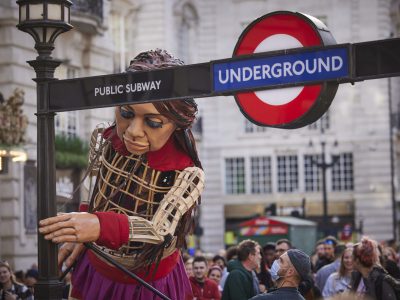
[post_content] => Throughout her journey, the 9-year-old Syrian refugee girl-puppet was greeted by both loving crowds and anti-migrant protesters. A huge crowd gathers outside the National Theatre in London’s Southbank. Children run around during the last moments of daylight. A choir stands ready. They are waiting for Amal. Heads turn and people point, as a giant puppet rounds the corner. As she walks into the courtyard, a solo voice sings out her name. The audience is silent.Amal tentatively explores the crowd, peering into the faces in front of her. She bends down to touch a child’s hand, and an elderly woman appears to give her words of heartfelt comfort. The mood is electric. When Amal finally leaves the National Theater, the crowd follows her across Waterloo Bridge, accompanying her as she continues to her next destination. She might just be a puppet, but Amal represents something very real. She embodies a nine-year-old Syrian refugee, who has taken the same journey as many unaccompanied minors across Europe. Her name is Arabic for “hope.” Amal started her journey on the Turkey-Syria border, kicking off Good Chance and Handspring Puppet Company’s travelling festival, The Walk, and journeying 8,000 kilometers (5,000 miles) to find a home in Manchester, UK.We were all invited to join Amal as she traveled across Turkey, Greece, and Italy, where she was met with both love and hostility. Amal has finally arrived in the UK, just as its government is proposing potentially hugely consequential changes to its immigration system, changes which could actually land those making dangerous journeys like Amal’s in jail. Thankfully for Amal, as she made her final steps across Europe, she was welcomed and given a home. Will the same be true for real migrant children?
Amal’s next steps in Europe
As Amal left Italy, to begin the final leg of her journey, she took her first steps through south-eastern France and into Switzerland. In Geneva, she played in the fountains outside the United Nations Office, and placed her hand on The Broken Chair, a 12-metre sculpture of a seat with a snapped leg, designed to raise awareness of the victims of landmines. There were many such poignant moments during The Walk.“The fact that this journey is based on a real route that many thousands of children have walked, and some have lost their life on, means that we are entrusted with a great responsibility to represent their stories in an honest and complicated way, showing the hardship but also the beauty of their journeys,” Amir Nizar Zuabi, artistic director of The Walk and Good Chance, told me. “We take this responsibility very seriously, because we know that as big as Amal is, so is the impact of her journey.”Amal moved on from Switzerland, stepping next into Germany, home to the EU’s largest population of displaced people. When she arrived in Stuttgart, she made friends with a giant robotic puppet, part of the Dundu Family of German puppets that have brought together audiences internationally since 2006 with spectacular light and music shows. As nighttime arrived, Amal met more of the family, as they lit up the darkness.When unaccompanied minors like Amal first arrive in Germany, they’re taken into the care of the local youth welfare office, explains Jonathan Sieger, head of the Bürgerzentrum community center and executive board member of NGO Kölner Spendenkonvoi, which assists newly arrived refugees.These young people are then placed with relatives, a foster family, or a suitable facility, and they must be given a legal guardian, as is the case—although not necessarily the reality—across much of Europe.One of the main risks young refugees face, Sieger says, is developing long term trauma. “What we are lacking in Germany is general psychological treatment for refugees. Especially for unaccompanied minors, this help is crucial,” Sieger says. This same sentiment has been echoed by organizations across the continent. Organizations like Bürgerzentrum are supporting young refugees to settle into their new homes. From its base in Cologne, Bürgerzentrum offers cooking workshops, theater classes, cultural events, and trips. Amal’s journey did not end here, but if it did, perhaps she would have found a warm welcome.As Amal bid farewell to Germany, she continued across Belgium, and then into France.
Walking through France
In the mountain region of Briançon, Amal embarked upon the treacherous path that many refugees have used to cross from Italy into France. She gazed at an exhibition of artwork made from the objects and clothes left behind by those who had traveled before her. In Paris, she saw the Eiffel Tower, and in Lyon she walked through the park with new friends. There was music wherever she went: brass bands, accordions, drumbeats.Amal was treated with dignity and celebration, but this is not always the reality for refugees in northern France. Police use violence and tear gas, which has been documented by Refugee Rights Europe and others.Safe Passage International is an organization helping child refugees reach safety and reunite with family, and it works across the UK, France, and Greece. In France, most of the people they support are sleeping on the street when they first come into contact with them.“Having fled war and persecution, there are thousands of children stuck on the streets or in refugee camps across Europe—nobody can call that safe for a child. Children are at serious risk of violence, exploitation and trafficking. These are children left in limbo and exposed to incredibly dangerous situations,” says the organization’s CEO, Beth Gardiner-Smith. Amal then made her way to Calais flanked with cheers and flags. This is often the spot where people cross over to the UK. It was the people of the Calais Jungle, a refugee camp that the French government had destroyed in 2016, which served as the original inspiration for Amal. It was also the birthplace of an earlier Good Chance production, The Jungle, about the people who gathered at an Afghan café in the refugee camp. Despite all this, the Mayor of Calaisobjected to Amal passing through the area and refused to approve a permit.Like many young refugees before her, Amal crossed the English Channel to the UK. But unlike fellow young refugees, the company of Good Chance actors accompanying Amal crossed the water safely, with passports in hand and comfortable places to sleep on either side of the journey.
Arriving on UK shores
On a grey day toward the end of October, Amal finally stepped onto the shore in Folkestone, Kent, in the south-east of England. The actor Jude Law, who is an ambassador for The Walk, held her hand as she walked down the pier, where schoolchildren welcomed her and gave her a passport, blanket, and cookies.The day after Amal’s arrival, supporters flocked to Parliament Square in London to join the Refugees Welcome Rally, organized by a collective of refugee organizations. The protest took place in opposition to the government’s new “Nationality and Borders Bill,” which parliament is currently considering.The Conservative government has stated three objectives for this bill:
“To make the system fairer and more effective”;
“To deter illegal entry into the UK”;
“To remove from the UK those with no right to be here.”
In her opening speech for the bill, Home Secretary Priti Patel said: “The British people have had enough of open borders and uncontrolled migration[...] Enough of dinghies arriving illegally on our shores, directed by organized crime gangs.”She went on to outline some of the proposed changes, which include a maximum prison sentence of four years for those “entering the country illegally” and additional powers for the Home Office’s Border Force. The policies outlined in the bill contravene the UN Refugee Convention, which states that refugees should not be penalized for the manner in which they enter a country if they are coming from somewhere where their life or freedom has been threatened. According to Safe Passage International, the UK government’s bill is aimed, foremost, at deterring migrants and refugees who wish to enter the UK, but fails to address the reasons people leave their countries.“The UK Government’s Nationality and Borders Bill will cruelly punish refugees who turn to us for compassion and safety, whilst doing nothing to break the business model of smugglers who exploit the lack of safe passage to the UK,” says the organization’s CEO, Beth Gardiner-Smith. “We urge this government to tear up these cruel plans and instead open safe routes for refugees seeking sanctuary in the UK.”There are currently no visas that would allow a person to travel legally to the UK and claim asylum. “It’s deeply concerning that virtually the only way now for child refugees to reach the UK from France—regardless of their age, vulnerability, family links or community ties—is to risk a dangerous journey in the back of lorries or on dinghies across the Channel,” Gardiner-Smith added.If passed, the bill could see many asylum seekers deported to a third country, particularly those who have already traveled through what are considered “safe nations.” The government will introduce “reception centers,” which could resemble the controversial Napier Barracks, criticized for their “squalid” conditions. The bill also paves the way for keeping refugees offshore, where they are detained in so-called processing centers in a third country.Safe Passage International is calling on the UK government to allow entry to people seeking asylum in cases where they already have family in the UK. They also say the situation for refugees has worsened since Brexit because the EU’s Dublin Regulation, which provided the criteria for defining which country is responsible for examining a refugee’s asylum application, has not yet been replaced with a UK equivalent. Thankfully, there is a strong network of local organizations across the UK supporting young refugees, like the Kent Refugee Action Network (KRAN). Daniel and Osama are two of KRAN’s youth ambassadors. They are also refugees; now they support people who are making the same journeys that they did. Three years ago, KRAN started a Youth Forum, where young refugees meet to discuss different issues that affect them—like accommodation, education, and mental health. Youth ambassadors like Daniel and Osama act as a bridge between these young people and the organization.In the forum, young people often describe the contrast between their expectations and their experiences in seeking asylum in the UK. In most instances, they’ve faced challenges at every stage. These stories also highlight the essential role of organizations like KRAN and the Refugee Council, and Refugee Action.Despite the challenges he’s faced, Daniel has felt welcomed in the UK and does not believe the country’s new immigration plan represents the sentiment of the wider public.The bill is now in the report stage and awaiting its third reading, after passing its second reading by 366 votes to 265. With a Conservative majority, it seems likely the bill will pass. But there could be legal challenges to Priti Patel’s plan for a Border Force to push back boats carrying refugees.
Meeting Amal
Both Daniel and Osama met Amal in Kent. They described it as an extraordinary experience.“It really represents our stories, it represents the suffering that we have been through,” Osama says. “You have this emotional feeling when you see that people are coming just [to see] a puppet and [to give] their warm greetings.”At the beginning of this month, Amal finally found a home in Manchester. Local schools, refugee communities, and the Manchester International Festival created a spectacle for her arrival: a flock of puppet birds. As Amal moved among the crowd, a flight of swallows acted as her guide, their wings illuminated and flapping gently around Amal. These birds know migration too, making dangerous journeys every year between the UK and South Africa.“I know that the arrival into the UK specifically, though not only the UK, is not a simple one. Amal and the children she represents only start a much longer journey once they reach their final destinations,” The Walk director Zuabi says.Zuabi, nonetheless, has hopes for Amal, a puppet who represents all young refugees: “We are not born refugees, it is a circumstance, and this circumstance should be as short as possible.” If the Nationality and Borders bill is passed, the future could look bleak for asylum seekers hoping for refuge and welcome in the UK. Already, the Border Force has been spotted practising sea push back techniques. Napier Barracks is still operating. But the open arms with which Little Amal has been welcomed and the persistent work of grassroots refugee organizations show that the British people care, and will stand up for their new neighbors. It’s there in Amal’s name—there is hope.
[post_title] => Little Amal arrives in the UK as parliament considers a bill that would see her deported
[post_excerpt] => Enthusiastic crowds greeted the 10 year-old unaccompanied Syrian refugee girl, even as parliament considered a bill that would make thousands of refugees ineligible to stay in the UK.
[post_status] => publish
[comment_status] => closed
[ping_status] => open
[post_password] =>
[post_name] => little-amal-arrives-in-the-uk-as-parliament-considers-a-bill-that-would-see-her-deported
[to_ping] =>
[pinged] =>
[post_modified] => 2026-08-05 20:00:07
[post_modified_gmt] => 2026-08-05 20:00:07
[post_content_filtered] =>
[post_parent] => 0
[guid] => https://conversationalist.org/?p=3432
[menu_order] => 164
[post_type] => post
[post_mime_type] =>
[comment_count] => 0
[filter] => raw
)
WP_Post Object
(
    [ID] => 1428
    [post_author] => 2
    [post_date] => 2019-10-18 22:51:17
    [post_date_gmt] => 2019-10-18 22:51:17
    [post_content] => The Syria crisis has provided a clear issue for Democrats in pursuing their impeachment inquiry.

When Nancy Pelosi took the 'extraordinary' step of initiating impeachment proceedings against President Trump on September 24, the consensus among even those who had for months been calling upon her to do so was that the Republican-dominated Senate would block his removal from office. Over the ensuing three weeks, however, a series of seismic occurrences have upended received wisdom. As prominent historian and journalist Heather Cox Richardson wrote yesterday in a long Facebook post, it feels "as though the nation has shifted." The immediate catalyst for this shift was Trump's decision to withdraw U.S. military support from the Kurdish stronghold in northeastern Syria, and to suspend military aid to the Kurds. This, coming on the back of some stunning revelations about Trump's dealings in Ukraine, have finally cracked the wall of Republican support for the president.
'I want you to do us a favor though'
The original reason for the impeachment hearings was a whistleblower complaint from an unnamed CIA officer who had been assigned to the White House. According to the complaint, which several media outlets published in its entirety, Trump indirectly told the newly elected president of Ukraine, Volodymyr Zelensky, that he wanted Ukraine to manufacture dirt on Joe Biden. During their phone conversation, Trump used a phrase that could be the 10 words that sink his presidency: "I want you to do us a favor though." The "though" implies that Trump was asking for a quid pro quo — a personal service for his own benefit. Then it emerged that Trump had held up the release of a $400 million military aid package to Ukraine. Since that aid package had been approved by Congress in July, the president was in effect withholding taxpayer money for his personal use.

Trump tried, of course, to obfuscate by claiming the whistleblower had made false accusations and insisting that his conversation with Zelensky had been "a perfect phone call." Republican senators continued to defend Trump. Their constituents still supported the president, believing his claims that the allegations regarding the phone call were untrue or misunderstood. Since impeachment is a political process and not a trial, GOP lawmakers were not going to risk being voted out of office by angry Trump supporters. The impeachment inquiry would continue, but with little chance of the president being forced out of office.
The Syria debacle
On October 6, Trump announced abruptly that he was withdrawing U.S. military support for Kurdish forces in northeastern Syria. The Kurds were U.S. allies; they had fought and destroyed the Islamic State, which cost the lives of an estimated 11,000 soldiers. Turkey, however, regarded the Kurds as terrorists. As soon as American commandos pulled out of the Kurdish stronghold, Turkey launched a military attack that has shocked the world with its brutality.

Besides the horrific moral implications of abandoning the Kurds after they had saved the U.S. from deploying its own troops to fight the Islamic State, Trump's decision to pull out of northeastern Syria is a diplomatic and security catastrophe. America has given up its leverage in the region, indicated to any future allies that they cannot be trusted, and possibly provided an opportunity for ISIS to resurrect itself.

Kurdish forces that were guarding 11,000 captured ISIS fighters had to abandon the prison camps in order to fight Turkish forces; many of those ISIS prisoners simply walked out of the camps — presumably to fight another day; indeed, there has already been a spike in ISIS attacks against the Syrian Democratic Forces (SDF), the anti-Assad forces that were also U.S. allies. Meanwhile Putin rushed to fill the territorial vacuum, deploying Russian soldiers to the area. Some of them posted triumphal videos taken at abandoned U.S. military bases.
Cracks in the wall
Even stalwart Trump supporters were appalled at the extent to which Trump had undermined American security and its national interests. Senator Lindsey Graham, a national security hawk, issued scathing tweets accusing the president of creating "a complete and utter national security disaster."

I worry we will not have allies in the future against radical Islam, ISIS will reemerge, & Iran’s rise in Syria will become a nightmare for Israel.
I fear this is a complete and utter national security disaster in the making and I hope President Trump will adjust his thinking.

— Lindsey Graham (@LindseyGrahamSC) October 16, 2019

When Fox News reported Graham's criticism, it became clear that Trump's support was weakening. Swing voters might not understand the significance of Trump's phone call with Zelensky, but they certainly understand the significance of their president making them vulnerable to terrorist attacks committed by the so-called Islamic State.

This was Nancy Pelosi's moment. At a fraught White House meeting regarding the Trump administration's Syria policy, she stood to confront the president, pointing her finger at him as his aides hung their heads. An unnamed White House photographer caught what has already become an iconic image, the subject of in-depth analysis by art historians and culture critics, and which Pelosi promptly posted as her new header on Twitter.


Trump is now an embattled president, and he knows it. But his base remains loyal, and that will probably never change. The question is whether the institutions of the state, after three years of relentless assault, remain sufficiently robust to support the democratic process of impeachment.
For more analysis of this extraordinary historical moment:
[post_title] => The ground beneath Trump's feet
[post_excerpt] => Besides the horrific moral implications of abandoning the Kurds after they had saved the U.S. from deploying its own troops to fight the Islamic State, Trump's decision to pull out of northeastern Syria is a diplomatic and security catastrophe. America has given up its leverage in the region, indicated to any future allies that they cannot be trusted, and possibly provided an opportunity for ISIS to resurrect itself.
[post_status] => publish
[comment_status] => closed
[ping_status] => open
[post_password] =>
[post_name] => the-ground-beneath-trumps-feet
[to_ping] =>
[pinged] =>
[post_modified] => 2026-09-15 23:27:54
[post_modified_gmt] => 2026-09-15 23:27:54
[post_content_filtered] =>
[post_parent] => 0
[guid] => https://conversationalist.org/?p=1428
[menu_order] => 297
[post_type] => post
[post_mime_type] =>
[comment_count] => 0
[filter] => raw
)
WP_Post Object
(
    [ID] => 1297
    [post_author] => 2
    [post_date] => 2019-08-09 15:36:13
    [post_date_gmt] => 2019-08-09 15:36:13
    [post_content] => Human rights organizations warn that northwestern Syria is on the brink of a humanitarian catastrophe unprecedented in the twenty-first century.

On July 22 Russian jets bombed the market in Maarat al-Numan, a town near Idlib in northwestern Syria, killing 40 civilians. According to an eyewitness named Um Abdullah, the bombing was so devastating that rescue workers struggled to find corpses left intact. “They filled entire bags with body parts,” she said.

Idlib and the surrounding area is now the last remaining territory in Syria still controlled by opposition forces. Over three million people live there, including over 1.5 million children. They are nearly all civilians, with about half displaced from other parts of Syria. After Russia intervened directly in the civil war in late 2015 on the side of the Assad regime, pro-regime forces, including Iran-backed militias, recaptured all the other rebel-held areas. Those who refused to surrender to the regime were deported to Idlib, where they now await their fate. Since the end of April Bashar al-Assad’s regime forces and their Russian allies have been pounding the area with air strikes, killing nearly 800 people so far. The UN and human rights NGOs warn of an impending “humanitarian nightmare,” as regime forces decimate cities, pushing civilians to flee toward the sealed Turkish border.

https://www.youtube.com/watch?v=HFAZ_FsKxmg&feature=youtu.be

Syrian and Russian militaries renewed their assault on Idlib in late April, recycling tactics they used in places like Aleppo: in addition to heavy indiscriminate attacks on population centers, they destroy essential infrastructure and services such as hospitals, ambulances, schools and markets with targeted strikes from the air. They also kill civil defense teams while they are trying to rescue civilians trapped under rubble. Between heavy airstrikes, shelling, and a ground assault, more than 452,000 people have been displaced over the last three months.

But neither the dire warnings from humanitarian workers and UN agencies, nor the devastating death and destruction, have received significant media attention. The world has turned its attention away from the war for many reasons, but the main factor seems to be that there is essentially nothing new about Syrian civilians dying in indiscriminate airstrikes. Hundreds of thousands have died in such attacks over the last eight years. Activists on the ground disseminate graphic and disturbing images of the carnage and destruction in the hope of shocking the outside world into taking action; but those disturbing images achieve the opposite of their intended purpose, with the news-consuming public feeling helpless and thus increasingly reluctant to look and to know.

Another factor behind the scant reporting from Idlib is that journalists have extremely limited access. All entry of foreign journalists into Idlib requires coordination with the Islamist group Hayat Tahrir al-Sham (HTS), an offshoot of al-Qaeda, which is the dominant power in the region. Even when journalists do gain access to the area, they face enormous challenges that include limitations of time and space: it’s almost impossible to explain the complex international negotiations and power plays over the fate of this densely populated region in a succinct 750-word news item or a three-minute report for television news.

[embed]https://www.youtube.com/watch?v=c4I4tthapJw[/embed]
Aftermath of the Russian airstrike on Maarat al-Numan, July 22, 2019.
The significant media coverage of the atrocities in Aleppo, eastern Ghouta and the city of Homs did not alter the fate of these regions: they all fell to the regime, after ferocious military campaigns. The saturation coverage did, however, make it more difficult for Russia to claim that the regime was killing “terrorists” while the wire services were publishing photos and videos of wounded children undergoing painful medical treatment in bombed out hospitals that had run out of anesthesia.

Media coverage also increased international empathy for the people living in areas that were under siege, with activists organizing demonstrations around the world. Syrians followed the online support campaigns and solidarity protests held across the west, feeling that even if their predicament remained unchanged, at least their humanity and suffering were acknowledged. The current silence, despite the ongoing humanitarian catastrophe, makes them feel abandoned. Perhaps, if the assault on Idlib had received the kind of media attention given to Aleppo in 2015, public pressure would have affected western government policy; perhaps those governments would have reconsidered their decision to cut essential funding for civil society organizations in the opposition-held areas of Syria.

Despite the world’s indifference and the dearth of foreign reporters on the ground, local journalists continue to cover events. Samer Daabol, a photojournalist in Idlib, sees his work as an act of defiance against the Syrian regime. He explained that he felt a “responsibility to amplify the voice of civilians,” adding: “No one can do this except us, living in this war zone.” He tried to explain what it’s like to live with a complete absence of physical security. “There is no safe place during the day or night,” he said, adding that the air strikes “create immense pressure, anxiety, sudden precipitation, insomnia, headaches.” He and the rest of Idlib live “a life that revolves around death.”

Idlib’s fate is now in the hands of Turkey, Russia, and, to a lesser extent, Iran. The three countries have negotiated several “de-escalation” deals, but all the armed actors in the conflict — the opposition, the Assad regime, and its ally Russia — have repeatedly violated those agreements.

The Assad regime has vowed to retake every inch of Syria. In pursuit of this goal, it has ignored deals to de-escalate the conflict. Turkey, meanwhile, is determined to prevent the area from falling into the hands of the regime, largely because Ankara knows that as Assad’s forces re-take control of Idlib, a massive number of Syrian civilians will rush to the Turkish border, which has been sealed since 2016. Only a very few have the means to escape by paying smugglers thousands of dollars. Turkish border police routinely shoot and kill Syrian asylum seekers, while others have been caught and deported back. Turkey already has 3.6 million Syrian refugees and they don’t want any more — particularly not if they are jihadi militants. In order to preempt this scenario, Ankara has increased military assistance to the National Liberation Front, a conglomeration of Islamist and mainstream rebel groups.

Umm Yazan, 28, is one of the Civil Defense employees who helps rescue civilians and provide them with medical care. I spoke to her after she had been displaced from her hometown in southern Idlib due to intense airstrikes.

Umm Yazan explained that she joined the Civil Defense, also known as the White Helmets, because she could never abandon her people. White Helmets work under extremely perilous conditions: they are routinely targeted in “double tap” attacks, with bomber planes first hitting a target and then swooping back for a second time to kill rescue workers while they are working to drag survivors out of the rubble. Um Yazan’s five year-old son, Yazan, was killed in an airstrike in 2015. “When I rescue someone’s son, I feel I am recovering my son’s spirit. This gives me such great positive energy to continue my work,” she said.

In recent years I have spoken to hundreds of Idlib residents and met with refugees who managed to escape to Turkey. The dire living conditions in the region — the near-constant shelling, loss of loved ones, poverty, absence of basic amenities, instability, and displacement patterns from and into Idlib, have left an indelible mark on the region’s inhabitants, forging a unique temperament. They have strong communal solidarity, are dogged, fatalistic, fearful, angry and bitter toward the outside world; they also suffer from unyielding, but usually repressed, mental anguish.

“People have changed a great deal,” said Mohammed, a commander with the Free Syrian Army who was displaced from his home in Hama several years ago. “We never expected [when the uprising began in 2011] to be targeted with barrel bombs and missiles.” He added: “These people have been sentenced to death.” While in other regions of Syria the population often pressured the rebels to surrender to the regime, in Idlib half the population is composed of people who chose displacement over “reconciliation.” Many original inhabitants of the region are also opposed to surrender.

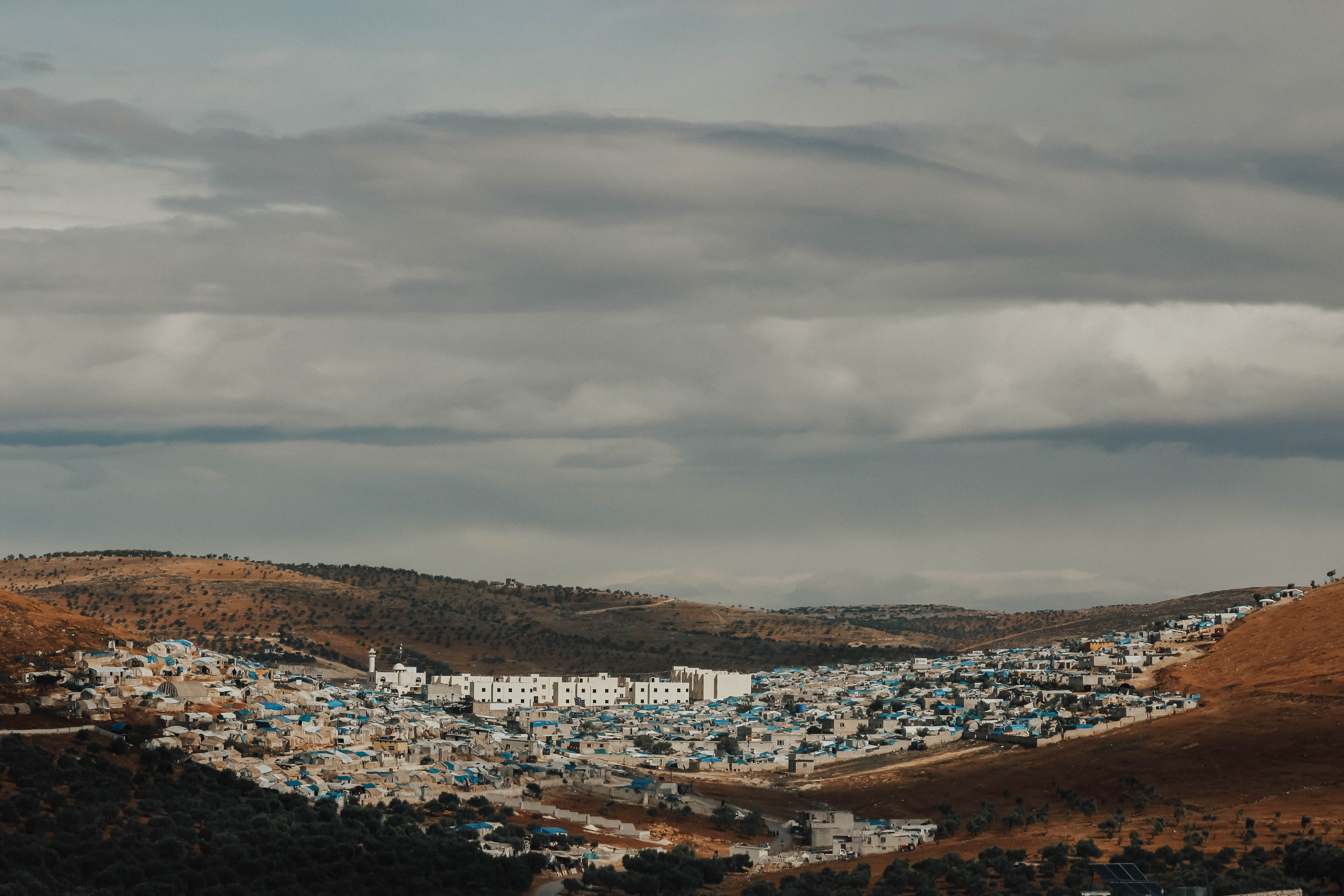
[caption id="attachment_1303" align="aligncenter" width="5184"] Atmeh border camp in Idlib, near the Syrian border. Over 800,000 internally displaced people live here in tents, with neither running water nor toilets.[/caption]

“Civilians saw with their own eyes what happened in areas that reconciled with the regime. People there are suffering humiliation, detention and torture,” said Mohammed, the FSA commander. In previous “reconciliation” deals, those who refused to surrender were bussed to Idlib, which was the last stronghold of the opposition. These internally displaced people have seen and heard what the Assad regime’s soldiers do to civilians in formerly opposition held areas — i.e., they rape the women and slaughter indiscriminately. Many people in Idlib believe that opposition factions are implementing the agendas of their foreign sponsors. They also acknowledge that the opposition forces can be abusive toward civilians. And yet, they need their protection.

Yasin (not his real name), a resident of Khan Sheikhoun, said that about 150 members of his extended family had been killed during the eight-year war. “The international community and all countries, Arab and Western, do not care about [us],” he said, adding that he believed the Arab and western governments wanted the Russians to help the Assad regime kill all the people of Idlib. Yasin barely survived the April 2017 Sarin gas attack on Khan Sheikhoun, which killed about 100 people. The UN’s chemical weapons watchdog, the OPCW, held the Syrian regime responsible for the strike. “The entire world abandoned us — Turkey, the world, the West. Nothing is before us except death,” said Yasin. He spoke rapidly, rushing to unload his pain, inhaling and exhaling audibly.

Yasin works as a monitor tracking Syrian and Russian jets. He informs the Syrian Civil Defense of approaching planes, so that they can warn civilians to find shelter, or escape the crowded locations that are routinely targeted by Russian forces and the Syrian regime. His immediate family fled to northern Aleppo, which is under Turkish control and thus safe from airstrikes. Khan Sheikhoun has been largely depopulated, with civilians seeking cover in nearby orchards or fleeing further north. “The Russian jets are chasing people wherever they escape,” Yasin said. But he refuses to leave, insisting that the regime will come for him no matter where he goes. “Let me die when I’m here, on my land.” Yassin’s resolve is not predicated on hope, but on fatalism. “No one hears us. Our blood is the cheapest on earth. Whether a Syrian dies or lives, it does not matter,” he said.

Umm Abdullah is a math teacher and prominent anti-regime activist in her city, Maarat al-Numan, an epicenter of civil society activism in Idlib. She joined the early protest demonstrations in 2011. Today she leads several associations, advocates for the rights of detainees in regime prisons and supports their families. “If you walk around Maarat al-Numan, you will see buildings with floors collapsed atop each other, stores with metal gates blown out. Jets do not leave the sky. Strikes are ongoing... Our children are dying.” She wept as she said, “I have not seen my son in seven years. He was my happiness. My eldest. He had a flame inside him. He was full of life.” ِAbdullah, her son, was arrested in February 2012 and detained in the notorious Sednaya Prison for participating in anti-regime protests. The family was informed only this year that he died under torture back in 2014. Like many other relatives of detainees, they sold property to pay exorbitant bribes for the release of their child, but to no avail.

For the past three years, Idlib has been stuck in an impossible, deadly situation. The frozen low-intensity conflict escalates every few months, resulting in mass casualties; the influence of the jihadis has expanded under the increasingly pragmatic Hayat Tahrir al-Sham; and humanitarian conditions have deteriorated as a consequence of a reduction in international funding. In the west, we are not reading about Idlib in the headlines — or even in the back pages. Because the media is barely reporting the story, many people have the mistaken impression that the war in Syria is over. The people of Idlib have become somewhat accustomed to having their intense suffering ignored — but still, they do feel dehumanized. “We are human beings. We have feelings, just like you,” said Umm Abdullah. “You in the west call for animal rights, for dogs and cats, so first demand our rights, us human beings.”
    [post_title] => Who will write our history? The world looks away while Idlib awaits its fate
    [post_excerpt] => Because the media has largely stopped reporting the war in Syria, there is a widespread misunderstanding that the war in Syria is over. In fact, it has escalated.
    [post_status] => publish
    [comment_status] => closed
    [ping_status] => open
    [post_password] =>
    [post_name] => who-will-write-our-history-the-world-looks-away-while-idlib-awaits-its-fate
    [to_ping] =>
    [pinged] =>
    [post_modified] => 2026-08-06 23:25:10
    [post_modified_gmt] => 2026-08-06 23:25:10
    [post_content_filtered] =>
    [post_parent] => 0
    [guid] => https://conversationalist.org/?p=1297
    [menu_order] => 307
    [post_type] => post
    [post_mime_type] =>
    [comment_count] => 0
    [filter] => raw
)



 Trump is now an embattled president, and he knows it. But his base remains
 Atmeh border camp in Idlib, near the Syrian border. Over 800,000 internally displaced people