
WP_Post Object
(
    [ID] => 10823
    [post_author] => 15
    [post_date] => 2026-08-03 15:56:25
    [post_date_gmt] => 2026-08-03 15:56:25
    [post_content] => 

Beyond the classroom and in real life, a teacher-student friendship can be one of the best and most enduring kinds there is.

A card arrived in the mail last week, my name written in a cursive I know well. It had been a couple of weeks since her last letter, and I eagerly sat down on my couch to read it. She told me how everyone at home, “both human and animal,” was doing well, how many cats she was currently fostering (thirteen), and yet, that she didn’t mind the label that came with it. “The Crazy Cat Lady is definitely somebody I identify with,” she wrote, and of course, that made me giggle. Her playful way with words paired with self-deprecation have always been uniquely hers. This I’ve known since long before we became friends.

My penpal and I met one morning more than three decades ago, when I walked to the end of a high school hallway full of lockers and into her classroom. I can only imagine how confused I looked to everyone on that first day of school: Shy and slightly awkward, I spoke no English and was dressed very differently from my peers. I’d only landed in that small New Jersey town a couple of weeks prior, from my home in Caracas, Venezuela. I was fourteen years old, and had attended the same school for most of my life. Suddenly, I was one of the “new kids,” and only one of three in the high school who spoke Spanish, who had the great luck of being assigned to Mrs. Boutin’s English-as-a-Second-Language (ESL) class.

I don’t remember her being a Cat Lady in those years. In fact, in one of her many letters this year, she told me she used to be a dog person until she’d helped a neighbor trap, neuter, and return a bunch of feral cats, then decided to keep doing it. She found the work humbling. It made her feel useful. I guess it wasn’t much different than teaching English to a bunch of deer-in-the-headlights scared and somewhat feral adolescents who had come from all walks of life and many corners of the world, including Vietnam, Argentina, India, and China, in my class alone. Some of us had experienced trauma, others came from families seeking work, but no matter how we ended up in that New Jersey high school, every one of us took refuge in her classroom. I’d like to think we all needed it.

We all looked up to Mrs. Boutin because she was patient, laughing off our teenage drama and championing us as we uttered our very first English words, thick accents and all. Like many of my classmates, I’d often swing by after the school bell rang just to talk. She would ask me about my old life. Did I miss it? Would I get to visit home again, and if so, what would be on the top of my list of things to do? Who did I most want to see? She listened intently to my melancholy answers like few others did. It kept me emotionally present at a time in my life when it would have been much easier to push my complex feelings under the rug and simply do whatever I could to fit in (which I did anyway).

Within a year, I was able to defend myself in English; in another three years, I graduated and left for college. I discovered journalism, moved around—within the U.S. and abroad—got married, and, almost twenty years after leaving high school, had a kid. Now that I think about it, becoming a parent must have prompted my search for her: caring for a new life made me appreciate the old ones all the more. I found her through social media. When she responded a day or two later, she insisted that I call her by her first name: Juanita.

In Sister Outsider, poet and essayist Audre Lorde says that being a teacher means learning to talk to students to get “through to them” so that “their own processes would start.” She likens it to a fire, something you could “literally incite, like a riot." By the time I found Juanita again in 2014, I’d been teaching storytelling for a few years, trying my best to incite my students like she had me. Until then, I hadn’t realized how teaching could be political, both an act of kindness and of rebellion. How, beyond the classroom and in real life, a teacher-student friendship could be one of the best and most enduring kinds there is.

After a few email exchanges, we realized snail mail was much better for us both. Juanita would often finish her letters with an invitation to visit until, four years ago, I decided to accept and travel to Mississippi, where she lives with her husband, dog, and a rotating crew of at least a dozen former street cats she’s trying to find homes for. She was the same Juanita I remembered—with her Puerto Rican Spanglish, her hair short and her skirts long—except both she and I were a few decades older. She insisted I stay at their home and sleep in a hot pink guestroom she’d dubbed the “Pepto-Bismol.” That first night, I dreamt I was back in high school; it was a good dream. 

Even though she’s long retired, Juanita still works most weekdays as a volunteer for local trap, neuter, and release efforts, which are few and far between in Mississippi. The morning after I arrived, I came along as she drove us around town to all the spots where she knew there were feral cat populations. I watched as she counted how many cats were in each, gave them food and water, and took note of any new litters or sick animals. Most of the cats scampered away as soon as they saw me. But they knew and trusted Juanita, just like the workers we ran into at the University of Mississippi campus, and the man at the gas station where she and I grabbed “the best fried chicken on a stick in all of Mississippi” after her volunteer shift. And just like me and my fellow classmates who used to seek her out after school. 

I left Mississippi feeling grateful and whole. In just three days, we’d visited three art museums, ate obscene amounts of delicious fried food, went on long sightseeing drives, discussed religion and politics and race, and visited her friends who seemed delighted to hear that I, Juanita’s former high school student, was now her friend, too.

Sometimes I think the term “friend” doesn’t quite do our relationship justice, though. Not because of our age difference or the deep respect I continue to feel for her as my former teacher. Juanita knows me like a parent; her gentle yet no-nonsense life advice has always reminded me of my late grandmother whose Spanish-language proverbs were just as funny and true. But she also continues to be a source of comfort, like she was many years ago. “Be at peace,” she texted recently, when I told her I needed to put our beloved cat to sleep. “You will know what to do as each moment arrives.” She was right. 

Can a fairy godmother be a “friend”? Absolutely. We are lucky to find (and keep) even one such friend over the course of a life, and I believe Juanita is mine. Her letters arrive in the mail with printed out poems or books I haven’t yet read that seem to address my moods in ways that sometimes spook me. Like the Mary Oliver poem, “How Would You Live Then?,”  which she’d cut down to a four-by-five piece of paper and slipped inside a card that arrived last week. “What if the mockingbird came into the house with you and became your advisor?” its third line read, which I happened to scan early one evening while I sat on my bed, listening to our resident mockingbird sing in the front yard. 

I am still drafting my latest snail mail response to her, in our now-customary English mixed in with Spanish, following our thread, asking about summers in Mississippi, her garden, and her foster cats. I am also planning another visit, already knowing which room she’ll insist I stay in when she replies, in that playful way that’s uniquely hers, and never fails to make me laugh.

[post_title] => Friendship as a Second Language [post_excerpt] => Beyond the classroom and in real life, a teacher-student friendship can be one of the best and most enduring kinds there is. [post_status] => publish [comment_status] => closed [ping_status] => closed [post_password] => [post_name] => old-friends-adult-friendship-esl-english-second-language-teacher-student [to_ping] => [pinged] => [post_modified] => 2026-08-03 15:56:27 [post_modified_gmt] => 2026-08-03 15:56:27 [post_content_filtered] => [post_parent] => 0 [guid] => https://conversationalist.org/?p=10823 [menu_order] => 0 [post_type] => post [post_mime_type] => [comment_count] => 0 [filter] => raw )
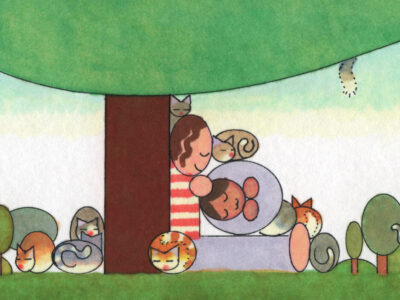
An illustration of two people sitting under a tree, surrounded by cats curled up napping.

Friendship as a Second Language

WP_Post Object
(
    [ID] => 8231
    [post_author] => 15
    [post_date] => 2025-04-22 02:08:57
    [post_date_gmt] => 2025-04-22 02:08:57
    [post_content] => 

Despite the threat of police violence and arrest, student-led protests against President Erdoğan and his ruling party continue across Turkey.

A wave of street demonstrations began rapidly taking over Turkey last month after a crowd of students at Istanbul University pushed back against, and ultimately overcame, a riot police barricade attempting to block their path. This feat was seen as a moment of encouragement and empowerment for a country that has long felt silenced by its current government, and has led to continued demonstrations across Turkey in the weeks since.

The students on March 19 were protesting the imprisonment of Ekrem İmamoğlu, Istanbul’s current mayor, and the biggest rival of President Recep Tayyip Erdoğan in the next presidential election. They were also protesting a court decision made the day prior that nullified İmamoğlu’s diploma, a controversial ruling that meant the mayor, a member of the main opposition Republican People’s Party, the CHP, would not be directly eligible for candidacy. 

The ruling was taken as a major blow to democracy and rule of law both by his supporters and by the opposition, with the party’s chairman calling it a “black mark.” But it was only a foreshadowing. The next morning, İmamoğlu, along with some 100 people, including aides, business people, and other mayors of the metropolitan’s districts, were detained in their homes. İmamoğlu had been accused of corruption and terror for allegedly establishing an electoral alliance with the Kurds in previous mayoral elections. 

The case against him was widely taken as politically-motivated—the law being utilized once again as a weapon to extend Erdoğan’s reign, and discourage and limit his critics. Many were also quick to call out the hypocrisy of the charges: President Erdoğan, founder of the ruling Justice and Development Party, the AKP, has himself been in talks with Turkey’s pro-Kurdish DEM Party to release Abdullah Öcalan, the imprisoned leader of the separatist Kurdistan Workers’ Party, the PKK, designated as a terror entity by Turkey and the U.S. alike.

In a handwritten note posted on Twitter/X while he was detained, İmamoğlu wrote, “My people will respond to those who steal the people’s will.”

Massive demonstrations immediately erupted across the country, in Istanbul, Ankara, Izmir, and tens of provinces, including Konya in central Turkey, a very conservative AKP stronghold. All were met with brutal police violence. At many of the protests, the riot police used tear gas, rubber ball rifles, and water cannons against the young protestors, many of whom had their faces covered to hide their identities, out of fear of losing their livelihoods. 

For many, it was their first street demonstration. Many held various sizes of the Turkish flag, and banners—some humorous—expressing their resilience and upset. 

Bülent Kılıç

On March 22, at the legal end of the mayor’s detention period, İmamoğlu and the CHP Chairman Özgür Özel both called for a demonstration at Sarachane, the metropolitan municipality’s headquarters in Istanbul’s historic Fatih district. 

“The walls of fear have been overcome,” İmamoğlu said in his call, posted on Twitter/X—referencing a culture of fear that has been especially prevalent since 2015, when a war re-erupted with the PKK, and since 2016, when a U.S.-based Turkish cleric was accused of orchestrating a coup. Both paved the way for a more authoritarian environment, in which civil dissent would often be marginalized.

Hoping to deter protestors from attending the demonstration in Sarachane, the Interior Ministry imposed various travel restrictions in key provinces, including shutting down metro and bus stations to limit travel. But their efforts were unsuccessful. Hundreds of thousands surrounded the municipality in support of İmamoğlu, while many other demonstrators of various ages stood outside the courthouse in Caglayan, where the mayor’s hearing would be held throughout the night. 

Ultimately, demonstrators were protesting what they believed to be an attack on Turkey’s democracy and core values. Facing a riot police barricade encircling the massive building, hundreds chanted, “Turkey is secular; it will remain secular,” and the famous Bertolt Brecht line: “All of us, or none!”

The court ruling came at early dawn: İmamoğlu and tens of aides were arrested for corruption, pending trial, which has since been postponed to July 11.

The decision drew masses more to the streets, mainly young people, many of whom viewed the ruling as an extension of Erdoğan’s corruption. For millions across the country, it was a drop too much following years of polarizing rhetoric and the criminalization of dissent in a crumbling economy.

“We are not here to support any political party,” Beyza Ozdemir, a 30-year-old screenwriter said in Sarachane, a day after the mayor was arrested. “I came because I want to defend my rights, my country; to stand against injustice. I’m here for the ruling government to resign.”

Alongside her friend, 27, Ozdemir explained that, like much of the population, they were just “surviving.” Under near-80 percent inflation, it has become nearly impossible to travel, own property, or make plans for the future in Turkey, something they blamed on Erdoğan and the AKP. 

Other demonstrators said they were protesting for freedom of expression, justice, and in support of earthquake-proofing cities, following the devastating damage caused by the 2023 earthquake. Others said they were there because of the alarming femicide numbers, the destruction of nature, and the killing of strays in shelters. A majority said they came to protect the secular democracy entrusted to the Turkish youth by Mustafa Kemal Atatürk, founder of modern Turkey.

President Erdoğan, who’s been in the official power seat since 2003, called the demonstrations “a movement of violence” and “street terror.” But Beyza’s friend said that he felt like “a phoenix” standing among the crowds, chanting in solidarity, after years of being silenced following the massive 2013 Gezi Park protests against the same government, protests that were criminalized to the point of terror charges and a life sentence for a Turkish philanthropist, who is accused of undertaking an alleged organizational role.

Bülent Kılıç

Twelve years later, in Sarachane, the authorities would take similar, disproportionate measures once again. Caught on camera by photojournalists and protestors on the night of March 23, hundreds of riot police sprayed tear gas and fired heavy barrages of rubber balls directly at demonstrators, many of whom were just walking back to the metro at the end of the night. 

Dozens of shoes were left behind by those who could flee. The next morning, members of the media, including internationally-acclaimed photojournalists, were detained on morning raids along with hundreds of young demonstrators, many of them university students.

All were accused of violating the law on meetings, and were imprisoned pending trial. Immediately, a public campaign to release them began, underlining that they were simply using their constitutional rights to protest. The campaign gained momentum on various social media and opposition platforms, which seems to have helped most of them to be freed, but with tens still imprisoned.

The protests continued. Following the last day of the mass gathering in Sarachane, on March 25, the CHP announced a demonstration in Maltepe, across the Bosphorus, the weekend following. They claimed 2.2 million people attended the event in solidarity. 

The next day was the beginning of a government-imposed nine-day religious holiday, Eid al-Fitr, putting a temporary end to the mass demonstrations. In response, the opposition called for a day of nationwide mass boycott to curb the AKP’s economic hinge, by stopping consumption fully, a goal that was supported by many shops and restaurants, which all closed for the day.

Some actors who supported the boycott were removed from their roles in state-owned streaming platform Tabii, while Cem Yiğit Üzümoğlu, who stars as Mehmed the Conqueror in Netflix’s Rise of Empires: Ottoman, was briefly detained.

While the heat of the mass street demonstrations has since slowed down because of the break, boycotts against pro-government brands and the student-led protests have continued. This month, videos of demonstrations held by high school students from various provinces have also started circulating. In one, tens of riot police are stationed outside Vefa High School in Istanbul, where one student holds a banner reading, “Rights, Law, Justice!”

Many universities across the country have also continued to hold sit-ins and forums, calling for more demonstrations on campuses and in the streets. They continue to demand the release of the remaining imprisoned students, and to defend their right to constitutional welfare and secular democracy under new leadership. 

Bülent Kılıç

On April 8, a “resistance and solidarity concert” was held in Kadikoy, attended mostly by university students, with hundreds of riot police standing by. While letters from imprisoned students were read aloud on stage, slogans against Erdoğan and his government were chanted throughout.

“Turkey has major problems of injustice and corruption. These come together and threaten our future,” Ayse, a 25-year-old student, who did not want to provide her last name, said. She’s about the same age as the AKP’s political power.

“Our fight will not end upon the students’ and İmamoğlu’s release, but when Turkey becomes a just and equal country, providing a bright future for its youth,” she said. “Though, they should be released because they were only practicing their constitutional rights.” 

Despite the growing authoritarianism, Ayse said she feels more empowered than ever before, thanks to the crowds surrounding her.

[post_title] => "A Drop Too Much" [post_excerpt] => Despite the threat of police violence and arrest, student-led protests against President Erdoğan and his ruling party continue across Turkey. [post_status] => publish [comment_status] => closed [ping_status] => closed [post_password] => [post_name] => turkey-protests-istanbul-university-ekrem-imamoglu-president-recep-tayyip-erdogan-politics [to_ping] => [pinged] => [post_modified] => 2026-08-03 23:07:12 [post_modified_gmt] => 2026-08-03 23:07:12 [post_content_filtered] => [post_parent] => 0 [guid] => https://conversationalist.org/?p=8231 [menu_order] => 21 [post_type] => post [post_mime_type] => [comment_count] => 0 [filter] => raw )
Protestors in Turkey stand in a line, all with their faces covered. In the center, someone in a ski mask is gesturing with their hand, seemingly yelling; in front of them, a child with their face covered is holding a protest sign and a red rod.

“A Drop Too Much”