WP_Post Object
(
    [ID] => 10954
    [post_author] => 15
    [post_date] => 2026-08-12 16:53:16
    [post_date_gmt] => 2026-08-12 16:53:16
    [post_content] =>
What the art world can learn from the jocks.


Cultural Currency is a bi-monthly romp through the intersections of art, capital, and politics with writer Cara Marsh Sheffler.


Should you find yourself at an art week any time soon, the most important thing to know is this: All the parties are fake. They aren’t even actually parties, per se. They are set pieces that maybe—maybe—might facilitate a simulacrum of networking; but parties they are not. No one has had a good time at an event thrown by a PR firm with a list, a venue, a production team, a brand in its heart, and a glimmer in its eye since maybe the first four cocaine salad years of Miami Basel. Anyone who tells you otherwise is lying to keep their job.


It’s all for the gram, honey. Since the advent of social media, the art party circuit has been purely performative. True, society pages have existed as long as newspapers have. But, now that the world is ruled by tech overlords who view human interaction as a problem to solve (read: monetize), brand value, relevance, and other phoney metrics drive content that absolutely no one went into debt over an MFA to create. These same metrics also now define the success of its “parties”: Rather than trafficking in actual relationships or connection, the art world, allegedly a community, can only manage to crap out one inane brand partnership after the next and throw meaningless events to “launch” them. Imagine an orgy where everyone smizes instead of getting off; then, for unclear reasons, someone trots out Patti Smith. Departing guests jostle one another for the last few swag bags, the Uber home is the cost of a ride to the airport, and yet everyone posts about it as if they are desperately trying to convince themselves they just had the best night of their lives. It’s no one’s definition of fun.


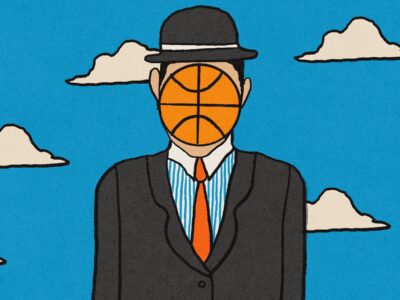
It could be said that the art world needs to touch grass, but I would argue it needs to touch hardwood. This past June, the entire city of New York did just that, when the city’s beloved, beleaguered Knicks broke a 53-year dry spell by winning the 2026 NBA Championships. Millions spilled out onto the streets in a state of delight and delirium that did something not a single corporately-sponsored art party or its online remnants has ever managed to do: spontaneously unite hundreds of thousands of strangers in public. New Yorkers danced on cars, hung off of street lights, sang from fire escapes, and lingered for hours in the streets—an electric togetherness that served as a reminder as to why anyone would live in a city as punishing and crazy-making as New York. The city seemed to remember itself in a way alien to the day to day adversarial experience of just getting by.


To that end, New York did what it does best: throw a tantrum of main character syndrome, ensuring the euphoria was not just about the Knicks, but about the city itself. As one viral tweet put it, “If you thought New Yorkers were insufferable before, you ain’t seen nothing yet!” The Knicks’ win—and specifically, the opportunity it allowed New Yorkers to converge in the streets—seemed to grant permission to publicly embrace a new era of civic pride and to define all the facets that identity entails. Rather than simply saying it wasn’t like the rest of the country, New York was asserting what it had become. Chants of “KNICKS IN FIVE, HAPPY PRIDE!” were heard everywhere. The Tribeca Film Festival had just wrapped. The World Cup was heating up, bringing the entire world to town and spotlighting our many immigrant neighbors. (New York is, after all, the most linguistically diverse city in recorded history.) And, presiding over everything, everywhere at once, DSA dimples and Knicks jersey under his suit, was Zohran Mamdani: a young mayor with the party stamina to stay up all night with the rest of his city and still make it to the Puerto Rican Day Parade the next morning.


The Internet, as it is wont to do, took note, with art world commentary account @artnotnet noting, “THE ART WORLD NEEDS WHATEVER THE KNICKS ARE HAVING.” Diffuse, gate-kept, internet-facing, fake, and over-branded, this would seem to be a fair prescription for a culture sector with the vitality and diversity of the Mall at Short Hills. (I have lived in New York for over two decades, but I am Jersey born and bred: I write from expertise.) But this brings us to the next logical question: What exactly were the 2026 Knicks having, and how might anyone—let alone something so nebulous and often nefarious as the art world—actually replicate it?


As the financial capital of the world, it’s rare that NYC gets to play the underdog. That the Knicks hadn’t taken home a chip in half a century really didn’t bother the rest of the country; no one was sitting around feeling sorry for New York. The difference was the team itself: The 2026 Knicks were absolute charmers, captained by the deadpan Jalen Brunson, who turned down a massive contract extension of roughly $113 million in 2025, instead asking the back office to use that money to build a team that could win. On the court, that team achieved a cooperative flow state that would build over the course of a game and kick into a furious full throttle in the fourth quarter; off the court, they were droll, self-effacing, and funny enough to carry comedy podcasts. The chemistry was palpable.


Following a typical Hollywood formula, the NBA finals paired an incredibly likable team with a whiny, hair-pulling villain, whom the writers’ room went so far as to make French. Some framed the match as veteran Millennials going up against cocky Zoomers; an age gap that played out in interviews where the Knicks frequently spoke of the need to overcome ego to win.


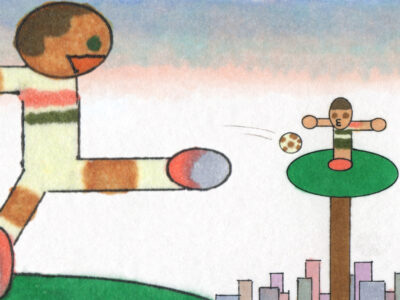
This likability factor is not to be ignored. The Knicks win happened to overlap with the World Cup, an event heavily promoted by Mamdani, who is both a die-hard soccer fan and extremely invested in the city’s immigrant narrative as a Uganda-born mayor from Queens. In New York City, this concurrent enthusiasm for the world’s game felt jump-started by Knicks euphoria—all that energy had to go someplace after the season was over. As in the NBA Finals, there were controversies: FIFA is evil, Egypt was robbed, and of course, Trump interceded over a red card. However, none of that seemed to slow the excitement and earnest need to connect in troubling times, whether it was Koreans in Mexico or Scotland’s Tartan Army in Boston. The sweetheart of this proverbial rodeo (even if Dallas was where his run ended) was Norway’s Erling Haaland, whose personality cult felt familiar (at least to this Knicks fan). Rather than a podcast, Haaland had his Snapchat, which introduced the world to a very goofy, community-oriented, terrifying striker who chose to add his mother’s name to his jersey. This was no Maradona blowing rails in a mink. The media has framed Haaland as wholesome and hardworking, often mentioning that he’s still together with his childhood sweetheart—as are some key Knicks players.


Whether or not it’s true behind closed doors, there’s a reason the athletes the world has fallen for were the ones portrayed as having their priorities straight. If romanticizing the bedroom exploits of someone like George Best might be seen as projecting our fantasies onto one freakishly talented human being in his own time (the Swinging 60s), perhaps assigning down-to-earth qualities to Haaland and Brunson is a symptom of what we crave. The world is aching for the real and the relatable: In an era of apps and Amazon, we desperately lack day-to-day existences rooted in human interactions. Community—in so many forms—has ceased to exist. Tellingly, the person who got the loudest cheers at the Knicks' Victory Parade was neither Brunson nor Mamdani, but point guard Jose Alvarado, who grew up in public housing in Bushwick and still has close ties to his high school. His is a community connection that’s anything but performative.


And this is where the art world must take note: In recent months, the sense of joy and togetherness that both New York specifically and the world more broadly has felt around athletics has valorized humility, humor, and—in what has become Brunson’s signature quote—heart. Pouring into the streets to celebrate the athletes we believe to represent these qualities has been a healing experience for de-regulated nervous systems around the world.


Sports franchises are tied to cities that are meant to support community and culture. But those two things have migrated online behind paywalls. The physical art world—the siren song of any one of the world’s putative capitals—has retreated into fairs, auction houses, and private jets. It is completely disconnected from not only its creators but from any potential class of audience. That, more than anything, will spell its death if something doesn’t pivot.


No one outside the billionaire class is asking for the sun and moon and stars. But, in 2026, even affordability is aspirational. We want to feel alive in the communities we break our asses to live in. These sports moments have reminded us of that sensation. If the art world wants to feel vital again, it needs to tap into that sense of place, time, purpose, and togetherness. What does that look like? I have no fucking clue. But the art world needs a Brunson or a Haaland stat. Or at least, a place for the narrative we have projected onto them: that talent, discipline, sacrifice, and groundedness will pay off—and that a great personality on top of it all never hurt. We need a final countdown feeling of magic, we need uplift. Art can and should provide that—not just another VIP experience that even the rich who are privy to it (or the writers who cover it) can't fully remember.


Personally, I cannot wait to see what the art world will become in Mamdanistan. The city’s newest budget has ballooned arts funding, and what a relief it is to see taxpayer money going this way. We have seen what happens when only the rich pay for art: It becomes their plaything, their investment tool. We’ve seen how a billionaire mayor can make the city itself into a plaything and investment tool for the rich, too, rather than a livable city for everyone else. New York will always be smug and self-congratulatory, but—this summer at least—that stance was alive and well out in the streets for anyone at all. Now let’s see what art comes out of it.

    [post_title] => Y'all Ready for This?
    [post_excerpt] => What the art world can learn from the jocks.
    [post_status] => publish
    [comment_status] => closed
    [ping_status] => closed
    [post_password] =>
    [post_name] => yall-ready-for-this-cultural-currency-art-world-parties-world-cup-new-york-knicks-mayor-zohran-mamdani-jalen-brunson-erling-haaland
    [to_ping] =>
    [pinged] =>
    [post_modified] => 2026-08-14 19:26:23
    [post_modified_gmt] => 2026-08-14 19:26:23
    [post_content_filtered] =>
    [post_parent] => 0
    [guid] => https://conversationalist.org/?p=10954
    [menu_order] => 0
    [post_type] => post
    [post_mime_type] =>
    [comment_count] => 0
    [filter] => raw
)