WP_Post Object
(
    [ID] => 10949
    [post_author] => 15
    [post_date] => 2026-08-07 19:36:01
    [post_date_gmt] => 2026-08-07 19:36:01
    [post_content] => 

As my siblings and I become our own people, it'll be up to us to determine whether and how our relationships will thrive or crumble from the foundations we were given. 

Since my maternal grandmother’s unexpected death last fall, the legacy of her life has weighed on me. She was authoritative, opinionated, and very close to everyone in the family, especially my mother. In my hometown, she was a hero—a city council member of the second largest city in New Hampshire, a school board member, and an advocate for civic engagement. In many ways, she was the best role model of leadership and independence I could have asked for. 

Concurrently, my grandmother was a complicated figure whose strong morals and beliefs shaped the foundations of our familial dynamics. She always encouraged us grandchildren to be outspoken, smart, and strong-willed. But she also modeled emotional inconsistency, porous boundaries, and a pattern of partaking in conflict cycles without resolution or repair. 

As I continue to grieve, I’ve been reflecting on how all of this has affected me in both obvious and quieter ways. But more recently, I’ve also started to wonder whether her influence is a part of why I’ve struggled so much to bond with my siblings. 

My grandmother had a rough life, and sometimes, that trauma spilled over onto the rest of the family. She grew up one of eight siblings in the projects of Hartford, Connecticut, to a single mother. She had her first child at 16, married at 18, divorced at 27, then joined the military with three small children in tow. It’s likely she was never given the tools to cope with all she lived through, and when she was alive, her temperament was everyone’s responsibility. Whether she was sad or angry or anxious, it was our collective duty to manage her emotions and transform them into something better. Within my family, this form of enmeshment has now been passed down from my maternal grandmother and her siblings, to my mom and hers, to me and mine.

As with many eldest daughters, I was raised to take responsibility for the needs of both my siblings and my parents, consequently becoming hyper-independent at a premature age. This has continued into early adulthood: At 26 years old, if something were to suddenly happen to either of my parents, I am likely next in line to take care of my two siblings. My sister is 22 years old and disabled, and my brother, 13, is still a child. There’s no immediate reason to worry about imminent parental loss, but as I’ve been contemplating death more frequently, it’s a possibility I’ve chosen to prepare for. This has spurned thoughts of how atypical my relationship is with my siblings, at least compared to what I’ve seen between others, and whether it’s possible for these dynamics to change over a lifetime, especially now that my sister and I are both adults. 

Theoretically, sharing the unique experience of being raised by the same two parents should be an unbreakable bond. At its best, it can mean having a built-in BFF with whom trust, history, and emotional depth are a given. But at its worst, even kin can become strangers: Regardless of age gaps or favoritism or birth order or familial dynamics, sometimes, two individuals just don’t click.

With four years between us that felt larger when we were younger, my sister and I would get into physical altercations over the smallest things, like who got control of the TV remote or my refusal to share my video games with her. Of course, most siblings bicker, fight, and get jealous of each other at some point, and none of these things have to adversely affect the totality of a relationship. But in our case, it often felt like they defined it: We never really played together, just fought. 

Then, almost a decade after my sister was born, my brother arrived. I was resentful, already subconsciously anticipating my role as the family’s emotional sponge would expand, and knowing the age gap between us would mean, at least in part, that I would be responsible for his care. 

As Canadian author, physician, and childhood development and trauma expert Dr. Gabor Maté asserts—no two children have the same parents. I can attest to this with my sister, a sickly child who required more attention, and with my brother, who has received a more laissez-faire style of parenting as the youngest in the family. 

Perhaps partly due to my quiet nature, I had always been the child that my parents felt they never had to worry about. Frequently called “mature for my age,” this also meant I was expected to put everyone else’s emotional needs before my own. Sharing my feelings in any given situation was discouraged, and I was often called “selfish” for not considering how they might affect the family. I learned early to keep the peace by avoiding high-conflict subjects, and while we maintained a superficial relationship as children, my sister and I always shared a silent understanding that due to our mother’s sacrifices on our behalf, we had no right to complain. (I suspect this is my brother’s experience, as well, despite my mother’s insistence that “boys are just less work than girls.”)

This was especially difficult for me because, unlike my siblings, I was perceived as the responsible one, who therefore didn’t need additional support or care. While my physical needs of shelter, food, clothing, and even entertainment were comfortably met, my emotional needs were not. I was bullied at school for most of my childhood, and although sympathetic, my parents and siblings both regularly chalked it up to me being “too sensitive,” rather than actually listening. 

This label—being “too sensitive”—became a recurring one throughout my life. It was also frequently reinforced by my grandmother, which eventually led me to hide more and more of myself from my parents and my siblings, and to rely on them less and less. Soon after graduating high school, I got as far away from them as I could. 

Living away from home for the last eight years—with strangers, friends, other families, and romantic partners—has allowed me to connect to my own emotional needs and wants for the first time in my life. It’s also fundamentally changed the lens through which I see sibling friendships for the better, and changed the way I look at my own. I’ve learned that siblings can and do take an interest in each other’s lives and rely on each other for support, out of genuine interest rather than familial duty. I’ve also learned that conflicts can be addressed and resolved in healthy ways, rather than ignored and left to fester, eventually turning into resentments. 

These lessons evoke a desire in me to do better for my younger siblings: I yearn for this kind of “elevated” relationship with them, where we can talk about our struggles and our interests, our shared and diverging upbringings and the ways we see the world. Above all else, I just want us to be able to be ourselves around each other, to free ourselves from the roles our family has given us, and to become genuine friends. More importantly, I want to be able to confide in them and for them to see me as a safe person to confide in, too—not as a part of an unspoken eldest daughter imperative, but because I am someone they can genuinely trust. 

I’m still struggling to form this deeper connection with each of them, and to break the ice of emotional superficiality that everyone in my family seems to be comfortable with. After all, we are the outcome of a multigenerational combination of emotional detachment, dysfunction, and our respective and sometimes clashing individualities. But even if the adults in my life—from my grandmother to my parents—were most culpable for the conditions that produced this emotional environment, ideally, it’s my siblings and I whose lives will succeed theirs. And it’ll eventually be up to us to determine whether and how our relationships will thrive or crumble from the foundations we were given. 

Of course, my perspective is just that—mine. My siblings and parents have their own readings of our relationships, and maybe someday, we’ll find places where they intersect. It’s entirely possible that as a sensitive child who has become a sensitive adult, I’ve been too hard on them. And despite the origins of my sister and I’s discontentment, there’s a sincerity with which she relates to me today: When I ask about her day, she tells me in earnest, and genuinely wants to know how mine is, too. 

I make every effort to actively listen to her when we speak, because I truly want to know about her and her life. But I still struggle to share my emotional truths with her in return. No matter what day or week or month I’m having, as far as she knows, I’m fine. I don’t want her to worry, and besides, my grandmother would have encouraged me not to share those feelings, in order to protect the family’s peace. 

But in my grandmother’s absence, there’s also no longer anyone here to manage how everyone in the family should feel, or what they should share. So, despite grieving her—or maybe because of what this grief has afforded me—I’m gaining more courage in facing my family: in standing up for myself, in choosing to remove myself from discomfort, in refusing to absorb my family’s emotional dysregulation. I’m also choosing to be hopeful about what sort of relationships I want to forge with my siblings, and choosing to be hopeful about the person I can still become. 

With this new courage comes new insight. Just as I am doing now, my younger siblings will one day become their own people. Amid pondering about how this one death has changed our present, and how subsequent ones may change our future, there’s no guarantee that my relationships with my siblings will get any better. What if we’re never able to overcome the emotional barriers that were formed early? What if the only way to maintain our individual emotional health and change our family’s future is to build and preserve strong boundaries between us that might keep us from ever being truly close? 

I hope not. But, maybe the best eldest sister and friend I can be to them is in maintaining my own developing boundaries as I understand them and myself better. Maybe the form of courage I can work towards is mirroring a sibling friendship built on healthy communication and respect, and taking chances, little by little, in trusting them with who I am. That way, as we all grow, we can truthfully see whether it’s possible for us to become closer, or whether it’s healthiest for all of us to care for each other as best we can from a distance.

[post_title] => Can Siblings Eventually Become Friends? [post_excerpt] => As my siblings and I become our own people, it'll be up to us to determine whether and how our relationships will thrive or crumble from the foundations we were given.  [post_status] => publish [comment_status] => closed [ping_status] => closed [post_password] => [post_name] => friendship-week-can-siblings-eventually-become-friends-family-dynamics-relationships-childhood-upbringing-grief-personal-essay [to_ping] => [pinged] => [post_modified] => 2026-08-07 19:36:03 [post_modified_gmt] => 2026-08-07 19:36:03 [post_content_filtered] => [post_parent] => 0 [guid] => https://conversationalist.org/?p=10949 [menu_order] => 0 [post_type] => post [post_mime_type] => [comment_count] => 0 [filter] => raw )
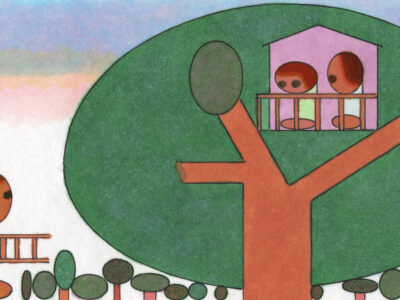
An illustration of two siblings in a treehouse, while on the ground, an older sibling holds a ladder and looks up at them.

Can Siblings Eventually Become Friends?

WP_Post Object
(
    [ID] => 10212
    [post_author] => 15
    [post_date] => 2026-02-26 12:45:10
    [post_date_gmt] => 2026-02-26 12:45:10
    [post_content] => 

A memoir interwoven with historical research that might leave you wondering if anything really changes in these United States.

The Mixed Marriage Project’s title will more than likely give an onlooker pause. Perhaps that’s the point. But before conjuring up too many presumptions based on the name, one might also note it is the work of renowned law professor and sociologist Dorothy E. Roberts. Amongst other books, Roberts is the author of Killing the Black Body (about black women’s reproductive history in the United States) and Fatal Invention: How Science, Politics, and Big Business Re-create Race in the Twenty-first Century. In her latest, a memoir interwoven with historical research, she unfolds her parents’ interracial relationship, and through it, partly unravels a United States’ history of the subject itself. 

The “project” of the book’s title is personal for Roberts: In the 1930s, her father, a white American of Welsh and German descent, set out to examine interracial relationships between black and white people specifically, while studying to be an anthropologist at the University of Chicago. His interview-based research, which explored interracial unions formed as early as the late 1800s, continued till the 1960s and ’70s, and included interviewing the children of couples he’d earlier surveyed. This feat was supposed to become a book, sold to a publisher while her father was working as a professor at Chicago’s Roosevelt University. But the book was never published, and its stories left untold until now.

Roberts theorizes the reason for this was that her father’s work had become so interwoven into his identity—and their family life—that its completion would have caused a real identity disruption. Who was he if he wasn’t working on the project? And where did that leave her and her family? 

Through her own research, Roberts learns her mother, a black, Jamaican immigrant, was also involved in this work, conducting interviews alongside her father for many years. Both were committed to the project’s objectives, one of which was to demonstrate that interracial relationships are not inherently abnormal, because black and white people are not fundamentally different. This was also how her parents met: While majoring in chemistry at Roosevelt, her mother became her father’s research assistant. (In the book, Roberts explicitly states she “wonder[s] how their professional partnership evolved into a romantic one—and whether they worried about the perception of impropriety.”) This prompts Roberts to question an underlying reason for her parents' marriage: Were they supposed to be embodiments of their own mixed marriage project? If Roberts’ parents were indeed as much a part of the study as they were leads of it, she concludes, it would make her and her sisters its subjects, too—or, at least, its personified outcomes. 

Rather than be rattled by this possibility, the author measures it against the people she personally knew her parents to be—curious, culturally-aware, well-traveled, and community-minded. Her parents’ relationship, after all, existed beyond their work, and they were initially drawn to each other by their shared sense of adventure, similar values on education, and complementary sensibilities—her mother as the planner and her father as the spontaneous one. By her own admission, Roberts gives them a latitude that an outsider might not. But I reckon this is where the book shines as memoir, rather than an investigation of an investigation: the reader gets to know Roberts’ parents through her loving eyes. Loving eyes that, for the record, do not condone the same politics her parents—especially her father—may have arrived at through their work: that interracial relationships offer some kind of medium to restore black and white relations in the United States, shaped by white supremacy and violence. (On this, Roberts pointedly disagrees.) 

Beyond family history, the themes in Project will be recognizable to anyone versed on the discourse, likely causing you to wonder if anything really changes in these United States. The politics of the study’s participants—black men, black women, white men, and white women in heterosexual, interracial relationships—reveal how black men-white women couples were seen as more “acceptable” but also more arduous in the long-run; white women often lost privilege they couldn’t regain unless divorced. The research also highlighted the sexual tropes attached to black women-white men couples—and the misogynoir that informs outsiders' views of them. Recurring themes, regardless of interracial pairings, showed how marital cutting across the color line affected one’s choice of neighborhood and the life afforded to them and, possibly, their children. Also recurring—especially in the civil rights era—were the many well-meaning couples who entered these marriages in the hopes of proving to the world as much as to themselves that interracial coupling inherently combats a racist society. This hope, Roberts argues, was often an erroneous one, as countless couples later found out. 

In the lasting analysis of her father’s work, Roberts arrives at the same conclusion that she began with regarding interracial relationships: They are not panacea for a society, a country, or a world that has yet to unravel itself from white supremacy, let alone repair its many casualties. But in Project, Roberts shows us that despite flawed, socially-constructed and racialized societies, people will enter unions and arrangements of all kinds, her parents included. These unions may not transcend race, but they do demonstrate that, in spite of the race politics attached, people will deem them worth fighting for. Some do so naively and are thus confronted with seeing the depths of racism like they never have before. But others, especially the curious, culturally-aware, and community-minded, go into them with eyes wide open, prepared to confront all of its politics united.

[post_title] => Book of the Month: "The Mixed Marriage Project" by Dorothy E. Roberts [post_excerpt] => A memoir interwoven with historical research that might leave you wondering if anything really changes in these United States. [post_status] => publish [comment_status] => closed [ping_status] => closed [post_password] => [post_name] => february-book-of-the-month-botm-pick-the-mixed-marriage-project-by-dorothy-e-roberts-memoir-interracial-relationships-dating-history-research [to_ping] => [pinged] => [post_modified] => 2026-04-29 18:07:19 [post_modified_gmt] => 2026-04-29 18:07:19 [post_content_filtered] => [post_parent] => 0 [guid] => https://conversationalist.org/?p=10212 [menu_order] => 0 [post_type] => post [post_mime_type] => [comment_count] => 0 [filter] => raw )
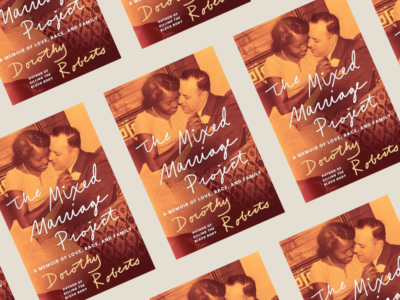
The book cover for "The Mixed Marriage Project" by Dorothy E. Roberts.

Book of the Month: “The Mixed Marriage Project” by Dorothy E. Roberts