WP_Post Object
(
    [ID] => 6262
    [post_author] => 15
    [post_date] => 2023-11-03 21:11:23
    [post_date_gmt] => 2023-11-03 21:11:23
    [post_content] => 

How people respond to disillusionment shapes history. Without hope, we're doomed to repeat it.

Few things feel worse than building your hopes up about something that later turns out to be bullshit. It's the profound disillusionment of being burned by someone you trusted, by a belief you held, by a foundational narrative you built your life and identity around that's no longer possible to maintain. Whether consciously or not, most of us will do just about anything to avoid these destabilizing feelings—to shut out the pain of grief and helplessness. When confronted with ugly realities that don't match our grand narratives, we can mourn the loss and adjust, or dig our heels in deeper. Many choose the latter, because the rupture is too painful. 

I was already writing this essay on the dangers of nihilism in the face of atrocities and authoritarianism when the latest war between Israel and Hamas broke out. Russia-Ukraine, GOP Christian nationalism, and the climate crisis provided plenty of despairing material. I was feeling overwhelmed by the state of the world, and wanted to make sense of growing instability and extremism. Then came October 7.

There's a Russian saying: Just when you think you've hit rock bottom, someone knocks from below. For the past few weeks, as I've watched the war in Gaza unfurl, the atrocities pile up, and ethnic cleansing further normalized, I've tried, and failed, not to catastrophize. It doesn't seem like the world order is going to survive this, as failing democracies disgrace themselves, and warlords clap their hands. Still, I choose to remain hopeful that something better is possible, because giving up makes things infinitely worse.

By now, most people are familiar with how the latest round of violence erupted. Early in the morning of October 7, Hamas militants surprise attacked southern Israel, brutally massacring over 1400 people, killing infants, burning families alive in their homes, and shooting ravers celebrating Sukkot at a music festival in the desert near Gaza, in addition to kidnapping around 240 hostages—children and the elderly among them. The next morning, I woke up to a text from a friend who has spent years covering wars: "The world is hopeless." I was horrified. I felt grief for the dead, and the survivors, and for Gazans, who I knew would soon suffer in retaliation for Hamas' war crimes. I felt terrified for the hostages, and for Jewish people, my people, everywhere: October 7, 2023 is now understood as the deadliest day for Jews since the Holocaust. 

Israel responded to this by once again bombing the shit out of Gaza, and Gazan civilians—again, children and the elderly among them. Entire neighborhoods were flattened, as Palestinians desperately dug through the rubble to find survivors and what remained of those who’d been killed. The Israel Defense Forces (IDF) also immediately imposed a blockade, and cut off Gaza's electricity, fuel, water, and food supply—a job made easy by decades of occupation. All of it, of course, was signed off by Israel’s Prime Minister, Benjamin Netanyahu. By now, whatever reserves were left have long run out, and minimal aid has come in through Egypt. The humanitarian crisis is as dire as it gets. Many hospitals have run out of fuel for their generators, meaning anyone on a machine will likely die. People are starving, drinking sea water, being operated on without anesthesia. Defense Minister Yoav Gallant, who ordered the siege, justified collective punishment—a war crime—by saying, "We are fighting human animals and we are acting accordingly." Hearing those words, again, I was horrified. I felt sorrow for Palestinians, who've been dehumanized, ghettoized, and unable to escape collective retribution. I felt complicit in their suffering. Once again Gazans were dying en masse while the world watched. I felt despair at the lack of leadership, and helpless to stop the cycle of violence.

Even through all the noise, it is clear many people have felt the same. Moments of crisis like the one we're in now demand a lot from us emotionally, asking scared people in pain to hold the weight of many conflicting truths in our hearts at once. Zero-sum thinking is tempting, providing a false sense of certainty, a justified rejection of compassion. It’s also dangerous—all manner of atrocities follow when people believe they have no choice; that, in their circumstances, the ends justify the means. 

It's a cliche, but it's true: Hurt people hurt people. As political scientist Seva Gunitsky tweeted last month, "You know intergenerational trauma is real because the two nationalities most victimized by fascism are currently waging two proudly genocidal military campaigns." 

As both a scholar of genocide and Soviet history, and as the American daughter of a Ukrainian Jew who survived Hitler and Stalin, fled Soviet repression as a refugee for Israel, and ended up in the US, only to fall for Fox News—wow, did I feel that. My people's trauma is on full display in multiple wars, and I hate it. Despite living a remarkably secure life compared to my ancestors, disillusionment has still knocked on my door many times. It's come for all of us of late. Which makes it all the more important that we do not let it win.

As I write this, Israel's ground invasion of Gaza is underway, with all the horrors for Gazans that it brings. The day it began, the IDF blocked all communications, cutting off power and internet in Gaza so we couldn't hear or see the extent of the atrocities. Nothing in this alleged strategy to eliminate Hamas suggests the lives of the hostages or of Palestinian civilians have been given a second thought. With over 9000 Gazans dead, and Hamas leaders in Qatar and their tunnels still relatively untouched, it's hard to accept that this invasion serves a purpose beyond bloody, indiscriminate revenge—or, in the worst case, a second Nakba. I feel sick watching Bibi and Hamas drag the world into the abyss, with the US courting global catastrophe by lighting billions on fire to prolong an unwinnable armed conflict.

For Palestinians, the existential threat is immediate and ongoing, as people in Gaza cannot escape the bombs and now, the tanks. In the West Bank, there are horrifying reports of prisoners being tortured, and fundamentalist settlers armed by the state continuing to expel Palestinians from their land, and pogrom their villages; in East Jerusalem, the state continues demolishing Palestinian homes. Every day there are stories of entire families killed in Gaza while trying to flee south following the IDF's forced evacuation order, many of them with nowhere to go. Meanwhile, air strikes have only escalated. The IDF has already confirmed it has hit 11,000 targets, many of which were civilian buildings. Most recently, and horrifically, they bombed Gaza's largest refugee camp, two days in a row, killing over 100 people. There are so many dead, hospitals and morgues have run out of space, and Gazans are stuck burying bodies in mass graves. 

What do these atrocities solve? Who does this free or make safe? Certainly not Israelis, who overwhelmingly blame Netanyahu's policies for leaving them vulnerable to attack, as whatever tenuous sense of security they had was pulled out from underneath them, and all the gains they'd made regionally evaporated overnight. And certainly not Palestinians, who have suffered decades of occupation and statelessness with no end in sight, only to experience the disruption of a status quo that was already killing them: Over 200 Palestinians were killed by the IDF and militant settlers in 2023 even before the war began. The threats and conditions facing each are not the same, but at base, they share an existential fear that their people won't survive to see the aftermath of this conflict. And even if they do, how much of their humanity will remain?

It's especially disturbing watching Israeli officials declare holy wars, and talk of wiping Gazans out, flattening them, or forcibly expelling them. Jews have been on the receiving end of all the above many times over, and it's sickening knowing it's being inflicted on Palestinians in my name. They heard Hamas leaders boast about cleansing the land of Jews and are itching to outdo them: Over 2 million people, half of them minors, remain stuck without food, water, fuel, or shelter in a high-density death trap as bombs rain down, including along the very evacuation routes that were allegedly to take Palestinians to safety.

As Hamas' atrocities beget Israeli atrocities, the absolute worst people are benefitting from the suffering and chaos. Russian President Vladimir Putin and Turkish President Recep Tayyip Erdoğan are taking advantage of the chaos and using Palestinian pain for their own political ends. Iran's proxies in Yemen and Lebanon keep threatening to expand the war. In India, Prime Minister Narendra Modi's ruling BJP party is using Israel as vindication of their own Islamophobic ethnonationalism. It's easier for corrupt authoritarians to entrench power, hollow out institutions, and silence people in times of crisis. It also doesn’t help that Netanyahu knows people want his head when this war is over—naturally, he just announced the second phase of the war would be a long one. It's an open secret that Netanyahu and Hamas have fed off one another for years, neither wanting a two-state solution to succeed. We're seeing the results of their efforts now, and why it's disastrous to empower authoritarians who promise the illusion of security with a dose of repression. With the illusion gone, repression has skyrocketed.

Meanwhile, Arab leaders, most of whom had previously normalized relations with Israel, are facing populist rage and discontent at home. This seems by design: Israel was about to normalize relations with Saudi Arabia for the first time when Hamas attacked, and now weeks later, Jordan has recalled its ambassador. Diplomacy deteriorated early on when Egypt, Jordan, and Palestinian Authority President Mahmoud Abbas canceled a summit with US President Joe Biden over horrifying—but to this day, disputed—reports, first blaming Israel, then Islamic Jihad, for the October 17 bombing of Al Ahli hospital, which resulted in the deaths of hundreds of civilians. It was a pressure cooker moment in a pressure cooker conflict, an outpouring waiting for a vessel. Unverified headlines about the incident led to angry protests outside Israeli embassies; Hezbollah calling for a global day of jihad; the burning of synagogues in Berlin, Tunis, and Spain; and continued violence in the West Bank. 

Palestinian scholar Iyar el-Baghdadi tweeted about the hospital blast, and the furor it inspired, “This is no longer about a specific hospital and what happened there. The news [was] a watershed moment for a lot of pent up anger about a million things, bottled up for a long time, to explode. Confirming or debunking won't help. This is no longer about facts but about psychology.” The readiness of so many to believe the worst about each other, to blame entire peoples for the cynical actions of criminal, extremist leadership, to oversimplify a complex conflict, parrot violent propaganda and disinformation, and harass anyone calling for us to find our shared humanity is jarring. If anything, we've become disillusioned with each other.

The war has triggered a global backlash as dissent is quashed, and antisemitic and Islamaphobic hate crimes rise dramatically. Anti-war protestors have been arrested around the world, including in Israel, the US, UK, Germany, France, Egypt, and Bahrain. In Chicago, a Palestinian American boy, Wadea Al-Fayoume, was killed by his landlord. In Dagestan, a mob stormed the airport looking for Jewish passengers. Synagogues around the globe have been defaced, Jewish and Muslim university students harassed. Palestinian Israelis have been arrested for liking social media posts, and families of hostages have been harassed for demanding a ceasefire and prisoner swap. Calls ranging from pauses to peace talks and an immediate ceasefire, no matter who they’re from, have largely been ignored by the people who most need to hear them. 

Also on the chopping block: international humanitarian law. Syrian President Bashar al-Assad and Putin's impunity for war crimes in Syria was a turning point for the international system, a pure display of might makes right. Now, Russia, China, and Iran are watching as the West actively funds and arms war crimes in Gaza. Drawing tons of criticism, the US has not laid down any red lines for Israel, like conditioning funding or weapons deliveries upon them not being used against Palestinian civilians; as well as vetoing multiple UN Security Council resolutions calling for a humanitarian pause or ceasefire. What good are the Geneva and Genocide Conventions when they can be vetoed into oblivion? Who actually ends up before the International Criminal Court? When the moral authority and legitimacy of legal institutions are gone, rule of law goes with them. This emboldens bad actors to do their worst, just because they can.

As I’ve watched the last couple weeks unfold, I've sought out voices of compassion and reason, for informed people who, even as they grieve, still speak with moral clarity and a sense of our shared humanity. They do exist—they're primarily Arab and Jewish—but they're outnumbered by masses of uninformed people publicly stumbling through this, and far too many racist posts, statements, and signs justifying the ethnic cleansing of one side or the other. Even outside of reporting on Al Ahli, Western media coverage has been a mess, reminding many of 9/11: Muslim TV anchors sidelined; Palestinian commentators canceled; unverified, sensationalist reports spread; internal dissent silenced. Social media, especially Twitter—once a vital source for verifying breaking news—is rampant with antisemitism, Islamophobia, and disinformation: violent propaganda, bloody videos, memed history, unchecked rage, and nihilistic, binary thinking. In short, we are collectively struggling to cope with a spiraling situation. 

In all of this, many have gotten bogged down in ranking people's suffering. It's difficult but necessary to accept that cyclical violence, institutional collapse, and mass atrocities can happen anywhere, and have happened everywhere at some point in history, that no people are solely oppressors or oppressed, or bleed differently than any other. We're all capable of electing dictators, of succumbing to reactionary short-term thinking. We're also all capable of putting even the most egregious grievances aside, of caring more about being at peace than vengeance, and accepting that our safety and freedom depends on the safety and freedom of our neighbors.

Explanations for the current global crises are not an exercise in judgment or morality, especially when it comes to war crimes and crimes against humanity. Explanations, at their best, seek to understand the human condition, and how history and life experience affect people's subjective, emotional truth. Making sense of those myths, traumas, beliefs—often impervious to logic or reality—is critical to understanding what shapes and motivates people, and states, to behave the way they do. We're stuck with people as they are, not as we want them to be. You can't understand disillusionment without knowing the illusions that preceded it. 

October 7 and all that has followed uprooted several stubborn myths, for better and for worse. As Amjad Iraqi wrote for +972, a psychological barrier broke with Hamas' assault:

“Israel’s mass protest movement…has consciously kept the Palestinian question off its agenda. Apart from a small bloc of anti-occupation protesters, most [Israelis] still clung to the illusion that the current structures of permanent rule could deliver safety for Israelis and remain compatible with their claim to democracy. That bubble has now irreparably burst. But Israelis, who have been shifting politically rightward for years, are far from questioning or recalculating their commitment to iron rule.”

It was obvious to me, especially after a troubling visit to the military courts in the West Bank over a decade ago, that the occupation was rotting Israeli institutions from within, and that rule of law and democracy couldn't exist with parallel, unequal systems. It felt frankly delusional to think the Israeli state could repress Palestinians in the West Bank under one system, keep Gaza isolated with another, and systemically discriminate against Arab Israelis, all without the militarization and repression of Palestinian rights eventually extending to Jewish Israelis, too. But people believe what they believe.

Endless cycles of violence, democratic backsliding, and threats of institutional collapse make for scary times—and I, for one, am terrified of what’s to come. What does it look like when the bubble bursts? What fills the vacuum? The answer is rarely anything good. Idealogues are especially prone to nihilism, and the horseshoe theory, that the far-right and far-left meet at the extremes, has become a truism. The points of a horseshoe don't actually touch, though. What the extremes share is the void: "Death to Arabs" and "Kill the Jews." 

Like any supremacist ideology, both are inherently anti-democratic. But people choosing between a meaningless life of suffering, and a life of suffering, but for a cause, will always choose the latter. In Secondhand Time: The Last of the Soviets, winner of the 2015 Nobel Prize for Literature, Svetlana Alexievich documented the collapse of the USSR through oral histories of everyday people as they experienced it. There are romantics and cynics, intelligentsia and party flacks, peasants and city dwellers, many with mixed feelings about both communism and capitalism, but all having suffered under each. 

In her introduction, "Remarks from an Accomplice," Alexievich describes growing up as a believer in communism: "Disillusionment came later." She writes about how people reacted to the archives opening after perestroika, when regular people finally began learning about the vast crimes committed by the Communist Party—that their heroes were mass murderers, and their neighbors and relatives their executioners.

"People read newspapers and magazines and sat in stunned silence,” she writes. “They were overcome with unspeakable horror. How were we supposed to live with this? Many greeted the truth as an enemy. And freedom as well." Why was truth the enemy? As one interviewee put it, "Why didn't we put Stalin on trial? I'll tell you why…In order to condemn Stalin, you'd have to condemn your friends and relatives along with him." 

One woman, whose teenage son died by suicide, remembers screaming at her own mother, "What did we hear from you our whole lives? Throw yourself under a tank, go down in an airplane for your Motherland. Heroic death." I see the obvious echos here of Russia's invasion of Ukraine; but I'm also reminded of Breaking the Silence, an organization of IDF veterans devoted to exposing the violent reality of the occupation. The issue of complicity, especially in atrocity, is at the heart of so much of the hand-wringing we're seeing today in Gaza, and how people have responded to it. Who are the victims, and who are the perpetrators? As with all things, it depends who you ask and how far back you want to go. Two stateless people were pitted against each other by imperial and regional powers playing dispossession dominos, leaving enough valid grievances to last many lifetimes. The unfortunate truth is that Jewish people's right to self-determination ultimately came at Palestinians’ expense, and the establishment of a Palestinian state coexisting alongside Israel is the best shot we have at rectifying this and undermining groups like Hamas and their successors. The conflict wasn't always so lopsided, but insofar as Palestinians today are concerned, nuclear-armed, US-backed Israel has become Goliath.  

This has created an enormous rupture in the identity of Jews around the world, for whom the existential threat feels perennial, who are scared of going to synagogue while watching masses of people gather against Israel, most of whom are protesting for a ceasefire and Palestinian human rights, but a significant portion of whom blame all Jews for Israeli atrocities in Gaza, and think Netanyahu speaks for us all. No matter our politics, we’re haunted by the knowledge that as the violence wears on, more and more people out there wish the Nazis had finished the job. 

None of this excuses flattening Gaza or ethnically cleansing Palestine of Palestinians. I do still believe that Jewish people need a homeland, one country that won't expel us; I literally wouldn't exist but for Israel providing refuge to stateless Jews. But I also don't believe that right is exclusive, or that it trumps the rights of Palestinians to the same things. I deeply resent the implication that my refusal to support the genocidal policies of a foreign autocrat makes me an antisemite, a supporter of terrorism, or less Jewish. Quite the opposite: I believe and have watched the current government's vengeful, reckless, overreaching policies make Jews everywhere more of a target.

So what do we do about all this? As people process the loss of their old beliefs, they're faced with the option of hardening into something more extreme, or freeing themselves from old constraints and reimagining a better future. It's a choice between hope or revenge. But reimagining requires a shared reality, a rejection of bigotry, and people who seek complexity, not propaganda. It requires empathy, and an ability to see each other's humanity, especially when we're afraid. It requires choosing leaders who don't want to see the world burn. 

There are people all over the world already doing the work to end cycles of violence, who know that as bad as things get, they could always be worse. In Israel, Standing Together is a grassroots peace movement led by Jewish and Palestinian Israelis standing courageously against the tide of war. I recently attended a Storytelling Summit hosted by Futures Without Violence at the Courage Museum in San Francisco. The museum, which opens in 2025, is built on the belief, backed by science, that when we hear each others' stories, and see each other as people, we empathize. That as social creatures, we're built to connect and be in community. That this is how we heal ourselves.

The good news is that this healing is possible. But it can only begin from a place of safety, something too many have not been guaranteed. It's up to us to demand human rights, rule of law, and freedom and democracy for all, and to push for policies that strengthen them. Because as disillusioned as I am with the institutions meant to deliver these aspirations, I still believe in people. I understand that violence comes from a place of despair, and that hope is a precursor to peace. Even knowing what I know, I choose to be hopeful, to use my voice and what power I have to push for people everywhere to live boring lives, free from violence. It’s the only way forward for all of us.

[post_title] => We Must Not Give In To Nihilism [post_excerpt] => How people respond to disillusionment shapes history. Without hope, we're doomed to repeat it. [post_status] => publish [comment_status] => closed [ping_status] => closed [post_password] => [post_name] => nihilism-disillusionment-palestine-gaza-israel-hamas-war [to_ping] => [pinged] => [post_modified] => 2024-08-28 21:14:01 [post_modified_gmt] => 2024-08-28 21:14:01 [post_content_filtered] => [post_parent] => 0 [guid] => https://conversationalist.org/?p=6262 [menu_order] => 72 [post_type] => post [post_mime_type] => [comment_count] => 0 [filter] => raw )

A patterned image of a dove on a sage green background. There are four doves: the one on the left is in focus, and with each dove following, each dove becomes less in focus, as the background also slowly fades to a darker gray.

We Must Not Give In To Nihilism

WP_Post Object
(
    [ID] => 6095
    [post_author] => 15
    [post_date] => 2023-10-20 19:49:22
    [post_date_gmt] => 2023-10-20 19:49:22
    [post_content] => 

One hundred years after the ERA was first introduced, we've never needed it more. So what's the holdup?

Most Americans believe that the United States Constitution guarantees equal rights to women under the law. It’s only natural. Women in the U.S. can vote, own property, drive cars, fly planes, serve in the military, get divorced, and establish credit in our own names. We make up around 47 percent of the workforce and have held senior positions in business, law, and government for decades. From 1973 to 2022, we even had federally protected abortion rights. We continue to be underpaid, mistreated in low-wage jobs, and underrepresented in the highest-paying professions, but most Americans believe that women are—and should be—equal citizens.

Under current law, however, we are not: For women to attain the legal status most assume we already have, the U.S. would need to adopt the Equal Rights Amendment (ERA), first introduced in Congress 100 years ago this year, and introduced in every session of Congress since.

Depending on who you ask, American women do have some constitutional protection already. Some legal scholars and Supreme Court justices have asserted that women are “persons” and thus covered by the Equal Protection Clause of the 14th Amendment, which reads, “No State shall make or enforce any law which shall abridge the privileges or immunities of citizens of the United States; nor shall any State deprive any person of life, liberty, or property, without due process of law; nor deny to any person within its jurisdiction the equal protection of the laws.” But others disagree, and figures as diverse as the late archconservative Supreme Court Justice Antonin Scalia and the late liberal Justice Ruth Bader Ginsburg believed that the Constitution does not explicitly guarantee sex equality—something Ginsburg saw as an obstacle to full and lasting equality for women and Scalia saw as a fact not necessarily in need of a remedy.

In the wake of the Supreme Court’s 2022 Dobbs decision, which overturned Roe v. Wade, the stakes are higher than they have been in 50 years. The ERA would make gender equality explicit—which has been its purpose since it was first introduced. In 1923, women’s rights crusader Alice Paul authored what was originally known as the Lucretia Mott Amendment, in honor of the Quaker abolitionist and women’s rights activist. The text declared that, “Men and women shall have equal rights throughout the United States and every place subject to its jurisdiction.” Over the years, this text has evolved, and today, the amendment reads, “Section 1: Equality of rights under the law shall not be denied or abridged by the United States or by any state on account of sex. Section 2: The Congress shall have the power to enforce, by appropriate legislation, the provisions of this article. Section 3: This amendment shall take effect two years after the date of ratification.” But the spirit and purpose remain the same. (Supporters say that “sex” is synonymous with “gender” for the purposes of the amendment, which would apply to women of all gender identities and sexual orientations.)

It very nearly came to pass in the 1970s. Rep. Emanuel Celler (D-NY), then the powerful long-time chair of the House Judiciary Committee, had refused to hold a hearing on the ERA for over 30 years, when he finally succumbed to pressure from a new group of younger female legislators. The ERA passed both houses of Congress in 1972 and was sent to the states for ratification, at which point 22 states voted to ratify it. By 1977, that number had increased to 35 of the 38 states required for it to become part of the Constitution. After around 100,000 supporters—described at the time by right-wing activist Phyllis Schlafly, the ERA’s bitterest foe, as “a combination of Federal employees and radicals and lesbians”—marched in Washington in 1978, Congress voted to extend the original ratification deadline by three years. As supporters scrambled to reach the required threshold, lawmakers in five states—Idaho, Kentucky, Nebraska, South Dakota, and Tennessee—voted to rescind their states’ initial ratification. The extended deadline expired in 1982.

A major cause of this disrupted momentum was Schlafly herself. Books and television series have told the story of Schlafly, a vicious bigot who led the well-orchestrated opposition campaign that defeated the ERA, at least temporarily, at the dawn of the Reagan era. Schlafly is widely credited with having halted the amendment at a time when it enjoyed broad bipartisan support, including from then President Richard Nixon, and was all but guaranteed to pass. But the ERA foundered in that era for other reasons, too. While supporters were going on weeks-long hunger strikes and selling their blood to raise money for the cause, opponents had personal wealth and possible assistance from shadowy corporate interests and far-right organizations like the John Birch Society on their side. Motivated by religious zeal, fear, and a feeling of being disrespected, opponents of the ERA caught supporters off-guard and, ultimately, out-organized them.

Why the ERA hasn’t become a recognized part of the Constitution in the last 30 years is less well-known, but not necessarily difficult to deduce. In recent years, it has often felt like society is moving backward and forward at the same time. The election of Donald Trump and elevation of alleged attempted rapist Brett Kavanaugh to the Supreme Court, the cratering of women’s workforce gains and deepening of the child care crisis that accompanied a global pandemic, and the overturning of Roe have made earlier eras look positively rosy in comparison. At the same time, social media has fueled and distorted a limited feminist resurgence. This new wave delivered the #MeToo movement, a renewal of feminist organizing around abortion rights and the ERA, and a predictable cycle of counterreaction, an earlier manifestation of which Susan Faludi memorably documented in her 1991 classic, Backlash. (American women might reasonably wonder if that backlash ever ended.)

Still, there has been progress. Fueled in part by anger at Trump’s election, organizers successfully pursued ratification of the ERA in Nevada in 2017, Illinois in 2018, and Virginia in 2020, bringing the total number of states that have ratified the amendment to the required 38. (Some argue that certain states’ decision to rescind ratification means the ERA has never achieved the required number; others say those rescissions are legally invalid and should be ignored.) President Biden affirmed his support for the ERA as recently as August. While running for president, Kamala Harris vowed to get it done in her first 100 days in office. With Trump out and Biden/Harris in, what’s holding it up?

Today’s advocates believe that the ERA deadline, which only appears in the preamble and not the text of the amendment itself, can be removed or extended by Congress, or even, if the threshold for ratification has been met, ignored altogether. Yet the Biden administration—which published a new memo in 2022 essentially punting the issue to Congress and the courts—has indirectly prevented this by failing to withdraw a 2020 Trump administration memo which stated, in part, “Congress has constitutional authority to impose a deadline for ratifying a proposed constitutional amendment…Congress may not revive a proposed amendment after a deadline for its ratification has expired.” Additionally, there is enduring opposition to the ERA from the reactionary right, which now includes nearly every senior GOP leader; behind-the-scenes opposition from the business interests that fund both major parties to varying degrees; and the reluctance of top Democratic officials to make it a priority.

The ERA has always had bipartisan support, but in the modern era, most of its advocates are Democrats. Sens. Susan Collins (R-ME) and Lisa Murkowski (R-AK) and Rep. Brian Fitzpatrick (R-PA) are the only congressional Republicans who support it today. Yet a 2016 poll found that 90% of Republicans support the ERA, which suggests that the Republican Party is, on this issue, profoundly out of step with its base. Still, it shouldn’t matter: Even with the GOP’s lurch to the right and subsequent withdrawal of support, the Democratic Party—which controlled at least one branch of government from 1992 to 2001, 2006 to 2016, and 2020 to today—should theoretically have been able to deliver by now on an amendment that most Americans want.

One theory as to why they haven’t is that if the ERA is finally adopted, it could diminish Democrats’ ability to raise money and swing elections by emphasizing ever-present threats to abortion, LGBTQ, and women’s rights. Those rights are indeed under threat, but adopting the ERA would strengthen them considerably—which is why the modern GOP so strongly opposes it, and why Democrats should rally behind it. Enshrining gender equality in state constitutions has already helped protect abortion rights at the state level; New Mexico’s state supreme court recently struck down a state law banning the funding of abortion-related services, citing the state’s ERA, which guarantees “equality of rights for persons regardless of sex.” If finally adopted, it would do the same at the national level. But without the ERA, it will be difficult and potentially impossible to safeguard those rights for the long term.


While the GOP has been largely hostile to abortion rights since Roe v. Wade, the Democratic Party has not defended them nearly as forcefully or consistently. Although many activists urged top Democrats to pass a federal law protecting abortion rights before the Dobbs decision, they essentially said that their hands were tied: Although they could and did pass such legislation in the House, it would never survive in the Senate. Right-wingers are as or more committed to banning abortion today as they were 50 years ago, while pro-choice supporters haven’t been as consistent, motivated, or likely to base their vote on abortion—although that is beginning to shift in light of Dobbs. As recently as 2019, some advocates insisted that the ERA has nothing to do with abortion rights; today, one of its main selling points is that it will protect them.


Corporate opposition to the ERA has remained steady, if covert. The amendment would make it easier to sue companies that pay women unequally or otherwise discriminate against them, which is why the insurance industry has historically opposed it. As Eleanor Smeal, then the president of the National Organization for Women, explained in 1982, “The real opposition [to the ERA], behind the visible political opposition, has been the special corporate interests that profit from sex discrimination.” In 2010, a blogger for the U.S. Chamber of Commerce approvingly quoted a characterization of equal pay advocates as possessing a “Scrooge-like fetish for money.” And as late as 2019, a Chamber of Commerce spokesman declined to comment on the ERA’s prospects, citing instead the organization’s support for the Equality Act, which would prohibit discrimination on the basis of sexual orientation and gender identity but would not provide protection as durable as the ERA—and which continues to languish in Congress.

Other dynamics are evolving, slowly but surely. While the causes that motivate the religious right haven’t changed much in 50 years—aside from a shift from attacking gay marriage to attacking trans children—the ERA opponents of today have had to pivot from overt sexism to co-opting the language of equality. In 1970, you could say of ERA advocates, as then Sen. Sam Ervin (D-NC) did, “Now, if you want to convince me that ladies desire to be drafted, you send me some sweet young things in here of draft age and let them tell me that.” Today, opponents are often reduced to arguing that the ERA is unnecessary because American women already have equality under the law, or, in some cases, mimicking the language of advocates in an effort to sound more mainstream and modern. (See anti-ERA Republican Sen. John Kennedy’s recent declaration that, “Radical lawmakers cannot erase women or their rights from our Constitution,” which is, not coincidentally, similar to what a supporter might say of him.)

How can we move forward today? Modern supporters argue that the ERA has already been ratified and U.S. archivist Colleen Shogan, the head and chief administrator of the National Archives and Records Administration, need only recognize and publish it. This year lawmakers have introduced two major resolutions which support that interpretation. In January, Sens. Ben Cardin (D-MD) and Lisa Murkowski and Reps. Ayanna Pressley (D-MA), Cori Bush (D-MO), and others introduced a joint resolution to affirm the ratification of the ERA by removing what supporters see as an arbitrary and rescindable ratification deadline. In July, Sen. Kirsten Gillibrand (D-NY) and Rep. Cori Bush (D-MO) introduced a joint resolution stating that the ERA has already been ratified as the 28th Amendment to the Constitution and calling on Shogan to certify and publish it. “In terms of which strategy is better, in my view, it's 100% the publication strategy,” Nicole Vorrasi Bates, executive director of the pro-gender equality nonprofit Shattering Glass, Inc., told me.

In response to questions about the best strategy for getting the ERA into the Constitution, what she sees as the primary obstacles to doing so, and why the Biden administration has not prioritized it, Rep. Pressley’s office sent a written statement which read, in part, “[T]he only thing standing in the way of the ERA becoming the 28th Amendment is the arbitrary deadline imposed decades ago.” The statement also explained that she was both a co-lead on Rep. Bush’s July resolution and had introduced her own because, in her opinion, “We must use every tool available to get this over the finish line.”

Gillibrand has said that she also hopes to compel the Biden administration to call on Shogan to act or change the Senate’s filibuster rules so that measures like the ERA would need only a simple majority to move forward. Kate Kelly, author of Ordinary Equality: The Fearless Women and Queer People Who Shaped the U.S. Constitution and the Equal Rights Amendment, said the “most charitable interpretation” of the Biden administration’s foot-dragging is that the president is “waiting for the moment where enough people care, where enough of the next generation pick up the fight [and] turn it into an electoral issue, that its power and potential will be fully realized.” From the administration’s perspective, she explained, there may be some risk of creating a “constitutional crisis” if the president affirms that the ERA is part of the Constitution and the Supreme Court rejects that view. “Until the groundswell of support for the [ERA] in the modern day is equal to that potential risk, there is [from Biden’s point of view] no advantage to proceeding,” she said.

As it has in the past, a strong nationwide feminist movement with a coherent set of demands and demonstrated ability to disrupt business as usual and withhold or deliver votes could exert meaningful pressure on Congress and the White House. We don’t have that. Although support for abortion rights is stronger than it has been in decades, the movement to defend abortion rights—a critical component of the U.S. feminist movement from the 1960s to today—remains divided on vision and strategy. The task of the coming years is to build a cohesive one. As we learned from the partially successful battle for abortion rights in the 1960s and the heartbreaking defeat of the ERA in the 70s, progress is neither inevitable nor irreversible. Even constitutional amendments can be undone. The ERA, like anything of value, is worth fighting for. And American women of all stripes can’t wait another century for the law to give us our due.

[post_title] => It's Time to Pass the Equal Rights Amendment [post_excerpt] => One hundred years after the ERA was first introduced, we've never needed it more. So what's the holdup? [post_status] => publish [comment_status] => closed [ping_status] => closed [post_password] => [post_name] => equal-rights-amendment-history-era-united-states-constitution-gender-equality [to_ping] => [pinged] => [post_modified] => 2024-08-28 21:11:27 [post_modified_gmt] => 2024-08-28 21:11:27 [post_content_filtered] => [post_parent] => 0 [guid] => https://conversationalist.org/?p=6095 [menu_order] => 73 [post_type] => post [post_mime_type] => [comment_count] => 0 [filter] => raw )
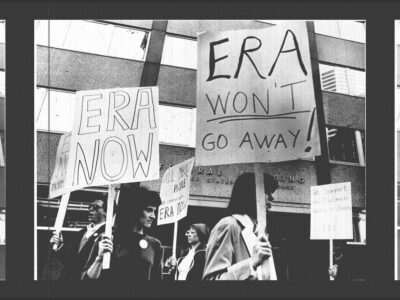
A black and white vintage photo of people protesting. In the foreground, a woman holds a sign that says "ERA WON'T GO AWAY!" and another holds a sign that says "ERA NOW." They are in front of an office building.

It’s Time to Pass the Equal Rights Amendment

WP_Post Object
(
    [ID] => 6033
    [post_author] => 15
    [post_date] => 2023-09-29 08:36:00
    [post_date_gmt] => 2023-09-29 08:36:00
    [post_content] => 

And why more effective climate multilateralism is how we can fix it.

According to the latest report by the Intergovernmental Panel on Climate Change (IPCC), released last year, “It is unequivocal that human influence has warmed the atmosphere, ocean, and land.” In other words, very little has changed from what we’ve known for decades: Climate change is real, it’s largely our fault, and we still aren’t doing nearly enough to reverse it.

After meticulous review of more than 14,000 papers published in the most prestigious journals, scientists from all 195 countries have once again firmly established that the Earth’s temperature has been steadily trending upwards since the Industrial Revolution. Climate disasters are worryingly increasing, and rising summer temperatures are already reaching levels unbearable for humans, ecosystems, and wildlife. Meanwhile, violent floods and unexpected rainstorms are ravaging cities and towns around the world. There are also the less perceptible and slower-onset symptoms, which have only further aggravated the bigger climate crisis. The North Pole’s steady decline, for example, is already wreaking havoc on vulnerable ecosystems and communities, decreasing coastal land for Small Island Developing States due to rising sea levels. Newly and acutely exposed, these nations have been forced to risk their lives and their little resources to cope without larger international support.

Echoing the movie Don’t Look Up, science is once again telling us that climatic distortions are happening, and every day the dimension and frequency of those distortions will only get more severe. Yet, despite the strong IPCC evidence and the current lived reality of climate impacts, certain segments of society, including large swaths of the media and various industries and governments, would still prefer not to “look up” at all. For them, opting for business-as-usual remains the more comfortable and profitable option, perpetuating a hazardous path of inaction. Even more concerning, these inactive groups have had a large influence in critical spaces for climate action, including recent international climate negotiations.

Since 1992, governments worldwide have convened at least twice a year, functioning under the umbrella of the United Nations Framework Convention on Climate Change (UNFCCC), with the goal of increasing climate action. It is at these conferences that the states have adopted previous conventions, including the Kyoto Protocol and the Paris Agreement: The annual Conference of the Parties (COP) serves as the “supreme decision-making body of the Convention” and the key organ for the implementation of the year’s negotiations.

However, in recent years, momentum has stalled. While the urgency and need for climate action has only grown, the tide of inaction has, as well. The pace at which we are fighting climate change is too slow in comparison with how quickly severe climate effects have accelerated. After I returned from the Bonn Climate Change Conference (SB58) this past June, I couldn’t help but feel frustrated: Slow action amidst rapid climate change is only going to lead to more critical scenarios—and the only path out of it is embracing multilateralism.

The vital role of climate multilateralism

The literature on climate change qualifies it as a “common concern of humankind,” reinforcing its global nature and, therefore, the shared responsibility of every country to confront it. At the same time, climate multilateralism acknowledges that certain countries share a greater responsibility for causing it, and should contribute more resources to its solutions. Developed nations, historically responsible for the vast majority of emissions that are today heating up our planet, must take the lead in reducing them and provide more vulnerable nations with the necessary resources to tackle the climate impacts they’ve caused. Similarly, groups that are disproportionately affected by climate change—including non-party stakeholders—deserve representation when it comes to discussing its solutions, an expansion of the concept that the UNFCCC defines as "inclusive multilateralism.”

The significance of climate multilateralism cannot be overstated; it has been the bedrock for previous crucial negotiations and agreements. Without it, we would be trying to face the global climate threat as individual nations rather than a cohesive whole, leading to fragmented strategies and inefficient outcomes. But it also comes with its own problems—less with the concept of climate multilateralism itself, and more with enhancing its efficacy.

"In other words, very little has changed from what we’ve known for decades: Climate change is real, it’s largely our fault, and we still aren’t doing nearly enough to reverse it."

Slow progress in climate negotiations

Since the 2015 Paris Agreement, climate negotiations have struggled to make major progress, due to everything from administrative issues to more fundamental challenges, like the constant obstacle of the fossil fuel industry’s interest in preventing it. But perhaps one of the biggest hurdles for progress has been how effectively time is spent at these conferences, and how negotiations are prioritized. For example, I had the opportunity to follow, as an observer, the Just Transition program negotiations in Bonn. This program advocates for a global shift “from an extractive economy to a regenerative economy,” and is one of multiple, ongoing negotiations that aims to ensure equitable outcomes when considering climate mitigation and adaptation.  Initially, the discussions focused on making sure participating nations understood the concept of Just Transition, and different views emerged. Some developed countries stressed a narrow view of the program, connecting it only to labor and energy aspects, and excluding how various communities might potentially be affected by it. Alternatively, some developing countries, alongside a few developed ones, advocated for broadening the program’s framework, arguing for the necessity of fair transitions for different communities, and a more extensive scope beyond energy issues.

Having heard the discussion, and having done additional research on Just Transition, I was hopeful. These kinds of debates were necessary for global forums, and any agreements reached could eventually contribute to more commitments and implemented actions. However, my optimism dwindled during the second week, when—rather than continue with the negotiations—the negotiators chose to dedicate two days to discussing when they might be able to schedule a workshop on the topic for the parties and stakeholders interested.

While workshops are undeniably invaluable for complex issues, which in turn can facilitate agreements on more substantive matters, spending two sessions picking a date for a workshop seemed both inefficient and a waste of resources to me. Gathering delegations from almost every country is costly, so it’s crucial attendees prioritize agendas and methodologies that actually drive progress on climate action—not stall it further.

Sitting in the Just Transition negotiations, it became clear another crucial aspect affecting the efficacy of climate multilateralism is fairness. Delegations from less developed countries, often smaller in number, rely heavily on climate multilateralism in order to be heard. These nations, assuming huge efforts, send delegations to represent the voices of the most vulnerable communities from their respective countries. It is against the equity principle of the climate regime, then, to prioritize discussions on topics that while important, could be addressed elsewhere. This bureaucratization of negotiations impedes agreements on more substantive and relevant areas, and ignores the financial and operative efforts required of less developed countries, often preventing them from participating. Indeed, during the Just Transition program negotiation, it was the EU who began the debate on the date of the workshop, disregarding the efforts and budgeting of poorer countries and organizations, hoping to return to their home countries with more substantive and positive news than news of a forthcoming workshop.

Oil and gas lobbylists: Wolves in sheep's clothing

Another critical factor affecting climate negotiations is the substantive participation of lobbyists from the fossil fuel industry. These lobbyists, usually sponsored by countries with fossil fuel interests, have a clear objective: to impede and delay meaningful climate action. According to Global Witness, at COP 27, 636 registered fossil fuel lobbyists participated in climate talks, representing an increase of over 25% from COP 26. The same report points out there were more fossil fuel lobbyists than delegates from the ten countries most impacted by climate change at the same conference.

Although these lobbyists have the legitimate right to attend climate negotiations, their immense financial resources and support from oil-producing nations causes them to be overrepresented and to wield too much power. In addition, many of them are not transparent about the interests they represent, often adopting environmental or government badges to camouflage their advocacy against climate action.

A paradigmatic case that highlights the potential dangers of this was last year, when BP’s chair, Bernard Looney, alongside four other BP employees, attended COP 27 as delegates of Mauritania, a country where the company holds major investments. Mauritania, meanwhile, is a country that has been dramatically affected by climate change, showing the conflict of interest between the country’s most vulnerable communities and the people sent to represent them.

Fortunately, there have been positive steps toward promoting transparency and legitimacy in climate negotiations. During the last plenary of SB58, UNFCCC Executive Secretary Simon Stiell announced that from now on, “every single badged participant attending the event will be required to list their affiliation and relationship to that organization.” This significant transparency measure aims to ensure greater accountability for attendees, especially regarding the role of the fossil fuel industry in climate negotiations. During COP 28, scheduled for later this year, delegates will be required to fill a form designating the organization they represent, enhancing the integrity of negotiations and potentially combating some factors delaying progress.

As the pace of climate effects exceeds the progress of climate multilateralism, it becomes imperative to rethink and improve the way that our discussions and agreements take place. Climate multilateralism is indeed the most essential instrument for attaining global agreements and actions, making it crucial to enhance its efficacy in alignment with the urgent climate crisis—and we must take steps to ensure its success.

Transparency measures, combined with continued vigilance and accountability, are a good first step to help safeguard the integrity of climate negotiations. So is rethinking how best to delegate time and efforts at the conferences themselves: Effectiveness, efficiency, and fairness are all vital to maximizing and fostering actionable commitments, strengthening climate multilateralism, and galvanizing collective efforts towards a more resilient and sustainable world. By acknowledging the urgency of the situation and collectively working towards decisive action, we can build a more secure and thriving future for generations to come. Now, we just have to do it.

[post_title] => Why Global Climate Negotiations Have Stalled [post_excerpt] => And why more effective climate multilateralism is how we can fix it. [post_status] => publish [comment_status] => closed [ping_status] => closed [post_password] => [post_name] => global-climate-negotiations-stalled-conference-of-the-parties-cop-bonn-inclusive-multilateralism [to_ping] => [pinged] => [post_modified] => 2024-08-28 21:11:27 [post_modified_gmt] => 2024-08-28 21:11:27 [post_content_filtered] => [post_parent] => 0 [guid] => https://conversationalist.org/?p=6033 [menu_order] => 75 [post_type] => post [post_mime_type] => [comment_count] => 0 [filter] => raw )
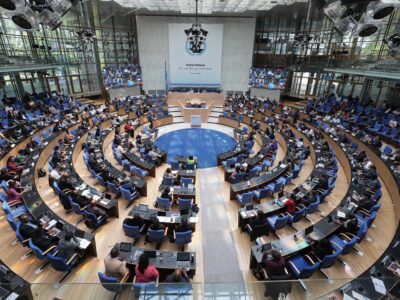
An overhead shot of the climate conference in Bonn last June. Desks are arranged in a circle in a high-ceilinged conference room with floor to ceiling windows. Many of the seats are occupied by representatives from various countries.

Why Global Climate Negotiations Have Stalled

WP_Post Object
(
    [ID] => 5941
    [post_author] => 15
    [post_date] => 2023-08-22 21:01:16
    [post_date_gmt] => 2023-08-22 21:01:16
    [post_content] => 

People who lead lives in “deviant” bodies are familiar with the state’s attempt to control them. Finding commonality is how we fight back.

At age six, “Ashley X” was subjected to a series of invasive, irreversible medical procedures. Without her consent or understanding, her breast buds were removed, along with her uterus, and she was placed on hormone therapy to limit her growth. These procedures were performed at the behest of her parents, who insisted they were for her own good.

Today, Ashley’s story conjures up the nightmare of the “trans agenda” that is being advanced in conservative circles: a vulnerable young person unable to make decisions for herself, forced into procedures that will profoundly shape the trajectory of her physical, sexual, and social development. It’s easy to imagine it as the subject of mass outrage, the center of a think piece in a conservative gossip rag running on Substack or in the Daily Mail. But it wasn’t, because of one important detail: Ashley was subjected to these procedures not because she was trans, but because she was disabled.

Ashley’s case rose to public attention in 2007, when her parents wrote a detailed explanation, justification, and treatise on their “pillow angel” in a viral blog post, claiming they wanted to keep her smaller and easier to care for. Their disregard for her humanity was perhaps most apparent in the argument that the removal of her uterus would prevent potential pregnancy, “which to our astonishment does occur to disabled women who are abused,” a very odd way to address the shockingly high rate of sexual assault in developmentally disabled women—estimated to be 80 percent. Still, many agreed with them. Doctors at Seattle Children’s Hospital received ethical approval to perform these procedures, which were written up in medical journals and widely praised. Because Ashley had “severe disabilities,” the modification of her body was deemed appropriate and necessary, with one ethicist commenting “a step too far, or not far enough?” Another ethicist, notorious for his negative commentary about the disability community, praised the Ashley treatment for The New York Times.  

As the attack on trans rights continues to escalate, I have been thinking of Ashley X, and wondering how she is faring—the last update on her parents’ blog is from 2016, and she would be in her mid-20s by now if she is still alive. Much like the war on the trans community today, her “treatment” drew upon centuries of practices that use the medicalization of marginalized bodies to control them, with the free and open permission and sometimes active approval of society at large. In the process, she joined a long list of disabled people, many of whom are not even named in records, who have endured abuses such as coerced sterilization, brain surgery, and forcible medication, all for the convenience of others around them, and to protect society from their existence. It’s a familiar playbook: This demand for bodily conformity is also (and has been) experienced by the trans community, often in lockstep—laws designed to target one inevitably harm the other—inclusive of practices like “conversion therapy” in a goal to eradicate transness, alongside denials of care or gatekeeping by authorities who control access to social, medical, and surgical transition.

Through this lens, the overlap between both communities might seem obvious. But understanding the deeper connection between the lives of people like Ashley and the trans community is an important step in building solidarity through the shared experience of medicalization as a tool for dehumanization—and is key in working towards dismantling it. Both communities experience a very specific form of somatic oppression rooted in fear and hatred of their bodies. Sometimes, this is used to pit them against each other, causing a tension between these two communities and trapping those who are a part of both in the middle. In some instances, this includes rejection of the similarities between the harm caused to both groups, or refusal to make common cause. But this is by cultural design: Keeping two communities with much in common apart makes it harder for them to team up and push back against oppression.

Harmful attitudes and policies targeting disabled people are not issues of a faint and distant past, and many in fact have laid the grounds for restricting the freedoms of trans people today: Most states have some version of a law that allows for the forcible treatment and often medication of mentally ill people, especially of note in a world where transness is treated as mental illness or a social contagion. (It wasn’t until 2019 that being trans was delisted from the World Health Organization’s ICD-11.) Deaf people are increasingly pressured to get cochlear implants, especially in the case of children, whom, some people rationalize, can learn to “speak normally” if they receive an implant early in life, an echo of the oralism of the 19th century, when educators attempted to force d/Deaf people to learn to speak and read lips rather than use sign language. (Both offer limited, if any, benefit and in fact have caused harm, fracturing Deaf culture and communities for the convenience of hearing people.) Meanwhile, other young disabled people may be encouraged—or “encouraged,” without consent—to get IUDs, again for “convenience” and avoidance of menstruation while also making it impossible to get pregnant; if Britney Spears was not exempt, how is an ordinary person supposed to fight back?

These practices aren’t new, hearkening back to policies such as 19th and 20th century “ugly laws,” which targeted “unsightly” people with fines if caught “begging,” and contemporary sit/lie laws, which effectively criminalize being unhoused on the sidewalk, again pushing unwanted bodies out of view. Rather than progress, newer policies have only widened the net: Contemporary drag bans, for example, echo historic laws designed to erase queer people to ease social discomfort. Policies that prevent trans people from accessing necessary medical care do the same, an extension of historic trends including policing that specifically targeted Black and Latinx trans people during the Stonewall Inn and Compton’s Cafeteria raids of the ‘60s.

Because of this overlap, it is important to understand the shared legacies that span both communities, because they are ultimately one fight, and collaboration makes it easier to share both strength and tenderness when needed, to be vulnerable and ferocious, to work toward a shared right to autonomy. Disabled people have been fighting for centuries against coerced treatment that targets bodies and minds deemed monstrous, wild, and unacceptable, in contexts that are often heavily racialized as well, such as Black disabled women deemed “promiscuous” and in need of sterilization. Trans people have been fighting forced detransition and denial of access to care they need to lead full, active lives for centuries, as well. As the contemporary fight extends to trans adults, with a growing number of states including Missouri and Florida moving to undermine or ban gender-affirming care for people of all ages, the stakes are even higher.

The maliciousness and cruelty of this legislation is designed to put trans people in their place, under the guise of “protecting” people from harm; precisely the same kinds of arguments used to justify the mutilation of people like Ashley, and the irreparable harm done to intersex infants and children—who are often subjected to similar forced surgeries and hormone therapies—in a “for their own good” paradigm. The goal is eliminationism. The same people who conjure up myths of trans kids being coerced into irrevocable procedures by overeager parents and doctors are very comfortable supporting those same abuses when they involve disabled people and measures to wipe out trans people altogether, betraying where their true concerns lie. Notably, legislation targeting gender-affirming care for trans youth often has specific carveouts for intersex children, a reminder that this legislation pursues normative and desirable bodies, not evidence-informed care. The purpose is not safety. It is compliance.

This tension and hypocrisy highlights the common cause between the trans and disability communities—not least because trans people are more likely to be disabled. Multiple court cases have illustrated how powerful that common cause could be, with incarcerated trans women successfully leveraging the Americans with Disabilities Act (ADA) to argue that housing them with men and denying them access to gender-affirming care is a civil rights violation, for example. Not because being trans is a disability, but because gender dysphoria may be, and as such should be entitled to legal protections, particularly in a country where many Black trans women are incarcerated in the first place because of crimes of survival.

People who lead lives in othered, “deviant” bodies are familiar with the state’s attempt to control them, and with the cultural pressures that lead people to challenge their right to exist as they are. In a culture where trans and disabled people are medical problems to be solved, thereby erasing them from society, working in solidarity with each other is extremely important, and is the best way forward in a hostile climate that uses medicalization as a tool of power and control. Issues of pressing concern to both communities can and should be common sources of organizing power. If the trans community sees applications for the ADA, for example, it also recognizes the power of legal protections against healthcare discrimination on the basis of sex and gender. The disability community is familiar with coerced care or denial of treatment, and can support the trans and intersex communities in the pursuit of their legal rights. This is a mutual struggle of survival that becomes more pressing by the day under the growing weight of the state, and its abandonment of responsibility to care for those most at risk of abuse and exploitation.

Solidarity includes thinking about the myriad ways in which medicalization is used to oppress vulnerable communities, and how to push back on these practices beyond the obvious. Mental illness is a major factor in police shootings, for example, while Black and Brown kids disproportionately experience school pushout, often on the grounds of the criminalization of behaviors that may be associated with disability, or because they are LGBTQ. Similarly, treating transness as a mental illness is used as a tool for social and institutional discrimination targeting trans people, while ignoring the mental health impacts of untreated gender dysphoria.

Many are already doing this work. Works such as Health Communism (Verso, 2022) push at the boundaries of understanding how medicalization has become such a sinister tool for suppressing marginalized groups. Similarly, abolitionists such as TL Lewis and the creators of Captive Bodies (AK Press, 2011) highlight the profound connections between disablism and larger social structures—including transphobia — while We Want It All (Nightboat, 2020) invites engagement with radical trans culture through anthologized poetry.

In a just world, humanity would not be calibrated against a medicalized status, and people’s personal health needs would not be used against them to deny full access to society. Until we live in that world, however, it’s vital to collaborate as co-conspirators in a hostile world, unpicking the threads of the tapestry someone else has knit.

[post_title] => When Medicalization Becomes a Tool for Dehumanization [post_excerpt] => People who lead lives in “deviant” bodies are familiar with the state’s attempt to control them. Finding commonality is how we fight back. [post_status] => publish [comment_status] => closed [ping_status] => closed [post_password] => [post_name] => medicalization-dehumanization-transgender-disability-rights-autonomy-solidarity [to_ping] => [pinged] => [post_modified] => 2024-08-28 21:14:01 [post_modified_gmt] => 2024-08-28 21:14:01 [post_content_filtered] => [post_parent] => 0 [guid] => https://conversationalist.org/?p=5941 [menu_order] => 78 [post_type] => post [post_mime_type] => [comment_count] => 0 [filter] => raw )
A black and off-white illustration, split in half in the center by the silhouette of a neck, torso, and arms. On one side, there's a white silhouette of the side profile of someone's face on a black background; on the other side, there's a black silhouette of the side profile of someone's face on a white background. Various surgical tools overlap on the image, appearing to stab into the body and faces.

When Medicalization Becomes a Tool for Dehumanization

WP_Post Object
(
    [ID] => 5938
    [post_author] => 15
    [post_date] => 2023-06-28 14:38:39
    [post_date_gmt] => 2023-06-28 14:38:39
    [post_content] => 

Disregard for human lives, animal lives, and nature is a feature of Moscow’s policies, not a bug.

The catastrophic collapse of the Kakhovka Dam in Ukraine earlier this month was likely the result of two possible scenarios: Russia’s occupying forces neglected the dam to the point of collapse, or those same Russian forces simply blew it up. Either way, the damage has been immense, including irreversible damage to the region’s ecosystem, as well as displacing thousands of people and threatening the global food supply for millions more.

Russia, unsurprisingly, has denied any involvement. Arguments that blame secret sabotage by Ukraine use the fact that the collapse has resulted in drowned Russian soldiers and serious water supply issues for Russian-occupied Crimea. “Why would the Russians do this to themselves?” they’ve asked. Yet as we have seen over and over again, both Soviet and Russian governments are absolutely capable of “doing this to themselves” — and have.

Disregard for human lives, animal lives, and nature is a feature of Moscow’s policies, not a bug. A salient example is the dam blown up in Ukraine by Joseph Stalin’s secret police in 1941, ostensibly to stop Nazi forces from capturing the city of Zaporizhzhya as they invaded the Soviet Union. The explosion was said to have been rushed as the NKVD feared Stalin’s wrath: Murderous dictators inspire paranoia, and paranoia leads to mental exhaustion and poor decisions. The disaster claimed tens of thousands of civilian lives, although some historians say the number could be as high as 100,000. Eventually, Zaporizhzhya was occupied by Nazi forces anyway. Thousands more were killed. As was generally the case, Stalin’s barbaric policies were both nihilistic and futile.

Given this history, the idea that Moscow would be at all concerned about the horrific damage of the Kakhovka Dam disaster is laughable. Alongside human lives, Moscow sees animals and nature as equally dispensable in its pursuit of power. Climate change is already drastically affecting Russia, which is warming at a rate 2.5 times faster than the global average. Moscow, meanwhile, has a long, dark history of persecuting environmental activists. The situation has only gotten worse with the genocidal invasion of Ukraine.

Terrorizing the victims of its invasion — and the Western countries it loathes — is Moscow’s biggest strategic goal at this point, after its plans for a three-day war against Ukraine failed spectacularly last year. In Russian-occupied territories, aid to the surviving victims of the dam disaster has predictably been made impossible by the occupiers, because the suffering is the point: Today, the war is a campaign of seething revenge, and everything and everyone living downstream from Kakhovka is as good of a target as any. 

Even if Russian forces didn’t blow up the Kakhovka Dam, as is widely suspected, the dam was still in Russian hands, occupied quickly following its mass-scale invasion in February 2022. It was Moscow’s responsibility to prevent a natural disaster, and they did not.

All of this is a part of a cycle of violence, not unique to Russian society, but unique to Russia in its aftermath. Let’s go back to Stalin’s murderous reign: In countries like modern Ukraine, the violence is acknowledged for what it was — reprehensible. By contrast, Putin’s Russia has sought to rehabilitate Stalin for years. How can a society that does not, in some fashion, reckon with a dark past be expected to build a viable future?

Vladimir Putin’s revanchism took years to coalesce into a genocidal war of aggression, but his fantasy of revenge against the West, and all who stood with it, has been apparent — and disregarded — for years. Madeleine Albright called it “delusional.” Germany’s Angela Merkel said that Putin was living “in another world.” Yet everyone failed to stop him, including, most crucially, Russian citizens themselves. The Russian majority, overwhelmed with state propaganda and lingering resentment that followed the USSR’s collapse, supported Putin’s decision to steal a chunk of Ukraine.

From 2010 to 2017, I worked in Moscow and watched modern Russia’s march toward fascism from inside the country — perpetual trips abroad, which allowed me to breathe free, notwithstanding. On the day that Russia launched its mass scale invasion, I was horrified, but not surprised: I had already seen the bloodthirst up close. During my last few years in Moscow, I had watched as former friends grew distant, or even afraid of associating with me. I saw conscientious people persecuted and imperialist thugs elevated. In this light, the horror of the Kakhovka Dam disaster is astronomical, but not all that shocking. Not if you know the Kremlin.

Even as it continues to lose the war, Russia remains a ticking time bomb for the world. Accepting this grim fact is important. The nihilism of Kakhovka will be reflected in Russia’s other policies toward humanity and the environment, because disasters like this do not exist in a vacuum.

The fate of the Zaporizhhya nuclear plant, currently occupied by Russia, is one to watch in this regard. We mustn’t forget that the people in charge of Moscow are the ideological heirs of the people who mishandled and covered up the Chernobyl nuclear disaster in the 1980s. Yet there are other issues that loom on the horizon, even after Russia is beaten back, as I believe it will be. Russia’s treatment of the Arctic is especially notable in this context. There, Russia has demonstrated both contempt for nature and for its own citizens on a breathtaking scale, and the results will be disastrous.

While ecocide is the world’s collective problem, Russia happens to be an especially belligerent actor — and the collapse of the Kakhovka Dam is just one small piece of what’s to come. Strengthening support for decent environmental policies back home is one of the ways that Western nations can respond to Russian ecocide; another is critical support for nations such as Ukraine, which today bears the brunt of both Russian aggression and disregard for the environment. Still, we can always do more.

Actively planning for post-Putinism is another important step to take now, and not later. The current regime in Moscow is not committed to legal norms, and expecting it to reverse course is mostly a waste of time and energy. What comes next, however, may be a window of opportunity. If the recent armed insurrection attempt in Russia is any indication, the Putinist system is growing less stable, and the time to plan is now.

As the planet continues to deal with man-made natural disasters, long term strategizing is important. We must be proactive, not reactive — the planet depends on it.

[post_title] => The Collapse of the Kakhovka Dam Was Ecocide [post_excerpt] => Disregard for human lives, animal lives, and nature is a feature of Moscow’s policies, not a bug. [post_status] => publish [comment_status] => closed [ping_status] => closed [post_password] => [post_name] => kakhovka-dam-collapse-ecocide-russia-ukraine-war-damage-environment [to_ping] => [pinged] => [post_modified] => 2024-08-28 21:11:28 [post_modified_gmt] => 2024-08-28 21:11:28 [post_content_filtered] => [post_parent] => 0 [guid] => https://conversationalist.org/?p=5938 [menu_order] => 79 [post_type] => post [post_mime_type] => [comment_count] => 0 [filter] => raw )
"A resident of Fedorivka is seen standing outside her flooded garden," caused by the collapse of the Kakhovka Dam. She is wearing rainboots, and wearing a black tshirt that says "Espresso Expert" across the back. We do not see her face. She is surrounded by dry debris but just a few feet in front of her we see a good amount of water still from the flooding.

The Collapse of the Kakhovka Dam Was Ecocide

WP_Post Object
(
    [ID] => 5880
    [post_author] => 15
    [post_date] => 2023-05-18 17:06:31
    [post_date_gmt] => 2023-05-18 17:06:31
    [post_content] => 

Under international criminal law, apartheid only applies to discrimination based on race. A new open letter argues it should apply to gender discrimination, too.

In March of this year, a group of over 100 Iranian and Afghan women signatories published an open letter calling for the end of gender apartheid. The purpose of the letter was threefold: to raise awareness of what gender apartheid is, and how it's affecting women in Iran and Afghanistan; to encourage public statements and policy responses condemning these regimes; and to expand the definition of apartheid under international law. As the letter explains, currently, under international criminal law, use of the word apartheid is limited to race; but for years, activists around the world—and more specifically, in Iran and Afghanistan—have been using it to describe extreme, gender-based persecution, and the regimes that perpetrate it. The letter makes the case for why it's time we update the word's definition on the global stage.

Below, we spoke to one of the people behind the campaign, human rights lawyer Gissou Nia, on the letter's longterm goals, its challenges, and why language matters when it comes to gender persecution and apartheid.

~

How did the open letter come to be? How did you get involved?

The open letter came about with a core group of Iranian and Afghan women signatories. The genesis of this is that women's rights activists in Afghanistan and Iran have been using the term "gender apartheid" for years to describe, essentially, a system of subjugation and oppression that they are being repressed by. [But] when I spoke to some of these activists, not all of them had actually been aware that gender apartheid is not currently a crime under international law. Gender was not a part of that definition.

Apartheid, as defined under international criminal law—whether it’s a part of crimes against humanity or not—only applies to racial apartheid. So, [we] thought, why don’t we just change the definition? There have been incredible legal academics and jurors who have [already] been working on this, like Karima Bennoune, and what we wanted to achieve with the campaign is to supercharge [their] efforts. It’s an unbranded campaign—so there’s no one organization attached to it.

I’m curious what differentiates an apartheid regime from other forms of gender discrimination.

It’s a great question. One of the main things that people have asked is how is this distinct from gender persecution, let’s say. With gender persecution, which is a crime against humanity as defined under the ICC Rome Statute, that’s a more broadly defined crime. There may be some instances of something that you could charge as gender persecution that would amount to gender apartheid, but gender apartheid describes a certain type of treatment. It really focuses on the structures. The word “apartheid” comes from the word “apart” in Afrikaans, born out of the historical experience of South Africa—but it’s really about keeping one group separate from another. Here, you could say that [it’s] men subjugating and dominating women for purposes of entrenching power. I think that’s the distinguishing factor. Certainly, that would amount to a case of gender persecution, as well, and we’re not saying that it’s either/or—we think these are all complementary. In the case of race, we have both racial apartheid and racial persecution; so there’s no reason that we can’t have gender apartheid, as well.

I’d also say that gender apartheid, as opposed to gender discrimination, is much more extreme. Certainly misogyny and patriarchy exist everywhere. There are gender discriminatory laws in many different countries, including in the US. But a gender apartheid regime is something that’s quite distinct and different. It basically is saying that women are not worth a man. In the case of Iran, a woman’s value is worth half that of a man, legally. So they’re removed from public spaces. That’s why in Afghanistan, women and girls are not allowed to be educated, [why] they’ve been taken out of employment. The Taliban recently said that Afghan women cannot work for the UN in Afghanistan. So it’s essentially the removal of women from public spaces and from public life. And that’s enshrined in the law: You are formally not worth a man, and we are going to repress you, because that’s how we’re going to keep this regime in power.

When you say their value is less, how is that defined?

So, for example—I’m a lawyer, so this one for me is especially grating—if I was to give testimony in a court in Iran, my testimony would be worth half that of a man. I also wouldn’t be able to travel outside of Iran without the permission of my husband or my male guardian. I couldn’t ride a bike, I couldn’t go to sporting stadiums. I would be barred from certain types of higher education. Women do not have equal capacity, inheritance, divorce, marriage rights—anything that relates to the family, they’re unequal. And, of course, there’s the mandatory hijab laws, which we know sparked the outrage over Mahsa Amini’s murder.

For this particular campaign, why did you choose Iran and Afghanistan specifically? There are other countries where, arguably, [gender apartheid] would apply.

Because we were campaigning [and] were successful in removing the Islamic Republic from the UN Commission on the Status of Women. Obviously all of that came about because of the Woman, Life, Freedom movement in Iran after Mahsa was killed at the hands of the Islamic Republic’s morality police. There were a lot of Afghan women activists that wrote me after that and were congratulating me. [But] Afghanistan was still on the UN Commission on the Status of Women. True, the Taliban is not formally recognized before the UN, so the representative is from the former government and basically doesn’t represent anybody. Nonetheless, they’re still there.

And it really struck me, that while we’re speaking about Woman, Life, Freedom in Iran, and while there’s been such a global outpouring of attention and action and policy engagement and energy, right across the border, our Afghan sisters are dealing with a horrendous situation, of which the globe is exhibiting some form of paralysis, and a lack of direction on how to improve their circumstances.

I think a lot of Iranian women who are championing women’s rights have been thinking about our Afghan sisters, who we’re tied to through shared borders, shared culture, and in some cases shared language. These issues are interlinked and they’re not separate, and so we’ve been keen to do some joint activism. It’s something a bit new in terms of campaigning, and certainly once the law is adopted or as discussions continue, there may be other women that choose to engage with it who feel that they’re living under gender apartheid regimes. This was a campaign that Iranian and Afghan women came together to launch, but it doesn’t preclude other groups of women wanting to [sign] or get involved with this advocacy or get behind this mission. Anybody can sign, and support. But the number of gender apartheid regimes in the world is actually pretty few.

How many people have signed it so far?

I haven’t checked lately to see what the tracker is, but it was something like 5000.

Can you talk me through the three chief demands the letter makes?

So basically, the [three demands] are the way that we envision [passing the law] would happen. I’ll just walk you through the timeline. In the immediate, first of all, there’s a lot of people who are not familiar with what the term apartheid is even, [especially] under the age of 35. However, most of the decision makers that we are seeking to engage with are above the age of 35, and they’re in government, and they have direct recollection of those events in the eighties [in South Africa] until the dismantling of the apartheid system in 1990. It has a real moral and resonant power for those decision makers, so part of this campaign is aimed around introducing the term gender apartheid, so people are familiar with what that actually means. What does apartheid refer to, what does it refer to in the context of Iran and Afghanistan, and why is this still going on.

The second thing is, we want parliaments around the world to issue resolutions condemning the apartheid in Afghanistan and Iran. That’s moving forward in Canada, in the UK, in New Zealand, and now we’re doing a lot of outreach to states in South America and Africa because we think that will be very important to have a global frame. This isn’t just a Western effort, and we want to make sure that is understood.

The ultimate goal is to have some of the legal frameworks that apply to apartheid amended or introduced to include gender apartheid. One of our main goals is to have gender apartheid included in the definition at the upcoming global convention on crimes against humanity. It should be adopted at the end of 2024, with any luck, and we want to be included.

Do you think the history of the term being so associated with race helps or hinders the movement?

Well, it’s not called racial apartheid. It’s just called apartheid. The reason that apartheid doesn’t include gender is because it was created in the 20th century out of the South Africa experience. I [also] think a lot of international criminal law [has been] created by men in small rooms, and not necessarily with women’s input and that’s changing. We see that there is an increased focus on gendered crimes. There’s even a reevaluation of the crime of genocide to focus more on the gendered aspects of it. Historically, people have assumed that genocide has to be mass killing, not realizing that actually, it could also just be sterilization, and those forms of genocide are much more focused around women.

The point is a lot of crimes that we grapple with are really viewed through more of a male lens, and there’s been a concrete effort to apply a gender lens to that. I think this ties into the reason why apartheid didn’t focus on gender. It wasn’t because there weren’t gender apartheid regimes. It was just because of the kind of dialogue that was happening in the 70s and the 80s and the 90s.

Longer term, what happens if you succeed in changing international law? What happens if [gender apartheid] is criminalized?

The biggest thing is just that then it’ll be possible to be prosecuted, and there’ll be a lot of new pathways for accountability. It also ultimately will enforce prosecution of crimes like gender persecution, as well, because prosecutors will start to think more deeply about the gender aspects of crime. But while the end goal might be to have this legally enshrined, really, the goals are all along the way. Because what we want to do is raise awareness about what this crime is, but also drive policy actions.

I mean, with South Africa, the ask was really to financially isolate that regime and to get people—governments, companies—to stop doing business with them. With Iran and Afghanistan, they’re already very isolated, they’re already very sanctioned. It’s not about introducing new sanctions or dissuading companies from working with these states, because they already aren’t. It’s about reframing the discussion. Those sanctions are issued for nuclear proliferation, for WMDs, for ballistic missiles, for terrorism; they are not issued for human rights violations, and they’re definitely not issued for gender apartheid. So we want to start to reframe why it is that we’re saying that governments should not engage with these governments [so] they need to change their behavior. It makes it unacceptable.

The crime of apartheid as distinct to the crime of gender persecution, gender apartheid would introduce more of a question about third party actors. Because of the historical example of South Africa apartheid, there’s a question of liability. If governments and companies are complicit, or doing business with regimes that are perpetrating gender apartheid, are they willingly aiding and abetting this regime? It’s a bit more expansive than what’s currently on the books, in our view.

We’re not asking for increased sanctions as part of this campaign. What we’re asking for is that there clearly are demands that gender apartheid come to an end.

For more information, you can read the letter in its entirety, and join in signing it, at endgenderapartheid.today.

You Should Give a Sh*t About is an ongoing column highlighting local stories with a global impact. This interview has been edited and condensed for clarity.

[post_title] => You Should Give a Sh*t About: Gender Apartheid [post_excerpt] => Under international criminal law, apartheid only applies to discrimination based on race. A new open letter argues it should apply to gender discrimination, too. [post_status] => publish [comment_status] => closed [ping_status] => closed [post_password] => [post_name] => end-gender-apartheid-today-open-letter-interview-gissou-nia-human-rights-lawyer [to_ping] => [pinged] => [post_modified] => 2024-08-28 21:11:28 [post_modified_gmt] => 2024-08-28 21:11:28 [post_content_filtered] => [post_parent] => 0 [guid] => https://conversationalist.org/?p=5880 [menu_order] => 82 [post_type] => post [post_mime_type] => [comment_count] => 0 [filter] => raw )
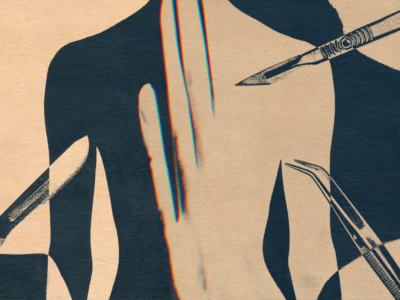
An old black-and-white photo of women protesting in Iran in the 80s. Many of them are yelling, with their fists in the air. They're protesting an (at the time) newly enforced dress code for women in Iran, requiring women to dress a certain way or else lose their jobs.

You Should Give a Sh*t About: Gender Apartheid

WP_Post Object
(
    [ID] => 5764
    [post_author] => 15
    [post_date] => 2023-04-07 20:35:25
    [post_date_gmt] => 2023-04-07 20:35:25
    [post_content] => 

It’s comforting to imagine that a conscious uncoupling would heal our country’s painful divisions. But it wouldn’t.

Since its inception, the United States has been divided along a number of overlapping fault lines, most saliently race, religion, geography, and politics. Yet for decades, pundits have been acting as if this were a new and terrifying development. What’s actually a number of divides is most often portrayed as one vast gulf between two, roughly equal “sides”: two sides that can’t agree on human rights, school curricula, the role of government, or even what our Constitution means—and would rather burn the whole country down than attempt to compromise for the greater good.

Ironically, in recent years, pundits on both sides of the aisle have united around a supposed solution to this divide: a national divorce. Marjorie Taylor Greene, a Republican congresswoman from Georgia best known for suggesting that the 2018 California wildfires were ignited by a space laser controlled by a corporate cabal that included Jewish bankers, is the most recent and provocative proponent of this concept, but it’s been proposed a lot since 2016, and not just by far-right extremists. (See: The Case for Blue-State SecessionWhat Would a United Blue America Look Like?, and It’s Time for a Bluexit, to name a few.)

The appeal is obvious. Proponents across the political spectrum argue that we’d all be better off living in our particular version of a “free country”—for liberals, one where abortion is a right and kids are taught science and history; for conservatives, one where private gun ownership is not restricted and kids are not taught anything that deviates from their parents’ beliefs. It’s comforting to imagine that a conscious uncoupling would heal our country’s painful divisions. But it wouldn’t, because our real problem is not our differing beliefs—it's our broken democracy.

The largest and most profound gap in the United States today isn’t between the Right and the Left: It is between what Americans say they want—and in many cases vote for—and the laws and leaders we have. The clearest proof of this can be found in our electoral outcomes. Nearly twenty-three years ago, a conservative Supreme Court halted a recount in Florida, installing George W. Bush as president, despite his opponent Al Gore winning the popular vote by over half a million. Likewise, when Hillary Clinton became the first woman to win a majority of votes for president in 2016, the Electoral College again defied the will of the people, anointing Donald Trump instead. In the last 20 years, most Americans who vote have voted for the Democratic presidential candidate. Yet thanks to the Electoral College, since 2000, the candidate who won the most votes has twice lost the presidency. Why would someone who voted with a majority of their compatriots in multiple presidential elections, only to see the losing candidate installed in the White House, have faith in our system? Why would they bother showing up to vote the next time?

These elections have consequences that transcend the Oval Office. In 2022, a Court made rabidly right-wing by judges Trump appointed overruled a majority of Americans to strike down Roe v. Wade, extinguishing a nearly 50-year-old precedent which guaranteed limited abortion rights throughout the United States. Obergefell v. Hodges, the 2015 Supreme Court ruling that guaranteed marriage equality nationwide, is less than a decade old and could very well be next.

Behaving as if the United States is a pure democracy ruled by an enlightened majority is wishful thinking. It’s clearer every day that we are in fact ruled by a reactionary minority. And while it’s true that what the majority believes is not always right—a majority of Americans opposed interracial marriage until relatively recently, for example—consistently overruling the popular will carries its own risks, including widespread apathy and disillusionment.

Despite what he has claimed, Donald Trump has never had the support of a majority of Americans, or even half of them. He became president in 2016 thanks to the Electoral College, not the American people, nearly 3 million more of whom voted for Hillary Clinton. (Not even half of voters cast ballots for Trump, let alone half the country; neither Clinton nor Trump won more than 50 percent of votes cast in 2016—Clinton won 48 percent and Trump got 46.) Throughout his tenure, Trump attained an average approval rating of 41 percent—four points lower than that of any of his predecessors in Gallup's polling era. And voters have not hidden their disapproval: In 2020, more Americans showed up to vote than in any other presidential election in 120 years—and Trump lost by over 7 million votes.

Pundits tend to attribute this abstention to laziness, apathy, or privilege, despite the fact that non-voters are disproportionately non-white and lower-income. But it’s more often a result of hopelessness and despair: While there are many reasons Americans don’t vote, including significant structural barriers and deliberate voter suppression, not voting is also a rational response to mounting evidence that our votes don’t and can’t make a meaningful difference without major democratic reforms. Gun control, abortion rights, Medicare for All, paid family and medical leave, higher pay for child care workers, and government-subsidized child care all have clear majority support. Most Americans also believe the federal government should be doing more to reduce the impact of climate change. But the will of the people only means so much when there’s an Electoral College to overrule the popular vote, a millionaire-dominated Senate to halt popular legislation, and an unelected Supreme Court that can decide, 50 years later, to overturn Roe—itself a far-from-perfect judicial edict which ultimately failed to protect abortion rights.

Yet rather than working to abolish or reform entrenched anti-democratic institutions, pundits across the political spectrum cling to the fantasy of retreating to our separate corners. Right-wing arguments for secession mostly rest on conservatives’ antipathy to, in Rep. Greene’s memorable phrase, “sick and disgusting woke culture issues.” This might make slightly more sense if there actually were a corps of woke warriors in the United States intent on forcing kids to attend drag shows—but, spoiler alert: There’s not. Meanwhile, the liberal case for secession is slightly more reality-based, in that there really are people in power who want to charge women with murder and potentially execute them for having abortions—although such people do not represent half of the country, or even half of South Carolina.

Liberals also sometimes frame their pro-secession arguments as motivated by a desire to protect non-fascists in red states, but how exactly blue state secession would help vulnerable red staters remains a mystery. The argument rests partially on the delusion that blue states will become bastions of freedom, equality, and progressive public policy the moment they sever ties with Mississippi. That analysis conveniently ignores the persistent and ugly legacy of human rights abuses in blue states and requires faith that, as Nathan Newman wrote in “The Case for Blue-State Secession,” blue states newly freed of senators like Joe Manchin would “raise new revenue by increasing tax rates on the wealthy and corporations, and free up funds through lowered military spending”—and put all that new revenue to good and popular use.

A blue state nation might in theory be likelier to raise taxes on the rich, but anyone who has lived in ex-governor Andrew Cuomo’s New York knows blue states have powerful enemies of progress and Manchins of their own. It’s the American people who favor higher taxes on the wealthy, not political elites in any state—just like it’s the American people who want the government to tackle climate change and invest in infrastructure and subsidize child care. Many politicians are in office not to make progress but to block it. All of which is why the best solution is to strengthen our democracy, not divide our country into separate fiefdoms controlled by wealthy interests with different cultural values but a similar stake in avoiding direct democracy.

The United States is enormous, heterogeneous, and full of people with idiosyncratic and often self-contradictory views. It includes families whose members have radically different politics, some of whom live under the same roof. A 2020 report found that more LGBTQ Americans live in the South than in any other region in the country. A recent analysis of public opinion data found that Americans hold substantially more liberal attitudes on questions of gender, sexuality, race, and personal liberty than they did in the 1970s, though their views on issues like gun ownership, abortion, taxes, and law enforcement have changed little in the last 50 years. When Americans have voted directly on abortion policy via statewide ballot measures in the last year, they have—every time and in every state, red, blue, and purple—voted for fewer restrictions, not more.

Opponents of a national divorce tend to focus on the considerable structural and economic obstacles to carving up the country along partisan lines. But the biggest and most urgent reason to oppose this type of schism is the protection of human rights. Avoiding direct democracy is essential to consolidating conservative power. Mitch McConnell is serving his seventh term in the U.S. Senate for many reasons, but popularity in his home state of Kentucky is not one of them—a 2021 poll found that 53 percent of Kentuckians disapproved of McConnell’s performance, and that’s just Kentuckians who are registered to vote. According to a 2020 report, the state of Georgia likely purged nearly 200,000 Georgians from the state’s voter rolls for wrongly concluding that they had moved. Alienation, structural obstacles to voting, voter suppression, and threat of prosecution are powerful barriers to full political participation.

The fact that many of our state governments are conservative does not necessarily reflect the will of the people in those states. Millions of people live in red states and a substantial proportion of them oppose or are unaware of the ugliest policies they purportedly endorse by living there. Even Trump voters do not deserve the policies they supposedly supported; people cast ballots for all kinds of reasons, some of them rational—people whose number one issue is banning abortion will naturally vote for GOP candidates who have promised to do just that—and some of them ill-informed and contradictory. People live where they live for a variety of reasons, most notably family ties and lack of money; not everyone wants or has the resources to move to states with “better” governments. Children and teenagers, who often suffer the most from retrograde state laws, don't choose where they are born or raised. They, too, have rights in need of protection.

Venting our anger by demonizing our neighbors may feel cathartic. It’s a lot easier to rail at red states and the people who live in them than it is to build enough support to achieve the democratic reforms we so desperately need. But officially dividing the country along partisan lines would not only fail to keep vulnerable people safe; it would actively trap them in harm’s way. True democracy, like the worthiest ideals of our original, diverse, and experimental nation, is worth defending. Divorce won’t save us, but a functioning government—one everyone is encouraged and equipped to participate in, and given ample reason to trust—could.

[post_title] => America Needs a Democracy, Not a Divorce [post_excerpt] => It’s comforting to imagine that a conscious uncoupling would heal our country’s painful divisions. But it wouldn’t. [post_status] => publish [comment_status] => closed [ping_status] => closed [post_password] => [post_name] => america-national-divorce-broken-democracy [to_ping] => [pinged] => [post_modified] => 2024-08-28 21:11:28 [post_modified_gmt] => 2024-08-28 21:11:28 [post_content_filtered] => [post_parent] => 0 [guid] => https://conversationalist.org/?p=5764 [menu_order] => 86 [post_type] => post [post_mime_type] => [comment_count] => 0 [filter] => raw )
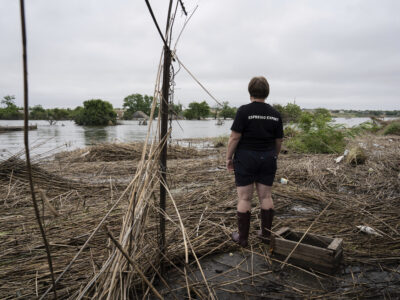
A vintage, black-and-white photo of a man walking into a building with a large "MARRIAGES AND DIVORCES" sign. He's wearing a long sleeved white button-down, high-waisted pants, and a cowboy hat. You can't see his face. On the site, there's a sandwich board sign that says "park here for information," next to an old-fashioned car.

America Needs a Democracy, Not a Divorce

WP_Post Object
(
    [ID] => 5760
    [post_author] => 15
    [post_date] => 2023-04-06 06:27:58
    [post_date_gmt] => 2023-04-06 06:27:58
    [post_content] => 

Attacks against LGBTQ rights—largely targeting trans people—have been ramping up. It isn't hard to imagine what will happen next.

Since the Supreme Court’s decision in Obergefell v. Hodges legalized same-sex marriage nationwide in 2015, we have been living through an era of fierce fascist backlash against progressive politics and “wokeness” in general—much of it targeted against the LGBTQ community. With each passing year, Republican theocrats have pushed the envelope in state legislatures, paving the way for the eventual passage of severe restrictions on LGBTQ rights. Across the board, these attacks have disproportionately affected transgender people.

In this era of defunding and banning gender-affirming healthcare—and, most recently, a ban on drag in the state of Tennessee that will likely lead to police harassment of anyone deemed gender-nonconforming, if it survives its legal challenges—the bathroom bills of yesteryear seem almost quaint. The Right’s onslaught has progressed incrementally but quickly, with the state bans on trans girls participating in school sports that began to pass in 2020 effectively serving as “gateway” bills to make today’s terrifying state-level, anti-queer crackdown possible. And now, congressional Republicans are threatening to take state persecution of the LGBTQ community nationwide once more: H.R. 734, the first national anti-trans sports bill to advance in Congress beyond committee, is currently awaiting a floor vote in the House of Representatives. This bill comes just days after the House passed a new “parental rights” bill, more accurately described as a “don’t say gay” bill: legislation that would force schools to out queer children to their parents in order to receive federal funding, among other repressive measures.

Neither of these bills will pass the narrowly Democratic-controlled Senate, of course. But should Republicans regain both houses of Congress and the presidency in 2024, national bills attacking queer schoolchildren (and the parents who support them), gender-affirming healthcare for both minors and adults, and public expressions of gender-nonconformity are very likely to become federal law. With the precedent set by the recent overturning of Roe v. Wade as a key turning point, the Roberts Court will already have established the “constitutionality” of allowing such cruel, draconian laws. And they will be passed, of course, in the name of “protecting children,” even though queer children will be severely harmed by these policies—forced to remain closeted or subjected to outing and conversion “therapy,” and, in far too many cases, driven to suicide as a result.

Using children as pawns to push a radical Christian agenda is nothing new. To make their enemies seem truly monstrous, authoritarians need innocent “victims” to “rescue.” This is where “the children” come in, so long as the children are never permitted to speak for themselves. We’ve seen this playbook before. The Christian boys supposedly subjected to ritual murder by Jews, according to the medieval European blood libel. The fertilized eggs that anti-abortion extremists insist to us are “persons” whose “murders” must be prevented and/or punished. And now, the all-American schoolchildren who might observe happy, thriving queer adults, or read about queer people in school libraries, or hear a female teacher talk about her wife, and thus “decide” to be queer against the wishes of their good Christian parents.

Of course, if proponents of anti-trans legislation actually cared about children, they would rally behind, for example, sensible regulations to make sure that homeschooling isn’t being used by parents to abuse, neglect, or indoctrinate their children. They would support initiatives like those in the state of California that provide wellness centers in public schools, where any student can get mental health help and queer children can get safe and confidential guidance without fear of being outed to parents that it may not be safe to come out to. Instead, the people concerned with “saving kids” from “transgenderism” promote the opposite—including unregulated homeschooling and Christian schooling where possible, and attempting to control public schools where it’s not.

As John Stoehr of The Editorial Board aptly put it, “The rights of children—the right to grow, develop and change—is conspicuous for its absence in the debate over anti-trans laws, book bans and other oppressive forms of government control.” In the United States, children’s rights at the federal level are almost nonexistent. We are the only United Nations member state not to have ratified the UN Convention on the Rights of the Child. And if patriarchal, anti-pluralist, authoritarian Christians who treat their children like chattel want to keep things this way—and they do—fomenting a conspiratorial politics of moral panic is an effective means of doing so.

In recent years, a number of commentators have convincingly argued that the QAnon conspiracy theory is of a piece with the Satanic Panic of the 1980s and 1990s—essentially the resurgence of an American impulse toward Christian-inflected moral panic. Then as now, conspiracy theorists have conjured up a phantasmagoric enemy, projecting their fears, anxieties, and grievances both personal and social onto a monstrous “other” in the name of protecting “children” from cabals of ritual child abusers who happen to be populated by the out-groups conservative Christians most despise: “heretics” and nonbelievers, liberals and progressives (including progressive Christians), Jewish-coded “elites,” and members of the LGBTQ community.

Again, this is nothing new. In 1977, Anita Bryant named her Miami, Florida-based organization that fought, successfully, for anti-gay discrimination “Save Our Children.” Similarly, in the original Satanic Panic, the panicking populace in question rallied around “believing the children.” The irony is that the adults involved did not, in fact, believe the children—the supposed victims of the supposed satanic ritual abuse, of which no physical evidence has ever emerged. It was only under prompting from their paranoid parents, wildly irresponsible mental health practitioners pushing “recovered memory” therapy, and police and prosecutors at the height of the “tough on crime” era that the children were “believed” at all—after they at last broke down and told the adults what they wanted to hear, by regurgitating those adults’ absurd dark fantasies back to them. In recent years, some of these children, now able to speak for themselves as adults, have explained the ways in which they were manipulated into lying. Some have even gone to court to formally recant their childhood testimony in an effort to exonerate innocent people who were falsely convicted. Not coincidentally, many of those innocent people who were unjustly locked up for years as a result of the Satanic Panic were also queer.

This historical context has been on my mind as I consider the American Christian Right’s current moral panic, in which fixations on Hollywood, the Democratic Party, and the “deep state” coincide with the rebooting of baseless 1970s and 80s era conspiracy-mongering about queer people as supposed “groomers” and “pedos.” In fact, most child molesters identify as heterosexual. But as the website of the Zero Abuse Project, a nonprofit dedicated to preventing sexual abuse, puts it, “Abuse is about power and control and is not anchored by sexual orientation.”

Never mind the fact that 93% of child sex abusers are known to their victims, and 34% of child sex abuse victims are abused by members of their own families. Statistically, attending church on a regular basis is far more dangerous for children than attending an occasional family-friendly drag show in the company of their parents. Yet only the latter are regularly targeted by raving mobs of angry, mostly white, mostly male Christian fascists, carrying the Christian flag and shouting things like, “The fist of Christ will come down on you very soon!”

Abusers and authoritarians can’t handle ego threats, so instead of self-reflection on the real threats of violence within their own communities, they scapegoat members of vulnerable groups, casting them as “demonic” and connected to powerful, “evil” forces, thus allowing them to paint themselves as victims rather than victimizers. Rather than grapple with the ways in which their patriarchal ideology directly fosters abuse against women, children, and queer folks, they push actively harmful policies that purport to “help” them. Such are the contours of majoritarian grievance-mongering—and it’s the out-groups and the children the fascists claim to be so concerned about who suffer as a result.

Like other kinds of abuse, today’s right-wing American moral panic is about power and control—the power and control of the aggrieved, privileged population who fear they are losing their “right” to put the rest of us in our place. So far, the current moral panic isn’t generating an epidemic of false convictions for “indecency” or sexual misconduct involving minors, as happened during the Satanic Panic. But if we let them get away with it, today’s American fascists will simply criminalize queer existence, and then, you can be sure, the arrests will start in force.

Tennessee’s new drag ban, which would have gone into effect on April 1 before it was temporarily blocked by a court, stipulates that a second offense is a felony, punishable by up to six years in prison. And let’s be clear: While lower courts may still block laws like Tennessee’s from going into effect as they work their way through the court system, the illegitimately stacked, far-right Supreme Court can almost be counted on to stand on the wrong side of history. If the law does go into effect within the next year or two, how it is enforced may give us a hint of what lies in store for the rest of the nation if Republicans take full control of the federal government. We need to be aware of the stakes even as we continue to fight state-level battles, and we need to start pressuring blue states to commit not to enforce unjust laws targeting marginalized people, as dictated by an angry fascist minority who hold disproportionate power in our flawed American system. Fascists should not be allowed to frame the national discourse, and they have proven time and time again that they don’t truly care about the wellbeing of actual children, as opposed to the voiceless victims they’ve created in their heads. They only care about retaining power and control—and pitting scapegoated “demons” against objectified “children” is a means to that end.

[post_title] => Tennessee's Anti-Drag Bill Doesn't Exist in a Vacuum [post_excerpt] => Attacks against LGBTQ rights—largely targeting trans people—have been ramping up. It isn't hard to imagine what will happen next. [post_status] => publish [comment_status] => closed [ping_status] => closed [post_password] => [post_name] => anti-lgbtq-drag-policies-christian-attacks-rights-tennessee [to_ping] => [pinged] => [post_modified] => 2024-08-28 21:11:28 [post_modified_gmt] => 2024-08-28 21:11:28 [post_content_filtered] => [post_parent] => 0 [guid] => https://conversationalist.org/?p=5760 [menu_order] => 88 [post_type] => post [post_mime_type] => [comment_count] => 0 [filter] => raw )
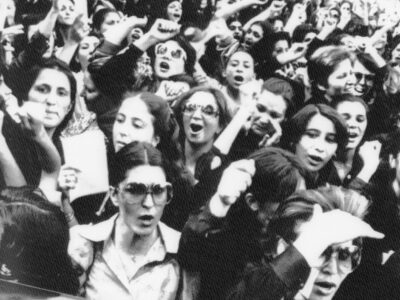
Drag queen Vanity is under a spotlight in the foreground, while most of the background is black. Her red hair is teased high in an up-do, with the front smoothed back. She's in profile, looking off to the side, and is wearing a large earring with many large gemstones. She's wearing a low cut muted green dress, with a crystal broach at the waist.

Tennessee’s Anti-Drag Bill Doesn’t Exist in a Vacuum

WP_Post Object
(
    [ID] => 5695
    [post_author] => 15
    [post_date] => 2023-03-27 17:00:00
    [post_date_gmt] => 2023-03-27 17:00:00
    [post_content] => 

Their stories, in their own words—and why you should be paying attention.

Rode Wanimbo’s aunties welcomed her back to her ancestral village in the usual way—with a song of lament. This, in her Lani tribe’s language, is known as leendawi, somewhere between singing and crying. And whenever she visits for a vacation, or when a family member passes away, her aunties greet her with it. 

On this occasion as always, Rode followed her aunties into a traditional honai, a roundhouse built with natural materials, and sat to hear their stories, told through song. Her village has witnessed an unspeakable horror. In 1977, a year before Rode was born, the Indonesian military swept into West Papua in a hostile takeover, killing swathes of villagers. Rode’s family fled to the town of Wamena, her mother pregnant with Rode and already caring for an infant son. Others were forced to flee on foot, either seeking refuge in neighboring Papua New Guinea or becoming internally displaced people (IDPs) and clutching at survival in the forest. On her last trip home, Rode’s aunties sang tales of these atrocities. They spoke of how they were raped by the Indonesian army, of witnessing loved ones die, and how others crossed the border to live as refugees. 

As Rode recounts this, her voice begins to tremble, as it does for much of the interview. The first time she heard the leendawi, she was 11 years old.

“That’s the way they express what they have been going through. I think that in our culture, that’s the only way they try to pass a message to me, through that leendawi,” she says. Women are not allowed to speak in front of men, Rode adds, making it hard for them to express their feelings. Yet across West Papua, thousands of Indigenous women are dealing with trauma after trauma after being displaced from their homes, with no outlet to speak on it.

“We thought about how to create a safe space for women, so women can talk,” Rode says.

As part of her role as the coordinator of the women’s department for the Evangelical Church of Indonesia, she’s done just that. Alongside her team, Rode has created what she calls “storytelling circles,” where women can openly share their experiences and emotions with each other. Currently, Rode runs a handful of sessions a year, taking long journeys across tricky terrains to reach different communities.

At these sessions, around 20 women come together. They start with body mapping, where each woman lies on a large sheet of paper, as her body is outlined on the page by a partner. Using this silhouette as a guide, the pair asks each other which parts are sick or need attention. Sometimes the women, forced to walk for hours each day to collect food and water, share how it impacts their bodies. Other times, the women share what they’ve survived. 

In another session, the participants use time periods as a way into their stories, the steady concept of dates and seasons opening a door to the traumas they’ve never spoken aloud. The women share their experiences, first with a partner and then the group, revealing how the military and police burned down their villages. They talk about their homes and gardens being destroyed, yet how they still long to go back. How they want to be in a place where they belong, the place of their ancestors.

Alongside these safe spaces, Rode—who has also sent joint submissions to the UN on the issue of IDPs in West Papua—is collecting an oral record of these women’s testimonies. She shared some of their stories with The Conversationalist, originally spoken in local languages and written down from memory. The stories here have been collected by Rode, and the names have been changed. 

At this time, international journalists are not allowed into West Papua.

The women of Nduga

When Yohana and her family were forced from their home in Nduga, Yohana’s husband walked with her as far as the region’s border. He parted with sobering words.

“He said, ‘If you find a man who is able to make a garden and make sure you and our children have a meal every day at the shelter, I give you permission to marry him as if I was dead, for I will go back to join the National Liberation Army to protect our homeland,’” Yohana told the storytelling circle. She has been living in an IDP center in Wamena for around four years, and has survived by gardening on land borrowed from the local community.

Yohana was forced to flee her home after an incident that displaced hundreds of people in her community. It occurred in 2018, during a celebration of what many Indigenous Papuans consider their independence day: when their elders declared their freedom from Dutch Colonial rule on December 1, 1961, before Indonesia took over in 1969. According to Rode, as members of the West Papua National Liberation Army (a rebel civilian organization) celebrated this day in Nduga, some construction workers took a photograph. The liberation army believed the workers to be police informants, and violence broke out. Some of the workers—reportedly up to 31—were killed. According to those displaced, army and police raids followed in retaliation: They burned down houses, churches, and schools, and dropped explosives from helicopters.

A close-up photograph of hands holding recovered ammunition from an aerial attack in West Papua, including what appear to be large brass-colored shells and a larger canister. The only thing in focus are the hands and the weaponry, but you can see the person holding the shells is wearing a dark gray-green jacket.
An eyewitness to an aerial attack in West Papua shares recovered ordnance. (Photographer anonymous by request.)

Life before the conflict, according to some of Rode’s friends, was peaceful and centered around community, family, and gardening. Now, this particular community in Wamena is host to around 200 women and children displaced from Nduga. There are eight other such communities in the region. Most of the men have either gone to the jungle to join armed rebel groups or have stayed behind to look after their villages, leaving them behind. There is no clean water nearby, no electricity, no hospital access, and no school. When babies are born, it is often in the IDP centers themselves.

“Some [women] spend sleepless nights because they don’t know the situation of their children,” Rode says, many of whom were separated from their mothers during the military attacks. There is no internet connection to trace them. 

Displaced in Ilaga

At around 7 a.m. one morning, Irene and her husband were in front of a village office in Ilaga when she heard the fatal gunshot. She didn’t see who had fired it—only that it had come from the direction of the trees, and that it had killed her husband. She did not cry.

“My children are living with trauma as I did, but I pretend to be strong in front of them,” she told Rode. The violence has only continued: One night during her stay in Ilaga, Rode heard gunfire at the Indigenous settlement. She claims the source was the Indonesian security forces. She lay awake all night, thinking of her own two children.

The day-to-day life for these women is no easier. For many of the women in Ilaga, hours every day are spent walking to gardens and rivers, hours away, just to collect sweet potatoes and clean water. Along the way, soldiers stop them at regular army posts, where they have to report on the purpose of their travel. According to Rode, the reason for these checkpoints comes down to the army being suspicious of the IDPs—they believe they might be providing information and food to armed separatist groups. The women told Rode that they know it is dangerous to travel these distances, but that they have no choice. To stay still is to starve.

Beyond tensions around independence movements, there is another driver of conflict in the region. The island of New Guinea is home to the world’s third largest area of rainforest, and its natural resources are highly sought after. Indigenous communities, the guardians of this environment, have been further displaced from their homes as companies seek gold, minerals, or space for palm oil monocultures. Freeport’s Grasberg Mine—one of the world’s largest gold mines—has been the most famous example. But there have also been plans to build a mine in the gold-filled mountains of the Wabu Block, which have been met with huge concern from groups like Amnesty International. 

In Ilaga, one mother told Rode, with anger in her eyes, “If the Indonesians want to have our gold from our mountains, they could just take it. Why did they treat us like animals? They came into our homes without permission and uprooted us from our ancestral land.”

For Indigenous communities, Rode explains, this removal feels especially painful, because of their spiritual and cultural connection with the mountains, rivers, and land. To remove the people is to destroy their identity.

“We view mountains as our mother who nurtured the plants, which become food for the animals, and we get the milk from the animals,” she says. “When our mountains are being exploited, it’s like a rape to our mother. We have to protect our mother.”

An aerial shot of a forest in West Papua. There are trees of different heights and varieties, and no notable gaps in the canopy; it's lush and dark green.
A view of the Papuan highlands near Kiwi. (Photographer anonymous by request.)

The root of West Papua’s problems

West Papua’s problems go back to 1898, when it was colonized by The Netherlands, along with the other islands that now form Indonesia. When the country became independent in 1949, however, it was without West Papua, which stayed in the control of the Dutch. Instead, West Papua prepared for its own independence throughout the 1950s, and by 1961, that moment had arrived: A congress of people declared independence and raised their new Morning Star flag for the first time in what is now called Jayapura. The Indonesian government, however, was not happy with this arrangement, and soon invaded. In a bid to end the conflict between Indonesia, the Netherlands, and Indigenous Papuans, the US government encouraged the Dutch to hand control of West Papua to Indonesia. The New York Agreement gave control of West Papua to first the United Nations, and then, by 1963, to Indonesia, which became the temporary administrator of the country, with the stipulation that West Papuans would have the right to self determination.

But a promised independence referendum in 1969, as part of the transition after the end of Dutch rule, was not a democratic event. Instead, 1,000 people were given a vote by the Indonesian army, and told to make a very specific choice under threat of being shot. Yet this vote was still approved by the UN—cementing West Papua’s place under Indonesian rule.

“The Papuans were just outside the room, while the rest of the world decided their future,” says Naomi Sosa, founder of Papua Partners, an organization that supports training and global links in the country. “The root goes down to the political contestation. They were supposed to have a vote for self determination, but it was controlled by Indonesia.”

Eventually, in 2000, West Papua was given special autonomy, with their own government looking after their affairs, but without independence. In reality, Naomi says this special autonomy wasn’t implemented properly, with all the powers being taken back to Jakarta. Today, there is a movement demanding self determination, where West Papuans could determine their own future through a referendum. But in stark contrast to this desire, the Indonesian government is focusing on the decentralization of provinces. Under Indonesian president Joko Widodo, known as Jokowi, things have become more difficult for West Papuans, with UN experts saying that since violence escalated in 2018, there are now 100,000 displaced people and humanitarian aid is being blocked. Naomi says Indigenous communities, particularly those in the highlands, are under severe threat. Any form of protest is met with brutal force. Now, the government wants to make further divisions, which Naomi says makes it harder for the 250 tribes to unite and weakens the independence movement. 

More districts also means more military posts—which makes many IDPs uneasy. Rode says when displaced women in particular are encouraged to go back home, they feel they have no guarantees of their safety because of the increased military presence.

“Please tell them to leave our homeland so we can go back home,” they tell her.

Still, Rode has not given up hope, and neither have the thousands of people displaced throughout the country, whether they are part of independence movements or staying strong to keep their families alive in IDP camps. As the final call with her ends, Rode makes a plea: West Papuans need solidarity from the international community. They are experiencing settler colonialism, and it cannot be separated from global politics. Papuans do not want to be forgotten.

“We are powerless,” Rode says. “We really need help.”

[post_title] => The Forgotten Women of West Papua [post_excerpt] => Their stories, in their own words—and why you should be paying attention. [post_status] => publish [comment_status] => closed [ping_status] => closed [post_password] => [post_name] => west-papua-indigenous-women-idps-crisis-indonesia [to_ping] => [pinged] => [post_modified] => 2024-08-28 21:15:11 [post_modified_gmt] => 2024-08-28 21:15:11 [post_content_filtered] => [post_parent] => 0 [guid] => https://conversationalist.org/?p=5695 [menu_order] => 89 [post_type] => post [post_mime_type] => [comment_count] => 0 [filter] => raw )

A mother sits cross-legged inside of a dark wooden structure, looking at a pot on a fire. She is holding a young child, who is grasping her necklace and putting it in their mouth. The woman is wearing a dark blue and black knit cap, a long-sleeved gray shirt, and a red skirt patterned with large leaves. The child is wearing a lighter blue knit hat and a white garment. There are chalk drawings on the wooden walls behind them.

The Forgotten Women of West Papua

WP_Post Object
(
    [ID] => 5633
    [post_author] => 15
    [post_date] => 2023-03-03 12:01:00
    [post_date_gmt] => 2023-03-03 12:01:00
    [post_content] => 

Last year, all eyes were on the Kurdish exile turned Swedish MP. Now that she's left parliament, here's what she plans to do with the attention.

Amineh Kakabaveh is stumbling over her words as she lists the things representatives of the regime in Iran and their families can still do, despite local authorities’ brutal crackdown on the nationwide protests for democracy that started in September. “They can still put their money in foreign banks, their children can still study abroad, they can still travel,” she says. Sure, she is glad that Iran was thrown out of the UN Committee for Women’s Rights last December. But, Kakabaveh says, it’s far from enough—and it won’t be, as long as they remain a connected member of the international community.

What adds a painful layer to her anger is the fact that she hasn’t seen her own family in Iran in years, and can’t even freely talk on the phone with them out of fear of retaliation by the regime. “Can you imagine I haven’t seen my father for 23 years?,” she says. “My mom told me on the phone she feels for the mothers. That’s all she can say without getting in trouble.”

Kakabaveh, 48, is a Kurdish-Swedish woman who was only 13 years old when she ran away from suppression and threats by Iran’s then still fairly new Islamic regime to join the armed Kurdish opposition group, the Komala Party. After six years in the mountains of Kurdistan in both Iran and Iraq, she crossed the border into Turkey at 19. From there, she was re-settled to Sweden, where she started getting a formal education for the first time in her life. She made it to university, studying both sociology and philosophy, before entering the Swedish parliament for the Green Party at the age of 35. 

Through it all, her resistance against the regime has never faded. But while she has always been rather well-known in Sweden for her political work, the outside world only got to know her last year, when she was suddenly in the eye of a geopolitical storm. Sweden had applied for NATO membership to protect itself against Russian threat after the invasion of Ukraine, but met objections from NATO member Turkey, which wouldn’t give permission for Sweden’s acceptance if it kept supporting Kurdish “terrorists.” They even have one in their parliament, Turkey’s president Recep Tayyip Erdoğan fulminated, referring to Kakabaveh.

She had irritated him, to say the least. After years as an MP for the Green Party, she had become an independent MP in 2019, and as such had power to make or break any government plans: Her one vote defined whether it would get a majority or not. She used that power to force the Swedish government to express its support for the Kurds in Syria, who have been building an autonomous region in the country’s northeast since 2012. There have even been pictures of Swedish officials with what Turkey considers “terrorists” as a result of her work, not to mention the Swedish government’s decision to stop selling arms to Turkey because of the country’s invasion into Syria in 2019. (The embargo has since been lifted.) In retaliation, Erdoğan pledged that Sweden would never become a NATO member until it stopped this support.

The power play between states continues. And while the attention has shifted away from Kakabaveh, who is no longer a member of parliament since the elections in September last year, her attention hasn’t shifted away from politics. Today, she travels throughout Europe, speaking in parliaments from Belgium and Spain to Greece and France, drawing attention to the plight of the Iranian people in general, and that of the Kurds specifically.

Kakabaveh grew up in Seqiz, a town in Kurdistan in northwest Iran—the same town Jina Mahsa Amini was from, the girl who was murdered by Iran’s “morality police” for not properly wearing her hijab when she visited the country’s capital city of Tehran last September, sparking protests around the world. Kakabaveh’s family was so poor that having any kind of childhood was impossible for her. In her memoir, “No bigger than a Kalashnikov”: A Peshmerga in Parliament, she shared how she started working at age six to contribute to the family income. She spun wool, she wove and embroidered, and she did seasonal work in fields and orchards, for which she was paid in fruit and beans. Then, on the radio, a very young Kakabaveh heard about the armed communist opposition group, Komala—and decided that one day, she would join. “An uncle of mine had joined them when I was very small,” she says. “I dreamed about that. I knew that Komala had female peshmerga, too,” referring to the Kurdish fighters whose name literally means “those who face death.”

While Kurdish groups initially supported the revolution in 1979, the new government hadn’t lived up to its promises to them: Kurds didn’t get more rights, or even autonomy. A Kurdish uprising was brutally put down. Amineh was 7 years old when it happened. Soon, the regime started targeting her family after several of its members joined the resistance. Repression increased. “In some media I have been described as a child soldier,” Kakabaveh says, “because I joined the peshmerga when I was 13. But that term doesn’t do justice to reality and to our traumas. The regime abused me, they wanted to lock me up and rape me, they tortured and humiliated my father. They suppress Kurdish culture and rob us of our dignity.” Kakabaveh adds that, while formally, members must be 18 to join Komala, she felt the group “tried to create a place that was as safe as possible for their young members.”

Initially, Komala was based inside Iranian borders, but when that became too dangerous, it retreated to Kurdistan in Iraq. The group is still based there. Although the current demonstrations in Iran are not organized by Komala or other Iranian-Kurdish groups, they are still targeted by the mullahs: Since the protests started in September, their camps and villages have been shelled several times, leading to dozens of deaths, including civilians. 

Kakabaveh’s life as a 13-year old peshmerga in the mountains of Kurdistan seems to be light years away from her life as an academically educated former MP in Sweden. But she says her experiences as a young girl in Iran and later as a Komala guerrilla fighter define what she fights for now as a politician and activist. “My mother was forced to marry my father, and that was the same for all the girls,” she says. “All Kurds are suppressed by the regime, but women are also suppressed by the patriarchy. Especially when the Swedish minority government needed my support to govern, I have been able to do a lot to put the Kurdish struggle and the women’s resistance on the international agenda.”

She isn’t sad, she says, that she no longer has a place in the country’s most important meeting hall. In her many years of parliamentary work, she built an enormous international network, which she uses now to draw attention to the situation in Iran from across the world. 

In direct contact with her family, though, she still must be extremely careful. “I have talked to my mother only twice since the protests started, very shortly via the phone of one of her neighbors,” she says. “That she said that she is sorry for the mothers tells me a lot. The regime takes children away, takes them to prison, rapes them, tortures them, and sentences them to death.”

What angers her is that the international community doesn’t act decisively enough against the regime in Tehran. That is her most important message now: If she could stand up to it at 13, if people everywhere in Iran continue to pour into the streets in protest despite the suppression, the torture, and the death penalty—why aren’t they getting more support? Canada and Australia have issued sanctions, but that’s about it, she says. “Freeze their money, stop giving visas to them and their families, make them pariahs.”

The protests have been going on for almost six months now. Initially, international media reported on them extensively, but that has been fading away. Are the demonstrations fading away, too? “Not at all,” Kakabaveh says in a fierce voice. She mentions Kurdistan as one of the centers of the demonstrations in the northwest, but another region, Baluchistan, in the southeast, too. “Every Friday after prayers thousands of people protest in Zahedan, the biggest city in Baluchistan,” she says. “Also in Kurdistan the protests are ongoing. Kurdistan and Balochistan are the light and the eyes of Iran. But the militarization is intensifying. There are more Pasdaran [Revolutionary Guards] outside schools than students.”

Describing these two communities, the Kurds and the Baluchs, as “the light and the eyes” of Iran explains the depth of the current wave of demonstrations. According to reports by human rights organizations like Amnesty International and Human Rights Watch, it’s the minority groups who suffer the most, and in multiple ways. Both Kurds and Baluchs are not only ethnic minorities, but also predominantly Sunni Muslim, while the regime is Shia. All Iranians suffer under the dictatorship, but communities who don’t fit the default identity of Persian Shia Muslim suffer more. It was not a coincidence that the protests started with the death of a Kurdish girl, whose funeral marked the first big outpouring of grief and anger over the regime’s brutality. That’s why it’s important to name her as Jina Mahsa Amini: Jina is her Kurdish name, which only her family used, because Kurdish names are not officially accepted. It is written on her gravestone.

This dynamic was one of the topics addressed during a recent panel in the Flemish parliament, in which Kakabaveh spoke alongside two other Iranian women in exile. Kakabaveh stressed that ethnic and religious minorities would still be suppressed if the current regime was to be replaced by a secular but still nationalist one. After all, the current regime is not the first to suppress Kurds, a group that resisted the previous regime, as well. “You know, I am 48 years old and in my lifetime I have never seen democracy in Iran,” she said. “So what can we expect? For example, one of the things the women are protesting against, is the forced wearing of the hijab, but do they know the fundamental freedoms underlying this demand? That remains to be seen.”

But in her speech, Kakabaveh drew hope from her past experiences as well. She reflected on her discussions with her male comrades when she was still a peshmerga in the mountains, and how they treated her differently without realizing it. “They accepted women as peshmerga fighters, but their mentality was still male-focused and the leading positions were taken by men,” she said. “I criticized them for it. They said they supported women’s rights but had to learn. And they have learned a lot since.”

Now that what she calls a “revolution” has broken out in Iran, Kakabaveh says she is actually glad that she is no longer an MP. As an activist with a network, with a story to tell and a vision to share, she has all the freedom to travel and speak however she pleases, reaching both loyal and new audiences. In the coming months, she’ll be returning to Greece, as well as France and Germany. And while to the outside world, it may seem as if the protests don’t really have leadership, Kakabaveh believes otherwise. “The people themselves, the women who are fighting for their rights so bravely, are the leaders of this revolution,” she says. She is just hoping to help serve them. 

[post_title] => What Will Amineh Kakabaveh Do Next? [post_excerpt] => Last year, all eyes were on the Kurdish exile turned Swedish MP. Now that she's left parliament, here's what she plans to do with the attention. [post_status] => publish [comment_status] => closed [ping_status] => closed [post_password] => [post_name] => amineh-kakabaveh-profile-kurdistan-iran-sweden-government [to_ping] => [pinged] => [post_modified] => 2024-08-28 21:11:28 [post_modified_gmt] => 2024-08-28 21:11:28 [post_content_filtered] => [post_parent] => 0 [guid] => https://conversationalist.org/?p=5633 [menu_order] => 91 [post_type] => post [post_mime_type] => [comment_count] => 0 [filter] => raw )
Photograph of Kurdish exile and former Swedish Parliament member Amineh Kakabaveh, a woman in her early 50s with black wavy hair below her shoulders. She's wearing red lipstick and pearl earrings, and a colorful dress with a pattern of various fruits and flowers. She is looking off to the right.

What Will Amineh Kakabaveh Do Next?

WP_Post Object
(
    [ID] => 5576
    [post_author] => 15
    [post_date] => 2023-02-10 14:30:00
    [post_date_gmt] => 2023-02-10 14:30:00
    [post_content] => 

And why do so many people support them?

Listen to this article on The Conversationalist Podcast. | 17:50 min

On January 4, in Enoch, Utah, 42-year-old Michael Haight shot and killed his wife, five children, and mother-in-law, before turning the gun on himself, a form of murder-suicide known as "family annihilation." Tausha Haight, his wife of twenty years, had filed for divorce a couple weeks prior. Abusers always lose it when you leave. 

It's since been reported, first by the Associated Press, that Haight was investigated in 2020 for potential child abuse after someone outside the family reported it to the police. Utah's child protective services got involved. At the time, Haight’s eldest daughter Macie said the abuse had begun years earlier, in 2017. She described a time her father grabbed her by the shoulders and threw her into furniture, along with another incident in which he had strangled her. She said she’d been afraid that he would kill her. Michael blamed the then-14-year-old for his violence, saying she was "mouthy." During the same police investigation, Macie also said that her father regularly belittled her mother, and Michael admitted to surveilling his wife’s communications. No charges were filed.

Nearly three years later, Michael’s obituary in the local paper would read that he "made it a point to spend quality time with each and every one of his children," and that they were a "cherished miracle." One commenter spoke of his “Christlike love and service.” Neither the obituary nor the commenters mentioned the murders, and it was only taken down after Shannon Watts, gun reform advocate and founder of Moms Demand, tweeted it out.

Haight’s story isn’t so uncommon. In the United States alone, a man has annihilated his family every 3.5 weeks for the last two decades, a likely miniscule portion of the estimated family annihilations worldwide. Men who strangle their partners are ten times more likely to become men who kill them. And having a gun in the home increases the risk of murder in a domestic violence incident by 500%.

So why do we continue to treat what happened to the Haight family like an isolated tragedy—a “personal” matter—as opposed to exactly what it was: a domestic tyrant who felt entitled, by virtue of being a man, to enforce his will, crush dissent, and destroy his family as soon as they tried to flee? 

When a head of state insists on their natural or divine right to monitor your private communications, stalk your movements, imprison you at home, and beat or kill you for wearing certain clothes, meeting friends, or maintaining a separate bank account, we rightly call them authoritarian. We are loud in our disapproval: When Iranian women took to the streets in protest over the arrest and murder of Mahsa Amini by morality police for not properly wearing hijab, the support abroad was strong, the brutality obvious. But when it's the head of a household terrorizing you, the euphemisms (and excuses) surface: family difficulties over a private matter, better dealt with behind closed doors; it’s best not to get involved, it’s none of our business. All support evaporates, because father still knows best — and if father wants to blow everything up just because he can, who's going to stop him? 

Studies on familicide say in almost every case, the man claims his family as property, with the right to end their lives. Murder, after all, is the ultimate form of control. But the impulse to control or destroy isn't limited to physical violence: The easiest way to break people is to break what's precious to them. Look at Elon Musk, who had to lose 200 billion dollars before people finally stopped calling him a genius. Within months of his taking over Twitter, 80% of the company’s workforce had quit or been fired, especially anyone found criticizing him. In a recent New York Magazine piece about Musk's takeover, they describe how Twitter employees flocked to the company Slack during these mass layoffs, all anxiously waiting for the ax: "One person posted a meme of Thanos from Avengers: Infinity War, the supervillain who exterminates half the living beings in the universe with a snap.”

Advertisers fled Musk’s "extremely hardcore" site as he rolled out a disastrous verification process, threatened people who linked out to other social networks, reinstated Nazis, and ranted about eugenics, all while overseeing a radical uptick in harassment and slurs. With no clear plan to make Twitter profitable, and engineers rolling their eyes at his technical expertise, it's no wonder Twitter and Tesla's value has since plummeted. Not that he's taken any accountability for the losses or the lives he's upended. He's been too busy impregnating his employee, lashing out at mouthy critics, and, most recently, firing a Twitter engineer for informing him the reason his engagement was down wasn’t due to a bug—but because people weren’t as interested in him as they used to be.

Whether they're the head of a family, company, or state, everyone suffers so long as masculinity is wrapped up in an ability to dominate. Impunity and entitlement breed ignorance and nihilism. Patriarchy is ancient, authoritarian, incompatible with equality and democracy, and bad for everyone involved. And it’s as relevant to how Musk acquired and destroyed Twitter as it is to the protests in Iran as it is to what happened to the Haight family. 

Human rights also don't disappear at your doorstep. According to the UN, 47,000 women and girls were killed by their partners or other family in 2020. On average, that means one murder every 11 minutes. But freeing women and children from violence won't happen so long as it's still taboo to speak about it. We’d rightfully consider it outrageous if someone called reports of mass rapes and murders in Ukraine by Russian soldiers "airing dirty laundry.” Yet we don’t extend the same support to women abused and murdered by partners or relatives, which happens in every community, and is far more likely than “stranger danger.” (And on the rare occasion victims do get attention, they’re usually blonde, white, and already dead.)

Meanwhile, it's the same self-destructive, patriarchal entitlement that motivates domestic violence that motivates atrocities like the Russian invasion of Ukraine if I can't have you, nobody can – with the same results. Putin first became aggressive in 2014 after Ukraine turned down a trade agreement with Russia in favor of one with the European Union. (Again, it's most dangerous when you try to leave.) Absent consequences, including for past wars in Syria, Georgia, and Chechnya, Putin has continuously escalated the bloodshed, and will do anything short of giving up power to punish Ukrainians for daring to be free, including letting Russia crumble. In that sense, he's just like Michael Haight: Insult the sovereign, or threaten his control, and watch him burn the building down with everyone trapped inside. Whatever it takes to teach them a lesson. 

Our bodies don't differentiate between state-sponsored or home-bound torture. What does your killer's institutional affiliation matter when you're dead? The lines are blurred in any case, considering the number of men who abuse in private who also abuse the public. It's not a coincidence that police abuse their families at high rates, or that two-thirds of mass shootings are either an incident of domestic violence or are perpetrated by someone with a record of it. Yet time and time again, on both a personal and policy level, we treat domestic violence as a completely separate matter – anything to avoid the reality that some homes are conflict zones, too.

Even the preeminent global treaty on women’s rights, the Convention on the Elimination of Discrimination Against Women (CEDAW), does not contain the word "violence" once. In 1980, when CEDAW was passed, gender-based violence was considered outside its scope, a private matter that this public treaty wouldn't touch with a ten-foot pole. Men's rights, especially in war, were already covered as human rights, a courtesy not extended to everyone else. It wasn't until 1992 that the CEDAW Committee issued General Recommendation 19, which interpreted the treaty to include gender violence. (Full disclosure, I'm on the board of an organization, Every Woman, calling for a new global treaty to close this atrocious gap in international law.) Like the Refugee Treaty, which advocates fought tooth and nail to have courts interpret to include gender persecution as a "particular social group," half the world's population suffering the most pervasive human rights violation was considered niche.

When feminism states that the personal is political, it speaks to the ways the private sphere continues to oppress women. There can be no equality in public so long as violence at home is ignored. To be part of the public, you first need to make it outside. Patriarchy cuts across every divide, but its effects are worsened by poverty, racism, and other forms of oppression. When 72-year-old Huu Can Tran shot and killed 11 people at the Star Ballroom Dance Studio in Monterey Park, California during a Lunar New Year celebration, people speculated whether this was yet another anti-Asian hate crime, a misogynist escalation, or possibly both. No motive has been found so far, or connection to any of the victims, but the shooting sparked a discussion online about domestic violence in the Asian American community. The Asian Pacific Institute on Gender Based Violence released a statement of mourning, and a plea to make the connection between femicide and mass shootings. They estimate that between 21-55% of API women in the US have experienced intimate physical or sexual violence. 

In the United States, women of color are disproportionately affected by gender violence. The CDC reports that Black women are three times more likely than white women to be killed in a domestic dispute. More than half of Indigenous women in the US have experienced sexual or intimate partner violence. On a global scale, 1 in 3 women have experienced sexual assault or domestic violence. 

Authoritarians know that subordinating women helps them stay in power, and systematically encourage and enact patriarchal violence to keep people in line. They claim that masculinity is under threat, and loosen laws that protect women and gender nonconforming people. Reactionary autocrats worldwide are attacking women's rights as a means of entrenching their control and weakening political participation in democratic mass movements. In Russia, Putin rolled back criminal consequences for domestic violence. President Recep Tayyip Erdoğan withdrew Turkey from the Istanbul Convention, the European treaty on domestic violence. Poland keeps threatening to do the same, while Hungary never signed it in the first place. (In a move to distance itself from its neighbors, Ukraine finally ratified the Istanbul Convention last year.) Before he was voted out and supporters staged a failed coup on his behalf, Jair Bolsonaro cut 90% of funding for domestic violence prevention in Brazil. The Taliban once again won’t even let women go to school. 

Autocrats in the U.S. use the same playbook. Trump assaulting women was part of his appeal, an envied display of power, like his bragging about getting away with hypothetical murder. The party he arguably still leads is no better. America’s homegrown extremists think abortion is murder, but shooting your spouse and kids for wanting a divorce is “Christlike love.” Revoking Roe v. Wade and putting women's reproductive rights in the hands of state legislators is a human rights disaster with global ripple effects. The loss of access to abortion and reproductive healthcare radically strengthens abusers' control over women's bodies, in many cases trapping women for life with children. As if that's not bad enough, this past week the Fifth Circuit Court of Appeals struck down a federal law which removed guns from people under restraining orders from their partner or child. Even prior to the ruling, programs to surrender firearms were rarely enforced. In 2021, 127 women were murdered by a male intimate partner with a firearm in Texas, the state where the legal challenge began.

So long as authoritarian violence is acceptable, even encouraged, on the micro level within families, it will be impossible to defeat on a macro level. There is no democracy, no value for human rights, without the participation and inclusion of women and children. And that participation depends on feeling safe at home first. All life, and livelihoods, are devalued when we devalue vulnerable people. And for what? An ancient status quo built on brute strength. Marriage and the nuclear family still provide the basic unit for our tax code. We're incentivized by the government to create a private jurisdiction where men overarchingly rule. The patriarchs are not okay, and it's doubtful they ever have been. Their benevolent dictatorship kills, and it’s time to let the toxic institution go.

[post_title] => Why Do So Many Men Destroy What They Can't Control? [post_excerpt] => And why do so many people support them? [post_status] => publish [comment_status] => closed [ping_status] => closed [post_password] => [post_name] => domestic-abuse-family-annihilation-gender-violence-why-men-destroy [to_ping] => [pinged] => [post_modified] => 2026-01-15 08:43:59 [post_modified_gmt] => 2026-01-15 08:43:59 [post_content_filtered] => [post_parent] => 0 [guid] => https://conversationalist.org/?p=5576 [menu_order] => 94 [post_type] => post [post_mime_type] => [comment_count] => 0 [filter] => raw )
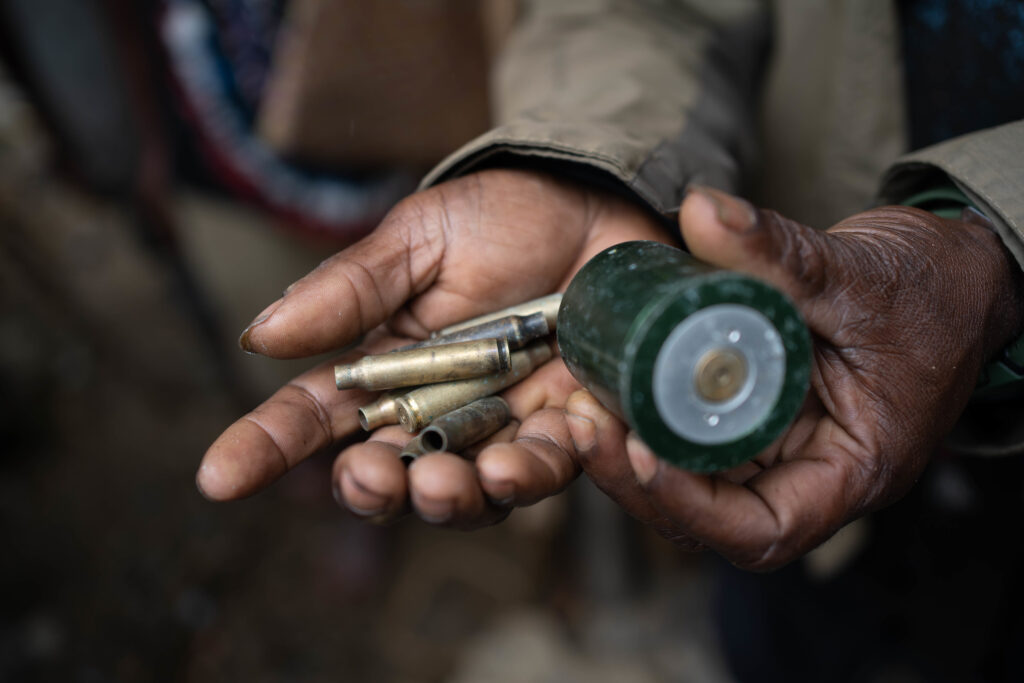
An open box of matches with dark blue tips, over a red background. On the front of the box is a photo of Elon Musk's face, outlined in Twitter blue.

Why Do So Many Men Destroy What They Can’t Control?

WP_Post Object
(
    [ID] => 5461
    [post_author] => 15
    [post_date] => 2023-01-17 08:00:00
    [post_date_gmt] => 2023-01-17 08:00:00
    [post_content] => 

Nearly seven months later, a case for why some healthcare providers in Nigeria are getting nervous.

Rose sits in the waiting room of a Planned Parenthood clinic in Isolo, Lagos, waiting to receive her prescription for oral contraceptives. While her husband supports her decision, her family does not, and she is here despite their insistence on her having more children before trying them, believing that they can take away her fertility. That she’s even able to get these contraceptives would have been unthinkable just a few years ago: Rose has never heard about Roe v. Wade, but she remembers when it was impossible to consider family planning at all, let alone have access to it, and fears returning to those times.

Before organizations like Planned Parenthood Federation Nigeria (PPFN), sexual and reproductive agency were impossible for most women in the country. “Many women who visit Planned Parenthood defy their husbands to get contraceptives, secretly making choices that save their lives despite facing consequences if they are ever found out,” says Zainab Mukhtar, Communications Officer for PPFN. "We advocate method by choice and exercising free will, not only for married women but sexual and reproductive health choices for young people." 

In Nigeria, many women cannot access reproductive health services without spousal permission, and if unmarried, they are shunned for considering it. Even health workers cite God's omniscience when refusing care: While trying to obtain birth control, one unmarried woman recalls her male doctor condescendingly telling her, "Ah, madam, do you want to test God? Where is your husband? Go and bring [him]." This provider bias, where health workers lead with disapproval when consulted for reproductive and sexual health care, has only made it harder for many women in Nigeria to access the care they need—a bias that becomes far more severe when it comes to abortion. 

This bias is likely to only get worse: Sani Mohammed, a sociologist, activist, and the executive director of the Bridge Connect Africa Initiative, says the repeal of Roe v. Wade last summer has had ripple effects beyond the U.S., and creates justification for more limits on women's rights worldwide, often detering advocacy efforts and slowing momentum behind progressive bills. “It sends a signal to anti-abortion advocates in Nigeria that if the U.S. can do it, why not us?” Mohammed says. “It will take longer for Nigeria to make abortion services open and legal because it sets a precedent and justification, rescinding all the work done today and making it harder to make a case in favor of sexual and reproductive rights.”

Sani was careful in choosing his words, so as not to risk the little progress made, adding that it took a long time to even get this far. Bridge Connect Africa Initiative focuses on women’s rights and reproductive health rights, pushing for policies and campaigns around gender-based violence, and access to education for young girls to help inspire more informed social and reproductive health choices, especially in northern Nigeria. But it’s been an uphill battle. 

Except in situations where having the child puts the mother's life at risk, Nigeria is governed by two laws that criminalize abortion: the penal code in the north and the criminal code in the south. When discussing restrictive sexual and reproductive laws in Nigeria, people often think of the north, associating it with Sharia law and terrorism, but southern Nigeria is predominantly Christian, comprising of Catholics and evangelical Christians, and their stance toward abortion and sexual reproductive rights is similar to hardliners in America. In Enugu State, in southeastern Nigeria, for example, a coalition of civil society organizations claimed that the comprehensive sexuality education (CSE) in the public school curriculum equates to pornography and demanded to stop sex education in schools.

While abortion is a crime in Nigeria, it is also a cause of shame to be pregnant out of wedlock, regardless of the circumstances of the pregnancy. In northern Nigerian culture, a girl is considered old enough to be married and have children at 11 years old, but an 11-year-old girl is not allowed to seek out family planning methods. Young girls who get pregnant from rape still have to carry it to term, and to avoid scorn and ostracism, often find unsafe means to hide their shame. Without legal recourse, these girls either neglect the children after they are born or resort to unsafe abortions, regardless of the risks. Sani recalls witnessing two cases of hysterectomies performed on 14-year-old girls. "It is already difficult to have access to safe abortion, and other reproductive health devices that help girls as young as 12 to 14 stay safe and live healthy lives." 

According to a report by the Population Reference Bureau (PRB), about two million women and girls aged 15 to 45 have abortions in Nigeria every year—a staggeringly high number over three times the estimated number of abortions in the U.S. Of these women and girls, 6,000 die, and 500,000 live with complications from unsafe abortions, despite some doctors risking their licenses to provide off-record/off-book abortion care. It is also the fourth leading cause of death for lower and middle income women, according to the Academy for Health Development (AHEAD), a not-for-profit health research agency in Nigeria.

Organizations like PPFN—which is a member of the International Planned Parenthood Federation (IPPF)—are doing their best to combat this, but similar to America, misconceptions about their services abound. Like in the U.S., the majority of Planned Parenthood Nigeria’s services are preventive, especially against HIV/AIDS, cervical cancer, and malaria. They provide maternal and child care through malaria prevention and treatments, especially intermittent preventive treatment (IPT) for pregnancy malaria, which is a critical public health problem in Nigeria. Also like in the U.S., PPFN provides post-abortion care for women and girls having spontaneous abortions or miscarriages, and those who attempt incomplete abortions using crude objects to remove an unwanted pregnancy “by any means necessary.” Sometimes these objects are found still inside the women. 

Would PPFN provide abortions in uncomplicated cases? Zainab, with a careful laugh, says they would, but that it’s “tricky.” They are damned if they do and damned if they don’t. If they don’t help, the patient could seek an unsafe abortion elsewhere that could lead to death; if they do, it could mean breaking the law. Nevertheless, PPFN will not turn away a patient in need, and will perform abortion services within legal exceptions—that is, when the birth of the child directly puts the life of the mother in mortal danger.

Perhaps if Nigerians were more open about abortion, it could inspire a legislative debate similar to the one in Ireland, and allow a platform to discuss the benefits of legalizing abortion, providing safer choices for women and girls through government funding and training for health care providers. But with the Nigerian health sector being one of the most underfunded in the world, it does not leave much hope.

While Zainab believes it is too early to say what the real effects of the overturning of Roe v. Wade will be on Africa, she predicts the heightening of fear and possibilities of regression. “It is difficult to work in this field in Nigeria; these things happening here have existed a long time but signaling from the U.S. can make things worse.” Shortly after the repeal of Roe v. Wade, the Lagos Government proposed new abortion guidelines on the safe termination of pregnancy. They were quickly rejected after the governor, Babajide Sanwo Olu, who is running for re-election, received backlash from Christian and Muslim religious organizations in the state. 

But even before the overturning of Roe v. Wade, it’s been an especially difficult time. For more than 50 years, the United States has supported global family planning and reproductive health rights in Nigeria, but when countries like America, which have historically provided aid, start taking them away in their own countries, the idea of choice for women in oppressive societies is erased forever. Most notably, the global gag rule on abortion during the Trump years reduced reproductive health funding and setback the work being done independently on sexual health rights both locally and abroad. 

There is progress, however, no matter how slow. Planned Parenthood Nigeria has a more comprehensive curriculum for sexual and reproductive health rights (SRHR) education currently being piloted in private schools, where there is less national control of the curriculum. They also train health workers on sexual and reproductive health rights and how to identify provider bias. Bridge Connect Initiative has been able to get three northern states (Kano, Jigawa, and Bauchi) to recognize the Violence Against Person Prohibition Act (VAPP) and the child protection bill. They also provide psychosocial support to child brides and survivors of gender-based violence while helping many girls complete their education.

The durability of these successes lies in the allyship of progressive nations towards women’s health abroad. This is why the rescinding of Roe v. Wade is so dangerous on a global scale. Women are dying now. Nigerian women are deprived of contraception when they want it or forced by their husbands to take it when they don’t, and even that is considered progressive. What becomes the fate of a woman living in Nigeria when the government takes a more hardline stance on her agency without a powerful ally to help? With the right support from local organizations and international health rights networks, and a renewed interest in Africa from the U.S., hopefully, we never have to find out.

[post_title] => The Overturning of Roe v. Wade Didn't Just Affect America [post_excerpt] => Nearly seven months later, a case for why some healthcare providers in Nigeria are getting nervous. [post_status] => publish [comment_status] => closed [ping_status] => closed [post_password] => [post_name] => roe-v-wade-abortion-reproductive-access-planned-parenthood-nigeria [to_ping] => [pinged] => [post_modified] => 2024-08-28 21:11:28 [post_modified_gmt] => 2024-08-28 21:11:28 [post_content_filtered] => [post_parent] => 0 [guid] => https://conversationalist.org/?p=5461 [menu_order] => 99 [post_type] => post [post_mime_type] => [comment_count] => 0 [filter] => raw )

A woman gets her blood pressure checked by an employee at the Planned Parenthood clinic in Isolo, Lagos. A child sits in her lap, curiously watching what is happening.

The Overturning of Roe v. Wade Didn’t Just Affect America