WP_Post Object
(
    [ID] => 10558
    [post_author] => 15
    [post_date] => 2026-05-15 19:59:48
    [post_date_gmt] => 2026-05-15 19:59:48
    [post_content] => 

Why intersex activists are fighting for constitutional protections in Ghana.

To get ahead of the odds against them—an unsympathetic media, a punitive legislature influenced by the American Christian right, and a public uninformed about biological diversity—the intersex movement in Ghana has had to get crafty. 

In January 2025, the Ghanaian government announced a new constitutional review process, instituted by President John Mahama shortly after he was sworn in. Its main aims were to “propose reforms to enhance transparency, limit executive power, strengthen checks and balances, and improve judicial and local government structures."

In it, however, the intersex movement saw an opportunity: All of Ghana’s constitution could be reviewed. This included Article 17, which states that all are equal before the law and no one is to be discriminated against on the basis of race, place of origin, political opinions, color, gender, occupation, religion, or creed. If the movement could propose a review of Article 17, they reasoned, perhaps they could amend it to explicitly include that no one could be discriminated against based on their sex characteristics, or if they are of indeterminate gender (intersex). 

It seemed like a solid plan. 

After several strategy meetings, legal review, and input from constitutional law experts, however, the leaders of the movement realized it would not be so straightforward. Article 17 represented an “entrenched position," meaning a long-held view that was unlikely to change. As such, not only would it be difficult to convince the public of the importance of including intersex people for protection under the constitution, socially; legally, it would also require a referendum to pass.

The intersex movement already had only a few allies among the political class, and based on their findings, they also knew a majority of the public did not understand the concept of indeterminate gender—that someone may be born male with female sex organs, for instance, and should not be discriminated against for something out of their control. Making matters worse, the media also regularly conflated sexuality with gender in bad faith: A slate of investigations by friendly NGOs had revealed some major media organizations had even received funding from anti-LGBTQIA+ rights groups. 

They changed tack. 

Instead, the movement decided to seek an intervention through Article 28, which provides for the protection of children’s rights. They proposed that the provision be updated to explicitly ensure the recognition and protection of intersex children, who, in Ghana, are currently subjected to “corrective” and “forced” surgeries and medical procedures, according to firsthand accounts reported to Intersex Ghana, the country’s first intersex-led human rights organization. 

Specifically, the group hoped to protect intersex children from “medically unnecessary, nonconsensual and irreversible procedures, intended to alter their sex characteristics.” These speculative procedures—sanctioned by doctors and parents without due consideration for the well-being of the child—can have lifelong physical, psychological, and even economic consequences, impairing the child’s ability to make a living in the future, says Lawrence Shone Edem Adjei, director of Intersex Ghana, over a video call. 

"At age 14, I have undergone more than six surgeries after non-consensual procedures were performed on me at birth. I feel like the doctors used me for studies,” intersex advocate Emmanuella Kwarteng shared in one testimonial. 

Kwarteng’s experience is not an uncommon one, and Intersex Ghana has had to intervene in a number of medical cases gone awry. In one particular case, Adjei recounts that a child had gone through up to eight surgeries over a span of ten years. Initially, their testes were removed, and the child was identified as female. Years later, doctors realized their initial procedure had caused the child to begin bleeding internally during menstruation. An additional surgery then had to be performed to remove the child’s womb. 

“It's like just trial and error," Adjei says. 

To make the case for intersex children in front of the constitutional review committee, and to prevent this from happening again, the intersex movement put together a murderer’s row of accomplices. Alongside activists like Adjei, this included two doctors, three lawyers, a High Court judge, and families with intersex children who could share their lived experiences. 

It was a particularly precarious time: The intersex rights movement was working with significantly fewer resources than it had ever had. Intersex Ghana and other NGOs had been depleted by the U.S.-led funding cuts to pro-LGBTQIA+ rights advocacy groups all over the world, and philanthropic support had dried up. 

The movement was throwing everything it had left at this case. Before the constitutional review committee, it had a few propositions. First, that the Ghanaian government provides an additional gender “I” (or intersex) on its Birth and Death registry upon discovery at birth that a child is not identified with one gender. Second, that the Ghanaian government outlaws and criminalizes forced surgeries to deter doctors from performing them, regardless of the demands of the child’s parents. Controversially, by Adjei’s own admission, “We are not in favor of the parents serving consent.” Instead, the movement proposed that the intersex individual be allowed to develop naturally. When the child is of age, they can then make an informed decision on their own bodies. 

The advocates made their case to the constitutional review panel, drawing precedent from a case in Kenya. In the 2014 case, Baby A v Attorney General, an intersex child was denied a birth certificate because their sex had been marked with a question mark, effectively barring them from participating in civic life. The court, hedging, declined to admit a human rights violation, but still ordered the state to issue the birth certificate and begin the slow work of collecting data, developing medical guidelines, and contemplating a legal framework for intersex people. As a result of the case, the Kenyan government is now mandated to collect data on intersex individuals, and consider legal reforms and protections for them more broadly. 

This landmark court case eventually resulted in an Intersex Persons Bill in 2024 which, among other things, guaranteed the “prohibition of harmful medical practices” against intersex people—including children. 

The advocates argued that Ghana should follow Kenya’s example and recognize intersex people as a distinct legal entity, allow for intersex markers in civil documentation, include intersex persons in national census and data gathering, and establish a national commission for intersex individuals. They further argued that the condition of being “intersex” is not in conflict with Ghanaian cultural values by demonstrating support from religious and traditional leaders.

After months of deliberation, which included hearing from anti-intersex and anti-LGBTQ+ groups opposed to the proposed changes, Ghana’s constitutional review committee reached a decision. They recommended to the government that the constitution be amended to “provide for the right of every child to bodily integrity, including freedom from irreversible, non-consensual medical or surgical interventions that are not strictly necessary to preserve life or prevent serious and immediate harm; that the best interests of the child shall override social, cosmetic, cultural or expediency-based justifications for invasive medical procedures; for protection for intersex children, recognising their distinctive vulnerability to medically unnecessary ‘normalising’ interventions carried out before informed consent is possible.” 

The movement was thrilled.

Their excitement, however, was short-lived. Soon after the committee submitted its recommendations, anti-intersex rhetoric started appearing in the press. On a national news show, Ghanaian legislator Nana Agyei Baffour Awuah called the proposed protections the “most crucial” part of the constitutional review, claiming the changes would “transform our constitution”—but not for the better. 

“We know that these things can be the entrance of LGBTQ,” Awuah said, repeating a common trope widespread in the media that conflates sexuality with gender.  “You want to sneak this into the constitution!” 

Awuah was not accusing anyone in particular with his statement, but turned to fellow guest Oliver Barker-Vormawor, an activist and lawyer involved in the constitutional deliberations. In response, Barker-Vormawor defended the committee’s recommendations. 

“We're saying that these are medical decisions that must be made, not parents using cultural basis to demand for surgeries to be imposed on children,” Barker-Vormawor said, reiterating their intentions. 

In reality, the intersex movement in Ghana has gone to great lengths to distance itself from the LGBTQ+ movement as a safety and security strategy. It is also one of the biggest criticisms the movement faces from its potential allies. When an anti-LGBTQ+ bill was first introduced in Ghana in July 2021, intersex advocates campaigned tirelessly for the removal of intersex persons from the law, which included recommendations for surgery and hormonal treatments to “correct” them. Later that year, Intersex Ghana sent a memo to the Ghanaian legislature’s Committee on Parliamentary Affairs, asking for the bill to be thrown out in its entirety. But overall, the movement continues to tread the line between distinction and solidarity with its LGBTQ+ allies as best it can. 

Still, some argue the two movements are ultimately inseparable because of their intersections: There are people who are intersex and trans; or intersex and gay. 

“The movement has become too medicalized,” intersex and trans activist Awo Dufie Fofie says. 

Dufie, assigned male at birth, later discovered she was intersex in her 20s, and initially went great lengths to reverse the growth of breast tissue in her body. At some point, she was taking fifteen pills a day. Upon meeting a queer elder—who had also been born a hypereffeminate male, but had socially transitioned to female in the 1950s—Awo stopped blocking estrogen in her body and instead let her body develop as it would without pharmaceutical intervention. 

The intersex movement often has to make its case through visual aids of intersex bodies, Dufie argues, and as such, she believes it has created “a system that becomes a bit puritan about who can rightfully call themselves intersex and who is intersex enough to represent the community.” When Awo decided to transition, she was even advised by a fellow advocate that if she made it public, it would make the intersex movement “look bad."

"It is my sincere hope that intersex advocacy…adopts a much more decolonial framework and approach which embodies and centers the entire experiences of intersex people, such as their everyday lives,” she says. “Not only what medical conditions we have and how much intersexphobia we experience.”

Adjei acknowledges the catch-22 the intersex movement finds itself in, and understands why it believes it has to advocate for itself by providing distinctions between sexuality and gender. But she also believes it must also be in solidarity with the queer movement because of their overlap and intersections—including continued discrimination. “Ghanaians will not differentiate between an intersex person walking by and an LGBT person,” Adjei says. An effeminate but masculine-presenting intersex person is just as likely to be attacked—as has happened in many cases across the country—as a gay man expressing himself in a way that might be considered feminine. 

“I was not seen as human growing up… because I had two genitalia,” Comfort Bugre, an intersex person, shared in a testimonial presented to the review committee. 

“Growing up, I was isolated from people due to my intersex condition. I was relocated because people found out and started calling me names,” Elorm Enne, another intersex advocate, shared in a separate testimonial. 

Currently, the hard-won constitutional review recommendation is in the implementation stage, and the Presidency has set up a committee to see how proposals may be effected. 

The intersex movement is counting on seeing three things: First, large scale research on intersex people across the country, both to shed light on the quantitative heft of these protections, and to better understand the prevalence and diversity of intersexuality. Second, mass sensitization and public education across the country’s 16 regions on the harms of corrective child surgeries, in partnership with key institutions such as the Human Rights Commission and the National Commission for Civic Education. And perhaps most importantly, the legitimacy of intersex as its own gender, and protection for all intersex people in the country. 

The movement is tempering ambition with pragmatism. Advocates are also preparing for an outcome where the recommendation is struck down, or isn’t implemented, either in whole or in part. But if this comes to pass, the movement—with whatever funding it has left—plans to play its trump card. There are a number of government agencies and offices that should be involved in protecting intersex children: medical boards, the Attorney General’s office, the Ministry of Health, local government administrations. 

It plans to sue all of them. 

~

Additional Research by Nyameye Kiki Akumia.

[post_title] => "I Was Not Seen as Human Growing Up" [post_excerpt] => Why intersex activists are fighting for constitutional protections in Ghana. [post_status] => publish [comment_status] => closed [ping_status] => closed [post_password] => [post_name] => intersex-ghana-constitution-protection-lgbtqia-childrens-rights [to_ping] => [pinged] => [post_modified] => 2026-05-15 20:00:07 [post_modified_gmt] => 2026-05-15 20:00:07 [post_content_filtered] => [post_parent] => 0 [guid] => https://conversationalist.org/?p=10558 [menu_order] => 0 [post_type] => post [post_mime_type] => [comment_count] => 0 [filter] => raw )

A photo illustration by Ricardo Tomás of Ghana's flag on a toothpick. It is covering the intersex flag (also on a toothpick), starting to rise behind it.

“I Was Not Seen as Human Growing Up”

WP_Post Object
(
    [ID] => 9104
    [post_author] => 15
    [post_date] => 2025-11-18 21:59:25
    [post_date_gmt] => 2025-11-18 21:59:25
    [post_content] => 

I've gotten exhausted with the ways that convenience culture has shifted what we find acceptable when it comes to waste.

Soapbox is a series where people make the case for the sometimes surprising things they feel strongly about.

On the streets near my house, there are lines of tree stumps, left over from diseased elms that had to be cut down. Some people have made the most of these hollowed out stumps by planting flowers inside them, or scattering seashells around the base. Some have even used them to create elaborate shrines for their dead loved ones. Others, meanwhile, have taken a different approach, filling the hole in the center of the stumps with beer cans, cigarette ends, and banana skins, treating the stumps like organic trash cans. 

Randa l. Kachef and Michael A. Chadwick, researchers at King’s College London, have coined a term for this phenomenon: polite littering. Other examples include a person placing their litter on a wall or in a hedge, or somewhere almost near a trash can, but not quite in one. I know about this phenomenon, and this term, because I have thought a lot about the psychology of people who litter in recent years, and what, if anything, can be done to change it, both on a local and global scale.

There is a certain type of person who sees a hole and perceives it to be a trash can, where others have seen the potential for a garden. But having spent the last couple of years campaigning with my local councillors to tackle litter in my immediate area, I know that the issue isn’t unique to either my three-block radius or even my (unfortunately pretty filthy) country. Human beings and the things they dump are having a devastating impact on the planet. Where infrastructure cannot keep up with increasing numbers of people and waste, trash cans overflow. The rate at which we produce plastic, and waste more generally, means that a great deal of it will escape our hands and end up in nature or creating garbage islands. Litter and plastic waste have been found in the deepest parts of the ocean and on the tallest mountains. Litter has even been found in places humans have never been

While daunting, this doesn’t mean that the issue is out of our individual hands. On the contrary, it only makes our individual efforts all the more important. I live near the beach, and in the summer, we get a lot of tourists. Many of them are respectful and take their waste to the trash cans just a few meters away from the shore. A few, however, will litter in the most egregious way, leaving inflatable boats, bottles, and even the waste from an entire picnic rotting in the sun behind them. This summer, over 24 tons of trash was cleared from our beach over just two weekends

Of course, not everyone who litters is so flagrant. But every day, people who consider themselves to be polite, upstanding citizens will leave napkins, banana skins, or orange peels on our pebble beach, and when confronted, will use nonsense words like “biodegradable” instead of the most fitting one, “lazy.” I’ve often had to make several trips back and forth with someone else’s sandwich wrappers, drink cans, and dirty napkins while sunbathers sit and watch. I’ve even fished band-aids, croissant wrappers, and takeout packaging out of the sea from a paddleboard. 

I won’t bore you with tales of every dirty diaper I have found in a beach parking lot. But suffice to say, I have gotten pretty exhausted with the ways that convenience culture and our incessant waste seem to have shifted what we find acceptable. There is a cognitive dissonance inherent to littering, a short-sightedness wherein a person cannot think more than a few minutes into the future. Littering, and convenience culture overall, affects all of us in the longterm, and yet many people still choose the instant gratification of no longer having a Big Mac wrapper in their car over waiting to throw it away once they reach their destination. 

There are places I have visited and loved that seem to sadly be crumbling under the weight of their own litter and waste: Paris, Los Angeles, New York, London, Athens. It isn’t only major cities, either. On Crete, an island in Greece, the first thing I saw when I arrived at the airport was trash. Everywhere. That continued: at the side of the road, in the ocean, on the beaches. Some places were untouched, but only because they were in the middle of nowhere. I couldn’t believe it. Crete was, in many ways, the most beautiful place I had ever seen, and I wanted everyone else to have the reverence and respect for it that I did, so that others could enjoy it, too. But when I looked down from a sunset mountain view to the streets of the small village I was staying in, all I saw was trash. 

The consequences of throwaway culture are also rarely felt by the people who most egregiously participate in it. Beyond litter in our streets, the countries who produce the most devastating volumes of waste are often not the ones who feel its true impact. In much of the western world, our waste is shipped to other countries, creating an overwhelming crisis in places like Indonesia, Vietnam, Ghana, and Kenya—destroying the environments of countries that simply do not have the infrastructure to handle our onslaught.

I have been trying to understand why litter is so out of control and why so many people do it, and my only answer is convenience and laziness, combined with the fact that we just have so much more waste and single-use plastic than ever before. Yet an abundance of litter is as much a cultural problem as it is an environmental one: There are also major cities that manage to keep their trash under control. In Tokyo, there are very few public bins, due to the 1995 sarin gas attack. Instead, people simply carry their litter around until they find one, or even bag up their waste throughout the day and take it home. This diligence, this refusal to give up and just put down a Pocari Sweat bottle because they’d been holding it for a few minutes, was a welcome reprieve. This isn’t to say I didn’t see any litter in all of Tokyo. But overall, I believe most of us have much to learn from the city and its people.

Other countries have also made similar strides in their relationships to litter. Sweden sends just 1% of its waste to landfill, using half of its garbage to create energy. When I visited Las Canarias, in Tenerife and Lanzarote, I saw city workers out every single day cleaning trash from the side of the road. Hoping to deter foreigners from contributing more, signs begged tourists not to litter and to respect the islands’ unique volcanic environment. Tenerife even has fines of up to 3,000 euros for littering. 

I would hope that seeing people take such great pride in their home would deter even the most ardent litterbug. But maybe that’s part of the problem: I’ve never found that same pride when I come home. The answers are there, but countries like the US and UK are just not prioritizing solving the problem—or sometimes, even asking the right questions.

Litter has been found in 90% of the UK. We are a small island, but we still can’t manage to keep it clean. Our roadsides, waterways, and countrysides are filthy, particularly compared to neighbouring countries, and there is no motivation to change it at either a government or local level. It also seems like nobody really cares to. When I look at other countries and wonder why they’re cleaner, I know that no small part of it comes down to better infrastructure, organization, and funding for waste clearance and street cleaning. But a lot of it is pride, too—and with it, genuine care. 

There isn’t a straightforward answer to fixing our monumental global litter problem, particularly when we only keep creating and wasting more. But to start, we need our governments to invest in better waste management, to prioritize circularity, and to devote infrastructure and resources to tackling waste, not only on our streets, but throughout every country. We need corporations who relentlessly produce single-use crap to be held to account and restrained. 

Sadly, we can’t make someone care about something that just isn’t a priority for them, and the same is true of our governments. But beyond lobbying and campaigning and voting tactically, we can all make a small difference at home. If more of us took control of our own waste and took pride in our own small parts of the world and the ones that we visit, perhaps we might actually begin to make some difference in cleaning up our mess.

[post_title] => There's No Such Thing as Polite Littering [post_excerpt] => I've gotten exhausted with the ways that convenience culture has shifted what we find acceptable when it comes to waste. [post_status] => publish [comment_status] => closed [ping_status] => closed [post_password] => [post_name] => soapbox-littering-trash-environmental-impact-climate-change-global-warming-waste-garbage-islands-opinion [to_ping] => [pinged] => [post_modified] => 2025-11-18 21:59:36 [post_modified_gmt] => 2025-11-18 21:59:36 [post_content_filtered] => [post_parent] => 0 [guid] => https://conversationalist.org/?p=9104 [menu_order] => 6 [post_type] => post [post_mime_type] => [comment_count] => 0 [filter] => raw )
A bright, colorful illustration of a woman in a chartreuse pant suit and hiking boots, running through the forest with a hiking stick towards a body of water on the other side of a fence. Next to her is a spotted dog. She's surrounded by trees, a stag, and an old man lounging up against a hill. All around them are balanced pieces of trash: on the branches, on each person/creature, on the fence.

There’s No Such Thing as Polite Littering

WP_Post Object
(
    [ID] => 9582
    [post_author] => 15
    [post_date] => 2025-11-11 01:01:14
    [post_date_gmt] => 2025-11-11 01:01:14
    [post_content] => 

Three trans service members speak out on the military ban, and the rise of transphobia in the United States.

I met Commander Emily Shilling in April 2024 during a Lesbian Visibility Week panel celebrating LGBTQ+ women in leadership. I immediately found her both warm and intriguingly different. When I asked if she had ever flown upside down, the absurdity of posing such a question to a Navy test pilot sparked laughter, and a friendship.

After Trump’s reelection and his vow to reinstate a ban on transgender military service, my filmmaking partner Rivkah Beth Medow and I knew we had to respond. The growing anti-trans narrative wasn’t just a culture war skirmish, it was a symptom of something deeper and more dangerous: a coordinated effort to undermine democratic norms by turning vulnerable groups into political targets. We reached out to Emily, who saw our project as a way to turn a dark moment into a new mission: protecting her troops. When she shared that she’d voted for Trump in 2016 before coming out as trans, we all recognized how potent—and powerful—her story arc could be. 

We initially intended to make a short film centered on Emily’s experience, but it became clear that there was a bigger story to be told. Emily has always understood the power of storytelling, and through her leadership role and deep respect in the trans military community, she connected us with several compelling voices across all branches of service. 

Alongside Emily, we cast Navy Petty Officer Paulo Batista and Army National Guard Chief Warrant Officer Jo Ellis for a feature documentary, Fighting Forward. The film follows these three trailblazing transgender service members as they continue to navigate career threats, legal battles, and rising political hostility. And yet, despite this constant onslaught, one of our most interesting discoveries as the project has progressed is that each of our heroes remains completely committed to serving their country. Each, too, has taken a completely unique path in moving forward. 

This kind of service—steadfast, principled, and often invisible—is precisely what democracy requires to survive. But the attacks on LGBTQ+ rights, especially within government institutions like the military, are not isolated. They are part of a broader attempt to consolidate power by eroding the rights of those who don’t conform to a narrow, exclusionary vision of America. Efforts to push trans people out of public life, out of service, and out of legal recognition are not just discriminatory—they are anti-democratic. They chip away at the very idea of equal citizenship.

Equally chilling is the growing political rhetoric around using the U.S. military to "fight crime" in so-called "Democrat-run cities." Deploying the military against our own citizens, especially in diverse urban areas that overwhelmingly vote for progressive policies, is a direct threat to democratic governance. It weaponizes fear to justify the erosion of civil liberties and the silencing of dissent. This is precisely why it matters who serves in the military, who leads it, and whether or not they believe in the rights of all Americans: When the military is redirected to silence dissent at home, it stops defending democracy, and starts dismantling it.

Rivkah and I believe wholeheartedly in everyone’s right to belong. While we chafe at the military’s hierarchical system, feel appalled by their budget allocations, and are devastated by the environmental and human cost of war, if we have a military, then we want it to be representative of the country that military is fighting for. Not because of “woke ideology,” but because inclusion reflects democracy; and without it, we risk losing the very principles this country claims to defend.

The best way we know to shift culture is through telling nuanced stories amplified through impact campaigns that spark transformative conversations, policy change, and solidarity. While making this film, we’ve been surprised to find a strain of patriotism rising in us. It’s of an abolitionist and civil rights provenance, aligned with hope of what our democracy can possibly be. With the world around us on fire, both literally and figuratively, Fighting Forward has offered us a concrete way to challenge stereotypes, clarify misconceptions, and seed the culture we want for the United States.

~

Disclaimer: These interviews have been edited and condensed for length and clarity. The opinions expressed reflect the personal views of those interviewed, and do not necessarily reflect those of the U.S. Military or Department of Defense.

Navy Commander Emily "Hawking" Shilling

Photo courtesy of Emily Shilling.

Why did you first enlist?

The Navy’s motto at the time was “A Global Force for Good,” and I believed it, wholeheartedly. I believed in service, in being part of something bigger than myself. I couldn’t imagine sitting on the sidelines when I had the ability and the drive to make a difference. So I chose adventure, to stand and fight for all those who couldn’t. Maybe it was naive, or self-aggrandizing for the scrawny nerd I was, but I believed the worst sin of all is to do nothing in the face of evil.

What does it signal more broadly that trans people are now banned from joining the military?

It’s a betrayal of the very ideals the military claims to uphold. We say we’re a merit-based force, one where what matters is your capability, your integrity, your commitment. When we start disqualifying people simply because of who they are, we’ve abandoned that principle. If identity, not performance, is grounds for exclusion, where does that line stop? It's not just unjust. It's dangerous. The military must be made up of the people it swears to protect; otherwise, those that are different tend to become the unprotected.

What do you want people to know about the ban, how it’s impacting you, and what it means for the U.S.?

I want America to understand this isn’t abstract, it’s affecting real people, with real lives, families, and responsibilities. I’ve worn the uniform for over two decades. I’ve deployed in combat. I’ve led teams and flown missions that mattered. And now, people like me—qualified, capable Americans, patriots—are being told we’re not welcome, not because of performance, but because we were brave enough to say who we are. That should alarm every citizen. This ban doesn’t just hurt trans people, it undermines the strength of our military and the values we claim to defend. A country that believes in liberty and justice for all shouldn’t be in the business of telling patriots they’re not allowed to serve if they don’t match the reigning political party’s “perfect mold”.

Emily (foreground) with her wife, Amanda. Photo courtesy of Emily Shilling.

What, if anything, is giving you hope right now?

I find hope in those who refuse to accept silence as safety. People are organizing, speaking out, pushing back against the narrative that some of us are less worthy of dignity or service. Your voice matters.

I find hope in my fellow service members and veterans, who are standing together in solidarity. Many of them have seen what leadership really means, and they know it has nothing to do with gender or politics and everything to do with integrity, skill, and trust.

I find hope in how many people outside of uniform are waking up to what’s happening. They’re realizing this isn’t just about trans people, it’s about whether we will be a nation that honors its promises, and continues to fight for the dream of a more perfect union. 

And personally, I find hope in simply still being here, able to speak the truth out loud, to show up for others, and to remind people that we’ve been through dark times before and when we have organized, when we have stayed loud and connected and human, we have never lost. And, if we have the moral courage to fight, we will win this time, and every time.

What can readers do to support trans service members?

1. Raise your voice. Contact your elected officials. Let them know you oppose discrimination in the military and support open service. They do pay attention to public sentiment, and silence helps no one.

2. Challenge misinformation. Whether at your dinner table or your workplace, don’t let transphobia or fear-mongering go unchecked. Educate yourself, then share accurate, humanizing stories, especially about those who serve.

3. Support organizations doing the work. Groups like SPARTA, Modern Military Association of America (MMAA), and Minority Veterans of America (MVA) are fighting daily for the rights, recognition, and safety of LGBTQ+ service members and veterans. Donations, signal-boosting, and volunteering all help.

4. Connect and care. If you know a trans service member, reach out. Let them know you see them, support them, and appreciate their service. It’s not always about grand gestures; sometimes, the quiet affirmation that we’re not alone gets us through.

Army National Guard Chief Warrant Officer Jo Ellis

Photo courtesy of Jo Ellis.

Why did you first enlist?

I wanted to serve my country. Service is in my blood. I’m a patriot and I come from a family of military service.

What does it signal more broadly that trans people are now banned from joining the military?

It means our country will lose out on patriots like me who volunteered to sacrifice for the country. It means instead of a military based on meritocracy, it’s now a military based on political ideology. Instead of selecting the best person for the job, we are excluding an entire category of people for no justified reason. It’s pure animus. Service members were told they could serve openly and now we are being punished for coming out under a previous administration. 

What do you want people to know about the ban, how it’s impacting you, and what it means for the U.S.?

Thousands of deployable service members are being purged from the military without regard to readiness, cost, or experience. Service members are being sent home from deployments, command positions vacated without replacements, and no plan to recoup qualified personnel. We can’t shortcut a decade-plus of military experience.

Photo courtesy of Jo Ellis.

What, if anything, is giving you hope right now?

I believe in the great experiment that is the United States. We can be better. It’s not big percentages that make the difference in this country. It’s in the margins. 1%. 1% better each day. It’s the aggregation of marginal gains that lead to exponential results. Maybe that’s quixotic, maybe I’m the greater fool. I’ll wear those as a badge of honor. This country was founded by greater fools.

Navy Petty Officer 2nd Class Paulo Batista

Photo courtesy of Paulo Batista.

Why did you first enlist?

I enlisted because it was a dream since high school to serve in the military, inspired my by older brother who served for 20 years in the Air Force. Due to the "Don't Ask, Dont Tell" policy and me becoming my father's caretaker after high school, I could not join right away and had to wait until later in life. 

What does it signal more broadly that trans people are now banned from joining the military?

It means military readiness will be affected. Many transgender military service members play a vital role in all branches. We are enlisted to officers, and removing us from our jobs will leave gaps in many areas, including deployments. The military will lose great leaders with experience in their areas of expertise that cannot be replaced easily. 

What do you want people to know about the ban, how it’s impacting you, and what it means for the U.S.?

That being transgender in the military does not affect military readiness. We meet the requirements and standards implemented to service our country. However, more importantly, transgender service members have been serving for decades in the military, making our military more effective.

Unfortunately, per the new policy, thousands of effective service members, including non-transgender members, will be affected. It's a domino effect when the gap is created. Pulling a transgender service member from their job means that other service members will have to cover down for that unmanned position, ultimately causing more stress on the other service members by making them work longer or go on longer deployments, thus taking service members away from their families and causing more strain on other service members and their families, declining military readiness instead of increasing it.

Furthermore, the ban causes harm to all the transgender service members due to the DD214 [Certificate of Release or Discharge from Active Duty] rating that the policy implements, giving a rating that ultimately labels transgender service members a national security threat, thus affecting our futures and ability to continue our careers, even though we all served our country with honor, courage, and true bravery.

Photo courtesy of Paulo Batista.

What, if anything, is giving you hope right now?

The one thing that gives me the greatest hope is my community and trans siblings. Seeing others standing tall and seeing the ones who tell me they get hope from seeing me stand loud and proud against the current environment instead of going quiet. 

What can readers do to support trans service members and veterans?

If allies and friends are looking to help, the best ways start with reaching out to their representatives and congressional offices. Helping influence their decisions is vital, as that is the way to make the changes we need. Otherwise, I would say be a voice for transgender service members when we cannot speak. We are a limited number of voices, and need a vast audience to spread the correct information and hopefully educate the ones who are willing to listen.

[post_title] => "I Find Hope in Simply Still Being Here" [post_excerpt] => Three trans service members speak out on the military ban, and the rise of transphobia in the United States. [post_status] => publish [comment_status] => closed [ping_status] => closed [post_password] => [post_name] => transgender-military-ban-lgbtq-trans-rights-equality-veterans-service-members-interview-emily-hawking-jo-ellis-paulo-batista [to_ping] => [pinged] => [post_modified] => 2025-11-11 05:38:38 [post_modified_gmt] => 2025-11-11 05:38:38 [post_content_filtered] => [post_parent] => 0 [guid] => https://conversationalist.org/?p=9582 [menu_order] => 0 [post_type] => post [post_mime_type] => [comment_count] => 0 [filter] => raw )

Photographs of Emily Shilling, Paulo Batista, and Jo Ellis.

“I Find Hope in Simply Still Being Here”

WP_Post Object
(
    [ID] => 8165
    [post_author] => 15
    [post_date] => 2025-04-11 22:24:36
    [post_date_gmt] => 2025-04-11 22:24:36
    [post_content] => 

The U.S. isn't the only country paying the price for his policy changes.

When Donald Trump returned to the presidency in 2025, one of his first actions was to reverse almost all of the climate commitments made by the Biden administration that preceded him. These actions included initiating a second withdrawal from the Paris Agreement—following his first withdrawal in 2017—and terminating multiple critical climate finance programs. The consequences of these decisions have already extended beyond U.S. borders, affecting vulnerable and developing nations while undermining international climate negotiations, scientific collaboration, and the urgently needed global transition to more sustainable economies.

Despite their minimal contributions to global emissions, developing countries disproportionately face the most severe climate impacts. They also depend on the countries that contribute most to emissions to pay their fair share when it comes to reducing them, of which the U.S. is one. Trump’s withdrawal of approximately $11 billion in annual U.S. climate finance, previously pledged by the Biden administration, has robbed these countries of vitally needed resources and is creating significant funding gaps for climate projects around the world, threatening regional and global climate objectives alike. 

Unsurprisingly, this will affect developing nations the most, and Small Island Developing States (SIDS) have become particularly vulnerable. Facing existential threats from sea level rise, intensifying hurricanes, and other climate-related disasters, these nations have been severely impacted by the Trump administration's withdrawal from the newly established Loss and Damage Fund, which Biden pledged $17.5 million to in 2022. Without adequate support for adaptation and recovery, island nations across the Caribbean and Pacific will be forced to confront heightened risks to critical infrastructure and economic stability; and ultimately, their very existence.

Another notable victim of Trump’s policy shift is the Just Energy Transition Partnerships (JETPs)—multibillion-dollar agreements designed under the Biden administration to assist coal-dependent developing countries in transitioning to renewable energy. Trump's administration has abruptly canceled U.S. participation in JETPs with countries including Indonesia, South Africa, and Vietnam, creating uncertainty around the future of projects vital for reducing global carbon emissions and ensuring socially equitable transitions. Beyond their environmental importance, these partnerships were also structured to prioritize job creation and community support in regions historically dependent on fossil fuels.

Trump's policies have also significantly destabilized international climate negotiations at large. The second U.S. withdrawal from the Paris Agreement has diminished diplomatic trust in the country and emboldened other nations to reconsider their own commitments to climate policy. During COP29 in 2024, the absence of U.S. leadership allowed fossil fuel-dependent nations to gain greater influence yet again, further complicating efforts to meet and strengthen global emissions reduction targets. This retreat was particularly damaging to trust among developing nations, who view it as a profound injustice that wealthy countries would abandon their commitments, despite bearing disproportionate responsibility for causing climate change in the first place.

The disengagement from climate science under the Trump administration carries equally troubling implications. Notably, U.S. scientists were absent from recent Intergovernmental Panel on Climate Change (IPCC) meetings, depriving global climate research of critical American expertise and undermining the strength and legitimacy of the meetings’ scientific assessments. The deliberate sidelining of science under Trump weakens global responses precisely when robust scientific consensus is urgently needed to drive ambitious climate action. When combined with Trump’s massive cuts to science funding and federal grants, things are likely to only get worse.

Domestically, Trump’s policies are clashing even with Republican-held states that benefited economically from the 2022 Inflation Reduction Act (IRA) passed by Biden. The IRA provided significant support for clean industries, driving growth in historically marginalized communities. As a result, states like Texas and Florida attracted billions in investment for renewable energy and green manufacturing, resulting in the creation of thousands of jobs. The reversal of these policies threatens not only climate progress but also denies the tangible economic and social benefits that the clean energy transition has delivered to these communities—and to the U.S.’s bottom line.

The administration, meanwhile, has doubled down on its aggressive expansion of oil and gas extraction on federal lands, yet another concerning development, particularly as Trump continues to dismantle the Environmental Protection Agency (EPA). By fast-tracking drilling permits and relaxing environmental review processes, these policies prioritize short-term interests in fossil fuels over long-term climate stability. The increased extraction not only undermines global emissions reduction efforts but also exposes local communities—often lower-income and minority populations—to pollution risks and environmental degradation, further exacerbating climate injustice both domestically and abroad.

However, while the U.S. has faltered on its commitment to climate action, not every country has abandoned the fight—and the U.S.’s retreat has created space for alternative leadership to take its place in global climate governance. China, France, and the broader European Union have already moved to fill the vacuum, increasingly shaping international climate policy both at COP29 and beyond. This shift presents these nations with an opportunity to advance their strategic interests while growing their global influence, demonstrating the international community's continued commitment to climate action despite U.S. disengagement.

Still, as the global community races to limit global warming, the absence of American leadership and financial support is strongly felt. Trump's climate policy decisions transcend climate concerns, representing a serious regression in social and economic justice, particularly for the world's most vulnerable populations. Developing nations, especially the most climate-vulnerable ones, bear the disproportionate burden of these policy shifts as they struggle to adapt and transition in an unstable climate landscape.

These circumstances underscore a fundamental truth: Effective climate action requires not only environmental responsibility but also a commitment to global justice, equity, and shared prosperity. The current U.S. approach only undermines these principles at a time when solidarity and collective action are most urgently needed.

[post_title] => Who Trump's Climate Denialism is Really Hurting [post_excerpt] => The U.S. isn't the only country paying the price for his policy changes. [post_status] => publish [comment_status] => closed [ping_status] => closed [post_password] => [post_name] => international-donald-trump-climate-change-denialism-policy-cop29-international-fossil-fuels-alternative-energy [to_ping] => [pinged] => [post_modified] => 2026-08-03 23:12:22 [post_modified_gmt] => 2026-08-03 23:12:22 [post_content_filtered] => [post_parent] => 0 [guid] => https://conversationalist.org/?p=8165 [menu_order] => 23 [post_type] => post [post_mime_type] => [comment_count] => 0 [filter] => raw )

US President Donald Trump speaks in the Roosevelt Room of the White House in Washington, DC, on March 3, 2025. He is wearing a red tie and pointing. In the background, out of focus, is a portrait of Roosevelt on a horse.

Who Trump’s Climate Denialism is Really Hurting

WP_Post Object
(
    [ID] => 7313
    [post_author] => 15
    [post_date] => 2024-10-22 19:07:12
    [post_date_gmt] => 2024-10-22 19:07:12
    [post_content] => 

Why you should pay attention to Massachusetts's Question 5 this election.

This article is a part of Down-Ballot, a weeklong series highlighting state measures worth watching in the 2024 United States election.

A contentious ballot question has Massachusetts wait and bar staff fearing a dramatic change in their hourly take home pay following this November. For Corri DePatra, a bartender and server since 2001, the potential industry change is maddening.

“They’re trying to pull on heartstrings,” DePatra says. “I just think it is very emotionally manipulative.”

Question 5 on the Massachusetts ballot this election year is an initiative proposed by One Fair Wage, a national nonprofit and NGO. If the measure passes in the state, it would lead to a gradual rise in the minimum wage base pay for tipped workers from its current $6.75 to $15 an hour in the next five years. Eventually, the change would also allow for a shared tip pool between the front and back of the house to be managed by restaurant owners. But many restaurant workers have come out in opposition to its passing, arguing it would likely actually decrease their take home pay. 

“We were all at city hall and I went in to listen to the hearing,” DePatra says, noting that she was particularly outraged by One Fair Wage’s closing arguments, which pointed to discrimination against women as a driving factor for the initiative. As a waitress standing with others at the hearing, DePatra felt they were invalidating her experiences as a woman working as a tipped restaurant worker, and misrepresenting the amount of hard work that goes into being a part of the restaurant industry.

DePatra works at The Kenmore, a Boston pub specializing in fresh pregame eats and draft beers, where signs to “vote no” adorn the walls in hopes of informing customers of how their restaurant workers feel. To learn more, all signs point to a website for a coalition of small and large restaurants known as the Committee to Protect Tips.

The Committee is spearheaded by two of the largest groupings of restaurant leaders in the state: Massachusetts Restaurants United (MRU), a coalition of industry leaders from various sized restaurants and cafes that began after the peak of the Covid-19 pandemic, and the Massachusetts Restaurant Association (MRA), a not-for-profit lobbyist group. Their joint mission against Question 5 has so far been endorsed by eight local mayors, the Greater Boston Chamber of Commerce, and hundreds of Massachusetts restaurant workers.

“A lot of people are going to lose their jobs if this passes,” says Ryan Lotz, president of MRU and leader at Traveler Street Hospitality. “We’re going to see secondary and incurred costs go up for the restaurant operators and owners.”

Earlier this year, an MRU poll about industry crises noted that 85% of restaurant leaders said they are one surprise expense away from having to close. According to Lotz, restaurants are going to see an increase of over $18,000 per year per employee if the initiative is fully deployed, something most simply can’t afford. Restaurants will be forced to shift to models with fewer servers but quicker service, he argues, implementing functions like QR code menus or counters. And for guests, it will also mean higher menu prices and more fees on their checks when it comes to processing service. 

“I think that people don't really understand the restaurant industry, and don't really understand how slim the margins are,” Lotz says.

These profit margins typically fall in the 0-15% range, with the bulk of restaurants falling around the 3-5% mark, according to national restaurant system Toast. Most of those restaurants are only able to stay open, Lotz argues, because of tips.

Currently, Massachusetts, like the majority of the United States, operates on a tip credit across the restaurant industry. This translates to every server or bartender making a base pay and tips filling in the rest of the minimum wage and more. Server Adam Dougherty has been in the industry for seven years and currently works at Fenway sports bar Cask ‘N Flagon. Even on a slow day, he says he already surpasses the $15 bar.

“People will probably tip less,” says Dougherty. “I’m going to be voting no.”

Advocates for the ballot question, meanwhile, argue that tipped wages need to become a thing of the past, and allege that the tip credit model is particularly harmful for women and people of color across the industry. This is because it can allow restaurants to get away with paying staff less than a livable wage without consequence, while putting the burden on customers to make up the difference. 

One Fair Wage, which is headquartered in California, champions the initiative across the country via satellite organizing heads which advocate for tipped worker payment changes state-by-state. According to Grace McGovern, one of two Massachusetts full-time state organizers working for One Fair Wage, who has been a tipped worker herself, combating misinformation has been difficult. 

“So many people are just so surprised that a subminimum wage is still in place,” says McGovern.

She adds opposition from the Committee to Protect Tips has also weaponized their research.

“Even if 90% of the 300 people that they had completed their survey answered that they want things to stay the same, there are still 124,700 tipped workers in Massachusetts—at least—without their voices heard,” McGovern says.

Massachusetts is one of six active campaign efforts targeted at raising the minimum wage this year, with other states including Rhode Island, Arizona, and Missouri. But in total, One Fair Wage has initiated 16 total targeted campaigns in states or territories, according to their website

One place where the campaign has been successful is Washington, D.C., where according to McGovern, there has been a positive increase in the earnings of workers. Lotz, on the other hand, sees it as a tragedy.

“This passed recently, and when it did, we saw approximately 6,000 jobs lost and restaurants closing,” Lotz says.

Another hotly debated aspect of the Massachusetts ballot question is the change to the shared tip pool. Currently, Massachusetts does not have comprehensive shared tips legislation. According to McGovern, the initiative would eventually allow for tip sharing with front and back of house, but it is not immediately required. Its ultimate purpose, however, is to move us away from tipping culture as a whole, and instead make a higher minimum wage the norm. 

Jay Zagorsky, professor of public policy and law at the Questrom School of Business, agrees that tips should be eliminated, but thinks Question 5 is not the answer.

“Question 5 is poorly written and poorly thought out,” he says. 

According to Zagorsky, one of the biggest indicators of Question 5’s failure comes in the form of the legislative committee’s comments in the ballot guide, which states in all capital letters that it "OUGHT NOT TO BE ENACTED BY THE LEGISLATURE AT THIS TIME."

So if Question 5 is not the answer, what is? Those voting no are not quite sure.

“Eliminating the sub-minimum wage for tipped workers on a state-by-state basis is not the right way to go,” says Zagorsky, pointing out how rising labor costs will directly lead to fewer jobs and those that remain will be “worse off.”

For Lotz, fighting the current initiative remains his first priority. He can’t quite think of anything else before that’s resolved.

“I would be more than happy to start working on that if this doesn’t pass,” Lotz says. “What keeps me awake at night is that people are going into the voting booth in November with a lack of knowledge. We need to get as many people to understand the gravity of this question before November.”

[post_title] => The Tipping Point [post_excerpt] => Why you should pay attention to Massachusetts's Question 5 this election. [post_status] => publish [comment_status] => closed [ping_status] => closed [post_password] => [post_name] => massachusetts-question-5-minimum-wage-tips-restaurant-workers-initiative-one-fair-wage-state-election-2024 [to_ping] => [pinged] => [post_modified] => 2026-08-04 16:44:26 [post_modified_gmt] => 2026-08-04 16:44:26 [post_content_filtered] => [post_parent] => 0 [guid] => https://conversationalist.org/?p=7313 [menu_order] => 41 [post_type] => post [post_mime_type] => [comment_count] => 0 [filter] => raw )
An illustration of interchanging layers of dollar bills and paper checks, getting smaller and smaller with each layer. On top are a few pieces of candy and some loose change. In the left top corner is a red, white, and blue button that reads 2024.

The Tipping Point

WP_Post Object
(
    [ID] => 7261
    [post_author] => 15
    [post_date] => 2024-10-08 21:36:40
    [post_date_gmt] => 2024-10-08 21:36:40
    [post_content] => 

Why the Abraham Accords could not bring peace to the Middle East.

In its November/December 2023 issue, the political magazine Foreign Affairs published a longform essay titled “The Sources of American Power,” which posited that the United States needs to “lay a new foundation of American strength” in the Middle East “that protects its interests and values and advances the common good.” Written shortly before the Hamas attacks of October 7, 2023 (but published after), the author argued that “although the Middle East remains beset with perennial challenges, the region is quieter than it has been for decades” thanks to the Biden administration’s responsible stewardship. This lapse of critical judgment might have been forgivable had its writer not been US National Security Advisor, Jake Sullivan.1 But he was also not the only American official who had lulled himself into false security. 

Since taking office, the Biden administration, with great fanfare, had chosen to double down on the Trump era’s diplomatic coup, the Abraham Accords, in hopes it would become the crown jewel of regional foreign policy: building a new Middle Eastern economic and security architecture between the Gulf and Israel that would successfully confront and contain their mutual regional antagonist, Iran.

The Abraham Accords’ sleight of hand was subverting the Palestinian-Israeli peacemaking paradigm in the process. Instead of normalizing relations between Israel and the rest of the Middle East in exchange for a Palestinian state, as was the guiding principle of negotiations since the 2002 Arab Peace Initiative, the 2020 Abraham Accords dropped the question of establishing a Palestinian state altogether, making instead vague allusions to peace. Its supporters didn’t seem to mind. In Abu Dhabi and other regional capitals, they believed the time was ripe to put aside “tedious” questions of protecting Palestinians or their unrealized sovereignty, and to instead focus on the much more tangible and lucrative questions of trade, defense cooperation, and intelligence-sharing, as well as upgraded strategic relationships with the United States.

In this respect, it worked. Through the Abraham Accords, the United Arab Emirates (UAE), Bahrain, Morocco, and Sudan all signed up for normalization agreements with Israel, and a flurry of diplomatic, touristic, and commercial enterprises sprung up in their wake. Israelis partied in Dubai; Bahrainis headed to Tel Aviv. Defense and intelligence sharing accelerated. All the while, the Biden administration continued to pursue Trump’s ultimate goal of bringing Saudi Arabia into the normalized fold. Pundits in the US crowed about a new era of peace.                    

Today, conditions across the region could hardly be worse. Escalations and counter-escalations in Syria, Lebanon, Iraq, Iran, and Yemen threaten to deepen the abyss of violence and suffering for civilians. A year ago, on October 7, 2023, Hamas’s attack killed over 1,300 Israelis. The attack was strategically timed, in part, to disrupt Israeli-Saudi normalization. In the months since, Israel has killed some 42,000 Palestinians. Thousands more lie dead under the rubble of what was Gaza. A hundred thousand Palestinians are wounded. Two million Gazans languish amid devastation under Israeli military occupation. The Israeli apartheid machine continues to destroy lives and cities apace in the West Bank. Palestinians confront ongoing Israeli settler violence under the full imprimatur of the Israel Defense Forces (IDF). Near 10,000 Palestinians have been imprisoned without pretense of due process. Some 2,000 civilians are already dead in Lebanon just in the last week, as Israel launched yet another invasion to fight Hezbollah. Ninety-seven Israeli hostages remain in Hamas’s custody in Gaza. The Red Sea has become a perilous commercial passage owing to Houthi attacks. And the prospect of a full-blown war between Israel and Iran grows ever more acute as Tehran executes another dramatic but fruitless missile barrage. No ceasefire is in sight on any front.

How did the Abraham Accords, heralded as a new paradigm for the Middle East, yield a total collapse of security and stability across the region? The answer lies in the deliberate effort of Israeli Prime Minister Benjamin Netanyahu and his foremost backer, the United States, to sustain Israel’s control over Palestinians in the West Bank and Gaza indefinitely. American officials—Republican or Democrat—may be loath to acknowledge this reality, but the central conceit (and consequently the failure) of the Abraham Accords lay in imagining a world where Palestinians did not exist. The status quo, which seemed quiet enough to Mr. Sullivan, was, in reality, deeply toxic. Though US policy formally sustains the fiction of a two-state solution, the Abraham Accords in effect tried to bury the question of when—or whether—Palestinians should ever be free and see an independent state come to fruition.

The desperate charm offensive led by Biden administration officials Brett McGurk and Amos Hochstein to convince Saudi Crown Prince Mohamed bin Salman to accede to the Abraham Accords, dangling offers of a defense pact among other political inducements, has failed. Even authoritarians need to keep their fingers on the pulse of public sentiment—and in Arab states, establishing diplomatic and commercial relations with Israel is deeply unpopular. Mohamed bin Salman has admitted the carnage in Gaza makes the prospect of normalization a political nonstarter in the Kingdom.

The Gulf states are now in an awkward position. On the one hand, states like Saudi Arabia and Bahrain had already been working steadily to stabilize relationships with Iran, despite overriding tensions for the past several years. At a strategic level, there’s a clear understanding that diplomatic exchanges can head off the worst types of violent confrontation. We see these ongoing efforts as Saudi Arabia and Iran attempt rapprochement: The Kingdom is unquestionably nervous about the threat on its southern border from a febrile and trigger-happy Houthi movement. On the other hand, Saudi Arabia and the UAE are equally pleased to see the destruction of groups like Hamas and Hezbollah, which they see as Islamist-Iranian proxies that pose a direct challenge to their visions of a consolidated Gulf hegemony in the Middle East. 

Reports that American officials greenlighted the Israeli escalation against Hezbollah after the two sides had agreed to a 21-day ceasefire opens the prospect of a more dangerous phase to this transnational conflict, wherein the US and Israel take this moment as an opportunity to fundamentally reshape the security architecture of the Middle East. The risk is that Israel could continue pursuing “greater strategic objectives” in responding to Iran’s missile attack on October 1, and drawing in American support for what would be a cataclysmic war of regime change in Iran.

None of this is inevitable. It’s possible that the US will be able to convince Israel to deliver a calibrated military response to Iran’s latest attack, tamping down further escalation for a brief window of time. But it feels increasingly likely that the delicate balancing act between security actors in the region that has prevailed over the last decade is about to come crashing down in the face of Israel’s unabashed impunity in both Gaza and Lebanon. This is not just because Arab states are unwilling to undo their peace agreements with Israel (Jordanian Foreign Minister Ayman Safadi underscored again last week that Arab nations stand ready to ensure Israel’s security), but because it is unlikely that Israel will ever permit the creation of a Palestinian state, and none will emerge short of an internationally-enforced partition of Israel from the Occupied Palestinian Territories.

The stark reality that Washington, Tel Aviv, Riyadh, and Abu Dhabi should grasp is that the fastest means to defanging the “Axis of Resistance” is the establishment of said Palestinian state. That state is not going to be the product of negotiations, if it ever comes. The occupation will end abruptly; there are no piecemeal negotiated solutions to apartheid. For the sake of his own political survival, Netanyahu will continue to foment chaos across the Middle East to retain power for as long as Washington allows him free rein. And in large part, the Abraham Accords are to blame. In saying the lives of Palestinians were less important than normalization, the brokers of the Abraham Accords helped embellish Israel’s fiction that it could sustain the status quo with Palestinians without friction or blowback. They were grievously wrong.

[post_title] => Biblical Failure [post_excerpt] => Why the Abraham Accords were never going to bring peace to the Middle East. [post_status] => publish [comment_status] => closed [ping_status] => closed [post_password] => [post_name] => abraham-accords-middle-east-united-states-foreign-policy-peace-israel-palestine-lebanon-uae-sudan-morocco-bahrain-saudi-arabia-war [to_ping] => [pinged] => [post_modified] => 2026-08-04 16:46:25 [post_modified_gmt] => 2026-08-04 16:46:25 [post_content_filtered] => [post_parent] => 0 [guid] => https://conversationalist.org/?p=7261 [menu_order] => 43 [post_type] => post [post_mime_type] => [comment_count] => 0 [filter] => raw )

Prime Minister of Israel Benjamin Netanyahu, U.S. President Donald Trump, Foreign Affairs Minister of Bahrain Abdullatif bin Rashid Al Zayani, and Foreign Affairs Minister of the United Arab Emirates Abdullah bin Zayed bin Sultan Al Nahyan participate in the signing ceremony of the Abraham Accords on the South Lawn of the White House September 15, 2020 in Washington, DC, USA. They stand on a balcony, waving at the photographers below. Photo by Yuri Gripas/Abaca/Sipa USA(Sipa via AP Images)

Biblical Failure

WP_Post Object
(
    [ID] => 7195
    [post_author] => 15
    [post_date] => 2024-09-10 21:16:40
    [post_date_gmt] => 2024-09-10 21:16:40
    [post_content] => 

On gentrification's canary in the coal mine, and the cultural cost when affordable cities cease to exist.

Cultural Currency is a bi-monthly romp through the intersections of art, capital, and politics with writer Cara Marsh Sheffler. 

We all know the haircut, whether or not we know it by name. Usually the sides are shaved, the dye job is fluorescent or uneven, and the bangs are unflinchingly aggressive. The haircut is also, of course, not one haircut, but rather a whole genre of haircuts. A mullet is likely. It is something like medieval monastic cosplay by way of a Superfund Site. Glimpsed across the subway platform or at the local bodega, it is a haircut that strikes horror in the heart of the renter and joy in the heart of the owner. The haircut is gentrification’s own canary in the coal mine: It signals that your rent is about to go up.

Nowhere is the haircut more dreaded than in New York City, where no rent increase, no matter how minute the percentage point, is a casual one. The median monthly rent in Manhattan is north of $4,300. The cost of living is 128% above the national average. When Jimmy McMillan founded his political party, Rent Is Too Damn High, almost 20 years ago, it was described as a single-issue platform. Today, I would argue it’s anything but. Commercial rents have become unaffordable to the point that entire blocks have been emptied of ground-floor tenants. The ascendancy of Amazon and the price of rent have colluded to drive the commercial storefront vacancy rate in New York City north of 10%

The irony of the haircut is that it both heralds the appearance of artists and their imminent extinction. It also isn’t limited to Manhattan: The length of time between the sighting of the first asymmetrical neon mullet to large-scale, luxury residential development is accelerating in cities across the country, and more locally, has all but collapsed into a single gesture in neighborhoods like Bushwick, Brooklyn and Ridgewood, Queens. In the process, it’s also begun flattening the art world—and culture at large—with it.

Of course, in the meme-able version of the gentrification story, the haircut is the mark of the villain. But it was not always so. In postwar New York City, when industries abandoned downtown areas and developers like Robert Moses threatened to raze entire neighborhoods to make way for cars instead of people (usually at the expense of racial minorities), creative classes stepped into wastelands like Soho and not only repurposed entire neighborhoods but spawned a class of creators as diverse as Eva Hesse, Jean-Michel Basquiat, Hannah Wilke, Gordon Matta-Clark, Ana Mendieta, Donald Judd, Nam June Paik, Fred Eversley, and too many others to name. 

This cohort—living among one another in constant creative conversation and competition—produced work that helped articulate a fully formed idea of American cultural expression. Today, even adjusted for inflation, none of them would have been able to afford the rent on a closet in Soho. 

When artists are priced out of any given city, the consequences resonate far beyond the neighborhood in which they can no longer afford to live. The attendant deracination makes art less tethered to real places, real communities, and real people. Art becomes less human, and derives worth from one thing only: capital. (While many question their artistic merit, NFTs are a sublime manifestation of this conflation.) In New York today, artists are barely hanging on and bled dry for studio space, while writers essentially have no value in a marketplace that has opted for AI. Musical artists are getting raw deals from streaming services and have fewer venues to play in because of soaring rent. Ditto dancers. The city faces a severe housing shortage, but no one will come forward with an honest number for overall vacancy rates, suggesting that the real estate market is falsely inflated to the detriment of all who call the city home (except landlords). Creatives who work as adjunct professors are often overworked, always underpaid, and almost never promoted to tenure-track positions. Having a family in this city on an artist’s salary is essentially fiscal suicide. 

Simply put, New York’s artistic community is in danger of no longer existing, and we’ve watched it happen in real-time. Downtown New York used to be a byword for a hotbed of American culture, the same way that Chelsea is now the byword for the most prestigious (read: expensive) gallery district in the country. But while art has thrived on patronage since time immemorial, what sort of art is produced in a city artists cannot afford to live in, and where a commercialized, gentrified simulacrum of diversity signals luxury? The answer is probably an NFT.

A healthy city should contain a diversity of artists, precisely because it also contains a diversity of people. No less an urbanist than Moses-archenemy Jane Jacobs wrote in The Death and Life of Great American Cities, “Everyone is aware that tremendous numbers of people concentrate in city downtowns and that, if they did not, there would be no downtown to amount to anything—certainly not one with much downtown diversity.” In other words, downtown areas are desirable precisely because of the diversity that is priced out by their own desirability. This is also ultimately what leads to their downfall: What is the point of living in a city stuffed with billionaires but starved of human capital? And who can even afford to, anyway?

Of course, art and money have always been intertwined. Rich people have nice things. Art is often considered one of those nice things. However, the more art is commodified—and this certainly bears itself out historically with regard to art as a status symbol or reflection of power—the less of an ability it has to be critical, independent, or introspective. You know, interesting.  Gradually, it also has less to say, until art is reduced to a price tag alone—like any other commodity, like currency itself. Art that is only for the mega-rich yields an entire culture that is much the same. Is it any surprise at all that a New Yorker profile of mega-dealer Larry Gagosian from earlier this year took pains to point out that his most lucrative investments were probably in real estate rather than in art? 

As a small-m materialist, I am well aware these questions long ago migrated from the urban grid to Instagram’s. Our insatiable need for convenience and connectivity has destroyed our physical social networks in a variety of ways—and dictated how we continually buy into our own dystopia. It’s also sped up our isolation, both from art and from each other: The commercial tools that have warped real estate values and the basics of human interaction all flourished, of course, online. The connectivity and convenience that lured us toward our screens at all hours of the day have robbed us of storefronts, tax revenue, and chance encounters in exchange. And now, the way in which consumerism has displaced our sense of belonging in communities has manifested in urban real estate in such a way as to rob us of a creative class by destroying its habitat. As the world continues to move online, artistic communities will continue to vanish, too. 

In an information economy and a literal economy that always prizes the shortest distance between two points—collateral damage be damned—artistic expression is a luxury afforded only to the idle rich. The arts will further retreat into a career path available only to those who can afford to go into them. (That is, if we aren’t basically already there, as the conversation around middle class cultural values and downward mobility seems to indicate.) All counter-culture will be co-opted, sanitized, and sold back to us by the algorithm. The resulting culture will be by the rich and for the rich only, a trend handily encapsulated by the vacuous and nauseating never-ending parade of “fashion X art” collaborations that provide little more cultural expression than a vapid launch party planned purely to be splashed across the aforementioned Instagram grid. (So long as corporations are people, I fear we are stuck with Koons’ and Kusama’s “viral Vuittons,” as their respective creators secret themselves far from any “scene” in either a mega-mansion or psychiatric hospital.)

Meanwhile, as the rich clamor for a front-row seat to this circle-jerk, rents will continue to skyrocket. The National Arts Endowment can protest that “a great nation deserves great art” until it is blue in the face, but where the fuck are the artists going to live

Again, I return to Jacobs, who also wrote in The Death and Life of Great American Cities, “Our failures with city neighborhoods are, ultimately, failures in localized self-government.” This is absolutely true: the polis of any diverse city exists in a patchwork of political microclimates. But how can self-government take hold when no one who comes up in the new generation can afford to live in the neighborhoods that most need self-governing? Those who survived the lean years as owners cash out on once-affordable homes so their children can live better lives elsewhere. New developers buy out landlords who evict renters, and suddenly, the neighborhood is gone. The gaps left behind will be filled with coffee shops selling $7 matcha lattes and pilates studios with $45 classes, and the people who can afford to buy them. 

Artists as a whole will surely still have the fire to create something, somewhere, but can already only afford to do so far from one another. The dissipation of any urban culture is its death: Downtown cannot exist as a diaspora. The point is the concentration of its energy, a sum far greater than its parts. 

In The Death and Life of Great American Cities, Jacobs also chides us: “We expect too much of new buildings, and too little of ourselves.” Culture is not a commodity that can be counted. Yet, it has the power to enfranchise and empower just as much as any vote towards affordable housing or raising taxes on the rich. To preserve it, we must look to an inclusive path forward that prioritizes not just people and their work output but also the character of their communities—communities that contain multiple dimensions of diversity and creative expression that should not have to be commodified to prove their value. No developer, no bank, no corporation will do this for us. We must organize ourselves.

[post_title] => "Where the F*ck Are the Artists Going to Live?" [post_excerpt] => On gentrification's canary in the coal mine, and the cultural cost when affordable cities cease to exist. [post_status] => publish [comment_status] => closed [ping_status] => closed [post_password] => [post_name] => artists-new-york-city-affordable-housing-gentrification-haircut-real-estate-culture-art-nft [to_ping] => [pinged] => [post_modified] => 2026-08-04 16:49:00 [post_modified_gmt] => 2026-08-04 16:49:00 [post_content_filtered] => [post_parent] => 0 [guid] => https://conversationalist.org/?p=7195 [menu_order] => 47 [post_type] => post [post_mime_type] => [comment_count] => 0 [filter] => raw )

An illustration of a yellow canary with a pink mullet sitting on a tree branch. Below, two birdwatchers are looking at the bird from below, one pointing at the bird and the other looking through binoculars. In the background, there is a construction on what appears to be a new luxury high rise building. To the left, is a row of brownstones; on the right, is another luxury high rise.

“Where the F*ck Are the Artists Going to Live?”

WP_Post Object
(
    [ID] => 6660
    [post_author] => 15
    [post_date] => 2024-02-26 17:32:37
    [post_date_gmt] => 2024-02-26 17:32:37
    [post_content] => 

Nearly three months after COP28, are we actually delivering on its promises?

The day before COP28 began in the UAE last November, a damning report was released by the Centre For Climate Reporting, confirming what many had already suspected: COP28 President Sultan Ahmed Al Jaber had taken multiple meetings with various oil-producing countries throughout the year, likely swaying his priorities for the conference ahead. While Al Jaber’s legitimacy had already been in question, this latest report put his credibility on a cliff. As such, COP28 began with damage control: The first move of Al Jaber’s presidency was to operate the Loss and Damage fund based on recommendations from the Transitional Committee, achieving its passage with unanimous support. 

It was an easy win, but not a big enough one—and just a couple months into 2024, I worry what was and wasn’t achieved at COP28 might be an arbiter for climate action in the year to come. 

Although the fund’s operation was a step in the right direction—facilitating financial resources for countries already suffering the impacts of climate change—as written, many factors could prevent it from working as intended. Most notably, the Transitional Committee’s (questionable) recommendation to name the World Bank as the operation entity, and the absence of the equity principle, would both affect the fund's ability to assist the nations most vulnerable to climate inaction. To help with this, after the failure of an agreement at SB58, COP28 agreed on the Santiago Network as the fund’s host, operationalizing technical assistance for these countries in loss and damage matters. But it’s unclear if it will be enough.

It also wouldn’t be the only agreement reached during the conference that left something to be desired. After enabling the Loss and Damage fund, the parties focused on the most pressing matter of COP28: the global stocktake decision. In Article 14, the Paris Agreement defined a period of five years for reevaluating the treaty's implementation and projecting priorities for the following period, with COP28 designated for the first assessment. This year, the most polemic aspect of this negotiation focused on the phrase “fossil fuel phase out” (FFPO), an expression embraced and proposed by the Least Developed Countries (LDC) at COP23, in hopes of more ambitious climate action. Regrettably, based on the strong opposition of various oil-producing countries, the initial presidency draft of the global stocktake did not include the phrase FFPO anywhere in the text, causing upset among those supportive of its inclusion. This latter group comprised 127 parties, including the Independent Association of Latin America and the Caribbean (AILAC), the Environmental Integrity Group (EIG), the EU, and even the US. However, despite overwhelming support, universal consensus is vital for adopting new decisions at COPs—and oil-producing countries did not give in to their demands.

Eventually, compromise was reached between the two opposing sides, and instead of using FFPO, the language was changed to include "transitioning away from fossil fuels in energy systems" and “phasing out inefficient fossil fuel subsidies,” enabling the parties to reach an agreement. Although this small move towards ending fossil fuels is valuable, the latest draft of the stocktake leaves much room for interpretation as to what those two phrases mean—its language too vague to hold many parties accountable. For example, the text only calls for transitioning away from fossil fuels when used in energy systems, thus excluding some industries, such as transportation, from being asked to the same. There has also been talk of "transition fuels," which would be very favorable to the interests of polluting actors, allowing greenwashing commitments to take the place of actually transitioning away from fossil fuels. Ultimately, all of this suggests that although the revised text of the global stocktake decision was an improvement from the first draft, it does not ensure that polluting states and companies will not continue to exploit fossil fuels: It is merely a first step towards a better horizon, but still a very fragile one.

Helping to fortify that step, it was also decided that the Just Transition program—which advocates for shifting from an extractive to a regenerative economy worldwide, and is likely to be a vital part of the next global stocktake in 2028—would go into operation "immediately after" the end of COP28. But regarding climate finance—in other words, the means by which climate action is funded—it was decided a draft decision would be written later this year, the same year in which three workshops and three work program meetings will be held. The substance of what’s to come will remain for SB60 and COP29, and is perhaps the most impactful element of the upcoming negotiations.

In the interim, there is much that must be done—with a few key factors standing in the way. Consensus is a crucial element in climate negotiations, requiring broad agreements across parties to implement the objectives of the UNFCCC. But it remains unclear how exactly “consensus” is defined at these conferences, as Article 42 of the UNFCCC’s procedural rules—which present two alternative means to reach consensus—has not yet been adopted, leaving much space for interpretation and thus, conflict. At COP16 in Cancún, for example, Bolivia interpreted consensus to mean unanimity, and tried to block the agreed decision, believing it wasn't ambitious enough. In response, the COP16 presidency insisted that "the consensus rule does not imply unanimity, much less does it imply the possibility of a delegation exercising a right to veto after years of hard work and sacrifice [of the other parties]." Without an explicit definition, the possibility that some groups or states will attempt to block other agreements remains open.

For the climate regime's success, decisions adopted by the COP must be widely supported and legitimized. Currently, multilateralism and civil society both help ensure this is possible. At COP28, when oil-producing states opposed including FFPO in the decision text, both developing and developed nations joined forces to create the language in the current draft. But they were able to achieve this compromise, in part, because of outside support. Usually, the role of civil society is especially relevant in each stage leading up to every COP. Reports, statements, and advocacy are vital for influencing state agents in pursuing, prioritizing, and incorporating climate ambition into their decisions. At COP28, the typical preambular role of civil society was extended into the very conference itself. After receiving the presidency draft of the global stocktake decision, several demonstrations were organized within the venue in an attempt to pressure delegates to make improvements to it, and to make evident the public opinion that the original presidency draft would entail a regression for climate action. I believe these last minute demonstrations were crucial for the parties who wanted more climate ambition: Without their work and effort, the final version of the decision text would likely not have even mentioned fossil fuels at all.  

Still, more consistency and clarity are needed to continue advancing climate action in the right direction, both in 2024 and beyond. The gaps in the "transitioning away" formula adopted by the parties will require immense caution moving forward. It is essential not to repeat COP26’s and COP27’s mistakes, where the former merely mentioned fossil fuels but the latter did not deliver any progress. The prospect of COP29 will not be easy, with another oil-producing host country and a former oil industry CEO as President of the Conference. All of the elements that prevented COP28 from being a fiasco are required and must be maximized in Azerbaijan. Achieving the phase out of fossil fuels depends on developing countries, especially, increasing climate action, and at COP29, developed countries should demonstrate their willingness to achieve the FFPO by committing and effectively transferring the necessary resources to these developing nations. As such, climate finance must be a priority. The fragile progress of COP28 requires a growth curve in the following COPs, setting ambitious targets and equivalent means for achieving them. Let's dream of a COP30, with the background of the Amazon in Belém do Para, actually establishing and moving towards the FFPO. 

[post_title] => The State of Climate Action in 2024 [post_excerpt] => Nearly three months after COP28, are we actually delivering on its promises? [post_status] => publish [comment_status] => closed [ping_status] => closed [post_password] => [post_name] => climate-action-2024-conference-of-the-parties-cop28-oil-ffpo [to_ping] => [pinged] => [post_modified] => 2026-08-04 17:47:18 [post_modified_gmt] => 2026-08-04 17:47:18 [post_content_filtered] => [post_parent] => 0 [guid] => https://conversationalist.org/?p=6660 [menu_order] => 63 [post_type] => post [post_mime_type] => [comment_count] => 0 [filter] => raw )
An offshore oil rig in the middle of the East China Sea. There does not appear to be land nearby in any direction.

The State of Climate Action in 2024

WP_Post Object
(
    [ID] => 6033
    [post_author] => 15
    [post_date] => 2023-09-29 08:36:00
    [post_date_gmt] => 2023-09-29 08:36:00
    [post_content] => 

And why more effective climate multilateralism is how we can fix it.

According to the latest report by the Intergovernmental Panel on Climate Change (IPCC), released last year, “It is unequivocal that human influence has warmed the atmosphere, ocean, and land.” In other words, very little has changed from what we’ve known for decades: Climate change is real, it’s largely our fault, and we still aren’t doing nearly enough to reverse it.

After meticulous review of more than 14,000 papers published in the most prestigious journals, scientists from all 195 countries have once again firmly established that the Earth’s temperature has been steadily trending upwards since the Industrial Revolution. Climate disasters are worryingly increasing, and rising summer temperatures are already reaching levels unbearable for humans, ecosystems, and wildlife. Meanwhile, violent floods and unexpected rainstorms are ravaging cities and towns around the world. There are also the less perceptible and slower-onset symptoms, which have only further aggravated the bigger climate crisis. The North Pole’s steady decline, for example, is already wreaking havoc on vulnerable ecosystems and communities, decreasing coastal land for Small Island Developing States due to rising sea levels. Newly and acutely exposed, these nations have been forced to risk their lives and their little resources to cope without larger international support.

Echoing the movie Don’t Look Up, science is once again telling us that climatic distortions are happening, and every day the dimension and frequency of those distortions will only get more severe. Yet, despite the strong IPCC evidence and the current lived reality of climate impacts, certain segments of society, including large swaths of the media and various industries and governments, would still prefer not to “look up” at all. For them, opting for business-as-usual remains the more comfortable and profitable option, perpetuating a hazardous path of inaction. Even more concerning, these inactive groups have had a large influence in critical spaces for climate action, including recent international climate negotiations.

Since 1992, governments worldwide have convened at least twice a year, functioning under the umbrella of the United Nations Framework Convention on Climate Change (UNFCCC), with the goal of increasing climate action. It is at these conferences that the states have adopted previous conventions, including the Kyoto Protocol and the Paris Agreement: The annual Conference of the Parties (COP) serves as the “supreme decision-making body of the Convention” and the key organ for the implementation of the year’s negotiations.

However, in recent years, momentum has stalled. While the urgency and need for climate action has only grown, the tide of inaction has, as well. The pace at which we are fighting climate change is too slow in comparison with how quickly severe climate effects have accelerated. After I returned from the Bonn Climate Change Conference (SB58) this past June, I couldn’t help but feel frustrated: Slow action amidst rapid climate change is only going to lead to more critical scenarios—and the only path out of it is embracing multilateralism.

The vital role of climate multilateralism

The literature on climate change qualifies it as a “common concern of humankind,” reinforcing its global nature and, therefore, the shared responsibility of every country to confront it. At the same time, climate multilateralism acknowledges that certain countries share a greater responsibility for causing it, and should contribute more resources to its solutions. Developed nations, historically responsible for the vast majority of emissions that are today heating up our planet, must take the lead in reducing them and provide more vulnerable nations with the necessary resources to tackle the climate impacts they’ve caused. Similarly, groups that are disproportionately affected by climate change—including non-party stakeholders—deserve representation when it comes to discussing its solutions, an expansion of the concept that the UNFCCC defines as "inclusive multilateralism.”

The significance of climate multilateralism cannot be overstated; it has been the bedrock for previous crucial negotiations and agreements. Without it, we would be trying to face the global climate threat as individual nations rather than a cohesive whole, leading to fragmented strategies and inefficient outcomes. But it also comes with its own problems—less with the concept of climate multilateralism itself, and more with enhancing its efficacy.

"In other words, very little has changed from what we’ve known for decades: Climate change is real, it’s largely our fault, and we still aren’t doing nearly enough to reverse it."

Slow progress in climate negotiations

Since the 2015 Paris Agreement, climate negotiations have struggled to make major progress, due to everything from administrative issues to more fundamental challenges, like the constant obstacle of the fossil fuel industry’s interest in preventing it. But perhaps one of the biggest hurdles for progress has been how effectively time is spent at these conferences, and how negotiations are prioritized. For example, I had the opportunity to follow, as an observer, the Just Transition program negotiations in Bonn. This program advocates for a global shift “from an extractive economy to a regenerative economy,” and is one of multiple, ongoing negotiations that aims to ensure equitable outcomes when considering climate mitigation and adaptation.  Initially, the discussions focused on making sure participating nations understood the concept of Just Transition, and different views emerged. Some developed countries stressed a narrow view of the program, connecting it only to labor and energy aspects, and excluding how various communities might potentially be affected by it. Alternatively, some developing countries, alongside a few developed ones, advocated for broadening the program’s framework, arguing for the necessity of fair transitions for different communities, and a more extensive scope beyond energy issues.

Having heard the discussion, and having done additional research on Just Transition, I was hopeful. These kinds of debates were necessary for global forums, and any agreements reached could eventually contribute to more commitments and implemented actions. However, my optimism dwindled during the second week, when—rather than continue with the negotiations—the negotiators chose to dedicate two days to discussing when they might be able to schedule a workshop on the topic for the parties and stakeholders interested.

While workshops are undeniably invaluable for complex issues, which in turn can facilitate agreements on more substantive matters, spending two sessions picking a date for a workshop seemed both inefficient and a waste of resources to me. Gathering delegations from almost every country is costly, so it’s crucial attendees prioritize agendas and methodologies that actually drive progress on climate action—not stall it further.

Sitting in the Just Transition negotiations, it became clear another crucial aspect affecting the efficacy of climate multilateralism is fairness. Delegations from less developed countries, often smaller in number, rely heavily on climate multilateralism in order to be heard. These nations, assuming huge efforts, send delegations to represent the voices of the most vulnerable communities from their respective countries. It is against the equity principle of the climate regime, then, to prioritize discussions on topics that while important, could be addressed elsewhere. This bureaucratization of negotiations impedes agreements on more substantive and relevant areas, and ignores the financial and operative efforts required of less developed countries, often preventing them from participating. Indeed, during the Just Transition program negotiation, it was the EU who began the debate on the date of the workshop, disregarding the efforts and budgeting of poorer countries and organizations, hoping to return to their home countries with more substantive and positive news than news of a forthcoming workshop.

Oil and gas lobbylists: Wolves in sheep's clothing

Another critical factor affecting climate negotiations is the substantive participation of lobbyists from the fossil fuel industry. These lobbyists, usually sponsored by countries with fossil fuel interests, have a clear objective: to impede and delay meaningful climate action. According to Global Witness, at COP 27, 636 registered fossil fuel lobbyists participated in climate talks, representing an increase of over 25% from COP 26. The same report points out there were more fossil fuel lobbyists than delegates from the ten countries most impacted by climate change at the same conference.

Although these lobbyists have the legitimate right to attend climate negotiations, their immense financial resources and support from oil-producing nations causes them to be overrepresented and to wield too much power. In addition, many of them are not transparent about the interests they represent, often adopting environmental or government badges to camouflage their advocacy against climate action.

A paradigmatic case that highlights the potential dangers of this was last year, when BP’s chair, Bernard Looney, alongside four other BP employees, attended COP 27 as delegates of Mauritania, a country where the company holds major investments. Mauritania, meanwhile, is a country that has been dramatically affected by climate change, showing the conflict of interest between the country’s most vulnerable communities and the people sent to represent them.

Fortunately, there have been positive steps toward promoting transparency and legitimacy in climate negotiations. During the last plenary of SB58, UNFCCC Executive Secretary Simon Stiell announced that from now on, “every single badged participant attending the event will be required to list their affiliation and relationship to that organization.” This significant transparency measure aims to ensure greater accountability for attendees, especially regarding the role of the fossil fuel industry in climate negotiations. During COP 28, scheduled for later this year, delegates will be required to fill a form designating the organization they represent, enhancing the integrity of negotiations and potentially combating some factors delaying progress.

As the pace of climate effects exceeds the progress of climate multilateralism, it becomes imperative to rethink and improve the way that our discussions and agreements take place. Climate multilateralism is indeed the most essential instrument for attaining global agreements and actions, making it crucial to enhance its efficacy in alignment with the urgent climate crisis—and we must take steps to ensure its success.

Transparency measures, combined with continued vigilance and accountability, are a good first step to help safeguard the integrity of climate negotiations. So is rethinking how best to delegate time and efforts at the conferences themselves: Effectiveness, efficiency, and fairness are all vital to maximizing and fostering actionable commitments, strengthening climate multilateralism, and galvanizing collective efforts towards a more resilient and sustainable world. By acknowledging the urgency of the situation and collectively working towards decisive action, we can build a more secure and thriving future for generations to come. Now, we just have to do it.

[post_title] => Why Global Climate Negotiations Have Stalled [post_excerpt] => And why more effective climate multilateralism is how we can fix it. [post_status] => publish [comment_status] => closed [ping_status] => closed [post_password] => [post_name] => global-climate-negotiations-stalled-conference-of-the-parties-cop-bonn-inclusive-multilateralism [to_ping] => [pinged] => [post_modified] => 2024-08-28 21:11:27 [post_modified_gmt] => 2024-08-28 21:11:27 [post_content_filtered] => [post_parent] => 0 [guid] => https://conversationalist.org/?p=6033 [menu_order] => 75 [post_type] => post [post_mime_type] => [comment_count] => 0 [filter] => raw )

An overhead shot of the climate conference in Bonn last June. Desks are arranged in a circle in a high-ceilinged conference room with floor to ceiling windows. Many of the seats are occupied by representatives from various countries.

Why Global Climate Negotiations Have Stalled

WP_Post Object
(
    [ID] => 5118
    [post_author] => 15
    [post_date] => 2022-09-27 12:20:00
    [post_date_gmt] => 2022-09-27 12:20:00
    [post_content] => 

On hurricanes, power, and the people the Inflation Reduction Act leaves behind.

“LUMA pa’l carajo.” 

On July 28, Puerto Rican reggaeton artist Bad Bunny’s message was heard by a record-setting audience of 18,749 at San Juan’s José Miguel Agrelot Coliseum and beyond, to all those watching on Telemundo, then countless others as the clip went viral on TikTok in the days following. It was the first of three sold-out concerts—and he was telling Puerto Rico’s only electric company to go to hell. 

True to his ethos of representing the archipelago first and foremost, Bad Bunny was speaking of a very specific local problem. It has been five years since the category five Hurricane Maria devastated Puerto Rico and its electricity system, yet most households still experience brief blackouts daily. In the same concert, the artist noted that it’s only in his own country that he must perform with fifteen generators to ensure the show goes on. And it wasn’t his first time speaking out on this issue: “El Apagón,” meaning “the blackout,” has been the break-out hit off the now global superstar’s latest album, Un Verano Sin Ti. The video for the song was released on September 16 and intersperses the usual music video party scenes with a documentary by independent journalist Bianca Graulau, talking of colonial displacement and gentrification. It also repeatedly calls LUMA out by name.

LUMA is a power monopoly, the only option for all residents of Puerto Rico, and was installed in June of 2020, replacing the public energy company PREPA (Puerto Rico Electric Power Authority). While LUMA was ostensibly hired to fix a faulty electric grid, Puerto Ricans have experienced rate increases over two years without broadly improved service. A nearly five-day blackout in April has seen LUMA sued by four food corporations for damages, and on July 20, there was a protest against their business that marched from the Capitol building to the governor’s mansion. “Fuera LUMA” is the call—LUMA Out. This hasn’t led to change. On August 7, Centro Médico, a main hospital, lost power for twenty hours and women were reportedly given Tylenol during cesarean procedures. When I started writing this, another complete blackout had befallen much of the San Juan metropolitan area; another large protest on August 25 saw police gassing crowds and assaulting a photojournalist; and now, Hurricane Fiona, which made landfall on September 18, has caused an archipelago-wide blackout once again. 

I am a food writer, reliant on my stove and with a packed fridge. Being able to cook is survival for me in more ways than the obvious, and that means a gas stove is not a luxury but a necessity, especially during a blackout. Puerto Rico, officially a territory of the U.S. that functions more as a colony, pays more than double the average rate for energy than in the States: 33 cents per kilowatt hour versus 14 cents. Because of this, both in terms of cost and practicality, using gas isn’t just one option in Puerto Rico—for many, it’s the only option. The archipelago derives 97 percent of its energy from fossil fuels, leaving only 3 percent usage from renewable sources such as solar, wind, and water. Most believe LUMA (and, by extension, the U.S.) is largely to blame: It’s the Financial Oversight and Management Board, which the United States Congress created to oversee and approve Puerto Rico’s budget without any Puerto Rican voting representation, that has imposed austerity measures on education and public pensions while also imposing a privatized energy monopoly. 

Yet this is the backdrop against which I have heard calls to “Electrify Everything,” calls that will get louder because of subsidies and tax incentives built into the new Inflation Reduction Act passed by the U.S. Congress and swiftly signed into law by President Joe Biden in August. The act provides homeowners who switch to appliances like induction stoves with $840, presenting the greening of this sector—now nationally 61 percent reliant on fossil fuels—as a problem to be solved by the market, not regulation or investment in public utilities. 

Like most U.S. policies, it also leaves Puerto Ricans to fend for themselves. “City leaders, lawmakers, and climate activists pushing for all-electric policies argue that continuing to rely on fossil fuel-burning furnaces, water heaters, and cooking ranges is incompatible with plans to bring net carbon emissions to zero by mid-century or sooner,” writes Jonathan Mingle at Yale Environment 360. While these efforts already exist on city and state government scales, the greater push is toward consumer choice: Choosing an electric car, or an induction stove—choices, of course, most people in Puerto Rico do not have.

Fully placing the burden of switching to green energy sources onto those who both own their homes and have the spare $1000 or more to spend on a new stove, which might also require new cookware or even wiring, strikes me as means-testing—not to mention how it leaves renters like myself out of the equation. Scholars such as Sanya Carley and David M. Konisky in Nature Energy have written about how this “new” approach also only further reinforces old dichotomies, where it’s easy to see renters (and colonies) as the "losers": "The transition to lower-carbon sources of energy will inevitably produce and, in many cases, perpetuate pre-existing sets of winners and losers. The winners are those that will benefit from cleaner sources of energy, reduced emissions from the removal of fossil fuels, and the employment and innovation opportunities that accompany this transition. The losers are those that will bear the burdens, or lack access to the opportunities."

My personal stove in my rented Old San Juan apartment runs on tanks of propane gas that we have delivered, and as a recipe developer who also cooks at least eighteen meals per week, we go through one tank every two months. They cost $26 each time. Our last electricity bill from LUMA, without using electricity to cook, was around $284. Both of these energy sources are derived from fossil fuels, as my landlord hasn’t switched the house to solar power, and we are at their mercy on this. I do hope rebates make it more likely that this will happen, yet there is no timeline or further push to make this choice inevitable. I could purchase single induction burners for myself—would these be eligible for a tax credit?—but where would I put them in my small kitchen? They’d be useless in a blackout and only increase my already staggering electric bills.

While the archipelago is subject to U.S. laws and its economy is overseen by a Fiscal Control Board, it has no voting representation in Congress. It is thus rarely taken into consideration when it comes to legislation, and the Inflation Reduction Act is no exception. How can a colony with a higher poverty rate than any state benefit from tax credits for buying all new energy equipment for their homes? What does this act do to bring down energy costs that are double what they are in the States? How can Puerto Rico “Electrify Everything,” when it often can’t electrify anything? 

Right now, solar power accounts for 2.5 percent of energy usage in Puerto Rico. Casa Pueblo, a nonprofit organization in Adjuntas, has been pushing for further reliance and has successfully brought solar to 400 homes and businesses in the city. Yet a broader, island-wide switch is elusive, as the New York Times has reported, because of cost: According to the website Solar Reviews, “As of Aug 2022, the average cost of solar panels in San Juan is $2.8 per watt making a typical 6000 watt (6 kW) solar system $12,437 after claiming the 26% federal solar tax credit now available.” Of Puerto Rico’s population of over 3.1 million, 43.4 percent live in poverty, and average per capita income is $13,318, per the 2020 Census

The Puerto Rico Energy Public Policy Act, passed in 2019, says that the archipelago will be fossil fuel-free by 2050. In the meantime, the suggestion that we take responsibility for our appliances and install solar panels at home sounds like telling people not to use plastic straws while Taylor Swift flies in a private plane: an individualized solution that will benefit those with the money to do it, while everyone else is left to wonder if they’re not doing enough. Despite the promises of the Puerto Rico Energy Public Policy Act, all final say ultimately lies with the federal government; the Fiscal Control Board can decide on taxes for solar power, or refuse to let the local government fund initiatives. It was the U.S. Energy Department, FEMA, and HUD, after all, that allocated $12.8 billion to “revamp” the energy industry—and the U.S., after all, that gave us LUMA. 

There are no guarantees around the availability or accessibility of gas to power stoves (or anything else), yet it provides security for the time being to those who have gone months without power after one storm, with another hurricane season always on the horizon, and without any real repairs to infrastructure. Puerto Rico is always an afterthought when it comes to U.S. policy, which has the effect of reinforcing its colonial status at every turn. While the Biden administration says that the new Inflation Reduction Act focuses on environmental justice for marginalized communities, Puerto Rico knows the truth: that it’s likely just another policy where we will be left behind, to cook on gas stoves, through another blackout, the words of Bad Bunny emblazoned on posters pasted all over the streets of San Juan.

[post_title] => "Electrify Everything" Doesn't Work in Puerto Rico [post_excerpt] => On hurricanes, power, and the people the Inflation Reduction Act leaves behind. [post_status] => publish [comment_status] => closed [ping_status] => closed [post_password] => [post_name] => puerto-rico-blackout-luma-hurricane-fiona-maria-inflation-reduction-act [to_ping] => [pinged] => [post_modified] => 2026-08-04 20:21:20 [post_modified_gmt] => 2026-08-04 20:21:20 [post_content_filtered] => [post_parent] => 0 [guid] => https://conversationalist.org/?p=5118 [menu_order] => 108 [post_type] => post [post_mime_type] => [comment_count] => 0 [filter] => raw )
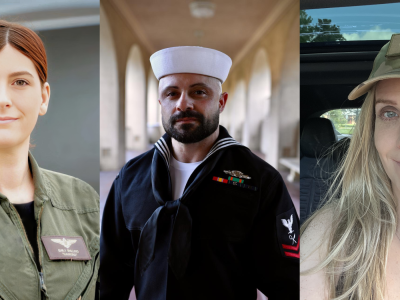
Bad Bunny wearing a black long sleeved shirt, a black cloth face mask, and giant sunglasses that shield his eyes, looking directly at the camera while waving a giant Puerto Rican flag.

“Electrify Everything” Doesn’t Work in Puerto Rico

WP_Post Object
(
    [ID] => 4815
    [post_author] => 15
    [post_date] => 2022-09-22 12:05:00
    [post_date_gmt] => 2022-09-22 12:05:00
    [post_content] => 

Everything you need to know about the treaty protecting environmental defenders in Latin America.

In 1988, three days before Christmas, Francisco “Chico” Alves Mendes Filho went to take a shower in his yard when he was assassinated by local cattle ranchers with a .22 rifle. 

Mendes had been a Brazilian leader of the rubber tapper workers’ union, who advocated for Indigenous people’s rights and defended the Amazon rainforest against exploitation. The cattle ranchers who’d killed him were rural landowners, hoping to continue deforesting it. This wasn’t the first killing of an environmental defender in Latin America and the Caribbean (LAC), and it wouldn’t be the last. In 2016, almost 30 years after Chico Mendes's murder, Berta Cáceres, a Honduran Indigenous environmental defender, was killed by sicarios for her opposition to the construction of a dam in the Gualcarque River. Two different causes, two different countries, and two different times, but one motivation: to silence those who fought and defended the environment in Latin America.

Environmental defenders have contributed to halting 11% of environmentally damaging projects across the planet. However, the role comes with a high cost to their safety: Constant threats, violence, and hundreds of assassinations make their work incredibly dangerous. These attacks are mainly related to land disputes and environmental damage, and 70% are for defending forests

Chico Mendes and his wife, Ilsamar, laughing.
Chico Mendes and his wife, Ilsamar, in 1988. Courtesy of Miranda Smith / Wikimedia.

The UN defines environmental human rights defenders as “individuals and groups who, in their personal or professional capacity and in a peaceful manner, strive to protect and promote human rights relating to the environment, including water, air, land, flora and fauna.”They use non-violent methods to protect the environment, contributing to preserving biodiversity and Indigenous rights. In 2000, the Human Rights Commission established the Special Rapporteur on the situation of human rights defenders, which included promoting environmental defenders' protection within their mandate. In 2019, the UN General Assembly recognized the contribution of environmental defenders to ecological protection and sustainable development, urging states to develop and appropriately fund protection initiatives for human rights defenders. 

But this has proven tricky in Latin America. According to a 2021 Global Witness report titled “Last Line of Defence,” 165 environmental defenders were killed in LAC in 2020,a frightening number that illustrates how vulnerable activists are in the region. In addition, these attacks made up 73% of all attacks against environmental defenders in the world, making Latin American especially hazardous area to protect the environment. The reason behind the frequency of these attacks is closely related to the region’s long history with extractive industries as a means of economic development. LAC is largely made up of developing countries, and many have opted to prioritize economic growth over environmental regulation. Vulnerable populations, such as Indigenous communities and poor local communities, have suffered the impacts of this the most, and in parallel, also act as the last line of defense when it comes to protecting the environment.

The regional response for protecting environmental defenders: The Escazú Agreement

Even though environmental regulations in Latin American countries have progressed in recent years, activists are still being murdered and attacked, and regional cooperation is required to ensure their protection. In 2012, a collective of LAC nations decided to draft an agreement implementing Principle 10 of the UN’s Rio Declaration on Environment and Development, with the goal of creating the LAC version of the Aarhus Convention. The agreement was adopted on March 4, 2018, in Escazú, Costa Rica—giving the treaty its name: the Escazú Agreement, or Acuerdo de Escazú. On April 22, 2021, nearly a decade after discussions first began, the Escazú Agreement went into effect, becoming the first environmental treaty in LAC. 

The primary purpose of the treaty is to improve and guarantee the procedural human rights of access to information, public participation, and justice. Latin America is a region with severe economic inequalities that directly affect the political participation of the most vulnerable populations, excluding them from most decision-making processes. The Escazú Agreement, acknowledging this exclusionary situation and the numerous socio-environmental conflicts across the continents, sets new human rights standards, guaranteeing the most vulnerable communities are involved in environmental decision-making. 

Concerning environmental defenders, the Escazú Agreement also seeks to change the dangerous circumstances they suffer across Latin America. First, the treaty states in Article 9 that “each [signing] party shall guarantee a safe and enabling environment for persons, groups and organizations that promote and defend human rights in environmental matters ” In practice, this allows environmental defenders to act freely and safely, without fear of threat or harm. 

The treaty also indicates that signing countries “shall take adequate and effective measures to recognize, protect and promote” the human rights of environmental defenders. This clause focuses on civil and political rights, reinforcing their right to life, freedom of opinion, freedom of movement, personal integrity, and peaceful assembly, among others. In addition, due to the historical impunity of the criminals who have perpetrated crimes against environmental defenders, the treaty reinforces due process for preventing and punishing attacks or threats made against them.

To further effectively protect environmental defenders, in April, the first Conference of the Parties (COP) to the Escazú Agreement established an ad hoc working group to create an action plan to be presented at the next COP. According to the initial COP, this working group would allow for significant public participation, “endeavouring to include persons or groups in vulnerable situations,” especially Indigenous people and local communities. This could mean that environmental defenders who have experienced attacks or threats themselves can now be a part of creating the action plan to prevent more attacks from happening in the future. 

The purpose of all these rules is to protect the legitimate political work of environmental activists across Latin America. This progress is essential for making LAC more democratic and ecological; and indeed, defending those who risk their lives to protect the environment is vital for continually improving our democracies.

The problem, however, has been getting signatories to ratify it.

The vital need to adopt the treaty

Twenty-five countries have signed the Escazú Agreement so far, but only 13 have ratified it. Some have resisted signing it based on reasons of sovereignty or the vagueness of the treaty’s obligations. For instance, before Chilean president Gabriel Boric ratified the treaty, the former government of Sebastian Piñera decided to not sign it because he believed specifically protecting environmental activists would affect equality before the law.

Colombia, however, might be the most notable country to have not yet ratified the treaty, despite having the world's highest number of murdered environmental defenders (65)in 2020. Hopefully, the newly elected President, Gustavo Petro,will ratify Escazú,complying with his campaign promise to do so; because as long as countries continue not to honor it, the murders will continue to happen. Months ago in Brazil—another country that has not ratified the treaty—two environmental defenders were murderedin the Javari Valley: Dom Phillips, a British journalist, and Bruno Pereira, a Brazilian Indigenous rights defender. Since Jair Bolsonaro was elected in 2019, environmental regulations have diminished in the country, as the Brazilian president continuously opens Indigenous reserves for commercial purposes, triggering environmental conflicts and putting defenders at risk. In addition, Bolsonaro's government legitimized armed land grabbers dedicated to attacking Indigenous and local communities and deforesting the Amazon by weakening all the environmental institutions focused on protecting the environment and Indigenous rights. As a result, the biggest country of LAC has aligned itself with extractive interests over human ones. 

Although the situation with environmental defenders in LAC is critical, right-wing political parties and economic groups see Escazú as an obstacle to economic development. For decades, they have rejected increasing protective measures for those who oppose extractivist expansion. Political negotiations and effective treaty implementation by state parties are crucial elements for incorporating more nations into Escazú. One way to help do this is by increasing awareness of the treaty’s existence, and the goals it hopes to accomplish.

Courtesy of Camilo Freedman / APHOTOGRAFIA / Getty Images.

The Escazú Agreement: An example of defending the defenders

Following the Escazú Agreement's example, the interest in strengthening protections for environmental defenders is expanding to other continents. For example, Asia and Africa do not have any regional treaties to protect environmental defenders, but have organized cooperative networks to defend the defenders on the ground. In Africa, Natural Justice is supporting a powerful initiative, African Environmental Defenders,which aims to protect environmental defenders though an “emergency fund” to support their work. In Europe, environmental defenders are also taking priority. In 2021, the EU Parliament called its member states to take action to protect environmental defenders' human rights, showing that the threats and attacks on these activists are not only happening in the Global South. 

As we face the ever-growing climate crisis, protecting the environment and our delicate ecosystems is crucial. Globally, the role of environmental defenders has been vital to stopping the ecological degradation of the planet. However, their silent and voluntary work is not recognized, despite risking their own lives to preserve the environment for the benefit of present and future generations. Therefore, it is fair and necessary to protect them and stop the impunity of those who abuse and attack activists for exploiting the environment to make a profit. By establishing the Escazú Agreement, Latin America contributed to showing an institutionalized path for protecting environmental defenders, a priority that every government should have—not only to protect the environment, but also democracy itself.

Additional fact checking by Sophia Cleary.

You Should Give a Sh*t About is an ongoing column highlighting local stories with a global impact.

[post_title] => You Should Give a Sh*t About: The Escazú Agreement [post_excerpt] => Everything you need to know about the treaty protecting environmental defenders in Latin America. [post_status] => publish [comment_status] => open [ping_status] => open [post_password] => [post_name] => escazu-agreement-explainer-latin-america-environmental-treaty [to_ping] => [pinged] => [post_modified] => 2026-08-04 20:25:39 [post_modified_gmt] => 2026-08-04 20:25:39 [post_content_filtered] => [post_parent] => 0 [guid] => https://conversationalist.org/?p=4815 [menu_order] => 109 [post_type] => post [post_mime_type] => [comment_count] => 0 [filter] => raw )
Wildfires Devastate Wetlands Of The Parana Delta

You Should Give a Sh*t About: The Escazú Agreement

WP_Post Object
(
    [ID] => 3943
    [post_author] => 2
    [post_date] => 2022-03-07 12:11:51
    [post_date_gmt] => 2022-03-07 12:11:51
    [post_content] => 

Critical Race Theory has become a Trojan horse for discussions about privilege, gender, race, and inequity, and serves as a rally point for conservative politics.

As the debate over Critical Race Theory, also known as CRT, rages across the United States, the foundational principles, values, and aims of the American education system are called into question. The war over CRT amplifies these essential questions: Who gets to tell the stories of this country, whose stories are worth telling, and how do these stories inform our lives today? It is ironic, of course, that these heated controversies are playing out across historic and contemporary Indigenous homelands.

There is a manufactured nature to the controversy surrounding Critical Race Theory. Far from an attempt to make white children feel guilty about atrocities that took place before they were born, or shame for their skin color, as CRT detractors have argued, the scholars who pioneered and practice the theory use it as a tool for understanding systemic oppression.

Academics recognized CRT in 1989, but its roots go back to the 1960s and 1970s, when legal scholars developed critical legal theory as a means of interrogating how the legal system served the interests of the rich and powerful at the cost of the poor and marginalized. Today, teachers use CRT to inform their age-appropriate lessons about discrimination, history, and oppression. Political pundits who claim that teaching the perspective of the marginalized is the same as teaching CRT are simply wrong.

It’s easy to see how the sudden outrage from right-wing politicians over CRT has deflected attention from this moment of racial reckoning in the post-George Floyd era. Virginia’s Governor Glenn Youngkin, for instance, made opposition to Critical Race Theory a centerpiece of his election campaign; on this platform, he successfully secured his place as Virginia’s first Republican governor in more than a decade. On his first day in office Youngkin made good on his campaign promise by passing an executive order to “end the use of inherent divisive concepts, including Critical Race Theory, and restore excellence in K-12 public education in the commonwealth. Put simply, Critical Race Theory has become a Trojan horse for discussions about privilege, gender, race, and inequity, and serves as a rally point for conservative politics.

To understand the implications of this political development for Native communities, it is important to consider the larger context of Indigenous peoples within existing school curricula. Long before Critical Race Theory was ever formulated, schools in the U.S. failed abysmally in teaching about Indigenous histories, cultures, and contemporary politics. The effect of this failure is painfully obvious among the college students who sit in lecture halls like the ones in which I teach.

As a university faculty member who teaches both American Studies and Native American and Indigenous Studies at a predominately white institution, I often poll students about their knowledge of Native American history and culture, in order to teach effectively. In most cases, their exposure to Native histories is limited to a sanitized version of Columbus’ “discovery” of America, the Thanksgiving myth, and a little bit about the Cherokee Trail of Tears. My students from California often report on their fourth-grade experience of learning about the Spanish mission system—a system of mass death, forced labor, disease, and starvation—by building miniature replicas of the missions out of popsicle sticks and sugarcoating the historical narrative with actual sugar cubes, which they fashioned into mission fixtures.

One of the most striking and disturbing trends I have noticed throughout my years in the classroom and as a public advocate for Indigenous issues is that non-Natives tend to be woefully unaware of the fact that, in addition to the local, state, and federal government levels, there is also the tribal government level. My students are often dismayed to learn that these tribal governments are not marginal, but numerous and powerful—that there are, in fact, 574 sovereign nations with a government-to-government relationship with the federal U.S. governing institutions. The syllabus of my public high school’s civics and government course did not include any lessons about tribal nationhood, self-governance, citizenship, and sovereignty, and this is clearly the case for the vast majority of public schools.

I am deeply concerned to see that our nation’s rising college-educated youth could potentially embark on careers in government without learning that more than 56.2 million acres of this country—for context, only 11 of the  50 states are larger than 56.2 million acres—are under the jurisdiction of tribal governments. Nor are they aware that the largest tribal reservation, governed by the Navajo Nation, is larger than one-fifth of all states, including West Virginia, Maryland, Hawaii, Massachusetts, Vermont, New Hampshire, New Jersey, Connecticut, Delaware, and Rhode Island.

This ignorance is not the fault of the students. The responsibility for ensuring that our youth—our next generation of leaders—receive a historically accurate education and are prepared to go out into the world with a toolbox of knowledge that will carry us all through to the next day falls upon parents, teachers, administrators, and policymakers. At a time when Native students are still subjected to racial slurs, nonconsensual haircutting, Indian-themed mascots, and screeching, headdressed mockeries in their schools, the idea that states are passing legislation that will result in teaching even less essential information about Indigenous peoples and our roles in this nation is extremely difficult to accept or understand.

Given the pitiful state of existing education regarding the First Americans, it seems that  Critical Race Theory has become the Right’s latest desperate effort to perpetrate a colorblind national narrative. For Native peoples, colorblindness—although not conceptualized as such at the time—can be seen in the pedagogical philosophy of Richard Henry Pratt, the former military officer who, after the Civil War, established residential schools for Native Americans where the guiding pedagogical theory was “kill the Indian, save the man”—i.e., strip Native children forcibly of their culture and language and force them to assimilate into white society.

Pratt ushered in a new policy era that shifted the country’s policies regarding Indigenous populations away from military warfare and physical death, to the new goal of achieving Indigenous cultural and political death through assimilation. Pratt’s Carlisle Indian Industrial School, and hundreds of others that copied his pedagogical model, achieved this aim by separating Indian children from their families and enrolling them in institutions where the children’s hair was cut, their languages and religions forbidden, and all forms of Indigenous community connections disallowed. These are now the sites where hundreds of Native children’s bodies are being discovered in unmarked graves. They are a stain on our national history, an example of the failures of colorblind and assimilationist ideologies, and, indeed, a testament to soundness of the concept of structural racism.

When it comes to the intersection of the current Critical Race Theory debate and Indigenous populations, these continued attempts to silence discussions about the violence endured by Native communities, our strength and resilience in overcoming attempts to wholly eradicate us, and ongoing injustices facing Native peoples today can all be understood within the framework of the attempted erasure our people. But these efforts are not new; various political attempts to “solve” the “Indian problem” have changed and evolved since the founding of the United States.

Those who oppose teaching accurate, representative lessons about Indigenous peoples overlook a fundamental truth that must be reckoned with if we are to continue to grow as a society: Native peoples did not vanish, we are not extinct, and we remain an important part of America’s history and present day. The same is true for Black and other people of color, members of the LGBTQ2S+ community, folks of differing abilities, women, and gender nonconforming individuals, all of whom are represented within the Native population and with whom Indigenous communities are allied in this shared struggle. The very fact that a sizable portion of this nation supports the imposition of legal restrictions on teaching students about race, identity, and history demonstrates the importance of this type of educational instruction.

[post_title] => Critical Race Theory, Native communities, and American education [post_excerpt] => Critical Race Theory has become a Trojan horse for discussions about privilege, gender, race, and inequity, and serves as a rally point for conservative politics. [post_status] => publish [comment_status] => closed [ping_status] => open [post_password] => [post_name] => critical-race-theory-native-communities-and-american-education [to_ping] => [pinged] => [post_modified] => 2026-08-04 20:51:30 [post_modified_gmt] => 2026-08-04 20:51:30 [post_content_filtered] => [post_parent] => 0 [guid] => https://conversationalist.org/?p=3943 [menu_order] => 133 [post_type] => post [post_mime_type] => [comment_count] => 0 [filter] => raw )

Critical Race Theory, Native communities, and American education