WP_Post Object
(
    [ID] => 7604
    [post_author] => 15
    [post_date] => 2025-01-01 11:27:00
    [post_date_gmt] => 2025-01-01 11:27:00
    [post_content] => 

How skincare has, and hasn't, changed across generations of women.

I have a distinct memory from when I was a young girl, of my nani, my maternal grandmother, opening her Ponds cold cream, with its white base and light green lid, and tapping it onto her face. 

I’m still a child, maybe 10 or 11, and when she finishes, she offers the jar of cold cream to me, insisting I also start putting it on regularly to take care of my skin. As I scoop up some of the cream and begin applying it, my nani watches my technique intently, correcting me wherever she thinks I'm not being gentle enough. “Never rub your face,” she tells me. “It’ll make your skin sag and give you wrinkles.”

For as long as I can remember, I have associated my nani with that Ponds cold cream. It really was, and still is, such a key part of her everyday life. She still has jars of it in her bedroom and her bathroom so that it’s always on hand, and brings it with her whenever she leaves home. Yet despite her obvious brand loyalty, my nani’s routine has always been more about process than product. At a time when women were asked to be invisible, to put everyone before themselves, those five minutes spent meticulously applying her face cream each night were an almost rebellious act of self care. 

Skincare in Pakistan, and perhaps across the world, has changed significantly since my nani’s days, and I’ll admit even I’ve given in to the hype, buying at least a couple of products with fancy ingredients on the label like “hyaluronic acid” and “AHAs.” But unlike my nani, I’ve always been far less meticulous with my skincare routine. Perhaps it's because these trends are still quite new to me, or maybe the routines themselves have become too complicated. But perhaps more than either, it’s because these products are only selling me an idea of self care, rather than actually fostering a habit of it. 

Growing up, aside from what I learned from my nani, the concept of skincare was taught to me very differently. In fact, it wouldn’t be remiss to say that in South Asia, the importance of skincare starts from the womb. I remember, starting from when I was a child, the pregnant women around me were told to eat “white” foods during pregnancy so that their baby would have fair skin. Anything dark—coffee, chocolate—was to be avoided, out of fear that it would cause their baby to have a darker complexion. Despite these myths being completely debunked, they still form a critical part of skincare motivations for older South Asians today, and pregnant people often still receive the same advice. 

It’s no secret that whitening has long been a major motivation behind skincare within many Asian cultures and amongst countless other cultures around the world. Despite global trends to push “fairness” out of advertising lingo, the underlying beliefs and colorism still persist, along with the dangerous ways people choose to realize them. This has been true for centuries: Some Renaissance era women would even wear leeches behind their ears to suck out their blood and leave them looking paler, which was considered more beautiful. As recently as the mid to late 20th century, many brides in South Asia would utilize a similar technique in anticipation of their weddings—again, to appear paler and “more beautiful.” Dr. Christine Hall, a GP and Aesthetics Doctor at London’s Taktouk Clinic, says that similar beliefs have long existed in Korean culture, too. “There is an age-old belief which suggested that darker skin tones mean that you worked the land, and so this was correlated to a poorer societal class,” she says. “As a result, most South Koreans did and still do prefer to avoid the sun and tanning—but the focus is on anti-aging, and not so much skin lightening or bleaching.”   

As Dr. Hall notes, while some skincare practices have remained consistent across generations, it is the motivations and drivers behind those routines that have continued to shift. In a more extreme example, a recent T: The New York Times Style Magazine article reported that people are still using leeches for beauty treatments today—not for the sake of becoming paler, however, but “in an effort to refresh the skin and reduce wrinkles.” 

It makes sense that as beauty standards have continued to evolve, our motivations for partaking in skincare would evolve with them. But, Dr. Hall argues, this isn’t necessarily always because women are trying to chase an ever-changing standard of beauty. After all, we live in a time where women are perceived very differently from the world my nani grew up in; and some of these shifts can also come from letting go of the societal pressures that demand women to conform to them in the first place. “Sometimes, the ideology of having perfect skin and being beautiful goes too far,” Dr. Hall explains, citing the extreme pressure many South Koreans, especially women, feel to maintain their looks. “This has resulted in a movement called ‘escape the corset’ where women are cutting their hair short and throwing away their makeup and refusing to conform to these unrealistic expectations.”

In some ways, the motivation behind the “escape the corset” movement—driven by self-empowerment and a woman’s right to look however she’d like—almost feels closer to my nani’s relationship to skincare than most of what’s sold to us today. One major reason for this, of course, is the overwhelming and unnecessary economy of choice fueled by capitalism, which depends on continuously moving the bar for “beauty” in order to keep us buying more new products. Beauty is now a multi-billion dollar industry, largely funded by women, and it’s only growing each year. This is also partially why, compared to previous generations, there’s been a global shift from more natural skincare—including a reliance on homemade DIY products—to lab-formulated, fancy-sounding multiple-step routines that can only be purchased in a store, and at a cost. “In Greece where I’m originally from, older generations always used natural remedies for many years,” shares Fani Mari, a freelance beauty journalist and content creator. Despite not being a fan of DIY skincare herself, she still incorporates some of these remedies into her skincare routine because they’re simple and effective—and connect her to her culture and the elders who passed it down to her. 

For many young women, a similar influence has guided them through their own skincare evolutions, as well. Haniya Shariq Khan, a young college student in Lahore, remembers her own skincare journey with her nani very fondly. While her nani passed away five years ago, Khan shares that she and her mother still follow the same skincare regimen she taught them to this day. 

As the wife of a landlord, living in a rural area, Khan’s grandmother endured grueling days of work for most of her life, and skincare was her reprieve. “She was expected to do certain chores, such as making lassi by hand, an incredibly rigorous activity, but she realized quickly that the leftover butter made for a really nourishing moisturizer,” Khan shares. As time went on, and her grandparents' financial situation improved, she continued to indulge in her skin, eventually buying new creams, including some from as far as London.

“I think honestly she was just very into beauty,” Khan says. “Growing up so poor, she had no shoes to wear if she outgrew them… [But] even as a little girl living in the tenements, she used to be crazy about fashion, about the latest hairstyles, and always had her own kohl and mirror from the age of about nine. So this was a hang up from her very deprived childhood: She was keeping her inner child happy by indulging in all these things.”

This relationship to skincare felt similar to my own nani’s relationship to it, even if it took a slightly different shape: So much of the motivation behind skincare for our ancestors was a way of indulgence and self care. While on surface level, this might seem shallow, or largely motivated by societal pressures, these individual experiences show a far deeper sense of well-being, and even treating one’s self, in a time where, for most women, this was largely inaccessible. 

Based on most beauty ads today, it may seem like “self care” is still the main driver behind the skincare industry. But the onslaught of consumerism, and the increasing pressure to buy more and more, has turned it more sinister. As a culture, we’ve turned skincare into a necessity. Combined with the pandemic’s impact on our mental health, the pervasiveness and pressures of social media, and an overflow of information in the digital age, skincare has also become a compulsion. Children as young as 10 are now buying into the pressure of using anti-aging products. Capitalism has meant that the move away from the pressure to wear makeup hasn’t necessarily freed us from caring about our appearance. It’s only made skincare our new cult-like obsession, and makes me question whether we’ve learned anything at all. 

The way we begin to counter this is by discerning and deciding for ourselves what feels right, not what we’re told will make us feel beautiful by a slew of constantly changing trends and ads that insist we have to buy absolutely everything. It’s by returning to why our grandmothers washed their faces, and reconnecting to skincare as an actual vehicle of self care. This is easier said than done, but some beauty enthusiasts are trying—and in the process, building a new legacy that seeks to find the balance in all of it. 

Meraj Fatima, the founder of Her Beauty, a Pakistan-based skincare brand that launched last year, says her brand was inspired by her own skincare journey, and unlearning the skincare traditions of past generations that didn’t work for her. But in the process of creating it, something surprising happened: Her mother and grandmother were willing to go on this renewed skincare journey with her.  

Fatima, who had Rosacea growing up, says her skin condition meant she had to figure out what worked for her and what didn’t amongst the various natural “totkas” (home remedies) her mother and grandmother had passed down to her. “One thing that differentiates me from my mom is my mom used natural agents to do skincare, like using lemon, which is terrible for your skin, or malai, which could soften your skin, but my kind of skin will react to it,” she shares. Today, her mother and grandmother are open to trying the products she recommends instead, and are some of Her Beauty’s regular customers. 

Still, Fatima wants to be mindful of not eschewing old remedies or products just because something newer and supposedly “better” might be available. She always tells potential customers to start with what they have at home first, and not buy products unnecessarily—even if they’re her own. “I’ve seen my teenage cousins who feel pressured to use so many products without reason. And I have a daughter, too, now, so I keep thinking about what I want to pass down to her,” she says.

The work for younger generations of women, then, is one of both learning and unlearning: Seeing skincare as more than just a trend, but instead, as a practice. Or perhaps as a ritual for the self, or an act of rebellion, like it was for our nanis. Perhaps, then, rather than buying something new, we need to step back, and realize the Ponds already in our cabinet is already enough. 

[post_title] => Why Our Grandmothers Washed Their Faces [post_excerpt] => How skincare has, and hasn't, changed across generations of women. [post_status] => publish [comment_status] => closed [ping_status] => closed [post_password] => [post_name] => generations-women-skincare-beauty-standards-pakistan-south-asia [to_ping] => [pinged] => [post_modified] => 2026-08-03 23:41:08 [post_modified_gmt] => 2026-08-03 23:41:08 [post_content_filtered] => [post_parent] => 0 [guid] => https://conversationalist.org/?p=7604 [menu_order] => 32 [post_type] => post [post_mime_type] => [comment_count] => 0 [filter] => raw )
An illustration of the reflection on a bathroom mirror. An older woman is applying cream to her face, with her tied back in a scarf around her ahead. In the background, a young girl watches attentively. There's a pale blue tile behind them. In little inserts around the image are close ups of the cream being applied.

Why Our Grandmothers Washed Their Faces

WP_Post Object
(
    [ID] => 5379
    [post_author] => 15
    [post_date] => 2022-12-02 17:59:05
    [post_date_gmt] => 2022-12-02 17:59:05
    [post_content] => 

Meet the artisans and designers who want to change where you think "luxury" comes from.

Forty years ago, in a small workshop in Sabzazar, Lahore, a young boy watched colors come to life in the form of peacocks, traditional Islamic patterns, and various depictions of his favorite Mughal stories, and fell in love with cotton printing. It was a process Aslam Mirza could watch for hours: the workers extracting natural dyes, sometimes even from vegetables; placing the stencils down for block printing; painstakingly stamping out each design; and creating rows and rows of unique patterns. He was fascinated by the way the machines and artisans came together to turn curtains, table runners, and more into usable art. It was the most beautiful thing he’d ever seen.

For Mirza, this art was also a connection to his ancestors: Under the name of Punjab Calico Printing, his family had been bringing beautiful tapestries and Mughal artwork to customers since 1868, helping to keep these delicate art forms alive. From a young age, Mirza knew that he wanted to carry on his family’s legacy, and today, he is the fourth generation in a business that has won multiple awards and accolades for their talent. But despite this rich family legacy, when he first expressed an interest in joining the family business, his father discouraged it; and by the time he was old enough to work, the once popular, 40-worker strong printing house had been left with almost nothing. “Pakistani handicrafts have long been left behind,” Mirza says. “When I attend small scale exhibitions I see that the younger generation wants nothing to do with [it] anymore.” 

Despite his father’s wishes, Mirza took over Punjab Calico Printing in 1982, and with a small team of workers, he continued to create the designs that had always awed him. He also made contact with brokers and middlemen who could get his work to larger cities where he thought more people might be interested. Still, despite their best efforts to stay on top of trends and keep prices low to attract more customers, it became pretty clear to Mirza and his fellow artisans that individual efforts could only go so far. State corruption, which Mirza describes as the mismanagement and at times pocketing of funds attributed to his sector, and a lack of attention given to artisans and their needs, meant there were no areas for growth and almost no platforms for artisans to feature their work and connect with customers, or even each other. It was only when Mirza was approached by Zain Ahmad some two and a half years ago that things started to change. 

Ahmed had then just started Rastah—a luxury urban wear brand fusing streetwear and traditional Pakistani crafts—and was looking to bring Mirza’s skill with Mughal art to his designs. For Ahmad, the main goal was to elevate a timeless talent to an international trend, and doing that meant challenging a lot of norms. Amidst local fashion trends having moved away from traditional crafts and a lack of access to international platforms, perhaps the biggest hurdle Rastah faced was challenging the decades old notion that anything made in Pakistan was automatically subpar. “Countries where artisanship can thrive have a very negative connotation with the tag ‘Made In Pakistan,’ which is controversial because if you look at luxury heritage brands globally, many are inspired by South Asian crafts but they won't acknowledge it,” Ahmad says. “You'll see block prints, hand woven fabrics, and more, but they're white washed to fit the narrative that sells abroad.”

Challenging these perceptions on a global scale was difficult enough on its own, but according to Ahmad, it has been just as difficult locally. Last year, the brand was embroiled in online controversy when customers accused them of exploitation due to their high prices compared to other Pakistani brands. It was only after Rastah made it into the wardrobes of high profile names like Hollywood’s Riz Ahmed and Bollywood’s Karan Johar that the criticism stopped. “We live in a Pakistan where people still live in a colonial hangover, and it shows us consumer psychology,” he says. “We need outsiders to validate things for us.”  

As Ahmad explains it, the high price point is meant to be a counter to the norm of middlemen exploiting artisans by buying their products for low prices, then upselling them and pocketing the profits. It’s a practice experts and activists in the industry have long been looking to end, but hasn’t proven easy—and not just for Rastah. Sara Ejaz, the head of business developments and partnerships at Vceela, an online marketplace promoting Pakistani handicrafts, says that despite wanting to make the selling process as direct as possible, the organization has faced multiple hurdles. For one, the lack of financial inclusion for women in Pakistan has been a major barrier for women artisans who want to take their skills (and profits) further. “We’re trying to get rid of the middleman process and when we get an order on Vceela, it directly notifies the artisan who is registered as a seller,” she explains. “But we ran into an issue where many of the women artisans who were registered would put up their brother’s, father’s, or husband’s account to receive payments because they didn’t have their own.” 

Still, it’s a start. Platforms and brands like Rastah, Vceela, Kaarvan Crafts Foundation, and Khudkaar are all examples of how Pakistani crafts can be amplified and made more desirable with the right structures in place, and in their own way, each of them is challenging social perceptions and inequality in order to champion the “Made in Pakistan” tag. Through these online marketplaces, artisans can access both local and international consumers directly, which otherwise wouldn’t have been possible for them. 

Thus far, most of the “Made in Pakistan” movement has been about perception and innovation. But while "artisan," "heritage," and "sustainability" have all become buzzwords across Pakistan’s newly "woke" fashion landscape, a sustainable movement needs to go beyond greenwashing and putting certain words on their labels, and instead focus on investing in the people behind the products. As founder of sustainability focused organization Zuka and long time PR head at Kaarvan, Mehr Husain explains that the ultimate goal is for artisans like Mirza to be able to retain customers on their own and achieve financial independence. “Just because one engages with artisans does not mean it is sustainable,” she says. “You need to train them so they are able to earn independently and you need to go beyond just creation of fashion products. This means you raise awareness and be advocates of highlighting what is wrong with the current models of fashion and work to protect local heritage, be it fabrics, skills, or craft. Sustainable support ultimately means upward social mobility for artisans.” So far, it seems to be working: Rabia, an artisan in Layyah—a small town in South Punjab, Pakistan—who works at Khudkaar, says the organization's online marketplace and marketing has been crucial in empowering artisans to believe that they, too, can create international level products with the right training and access. 

For Rastah, having their artisans have a direct stake in the products they create has played a major role in doing this, too. Building off of the hype from their initial collaboration, Ahmad decided to move past just fashion, and stock unique handmade products like Mirza’s tapestries directly onto his website. “When it comes to the products they create themselves, all the money earned on those goes to the artisan directly," Ahmad says. "We keep no part of it, we simply act as a connector between them and consumers." Before his collaboration with Rastah, Mirza’s tapestries would often sell for PKR 4000 to 5000, or $20 to $25 USD. “When I first told Aslam Saab [a term of respect used for elders] that I would stock his tapestry and price it at $300, he told me I was making a huge mistake and that no one would buy it, but it sold out.”

As the impact of these individual efforts comes together, benefiting from the accessibility that digital bridges provide, a somewhat unintentional movement is slowly starting to uplift those who have struggled in poverty for generations at the behest of their craft. Rastah—and Vceela, and many others—are proof of what artisans like Mirza have always known: that these crafts and traditions are undoubtedly unique, they just need other people to see it, too. But it can only happen working from the inside out, and it needs to be a collaborative effort. “Pakistani artisans are no less than anyone, they are just restricted because of their poverty,” Mirza says. “When people visit from abroad, they love our things but we don't like them ourselves. We need to start changing that.” Championing a “Made in Pakistan” label, and marketing it with pride, might just be step one in getting there.

[post_title] => Made in Pakistan [post_excerpt] => Meet the artisans and designers who want to change where you think "luxury" comes from. [post_status] => publish [comment_status] => closed [ping_status] => closed [post_password] => [post_name] => made-in-pakistan-rastah-mughal-artisans-luxury-fashion [to_ping] => [pinged] => [post_modified] => 2026-08-04 20:06:22 [post_modified_gmt] => 2026-08-04 20:06:22 [post_content_filtered] => [post_parent] => 0 [guid] => https://conversationalist.org/?p=5379 [menu_order] => 101 [post_type] => post [post_mime_type] => [comment_count] => 0 [filter] => raw )
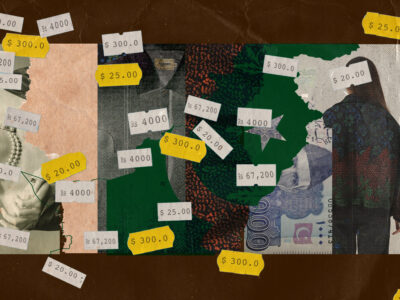
A collage of images featuring a jacket with block printing, a close up of another jacket, parts of Pakistan's flag, and yellow and white price stickers in different currencies all over, with a deep brown background.

Made in Pakistan

WP_Post Object
(
    [ID] => 2847
    [post_author] => 2
    [post_date] => 2021-06-24 17:25:51
    [post_date_gmt] => 2021-06-24 17:25:51
    [post_content] => British Vogue's interview with the Pakistani Nobel Peace Prize laureate set off a storm of virulent criticism in her native Pakistan.

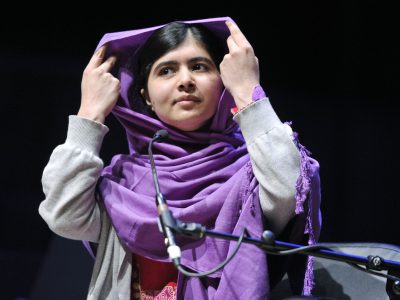
The July issue of British Vogue departs notably from the usual fare of supermodels, pop stars, and actresses. Wearing a traditional salwar kameez and matching head scarf, Malala Yousafzai—“survivor, activist, legend”—gazes serenely through honey-colored eyes. Her warm smile is slightly lopsided, a permanent reminder that she survived a gunman’s bullet to her head. She is a Nobel Peace Prize laureate and one of the world’s most admired activists for the education of girls and women; and yet, she conveys neither artifice nor arrogance.

The interview, conducted by London-based journalist Sirin Kale, reads like the transcript of a lighthearted conversation between two young women sitting in a café. Malala, now 23 and just graduated from the University of Oxford, happily answers questions about what she likes to eat, how she spends her time, and what her plans are for the future.
 
View this post on Instagram
 

A post shared by British Vogue (@britishvogue)

But when asked about her romantic life Malala became so visibly uncomfortable that her interviewer felt as though she were “torturing a kitten.” In the extremely conservative area of northern Pakistan called Swat, where Malala was born and raised, falling in love or having a boyfriend is considered shameful and dishonorable. But, later, she nonetheless offers some ambivalent comments about marriage.

“I still don’t understand why people have to get married. If you want to have a person in your life, why do you have to sign marriage papers, why can’t it just be a partnership?”

In Pakistan, these anodyne comments set off a firestorm of virulent criticism. Social media users called her a “prostitute” and “traitor”; and the hashtag #ShameonMalala trended for days. Z-list celebrities attempted to capitalize on the Malala hatred by issuing sanctimonious statements about marriage, while newspaper columns analyzing the interview made headlines for weeks. A so-called preacher in the conservative north of Pakistan declared that he would assassinate the young woman for violating the sanctity of Islam. By now Malala is used to Pakistanis expressing outrage at what she does and says. But the magnitude of this backlash was particularly intense. Upper middle-class women, who tend to be more educated and thus supposedly more worldly, were particularly critical of Malala for voicing reservations about marriage. In Pakistani Facebook groups, they wrote that Malala’s head injury had probably caused brain damage; or they mocked her appearance, commenting that of course she was against marriage—with her disfigured face, she would never find a husband. How to explain this vicious torrent of outrage? Perhaps these well-heeled, well-educated urban women were lashing out because by questioning the value of marriage, Malala had implicitly criticized the institution from which most Pakistani women derive their identity, status, and privilege. Pockets of liberalism do exist in Pakistan. A 23-year-old woman from a rich family in Lahore, Islamabad or Karachi might be allowed to choose her spouse—even to date or have a boyfriend. But saving face is essential; cultural and religious standards must be upheld. Those who rebel against society’s mores are expected to do so discreetly. It’s a rare woman in Pakistan who remains single by choice. By questioning whether partnership and love should require religious and legal sanction, Malala unintentionally held up a mirror that reflected all the burdens and restrictions of marriage. That is why these women responded to the interview by having a complete meltdown: Their own internalized misogyny trumped whatever lip service they usually give to female solidarity and sisterhood. Their lambasting of Malala, the so-called “darling of the West,” was reminiscent of the ritual of “salvaging” in The Handmaid’s Tale, when the Handmaids gleefully pull on the rope that hangs the condemned woman to death. Of course Malala does have many supporters in her home country, where she’s often called the “Pride of Pakistan.” They counter the haters by holding up examples of Malala’s positive influence in Pakistan and the rest of the world—like the Malala Fund, mentioned in the Vogue interview, which is rebuilding schools in her native Swat, in several African countries, and in Gaza. Few people know about this important work, or that the Fund supports the work of policy reformists who are overhauling Pakistan’s creaky education system. Those who love Malala are happy that she survived the assassination attempt and thrived; that Pakistan’s military defeated the Taliban; and that something excellent can come out of Pakistan, a place where life is difficult and often grim. Pakistanis are under a lot of pressure these days. The country faces serious economic problems even as it tries to recover from decades of dictatorship and terrorism; matters are further complicated by the country’s continued involvement in geopolitical conflicts with India and Afghanistan. Salaries remain low even as inflation and taxes continue to rise. Quality education, health care, and job security are all in short supply. Working-and middle-class people feel the economic frustrations most acutely; for them, dignity and security are a mirage. On popular television talk shows broadcast each night, upper-class Pakistanis argue about the causes of their country’s malaise—e.g., corruption, government incompetence, and the erosion of moral values. But instead of looking for ways to strengthen the country internally, they blame external bogeymen such as India, “the West,” and anyone who seems to be working against Pakistan’s interests. Malala has become a lightning rod for these people. Every time she does something that makes the news, she’s accused of making the country look bad. The usual round of accusations and bizarre conspiracy theories are trotted out: Her shooting was a staged drama so she could obtain a foreign passport; she has been chosen by Western and Jewish overlords to become prime minister of Pakistan one day; her many prestigious awards are in fact compensation for the role she plays in a master plan to dismantle Pakistan altogether. They speculate that Malala is actively working against her own country. On the Vogue cover, Malala is traditionally but elegantly attired: She wears a crimson dupatta draped gracefully over her head and shoulders and a matching crimson kameez; the backdrop is the same shade of crimson—the color of blood, the color of revolution, of love—and she holds one hand up to her face, right where her facial muscles droop because of her injuries. She’s careful to portray herself visually as respectful of her Pashtun heritage. But it’s getting harder to keep her intelligent mind and her ideas as carefully curated. This tension will only grow as she navigates through life: In Pakistan, every word she says will be parsed and every action criticized. Having completed her formal education, Malala is now considering what she should do with the considerable money and influence she has accumulated over the last six years. Besides the Nobel Prize, there is the Malala Fund (Bill and Melinda Gates and Angelina Jolie are donors) as well as appearances at Davos and the United Nations. For some, this is too much power for a young woman from a valley in Swat, Pakistan. Her friends Greta Thunberg, the climate activist, and Emma (‘X’) Gonzalez, the Parkland shooting survivor and anti-gun activist, both of whom have also been targeted by vicious critics, can relate. Malala’s detractors often ask why other young victims of terrorism, especially boys, don’t receive the same treatment as the young woman from Swat. But most people don’t know what happened to these victims, whom they believe are stranded in Pakistan, locked out of the privilege and influence that Malala wields. Waleed Khan is a university student who was shot in a 2014 Taliban terrorist attack on the Army Public School in Peshawar. Like Malala, Khan went to the UK for treatment and stayed on to pursue his education; Malala and her family supported him throughout his ordeal. In the wake of the controversy over the Vogue interview, Khan tweeted: “From a long time I have been seeing images of me and Malala circulating around. I would like to request everyone please stop this comparison. We can’t uplift one person by degrading the other. Malala is an inspiration for many young ppl like me and millions around the world.” With so many programs for improving the lives of girls funded by Western NGOs and foreign missions, many complain that boys are left behind. Some of this is fair criticism; but some is sexist backlash in a society accustomed to conferring automatic privilege upon boys and men. Elevating Malala above male victims of similar violence sparks fears about another Western conspiracy to rend Pakistan’s social fabric and make women more powerful than men. The degradation of others considered to have gained too much wealth or prominence is called Tall Poppy Syndrome, a term that originated in Australia. In Pakistan, Malala is the home-grown variety; both men and women want to cut her down because they think she’s gotten too big and gone too far. But not everyone reacts with so much jealousy or negativity to Malala. Many Pakistanis openly adore her; and the government of Pakistan gave her full support and security when she came to Pakistan on a secret trip in 2018. Hundreds of little girls study in the schools she has opened in the Swat Valley. Across the country, plenty of people recognize that those who shot Malala in the head are the real enemies of Pakistan. Malala rarely comments on this negativity, although when she came to Pakistan in 2018, she told the BBC that she couldn’t understand it. But in the three years since that visit, Malala has grown and evolved from a girl into a woman. The biggest sign that she’s ready for the next phase in her life, and that the hatred doesn’t faze her, is a meme, popular among millennials, that she tweeted a few days after the Vogue cover was released online. It’s a GIF of Elmo, the Muppet character, standing with his arms raised in front of a backdrop of flames dancing behind him. For Malala, this is the equivalent of a mic drop. [post_title] => Hating Malala is now 'en vogue' in Pakistan [post_excerpt] => The 23 year-old Nobel laureate's cover photo and interview for British Vogue set off a storm of virulent criticism in her native Pakistan. [post_status] => publish [comment_status] => closed [ping_status] => open [post_password] => [post_name] => hating-malala-is-now-en-vogue-in-pakistan [to_ping] => [pinged] => [post_modified] => 2026-08-06 20:42:02 [post_modified_gmt] => 2026-08-06 20:42:02 [post_content_filtered] => [post_parent] => 0 [guid] => https://conversationalist.org/?p=2847 [menu_order] => 193 [post_type] => post [post_mime_type] => [comment_count] => 0 [filter] => raw )
Hating Malala is now ‘en vogue’ in Pakistan

WP_Post Object
(
    [ID] => 2477
    [post_author] => 2
    [post_date] => 2021-04-16 03:57:25
    [post_date_gmt] => 2021-04-16 03:57:25
    [post_content] => Activists and civil society groups are outraged at the prime minister's victim blaming. 

In Pakistan, the first thing a woman thinks of when she steps outside her home is rape. In a country that routinely ranks as one of the most dangerous in the world for women, rape is everywhere. Women live in constant fear of predators, who routinely go unpunished not because the law protects them (it does not), but because attitudes in this deeply conservative culture manifest in a lack of will to enforce them. Recently Imran Khan, the prime minister of Pakistan, reinforced this entrenched misogyny when he claimed that vulgarity, temptation and willpower were among the causes of rape.

Before he became a politician, Imran Khan was an international cricket champion and a national hero. Oxford educated, handsome, fair skinned and an eloquent speaker, he embodies the quintessential colonial concept of the “white man” coming to save the damsel in distress Pakistan was made out to be. When he was elected prime minister, the media dubbed him the leader of “naya Pakistan” (new Pakistan).

But this, I knew, was a lie. Imran Khan has a well-documented history of misogyny.

In 2006, he rejected the Protection of Women’s Rights Bill, which amended the 1979 Hudood Ordinances that put the entire onus of proving a rape accusation on the woman. The 2006 Bill did pass a parliamentary vote, no thanks to Khan; but prior to this legislation, a rape victim could be prosecuted and imprisoned for adultery if she failed to produce an adult male witness to her assault.

Ayesha Gulalai, a human rights activist who in 2013 became the first female member of the National Assembly, accused Khan of sexual harassment; according to Gulalai, the prime minister sent lewd messages to her and other women in the progressive Pakistan Tehreek-e-Insaf party. For having made this accusation, Gulalai received death threats.

In 2018, Khan said that feminism was “degenerating” to motherhood and called it a “western concept.”

In 2020, he said that the Aurat (women’s) March was culturally divisive.

This year, Khan presented a Pride of Performance award to Ali Zafar, a prominent singer-songwriter who has been credibly accused of sexual harassment by several leading female artists. The prime minister did not even acknowledge an open letter from feminist activists who asked him to refrain from conferring the award, given that one of Zafar’s accusers, singer-actress Meesha Shafi (who plays the protagonist’s sister in the 2013 film The Reluctant Fundamentalist)  was pursuing legal action against him.

In a Q&A session with the public that was televised live in early April, a journalist asked Prime Minister Khan what steps he would take to tackle rape and child abuse. Instead of answering the question, he said: “In any society where vulgarity is prevalent, there are consequences.”

Vulgarity is a broad term. What’s vulgar for one person, might not be for the other. But in this case, Khan was using the word to blame the victims. Over the past three years, Pakistan has seen a spike in widely publicized, extremely violent rapes. One of the victims was 6 year-old Zainab Ansari, whose body was found in a rubbish dump in 2018; she had been raped and strangled. In another notorious case that made international headlines last April, a woman was gang-raped in front of her children after she stopped at the side of a highway just outside of Lahore because her car had run out of fuel.

During the same televised Q&A session, Khan held women responsible for the behavior of men, saying they should remove “temptation” because “not everyone has willpower.” He claimed the high rape statistics were a consequence of “increasing obscenity.” Bollywood films and an infatuation with Western lifestyle were to blame, said the prime minister.

With those words, Khan diminished every person who has stood up against rape, every victim who came out with their story; and every woman, trans and non-binary individual that marched against rape. By saying that women should take “purdah” (cover themselves from head to toe), he reiterated the notion that the onus is upon women to protect themselves. There will be no safety in Pakistan, no justice. There will simply be women constantly berated for taking up space.

In 2020, 11 rape cases were reported every single day in Pakistan. But only 77, or 0.3 percent, of the accused have been convicted. According to government statistics, fewer than half the women who report having been raped end up pressing charges; police estimate that the actual number of rapes could be closer to 60,000 annually. Women are instantly labeled liars when they press charges against their rapists. Sometimes the consequence is more fatal, as seen in cases of so-called “honor killings,” whereby the male relatives of an unmarried rape victim take her life because she is no longer a virgin. Women are sometimes forced to marry their rapist to save their family from scandal. In other cases, families choose revenge rape as a “solution.”

In a conference organized by the Women’s Action Forum on rape, Nazish Brohi, a social sector consultant said that, “There is the expense of the lawyer, going to court, the cost of living in a big city, and then there is the impact on the family, so, the cost of reporting rape is high. But the cost of not reporting rape is also high.”

The system usually works against survivors. In the case of the woman who was gang raped on the highway, Capital City Police Officer Umar Sheikh blamed the victim, asking reporters rhetorically why she was traveling with her children late at night.

Mehnaz Akber Aziz, a member of Pakistan’s National Assembly and a children’s rights advocate said: “You are signalling to these people, the rapists, that ‘It’s OK, you can continue doing what you’re doing and there will be a way out, even if you’re arrested.” Pakistan’s police and judiciary generally fail to apply the law robustly in rape cases where there are no witnesses.

But there are organizations and activists working to force law enforcement officers and the judiciary into implementing the laws that are supposed to protect women.

Sahil provides free legal aid for children and women who have been victims of abuse. War Against Rape (WAR) provides rehabilitation for survivors of sexual assault and works with them to deal with their medical, legal and social issues. Earlier this year, The Lahore High Court declared the “two finger test”—used to determine whether a sexual assault survivor was a virgin—as illegal.

The Zainab Alert Response and Recovery Act, 2020 was passed under the Children's Protection Bill to criminalize abduction and kidnapping. Anti-Rape Ordinance 2020 was approved to ensure that sexual assault trials are completed within four months and that victims’ identities will be protected.

Each of these organizations is committed to tackling Pakistan’s rape problem. And yet, Prime Minister Khan did not mention any of them. Instead, he left Pakistan’s women in a more vulnerable and precarious state than ever before. The country does have laws that, if enforced, would help combat sexual violence. What it does not have, however, is a leader who sets an example by working with existing organizations to change the entrenched patriarchal attitudes that prevent women from feeling safe in public. Nor does it have a leader who is committed to public education.  If the prime minister of a country where the literacy rate has fallen below 60 percent says that men aren’t able to control their instincts and that women must be covered from head to toe if they want to remain safe, the masses will believe it.

Sheraz Ahmed, the program officer at WAR, noted that Khan’s remarks demonstrated “a clear pattern that reveals his regressive views of rape and sexual violence.” Asked why rape cases in Pakistan are so high, and what measures need to be taken to make women safer, Ahmed said, “Rapists know they will get off the hook and that’s why cases are rising.” The lack of medical and psychological care available for rape survivors places even more stress on the woman, which often factors into a decision to refrain from pressing charges.

Several organizations—including Women’s Action Forums of Pakistan, War Against Rape, Aurat March Lahore, The Human Rights Commission of Pakistan, and The Women’s Lawyer Association—have demanded an apology from Imran Khan. In a statement of condemnation that has, as of this writing, been signed by 438 people, they describe the prime minister’s comments as “factually incorrect, insensitive and dangerous,” adding that they “actively fostered and promoted rape culture.”

The Human Rights Commission of Pakistan said in a statement that they were “appalled” by the prime minister’s remarks, describing them as “unacceptable behavior on the part of a public leader” and demanding that he apologize.


Jemima Khan, the prime minister's former wife (and mother of his two children), tweeted: “The Imran I knew used to say, "Put a veil on the man's eyes not on the woman."”

The response on Pakistani Twitter, meanwhile, has been scathing.

This time, the anger does not seem likely to abate; it will continue to fester until there is systemic change and a decisive shift in the conservative narrative regarding rape in Pakistan. Over the past two years Pakistan has seen a rising feminist movement; now, with the growing Aurat Marches and the opening up of the #MeinBhi (MeToo) movement, something has shifted. The women of Pakistan will no longer be dismissed when it comes to sharing their truths.

In many South Asian countries there is widespread scepticism about the #MeToo movement. Why, people ask, does it even exist? Why don’t women who are molested immediately speak out and share their stories? The answer, or part of it, can be found in Khan’s remarks. Whether he believes them or not is irrelevant; he has exacerbated the dangers women face by reinforcing the primitive idea that men are driven by animalistic instincts and are physically incapable of controlling themselves in the presence of a woman.

Imran Khan has a bit of a nefarious past, with his playboy reputation and his hypocrisy towards women. But it is his actions and words today that demonstrate yet again how men in power use their privilege to reinforce only one truth—their own.
    [post_title] => 'Vulgarity has consequences': Pakistan's prime minister blames rising number of rape cases on women's dress choices
    [post_excerpt] => Before he became a politician, Imran Khan was an international cricket champion and a national hero. Oxford educated, handsome, fair skinned and an eloquent speaker, he campaigned for prime minister as a reformer who believed in meritocracy. But he had a well-documented history of misogyny.
    [post_status] => publish
    [comment_status] => closed
    [ping_status] => open
    [post_password] => 
    [post_name] => vulgarity-has-consequences-pakistans-prime-minister-blames-rising-number-of-rape-cases-on-womens-dress-choices
    [to_ping] => 
    [pinged] => 
    [post_modified] => 2026-08-06 22:37:54
    [post_modified_gmt] => 2026-08-06 22:37:54
    [post_content_filtered] => 
    [post_parent] => 0
    [guid] => https://conversationalist.org/?p=2477
    [menu_order] => 214
    [post_type] => post
    [post_mime_type] => 
    [comment_count] => 0
    [filter] => raw
)

‘Vulgarity has consequences’: Pakistan’s prime minister blames rising number of rape cases on women’s dress choices

WP_Post Object
(
    [ID] => 2401
    [post_author] => 2
    [post_date] => 2021-03-26 04:20:38
    [post_date_gmt] => 2021-03-26 04:20:38
    [post_content] => The recent proliferation of high end chai dhabas inspired a national conversation about freedom of movement for women.

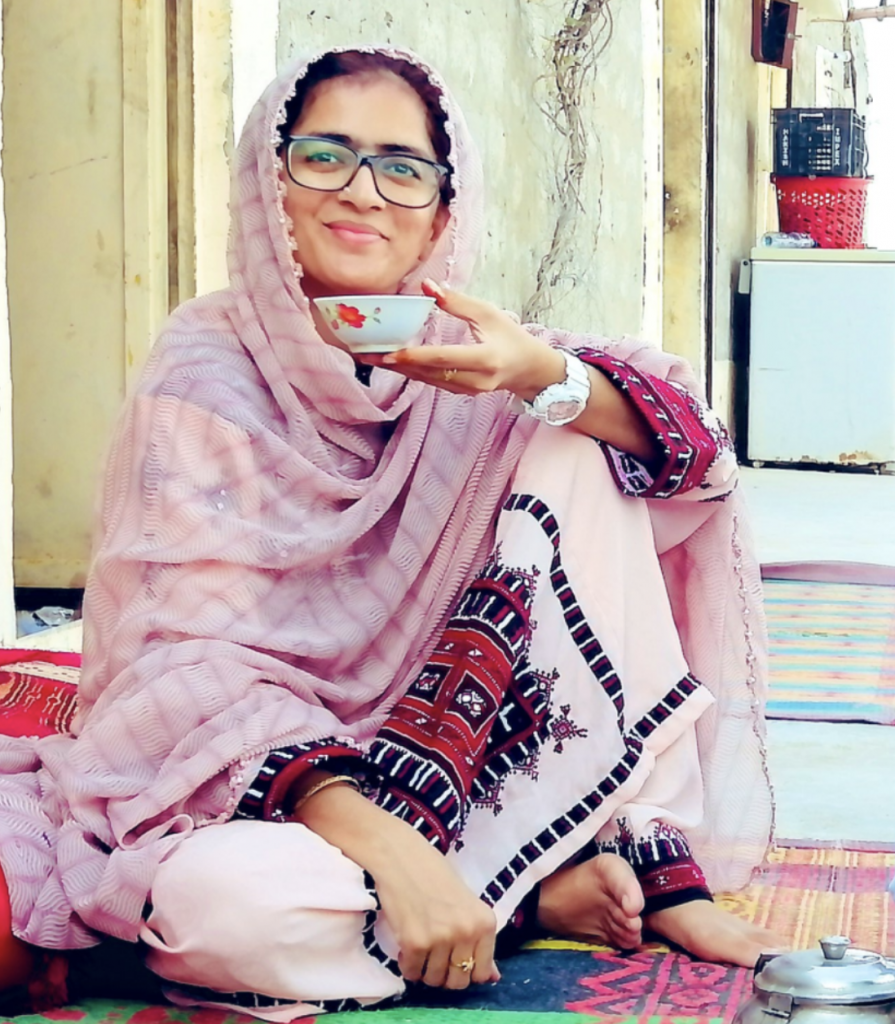
It’s a truth widely accepted in Pakistan that drinking chai is what makes you a true native. And not just any chai, but the sweet, milky, caramel-colored brew that is served at dhabas (outdoor tea stands) and slurped noisily while sitting on a small plastic chair, waiting for the dhabay wala to bring you another cup because one is never enough.

But while street dhabas play a major role in Pakistani society, they are traditionally a male-dominated space.

Granaz Baloch, a teaching fellow at the University of Turbat in Balochistan, is a feminist academic and writer whose research focuses on the gender challenges rural women face in finding potable water. She said that while dhabas in Turbat provide “information, opportunities and networking” for men in the city, women are not welcome. But this is not a Turbat-specific issue. Until recently, it was very unusual to see a woman enjoying the simple pleasure of a leisurely cup of chai at a roadside stand anywhere in Pakistan. Now attitudes are beginning to change, partly on the back of social media driven influencer culture. 

[caption id="attachment_2404" align="aligncenter" width="640"] Granaz Baloch[/caption]

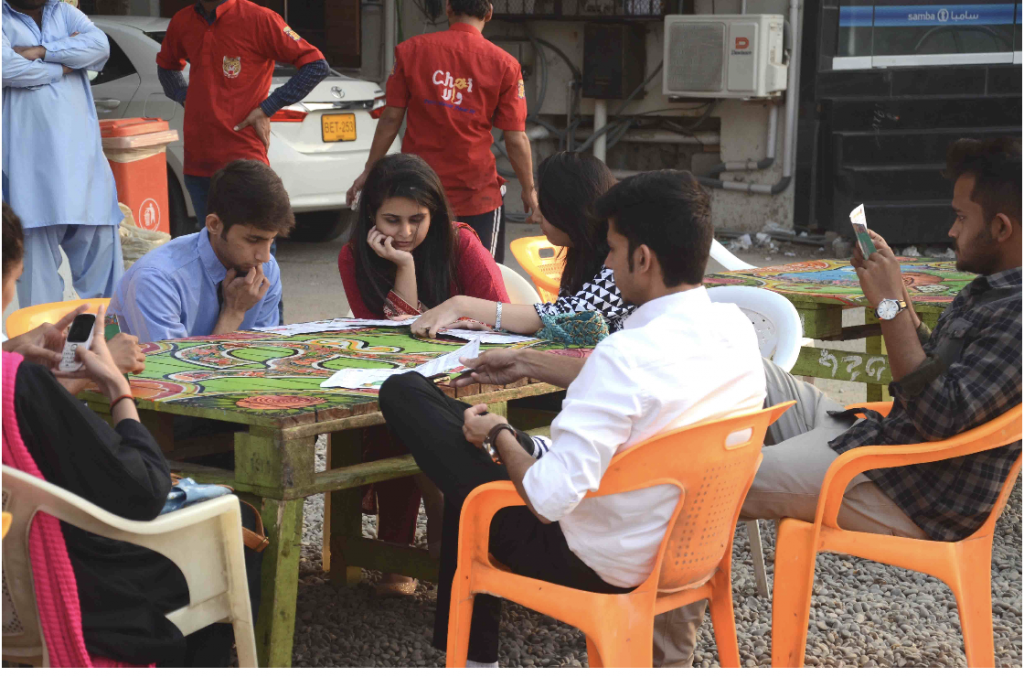
Chai Wala is a hip Karachi café (tagline: "reinventing the chai experience") that serves upscale versions of traditional dhaba snack foods and beverages. Established five years ago, it attracts young men and women who are drawn to its trendy decor and menu, which includes Nutella chai, "artisanal" teas, and “dips” like hummus. It also sells branded merchandise. Places like Chai Wala have taken the concept of the traditional working class outdoor tea stand and reinterpreted it to attract a bourgeois clientele. 

[caption id="attachment_2406" align="aligncenter" width="640"] The scene at Chai Wala.[/caption]

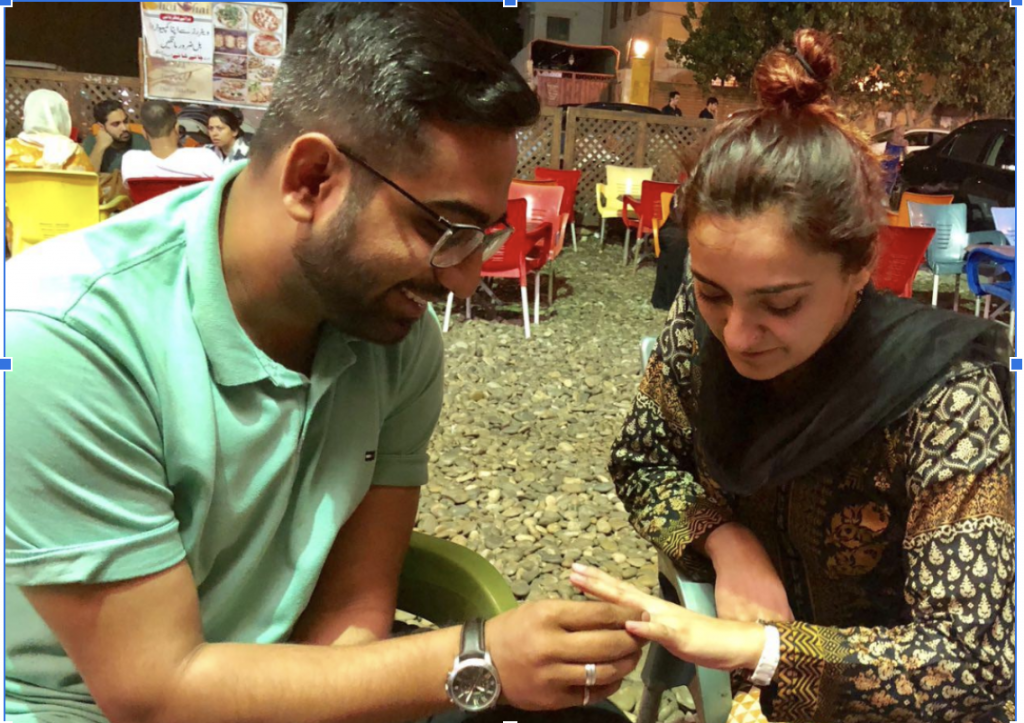
Shaheera Anwar, a 29 year old journalist who moved from Saudi Arabia to Karachi in 2017, got engaged at a traditional outdoor dhaba. “I was dating my now-husband and we often hung out at dhabas after work—and I am someone who hates grand, public gestures, so I got proposed to at a dhaba,” she said. Shaheera is aware that dhaba culture has since become trendy, and she is not sure this is a good thing. She sees places like Chai Wala as gathering places for the rich that erase the egalitarian culture of the traditional dhabas.

[caption id="attachment_2405" align="aligncenter" width="640"] Shaheera Anwar getting engaged at a traditional dhaba in Karachi.[/caption]

Among middle class Pakistanis there is a widely-held perception that high end dhabas are safer for women because they attract a “better crowd.” This raises the question of the role class plays in Pakistani society, and how it affects the way women are treated in the public domain. 

The emergence of high end dhabas occurred right around the time that a feminist collective founded an organization called Girls at Dhabas,  which addresses the absence of women in public spaces and strives to reclaim them. The media gave significant coverage to the group when it first launched, but while press attention has since dwindled the movement has only grown stronger and more vocal in addressing the structural problems that prevent Pakistani women from moving about freely in the public square.

“It took living in other countries to learn that I had been conforming to a clever scam my whole life, thinking the city belonged only to men,” said movement founder Sadia Khatri. Sadia speaks in poetic language about the joy that comes with finally breaking free of the restraints placed on women’s freedom of movement. “The city’s breath rising to meet mine with each step, the pleasure of placing one foot before another, unthinking, meditative. The trust that so long as I kept going, Karachi would keep expanding, opening up before me.”

Many Pakistani women are making similar discoveries about the joy found in moving about in public. Maliha, who re-entered the corporate world after a career break, said that working in an office brought a kind of freedom she had all but forgotten. By extension, sitting at dhabas no longer seemed as daunting. “You gain enough confidence that when someone tries to harass or catcall you, you don’t shy away from hitting back,” she said.  Maliha found herself easing into the spaces she wanted to be. “The more you become accustomed to an environment, the more you learn about an environment, the more confident you become in dealing with that environment,” she said. 

Shoaib is the owner of a successful traditional dhaba in Lahore that specializes in Amritsari hareesa, which the women in his family make according to an old family recipe. He cheerfully  acknowledges that his clientele, once predominantly male and working class, has expanded to include families and women; and he has noticed the increased presence of women on the streets. But while Shoaib expressed no objection to other women claiming public spaces as their own, he said he would not want the women of his own family to be seen on the street or eating a meal at a restaurant. For Shoaib the women he saw eating at his dhaba represented a different lived reality—one that was simply not his. 

Shoaib’s perception of the class divide seems accurate. Upper-class women at posh dhabas are granted the right to be there because they come with the entitlement associated with their socioeconomic class. They are accustomed to being addressed as “ma’am,” and the staff treat them accordingly. Working class women, however, do not see these cafés as their place.

But Sanam, a supervisor at Shahi Bawarchi Khana, a fashionable restaurant in Old Lahore,  banished her insecurities and discomfort about being out in public. “I no longer feel uncomfortable in public spaces, because I know I can handle myself,” she said of working in a restaurant, adding that “girls need to keep moving forward and face the world.” Unlike the women who founded the feminist collective Girls at Dhabas, Sanam is not from the educated upper class. But with her unapologetic confidence she is exactly the kind that needs to be normalized within this debate about public spaces. 

Aqib, the manager at a trendy chai dhaba style restaurant in Old Lahore, articulated his perception of how class drives the lived reality for women in Pakistan. “Women come here more than men now, especially young TikTokers who like creating a big fuss,” he said of the changing demographics among his customers. Like Shoaib, the proprietor of the traditional dhaba that specializes in Amritsari hareesa, Aqib thought that the increased presence of women in the public domain should occur within cultural limitations. 

But what Pakistani men think about gender roles is slowly becoming irrelevant to the women who are paving a path forward. In Karachi’s impoverished Lyari district, notorious for its gun battles between criminal gangs, Shazia Jameel, the manager at Lyari Girls’ Café provides a space in this very male dominated area where women can gather. At the café they can take English language classes, learn boxing, study hair styling and makeup techniques, and chat in a relaxed atmosphere without fear of molestation. Shazia leads a group of women from the café who go cycling on Sundays, stopping on the way back from their ride for breakfast at a male dominated dhaba. At first the women were uncomfortable there, but that feeling has since disappeared. Now they are regulars.

The truth is, it’s not the piercing gazes or the opinions that have really changed, especially not among the working class. What has begun to change is women’s responses to traditional mindsets. The posh dhabas are not remotely inclusive places, nor would anyone argue otherwise. But the noise around them has led women to question why they accepted the limitations placed on their freedom of movement in their own country. They now regard strolling the streets and sitting in cafés as their right. Shazia Jameel puts the onus for protecting women's safety on the authorities, calling upon them to instal CCTV cameras. She also advocates legislation to eradicate religious extremism, which she blames for the perpetration of restrictive attitudes toward women. 

Shazia is right. It’s well past time that the right of women to move about in public without fear of molestation be protected. Nor should they be held responsible for the way men behave toward them. Despite what the old guard may think, change is coming from every direction, one cup of chai at a time. 
    [post_title] => Pakistani women are claiming their right to be in public spaces—one cup of chai at a time
    [post_excerpt] => What Pakistani men think about gender roles is slowly becoming irrelevant to the women who are paving a path forward.
    [post_status] => publish
    [comment_status] => closed
    [ping_status] => open
    [post_password] => 
    [post_name] => pakistani-women-are-claiming-their-right-to-be-in-public-spaces-one-cup-of-chai-at-a-time
    [to_ping] => 
    [pinged] => 
    [post_modified] => 2026-08-06 22:47:02
    [post_modified_gmt] => 2026-08-06 22:47:02
    [post_content_filtered] => 
    [post_parent] => 0
    [guid] => https://conversationalist.org/?p=2401
    [menu_order] => 219
    [post_type] => post
    [post_mime_type] => 
    [comment_count] => 0
    [filter] => raw
)
Pakistani women are claiming their right to be in public spaces—one cup of chai at a time

WP_Post Object
(
    [ID] => 2286
    [post_author] => 2
    [post_date] => 2021-02-05 05:30:59
    [post_date_gmt] => 2021-02-05 05:30:59
    [post_content] => The search for a room of one's own—on Instagram.

Pakistanis were late adopters of social media culture, but that is now changing rapidly; emerging Instagram influencers with tens of thousands of followers have become the subject of articles in online magazines and on television. One of the most notable aspects of Pakistani influencer culture is the rise of women, who are finding a space and a voice in the country’s deeply conservative, patriarchal culture. 

Tanzeela Khan is a publicist as well as a style and beauty influencer, with over 100,000 Instagram followers. In her carefully curated photos she models outfits that highlight the latest fashions from both East and West, with captions that offer observations about her social life and her emotions. A photo posted on January 20 shows Tanzeela in a plum colored chenille coat with a matching face mask, captioned #motd (message of the day). 

Pakistani society frowns upon women who work outside the home; social media platforms offer them an opportunity to both stay at home and become entrepreneurs. The pandemic lockdown didn’t spark the rise of Pakistani influencer culture, but it definitely caused it to grow exponentially.

Women comprise 49 percent of Pakistan’s population, but only 24 percent of the labour force. The unpaid labor of domestic duties is not classified as work, which is a consequence of the fact that women are deprived of a space in the discourse for their own narratives. A few newspaper headlines illustrate widely held views on women in the workforce. 
  • “No country for working women,”  (Pakistan Express, March 10, 2018)
  • Should Pakistani women get a job? Yes but.. Say Pakistani men,” (World Bank Blogs, April 5, 2019);  
  • Problems working women face”  (Dawn, May 9, 2019)
While these articles make it clear that Pakistani women face severe challenges in seeking work outside the home, they focus on data while ignoring the human stories that show how women are affected by the lack of opportunities to embark on a career. Nor do they offer solutions, or suggestions for a path forward. The voices of women are not heard, whether they stay at home or go out to work. Tooba Syed, a feminist activist, pointed out in an Opinion piece for Dawn newspaper that women who do enter the workforce generally work in “occupations that mimic care work; undervalued, underpaid and further reinforcing women’s primary gender role as a caregiver.” Influencer culture provides Pakistani women with a space completely their own, neither dominated by men nor governed by existing norms of what is and isn’t acceptable—at least not directly.  Saman Zahrai, who moved from her native Lahore to London after she married, started out as a mommy blogger in 2018. “There was so much about mommyhood that I just wanted to share,” she said. She had been online for months before she recognized the opportunity to monetize her Instagram posts. As her blog developed, she began to incorporate other interests and to learn what interested her followers. This helped her make the shift to becoming a fashion influencer who shares her style choices, which include both traditional Pakistani outfits and European trends. Zahrai still visits Lahore frequently; she said the contrast with her life in London has made her acutely aware of the extent to which her native country denies women a space of their own. Blogging and influencing, she confirmed, can feel very liberating for women who want to express themselves in an environment that is free of social opprobrium and not controlled by the male gaze. Some influencers mix it up, with glamorous posed style photos alongside social justice messages. Rimsha Waseem, an influencer from Karachi who has more than 52,000 followers, says that she feels a responsibility to include social responsibility messaging with her fashion and makeup content. In addition to launching a campaign for breast cancer awareness on her YouTube channel, she worked with a local manufacturer of feminine hygiene products to raise awareness of period poverty.  Rimsha, Saman and Tanzeela come from privileged backgrounds. Their families are well off, they are educated, speak English, and have unlimited access to the internet and social media. In taking advantage of the opportunity to amplify their own voices and carve out their own space, they are paving the way for other women. Pakistani feminists understand that the few need to champion the many. But critics of the new influencer culture claim the young women who model their glamorous clothes and lifestyle on Instagram and YouTube are wasting their time; that they are immodest; or that they are unrepresentative and out of touch. The fatal flaw in the claim that Pakistan’s female influencers are out of touch with their country’s social reality is the case of Qandeel Baloch, the first and most famous influencer of them all. Unlike Tanzeela, Saman, and Rishma, Qandeel was not from the educated upper class. She was born to a conservative family in a small rural town in the Punjab, grew up poor and was married off at age 18 to a cousin who, she said, was physically abusive. Baloch escaped the marriage and ran off to the big city, where she changed her name (her birth name was Fauzia Azeem), tried and failed to break into show business and then discovered that the surest path to fame was via social media. The videos Baloch posted on her Facebook wall, which had more than 500,000 followers, managed to be simultaneously sexually provocative, guileless, and socially critical. She monetized her fame with paid advertising, which allowed her to support her family. But in 2016 an ill-conceived stunt that exposed a prominent imam’s hypocrisy brought notoriety, threats, and unwelcome attention directed at her family. On a visit home shortly after the incident with the imam, her youngest brother smothered her to death while she slept—in a so-called “honor killing.” She was 26 years old.  The murder of Qandeel Baloch sent shockwaves across the country, and was widely covered by the media both in Pakistan and abroad. Baloch had spoken often about taking charge of her sexuality rather than letting the exploitative media industry do it for her. Now, her murder resonated even with women who had disliked Baloch’s provocative persona. She became an icon for resilience and for the principle that a woman had the right to her own voice. Pakistani influencers from more privileged backgrounds still face significant challenges. Arranged marriages are a cultural norm for most families, but those who might have been interested in asking Rimsha to be their daughter in law see her career as a barrier. “People see it as me “showing myself off,”” said Rimsha. She added: “According to them it is not right for a girl to do, but no one sees the effort that goes into content creation.” While most of the Pakistani influencers on Instagram are women, the trend of social media bloggers and personalities began on YouTube with Zaid Ali, a Canadian-Pakistani star vlogger. Ali led the way for male vloggers, most of whom create funny, relatable videos that are entertaining but not exactly substantive. What’s notable is that the men are applauded for their light and amusing videos, while female influencers are criticized for the same type of content. Male influencers are not accused of showing off or wasting their time.  Tanzeela says there’s still a long way to go before influencer culture becomes mainstream in Pakistan. So far it has provided a space and a voice for women with talents and business acumen that they had kept under wraps for too long. Rimsha said that the money she earns as an influencer has allowed her to move toward financial independence. “I’ve managed to fund my travels, and support myself in other means which I am very grateful for,” she said. Very few women ever live alone in Pakistan; the norm is to go from their family home to their husband’s family home. Nor is financial independence for women a widely understood concept, let alone a valued one. But influencer culture and blogging have opened new doors for women to earn money on their own terms. The financial independence is gratifying, and is a small step toward broader social acceptance of women who earn their own living.  These are strong, smart women who have figured out how to monetize their passions. Pakistan needed a space where women could own their brands; we must move past the point of looking down on fashion, style or beauty as lesser content, which boils down to pulling people down. Rimsha is a strong advocate for lifting up and supporting women. Global women’s movements have shown the power of solidarity over the years and the influencer culture is no different. There’s a new kind of working woman in Pakistan and she’s here to stay. [post_title] => Pakistan's female influencers are challenging the patriarchy [post_excerpt] => Pakistani society frowns upon women who work outside the home; social media platforms offer them an opportunity to both stay at home and become entrepreneurs. [post_status] => publish [comment_status] => closed [ping_status] => open [post_password] => [post_name] => an-instagram-account-of-ones-own-pakistani-women-are-finding-a-voice-through-influencer-culture [to_ping] => [pinged] => [post_modified] => 2026-08-06 22:55:35 [post_modified_gmt] => 2026-08-06 22:55:35 [post_content_filtered] => [post_parent] => 0 [guid] => http://conversationalist.org/?p=2286 [menu_order] => 228 [post_type] => post [post_mime_type] => [comment_count] => 0 [filter] => raw )

Pakistan’s female influencers are challenging the patriarchy

WP_Post Object
(
    [ID] => 730
    [post_author] => 2
    [post_date] => 2019-03-15 16:32:04
    [post_date_gmt] => 2019-03-15 16:32:04
    [post_content] => Thousands of Pakistani women took to the streets of cities across the country to demand gender equality. 

On March 8 thousands of women took to the streets of Pakistan's cities to join the Aurat March, or Women’s March, and demand their rights. The atmosphere was exuberant and hopeful, and the march felt as though it were an announcement: a new generation of homegrown feminists had come of age. In their battle for gender equality, however, Pakistani women face some heavy and unique socio-political challenges. 

The demands voiced by the women who assembled in urban areas across Pakistan might sound anachronistic or quaint to Western feminists. In addition to calling for an end to violence toward women, they chanted and carried signs for a living wage for female workers, for increased political participation — and the right to move freely in public spaces. 

In Pakistan, the march’s detractors claimed that it was copied from the Women’s March that took place in the United States in January 2017. Given the very tangible risks Pakistani feminists face, this dismissive attitude is at best ignorant. The women who marched in the United States did not fear physical violence or social condemnation. And the women who marched in Pakistan were inspired not by foreign activists, but by homegrown feminist icons.

The Aurat March is only the latest iteration of a complex feminist movement Pakistan, which was recently declared the sixth most dangerous country in the world for women.

The power of the patriarchy

Pakistani feminists seek to raise awareness among their female peers about their basic rights. Women have the right, for example, to safety and security; to freedom from gender-based discrimination and from sexual harassment. They have the right to equal career opportunities, to schooling and healthcare. Women in Pakistan are struggling against decades, if not centuries, of strict gender roles defined by one of the harshest patriarchies in the world. That patriarchy implements strict control over all areas of girls’ and women’s lives. It enacts violence on women’s bodies, using a strict interpretation of Islam as justification for this misogyny. Pakistan’s legal system perpetuates this. While pro-women laws have been passed by the government,  the police do not enforce them and the legal system rarely prosecutes them. Pakistani feminists also face accusations that feminism is a movement of the privileged, or the Western-educated; that by fighting for women’s rights they are undermining Islam, which they claim already gives women their rights in the context of religious law. In conservative Pakistan, all revolutionaries are accused of immorality and obscenity, and of causing social upheaval and corruption. But the backlash against the feminist movement is even more vindictive than usual. It is colored by misogynist abuse and condescending dismissal that comes from even the most educated men and women — because they are heavily invested in the patriarchal structure of the country, which is the source of their privilege.

Accusations of foreign influence

Some of the suspicions toward the Pakistani feminist movement comes from the fact that Western feminists have, particularly since 9/11, attempted to impose their particular expression of feminism in non-Western parts of the world, such as Iran, Iraq, Afghanistan, and Pakistan, often in conjunction with foreign military interventions. Now, with the rise of global and intersectional feminism, “white feminism” is under strong criticism for its inability to place the voices of those non-Western women above its own agenda. But this criticism ignores the fact that there is a genuine home-grown feminism in all these non-western countries. It is led by local women who express their own needs and desires, form their own agendas, and fight their own battles.   Pakistani feminists have refuted accusations that feminism is a Western-imposed movement, or that it is secular (i.e., un-Islamic), by placing the struggle in the context of Pakistan’s social and political issues, and by addressing the immediate needs and concerns of Pakistani women. Feminists in Pakistan have coined the Urdu word behenchara, or sisterhood, to enact a feminist takeover of the word bhaichara, or fraternity.  They have also placed an inclusive, intersectional ethos at the center of the movement to bring together Pakistan’s diverse groups under the banner of yakhjeti, or unity.

Raising a grassroots movement

On March 8 Pakistani women gathered in Lahore, Karachi and Islamabad, just as they did in 2018. Following weeks of project-building, intense campaigning, door-to-door awareness-raising, and clear and urgent communication of their goals, they marched through public spaces. They made sure to express their message in a host of local languages, in order to make it accessible to as broad as possible a swathe of Pakistani society. They framed the struggle for women’s liberation as one that is inherently linked with the liberation of all oppressed groups and minorities. Last year, 5,000 women from all sections of society marched. They attracted attention from the media, both local and international, and starting a dynamic conversation on social media, in classrooms, and on television, about what feminism is and why it is necessary in Pakistan. This year the turnout was even bigger, as women across ethnic groups and religious sects, socioeconomic groups and gender identities, turned out to hear inspirational speeches from women leaders and representatives, to sing and dance and to take over the streets. In Pakistan, both dancing and taking control of public space are considered immoral behavior for women.

Pakistani feminists don’t need white saviors

The march was not limited to the educated, urban elite. The women of Sindhiani Tehreek, the rural Sindhi Women’s Movement, came to Karachi from Hyderabad and the village Jungshahi on the coast of Sindh. Women from the Hindu and Christian minority communities attended in Lahore and Karachi. Female health workers and midwives, who provide medical care in the most intimate of women’s spaces and have been identified as a major part of the grassroots feminist movement in Pakistan, took center stage at the march. Women marched in Peshawar, Quetta, Faislabad, Hyderabad, and Chitral too, bringing the numbers to nearly 8,000 across the country.  Pakistani feminists have never waited for Western feminists to instruct them in how to fight for their rights. Today a younger generation of feminists is building on the work of female activists who struggled against dictatorship in the 1970s. The Women’s Action Forum was at the forefront of that struggle against Islamist General Mohammed Zia ul Haq, who controlled Pakistan for a decade beginning in 1978. During that time of dictatorship and martial law, the regime stole many of the rights for which women had long struggled; trying to confine them behind the veil and in the home. The brave young women of WAF endured political oppression, social condemnation, and physical violence. In one infamous incident, during their protest on the Lahore Mall against the 1979 Hudood Ordinances — newly introduced laws that criminalized adultery and non-marital sex — police beat them and tried to disperse them with tear gas. The Pakistani feminists of 2019 are inspired by those women, who are now feminist icons, and their groundbreaking activism. Metaphorically taking the torch passed on from the previous generation, contemporary feminists formed a new collective last year; it is called Hum Aurtain (We Women —  the title comes from Pakistani poet Kishwar Naheed’s famous poem “We Sinful Women), and it was instrumental in organizing Karachi's Aurat March in 2018.

A second generation of homegrown feminists

Aurat March organizers made it clear that the march was not foreign-funded, nor funded by NGOs or corporations, and that there were no alliances with any political party. The Pakistani feminist movement is homegrown, inclusive, and intersectional.  They urged men to become allies and join the movement; standing against patriarchal structures, they said, was open to all. But the Aurat March of 2018 and 2019 did not happen overnight. Feminist groups and collectives like Girls at Dhabas, Aurat Raj, Women on Wheels, Girls on Bikes, and the Lyari Girls Café have been chipping away at those societal strictures for several years now. Thanks to their work, people are starting to challenge restrictive attitudes toward women. The work of Pakistani feminists will continue even after the high of the Aurat March 2019 fades away. Pakistani women are exploring female-led initiatives in technology and finance, women’s leadership in sports, academics, media, and the military. They have formed organizations that seek to put women on company boards, on panels, position them as experts in every field. Women in the rural areas area agitating for a living wage, for their work to be recognized as formal labor. Most excitingly, all of these components form a feminist discourse that is gaining momentum among young people, women, men, trans, straight, queer. Feminism is rapidly becoming part of the everyday conversation shaping a more progressive Pakistan. [post_title] => Pakistan’s feminist revolution: The second generation [post_excerpt] => Pakistani feminists have never waited for Western feminists to instruct them in how to fight for their rights. Today a younger generation of feminists is building on the work of female activists who struggled against dictatorship in the 1970s. [post_status] => publish [comment_status] => open [ping_status] => open [post_password] => [post_name] => pakistans-feminist-revolution-the-second-generation [to_ping] => [pinged] => [post_modified] => 2026-08-07 16:47:01 [post_modified_gmt] => 2026-08-07 16:47:01 [post_content_filtered] => [post_parent] => 0 [guid] => https://conversationalist.org/?p=730 [menu_order] => 348 [post_type] => post [post_mime_type] => [comment_count] => 0 [filter] => raw )
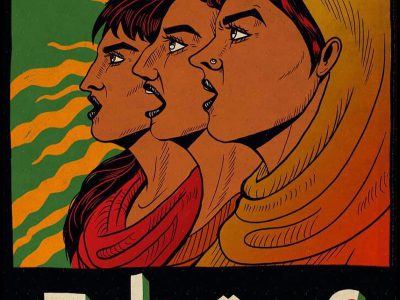
Poster for Aurat March 2018

Pakistan’s feminist revolution: The second generation