Three trans service members speak out on the military ban, and the rise of transphobia in the United States.
I met Commander Emily Shilling in April 2024 during a Lesbian Visibility Week panel celebrating LGBTQ+ women in leadership. I immediately found her both warm and intriguingly different. When I asked if she had ever flown upside down, the absurdity of posing such a question to a Navy test pilot sparked laughter, and a friendship.
After Trump’s reelection and his vow to reinstate a ban on transgender military service, my filmmaking partner Rivkah Beth Medow and I knew we had to respond. The growing anti-trans narrative wasn’t just a culture war skirmish, it was a symptom of something deeper and more dangerous: a coordinated effort to undermine democratic norms by turning vulnerable groups into political targets. We reached out to Emily, who saw our project as a way to turn a dark moment into a new mission: protecting her troops. When she shared that she’d voted for Trump in 2016 before coming out as trans, we all recognized how potent—and powerful—her story arc could be.
We initially intended to make a short film centered on Emily’s experience, but it became clear that there was a bigger story to be told. Emily has always understood the power of storytelling, and through her leadership role and deep respect in the trans military community, she connected us with several compelling voices across all branches of service.
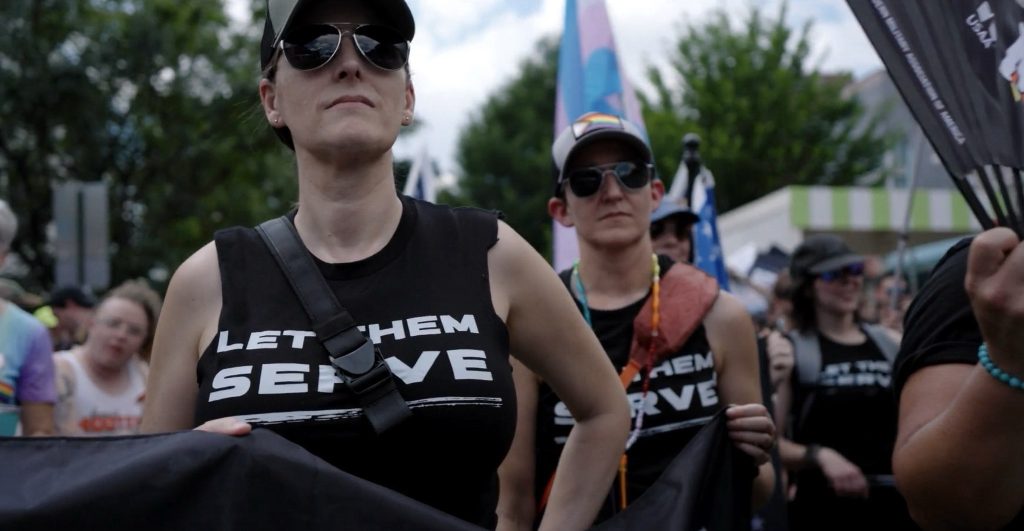
Alongside Emily, we cast Navy Petty Officer Paulo Batista and Army National Guard Chief Warrant Officer Jo Ellis for a feature documentary, Fighting Forward. The film follows these three trailblazing transgender service members as they continue to navigate career threats, legal battles, and rising political hostility. And yet, despite this constant onslaught, one of our most interesting discoveries as the project has progressed is that each of our heroes remains completely committed to serving their country. Each, too, has taken a completely unique path in moving forward.
This kind of service—steadfast, principled, and often invisible—is precisely what democracy requires to survive. But the attacks on LGBTQ+ rights, especially within government institutions like the military, are not isolated. They are part of a broader attempt to consolidate power by eroding the rights of those who don’t conform to a narrow, exclusionary vision of America. Efforts to push trans people out of public life, out of service, and out of legal recognition are not just discriminatory—they are anti-democratic. They chip away at the very idea of equal citizenship.
Equally chilling is the growing political rhetoric around using the U.S. military to "fight crime" in so-called "Democrat-run cities." Deploying the military against our own citizens, especially in diverse urban areas that overwhelmingly vote for progressive policies, is a direct threat to democratic governance. It weaponizes fear to justify the erosion of civil liberties and the silencing of dissent. This is precisely why it matters who serves in the military, who leads it, and whether or not they believe in the rights of all Americans: When the military is redirected to silence dissent at home, it stops defending democracy, and starts dismantling it.
Rivkah and I believe wholeheartedly in everyone’s right to belong. While we chafe at the military’s hierarchical system, feel appalled by their budget allocations, and are devastated by the environmental and human cost of war, if we have a military, then we want it to be representative of the country that military is fighting for. Not because of “woke ideology,” but because inclusion reflects democracy; and without it, we risk losing the very principles this country claims to defend.
The best way we know to shift culture is through telling nuanced stories amplified through impact campaigns that spark transformative conversations, policy change, and solidarity. While making this film, we’ve been surprised to find a strain of patriotism rising in us. It’s of an abolitionist and civil rights provenance, aligned with hope of what our democracy can possibly be. With the world around us on fire, both literally and figuratively, Fighting Forward has offered us a concrete way to challenge stereotypes, clarify misconceptions, and seed the culture we want for the United States.
~
Disclaimer:These interviews have been edited and condensed for length and clarity. The opinions expressed reflect the personal views of those interviewed, and do not necessarily reflect those of the U.S. Military or Department of Defense.
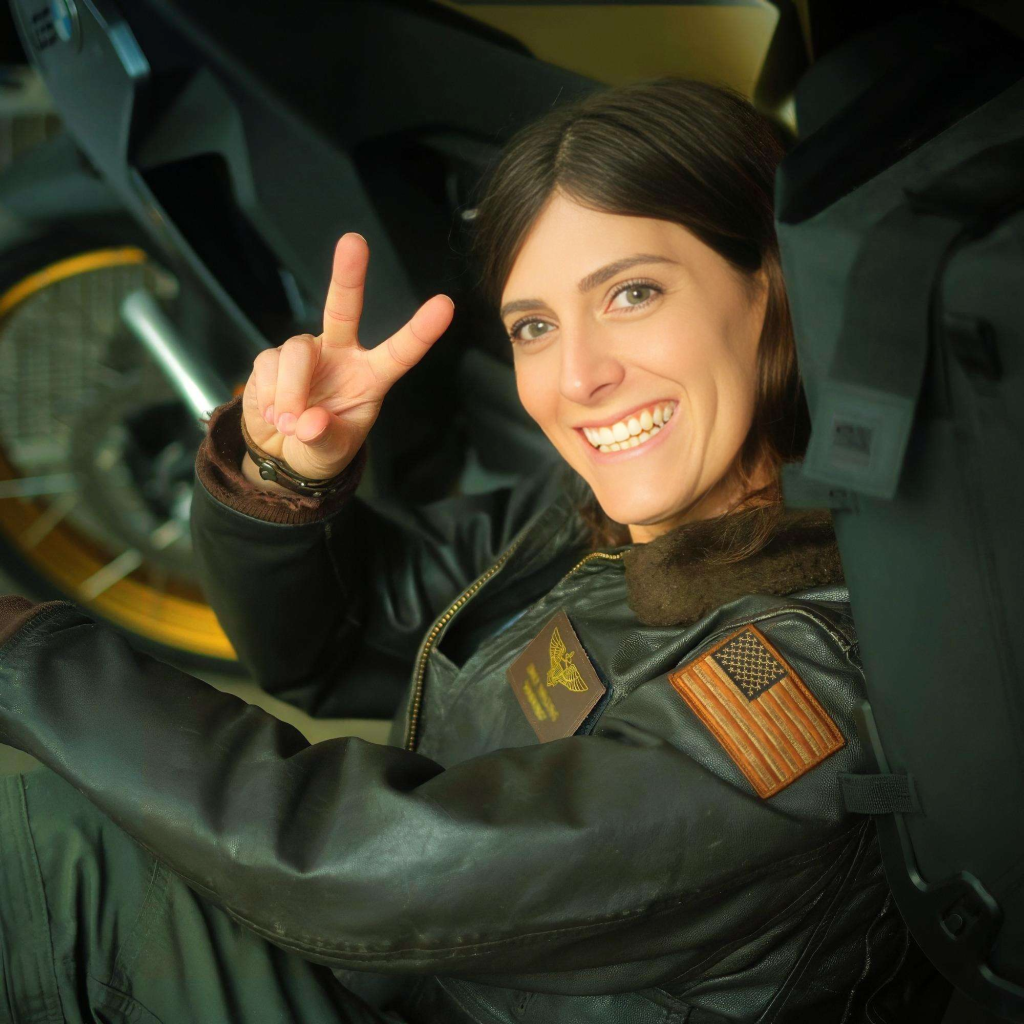
Navy Commander Emily "Hawking" Shilling
Photo courtesy of Emily Shilling.
Why did you first enlist?
The Navy’s motto at the time was “A Global Force for Good,” and I believed it, wholeheartedly. I believed in service, in being part of something bigger than myself. I couldn’t imagine sitting on the sidelines when I had the ability and the drive to make a difference. So I chose adventure, to stand and fight for all those who couldn’t. Maybe it was naive, or self-aggrandizing for the scrawny nerd I was, but I believed the worst sin of all is to do nothing in the face of evil.
What does it signal more broadly that trans people are now banned from joining the military?
It’s a betrayal of the very ideals the military claims to uphold. We say we’re a merit-based force, one where what matters is your capability, your integrity, your commitment. When we start disqualifying people simply because of who they are, we’ve abandoned that principle. If identity, not performance, is grounds for exclusion, where does that line stop? It's not just unjust. It's dangerous. The military must be made up of the people it swears to protect; otherwise, those that are different tend to become the unprotected.
What do you want people to know about the ban, how it’s impacting you, and what it means for the U.S.?
I want America to understand this isn’t abstract, it’s affecting real people, with real lives, families, and responsibilities. I’ve worn the uniform for over two decades. I’ve deployed in combat. I’ve led teams and flown missions that mattered. And now, people like me—qualified, capable Americans, patriots—are being told we’re not welcome, not because of performance, but because we were brave enough to say who we are. That should alarm every citizen. This ban doesn’t just hurt trans people, it undermines the strength of our military and the values we claim to defend. A country that believes in liberty and justice for all shouldn’t be in the business of telling patriots they’re not allowed to serve if they don’t match the reigning political party’s “perfect mold”.
Emily (foreground) with her wife, Amanda. Photo courtesy of Emily Shilling.
What, if anything, is giving you hope right now?
I find hope in those who refuse to accept silence as safety. People are organizing, speaking out, pushing back against the narrative that some of us are less worthy of dignity or service. Your voice matters.
I find hope in my fellow service members and veterans, who are standing together in solidarity. Many of them have seen what leadership really means, and they know it has nothing to do with gender or politics and everything to do with integrity, skill, and trust.
I find hope in how many people outside of uniform are waking up to what’s happening. They’re realizing this isn’t just about trans people, it’s about whether we will be a nation that honors its promises, and continues to fight for the dream of a more perfect union.
And personally, I find hope in simply still being here, able to speak the truth out loud, to show up for others, and to remind people that we’ve been through dark times before and when we have organized, when we have stayed loud and connected and human, we have never lost. And, if we have the moral courage to fight, we will win this time, and every time.
What can readers do to support trans service members?
1. Raise your voice. Contact your elected officials. Let them know you oppose discrimination in the military and support open service. They do pay attention to public sentiment, and silence helps no one.
2. Challenge misinformation. Whether at your dinner table or your workplace, don’t let transphobia or fear-mongering go unchecked. Educate yourself, then share accurate, humanizing stories, especially about those who serve.
3. Support organizations doing the work. Groups like SPARTA, Modern Military Association of America (MMAA), and Minority Veterans of America (MVA) are fighting daily for the rights, recognition, and safety of LGBTQ+ service members and veterans. Donations, signal-boosting, and volunteering all help.
4. Connect and care. If you know a trans service member, reach out. Let them know you see them, support them, and appreciate their service. It’s not always about grand gestures; sometimes, the quiet affirmation that we’re not alone gets us through.
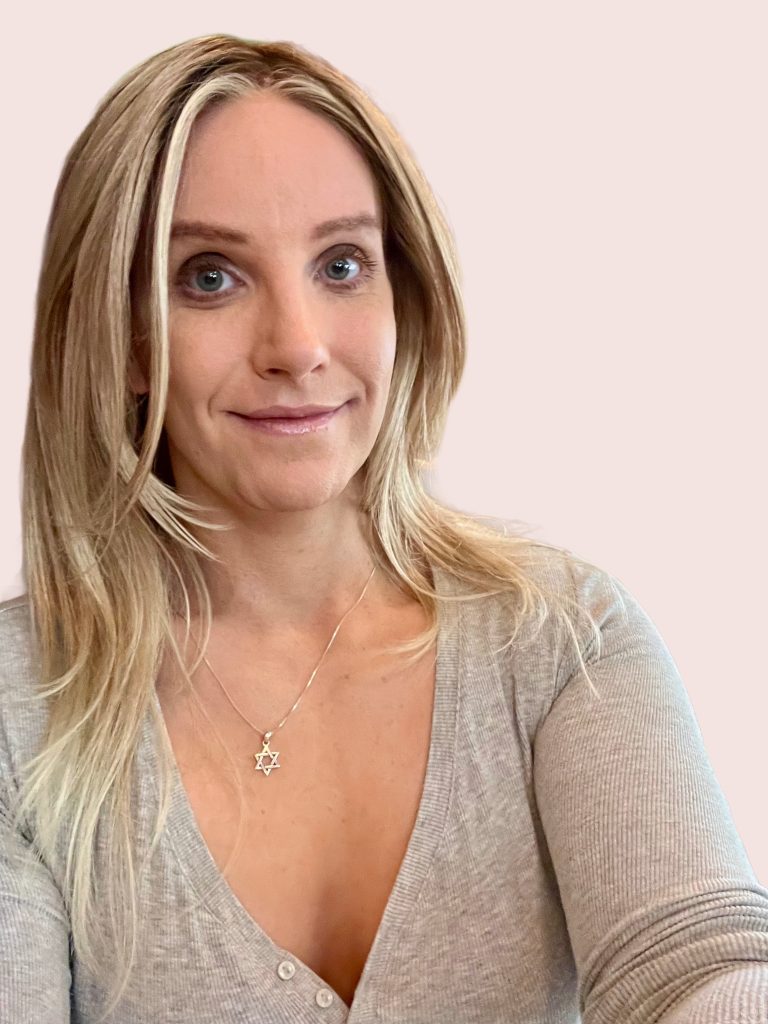
Army National Guard Chief Warrant Officer Jo Ellis
Photo courtesy of Jo Ellis.
Why did you first enlist?
I wanted to serve my country. Service is in my blood. I’m a patriot and I come from a family of military service.
What does it signal more broadly that trans people are now banned from joining the military?
It means our country will lose out on patriots like me who volunteered to sacrifice for the country. It means instead of a military based on meritocracy, it’s now a military based on political ideology. Instead of selecting the best person for the job, we are excluding an entire category of people for no justified reason. It’s pure animus. Service members were told they could serve openly and now we are being punished for coming out under a previous administration.
What do you want people to know about the ban, how it’s impacting you, and what it means for the U.S.?
Thousands of deployable service members are being purged from the military without regard to readiness, cost, or experience. Service members are being sent home from deployments, command positions vacated without replacements, and no plan to recoup qualified personnel. We can’t shortcut a decade-plus of military experience.
Photo courtesy of Jo Ellis.
What, if anything, is giving you hope right now?
I believe in the great experiment that is the United States. We can be better. It’s not big percentages that make the difference in this country. It’s in the margins. 1%. 1% better each day. It’s the aggregation of marginal gains that lead to exponential results. Maybe that’s quixotic, maybe I’m the greater fool. I’ll wear those as a badge of honor. This country was founded by greater fools.
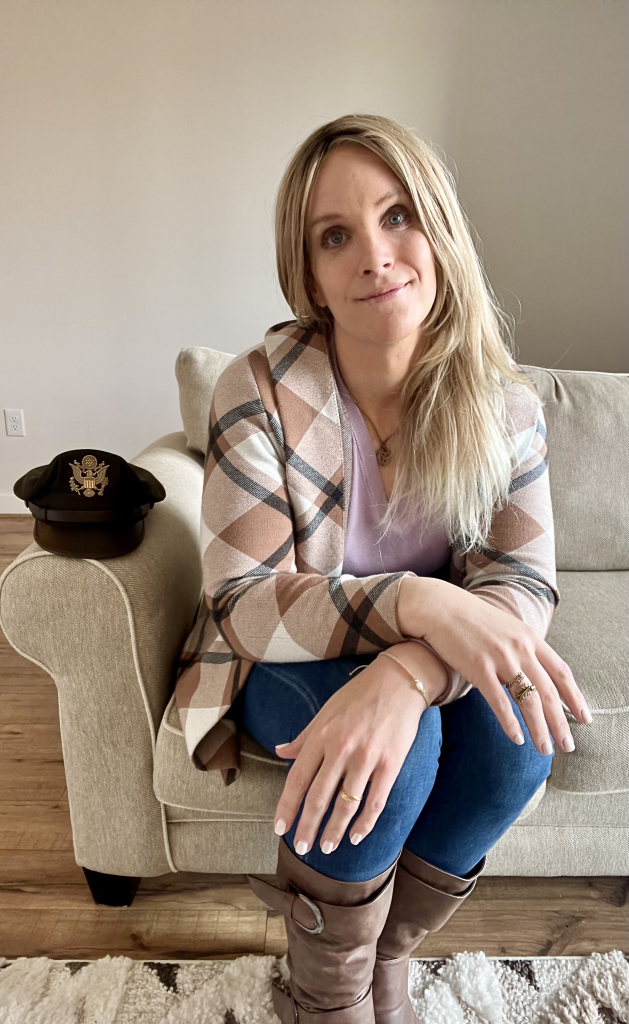
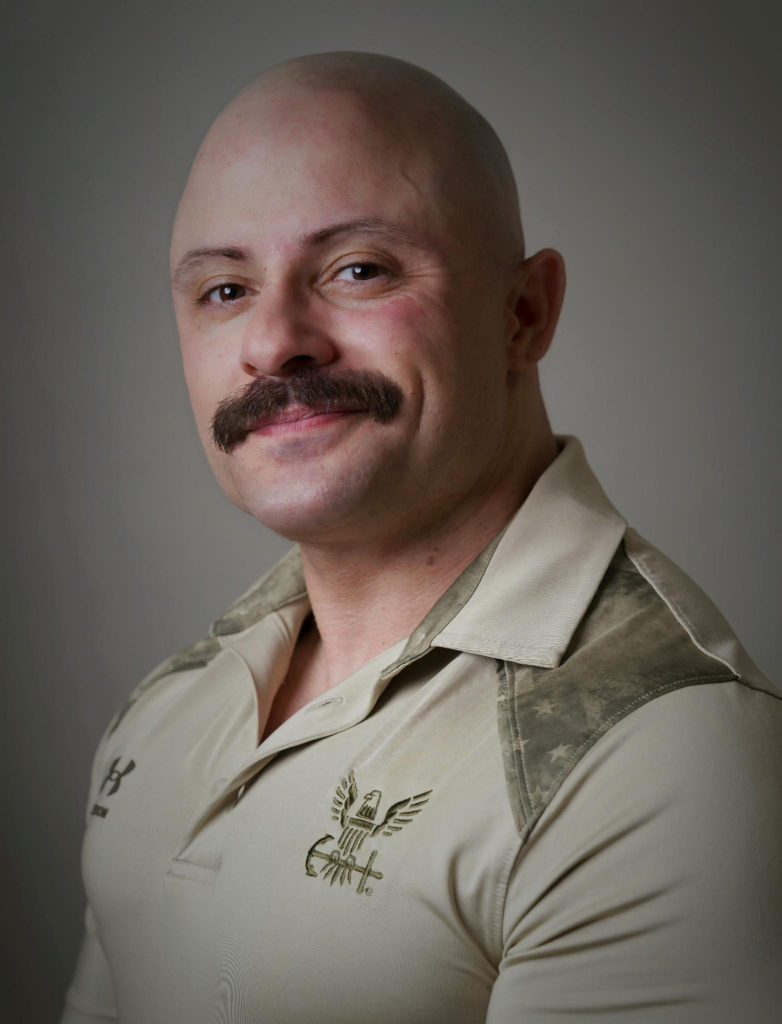
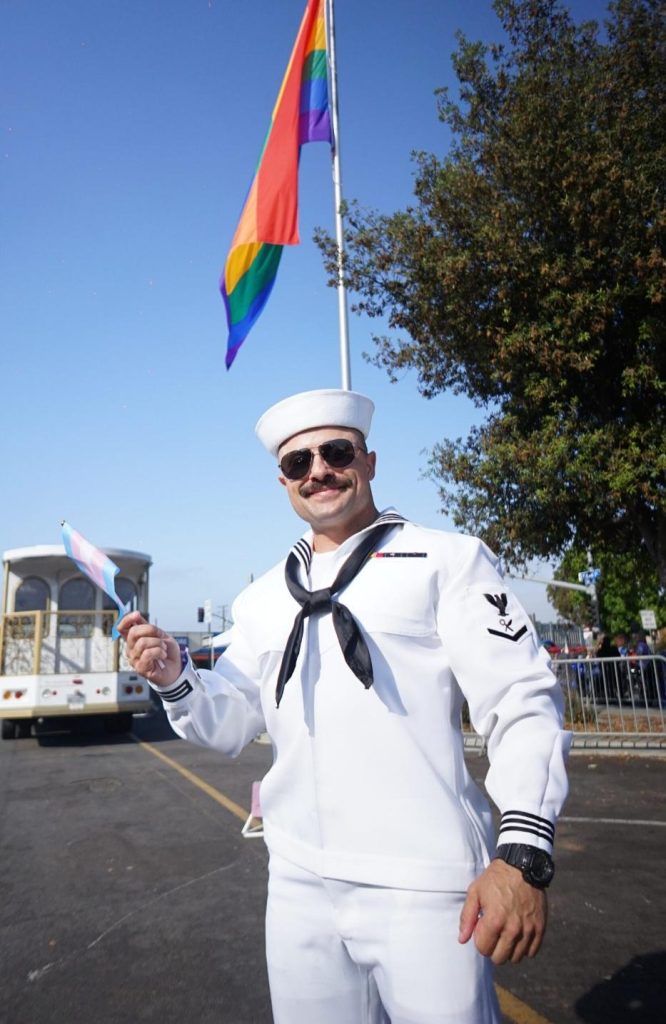
Navy Petty Officer 2nd Class Paulo Batista
Photo courtesy of Paulo Batista.
Why did you first enlist?
I enlisted because it was a dream since high school to serve in the military, inspired my by older brother who served for 20 years in the Air Force. Due to the "Don't Ask, Dont Tell" policy and me becoming my father's caretaker after high school, I could not join right away and had to wait until later in life.
What does it signal more broadly that trans people are now banned from joining the military?
It means military readiness will be affected. Many transgender military service members play a vital role in all branches. We are enlisted to officers, and removing us from our jobs will leave gaps in many areas, including deployments. The military will lose great leaders with experience in their areas of expertise that cannot be replaced easily.
What do you want people to know about the ban, how it’s impacting you, and what it means for the U.S.?
That being transgender in the military does not affect military readiness. We meet the requirements and standards implemented to service our country. However, more importantly, transgender service members have been serving for decades in the military, making our military more effective.
Unfortunately, per the new policy, thousands of effective service members, including non-transgender members, will be affected. It's a domino effect when the gap is created. Pulling a transgender service member from their job means that other service members will have to cover down for that unmanned position, ultimately causing more stress on the other service members by making them work longer or go on longer deployments, thus taking service members away from their families and causing more strain on other service members and their families, declining military readiness instead of increasing it.
Furthermore, the ban causes harm to all the transgender service members due to the DD214 [Certificate of Release or Discharge from Active Duty] rating that the policy implements, giving a rating that ultimately labels transgender service members a national security threat, thus affecting our futures and ability to continue our careers, even though we all served our country with honor, courage, and true bravery.
Photo courtesy of Paulo Batista.
What, if anything, is giving you hope right now?
The one thing that gives me the greatest hope is my community and trans siblings. Seeing others standing tall and seeing the ones who tell me they get hope from seeing me stand loud and proud against the current environment instead of going quiet.
What can readers do to support trans service members and veterans?
If allies and friends are looking to help, the best ways start with reaching out to their representatives and congressional offices. Helping influence their decisions is vital, as that is the way to make the changes we need. Otherwise, I would say be a voice for transgender service members when we cannot speak. We are a limited number of voices, and need a vast audience to spread the correct information and hopefully educate the ones who are willing to listen.
[post_title] => "I Find Hope in Simply Still Being Here"
[post_excerpt] => Three trans service members speak out on the military ban, and the rise of transphobia in the United States.
[post_status] => publish
[comment_status] => closed
[ping_status] => closed
[post_password] =>
[post_name] => transgender-military-ban-lgbtq-trans-rights-equality-veterans-service-members-interview-emily-hawking-jo-ellis-paulo-batista
[to_ping] =>
[pinged] =>
[post_modified] => 2025-11-11 05:38:38
[post_modified_gmt] => 2025-11-11 05:38:38
[post_content_filtered] =>
[post_parent] => 0
[guid] => https://conversationalist.org/?p=9582
[menu_order] => 0
[post_type] => post
[post_mime_type] =>
[comment_count] => 0
[filter] => raw
)
On the history we see—and the history we don't—in "I'm Still Here."
When Eunice Paiva first learns that her husband Rubens has been murdered in the Oscar-nominated film I’m Still Here, the audience only sees her reaction to the news, but never actually hears what has happened. The scene is bewildering to watch: Sitting on the office couch in her bathing suit, having just returned from swimming in the sea by their house, Paiva’s hair is still dripping with saltwater when she finds out her life has been changed forever. But the audience doesn’t yet know why.
I’m Still Here takes place during the Brazilian military dictatorship of 1964 to 1985, and the scene almost functions like an emotional map of the fallout of fascism in Brazil—confusion over absence of information, followed by the heaviness of grief. Rubens’s murder is only confirmed to the audience much later in the film, when his now-widow specifically asks what has happened to her husband’s body. This is when the still-hazy facts fall into place: Rubens was kidnapped and murdered by the Brazilian right-wing military dictatorship, and his family will never see him again.
I’m Still Here is based on a true story: Both in the movie and in reality, the Brazilian government wouldn’t admit to killing Rubens until 25 years after the fact. For much of the film, this unknowing leaves both Paiva and the audience on uncertain ground—how can we react to news we didn’t really hear? And how do we grieve for someone we don’t yet know is dead?
It’s not surprising that one of the most talked about performances from the Academy Awards this year is Fernanda Torres’s quiet portrayal of Eunice Paiva, for which she has been nominated for Best Actress in a Leading Role. Yet the film’s impact is as much a credit to her performance as it is to the powerful true story behind it. The first Brazilian film to ever be nominated for Best Picture, I’m Still Here unveils a history that is often disputed or played down in both Brazil and the United States. It is a resurfacing of the prohibitive and visceral reality of living under the Brazilian military dictatorship: A “dissident” politician, Rubens Paiva was one of 434 people the regime kidnapped and murdered under the guise of stamping out communism and socialism, a move that was aided and abetted by the US during the Cold War. Rather than focus on his story, however, the film instead turns the lens on his wife, Eunice—one of the countless women and families those killings left behind. Through her perspective, there’s a surprising subtlety to I’m Still Here—and in its silences, there are embedded histories that the average non-Brazilian viewer might not be able to understand, but that give important context to the story being told.
At the end of March in 1964, the Brazilian military staged a coup d’etat in response to then-president João Goulart’s structural reforms, which sought to reduce class inequality through workers’ rights and agrarian reform. These changes were not well liked by Brazil’s elite, who, in particular, viewed the agrarian reform—which would see abandoned land redistributed to people without any—as prejudiced against owners of large swathes of land. The president’s relationship with unions and his support for the working class were also understood as the beginnings of communism in Brazil, rather than as an attempt to regulate workers’ rights in a country that was still operating under the same logics of the colonialism and slavery that founded it. The regime’s anti-communist position was an ideological win for the US, which resulted in the launching of Operation Brother Sam, a plan to logistically support the coup d’état should Goulart refuse to step down. After being forcibly ousted, Goulart was banned from running for political office for ten years and exiled to Uruguay with his family.
The violent stamping down of political dissent started early in the regime through heavy censorship of the media. The military controlled the newspapers, the radio broadcasts, and the TV news reels, only allowing positive news to be disseminated, and silencing any publications or people who had dissenting or critical opinions. Left-wing organizations and parties were dissolved and outlawed, often operating illegally to organize resistance against the government. These groups were also severely persecuted by the regime, including the Brazilian Workers’ Party, of which both Goulart and Rubens were members.
In I’m Still Here, the civilian struggle against this enforced silence is portrayed a few times, but perhaps most notably, when Eunice sends her oldest daughter Vera to London for an improvised gap year. Preemptively guarding against her daughter’s young sense of justice, Eunice does this to prevent Vera from joining the Students’ National Union out of fear for her safety. The organization operated illegally for 21 years throughout the dictatorship, and was key in organizing protests against the military government—but the consequences of getting involved in the resistance could be fatal. At least 39 students were murdered by the regime for organizing against them. Eunice knew that Vera, a young woman raised in a bohemian, left-wing household, would want to join the struggle against the dictatorship in college, and preferred to keep her safe in Europe until the regime subsided.
But even in London, the global consequences of the dictatorship were still evident. In a letter she sends home to her mother, Vera writes that she ran into Gilberto Gil, a Brazilian musician who was arrested without trial and detained for 57 days in 1968. After Gil was released, he was exiled from Brazil, and forced to leave the country alongside many other artists, including Caetano Veloso, Chico Buarque, and Raul Seixas. Yet despite the dictatorship's mass censorship efforts, by the 1970s, music consumption had boomed in Brazil—and the regime aimed their attention at the genres of samba, rock, and MPB (Brazilian Popular Music), which had formed a broad front against the Christo-fascist repression of the dictatorship. It is estimated that between 5,000 and 10,000 people were exiled from the country during this period, some of whom never returned. And it wasn’t just musicians: Many artists, intellectuals, journalists, filmmakers, and poets were also forced to leave, as a part of stamping out any voice that wasn’t favorable to the regime. The artists and musicians who were allowed to stay in Brazil had to submit their work to the government for approval before it was released, just to make sure the content wasn’t critical of the regime and that it promoted conservative, Christian values to the population. In I'm Still Here, the importance of Brazilian music during these dark times is displayed through the film’s soundtrack, which features some of the exiled artists, including Veloso and Gil.
The mass exile of musicians and artists is not uncommon in Latin American history—nor are state-sponsored disappearances and murders. Rubens’s disappearance and subsequent death in I’m Still Here is representative of what happened in Brazil, but the reality is that dictatorships across the continent have left thousands of families destroyed, forcing women to take up a fight they never signed up for and demand answers from their governments. In Chile, the Pinochet regime kidnapped and murdered 3,200 people, and to this day 1,500 of the disappeared have not been found. In Argentina, the government estimates 9,000 people were killed during the country's dictatorship, while civilian groups claim the number of victims is 30,000. I’m Still Here portrays the case of Eunice, who, in addition to her grief, did not have access to her husband’s estate and bank accounts until the state finally issued a death certificate 25 years later. But it could just as easily have been about any one of the parents behind the Madres de La Plaza de Mayo, an organization in Argentina that, for 46 years, has fought to find disappeared students taken by the Argentine military regime in the 70s.
“The dictatorships of South America were not a banana republic matter,” Torres said in an interview with Vogue. “They were part of the macro politics of the time. That’s why I always repeat that [Eunice is] a victim of the Cold War; she’s not a victim of the dictatorship of a banana republic country. People treat the dictatorships in South America like something that happened on that faraway continent. But it’s all part of the same story.”
This same story continues to this day. But in exposing this complicated history of silence, I’m Still Here pushes for these silences to end contemporarily, challenging how right-wing politicians in Brazil and abroad regularly downplay the past dictatorship today in pursuit of their own political goals. If the dictatorship wasn’t that bad, they argue, then extreme-right president Jair Bolsonaro has done nothing wrong in attempting to stage a coup d’état against the newly elected left-wing president in 2022. But even the film’s Oscar campaign makes its intention explicit: to bring this history to a new audience, and to draw attention to the US’s involvement in deposing democratic regimes in Latin America in order to continuously exploit the continent for profit and labor. In the process, it has even strengthened the anti-amnesty campaign for the individuals who attempted to stage the coup in 2022.
In this sense, by telling Eunice and Rubens’s story, I’m Still Here has broken the silence that still persists, and that still helps to support fascist regimes across the globe. Despite the murders, the kidnappings, and the right-wing rewriting of history, the stories of the victims of these regimes, kept alive by the family who lost them, can never be killed. I’m Still Here is a testament to the power of political art and cinema—something the military regime wanted to exterminate at all costs. In a bid to truly commit to remembering history, I’m Still Here argues that a present-day consciousness of fascism is the only way to stop it.
[post_title] => The Women the Dictatorship Left Behind
[post_excerpt] => On the history we see—and the history we don't—in "I'm Still Here."
[post_status] => publish
[comment_status] => closed
[ping_status] => closed
[post_password] =>
[post_name] => im-still-here-ainda-estou-aqui-brazil-military-dictatorship-fascism-academy-awards-fernanda-torres-eunice-paiva-rubens-best-actress-picture
[to_ping] =>
[pinged] =>
[post_modified] => 2026-08-03 23:19:36
[post_modified_gmt] => 2026-08-03 23:19:36
[post_content_filtered] =>
[post_parent] => 0
[guid] => https://conversationalist.org/?p=7948
[menu_order] => 27
[post_type] => post
[post_mime_type] =>
[comment_count] => 0
[filter] => raw
)
WP_Post Object
(
    [ID] => 1665
    [post_author] => 2
    [post_date] => 2020-03-20 18:57:47
    [post_date_gmt] => 2020-03-20 18:57:47
    [post_content] => With security risks and data-leaks, why do some serving soldiers bring smartphones on deployment, and how do countries differ?

A few years ago, my husband deployed to Afghanistan where the British Army had categorically banned all soldiers from using their phones. He called once a week at most, and our conversations were stilted and short. It’s hard to share sweet nothings in front of a line of soldiers waiting their turn. All was well until one morning I had coffee with another army wife. Her husband was working in the US Marine Corps Camp Leatherneck, and she got to facetime him every. single. morning. What I’d thought was an iron law of deployment – no personal communications devices for anyone, anywhere, anytime – turned out to be more an evolving set of practices.

Cell phones are wildly insecure. They’re the most vulnerable node in a network designed to generate and exploit user-data and share it with a wide range of actors, from device manufacturers, operating system owners, content-creators, software and app-designers, phone companies and partner networks. And those are just the organizations officially permitted to pull down mobile device data. Many apps leak data continually, as a consequence of either poor design or the user’s failure to install updates. We also have a perennial problem of apps that access and share personal and device data they have collected unnecessarily.

Cell phones use several different families of communications protocol — SMS, MMS, WiFi, Bluetooth and GSM – each with its own security vulnerabilities and unpredictable interaction effects. Then there are the network exploits: network providers use signalling protocols that  have known and more or less unfixable weaknesses. This means that more than half the attempts to tap calls made on 3G networks succeed, while nine out of ten SMS messages can be intercepted.

Attackers can exploit all of these weaknesses. Spyware such as NSO Group’s infamous Pegasus software can allegedly read text messages, track calls, collect passwords, track the location of the phone, access its microphone and camera and suck up information from apps. No wonder so many militaries ban personal cell phones for soldiers in action, while some ban their use altogether.

For soldiers, however, a cellphone can seem essential. These are young people who exercise a lot, often using apps, are typically far from home and often bored — and they really, really like to show off to their friends by posting videos and photographs. But the morale boost of a cellphone can undermine operational security:
Researchers for Bellingcat, the open-source intelligence website, used soldiers’ social media posts to forensically trace the entire journey of the Russian military unit that transported the Buk missile launcher, which likely shot down Malaysian Airlines Flight 17 (MH17) over eastern Ukraine in 2014. Bellingcat used painstaking geolocation work on selfies the soldiers uploaded to popular Russian social media platforms VK and Odnoklassniki to determine the whole route. Some soldiers made the job a lot easier by photographing themselves in front of place-name signs along the way.
In January this year, during a military exercise in the Mojave Desert, a US Marine Corps lance corporal ‘got his whole unit killed’ – hypothetically — by posting a picture of them on Facebook. Nowadays, every conflict zone is “an electronic warfare-type environment,” said the Marine Corps’ head of education, in a widely syndicated article clearly intended to get the message across the whole US military.
But it’s not all soldier selfies. The 2018 Strava case showed that a popular fitness tracker, used by many in the US military and diplomatic services to record their favourite running routes for other app users, had exposed the locations of military and intelligence installations around the world.
Different militaries have varied in their responses, often in ways that seem to track their broader culture and politics. Turkey banned smartphone use by soldiers on-base in 2015, and Russia followed suit in 2019 when its parliament unanimously voted to ban tablets and smartphone use by on-duty armed forces. The Russian law also forbids men and women in the military from sharing information and photos about their service, because this content had been used by others “to shape a biased assessment of the Russian Federation's state policies."
A more liberal outlier is China, where the People’s Liberation Army decided in 2016 to limit where and when soldiers on domestic bases can use their smartphones, and only after they realized that the taxi-hailing apps soldiers used to get back at night were collecting personally identifiable location data around military installations. Some bans are specific to location; Indian soldiers along the “Line of Actual Control” between Indian and Chinese-controlled parts of the Himalayas are forbidden to use Chinese apps like Weibo and WeChat. Countries that are more likely to use internet shutdowns also seem more likely to implement blanket-bans on soldiers using smartphones. Turkey, for example, recently blocked access to Twitter during a bombardment in Syria. In India, Kashmir is now in its six-month of a government-imposed internet shutdown.
Authoritarian countries tend to be more absolutist in their policies regarding communications. They also lack the institutional capacity to consistently police their draconian rules, so smartphone bans may be observed more in the breach. Already, Bellingcat has easily identified many Russian soldiers’ pseudonymous profiles, and the weakest link in the chain — as I can attest — is often the proud or just emotionally needy wives and girlfriends who share pictures or insist on frequent phone calls.
The US seems more permissive on communications devices than the UK’s military, based on my experience of a friend’s husband buying and using an iPad on a US base in Afghanistan. One reason could be that US deployments tend to be longer and more frequent. But as our cell phones become increasingly integrated into every aspect of our lives, they represent an increasing threat — which is why the rules are tightening. Since 2018, the US has forbidden GPS-enabled functioning of personal devices on deployment, although this unintentionally hilarious education video – “Don’t end up like this guy”– suggests the ban is more honoured in the breach. Decisions to ban devices altogether, and not just specific GPS functionality on the devices, seem to be determined on a case by case basis. A recent 82nd Airborne deployment to the Middle East that banned all smartphones and devices was sufficiently newsworthy to be reported on CNN.
One factor quietly influencing phones and deployment is geography. Typically, a soldier is deploying to somewhere far away. Distance tends to lower the expectation of frequent contact, and it also complicates the matter of the cell phone service provider. Soldiers from the US or UK who deployed to Afghanistan could, in theory, buy a local prepaid SIM card and put it in their own smuggled phone. This would be a bad move. A unique identifier in the phone, verifiable via a global industry database, would immediately allow the local phone provider to determine the phone’s provenance. With Russian, Iranian and Chinese intelligence agencies widely believed to be perched on Afghan networks, they could build up a picture not just of troop movements but possibly of identified individuals to track when they went home. Following the soldier home electronically doesn’t seem to have happened Afghanistan, but it’s been reported to have happened to NATO personnel in the Baltics, whose families were apparently traced by Russian entities.
Not being able to trust the local cell phone provider can have a big impact, and it can happen even if the conflict is in the military’s own territory. The Kenya Defence Force (KDF) operates in Al Shabab-contested parts of north-eastern Kenya, near Somalia, and seem to have an active feud with Hormuud, the main Somali telecoms provider. The KDF frequently targets Hormuud cellphone towers across the border in Somalia. Al Shabab, which has long been suspected of being close to the cellphone operator Hormuud, returns the favour, frequently blowing up Safaricom towers inside the Kenyan border. This knocks out some of the KDF’s communications, and often happens just before attacks. Researcher Rashid Abdi has suggested that the battles over these cellphone towers could be some combination of a proxy war between the governments of Kenya and Somalia, and the Somali telecoms provider Hormuud using Al Shabab to “gain commercial advantage or to avenge previous attacks” on Hormuud’s cellphone towers. Either way, KDF soldiers cannot reliably and securely communicate with cellphones while on Kenyan turf.
The Israeli Defence Forces’ unusually liberal policy regarding cell phone use during active service may be partly because their soldiers stay relatively close to home and can use their own domestic service providers. A recent alleged catfishing attempt by Hamas tried to tempt Israeli soldiers to share information with fake profiles of attractive young women on social media sites. Like the US Marine whose unit selfie ‘got his whole unit killed’ and became a cautionary tale on the evening news, the thwarted Hamas attack on a known vulnerability – the infinite vanity and ever-hopefulness of horny young men far from home – seems to have been publicised as a lesson for the troops. A widespread ban on personal cell phones in the IDF seems unlikely, not least because in a small country with near-universal conscription, parents are eager to keep tabs on their children during military service.
Military chiefs often focus on the operational security problems of cell phones, but downplay another reason for their disquiet — i.e., soldiers using them to highlight bad treatment or conditions. Soldiers in India and Turkey have reportedly uploaded pictures or videos of bad food or poor shelter.
Even when conditions are fine, cell phones are an escape from military life, and not all countries welcome that. South Korea banned its conscripts from having mobile phones at all during their two years’ service, and rigorously enforced it. But in 2018 the ban was reviewed and partly relaxed as part of a wider effort to reduce the isolation and total control over conscripted soldiers. Now, soldiers are allowed to use cell phones for an hour or two per day in barracks, enforced not by the military itself, but by specialised subscriptions from telecoms providers. Both the conscripted soldiers and their families back home report being happier, and time will tell if lessening the total control over soldiers affects their morale or cohesion.
Enemies will always exploit vulnerabilities – both technological and human. Official policies on soldiers and cell phones will go on evolving as the demands of operational security change, the places they’re deployed to vary, and our expectations about connectedness to serving loved ones develop. And as the rules evolve, the ways people break them will, too.
[post_title] => Soldiers with smartphones can be a gift to the enemy
[post_excerpt] => Half the attempts to tap calls made on 3G networks succeed, while nine out of ten SMS messages can be intercepted.
[post_status] => publish
[comment_status] => closed
[ping_status] => open
[post_password] =>
[post_name] => soldiers-with-smartphones-can-be-a-gift-to-the-enemy
[to_ping] =>
[pinged] =>
[post_modified] => 2026-09-16 23:05:58
[post_modified_gmt] => 2026-09-16 23:05:58
[post_content_filtered] =>
[post_parent] => 0
[guid] => http://conversationalist.org/?p=1665
[menu_order] => 277
[post_type] => post
[post_mime_type] =>
[comment_count] => 0
[filter] => raw
)
This interview was conducted and originally published in June 2017.
Tim Hardin is a United States Army veteran who served on active duty for 12 years. He deployed twice to Iraq with the 3rd Infantry Division and 3 times to Afghanistan as a USASOC soldier. Now he’s a full-time student-veteran in upper Manhattan attending a CUNY school thanks to the Post 9/11 GI Bill. Tim organizes with his New York City chapter of the Democratic Socialists of America, where he’s also a part of the DSA Veterans Working Group.
Natalia: Did 9/11 influence your decision to join the military? I’ve heard from a lot of veterans about how it was a formative event.
Tim: I grew up in rural western North Carolina, I’m from a pretty poor family. Neither one of my parents graduated from high school — they got their GEDs after I was born. So I joined the military to escape poverty and get money for college.
And I was in high school when 9/11 happened. It influenced me, but it didn’t leave a scar on my psyche as it did for some people. I understand it was a formative event for a lot of people, but I don’t like the romanticism that’s attached to it. Look at all the frustrating and harmful ways that the romanticism [surrounding the War on Terror] is used to manipulate Americans into getting behind the jingoism which runs through so much of our discourse.
Natalia: So we’ve had all of these years of war, war that you served in. And now a lot of people I know who are ex-military or still in the military are saying that the rules of engagement have changed under Trump. Do you see it this way?
Tim: In a broad sense, all indications are that the rules of engagement have changed. This doesn’t surprise me.
This administration has shown a complete disregard for civilian casualties. It damages our standing abroad and it really hurts our mission. It’s self-defeating.
You know, I actually still have my rules of engagement card from when I was deployed the first time in 2003. [I remember] the first time I got into a firefight in 2003, when we invaded [Iraq]. You know, it’s an extremely unnatural thing, I think, to try to kill another person. At least for the broad majority of people who are not sociopaths.
Can you really hesitate if you’re questioning whether there is a threat in front of you? This is why there are so many critical protections that we have — they’re to keep us from making a situation worse.
I’ve had some people tell me off the record — who can’t go on record because they’re still [on] active duty — that the signal to military command from the White House is that “we’re not going to care so much if a bunch of Iraqis die,” or whatever.
Obama obviously had his flaws as president and leader, but he was also more conscious of the fact that we’re killing people. I’m not seeing that [level of] care with the Trump administration.
Reporting on civilian casualties [quickly] evaporates from the public’s memory. This hurts [the mission]. But we forget so quickly.
Natalia: A lot of people in the military are conservative, so I’m always being told that, hey, they don’t care about any of this stuff, they’re just happy that a Republican is president. That’s interesting to me, because of course Trump is not a real conservative. He used the conservative platform to his advantage to get to the White House, but that’s it. Do you think some people in the military are starting to see him for what he is?
Tim: I was in the Army for 12 years on active duty, and for major events that impacted broad swathes of the public — take for example the crisis of 2008 — there was such a signifiant buffer for me there.
Most people on active duty are insulated from a lot of the events happening to the general public, so it’s actually very easy to be straight up apolitical.
I was generally apolitical for most the time I was in the military, until my last four years — when I started developing my own personal politics.
Most people in the military are young and impressionable, and they’re lacking an education. So you can have a lot of toxic masculinity. Or, for example, racism. And they’re insulated from the public, so there are significant obstacles to having a culture of accountability. I think that’s the real issue.
Natalia: Do you encounter anger from other veterans when you say stuff like that? Some of my veteran friends are upset with me for doing this series, for example. Because, well, we’re touching on issues that can be very upsetting.
Tim: Most of my interaction with other veterans now comes via Facebook. And I’ve been in my own little bubble with veterans who I knew and worked with. [But] last November I really took a more socialist turn. So there have been some mean and hateful things said to me. A [former] Green Beret told me, “I want to split your gristle.” And this was in response to what I think is really mild socialist stuff.
Yeah, I’ve been threatened and criticized by other veterans, not even dyed-in-the-wool conservatives, for that matter.
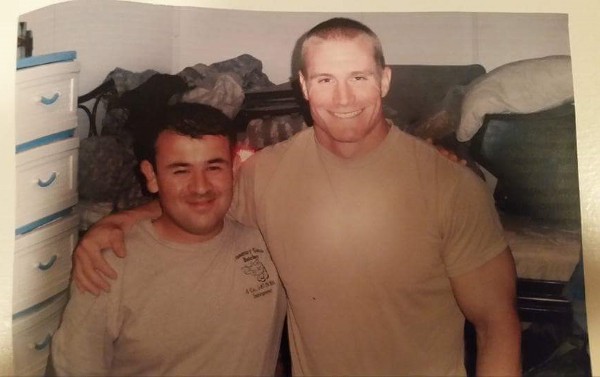
Our favorite picture from Tim Hardin’s Army days, hands down. Courtesy of Tim Hardin.
Natalia: I’m one of those people whose life — let’s admit this — has basically been ruined by student debt. And when I talk about how education should be a right, I’ve definitely had veteran friends say things like, “I had to fucking go to fucking Iraq because I wanted an education. Now some privileged assholes will get it for free?” And I completely see their argument, I’m not trying denigrate what they went through — but I also see a flaw in that logic, and I’m wondering if you see it too, or if you think I’m completely off-base to point it out.
Tim: That’s a refrain that I’ve seen out there multiple times as I advocated for free public higher education.
I tell people that when fighting for this country, I got put in some really bad situations that no one should be put in. People shouldn’t have to risk their lives so they can have access to higher education.
The system rewarded me because I risked my life for it, but education is a human right. You’re investing in your citizens when you give them the right to an education. It’s very simple stuff, and I don’t understand why we haven’t figured that out as a country.
There are people who come out of combat who are human husks. How many thousands of people who signed up to get free college are dead now? We live in the richest country in the world, and we could choose to empower Americans and invest in them.
I don’t understand why the richest country in the world does not have this shit figured out. I mean, there’s lots of reasons for it, but I just get so angry about it.
Natalia: So we were talking earlier about how there’s lots of young men in the military, and how that determines a lot of things. In this interview with Task & Purpose’s Adam Linehan we also discussed age, and how a lot of these young guys, for what it’s worth, are not going to get radicalized by the current administration and are not going to want to let Trump use the military against the American people. But I think we can all see someone like Steve Bannon just itching for that. Do you have any thoughts on that? Is this a possibility under Trump?
Tim: Well it didn’t take long for Homeland Security to go after undocumented immigrants under Trump, did it? And it could be a trial balloon — like, “How much will the American public be willing to take?”
I’m a pretty positive person, but I’m also a realist, and the young enlisted guys? They can be impressionable. And it doesn’t help that, like I said, a lot of people who have been in the military for a long time can feel isolated from the general public. It’s difficult with no cross-dialogue, no moderating influence, and people creating their own bubbles.
In my old unit, Fox News was always playing at the battalion headquarters. I see the same people who were my superiors just Breitbarting it up on Facebook right now.
So I’m not super hopeful. Maybe I’m hopeful on a regional basis. I don’t have a good read on what might happen, but I think that whatever happens would be very different from place to place.
I think Trump might try to turn the military [against the American people] if he comes close to being impeached.
And impeachment doesn’t necessarily mean the end of his presidency, but that there are legal clouds gathering above his head. Even though our system is slow, it does eventually process these things. Should Trump realize he might get booted from the White House, he could turn aggressive. But I think by that point the people on his side would also be like rats leaving a sinking ship.
Natalia: There is a lot of indication that Trump wants a war. He’s like a little boy who thinks its all a big game, and the military is his big boy toy. What do you think renewed armed conflict would look like under Trump?
Tim: I don’t think we’re headed into a new World War or anything like that. Like with Russia — it’s in the Trump administration’s interests to placate them, because of business interests.
But he’s itching to be a wartime president. Maybe [an attack on] North Korea? Maybe lots of limited strikes all over the place?
But [the Trump administration] also has a lot of turnover, and maybe that turnover will continue, and the chaotic shitshow will continue.
I mean, who’s really advising him on these issues? People like Jared Kushner? God, just think about it.
The bottom line is that they’re trying to run this government like a business, so they’ll do whatever is good for their business interests. Maybe they’ll just keep launching fucking Tomahawks for show.
[post_title] => Woke Vets: 'Disregard for civilian casualties hurts our mission'
[post_excerpt] => How many thousands of people who signed up to get free college are dead now? We live in the richest country in the world, and we could choose to empower Americans and invest in them.
[post_status] => publish
[comment_status] => open
[ping_status] => open
[post_password] =>
[post_name] => woke-vets-disregard-for-civilian-casualties-hurts-our-mission-2
[to_ping] =>
[pinged] =>
[post_modified] => 2026-09-15 19:50:32
[post_modified_gmt] => 2026-09-15 19:50:32
[post_content_filtered] =>
[post_parent] => 0
[guid] => https://conversationalist.org/?p=394
[menu_order] => 368
[post_type] => post
[post_mime_type] =>
[comment_count] => 0
[filter] => raw
)
This interview was originally published in March 2017.
Dylan Park is a United States Air Force veteran who served for six years in a Pararescue unit in Iraq and Afghanistan among other places. He’s now a writer and music video director living in Santa Monica . A sci-fi nerd who signed up for Mars One, he’s written a graphic novel (Zombiraq) and worked on tv shows including AMC’s The Walking Dead. His Twitter thread about his Iraqi teenage interpreter, Brahim, recently went viral. We discussed issues ranging from North Korea and military rape to cancer and the KKK.
Anna: One theme I’ve seen through all of your work is the issue of violence in society. You draw parallels between being at war and life in America. A lot of Americans haven’t experienced violence at home. You haven’t been so fortunate, your family especially.
Dylan: I think it’s a misconception that a lot of Americans haven’t experienced violence.
I grew up in an affluent, upper-middle class area. My house literally had a white picket fence. But mom is an orphan from North Korea. My dad was growing up in Texas and Louisiana during the civil rights movement. When he was a kid they were still lynching people. He witnessed that. That’s super traumatic.
His father was murdered by the KKK. I tell people that and they think I’m joking. I have to explain to a lot of my peers that slavery and all that stuff was not that long ago.
So I never met my grandfather because he was murdered by the KKK. I never met my other grandfather because he was a North Korean defector.
I did six years in the military in Iraq, Afghanistan, and Africa. There was a lot of violence, a lot of trauma there. I got back and a few years later, my brother was murdered in a carjacking. It’s a sad story, but I try not get down on myself. I know a lot of Americans, a lot of people in the world, have had it so much worse.
Anna: While studying to be a historian, I looked at postcards of lynchings people sent to one another. You look at some of the photos and see the sheriff standing there. If the sheriff is supervising, how much of mob justice is separate from state violence? Is this really an extrajudicial killing?
Dylan: A lot of people don’t realize that racism was state-sponsored. It was essentially law. When I talk about my grandfather being murdered in Killeen, Texas in 1972, that’s not that long ago.
The Killeen Police Department listed it as a cold case, an unsolved mystery. My father says, “That’s bullshit. We watched two cops walk into our house and shoot my father.”
So of course it’s not going to be solved. They threatened my father and uncles, saying “If you don’t get out of here, we’re going to kill you too.” This all happened because my grandfather had remarried [to] a woman from an affluent white family. They weren’t happy with a black guy getting in on the wealth.
Anna: I’d like to ask you about the different political administrations. What kind of changes have you seen in the military over time?
Dylan: When I first signed up for the military, George W. Bush was still president. We still had a lot of blind nationalism, a kind of gross patriotism after 9/11. If you weren’t for the red, white, and blue, you were the enemy. As an 18-year old, I got caught up in that.
I wanted to go fight the fucking terrorists. They promised me action, adventure and a little bit of money. There were a lot of teenagers my age that were all about that.
We’re a country that glorifies violence. We romanticize it.
When I had a recruiter telling me that I’d get a $15,000 bonus to go blow shit up, I said awesome, that sounds great.
This was in 2004. A year later, I was in Iraq and wondering, what are we even doing here?
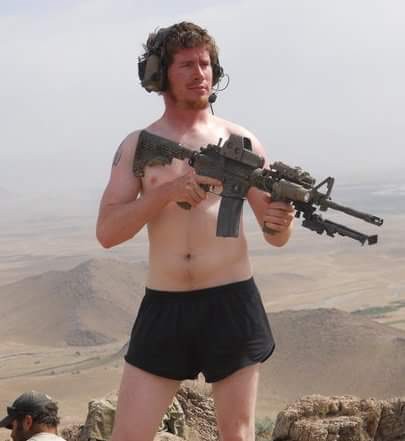
Dylan Park in his “blowing shit up” days
And the Iraqis are normal people, but now all of a sudden they have these Americans occupying their country. Of course they’re going to be hesitant and defensive.
When I admit this a lot of my veteran buddies get pissed, but we had no right to be in Iraq.
It was such a sham. They literally had us fighting over an oil town. They weren’t even trying to hide it. We were occupying an oil town while American contractors did whatever they needed to do to get the oil.
A couple of years later, Obama became president. That was great. My veterans benefits immediately increased.
Anna: I didn’t realize that he passed a law on veteran’s benefits.
Dylan: Oh yeah, Barack passed a lot of laws for veterans.
It’s crazy when you think about how Republicans say that Obama hates vets. The amount of attention I was receiving, the healthcare, everything was exponentially better.
Barack often gets criticized for pulling our troops out of Iraq, and in the long run, that might have been a mistake. I still don’t think that’s his fault, though, because we shouldn’t have been there in the first place.
He also gets criticized for the drone program. I get that too, but essentially he’s using drones instead of having boots on the ground. There’s no real difference, besides fewer Americans dead. Either way, the war machine is not going to stop.
Anna: In that sense, to what extent is U.S. foreign policy this juggernaut with a figurative head to be replaced each time there’s a new president? What influence does the president have over how our military force is used?
Dylan: You can see it right now. Before Trump got in office, he was talking about killing civilians. That’s a war crime.
Anna: Right, already we’re seeing the number of civilian deaths shoot up, like in Mosul and Yemen.
Dylan: He’s basically gotten rid of rules of engagement. He’s usurping the Geneva Conventions.
Trump’s been in office for 65–70 days and he’s already killed 1000 civilians? It’s crazy, but that puts him on a record pace.
You read the articles and the quotes from the commanders or generals that are leading these troops into battle and they say, “It’s disgusting, but these are our orders. If we’re told to level a city, we’re going to do it.”
Anna: Theres a lot of talk about Mattis and his influence over Trump. Their relationship has been framed as Trump needing Mattis in order to keep the military loyal to some extent. If Trump decided he was through with Mattis because he’s said “no” one too many times, what happens? Does it work that way?
Dylan: There’s a large population of liberal veterans and service members, but we’re never going to be larger than the conservative side. You’ll always have this group of service members that would do anything for their commander in chief, including war crimes, which is the problem. I don’t think replacing Mattis would make a difference, and I don’t see a military coup happening. It is what it is.
Anna: You’ve tweeted about civil war. I’m worried about that, too, honestly. I don’t think it’s that far-fetched to think about, especially given Steve Bannon and Trump’s threats to use the National Guard in Chicago. I think that his base will follow him no matter what and also that he won’t go quietly.
Dylan: It’s scary. I joke around about it, but usually when you’re joking it’s because it’s somewhere in the back of your head. I don’t think we’re close to that yet, but who knows?
You know we’re gonna start talking about impeaching Donald Trump, and you know the dude is going to be a psychopath on his way out.
The guy is in bed with the Kremlin, which is crazy in itself. Not to be a conspiracy theorist, but America is more ripe for attack than we’ve ever been. We’re messing up really badly right now.
Anna: Yeah, we’ve also sort of taken apart our entire State Department, which is not helpful. I worry about us getting attacked as well, and what kind of things they could use that as an excuse for.
Dylan: Donald Trump is attacking all these people in the defense services, the NSA. So now all of a sudden, all the guys who are protecting us don’t want to work for him. He’s not going to his security briefings. This is unprecedented.
It’s crazy because we have North Korea firing missiles off while Trump is golfing.
Russia’s saying, we’re going to expand our nuclear program, and Donald Trump is like, no you’re not, we’re going to have a better nuclear program.
[In general], Donald Trump is the type of leader who has a short temper and an ego. That is something that could potentially get a lot of Americans killed.
Anna: I’ve spent a lot of time in Russia. Half my family are Russian Jews who emigrated from the Soviet Union. My dad was alive for World War II. That affected how I was raised, and gave me some perspective. The thing that I’ve seen change the most since he took power is that America became like everyone else.
Dylan: That’s exactly what it is.
Anna: I’m waiting for everyone else to catch up to that fact. It’s hard when people don’t want to deal.
Dylan: [Trump’s] actually making our country a bigger target. ISIS is using this as a recruiting tool to say, “look how America hates Muslims.” And it’s true, America does hate Muslims. It’s not going to get better, it’s only going to get worse… ISIS is ramping up their hate for America, and so more attacks are going to happen. It’s a sick cycle.
Anna: I wanted to talk to you about the VA. You just had a procedure, you’re alright?
Dylan: I have some stomach complications, but I’m okay. When I was in Iraq, I was in Kirkuk, an oil town. Imagine the worst smog you’ve ever seen in your life. The sky was black. [And then there was] the depleted uranium, burning corpses, burning fecal matter, chemicals.
It was a bad environment. A crazy number of people in my detachment were getting sick.
The VA couldn’t figure out what was going on, people were getting cancer. A couple of smart doctors figured out, oh, we had these awful conditions. They set up this thing called a Burn Pit Registry. If you had been on certain bases or at certain locations at certain times you went to the VA.
My best friend went back to Iraq for another tour. He came home and was diagnosed with Stage IV stomach cancer the same day that his daughter was born. He was in the hospital feeling really sick. They pulled him to another room and did tests on him. The day his daughter is born he finds out he has a year to live. It was really fucked up.
Anna: That’s so messed up, how old was he?
Dylan: He was 30 years old. This was 2014. It’s very sad. It happens to a lot of guys. I have a lot of problems too, but I’m one of the lucky ones.
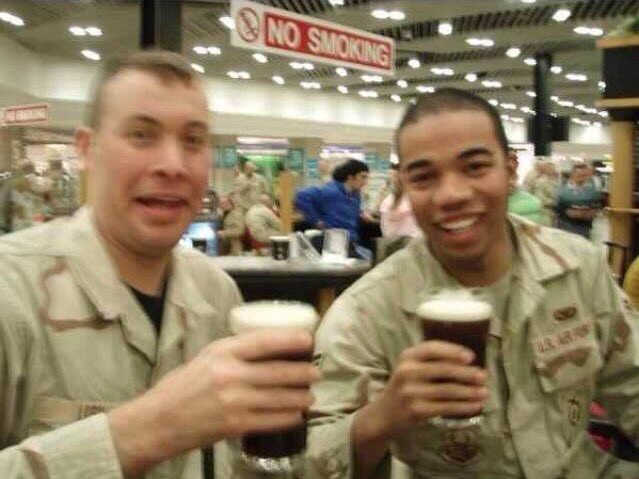
From Dylan Park’s Twitter: “Me and Allen (RIP) walked into the Shannon airport terminal in our uniforms and we got a standing ovation. Free Guinness & Jameson for days.”
Dylan: I had just written a proposal for that book. I was about to start shopping it. I’ve actually told that story before but I decided to retell it because it was so relevant to the Refugee Ban. It just blew up. The amount of attention it received, couldn’t have seen that coming. For a week straight, my phone would not start beeping. I had tens of thousands of strangers telling me that I made them cry.
And there were dozens of deplorables in my mentions, too, calling me a liar. But it was heartwarming to see that not everyone’s a complete piece of shit.
Anna: You’ve tweeted about sexual assault in the military. To what extent is the military just a microcosm of society?
Dylan: The military is worse than society because the military is a fraternity. The U.S. military is basically the biggest gang in the world. It’s a big frat with the good ole boys. They keep everything on the inside, they don’t want any bad publicity.
There were two women in my unit who were raped, and the unit buried it. They actually forced the women to work alongside their rapist for almost two years before he got court-martialled.
If you can imagine that trauma having to work with the guy who assaulted you. When guys like me would go around and cause a fuss, I got blacklisted essentially. Dudes started treating me completely differently. Started calling me a narc, a snitch… It was like high school. I was in a clique and then all of a sudden I was an outcast. Don’t talk to Dylan.
And again not everyone in the military is like that. It’s the same parallel with law enforcement. We know that not all cops are shitty cops. I’d say 90% of cops aren’t shitty cops. But the fact that they protect shitty cops makes them a shitty cop. That’s exactly the situation in the military.
Anna: They become complicit. What do you think about militarized police?
Police departments in the U.S. are armed better than I was in Iraq in a war zone. I grew up in Campbell, CA. It’s the cutest little town. Their police department has a fucking tank. It’s just sitting there in a parking lot. There’s been one homicide in Campbell in five years. What are they going to do with that? You’re giving police departments military equipment so they’re going to start acting like the military.
It’s not about law and order anymore. It’s not about justice. It’s about suppression and intimidation.
You’re seeing peaceful protesters getting tear gassed, beaten and shot. On the flip side, you can have a KKK rally and they’ll get police protection. A neo-Nazi rally, the police will protect them because of their First Amendment rights. I get it, they have freedom of speech, but what happens to freedom of speech when you’re a brown guy and you’re speaking out against the system? Then you’re the enemy.
Anna: Knowing what you know now, would you do it again? Would you have joined?
Dylan: Even though they were some of the worst times of my life, they were also some of the best times too. I got to do things, experience things, meet people and go places that I had never been before and never would have had the chance to go. In the military I went to every continent but Antarctica.
I traveled a lot. A lot of it was — humanitarian missions, peacekeeping missions. My unit was a pararescue unit. We weren’t an offensive force.
We were the 129th rescue wing. Pararescue units are combat rescue units who pick up downed troops, downed civilians behind enemy lines. We’re equipped as military, so if we need to fight we can do that too.
My first mission when I signed up was New Orleans, Hurricane Katrina. We had gotten intel that there were militias running around raping women and shooting people, shooting our helicopters. They armed us up and said get ready for a fight. We’re going to fight gangbangers.
We fly out there and its not that at all. It’s just a bunch of scared black people. On their roofs, trying to survive.
There was no violence whatsoever but we had been conditioned to believe we were going to fight people. Our mission was a rescue mission so we were pulling scared people off roofs. But we were ready for a fight, had our guns loaded up.
Anna: Why would they say that about those people on the roofs?
Dylan: When you have a group of disenfranchised minorities they are the enemy no matter what. That’s how the United States has always been. It took 5 days to send help. And then when we did go, they said the people on the ground were enemies. It was absurd.
Anna: How did you feel as a person of color serving in the military?
Dylan: I had never really experienced real racism until I got into the military. There was a little bit of racism in private Catholic school: as a 5th grader if some kid calls you the n-word , what are you going to do?
But in the military people have real control over you and can send you to your death. That was an issue.
In Iraq, I found myself working the Suicide Gate more often than not. They call it the Suicide Gate because that’s where all the suicide bombers would go blow themselves up.
I always found myself working that station. It was not a coincidence. If everything had been fairly distributed, I would have only been there a few times. I found myself there nightly.
To answer your question, I often say that I’m, I don’t know if ashamed is the right word, but sometimes I’m ashamed to have been a part of the war machine. But if I had not gone through that experience, I wouldn’t have been as “woke” as you would say.
Anna: You saw a lot — and that changes you. When you were talking about the racism, I was thinking about “Get Out.”
Dylan: Oh my god that movie was insane. Not to spoil anything, but I kinda knew from the beginning that there was double-sidedness going on.
Anna: What projects are you working on right now?
Dylan: I’m working on a book based on the Twitter story, and there’s already interest in making it into a movie. Being a veteran that writes is rare thing in Los Angeles, so that’s my niche. Coming up there’s a reboot of “Behind Enemy Lines” with Owen Wilson and a “Call of Duty” TV show. They want people with experience to write for them. I also have a couple of comic books that I’m working on. And I do music videos.
Anna: Oh, right! I saw your pictures with Wyclef Jean.
Dylan: Yeah, I write and direct music videos now. Wyclef is one of my favorite artists ever, and I’ve been working with him.
[post_title] => Woke vets: Black skies and the suicide gate
[post_excerpt] => "There’s a large population of liberal veterans and service members, but we’re never going to be larger than the conservative side. You’ll always have this group of service members that would do anything for their commander in chief, including war crimes, which is the problem. I don’t think replacing Mattis would make a difference, and I don’t see a military coup happening. It is what it is."
[post_status] => publish
[comment_status] => open
[ping_status] => open
[post_password] =>
[post_name] => woke-vets-black-skies-and-the-suicide-gate-2
[to_ping] =>
[pinged] =>
[post_modified] => 2026-09-10 20:04:44
[post_modified_gmt] => 2026-09-10 20:04:44
[post_content_filtered] =>
[post_parent] => 0
[guid] => https://conversationalist.org/?p=389
[menu_order] => 369
[post_type] => post
[post_mime_type] =>
[comment_count] => 0
[filter] => raw
)
Justin 'Judd' Lienhard is a former U.S. Army Ranger officer who did multiple tours in Iraq and Afghanistan. The Conversationalist interviewed him in 2017 for its 'woke vets' series.
Natalia: I’ve read your excellent pieces on The Humanist — including your take on America refusing refugees and the gut-wrenching story of your last combat mission. It struck me that what you’re discussing, among other things, are realities of war that make the average civilian really uncomfortable — so uncomfortable that they would rather shut these stories out. Do you find that most Americans don’t want to know? Or has that not been the case?
Judd: In my experience, Americans are fine with the gory details in my stories as they’ve been desensitized pretty well. They are even OK with hearing about our soldiers’ suffering. They really like the the stories I share that humanize our soldiers in a good way.
What they don’t like to hear are my stories that humanize the enemy or even the locals that collude or sympathise with them. They change the subject quickly when I describe civilian deaths or tribulations that we were responsible for. They often try to interject and exonerate me and my compatriots from blame — and maybe themselves as well, by extension.
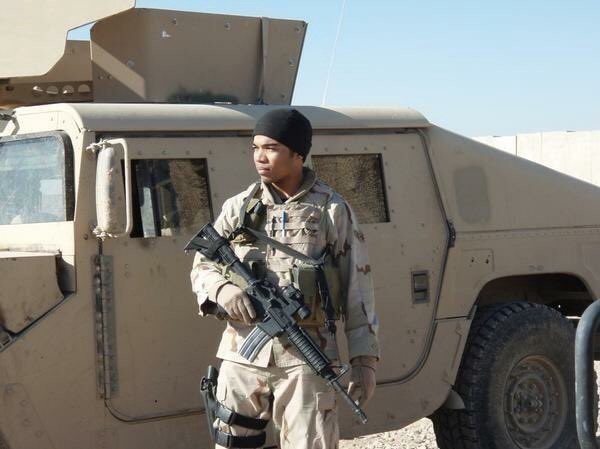
Judd Lienhard during his days with the Army Rangers
I think it’s important for everyone’s psyche to dehumanize the people we kill or maim.
There must be absolutely no righteousness in anyone’s cause but our own, it is simply not enough to fight for our nation’s own best interests, our enemies’ interests must be entirely deviant as well. That is nothing new however.
What has changed is that we are deep in an era of war romanticism. We almost deify our soldiers, especially our special operators, they are becoming a class to themselves, almost like a warrior elite that are beyond reproach. It’s comparable to the Janissaries or the Samurai. It’s unfair, even to them. They are very good at what they do but they are also very human.
When you begin to treat men like gods they can only disappoint.
Unless their exploits are fabricated or at the very least embellished — which is what is happening in Hollywood right now.
Natalia: I once worked with a wealthy narcissist, and a lot of what Trump is doing now has, to me, seemed predictable. I think that men like him see other human beings in terms of how they can be used. So there are beautiful women to exploit, powerful businessmen to forge beneficial relationships with, and as for the military, he sees it as an extension of his, uh, manhood. I don’t think it was an accident that he wanted to parade missile launchers on Inauguration. I am with those people who say that he has used fallen SEAL William Owens and his widow as props. So that’s my take on it. But how do you read Trump’s relationship with the military? And how do you think our military command sees Trump? I’ve seen a lot of speculation, for example, that he makes them less than comfortable, though they obviously won’t show as much in public.
Judd: Of course Trump is a narcissist, but I’m hesitant to build him up into some evil genius. He, more than anything else, wants to be liked. He’s dangerous because he’s so pliable. His mental acuity has declined greatly in the past decade, and he’s being guided by ideologues. He is probably the anti-ideologue in that he’ll back whatever side or position that will get the most people to like him.
I believe our military command sees Trump much differently than the rank and file, who are more attracted to the tough, blunt, and simplistic rhetoric of the president (this doesn’t mean they aren’t intelligent, many are extremely bright, but their areas of interest and aptitude reside more on the tactical level rather than in the intricacies of history, geopolitics and macroeconomics).
Military command sees a bumbling idiot with no grasp on the nuances of operational or strategic level planning.
Not only does Trump lack military experience, he lacks the attention span to absorb complex situational briefings.
I hate to compare Trump to Hitler, because there are many differences, but in that respect they are very similar. I believe that both lacked the respect of the military establishment and were otherwise surrounded by misfits, ideologues, and outcasts.
[The military establishment] followed Hitler nonetheless, because those generals thought they were playing the long game and wanted to be in a good position when that wave of populism passed. It wasn’t until 1942 that they realized his decisions would mean the end for Germany and not until 1944 that they organized an assassination attempt.
Our generals want to use Trump’s increases in military funding to further their own limited aims — many aren’t fully considering the damage it will do to the other two pillars of our national security triad, which are diplomacy and development.
Natalia: Everything I know about men like Trump leads me to believe that he would love to go to war. I see him thirsting for it as much as his chief strategist, Steve Bannon, is thirsting for political chaos and martial law. I think a lot of people right now are under the impression that if Trump goes to war, it will be very similar to when George W. Bush went to war — but I believe that Trump makes W look like a wise elder statesman by comparison. Am I being too apocalyptic? And how do you think a military conflict under Trump might play out?
Judd: Trump absolutely wants to go to war because wartime presidents are popular, at least at first. And Bannon wants to go to war because he has a strange obsession with military conflict. I think you are being too apocalyptic however — because you overestimate this administration’s ability to build coalitions and underestimate their utter incompetence.
Congress is protecting them right now because they want to push through their legislation.
As soon as that happens they will turn on them. Their visions of America’s role in the world diverge far too much.
Natalia: I think because we no longer have a draft, and because our military is so powerful, a lot of civilians brush off the reality of what the military deals with with a kind of, “Oh, but they signed up for it, they’re professionals, they have helicopters and cool gear, so whatever, I don’t care, what they do has nothing to do with me.” I personally agree with someone like Phil Klay when he says that — sorry, no, that’s not how it should work. But would you agree or disagree? And can anything be done to make American civilians less apathetic to the risks and dilemmas of modern military service?
Judd: I believe that because there is no draft and because the conflicts of the last generation have resulted in relatively light casualties that Americans see our military adventures as a spectator sport. It’s almost expected that we “mourn” our hero warriors, but relatively few Americans have felt the personal loss of a loved one to conflict.
They don’t relate to those Americans whose sons and daughters signed up to escape poverty rather than out of patriotic reasons.
I mean, expensive college and the GI Bill/VA Loan serve as a de-facto draft anyway. Wait until we start getting carrier groups decimated by surface skimming supersonic missiles and we start losing tens of thousands a year. The human face of war will hit us hard then.
It’s always been that way. The average Roman cared little about the legionary until Hannibal was tossing their severed heads over the gates of Rome.
Natalia: There has been a lot of dehumanization of Muslims in our public discourse. You’ve written beautifully about how awful and misleading stereotypes of Muslims are. What do you think can be done to combat such stereotypes? Besides writing, which is obviously really important, but, as a lot of psychologists point out, only reaches certain people and at certain times.
Judd: I’m a realist and I understand that our tribal nature needs mysterious foreign threats to bind itself together, especially when other social units are falling apart. There is always an enemy that poses an “existential threat” — be it Jews or Blacks, or Catholics, or Communists.
Judd Lienhard with an Iraqi interpreter. who, Lienhard has reason to believe, did not survive the continuing conflict in Iraq.
Honestly, the best cure is exposure and normalization, we fear what we know the least about and propagandists with an agenda exploit those fears for their own gains, that is nothing new.
We must avert catastrophe, let the old fear-mongers that rose up as Iran fell apart die off. Then, once there’s a mosque down the street and your Muslim neighbor feeds your dogs for you while you’re on vacation, it won’t be such a big deal anymore.
[post_title] => 'Americans see our military adventures as a spectator sport,' says former U.S. Army Ranger
[post_excerpt] => "I hate to compare Trump to Hitler, because there are many differences, but in that respect they are very similar. I believe that both lacked the respect of the military establishment and were otherwise surrounded by misfits, ideologues, and outcasts."
[post_status] => publish
[comment_status] => open
[ping_status] => open
[post_password] =>
[post_name] => 383
[to_ping] =>
[pinged] =>
https://thehumanist.com/commentary/refusing-refugees-former-army-ranger-shares-shame
[post_modified] => 2026-09-10 20:03:37
[post_modified_gmt] => 2026-09-10 20:03:37
[post_content_filtered] =>
[post_parent] => 0
[guid] => https://conversationalist.org/?p=383
[menu_order] => 370
[post_type] => post
[post_mime_type] =>
[comment_count] => 0
[filter] => raw
)