Everything you need to know about the treaty protecting environmental defenders in Latin America.
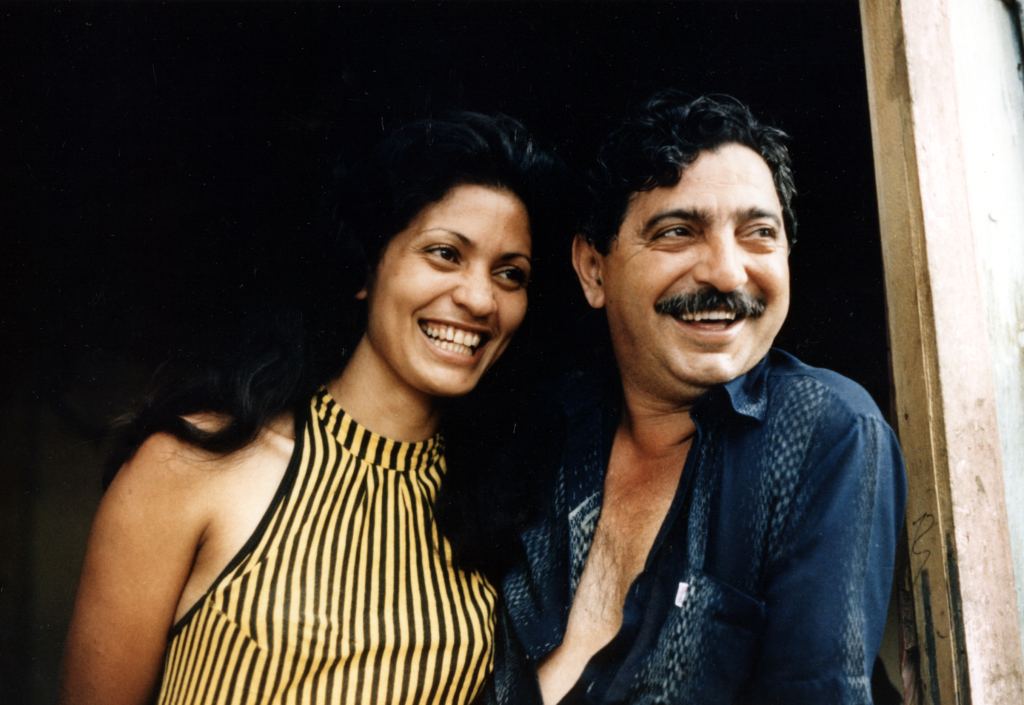
In 1988, three days before Christmas,Francisco “Chico” Alves Mendes Filho went to take a shower in his yard when he was assassinated by local cattle ranchers with a .22 rifle.
Mendes had been a Brazilian leader of the rubber tapper workers’ union, who advocated for Indigenous people’s rights and defended the Amazon rainforest against exploitation. The cattle ranchers who’d killed him were rural landowners, hoping to continue deforesting it. This wasn’t the first killing of an environmental defender in Latin America and the Caribbean (LAC), and it wouldn’t be the last. In 2016, almost 30 years after Chico Mendes's murder, Berta Cáceres, a Honduran Indigenous environmental defender, was killed by sicarios for her opposition to the construction of a dam in the Gualcarque River. Two different causes, two different countries, and two different times, but one motivation: to silence those who fought and defended the environment in Latin America.
Environmental defenders have contributed to halting 11% of environmentally damaging projects across the planet. However, the role comes with a high cost to their safety: Constant threats, violence, and hundreds of assassinations make their work incredibly dangerous. These attacks are mainly related to land disputes and environmental damage, and 70%are for defending forests.
Chico Mendes and his wife, Ilsamar, in 1988. Courtesy of Miranda Smith / Wikimedia.
The UN defines environmental human rights defenders as “individuals and groups who, in their personal or professional capacity and in a peaceful manner, strive to protect and promote human rights relating to the environment, including water, air, land, flora and fauna.”They use non-violent methods to protect the environment, contributing to preserving biodiversity and Indigenous rights. In 2000, the Human Rights Commission established the Special Rapporteur on the situation of human rights defenders, which included promoting environmental defenders' protection within their mandate. In 2019, the UN General Assembly recognized the contribution of environmental defenders to ecological protection and sustainable development, urging states to develop and appropriately fund protection initiatives for human rights defenders.
But this has proven tricky in Latin America. According to a 2021 Global Witness report titled “Last Line of Defence,” 165 environmental defenders were killed in LAC in 2020,a frightening number that illustrates how vulnerable activists are in the region. In addition, these attacks made up 73% of all attacks against environmental defenders in the world, making Latin American especially hazardous area to protect the environment. The reason behind the frequency of these attacks is closely related to the region’s long history with extractive industries as a means of economic development. LAC is largely made up of developing countries, and many have opted to prioritize economic growth over environmental regulation. Vulnerable populations, such as Indigenous communities and poor local communities, have suffered the impacts of this the most, and in parallel, also act as the last line of defense when it comes to protecting the environment.
The regional response for protecting environmental defenders: The Escazú Agreement
Even though environmental regulations in Latin American countries have progressed in recent years, activists are still being murdered and attacked, and regional cooperation is required to ensure their protection. In 2012, a collective of LAC nations decided to draft an agreement implementing Principle 10 of the UN’s Rio Declaration on Environment and Development, with the goal of creating the LAC version of the Aarhus Convention. The agreement was adopted on March 4, 2018, in Escazú, Costa Rica—giving the treaty its name: the Escazú Agreement, or Acuerdo de Escazú. On April 22, 2021, nearly a decade after discussions first began, the Escazú Agreement went into effect, becoming the first environmental treaty in LAC.
The primary purpose of the treaty is to improve and guarantee the procedural human rights of access to information, public participation, and justice. Latin America is a region with severe economic inequalities that directly affect the political participation of the most vulnerable populations, excluding them from most decision-making processes. The Escazú Agreement, acknowledging this exclusionary situation and the numerous socio-environmental conflicts across the continents, sets new human rights standards, guaranteeing the most vulnerable communities are involved in environmental decision-making.
Concerning environmental defenders, the Escazú Agreement also seeks to change the dangerous circumstances they suffer across Latin America. First, the treaty states in Article 9 that “each [signing] party shall guarantee a safe and enabling environment for persons, groups and organizations thatpromote and defendhuman rights in environmental matters” In practice, this allows environmental defenders to act freely and safely, without fear of threat or harm.
The treaty also indicates that signing countries “shall take adequate and effective measures to recognize, protect and promote”the human rights of environmental defenders. This clause focuses on civil and political rights, reinforcing their right to life, freedom of opinion, freedom of movement, personal integrity, and peaceful assembly, among others. In addition, due to the historical impunity of the criminals who have perpetrated crimes against environmental defenders, the treaty reinforces due process for preventing and punishing attacks or threats made against them.
To further effectively protect environmental defenders, in April, the first Conference of the Parties (COP) to the Escazú Agreement established an ad hoc working group to create an action plan to be presented at the next COP. According to the initial COP, this working group would allow for significant public participation, “endeavouring to include persons or groups in vulnerable situations,” especially Indigenous people and local communities. This could mean that environmental defenders who have experienced attacks or threats themselves can now be a part of creating the action plan to prevent more attacks from happening in the future.
The purpose of all these rules is to protect the legitimate political work of environmental activists across Latin America. This progress is essential for making LAC more democratic and ecological; and indeed, defending those who risk their lives to protect the environment is vital for continually improving our democracies.
The problem, however, has been getting signatories to ratify it.
The vital need to adopt the treaty
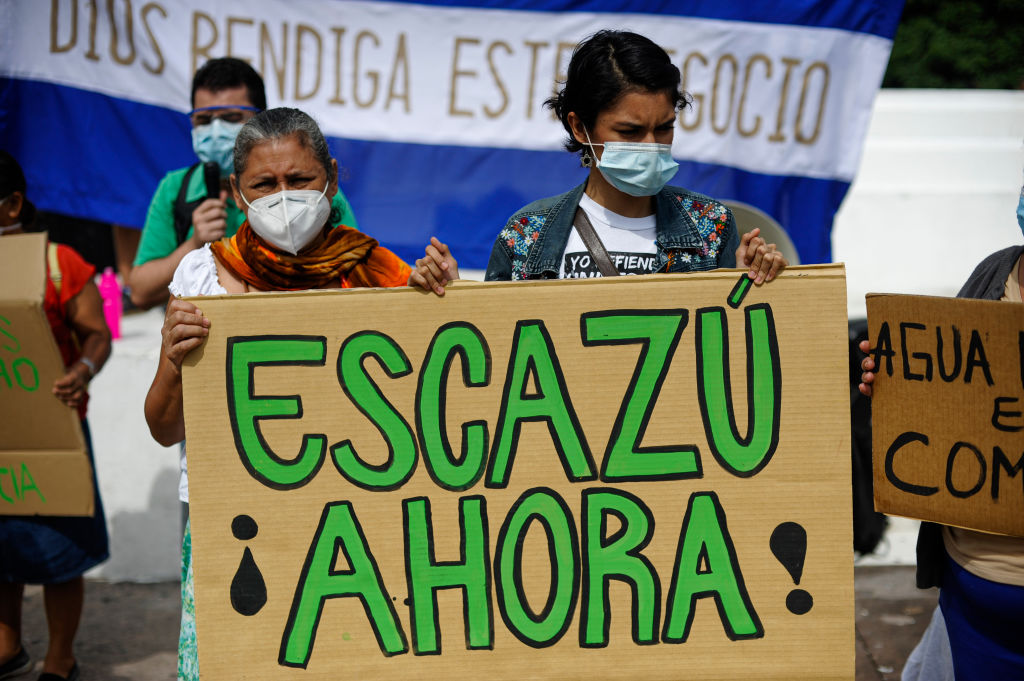
Twenty-five countries have signed the Escazú Agreement so far, but only 13 have ratified it. Some have resisted signing it based on reasons of sovereignty or the vagueness of the treaty’s obligations. For instance, before Chilean president Gabriel Boric ratified the treaty, the former government of Sebastian Piñera decided to not sign it because he believed specifically protecting environmental activists would affect equality before the law.
Colombia, however, might be the most notable country to have not yet ratified the treaty, despite having the world's highest number of murdered environmental defenders (65)in 2020. Hopefully, the newly elected President, Gustavo Petro,will ratify Escazú,complying with his campaign promise to do so; because as long as countries continue not to honor it, the murders will continue to happen. Months ago in Brazil—another country that has not ratified the treaty—two environmental defenders were murderedin the Javari Valley: Dom Phillips, a British journalist, and Bruno Pereira, a Brazilian Indigenous rights defender. Since Jair Bolsonaro was elected in 2019, environmental regulations have diminished in the country, as the Brazilian president continuously opens Indigenous reserves for commercial purposes, triggering environmental conflicts and putting defenders at risk. In addition, Bolsonaro's government legitimized armed land grabbers dedicated to attacking Indigenous and local communities and deforesting the Amazon by weakening all the environmental institutions focused on protecting the environment and Indigenous rights. As a result, the biggest country of LAC has aligned itself with extractive interests over human ones.
Although the situation with environmental defenders in LAC is critical, right-wing political parties and economic groups see Escazú as an obstacle to economic development. For decades, they have rejected increasing protective measures for those who oppose extractivist expansion. Political negotiations and effective treaty implementation by state parties are crucial elements for incorporating more nations into Escazú. One way to help do this is by increasing awareness of the treaty’s existence, and the goals it hopes to accomplish.
Courtesy of Camilo Freedman / APHOTOGRAFIA / Getty Images.
The Escazú Agreement: An example of defending the defenders
Following the Escazú Agreement's example, the interest in strengthening protections for environmental defenders is expanding to other continents. For example, Asia and Africa do not have any regional treaties to protect environmental defenders, but have organized cooperative networks to defend the defenders on the ground. In Africa, Natural Justice is supporting a powerful initiative, African Environmental Defenders,which aims to protect environmental defenders though an “emergency fund” to support their work. In Europe, environmental defenders are also taking priority. In 2021, the EU Parliament called its member states to take action to protect environmental defenders' human rights, showing that the threats and attacks on these activists are not only happening in the Global South.
As we face the ever-growing climate crisis, protecting the environment and our delicate ecosystems is crucial. Globally, the role of environmental defenders has been vital to stopping the ecological degradation of the planet. However, their silent and voluntary work is not recognized, despite risking their own lives to preserve the environment for the benefit of present and future generations. Therefore, it is fair and necessary to protect them and stop the impunity of those who abuse and attack activists for exploiting the environment to make a profit. By establishing the Escazú Agreement, Latin America contributed to showing an institutionalized path for protecting environmental defenders, a priority that every government should have—not only to protect the environment, but also democracy itself.
Additional fact checking by Sophia Cleary.
You Should Give a Sh*t About is an ongoing column highlighting local stories with a global impact.
[post_title] => You Should Give a Sh*t About: The Escazú Agreement
[post_excerpt] => Everything you need to know about the treaty protecting environmental defenders in Latin America.
[post_status] => publish
[comment_status] => open
[ping_status] => open
[post_password] =>
[post_name] => escazu-agreement-explainer-latin-america-environmental-treaty
[to_ping] =>
[pinged] =>
[post_modified] => 2026-08-04 20:25:39
[post_modified_gmt] => 2026-08-04 20:25:39
[post_content_filtered] =>
[post_parent] => 0
[guid] => https://conversationalist.org/?p=4815
[menu_order] => 109
[post_type] => post
[post_mime_type] =>
[comment_count] => 0
[filter] => raw
)
WP_Post Object
(
    [ID] => 2718
    [post_author] => 2
    [post_date] => 2021-06-10 17:55:42
    [post_date_gmt] => 2021-06-10 17:55:42
    [post_content] => Government inquiries have exposed Canada's systemic racism toward Indigenous people.

In September 2020, Joyce Echaquan, a 37-year-old Atikamekw woman from Quebec’s Manawan community, livestreamed a Facebook video that showed her screaming in pain while hospital healthcare workers openly mocked her. “You’re a fucking idiot,” “only good for sleeping around,” and “you are better off dead,” were just some of the comments recorded. Joyce passed away shortly after posting the video, which was shared widely online; the collective shock and shame at her death galvanized a movement to force Canadians to come to terms with the racism and colonialism in their medical system.

During the public inquiry that followed, witnesses and hospital staff testified to long-standing prejudice from healthcare workers and hospital administrators who neither knew nor cared that Indigenous patients were receiving inadequate care. Advocates for First Nations communities pointed to this incident not as an isolated tragedy, but as one more example of a medical system that continues to see Indigenous peoples as less deserving of equal treatment and respect.
A culture of anti-Indigenous racism
Among those testifying at the inquiry was Dr. Samir Shaheen-Hussain, an assistant professor in the Faculty of Medicine at McGill University and a Montreal pediatric emergency physician, who spoke about medical colonialism as "a culture or ideology, rooted in systemic anti-Indigenous racism, that uses medical practices and policies to establish, maintain or advance a genocidal colonial project.”

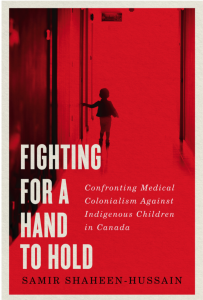
While not many people are familiar with the term, Dr. Shaheen-Hussain has written a book on the subject. Fighting for a Hand to Hold: Confronting Medical Colonialism against Indigenous Children in Canada (2020, McGill-Queens University Press) shines a light on the decades-long cruel practice of separating children from their families during emergency medevacs from northern and remote regions of Quebec.


Working as a pediatric emergency physician, Dr. Shaheen-Hussain saw the cruel consequences of the non-accompaniment practice first-hand in 2017, when he treated two young patients who were undergoing stressful medical procedures without their loved ones by their side. Quebec pediatricians had been demanding the end of this heartless practice for decades, but successive governments refused to change the policy, making Quebec an outlier in Canada. When a citizen confronted him about the matter at a public event in 2018 , Quebec’s then-Health Minister, Gaétan Barrette, made comments that basically amounted to propagating “drunken Indian” and “freeloader” tropes. Calls for his resignation went unheeded, but the practice of preventing parents from accompanying their children on medevac flights was finally discontinued later that year, on the back of a campaign called #aHand2Hold.
Confronting the truth of past horrors
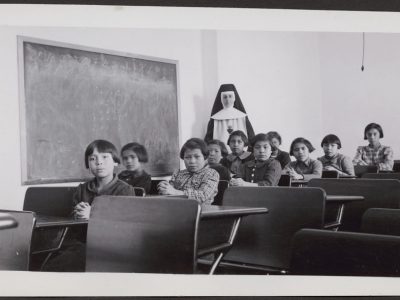
The same week that Dr. Shaheen-Hussain testified at the Quebec inquiry on Echaquan’s death a grim discovery on the other side of the country, in Kamloops, British Columbia, stopped Canadians in their tracks. A mass grave containing the remains of 215 Indigenous children at the site of a former residential school provided physical confirmation of what thousands of survivors of these forced-assimilation centres had been saying for years.

In 2015, the Truth and Reconciliation Commission (TRC) a nationwide commission on the evils of these government-sponsored, church-run schools that operated between 1831 and 1996, concluded that thousands of children had been mistreated, physically and sexually abused, and knowingly left vulnerable to outbreaks of disease, resulting in thousands of deaths.

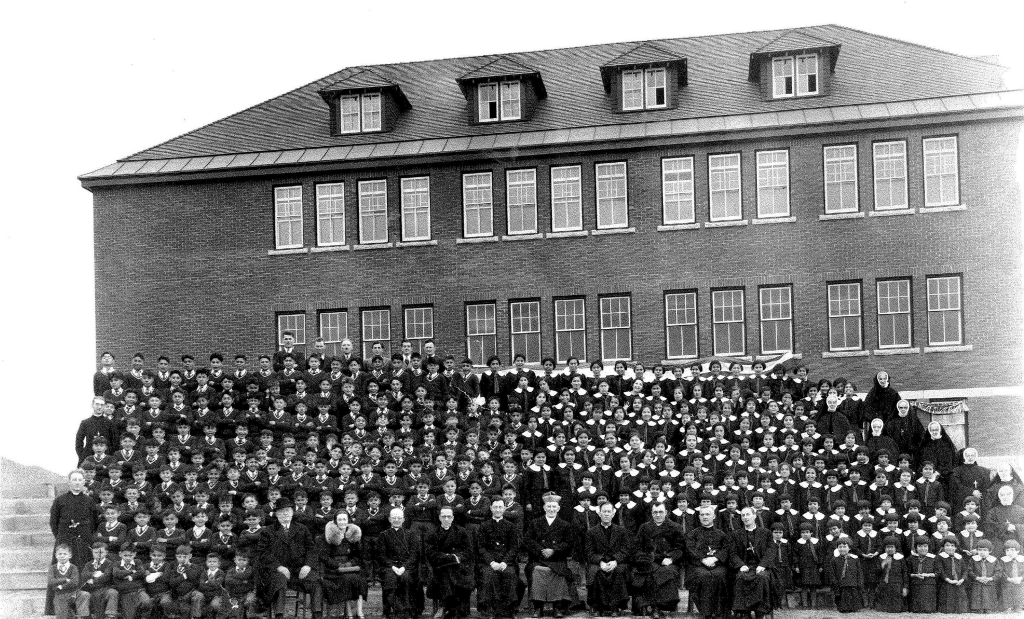
[caption id="attachment_2749" align="aligncenter" width="640"] Kamloops Indian Residential School in 1937.[/caption]

In addition, highly unethical nutrition experiments under the care of two physicians (one of them was a former president of the Canadian Paediatric Society and one of three inventors of Pablum infant cereal) working for the Department of Indian Affairs of Canada had been conducted on many of these children without their knowledge or consent. They were purposefully denied adequate nutrition or dental care, as part of these experiments, eerily reminiscent of the Syphilis Study conducted on Black men by the U.S. Public Health Service at Tuskegee and the medical experiments Nazi doctors performed on concentration camp survivors during World War II. Even when children died, the experiments continued.

[caption id="attachment_2741" align="alignleft" width="300"] A Black man is tested during the Tuskegee Study of Untreated Syphilis in the Negro Male.[/caption]

The TRC commission made a number of recommendations, among them a request for the federal government to “acknowledge that the current state of Aboriginal health in Canada is a direct result of previous Canadian government policies, including residential schools” and to “establish measurable goals to identify and close the health outcomes between Aboriginals and non-Aboriginal communities […] via efforts [that] would focus on indicators such as: infant mortality, maternal health, suicide, mental health, addictions, life expectancy, birth rates, infant and child health issues, chronic diseases, illness and injury incidence, and the availability of appropriate health services.” Out of a total of 94 recommendations or calls to action made in 2105, only eight have since been implemented.
A lack of compassion and respect
Dr. Arlene Laliberté, a psychologist  who is Algonquin from the Timiskaming First Nation, completed her PhD on suicide in Indigenous communities. She sees the effects of medical colonialism and the intergenerational and multigenerational trauma caused by the residential school and child welfare systems (often manifesting as structural violence and self harm) daily in her work. She also sees the indifference to it.

“Collaboration and communication are always difficult with hospitals and healthcare institutions,” she says. “When I accompany patients of mine who are going through crises or mental health issues, I often observe a lack of compassion, a lack of understanding, an unwillingness to follow up with the patient or the patients’ family. They aren’t taken seriously or believed when they disclose symptoms, and their pain is minimized or dismissed.”

Dr. Laliberté says that Indigenous patients are often treated as second-class citizens, with no respect for their own traditional healing methods, not being seen beyond the stigma or cliches of being “a bunch of drunks” and “savages.” As a result they tend to mistrust the system or delay treatment for serious physical or mental health issues, often until it’s too late.

Attempting to bridge this ignorance gap, the TRC commission called upon medical and nursing schools in Canada to require all students take a course dealing with Aboriginal health issues, including the history and legacy of residential schools, the United Nations Declaration on the Rights of Indigenous Peoples, Treaties and Aboriginal rights, and Indigenous teachings and practices. According to the commission, this would require “skills-based training in intercultural competency, conflict resolution, human rights, and anti-racism.”

“As far as I know, this still isn’t part of the curriculum,” says Dr. Laliberté. “While I was teaching at the university, I thought of how overrepresented Indigenous children are in the foster care system (a whopping 52.2 per cent of children in foster care in Canada are Indigenous, although they account for only 7.7 percent of the child population), and I took it upon myself to educate future psycho-educators who will be working in the DPJ (Quebec’s Youth Protection system). Some of my peers voiced strong opposition to this and weren’t interested in anything that wasn’t part of the status quo.”
Forced sterilization of Indigenous women
Unwanted medical procedures are not only part of our colonial history –they continue to be part of the present. This past May, a local Métis (person of mixed Indigenous and European ancestry) lawyer in British Columbia alleged that he knew of Indigenous girls— some younger than 10 years old—who had been forced by social workers to have IUDs inserted by doctors because they were at risk of being raped in foster care.

These disturbing allegations came on the heels of the final report of the National Inquiry on Missing and Murdered Indigenous Women and Girls (MMIWG), which included a section on the forced sterilization of Indigenous Women in Canada. It reminds us that commonplace medical procedures are often used without consent to decrease or limit the Indigenous population.

There are parallels here with similar coercive sterilization tactics implemented in the United States. The Family Planning Services and Population Research Act of 1970 enabled the mass sterilization (some say more than 25 percent) of Native American women of child-bearing age. Back in Canada, the province of Saskatchewan is currently facing a class-action lawsuit from women alleging they were coerced into getting tubal ligation as recently as 2014. A similar lawsuit has since been launched in Alberta.
“Medical colonialism killed Joyce”
This colonial mindset and the systemic discrimination that deeply affects issues regarding standards of care, ethics, caregiver policies and practices is often a straight line from the past to today’s medical system, with healthcare staff often making fast and damaging assumptions about Indigenous patients and why they’re seeking medical help. During the inquiry for Echaquan, who died of pulmonary edema, witnesses testified that healthcare staff mistook her debilitating pain and severe myocardiopathy for drug withdrawal symptoms. As a result, they disregarded her cries of pain and left her unmonitored, which was against healthcare protocol. According to the testimony of Dr. Alain Vadeboncoeur, an emergency physician at the Montreal Heart Institute, who examined her autopsy report, the 37-year-old mother of seven “could have been saved with proper care.”

Dr. Shaheen-Hussain shared similar conclusions at the inquiry, stating categorically that “medical colonialism killed Joyce Echaquan and that her death was avoidable.”
Medicine isn’t always healing
Dr. Shaheen-Hussain’s book is a powerful condemnation of medical colonialism, which continues to affect Indigenous communities. The descriptions of forced sterilization, skin grafting, Indian Hospitals (sanatoriums), medical nutritional experiments, and medical disappearances speak loudly to deeply embedded racism in medical culture. No wonder Indigenous communities are suspicious of the Canadian healthcare system and the people who work within it.

“How the government responded to the #AHand2Hold campaign is telling, because if denial stems from the top, one can only imagine what it’s often like on the frontlines,” says Dr. Shaheen-Hussain. “Medical colonialism is rooted in the long-held belief that medicine is benevolent and neutral, but it’s often not, and we need to come to terms with that reality.”

Unconscious bias also manifests in how Indigenous health professionals are perceived by the medical establishment. “We are often seen as less competent,” Dr. Laliberté says. “I didn’t get my PhD in a cracker box, and yet, despite my credentials, I am often seen as less respectable. I have also seen the services offered on a reserve deemed less valuable, even though the registered professionals working there have the same education as everyone else.” The Indian Act and the infantilization of Indigenous peoples as “wards of the state” still unconsciously resonates today with many who should know better.
Joyce’s Principle
After Echaquan’s tragic death, the Atikamekw community drafted Joyce’s Principle, which aims to guarantee all Indigenous people the right of equitable access, without any discrimination, to all social and health services, as well as the right to enjoy the best possible physical, mental, emotional, and spiritual health. The brief constitutes a reminder and a formal request for a commitment by the governments of Quebec and Canada (and their institutions) to respect and protect Indigenous rights relative to healthcare and social services rights that are recognized internationally. The federal government adopted Joyce’s Principle, but the Quebec government refused because the document makes explicit mention of systemic racism, which the provincial government insists does not exist.

Indigenous academics, advocates, physicians, and the Quebec Nurses' Association (QNA) immediately blasted the government for its stubborn refusal. In a published statement, the QNA said, “Without explicit confirmation of the presence of such problems, little changes or actions will lead to positive results.”

The government’s refusal to adopt Joyce’s Principle is, according to Dr. Shaheen-Hussain, “a slap in the face, unconscionable, insulting, and destructive to Indigenous communities’ idea of working together for a better future.”

He finds the government’s stubborn refusal to acknowledge systemic racism “jarring.” “It’s like trying to provide treatment for a diagnosis you refuse to name,” he says. “This refusal is so perplexing to me, because, contrary to accusations that it puts ‘all Quebecers on trial,’ if you accept systemic racism, you’re actually doing the exact opposite. You’re in fact acknowledging that you’ve inherited a system that you’re simply part of and should be actively working to dismantle.”
Gaslighting government
The minister responsible for Indigenous Affairs in Quebec insists he doesn’t want to get tangled up in semantic debates and prefers to take concrete action. But advocates insist that a government denying precisely what those it seeks to re-establish trust with are asking for is, once again, gaslighting their concerns.

Dr. Shaheen-Hussain makes it clear this isn’t a semantic debate to those affected. “Systemic racism and medical colonialism are why infant mortality is four times higher for Inuit children than average childhood mortality rates in Quebec. It’s why it’s twice as high for Indigenous children ages 10-19 than the Canadian average and five times as high for Indigenous teenage girls living on a reserve. It’s because of an entire system, not because of a few racist people.”

He insists that throwing money at a problem the government isn’t even willing to recognize in any meaningful way is pointless. “There’s no tangible commitment to eradicate systemic racism at its root.”

Quebec’s response is to casually point to the federal government and blame the Indian Act of 1876 for all the ills that have befallen Indigenous communities over the years. This is convenient deflection and denial, according to Dr. Shaheen-Hussain. “There is a fair amount of historical proof that proves the contrary,” he says. “Quebec is complicit in systemic racism and colonialism too.”

First Nations and their best interests are often caught in the middle of a power struggle between both of Canada’s colonizing forces (the English and the French) as the Quebec and federal governments often engage in a push and pull over jurisdictions and territory. When much-needed federal legislation was finally adopted in 2019, allowing Indigenous groups to take over their own child welfare systems, which would prioritize the placement of Indigenous children within their own communities, the Quebec government challenged it because it saw the new legislation as a threat to its provincial jurisdiction. The move understandably angered the Indigenous community, which called it “shameful.”
A complicit medical system
Chronic underfunding of health services and social services and the unwillingness to relinquish power as a way of redressing social inequities is also medical colonialism. Canadian medical anthropologist John O’Neil, who’s briefly mentioned in Dr. Shaheen-Hussain’s book, writes that “the system of medicine that we now rely on not only assisted that [colonial] expansion, but it was assisted in its development and domination by the colonial process of subjugation and resource exploitation.”

In the book’s afterword, Kanesatake activist Ellen Gabriel reveals that in the Mohawk language, the word for “hospital” is Tsi Iakehnheiontahionàhkhwa, which equates to “the place where people go to die.” It’s quite telling that the medical institutions most of us think of as sources of healing and help are seen as a place of death by those who have suffered—and continue to suffer—under them.

For her part, Dr. Laliberté defines medical colonialism as “living in fear and frustration.” She witnesses the daily struggle by Indigenous communities across Canada for respect and empathy, engaged in reclaiming traditional measures that support their peoples' mental health and wellness, being challenged by a colonial mindset that presumes to know better.

“Living my life as a First Nations professional woman, I am livid most of the time,” she says.
    [post_title] => 'A lack of compassion': Canada’s shameful history of medical colonialism
    [post_excerpt] => At a recent public inquiry following the death of an Indigenous woman, witnesses and hospital staff testified to long-standing prejudice from healthcare workers.
    [post_status] => publish
    [comment_status] => closed
    [ping_status] => open
    [post_password] =>
    [post_name] => a-lack-of-compassion-canadas-shameful-history-of-medical-colonialism
    [to_ping] =>
    [pinged] =>
    [post_modified] => 2026-08-06 20:57:32
    [post_modified_gmt] => 2026-08-06 20:57:32
    [post_content_filtered] =>
    [post_parent] => 0
    [guid] => https://conversationalist.org/?p=2718
    [menu_order] => 197
    [post_type] => post
    [post_mime_type] =>
    [comment_count] => 0
    [filter] => raw
)
WP_Post Object
(
[ID] => 1694
[post_author] => 2
[post_date] => 2020-04-10 17:36:04
[post_date_gmt] => 2020-04-10 17:36:04
[post_content] => In northern British Columbia, a female chef draws on her native heritage and introduces diners to local, pre-European cuisine.Generations ago, Indigenous communities living in harsh environments found comfort and sustenance in a basic bread recipe. For many remote First Nations communities throughout North America, flour wasn’t available, so bread was made with ground-up roots, bear fat and berries to sweeten, it was then cooked in an open fire or wrapped around a stick to bake.This bread, called bannock, changed over the years incorporating ingredients like flour, fat, and sugar that were rationed to people after the government forcibly removed them from their land. It was then fried and became an important staple at powwows. Indigenous people took the scraps of oppression and made something delicious with it.Powwows are a meeting, a chance for Indigenous people to get together and showcase dancing, singing, artisan creations and spend time in cultural appreciation and celebration. They have also served as an act of powerful resistance against continuous attempts to destroy, legislate and remove Indigenous culture. They are a demonstration of pride.Sharon Bond, who is from the Nooaitch Indian Band in Merritt, British Columbia, has made her “bannock and butter” from bringing this ancient food to modern diners and the public can’t get enough.“Bannock was a survival bread that really brought communities together through celebrations and gatherings. And it was one of the roots of keeping people alive,” she says.Bond owns Kekuli Cafe, which has become the first Indigenous-owned restaurant franchise in Canada. With two locations and a third set to open in the near future, Bond’s long-held desire to run her own restaurant has come to fruition. But it doesn’t stop there; by offering franchising opportunities, Bond is helping to empower another generation of Indigenous entrepreneurs to taste success with bannock too.“Indigenous youth can be supported from the time they are in high school. We need to bring entrepreneurs and business people into schools to teach and inspire youth, to bring out their ideas and to be creative and know that they can make their dream into a business. Mentors are needed,” she says.She herself guides and empowers youth and aspiring business owners through an initiative called Futurpreneur and through monthly Indigenous Women Networking Sessions. She also sees mentorship as a cycle and continues to benefit from her own mentor, a successful restaurant owner, who she can talk to about any industry-specific questions she may have.Her journey to becoming a restaurant owner was a long process, in part because she wanted the endeavor to be a success and took her time to design a winning product.“It took a few years to do the business plan, we took our time to make sure that everything was going to be just right, the colors, the logo, the slogan. We just wanted to have a very strong business. It took time to get to that point and then when we finally opened our doors people thought we were a franchise which was pretty cool. So, I said, Well, we're not, but we will be now!”One of the decisions she grappled with was the name for the cafe, she eventually found the word “Kekuli” in a book by James Teit, a Scottish anthropologist who wrote extensively about the people of the Interior Salish First Nations.It’s the name for a winter dwelling, found across the Okanagan region, a house built into the ground to provide shelter and warmth. Pronounced ke-koo-lee, it seemed like the perfect moniker for the type of space she wanted to create, she registered the business name the very same day.Even though the process of launching the business was a slow burn, Bond has been interested in cooking since she was a child, when she was making a mess in her mom’s kitchen and watching her bake cinnamon buns and bread. She remembers enjoying the smell of spices and recently found an old recipe book with a missing cover, the pages of which were decorated with her childish doodles and colorings.One of her mom’s regular recipes was chili, which also features on Kekuli Cafe’s menu, although Bond says its quite a different recipe. A staple offered at powwows; chili is traditionally served atop a piece of bannock to catch all of the meaty juices.Bread forms a part of almost every human culinary culture across the globe and Bond has often been told that her bannock reminds customers of other fry bread that they remember from their childhood, whether that was in China, Scotland or anywhere else across the world.Different Indigenous communities across North America make their bannock to their own unique recipes, in fact, at Kekuli they have their own ancient and secret recipe.Bannock fans will find that the familiar frybread taste replicated perfectly at Kekuli Cafe with regulars often praising the softness of the bannock. But you can also find a number of innovative menu items like dessert topped bannocks, BLTs and bannock-wich sandwiches.“Time has evolved so now we've got flour and oil and cast iron pans and fryers. It’s bannock with a twist, you know a little bit more contemporary bannock,” she says.That contemporary bannock topped with sweet treats remains very popular but the traditional bannock is favored by purists as are some of the sweet yet naturally Canadian flavors from the land like Saskatoon Berry, Maple Glaze, and Maple Walnut.The restaurant’s slogan “Don’t Panic... We Have Bannock!” came about from one of the first customers who ran up to the counter worried that they may have sold out. Sharon reassured them by stating the now-famous line and they all broke into laughter.Bond is an incredibly warm person who makes people feel at ease, no doubt due to her genuine care and concern for how others are feeling. One of the philosophies that Kekuli Cafe is built upon is that all her customers should feel acknowledged when they arrive.“I wanted to open a restaurant for 20 years and I always thought ‘Oh I'm going to do this with my restaurant,’ I'm going to make sure everyone smiles and is acknowledged, you're not just someone who comes in and orders and sits down and that's it. You know, I engage with all my customers and I really felt that there wasn't enough compassion or empathy, it's important to make someone's day,” she says.Bond is also humble and credits her success to the whole team. In fact, she was recently awarded the Indigenous Woman-Business Award of Excellence from The National Aboriginal Capital Corporation but was almost too shy to tell me. She admitted that she sometimes finds it difficult to enjoy her success without feeling like she’s bragging.Where she excels, however, is in empowering other women to proudly and confidently promote themselves. A culture she is trying to develop in her local community through her Indigenous Women Networking Sessions. “I can see it becoming a very important networking group. I've been to other networking groups for women and sometimes I just feel out of place, it doesn't seem to be me, I'm not a high heel wearing type person and everyone's all decked right out and I am more of a Doc Martens person!” she says.Through mentorship, encouragement, and plenty of bannock, Bond is building a culture of shared success.
[post_title] => In Canada, a female Indigenous chef popularizes local, pre-European cuisine
[post_excerpt] =>
[post_status] => publish
[comment_status] => closed
[ping_status] => open
[post_password] =>
[post_name] => mentoring-with-bannock-a-female-chef-popularizes-an-indigenous-dish
[to_ping] =>
[pinged] =>
[post_modified] => 2026-09-17 23:33:26
[post_modified_gmt] => 2026-09-17 23:33:26
[post_content_filtered] =>
[post_parent] => 0
[guid] => http://conversationalist.org/?p=1694
[menu_order] => 274
[post_type] => post
[post_mime_type] =>
[comment_count] => 0
[filter] => raw
)
WP_Post Object
(
    [ID] => 1627
    [post_author] => 2
    [post_date] => 2020-02-20 20:35:00
    [post_date_gmt] => 2020-02-20 20:35:00
    [post_content] => A band of First Nations people have won national and international support for their refusal to allow a pipeline through their land.

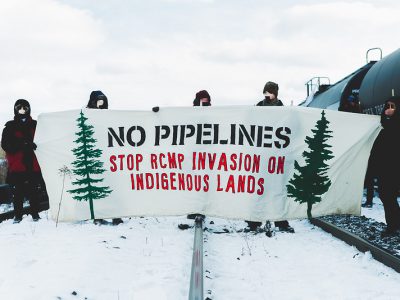
Until cross-country rail blockades by Indigenous activists and their allies made front-page news earlier this month, few Canadians noticed the protests against a pipeline in We’tsuewet’en territory. Opposition to the project from First Nations people in northwestern British Columbia has, however, been consistent—and years in the making. The dam that had been holding back a slow and steady bubbling of resistance burst late last month when heavily armed militarized police moved to enforce a court injunction and tear down a blockade against Coastal GasLink, the company that wants to run its 670-kilometre gas pipeline through unceded native land.

Hereditary chiefs of We’tsuewet’en territory maintain they have jurisdiction over this unceded land and that both Coastal GasLink/TC Energy and the government are in violation of a Supreme Court ruling. Complicating matters: under the Indigenous system of governance, hereditary chiefs from each clan are title holders of the land; meanwhile the band councils (created through the government-imposed Indian Act) have control over the land that the government allotted to reserves. The issue of who controls the land has never been settled legally, nor resolved by negotiation or litigation.

This is not the first time a confrontation between Canadian authorities and Indigenous people has made international news. In 1990, Mohawk people in Quebec held off for 78 days against a golf club developer who wanted to construct condos on traditional burial grounds. The confrontation led to the Oka Crisis, with the provincial and federal governments, in a rare show of unanimity, working together to deploy the military against the barricaded Mohawk. Like the current We’tsuwet’en standoff, it sparked a global solidarity movement in support of Indigenous communities fighting a centuries-old battle against colonialism.

This, however, is the first time Indigenous protests over land rights has garnered popular support among non-Indigenous Canadians.
The Idle No More protest movement, founded in 2012 to honour Indigenous sovereignty and protect the water and land, sensitized non-Indigenous Canadians to the grievances and concerns of Indigenous communities.
The Truth and Reconciliation Commission of Canada opened the nation’s eyes to the horrific and lasting impacts of the residential school system on Indigenous students and their families.
Add to all of the above a rising global awareness about the effect of climate change and the need to move away from fossil fuels to cleaner energy systems and it’s easy to see why popular support for the protests has grown—despite the economic cost of forcing the railway to shut down.
We’tsuwet’en advocates and hereditary leaders have been warning for years about the possibility of a showdown. Critics of the train blockades, however, are now saying that few Indigenous groups are involved in the protests. They point the finger instead at white eco lobbyists, allegedly funded by foreign groups with nefarious intentions. John Ivison, a columnist for the right-wing National Post, went so far as to claim “millennial eco-activists are the new colonialists.” This is a bold take, given that land protectors have for decades been defending the environment from corporations intent on ramming pipelines through unceded land.
Activists for Indigenous rights and for environmental protection rights have allies in Canada and around the world because they are intrinsically connected through shared goals. Shale gas development, pipelines transporting oil, the polluting effects of extraction for a country’s biodiversity, water and land, are issues that are not limited to Indigenous communities. Nor is opposition to pipelines uniquely Canadian: TC Energy has faced major opposition in Mexico and the United States. As long as the industrialized world refuses to transition to renewable sources, they will continue to expropriate Indigenous land and exploit the natural world for fuel.
This is why Indigenous activists around the world —Mexico, Honduras, Brazil, the Philippines, Colombia — are fighting against mining, logging, and other exploitation of community lands, often at the cost of their own lives.
The UN has warned of a “drastic increase” in violence against Indigenous people because of their resistance. According to UN Special Rapporteur on the Rights of Indigenous Peoples, Victoria Tauli-Corpuz, “67 percent of the 312 human rights defenders murdered in 2017 were defending their lands, the environment, or Indigenous rights, nearly always in the context of private sector projects.”
But there are success stories, too. Just last week, the Indigenous community in Oaxaca, Mexico, won a ruling against a Canadian-owning mining company operating in the town. The company had obtained permits to exploit local mineral and precious metal deposits without first consulting the community and, as a result, the environmental protection agency ordered the mine closed.
Political activism raises awareness, which in turn inspires conversations, and helps public sentiment turn in favour of the marginalized— and this is when the vilification begins. Smear campaigns and hate speech painting Indigenous people as obstacles to economic development, lawless “thugs” and “paid protesters” have already commenced, with some of these comments coming directly from the House of Commons in Ottawa.
Outgoing Conservative leader Andrew Scheer, who has repeatedly referred to the democratic protests as illegal, instructed Indigenous protesters—many of whom still live with boil-water advisories in communities that lack basic amenities—to “check their privilege.”
Scheer recently stood up in the House of Commons to demand the protestors be removed by police force if necessary. Peter MacKay, the man currently vying for Scheer’s job, chimed in by posting a video declaring Indigenous protesters and their supporters “a small gang of professional protesters” and “thugs” holding “innocent Canadians hostage.”
The Post Millennial, a pro-Conservative media platform, blamed CN Rail’s recent layoffs on Indigenous activists— ignoring both the fact that the company had announced upcoming layoffs in late 2019 and that unions and workers have expressed solidarity for We’tsuwet’en protests.
“Rail blockades could see cities run out of chlorine for water treatment,” read another headline. But the article itself attributes the claim to a lobbyist for chemical distribution companies. Most cities in fact have their chlorine trucked in; and The Post Millennial did not mention that 60 Indigenous communities have been living with boil-water advisories for decades.
In Canada, as in many other countries with significant Indigenous populations, the policy for decades has been to deny or ignore their legitimate rights and titles. Now, once again, a private company wants to invade unceded territory and exploit its land for economic gain at the expense of the people who live on it. Because those people have little legal or economic power, they are engaging in peaceful civil disobedience as a means to be heard. But instead of listening, the authorities are treating them like criminals.
Faced with escalating pressure from the blockades and the people outraged by them, Prime Minister Justin Trudeau cancelled a trip to Barbados, where he was expected to pitch Caribbean leaders on why Canada should be granted a seat on the United Nations Security Council. Instead, he held an emergency meeting of cabinet ministers Monday in Ottawa. To his credit, he denounced the calls for force, making it clear that a solution could only be found through discussions. Indigenous Services Minister Marc Miller reiterated that sentiment, stating that “the pathway to de-escalation is a painful one, and it’s an hour-by-hour conversation that involves engagement at the highest levels.” Violence and suppression are easy and respectful dialogue is tedious and long, but it’s the latter that is required now.
Canada has yet to engage fully with its grim colonial legacy. This is a country founded on the often-violent seizure of Indigenous land; the displacement of communities via state-sponsored residential schools; and the banning and hoped-for extinction of Indigenous culture, languages, and culture. This legacy is responsible for countless deaths and for generational trauma that manifests in high rates of suicide, incarceration, and substance abuse; it has also played an instrumental role in settler privilege and prosperity.
Canada can no longer afford to prop up polluting industries that threaten our biodiversity and the viability of our land and water. It’s unconscionable to do so. Indigenous concerns should be our concerns also. They are one and the same.
The discourse and increasing support around the We’tsuewet’en protests and train blockades is evolving rapidly because public awareness is rising. Canadian attitudes toward environmental issues are evolving. We’re now starting to realize as a global community that Indigenous people are leading the way in a battle we must wage together.
[post_title] => A standoff over a gas pipeline has become an international call for environmental action
[post_excerpt] => Activists for indigenous rights and for environmental protection rights have allies in Canada and around the world because they are intrinsically connected through shared goals.
[post_status] => publish
[comment_status] => closed
[ping_status] => open
[post_password] =>
[post_name] => a-standoff-over-a-gas-pipeline-has-become-a-call-for-environmental-action
[to_ping] =>
[pinged] =>
[post_modified] => 2026-09-16 23:00:37
[post_modified_gmt] => 2026-09-16 23:00:37
[post_content_filtered] =>
[post_parent] => 0
[guid] => http://conversationalist.org/?p=1627
[menu_order] => 281
[post_type] => post
[post_mime_type] =>
[comment_count] => 0
[filter] => raw
)

 Working as a pediatric emergency physician, Dr. Shaheen-Hussain saw the cruel consequences of the non-accompaniment practice first-hand in 2017, when he treated two young patients who were undergoing stressful medical procedures without their loved ones by their side. Quebec pediatricians had been demanding the end of this heartless practice for decades, but successive governments refused to change the policy, making Quebec an outlier in Canada. When a citizen confronted him about the matter at a public event in 2018 , Quebec’s then-Health Minister, Gaétan Barrette,
  Kamloops Indian Residential School in 1937.[/caption]
In addition, highly unethical
Kamloops Indian Residential School in 1937.[/caption]
In addition, highly unethical 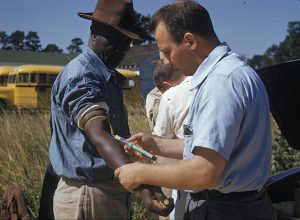 A Black man is tested during the Tuskegee Study of Untreated Syphilis in the Negro Male.[/caption]
The
A Black man is tested during the Tuskegee Study of Untreated Syphilis in the Negro Male.[/caption]
The