WP_Post Object
(
    [ID] => 7195
    [post_author] => 15
    [post_date] => 2024-09-10 21:16:40
    [post_date_gmt] => 2024-09-10 21:16:40
    [post_content] => 

On gentrification's canary in the coal mine, and the cultural cost when affordable cities cease to exist.

Cultural Currency is a bi-monthly romp through the intersections of art, capital, and politics with writer Cara Marsh Sheffler. 

We all know the haircut, whether or not we know it by name. Usually the sides are shaved, the dye job is fluorescent or uneven, and the bangs are unflinchingly aggressive. The haircut is also, of course, not one haircut, but rather a whole genre of haircuts. A mullet is likely. It is something like medieval monastic cosplay by way of a Superfund Site. Glimpsed across the subway platform or at the local bodega, it is a haircut that strikes horror in the heart of the renter and joy in the heart of the owner. The haircut is gentrification’s own canary in the coal mine: It signals that your rent is about to go up.

Nowhere is the haircut more dreaded than in New York City, where no rent increase, no matter how minute the percentage point, is a casual one. The median monthly rent in Manhattan is north of $4,300. The cost of living is 128% above the national average. When Jimmy McMillan founded his political party, Rent Is Too Damn High, almost 20 years ago, it was described as a single-issue platform. Today, I would argue it’s anything but. Commercial rents have become unaffordable to the point that entire blocks have been emptied of ground-floor tenants. The ascendancy of Amazon and the price of rent have colluded to drive the commercial storefront vacancy rate in New York City north of 10%

The irony of the haircut is that it both heralds the appearance of artists and their imminent extinction. It also isn’t limited to Manhattan: The length of time between the sighting of the first asymmetrical neon mullet to large-scale, luxury residential development is accelerating in cities across the country, and more locally, has all but collapsed into a single gesture in neighborhoods like Bushwick, Brooklyn and Ridgewood, Queens. In the process, it’s also begun flattening the art world—and culture at large—with it.

Of course, in the meme-able version of the gentrification story, the haircut is the mark of the villain. But it was not always so. In postwar New York City, when industries abandoned downtown areas and developers like Robert Moses threatened to raze entire neighborhoods to make way for cars instead of people (usually at the expense of racial minorities), creative classes stepped into wastelands like Soho and not only repurposed entire neighborhoods but spawned a class of creators as diverse as Eva Hesse, Jean-Michel Basquiat, Hannah Wilke, Gordon Matta-Clark, Ana Mendieta, Donald Judd, Nam June Paik, Fred Eversley, and too many others to name. 

This cohort—living among one another in constant creative conversation and competition—produced work that helped articulate a fully formed idea of American cultural expression. Today, even adjusted for inflation, none of them would have been able to afford the rent on a closet in Soho. 

When artists are priced out of any given city, the consequences resonate far beyond the neighborhood in which they can no longer afford to live. The attendant deracination makes art less tethered to real places, real communities, and real people. Art becomes less human, and derives worth from one thing only: capital. (While many question their artistic merit, NFTs are a sublime manifestation of this conflation.) In New York today, artists are barely hanging on and bled dry for studio space, while writers essentially have no value in a marketplace that has opted for AI. Musical artists are getting raw deals from streaming services and have fewer venues to play in because of soaring rent. Ditto dancers. The city faces a severe housing shortage, but no one will come forward with an honest number for overall vacancy rates, suggesting that the real estate market is falsely inflated to the detriment of all who call the city home (except landlords). Creatives who work as adjunct professors are often overworked, always underpaid, and almost never promoted to tenure-track positions. Having a family in this city on an artist’s salary is essentially fiscal suicide. 

Simply put, New York’s artistic community is in danger of no longer existing, and we’ve watched it happen in real-time. Downtown New York used to be a byword for a hotbed of American culture, the same way that Chelsea is now the byword for the most prestigious (read: expensive) gallery district in the country. But while art has thrived on patronage since time immemorial, what sort of art is produced in a city artists cannot afford to live in, and where a commercialized, gentrified simulacrum of diversity signals luxury? The answer is probably an NFT.

A healthy city should contain a diversity of artists, precisely because it also contains a diversity of people. No less an urbanist than Moses-archenemy Jane Jacobs wrote in The Death and Life of Great American Cities, “Everyone is aware that tremendous numbers of people concentrate in city downtowns and that, if they did not, there would be no downtown to amount to anything—certainly not one with much downtown diversity.” In other words, downtown areas are desirable precisely because of the diversity that is priced out by their own desirability. This is also ultimately what leads to their downfall: What is the point of living in a city stuffed with billionaires but starved of human capital? And who can even afford to, anyway?

Of course, art and money have always been intertwined. Rich people have nice things. Art is often considered one of those nice things. However, the more art is commodified—and this certainly bears itself out historically with regard to art as a status symbol or reflection of power—the less of an ability it has to be critical, independent, or introspective. You know, interesting.  Gradually, it also has less to say, until art is reduced to a price tag alone—like any other commodity, like currency itself. Art that is only for the mega-rich yields an entire culture that is much the same. Is it any surprise at all that a New Yorker profile of mega-dealer Larry Gagosian from earlier this year took pains to point out that his most lucrative investments were probably in real estate rather than in art? 

As a small-m materialist, I am well aware these questions long ago migrated from the urban grid to Instagram’s. Our insatiable need for convenience and connectivity has destroyed our physical social networks in a variety of ways—and dictated how we continually buy into our own dystopia. It’s also sped up our isolation, both from art and from each other: The commercial tools that have warped real estate values and the basics of human interaction all flourished, of course, online. The connectivity and convenience that lured us toward our screens at all hours of the day have robbed us of storefronts, tax revenue, and chance encounters in exchange. And now, the way in which consumerism has displaced our sense of belonging in communities has manifested in urban real estate in such a way as to rob us of a creative class by destroying its habitat. As the world continues to move online, artistic communities will continue to vanish, too. 

In an information economy and a literal economy that always prizes the shortest distance between two points—collateral damage be damned—artistic expression is a luxury afforded only to the idle rich. The arts will further retreat into a career path available only to those who can afford to go into them. (That is, if we aren’t basically already there, as the conversation around middle class cultural values and downward mobility seems to indicate.) All counter-culture will be co-opted, sanitized, and sold back to us by the algorithm. The resulting culture will be by the rich and for the rich only, a trend handily encapsulated by the vacuous and nauseating never-ending parade of “fashion X art” collaborations that provide little more cultural expression than a vapid launch party planned purely to be splashed across the aforementioned Instagram grid. (So long as corporations are people, I fear we are stuck with Koons’ and Kusama’s “viral Vuittons,” as their respective creators secret themselves far from any “scene” in either a mega-mansion or psychiatric hospital.)

Meanwhile, as the rich clamor for a front-row seat to this circle-jerk, rents will continue to skyrocket. The National Arts Endowment can protest that “a great nation deserves great art” until it is blue in the face, but where the fuck are the artists going to live

Again, I return to Jacobs, who also wrote in The Death and Life of Great American Cities, “Our failures with city neighborhoods are, ultimately, failures in localized self-government.” This is absolutely true: the polis of any diverse city exists in a patchwork of political microclimates. But how can self-government take hold when no one who comes up in the new generation can afford to live in the neighborhoods that most need self-governing? Those who survived the lean years as owners cash out on once-affordable homes so their children can live better lives elsewhere. New developers buy out landlords who evict renters, and suddenly, the neighborhood is gone. The gaps left behind will be filled with coffee shops selling $7 matcha lattes and pilates studios with $45 classes, and the people who can afford to buy them. 

Artists as a whole will surely still have the fire to create something, somewhere, but can already only afford to do so far from one another. The dissipation of any urban culture is its death: Downtown cannot exist as a diaspora. The point is the concentration of its energy, a sum far greater than its parts. 

In The Death and Life of Great American Cities, Jacobs also chides us: “We expect too much of new buildings, and too little of ourselves.” Culture is not a commodity that can be counted. Yet, it has the power to enfranchise and empower just as much as any vote towards affordable housing or raising taxes on the rich. To preserve it, we must look to an inclusive path forward that prioritizes not just people and their work output but also the character of their communities—communities that contain multiple dimensions of diversity and creative expression that should not have to be commodified to prove their value. No developer, no bank, no corporation will do this for us. We must organize ourselves.

[post_title] => "Where the F*ck Are the Artists Going to Live?" [post_excerpt] => On gentrification's canary in the coal mine, and the cultural cost when affordable cities cease to exist. [post_status] => publish [comment_status] => closed [ping_status] => closed [post_password] => [post_name] => artists-new-york-city-affordable-housing-gentrification-haircut-real-estate-culture-art-nft [to_ping] => [pinged] => [post_modified] => 2026-08-04 16:49:00 [post_modified_gmt] => 2026-08-04 16:49:00 [post_content_filtered] => [post_parent] => 0 [guid] => https://conversationalist.org/?p=7195 [menu_order] => 47 [post_type] => post [post_mime_type] => [comment_count] => 0 [filter] => raw )
An illustration of a yellow canary with a pink mullet sitting on a tree branch. Below, two birdwatchers are looking at the bird from below, one pointing at the bird and the other looking through binoculars. In the background, there is a construction on what appears to be a new luxury high rise building. To the left, is a row of brownstones; on the right, is another luxury high rise.

“Where the F*ck Are the Artists Going to Live?”

WP_Post Object
(
    [ID] => 5052
    [post_author] => 15
    [post_date] => 2022-09-08 14:56:20
    [post_date_gmt] => 2022-09-08 14:56:20
    [post_content] => 

I found my dead father's house on Airbnb. It looked nothing like it.

Recently, while looking for an Airbnb in my hometown for an upcoming visit, I found my dead father’s house.

Bewildered, I scanned the listing. Could this really be the same house where I’d scrambled eggs for him every morning and watched his favorite movies on TCM every night? The new owners had stripped the place of its shabbiness, though I wondered as I read whether they'd been able to do the same with its termites. Back when I’d lived there, an unusually ballsy mouse had ruled over the kitchen, where one side of the fridge stood on bricks because otherwise it tilted to the left from the warped tile floor. When the mouse startled me one day, calmly eating an English muffin on the countertop when I went to make coffee, my father had rolled his eyes at my scream. “That’s Mister Jingles,” he said with exasperation. “Be nice.”

The house was no “castle,” as the ad’s headline claimed. Each of its rooms was a quarter of the size that the wide-angled photos made them appear to be. Photos of the kitchen diligently cropped out the bottom left corner of the fridge, where the bricks held it up. Yet, brightened by a ring light and stuffed with the same West Elm bric-a-brac that furnishes every Airbnb, it did look like a plausible getaway. “Nobody lives here full time,” bragged the ad. “You can make yourself at home” for $145 a night.

“Nobody lives here full time”—that opposed the entire ethos of Airbnb as it once was, when it presented itself as a cheaper alternative to hotels and a win-win for everybody who used it. Founders Joe Gebbia and Brian Chesky say the idea for Airbnb came to them when they were struggling to afford the rent on their San Francisco apartment in 2007—they crammed in a few air mattresses and charged guests $80 a night to sleep on them. A year later, they turned their “Air Bed and Breakfast” into a business. 

Supposedly, the idea was always for the experience to be somewhat personal, on both hosts’ and travelers’ sides. Travelers could see a new place from a lived-in home base that lent the trip some local flavor; hosts could make money off their spare rooms while offering a little hospitality. But as Airbnb’s popularity exploded, so did its problems. Tourist-heavy neighborhoods became Airbnb hubs where long term residents could no longer afford to live. Landlords converted rental units into more-profitable Airbnbs and stopped renting them to tenants. Cities’ attempts to regulate the app’s presence have proven difficult and feeble. And, of course, as more homes became full-time Airbnbs, those Airbnbs got worse. 

The average Airbnb used to be friendlier than a chain hotel room. The aggressively anodyne watercolors and unopenable windows of a hotel gave way to the warmth of a real person’s home. But a real home also comes with real hassles. Guests at a hotel can leave the room as messy as they want; guests at an Airbnb have to clean up after themselves and leave the place roughly as they found it, even though hosts collect a “cleaning fee” on each reservation. The hassles were only worth it for as long as Airbnb remained the cheaper option.

And while, in 2022, data suggests that Airbnbs are still cheaper, the gap is closing quickly, and not just in terms of cost. Anecdotally, Airbnbs have been losing all personality for years. My dead father’s house—correction, my dead father’s  “castle”—looks just like the “artist’s studios” and “boutique lofts” that proliferate every city on the app. Add some moose antlers to one wall and it could be a “peaceful ski lodge”; throw in a hammock and it could be a “beach house paradise.” But such hifalutin terms fail to justify Airbnb’s skyrocketing prices. When guests pay $145 a night to stay in my father’s castle, do they coo over the brass-plated vases on every surface, or do they scream at the sight of its long term resident, Mister Jingles? 

Alongside the spendy soullessness of these units, the annoyances have continued to mount. Because people really did live in most early Airbnbs, they came stocked with cookware and basic amenities. Hosts who actually lived in their units were also intimately familiar with them, and could answer questions about what to do with a sticky key or whether the cat was allowed on the fire escape. The increasingly impersonal nature of Airbnbs has turned them into hotels with none of a hotel’s conveniences and even more pointed surveillance. Paranoid about their liability for everything from accidents at their guests’ family barbecues to long-term guests’ ability to claim squatters’ rights, hosts have cut corners and set unreasonable limits. For example, I am presently writing this from an Airbnb with an in-unit washer/dryer that’s padlocked to keep guests from using it.

Airbnb is still the most plausible option for guests who will be staying somewhere for a while and need a place to cook, or people looking for a place where traditional accommodations aren’t possible. Even towns that are light on tourism and don’t have many hotels usually have at least a few Airbnbs available—like the one where my father once lived. His “castle” is one of about a dozen Airbnbs in his far-flung suburb, and it’s by far the priciest one. In more remote locations like this, Airbnb sometimes retains some of its old charm. But in the case of the castle, I scroll through photo after photo of beige furniture and wonder what’s lost when homes are turned into working sites of capital.

My father died in 2018, and I liked to visit his house on Google Earth in the months after his death. I’d drag the photo of the building in circles with my cursor, trying to peer into windows. Here was where he held my head in his lap after I left my husband, patting my hair until my mucous-inflected sobs dried up; here I botched our meatloaf dinner and he laughed, said we could go to Popeye’s instead. I would imagine that we were in the Google Earth photo, nestled into that sweet dilapidated cottage with our junk food and our mouse, watching a movie, out of sight of the camera but very much at home.

Google posted photos of the place in 2012 when he lived there, a month after he died in 2018, and in 2019. As time goes on, the little pink house looks less and less loved. The vivid azaleas and carefully pruned dogwoods that lined the front walk in 2013 gave way to hostile overgrowth in 2018, all to be abandoned to a completely bare lawn by 2019, when the house’s current owner took over. The dogwoods and azaleas are long gone now, seemingly not just cut down but obliterated by the roots from the earth. The grass is perfect. The house is no longer pale pink, but a whitish color that is no color at all. It has been transformed from a home into a rentable castle.

It could be an Airbnb in Vancouver, Woodstock, or Miami. It could be anywhere, could belong to anyone. Nobody lives there full time. You can make yourself at home.

[post_title] => What's Lost When a Home Becomes a Working Site of Capital [post_excerpt] => I found my dead father's house on Airbnb. It looked nothing like it. [post_status] => publish [comment_status] => closed [ping_status] => closed [post_password] => [post_name] => whats-lost-when-home-becomes-working-site-capital-airbnb-father [to_ping] => [pinged] => [post_modified] => 2026-08-04 20:27:15 [post_modified_gmt] => 2026-08-04 20:27:15 [post_content_filtered] => [post_parent] => 0 [guid] => https://conversationalist.org/?p=5052 [menu_order] => 111 [post_type] => post [post_mime_type] => [comment_count] => 0 [filter] => raw )
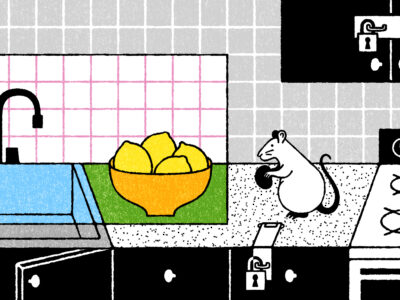
A black and white illustration of a kitchen, with locks on the cupboard and a mouse eating a cracker; a rectangle of the illustration is done is color, showing a bowl of lemons, a blue sink, green counter, and pink checkered wall.

What’s Lost When a Home Becomes a Working Site of Capital

WP_Post Object
(
    [ID] => 4269
    [post_author] => 15
    [post_date] => 2022-08-31 20:50:00
    [post_date_gmt] => 2022-08-31 20:50:00
    [post_content] => 

No, I'm not joking.

Sitting on the front porch on a summer afternoon, in a straight back chair on two legs leaned against the wall. Iced tea or Aperol spritz in hand, Dolly on the record player. We’ve just gotten back from work or visiting elder neighbors or distributing hygiene kits and we’re looking out over the garden, where we grow tomatoes and kale on land returned to and rented from its local Native communities. Some of us will turn our harvest into a vegan vegetable lasagna, while others will do the dishes so no one doubles up on chores. After dinner, we’ll sit around a fire and wax optimistic about the rise of leftist governments in Latin America or the latest rom com, and dance with the kids and pets to Beyoncé until we all get sleepy and retire to our own quiet, comfortable quarters.

… I don’t know, I’m just spitballing here—but it sounds pretty idyllic to me.

For the past few years, I’ve been pitching friends, my girlfriend, and pretty much every person I meet on the idea of starting a queer commune. To me, it’s an easy and perfectly logical sell. Built-in relationships buffered by solitude? Not having to do all the chores (or buy a whole house) yourself? A spirit of chosen family and anti-heteronormativity? I’m not sure what more a millennial queer could want.

Often my audience goes along with it, affecting enthusiasm as if placating a child who’s playing pretend. “Let’s look in the desert!” one friend offers, then later sends me a Zillow listing for land outside Palm Springs. (I guess we’re building.) An ex-girlfriend tells me she and her fiancé joke about buying a multifamily house with her cousin and his boyfriend and raising kids together. A good friend from college and I discuss the animals, activities, and ethos of “the compound” we’ll one day end up on.

What these people fail to understand is that I am not playing—and whatever surface interest they show barely conceals their endgame. Because for every feigned “Fuck yeah” and “We’ll host art shows in our yard!” is another friend, another queer couple, lost to the decaying Xanadu of the American dream: individual homeownership. As they’ve been socialized to see it, they’re not just buying a house, but also buying into the promise of safety, stability, and comfort that can apparently only be secured with a mortgage. I watch, melancholic, as they succumb. This could be us, I whisper, painting pastorals of home-cooked meals you didn’t have to make unless you wanted to make them, and someone always there to take you to the airport, but you and your girlfriend would rather sink a million dollars into an 800-square-foot single-family.

~

I got my first glimpse of communal living in college. I had recently found queerness, and with it, a community of other queer students and alums who lived in double- and triple-deckers where they cooked together, learned from one another, and formed all kinds of relationships—living, laughing, loving, as it were. They probably would have identified this as “intentional living,” more than “commune living,” although both are essentially a group of people sharing space and resources. But semantics aside, they showed me a configuration that felt more loving, more normal, than the purported ideal of a suburban nuclear family. (Admittedly, I was also watching a lot of Big Love at the time.)

Particularly appealing about these spaces was their foundation of queer ethics. The residents were queer, yes, in sexuality, gender, or both, but beyond that, their politics resisted assimilation and oppression and were rooted in inclusive feminism. Many were activists and organizers in other leftist movements; the houses were an experiment in mutual aid, honest communication, and non-punitive measures for addressing harm. They were environments that allowed a multiplicity of relationships and intimacies to bloom. If you were poly, if you didn’t want kids, if you didn’t aspire to anything but being a kind person, if you were just a freak—you could feel at home.

It made sense not just theoretically, but also practically. As someone who prizes privacy and interdependence—and as an Aquarian who loves humanity but not always people—I was taken by the concept of having one’s own space with friends close by, all of us contributing skills and goods and relying on one another. I’m incapable of house maintenance, for example, but I’d happily do the group laundry. I don’t want to raise my own human children, but I think I’d thrive as a weird aunt.

Some might call this immature; a failure to properly adult. In dominant U.S. culture, there’s an expectation of ascending from living with parents or roommates to living alone or with a spouse. But we’re somewhat of a minority there: Around the world, the most common living arrangement is the extended family household. It tracks, then, that we’ve been fed classist and racist notions of communal living as unhealthy, unproductive, and un-American. After World War I, the U.S. government conceived and propagated the aspirational narrative of individual homeownership as a direct response to communism. Later, the Public Works and Federal Housing administrations socially engineered segregated public housing and underwrote the white (wealthied) suburbanization of the U.S. We want to own our own homes because—surprise, surprise—the idea was marketed to us.

If sharing a home with extended family or non-relations is antithetical to this country’s identity, it’s not just about forgoing individual property ownership. Communal living demands and facilitates a way of life that’s inherently anti-capitalist. Six people on one piece of land don’t need to buy six lawnmowers. Cohabitating with housemates from different backgrounds and life experiences gives way to social and political alignments that threaten the dominant paradigm. And if we didn’t have to do everything ourselves—if we weren’t solely responsible for keeping our lights on and our kids fed—what freedom might we know, both collectively and as individuals?

The pandemic, for all its hellishness, has blown illuminating holes through our picket fence individualism. Many of us who’d been relatively comfortable minding our own were suddenly confronted with the reality that we’re vulnerable without each other. We started getting to know our neighbors, trading toilet paper and sourdough starter. The number of multigenerational homes increased, and roommates—whether platonic or romantic—looked after one another when we fell sick. Covid (re)introduced us to communal care.

It also demonstrated and continues to demonstrate how profoundly our neoliberal systems have failed us. From fractured supply chains and healthcare infrastructure to insecure housing markets and wages continually eclipsed by the cost of living, instability and scarcity have blanketed the collective. Rent and inflation increases are knocking more people out of their homes, while more than 3 in 5 people in the U.S. are in debt. After so many mothers left their jobs to care for kids at home in 2020, there are still 1 million fewer women in the workforce two years later.

Why not abandon the road once laid out for us, now all buckled pavement and gaping potholes, and take a detour down the less trodden path of communal living? Why not create our own, ever-expanding social safety net? It’s been made clear that traditional structures of power aren’t going to save us. We are all we’ve got. And when we’re not on our separate, self-reliant islands—when we have more robust immediate support networks of people who may not share our surname—we’re better able to help others in our communities and ourselves. And it works: One recently founded commune, the Tenacious Unicorn Ranch, was explicitly developed as a safe haven for queer and trans people trying to survive the previous presidential administration, and continues to grow today. 

I’m not too proud to admit I Zillow as much as the next person (though I remain disturbed by how soothing it can be). There are some things I value more, however, than four beds and two baths to myself. In my 20s, I lived with three other queer people who taught me how to change my oil and reminded me of the simple joy of passing an unplanned joint after work. In my current fourplex, we count on one another for emergency pet care, for “Are you home? I think I left my oven on,” and for an unexpected, genuine conversation when passing in the yard. (Not to mention the loaves of bread one of my neighbors regularly bakes for the rest of us.) It’s experiences like these that trigger the spark of connection, the comfort of knowing someone’s close by, and the familial warmth of being cared for and taking care.

The American Dream was never imagined with everyone in mind. At its best, individual homeownership evokes feelings of stability, safety, and attachment. At its worst, it embodies exclusionary consumerism and white-hetero tribalism. The queer commune offers all of the former without the latter, instead gifting collectivism, kinship, and the potential for social transformation. And probably some good homemade dessert. 

Y’all coming?

[post_title] => I Want to Start a Queer Commune [post_excerpt] => [post_status] => publish [comment_status] => open [ping_status] => open [post_password] => [post_name] => i-want-to-start-a-queer-commune [to_ping] => [pinged] => https://singlehoodstudies.net/2021/12/03/diverse-intimacies-on-friendship-communal-living-and-non-monogamy/ [post_modified] => 2026-08-04 20:34:58 [post_modified_gmt] => 2026-08-04 20:34:58 [post_content_filtered] => [post_parent] => 0 [guid] => https://conversationalist.org/?p=4269 [menu_order] => 118 [post_type] => post [post_mime_type] => [comment_count] => 0 [filter] => raw )

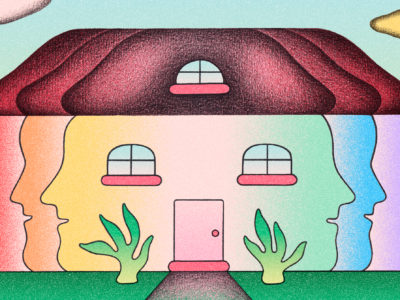
An illustration of a colorful house made up of a rainbow of faces.

I Want to Start a Queer Commune

WP_Post Object
(
    [ID] => 3095
    [post_author] => 2
    [post_date] => 2021-08-12 16:05:40
    [post_date_gmt] => 2021-08-12 16:05:40
    [post_content] => 'Gold is not a human right. Housing is.'

Between 2012 and 2021, Berlin’s median rent rose by over 70 percent. The cost of housing did not skyrocket because the city suddenly became a better place to live, but because investors looking for a secure place to park their money discovered the German capital. Over the past 30 years, in major cities around the world, corporations have been buying up huge swaths of domestic properties as profitable investments. As a result, habitable and affordable housing has become exponentially more difficult for ordinary people to find and keep.

In “Push,” a 2019 documentary that investigates why and how cities have become prohibitively expensive, Leilani Farha, the former U.N. special rapporteur on adequate housing, says that “unbridled capitalism” has made cities unlivable for all but the rich, with affordable housing now a luxury rather than a necessity. “That’s what differentiates housing as a commodity from gold as a commodity,” Farha says: “Gold is not a human right. Housing is.”

In the film, Farha meets a number of people whose rent has increased so dramatically, essentially overnight, that they have little hope of remaining in their homes. A new management company bought a building in Harlem and raised some residents’ rent by $900 per month, making it impossible for an African-American man to stay in his home of many years unless he could suddenly find a $100,000/year job (around 58 percent of Harlem residents make $60,000 per year or less). Something similar happened to an apartment complex in Uppsala, Sweden, making it extremely difficult for older middle-class residents to stay in their homes without dramatically increasing their incomes—a nearly impossible feat for those unwilling to abandon their communities.
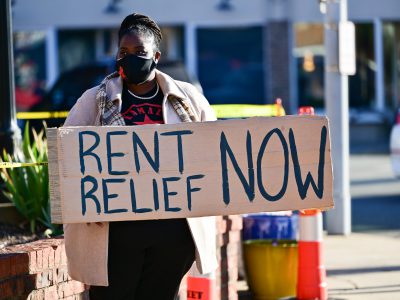
Housing is generally considered affordable when it costs no more than 30 percent of a household’s income. In the United States, nearly 11 million renters spent more than half their income on housing in 2018. That same year, the National Low Income Housing Coalition found that there are no U.S. counties in which a person working full time for the minimum wage could afford to rent a standard two-bedroom apartment. Some people spend so much of their income on housing that they have little left over for food. The fact that large companies and investors now see housing as a reliable investment vehicle, rather than an essential element of social infrastructure—a phenomenon known as the “financialization of housing”—has transformed houses across the globe into shelters for money, not people. Thousands of dwellings sit vacant in major metropolises, enhancing the portfolios of the wealthy, while tens of thousands of human beings sleep on the streets. In Berlin, housing activists are pursuing a radical solution: they want to expropriate domestic properties from Germany’s largest landlords and repurpose them as social housing. If housing is a public good, they say, then the public should control it. Among Berliners, 85 percent of whom are renters, this effort has become increasingly popular, with 56 percent saying they either support (47 percent) a proposal to expropriate the properties of large landlords or are undecided (9 percent). A common argument against expropriation is that governments should be using their limited resources to build more affordable housing. But that solution has been on offer for decades and has yet to halt, or even significantly slow, the broader crisis. Labor and building material costs are prohibitive in many places. Building and land use regulations also pose significant barriers, especially in metro areas. It remains difficult to find both suitable places to build and communities receptive to large-scale public housing projects. Simply building more units is a flawed and partial solution, especially in the absence of significant and consistent funding. But the Berlin campaign targets enormous, publicly traded companies that own more than 3,000 apartments, like Vonovia and Deutsche Wohnen, Germany’s two largest corporate residential landlords. The two companies recently negotiated an €18 billion merger that set a record for Europe’s largest real estate deal, with a combined market valuation of around €47 billion, or $56 billion. They now collectively own around 550,000 apartments throughout Germany. Article 14 of the German constitution permits expropriation only for the common good and only in exchange for fair compensation. If Berlin’s housing activists succeed, the government won’t simply seize private units; it will transfer them to the public and compensate the owners, albeit at a rate that some shareholders might not consider sufficient (companies have the right to sue if they believe the compensation is inadequate). According to a 2020 report prepared by the Rosa Luxemburg Foundation, Berlin is home to around two million apartments, about 15 percent of which are owned by financial investors and publicly traded housing companies. Globally, residential real estate accounts for $163 trillion of assets, a portion of which are held by investors and housing companies in Germany. Deutsche Wohnen reported a profit of €1.54 billion (about $1.83 billion) in fiscal year 2020. Organizers in Berlin say the company has profited handsomely from buying up properties and driving up rents, neglecting routine maintenance and dragging its feet on essential repairs until major renovations are needed, then fixing up the apartments in order to justify massive rent hikes. Berliners are not the only ones trying to take back their city from corporate profiteers. In 2020, the city of Barcelona warned 14 companies that if they failed to rent the 194 vacant apartments they collectively held within one month, the municipality would take possession and convert the units into public housing. Since 2016 Catalonia, the region that includes Barcelona, has made it legal for municipalities to seize apartments left vacant for over two years and rent them to low-income tenants for four to 10 years before returning them to the owners. Catalans also approved a 2019 measure allowing cities to buy such apartments outright at half the market rate (owners would not have the option of refusing to sell). The law allows the city of Barcelona to take possession only in cases where the owners hold multiple units, while forcible purchase is allowed only when units are left vacant for at least two years. Expropriation is unlikely to catch on any time soon in the United States, where the rights of property holders are treated as sacrosanct. During the pandemic, tenant organizers in New York, Kansas City, Los Angeles, and other U.S. cities pressured the government to cancel rent and mortgage payments for as long as the coronavirus was disrupting the economy, without forcing people to pay it back later. California, New York, and a few other states offered tenants modest relief in the form of temporary eviction moratoriums, in a compromise that fell far short of organizers’ demands. Those measures in no way matched the actions proposed or taken in Berlin or Barcelona. Nevertheless Alan Beard, managing director of Interlink Capital Strategies, a financial advisory firm, penned an op-ed for The Hill entitled, “How to protect against future U.S. government expropriation,” in which he railed against governments in the U.S. for having “effectively expropriated most of the American economy” by forcing businesses to close for safety reasons and making it harder to evict people during the pandemic. In many U.S. cities, organizers are fighting for greater control over buildings the public already owns. Last year, Philadelphia organizers obtained limited concessions from the city by setting up encampments, taking over vacant properties in North Philadelphia and on the Benjamin Franklin Parkway, and demanding that the city transfer the properties to the people living in them. The city eventually agreed to put 50 vacant homes into a community land trust and allow 50 unhoused mothers with children to stay in 15 vacant city-owned houses—a drop in the bucket, given that thousands of Philadelphians still need permanent housing. In an ideal world, said Cea Weaver, campaign coordinator for Housing Justice for All, a New York State-based coalition of housing advocates, “public housing that is democratically run and controlled by its residents” would be the norm everywhere. But in the United States, where there is little trust in government or appetite for funding public services, that can feel like a distant dream. “In order for public housing to be great, we also need to rebuild faith in government as a thing that could compassionately care for all of us,” she said, “not the thing that is killing us and making us sick by defunding our homes.” Tara Raghuveer, who directs KC Tenants, a tenants’ rights organization in Kansas City, Missouri, and the Homes Guarantee campaign at People's Action, believes one of the biggest obstacles to “a world where everyone has a home and housing is not treated as a commodity” is that “we’ve been so convinced by the profiteers” that there is no other way. “It’s this attitude of impossibility that stops us from doing things that are really quite simple and that we have models for, even in [the U.S.], going back decades,” she added. Part of expropriation’s appeal is that it allows people to stay where they already live. Thomas McGath, an American ex-pat living in Berlin and a spokesperson for the campaign to expropriate Germany’s largest landlords, said Berliners are beginning to ask themselves, “‘How do I benefit if somebody plops down a thousand apartments in a field somewhere? It doesn’t do anything for me in my neighborhood, where the rents are rising rapidly and/or exorbitantly.’” The idea, he said, is to create a city “that meets the needs of everybody who lives here, and continues to have its unique character defined by those people.” McGath said he moved to Berlin in 2013 in part to escape the growing unaffordability of U.S. cities. “If we own our own cities and we have more democratic control over the things that we own…it really makes it easier for us to make the city more sustainable, more affordable, more livable,” he said, rather than morphing into a “big playground for investors to build vanity projects that really don’t have a social purpose.” If housing is a human right, it’s fair to question whether faceless for-profit corporations should be able to determine who gets it, for how long, and on what terms. A home is more than shelter; it’s where people feel a sense of comfort and belonging. Expropriation is one tool advocates are using to help restore housing to its original purpose: sustaining and enriching human life. [post_title] => To house the people, expropriate the landlords [post_excerpt] => Housing is generally considered affordable when it costs no more than 30 percent of a household’s income. In the United States, nearly 11 million renters spent more than half their income on housing in 2018. [post_status] => publish [comment_status] => closed [ping_status] => open [post_password] => [post_name] => to-house-the-people-expropriate-the-landlords [to_ping] => [pinged] => [post_modified] => 2026-08-06 19:36:47 [post_modified_gmt] => 2026-08-06 19:36:47 [post_content_filtered] => [post_parent] => 0 [guid] => https://conversationalist.org/?p=3095 [menu_order] => 184 [post_type] => post [post_mime_type] => [comment_count] => 0 [filter] => raw )

To house the people, expropriate the landlords