The women of color writing new narratives in perfumery.
When I travel, my souvenir of choice comes in olfactive form: a TSA-compliant bottle of perfume that embodies the spirit of the place I’m visiting, so that I can return to it later in my mind. One cherished example, from a trip to Tokyo, smells like a cup of green tea enjoyed in the cooling clarity of a shaded garden. To someone who grew up surrounded by tea rituals, it also smells like coming home. At its heart is a photorealistic green tea accord—soft yet assertive, bright and smooth at once, bitterness and sweetness in an entangled dance until the end. The scent was composed by someone who understands tea in all of its kaleidoscopic facets: Satori Osawa, a licensed Japanese tea master and one of the country’s few recognized perfumers. She was also the first East Asian perfumer I’d ever met.
Perfumers, admittedly, are hard to come by. They work in chemistry labs sheltered from the public eye and, for the most part, anonymously. But they also tend to hail from the same small pocket of the world, even though their work caters to audiences all over the globe. Looking at headshots of famous perfumers feels like playing a difficult game of Guess Who: From Jean Claude Ellena (Hermès Terre d’Hermès, Bulgari Thé Vert) to Olivier Cresp (Thierry Mugler Angel, YSL Black Opium), the creators behind some of the biggest household names in perfumery are all born in France—often into perfumer families—and trained there, too.
France is hardly the only place in the world with a rich cultural scent heritage; nevertheless, the traditional perfumer’s mold continues to be cast in the French man’s image. For those who try to challenge this convention, the barriers to entry unpack like nesting dolls: gender, race, nationality, lineage, and, at the heart of it all, access. “When I first started out and wanted to establish my brand name, it was incredibly difficult,” says Chavalia Dunlap-Mwamba, self-taught perfumer and owner of Texas-based fragrance brand Pink MahogHany. Whether it was finding other Black perfumers in the industry to reach out to, or bulk manufacturers and compounders to scale her business, helpful information proved to be scant and elusive. She found herself bootstrapping as a complete outsider.
For many, the barriers to perfumery are also profoundly financial. From minimum order quantities to the price of raw materials—250ml of jasmine absolute, for example, can retail for over a thousand dollars—every aspect of the industry comes with a price tag to choke on. “Perfumery is an expensive hobby, and historically, only the very privileged have been able to partake in it,” says Loreto Remsing, creator of artisan brand LAROMATICA. Learning the tricks of the trade is equally prohibitive, and usually involves moving to France to study at one of its prestigious fragrance institutions. For Remsing, an immigrant to the United States who faced poverty growing up and ended up putting herself through college, a formal perfume education was never an option; and even if it had been, she would have felt out of place. This exclusionary feeling is shared by Lula Curioca, an olfactory artist and perfumer based in Mexico City, and also pushed her to pursue the self-taught route. “[It was] like going against water all the time,” Curioca admits. “I was like, ‘That gate, at the moment, I can’t cross it.’”
In conversations about the industry, this image of gates comes up time and time again. “[Historically,] women of color haven’t been given the opportunity to come up in perfumery,” says Yosh Han, self-taught perfumer and creative director at Scent Trunk, a fragrance publishing house. “Many have been in marketing or sales roles only.” Disregarding the rules of convention, she launched her eponymous perfume brand in 2004, as an Asian-American female with no formal training. She recalls the industry reception being one of shock: “Everybody was like, ‘Who the fuck is this girl?’” Han, who now champions other independent and self-taught perfumers by commissioning their work for Scent Trunk, is a vocal advocate for doing things the untraditional way. She likens it to good cooking: talent can come from any kitchen, not just Le Cordon Bleu’s.
Access through the well-trodden pathways, too, comes with asterisks and caveats for those who do not fit the profile. “It’s really guarded. And still, despite what a huge industry it is,” says Anne Serrano-McClain, founder of independent perfume brand MCMC Fragrances. She’s what the industry dubs “classically” trained, through a year-long professional degree offered by the Grasse Institute of Perfumery (GIP), a rarefied and renowned perfume school located in the South of France, that only accepts 12 students a year. When she enrolled in 2009, most of her fellow students were from Europe, with familial ties to the industry; one of them was the aforementioned Olivier Cresp’s son. “You are expected in the industry to follow a very particular path,” she says. “I walked away with the technical skills, but I also walked away with this understanding that made me passionate [about] breaking that mold a little bit.”
Dana El Masri, a Lebanese-Egyptian-Canadian perfumer who launched her line Jazmin Saraï shortly after graduating from GIP, recalls clashing with her French teachers and classmates throughout her time there. Often, it came down to cultural differences as a person of color in a traditional Euro-centric environment. In one instance, while working on a group project for a perfume that she was leading—inspired by a luxury hotel in Siwa, an oasis in northern Egypt—her unusual choice of fragrance materials was called into question as being “too oriental.”
Here, “oriental” is accompanied by emphatic air quotes. Until recently, the term was a part of the perfume industry taxonomy—a fragrance family that encapsulates scents with warm, resinous, spicy facets, featuring materials such as vanilla, labdanum, and tonka bean. The classification has always played an othering role in perfumery, used to describe scents that represented fantasies of foreign places. “It means nothing from an olfactory perspective,” El Masri explains. “You can eliminate it entirely and break it down into balsamic, ambery, powdery, and gourmand.” In school, she was praised for being skilled at making “oriental” perfumes—until those compositions started to smell too foreign. “We were playing around with materials that you find in ancient Egypt. So I was using myrrh, I was playing with papyrus. Palm frond. Carob. Jasmine,” she recounts. “So yeah, it was going to be a little ‘oriental.’”
Today, due to growing pressure from industry advocates—including many of the perfumers featured here—a term that was once deemed part of perfume tradition is now understood as terribly outdated and offensive. In 2021, the perfume database Fragrances of the World updated all instances of “oriental” to “amber,” as did the perfume encyclopedia Fragrantica. Some brands and retailers followed suit. Still, many haven’t, and the industry remains riddled with disparity and ripe for change. “If a [fragrance] company cannot acknowledge a word description because they’re upholding colonial white supremacist beliefs,” asks Han, “how is a woman of color ever going to get to leadership positions?”
To amplify and uplift the presence of BIPOC creators within the industry, Han, El Masri, and their network of advocates have assembled resources like Decolonize Scent and the Diverse Talent in Fragrance & Perfumery Database. It is, after all, in perfume companies’ best interests to expand their pool of talent; diversity begets innovation and creativity. And when perfumers are hired from all over the world, not just the microclimates of the South of France, they distill their experiences and unique olfactive associations into their work. “When you bring in women of color, you are bringing in unique cultural experiences, traditions, history, heritage, and stories,” says Remsing, who attributes the inspiration for some of her creations to a childhood of living on isolated farms, surrounded by herbs, plants, and folk medicine.
Before I had the chance to visit Satori Osawa, I had smelled a dozen green tea scents—all pleasant and lovely, but none that hooked me by the heart. When I smelled her specific translation of green tea—with the sparkle of a portrait painted by a person who loves the subject—the rest of them dropped out of qualification.
Perfumes have always been prized for their transportive properties, how they allow us to return to a beloved memory, or armchair travel to new surroundings. This is why fragrance marketing copy is saturated with references to fabled worlds and exotic destinations, to odysseys and adventures. But as the olfactory terrain of fragrance becomes more and more diverse, those responsible for creating these concepts remain the same.
To the brands who capitalize on the allure of the unfamiliar yet default to working with the old guard, El Masri presents an alternative perspective: “Don't you think you're going to get more of an accurate and potentially even more soulful, passionate, connected interpretation of what you're trying to express,” she asks, “if it was made with a local [perfumer] or someone who understands the culture on a much deeper level?” This is not to say that only people who’ve lived those experiences should get to tell their stories, El Masri clarifies. “I’m just saying that we need to give those people that chance.”
For the women who’ve plodded their own paths in perfumery, a shared belief is the moral imperative to create more opportunities for the scent-curious, whomever they may be. Dunlap-Mwamba, who also works as an educator, sees it as more than a DE&I concern—it’s the missing representation that helps close gaps for the next generation. “My mission is to create more visibility for perfumers of color,” she says. “Because what happened with me is that I didn’t know this space existed until I was grown.” If fragrance became incorporated into elementary school curriculums alongside electives like art or dance, she suggests, students would be exposed to the different facets of the fragrance industry at a younger age—which broadens their avenues in the job market.
Serrano-McClain has a similar mission: to pass on her technical training from the GIP to those in less privileged positions. “We don’t treat perfume like it’s accessible art,” she says. “And we could do more of that.” She had previously taught a perfume class at a local youth engagement center, and recalls being impressed with the wealth of olfactive ideas that her teenage students brought to the table—evidence that good ideas in perfumery can come from anywhere, at any age. But what is understood for other artistic mediums—that capital and institutional training are not prerequisites to great art—still pushes the boundaries of this one.
One of the silver linings of the pandemic is how it has normalized and democratized online education—and that includes more remote perfume courses, previously rarely offered. Organizations dedicated to accessible scent education and experimentation, such as the Institute for Art and Olfaction (IAO) in Los Angeles, make it easier than ever to dabble in the art and science of smells. Curioca, who herself learned to make perfume through sessions at the IAO, offered advice for other outsiders with interest in the industry who are unsure of where to begin: “If you want to, you’ll find a way. Maybe it’s slower. Maybe it’s different. Your own path will find you—you just need to let yourself be guided.”
As they say in the industry: Just follow your nose.
[post_title] => Follow Her Nose
[post_excerpt] => The women of color rewriting the narratives of perfume.
[post_status] => publish
[comment_status] => open
[ping_status] => open
[post_password] =>
[post_name] => follow-her-nose-woc-perfumers
[to_ping] =>
[pinged] =>
[post_modified] => 2024-08-28 21:15:12
[post_modified_gmt] => 2024-08-28 21:15:12
[post_content_filtered] =>
[post_parent] => 0
[guid] => https://conversationalist.org/?p=4229
[menu_order] => 121
[post_type] => post
[post_mime_type] =>
[comment_count] => 0
[filter] => raw
)
“Old Friends” is an ongoing series exploring the many ways that friendship changes shape in adulthood.
“My friend Rachel is getting married.”
I say the words in my head, and out loud, and marvel at the way the syllables align; laugh a bit at the obvious joke about the 2008 movie; pull my mouth into a half-smile as I imagine Rachel as I knew her best, someone I sat with during tenth grade biology and who gifted me so many of the foundational touchstones of my personhood now. Rachel, goofy and unguarded and easily earnest, who spurred me to be my weirdest and wildest self. Rachel, who introduced me to Britpop; who introduced me to a lot of music, actually, including the artist Annie, whose song “Heartbeat” is a top five for sure. Rachel, who taught me to be funny in the exact way that would make her giggle, an expression and sound I can picture without any dimming over the distance of space and time.
The thing is, I haven’t seen Rachel in person in over a decade. Before this past year, the last time I’d spoken to her was back in 2017, when our friend L, who’d sat at that same bio table, passed away, and knowing that she and L had been as close as sisters, I’d reached out to Rachel over a flurry of texts. We made the kind of promises that happen over death, to be more present and ready for each other in the now. And I thought I’d meant it, but I couldn’t follow through. When everyone descended back on our hometown for the funeral, I demurred, citing life and time and work—and did I mention life?—letting the memory of who I was to them attend instead.
There were real reasons why I didn’t go back. I was in the throes of an internal gender crisis as I assessed and tried to repress my rejection of womanhood, a bridle bit that was carving a waterfall of blood from my metallic mouth. I was still reeling from a big move—out of Los Angeles, my home for seven years, and into a domicile with the man who’d become my spouse—and hadn’t quite found my footing, financially and otherwise, in this new place. But the most elemental reason I didn’t go back to New Jersey was that I didn’t know what to say to the friends I’d essentially left behind when I moved to California and decided to become the person I couldn’t be back home. Back where I knew and loved them. Back where I maybe not loved, but at least thought I knew, myself.
~
Four years later, death is what brings me back to Rachel again. She’d always been attuned to what one might call the “pop girls,” and in the early 2000s, that included Girls Aloud, the British girl group whose impact and influence never quite crossed the Atlantic like their most popular predecessors the Spice Girls' had. Rachel had made a hagiography out of their music and careers—as a group, as individuals—with the expertise of a stan, which she was. And then, last fall, one of the members of Girls Aloud passed away suddenly, at an age where your first reaction is, “That’s too young.”
I read the headline on the music blog I’ve been reading since high school and felt the impact in two waves: first, a sharp kick in the throat, and then, a dull pang tunneling through my chest cavity and into my gut, where it settled into the heavy, heady ache of guilt. I needed to tell Rachel. Did she already know? Did she still care? Would she want to talk about it with me, and could this transparent bid for reconnection actually in turn open the door for us to discuss everything I now knew about myself and everything I didn’t know about her?
~
We fell out over a boy, or at least that’s how I framed it. After my high school ex and I broke up, he’d stayed on the East Coast for college like most of the people I’d gone to school with and made plans with them and reached out to them and made them feel wanted and seen, and that included Rachel. Meanwhile, I’d crossed the country and immediately began my free bitch makeover montage, seeking nothing less than sublimation, to seem cooler, smarter, more self-possessed than I’d ever felt in the town where I’d grown up, to leave my body behind and diffuse into a sun-baptized spirit. I quite literally tried to shed my body of its mass, its baggage, its racialized cocoon, to cultivate the effortless, weightless glow of success and satisfaction that’d make people look at me, want me, and maybe even accept me. No wonder my ex broke up with me over a video call right before Halloween our freshman year; no wonder my attempts at conversations with my once-best friends became buckshot in sparse forests, doves with clipped wings released to their doom, cursory “happy birthday”s and then merciful silence. It didn’t matter that our high school friend group started to break apart on its own, that many of the friends my ex had “won” in the breakup custody battle didn’t stay friends with him or each other. I surrendered my past completely, and more than anyone else, I surrendered Rachel.
Honestly, the loss of most of those friendships was for the best. And eventually, I figured out how to become the kind of person I wanted to be without brutalizing myself for the achievement of that want. But I never got over Rachel, who was one of the only people I knew from back then who went on to work in the entertainment world, too; whose influence in my life goes down to my marrow.
I went alone to a Robyn concert and thought, “Rachel would’ve gone with me.” I went to parties and wondered what she’d think of their soundtracks, because she was the one who’d taught me how to listen to—really listen to—and contextualize music. In many ways, she was my shadow sensei and my twin, not in the biological sense but in the Hilton Als essayistic way. A mirrored soul, someone who knew how to draw the best of me out of myself.
I’d never told her any of this because nobody we grew up with talked about friendship like that. But maybe we’d always picked up a singular frequency from each other. When I heard through the grapevine that she’d come out in college, I yearned to tell her that I understood even though I hadn’t come out in my own way to myself then. When I did come out, I’d often imagine, unbidden, how I would break the news to her. How she’d process it; whether she’d recoil from or reach for me, whether she’d still recognize our similarities despite the new difference between us.
~
I stared at the headline and imagined a world where I took my regret to the grave, and texted her something that, between the lines, simply said: I miss you, I miss you, I miss you.
We talked for what felt like and actually was hours. Her girlfriend-now-fiancée had to remind her of the life outside our impassioned recollections and brutal revelations. Our mutual admirations and jealousies and drafted but scrapped overtures. She asked me what happened back then, and I told her with no shame or fear or gloss, the kind of honesty we’d never achieved as friends.
And really, we’re barely friends now. I don’t know the rhythms of her day-to-day life and she doesn’t know mine. We haven’t talked at length since that first outpouring, but we both agreed that all we could do was keep placing stones in the river that’d grown between us. I text her every time I think of her and she does the same. She’s back into British girl pop again and told me when she sang Little Mix at karaoke. I asked her for her address to send her flowers for her engagement though I’m not (and didn’t/don’t expect to be) invited to whatever ceremony she’s got planned. I won’t be in New York for a while and she won’t be in California anytime soon, but the door is open if/when one of us crosses over the same expanse that’d once divided us.
I want to shake my younger self by the shoulders and tell her/them that the only thing that ever kept me from rekindling these kinds of connections was my own damn ego, so fixated on the idea that something was broken that I couldn’t imagine reforging it into not the thing it was, but the thing it could be. I want to leap across the country and shake Rachel’s shoulders and promise, really promise, that I won’t let our friendship become a memory again. I want to watch her face morph with indescribable emotion as she sees me and I want to know she sees my face go through the same.
Maybe I’m coming on too strong. It’s true, whirlwind courtships have slimmer odds than ones that grow from deeply planted roots. So here I am, enriching the soil; soon, though, I hope to have more flowers for her.
[post_title] => How Do You Reconnect with Someone You Haven't Spoken to in a Decade?
[post_excerpt] =>
[post_status] => publish
[comment_status] => open
[ping_status] => open
[post_password] =>
[post_name] => how-to-reconnect-with-someone-you-havent-spoken-to-in-a-decade
[to_ping] =>
[pinged] =>
[post_modified] => 2024-08-28 21:15:12
[post_modified_gmt] => 2024-08-28 21:15:12
[post_content_filtered] =>
[post_parent] => 0
[guid] => https://conversationalist.org/?p=4729
[menu_order] => 122
[post_type] => post
[post_mime_type] =>
[comment_count] => 0
[filter] => raw
)
In my 20s, this question consumed me. Then, I asked a better one.
“Old Friends” is an ongoing series exploring the many ways that friendship changes shape in adulthood.
At the nadir of the Great Recession, as I prepared to hurl my about-to-graduate self into a labor pool that looked more like a quicksand pit, my many preoccupations about the future—Where would I live? How would I pay the bills? What would I do, in both a cosmic and literal sense?—were always overshadowed by a quietly devastating question: Why don’t I have any friends?
The thought was born of confusion more than self-pity. I had plenty of flaws, yes, but I wasn’t a uniquely unlikeable person, nor an especially cruel or boring or stupid one. At no point had I ever made a conscious decision to reject friendships; in fact, I craved them with a somewhat pathetic sincerity. Yet, for whatever reason, most days I woke up feeling deeply alone and went to bed feeling the same way.
Soon I’d learn this was normal, that feeling like you have no friends is one of the most universal experiences of being an adult in the 21st century. Every year there’s a new study that quantifies our collective loneliness. The specific statistics are irrelevant, the takeaways interchangeable. The numbers say little we don’t already know. Who needs an expert to explain that a society built around perpetual, exponential growth must demand ever-greater exertion and attention from an increasingly exhausted population, and that this state of affairs sucks ass?
On some level it was nice to know my misery had company. But not that nice. It certainly wasn’t enough to allay my fear that I was trying my best to make friends and failing miserably. No matter how often (or where) I put myself out there, I had nothing to show for it. Desperation is a stinky cologne, and it often felt like the more I yearned for friendship, the faster people ran away from me. After two years of playing pickup basketball at the local YMCA, I’d bonded with zero other humans. My weekly trips to the meditation center were wonderful, but even joining a “Dharma Friends” group didn’t yield any actual friends. I chatted with classmates in the halls after lectures and struck up conversations with strangers at the bus stop, often with the promise that we’d grab a drink later. We never wound up grabbing a drink later.
My inability to make friends would’ve made more sense if I’d been a “real” adult, I reasoned. If I’d had the excuse of a kid who ate up all my free time, or a career that chained me to a desk. It would’ve made more sense if I’d just moved to the area: Minnesota isnotoriously inhospitableto newcomers. None of this was true, though. The only remaining explanation? The problem was me.
In hindsight, I think this was correct, but not for the reasons I imagined.
Compared with all the time 21-year old me spent pondering why I didn’t have any friends, I spent very little wondering how I might be a good friend to others. I don’t think I was unique in this regard: Young people are typically (if not always accurately) regarded as self-centered. In any case, my own needs were so urgent and ravenous that I had no brain space to contemplate the needs of anyone else. My obsession with having friends made me poorly suited to be one myself.
Another thing I’d rarely considered was if the question of Why don’t I have any friends? waseven valid. It’s not like nobody was ever nice to me. The YMCA basketball guys, for example, may not have invited me over to play video games—but we did spend 5-10 hours a week hooping together, cracking jokes and talking good-natured smack. And some of the people I’d met at the meditation center had shown me remarkable kindness. There was the yoga teacher who’d stay after class to help me practice headstands (and, much to my surprise, commiserate about trying to quit smoking). Or the avuncular gentleman who carved me a beautiful portable altar after I told him I was moving to South Korea. I remember admiring the wood’s live edge and choking up as he hugged me goodbye. Isn’t that something friends would do, even if we’d never hit the bars together?
And then, a strange thing happened: I left the place I’d spent most of my life and promptly made a bunch of friends.
The change of scenery didn’t hurt, and finally having a small-but-steady source of income wasn’t bad either. (How invisible you can feel in a city when you have no money, and how limited your options for socializing become when a $5 drink is beyond your budget!) On Thursday nights, we’d have barbecue feasts and sing karaoke; on weekends we’d go to mud festivals or lewd sculpture parks. At last my life was full of the friendship I’d craved, the bubbly and adventurous camaraderie of beer commercials and Benetton ads. This miracle didn’t happen because I somehow got smarter or funnier or cooler, though—all the attributes I’d thought were essential for having friends. Instead, I’m pretty sure it happened because I got more curious about other peoples’ lives and less obsessed with my own.
Looking back, it feels unsatisfying to say that my reintroduction to friendship came thanks to a change in my material conditions. People can’t just pack up and move if they feel alone in their town or city, and finding a decent job has always been easier said than done. But it feels equally unsatisfying to say it happened because I shifted how I thought about things—as if the only thing standing between me and a brunch table full of chums was a pinch of positive thinking.
When it comes to making friends as an adult, the deck is indeed stacked against us. It’s not just me: This is a shitty and difficult time to be alive. Life under a hypercompetitive capitalist regime is hostile to the conditions that make friendships possible. We have little free time for long meandering chats, and we have few nice public spaces in which to have them. We’re taught from birth to view ourselves as consumers and competitors. We’re punished for having any vulnerabilities. You could say this makes friendship more urgent than ever… but when hasn’t it been urgent?
All these points are true in a big picture sense, which made it essential (in my case, at least) to ignore the big picture. Ignoring stuff tends to get a bad rap—but for me it was an act of liberation instead of neglect. When I started paying less attention to my own neuroses about friendship and the structural reasons it felt so out of reach, I had more time and energy to pay attention to other people. I started to notice little things about the ways they talked, moved, thought, ate. This was genuinely interesting to me, and it turned out that taking an interest in others was a good way to get them interested in me, too. Not all the time, but often enough that I felt less alone.
In the decade-plus since my existential friend crisis, my thoughts about friendship have changed so much they might as well belong to a different person. My urge to impress morphed into an urge to care. This shift didn’t happen because I gritted my teeth and tried extra hard to be nicer; it came when I took a break from beating myself up to notice all the fascinating humans moving around me. There’s an old Buddhist joke that goes, “Don’t just do something, sit there.” And as silly as it might sound, not trying to fix my friend problem was the first and most important step to letting it fade away.
I wish I could go back and explain all this to about-to-graduate me, but who knows if he would have listened. Maybe he had to experience it all firsthand for himself. Better late than never, though, and better now than even later. What a blessing it is to realize that we don’t have to be better to be worthy of friendship. What a relief to know that flowers bloom even if we don’t pull them up by their petals.
[post_title] => "Why Don't I Have Any Friends?"
[post_excerpt] =>
[post_status] => publish
[comment_status] => open
[ping_status] => open
[post_password] =>
[post_name] => why-dont-i-have-any-friends-culture
[to_ping] =>
[pinged] =>
[post_modified] => 2024-08-28 21:15:12
[post_modified_gmt] => 2024-08-28 21:15:12
[post_content_filtered] =>
[post_parent] => 0
[guid] => https://conversationalist.org/?p=4690
[menu_order] => 123
[post_type] => post
[post_mime_type] =>
[comment_count] => 0
[filter] => raw
)
Canadians tend to see the extremism expressed by the truckers and their supporters as a fringe movement imported from the U.S., but that is a gross oversimplification.
The so-called “Freedom Convoy,” a highly disruptive protest organized and led by Canadian truckers who oppose vaccine mandates and other pandemic-related restrictions, is now entering its third week. Protesting truckers drove their rigs into downtown Ottawa and set up camp, blowing their horns at eardrum-shattering decibels for hours each day and holding tailgate parties, making the downtown area of Canada’s usually placid small capital city unlivable. City residents are incensed by the noise and disruption, while the chief of police has resigned under fire for his failure to disperse the demonstrators.
The protesters are deeply unpopular in Canada, which has one of the highest vaccination rates in the world with 90 percent of the population overall—including truckers— having received at least two doses. And yet, the Freedom Convoy has managed to dominate the news cycle and paralyze Canada’s capital city, forcing Prime Minister Justin Trudeau to take the unprecedented step of invoking the Emergencies Act, which gives law enforcement expanded powers to arrest protesters and break up demonstrations.
The angry, anti-vax truckers have harassed residents to the point that older people are afraid to leave their homes; they have committed multiple acts of vandalism and violence, some targeting journalists; and in one egregious incident were spotted lighting a fire in the lobby of a residential apartment building. They have blockaded roads, and not only in Ottawa. The freedom convoy participants have also shut down multiple border crossings as the protest has spread west, with particularly large presences elsewhere in Ontario and in Alberta, an oil-rich province known for cattle ranching and the prevalence of strong right-wing views, including secessionism—a combination that often elicits comparisons with Texas.
On Sunday police cleared and reopened the Ambassador Bridge, where protesters had for a week choked off a critical commercial route that connects Detroit, Michigan, to Windsor, Ontario. But the authorities have not yet found the stomach to forcibly break up the protest in Ottawa. As the siege drags on, journalists, pundits, and the public have been digging into the ideological motivations, funding sources, and cross-border networks of the protesters.
Protesters have displayed swastikas, Canadian flags, Confederate flags, Gadsen flags, Trump flags, U.S. flags, and QAnon messaging. Observers have also reported conservative Christian messaging and symbols that were likewise present at the U.S. protests against the 2020 election results that culminated in the January 6 insurrection. The elements clearly inspired by American right-wing Christians include “Jericho marches” around the parliamentary precinct in Ottawa, in a symbolic reenactment of the Hebrew Bible tale about God causing the city of Jericho’s walls to collapse after the Israelites marched while blowing ram’s horns, or shofars. Right-wing Christians have in recent years appropriated these Jewish ritual instruments, blowing them during church services and at “Jericho marches” in both the U.S. and Canada. The organizer of the Canadian “Jericho marches” is Benita Pedersen, an Albertan.
As Jorge Barrera reports for the CBC, “Christian faith — with an overtly evangelical feel — flows like an undercurrent through the Freedom Convoy in Ottawa.” But how much of this represents the direct influence of the American Christian Right, as opposed to an expression of homegrown, if fringe, Canadian extremism and majoritarian grievance?
Catherine Porter, the New York Times’s Canada bureau chief, observed that “many believe the unrest is essentially a U.S. import,” but this is an oversimplification. The discourse reminds me of how, when I first began researching networks involving U.S. Christian Right actors and right-wing, pro-Putin Russians (many associated with the Russian Orthodox Church) in 2013, the spread of illiberal, socially conservative policies in the global South, Eastern Europe, and Russia was often framed in terms of the exportation of America’s culture wars. A few years later, when the connections between Donald Trump’s campaign for president and various Russian actors became apparent, many liberals embraced the simplistic and frankly absurd notion that the U.S.’s right-wing extremism and deep social and political divisions had been essentially manufactured by Russian disinformation. The reality is that Russian influence operations managed to exploit and exacerbate problems that already existed.
Throughout those years, while monitoring the various networks and connections between American, western European, and Russian right-wing extremists, eventually in my capacity as a senior research associate with the Postsecular Conflicts project based at the University of Innsbruck in Austria, I stressed agency among actors from all factions and rejected temptations to view the efforts of organizations like the World Congress of Families (now known as the International Organization for the Family) as sites of unidirectional influence.
By the same token, the international ties between Canada’s right-wing extremists and those from other countries, primarily the U.S., must be seen in terms of multidirectional influence and feedback loops. The U.S. Christian Right does have ties to Canadian extremist groups, and at least a diffuse connection to the convoy wreaking havoc in Ottawa. Whereas transatlantic connections are usually limited to elite, higher-level actors, Canada and the U.S. share the world’s longest undefended border, making it easy for less well-funded, less sophisticated, less easily monitored actors to connect with one another—people who are ready to engage in street violence, or ideologues and agitators who are happy to appear alongside street brawlers.
Proud Boys Canada may have officially dissolved itself after Ottawa declared it a terrorist organization last spring, but the organization was founded by a Canadian. And, while the Proud Boys have become mainly an American group, some Canadians have been involved in violent right-wing protests on the U.S. side of the border. These include the January 6, 2021 insurrection in Washington, D.C., where at least one Canadian flag was spotted, and where a group of Proud Boys knelt in an unmistakably evangelical prayer that was captured on video before playing a prominent role in the violence. Canadian actors have also been present at right-wing protests and incidents of street violence in Portland, Oregon—a city frequently targeted by the Proud Boys and similar far-right group Patriot Prayer.
The most well-known Canadian who has frequented Oregon is the notorious Artur Pawlowski, a Polish-born evangelical pastor based in Calgary, Alberta, who has led raucous protests and direct actions against public health mandates in Canada throughout the coronavirus pandemic, claiming that public health protections violate his “religious freedom.” In one such protest, Pawlowski and other participants carried tiki torches in a clear nod to the August, 2017 white supremacist “Unite the Right” rally that took place in Charlottesville, Virginia. Pawlowski was recently arrested in Coutts, Alberta, in connection with his support for the protesters blockading the border crossing there.
As for the American Christian Right’s connections to the trucker protest in Canada, major figures such as Franklin Graham—world-famous evangelist Billy Graham’s son and head of the Billy Graham Evangelistic Association—have spoken out in support of it. Although they are not household names, prominent “prophets” and “apostles” associated with the radical charismatic movement known as the New Apostolic Reformation—the kind of Christianity espoused by former Trump spiritual advisor Paula White—are also broadcasting their support, as researcher Bruce Wilson, who has published numerous articles documenting Christian Right and NAR activities and networks, confirmed when asked for comment.
The man holding the sign told 'The Catholic Register' that Pope Francis is a heretic and that the government is forcing people to take vaccines.
But perhaps the most significant U.S. Christian Right connection to the so-called “Freedom Convoy” is represented by the explicitly Christian crowdfunding site GiveSendGo, which has become infamous in recent years for funding white supremacist causes, including the legal defense of Kyle Rittenhouse, who gunned down supporters of Black Lives Matter at a protest in Kenosha, Wisconsin. Crowdfunding has allowed massive amounts of dark money to flow to the Canadian extremists behind the protest at a rate that dwarfs typical Canadian political fundraising, a worrisome development that could continue to undermine the country's civil society and democracy after the current protests are over.
Last week hackers broke into GiveSendGo’s network, releasing donor names, email addresses, and other information to journalists and researchers. One scholar looking into where the money originates is Dr. Thomas Lecaque, an associate professor of history at Grand View University. Lecaque posted a Twitter thread of messages from donors (without disclosing their names or other personally identifying information), as well as the countries (and in some cases states/provinces and cities) they come from. Eight of these messages “explicitly discuss Jericho,” Lecaque tweeted. The donations referenced in his thread mostly stemmed from the United States and Canada, but one came from the UK and another from France.
Lecaque told The Conversationalist that while the donors came from a broad geographic range, a high proportion were from the U.S. His keyword search of the messages donors posted brought up “a lot of religious themed entries, some more extreme than others.” Most of them were of the anodyne “God bless” variety, but there were some violent ones as well, with “themes of spiritual warfare or QAnon.” Lecaque acknowledged that explicitly religious messages were in the minority, but their presence nevertheless stood out.
The mostly white, racially aggrieved, conspiracy-theory believing crowd in the U.S. and Canada espouse unpopular views and support unpopular policies, but by using technology to connect and crowdfund internationally, they have managed to punch politically above their weight. Both countries have homegrown extremists and their own respective racist and colonialist realities to confront, but right-wingers from either side of the border are also influencing each other, probably more through media (including social media) than through direct cross-border interactions.
But what is it exactly that facilitates the mutual admiration and networking? That factor seems to be affiliation with conservative Christianity—especially, although not exclusively, evangelical Protestantism. This tracks with what I’ve observed in my own research both with respect to the domestic Christian Right and international right-wing networks. We are living through a moment of surging right-wing populism in North America, Europe, Australia, and some other parts of the world—a massive backlash against civil rights gains and the rise of multicultural democracy by the heirs of European colonialism and genocide.
A sense that they are outnumbered has contributed both to these individuals’ radicalization, and to the easing of traditional theological, cultural, and geopolitical enmities between various Christian and ethnic groups, paving the way for aggrieved (and mostly white) hardline Catholics, Protestants, Mormons, and Orthodox Christians to band together in attempts to assert dominance through the promotion of a “traditional values” agenda—whether in the European Court of Human Rights, the U.S. Supreme Court, or the streets of Portland and Ottawa. While most American, Canadian, and European Christians are not right-wing extremists, most American, Canadian, and European right-wing extremists identify with Christianity, and find in it a justification for their bigotry and anti-social, anti-government, and anti-democratic actions. For democracy to prevail, we must find more effective ways to counter the diffuse international threat of Christian extremism.
[post_title] => Conservative Christianity's influence on the 'Freedom Convoy' indicates global spread of authoritarianism
[post_excerpt] => The protesters are deeply unpopular in Canada, which has one of the highest vaccination rates in the world with 90 percent of the population overall—including truckers— having received at least two doses. And yet, the Freedom Convoy has managed to dominate the news cycle and paralyze Canada’s capital city.
[post_status] => publish
[comment_status] => closed
[ping_status] => open
[post_password] =>
[post_name] => freedom-convoys-extremism-poses-long-term-damage-to-canadian-civil-society
[to_ping] =>
[pinged] =>
[post_modified] => 2024-08-28 21:15:12
[post_modified_gmt] => 2024-08-28 21:15:12
[post_content_filtered] =>
[post_parent] => 0
[guid] => https://conversationalist.org/?p=3864
[menu_order] => 139
[post_type] => post
[post_mime_type] =>
[comment_count] => 0
[filter] => raw
)
The Phosphoros Theatre makes plays with, for, and by asylum seekers in the UK. Its amateur actors travel all over the country to perform, telling their own stories in the form of a fictionalized narrative.
__
“On a chair on a ship in the middle of the ocean.”
“The bed I shared with my grandfather at home.”
“A sofa-bed in Belgium that I could hardly fit on.”
The characters on the stage have all been forced by their circumstances to sleep in uncomfortable places. As the lights come up, the audience learns that the actors are all asylum seekers and refugees who have come to the UK. In All The Beds I Have Slept In, produced by Phosphoros Theatre, they describe their perilous journeys from their dangerous home countries to a place they hoped would offer them freedom and safety.
Phosphoros’s plays emerge from the minds of its actors. To create this production, the company got together over a weekend, played drama games, and brainstormed. They had stories to share but needed a theme to anchor them. They realized that what their stories had in common was beds, in that all of them had once slept on proper beds at home but then, during their long journeys, they had moved from one strange bed to another. Often, they had had nowhere to sleep but the cold ground. On stage, that theme became a prop that was central to the action—sometimes a bed on wheels that served as a place to sleep or a place to talk. Sometimes, the bed was even a boat.
By the end of the creative weekend playwright Dawn Harrison had a wealth of material. During the writing process she checked in with the actors by WhatsApp to verify what kinds of expressions they might use, to make sure the dialogue reflected their voices accurately.
“A charpai on top of my roof in Afghanistan when it was too hot to sleep inside,” is how one of the performers, a young man named Syed Haleem Najibi, described his bed.
Syed is studying to be an engineer, while simultaneously touring with the theater company—which makes productions with, for, and starring refugees and asylum seekers. In theory one’s bed is a “place of comfort,” but this has not been the case for many of these refugees. “I've slept on the street, and I've slept in forests and fields,” Syed said. Going into this project “I understood the value of a bed,” he said, adding that the stories were “very personal. All the actors, he said, wanted to tell their stories in their own voice and “not the way the media or the politicians are showing it.”
Syed has been with the company since its first production in 2016, but All the Beds I Have Slept In has been his most emotional acting experience . Refugee audience members often approach him after his performance and tell him that they heard their own story in his words. “I'm representing all these people who don't have the opportunity to be standing on a stage like this and tell the stories the way they want to,” Syed says.
All the actors in the production came to the UK as teenage asylum seekers. They are used to telling their stories, but usually to lawyers, social workers, and interpreters who then retell their stories for them. Syed wants people in the UK to get to know refugees and hear their stories directly.
The message he wants to convey is that “nobody would be willing to leave their family, leave their homeland, leave their friends, just like that for no reason. You don't leave home unless home is not safe for you.”
Missing home
“A blanket in the rescue ship that pulled me from the sea.”
When he arrived in the UK as a teenager in 2012, Syed was full of hope. He believed he had arrived in a country that would respect and recognize his human rights. But like his character in All The Beds I Have Slept In, who glosses over the difficulties of his life in the UK as he describes it to his brother back home over the phone, Syed’s experience was not what he had hoped.
Once in the UK, he discovered that he was at the start of another journey, this time through the bureaucracy—the asylum system, the care system, the education system. It was a “hostile” experience, he said. He had to fight for his rights, and his battle continues.
Being part of a touring theater company has changed Syed’s experience of living in the UK. He’s met people in every part of the country and has come to know a huge range of organizations that support refugees. And he has made new friends. He says he now has a new family called “Phosphoros.”
Nevertheless, said Syed, Britain does not feel like home. “I am constantly reminded that I don't belong here, by the system and by society,” he says. Compounding that feeling, the House of Commons recently passed the controversial “Nationality and Borders bill,” which, if approved by the House of Lords and passed into law, would make it harder for people to claim asylum in the UK. This bill could even allow the government to strip people of their citizenship without notice.
“It's shocking to hear that even somebody with British citizenship can be removed and sent back to their country of birth,” Syed says.
On a 2019 visit to Afghanistan Syed realized that his country no longer felt like home. People there saw him as a foreigner rather an Afghan. “I realized that I'm just a tourist in Afghanistan and I don't belong there,” he said. “I don’t belong anywhere.”
Afghanistan from afar
“In a stranger’s flat in Nice.”
During his previous life in Afghanistan, Syed went to school. But there was no future for him there, with seemingly never-ending war all around him. The extreme instability was impossible to bear, and so he decided to leave
In August, tensions in Afghanistan increased again when the U.S. pulled its remaining troops out of the country, leaving a power vacuum that the Taliban filled within days. Syed found it “heartbreaking” to watch this unfold from abroad, knowing his family was still there. He says that people he knows are now going weeks without their salaries and, unable to buy food, have become desperate.
Towards the future
“A carpet in church the night before a spiritual celebration.”
Syed no longer sees a future in Afghanistan and is now focused on building his life in the UK. He’s studying sustainable energy engineering, and hopes to contribute toward ending the climate crisis.
But he’s also hoping that those who follow his path will have a better future. “I'm hoping to see a system, not just in the UK, but all around the world, treating migrants, refugees, and asylum seekers with dignity and respect,” he says.
Syed wants to continue acting with Phosphoros even as he starts his engineering career. He’s proud to use his personal experience as a piece of art, and education, to help people see refugees as human beings. To treat them with the dignity and respect they are so often denied.
In the play, a stranger offers kindness to a boy called Mohamed, who is continuing his journey towards the UK. He offers him a place to stay for the night. He buys his train ticket. It is this kindness that allows Mohamed to travel without fear. But the stranger doesn’t wait to be thanked. Instead, he said that he was going to get a coffee and strolled away.
“When he said he was getting a coffee, he meant goodbye.”
[post_title] => 'In our own words': refugee actors share their stories on stage
[post_excerpt] => The Phosphoros Theatre makes plays with, for, and by asylum seekers in the UK. Its amateur actors travel all over the country to perform, telling their own stories in the form of a fictionalized narrative.
[post_status] => publish
[comment_status] => closed
[ping_status] => open
[post_password] =>
[post_name] => in-our-own-words-refugee-actors-share-their-stories-on-stage
[to_ping] =>
[pinged] =>
[post_modified] => 2024-08-28 21:15:12
[post_modified_gmt] => 2024-08-28 21:15:12
[post_content_filtered] =>
[post_parent] => 0
[guid] => https://conversationalist.org/?p=3833
[menu_order] => 140
[post_type] => post
[post_mime_type] =>
[comment_count] => 0
[filter] => raw
)
WP_Post Object
(
[ID] => 3725
[post_author] => 2
[post_date] => 2022-01-20 19:19:35
[post_date_gmt] => 2022-01-20 19:19:35
[post_content] => As couriers, saboteurs, fighters, and assassins, Jewish women played key roles in fighting the Nazis, displaying astonishing bravery and sangfroid.
In 2007, while carrying out research at the British Library, author Judy Batalion found a dusty, Yiddish-language book called Women in the Ghettos (Freuen in di Ghettos). Published in 1946, it contained dozens of accounts written by and about Jewish women who, in the years after the Second World War, scattered around the world and faded into obscurity. But before “disappearing,” they left written records detailing astonishing acts of wartime bravery.
In her introduction to The Light of Days: The Untold Story of Women Resistance Fighters in Hitler’s Ghettos, the gripping book inspired by her discovery in the British Library, Batalion describes her surprise at learning of the role women had played in organizing and leading resistance to the Nazis. “Despite years of Jewish education, I’d never read accounts like these… I had no idea how many Jewish women were involved in the resistance effort, nor to what degree,” she writes.
[caption id="attachment_3736" align="alignleft" width="300"] Judy Batalion[/caption]
Batalion grew up in Montreal’s tight-knit Jewish community “composed largely of Holocaust survivor families”—including her own grandmother, who escaped German-occupied Warsaw and fled eastward to the Soviet Union. Most of her grandmother’s family was subsequently murdered. As Batalion recalls, “She’d relay this dreadful story to me every single afternoon as she babysat me after school, tears and fury in her eyes.” For Batalion, remembering the Holocaust was a daily event. She describes a childhood overshadowed by “an aura of victimization and fear.”
That proximity allowed Batalion to develop an intimate connection to events that had taken place decades earlier, thousands of miles away. But even for those without such a close connection, the impact (and import) of the Holocaust is inescapable. According to a 2020 Pew Survey, 76 percent of American Jews overall, across religious denominations and demographics, reported that “remembering the Holocaust” was essential to their Jewish identity. In stark contrast, just 45 percent overall said that “caring about Israel” was a critical pillar of their identity, with that percentage declining among the youngest age groups.
These numbers raise an urgent question: given its centrality to North American Jewish life, what exactly are we remembering when we remember the Holocaust? As Judy Batalion herself points out, the Holocaust was an important subject in both her formal and informal education. And yet, of the many women featured in Freuen in di Ghettos, she had only heard of one, the Hungarian-Jewish poet Hannah Senesh, who lived in Mandatory Palestine when she was recruited by the British to parachute into Nazi-occupied Yugoslavia. Why had all these other women been edited out of history?
Part of the problem is that “the Holocaust” wasn’t one unified moment in time, but a highly complex historical event within an even larger, more complex world war. It unfolded over several years, spanned continents, and left evidence in numerous languages. The murder of millions of Jews was complex, too; death camps and gas chambers are the most recognized aspects of the genocide, but it must be remembered that two million Jews within the Soviet Union were murdered in mass shootings—the so-called “Holocaust by bullets.” In addition to those murdered in gas chambers and mass shootings, there were hundreds of thousands of so-called passive victims, who died of weaponized starvation and disease. No single story or perspective can convey the genocide’s enormity, a fact which makes teaching, and remembering, the Holocaust a constant challenge. In that sense, The Light of Days makes a welcome intervention, prompting us to think critically about what we choose to remember (and what we don’t.)
Drawing on memoir, witness testimony, interviews, and a variety of secondary sources, Batalion focuses on the stories of female “ghetto fighters.” These were activists and leaders who came up in the vibrant world of Poland’s pre-war Jewish youth movements, which represented a remarkable variety of political and religious affiliations. The young women of the socialist Zionist groups Dror (Freedom) and Hashomer Hatzair (Young Guard) feature prominently, but religious Zionists, Bundists (Jewish socialists), Communists, and young Jews representing various other cultural, political, and religious affiliations are there, too. Before the war, these groups taught leadership skills: how to make plans and follow through. When the war began, pre-existing leadership structures and a network of locations all over Poland allowed members to find one another and to immediately make plans for mutual aid and resistance. When these young fighters lost their family members, movement comrades were there to support and care for one another as another type of family.
Only a small percentage of Jewish women took part in armed resistance and combat. Most of them were kashariyot, or female couriers. Couriers were quite literally “connectors,” transporting news, publications, medical supplies, weapons and more between ghettos at incredible personal risk. Over the years, the role of the couriers has been minimized and pushed to the edges of Holocaust resistance narratives. Light of Days brings the stories of the kashariyot back to the center of resistance history. As the war progressed, the “youth movements evolved into militias.” Because of their ability to travel, the kashariyot acquired valuable information about logistics like guard routines and routes in and out of ghettos. The kashariyot worked alongside male resistance leaders, aiding in mission planning and working as fixers.
Frumka Plotnicka is one of the “stars” of Light of Days. She had been a member of the Freedom youth group from the age of 17; in 1939, when war breaks out, she is 25 and working for the movement in Warsaw. On the instructions of movement leaders, she returns to her family in Pinsk, now in Soviet territory. But she soon insists on returning to Nazi-occupied Warsaw to be with her comrades. Even so, Frumka is not content to stay in one place. She was “prescient about the need to forge long-distance connections. She’d dress up as a non-Jew… and traveled to Lodz and Bedzin,” (cities with Freedom communes) “to glean information.” And that’s just at the very beginning of the war.
We think of the Jewish experience during the war as one of overwhelming confinement. Jews were forced into enclosed ghettos, then onto cramped trains, and finally into camps. The experience of the women in Light of Days, however, tells a completely different story. They move in and out of ghettos and travel across Poland, with some traversing mountains in perilous journeys across borders to freedom. Batalion describes the experiences of women who were imprisoned in Nazi jails and subjected to Gestapo torture, as well as those who experienced miraculous prison breaks and other amazing escapes from peril.
These women moved around with relative ease, but their mobility depended on many factors. Undercover travel required physical stamina and mental focus. Funds were needed to pay for essentials like forged papers, bribes, and smugglers, not to mention the cost of transportation itself. In order to travel, a Jew had to be able to pass physically and linguistically as a Pole (or even a German). It was easier for women to pass because they didn’t have to worry about their circumcision betraying them. Many Jewish women spoke unaccented Polish thanks to their education at secular state schools, while their brothers, educated at religious schools, had heavy “Jewish” accents.
As a Yiddishist, some of Batalion’s characters were already familiar to me from Yiddish song and poetry. But Light of Days took me further into their stories, providing welcome recontextualization. For example, Hirsch Glik’s “Shtil di nakht” is a well-known Yiddish song that tells the story of a daring act of sabotage against a Nazi train; it was inspired by Vitka Kempner, a female partisan.
Kempner’s sabotage is covered in Light of Days, within a much longer, fascinating exploration of the women of Vilna’s (Vilnius) Jewish partisans (known by their acronym, FPO). Vitka’s successful use of a homemade bomb to blow up a Nazi train was “the first such act of sabotage in all of occupied Europe” and inspired many more.
Glik’s song, as moving as it is, is told from a man’s point of view. The lyrics highlight the appearance of the unnamed woman. The narrator of the song asks (in Yiddish), Do you remember how I taught you how to hold a weapon in your hand? It’s a romantic image, but one that started to bother me as I read further. The women of the FPO were not subordinates who needed to be instructed by the men. Vitka’s friendship with Ruzka Korczak, a fellow partisan fighter, was arguably as important to Vitka as her relationship with her future husband, ghetto resistance leader Abba Kovner. Abba, Vitka, and Ruzka were a high visibility trio on the streets of the Vilna ghetto, and the three of them supposedly shared a bed, “stirring rumors about a menage a trois.” Vitka and Ruzka fought side by side and, after the war, ended up at the same kibbutz in Palestine, where they remained life-long friends.
Though women played only a small role in actual armed resistance, those who did take up arms exhibited astonishing bravery and sangfroid. Batalion tells the story of Niuta Teitelbaum, a young Communist in the Warsaw ghetto who wore her long blond hair in thick braids to give the impression that she was a “naïve sixteen year-old” when she was in fact “an assassin.” With her blue eyes and blonde hair that allowed her to “pass” as a non-Jew, Teitelbaum walked into the office of a Gestapo officer and “shot him in cold blood.” When an attempted assassination left a Gestapo agent in the hospital, “Niuta, disguising herself as a doctor, entered his room, and mowed down both him and his guard.” Teitelbaum went on to organize a woman’s unit in the Warsaw ghetto and take a leading role in the 1943 uprising. She was captured, tortured, and killed at the age of 25.
Despite exhilarating moments of triumph, the overarching story of The Light of Days is still the mass murder of millions of Jews. The protagonists suffer vicious torture at the hands of the Gestapo. They are under constant threat of sexual blackmail. They see their friends and families murdered, and witness the Nazi occupation of Poland unfold with its obscene ethos of brutalizing sadism. In other words, this is heavy stuff. It deserves more room to breathe, and to allow the reader to process. I imagine that Batalion couldn’t bear cutting any of her fascinating material. Unfortunately, the book sags at times with too many main characters, and jumps around between storylines in a way some readers may find confusing.
Nonetheless, Light of Days is a perfect book for our moment. Not only does it recenter an important history, but it takes the time to explore the ethical implications that come with it (for example, does emphasizing armed resistance minimize Nazi crimes? Do we valorize armed resistance at the price of minimizing spiritual or creative resistance?) Batalion also does an admirable job exploring the many factors that account for the disappearance of women’s stories from Holocaust memory, both at an individual and societal level. In that regard, Light of Days offers something for all readers, whether Jewish or not, looking to (re)write lost narratives back into the collective memory.
[post_title] => Edited out of history: the Jewish women who fought the Nazis
[post_excerpt] => As couriers, saboteurs, fighters, and assassins, Jewish women played key roles in fighting the Nazis, displaying astonishing bravery and sangfroid.
[post_status] => publish
[comment_status] => closed
[ping_status] => open
[post_password] =>
[post_name] => edited-out-of-history-the-jewish-women-who-fought-the-nazis
[to_ping] =>
[pinged] =>
[post_modified] => 2024-08-28 21:15:12
[post_modified_gmt] => 2024-08-28 21:15:12
[post_content_filtered] =>
[post_parent] => 0
[guid] => https://conversationalist.org/?p=3725
[menu_order] => 147
[post_type] => post
[post_mime_type] =>
[comment_count] => 0
[filter] => raw
)
WP_Post Object
(
    [ID] => 3689
    [post_author] => 2
    [post_date] => 2022-01-06 13:39:17
    [post_date_gmt] => 2022-01-06 13:39:17
    [post_content] => If Maxwell ends up being the only person involved in this vast criminal enterprise to do hard time, when so many prominent men have been named as 'guests' and associates of Epstein's, the reckoning will be very incomplete.

On December 29, following five days of deliberations, a New York jury found the disgraced British socialite Ghislaine Maxwell guilty of recruiting and grooming underage girls for pedophile Jeffrey Epstein to abuse. The most serious of the charges—sex trafficking—carries a maximum sentence of 40 years. As 2021 drew to a close, the verdict felt like a giant exhale. But it was not powerful enough to bend the moral arc of the universe toward justice.

Maxwell turned 60 on Christmas and will likely be spending the rest of her life behind bars. This is good. For the victims, it is necessary—though, considering the scale and scope of Epstein’s criminal enterprise, it is not sufficient.

Once the social media high-fiving subsided, there was something about the whole trial that left me feeling empty and bamboozled. It felt as if the incarceration of this one individual was supposed to satisfy the victims’ long quest for justice, and we observers should now move on, leave it alone. No further questions. It reminded me of what Maxwell’s lead attorney Bobbi Sternheim had said in her opening arguments, that “[e]ver since Eve was accused of tempting Adam with the apple, women have been blamed for the bad behavior of men.” While I disagree with the contention that Maxwell was just a scapegoat for Epstein, who died in 2019, it would be an incomplete reckoning—for the victims, and for the rule of law—if this woman were to end up being the only person involved in this vast criminal enterprise to do hard time.

For more than two decades Jeffrey Epstein operated a child sex-trafficking ring allegedly patronized by some of the most powerful men in the world. Heads of state, billionaire businessmen, thought leaders, prominent academics, members of royal families, and philanthropists are accused of having partaken in, or having had knowledge of, what Epstein had on offer. One of those people is Prince Andrew, second son of Queen Elizabeth; he currently faces a civil suit brought by Virginia Giuffre, who has accused Andrew of assaulting her at the London home of Ghislaine Maxwell when she was 17. Another is Epstein’s former attorney Alan Dershowitz, who is also being sued by Guiffre; she alleges that he, too, raped her. (Dershowitz has countersued her for defamation.)

[caption id="attachment_3693" align="alignleft" width="640"] Virginia Roberts Giuffre was 17 in this 2001 photo with Prince Andrew and Ghislaine Maxwell.[/caption]

There remain many questions left unanswered by the Maxwell trial, which focused narrowly on the testimony of four victims, none of which was Guiffre. The most critical question centers on the origins of Epstein’s obscene wealth. Was he really a financier, a math whiz with a rare ability to discover patterns in stock movements (as he was often described in the press), or just a very talented blackmailer? If the latter, then who was he blackmailing and with what?

Here’s what we do know: In 1974, a 21-year-old college dropout from Coney Island named Jeffrey Epstein managed to get a job teaching math at Dalton, one of the most prestigious private schools in New York City. The outgoing headmaster at the time was one Donald Barr, father of former Attorney General Bill Barr; in what might just be a creepy coincidence, Donald Barr was also the author of a 1973 novel called Space Relations, which features the rape of teenage girls. Whether Barr was the person directly responsible for hiring Epstein is unknown, according to the New York Times. What is known is that being inside the Dalton orbit afforded Epstein the opportunity to schmooze with bigwigs like Bear Stearns chairman Ace Greenberg, whose daughter attended the school. So, when Epstein was eventually fired from his teaching job, those connections enabled him to do what he did best: fail upward. He scored a job working for Greenberg at Bear Stearns, where he was made a limited partner before departing in the early 1980s after allegedly violating securities laws, although the specifics are murky. Investigative journalist Vicky Ward has noted that the death last week of former Bear Stearns CEO Jimmy Cayne—whom Epstein once reported to—might help clarify the circumstances of his departure; she speculates that, amid an SEC investigation, Epstein might have taken the fall for the bank’s higher-ups in exchange for their loyalty.

Several years after leaving Bear Stearns, once he glommed onto his first big client, Epstein reinvented himself as a globe-trotting philanthropist, rubbing shoulders with powerful people and building up an aura of mystery. That client was legendary retailer Leslie Wexner, the founder and Chief Executive of Limited Brands—later renamed L Brands—who boasted a net worth of $1.4 billion in 1986. For such a savvy businessman, Wexner made some strange financial moves in the 1990s, such as firing his longtime financial adviser and giving Epstein—a man with a revoked broker’s license and no experience—power of attorney over all his money. From Wexner, Epstein acquired his 51,000-square-foot New York City townhouse, in which he entertained rich men and abused young girls; he also obtained a private jet that was formerly owned by his client’s company. Epstein exploited his connections to the company, which owns now-embattled lingerie brand Victoria’s Secret, as a way to lure young girls with promises of modeling contracts.

Wexner, now 84, has some explaining to do. It wasn’t until September 2019, after Epstein was arrested, that he spoke about Epstein, without naming him. “Being taken advantage of by someone who was so sick, so cunning, so depraved,” he said at an analysts’ meeting, “is something that I’m embarrassed that I was even close to, but that is in the past.” Is it really? Maria Farmer, a visual artist, was in her mid-20s when Ghislaine Maxwell invited her under false pretenses to Wexner’s sprawling Ohio compound, where she was held hostage and sexually assaulted by Epstein; she would probably disagree that this trauma, which she has said is the reason she chose not to have children, is all in the past. Farmer went to the FBI in 1996 to report Epstein, and nothing was done. It wasn’t until a shareholder lawsuit was filed last year that allegations emerged that Wexner and his wife, Abigail, were not only aware of Epstein’s conduct but allowed him to “use their home for liaisons with victims.” (Following internal investigations, the results of which have not been made public, Wexner has since resigned from his company and its board.)

Only once we follow the money can we begin to understand why people like former Israeli prime minister Ehud Barak was so tight with Epstein, why Bill Gates said Epstein’s “lifestyle is very different and kind of intriguing,” why ex-presidents Bill Clinton and Donald Trump frequently rode on his plane, nicknamed the Lolita Express, and attended his parties. At one point, there was a lawsuit filed in New York by a victim who alleged that when she was just 13, Trump violently raped her at one of Epstein’s soirees. But just days before the 2016 election, right as the victim was expected to hold a press conference at the office of her attorney, Lisa Bloom, the case was abruptly dropped. What happened there? Did it have anything to do with the reason why Trump said, following the arrest of Maxwell, “I wish her well”? Did it have anything to do with why,  according to a new book by journalist Michael Wolff, Trump advisor Steve Bannon told Epstein that he was “the only person we were afraid of during the [2016] campaign”? And where did all the videos of Epstein’s high level friends engaged in illegal sexual activity with minors go? Why was CCTV footage from the prison cell where Epstein killed himself mysteriously deleted? (In a supreme irony, the investigation into Epstein’s death was led by the former attorney general Bill Barr, who concluded, in the understatement of the century, that it stemmed from “a perfect storm of screw ups.”)

Until the public can understand who was involved in Epstein’s crime ring, and see them held accountable for their involvement, the conviction of Ghislaine Maxwell will feel like a sad consolation prize, a cover up for the predations of extremely powerful men. Some legal experts have said that there’s a remote possibility that Maxwell could now negotiate a deal with prosecutors and name names in exchange for a more lenient prison sentence. But the fact that she’s the only person who has been prosecuted by the government for her role in this sprawling decades-long criminal conspiracy is just further evidence that a corrupt elite has captured our institutions and perverted the justice system to serve their own ends.

Under such conditions, as it stands right now, Maxwell’s best bet is to keep her mouth shut and pray that Trump can win in 2024, at which time he can pardon her and wish her well in person.
    [post_title] => Ghislaine Maxwell's conviction is just one step toward still-elusive justice for her victims
    [post_excerpt] => Maxwell will likely spend the rest of her life behind bars. This is good. For the victims, it is necessary—but insufficient.
    [post_status] => publish
    [comment_status] => closed
    [ping_status] => open
    [post_password] =>
    [post_name] => ghislaine-maxwells-conviction-is-just-one-step-toward-still-elusive-justice-for-her-victims
    [to_ping] =>
    [pinged] =>
    [post_modified] => 2024-08-28 21:15:12
    [post_modified_gmt] => 2024-08-28 21:15:12
    [post_content_filtered] =>
    [post_parent] => 0
    [guid] => https://conversationalist.org/?p=3689
    [menu_order] => 150
    [post_type] => post
    [post_mime_type] =>
    [comment_count] => 0
    [filter] => raw
)
WP_Post Object
(
[ID] => 3615
[post_author] => 2
[post_date] => 2021-12-16 14:15:36
[post_date_gmt] => 2021-12-16 14:15:36
[post_content] => Maxwell's defense team is expected to claim her accusers have faulty memories and that they are money-grubbing whores.
When Ghislaine Maxwell was arrested by the FBI in the summer of 2020, the victims of Jeffrey Epstein rejoiced: “[I]t truly means that the justice system didn’t forget about us,” one of them, Jennifer Araoz, said at the time.
The victims were forgotten in 2008, when Epstein was granted a sweetheart non-prosecution deal without the knowledge of their attorneys. They were forgotten again a year later when Epstein got out of jail after serving just 13 months and quickly resumed his activities as a philanthropist, surrounded by the world’s most powerful people and institutions. They were forgotten yet again when Epstein was left alone and unmonitored in his prison cell, a situation which led to his death. Now, the trial of Epstein’s longtime companion and accused co-conspirator represented a chance for these women, abused as teens, to finally witness some semblance of accountability for crimes which have been downplayed or downright ignored by authorities for more than a decade. A 59-year-old Oxford-educated former British socialite, daughter of disgraced and deceased media mogul Robert Maxwell, Ghislaine has been charged with recruiting and grooming underage girls for Epstein to sexually abuse. She is accused of participating in the abuse herself. Arrested on sex-trafficking charges in July 2019, Epstein died in his cell in the Metropolitan Correction Center of New York City on August 19, 2019; the death was officially ruled a suicide, but some people, including me, still have questions. Whatever the cause, his death was a tough break for Maxwell: She was widely expected to flip on him in exchange for leniency. Now she has absolutely no leverage, and faces up to 70 years in prison if convicted on all counts. She has pleaded not guilty to all of them. Originally scheduled for the summer of 2021, the Maxwell trial was pushed into the fall after the prosecution filed a superseding indictment in April containing more serious charges and adding an additional victim. So, after so many delays and false starts, it’s fair to say that as Maxwell entered the federal courtroom in downtown Manhattan on November 29 wearing a cream cashmere sweater, there was plenty of pent-up anticipation about what was going to transpire. I fully expected that this story, involving obscene wealth, power and a child sex-trafficking ring, would dominate the headlines, and that the trial would contain shocking revelations. But neither of those predictions has come to pass. Things started out on an exciting note, when Maxwell had the audacity to sketch the sketch artist who was sketching her, a visual metaphor for the defense team’s defiant DARVO (deny, attack, reverse victim and offender) strategy. Power lawyer Bobbi Sternheim came out guns blazing, stating in her opening arguments that her client was being used as a scapegoat to pay for the crimes of her dead boss: “Ever since Eve was accused of tempting Adam with the apple, women have been blamed for the bad behavior of men,” she said, ignoring the fact that there is plenty of bad behavior here to go around. Over the course of the next 10 days in court, the prosecution called about 20 witnesses—including four victims who told harrowing stories of being befriended as teens by Maxwell and Epstein, who promised mentorship and financial support, only to betray them with unwanted and traumatic sexual encounters. Then on Friday, the prosecution summoned their star witness: Annie Farmer, whose sister–also an Epstein victim–went to the FBI back in 1996 to report Epstein’s abuse. A full 25 years later, Annie, a self-possessed 42-year-old psychologist, took the stand and told jurors of a nightmarish visit to Epstein’s New Mexico ranch, where he and Maxwell molested her. “I felt sick to my stomach,” she told Assistant U.S. Attorney Lara Pomerantz. I also felt sick to my stomach, fearing yet another miscarriage of justice when, following Farmer’s emotional testimony, the government shocked everyone—including Judge Alison Nathan—by resting its case two weeks earlier than anticipated. An early wrap-up would have been exciting if the prosecution, led by 32-year-old Assistant U.S. Attorney Maurene Comey—daughter of former FBI director James Comey—had nailed its case. By all accounts, however, it did not. Despite the strong testimony from the victims, the government’s case was weaker than expected, their young lawyers outmatched by Maxwell’s high-priced, seasoned team and unprepared for their counterarguments, according to media reports. For example, Maxwell’s lawyers tried to undermine the claims of one victim, Jane Doe, who said that she had flown with Maxwell on Epstein’s plane, arguing that Epstein had an assistant with the same first name—even thought that particular assistant didn’t work for Epstein at the same time, or even in the same decade. The prosecution took days to provide an adequate rebuttal, underscoring its lack of nimbleness.But it’s possible that all is not lost. Cameras and recording devices are not permitted in federal court, so all the information about the Maxwell trial is filtered through the media’s lens. Expectations are high and impressions can be distorted, particularly since it feels as though this case got overshadowed by a mountain of other equally disturbing news, ranging from the Supreme Court’s abortion decision to the steady drumbeat of information about the January 6 insurrection, and the trial of another high-profile woman, Elizabeth Holmes. Many have noted the similarities between Maxwell’s and Holmes’s defenses, in which they lay the blame for their alleged misdeeds on powerful men, as if “women simply don't have the agency to be true criminal masterminds,” as Salon put it.Starting on Thursday, December 16, Maxwell’s defense team gets its chance to make their client’s case, casting doubt on the victims’ recollections. Based on their questioning of the witnesses under cross-examination, it’s clear that they will continue to paint the accusers as money-grubbing whores who are being manipulated by a platoon of greedy lawyers. It’s truly a disgusting argument, but the defense must realize that Maxwell does not have any other cards to play. One promising sign: witnesses for the defense are so embarrassed at being associated with Maxwell and Epstein that they have requested to testify under pseudonyms, a highly unusual move. The request was denied, but the sheer chutzpah of putting it in writing is rich given that an attorney for the defense “accidentally” name-checked two of the anonymous victims last week.On Friday December 10, lawyers for Maxwell said that the defense would take just four days, possibly fewer, to present its case. That’s probably because they want to wrap up before the holidays so the jury won’t be stuck in court, resentment spilling over into their deliberations. Ghislaine’s 60th birthday happens to fall on Christmas. We will soon find out if her victims will finally be remembered, or if this lifelong bottom feeder will be given the gift of impunity.
[post_title] => The trial of Ghislaine Maxwell: justice delayed—and possibly denied
[post_excerpt] => An early wrap-up of the trial would have been exciting if the prosecution, led by 32-year-old Assistant US Attorney Maurene Comey—daughter of former FBI director James Comey—had nailed its case. By all accounts, however, it did not.
[post_status] => publish
[comment_status] => closed
[ping_status] => open
[post_password] =>
[post_name] => the-trial-of-ghislaine-maxwell-justice-delayed-and-possibly-denied
[to_ping] =>
[pinged] =>
[post_modified] => 2024-08-28 21:15:12
[post_modified_gmt] => 2024-08-28 21:15:12
[post_content_filtered] =>
[post_parent] => 0
[guid] => https://conversationalist.org/?p=3615
[menu_order] => 155
[post_type] => post
[post_mime_type] =>
[comment_count] => 0
[filter] => raw
)
WP_Post Object
(
[ID] => 3604
[post_author] => 2
[post_date] => 2021-12-16 13:38:56
[post_date_gmt] => 2021-12-16 13:38:56
[post_content] => Jimmy Lai, 74, angered the Chinese government by refusing to curb the pro democracy editorial line of his popular newspaper 'Apple Daily.'
The year 2021 marks a sad milestone in Hong Kong. For the first time journalists in the former British colony appear on CPJ’s annual survey of journalists unjustly imprisoned for their work. Eight. Zero to eight in one year.
I first visited Hong Kong nearly 50 years ago as a student and returned to live there a few years later for research on a Ph.D. thesis. I subsequently paid many visits to Hong Kong as a working journalist, both before and after reversion to Chinese rule in 1997, and most recently as a press freedom advocate with CPJ.*
To say that Hong Kong has changed over these years is a vast understatement.
The squeeze on press freedom didn’t start in 2021. While Hong Kongers have never participated in a full electoral democracy, they had for decades enjoyed uninhibited freedom of the press and the rule of law—factors that contributed to Hong Kong’s attractiveness as a thriving business and finance center. The colonial era anti-communist press included famed titles like the English-language South China Morning Post and the Chinese Ming Pao, while the left included the pro-communist flag wavers Ta Kung Pao and Wen Wei Po. Many international news organizations established regional headquarters in the city because of the freedom and convenience. It was hard not to like Hong Kong for its energy, the food, the setting, and its entrepreneurial, ambitious people.
The 1984 British-Chinese agreement that led to the handover to China 13 years later put Hong Kong on notice that the communists were coming, like it or not, and set in motion significant changes, as CPJ documented in a report. The anti-communist press gradually became less strident, even before the handover. Afterwards, the trend continued, with occasional physical attacks on journalists notably concentrated on critics of the Chinese or Hong Kong governments. Police frequently attacked journalists during widespread pro-democracy demonstrations in 2019.
Of course, there was a major exception to this softening of China coverage: Jimmy Lai, founder of Apple Daily and Next Digital. Lai is this year’s winner of CPJ’s Gwen Ifill Press Freedom Award for “extraordinary and sustained achievement in the cause of press freedom.” And he now sits in jail for his stubborn refusal to join most of the rest of the media by curbing his openly pro-democracy and anti-communist editorial line in Apple Daily. He could remain there for the rest of his life. Six of his senior colleagues, as well as a commentator at the independent internet radio channel D100, are also in jail. The paper and Next Digital were forced out of business.
[caption id="attachment_3607" align="alignleft" width="640"] Reading a newspaper on a bench in Hong Kong on August 20, 2020.[/caption]
The Chinese government’s feud with Lai started in the 1990s, when, after writing a column suggesting that China’s tough Premier Li Peng “drop dead,” Lai was forced to sell his mainland Chinese clothing business that was the source of his initial wealth. An advertising squeeze on the paper, clearly orchestrated by China, started in the late 1990s and accelerated over the years. The Apple Daily office, Lai’s home, and staff reporters suffered various attacks over the years.
“The very rights of journalists are being taken away,” Lai told CPJ in a 2019 interview. “We were birds in the forest and now we are being taken into a cage.” A literal cage, now.
Lai and the others have been charged under the draconian National Security Law that China imposed on July 1, 2020 after historicpro-democracy protests swept the city. While Lai and his colleagues are the most prominent media targets, the law has spread a chill through the Hong Kong community of journalists, as CPJ has documented.
The independent-minded Hong Kong Journalists Association has come under a series of attacks from the government and the pro-communist press, including a suggestion by authorities that HKJA may have breached the national security law. On November 5, the Hong Kong Foreign Correspondents’ Club released a survey of its members showing that 83.8 percent of its members saw deterioration of the working environment for journalists, and that 71 percent were slightly or very concerned about possible arrest for their work. Predictably, and in sadly typical fashion, the Chinese foreign ministry office in Hong Kong blasted the FCC, saying in a threatening statement: “Its smearing of Hong Kong’s press freedom and playing-up of the chilling effect are interference in Hong Kong affairs.”
This isn’t to say that some excellent journalism doesn’t still take place in Hong Kong by a number of news outlets and international bureaus that remain in the city. But the red lines over what’s permissible and what’s not have never been more blurry.
As CPJ’s principal spokesperson on Hong Kong and China, I’ve been blunt and uninhibited criticizing both the Chinese and Hong Kong governments. Given China’s record of taking foreigners hostage, and Hong Kong’s still evolving application of the National Security Law, will I ever feel comfortable or safe returning to the place that I’ve grown to love over the years? I’m not sure.
*This article was originally published on the website of the Committee to Protect Journalists.
[post_title] => 'The rights of journalists are being taken away': Hong Kong's most prominent media mogul is jailed
[post_excerpt] => For decades Hong Kong enjoyed uninhibited freedom of the press, which continued after the territory reverted to China's rule in 1997. But the July 1, 2020 National Security Law put a chill on the media.
[post_status] => publish
[comment_status] => closed
[ping_status] => open
[post_password] =>
[post_name] => jailing-of-pro-democracy-media-mogul-is-a-sad-milestone-in-the-decline-of-hong-kongs-press-freedom
[to_ping] =>
[pinged] =>
[post_modified] => 2024-08-28 21:15:12
[post_modified_gmt] => 2024-08-28 21:15:12
[post_content_filtered] =>
[post_parent] => 0
[guid] => https://conversationalist.org/?p=3604
[menu_order] => 156
[post_type] => post
[post_mime_type] =>
[comment_count] => 0
[filter] => raw
)
WP_Post Object
(
    [ID] => 3435
    [post_author] => 2
    [post_date] => 2021-11-11 12:32:06
    [post_date_gmt] => 2021-11-11 12:32:06
    [post_content] => Bond is a sex addict, but he doesn't really love women—unless they are dead.

The current James Bond, Daniel Craig, looks like a working-class man who puts in hours at the gym. If you watch his body, you think: That’s where I’ll find him, doing burpees. Sean Connery, who was the first to play 007—he and Craig are considered the best of the Bonds—was the same type. Broad and solid, he walks through the corridors of power with a sullen expression on his face. His fists itch. He is keenly addicted to these places because the people who work there let him kill things. But he does not belong there.

James Bond is not, however, packaged as a working-class man. He wears bespoke suits from Jermyn Street, the London address synonymous with timelessly elegant and very expensive men’s clothes. When you see him, you imagine a copy of Esquire or GQ just beyond his reach. His accessories are a constant reminder that Bond is a highly lucrative franchise. In “No Time to Die,” reports jamesbondlifestyle.com, “James Bond’s Tom Ford Tuxedo is presented to him in a Bennett Winch The S.C Holdall Suit Carrier”—a high end twill weekend bag that retails for about $845.

This James Bond is both a salesman and a product—a quintessentially British brand, like Devon fudge or Cheddar cheese. He sells suits, shirts, watches, shoes, ties, bags—and, especially, cars. Bond is a tenacious and destructive car salesman. A British patriot, he usually drives an Aston Martin— in “No Time to Die” there are four of them—but, as with women, he isn’t fussy. In the same film a Toyota Land Cruiser takes out two Land Rovers in a Norwegian wood.


It feels as though every new Bond film precipitates a feminist debate. I think this is part of the marketing strategy, trying to keep a man from the past relevant, but women are not important to Bond. We think they are because they so often appear naked in front of him, but they are important the way peacocks are important, and you don’t improve a fairy tale by inviting real women in. Bond likes them pretty and even better dead.  Mrs. Bond lived a single afternoon in “On Her Majesty’s Secret Service,” and it was righteous. Fairy tale creatures can’t take responsibility. Then it was back to dull and repetitive objectification: of Beautiful Firm Breasts in floating beds or escape pods with windows and Venetian blinds. Two of his women were called, quite literally, Pussy. Others were named for sex acts: Goodhead, Onatop, O’Toole and even Chew Mee, which is outrageous. Bond is so obviously a sex addict there is little else to say. He keeps his cars longer than his women; in "Skyfall," the Aston Martin DB5 even had a garage like a marital home. He did have a female boss for a while (Judi Dench), but she died in his arms, like a broken little girl or a bad mother. Fleming called his mother M, and his women are death-stalked breasts.

Ian Fleming, the man who invented Bond, was an upper middle-class journalist who worked at the foreign desk of the Sunday Times and was a sometime secret agent who lost his father in the First World War. Both Bond and Fleming are orphans, and all Fleming’s anger and longing meet in Bond, named for an ornithologist who became famous in the 1930s; because if an ornithologist can seduce and save the world, who can’t?

Let us not forget that James Bond is just a civil servant—albeit one who, according to the Ian Fleming books, had an unlimited overseas expense account. According to one British newspaper, his salary would be the equivalent of $120,000, and that won’t buy many Tom Ford dinner suits. But he doesn’t live like a civil servant. He lives like an oligarch without boundaries: he lives like a villain.  When the villain says to Bond, as he often does, “we are the same person, you and I”—and Ernst Blofeld is explicitly his adoptive brother, according to “Spectre” (2015)— he means this. Want to see my new cufflinks, bro? Our beloved Bond is a Franken-Bond then: not so much a man who isn’t there as a man who cannot be. He’s not a character because he doesn’t make sense. He is a myth. No wonder Daniel Craig looks exhausted. No wonder, too, that my favorite Bond is the 2012 short film “The Queen and James Bond,” set at the London Olympics, in which 007 delivers Elizabeth II from Buckingham Palace to the opening ceremony in a helicopter. Myth to myth, they fall into the sky.

“No Time to Die” makes no attempt to conceal that Bond is a creature from a fairy tale. In this latest instalment we have two imprisoned princesses, one ogre, and a poison garden. No matter; or, rather, more please.

James Bond is, 10 novels and 25 films in, the third most lucrative cinema franchise in history—behind “The Avengers” and the Harry Potter series. This is suitable because he is both an Avenger without a cape and Harry Potter without magic. Sean Connery called him “an invincible superman” and “this dream we all have of survival” who “thrives on conflict” though “one can’t help liking him.” Of course, we do. He is our proxy soldier and lover; our only authentic superhero, apart from, possibly, King Arthur (and didn’t Merlin do all the real work, just as Q does?) Marvel’s Captain Britain never really took off, so we won’t include him.

James Bond’s chief raison d'être is to inhabit the fantasy of British power. There are multiple drugs in Bond, but the big one is global hegemony. It’s the dream that only the villain can give voice to, the villain we are invited to despise. “World domination, same old dream,” says Roger Moore in “The Spy Who Loved Me.” Every film has shots of Imperial London—the calming scenes when Bond returns from dangerous foreign lands. But the Empire is long gone, except in the mind of this tiny man who is a bit like Hiroo Onoda, the Japanese soldier who refused to surrender in 1945; instead, he hid in the jungle of the Philippines until 1974, when the emperor formally relieved him of his command. A man from the past still alive? That is Count Dracula, and Bart Simpson, and James Bond, who fought in World War Two, which Britain won, and that finest hour was 80 years ago.

It is true that Bond is sadder now, that he has gained some self-awareness, and this has ruined him. In the opening sequence of “No Time to Die” Britannia lies in sand—like Ozymandias, but next to an Aston Martin. Bond is 99 years old, entombed in Tom Ford and a dream that has now broken. You can see his misery in his face. Still, some things endure. A Black woman (Lashana Lynch) is 007 for most of “No Time to Die” but, as M retreated into useless femininity in “Skyfall,” so does Lynch as 007. She leaves the war in a dingy with the women and children, which a male 007 would never do. I won’t tell you the ending, but Bond makes breakfast for a child, and he doesn’t make sense peeling a mango. The new James Bond will collide with Brexit Britain. I cannot think what happens next.


    [post_title] => The feminist debate about James Bond is a marketing strategy
    [post_excerpt] => James Bond is the third most lucrative cinema franchise in history—behind 'The Avengers' and the Harry Potter series. He is a British export, like Cheddar cheese or Devon fudge. He is also a man who represents nostalgia for a time, long ago, when Britain ruled over an empire.
    [post_status] => publish
    [comment_status] => closed
    [ping_status] => open
    [post_password] =>
    [post_name] => the-feminist-debate-about-james-bond-is-just-a-marketing-strategy-for-the-brand
    [to_ping] =>
    [pinged] =>
    [post_modified] => 2024-08-28 21:15:12
    [post_modified_gmt] => 2024-08-28 21:15:12
    [post_content_filtered] =>
    [post_parent] => 0
    [guid] => https://conversationalist.org/?p=3435
    [menu_order] => 163
    [post_type] => post
    [post_mime_type] =>
    [comment_count] => 0
    [filter] => raw
)
WP_Post Object
(
[ID] => 3432
[post_author] => 2
[post_date] => 2021-11-11 12:08:43
[post_date_gmt] => 2021-11-11 12:08:43
[post_content] => Throughout her journey, the 9-year-old Syrian refugee girl-puppet was greeted by both loving crowds and anti-migrant protesters. A huge crowd gathers outside the National Theatre in London’s Southbank. Children run around during the last moments of daylight. A choir stands ready. They are waiting for Amal. Heads turn and people point, as a giant puppet rounds the corner. As she walks into the courtyard, a solo voice sings out her name. The audience is silent.Amal tentatively explores the crowd, peering into the faces in front of her. She bends down to touch a child’s hand, and an elderly woman appears to give her words of heartfelt comfort. The mood is electric. When Amal finally leaves the National Theater, the crowd follows her across Waterloo Bridge, accompanying her as she continues to her next destination. She might just be a puppet, but Amal represents something very real. She embodies a nine-year-old Syrian refugee, who has taken the same journey as many unaccompanied minors across Europe. Her name is Arabic for “hope.” Amal started her journey on the Turkey-Syria border, kicking off Good Chance and Handspring Puppet Company’s travelling festival, The Walk, and journeying 8,000 kilometers (5,000 miles) to find a home in Manchester, UK.We were all invited to join Amal as she traveled across Turkey, Greece, and Italy, where she was met with both love and hostility. Amal has finally arrived in the UK, just as its government is proposing potentially hugely consequential changes to its immigration system, changes which could actually land those making dangerous journeys like Amal’s in jail. Thankfully for Amal, as she made her final steps across Europe, she was welcomed and given a home. Will the same be true for real migrant children?
Amal’s next steps in Europe
As Amal left Italy, to begin the final leg of her journey, she took her first steps through south-eastern France and into Switzerland. In Geneva, she played in the fountains outside the United Nations Office, and placed her hand on The Broken Chair, a 12-metre sculpture of a seat with a snapped leg, designed to raise awareness of the victims of landmines. There were many such poignant moments during The Walk.“The fact that this journey is based on a real route that many thousands of children have walked, and some have lost their life on, means that we are entrusted with a great responsibility to represent their stories in an honest and complicated way, showing the hardship but also the beauty of their journeys,” Amir Nizar Zuabi, artistic director of The Walk and Good Chance, told me. “We take this responsibility very seriously, because we know that as big as Amal is, so is the impact of her journey.”Amal moved on from Switzerland, stepping next into Germany, home to the EU’s largest population of displaced people. When she arrived in Stuttgart, she made friends with a giant robotic puppet, part of the Dundu Family of German puppets that have brought together audiences internationally since 2006 with spectacular light and music shows. As nighttime arrived, Amal met more of the family, as they lit up the darkness.When unaccompanied minors like Amal first arrive in Germany, they’re taken into the care of the local youth welfare office, explains Jonathan Sieger, head of the Bürgerzentrum community center and executive board member of NGO Kölner Spendenkonvoi, which assists newly arrived refugees.These young people are then placed with relatives, a foster family, or a suitable facility, and they must be given a legal guardian, as is the case—although not necessarily the reality—across much of Europe.One of the main risks young refugees face, Sieger says, is developing long term trauma. “What we are lacking in Germany is general psychological treatment for refugees. Especially for unaccompanied minors, this help is crucial,” Sieger says. This same sentiment has been echoed by organizations across the continent. Organizations like Bürgerzentrum are supporting young refugees to settle into their new homes. From its base in Cologne, Bürgerzentrum offers cooking workshops, theater classes, cultural events, and trips. Amal’s journey did not end here, but if it did, perhaps she would have found a warm welcome.As Amal bid farewell to Germany, she continued across Belgium, and then into France.
Walking through France
In the mountain region of Briançon, Amal embarked upon the treacherous path that many refugees have used to cross from Italy into France. She gazed at an exhibition of artwork made from the objects and clothes left behind by those who had traveled before her. In Paris, she saw the Eiffel Tower, and in Lyon she walked through the park with new friends. There was music wherever she went: brass bands, accordions, drumbeats.Amal was treated with dignity and celebration, but this is not always the reality for refugees in northern France. Police use violence and tear gas, which has been documented by Refugee Rights Europe and others.Safe Passage International is an organization helping child refugees reach safety and reunite with family, and it works across the UK, France, and Greece. In France, most of the people they support are sleeping on the street when they first come into contact with them.“Having fled war and persecution, there are thousands of children stuck on the streets or in refugee camps across Europe—nobody can call that safe for a child. Children are at serious risk of violence, exploitation and trafficking. These are children left in limbo and exposed to incredibly dangerous situations,” says the organization’s CEO, Beth Gardiner-Smith. Amal then made her way to Calais flanked with cheers and flags. This is often the spot where people cross over to the UK. It was the people of the Calais Jungle, a refugee camp that the French government had destroyed in 2016, which served as the original inspiration for Amal. It was also the birthplace of an earlier Good Chance production, The Jungle, about the people who gathered at an Afghan café in the refugee camp. Despite all this, the Mayor of Calaisobjected to Amal passing through the area and refused to approve a permit.Like many young refugees before her, Amal crossed the English Channel to the UK. But unlike fellow young refugees, the company of Good Chance actors accompanying Amal crossed the water safely, with passports in hand and comfortable places to sleep on either side of the journey.
Arriving on UK shores
On a grey day toward the end of October, Amal finally stepped onto the shore in Folkestone, Kent, in the south-east of England. The actor Jude Law, who is an ambassador for The Walk, held her hand as she walked down the pier, where schoolchildren welcomed her and gave her a passport, blanket, and cookies.The day after Amal’s arrival, supporters flocked to Parliament Square in London to join the Refugees Welcome Rally, organized by a collective of refugee organizations. The protest took place in opposition to the government’s new “Nationality and Borders Bill,” which parliament is currently considering.The Conservative government has stated three objectives for this bill:
“To make the system fairer and more effective”;
“To deter illegal entry into the UK”;
“To remove from the UK those with no right to be here.”
In her opening speech for the bill, Home Secretary Priti Patel said: “The British people have had enough of open borders and uncontrolled migration[...] Enough of dinghies arriving illegally on our shores, directed by organized crime gangs.”She went on to outline some of the proposed changes, which include a maximum prison sentence of four years for those “entering the country illegally” and additional powers for the Home Office’s Border Force. The policies outlined in the bill contravene the UN Refugee Convention, which states that refugees should not be penalized for the manner in which they enter a country if they are coming from somewhere where their life or freedom has been threatened. According to Safe Passage International, the UK government’s bill is aimed, foremost, at deterring migrants and refugees who wish to enter the UK, but fails to address the reasons people leave their countries.“The UK Government’s Nationality and Borders Bill will cruelly punish refugees who turn to us for compassion and safety, whilst doing nothing to break the business model of smugglers who exploit the lack of safe passage to the UK,” says the organization’s CEO, Beth Gardiner-Smith. “We urge this government to tear up these cruel plans and instead open safe routes for refugees seeking sanctuary in the UK.”There are currently no visas that would allow a person to travel legally to the UK and claim asylum. “It’s deeply concerning that virtually the only way now for child refugees to reach the UK from France—regardless of their age, vulnerability, family links or community ties—is to risk a dangerous journey in the back of lorries or on dinghies across the Channel,” Gardiner-Smith added.If passed, the bill could see many asylum seekers deported to a third country, particularly those who have already traveled through what are considered “safe nations.” The government will introduce “reception centers,” which could resemble the controversial Napier Barracks, criticized for their “squalid” conditions. The bill also paves the way for keeping refugees offshore, where they are detained in so-called processing centers in a third country.Safe Passage International is calling on the UK government to allow entry to people seeking asylum in cases where they already have family in the UK. They also say the situation for refugees has worsened since Brexit because the EU’s Dublin Regulation, which provided the criteria for defining which country is responsible for examining a refugee’s asylum application, has not yet been replaced with a UK equivalent. Thankfully, there is a strong network of local organizations across the UK supporting young refugees, like the Kent Refugee Action Network (KRAN). Daniel and Osama are two of KRAN’s youth ambassadors. They are also refugees; now they support people who are making the same journeys that they did. Three years ago, KRAN started a Youth Forum, where young refugees meet to discuss different issues that affect them—like accommodation, education, and mental health. Youth ambassadors like Daniel and Osama act as a bridge between these young people and the organization.In the forum, young people often describe the contrast between their expectations and their experiences in seeking asylum in the UK. In most instances, they’ve faced challenges at every stage. These stories also highlight the essential role of organizations like KRAN and the Refugee Council, and Refugee Action.Despite the challenges he’s faced, Daniel has felt welcomed in the UK and does not believe the country’s new immigration plan represents the sentiment of the wider public.The bill is now in the report stage and awaiting its third reading, after passing its second reading by 366 votes to 265. With a Conservative majority, it seems likely the bill will pass. But there could be legal challenges to Priti Patel’s plan for a Border Force to push back boats carrying refugees.
Meeting Amal
Both Daniel and Osama met Amal in Kent. They described it as an extraordinary experience.“It really represents our stories, it represents the suffering that we have been through,” Osama says. “You have this emotional feeling when you see that people are coming just [to see] a puppet and [to give] their warm greetings.”At the beginning of this month, Amal finally found a home in Manchester. Local schools, refugee communities, and the Manchester International Festival created a spectacle for her arrival: a flock of puppet birds. As Amal moved among the crowd, a flight of swallows acted as her guide, their wings illuminated and flapping gently around Amal. These birds know migration too, making dangerous journeys every year between the UK and South Africa.“I know that the arrival into the UK specifically, though not only the UK, is not a simple one. Amal and the children she represents only start a much longer journey once they reach their final destinations,” The Walk director Zuabi says.Zuabi, nonetheless, has hopes for Amal, a puppet who represents all young refugees: “We are not born refugees, it is a circumstance, and this circumstance should be as short as possible.” If the Nationality and Borders bill is passed, the future could look bleak for asylum seekers hoping for refuge and welcome in the UK. Already, the Border Force has been spotted practising sea push back techniques. Napier Barracks is still operating. But the open arms with which Little Amal has been welcomed and the persistent work of grassroots refugee organizations show that the British people care, and will stand up for their new neighbors. It’s there in Amal’s name—there is hope.
[post_title] => Little Amal arrives in the UK as parliament considers a bill that would see her deported
[post_excerpt] => Enthusiastic crowds greeted the 10 year-old unaccompanied Syrian refugee girl, even as parliament considered a bill that would make thousands of refugees ineligible to stay in the UK.
[post_status] => publish
[comment_status] => closed
[ping_status] => open
[post_password] =>
[post_name] => little-amal-arrives-in-the-uk-as-parliament-considers-a-bill-that-would-see-her-deported
[to_ping] =>
[pinged] =>
[post_modified] => 2024-08-28 21:15:12
[post_modified_gmt] => 2024-08-28 21:15:12
[post_content_filtered] =>
[post_parent] => 0
[guid] => https://conversationalist.org/?p=3432
[menu_order] => 164
[post_type] => post
[post_mime_type] =>
[comment_count] => 0
[filter] => raw
)
WP_Post Object
(
[ID] => 3409
[post_author] => 2
[post_date] => 2021-11-05 05:51:15
[post_date_gmt] => 2021-11-05 05:51:15
[post_content] => Nevertheless, she persisted.*
The first five minutes of “I Am Belmaya,” a feature documentary set in Nepal, could be a stand-alone short film. A young woman goes about her morning chores, sweeping the courtyard outside her one-room home and washing dishes at the outdoor water tap as chickens peck nearby and a rooster crows. Her face is closed; her posture speaks of drudgery and poverty. The camera then switches to street scenes in Pokhara, which lies under the stunning Annapurna Mountain. Diesel buses roar; a sidewalk barber gives a shave to a man reclining in an old-fashioned chair; and everywhere, women are engaged in backbreaking physical labor—stirring the contents of a pot at a roadside café while holding a baby with one arm, squatting on the ground to spin wool by hand, staggering as they carry impossibly heavy loads of bricks on their backs. From high above, a drone camera pans over the sprawling city and then zooms in on the tiny shack, the little courtyard, the chickens, the outdoor water faucet, and the young woman. This is Belmaya.
In a scant two minutes the young woman narrates her life story: born low caste in a poor village; orphaned by age nine; deprived of an education by brothers who thought girls were more useful working in the fields; and then, finally, some joy and hope at a boarding school for disadvantaged girls. A British woman named Sue Carpenter gave a photography workshop at the school, distributing little automatic cameras to all the girls and arranging an exhibition at the British Council in Kathmandu for the most talented ones—of whom Belmaya was one. Seven years later, Carpenter returns to Nepal and reconnects with her former protégé.
Belmaya is now 21 years old, unhappily married and the mother of a two-year-old daughter. She has not realized her ambition to become a photographer or finish high school. The school confiscated the cameras after Sue left, implementing corporal punishment that made the young girl resentful and angry. In 2006 she was full of hope for the future; but in 2014 she is mired in deep regret at not having obtained the education that would have allowed her to be independent and financially secure. Smiling sadly, she tells Carpenter that she’s never found happiness and does not expect to find peace.
The contrast between the subdued, pensive 21-year-old Belmaya of 2014 and her younger iteration, as seen in clips Carpenter filmed at the school in 2006, is stark and telling. At 14 she was a charismatic presence, laughing loudly and voicing strong opinions about the unjust position of women in her deeply patriarchal society. She loved photography, explaining that she felt free when she took pictures and that everything looked different through the camera lens. But at 21 life seems to have beaten her down.
One of the points the film makes is that Belmaya’s life could indeed have stayed stuck at the five-minute mark, in that bleak place of grinding poverty and hopelessness—but it did not. "I Am Belmaya" documents the eponymous heroine's journey to becoming a documentary filmmaker in her own right. She achieves this with remarkable resourcefulness, resilience, and hard work, despite obstacles that include a drunken husband who beats her and the 2015 earthquake that devastated Nepal.
Over the next five years, Belmaya learns filmmaking through rigorous mentoring programs that start with learning how to use a tripod. “Practice every day for at least 30 minutes,” says the director who is teaching her the craft of filmmaking. And she does, with an expression of deep focus as she repeatedly collapses and re-opens the tripod. The film shows her learning how to do closeups and storyboards; we see her smile with pleased surprise when she is told that she has a bright mind. She shows a natural talent for conducting interviews. Gradually, as she acquires skills and knowledge, a confident, ambitious woman emerges.
The film within the film is Belmaya’s making of her first documentary, a short called “Educating Our Daughters.” In one of the most poignant scenes, while interviewing two girls at their school, she asks: “Being a woman, do you believe I will be able to make a film?" Smiling warmly at her, the two girls answer: “Of course you will! What does a girl lack?” Belmaya’s expression shows wonder at their self-confidence; one can almost hear her listing all the things she lacks.
“Educate Our Daughters” was rapturously received at the Kathmandu Film Festival. It went on to win critical acclaim and awards on the international festival circuit, and Belmaya with it. The scene of her striding confidently along a street in London, where she will present her film at the UK Asian Film Festival, can only be called triumphant. But the most brilliant success of this absorbing, touching documentary is in its telling of Belmaya’s story from her own perspective, with no hint of a white savior tale. She shares director’s credit with Sue Carpenter, in an explicit assertion that she controls her own narrative.
*On December 15 The Conversationalist will screen this film live online, with a follow-up Q&A with the directors. Click here to register.
[post_title] => 'I Am Belmaya': film review
[post_excerpt] => The film follows the life of Belmaya Nepali over a period of 14 years, as she takes up a camera to tell her story. Silenced for years by poverty and the patriarchy, the young woman transcends her circumstances and reclaims her voice through filmmaking.
[post_status] => publish
[comment_status] => closed
[ping_status] => open
[post_password] =>
[post_name] => i-am-belmaya-film-review
[to_ping] =>
[pinged] =>
https://vimeo.com/595445531
[post_modified] => 2024-08-28 21:15:12
[post_modified_gmt] => 2024-08-28 21:15:12
[post_content_filtered] =>
[post_parent] => 0
[guid] => https://conversationalist.org/?p=3409
[menu_order] => 165
[post_type] => post
[post_mime_type] =>
[comment_count] => 0
[filter] => raw
)


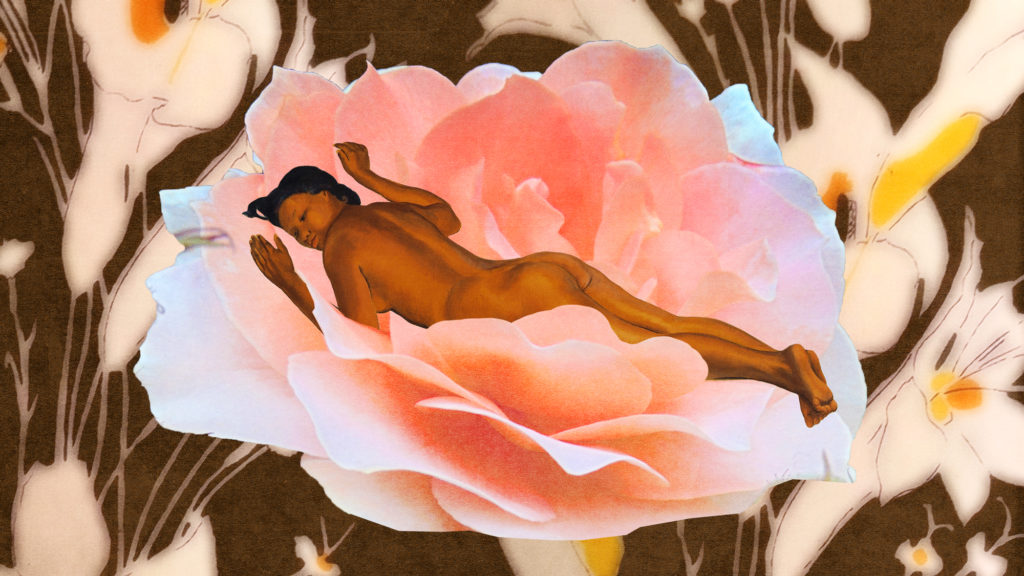





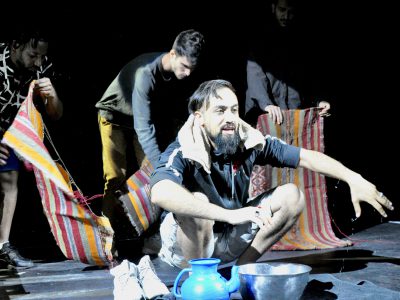
 Judy Batalion[/caption]
Batalion grew up in Montreal’s tight-knit Jewish community “composed largely of Holocaust survivor families”—including her own grandmother, who escaped German-occupied Warsaw and fled eastward to the Soviet Union. Most of her grandmother’s family was subsequently murdered. As Batalion recalls, “She’d relay this dreadful story to me every single afternoon as she babysat me after school, tears and fury in her eyes.” For Batalion, remembering the Holocaust was a daily event. She describes a childhood overshadowed by “an aura of victimization and fear.”
That proximity allowed Batalion to develop an intimate connection to events that had taken place decades earlier, thousands of miles away. But even for those without such a close connection, the impact (and import) of the Holocaust is inescapable. According to a 2020 Pew Survey, 76 percent of American Jews overall, across religious denominations and demographics, reported that “remembering the Holocaust” was essential to their Jewish identity. In stark contrast, just 45 percent overall said that “caring about Israel” was a critical pillar of their identity, with that percentage declining among the youngest age groups.
These numbers raise an urgent question: given its centrality to North American Jewish life, what exactly are we remembering when we remember the Holocaust? As Judy Batalion herself points out, the Holocaust was an important subject in both her formal and informal education. And yet, of the many women featured in Freuen in di Ghettos, she had only heard of one, the
Judy Batalion[/caption]
Batalion grew up in Montreal’s tight-knit Jewish community “composed largely of Holocaust survivor families”—including her own grandmother, who escaped German-occupied Warsaw and fled eastward to the Soviet Union. Most of her grandmother’s family was subsequently murdered. As Batalion recalls, “She’d relay this dreadful story to me every single afternoon as she babysat me after school, tears and fury in her eyes.” For Batalion, remembering the Holocaust was a daily event. She describes a childhood overshadowed by “an aura of victimization and fear.”
That proximity allowed Batalion to develop an intimate connection to events that had taken place decades earlier, thousands of miles away. But even for those without such a close connection, the impact (and import) of the Holocaust is inescapable. According to a 2020 Pew Survey, 76 percent of American Jews overall, across religious denominations and demographics, reported that “remembering the Holocaust” was essential to their Jewish identity. In stark contrast, just 45 percent overall said that “caring about Israel” was a critical pillar of their identity, with that percentage declining among the youngest age groups.
These numbers raise an urgent question: given its centrality to North American Jewish life, what exactly are we remembering when we remember the Holocaust? As Judy Batalion herself points out, the Holocaust was an important subject in both her formal and informal education. And yet, of the many women featured in Freuen in di Ghettos, she had only heard of one, the 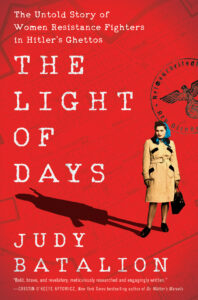 Drawing on memoir, witness testimony, interviews, and a variety of secondary sources, Batalion focuses on the stories of female “ghetto fighters.” These were activists and leaders who came up in the vibrant world of Poland’s pre-war Jewish youth movements, which represented a remarkable variety of political and religious affiliations. The young women of the socialist Zionist groups Dror (Freedom) and Hashomer Hatzair (Young Guard) feature prominently, but religious Zionists, Bundists (Jewish socialists), Communists, and young Jews representing various other cultural, political, and religious affiliations are there, too. Before the war, these groups taught leadership skills: how to make plans and follow through. When the war began, pre-existing leadership structures and a network of locations all over Poland allowed members to find one another and to immediately make plans for mutual aid and resistance. When these young fighters lost their family members, movement comrades were there to support and care for one another as another type of family.
Only a small percentage of Jewish women took part in armed resistance and combat. Most of them were
Drawing on memoir, witness testimony, interviews, and a variety of secondary sources, Batalion focuses on the stories of female “ghetto fighters.” These were activists and leaders who came up in the vibrant world of Poland’s pre-war Jewish youth movements, which represented a remarkable variety of political and religious affiliations. The young women of the socialist Zionist groups Dror (Freedom) and Hashomer Hatzair (Young Guard) feature prominently, but religious Zionists, Bundists (Jewish socialists), Communists, and young Jews representing various other cultural, political, and religious affiliations are there, too. Before the war, these groups taught leadership skills: how to make plans and follow through. When the war began, pre-existing leadership structures and a network of locations all over Poland allowed members to find one another and to immediately make plans for mutual aid and resistance. When these young fighters lost their family members, movement comrades were there to support and care for one another as another type of family.
Only a small percentage of Jewish women took part in armed resistance and combat. Most of them were 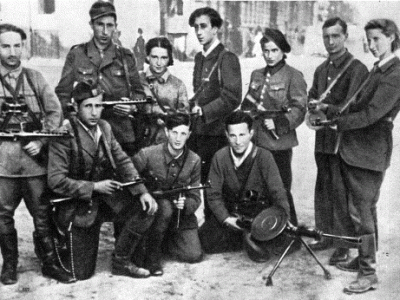
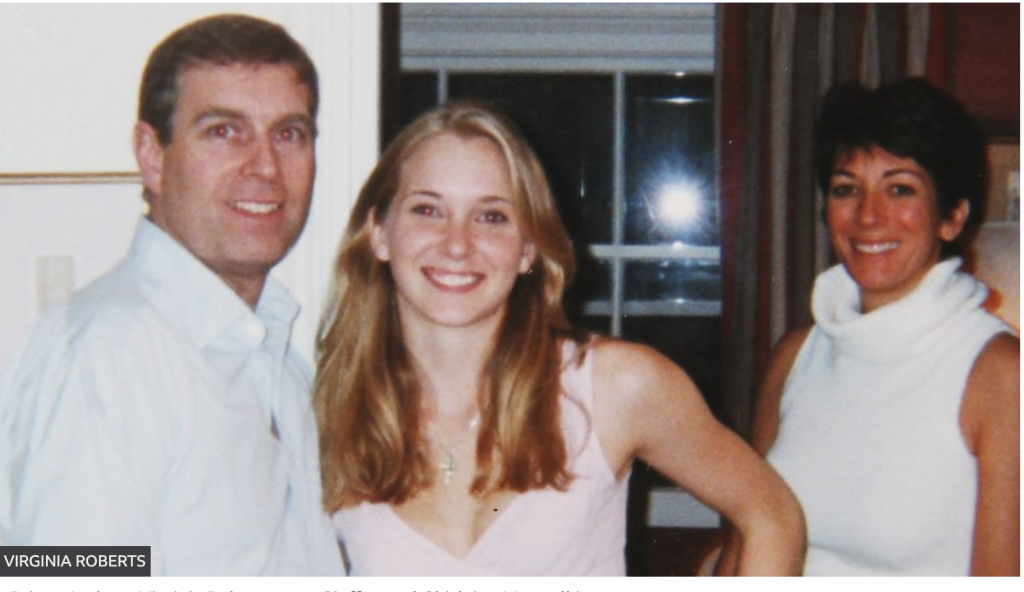 Virginia Roberts Giuffre was 17 in this 2001 photo with Prince Andrew and Ghislaine Maxwell.[/caption]
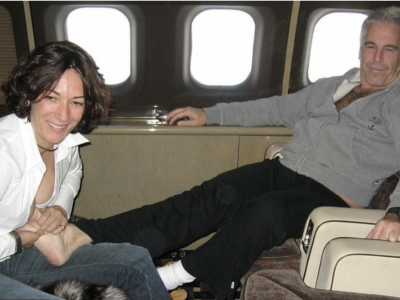


 Reading a newspaper on a bench in Hong Kong on August 20, 2020.[/caption]
The Chinese government’s feud with Lai started in the 1990s, when, after writing a column suggesting that China’s tough Premier Li Peng “drop dead,” Lai was forced to sell his mainland Chinese clothing business that was the source of his initial wealth. An advertising squeeze on the paper, clearly orchestrated by China, started in the late 1990s and accelerated over the years. The Apple Daily office, Lai’s home, and staff reporters suffered various attacks over the years.
“The very rights of journalists are being taken away,” Lai told CPJ in a 2019 interview. “We were birds in the forest and now we are being taken into a cage.” A
Reading a newspaper on a bench in Hong Kong on August 20, 2020.[/caption]
The Chinese government’s feud with Lai started in the 1990s, when, after writing a column suggesting that China’s tough Premier Li Peng “drop dead,” Lai was forced to sell his mainland Chinese clothing business that was the source of his initial wealth. An advertising squeeze on the paper, clearly orchestrated by China, started in the late 1990s and accelerated over the years. The Apple Daily office, Lai’s home, and staff reporters suffered various attacks over the years.
“The very rights of journalists are being taken away,” Lai told CPJ in a 2019 interview. “We were birds in the forest and now we are being taken into a cage.” A