WP_Post Object
(
    [ID] => 7547
    [post_author] => 15
    [post_date] => 2024-12-13 23:13:25
    [post_date_gmt] => 2024-12-13 23:13:25
    [post_content] => 

How the "separation barrier" changed everything.

Listen to this article on The Conversationalist Podcast. | 26:19 min

There was a time when people would ask, "Do Israelis and Palestinians hate each other?" and I would say "no."  Then, the walls came up. Now, that time is increasingly hard to imagine, even in memory.

As a Palestinian who grew up in the West Bank and would frequently return to visit, I vividly recall the first time I witnessed the walls rising in the early 2000s along a road to Ramallah, a city in the occupied West Bank near Jerusalem. I thought: Why did the Israelis do this? Why has it been erected with such disregard for the communities living behind it? I understood, even then, that this division would only tear neighbors apart, and more alarmingly, further separate "enemies" from one another.

In just a few years, the walls would stretch over 400 miles, dividing the occupied Palestinian territories from Israel. These walls and fences, which Israelis called the separation barrier, would not just be physical barriers, but the hardening and entrenchments of dueling positions in this conflict. They still stand today: In some stretches, the walls are made of concrete and 30 feet high.

What Palestinians call Al Jidar—Arabic for "the Wall," connoting "the Apartheid Wall"—was, according to Israelis, mainly erected to prevent suicide bombings and violent attacks, which were accelerating at a rate they alleged left them with very few options. In 2002, during its construction, Human Rights Watch reported that "more than 415 Israeli and other civilians have been killed, and more than two thousand injured, as a result of attacks by armed Palestinians between September 30, 2000 and August 31, 2002,” with most of the harm “caused by so-called suicide bombings.”

But while I could understand the horror and the pain and the fear these attacks had caused, I could never understand how the wall was the solution. 

A child of the occupation 

As a child, I discovered a fear that would forever shape my understanding of the military occupation.

I have seen soldiers for longer than I can remember, but through childhood eyes, they’d always seemed friendly. One night, however, that changed.

I was maybe 5 or 6 years old when I demanded that I be allowed to mop the store floor in my small town in the West Bank. It was a sign of growing up, and behaving as I saw the adults around me do—working, tidying, driving, living. While I was mopping, a group of soldiers came into the store to buy some things. I remember being unable to control the joy I felt, performing this adult chore, while trying to control the mop, which was three times my size. I wasn’t paying much attention to my surroundings, until I accidentally hit one of the soldiers with the mop’s handle.

When I looked up, I saw something I’d never seen before—the soldier's hand on the trigger of a very long weapon and, oddly, his bared teeth. I still remember these teeth without a face, and how they scared me as much as the trigger on his weapon. I knew I’d made a mistake—and that night, I learned how easily a mistake could cost me my life.

I’d finally met my "master," and understood the divide between "us" and "them."

The "solution" that created the "monsters"

After the wall, this divide grew bigger. For Palestinians, the wall separated us from life.  It turned our cities and towns into cages, where the sky above us was the only place outside that felt within reach.

Solutions to this conflict were never going to be easy, if ever achieved. Yet the wall allowed both Israel and the international community to sidestep its complexity, disregarding the future of both Palestinians and Israelis alike. It decreased all human interaction with the “other side,” regardless of which side of the wall you stood. It was not a solution at all, but the deference or maybe even the ignorance of one. It was also a boiling pot: I say this because I saw it, and I felt it, and I lived it. 

The wall disconnected me from both friends and "enemies," but in time, I was no longer interested in seeing either. It isolated all of us and confined us to our own causes and anger, not caring for how the "other" felt. After all, I could only feel my anger when standing at a checkpoint. I could only feel my hatred when looking at the wall in front of me. I could only feel my outrage that my freedom to move was restricted by a permit, which I was required to obtain whenever I wished to leave, and that it was something I needed to be deemed “acceptable” to acquire.

For some Palestinians, receiving this permit may have brought joy, because they felt like the "lucky" ones. But for me, I often felt better just going about my life, refusing to get one, because living inside the wall felt more dignified than seeking permission to leave it.

I did not always prioritize my dignity in this conflict. I looked for friendships and ways to enjoy life despite the violence and the vitriol that surrounded me. But eventually, all these constant humiliations chipped away at me. Chipped away at the hope and joys I sought—all the things available to most human beings, but not to me. It offered me no choice but to instead look at what I did not have: my freedom, my rights, even my will to love, something I cannot have when I am stripped every day of everything that is mine.

The wall did this. And I wondered as I wonder now, when people are unable to meet freely, is our only alternative more war and more killing?

Before the wall

There was a time when American-Palestinians from the West Bank could drive what we called a "yellow tag" car, which felt like the height of "privilege," because it meant you could drive freely in the West Bank and Israel. At the time, if you had one of these cars, it felt as if all you had to do was drive by the checkpoint and get waived through, most times without your ID even being checked. (Over the years—just like the ever-changing restrictions—civilian cars with a Palestinian tag couldn’t enter Israel and most parts of Jerusalem. Those rules continue to change even now, depending on the political climate.)

I drove a car like this once to go and meet with a friend for a swim in Tiberias, an Israeli town on the western shore of the Sea of Galilee. Just writing this seems absurd in the year 2024. But it did happen often once, and not just for me, but for others, as well—although for Palestinians with limited "privilege" today who have an Israeli residence or hold an Israeli passport, it can still be a daily occurrence should they wish, because those people are considered "outside" the wall.

When driving back from my trip, I had to pass another checkpoint when leaving Tiberias. While I have an American passport, I also hold a West Bank ID, which placed restrictions on what car I could drive at the time. The restrictions had recently become stricter, and technically, I was not allowed to drive the "yellow tag" car I was driving.

I was nervous, but as I passed the checkpoint, the soldiers mistook me for Israeli. They asked me a question in Hebrew that I did not fully understand, and I said "yes." I thought they were asking if I was from Jerusalem, which would have allowed me to drive that car, and hoping they’d let me pass, I lied.

Seconds later, three soldiers entered my vehicle. Afraid of being caught violating the law, I just smiled and started driving. I soon realized that the soldiers wanted to hitch a ride to Jerusalem, something that might have allowed me to get away with my transgression, except I wasn’t going to Jerusalem, but home to a village in the West Bank. Not knowing what to say or do, I kept driving.

Amidst my panic driving along the winding road that night, one of the soldiers asked, "You came from America?" I said that I had. Then, he asked, "How come your parents didn’t teach you Hebrew?"

I knew this was the moment I should tell them I am Palestinian, so I replied, "Because my parents taught me Arabic."

After, it felt as if the world stopped turning and it was just me and the soldiers in the car. We were silent for a long time. My face turned hot, so hot I can still feel it all these years later. I could feel the soldiers were tense, too.

I’d made a mistake not confessing that I was not authorized to drive that vehicle and they’d made a mistake not vetting me at that checkpoint. In any other context, this might have been a moment of silent honor amongst harmless lawbreakers, but instead, it felt like a dangerous mess for us all.

For their safety, those soldiers should not have been in my car. For my safety, I should not have let them in.

"So, what are we going to do?" I asked after another long pause. "I cannot drive you to Jerusalem because I am almost out of gas and we must go through a checkpoint, and I cannot leave you on the side of the road just anywhere." We started strategizing when and where I could drop them off that was familiar to them, but was also somewhere I could go unnoticed. Eventually, we chose a place and parted ways, and never saw each other again.

This incident would not play out the same today—or maybe, more accurately, after the walls went up, it couldn’t: I’d see them differently now, and they’d see me differently, too.

You cannot contain hate

The wall did not just create a cage for "us." Israelis were also not free; instead, they were caged in fear.  

You see, I am a person who is "occupied." I grew up understanding "they" rule me, and my rulers will kill "us" if we dare to rise and demand our freedom, the right of every human being on this earth. A right that is not to be granted or given. A right that we are born with and that belongs to us. Both of us also have a right to not live in fear. Yet it is their fear which is why we are made to stand, stripped of everything, in front of an enemy with an arsenal of weapons with which to annihilate us.

Killing, however, is not a right—not for "them" or for "us." As societies, we find different ways to justify it, support it, and, at times, speak proudly of it. Yet when we do so, we all lose, because there is no pride in killing. There is, I believe, no justification for taking a human life. And nothing can exonerate us from our complicity when we support it, even when it’s in service of pursuing our freedom. 

When I was still a young aspiring documentary filmmaker, I remember once having to ride on an Israeli bus. As a Palestinian, I had no permit, and I remember being grateful I was still able to board, but was unprepared for how I felt throughout the ride.

I felt fear! What if there was a suicide bomber on this bus? One of my people, I remember thinking. Filled with anxiety, I surveyed every person who got on the bus at every stop, worried if "this person" could be the one. And in that moment, I understood there was no human difference between the fear Israelis must experience and my own.

But I also wondered if they would ever understand that, too. When I felt "their fear," I also wished they could know mine, and how we, the Palestinians, feared "them"—their cruelty, their disproportionate response to "our" attacks. Their collective punishment without mercy against the people inside the wall.

Witnessing horror in the making 

As time passed, I grew accustomed to the wall's presence, and it became acceptable to see it everywhere without staring at or questioning it for too long. But the anger remained, an anger that is difficult to understand for those who have not lived on the "other" side of it. 

Visitors saw the wall as an "ugly" thing, a sign of injustice, at most. But they were not witnesses to what has happened to the people for whom this wall represents the circumference of their existence. We were not living—just existing. Constantly adjusting to everything, from restrictions to violations, because we had no choice.

The years have gone by, and like many, I’ve seen less hope and more hate every year, with no way to correct it. My privilege as an American-Palestinian has allowed me to see the severity of these changes with each visit: the deteriorating living conditions, the increased restrictions, the endless violence, almost always without consequence.

But I have also observed something far sadder and more terrifying: a generation growing up without seeing their "enemy" as human.

You see, I am of a different generation. A generation that grew up under occupation and was constantly reminded that I had a "ruler." But before the wall, no matter how I felt about the occupation and my oppression, I could still see the people who "ruled" me; I could still see their humanity, because I could still see their faces.

Now, the wall has made the "enemy" soulless and faceless. And I wonder, on the other side of the wall, is there also a generation that fears their enemy and thinks of us as non-human, too? As people who not only do not belong to this world, but who also wish to cause them harm—to kill them? 

I pictured a generation of people on either side, fighting an enemy they’ll never know, and I worried about what would happen when the walls come down, because walls always do. It’s because of this, when the time came, and people would ask me, "Do they hate each other?" My answer became, "Yes, they do."

The children of the wall    

October 7, 2023 happened over two decades after the walls were built. To this day, I do not want to watch the videos that were plastered on every television screen. It is the nightmare I imagined, but even worse, because it was real. In the aftermath, many people—the media, acquaintances, colleagues—called the Palestinians who did it "monsters." Then, we saw the other "monsters" emerge, the Israelis.

On October 7, more than 1,200 people were killed in Israel, including about 800 civilians, 346 Israel Defense Forces (IDF) soldiers, and 66 police officers, according to the Israeli Ministry of Foreign Affairs. Thousands were also injured in the attack and about 250 men, women, and children were abducted.

Since then, Israel’s retaliatory war on Hamas has killed more than 44,000 Palestinians, with more than half of them women and children. Gaza has become “home to the largest cohort of child amputees in modern history,” according to a UN official. Entire bloodlines have been erased. The videos that have emerged have been equally unbearable to watch as those from October 7: As ABC reported, "in many pictures and videos that have circulated since the conflict began… IDF soldiers are seen blowing up buildings in Gaza while in combat, waving women’s underwear like flags and rifling through the possessions of Gazans with gleeful expressions."    

Many families of the Israeli hostages who were not released or rescued are still waiting on their loved ones to come home, dead or alive; while thousands of unidentified Palestinian children are either buried under the rubble in Gaza or have been left orphaned and injured and starving. Mass graves are only a sign of the times for the people in Gaza: Their "open-air prison" is now a graveyard.

Many may uphold that staying in Gaza is a heroic honor—and it absolutely is. But when there is no choice but to stay, we cannot call it a choice at all. Those still alive in Gaza continue to have nowhere to go, their right to move and live freely taken from them. The children, especially, deserve to grow up and decide their position on a war they did not choose to be a part of. But we have robbed them of that. We are spectators with a cause: We count the dead but look away from the living. The Israeli soldiers and the Palestinian fighters, even Hamas—all of them chose to fight in this war. The children did not.

Are we comfortable with Gaza’s children dying for "our" cause? I am not. But there are no winners in war: What good is winning when the land is drenched in blood?  

So, who is the monster? 

Neither of us were created to suffer. It is not our destiny, or theirs. While I’m not a peace activist, I did—and still do—believe that the only way through this conflict is to be seen, to be heard, and to share without hate and fear. But we can only do that by opening ourselves to the idea of peace, to opening the doors for peace. Not by walling them up.

Like the Israelis soldiers in Gaza killing Palestinians, many of those who killed Israelis on October 7 are from "behind the wall." The same wall that taught them that neither of them is human, that the people on the other side are objects to destroy, to seek revenge from, and to win against, no matter the cost. It’s a matter of perspective.

But I do not believe it is only the people who pulled the trigger who are to blame. To me, all who were silent when the walls came up, who witnessed  human rights violations increase every year, who watched two generations living side by side while growing to hate and fear one another—they are to blame.

All of us, then, are to blame. 

Every educator, every media personality, every politician, every international leader who did not speak loudly and demanded solutions. Every person who only chose to look after it was too late. All of us are complicit in the death of every child and civilian in Gaza, and Jerusalem, and the occupied West Bank, for the death of every person and child on October 7, and for the fear every hostage and citizen feels in Gaza today. This misery was created by us all. The deadly airstrikes, the starvation, the inhumane conditions that people are living under, the unknown fate of the hostages—all of it was made and maintained by us. Whether consciously or not, through our complicity, through losing sight of our shared humanity, we have all become the monsters we most purport to fear. Because the truth is, when we choose to build walls, we are the ones making a monster out of the people on the other side—and a monster out of ourselves in the process.                

We must all ask ourselves, then, if the right conditions were set, the right circumstances—would we become a monster, too? I don’t know that I can say “no” for certain; my privilege, relative though it may be, does not allow me to give definitive answers. I was born a Palestinian by chance, just as we all are born into our circumstances by chance. But maybe in another life, I, too, could have turned into the "monster" behind the wall in this one.

[post_title] => The "Monsters" Behind the Wall [post_excerpt] => How the "separation barrier" changed everything. [post_status] => publish [comment_status] => closed [ping_status] => closed [post_password] => [post_name] => monsters-wall-israel-occupied-west-bank-palestine-separation-barrier-gaza-war-al-jidar-apartheid [to_ping] => [pinged] => [post_modified] => 2026-08-03 23:43:33 [post_modified_gmt] => 2026-08-03 23:43:33 [post_content_filtered] => [post_parent] => 0 [guid] => https://conversationalist.org/?p=7547 [menu_order] => 34 [post_type] => post [post_mime_type] => [comment_count] => 0 [filter] => raw )
RAMALLAH, WEST BANK - FEBRUARY 07: Palestinian demonstrators try to climb the separation wall during a protest against U.S. President Donald Trump's Middle East plan near a town in Ramallah, West Bank on February 07, 2020. (Photo by Issam Rimawi/Anadolu Agency via Getty Images)

The “Monsters” Behind the Wall

WP_Post Object
(
    [ID] => 6919
    [post_author] => 15
    [post_date] => 2024-05-23 17:24:38
    [post_date_gmt] => 2024-05-23 17:24:38
    [post_content] => 

Since October, over 100 Palestinian journalists have been killed by the IDF. They deserve our endurance—and our diligence.

War rages on in the months since Hamas’ assault against Israel and its ongoing retaliatory punishment of the blockaded Gaza Strip. It has been agonizing to witness. As of May, Israeli military actions are estimated to have killed more than 35,000 Palestinians, the majority of them women and children. Almost the entire population of Gaza has been displaced from their homes. A quarter of the population—more than half a million people—are at imminent risk of catastrophic famine, a number projected to surpass one million by July. For the average outside observer, myself fully included, it is impossible to track the dizzying onslaught of information emerging from the warzone without feeling some degree of despair, and even harder to do so with reliable accuracy. Social media is awash with falsehoods, mainstream American media demonstrably biased, and foreign press barred from entering Gaza independently. Further preventing vital access to information is the disproportionate number of Palestinian journalists who have been killed during the conflict so far, particularly compared to other instances of conflict reporting: Since October 7, at least 105 Palestinian journalists and media personnel have been killed by the Israeli Defense Forces (IDF), more than any other country at war. 

At the moment, Gaza is the most dangerous place in the world to be a reporter—and also one of the most consequential. As this war continues, it only becomes clearer to me that we must do everything in our power to protect these journalists and their work.

Since the war’s beginning, now the deadliest conflict of the 21st century, I’ve been reflecting on the word “indiscriminate,” on what it highlights and hides. It’s the word most reached for when attempting to describe the scale of civilian destruction in Gaza, a blanket term that fails to capture its intentionality in full. If you are well-versed in international human rights law, you know there are rules that distinguish between legitimate and illegitimate military actions, and these rules dictate what makes a death “indiscriminate.” These rules are governed by principles of proportionality: Warfare cannot result in the loss of civilian life excessive to the marginal military advantage it might achieve. Translated for the layperson, warfare is not open season, and a warzone is not a shooting range. Measures must be taken to mitigate civilian casualties. But even casual observers of this war have largely come to an uncomplicated understanding: It is difficult to describe what is happening in Gaza as anything but indiscriminate. Too many children are being killed. Too many civilians. Too many aid workers. Too many medical staff. Simply put, too many protected classes of noncombatants. 

In the case of journalists killed, however, the word “indiscriminate” also obscures something alarming. It’s an axiom of conflict reporting that death is an occupational hazard. But what is happening to journalists in Gaza goes beyond the normal range of risk. The watchdog group Committee to Protect Journalists (CPJ) has decried the behavior of the IDF, declaring this war “the deadliest conflict for journalists it has recorded since it started collecting data,” with more journalists “killed in the first three months of the war than have ever been killed in a single country over an entire year.” The CPJ has also brought charges against the IDF for the alleged killing of journalists’ families as retribution for critical reporting. And although Israel denies deliberately targeting members of the media—a war crime—they have been sharply criticized by the UN for failing to ensure their protection, and for failing to create real or meaningful safety measures to prevent further deaths.  

They’ve also openly attacked the media in other ways, and not just in their attempts to ban it. Journalists are noncombatants protected by international law, and their reporting serves a fundamental public interest. They must be able to report freely and without fear of retaliation, not just for the sake of a free press, but more importantly, to provide Gazans access to life-saving information. This work has been made all the more difficult by Israel’s targeted destruction of the infrastructure necessary to disseminate it. We tend to forget that the internet is rooted in the physical, and that direct attacks on journalists aren’t the only way to measure acts of aggression against the media. Cables, cell towers, internet and telecom networks; all these components are necessary for a story to reach the rest of the world. But many have been destroyed by Israeli airstrikes, causing communications systems to collapse—and what the world cannot see dies in the dark. 

With telecommunications compromised, on-the-ground journalists have collectively turned to social media as the primary vehicle for their work. It is, in many ways, their last connection to the outside world, and the outside world’s last connection with Gaza. Using donated eSIMs and shared phone chargers as lifelines, Palestinian journalists have fearlessly persisted in sharing what the Israeli government seemingly does not want us to see. But with such high stakes, I’ve found myself thinking about how we can engage most ethically with their work when our main platform for consuming it—social media—has the power to do as much, if not more, harm as it does good.  

Much has been rightly criticized about the pernicious role of social media in disseminating misinformation over the years. Social media is designed to sustain users’ attention in order to maximize advertising revenue, encouraging and rewarding us for sharing whatever posts elicit the most engagement—regardless of accuracy or potential for harm. But over the years, it has also become the internet’s town square; an accessible means of sharing information and finding first person perspectives that fill the gaps mainstream media often leaves behind. It would be reductive to cast social media as simply a peddler of falsehoods, particularly when it comes to what is occurring in Gaza. Social media now plays the role of historical record, collecting and preserving invaluable primary source material from journalists and civilians alike. 

As users of these platforms, particularly for Americans, it should be our duty to bear witness responsibly—which, at minimum, means utilizing basic media literacy and being mindful of what we choose to post and share. According to the Pew Research Center, half of U.S. adults get their news from social media at least some of the time; but four in ten of those same adults cite inaccuracy as their biggest concern when doing so. At a time of extreme and unrelenting dehumanization, social media has an outsized influence on the way this conflict has been interpreted abroad, and what we choose to share matters. For the ordinary online user, there is an almost emotional peer-pressure to rapidly engage on social media in the face of tragedy and injustice. Posting, after all, can be a necessary catharsis. We post in spite of and because of our utter helplessness in a world that seems indifferent to large-scale human suffering, railing against the seeming futility of our protests. In this case, Palestinians have also explicitly asked us to do it, to bear witness to their suffering, to not allow them to be forgotten, and to tell their stories of joy and resilience—largely via social media. Journalists, too, have made it clear: Our continual engagement with their work is what motivates them to keep reporting in the face of this incalculable tragedy. But when the abstract act of sharing online has direct consequences on real human lives, it becomes essential that we treat it with care. 

To be clear, I’m not advising you to stop posting, or even to post less. On the contrary, please post, please amplify, please share—so long as it’s done with a critical eye to impact. In moments of crisis, it can become easy to slip into what might be called pathos posting, posting that comes from the gut and not the mind. I see it in my followers and I, too, feel its lure. It’s the instant, unthinking tap to repost when confronted with images of the latest unbearable atrocity. It’s the incredibly human impulse to alchemize all our anguish, grief, and rage into action, however small it might be. Little to no caution is exercised in checking for doctored footage, manipulated video, or false contexts. In fact, the emotional weight behind these posts leads to an unwillingness to entertain the possibility of error or your own complicity in the potential spread of misinformation. Cries of caution are met with accusations of disloyalty. This unforgiving attitude siphons nuance and compassion from the public discourse, and further silences attempts at honest reporting. It also puts the people most affected by this conflict at risk of greater harm. Researchers and watchdog groups warn that in this moment of hair-trigger violence, misinformation will result in greater acts of aggression and potential escalations of violence against innocent civilians. We should be doing everything in our power not to contribute to it. 

Social media has the potential to bring out the best of our online selves, but so often instead summons our worst, most tribal, unreflective, and hardened. To honor the Palestinian journalists that are risking life and limb to report (only to not even be honored by name), I believe that we can and must push ourselves to engage with their work in ways that are principled, empathetic, and judicious. We achieve this by holding ourselves to account, and asking simple, but difficult, questions: Why are we sharing this? Is it from a reliable source? If the post contains misinformation, could someone believing it result in harm to someone else? 

Right now, caution can feel impotent and vastly unequal to the scale of the human tragedy unfolding. It feels right to post totalizing messages of condemnation and rage without a second thought. But this online posturing is myopic and counter-productive: Civilians, including journalists, are not served by misinformation that foments further aggression. I know that it can be tiring to constantly separate fact from fiction, but as the Palestinian-American activist Hala Alyan put it, we owe Gaza endurance. When language and rhetoric pose existential threats to the safety and security of Palestinians and Israelis alike, there is a moral obligation to do better. To not engage indiscriminately.
The duty of the journalist is to clarify the stakes; the duty of the reader is to respect them. But when journalists are literally putting their lives on the line to report from Gaza, we owe them more than our respect. It can be challenging to thread the needle of engaging with emotionally charged content while remaining discerning. It can be hard to treat posts with intelligence and sensitivity; and impossible to sniff out bad faith actors among the good. All these are tasks easier described than accomplished, but this doesn’t mean we should cease our efforts to achieve them. We have to try for the journalists risking their lives to report, and the over 100 journalists who have died doing the same. We owe all of them our endurance. 

[post_title] => What We Owe Gaza's Journalists [post_excerpt] => Since October, over 100 Palestinian journalists have been killed by the IDF. They deserve our endurance—and our diligence. [post_status] => publish [comment_status] => closed [ping_status] => closed [post_password] => [post_name] => gaza-palestine-israel-journalists-killed-idf-war-conflict-reporting-media-literacy [to_ping] => [pinged] => [post_modified] => 2026-08-04 17:09:57 [post_modified_gmt] => 2026-08-04 17:09:57 [post_content_filtered] => [post_parent] => 0 [guid] => https://conversationalist.org/?p=6919 [menu_order] => 57 [post_type] => post [post_mime_type] => [comment_count] => 0 [filter] => raw )
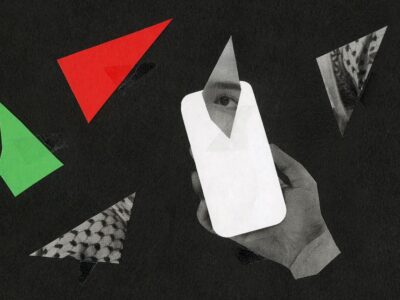
A collage on a fuzzy black background, with a disembodied hand holding a white cutout in the shape of a phone. There are fractured pieces scattered over the image, including one green triangle, one red triangle, and two triangles that show pieces of a keffiyeh. There is a fractured shard of an eye layered over the phone.

What We Owe Gaza’s Journalists