WP_Post Object
(
    [ID] => 9889
    [post_author] => 15
    [post_date] => 2026-01-08 00:16:00
    [post_date_gmt] => 2026-01-08 00:16:00
    [post_content] => 

While reporting on climate change isn’t always hopeful, the women I've met along the way are forging a path forward for intergenerational resilience.

In the dim flicker of a kerosene lantern on a fog-wreathed houseboat, I watched Nazia Qasim’s reed-scarred hands pierce threadbare fabric with her needle, weaving colored abayas as her eyes fixed on Dal Lake’s silt-choked horizon, diesel haze mingling with the sour tang of rotting lotus stems, where vibrant beds once bloomed. 

I’ve heard endless tales from Nazia—and Qudisa, and Bano, and their sisters—about how the lake’s relentless shrinkage has mirrored their own lives’ contracting. Yet the women have overcome: As the lake withers, under absent snows and dying streams, the water now polluted and undrinkable, they have found new work and purpose through their weaving. For hours last January, I watched their hands move in the lantern’s glow, transforming loss into livelihood. This sisterhood, which once thrived on an endless, ancestral bounty of lotus, water chestnuts, and fish, now scraps stitched tight, the women’s quiet knots a fierce stand against the fade.

As a climate reporter based largely out of India, I am often tasked with telling stories on the frontlines of disaster. I have crouched in Pampore’s parched Karewas at dawn, watching farmers Farida Jan and Snobar Ahad recount the decline of saffron, a visceral dirge for disappearing traditions I could feel in the cracked earth underfoot. I’ve seen women shoulder jerry cans under a merciless sun, irrigating wilted bulbs past cobwebbed government drip lines, turning the world’s most prized spices into frantic wagers against the sky, where one failed season means debt for entire villages. And in countless moments, I’ve watched with growing frustration how easily the world abandons the Global South, which disproportionately bears the brunt of climate change, and how rarely the countries most responsible seem to face the same consequences. 

This work necessitates exhaustive fieldwork in fragile ecosystems, sifting through scarce data amid conflict, and confronting the grief of vanishing landscapes and livelihoods. But in my writing on the realities of climate change, I’ve also made a conscious effort to find stories of resilience, rather than just stories of despair. Stories that not only show there are still people who haven’t given up on the fight, but who have made a meaningful difference in changing the tides.

These changemakers are often women. 

Perhaps because of this, my work has always felt inherently hopeful: Despite climate theft splintering families—stealing not just saffron yields and Dal Lake’s bounties, but the heartbeat of a country’s soul—these women persist as resilient guardians, weaving their survival with fierce tenderness from the shattered threads. 

This has also made it all the more important to me that I get their stories right. As a writer, I prioritize women’s agency and consent, letting them narrate their own stories however I can. This approach shatters poverty tropes, spotlighting their resilience and innovation over the victimhood stereotypes that dominate mainstream coverage of rural Indian women. It also imbues my work with deeper meaning, in hopes that harmful narratives might begin to shift as more of these women’s stories are allowed to take up space.

Over the years, I’ve chased India’s climate fury, from Kashmir’s vanishing glaciers to Maharashtra’s cracked fields and Tamil Nadu’s drowned coasts. And the women I’ve met along the way light a fire in me: Their grit isn’t survival, it’s rebirth for a warming world. 

~

“When I got married, nobody asked my choices,” Kamla told me on her daughter’s wedding day, now nearly two years ago. “Today, I ensure hers.”

The message was loud and clear: Economic independence is agency in a patriarchal script. And for Kamla, it had allowed her to reclaim this agency on her own terms, and to give her daughter a chance at a better life.

I first met her in early 2024, while reporting my story “A Farm of One’s Own” for The Conversationalist. Kamla is a farmer from Khajraha Khurd’s sunbaked fields, in parched Bundelkhand’s Jhansi district, Uttar Pradesh. She leads local farming techniques to combat drought, something that has helped pull families in the region out of poverty, proving climate adaptation thrives on female ingenuity.  

In the days we spent together, I crouched beside Kamla as she worked, enveloped in the mud’s earthy scent. Her eyes were sweat-stung, her fingers plunged into the sun-warmed soil. As she crunched freshly picked beetroot, she explained to me how she uses neem traps to ward off pests amid erratic rains. Her father-in-law burst out laughing, teasing her for explaining farming to me like she knew anything at all. 

But it was clear she knew more than he understood. When the global coronavirus pandemic rapidly swept across India, some of the most vulnerable, and climate-vulnerable, migrant women were robbed of their work, Kamla included. She not only found meaningful work in the aftermath, but self-reliance, trading callused hands for hoe and seed, wresting millet, broccoli, and lentils from her own organic farm.

Kamla’s resilience was magical to witness. I spent many days with her, seeing how she started her day, plunging into compost heaps steaming with kitchen scraps and dung, spreading the fertilizer across her garden. Watching her wipe soil from her weathered palms, spinach bunch in hand, I saw her rooted at last from laborer to earth-tender, peace in every leaf, life hers again.

In the afternoon, she tiptoed through the fields and quickly kneaded the dough for lunch and put it on the tawa, slapping it thin and golden and slathering the sizzling ghee, serving it with a tin cup of frothy chai brewed strong over a chulha fire. We ate together in the rows of a multi-cropped farm, the air humming with neem leaves. This wasn't just a meal; it was a window into resilience in motion, women and girls weaving nourishment from the land. Nearby, her great-grandmother sat cross-legged on the earthen floor, her gnarled fingers deftly cleaning a mound of fresh red chillies in the sun—plucking stems, wiping dust, and muttering local songs on the front porch of her house, a visual treat to witness a silent hymn to preservation in a world of fleeting harvests.

As we ate, I thought of these women, whose callused hands not only yield the wisdom and knowledge of saplings and sickles, but carry it forward, forging an intergenerational resilience against climate chaos that exists beyond immediate harvests, or even lifetimes—ensuring the next generation endures.

~

Over the years, I’ve met countless women enacting change like Kamla, often without credit or acknowledgement. In India’s northern Haryana state, I met Sunita Dahiya, a woman pioneering eco-friendly menstrual products, and training rural women to produce organic pads that decompose rapidly, slashing microplastic pollution and the burden of billions of plastic disposables in landfills each year. In north Kashmir’s Bandipora district, I met Phula Bano, who manages large herds of wild dogs, cattle, and horses through daily treks in the Himalayas, helping to sustain a low-carbon, resilient ecosystem.

For an early story for The Conversationalist, I also met the beekeeper Towseefa Rizvi—a living embodiment of sisterhood in action. As the first female beekeeper in Ganderbal district, Kashmir, Towseefa has demonstrated, again and again, how one woman’s rise can create pathways for others to join her. Within her community, she also demonstrated that beekeeping could be a profitable path, as well as a productive response to ecological despair. Today, she still trains and supervises village women in the tender art of queen-rearing and swarm management, and sells local honey through various haats and online.

When I visited her home in Bandipora district in north Kashmir, I saw apple groves dotted with buzzing apiaries in her backyard, as she coaxed her bees into new, modern hives. She viewed her bees as family, and over the years, dedicated herself to learning about the restoration of biodiversity, pollination of resilient crops, and climate vagaries. 

Her journey was also proof that true climate hope lies not in flashy summits, but more often, in one woman’s quiet and relentless work.

~

Centering hope in my reporting, of course, hasn’t saved me from the realities of writing about and from regions affected by climate change.

What started as whispers of women-led mangrove safaris while researching another story last year eventually evolved into a gruelling quest, marked by relentless weather delays and elusive sources. For months, I chased the story of Sindhudurg’s mangrove guardians—fierce women from one of Maharashtra’s pioneering women-led self-help groups (SHGs). And for months, I wondered if the story I hoped to tell would ever come to fruition.

Weather changes were unforgiving foes. Monsoons flooded coastal paths and stranded my sources with switched-off phones for weeks. Out of anxiety, I’d chase them via voicemail. Officials also proved phantoms as the network dropped along eroding coastlines.

It wasn’t easy to convince the women to entrust me with their stories; their promises fading with each storm surge and postponed boat trip. But visiting the coast and sharing chai in salt-lashed homes finally broke the ice last fall, and resulted in my final piece from the year, “Guardians of the Mangroves”, about how Maharashtra’s crab farmers are spearheading women-led coastal restoration amid local climate chaos. 

Late in my visit, I stood with farmer Sonali Sunil Acharekar amid the hushed mangroves, her rough hands parting their roots in silent vigil, as cries of herons and egrets filled the skies. She paused mid-story about lost fish, her fingers sifting through the silty tides to snare a scuttling fiddler crab.

She grinned. “See? Even the birds know we’re guardians.” 

I felt a spark of wonder that, despite rough weather nearly killing this story, I could still bring these women’s unbreakable strength into the light. As we enter a new year, I am ending the last with gratitude for their efforts, and the stories these women have shared. I hope, too, I continue to push myself to amplify excluded voices, to craft stories of climate hope that counter the despair-dominating headlines, and to show women as stewards of India’s Global South.

When we lose sight of hope, we risk nihilism that doesn’t allow us to see ingenuity amidst climate chaos—something women in the Global South have delivered time and time again, and something that has made me feel consistently hopeful in my work. While reporting on climate change itself isn’t always hopeful, there is always hope—and at the center of that hope are the women who bend, rise, and persist, their strength illuminating the fragile edge where water meets earth.

[post_title] => Planting the Seeds of Climate Hope [post_excerpt] => While reporting on climate change isn’t always hopeful, the women I've met along the way are forging a path forward for intergenerational resilience. [post_status] => publish [comment_status] => closed [ping_status] => closed [post_password] => [post_name] => hope-week-climate-change-resilience-action-profile-economic-independence-global-south-india [to_ping] => [pinged] => [post_modified] => 2026-01-08 07:58:50 [post_modified_gmt] => 2026-01-08 07:58:50 [post_content_filtered] => [post_parent] => 0 [guid] => https://conversationalist.org/?p=9889 [menu_order] => 0 [post_type] => post [post_mime_type] => [comment_count] => 0 [filter] => raw )
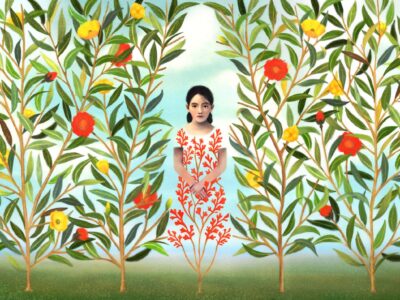
An illustration of a girl surrounded by a growing flower bush, with a cut-out around her in the shape of a woman.

Planting the Seeds of Climate Hope

WP_Post Object
(
    [ID] => 9937
    [post_author] => 15
    [post_date] => 2026-01-07 07:35:47
    [post_date_gmt] => 2026-01-07 07:35:47
    [post_content] => 

Why Ireland's Basic Income for the Arts program is just the first step in better supporting the country's artists.

In 2022, visual artist Elinor O’Donovan was working as a receptionist in Cork, Ireland, when she began to receive the Basic Income for the Arts (BIA) stipend. The Irish government had launched the program that year as a way to address the country’s unstable arts sector, which had left many artists without job security and consistent financial earnings—O’Donovan included. At the time she applied, she'd just graduated from university and was living with her parents as she tried to figure out the next steps for her career. When she found out she’d been selected from a pool of over 9,000 other applicants for the BIA, it was life-changing. As one of 2,000 artists receiving a weekly income of €325 over a three-year period, O’Donovan was able to quit her job and move to Dublin to make art full-time. 

“The BIA has allowed me to be a bit more brave with the stuff that I make,” she tells The Conversationalist. “It allowed me to make whatever I want, and not feel as if I have to justify why it's important to a funding body.” 

According to a cost-benefit analysis published by the Department of Culture, Communications and Sport last September, the BIA has been a resounding success for beneficiaries, and Irish society at large. The report revealed that recipients were able to dedicate an additional four hours per week to art-making, and that the program “strengthened artists’ professional autonomy, capacity for creative work, and attachment to the arts sector.” Moreover, for every €1 of public money invested in the pilot, the country received €1.39 in return—a value that accounts for an increase in earnings generated from art-making as well as an increase in public engagement with the arts. In short: Giving money to artists, with no strings attached, was demonstrably profitable.  

For O’Donovan, income from the BIA not only gave her more time to make art, but provided her with newfound financial stability, something that affected every part of her life. She had more time to cook for herself, joined a gym, and for the first time, was able to afford to go to therapy. She was also finally able to plan for the future. 

“I was 26 when I started receiving [the BIA], and I was able to start a pension fund,” she says. “Just having that fallback [was a relief], knowing that I would receive an income no matter what happened; if I got sick, I would still be able to pay my bills, pay my rent. It has really been transformative for my well-being.”

Importantly, the BIA has also allowed her to create opportunities for other artists: O’Donovan’s ability to explore filmmaking, something she was afforded because of the stipend, meant she could create new jobs in the field. “Having financial stability from the basic income means that I've been able to hire other people to work with me,” O’Donovan says. “So there's even been a kind of trickle down of the basic income to other artists and other creatives in Ireland.” 

For artists around the world, the program has also offered one hopeful potential solution for a global arts sector severely hit with funding cuts and political uncertainties over the last few years. But while things have taken a recent downturn, the financial instability of the arts has been a major problem for decades, if not centuries, something that likely explains the growing admiration for the BIA around the world.

In a capitalist society, creative work is not valued as a productive or profitable field, which often means that artists are being underpaid for their work, if they’re paid at all. Creativity and art-making require passion and time, two resources that are generally scarce in an economic system more concerned with profit than beauty. Often, this forces workers to abandon or sideline their creative work in favor of taking a non-creative job that will provide financial stability. But a program like the BIA provides an alternative model, giving artists the financial foundation to create without the stress of figuring out how they will pay their rent or bills. 

Joining other basic income pilot programs around the world, the BIA demonstrates that providing workers with financial stability first allows them to thrive, increasing a country’s worker satisfaction, contributing to better mental health, and resulting in higher housing stability, by supporting people pursuing their preferred fields of work

Even the program’s most ardent supporters, however, argue that the BIA is only the start of a more stable arts field. In Ireland, the arts generate €1.5 billion in income each year, but according to Praxis, the artists’ union of Ireland, artists still face “extremely challenging economic conditions.” In an open letter published in September, the group cited that 50.7% of artists in Ireland still live in Enforced Deprivation, compared to 15.7% of the general population. (The Irish Central Statistics Office defines Enforced Deprivation as when a household experiences two or more of 11 national deprivation items, such as being unable to replace worn out furniture, or being unable to afford a drink or a meal with friends once a month.) The BIA, then, should be seen as just the first step in a bigger effort to make the industry more sustainable. 

“It has always been precarious,” writer, editor, and Praxis policy director Michaele Cutaya tells The Conversationalist. “I've never managed to make a living off just my art income, [and] my situation, my difficulties, are not isolated instances.” As a union representative, Cutaya helped advise the government on the BIA’s design; but despite its success, she emphasizes that the country still has a long way to go. 

“Quite a large part of the economy relies on the work of artists,” she says, citing the profit the arts brings to the hospitality sector in Dublin as one example. But very little money generated by the arts sector actually goes to artists, a discrepancy that continues to grow despite the BIA. In the last three years, work opportunities have diminished throughout the sector, a trend worrying to union leadership and artists alike. “Access to public funding remains the main source of income for artists, mainly through the Arts Council,” Cutaya continues. “[But] I find that the number of chances of getting your work selected has gone down because essentially there seems to be a lot more people applying [to public funding].”

This may explain why some are concerned that the BIA will become “the shiny object” of policies, while other issues in the sector go ignored, like unregulated pay, the use of AI, and the still-growing lack of opportunities.

“There's a lot of issues and they’re not doing much about it,” says actor Christophe Lombardi, who was in the control group of the BIA pilot program, where he received one yearly payment of €650 as compensation for participating, rather than the weekly stipend of €325. (The results of Lombardi’s control group were used so researchers could better understand how the BIA helps artists over a longer period of time, in comparison with those not receiving it.)  

Emphasizing other issues he would like to see addressed, Lombardi points to Gayanne Potter, a voice actor whose voice was used without permission by ScotRail to create AI-generated platform announcements in Scotland. “We are facing all the [same] problems [in Ireland]. So I don't want [the government] to use the BIA as an excuse to pretend to help the artists, but behind the scenes, not [do] anything about the rest of the issues.” 

Last April, the Irish Creative Industries Forum (ICIF) wrote to the Irish government requesting measures for the protection of artists from AI, and the enforcement of copyright infringement laws against the misuse of the technology. As of yet, however, the government has yet to implement any AI regulation policies in response. 

Still, there is a widespread recognition that the BIA is a net positive, and can and should be used to help address many of the existing issues in the industry. In its letter, the ICIF requested that the BIA be extended to artists affected by job loss caused by AI. Across Ireland, unionized artists are currently campaigning for the BIA’s permanent expansion. “It does make a difference, obviously,” Lombardi says. “Because it's hard to stay creative, to keep things going, while you can't keep a roof over your head. There was [an] upswing in mental health—everything's better.”

In Praxis’ open letter, the union demanded for the program’s extension for an indefinite period of time, and for the income to be indexed to inflation. Additionally, the union urged the government to expand eligibility to include previously omitted art forms, like performance artists, socially-engaged artists, craftspeople, and designers. 

Arguing that the BIA pays for itself in economic returns, Praxis warns this expansion should not come at the expense of other arts agencies, which also deserve resources, attention, and support. “The arts sector needs more funding, not less,” the letter reads. 

O’Donovan agrees. Given her experience, she says the BIA should be one part of a “bigger ecosystem” that helps the arts sector thrive, and allows artists to be fairly compensated for their work. “I think what people don't understand about being an artist is how much work you do that goes unpaid,” she says. “Having the basic income means that I'm still able to live and I'm still able to work.” 

The pilot program was originally set to end in December 2025, but has now been extended to February 2026. From September 2026, it will be a permanent program in the country, although the government has not defined eligibility criteria or the number of recipients moving forward. In an email to The Conversationalist, a spokesperson for the Department of Culture, Communications and Sport writes that “details such as the duration, eligibility and selection method… have not yet been decided.” 

Cutaya says, so far, they’ve also been left in the dark about the expanded program’s specifics, something especially concerning because, while the program was initially launched under a progressive coalition government, the current government is conservative. “We know very little at this stage,” Cutaya says, but adds that Praxis is holding out hope their input will be taken into consideration as the program evolves. 

This lack of transparency has also left current BIA recipients in the dark, unsure of how they will support themselves in the gap between February and September. “Realistically I'll just have to start working again,” O’Donovan says. “It feels like a shame. I'm really grateful to have had these three years where I've been able to work full-time as an artist because very few people who aren't on the basic income can afford that.” 

Reflecting on how public arts funding is the first to be cut during economic hardship, Lombardi wishes that society at large would recognize the inherent value of artists’ labor for the mental health and wellbeing of the general population. “Imagine life without art,” Lombardi says, pointing to how artists played a key role in keeping people sane during the pandemic. “Imagine for six months, there is no art. You can't watch stuff, you can't read stuff, you can't go out and see stuff. You can't sing, there's no music, there's nothing. The only thing is work and sports. That's it. The decrease in mental health would be astounding, people would go around the bend.” 

Having access to the most basic resources to be able to live while working in your preferred profession shouldn’t be a privilege for the few: Everyone deserves what the BIA has provided to artists for the last three years. But as too many places proverbially edge closer to the dystopia Lombardi describes, the BIA might be seen as a place to begin to reimagine how we value and fund the arts moving forward. Whether it’s an album, a painting, a play, a movie, a live band—whatever your preferred mode of expression—the arts remind us of the wonders of life, forcing us to see the beauty in between work shifts and growth indicators. Fair pay to the workers who deliver those reminders to the general population, then, is urgent; otherwise, we risk a world without fascination. The findings of the BIA pilot reveal the systemic flaws of how society treats its artists, and beyond the stipend, point to more hopeful solutions on the path to a world where art and artists are truly valued.

[post_title] => Painting a More Hopeful Future [post_excerpt] => Why Ireland's Basic Income for the Arts program is just the first step in better supporting the country's artists. [post_status] => publish [comment_status] => closed [ping_status] => closed [post_password] => [post_name] => hope-week-universal-basic-income-for-the-arts-artists-ireland [to_ping] => [pinged] => [post_modified] => 2026-01-07 07:35:53 [post_modified_gmt] => 2026-01-07 07:35:53 [post_content_filtered] => [post_parent] => 0 [guid] => https://conversationalist.org/?p=9937 [menu_order] => 0 [post_type] => post [post_mime_type] => [comment_count] => 0 [filter] => raw )
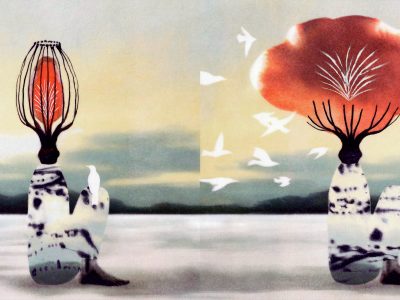
A two-panel illustration of a person with a flower head; in the first, the bud is closed, and in the second, the flower is in bloom.

Painting a More Hopeful Future

WP_Post Object
(
    [ID] => 9839
    [post_author] => 15
    [post_date] => 2025-12-17 18:25:59
    [post_date_gmt] => 2025-12-17 18:25:59
    [post_content] => 

How women crab farmers along India's coast have linked their livelihoods to environmental conservation.

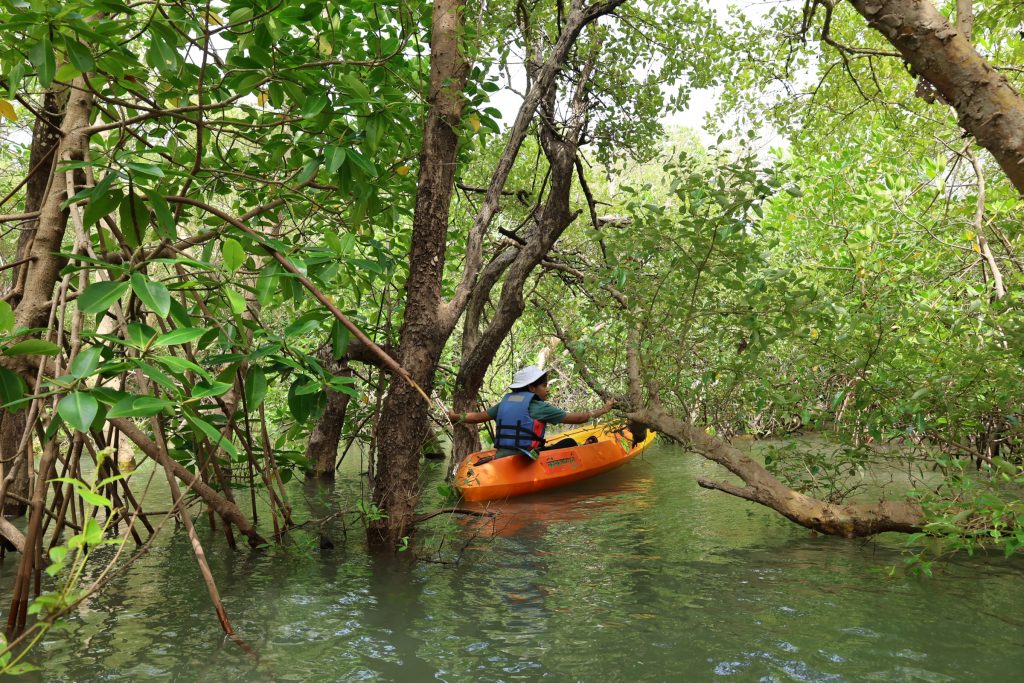
A soft current ripples near Jamdulwadi Island as 15-year-old Prachi Santosh Acharekar guides her canoe through the gnarled trunks of a mangrove forest.

The afternoon sun warms the surface of the water, revealing a familiar scene to local communities around India’s Konkan coast: clusters of mud-covered crabs, basking on branches.

As she approaches them, she slows her boat. Prachi, a 10th-standard student, doesn’t just see mud crabs: She sees her future. Her focused gaze and deft handling of the boat are part of her autodidactic training, a testament to a burgeoning passion that runs deep within the Acharekar family. 

Prachi Santosh Acharekar navigating her canoe through the mangroves, a part of her crab farming training.

Champions of the Mangroves

In Achara village, where she lives, crab farming season typically runs from October to May. When Prachi is fully inducted into her family’s business in about three years, during this time, she’ll be busy with preparations, stocking seed, feeding the crabs, and folding boxes to safely transport them once they’ve been harvested. 

All of it will also formalize her role in a grassroots movement, led by women from India’s coastal belt: In Sindhudurg, women fisherfolk have become champions in linking their livelihoods with environmental conservation. Through crab farming, they’ve created a strong incentive to protect local mangroves, which serve as critical nursery habitats for mangrove crabs. The benefits of this are both economical and ecological: Alongside generating sustainable income for the women, the mangroves’ preservation stabilizes shorelines and mitigates erosion, enhancing coastal resilience against the impacts of climate change. 

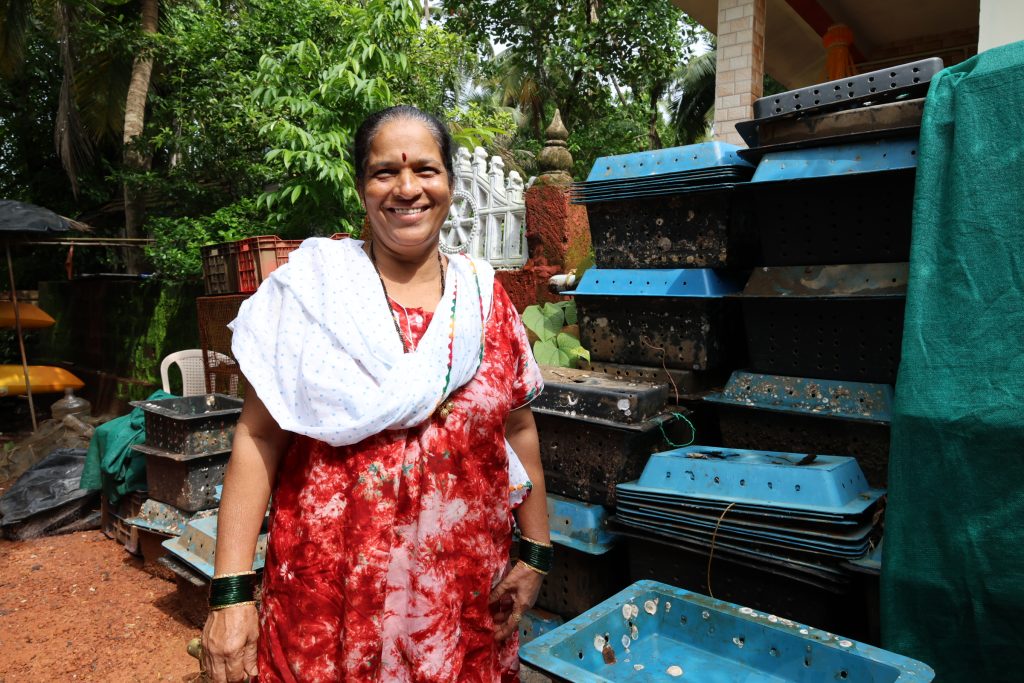
At the heart of this enterprise is Prachi’s aunt, 55-year-old Sonali Sunil Acharekar, a proud entrepreneur and leading member of Konkansparsh, one of Maharashtra’s pioneering women-led self-help groups (SHGs). Like all women of this SHG, for her, the mangrove is not just an ecosystem, but a dynamic marketplace.

“Be it dolphin safari, trekking, birdwatching, or traditional fishing, we do it all at Konkansparsh,” says Sonali, sitting in a charpoy at her home, surrounded by a vast area of mangroves. “But crab farming is our speciality. It is something we feel deeply attached to.”

Sonali and other leaders manage the entire crab farming supply chain, from feeding and harvesting the crabs to selling them. The process is meticulous but straightforward. Crab seeds are carefully placed one-by-one into fiber boxes. Each box is then deployed within the protected mangrove territories of Sindhudurg district, which boasts 6,940 hectares of mangroves perfectly suited for farming. Sonali also feeds the small raw fish stock twice daily, in the morning and evening. Then, once the crabs are ready, they’re harvested, boxed, and sold. 

Sonali Sunil Acharekar in the backyard of her home in Achara village.

Overseeing the entire operation in this way has significantly enhanced the women’s access to resources, as well as to the market. The payoff is also demonstrable, including as a sustainable model: Last year, the Acharekar family, a seven-member unit that works in tandem, generated an impressive 150,000 INR ($1,706 USD) from the sale of 180 crabs. They also earned an additional 130,000 INR ($1,466 USD) from running mangrove safaris. 

“It feels so good to partake in the process,” says Sonali. “This year, we intend to maintain 200 boxes fully. More boxes mean more business and more business means more prosperity.”

Their success also reinforces a crucial ecological benefit: According to research published in the Marine Biological Association of India, mud crab farming is not only a sustainable—and profitable—livelihood, but an essential strategy for mangrove conservation, supporting the region’s climate resilience through ecosystem protection. The mangroves provide a conducive natural habitat for raising mud crabs, or green crabs, commonly from the species Scylla serrata, which are indigenous to the region. By breeding and harvesting crabs, and building and tending to crabs pens in mangrove creeks, the women have both created a financial incentive for the mangroves' protection and helped to increase the local crab population.

In coastal areas, crabs are considered an economically significant species due to their huge demand. The crabs themselves can also tolerate a wide range of temperatures and salinities without destroying local ecosystems. But over the years, sand mining, saltwater intrusion, and rising water temperatures have contributed to a declining mud crab population, and are just a few of the ongoing stresses and trends that fisher communities have dealt with, and that local SHGs hope to tackle. 

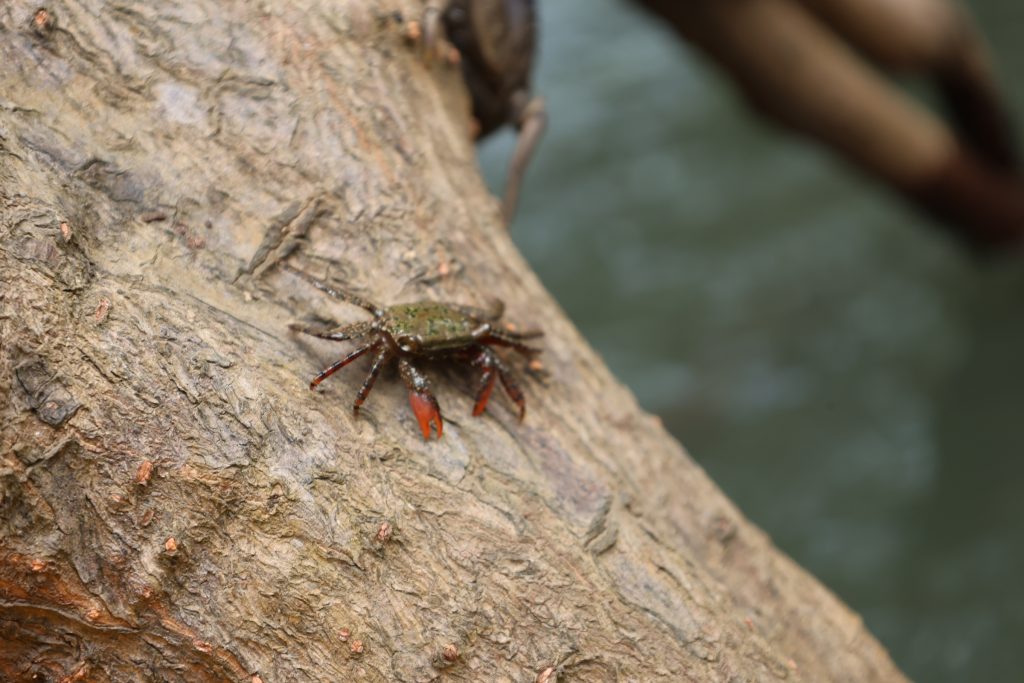
A wild baby crab crawls on the trunk of a mangrove tree.

In other coastal communities like Kerala, Maharashtra’s neighboring state, crab farmers who once caught wild juvenile crabs and had plentiful stock are grappling with rising costs and dwindling returns, as crabs have become scarce and stressed. Their annual incomes have dropped by 50,000 INR to 100,000 INR (around $600 USD to $1,200 USD) due to poor water quality, causing frequent disease outbreaks, pushing many farmers to downsize or cease operations altogether, largely due to reduced harvests linked to environmental degradation.

Sustainable crab models in coastal communities in Maharashtra aim to address the pressing problems of overfishing, habitat loss, and food insecurity through long-term economic stability. But without such practices, crab harvesting may yield fleeting profits, triggering ecological collapse and harm to a region’s inhabitants.

In addition to boosting the economy, this is part of why the SHG’s endeavors have been such a great boon to the area.

According to Kedar Palav, Livelihood Specialist at Sindhudurg’s Mangrove Foundation, women-led groups comprising 40 women have been active in Sindhudurg district during the 2024-25 crab farming season. “Our aim,” he notes, “is to facilitate strong livelihood opportunities for the women.”

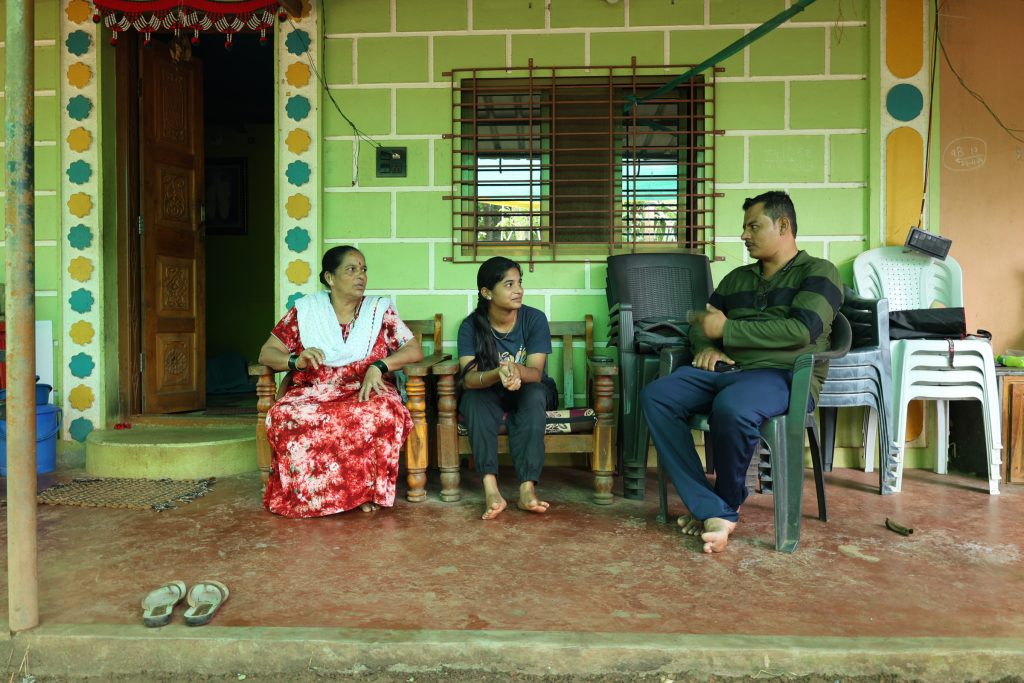
Sonali Sunil Acharekar (left) and her niece Prachi Santosh Acharekar (center) in conversation with Mayur Pansare (right), a Project Assistant for the Mangrove Foundation.

But even those with formal careers are drawn to the potential. Sonali’s 32-year-old son, Omprakash Sunil Achrekar, an engineering graduate, has embraced crab farming full-time; and Manish Tari, 22, an undergraduate in fisheries science, launched Manish Agro & Seafood with his father during the Covid-19 pandemic, specializing in vertical crab farming.

“We deal in red and green crabs,” says Tari. “A single piece per kilo can go up to 2,400 INR. It’s very lucrative.”

Navigating the Tides

Despite the economic potential, the journey is not without profound risks and hurdles. The most immediate occupational hazard, however, is theft.

“Theft of crabs is a big problem here,” says Sonali. “Sometimes diseases can spread in the backwaters, as well…A mortality rate of 20 percent is considered normal.”

It’s a challenge that has historically forced some farmers out of business. Samiksha Gaonkar, 50, from Pirawadi village, recalls being part of Sindhudurg’s very first crab culture group, which operated between 2014 to 2019. Despite each group member earning around 5000 INR per month, they were forced to shut down.

“Our crabs got suddenly stolen,” says Samiksha. “We could not keep a check on the thefts and then we had to pull out.”

Anagarajan Joshi, 58, a former crab farmer, at her friend’s home in Pirawadi village.

Another hurdle is the scarcity of crab seed. According to Palav, there is only one hatchery in India: the Rajiv Gandhi Centre for Aquaculture (RGCA) in the southernmost state of Tamil Nadu. 

Sanjeevni Santosh Mithbavker, 43, a member of the Vedoleshwar SHG, says crab farming has become more difficult as a result. “We lack seed,” she says. “If the supply of seed becomes easy, we can take this business forward.” 

Despite the scarcity, Sanjeevni sold crabs worth 60,000 INR last season. But while business is “great,” seed still costs 25 to 30 INR for a single piece—makings it an expensive venture for the average crab farmer.

A Wave of Resilience 

To counter these challenges, government and non-governmental efforts have actively focused their support on the most vulnerable communities, placing women at the forefront.

Government initiatives such as the Mangrove Conservation and Livelihood Generation Scheme, alongside international projects like Enhancing Climate Resilience of India’s Coastal Communities (ECRICC), have been instrumental in fostering local interest in Sindhudurg’s coastal villages, including Achara and Hadi. As part of the Mangrove Foundation’s intervention, women’s groups also receive substantial training and support, including expert talks, presentations, and hands-on workshops that offer extensive practical training. 

On the ground, additional support comes from 34 Sagar Mitras—fisheries graduates who act as vital resources for the women. Mayur Vinayak Pansare, Project Assistant with the Mangrove Foundation, sees themselves in a family-like role. While they occasionally help fix issues, like crabs breaking through fiber boxes, he says, “It’s heartwarming to see these women coming forward and taking steps towards self-reliance.”

Sanjeevni Santosh Mithbavker, 43, mends nets at her home in Hadi village.

The financial assistance is also significant: The Achrekar family, for instance, received a substantial 90 percent subsidy from the Department of Fisheries and the Mangrove Foundation. Between 2021 and 2025, larger initiatives like the Pradhan Mantri Machi Sampada have backed an additional 124 fisheries projects, with women as a remarkable 60 percent of beneficiaries between 2021 and 2025, says Bahar Vithala Mahakal, Sindhudurg District Program Manager at the Fisheries Department.

This focus is clear across other programs, too: The Sindu Ratna Samrudhi Scheme saw a 70 percent rise in female beneficiaries in a single year, between 2022 and 2023.

Planting the Future

Women’s presence as crab sellers in Sindhudurg’s main fish market signals a generational shift in the industry: They’re taking center stage in an otherwise male-dominated marketplace. For Dakshita (who asked we only use her first name), her presence here is about more than selling her own yield—she’s also reclaiming a little more of herself. 

“What is the need for middlemen when I can run my own business?” she says, waiting for customers.

Dakshita, 50, sells green crabs at the Malvan fish market in Sindhudurg.

In Prachi’s case, the journey towards self-reliance began slowly. She initially “harbored no interest in crab farming.” But witnessing her family’s dedication and serving as a guide for tourists through the vibrant backwaters transformed her perspective, converting her initial disinterest into a passion.

In the shifting tides of the Maharashtra coast, Prachi represents the strong voice of a younger generation, seamlessly blending tradition with science to carve a new path forward. For them, crabs are the ‘green gold,’ promising economic returns.

While elder members strengthen their place in the market, Prachi is now articulating a dream that links her environment to her education, which she plans to pursue further by studying Marine Science.

“By protecting the mangroves, my crabs thrive,” she says. “The mangroves in return protect my family from storms, erosion, and the rising sea.”

A view of a mountain village in Sindhudurg.

In the nearby pond, Prachi and Sonali have also started to plant new mangrove saplings. Other efforts at sustainability have only grown. In 2017, scientists visited the area and told local crab farmers that in order to have a better catch, they needed to maintain cleaner water. To boost women’s participation in local water and pond management, women farmers are now being trained to regularly flush water through the crab ponds for freshness, monitor water quality, and prevent overcrowding. Since then, they’ve seen the return of many new birds in the area, from cattle egret to common sandpiper and Indian pond heron.

The tides speak louder than people in Sindhudurg’s coastal communities, and for these powerful women, mangroves stand like guardians along the coast. The more they nurture the mangroves, the more the mangroves give back to them, too. It’s a quiet partnership in nature, this connection between crab farmers and the mangrove forests, and a small step in healing the Earth.

[post_title] => Guardians of the Mangroves [post_excerpt] => How women crab farmers along India's coast have linked their livelihoods to environmental conservation. [post_status] => publish [comment_status] => closed [ping_status] => closed [post_password] => [post_name] => crab-farmers-farming-aquaculture-india-mangroves-conservation-climate-change-ecosystem [to_ping] => [pinged] => [post_modified] => 2025-12-17 18:26:06 [post_modified_gmt] => 2025-12-17 18:26:06 [post_content_filtered] => [post_parent] => 0 [guid] => https://conversationalist.org/?p=9839 [menu_order] => 0 [post_type] => post [post_mime_type] => [comment_count] => 0 [filter] => raw )
Guardians of the Mangroves

WP_Post Object
(
    [ID] => 9814
    [post_author] => 15
    [post_date] => 2025-12-03 18:41:15
    [post_date_gmt] => 2025-12-03 18:41:15
    [post_content] => 

How women play a crucial role in the country's struggle against dictatorship.

Andreina Baduel, a 39-year-old activist from Caracas, Venezuela, had a happy childhood. Growing up with 11 brothers and sisters, she fondly remembers the love and support she received from her parents—how her father frequently took all his children to the beach, or out to dinner at their favorite restaurant. From an early age, she says, her father also instilled in them an appreciation for education, allowing her, in her own words, to "cultivate an intellect and become a better human being.” But at 23, life as Baduel knew it came to an abrupt end when her father was sent to prison. 

“My life came to a standstill,” she recalls. “It was a turning point in our lives that affected so many things.”

Baduel is the daughter of Raúl Isaías Baduel, a retired general of the Venezuelan armed forces and former defense minister under former President Hugo Chávez’s regime. In 2009, he publicly broke with Chávez over constitutional disagreements, and accused the then-president of becoming “increasingly authoritarian.” For his dissent, he was sent to prison for the majority of his remaining life, until his death in 2021. 

After her father’s imprisonment, Baduel became her family’s main source of moral support. The Baduel family has now been considered dissidents for nearly 17 years, and she also acts as their public mouthpiece—speaking out on their behalf, and ensuring their stories continue to be heard, both in their country and beyond. This has included aiding two of her brothers over the years, who were respectively detained, arrested, and subjected to torture and ill-treatment in prison, under both Chávez’s and current President Nicolás Maduro’s regimes. 

“We have been persecuted, harassed, silenced,” Baduel says. “[But] the truth cannot be killed, [and] faith cannot be extinguished. My father’s voice lives in every word we speak.”

Baduel’s story is not uncommon. Like many women in Venezuela, she is known both as the relative of a high profile political prisoner, and as an outspoken activist. Her advocacy on her family’s behalf also exemplifies how Venezuelan women play a crucial role in fighting against the country’s dictatorship, amid Maduro’s human rights violations and in the face of his “reelection” last year. (The win was deemed fraudulent by election watchdogs such as Transparencia Electoral, as well as the international community, including the U.S. and some of the country’s Latin American neighbors, like Brazil and Colombia.)

“Women have a very important role in the opposition movement; but also in sounding the alarm after last year’s election,” says a leader of a Venezuelan women’s rights organization, who asked to remain anonymous for safety reasons. Referencing María Corina Machado—one of the country’s main opposition leaders, who recently won a Nobel Peace Prize for her democratic struggle against the country’s dictatorship—the organizer says Venezuelan women have long “been a leading force and a leading voice” in speaking out about the government’s infractions, both at home and abroad. “[Many] women in exile and in the diaspora are also playing a key role,” she says.

This includes women like Violeta Santiago, a Venezuelan human rights activist and journalist who was forced to flee the country after receiving death threats by government-led armed groups. She now continues to write about injustice and the state of human rights in Venezuela from Chile. 

But at home, the risks are higher, both for those who speak out and those who don’t. Because of this, everyday women like Baduel have been forced to partake in this fight for their entire adult lives, defining the parameters of their existence from within the nation they call home.

First Arrest 

On the day Baduel’s father was arrested by the Venezuelan military, he was shopping with his family. None of them could have known that, except for a brief period of house arrest in 2017, he’d languish in prisons for the rest of his life. This included spending time in La Tumba, or The Tomb, a prison infamous for inflicting white torture on its prisoners. This torture is comprised of, but not limited to, isolation, a lack of access to natural light, constant freezing temperatures, no access to water, and nearly no food. 

In 2021, while detained in El Helicoide, one of Caracas’ most notorious penitentiary facilities, Baduel’s father died at 66, over a decade after his initial arrest. According to the official report, he died from “cardiac-respiratory failure” after contracting COVID-19. But his family believes his death was actually caused by neglect, torture, and ongoing health conditions sustained after years of imprisonment without medical care. Juan Guaidó, the main opposition leader at the time, publicly supported this claim on social media, and the United Nations called for an independent investigation. A separate UN fact-finding mission has since concluded that crimes against humanity have been perpetrated in the country, particularly in relation to political persecution and prison conditions. 

Through all of it, the Baduel family has remained steadfast.

“We knew our father’s imprisonment and death would change us from within,” Baduel says, wearing a t-shirt that reads “Ser Baduel No Es un Delito (“Being a Baduel Is Not a Crime”). “We understood it would either bring up the best of us, or the worst of us. And we decided to confront it with faith and hope.” 

Brutal Torture

Years before Baduel’s death, two of his sons—Raúl Emilio Baduel and Josnars Adolfo Baduel—were also imprisoned over conspiracy charges. Raúl Emilio, now 45, was detained while attending a peaceful protest in 2014, and released four years later. Josnars Adolfo, now 37, was detained in 2020 and sentenced to 30 years in prison, which he’s currently serving at Rodeo Uno, also known for its brutal torture of prisoners.

“He is imprisoned in a cell of two square meters, where he only has a cement bed and a latrine,” Baduel says. “They physically torture [him]—they beat him, suffocate him, and use electric [torture] on him.” She also says she’s only able to speak to Josnars for 15 minutes each week, from behind a glass wall. “They want to annihilate him, and make other prisoners scared of what awaits them,” she says.

Despite facing an onslaught of harassment, death threats, and government surveillance, Baduel plans to keep fighting. Recently, she received support from The Inter-American Commission on Human Rights, who granted her precautionary measures “in the belief that she faces a serious, urgent risk of suffering irreparable harm to her rights to life and personal integrity.” But while there is still no guarantee that her rights will be respected under the current regime, Baduel believes that she and the many other women stuck in the same fight as her are “a fundamental pillar” in defending human rights in Venezuela. “I am the voice of my family,” she reiterates, ”and of all the victims of this regime who are in prison, and who cannot speak for themselves.” 

Constant Fear

Sairam Rivas, 32, is another Venezuelan activist fighting for a loved one who she says was unjustly imprisoned by the regime: Her partner, Jesús Armas, 38, has been imprisoned since December 2024. 

Rivas is also a former political prisoner herself. In May 2014, while attending Caracas’ Central University of Venezuela for social work, Rivas, then a leading student organizer, was a part of a public camping protest in the capital’s streets. They were speaking out against the militarization of public space, and protesting the recent deaths of multiple young protestors at previous demonstrations. Along with 200 other young people, Rivas was arrested and later incarcerated at El Helicoide, the same prison as Raúl Baduel. With support from her university and international NGOs like PROVEA, Amnesty International, and Foro Penal, she was released after five months, unlike other young people detained that day, some of whom she says were imprisoned for up to three years. 

“But the [political] situation then was different to what it is now,” Rivas says. “Back then, we could hire private lawyers, and there were no forced disappearances of dissidents.” 

A photo of Sairam Rivas standing in front of a glass wall. She is wearing a white t-shirt with black text that reads, "Liberen a todos los presos políticos."
Sairam Rivas. (Photo courtesy of Sara Cincurova.)

She also says she believes the only reason she was not subjected to sexual violence and torture is because her imprisonment was “very famous.” “As a student leader, my case had a lot of visibility on social media among young people,” she explained. The notoriety of her case did not avert all ill-treatment, however. “We had to sleep handcuffed on the floor,” she says. “We were threatened to be transferred to harsher prisons and face torture if we continued to protest in the future.” 

A decade later, on June 10, 2024, Rivas would experience a new horror: Her partner, Jesús Armas, was nowhere to be found. Neither she nor his family had received any information about him for seven days, only to discover he’d been “kidnapped” by the government. 

Armas had been a part of María Corina Machado’s campaign team, and as punishment following the 2024 election, he was detained, interrogated, imprisoned, and then tortured by Maduro’s regime.

“At this moment, Jesús is still isolated in El Helicoide, and doesn’t have any contact with me or his family,” she says. “The feeling of fear is [constant] in Venezuela, but you cannot think about it because then you become paralyzed.” 

Rivas is acutely aware of the pain many Venezuelan women experience, not only as prisoners, but often, as the caretakers and public resistors on their family’s behalf. But she also notes that many Venezuelan women are transforming this pain into action. As she sees it, beyond activism, women must also take on key roles in the opposition, as Machado has, and lead movements that will restructure the civil and political order destroyed by the dictatorship. “Women have a crucial role to play in the construction of a movement of families of political prisoners—a movement that not only fights for their freedom, but also for the creation of historical memory, so that justice can be done and [similar] crimes are never repeated,” she says.

A Venezuelan university professor of social sciences, who also requested anonymity for fear of retaliation, echoes Rivas’ assessment that it is a particularly scary time. She tells The Conversationalist that “every [new] day has become a possibility of chaos.” But despite the enormous risks, women across the country continue to fight however they can. 

“After having spent my entire active life as a professor at the Central University of Venezuela, it is very difficult to keep my mouth shut when I see how [our] country is being destroyed,” she says. “But when you open your mouth, [the government] can come and look for you—regardless of whether you are young or old, or whether you live in a middle class or lower class area.”

According to the professor, women’s rights violations have a long, multifaceted history in Venezuela. “More covert at one time, more open at another, more hidden in some places, more open in others—it is permanent and constant,” she says, adding that political prisoners are always treated worse than other prisoners, especially those detained for democratic activism.

Still, fear of imprisonment has not silenced opposition to the government for some, despite the potential cost. As Machado recently wrote on X—while still living in hiding within the country's borders––in the face of a brutal dictatorship and the suffering, torture, and extrajudicial killings it has caused, Venezuelans have continued bravely forging a “formidable civic movement,” overcoming the barriers “the regime built to divide us.”

For Baduel, the years of persecution, and witnessing her family members being tortured, also forced her to confront a personal choice: “to become the best version of myself, or the worst.” 

Despite her suffering, she says she deliberately chose to cultivate her humanity, something necessary in the continued fight. “I decided to transform my life for the better, not for the worse,” she says. “To fight for justice in Venezuela; to demand accountability, and to build a historical memory for my family and all those who were tortured.”

[post_title] => The Fight to Free Venezuela's Political Prisoners [post_excerpt] => How women play a crucial role in the country's struggle against dictatorship. [post_status] => publish [comment_status] => closed [ping_status] => closed [post_password] => [post_name] => venezuela-dictatorship-activist-adreina-baduel-raul-isaias-caracas-prison-political-persecution-sairam-rivas-jesus-armas [to_ping] => [pinged] => [post_modified] => 2025-12-16 08:26:28 [post_modified_gmt] => 2025-12-16 08:26:28 [post_content_filtered] => [post_parent] => 0 [guid] => https://conversationalist.org/?p=9814 [menu_order] => 0 [post_type] => post [post_mime_type] => [comment_count] => 0 [filter] => raw )
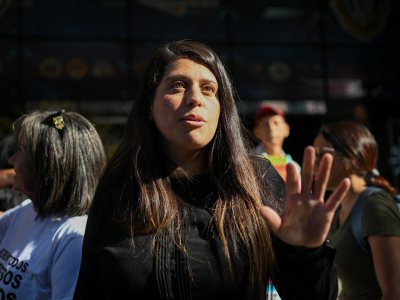
Venezuelan activist Andreina Baduel talks upon arrival at the headquarters of the Scientific, Penal, and Criminalistic Investigation Service Corps (CICPC) in Caracas on December 16, 2024. Andreina is the daughter of General Raul Baduel, an old ally and former minister of Hugo Chavez, who died in prison in 2021 after breaking with the government. She has dark brown hair, parted to the side, and is looking above the camera, with one hand raised as she gestures while speaking.

The Fight to Free Venezuela’s Political Prisoners

WP_Post Object
(
    [ID] => 9725
    [post_author] => 15
    [post_date] => 2025-10-28 19:30:22
    [post_date_gmt] => 2025-10-28 19:30:22
    [post_content] => 

Now, more than ever, we need art to do the heavy lifting of defining our values.

Cultural Currency is a bi-monthly romp through the intersection of art and capital with writer Cara Marsh Sheffler. 

In the art world this year, many a gallery’s story has ended with Chapter 11. For those who’ve been paying attention, this wasn’t surprising. Art sales are slipping everywhere, down as much as 35% at Art Basel. This month, the Financial Times reported that blue chip Hauser & Wirth’s London profits have slid a staggering 90%. August mid-tier galleries have begun shuttering with alarming frequency: Blum, Kasmin, and Venus Over Manhattan, to name a few. For artists and galleries alike, the walls are literally and metaphorically caving in: the model of an entire industry predicated on selling to a few rich people is no longer working.  

When the hero’s journey comes to its final chapter, a certain existential reckoning occurs. The life and death of ideas is very real: many far outlive their usefulness, and perhaps one that needs to die right now is the idea that art should exist on the market principally as a financial tool. Art fairs are expensive, rents are obscene, and a global economic downturn accented with the panic and chaos of trade wars and ethno-nationalism all point toward the necessity of conservative budgets and cost-cutting. Yes, the tie between money, power, and art is irrefutable, the backbone and lifeblood of art history. But as the midtier market collapses, it might be nice to finally unfuck the gap between the hand-to-mouth life of the artist and the value of art in the market, beginning with a trial separation—at least as a thought exercise—between money and art. 

Now, more than ever, we need art to do the heavy lifting of defining our values. Alternative thought is essential when the capitalistic world has agreed—with zero referendum—that artificial thought is in any way preferential or superior. By subscribing to the centrism that masquerades as progressivism in the United States, the art world lost touch with the political landscape and, with that disorientation, any ability to question it. Amid the art market highs and market-oriented inclusivity, art has also lost its critical capacity.

But what is the value of art that cannot be sold? What might be the purpose of art that is simply not meant to sit aside a red dot? Historically, of course, we have performance art and Situationism, along with their descendants. But, beyond art that is merely difficult to commodify, what does an expression of cultural values look like when consciously uncoupled from the art market? 

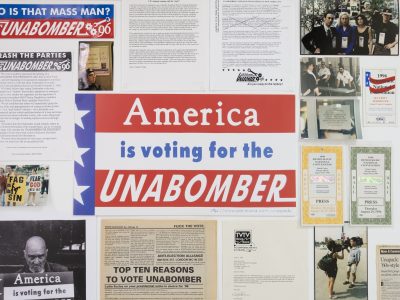
I pondered these questions as I walked around my favorite show I have seen all year, Lydia Eccles’ “Jokes About Bombs Will Not Be Taken Lightly,” which was up at Goswell Road, an artist-run space in Paris, from May 15 until June 14. In 1995, Eccles, a Boston-based artist, had one hell of an idea for an art project. Rather than taking a ho-hum trip to the supply store, she nominated the Unabomber—at the height of his anonymous reign of terror—in the 1996 US presidential election. The show was a documentation of that campaign and the ensuing pen-pal relationship Eccles formed with Ted Kaczynski after his arrest and throughout his incarceration. 

Conceptual art has given us everything from Chris Burden having a friend shoot him to Agnes Denes turning a strip of downtown Manhattan to a wheatfield. Art in this vein pushes what can be a canvas for expression: the human body, landfill. But never before had I seen an artist decide their chosen medium was a presidential election. By participating in the political arena with all the familiar trappings of the era—signs, slogans, bumper stickers, and even a dedicated camera crew—Eccles showed a presidential campaign for what it is: an hysterical circus that plays to our basest fears, one where infamy and fame are interchangeable. 

Eccles documents the Unabomber’s “run” alongside his more literal run from the law and the dance he did with the media, most notably and implausibly with Bob Guccione. Her prolific campaigning warranted its own inane and disturbingly underinformed coverage. At one point in the winter of 1996, WRKO radio reported, “There are more Unabomber signs than there are for Clinton, Gore, or all the Republicans, so it looks like the Unabomber is leading in this precinct.” In a time of Luigi Mangione fandom and a renewed, bi-partisan interest in Kaczynski, “Jokes About Bombs” offered a riveting, prescient, wholly prophetic anti-capitalist critique of technology’s role in a broken political system. The phrase “artistic intervention” has been worn out to the point of farce, but Eccles had staged one in a presidential election and a federal manhunt. 

I had to own the catalogue. 

But: how to get it home??? The cover showed an old-fashioned political sign stuck in sludgy snow amid a warren of placards for Bob Dole and Pat Buchanan:

DON’T WASTE YOUR VOTE!
Write-in for President
UNABOMBER ’96
If elected he will not serve 
★ VOTE AGAINST REPUBLICANS
★ VOTE AGAINST DEMOCRATS
★ VOTE AGAINST CORPORATE TECHNOLOGY
All you have to lose is the political illusion…
ARE YOU READY FOR THE RUPTURE?

I imagined myself at customs, declaring this tome. Anthony Stephenson, the gallery’s convivial proprietor, asked me if it would be so terrible to be stuck in France forever. He had a point. Still, I demurred and, frankly, chickened out of buying a book I really wanted to own. 

In my own cowardice, I recognized that Eccles’ show was lightning in a bottle, and that my own hesitation indicated that I was in the presence of something genuinely avant-garde. I’d been conditioned to the shopping malls of art fairs, swapping out the Orange Julius and TCBY of my New Jersey childhood for the (aptly named) Ruinart Champagne Lounge. Despite my arty existence, in that moment of contact, I realized that coming across art that is actually outré (if you like your French cultural theory) or verboten (if you prefer your Germans), and has purpose, simply had not been my experience of most galleries where, at best, I sigh and think “Gee, if only I had a cool $30K lying around…” Like the idea of owning its catalogue, the show itself freaked me out a bit. I felt alive in my mind and privileged to be in the room, as well as to meet Eccles herself. 

In its early pages, the catalogue for “Jokes About Bombs” contains the text of a speech James Baldwin gave in 1962, “Art is here to prove, and to help one bear, the fact that all safety is an illusion. All artists are divorced from and even opposed to necessarily any system whatever.” These are, of course, the sorts of moral standards we expect whenever we read James Baldwin, who had a sixth sense for integrity the way sea turtles and migratory birds can use the earth’s magnetic fields for navigation. While I ultimately left the catalogue behind, as spring turned to summer, I let his words guide my art viewing. 

I came across two moral stand-outs in London. The first was Ed Atkins at the Tate Britain, best known for his computer-generated, incredibly unsettling videos that plumb the uncanny valley. Atkins has been exploring the genre for decades, well ahead of AI moral and economic panic. Seeing his career retrospective made me think of a Democracy Now interview I saw with Karen Hao, who pointed out that, as we have no agreed-upon scientific definition of human intelligence, what, exactly, is Artificial Intelligence? Is it merely a projection of our perceived notion of intelligence, skewed entirely by capitalistic values? Are we creating “intelligent” bots with the same level of foresight and ethical depth as rare dog breeds concocted by bored, rich people that are so helpless they cannot even fuck on their own? (A sharp new ad for Merriam-Webster slyly posits their dictionary as an LLM and ends with the tagline, “There’s artificial intelligence, and then there is actual intelligence.”) 

The second stand-out was “Leigh Bowery!” at the Tate Modern, a retrospective of fashion and nightclubbing as artistic expression. The text at the entrance to the exhibit read: “In his brief life Bowery was described as many things. Among them: fashion designer, club monster, human sculpture, nude model, vaudeville drunkard, anarchic auteur, pop surrealist, clown without a circus, piece of moving furniture, modern art on legs. However, he declared, ‘if you label me, you negate me,’ and always refused classification, commodification, and conformity.” The show was a riveting reminder of transgression and artistic expression in the face of AIDS, discrimination, and the rise of conservatism—and a call for the same as we face rising global authoritarianism today. In an era where fashion often feels like the reductio ad absurdum of vapid aspirational mass consumption amid our ever more precarious existences, online and in debt, Bowery’s ability to imbue costume with so much intellectual ambition and drive floored me. 

These three exhibitions were recentering as reminders that art’s purpose—its true value—shouldn’t be monetary. Moreover, those figures don’t mean much just before a crash, when the numbers game is more of a hiding-the-real-numbers game. While blue chip galleries and their deep war chests can ride out the chaos for now, Hauser & Wirth’s stumble may tell us otherwise. 

Right now, it is vital to uncouple cultural values from the marketplace. Commercial worth has always been baked into ideologies that align with power, whether you’re talking about royal court painters or the CIA and Abstract Expressionism. The market then reinforces that notion of value over and over again in a way that resonates into institutions and educational systems. Yes, that art market is experiencing a downturn that might spell collapse for many. It won’t be pleasant. However, chaos presents an opportunity for a reappraisal, and for finding what was lost. I would argue that—whether you love it or hate it—art that passes the Baldwin litmus test is a great place to start understanding what art with a valid critical stance looks like at this very moment in time. 

Such art demands the same moral clarity from its viewers, too: I did return to Goswell Road this summer, and I bought the catalogue for “Jokes About Bombs Will Not Be Taken Lightly.” Despite my concerns, the book made it home through customs.

[post_title] => The Value of Art That Can't Be Sold [post_excerpt] => Now, more than ever, we need art to do the heavy lifting of defining our values. [post_status] => publish [comment_status] => closed [ping_status] => closed [post_password] => [post_name] => cultural-currency-value-art-cant-be-sold-galleries-profits-economy-goswell-road-lydia-eccles [to_ping] => [pinged] => [post_modified] => 2025-10-28 19:30:26 [post_modified_gmt] => 2025-10-28 19:30:26 [post_content_filtered] => [post_parent] => 0 [guid] => https://conversationalist.org/?p=9725 [menu_order] => 0 [post_type] => post [post_mime_type] => [comment_count] => 0 [filter] => raw )
A photograph from the exhibition "Jokes About Bombs Will Not Be Taken Lightly" at the gallery Goswell Road, depicting the work of Lydia Eccles from her election campaign for the Unabomber in 1995-96. A bunch of paper ephemera on the wall, including photos, fliers, and bumper stickers. In the middle is a lawn sign that reads "America is voting for for the UNABOMBER".

The Value of Art That Can’t Be Sold

WP_Post Object
(
    [ID] => 9660
    [post_author] => 15
    [post_date] => 2025-10-15 18:39:37
    [post_date_gmt] => 2025-10-15 18:39:37
    [post_content] => 

Once we lose a free press, we lose everything it protects.

Last summer, I stood in front of a typewriter that led to the death of two journalists. I was visiting the German Occupation Museum on the small Channel Island of Guernsey, a British crown dependency, and was awe-struck by a display on a group of dissident reporters from the 1940s.

At the time, all news entering the occupied Channel Islands was filtered by the Nazis, and reports from the BBC and elsewhere were forbidden. But a small group of journalists disobeyed Nazi orders, secretly listening to wireless broadcasts, and typing out uncensored news for distribution. One of them used the typewriter I was looking at in the museum.

In response, the Nazis held a tribunal for five of the men involved. While I hear stories about shrinking media freedom and threats to journalists daily—I’m the deputy editor at a freedom of expression magazine, Index on Censorship—as a Brit, it gave me chills to know this level of censorship had once played out on British soil. Without a civil defense, the men were given prison sentences in Germany totalling over eight years. Charles Machon, sentenced to two years and four months, and Joseph Gillingham, sentenced to 10 months, never made it home. Both died in a German prison.

Today, global press freedom is more restricted than it has been in recent memory. In many places across the world, information is controlled by authoritarian regimes. Criticism of these governments, real or perceived, can land people in jail, or worse, and journalists often risk their lives to report on it. The 2013 Press Freedom Index and its accompanying interactive world map assembled by Reporters Without Borders (RSF), shows a handful of countries shaded green (good) and yellow (satisfactory). Pull the slider across to 2025, and the map dissolves into an alarming dark red (very serious) and shades of mid to dark orange, with a few countries in northern Europe clinging onto that green space for dear life. There’s not a lot of yellow either, indicating that concern over press freedom is not alarmist: Things have, in fact, gotten worse.

In Eastern Europe, the Russian- and English-language news outlet Meduza, founded in 2014, was headquartered in Latvia by its Russian-born founder, Galina Timchenko, for the safety of its staff. Russia is hostile toward independent media, and Meduza and others like it are labeled as “foreign agents” or “undesirable organizations,” resulting in increased surveillance. People who work in or with an “undesirable outlet” can face prosecution, fines, and even prison time. Since Russia’s full-scale invasion of Ukraine in 2022, its media landscape has been further eroded, with most news sites owned by the state and their allies. According to RSF, there are currently 50 jailed journalists or media workers in the country.

In 2023, I spoke to student journalists from the online Russian outlet Doxa, who fled to Germany and other European countries after four members of their team were sentenced to two years of correctional labor in 2022 for a YouTube video where they defended freedom of assembly for young people. Months later, the publication’s editor and co-founder Armen Aramyan was added to the country’s “terrorist and extremist” list. In one high-profile case, for speaking out against the war in Ukraine, British-Russian journalist Vladimir Kara-Murza was denied access to lawyers while languishing in jail between April 2022 and August 2024. Condemned to a 25-year sentence for his dissent, he was freed in the biggest prisoner swap between Russia and the US since the Cold War. But even exiled Russian journalists like Kara-Murza are not safe, and face possible assassination attempts by the state. Elena Kostyuchenko is one of three female Russian journalists in exile who, in a similar period of time, suffered symptoms associated with poisoning.

Even countries, regions, and cities that have a history of press freedom have backslid in recent years. Once home to a thriving media landscape, Hong Kong has fallen hard since the crackdown on its anti-government protests in 2019-2020. In 2020, the headquarters of one of its last publications to criticize the authorities—independent media outlet Apple Daily—were raided by police. Shortly after the introduction of the National Security Law was imposed by Beijing that same year, Apple Daily’s publisher Jimmy Lai, a pro-democracy activist, was arrested and placed in solitary confinement. The company has since closed, and Lai remains imprisoned.

According to RSF, China is the third worst country in the world for media freedom, after Eritrea and North Korea. The government has long seen the media as a tool for propaganda, sending out daily notices detailing censored topics. Journalists are kept under a watchful eye, including foreign journalists, who are followed by drones. While this censorship masks much of what is happening in China, prominent cases give some insight into the more honest reality. Over 100 journalists are currently detained in the country, a huge number of whom are Uyghurs who have reported on atrocities committed against the ethnic minority group in Xinjiang. Zhang Zan, who reported on the outbreak of Covid-19 in Wuhan, was jailed for four years, and once released, almost immediately rearrested. Reporter and #MeToo activist, Sophia Huang Xueqin, was held in solitary confinement for months and faced a closed-door hearing, before receiving a sentence of five years for “subversion against the state” in 2024 for her reporting on sexual assault. 

Meanwhile, in Taliban-controlled Afghanistan, where journalists are widely persecuted, it is near impossible to be a female reporter at all. Since regaining control in 2021, there’s been increasing restrictions on both women and journalists—including a national ban on women’s voices being heard in public. Afghanistan’s female journalists now largely work in exile, notably including Zahra Joya, the founder of Rukhshana Media, who currently lives in the UK. In neighboring Iran, journalists face arbitrary arrests and prison sentences, as was the case for Iranian-American journalist Reza Valizadeh, jailed for 10 years in January for “cooperating with the hostile U.S. government.” 

Beyond legal pressure and intimidation, reporters in the region are also being killed at alarming rates. On June 14, Saudi Arabia executed prominent journalist Turki Al-Jasser for alleged treason, with no clear evidence, following his writing about corruption in the ruling family. Despite Saudi crown prince Mohammed bin Salman playing for positive press, the reality is a country with a poor human rights record and a dire situation for press freedom under his rule. 

It’s also no secret that Palestine has become the most dangerous place on the planet to be a journalist. Since Israel’s escalation following the October 2023 Hamas attacks, at least 250 journalists have been killed in Gaza, the majority of whom are Palestinian. Some journalists have been deliberately targeted by the Israeli army, according to the International Federation of Journalists, and others, critical of Hamas, have said they’ve been threatened by the militant group. According to the United Nations, it has officially become “the deadliest conflict ever for journalists.”

As well as the disastrous consequences for human lives, this intense pressure on journalists has created an information vacuum, in part due to Israel’s ban on international press entering Gaza. Al Jazeera has some of the only international journalists left on the ground, but they, too, are facing disruption and targeted killings. Elsewhere in the region, the Al Jazeera offices in the occupied West Bank were closed down by both the Palestinian Authority and the Israeli authorities, with broadcasts suspended. The Israeli government also stopped Al Jazeera from broadcasting in Israel, calling them a propaganda tool for Hamas, a move condemned by many human rights and press groups. In May, Israeli police also raided their offices in East Jerusalem.

These are just some of the more glaring extremes of shrinking media freedom around the world, but there are many more, including in countries where press freedom is enshrined in law, such as the U.S. The second Trump administration has made it clear that they want to control which media outlets have press pool access. In one alarming example, they banned Associated Press (AP) journalists from White House press events after they continued to use the term “Gulf of Mexico” instead of their adopted “Gulf of America.” A judge later ordered the administration to restore AP’s access

In June, the administration's threats to journalists became physical. As protests against ICE (U.S. Immigration and Customs Enforcement) raids in Los Angeles grew, several journalists were injured by “non-lethal” bullets (which, despite the name, can actually be lethal), including at least one Australian reporter caught on camera. Elsewhere in the city, a photographer was shot in the head with a rubber bullet, a British photojournalist had emergency surgery to remove a plastic bullet from his leg, and other journalists were tear-gassed. Back in April, the Committee to Protect Journalists issued its first ever travel advisory for journalists heading to the US because of increased security at the U.S. border. Since then, comedian Jimmy Kimmel was taken off air (and later reinstated) for remarks critical of the Trump administration. Yet in the wake of this huge story, Trump actually suggested that networks which give the president bad press should have their licenses taken away.

Closer to my home, the rich and powerful use abusive lawsuits known as Strategic Lawsuits Against Public Participation, or SLAPPs, to silence journalists and others who speak out against them, in the UK and beyond. Some (but certainly not all) of these lawsuits come from oligarchs. Through defamation or privacy claims, critical views in the public interest are silenced with the backing of the British courts. Defending against one of these claims can be costly and drag on, which is exactly the point. It scares people, and stops reporters from doing their jobs for fear they could become the next SLAPP target. 

In spite of the worsening global landscape, there are still organizations and journalists holding the line. The Anti-SLAPP Coalition is doing incredible work to put an end to SLAPPs. Maria Ressa, a Filipino journalist who co-founded Rappler in 2021 has dedicated her investigative journalism to uncovering corruption within the Philippines government, and continues despite landing several charges against her, including charges of cyber libel and tax evasion. There is also the late Daphne Caruana Galizia, who unearthed numerous instances of Maltese state corruption, including her vital work on the Panama Papers scandal. In October 2017, she was murdered for it, and the campaign for justice continues.

There are countries, too, that give us a ray of hope, including Norway, which tops RSF’s 2025 World Freedom Press Index map. It’s a country that safeguards press freedom, has a vibrant independent media sector, and where editorial independence is valued. Namibia, while not falling within the green sweet spot, has historically been one of the best countries in Africa for press freedom, according to RSF. Journalists have faced verbal attacks and criticism from the government, and there are other areas where there is room for improvement. But in a world of press decline, it has risen six places (to 28th) in the most recent league table. (However, it’s important to note that it stood in 18th place as recently as 2022.) This comes down to a diverse media landscape, few barriers to coverage, and a judiciary that often defends the press. 

That a free press is vital in order to uphold democracy always bears repeating; and with things as dire as they’ve become, we must defend it with everything we’ve got. In countries where that idea is under threat, or where democracy itself is in tatters, we desperately need journalists who are pushing back, who refuse to stop publishing, and who shine a light on corruption. They’re often the ones running incredible independent media, whether in their countries or in exile. And we need the public, international community, and human rights organizations to keep calling out the threats, and supporting these brave journalists, wherever they may be. Because once we’ve lost press freedom, it’s only a matter of time before we lose everything it protects.

[post_title] => The Shrinking Space for Media Freedom [post_excerpt] => Once we lose a free press, we lose everything it protects. [post_status] => publish [comment_status] => closed [ping_status] => closed [post_password] => [post_name] => media-freedom-free-press-global-journalism-censorship-index [to_ping] => [pinged] => [post_modified] => 2025-10-16 17:42:12 [post_modified_gmt] => 2025-10-16 17:42:12 [post_content_filtered] => [post_parent] => 0 [guid] => https://conversationalist.org/?p=9660 [menu_order] => 0 [post_type] => post [post_mime_type] => [comment_count] => 0 [filter] => raw )
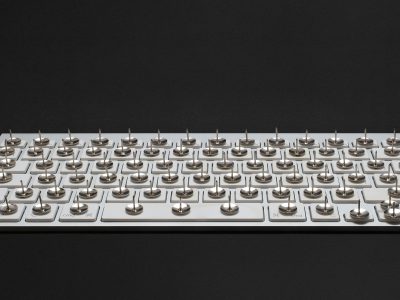
A modern white keyboard on a black background. On each key, there's a thumbtack with the sharp end pointing upwards.

The Shrinking Space for Media Freedom

WP_Post Object
(
    [ID] => 9206
    [post_author] => 15
    [post_date] => 2025-08-07 16:43:47
    [post_date_gmt] => 2025-08-07 16:43:47
    [post_content] => 

How one woman's friendship helped guide me to myself.

Old Friends” is an ongoing series exploring the many ways that friendship changes shape in adulthood. 

I met Maryam at an Egyptian dance class in 2009, just outside Boston. We ended up on the same train ride back into the city afterwards, and got to chatting, about dance, about life. I was immediately at ease in her presence. Maryam’s big green eyes peered owlishly at me over wire frame glasses as we talked, and I was struck by the sensation that I was speaking to an elderly cartoon wizard who had transfigured, comically, into a freakishly gorgeous human woman. We also learned we were both students at the same college, and when she got off at her stop, we agreed to meet up on campus the next week.

I’m still not sure why Maryam wanted to hang out with me back then. At 21, I’d arrived to our friendship a myopic, self-centered mess of youthful immaturity. Unrecognized neurodivergence and unaddressed teenage trauma had glazed over my entire life, until everything was blurry. I was totally disconnected from myself beyond whatever my current fleeting hyperfixation, which often included chasing after some dehydrated headache of a man. I had no internal compass or intrinsic motivation to carve a deliberate path forward for my life.

In contrast, Maryam was poised, self-expressive, and independent in ways that awed me. Several years older and light years more adult, she moved through life with an enigmatic grace. Her home was full of art, films, perfumes, and books. Meanwhile, I still lived with my mom, and my room was full of…laundry.

I so desperately wanted to be like Maryam. A trained historian, herbalist, doula, and certified babe, this woman had it together. She taught me about feminist geopolitics, which plants would be good for my period cramps, and how to take care of my skin. She kept her fingers and toes manicured (red, always), and had a standing appointment at the nail salon for a polish change every Friday. It was the first time I’d met someone so devoted to herself; not in an egotistical way, but as a practice in self-respect.   

“I never leave the house without at least a little makeup,” Maryam told me once. "My mother taught me that.” 

Wow, I remember thinking. What a cool mom. 

I haven’t spoken to my own mother much since middle school, but at 21, I was a full-time student who couldn’t yet afford my own apartment. Home, then, was a source of constant anxiety and stress; a gulf of silence, punctuated by unpredictable bouts of my mother’s wrath, a pattern that still defines our relationship today. 

I cherished having an elder femme take me under her wing. I was a shy, only child, and my living situation had left me feeling pretty isolated. Time with Maryam often felt like an escape; like an alternate plot line where I felt a sense of belonging. Over time, I started to realize that I could actually live in that plot line, if I wanted to. 

In the early years of our friendship, Monday nights were ours. Nearly every week, we went dancing in Cambridge, the notorious college town next door. We both had to be up early on Tuesdays, but that didn’t stop us—Maryam may have been responsible and mature, but we were both in our early 20s; still able to party all night and get up at 6 a.m. the next day. Whenever men would try to talk to us, we would start “joke dancing”: lurching and flailing our bodies around to scare away the would-be suitors, purely for our own amusement. When the night was done, I would drop her off and make my way back home in my mom’s Scion.

Maryam quickly became a mother figure to me, and helped me grow strong in ways that I needed, especially when I later stepped into sex work for the first time at 25. Through her, I was also able to see the ways my own mother had inadvertently taught me to hide from myself. My mom, a white woman who adheres to the principles of second wave feminism, raised me to believe that femininity was something that weak women performed for men. She was loud about her disdain, both for men and for femmes. She kept her hair short, never wore makeup, and still rarely wastes an opportunity to let me know she thinks my own femininity is frivolous. 

But for all her convictions, my mother has also never been a confident woman; not when I was growing up, and not today. She is direct, entitled, and bossy in the ways that whiteness allows, but, when presented with everyday opportunities to disrupt things like misogyny, racism, or classism, she often stays silent, choosing decorum over the values she believes she holds. 

The first iteration of my womanhood was steeped in the same temerity as my mother’s, something that required me to subjugate large swaths of my personality. I am, at my core, a belligerent lesbian with a smart mouth who capitulates to no one. I just didn’t know all of that yet at 21, and Maryam’s friendship helped guide me to myself.

In many ways, just meeting her was a revelation. She embodies a multiplicity that my mother’s idea of feminism can’t compute; a multiplicity that, though different from mine, allowed me to better understand my own contradictions, not as shortcomings, but as evidence of the shortcomings of the patriarchal culture around me. Maryam is brave enough to speak her mind, especially when it comes to standing up to men—even though as a mixed race, high femme, feminist hijabi, she faces a unique set of risks that often compound when she does so. Once, as a new mother, she noticed a man following a woman down the street, harassing her. With her infant strapped to her chest, Maryam began loudly heckling him, and he panicked and ducked into a store. She followed him inside and continued to roast him in front of shoppers. 

I wonder if she gets this ferocity from her own mother, Karla, who died suddenly, shortly before Maryam and I first crossed paths. I wonder, too, what it was like for Maryam in the early years of our friendship, to guide me so thoughtfully and patiently through life as she grappled, mostly alone, with her monumental loss. She, like me, is an only child, and she lived with her mom until she died.

I also wonder what it was like to be raised by someone so tough. My favorite story about Karla, who was an artist, is the time that she was working in her studio and accidentally slashed her flesh. She cauterized her own wound with a cigarette, because, according to Maryam, “She couldn’t be bothered with the fuss of the ER.” 

So unlike my own mother’s lip-service, Maryam taught me to hold my ground, go with my gut, and never let a man push my boundaries. Wise, wise advice for anyone to heed, but especially for a young person heading into the sex industry, like I did, just a few short years into our friendship. I am 36 at the time of this writing, and I have been in various types of sex work for over a decade. I started out as a stripper, and Maryam was one of my most supportive friends. She immediately understood the complex web of reasons why sex work may be the best choice for some people; even people like me, who have a college degree and other potential career options. Her steadfast support helped me keep my head on straight when others, including my mom, tried to make me feel bad about myself for dancing. And her support never wavered. During our brief but glorious stint as roommates, she would perform parody dances for me in the living room, twerking in a handstand on the wall to strip club classics, like T Pain’s I’m in Love (With a Stripper). Once, during one of my shifts at the club, the bewildered bouncer came inside to let me know that Maryam had tried to come visit me at work—with her new baby asleep in the carriage. 

In stark contrast, when my biological mom found out through the grapevine that I had been dancing, she lost it. Even though we barely spoke, she used any contact as an opportunity to let me know she was mortified by my choices. She tried to shame me out of my job, eventually using her own mental health as a manipulation tactic, blaming my stripper status for her anxiety and depression.

I don’t resent my mother for this, I don’t hate her. But I also don’t feel known by her. And when I was younger, I needed to feel known, to feel understood—to feel mothered. 

For an off-the-wall autist, pinballing through her early adulthood, Maryam’s care was a lifeline. Her lessons in self respect also helped me shift paradigms in my personal life. Eventually, as I matured, I started to put less attention into toxic relationships and instead focus on building a relationship with myself. I have my own apartment now, full of my own art, music, perfumes, and books. (I’m still locked in a chronic battle with my laundry, though—some things don’t change.) Gradually, as I grew up, my friendship with Maryam changed, too: In the 15 years since we met, she’s had kids, I’ve figured out I’m queer, and we’ve both begun to contend with the ways that time takes a toll on the body; the ways that life shapes the spirit and the mind. 

Part of me will forever feel like a clumsy little kid, chasing after Maryam with a lollipop tangled in my hair, but, in general, I feel pretty well equipped to take care of myself. Now, I’m also someone Maryam calls in a crisis, someone she vents to when she has a problem; not just the other way around. I feel rewarded by having earned her trust over the years; a kind of trust that I still don’t get from my own mom.

I’ve also had my own experiences now, mothering younger friends and relatives, and in those situations I often find myself emulating Maryam, trying to strike a balance of grace and leadership; trying to teach my little ducklings to be strong and brave.

It took a long time for me to see just what it meant for Maryam to show up for me like she did in those early years, especially as she was learning to navigate life without her mom. She was attentive to me in ways for which I previously had no barometer; she validated my dreams, recognized my hard work, and showed me care in simple ways, like learning which foods were my favorites, or reminding me my worth every time some dingus broke my heart. On the other hand, my own mother has asked me twice in the past decade what color my eyes are, refuses to believe that I am autistic, and, just before I started grad school for journalism last fall, decided to tell me why she thinks I’ll never be a good journalist.

Since my own mom is mostly a stranger to me, it’s hard for me to imagine what it’s like to lose a bond I never had. But through mine and Maryam’s friendship, I have caught glimpses of Karla, and have come to love her through Maryam’s eyes—to recognize the woman who mothered the woman who mothered me. 

When I look back at the ways that Maryam helped guide me in my lost, immature years, or when I reflect on what a spectacular mom she has become to her own children, I am awash with the strange sense of missing someone I never had a chance to meet. I can feel Karla’s presence in so much of Maryam’s life, and, by extension, so much of my own. 

It’s been over ten years since Maryam and I lived in the same state. She’s raising a family with her husband in the Midwest, and I’m running around, a gay, sex working journalist in New York. I miss her so much. I keep photos of her and her kids in my studio, along with a pair of Karla’s old boots: a reminder that my best friend is always with me, and of the multigenerational blessings she brings to my world; and of the many mothers, here and gone, who continue to watch over me.

[post_title] => The Cycle of Mothering [post_excerpt] => How one woman's friendship helped guide me to myself. [post_status] => publish [comment_status] => closed [ping_status] => closed [post_password] => [post_name] => old-friends-friendship-mothering-growing-up-self-understanding-personal-essay [to_ping] => [pinged] => [post_modified] => 2025-09-19 12:32:12 [post_modified_gmt] => 2025-09-19 12:32:12 [post_content_filtered] => [post_parent] => 0 [guid] => https://conversationalist.org/?p=9206 [menu_order] => 2 [post_type] => post [post_mime_type] => [comment_count] => 0 [filter] => raw )
An illustration of a laundry line, with white sheets billowing in the wind. Behind it, we can see the shadows of two women holding paper cut-outs of shoes on sticks, and the silhouettes of the New York skyline. In the foreground, there's a plastic chair with a pair of red cowboy boots.

The Cycle of Mothering

WP_Post Object
(
    [ID] => 8525
    [post_author] => 15
    [post_date] => 2025-06-05 18:35:51
    [post_date_gmt] => 2025-06-05 18:35:51
    [post_content] => 

We don't just need more women in office. We need a culture shift.

I once believed that the presence of a female leader signaled real progress—a sign that gender equality had taken root. As a girl growing up in China, I watched with admiration as women like President Tsai Ing-wen in Taiwan and President Park Geun-hye in South Korea rose to the highest offices in their respective countries. Their success seemed to promise a future in which women’s voices would be equally heard, equally respected—that perhaps women might finally be seen as equals.

But as I began to study gender and politics more deeply, particularly across East and Southeast Asia, that initial optimism gave way to unease. Representation alone, I realized, does not guarantee change. Even more alarmingly, the symbolic presence of women in power can obscure the systemic barriers that continue to shape—and often silence—most women’s participation in political life.

Globally, this problem has proven surmountable. In Scandinavia, gender quotas and institutional reforms have helped elevate women to between 40% and 50% of parliamentary seats, reflecting not only a shift in numbers but a broader cultural embrace of women as political leaders. Similar gender quotas in Mexico—which elected its first woman president, Claudia Sheinbaum Pardo, last year—have led to women making up 50% of seats in congress, after gender parity was enshrined in the country’s constitution in 2014. 

In contrast, however, East and Southeast Asian democracies continue to lag behind—not only in representation, but in the structural support needed to close the gender gap. Japan, for example, despite being one of the world’s largest economies, has seen little progress in this area. Women occupy roughly 16% of seats in the national legislature—a statistic that reveals not just electoral imbalance, but deeper societal expectations about leadership, gender roles, and public legitimacy. As of April of this year, the percentage of women who hold parliamentary seats in India (13.8%), Cambodia (13.6%), Malaysia (13.5%), Sri Lanka (9.8%), and Bhutan (4.3%) remains even lower. And in China, there have been no women in the politburo since 2022, something the United Nations has flagged as a matter of great concern.

So, are women truly gaining power in Asia, or are they simply there to make politics look more gender equal?

Analyzing data from the Asian Barometer Survey suggests the reason women’s political participation remains low in Asia is as much a numbers problem as it is a cultural one. Founded in 1971, the ABS is a cross-national survey that aims to gather “public opinion data on issues such as political values, democracy, governance, human security, and economic reforms.” In a 2020 academic paper from the University of Edinburgh’s Dr. Sarah Liu, one surprising finding from the 2010–2012 survey was how the gender of the interviewer affected women’s answers. Faced with female researchers, women opened up about their political beliefs. With male interviewers, many of them hesitated. This suggests a much deeper problem with Asia’s gender divide, rooted in women feeling both uncomfortable with and unwelcome in politics. 

Across many societies, not just in Asia, politics is still seen as a man’s domain, where women are expected to support, not lead. But in East and Southeast Asia, where traditional gender roles continue to shape public and private life, this attitude is amplified. Even in modern cities, women are constantly told that politics is not their space. For me, it wasn’t that anyone said I couldn’t be a leader when I was growing up—it was that no one ever expected me to be one. And when women are constantly told that something isn’t an option for them, it makes sense that, eventually, they might actually start to believe it.

When women do step forward to lead, they also face a very different kind of scrutiny to their male peers. Their private lives are often judged more harshly than their professional ones, and given as much attention, if not more. When Tsai Ing-wen became Taiwan’s first female president, critics focused on the fact that she was unmarried—as if being single made her unfit to lead. But when it comes to unmarried male leaders, no one ever even thinks to question it.

The media frequently contributes to this double standard. I remember watching coverage of Shoko Kawata, a 33-year-old woman who became the youngest female city mayor in Japanese history after winning her election in Yawata, Kyoto Prefecture in 2023. I was furious that the story’s focus was not on what she’d said in her speech, but on what she was wearing. Other reports also emphasized her love of tea ceremony and traditional kimono attire—while barely mentioning her actual policy goals. Her agenda had been reduced to its aesthetics: her clothes were that day’s headline news, while her policies went overlooked.

Even within political institutions, this bias persists. In Japan, a young Tokyo assemblywoman was once heckled by her male colleagues while speaking about the need for better childcare policies. This incident occurred in 2014, when Ayaka Shiomura, a member of the Tokyo Metropolitan Assembly, was addressing how the government might better support mothers in light of Japan’s drastically decreasing birth rate. During her speech, several male lawmakers interrupted her with sexist remarks such as “Go and get married!” and “Can you even have children?” One of them, Akihiro Suzuki, later admitted to the heckling and publicly apologized. But the incident sparked widespread outrage, and served as another stark reminder of the entrenched gender bias in even the most formal of political spaces. 

Fueling all this is the deeper issue that women are still expected to prioritize the family above all. This problem isn’t singular to Asia, but nonetheless, it feels especially pervasive here: Even in the public sphere, women are still trapped in private expectations. When a woman chooses public service, some see it as a betrayal of her “real” duty. The media asks, “Can she have it all?”—a question they’d never ask of a man, and one that has never been asked of a father.

These attitudes don’t just make the job harder. They make women question whether the space was ever meant for them. And in many ways, it still isn’t—something that keeps women out of politics, and keeps everyone, regardless of gender, chained to the status quo.

Yet, despite persistent challenges, women politicians in Asia have continued to make remarkable strides. President Tsai and President Park both shattered historical barriers to ascend to the highest levels of national leadership in their respective countries, proving that women are more than capable of leading. They also both drove meaningful social and economic change during their terms—even in systems not designed for them. 

As the first woman president of Taiwan, Tsai Ing-wen and her administration actively pushed for gender-equal policies, earning Taiwan the top spot in Asia—and one of the highest rankings globally—for gender equality. One particularly meaningful initiative was an amendment requiring companies with more than 100 employees to provide childcare facilities—helping to ease the burden on working mothers. Tsai also supported policies that loosened loan restrictions for women entrepreneurs and promoted female participation in the economy as a path to structural change. 

Beyond legislation, she repeatedly called for dismantling gender stereotypes and encouraged women to participate in public life—raising both the visibility and legitimacy of women in leadership. Under her eight-year tenure, Taiwan’s economy grew steadily, with an average annual GDP growth rate of 3.15%, and even reached 6.6% in 2021—a rare achievement during global economic uncertainty.

Park Geun-hye’s presidency, meanwhile, offered a different but equally important approach to leadership. While her administration made more modest progress on gender-specific reforms, it recognized the challenges faced by working mothers and proposed expanding childcare services to support female employment. More broadly, Park’s role as a woman navigating a traditionally male-dominated political landscape was also deeply symbolic. 

Under her leadership, South Korea expanded its global economic footprint by signing free trade agreements with 52 countries, including China and Vietnam—bolstering South Korea’s export markets and international competitiveness. These policy efforts, though not always framed through a gender lens, reflected a broader vision of national growth, with women as increasingly visible participants.

Tsai and Park’s contributions—each shaped by their own context—highlight the transformative power and potential of women’s leadership. For millions of women across Asia, seeing them in positions of power—on television, in parliament, in international headlines—continues to deliver an enduring message: women belong here. And their presence alone continues to inspire others to imagine what is possible when women are no longer the exception.

Change won’t come overnight. Cultural shifts take time. But every honest conversation, every woman who speaks up, every moment of resistance matters—so hopefully, one day, girls growing up in East or Southeast Asia will see women in power and think: “That could be me.” Not because it’s rare, but because it’s normal.

To achieve this, we don’t just need more women in office. We need political systems that respect their leadership, media that reports on their work—not their wardrobe—and societies that stop measuring women by outdated standards. We need women in Asia to not just be seen in politics, but truly heard.

[post_title] => When Will Women in Asia Be Seen as Leaders—Not Exceptions? [post_excerpt] => We don't just need more women in office. We need a culture shift. [post_status] => publish [comment_status] => closed [ping_status] => closed [post_password] => [post_name] => women-leaders-asia-politics-tsai-ing-wen-taiwan-park-geun-hye-south-korea-government-gender-parity-equality [to_ping] => [pinged] => [post_modified] => 2025-09-12 17:06:55 [post_modified_gmt] => 2025-09-12 17:06:55 [post_content_filtered] => [post_parent] => 0 [guid] => https://conversationalist.org/?p=8525 [menu_order] => 14 [post_type] => post [post_mime_type] => [comment_count] => 0 [filter] => raw )
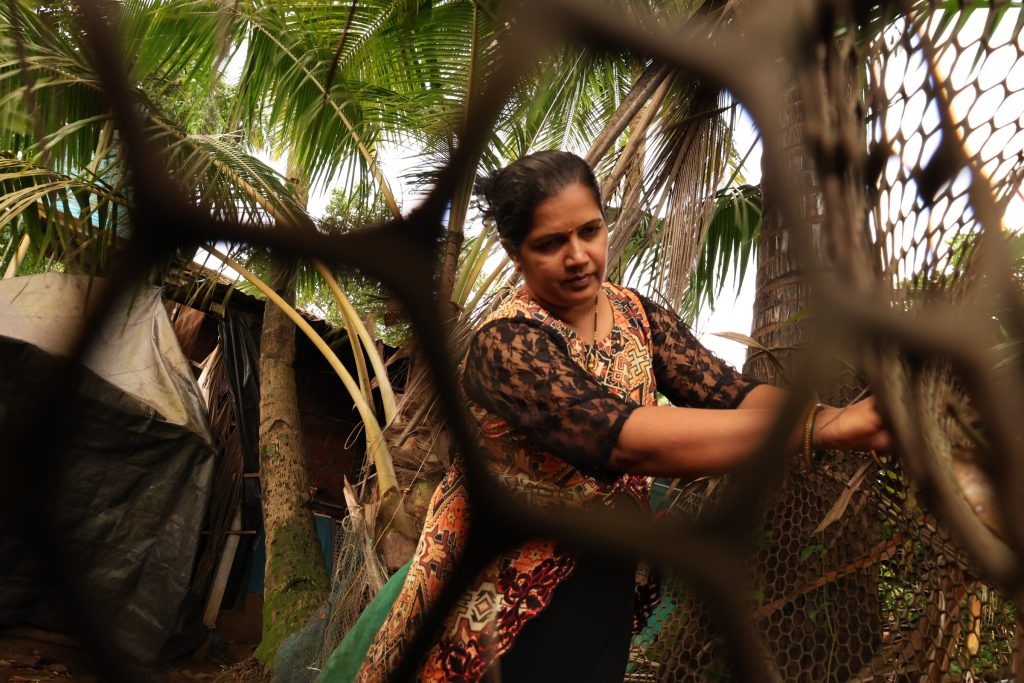
A soft, blue-toned illustration of a wind chime. In the center, replacing one of the bells, is a piece of paper depicting a woman facing away.

When Will Women in Asia Be Seen as Leaders—Not Exceptions?

WP_Post Object
(
    [ID] => 8378
    [post_author] => 15
    [post_date] => 2025-05-13 19:09:37
    [post_date_gmt] => 2025-05-13 19:09:37
    [post_content] => 

How a company in Kanpur is giving India's flower waste a second life.

It’s a sweltering April afternoon in Bhaunti village, about an hour’s drive from the heart of Kanpur, India. Inside a large hall, shaded from the harsh sun, the air is thick with the scent of marigold and rose. Groups of women, dressed in bright cotton sarees and salwar suits, work with quiet concentration. Some sit in circles, carefully sorting flower offerings collected from nearby temples; others pluck delicate petals with practiced hands. At one end, a few women lift heavy tubs of freshly washed blooms, carrying them outside to spread on large sheets, where the sun will slowly draw out their moisture, preparing them for the next stage of transformation.

Inside the factory, 38-year-old Preity Mishra moves with quiet efficiency, neatly packing incense boxes with an ease that comes from years of practice. She first joined the factory seven years ago, after unexpectedly losing her previous job, where she had worked for nine long years. At first, Preity admits, she was hesitant. Preity, along with the other women, works for Phool, a company that converts flower waste into incense sticks, cones, essential oils, and dyes. “I thought it would be dirty work,” she recalls, brushing a speck of sandalwood dust from her sleeve. But her perspective quickly changed once she learned where the flowers came from. “When I found out the waste came from temples, I began to see it differently,” she says. “These flowers are sacred and offered in prayer. It felt like I was giving them a second life, which is noble work.”

Preity Mishra inspecting a box of incense sticks.

The story of Phool traces back to 2016, when Ankit Agarwal, a computer engineer turned entrepreneur, accompanied a visiting friend on a trip to Kanpur’s ghats along the Ganga River. It was the time of Makar Sankranti, an Indian festival marked by ritual river dips. Though the water appeared visibly polluted, devotees continued to bathe as part of the tradition. “My friend began asking me questions about the purity of the water, why people still took dips despite the pollution,” Ankit recalls. “I realized I didn’t have the answers. In the meantime, a huge tractor of flower waste came and was dumped into the river.”

That moment planted the first seed of what would eventually become Phool, which means “flower” in Hindi. “I returned to my job, but I couldn’t focus. I was working, but I wasn’t content,” Ankit says, sitting in his office in Kanpur. “I eventually quit and came back to research how this flower waste could be reduced or stopped entirely from polluting our rivers.”

India, with its countless festivals and year-round celebrations, generates a significant amount of solid waste, including an estimated 800 million tons of flower waste per year. As many of these flowers are grown using pesticides and insecticides, when this floral waste is dumped into water bodies, it begins to decay, producing a foul odor and contributing to serious water pollution—much like what Ankit and his friend witnessed in the Ganga River. 

After he returned home to Kanpur, Ankit began crunching the numbers, calculating how many temples were in the region, how much flower waste was generated daily, and the scale at which it was being dumped. The results were staggering. According to government data, there are about 108,000 temples and mosques in India where flowers are offered every day, before being dumped in landfills or bodies of water, contributing significantly to the country’s water pollution and ecological damage. 

A worker scatters flower petals on a plastic sheet to help them dry.

Ankit began reaching out to temples, hoping to convince them to hand over their floral waste so that it might have a second life. “It was difficult to convince them,” he says. “Flowers offered at temples hold deep religious significance, so naturally, there was hesitation.” The temples weren’t resistant out of indifference, but an abundance of caution. “They were sincere in their concerns,” Ankit acknowledges. “They wanted to know why I wanted the flowers and what exactly I intended to do with them.”

Once Ankit succeeded in securing the flower waste, he spent the next several months immersed in research, exploring different ways the discarded blooms could be transformed into something meaningful. “I spent around eight months studying how this waste could be turned into compost or used in other sustainable ways,” he says. Then, he had a breakthrough. “Incense sticks are usually made from charcoal,” he recalls thinking. “Why not try making them from temple flower waste instead?” 

Ankit and his co-founder, Prateek Kumar, began operating out of IIT Kanpur, slowly putting their idea into action. Every day, Ankit would ride his two-wheeler to find a daily-wage laborer to help with tasks like sorting flower waste and basic processing. But the pair struggled to find reliable help—a new worker would show up each day, and rarely would anyone return, even when Ankit personally asked them to come back. It became clear that if the project was to grow, they needed a more stable workforce.

Then, by chance, a woman came to their office one morning looking for work, and Ankit offered her a day’s job. As with many others, he asked her to return the next day—and to his surprise, she did. 

A group of women rolling incense sticks by hand.

While they worked side by side, he started a conversation. Could she come regularly? Could she help bring in other women like her? She readily agreed. “It would be better to come here and work with flowers,” she told him, “than to go to seven or eight homes every morning to clean toilets. Even then, we don’t always get paid—just some leftover food or old clothes.”

Ankit was struck by her words. The next day, they visited nearby neighborhoods together, and soon, 35 women had joined the initiative. He trained them, helped them get their Aadhaar cards for the first time, assisted them in opening bank accounts, and taught them how to use mobile phones—all small but powerful steps toward economic empowerment and independence.

“It wasn’t easy at all,” Ankit says. “But we conducted a three-day workshop to teach them the basics. I didn’t want them to remain stuck in the informal sector. I wanted to bring them into the formal workforce, with dignity, stability, and skill.”

A worker monitors one of the factory's machines.

This commitment is fundamental to Phool’s success, and remains an important part of their work culture. “When we established the company, one thing was clear: There would be transparency. That’s why you’ll see there are no walls in the office—just glass partitions to divide the teams,” Ankit explains. “We also made a conscious decision to ensure that the women working with us have a clear path to grow. That’s why we move them from sorting to incense stick making, and then to packaging—so they not only feel a sense of progression but also develop leadership qualities in the process.”

Another important aspect, he shares, is supporting his employees in sending their children back to school. “We currently have 500 people working with us, and 490 of them are women,” Ankit says. “Around 60% of them have enrolled their children back in school. Our mission is to support all of them so that [over the next few years], 5,000 children return to classrooms. This is something we’re intentionally working on, even if we don’t speak about it publicly.”

As for the company itself, Ankit and his team remain dedicated to product innovation and exploring new possibilities with flower waste. Recently, the team even succeeded in creating sustainable “leather” from discarded flowers.

Workers dividing and sorting incense cones for packing.

Nachiket Kuntla, who heads the research and development division at Phool, believes this innovation could be a major breakthrough for the leather industry and the broader sustainable market. “We spent a good 7–8 years researching and experimenting with this idea,” says Nachiket. “We’ve now developed a product that is sustainable and matches leather in terms of texture, quality, and feel. We’ll be launching a pilot product in collaboration with a fashion brand by the end of this year.”

Phool’s journey is a reminder that sustainability doesn’t have to come at the cost of tradition—it can actually grow from it. What began as a simple act of questioning river pollution has now bloomed into a movement that empowers women, preserves faith, and protects the environment. As the world looks for other, cleaner ways forward, perhaps it’s time we ask ourselves: What else are we throwing away that could bloom again?

[post_title] => The Sacred Cycle [post_excerpt] => How a company in Kanpur is giving India's flower waste a second life. [post_status] => publish [comment_status] => closed [ping_status] => closed [post_password] => [post_name] => phool-kanpur-india-flower-floral-waste-temples-sustainability-water-pollution [to_ping] => [pinged] => [post_modified] => 2025-09-16 06:28:21 [post_modified_gmt] => 2025-09-16 06:28:21 [post_content_filtered] => [post_parent] => 0 [guid] => https://conversationalist.org/?p=8378 [menu_order] => 18 [post_type] => post [post_mime_type] => [comment_count] => 0 [filter] => raw )
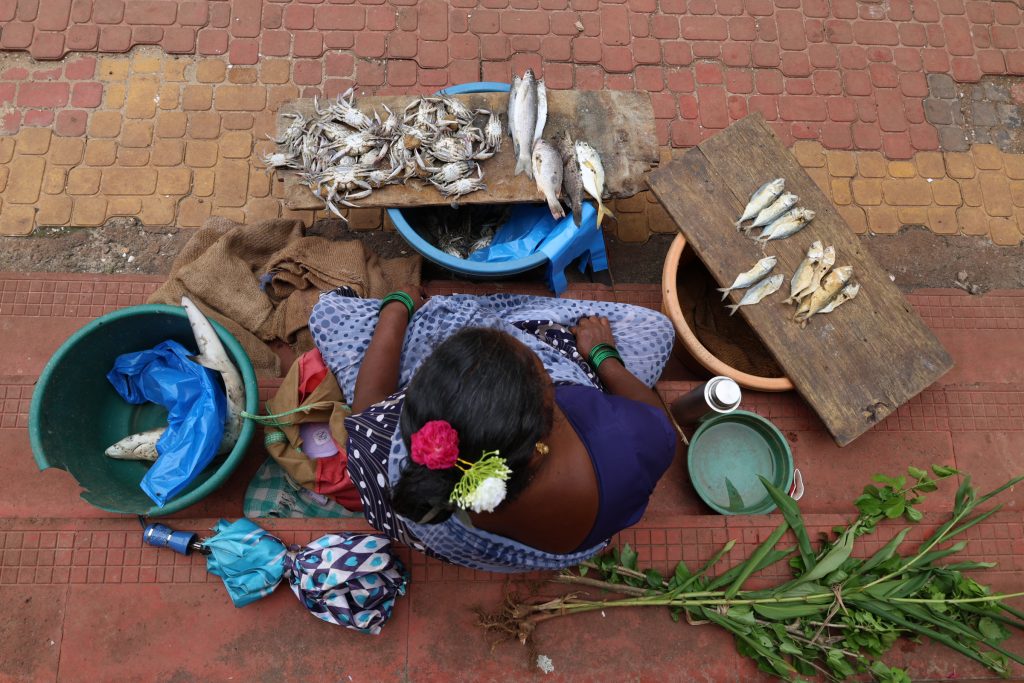
Two women workers wearing sarees, gloves, and blue face masks sort a pile of orange and yellow flowers into a large blue bucket.

The Sacred Cycle

WP_Post Object
(
    [ID] => 8093
    [post_author] => 15
    [post_date] => 2025-04-02 21:03:11
    [post_date_gmt] => 2025-04-02 21:03:11
    [post_content] => 

How women artisans in Kashmir are reconnecting with an old tradition to weave new hope.

Every morning, as the sun rises over the old city of Srinagar in Indian-administered Kashmir, 48-year-old Rafiqa Ramzan steps out of her modest home and walks through the maze-like alleys of her neighborhood to catch the bus to work. On the way, she prays at the famous nearby Sufi shrine, Hazrat Makhdoom Sahib (RA), for her 17-year-old son's well-being and the stability of her job.  

Ramzan, a single mother, works as a katanvajian—a woman who spins pashmina (cashmere) wool—a craft she learned from her mother when she was just 10 years old. In her youth, she would often compete and spin alongside her friends in her locality, and remembers the soft background noise of the radio, filling the air with old Kashmiri songs and folktales. The job, however, wasn’t sustainable: She continued spinning in adulthood, making it her livelihood, but by her early thirties, the meager wages forced her to give it up. After abandoning her spinning wheel (called a "yinder" in Kashmiri) for over a decade, she only returned to her roots in early 2023 after joining Zaevyul. 

Named for the Kashmir word for “delicate,” Zaevyul is a first of its kind artist-centric initiative that operates as a small factory, helping women revive and recreate the region's heritage pashmina shawls. Wajahat Qazi, a writer-turned-entrepreneur, created the initiative in 2022 as a for-profit social enterprise aimed at reviving the historic craft and providing dignified livelihoods to local artisans. Originally, Qazi distributed carded pashmina to women to spin at home, but logistical challenges prompted him to bring the entire production process in-house, something unusual within the industry. However, he soon found that the shift not only improved quality control, but also fostered trust among the women, many of whom come from conservative families. 

“It was difficult initially to draw women to this proposition, but once they saw the workspace and the respect they were given, it took off,” he says.  

Wajahat Qazi, founder of Zaevyul, providing instruction to a spinner.  (Shoaib Mir)

Known as “soft gold,” pashmina was first introduced to Kashmir by the fifteenth century ruler Zain-ul-Abidin, affectionately called Budshah or Great King by his subjects. His reign left a lasting influence on the region's socio-economic fabric, one of which was inviting skilled artisans from Persia (modern-day Iran) to share their expertise with the local population. This included the rigorous techniques of spinning pashmina shawls, still practiced today throughout the region and the fashion world, from Brunello Cucinelli to Louis Vuitton and Hermes. 

Over time, pashmina became synonymous with Kashmir's identity. And the women of the region have been an integral part of shaping the industry for centuries, as they are typically its leading artisans. But beginning in 2006, the craft became badly impacted by the influx of cheaper, machine-made imitations, degrading the market for hand-spun pashmina. According to Kashmir's Handicraft Department, there were an estimated 377,000 artisans in the region at the time, nearly half of them women. But as a result of the industry’s decline, dwindling incomes forced thousands of people to leave the craft and seek alternative livelihoods, Ramzan included. 

"Before joining Zaevyul, I faced many difficulties,” she says. “I relied on my brothers, and seeing how everything is overpriced broke me inside. The thought of being a burden began to take a toll on my mental health. But by the Almighty's grace, I learned about Zaevyul, which changed my life.”

When she first began earning a living from spinning, Ramzan would take home 1500 to 2000 Rupees per month. The time and effort she invested in the labor-intensive spinning process did not match the meager remuneration she received, which also wasn’t enough to support her son. But now, at Zaeyvul, she earns 8000 to 10000 Rupees per month, and has found so much more than a higher income.

“Before, I would spin pashmina alone at home, but we share our joys and sorrows here,” she says with a smile. “This sense of community has started healing me from within and increased my productivity. Being here gives me a sense of empowerment like someone has given wings to a crippled bird." 

Today, Zaevyul employs 40 people, including 30 women, who work as spinners, weavers, and administrative staff, all of whom operate out of a spacious, well-lit karkhana—a manufacturing house specifically designed for artisans. For Qazi, the entire process and purpose of Zaevyul is also multilayered. 

“I was struck by the need to create something meaningful,” he says. “My focus turned to the handicraft sector, particularly pashmina, a craft historically sustained by a gendered division of labor—women spun and carded the delicate fibers, while men wove them into luxurious shawls.”

Meemah (who opted to go only by her first name), like Ramzan, also works at Zaevyul as a spinner, and similarly notes the financial stability the venture has given her, alongside improving her mental health and offering her a sense of direction. 

“I have often been at the receiving end of the turmoil we’re living in,” she says. “There have been days where I used to feel entirely depressed…I wasn’t myself, and spinning pashmina takes patience. I had to stop. But after learning about this place and joining it, I have been helped a lot, both mentally and financially.”

She shares this as she meticulously spins her pashmina wool in its original white color. 

“I pray that we get many more orders and that more women join us. It’s a relief to work in an office-like setting,” she continues. “This place is more than just a workplace. It's a place where we've met other women and formed a community. We're not lonely here. It's a 10-to-4 job with breaks for prayers, meals, and rest.”

Rafiqa Ramzan (in green) spins pashmina alongside her friends at work. (Shoaib Mir)

Zaevyul is especially conscious of honoring this work-life balance, and ensuring the safety of its employees. With approximately 700,000 troops deployed in the region, Kashmir is one of the world's most militarized conflict zones. The ratio of military personnel to civilians is particularly striking, with one soldier for every 30 locals, according to a report by the International Institute for Strategic Studies, a UK-based think tank. This makes everyday commuting for work a tedious endeavor. But Zaevyul provides transportation to alleviate this difficulty, relieving the potential stress it may cause for its workers. Every day, a bus ferries 30 women artisans from different parts of Srinagar to Zeevyul, located in the city’s outskirts. 

"Given the political instability in Kashmir, it wouldn't have been possible for me to travel back and forth here without bus service,” Ramzan says as she boards the bus with other artisans to head home. “The environment here is safe, providing us all with a sense of security, for us and our families. Moreover, working here has given me a perfect work-life balance, which wasn't possible when I was spinning day and night alone at home." 

Qazi notes that his employees’ continued “economic empowerment” is crucial to maintaining Zaevyul. Hand-spinning pashmina remains a labor-intensive process, and the wages must justify the cost. It also requires immense skill and patience for women who are typically largely responsible for the bulk of household work. 

“If you’re not paying them well, it doesn’t make sense for them to dedicate their time to this craft,” he says.  

The challenges, however, are manifold. The cost of hand-spun pashmina is significantly higher than machine-spun alternatives, limiting its reach. And while pashmina enjoys global brand recognition, the premium price of handmade products restricts its affordability. This has led to a decline in demand for hand-spun pashmina, which continues to push artisans out of the craft, some never returning. 

Despite these hurdles, Qazi is committed to his vision of Zaevyul, continuing to operate on the principles of empathy, authenticity, and ethical production, all while reviving this pristine craft and creating a broader, positive socio-economic impact. It has certainly made a material and monetary difference to all who work there, but also offers them pride and dignity in the work itself.  

Looking ahead, Qazi dreams of expanding Zaevyul. The current workspace can accommodate up to 200 women, but financial constraints remain a barrier. His next challenge will be to identify and connect with new markets, conscious consumers, and ethical buyers who are passionate about supporting marginalized artisans and craftspeople. 

“Our premise is to revive the craft in its most authentic form and help more women and weavers,” he says. 

Like the women he employs, for Qazi, Zaewuyl is more than a business—it’s a movement to preserve Kashmir’s cultural heritage while empowering its artisans, one thread at a time.

[post_title] => Threading the Needle [post_excerpt] => How women artisans in Kashmir are reconnecting with an old tradition to weave new hope. [post_status] => publish [comment_status] => closed [ping_status] => closed [post_password] => [post_name] => pashmina-kashmir-artisans-cashmere-wool-zaewuyl-collective [to_ping] => [pinged] => [post_modified] => 2025-04-02 21:03:15 [post_modified_gmt] => 2025-04-02 21:03:15 [post_content_filtered] => [post_parent] => 0 [guid] => https://conversationalist.org/?p=8093 [menu_order] => 25 [post_type] => post [post_mime_type] => [comment_count] => 0 [filter] => raw )
A photograph of a woman in a turquoise sari with a matching patterned scarf loosely wrapped around her head. She's sitting behind a spinning wheel, looking directly into the camera.

Threading the Needle

WP_Post Object
(
    [ID] => 7230
    [post_author] => 15
    [post_date] => 2024-09-20 20:44:37
    [post_date_gmt] => 2024-09-20 20:44:37
    [post_content] => 

How the rush back to the office hurts disabled workers—and everyone else.

It has long been possible to shift how we work in the United States, and all it took was a global pandemic and a massive sea change that personally affected white, middle class cis men for it to happen. “When everything first shut down in March 2020, my husband's employer was quick to find a way to allow their employees to work from home, including staggering times for people to come in and get their work computers,” Karistina Lafae, an author and digital media creator, remarks wryly. It was a stark contrast to the hostility she faced when she'd received a similar accommodation. “I got so much more work done at home than I could ever get done in the office,” she says, only to be pushed out of the workplace as a result.

Lafae has multiple disabilities, including Myalgic Encephalomyelitis/Chronic Fatigue Syndrome, usually just abbreviated as ME/CFS (and infamously referred to as “yuppie flu”), which make it easier for her to do her job when she’s able to work remotely. But prior to the onset of the pandemic, she experienced jealousy and resentment from coworkers over the same kinds of work from home accommodations that her husband and millions of other workers would later benefit from.

While many don’t think of it this way, widespread remote work during the pandemic was functionally a disability accommodation, a phenomenon Brooklyn Law Professor Shirley Lin refers to as “mass accommodations.” It was also one some disabled people, like Lafae, had been requesting for decades, only to face skepticism and denial, inadvertently highlighting a struggle over who deserves to be included in the workplace, and who is ultimately doomed to be shut out. For her and many other disabled workers, the pandemic marked a strange inflection point: Seemingly overnight, millions of white collar workers could work from home in order to protect themselves from the risk of infection and cooperate with mandatory shelter in place orders, normalizing a human-first work culture they’d long been fighting for, but had frequently been denied.

Still, the change was accompanied by arguments and pushback that felt very familiar to disabled people seeking accommodations, revealing deep-seated fears and insecurities on the part of supervisors and upper management, and deeper flaws within American work culture at large. These arguments, like the pandemic, are not over, and the stakes for workers remain high. With the number of disabled people on the rise, and the needs of people with long covid becoming a cultural flashpoint, it’s critical to engage with why this might be the case, and to explore the rights of disabled workers and the origins of the social attitudes that have made their position so precarious in the first place. Not doing so would leave discussions about working conditions fundamentally hollow, particularly as work culture returns to “normal,” because discrimination that starts with disabled workers rarely stops there.

The United States is a place where productivity—or at least beliefs about productivity levels— is king, even though the nation is not in fact the most productive, despite its brutal work culture. Any perceived threat to our “efficiency” or “productivity” must be neutralized, and with it, any worker who might be deemed less efficient or less productive, something that has often disproportionately affected disabled workers. Prior to the pandemic, and in the rush to fill offices again after shelter in place orders were lifted, working at home—a very common workplace accommodation—was equated with “goofing off,” with managers implying that remote workers weren’t as productive and would take advantage of their employers. Workers might sleep in, slip off work early, play with their kids, stretch ten-minute breaks into hours, or spend more time gossiping in Slack than filing TPS reports (even though they might do the latter in an office, anyway).

Supervisors and members of the C-suite placed in-person office work on a pedestal as they tried to force people back into the office, even referring to it as “return to work,” arguing it was critical to work in person for group cohesion and collaboration. In tense all-staffs, deep schisms emerged between junior staff and higher-ups who hotly insisted that being remote undermined company functions. In fact, research suggests the opposite: Fully remote and hybrid schedules, that allow workers to select the conditions that work best for them, improve retention—saving companies substantial sums in hiring and onboarding—and are also characterized by more productivity, with the New York Times referring to the pandemic shift as a “productivity boom.”

This is true for all workers, regardless of ability, with productivity climbing an astonishing 11.2 percent in 2020—partially because of the mass loss of low-paying jobs, which left fewer people doing more high-wage jobs. But remote work clearly still played a role in the productivity boost, and not just for disabled people. Many former office workers enjoyed saving time and stress related to commuting, for example, and found it easier to lead their lives when they had more control over where and how they worked. But for disabled white-collar workers in particular, the opportunity to work remotely during the pandemic opened up a new understanding of what work could look and feel like, as they saw the personal benefits of being able to manage their own energy levels, pain, and somatic concerns while still participating in the workforce—something that, previously, was either routinely denied to them or required a tremendous amount of effort to obtain.

Once the option was taken away, many felt they were back to square one.

“I get a pit in my stomach that these things I’m asking for that are extremely reasonable are making it so that I’m being discriminated against or put in a pool that’s ‘Casey can’t do this job, she doesn’t have the energy,’” says Casey Doherty, a Washington, D.C.-based disabled woman early in her career. “[But] I’m an adult and I know what I need to do to be able to work still.”

Women like Lafae and Doherty have chronic illnesses that are sometimes referred to as “contested” or “medically unexplained,” making them a part of a subset of disabled workers who can’t always “show” their disabilities to employers when seeking an accommodation, but who benefited greatly when remote work became the norm. Contested illnesses include fibromyalgia, ME/CFS, multiple chemical sensitivity, Lyme disease, and, more recently, long covid. They are also sometimes treated by society and the medical profession as “psychosomatic”—by which people mean “fake,” and not its actual definition, “a product of complicated interactions between the mind and body.”

These conditions have an unclear etiology paired with sometimes erratic, frustrating, and very real manifestations for patients, who tend to acquire lengthy, labyrinthine medical records as a result.  Because of this, people who experience contested illnesses may be labeled “chronic illness fakers” manufacturing their distress for attention, a phenomenon writer Anna Hamilton refers to as a “politics of disbelief.” Notably, they are also more common in women, with Black, Indigenous, and Brown women bearing the brunt—the very same women who are less likely to be taken seriously when they present their symptoms to a doctor, thanks to the pernicious presence of medical racism. Members of these communities are also much more likely to experience misdiagnoses, sometimes with fatal consequences.

The medical establishment’s distrust of these women often validates societal attitudes at large: If even a doctor, the ultimate authority figure, doesn’t think someone is experiencing a real problem, why should anyone else?

Disability does not occur in a vacuum. Disabled women and disabled people of color are profoundly affected by their experiences of race and gender. These differences in experience can also be amplified by contested illnesses because of their seemingly invisible nature. Workers cannot necessarily point to specific test results, particular symptoms, or medical histories to “prove” their illnesses to employers, which means that, for example, racist attitudes about “laziness” can collide with a worker’s self-reported symptoms. The needs of a disabled worker may also vary day to day: On one day, they may have the energy and focus to allow them to pass as non-disabled; on another, they may be confined to bed. Some also need access to stigmatized care, such as opioids for management of chronic pain. All of this sets them up for skepticism from a culture that is already primed to distrust disabled people, women, and people of color; that skepticism then feeds back into attitudes from authorities in the workplace who contend that disabled people are lying or exaggerating their needs.

All forms of disablism are harmful in the workplace—and beyond—but a closer examination of the specific attitudes that surround contested illnesses is merited, especially in ostensibly progressive circles, if we want to have any hope of eradicating it. While those on the left often attempt to display positive change and evolution in the way they address the disability community, contested illnesses are still treated with disdain and disbelief—including, sometimes, by fellow disabled people who attempt to draw lines between themselves and the chronic illness community. This creates an inherent lack of solidarity that can leave chronically ill people out in the cold while ultimately undermining everyone’s equitable access to society.

Intergenerational work by the disability community, who have put their own bodies on the line in the fight for civil rights, has created a legal framework of protections and supports for disabled workers. However, this framework is still scrambling to understand people with invisible illnesses and their needs, both at an individual and an institutional level. In the United States, disabled workers are entitled to “reasonable” workplace accommodations under the Americans with Disabilities Act. Some workplaces provide accommodations via a very flexible process rooted in the needs of the worker, while others take full advantage of an “interactive process” that starts with an accommodation request and can require weeks or months of negotiation and documentation. This process can be so frustrating, demoralizing, and infantilizing that some disabled workers give up entirely. It’s also often even more complicated for those with contested illnesses. This is very much by design.

“I’m spending so much money just to get a letter [from my doctor] that says, ‘Casey’s sick,’” Doherty says, describing the onerous repetition behind a hard-fought remote work accommodation, which requires her to obtain a new letter every three months for her employer. It’s hardly a unique experience, but it’s one that can be especially trying for people with chronic illnesses, who are more likely to face requirements to continually recertify.

While these issues may pertain to disability specifically, they don’t stop there. Disbelief by default creates barriers to inclusion that require a cultural shift to dismantle, and the tolerance of distrust for one class of workers also opens the door for distrusting all. It’s a slippery slope: Are menstruating people, for example, lying about or exaggerating painful periods? Are parents overstating their need to leave work on time to pick up children from school or childcare facilities? All workers deserve access to the conditions that allow them to do their best work, but this requires a working environment that believes all workers when they share what those conditions are.

No diversity, equity, and inclusion committee, employee resource group, sensitivity training, or interactive process can make up for the fundamental belief that disabled people are not telling the truth, and that, by extension, their needs in the workplace are a product of attention-seeking or laziness. But if all disabled people are positioned as liars, the particular viciousness that underlies responses to chronic illness is especially sharp for a community already culturally treated as “fakers,” or people attempting to exploit the system in some way.

Unfortunately, the notion that accommodations can be highly customized to the individual is novel, and the more abstract an accommodation feels, the less it is trusted, and not just by management, but also by colleagues. Disabled workers across the board routinely report frustrating encounters with coworkers who question or disrespect their accommodations, sometimes with support or affirmation from the supervisors who should be curbing such behavior. This hostility feeds the rise of bitter attitudes about disabled workers somehow “getting away with something” or receiving “special treatment”—often from people who don’t need these same accommodations themselves, and who aren’t materially impacted by a workplace’s decision to provide them. Those with chronic illnesses can experience this more acutely.

“People say ‘I know you’re doing your work,’” Rosie says, who works in clinical research in the Midwest and is using an alias to protect her identity. “This has always been very interesting to me, that I’m not one of ‘them.’”

Rosie, like other disabled workers—and not just those in the chronic illness community—reports a constant pressure to perform in order to continue to avoid being “one of them,” fearing she might otherwise inadvertently contribute to perpetuating disablism in the workplace. A disabled worker may also be more likely to push themselves past their limits or suffer in silence, similarly fearing disbelief and subsequent discrimination while also feeling as though they represent the entire disability community, especially since disabled workers are often compared to each other in a workplace, in an industry, and in general.

In a culture where disability identity has become memeified and the notion of “acceptance” is pedaled in a never-ending slew of awareness days and inspirational memoirs, there’s a distinct lack of action and understanding when it comes to making meaningful structural changes that might actually change this. And these changes shouldn’t just be for office workers: In order to safely work from home during the pandemic, white-collar workers were, of course, supported by an army of “essential workers”—health care providers, grocery store clerks, power plant employees, and many others who needed to work on site to keep society functioning—for whom remote work was an abstract concept, but who still needed accommodations of their own such as social distancing and PPE to do their jobs safely. For them, the fight over remote work while they put their lives on the line for basic protections was a reminder of how undervalued their lives and bodies—many also disabled, thanks to occupational segregation—are under capitalism. If we want to make meaningful structural changes, they must be inclusive of all workers.

The brief shift in office culture that emerged during the pandemic invited the possibility of something greater: What if all workplaces had flexible accommodations to support workers? What if these accommodations weren’t hard-fought, but simply part of how the workplace operates? What if we valued all labor, and laborers, in the same way we protected the lives of people working remotely during the pandemic? Rather than being exceptional, remote work could be one among a number of examples of disability inclusion in the workplace, protecting disabled sanitation workers and booksellers, nurses, and bus drivers, too.

If the pandemic represented a moment when it might be possible to reframe the way we view accommodations and disability in the workplace, the window of opportunity seems to be rapidly closing. The white men are back in the office, and they’ve dragged everyone else with them, in a series of bitter workplace-by-workplace fights that have only further illuminated the need for structural culture change. Office culture is not designed for the benefit of workers: It is for the bosses, and capitalism. The push to get butts back in office seats has again called upon erroneous beliefs about productivity and forming social connections as its supposed driving force, but has also revealed an economy heavily dependent on real estate investment, with offices an industry unto itself that faltered when companies started scaling back.

Instead of reaping the benefits that downsizing their premises might bring, most companies would rather double down on their investments in property than actually invest in the well-being of the people who work there. In the process, workers who still need remote accommodations are now facing escalating resistance that, in some cases, is forcing them out of the workforce altogether, particularly in the case of those who need to continue masking and avoiding public spaces to protect themselves. Allowing this to happen is in itself a form of disablism, because at best, it suggests an inherent distrust of disabled workers and their needs; and at worst, a belief that disabled workers are somehow more disposable than their non-disabled peers. Neither are acceptable, and both are incredibly harmful to all workers, whether or not non-disabled workers realize it; especially when accommodations can potentially benefit an entire workplace—as seen in the case of remote work and offshoots such as hybrid schedules and flex time.

Fighting disablism in the workplace requires going against the politics of disbelief; cultivating cross-community support; and proactively defending disabled workers of all backgrounds and experiences, on-site and off, acknowledging that remote work is only one example of an effective accommodation. Without these support systems, disabled workers will continue to experience the same hostility women like Lafae did—a resentment that some disabled workers say is intensifying again as workplaces roll back remote work benefits. Lafae ultimately turned to freelance work to accommodate her needs, setting her own terms of employment. But she remains a firm believer that no disabled person should be held back at work by their accommodation needs, and that workplaces overall benefit from disability inclusion by fostering an environment where accommodations are rooted in company culture, and, critically, not up for debate.

That culture shift doesn’t have to be hard, and it can have a profound impact on disabled workers that helps them do their best work and lead their best lives, benefiting them and everyone around them.

“When I was forced to work in an office around other people all the time, I tried all kinds of things to counter the incredible drain on my energy and psyche as a whole,” says James, a high-level employee at a large international company who asked to use a pseudonym for privacy. “I'd take really long bathroom breaks, ‘mindfulness breaks,’ ‘prayer breaks,’ lock myself in an open meeting room for a half hour or so, all of that. But it wasn't until I was able to work from home, in a comfortable, quiet, controlled setting, that I realized I was actually good at my job, that the work I did was high-quality and worthy of praise. I had never felt that in a workplace before.”

A culture shift from a disability-hostile working world for chronically ill people, and disabled people more broadly, to one in which disabled workers are treated with dignity and respect, however, also requires reckoning with a poor historical record on chronic illnesses and disablism at large, and all of the attitudes that feed into it. These include devaluing Black women’s pain, attributing many women’s very real physical symptoms to “hysteria” or “neurasthenia,” and insisting that it should be possible for people to bootstrap their way out of disability. And enacting this change necessitates solidarity across different categories of disability, and a more expansive view of disability culture on the part of the left. Without it, all workers will continue to suffer, disabled or not.

[post_title] => Who Do Workplaces Actually Accommodate? [post_excerpt] => How the rush back to the office hurts disabled workers—and everyone else. [post_status] => publish [comment_status] => closed [ping_status] => closed [post_password] => [post_name] => workplace-accommodations-disabled-workers-disability-rights-invisible-contested-medically-unexplained-illnesses-disablism-pandemic-remote-work [to_ping] => [pinged] => [post_modified] => 2025-04-18 04:05:21 [post_modified_gmt] => 2025-04-18 04:05:21 [post_content_filtered] => [post_parent] => 0 [guid] => https://conversationalist.org/?p=7230 [menu_order] => 45 [post_type] => post [post_mime_type] => [comment_count] => 0 [filter] => raw )
An illustration of a person in an all green outfit, holding a work bag, briskly walking towards the right side of the image, representative of workers returning to office. Behind them is a person in blue jeans and a black t-shirt, standing still, looking at their shoes—representative of the workers left behind.

Who Do Workplaces Actually Accommodate?

WP_Post Object
(
    [ID] => 6919
    [post_author] => 15
    [post_date] => 2024-05-23 17:24:38
    [post_date_gmt] => 2024-05-23 17:24:38
    [post_content] => 

Since October, over 100 Palestinian journalists have been killed by the IDF. They deserve our endurance—and our diligence.

War rages on in the months since Hamas’ assault against Israel and its ongoing retaliatory punishment of the blockaded Gaza Strip. It has been agonizing to witness. As of May, Israeli military actions are estimated to have killed more than 35,000 Palestinians, the majority of them women and children. Almost the entire population of Gaza has been displaced from their homes. A quarter of the population—more than half a million people—are at imminent risk of catastrophic famine, a number projected to surpass one million by July. For the average outside observer, myself fully included, it is impossible to track the dizzying onslaught of information emerging from the warzone without feeling some degree of despair, and even harder to do so with reliable accuracy. Social media is awash with falsehoods, mainstream American media demonstrably biased, and foreign press barred from entering Gaza independently. Further preventing vital access to information is the disproportionate number of Palestinian journalists who have been killed during the conflict so far, particularly compared to other instances of conflict reporting: Since October 7, at least 105 Palestinian journalists and media personnel have been killed by the Israeli Defense Forces (IDF), more than any other country at war. 

At the moment, Gaza is the most dangerous place in the world to be a reporter—and also one of the most consequential. As this war continues, it only becomes clearer to me that we must do everything in our power to protect these journalists and their work.

Since the war’s beginning, now the deadliest conflict of the 21st century, I’ve been reflecting on the word “indiscriminate,” on what it highlights and hides. It’s the word most reached for when attempting to describe the scale of civilian destruction in Gaza, a blanket term that fails to capture its intentionality in full. If you are well-versed in international human rights law, you know there are rules that distinguish between legitimate and illegitimate military actions, and these rules dictate what makes a death “indiscriminate.” These rules are governed by principles of proportionality: Warfare cannot result in the loss of civilian life excessive to the marginal military advantage it might achieve. Translated for the layperson, warfare is not open season, and a warzone is not a shooting range. Measures must be taken to mitigate civilian casualties. But even casual observers of this war have largely come to an uncomplicated understanding: It is difficult to describe what is happening in Gaza as anything but indiscriminate. Too many children are being killed. Too many civilians. Too many aid workers. Too many medical staff. Simply put, too many protected classes of noncombatants. 

In the case of journalists killed, however, the word “indiscriminate” also obscures something alarming. It’s an axiom of conflict reporting that death is an occupational hazard. But what is happening to journalists in Gaza goes beyond the normal range of risk. The watchdog group Committee to Protect Journalists (CPJ) has decried the behavior of the IDF, declaring this war “the deadliest conflict for journalists it has recorded since it started collecting data,” with more journalists “killed in the first three months of the war than have ever been killed in a single country over an entire year.” The CPJ has also brought charges against the IDF for the alleged killing of journalists’ families as retribution for critical reporting. And although Israel denies deliberately targeting members of the media—a war crime—they have been sharply criticized by the UN for failing to ensure their protection, and for failing to create real or meaningful safety measures to prevent further deaths.  

They’ve also openly attacked the media in other ways, and not just in their attempts to ban it. Journalists are noncombatants protected by international law, and their reporting serves a fundamental public interest. They must be able to report freely and without fear of retaliation, not just for the sake of a free press, but more importantly, to provide Gazans access to life-saving information. This work has been made all the more difficult by Israel’s targeted destruction of the infrastructure necessary to disseminate it. We tend to forget that the internet is rooted in the physical, and that direct attacks on journalists aren’t the only way to measure acts of aggression against the media. Cables, cell towers, internet and telecom networks; all these components are necessary for a story to reach the rest of the world. But many have been destroyed by Israeli airstrikes, causing communications systems to collapse—and what the world cannot see dies in the dark. 

With telecommunications compromised, on-the-ground journalists have collectively turned to social media as the primary vehicle for their work. It is, in many ways, their last connection to the outside world, and the outside world’s last connection with Gaza. Using donated eSIMs and shared phone chargers as lifelines, Palestinian journalists have fearlessly persisted in sharing what the Israeli government seemingly does not want us to see. But with such high stakes, I’ve found myself thinking about how we can engage most ethically with their work when our main platform for consuming it—social media—has the power to do as much, if not more, harm as it does good.  

Much has been rightly criticized about the pernicious role of social media in disseminating misinformation over the years. Social media is designed to sustain users’ attention in order to maximize advertising revenue, encouraging and rewarding us for sharing whatever posts elicit the most engagement—regardless of accuracy or potential for harm. But over the years, it has also become the internet’s town square; an accessible means of sharing information and finding first person perspectives that fill the gaps mainstream media often leaves behind. It would be reductive to cast social media as simply a peddler of falsehoods, particularly when it comes to what is occurring in Gaza. Social media now plays the role of historical record, collecting and preserving invaluable primary source material from journalists and civilians alike. 

As users of these platforms, particularly for Americans, it should be our duty to bear witness responsibly—which, at minimum, means utilizing basic media literacy and being mindful of what we choose to post and share. According to the Pew Research Center, half of U.S. adults get their news from social media at least some of the time; but four in ten of those same adults cite inaccuracy as their biggest concern when doing so. At a time of extreme and unrelenting dehumanization, social media has an outsized influence on the way this conflict has been interpreted abroad, and what we choose to share matters. For the ordinary online user, there is an almost emotional peer-pressure to rapidly engage on social media in the face of tragedy and injustice. Posting, after all, can be a necessary catharsis. We post in spite of and because of our utter helplessness in a world that seems indifferent to large-scale human suffering, railing against the seeming futility of our protests. In this case, Palestinians have also explicitly asked us to do it, to bear witness to their suffering, to not allow them to be forgotten, and to tell their stories of joy and resilience—largely via social media. Journalists, too, have made it clear: Our continual engagement with their work is what motivates them to keep reporting in the face of this incalculable tragedy. But when the abstract act of sharing online has direct consequences on real human lives, it becomes essential that we treat it with care. 

To be clear, I’m not advising you to stop posting, or even to post less. On the contrary, please post, please amplify, please share—so long as it’s done with a critical eye to impact. In moments of crisis, it can become easy to slip into what might be called pathos posting, posting that comes from the gut and not the mind. I see it in my followers and I, too, feel its lure. It’s the instant, unthinking tap to repost when confronted with images of the latest unbearable atrocity. It’s the incredibly human impulse to alchemize all our anguish, grief, and rage into action, however small it might be. Little to no caution is exercised in checking for doctored footage, manipulated video, or false contexts. In fact, the emotional weight behind these posts leads to an unwillingness to entertain the possibility of error or your own complicity in the potential spread of misinformation. Cries of caution are met with accusations of disloyalty. This unforgiving attitude siphons nuance and compassion from the public discourse, and further silences attempts at honest reporting. It also puts the people most affected by this conflict at risk of greater harm. Researchers and watchdog groups warn that in this moment of hair-trigger violence, misinformation will result in greater acts of aggression and potential escalations of violence against innocent civilians. We should be doing everything in our power not to contribute to it. 

Social media has the potential to bring out the best of our online selves, but so often instead summons our worst, most tribal, unreflective, and hardened. To honor the Palestinian journalists that are risking life and limb to report (only to not even be honored by name), I believe that we can and must push ourselves to engage with their work in ways that are principled, empathetic, and judicious. We achieve this by holding ourselves to account, and asking simple, but difficult, questions: Why are we sharing this? Is it from a reliable source? If the post contains misinformation, could someone believing it result in harm to someone else? 

Right now, caution can feel impotent and vastly unequal to the scale of the human tragedy unfolding. It feels right to post totalizing messages of condemnation and rage without a second thought. But this online posturing is myopic and counter-productive: Civilians, including journalists, are not served by misinformation that foments further aggression. I know that it can be tiring to constantly separate fact from fiction, but as the Palestinian-American activist Hala Alyan put it, we owe Gaza endurance. When language and rhetoric pose existential threats to the safety and security of Palestinians and Israelis alike, there is a moral obligation to do better. To not engage indiscriminately.
The duty of the journalist is to clarify the stakes; the duty of the reader is to respect them. But when journalists are literally putting their lives on the line to report from Gaza, we owe them more than our respect. It can be challenging to thread the needle of engaging with emotionally charged content while remaining discerning. It can be hard to treat posts with intelligence and sensitivity; and impossible to sniff out bad faith actors among the good. All these are tasks easier described than accomplished, but this doesn’t mean we should cease our efforts to achieve them. We have to try for the journalists risking their lives to report, and the over 100 journalists who have died doing the same. We owe all of them our endurance. 

[post_title] => What We Owe Gaza's Journalists [post_excerpt] => Since October, over 100 Palestinian journalists have been killed by the IDF. They deserve our endurance—and our diligence. [post_status] => publish [comment_status] => closed [ping_status] => closed [post_password] => [post_name] => gaza-palestine-israel-journalists-killed-idf-war-conflict-reporting-media-literacy [to_ping] => [pinged] => [post_modified] => 2025-08-11 22:23:17 [post_modified_gmt] => 2025-08-11 22:23:17 [post_content_filtered] => [post_parent] => 0 [guid] => https://conversationalist.org/?p=6919 [menu_order] => 57 [post_type] => post [post_mime_type] => [comment_count] => 0 [filter] => raw )
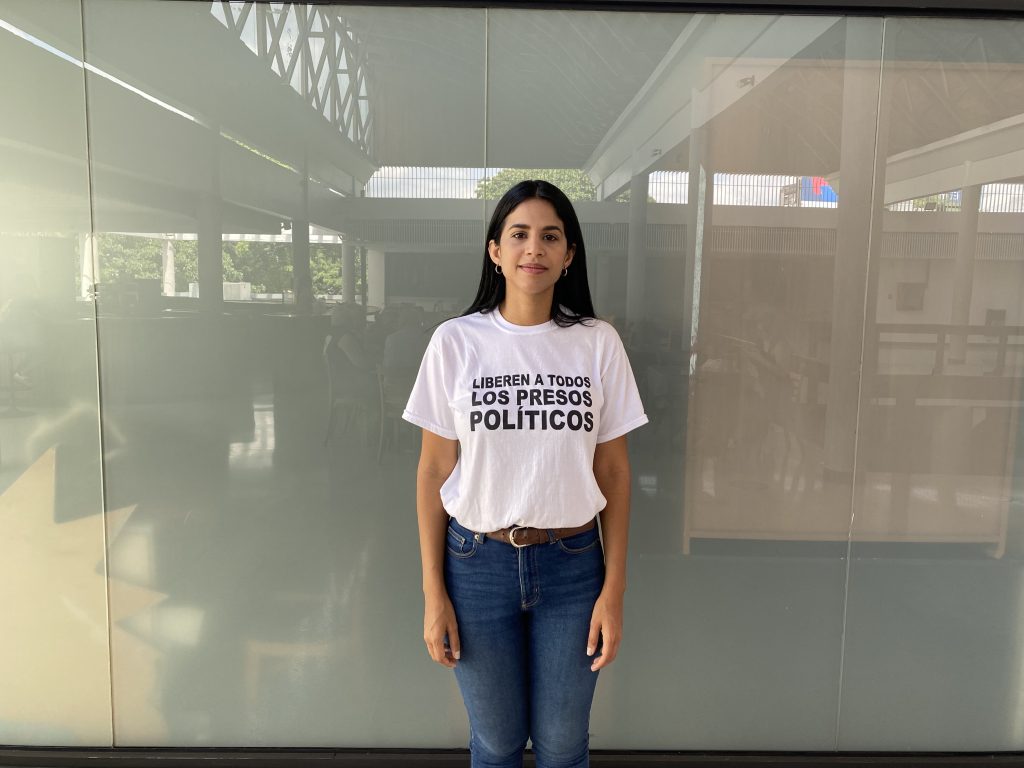
A collage on a fuzzy black background, with a disembodied hand holding a white cutout in the shape of a phone. There are fractured pieces scattered over the image, including one green triangle, one red triangle, and two triangles that show pieces of a keffiyeh. There is a fractured shard of an eye layered over the phone.

What We Owe Gaza’s Journalists