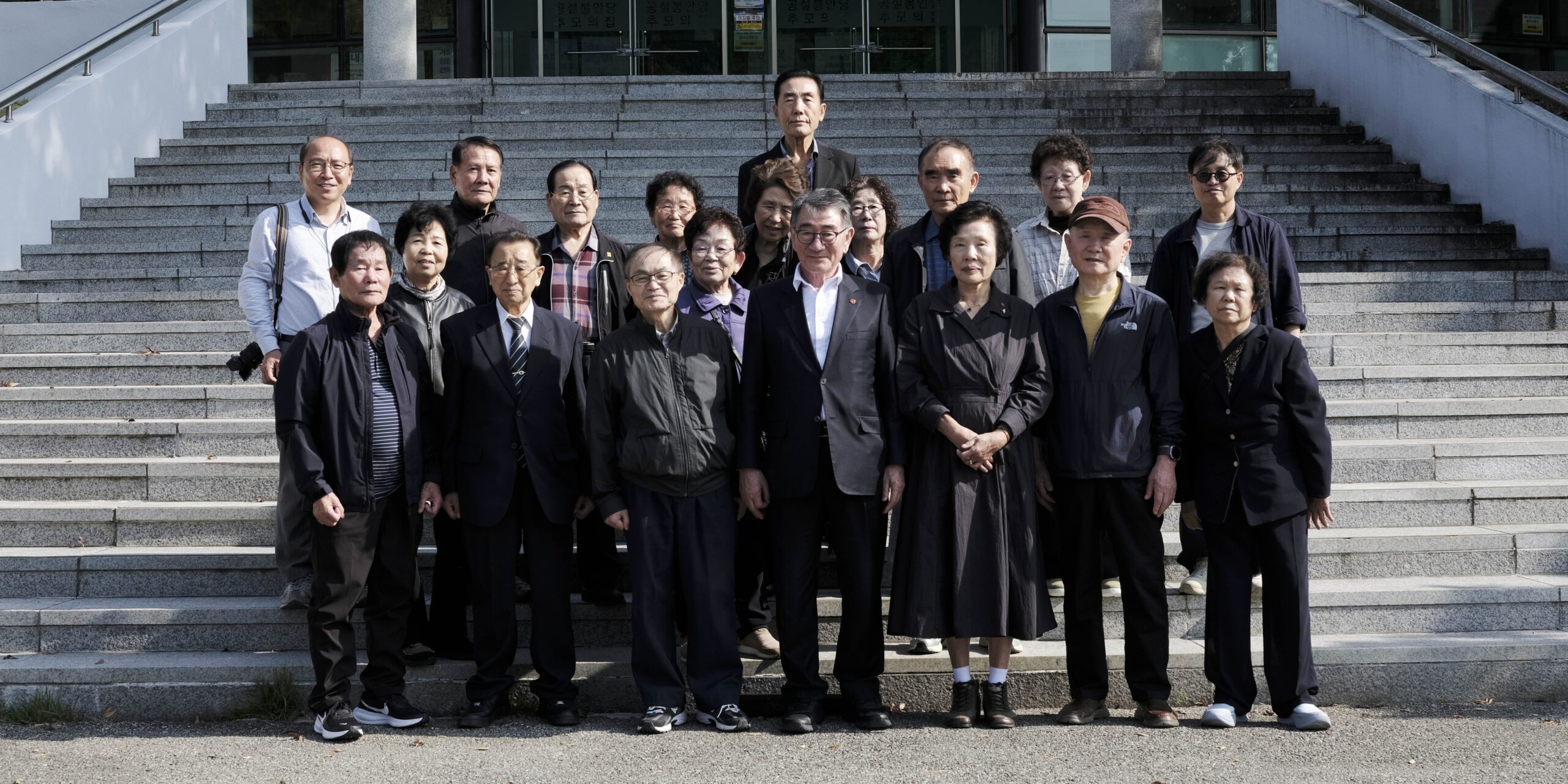


Meet the community of survivors and activists behind South Korea’s first national war memorial for civilians.
I was summoned to Korea by an uncle who died 19 years before I was born. Through a series of chance encounters and unexpected opportunities, I was led by his ghost from my home in New York City to the central lowland city of Daejeon. From there, I traveled 20 minutes southeast to the remote valley where I am nearly certain he was killed, according to family members, news articles, and historical accounts.
Arriving on a bitterly cold winter day in 2024, I saw hundreds of white ribbons fluttering handwritten messages into the wind; they marked the barren clearing as a site of active mourning. A painting tied to the bare limb of a maple tree depicted a defiant young woman wearing a white minbok, standing beside a river of blood. Black letters tumbled down the right edge of the canvas: Who is it? In the heart of the nation, black-bullet gunners.
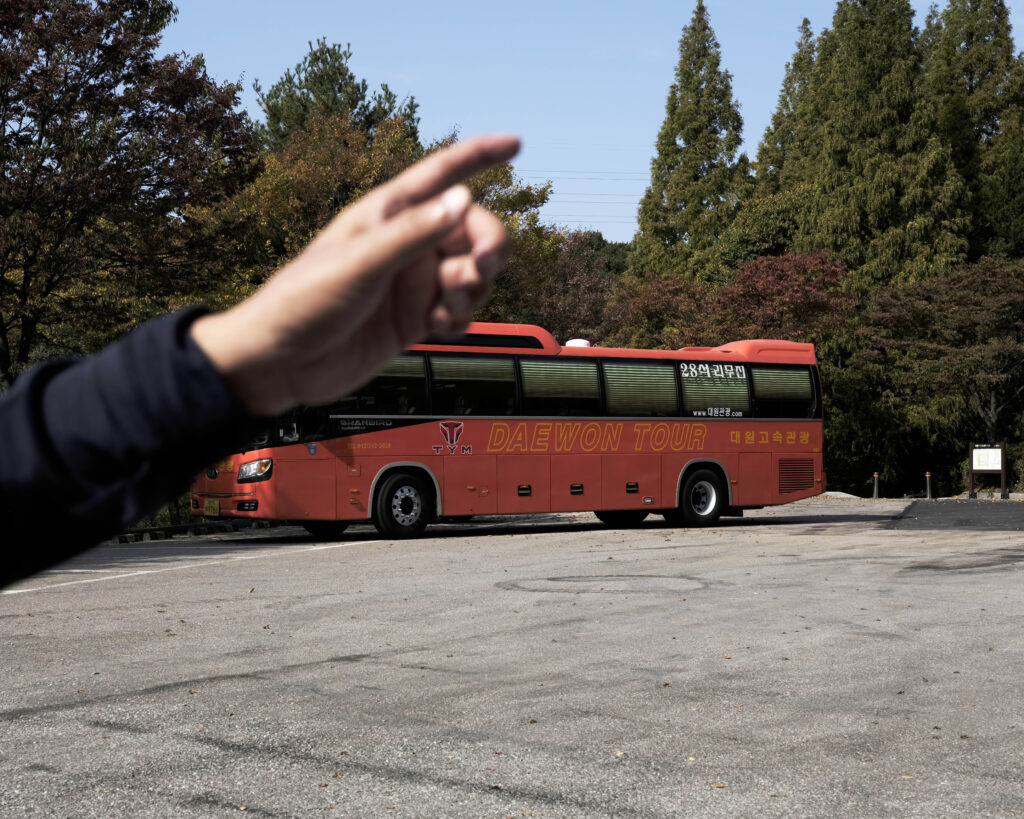
Once called Golryeonjae for the dragon-shaped ridge along its northern edge, this valley held a hideous secret for decades. At the beginning of the Korean War, U.S.-backed South Korean troops and local police executed between 4,900 to 7,000 civilians here in a 10-day frenzy of anti-communist violence. The victims included thousands of political prisoners who’d been held at Daejeon Prison.
In recent years, the 1.5-kilometer stretch of pit graves has come to be known in Korea as “the longest grave in the world.” But family members of the victims and local organizers call it Golryeonggol (骨靈), the valley where the spirits of the bones dwell.
They would know. In 2020, they dug through the earth with their own hands to retrieve bones, teeth, shoes, buttons, and U.S.-made bullet casings. It was the third exhumation—and the first organized by civilians, who’d become frustrated by the slow progress of South Korea’s Truth and Reconciliation Commission.
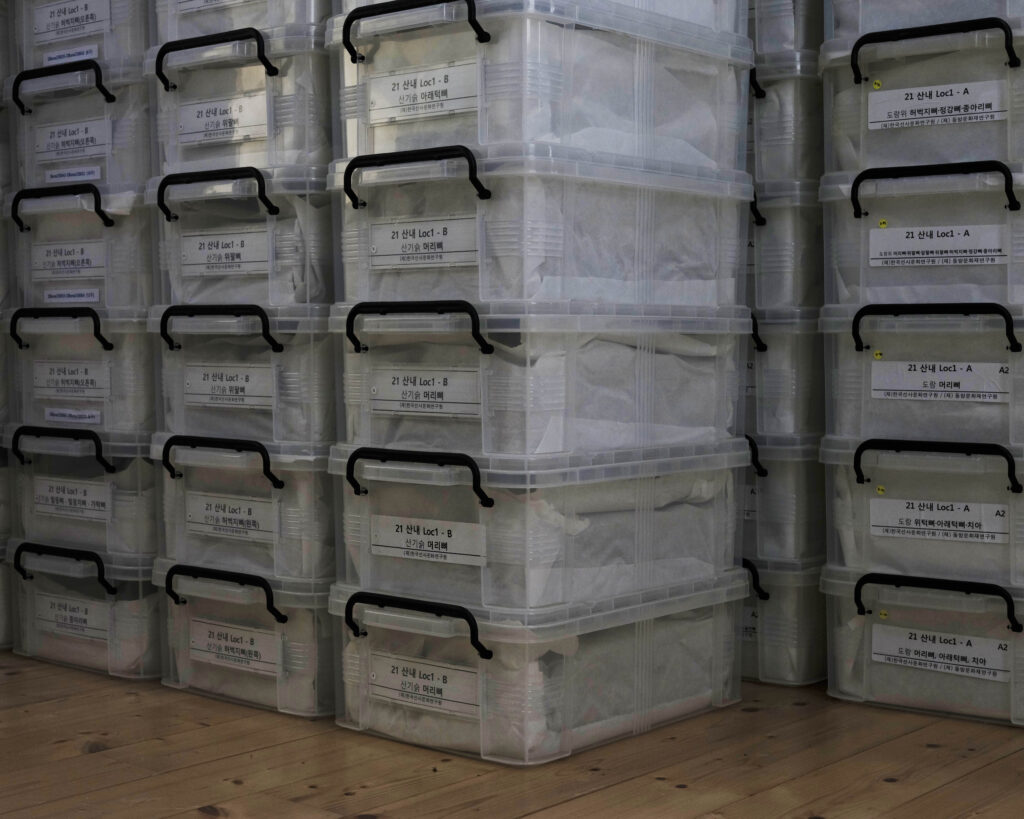
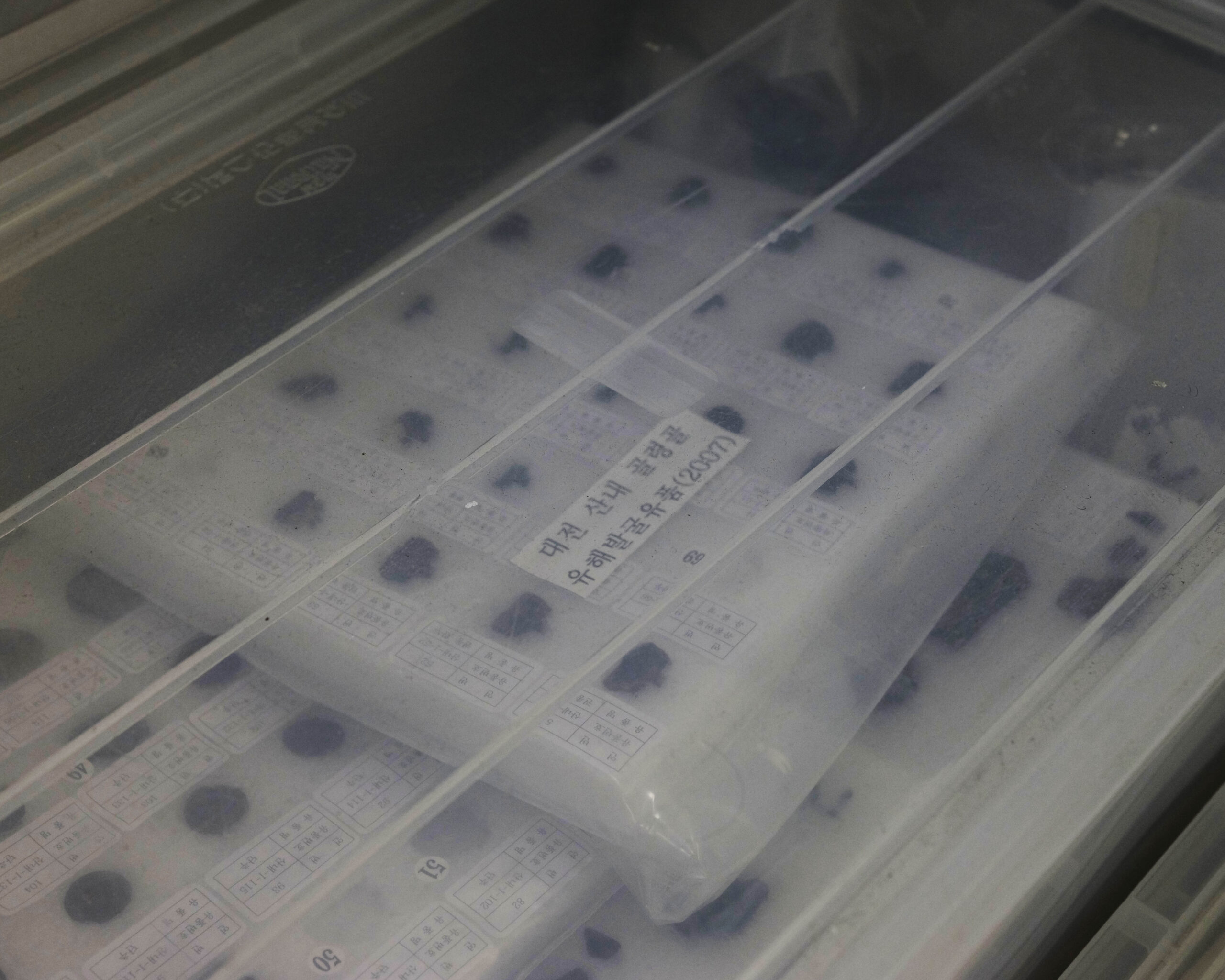
Digging was their visceral initiation into the highest order of han (한): the embodied anguish and rage accumulated in the collective soul of my people, who have survived colonialism, a proxy war that killed an estimated 3.8 million Korean civilians in three years, and the cleaving of our homeland in rapid succession. It’s no wonder family members of the victims and local activists tend to this land as if it were a living being. They are its grief keepers.
Over the years, they’ve developed an elaborate communal practice of han puri—an externalized expression of han to release it from the body. By publicly healing a historical wound, they’ve also nurtured a fragile sense of possibility. After 26 years of organizing and six mass exhumations (the most recent in 2024), the Golryeonggol grief keepers are on the cusp of achieving their shared dream. In November, the South Korean government will prepare the mass grave site for the construction of Daejeon Peace Park, the country’s first and only national memorial to civilian victims of the war.
~
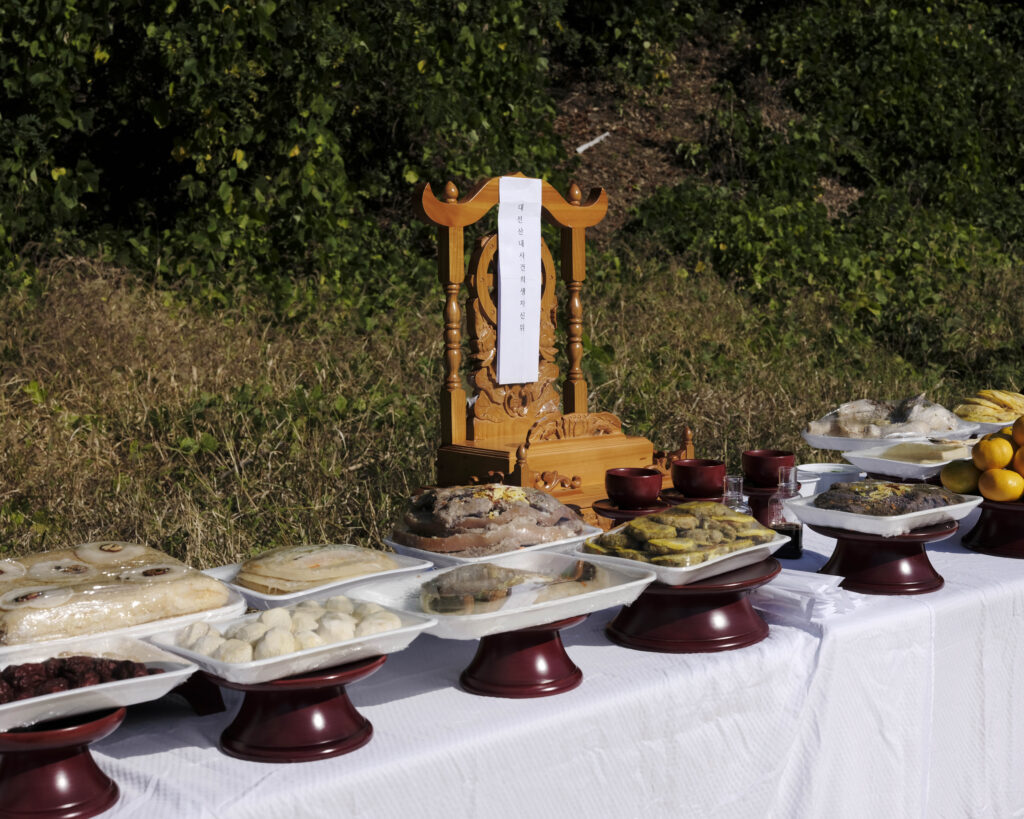
I made that first trip to Golryeonggol, accompanied by an interpreter and a friend, six months after my uncle first made himself known to me. I brought a suitcase full of fresh fruit, three gift boxes of dried persimmons, two bottles of makkgeolli, and a platter of fried fish. I’d come to perform a jesa, the ritual offering of food and drink Koreans do to care for the spirits of their ancestors.
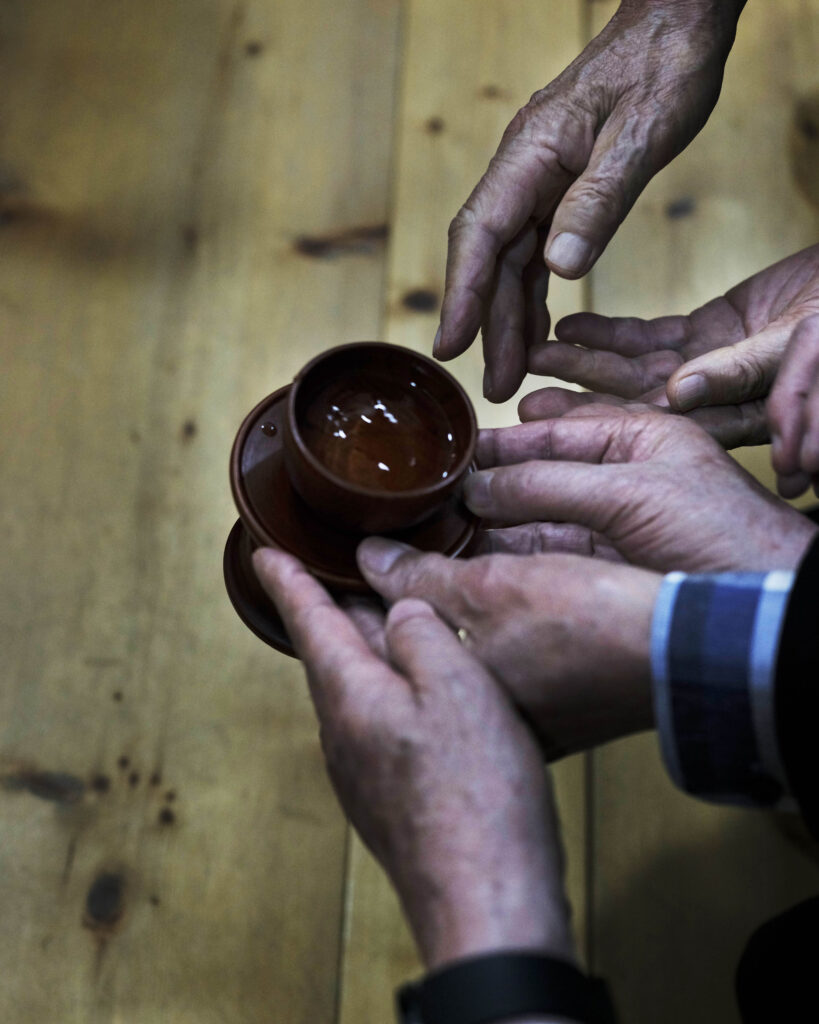
We were greeted outside a small building by an elegant matriarch named Chun Mi Kyung, whose father was killed in the massacre. Though her official title is President of the Daejeon Massacre Bereaved Families Association, I’ve come to think of her as the head grief keeper of Golryeonggol. Within minutes of our arrival, she and two other members of the association had washed the fruit, stacked the food on platters, and arranged carved wooden vessels on the floor.
When she noted the uncertainty in my face, Chun Imo (a respectful and affectionate word for maternal aunt, which she invited me to call her) gestured for me to kneel on the floor. She wrapped my hands around one of the vessels, filled it with makkgeolli, and moved my hands in three counterclockwise circles around the incense. Like an orchestra conductor, she guided me through two full prostrations before she, the other elders, and my companions paid their respects. After we concluded, the aunties cut up the fruit and passed the plates around as we shared our stories.
“Your uncle and all the people who were killed here, they are all my fathers,” Chun Imo said. “We take care of all of them just like we do our own dads.”
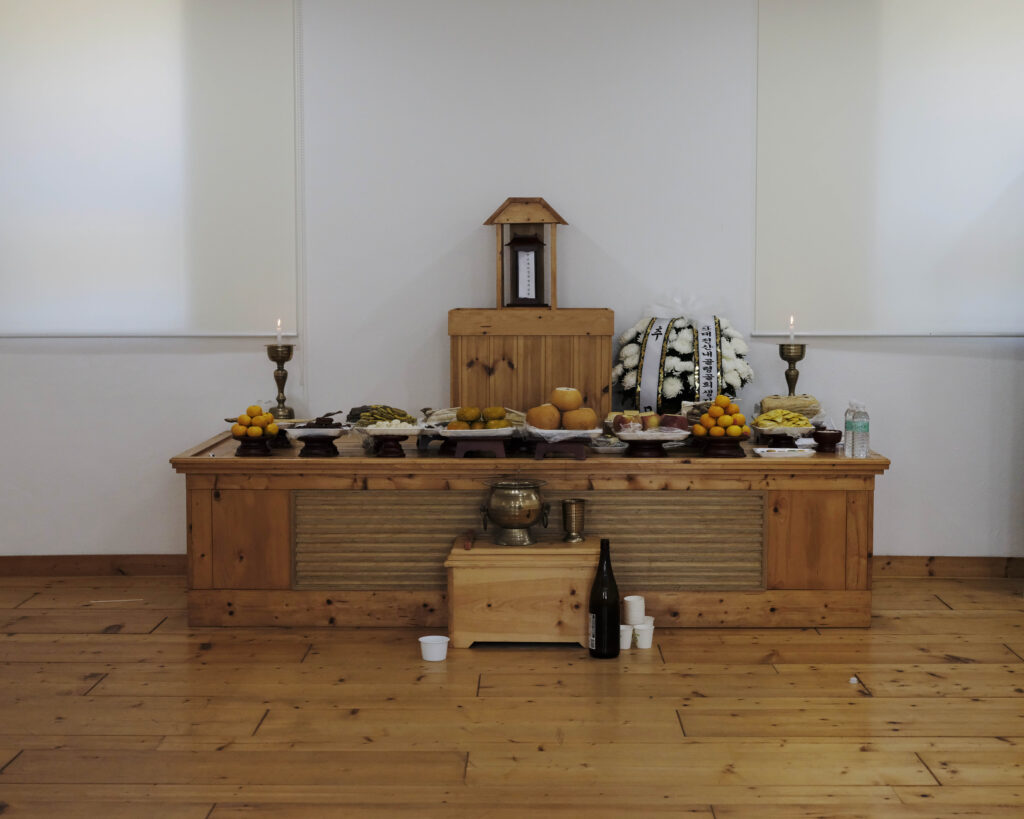
During the 2020 civilian exhumation, Chun Imo and other members of the association discovered that many of the remains had been waterlogged and broken by construction.
“I slept alone in this house with the bones for days,” she said, sweeping her hands above the altar table to show where they had spread the fragments to dry. “But I was not afraid. At night I walk the grounds here with only the light from the moon. I take care of the spirits, and they watch over me.”
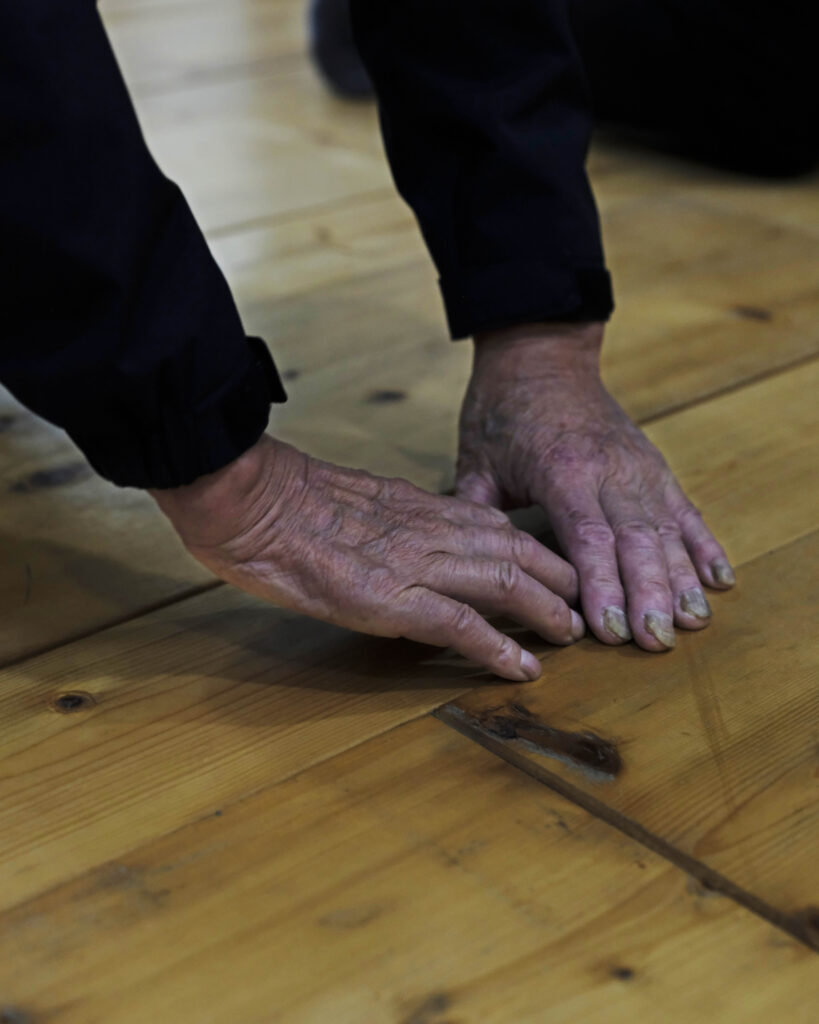
Later, as we said our goodbyes, Chun Imo grasped both my hands in hers and told me to come back for the community memorial ceremony, held annually at the end of June.
“I will see you here next year,” she said.
~
I traveled again to Daejeon this past June for the memorial, arriving at the clearing to find hundreds of people sitting under a massive white tent. Most were elders whose shrunken bodies told the story of wartime starvation. Paper lanterns dangling from surrounding trees cast a warm glow on faces ravaged by sun, time, and grief. Beneath the lanterns, a row of wooden easels held framed black-and-white portraits of the dead.
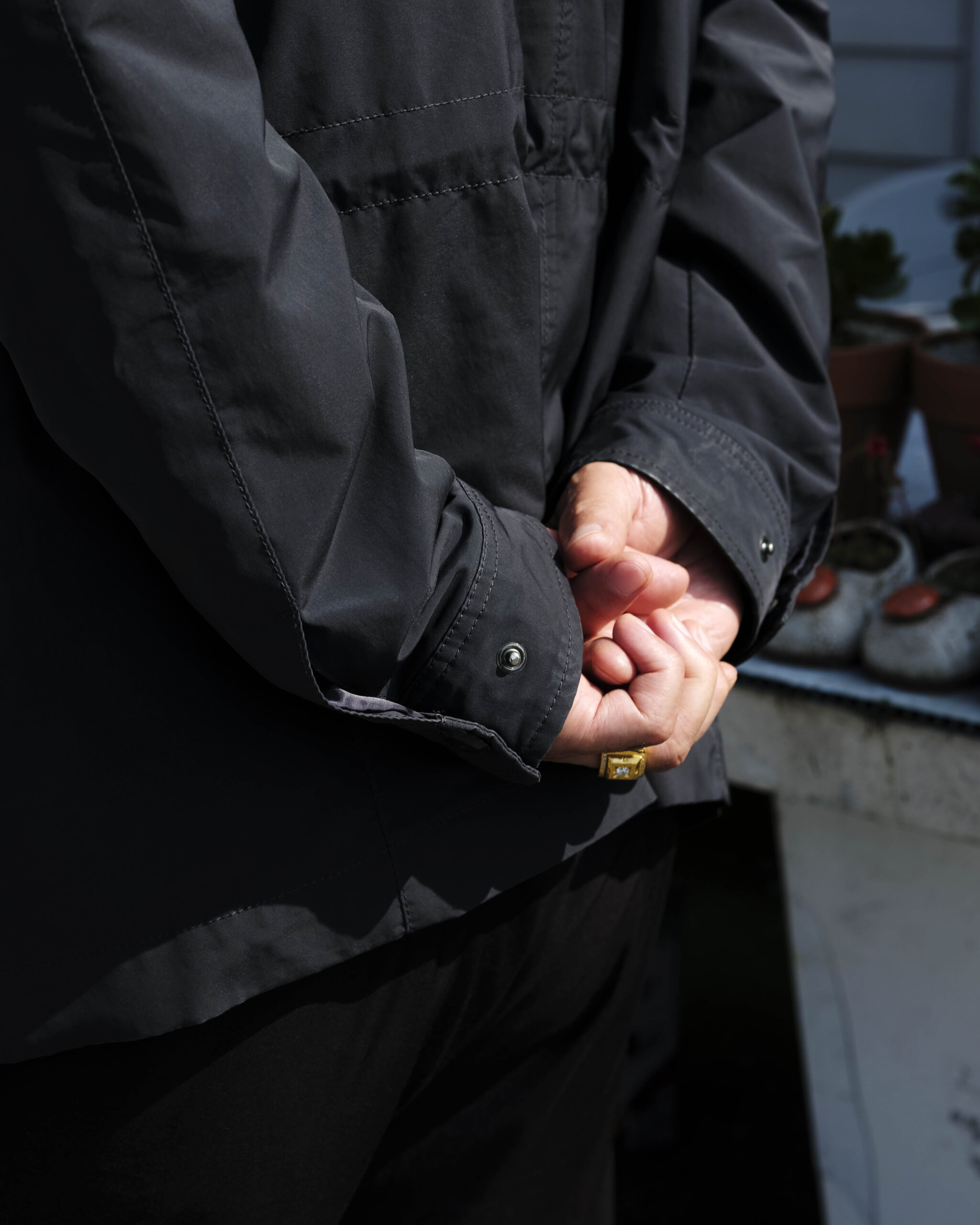
The opening ritual was a sangyeo procession, a Korean funeral bier. Four men carried a palanquin with a symbolic corpse of paper-cut chrysanthemums. A fifth man led them in a call-and-response song with a melancholy, strident melody. Late into the night, we sat with our restless ancestors through music, poetry, and shamanic rituals, plus a drum dance to accompany wandering spirits to the afterlife.
The next morning, we reconvened for Buddhist death rites, a Catholic sermon, and the formal jesa ceremony. I found my uncle in the center of the banner inscribed with the names of victims. Below it, a massive table sagged under dozens of platters piled high with traditional altar food.
A feast of plenty to remind the dead we know how they suffered.
~
It wasn’t safe to speak on the Daejeon Massacre publicly until the mid-2000s, let alone grieve its victims openly. In the absence of a formal peace agreement, the South Korean government waged an ideological war within its borders. It continues to this day under the banner of national security. Surveillance, disappearances, torture, and blacklists of anyone associated with leftists were once common enough that a generation of South Koreans blotted “red” relatives from their family histories.
The 1950 Daejeon Massacre was the largest in a vicious spree of civilian executions during that first summer of the war. It was carried out by President Syngman Rhee’s military police, formally under U.S. wartime command beginning July 14. They targeted known leftists and people suspected of being sympathizers simply for being poor; the government had registered hundreds of thousands of them in a “political rehabilitation program” called the Bodo League in 1949. All told, the South Korean military police killed between 100,000 and 300,000 of its own civilians.
For decades, relatives of the victims, including my own, grieved in secrecy to avoid the scrutiny of successive right-wing dictatorships installed by the United States after the 1953 armistice. I understand why after meeting Chun Imo: Long after her father was executed, her eldest uncle was abducted by police and her brother poisoned by right-wing assailants. After years of being blacklisted, her youngest uncle died by suicide, her grandfather eventually lost his mind from repeated shocks, and Chun Imo herself moved to another town where no one knew her family.
The long silence finally broke in 1992, when a left-leaning magazine called Mal (말, translated literally as Word) published the first exposé about the massacre. A novelist writing under the pseudonym Noh Gah-won interviewed a former police officer who had participated in the killing. He described how soldiers and policemen shot row after row of people until the valley was “a sea of blood.” Among the scenes he described, corroborated in subsequent years by eyewitness accounts, one detail roiled the magma of my han: U.S. soldiers had watched from the ridges surrounding the massacre site. One of them, Major Leonard J. Abbott, got close enough to take 18 grisly photos of the massacre in progress (declassified by the U.S. in 1999). They include a few shots of victims who look like teenagers, staring into the camera—immortalized on the threshold of death in the archive of a U.S. proxy conflict my high school teachers called “the Forgotten War.”
The Mal exposé might have also been forgotten if not for Sim Kyu Sang, an activist from the Daejeon region who was serving a two-and-a-half-year sentence at Andong Prison. Sim, who’d been incarcerated for participating in a building takeover during the 1990 Seoul student protests, grabbed the magazine from a pile of periodicals delivered to the prison when he saw the headline. Following his release a year later, he went to a senior center in the area and asked people who were old enough to remember. They refused to speak, other than to tell him they’d been warned by local police officers to report anyone who asked questions about the massacre.
Sim wandered through the mountains for weeks until he identified the silhouetted mountain in one of the Mal magazine photographs. He walked into the valley and saw human bones and teeth scattered everywhere. The subsistence farmers who owned the land admitted they’d thrown out piles of human remains they’d found while plowing.
~
Hoping to halt the continued desecration of the victims, Sim attempted to publish a new story about the massacre for the next four years. No outlet would touch it until 2000, when both Mal and Oh My News published his citizen journalist report. Thereafter, he was inundated with phone calls from family members of the victims, who beseeched him to show them the site. In July 2000, he gathered the members of 16 families at Golryeonggol for the first time. They howled and wept for three hours.
In the years that followed, more people joined their kinship of grief, confronting together what no one person could bear to face alone. They became a living embodiment of jeong (정)—the Korean relational ethic of deep collective care, powerful enough to soothe our han. After incorporating as an NGO in 2007, the group evolved into a hub of local organizing for government accountability. Working in solidarity with similar associations across Korea, the Golryreonggol grief keepers have traveled to Seoul on numerous occasions to push forward the government’s tepid Truth and Reconciliation process. After a 2010 investigation, the commission concluded the state had acted illegally, holding itself and Syngman Rhee responsible for executing “incarcerated prisoners without due process solely on the grounds that they had a history of leftist activity or were suspected of sympathizing with the Korean People’s Army.”
In 2016, South Korea’s government announced it would create a memorial peace park for civilian victims of the state from before, during, and after the war. It invited applications from local governments nationwide to host the project. Of the seven cities that submitted bids, Golryeonggol made a compelling case due to the scale of the massacre and the geographical range of the victims held at Daejeon Prison. Its team, led by Sim, was eventually selected by the national evaluation committee.
Like the Truth and Reconciliation Commission itself, progress on the memorial has depended on whether the national government leans right or left. In 2021, a large-scale excavation unearthed the remains of nearly 1,000 victims at Golryeonggol, lending new momentum to the project under the left-leaning administration of President Moon Jae-in. This came to a grinding halt under the far-right President Yoon Suk-yeol, who wanted to destroy the remains—a plan foiled by his impeachment.
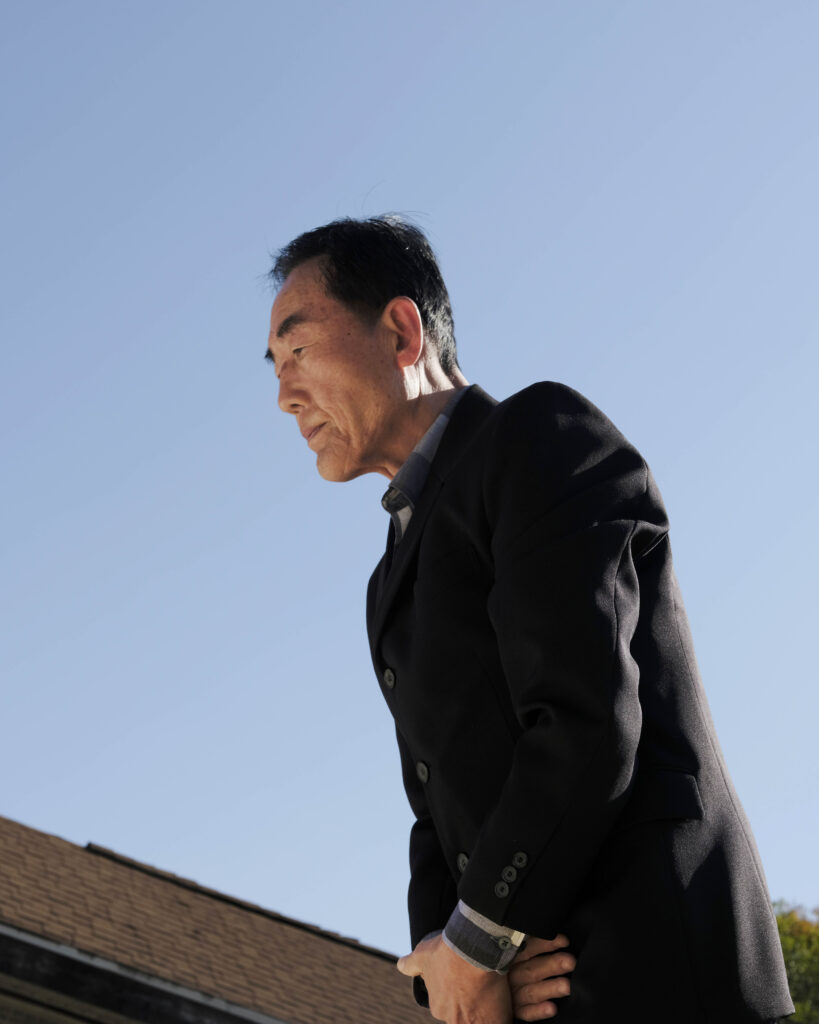
Given their tumultuous journey, the grief keepers are understandably skeptical that they will live long enough to see the memorial. But Sim is confident construction will begin in December, now that the government has made a formal announcement and appropriated more than $48 million USD for it.
In the meantime, thousands of tormented spirits still need care. Knowing my uncle died violently and far from home, I feel deep gratitude for Chun Imo’s jeong with the souls of so many victims.
“Sometimes they cry out to me from hunger and sadness,” Chun Imo says.
When they do, she cooks an elaborate meal, sets the altar table with plates piled high, and invites the wandering spirits to eat.