WP_Post Object
(
    [ID] => 11335
    [post_author] => 15
    [post_date] => 2026-11-20 05:18:44
    [post_date_gmt] => 2026-11-20 05:18:44
    [post_content] => 

At 23, doctors in Cuba removed one of my ovaries without explaining the consequences. Now, I’m trying to decide what to do for myself.

I woke up shaking on a gurney, my belly spasming with pain, my bare back against icy metal. Hospital gowns are like aprons: They cover you, and yet they don’t. My mind was telling me not to shake, but my body wouldn’t listen. The anesthesia had left me groggy. Laying on a bed beside me, another woman fresh out of surgery screamed. “It’s okay,” I told her, yet in my daze, I wasn’t sure if it was true.

I touched the bandage under my gown. For three hours, the doctors had worked to remove a 6-inch tumor from my right ovary, wondering whether it was cancerous.

My mother had wondered whether, at 23, I would ever be able to wear a bikini again. 

My husband, whether we would be able to have children.

Neither of them had asked what I'd wondered myself.

It was the first time in adulthood I would experience someone else making decisions about my life, and my body. According to the United Nations Population Fund’s 2023 State of World Population report, 44 percent of partnered women aged 15 to 49 across 68 countries are denied the power to make their own informed choices about at least one of these categories: sex, contraception, or health care. The person consulted least is precisely the one whose body is at stake, and mine had been decided by a collapsing health system, with no second option within reach.

I had just graduated college with a degree in journalism and married the man Cuban grandmothers dream of for their granddaughters: a Catholic, intelligent, and tidy. We had recently moved in together, into a house belonging to his family. The day the pain started, I had walked for hours all over Guantánamo, Cuba’s easternmost province and one of its poorest, looking for food and then carrying it home. Low in my belly, I felt a pressure building with sharp little stabs, like a cramped muscle or the soreness after a workout, but deeper. 

One doctor’s visit turned into dozens. They told me they were worried because I was young, had no children, and might never have any if the pain was left untreated. They ordered tests that demanded I travel urgently to Havana, home to the country’s only working CT scanner, where they confirmed “the lump,” but did not have the technology to perform a biopsy without surgery. They told me there were no available specialists for the procedure; Havana had almost as many shortages as Guantánamo. So much so, that my operating room would be shut down for lack of supplies the day after I went in for surgery.

At the time, what I’d really needed was a gynecologist. Instead, I was offered a thoracic surgeon who discovered a teratoma, one of the most common types of ovarian tumors in women of childbearing age, accounting for up to a quarter of ovarian tumors. 

When a young woman needs surgery, doctors usually try to preserve as much ovarian tissue as possible to help preserve her fertility and to avoid early menopause. A 2020 guideline from the European Society of Human Reproduction and Embryology also recommends women be informed of the risks of surgery in advance, and be offered options for fertility preservation, such as freezing their eggs.

Instead, the doctor took out the whole ovary. 

Perhaps there was no other option in my case. I’ll never know. Three months later, my family reached out to friends for help, and a gynecologic oncologist agreed to see me. She asked why the doctors hadn’t left part of my ovary, then told me to hurry up and have a baby. “You have two years,” she said. 

It was the second time someone else had decided what to do with my body.

~

I had not planned on having children. I hadn’t found the right time, place, or partner. Still, I grieved for the children I wouldn’t have if I let time run out, or for the ones who would be born in a country now collapsing, much like my own relationship, albeit more slowly. 

Every three months, my doctor’s appointments reminded me that time continued moving forward. Fertility gradually begins to decline around age 35. But there is another, not-so-natural “biological clock” tied to outside expectations: about the age at which society assumes a woman should become a mother, about what everyone else believes is right for you, about the fear of growing old alone. 

In my case, the two year clock felt like a cannon pointed at me. Yet no one had explained whether that deadline had a medical basis, or if it was just a way to convey urgency. 

One year after my surgery, I decided to stop putting myself through the anguish of wondering whether I would ever become a mother. I needed to quiet the noise, accept the risk that I might never have children, and focus on building a life in which, if I did, I could offer them a loving home and a dignified life. 

My husband continued pressuring me about having children. He kept reminding me that time was passing. He claimed that condoms went against his religious principles, so we followed the rhythm method approved by the Catholic Church. More than once, he tried to stay inside me when I didn’t want him to, and he knew it. 

It was the third time someone else was making decisions about my body. Soon after, I made the decision to get divorced.

I spent the rest of that year rebuilding myself. Alone, reading, eating whatever I wanted. At 25, my two-year deadline was up, although I had stopped counting long before. Playing with my nephews, I’d decided being the divorced aunt with cats wasn’t so bad. I left Cuba for Texas, and my priority became finding my way in an unfamiliar country.

That’s where I met a man who was sensitive and loving. He was building a new path, too, and we decided to build one together.

When we got engaged, we celebrated by eating ice cream and watching Netflix. We started saving, dollar by dollar, hoping to turn our path into a home for the both of us. Then came the shared hope of having a child, like an engine for our future.

It’s been four years since the surgery that took my ovary, and two since the doctor’s deadline. Now, in a relationship where we both want a family, I find myself facing that uncertainty again. I want to schedule an ovarian reserve test and a fertility evaluation that would show how many eggs I have left, but the thought of it terrifies me. The World Health Organization (WHO) estimates that one in six people worldwide experience infertility. I don’t know whether I’m among them.

Recently, I asked AI to combine my photo with my fiancé’s to paint a little girl who looks like us, and we’ve stuck her picture on the refrigerator. When we have a bad day, we look at her to remind ourselves of what really matters: a family we’ve chosen together. I can’t control whether that future will happen, but this time, I want to find out what’s possible, and make a decision for myself.

[post_title] => The Motherhood Countdown [post_excerpt] => At 23, doctors in Cuba removed one of my ovaries without explaining the consequences. Now, I’m trying to decide what to do for myself. [post_status] => publish [comment_status] => closed [ping_status] => closed [post_password] => [post_name] => motherhood-countdown-bodily-autonomy-reproductive-healthcare-personal-essay [to_ping] => [pinged] => [post_modified] => 2026-11-20 05:18:46 [post_modified_gmt] => 2026-11-20 05:18:46 [post_content_filtered] => [post_parent] => 0 [guid] => https://conversationalist.org/?p=11335 [menu_order] => 0 [post_type] => post [post_mime_type] => [comment_count] => 0 [filter] => raw )

The Motherhood Countdown

WP_Post Object
(
    [ID] => 11308
    [post_author] => 15
    [post_date] => 2026-11-13 00:08:04
    [post_date_gmt] => 2026-11-13 00:08:04
    [post_content] => 

Could a USB-sized vagina model unlock women's healthcare?

There is a big problem in the world of women’s healthcare: It is under-researched and underfunded, receiving around only 5% of global funding. As a result, the male body has become the default, often at the expense of women, who experience conditions differently from men and have a whole range of specific healthcare needs. 

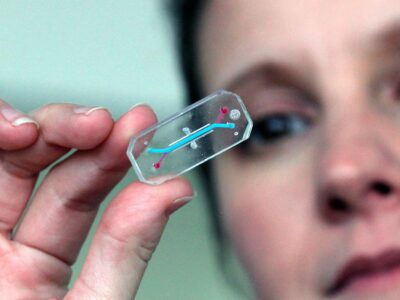
At Harvard University’s Wyss Institute, with Gates Foundation help, a team of scientists have been looking to fix this disparity, and to create a better model for women’s health research—using small, clear USB drive-sized devices, each “containing” a vagina and a cervix.

Organs-on-a-chip might sound like something dreamed up in a sci-fi movie, but it’s a development already having a real impact in the here and now. A fairly new technology, the first, a lung-on-a-chip, was created in 2010, also at the Wyss Institute. The chips are made of clear polymer with hollow channels, which are lined with living human cells, each replicating a human organ. They can be used for things like drug and toxicity testing, or disease modelling, and are now finally being used to tackle a range of women’s health conditions.

There is growing confidence in new models like these, including hope in some parts of the scientific community that organ-on-a-chip technology could replace animal testing models, which aren’t just unethical, but often irrelevant for human biology. (Earlier this year, the team at Wyss also won the science category of the Lush Prize, which aims to support efforts to replace animal testing.) There’s also hope that one day scientists will be able to create a full body-on-a-chip, where the various organ chips are connected together to model the whole system.

Dr. Anna Stejskalová, a postdoctoral researcher on the Wyss project who has now moved to Imperial College London, believes the technology could lead to huge advances in women’s healthcare.

“Many women suffer from this condition called bacterial vaginosis,” Stejskalová cites as one example, an overgrowth of a non-optimal microbiome (a community of microorganisms), which around 30% of women develop each year. This imbalance of bacteria can cause unusual discharge and an increased risk of infertility or pregnancy complications.

There’s a big effort, she explains, to create probiotics which could flip the microbiome into a healthy state, something the vagina-on-a-chip and cervix-on-a-chip might help scientists figure out before doing any human clinical trials. The chips have also been used to study how effective and safe it is for women to use a new type of non-hormonal contraceptive that targets sperm.

In her research group at Imperial College London, Stejskalová will be using various organ chips to address other health conditions, including pregnancy complications and endometriosis. Previously, while at the Wyss Institute, she and her team also developed the endocervix chip for evaluating preterm labor, one of the leading causes of death in children under five years old.

“Currently we have no way to stop preterm labor from happening, or even of guessing who will deliver preterm,” she says, explaining that the only routine indicator is a premature shortening of the cervix visible on an ultrasound during the second trimester.

The Wyss team was able to reproduce parts of this scenario on the chip, mimicking the shortening, and screening potential treatments. This is something which could never be tested on a pregnant woman, as the risk to the pregnancy would be much too high. Though they only have preliminary results, Wyss researchers are already starting to develop methods that can lead towards new therapeutic strategies.

Stejskalová also helped develop the fallopian tube chip—currently being used in contraceptive testing—and other organs-on-chips alongside key members of the Wyss team, including Dr. Zohreh Izadifar. Collectively, these chips are the closest living laboratory models to human vaginal and cervical tissues available today.

“The vagina and cervix chips have the potential to make a major impact on women’s health because they address a long-standing gap in biomedical research,” Izadifar says. “For decades, many conditions that disproportionately affect women have been understudied, and that has limited our understanding of disease mechanisms and slowed the development of better treatments.”

In the long term, the use of this technology could help shift women’s healthcare from symptom management alone towards more precise, effective, and preventive treatments for millions of patients worldwide, Izadifar adds.

The chips created at the Wyss Institute are commercially available to other researchers, and organ chips are already being used by the pharmaceutical industry to evaluate different drugs. Some chips are healthy generic models, which could be used to test for things like the toxicity of products. Other chips are disease-specific, like for bacterial vaginosis. (There is a push to standardize organ chips which have a specific use that “really mimic this specific condition,” Stejskalová explains.)

All this work is vital, given women’s health research has been so severely underfunded for so long—a trend that continues today. In one recent example, analysis from The Times showed that the UK government has committed 60% more funding for new men’s health research (for things like prostate cancer, men's suicide prevention, and substance abuse interventions for older men) than for women’s health research.

Dr. Nicola Tempest is a consultant gynecologist and works as a researcher with Wellbeing of Women, a UK-based women’s health charity which campaigns, provides education, and funds research. She uses endometrium-on-a-chip as well as human tissue in her research, and has a theory as to why women’s healthcare research has historically been so undervalued.

“I think at the beginning, it was because people thought that we didn't need women's health research, and they thought if we're doing research on men, then women are just little men,” she says, adding that, obviously, women’s bodies are entirely different.

Up until the 1990s, women were excluded from clinical trials, in part following the fallout from the thalidomide tragedy, where the drug used for morning sickness caused severe birth defects after it was taken by pregnant women. There was also a belief that fluctuating hormones and menstrual patterns would be too difficult to manage in trials, and future fertility could be impacted—all contributing to why the male body was treated as the norm.

Because of this exclusion, there are many areas where women-specific research is still needed, including how and why they experience heart attacks differently than men do, as opposed to extrapolating from research into heart attacks more generally.

“I do think that there has been a lot more hype around women's health, but that hasn't translated into funding yet,” Tempest says. “I still think that there are a lot of people in these high-up positions that choose who gets grants and who gets funding, that maybe don't see women's health at the forefront of what they think should be funded.”

With more vocal advocates around menopause in recent years, Tempest hopes there will now be deeper research into areas like Hormone Replacement Therapy (HRT). But even when there is more awareness, the research doesn’t always follow. She describes securing funding as an uphill battle, and often still finds herself having to sell the idea of women’s health.

The dearth of women’s research is not only due to a lack of funding, adds Dr. Stejskalová, but a lack female researchers—which means there’s no one in the room asking the right questions. A growing number of women in academia and the medical industry has been important for reshaping this ecosystem, she says, and so too have advocates championing the importance of this work.

Organ chips are revolutionizing healthcare, and the invention of chips specific to female anatomy offers a vital step for expanding that revolution across the gender spectrum. Now, we’re one step closer to having female bodies become the default for studying women’s health.

[post_title] => Female Futures on a Chip [post_excerpt] => Could a USB-sized vagina model unlock women's healthcare? [post_status] => publish [comment_status] => closed [ping_status] => closed [post_password] => [post_name] => womens-healthcare-research-wyss-institute-vagina-cervix-organ-on-a-chip-models [to_ping] => [pinged] => [post_modified] => 2026-11-13 00:08:06 [post_modified_gmt] => 2026-11-13 00:08:06 [post_content_filtered] => [post_parent] => 0 [guid] => https://conversationalist.org/?p=11308 [menu_order] => 0 [post_type] => post [post_mime_type] => [comment_count] => 0 [filter] => raw )
Female Futures on a Chip

WP_Post Object
(
    [ID] => 9828
    [post_author] => 15
    [post_date] => 2025-12-12 10:00:00
    [post_date_gmt] => 2025-12-12 10:00:00
    [post_content] => 

An essay about fibroids, and the time I bled on the floor at work.

Several years ago, I had an operation to remove eight uterine fibroids. One was roughly the size of a grapefruit; another, an orange.

Despite the hour-long cardio kickboxing class I was then taking five times a week, I had been putting on weight—probably just muscle mass, I’d deludedly thought at the time. But my abdomen was noticeably protruding, and I had gone from having heavy periods to bleeding uncontrollably at times that were unconnected to my usual menstrual cycle. I looked and felt like I was four months pregnant, minus the motherly glow: all of the eerie, alien sensations of pregnancy with none of the compensations of a yearned-for baby. I could feel the fibroids’ taut mass when I woke up in the morning, like a brick in my belly, and I had to pee constantly—so much and so often that I was afraid to go anywhere without knowing where the nearest bathroom was. I knew, as you often do, that something was wrong.

Fibroids are uterine muscle cells that grow in a ball or clump. They can be as small as a pea, or as large as a full-term baby. They can grow inside or outside of the uterus, directly on the uterine wall, or from a “stalk” made of smooth muscle cells.

They’re also incredibly common: Many women have them, but you wouldn’t necessarily know unless you had symptoms. Black women are more likely than other women to get them, and more likely to need treatment. Larger fibroids and those that grow at the end of the vaginal tract can make penetrative sex painful—something I never experienced, though they did shrink my once prodigious libido, as neither the word “fibroids” nor the thing itself is a known aphrodisiac.

In rare cases, fibroids can resolve on their own. Mine had to be surgically removed because they were causing me to bleed as suddenly and copiously as if I’d been stabbed—including one time when I bled through a super-plus tampon onto the floor at work. A male coworker had pointed out the small puddle of blood forming beneath my desk, wondering aloud where it had come from: Was the ceiling weeping blood, like something out of a horror movie? I pretended I had cut my leg and fled to the ladies’ room, eventually returning, mortified, to mop up the blood with a Lysol wipe. My coworkers were kind enough to accept, and even pretend to believe, the bizarre claim that I had somehow injured my leg, when both were visibly bare and intact.

It wasn’t the first time my fibroids had made themselves known. Several months earlier, I’d bled through an ultra-absorbent tampon at a movie theater while watching a documentary about Ruth Bader Ginsburg. It was summer; I was wearing pale green shorts. When I stood up, rivulets of blood poured down the backs of my legs and pooled in my sneakers.

Another time, despite the presence of another super-plus tampon and a gigantic, diaper-like maxi pad, I ruined a set of white sheets on a bed in a house my parents were renting. My sister-in-law—a social worker who’s seen worse—helped me change the sheets.

Then there was the time I started bleeding heavily while waiting in line for an international flight. The floodgates opened just after an airline employee summoned me, by name, to the check-in desk, where I was asked to produce my passport for a random extra security check. As I boarded the flight, I squeezed my legs together and prayed. During takeoff, I pressed a scratchy airplane blanket into my lap like a tourniquet.

It was in a period of painful transitions that my symptoms were most acute: six failed job interviews and three funerals, two for grandparents and one for my parents’ oldest and closest friend. All the black clothes came in handy. When it got hot again, I bought a hideous, tent-like maxi dress made of thick black cotton. I hated how it looked—too funereal for summer—but loved that it was ankle-length and absorptive. 

After months of heavy bleeding and diagnostic tests—CT scans and ultrasounds and endless consultations—I had a myomectomy. At some point I started looking into what causes fibroids; as with so many medical problems women suffer, the answer was a combination of, “We don’t know” and “Try losing some weight.” Being overweight or obese is a risk factor, as is consuming red meat and alcohol, especially beer. Nulliparity, or never having given birth, is another. I am neither sylphlike nor fat. My weight has fluctuated over the years, but rarely by more than 15 pounds. As far as I know, I have never been pregnant. I have often consumed red meat and alcohol, including beer, though I’ve attempted to rein in these vices as I’ve gotten older. While I don’t blame my love of beer and bacon for my fibroids, it was hard to read about the risk factors without feeling indicted—and, in my case, mulish and defiant. (“Especially beer?” I muttered to myself while researching. “Who came up with this list, my mom?”)

Thinking it might shrink my fibroids to a manageable size or keep them from growing back, and liking the idea of grandkids, my sweet-natured, supportive dad once gently floated pregnancy as a possible solution. I’ve always been ambivalent about motherhood and resent pressure and unsolicited advice of any kind. But it wasn’t a crazy suggestion. I am in a stable and happy long-term relationship with a man who is also ambivalent about parenthood, but would have done his best to knock me up if I’d asked.

Getting pregnant wouldn’t necessarily have solved the problem, either. Pregnancy, with its wild hormone fluctuations and variable uterine blood flow, can shrink fibroids, but it can also cause them to grow. Fibroids can also increase the risk of a miscarriage, premature birth, breech birth, or placental abruption, a serious condition in which the placenta separates from the inner wall of the uterus, potentially causing the person giving birth to bleed heavily and/or cutting off the baby's supply of oxygen and nutrients. In other words, an unexpected pregnancy could shrink my fibroids—or kill me and my baby. And regardless of what I want, part of being a woman is knowing that millions of people around the world would find either scenario acceptable.

After the surgery, I was out of commission for six weeks. It took me a week to have a normal bowel movement again, and more for my energy and strength to return. I was forbidden to engage in any physical activity more strenuous than walking. Just out of the operating room and still doped up, I’d slurred that I was from a family of nurses and social workers (I didn’t mention the lawyers), and that I thought that nurses were underpaid saints. The nurse on duty said, “I like you! I’m gonna put you in one of the good rooms.” It was a private room on a high floor with a stunning view of the East River. My partner folded his large frame onto a tiny couch-bed in the corner and slept there for several nights.

On the first night, two nurses helped me drag my body out of the hospital bed so I could pee. One of the incisions opened up, sending a hefty splash of pooled blood shooting out of my side. It wasn’t painful and I was too out of it to be frightened, but my partner looked like he’d seen a baby get hit by a car. The nurses muscled me back into bed. It turned out I needed a transfusion, which meant lying still for several hours while feeling the prickly, itchy, ghostly sensation of being pumped full of a stranger’s blood. When I moved the wrong way, I’d inadvertently tug on the IV catheter, sending a hot, throbbing ache skittering across the surface of the skin where they’d stuck the needle.

When I was discharged, a kind but stern nurse with a mellifluous Caribbean accent told me not to do any heavy lifting for at least three weeks. “That means no housework—no mopping or vacuuming, nothing like that,” she said. My partner and I grinned at each other. “I mean it, now!” said the nurse, misinterpreting our amusement and sending us into a fit of laughter. She seemed to think I was the kind of woman who can’t stand to keep a filthy house no matter what the doctor says, rather than the kind who lived, for years, alone and happy in a tiny, dusty, book-filled bachelor pad I almost never cleaned.

Fibroids can grow back, and mine did, necessitating another procedure just one year after the first, and another one after that. Each time, I was newly amazed by my body’s fragility and resilience: the skin, so easily pierced, slowly knitting itself back together again; the scars, so angry and ropy and red, fading to pale pink, sliver-like threads over time.

Harder to quantify was the return of my strength and confidence after years of feeling conspicuous and out of control. The fibroids heightened my anxiety—unless or until I get a hysterectomy or undergo menopause, they can always recur. Not knowing how my own body is going to behave at any given moment makes it difficult to stay sanguine. But maybe because I am close to a number of women who regard their own bodies with shame and ambivalence, I’m determined not to be ashamed of mine. I take a certain amount of perverse satisfaction in telling the story of the Time I Bled on the Floor at Work. When it happened, I was profoundly embarrassed but not ashamed, and I still find the whole episode deeply, darkly funny.

A friend once said that he hates bodies and wishes we could exist as pure spirits, free from the constant, undignified labor of keeping our corporeal forms healthy and strong. I often feel this way. At the same time, I am in awe of my body and consider its restoration a minor miracle. I may never be able to master it fully, but I’m grateful I could rebuild and transcend it.

[post_title] => Female Trouble [post_excerpt] => An essay about fibroids, and the time I bled on the floor at work. [post_status] => publish [comment_status] => closed [ping_status] => closed [post_password] => [post_name] => uterine-fibroids-myomectomy-personal-essay-womens-health-bodies [to_ping] => [pinged] => [post_modified] => 2025-12-14 00:58:10 [post_modified_gmt] => 2025-12-14 00:58:10 [post_content_filtered] => [post_parent] => 0 [guid] => https://conversationalist.org/?p=9828 [menu_order] => 0 [post_type] => post [post_mime_type] => [comment_count] => 0 [filter] => raw )

Female Trouble