WP_Post Object
(
    [ID] => 11044
    [post_author] => 15
    [post_date] => 2026-10-15 12:22:02
    [post_date_gmt] => 2026-10-15 12:22:02
    [post_content] => 

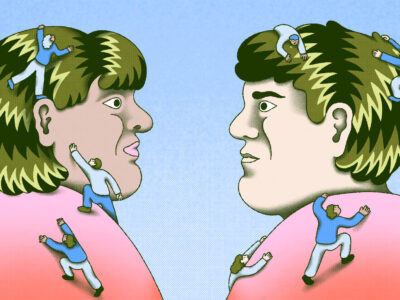
Why I think looksmaxxers have more in common with trans people than they'd like to admit.

“Hi, nice to meet you, I’m Allison.” This is a sentence I have fought to say, yet despite my warm intentions, occasionally, what the other person hears is an out of tune piano. Their confusion doesn’t typically last for more than a breath, but to me, that brief pause can feel like an eternity. 

I don’t believe this apprehension is always derived from hate; as humans, we constantly look for boxes to put people in, to help us understand one another. Maybe that momentary hold is from the contrast between my feminine name and my “masculine” voice. Maybe it’s simply my own internal struggles. But on days where I am not busy questioning if my rights have been taken away yet, I have a peculiar thought: Are trans people the only ones who experience this introduction anxiety, or do cis people feel it, too?

In previous decades, there were aesthetic archetypes—such as the tomboy, the metrosexual, or even the neon-racoon-striped-hair scene kids—that bent the gender binary, allowing room for desperately needed gradients of self-expression. Each of these have lost their cultural tether over time. Twenty years ago, what made a man and what made a woman appeared to be looser. Today, the culturally dominant aesthetics are the “clean girl,” the “gym bro,” and “stealth wealth.” The diversity of self-expression has been snuffed out. 

This cultural shift has taken place alongside American politics using trans existence as an attention-diverting scapegoat. The societal pressures and heightened scrutiny placed on trans bodies has had some unforeseen consequences: Cisgender people are now suffering from more rigid standards of gender, too. Women athletes are being subjected to invasive sex testing for not fitting what society deems “woman enough.” The WNBA is being targeted as a political hotbed of discourse centered around the league not having a clear enough definition of what a woman is, resulting in routine harassment both on the court and off of it. Heterosexual dating has increasingly been framed by influencers and “experts” alike as something transactional, asking how the man can provide and what the woman can offer in return. 

Over the past several years, there has also been a rise in lifestyle content targeted towards men centered around hustle culture, exuberant wealth, and extreme fitness—broadly referred to as the “manosphere.”

Within this sphere of influence is the “looksmaxxing” community, a collective of individuals who have game-ified their appearance and, nonconsensually, the appearances of everyone else. Originally a cross-section of manosphere and incel (involuntary celibate) content, this collective of mostly men is fixated on making themselves as attractive as possible, as determined by what looksmaxxers deem to be a “mathematical” formula. Their scale ranges from zero to eight (“chud” to “chad”), but the online forums are very quick to tell you that an eight is almost impossible to achieve—only one in twelve billion will ever reach that score. Do these men fear being a 4.5, I wonder? When they say “nice to meet you,” do they worry that someone might notice their canthal tilt is slightly out of the ideal five-to-seven degree range?

I find a strange amount of empathy for these fears: I am always working towards having people perceive me how I see myself internally. The journey of self-actualization is not an easy one, but whether looksmaxxers want to admit it or not, it's also one that we share. Looksmaxxers message each other on forums asking where to get a reliable peptides dealer, or what methods they can use to ascend the scale. Trans women flock to forums to do much of the same, seeking advice on how to do their makeup, or tips for passing. Passing and ascending might as well be synonyms. To “pass” is the coveted goal for many of being perceived as a cisgender woman, to “ascend” is to get one step closer to becoming the ideal man. There is more in common between us than even I’d like to admit. (Maybe if they weren’t so hateful, we could even form a union one day.) 

I struggle to share this empathy willingly, as the poster boy for this culture is a 20-year-old influencer named Braden Peters, who goes by the name “Clavicular.” Peters currently has over one million followers on TikTok, and was even profiled by The New York Times earlier this year, where he was referred to as a “social media sensation” and “a beacon for a group of narcissistic, status-obsessed young men.” 

This profile feels especially frustrating, in part for the legitimacy it has afforded both Peters and the looksmaxxing movement. In it, he does not shy away from expressing his belief that he is above the law. (A belief underlined by an image he posted to Twitter/X stating “men’s facial features may sway criminal sentencing.”) There is even a subsection titled “No More Politics" where the reporter dives into Peters’ use of racial slurs, as well as all the time he has spent with self-proclaimed white supremacists and influencers charged with rape and human trafficking, including brothers Andrew and Tristan Tate, arrested in Miami last July.

 In September 2026, Peters—like his friends—was also charged with rape, after allegedly drugging and raping a 17-year-old girl. These charges are connected to a separate sexual battery charge from earlier this year. 

The looksmaxxing movement sits comfortably nestled under the manosphere umbrella alongside other hateful movements, such as blackpill and incel cultures. (In fact, many looksmaxxers often post using the same hashtags.) Like its sister movements, there is also a consistent pattern of violent escalation and dehumanization of anyone who doesn't fit within the system that looksmaxxers follow, ranging from cyberbullying to explicit forms of interpersonal physical violence. 

This is, perhaps, the most crucial difference between transgender people and looksmaxxers. While arguably victims of the same cultural pressures, looksmaxxers are able—and choose—to identify with the aggressor. The most horrifying part to me in all of this is that Peters’ act of violence might not be a disqualifier for adoration, or continued participation in the most problematic aspects of the looksmaxxing movement. As looksmaxxing has unfortunately made its way into the cultural zeitgeist, I personally refuse to allow it to separate from its hateful, racist, misogynistic origins. But to create fundamental change, all of us must do the same: Peters’ case must be a wake up call to not de-sensitize ourselves to this movement, including the inevitable harm it has already caused, and the harm it will likely continue to cause if left unchecked. 

Looksmaxxers’ relationship to gender expression and identity hasn’t ultimately protected them from judgement (and depending on how Clavicular’s case plays out, perhaps neither from consequence): The brutal scrutiny they’ve placed onto others has ended up reflected back toward themselves. Although most looksmaxxers are born male, society's expectations of men have gotten more extreme. Within manosphere culture, you must be fit, tall, and disciplined. So if you’re a short man who experiences joy, you might feel incongruent with your gender. Like many trans people, they, too, are experiencing a form of gender dysphoria, a psychiatric diagnosis that refers to the psychological distress that results from an incongruence between one’s sex assigned at birth and one’s perceived gender identity. Rather than an internalized journey, however, looksmaxxers continuously take in these negative external pressures and fire them back at each other—along with everyone else. Peters himself has stated that “men aren’t supposed to be happy.” The difference is that looksmaxxers believe others should suffer alongside them, and that often, they should ultimately suffer worse.

It's important to acknowledge that trans women are not immune to toxicity. There are niche corners of the culture centered around categorizing each other as “doll” or “brick,” which to some, simply translates as passing or not passing. Thankfully, this is not the dominating narrative for the trans community—it's actually the opposite: No matter where someone is on their self-actualization journey, whether day negative ten or day one hundred, our appearance doesn’t change that we are women. Anyone who says otherwise is rightfully shamed, quite the opposite approach to the one that looksmaxxers take, where it doesn’t matter how far on your looksmaxxing journey you are, god help you if you are 4.5 on their scale—or worse, a woman. 

Still, the perpetual burden of incongruence isn’t something I’d wish on my worst enemy. We are all dolls, and deserve the grace of autonomy and self-expression. I hope looksmaxxers can also feel that warmth—from each other and themselves—soon. But to get there, they must first reckon with the collective trait at the root of their ugliness: hate. Because no matter how effective their peptides or hard the hammer hits their jawline, the only true path to their ascension to chad-hood might just depend on their finally embracing the opposite. 

[post_title] => A Letter to the Chads from a Doll [post_excerpt] => Why I think looksmaxxers have more in common with trans people than they'd like to admit. [post_status] => publish [comment_status] => closed [ping_status] => closed [post_password] => [post_name] => a-letter-to-the-chads-from-a-doll [to_ping] => [pinged] => [post_modified] => 2026-10-20 12:37:42 [post_modified_gmt] => 2026-10-20 12:37:42 [post_content_filtered] => [post_parent] => 0 [guid] => https://conversationalist.org/?p=11044 [menu_order] => 0 [post_type] => post [post_mime_type] => [comment_count] => 0 [filter] => raw )
An illustration of two figures in profile looking at one another as small people climb all over them.

A Letter to the Chads from a Doll

WP_Post Object
(
    [ID] => 8185
    [post_author] => 15
    [post_date] => 2025-04-17 20:59:49
    [post_date_gmt] => 2025-04-17 20:59:49
    [post_content] => 

Under Trump, the ideology is on the rise. But ultimately, eliminating eugenic beliefs from our shared society may require dismantling the United States itself.

In a moment when the experiment of the United States is teetering on the brink, the Trump administration is weaponizing deep-seated hatred of marginalized people to exacerbate ideological divides and deepen MAGA’s cult-like relationship with the president. A key component to this is their belief in and use of eugenics—the idea that it’s possible to create an ideal human by eliminating “undesirable traits.” Meaningful resistance to Trump, then, requires a culture shift grounded in understanding the ideology’s history, the tech industry’s role in encouraging it, and the complicity of liberals and the left in conversations about whose life has value. It also means acknowledging just how deeply baked the ideology is into modern American culture.

Many people associate eugenics with the Nazis, comparing what’s happening in the United States today—the disappearing of immigrants without due process, the erasure of anything considered DEI, the destruction of archives—to the Nazi movement of the 1930s and 1940s. Nazi policy called for the extinction of unwanted communities via any means possible, including forced sterilization, social control, and, of course, “euthanasia” and mass murder. Yet in this pursuit of an improved “Aryan race,” the Nazis didn’t just want to populate the world with nondisabled blue-eyed blonds: They also viewed circumstantial, socially-mediated experiences such as criminality and poverty as genetic and therefore targets for elimination via breeding, an idea fundamental to the broader eugenics movement.

But the movement didn’t start there: The U.S.-based eugenics movement of the early 20th century was a tremendous influence on the Nazis, as was the work of British eugenicists such as Francis Galton and Julian Huxley. In the U.S., Charles Davenport, Henry Goddard, and many others aimed to “improve” humanity by fighting “dysgenic” influences, with prominent corporate foundations bankrolling their efforts. The normalization of American eugenics was also supported on a broader, sociocultural scale: Across the United States, laws encouraged marriage and children (for the right people), while simultaneously promoting the institutionalization and mass sterilization of disabled people, poor people, and Black, Indigenous people of color. “Better Babies” contests at county and state fairs promoted eugenic beliefs, alongside “fitter family” lectures and informational pamphlets.

Eugenics in the United States didn’t stop in 1945 with the fall of the Third Reich, and is very much still reflected in standing policies from both major parties in the U.S. today. Laws across the country still criminalize poverty. A growing number of states take eliminationist approaches to unhoused people and use poverty alone as grounds for removing children from their families. The state still promotes the use of sterilization and long-acting reversible contraceptives, disproportionately using both in some communities more than others. As recently as 2010, the California prison system sterilized incarcerated women without consent. The American Academy of Pediatrics (AAP) recently released guidance justifying the use of permanent contraceptives in children and youth with intellectual disabilities, in which the authors simultaneously acknowledged the heinous past of permanent sterilization while suggesting permanent contraception without the capacity for consent is “respecting their inherent reproductive rights.”

The normalization of these policies across the U.S. has directly fed the rise of Trumpism, and the return of eugenics to the mainstream. The president’s support of this ideology is also explicit: Trump, throughout his campaigns and now in the White House (again), has made comments about “immigrant bloodlines,” implying Black and Brown immigrants are inherently animalistic, criminal, subhuman. This, despite the fact that Trump himself is the child of a Scottish immigrant, and the fact that he has been married to two immigrants himself—collectively, the mothers of four of his five children. The only difference, of course, is whiteness.

We’ve already seen Trump’s belief in race science—and eugenics more broadly—reflected in his administration’s actions so far. His Transportation Secretary, Sean Duffy, has proposed prioritizing funding for areas with higher marriage and birth rates, a directly eugenic project echoing the “marriage incentives” long promoted by the right. The administration is attempting to write trans people out of existence, both in the sense of stripping all references to the community from federal reporting, documents, and initiatives, and attacking transition care. And while abducting and trafficking people to high security foreign prisons without due process, Trump has simultaneously begun offering “golden visas” to more “desirable” (re: rich, white) immigrants to take their place, including offers of a “rapid pathway” to immigration for white South African farmers, whom he claims are subjects of “reverse racism.”

The goal of the current administration is clear: Advancing whiteness and eliminating marginalized and variant bodies. And the administration is acting quickly. Musk’s slash and burn approach to “cutting government spending” is targeting a variety of agencies and efforts that fund research and treatment of disease; an open eugenicist is heading the Department of Health and Human Services, promising to “Make America Healthy Again” by dismantling the vaccination apparatus and attacking mentally ill people; Trump has withdrawn the United States from the World Health Organization; and the CDC just announced a plan to study (YET AGAIN) the thoroughly debunked connection between vaccines and autism. They’ve allegedly done all of this in the name of reducing government waste. But not coincidentally, the “waste” they’ve decried in government is often associated with programs that keep people alive, attempt to make the nation more equitable, and protect people from discrimination, all of which ties back to eugenics under a cloak of “meritocracy” and “fighting reverse discrimination.”

Enter the tech industry, whose belief that it’s superior to representative democracy isn’t anything new. Eugenics has always been a component of big tech ideology, and unsurprisingly, its cited goal of “human improvement” has only made this more explicit. The transhumanist movement in particular is rife with disablism, with disabled culture critic Anna Hamilton noting that under transhumanist frameworks “certain disabilities can, and should, be fixed for the good of humanity.” The biotech industry may be behind critical advancements, but these advancements have also come with complex implications: CRISPR, for example, makes it possible to edit the human genome, but has also allowed for tailoring embryos beyond targeting issues such as lethal fetal anomalies, and well into designer babies.

Silicon Valley is also obsessed with Great Replacement Theory—the idea that the “white race” is somehow under attack—a particular interest of the right. Musk is notably fixated on having as many (white) children as possible to do his part for the cause, seeding the world with what he describes as his superior genetics (often, allegedly, via IVF), with his daughter Vivian Wilson claiming that Musk and her mother Justine even engaged in prenatal sex selection. Fellow technocrat Mark Zuckerberg also longs for a “tribe” of children. The technofascism is on full display as a growing number of tech companies publicly move right, sometimes actively repudiating former progressive stances, while the billionaires who run them move to control the media and government.

Disabled people; Black, Indigenous people of color; low-income people; Jewish people; trans people; and others very familiar with navigating a hostile United States in undesirable bodies have been warning about this for a very long time. And while liberals and those on the left may think of eugenics as a rightwing ideology, it’s also baked into some of their attitudes, in part because eugenics is so core to U.S. culture. Recognizing that some lives are valued more than others, and the ways in which this interacts with liberal and left praxis, is challenging, especially with the external pressures of fascism and capitalism. But shying away from our own complicity in these systems only perpetuates them, and leaves some marginalized people feeling like perennially conditional members of these social movements and society at large.

This is on particular display for the disability community, which has repeatedly expressed concerns about being left out, and is tired of being told to wait its turn for liberation. This frustration is rooted in the community’s continued dehumanization, and a general sense that disabled lives are somehow more expendable than others, that disabled bodyminds do not have a role to play in the collective struggle. The long covid community, for example, as an active advocate for masking and other basic measures to prevent the spread of infectious disease, is increasingly shut out of theoretically left organizing spaces. Rhetoric in support of abortion raises the specter of a “disabled” fetus as grounds for ensuring continued access to reproductive health care. Conversations about medical aid in dying often revolve around the idea of being a “burden” on family members, or assumptions about quality of life that are rooted in solvable problems, for those with the money and the will to solve them. There is a sense that some disabled people are “unfit” for political struggle, and therefore “unfit” for existence—echoing the rejection of “the unfit” throughout the history of eugenics.

This isn’t just about disability, but about a larger lack of support for marginalized people in the midst of a project to eliminate them. This includes the sidelining of trans people at a time when they are under active assault; the prevalence of respectability politics for Black, Indigenous people of color; and the dehumanization of red states and their most marginalized residents—all of which highlight a willingness to leave some communities behind for factors entirely out of their control. The fundamental implication that life would be more convenient if these populations were to shut up, or simply not exist, is always bubbling below the surface.   

Fighting eugenic influences requires challenging racism, disablism, and other discriminatory attitudes that are deeply woven into our society. It requires reckoning with the fact that class does not exist in a vacuum; and acknowledging that a person’s worth should not be dependent on their ability to “contribute to society” through capitalist exploitation. In many liberal and left spaces, this includes eliminating the anti-Blackness that pervades so many conversations, and learning the most basic foundations of disablism, starting with the continued treatment of disability as a medical issue rather than a social identity, and the assumption that disabled people want cures over full social inclusion. Antisemitism in liberal and left environments is also an enduring problem, as is resistance to conversations about how these spaces are falling short.

If it is possible to create some version of the United States that is not inherently morally bankrupt, fighting eugenics is essential, as is truly valuing marginalized people and making a robust case for their defense and inclusion at all costs. Change is possible. During the Occupy movement, for example, organizers fought­—with varying degrees of success—for the application of gender and racial analysis to conversations about class. The Disability Working Group at the Democratic Socialists of America, and the increasing number of disability caucuses in other left and progressive organizations, shows that there is a growing understanding of disability’s role in the struggle. Solidarity is also on display in protests against the ongoing genocide in Gaza, itself a eugenic project, and one Trump very much supports.

Ultimately, eliminating eugenic beliefs from our shared society may require dismantling the United States itself. The first step in that project, however, must involve an engagement with the role of eugenics in political thought, and conscious efforts to acknowledge and make good on the harm done. In the midst of the current political climate, pulling at the threads of eugenics isn’t adjacent to fighting the political right: It’s essential. The nation was founded on a basis of white supremacy, which is now woven deeply through the nation’s legal and popular culture. Whether liberals and the left are willing to continue building momentum, let alone face up to the influence of eugenics on their political values, is an open question and one that needs to be decided quickly. Challenging eugenic influences on political ideology isn’t infighting or purity policing: It lies at the heart of an inclusive political movement that actually strives towards liberation for all.

[post_title] => The United States of Eugenics [post_excerpt] => Under Trump, the ideology is on the rise. How do we finally dismantle it once and for all? [post_status] => publish [comment_status] => closed [ping_status] => closed [post_password] => [post_name] => united-states-america-eugenics-politics-policy-race-science-disablism-transphobia-racism-xenophobia-trump-immigration [to_ping] => [pinged] => [post_modified] => 2026-08-03 23:11:23 [post_modified_gmt] => 2026-08-03 23:11:23 [post_content_filtered] => [post_parent] => 0 [guid] => https://conversationalist.org/?p=8185 [menu_order] => 22 [post_type] => post [post_mime_type] => [comment_count] => 0 [filter] => raw )
An illustration featuring a three rows of six circles, each with illustrations of plants or human silhouettes. A pink virus links some of the circles, spreading across the image from the left to the right in a wave.

The United States of Eugenics