WP_Post Object
(
    [ID] => 11308
    [post_author] => 15
    [post_date] => 2026-11-13 00:08:04
    [post_date_gmt] => 2026-11-13 00:08:04
    [post_content] => 

Could a USB-sized vagina model unlock women's healthcare?

There is a big problem in the world of women’s healthcare: It is under-researched and underfunded, receiving around only 5% of global funding. As a result, the male body has become the default, often at the expense of women, who experience conditions differently from men and have a whole range of specific healthcare needs. 

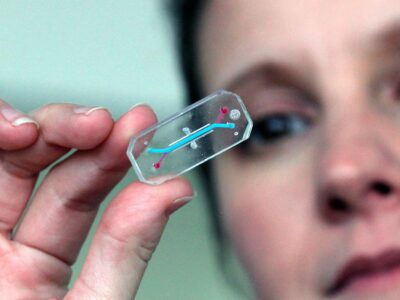
At Harvard University’s Wyss Institute, with Gates Foundation help, a team of scientists have been looking to fix this disparity, and to create a better model for women’s health research—using small, clear USB drive-sized devices, each “containing” a vagina and a cervix.

Organs-on-a-chip might sound like something dreamed up in a sci-fi movie, but it’s a development already having a real impact in the here and now. A fairly new technology, the first, a lung-on-a-chip, was created in 2010, also at the Wyss Institute. The chips are made of clear polymer with hollow channels, which are lined with living human cells, each replicating a human organ. They can be used for things like drug and toxicity testing, or disease modelling, and are now finally being used to tackle a range of women’s health conditions.

There is growing confidence in new models like these, including hope in some parts of the scientific community that organ-on-a-chip technology could replace animal testing models, which aren’t just unethical, but often irrelevant for human biology. (Earlier this year, the team at Wyss also won the science category of the Lush Prize, which aims to support efforts to replace animal testing.) There’s also hope that one day scientists will be able to create a full body-on-a-chip, where the various organ chips are connected together to model the whole system.

Dr. Anna Stejskalová, a postdoctoral researcher on the Wyss project who has now moved to Imperial College London, believes the technology could lead to huge advances in women’s healthcare.

“Many women suffer from this condition called bacterial vaginosis,” Stejskalová cites as one example, an overgrowth of a non-optimal microbiome (a community of microorganisms), which around 30% of women develop each year. This imbalance of bacteria can cause unusual discharge and an increased risk of infertility or pregnancy complications.

There’s a big effort, she explains, to create probiotics which could flip the microbiome into a healthy state, something the vagina-on-a-chip and cervix-on-a-chip might help scientists figure out before doing any human clinical trials. The chips have also been used to study how effective and safe it is for women to use a new type of non-hormonal contraceptive that targets sperm.

In her research group at Imperial College London, Stejskalová will be using various organ chips to address other health conditions, including pregnancy complications and endometriosis. Previously, while at the Wyss Institute, she and her team also developed the endocervix chip for evaluating preterm labor, one of the leading causes of death in children under five years old.

“Currently we have no way to stop preterm labor from happening, or even of guessing who will deliver preterm,” she says, explaining that the only routine indicator is a premature shortening of the cervix visible on an ultrasound during the second trimester.

The Wyss team was able to reproduce parts of this scenario on the chip, mimicking the shortening, and screening potential treatments. This is something which could never be tested on a pregnant woman, as the risk to the pregnancy would be much too high. Though they only have preliminary results, Wyss researchers are already starting to develop methods that can lead towards new therapeutic strategies.

Stejskalová also helped develop the fallopian tube chip—currently being used in contraceptive testing—and other organs-on-chips alongside key members of the Wyss team, including Dr. Zohreh Izadifar. Collectively, these chips are the closest living laboratory models to human vaginal and cervical tissues available today.

“The vagina and cervix chips have the potential to make a major impact on women’s health because they address a long-standing gap in biomedical research,” Izadifar says. “For decades, many conditions that disproportionately affect women have been understudied, and that has limited our understanding of disease mechanisms and slowed the development of better treatments.”

In the long term, the use of this technology could help shift women’s healthcare from symptom management alone towards more precise, effective, and preventive treatments for millions of patients worldwide, Izadifar adds.

The chips created at the Wyss Institute are commercially available to other researchers, and organ chips are already being used by the pharmaceutical industry to evaluate different drugs. Some chips are healthy generic models, which could be used to test for things like the toxicity of products. Other chips are disease-specific, like for bacterial vaginosis. (There is a push to standardize organ chips which have a specific use that “really mimic this specific condition,” Stejskalová explains.)

All this work is vital, given women’s health research has been so severely underfunded for so long—a trend that continues today. In one recent example, analysis from The Times showed that the UK government has committed 60% more funding for new men’s health research (for things like prostate cancer, men's suicide prevention, and substance abuse interventions for older men) than for women’s health research.

Dr. Nicola Tempest is a consultant gynecologist and works as a researcher with Wellbeing of Women, a UK-based women’s health charity which campaigns, provides education, and funds research. She uses endometrium-on-a-chip as well as human tissue in her research, and has a theory as to why women’s healthcare research has historically been so undervalued.

“I think at the beginning, it was because people thought that we didn't need women's health research, and they thought if we're doing research on men, then women are just little men,” she says, adding that, obviously, women’s bodies are entirely different.

Up until the 1990s, women were excluded from clinical trials, in part following the fallout from the thalidomide tragedy, where the drug used for morning sickness caused severe birth defects after it was taken by pregnant women. There was also a belief that fluctuating hormones and menstrual patterns would be too difficult to manage in trials, and future fertility could be impacted—all contributing to why the male body was treated as the norm.

Because of this exclusion, there are many areas where women-specific research is still needed, including how and why they experience heart attacks differently than men do, as opposed to extrapolating from research into heart attacks more generally.

“I do think that there has been a lot more hype around women's health, but that hasn't translated into funding yet,” Tempest says. “I still think that there are a lot of people in these high-up positions that choose who gets grants and who gets funding, that maybe don't see women's health at the forefront of what they think should be funded.”

With more vocal advocates around menopause in recent years, Tempest hopes there will now be deeper research into areas like Hormone Replacement Therapy (HRT). But even when there is more awareness, the research doesn’t always follow. She describes securing funding as an uphill battle, and often still finds herself having to sell the idea of women’s health.

The dearth of women’s research is not only due to a lack of funding, adds Dr. Stejskalová, but a lack female researchers—which means there’s no one in the room asking the right questions. A growing number of women in academia and the medical industry has been important for reshaping this ecosystem, she says, and so too have advocates championing the importance of this work.

Organ chips are revolutionizing healthcare, and the invention of chips specific to female anatomy offers a vital step for expanding that revolution across the gender spectrum. Now, we’re one step closer to having female bodies become the default for studying women’s health.

[post_title] => Female Futures on a Chip [post_excerpt] => Could a USB-sized vagina model unlock women's healthcare? [post_status] => publish [comment_status] => closed [ping_status] => closed [post_password] => [post_name] => womens-healthcare-research-wyss-institute-vagina-cervix-organ-on-a-chip-models [to_ping] => [pinged] => [post_modified] => 2026-11-13 00:08:06 [post_modified_gmt] => 2026-11-13 00:08:06 [post_content_filtered] => [post_parent] => 0 [guid] => https://conversationalist.org/?p=11308 [menu_order] => 0 [post_type] => post [post_mime_type] => [comment_count] => 0 [filter] => raw )
Female Futures on a Chip

WP_Post Object
(
    [ID] => 9639
    [post_author] => 15
    [post_date] => 2025-09-19 12:01:38
    [post_date_gmt] => 2025-09-19 12:01:38
    [post_content] => 

Too many promising breakthroughs in women’s health research stall out due to a lack of funding. I’m trying to remove the roadblock for just one.

I was flat on my back on the cold tile of my bathroom floor, with a wet washcloth over my forehead, when I first learned about Dr. Marlena Fejzo’s work. It was December 2023. I was four months pregnant. While I had experienced some nausea in my first pregnancy, my second was an order of magnitude worse, and the bathroom floor was where I spent most of my time, always within arm’s reach of a toilet.

But scrolling through the headlines that day, I found a surprising glimmer of hope. Dr. Fejzo had cracked the code on understanding severe morning sickness, proving a genetic link between the mechanism of pregnancy nausea and vomiting for the first time. 

As I fought off another wave of my own nausea, reading about her research felt like a lifeline. Someone was figuring this out. And if a scientist had made such a huge breakthrough, surely treatment couldn’t be too far behind. Not for me, of course. But for women after me. 

Right? 

~

It’s important to understand how limited the understanding of pregnancy nausea and vomiting (NVP) was before Dr. Fejzo’s work—and, largely, still is. Nearly seventy percent of women experience some degree of NVP in pregnancy, and yet, before Dr. Fejzo and her collaborators, doctors didn’t know what actually caused it. 

Prior to 2023, the historical hypothesis was that hormones, such as estrogen and HCG, were somehow implicated in NVP—but a causal link to nausea and vomiting had never been demonstrated. Just eighteen months ago, my own OB told me, “We don’t know what gives some women morning sickness. Probably those pesky hormones.” (Pesky hormones is not, to my knowledge, a medically meaningful term.) The current edition of perennial bestseller What To Expect While You’re Expecting, updated in 2024, also states that “no one knows for sure what causes pregnancy nausea.” As if vomiting were just part of the elusive mystery of sacred motherhood, not a biological phenomenon that deserves care and answers. 

Angered by the lack of medical information on the subject, Marlena Fejzo approached NVP research from the perspective of a geneticist, and that of a survivor. In 1999, Dr. Fejzo had herself suffered from hyperemesis gravidarum, or HG, the most severe form of morning sickness—a debilitating condition which can quickly lead to severe malnutrition. Her doctor was dismissive, accusing her of exaggerating her symptoms and attention-seeking, all while she was fully incapacitated and rapidly losing weight. Tragically, despite a last-resort feeding tube and seven different medications, her condition became too advanced and she lost her pregnancy at 15 weeks gestation. 

In the 25 years since, Dr. Fejzo has been committed to researching HG. Her early efforts moved slowly, with little to no funding, carried out alongside her day job researching ovarian cancer. (Complicating her efforts, women vomiting to the point of incapacitation have a hard time participating in research trials.) Dr. Fejzo partnered with the Hyperemesis Education and Research Foundation to set up a web portal, then contacted affected patients individually to obtain DNA samples. 

Her work took a huge leap forward when she partnered with private genetics company 23andMe in 2010 to include a question about HG in their health surveys. From those responses, and the genetic data of 50,000 women, Dr. Fejzo was able to determine that HG had a strong genetic link. The greatest risk factor was in a gene that codes the hormone GDF15—which occurs in all humans, but is produced at the highest levels by the placenta. This finding was immediately exciting to Dr. Fejzo. High GDF15 levels were already known to occur in late-stage cancer patients with cachexia, a syndrome that causes weight loss, appetite loss, and muscle wasting—all similar symptoms to pregnant people suffering from HG. The evidence was lining up. 

Together with international collaborators, in late 2023, Dr. Fejzo released a groundbreaking paper in Nature, titled GDF15 linked to maternal risk of nausea and vomiting during pregnancy. Simply put, Dr. Fejzo and her collaborators had cracked the code on morning sickness. Even better? Their work suggested methods of prevention and treatment. 

When Time Magazine named Dr. Fejzo one of its 2024 “Women of the Year,” they noted, “Fejzo is now applying for funding for a clinical trial to test whether the drug metformin—which is approved to treat Type 2 diabetes but is used off-label for numerous purposes and has been shown to raise GDF15 levels—works as a preventive therapy.”

I was thrilled to hear it. For women who had experienced HG before, or had a family history of it, or who could, hypothetically, take a blood test to gauge their risk—preventative therapy would be life-changing. And, in some cases, life-saving.

The problem, as it turned out, was finding the funding to do it. 

~

Six months after I first read about Dr. Fejzo—this time, attempting to rock a newborn to sleep—I saw a post on a pregnancy message board about an incredible women’s health researcher who could not get funding for a clinical trial. 

I almost scrolled by the post, convinced it couldn’t possibly be about the same researcher I’d first learned about while incapacitated on my bathroom floor. But then, I saw her name—and immediately stopped scrolling.

My first naive assumption: that the great capitalist machine would have a profit motive in preventing a condition that affects millions of women—something those women would do anything to solve. My second naive assumption: that promising research gets funded publicly. The post I was now looking at disproved both—a reality that felt equally disillusioning and enraging. 

Part of the problem, as it turns out, was precisely that Dr. Fejzo’s research was such an outlier. Since Dr. Fejzo is the only full-time HG researcher in the country, grant review boards still don’t have the expertise to properly review her applications. When researchers of under-studied conditions do not have peer scientists to advocate for them and their research, their work often goes overlooked. As Caroline Criado Perez writes in her book Invisible Women: Data Bias in a World Designed for Men, “It’s not always easy to convince someone a need exists if they don’t have that need themselves.” As of writing, Dr. Fejzo has been denied seven different grants. 

Learning this, my vague notions of “science” and “progress” quickly crumbled. I’d previously had some kind of faith that medical problems existed; and then scientists solved them; and then we all benefited. But of course, there is no abstract body of “science,” and scientists are people who require resources to perform their work. It had never occurred to me to question where, exactly, those resources actually came from. 

Scientific breakthroughs do not, on their own, produce follow-up funding. Neither does media attention or critical acclaim. Visibility is important, of course. But it doesn’t automatically turn into dollars. As Time noted, Dr. Fejzo had intended, and still intends, to launch her clinical trial with an existing generic drug, metformin—something already known to have a good safety profile in women trying to conceive, lowering potential risk for participants. But the use of this drug is also why there’s no profit motive for pharmaceutical companies to invest some of the $83 billion—with a B—dollars they put into research and development each year: The drug already exists. 

Moreover, resourcing women’s health research funding, already challenging, faces stiffer headwinds than ever. As of 2020, only 5 percent of healthcare-related R&D efforts are targeted specifically at women’s health issues—and most of that is dedicated to female-specific cancers, leaving only 1% of all medical research dollars invested in all other female-specific conditions, including maternal health conditions, menopause, endometriosis, and the like. 

While the women’s health gap is a global issue, it feels particularly acute in the United States of 2025, where the current administration has also made abundantly clear that they do not consider women’s health a priority. The New York Times reported that terms such as “female,” “uterus,” and “mental health,” painted with the indiscriminate brush of “DEI,” can get a grant submission flagged for further review. According to JAMA (The Journal of the American Medical Association), overall grants disbursed by the National Institute of Health (NIH) are down $1.8 billion in 2025. Recently, NIH funding for a landmark women’s health study of 40-plus years was revoked, before being reinstated due to public outcry. Meanwhile, even research grants for active scientific projects face termination when they “no longer meet agency priorities.” (A quick perusal of these terminated NIH grants includes plenty with “pregnancy,” “breast,” or “ovarian” in the title… and none with “prostate,” “penile,” or “testicular.” Priorities, indeed.)

In just the last eight months, Dr. Fejzo has spoken at the White House, lectured at Harvard and Yale, and won prestigious awards. Her most recent paper in the American Journal of Obstetrics & Gynecology garnered a great deal of attention from the OB-GYN community; and her work has been extensively profiled both in major outlets such as The Guardian, and influential parenting newsletters like Emily Oster’s ParentData. There seems to be a consensus that this work is essential; that it deserves attention and further research. Yet none of this has actually translated to funding. 

This enraged and frustrated me. I found the pregnancy message board post and got in touch with its author—who, it turned out, had been desperately hoping Dr. Fejzo was already conducting clinical trials, and had been devastated to learn they hadn’t even yet begun. She put me in touch with the researcher herself.  “In terms of fundraising, I need all the help I can get,” Dr. Fejzo emailed me. 

Over the course of several conversations, hearing about her difficulties in obtaining funding and the incredible promise of her work, I became convinced that someone needed to be a champion for Dr. Fejzo’s work. And it might as well be me. This is how I—a complete outsider, whose last brush with genetics was MOLBIO 101 twenty-odd years ago—launched myself into fundraising for medical research.

Some familiarity with the nonprofit world was a big help. Since Dr. Fejzo works at the University of Southern California, donations to her work are routed through USC as a 501(c)3 research university, making them eligible for tax deductions, some corporate matching programs, and various other mechanisms that make a donation financially advantageous. (And supporters aren’t writing a check to an entity they’d never heard of.) I also worked with USC to set up an ongoing crowdfunding page so that interested people can donate any amount directly to Dr. Fejzo’s research fund and share within their own networks, GoFundMe-style. 

I’ve made deep connections in incredible women’s funding networks such as Women Moving Millions, whose bold members are dedicated to advancing women’s well-being in every arena. We’ve hosted a number of webinars where anyone interested could hear from Dr. Fejzo directly. I leaned on the advice of friends in the academic and media worlds; I tapped every alumni and professional network I had. I dug around for matching programs through organizations including #HalfMyDAF and Pivotal Ventures that could leverage existing gifts; I got social media boosts from the HER Foundation, which does incredible work supporting and connecting hyperemesis patients and providers. 

And finally, I’ve spent the last 10-odd months talking up Dr. Fejzo’s work to absolutely anyone who will listen. I’ve found that friends and colleagues are pretty interested when you adopt a single-minded crusade against morning sickness. (One stone still unturned: celebrity outreach. I haven’t found a contact for Princess Kate yet, who publicly shared her harrowing experience with HG during all three of her pregnancies. If you happen to know her, put us in touch.) 

We’ve raised nearly $750,000 thus far, a testament to the power of collective action. But we still have a long way to go: Dr. Fejzo needs $1.3 million to go forward with her clinical trial—a sum of money which is both significant, and yet so tiny in the scheme of research dollars. 

As my fundraising has shown me, though, this is completely doable—because I’m not the only one who feels motivated by Dr. Fejzo’s work. There is a true hunger for her research among women who have previously suffered HG. In fact, many individuals have emailed Dr. Fejzo—who, again, is a researcher, not a medical doctor—to ask whether she might help their own doctors suggest a metformin protocol. Essentially, pregnant people are volunteering themselves as studies of one, outside the controls and protections of clinical trials, out of sheer desperation for a better alternative to the pain they’re suffering through. 

I think back to my own experience. I did not have full-blown HG; I had a less severe experience with nausea and vomiting that, while deeply disruptive to my everyday life, was not ultimately dangerous to me or my baby. Yet I still emerged from the experience absolutely desperate for better care. I would have done anything in my power, and paid anything within my means, for the nausea to go away. For women who end up hospitalized, it’s many orders of magnitude worse. 

This is also why Dr. Fejzo’s inability to access followup funding makes me so angry. I’m angry that women’s pain isn’t considered a priority. Angry that women aren’t considered reliable narrators of their own experience. Angry that a primary response to any complication during pregnancy seems to be “suck it up.” That women, and pregnant women especially, are given vague assurances like, “Your baby is fine! It’ll get what it needs,” without any evidence to support those claims. (Oh, you’re vomiting multiple times a day? Well, didn’t you want a baby? What did you expect?)

This anger is motivating. But for those suffering from HG, it’s impossible to harness that rage into action while utterly incapacitated, fearing for the safety and health of your baby and yourself. HG can be dehumanizing—taking away your ability to advocate, fight, or do much more than exist. It’s on the rest of us, then, to rally for those who can’t. 

Where funding goes, and where it doesn’t, communicates something unmistakable about what society values—and clearly, addressing women’s suffering does not rank very high on that list. So what can we do? Well, we can start by crowdfunding one critical clinical trial, then another, and another. Collectively funding public good is a foundation of society, and perhaps it can continue despite the failure of official systems to support it, if we come together to put our dollars where they count. 

Should there be better ways to fund this kind of research? Yes. Are there better solutions than crowdfunding out there? Maybe. But until then, it’s time we reclaim some control, and fund the damn research ourselves.

[post_title] => Let's Fund the Damn Research Ourselves [post_excerpt] => Too many promising breakthroughs in women’s health research stall out due to a lack of funding. I’m trying to remove the roadblock for just one. [post_status] => publish [comment_status] => closed [ping_status] => closed [post_password] => [post_name] => morning-sickness-womens-health-research-pregnancy-funding-science-studies-hyperemesis-gravidarum-marlena-fejzo-fundraising [to_ping] => [pinged] => [post_modified] => 2026-08-06 00:33:05 [post_modified_gmt] => 2026-08-06 00:33:05 [post_content_filtered] => [post_parent] => 0 [guid] => https://conversationalist.org/?p=9639 [menu_order] => 0 [post_type] => post [post_mime_type] => [comment_count] => 0 [filter] => raw )

Let’s Fund the Damn Research Ourselves