
WP_Post Object
(
    [ID] => 7175
    [post_author] => 15
    [post_date] => 2024-09-06 23:15:35
    [post_date_gmt] => 2024-09-06 23:15:35
    [post_content] => 

If we want to restore and preserve abortion rights in the United States, we have to fight harder for the ERA.

U.S. President Joe Biden’s overdue decision to suspend his reelection campaign and endorse Vice President Kamala Harris for the nomination has given the Democratic Party a decent shot at winning in November. It has also freed the Democrats to emphasize an issue they believe will drive voters to the polls: At its recent national convention, the party put reproductive rights and the “power of women” front and center, hoping to capitalize on voters’ very rational fear of a potential nationwide abortion ban if Trump is reelected.

But while the landscape for abortion rights will be less bleak if Democrats retain the White House next year, electing Harris alone will not be enough to restore these rights or prevent them from being ripped away again. Nor will it keep the far-right Supreme Court from laying the groundwork for the next Republican administration to implement the same reactionary social policies favored by the architects of Project 2025, the so-called blueprint for a second Trump term.

Aside from changing the composition of the Court, many advocates believe that passing the Equal Rights Amendment (ERA) is the best and possibly the only way to restore our abortion rights, and, more broadly, to protect the rights of millions of American women and LGBTQ+ people from current and future attacks. First proposed in 1923, the ERA would prohibit gender discrimination and ensure that “equality of rights under the law shall not be denied or abridged by the United States or by any State on account of sex”—something our Constitution does not explicitly guarantee. Most crucially, it would also safeguard these rights no matter which political party is in power. Its passage has rarely felt so urgent; in the wake of Dobbs, Americans cannot afford to leave the ERA’s fate up to the leaders of either party. Congress has already repeatedly failed to pass federal legislation to protect abortion rights: With so much at stake, demanding that the Biden administration immediately publish this badly needed amendment, and, to a lesser extent, joining efforts to add gender equality provisions to state constitutions has become far more crucial to preserving our rights than voting alone.

According to the American Bar Association (ABA) and other experts, the ERA has already achieved the number of state ratifications required to add it to the Constitution. (Conservative activists argue that some states’ decisions to rescind their original ratifications means the ERA never met this threshold, but many legal scholars say those rescissions are legally invalid and can be ignored.) But while Biden has repeatedly affirmed his support for the ERA, he has, to the outrage of its proponents, resisted publishing it for years. Why he is so reluctant is anyone’s guess. Perhaps his administration is taking a conservative approach due to perceived legal issues and a general fear of rocking the boat, despite the ERA’s popularity and legal validity. Or maybe they think it’s in their best interest to preserve threats to equality that double as fundraising tools for the Democratic Party and its allies, which help them retain the support of voters who know today’s GOP will do nothing to publish the ERA or protect abortion rights, but still hold out hope that the Democrats might.

It could also be personal: Biden, who is technically pro-choice, is a notably poor advocate with an appalling record on the issue. By contrast, Harris speaks passionately about abortion and, in March, became the first sitting U.S. president or vice president to visit an abortion clinic in an official capacity. In her convention speech, she declared, “We trust women,” and vowed that when “Congress passes a bill to restore reproductive freedom” she would “proudly sign it into law.” Yet she offered no explanation as to why this didn’t happen when Democrats controlled Congress, no strategy for ensuring that it happens in the next Congress, and no reason why the Democratic administration she is currently a part of hasn’t yet published the ERA. There is also no reason to assume that if Harris wins in November, she will honor her 2019 presidential campaign pledge to pass the ERA in her first 100 days in office, either. In fact, she did not mention the ERA in her speech at all, despite the party’s promise in its official 2024 platform that “Democrats will fight to make the Equal Rights Amendment the law of the land.” Notably, this year’s platform also promised that “Democrats will work to pass the Paycheck Fairness Act”—something then President Obama promised to do over a decade ago—and repeal the Hyde Amendment, which bars federal programs like Medicaid from covering the cost of most abortions, and which Biden supported until June 2019. It did not explain how they plan to do so. (Neither the Biden administration nor the Harris campaign responded to my requests for comment by the time this was published.)

Nicole Vorrasi Bates, Executive Director of the pro-ERA organization Shattering Glass, did not mince words in a recent phone call. “Both parties are playing political football with the rights and lives of 187 million women, girls, and LGBTQ+ people,” she said. Regardless of who is in the White House, the Supreme Court will issue rulings in the next year that could further damage women’s legal standing for decades to come by subjecting claims of gender discrimination to a lower standard of judicial review—something that theoretically could not happen if we could point to language in the Constitution that explicitly guarantees sex equality, rather than relying on what many legal scholars consider an implicit guarantee under the 14th Amendment.

The quickest and most straightforward path to achieving that guarantee is to publish the ERA. As Mrinalini Sisodia Wadhwa explained in a 2020 Columbia Undergraduate Law Review article, “the Court has continually changed the test it uses to evaluate claims of sex-discrimination…Without [the ERA], the Court will continue to evaluate sex-discrimination cases without a steady metric, thereby leaving problems of inequality unsolved.” The fact that sex equality is not clearly guaranteed in the Constitution, Wadhwa wrote, gives the Court “a blank check to decide what test to use” and “how seriously to take challenges against statutes that discriminate on the basis of sex.”

Today, the vast majority of pro-ERA politicians are Democrats. But the ERA continues to enjoy broad bipartisan support among voters. A 2016 poll found that 90% of Republicans support it, which suggests that most non-elite Republicans favor basic equality—and GOP leaders are, on this issue, profoundly out of step with their base. A more recent 2022 poll shows that the vast majority of Americans still support the amendment—and gender equality—across party lines. Conservative activist Phyllis Schlafly derailed the ERA in the 1970s and left it for dead at the dawn of the Reagan era; decades later, fury at Trump resurrected it. Nevada ratified the ERA in 2017, Illinois in 2018, and Virginia in 2020, bringing the total number of state ratifications to the 38 required to make it part of the Constitution.

Twenty-nine states already explicitly guarantee sex or gender equality in their constitutions, which offers stronger and more durable protections for abortion rights than state laws banning discrimination. The ERA would guarantee these protections at the federal level. Such protections are necessary even in blue states with strong anti-discrimination laws for two main reasons: (1) laws are much easier to change and/or repeal than constitutional text and (2) gender discrimination claims are usually subject to intermediate scrutiny, which is a lower standard than the one applied in cases involving explicitly protected categories like race. This is because a minority of Americans with outsized power do not consider abortion a right and do not want U.S. courts to treat gender discrimination as seriously as other forms of prejudice. Once courts are required to apply the same standard to sex-discrimination cases, abortion restrictions, which apply almost exclusively to women, will be much harder to defend.

This is already clear at the state level. In Connecticut and New Mexico, the constitutions of which prohibit sex discrimination, courts have upheld public funding of abortion. The New Mexico Supreme Court is considering striking down abortion restrictions passed by conservative localities because they violate the state’s constitution. The Pennsylvania Supreme Court recently ruled that abortion providers can challenge Pennsylvania’s ban on Medicaid coverage for abortion as sex discrimination under the state’s Equal Rights Amendment and constitutional equal protection provisions. Even in blood-red Utah, the state Supreme Court recently upheld a suspension of the state’s abortion ban, keeping the procedure legal while the ban is being challenged in court. In suing to block the Utah ban, Utah Planned Parenthood argued that it violated several provisions in the state’s constitution, including the right to gender equality.

But as Wendy J. Murphy explained in a recent law review article, amending state constitutions is an imperfect strategy for reasons similar to those put forth by Wadhwa. According to Murphy, only thirteen states enforce their own constitutional gender equity provisions under the highest standard of judicial review. In Texas, for example, the state constitution’s sex equality provision failed to protect Texas women when the state Supreme Court concluded that abortion-related funding restrictions do not deny equality “‘because of’ sex, even though only women [can] become pregnant.” As Murphy argued, “without the ERA, States are free to apply their State constitutional equality guarantees unequally to women.”

This doesn’t mean that states’ efforts are futile. A year ago, abortion rights supporters had reason for cautious optimism: Ballot measures designed to enshrine abortion rights in state constitutions passed, and those intended to restrict such rights failed in all seven of the states, including red states like Kansas, Kentucky, and Ohio, that voted on these measures in the aftermath of Dobbs. In November, New Yorkers will vote on whether their constitution should guarantee equality regardless of gender and reproductive status. (New York’s constitution currently prohibits discrimination on the basis of “race, color, creed or religion,” but not “sex.”) Floridians, too, will have the opportunity to enshrine abortion rights in their constitution. Abortion-related state constitutional amendments are also on the ballot or under consideration in Arizona, Arkansas, Colorado, Maryland, Missouri, Montana, Nebraska, Nevada, and South Dakota.

Yet some recent efforts to protect abortion and other rights via state constitutions have stalled. Despite having approved a resolution calling on Congress to ratify the federal ERA in 2023, Minnesota was unable to pass a state ERA in 2024. Minnesota’s proposed amendment did not include the word “abortion,” but it would have protected Minnesotans’ right to make “decisions about all matters relating to one’s own pregnancy or decision whether to become or remain pregnant.” An effort to enshrine abortion rights in Maine’s constitution similarly failed in April after lawmakers voted against putting the proposal on the November ballot. The Maine proposal, which would have asked whether Mainers wanted their state constitution “to declare that every person has a right to reproductive autonomy,” also omitted the word “abortion,” though supporters did not avoid the word in promoting it.

Even states that have managed to get reproductive rights on the ballot have had to fight to include the word “abortion.” In New York, pro-choice advocates and legislators attempted to revise the language of the upcoming ballot measure to make its primary purpose—protecting abortion rights—clear, after the state board of elections voted to exclude the word “abortion” from the initiative’s description. Democrats challenged that decision on the grounds that the state is obligated to provide easy-to-understand explanations of ballot proposals to voters. A judge recently upheld the vague language, and state Democrats are now squabbling over whether to keep fighting for the broadly popular initiative or retreat in hopes of neutralizing bad-faith GOP attacks on Democrats in swing districts. But allowing an abortion-rights initiative to fail in deep-blue New York would have serious implications for women’s and LGBTQ+ rights nationwide.

Gender equality as a concept is broadly popular in the United States, whether or not it always exists in fact. And as we’ve seen many times in the wake of Dobbs, abortion rights are popular and restricting them is not. That’s why the GOP is working so hard to keep abortion off of state ballots and overrule the will of the voters, and why New York Democrats belatedly tried to tie the word “abortion” to the state’s upcoming ballot proposal: Both parties know that opportunities to defend abortion rights drive voter turnout. But whatever happens in November, our rights would be better protected if Biden simply published the ERA today.

Despite her frustration with the two major parties, Bates remains hopeful that the tide is beginning to turn. “In light of recent events, and given all that’s at stake, the momentum for ERA publication is growing exponentially,” she recently said. Whoever our next president is, one thing is clear: Actions speak louder than words, and we will need to do more than vote to take back our rights.

[post_title] => Voting Isn't Going to Be Enough [post_excerpt] => If we want to restore and preserve abortion rights in the United States, we have to fight harder for the ERA. [post_status] => publish [comment_status] => closed [ping_status] => closed [post_password] => [post_name] => 2024-election-abortion-rights-reproductive-justice-equal-rights-amendment-kamala-harris-dnc [to_ping] => [pinged] => [post_modified] => 2026-08-04 16:50:44 [post_modified_gmt] => 2026-08-04 16:50:44 [post_content_filtered] => [post_parent] => 0 [guid] => https://conversationalist.org/?p=7175 [menu_order] => 48 [post_type] => post [post_mime_type] => [comment_count] => 0 [filter] => raw )
Equal Rights Amendment supporters voice their disapproval of the 22-16 vote against E.R.A. in the Florida Senate as they streamed out of the capitol for a demonstration and shouted "vote them out" in response to the Senate vote, June 21, 1982. It is a black and white photo of women gathered in protest. They appear to be shouting.

Voting Isn’t Going to Be Enough

WP_Post Object
(
    [ID] => 3955
    [post_author] => 2
    [post_date] => 2022-03-14 08:14:50
    [post_date_gmt] => 2022-03-14 08:14:50
    [post_content] => 

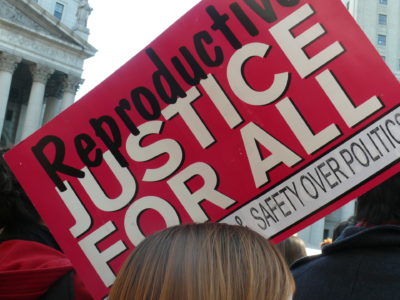
Reproductive justice combines tenets of human rights, social justice, and reproductive rights.

What is reproductive justice?

For decades, Black feminists in the U.S. have been pushing a women’s movement too often dominated by the concerns of middle-class white women to expand its horizons. In June 1994 a caucus of Black feminists pioneered the concept of “reproductive justice,” hoping to spur their fellow advocates to broaden their definition of reproductive freedom by taking into account most women’s daily lives and experiences.

Part of what they objected to was the reduction of women’s rights to a simple, one-time choice. They knew, often firsthand, that many women who become unexpectedly pregnant do not have easy access to comprehensive health care, including abortion and other reproductive services. Because many white, middle-class feminists took stable housing, decent health care, and safe neighborhoods for granted, they did not always see that a range of other rights related to women’s bodily autonomy were also in need of defending. As Dorothy E. Roberts, author and professor of law, sociology, and civil rights at the University of Pennsylvania, explained in Dissent in 2015, “The language of choice has proved useless for claiming public resources that most women need in order to maintain control over their bodies and their lives…giving women ‘choices’ has eroded the argument for state support, because women without sufficient resources are simply held responsible for making ‘bad’ choices.”

Roberts and other champions of reproductive justice believe all women have the right to opt out of parenthood entirely, to end some pregnancies and continue others, and to have as many children as they want and raise those children in safe, healthy, and nurturing environments. Loretta Ross of SisterSong, the largest multiracial reproductive justice collective in the U.S., has described reproductive justice as “the complete physical, mental, spiritual, political, social, and economic well-being of women and girls, based on the full achievement and protection of women’s human rights.” In Ross’s view, the reproductive justice framework “analyzes how the ability of any woman to determine her own reproductive destiny is linked directly to the conditions in her community.”

Those conditions are “not just a matter of individual choice and access” but include social realities like unstable housing, poverty, racial discrimination, and lack of proximity to health care facilities that provide abortions and/or prenatal care. A 2017 study found that one in five U.S. women would need to travel at least 43 miles (69 kilometers) to reach the nearest abortion clinic. Pregnant women’s and newborns’ lack of access to health care is just as crucial to address as lack of access to abortion. Pregnant women in rural areas often receive inadequate prenatal care; some rural communities do not have even one practicing obstetrician/gynecologist. Around one in four Wyoming women receive less-than-adequate prenatal care, meaning that, on average, they begin prenatal care after the fourth month of pregnancy or attend less than 79 percent of recommended checkups.

The U.S. also has a shameful record of letting women die during or around childbirth, a particularly shocking fact in such a wealthy nation. Maternal health outcomes are even worse for women of color and low-income women. The maternal mortality ratio more than doubled in the U.S. between 1999 and 2014, and Black women are approximately three times more likely to die in childbirth than white women. Stress caused by racial discrimination plays a significant role in maternal mortality rates, as does lack of proximity to hospitals providing high-quality care. Reproductive justice means ensuring that every woman has not only the right and ability to end a pregnancy, but control of her fertility, freedom from coerced or forced sterilization, adequate health care, and the ability to give birth to and raise children in a safe and healthy environment.

For the pro-choice movement to truly represent all women, reproductive justice advocates believe it must significantly broaden its demands for privacy and respect for individual choices to include, in Ross’s words, “the social supports necessary for our individual decisions to be optimally realized.” They also believe that control of one’s reproductive destiny is a human right, and that governments are obligated to protect women’s human rights by fully funding the programs required to keep them and their children healthy and safe.

Rather than focusing solely on the legal right to an abortion, reproductive justice advocates seek to work in coalition with other social justice movements, from the Movement for Black Lives to the movements for economic justice, the rights of people with disabilities, and LGBTQ rights.
Asian Communities for Reproductive Justice (ACRJ) has defined three primary frameworks for fighting reproductive oppression and furthering reproductive justice:

  • Reproductive Health - deals with delivery of services
  • Reproductive Rights - addresses legal issues
  • Reproductive Justice - focuses on movement building

Reproductive justice goes beyond efforts to safeguard abortion rights. It is not solely dependent on courts, political parties, or sympathetic politicians and physicians. It’s about empowering women and girls to make decisions not just about a particular pregnancy but throughout their entire reproductive lives. Reproductive justice can only be achieved when all women have not just the same rights on paper, but the power, freedom, and resources necessary to exercise them.

What are the principles of reproductive justice?

Reproductive justice is a broad concept, and as such it touches on a wide range of issues. The list below is not comprehensive—however, it does provide a useful framework for understanding just how multifaceted the fight for reproductive justice can be:

  • The right to remain child-free
  • The right to end one or multiple pregnancies
  • The right to free health care, including abortion
  • Easy access to every kind of health care, including abortion and other reproductive services
  • The right to raise as many children as one wants
  • The right to raise children in a safe and healthy environment
  • The right of every child to a safe and healthy home
  • The right to support a family
  • The right of all mothers, including those charged with and convicted of crimes, to see and care for their children
  • The right of pregnant women and mothers in prisons and jails to be treated in accordance with international human rights law
  • The right to nonjudgmental and medically sound health care, including abortion, prenatal care, and care for new parents and newborns
  • The right to create a birth plan honored by all health care providers assisting in a birth
  • Respect and support for essential care work performed inside and outside of the home
  • Freedom from food deserts, contaminated water, and state violence
  • Freedom from prosecution for struggling with drug addiction while pregnant
  • Freedom from forced or coerced sterilization
  • Freedom from forced or coerced abortion
  • Freedom from shame and stigma

Who coined the term ‘reproductive justice’?

After organizing an informal Black Women’s Caucus at a national pro-choice conference sponsored by the Illinois Pro-Choice Alliance in Chicago in 1994, a group of Black women social justice advocates came up with the term and defined the framework. They recognized that the mainstream feminist movement of the time, which was led by and represented the interests of middle- and upper-class white women, was not familiar with or equipped to meet the needs of women of color, trans people, and other marginalized women.

These women, who called themselves the “Women of African Descent for Reproductive Justice,” argued for a new and broader conception of reproductive freedom rooted in internationally recognized human rights standards developed by the United Nations. Advocates of reproductive justice seek to unite the struggle for reproductive rights with the fight for social justice. The women who coined the phrase published a full-page statement with over 800 signatures in The Washington Post and Roll Call to announce the birth of a new movement.

When did the reproductive justice movement start? 

Though many of the ideas behind it have existed in some form for decades, it officially began in 1994, when a group of Black reproductive rights advocates who participated in a number of national conferences in the U.S. and the International Conference on Population & Development (ICPD) in Cairo, Egypt, gathered in Chicago to pioneer a new reproductive rights framework. They hoped that framing these rights as a question of “justice” would better address both the full spectrum of women’s reproductive rights and the particular experiences and concerns of Black and/or low-income women. They shared frustrations about the status of Black women’s reproductive health around the globe and the limits of a pro-choice movement rooted in narrow notions of privacy. And they urged the larger movement to contextualize abortion care as one crucial aspect of a broader spectrum of human rights, including bodily autonomy and the full range of reproductive decision-making.

Reproductive justice combines tenets of human rights, social justice, and reproductive rights. “In Our Own Voice: National Black Women’s Reproductive Justice Agenda,” which employs a reproductive justice framework, focuses on three key policy areas: abortion rights and access, contraceptive equity, and comprehensive sex education.

How does reproductive justice relate to intersectionality?

The concept of reproductive justice is an outgrowth of intersectionality, which is itself related to the original meaning of identity politics as defined by the Black socialist feminists of the Combahee River Collective. Members of the Collective believed their identities and the various forms of oppression they experienced as members of different but overlapping groups—Black people, women, LGBTQ people, and working-class people—uniquely suited them to fight these  oppressions.

Intersectionality means that all forms of oppression are interconnected, and all people experience oppression and discrimination differently as a result of their particular identities. As the self-described “black, lesbian, mother, warrior, poet” Audre Lorde once said, “There is no such thing as a single-issue struggle because we do not live single-issue lives.” And in the words of SisterSong, “Marginalized women face multiple oppressions and we can only win freedom by addressing how they impact one another.” Reproductive justice is about recognizing, honoring, and easing the lives of all child-bearing people by fighting all forms of oppression—including racism, sexism, able-ism, anti-LGBTQ discrimination, and economic injustice—not only in isolation, but when and where they intersect.

Why does reproductive justice matter? 

Reproductive justice matters because it relates to the lives and experiences of every person capable of giving birth. By significantly broadening the lens through which most people view reproductive rights, it covers a far wider range of human experiences, is relevant to and supported by many more people, and has the potential to transform millions of lives by harnessing the collective power of various social movements—for economic justice, criminal justice reform, and civil rights, among others—that are connected but too often siloed.

Reproductive justice in childbirth

Until the mid-1800s, women in the United States managed their own birth experiences with little oversight and intervention. Abortion was common throughout the nineteenth century. It was only in the latter half of the century, when medicine became a respected profession and the American Medical Association was established, that physicians lobbied to have abortion banned. Their concern was not about the morality of abortion, but the financial and professional implications of being forced to compete with midwives and purveyors of home abortion remedies.

Tensions arose around that time, and persist today, between midwives, many of whom were trained in traditional healing practices, and formally educated and/or state-licensed physicians, nurses, and other medical practitioners. The conflict was partly between an authoritarian and patriarchal medical establishment and the women giving birth and the midwives they trusted to assist them.

Women of color, poor women, and women with disabilities typically had and have fewer choices about where and how to give birth and who may attend them when they do. Reproductive justice advocates seek to eliminate these disparities and ensure that all women can give birth safely, comfortably, in the company of their chosen attendants, and in the setting and manner of their choosing.

Reproductive justice in schools

A key aspect of reproductive justice in schools is comprehensive sex education, which can help students prevent unintended pregnancies and increase their odds of graduating.

Teenagers who are given partial or no medically accurate information about how to prevent pregnancy and/or STIs and explicitly or implicitly taught to be ashamed of their bodies and sexuality are likelier to become pregnant or cause a pregnancy—a circumstance which interrupts their educations more often than not. Students who are pregnant or parenting should not have to choose between raising children and completing their educations. They deserve time to recover after giving birth, permission to make up missed work, child care, transportation, counseling, health care, personalized graduation plans, flexible schedules, and freedom from stigma. As the novelist Toni Morrison said in a 1989 Time interview in response to a leading question ("You don't feel that these girls will never know whether they could have been teachers, or whatever?”) about teen moms, “They can be teachers. They can be brain surgeons. We have to help them become brain surgeons…That's the attitude you have to have about human life. But we don't want to pay for it. I don't think anybody cares about unwed mothers unless they're black—or poor. The question is not morality, the question is money.” The U.S. will not achieve reproductive justice until it is willing to invest the necessary resources in all of its children.

Reproductive justice in workplaces

In 2014, then Rep. Tammy Duckworth (D-Illinois), a woman of color and a veteran of the Iraq war who lost both legs in a 2004 helicopter crash, was 46, pregnant, and in her third trimester. Because her doctor had advised her not to travel at that stage of her pregnancy, she appealed to her fellow Democrats to make a one-time exception to the Democratic caucus’s ban on proxy voting so she could participate in House Democratic caucus leadership and committee member elections.

Nancy Pelosi and other House Democratic leaders denied her request. Far more disturbing than what happened to Duckworth, who went on to become a U.S. senator, is what happens to women in retail and service industry jobs on a regular basis. Employers routinely deny pregnant workers basic accommodations like access to bottled water, the ability to sit down, and extra bathroom breaks. In 2014 Bene’t Holmes, a 25-year-old single mother and Walmart employee who was then four months pregnant, asked her manager for the less physically demanding job duties her doctor had recommended. Her request was denied. The next day she had a miscarriage at work.

Reproductive justice means supporting whatever choices women make about their reproductive lives, not forcing them to choose between supporting their families and following a doctor’s advice. It means fighting to ensure both that every woman who wants to end a pregnancy can do so and that every woman who wants to continue one can do so safely and with dignity. And it means that employers and governments must support workers while they are becoming and once they have become mothers. During World War II President Franklin Roosevelt used funds from a wartime infrastructure bill to establish a national network of child care centers for women who took factory jobs to support the war effort. Despite the best efforts of mothers, social welfare groups, unions, early childhood educators, and social workers to keep them open after the war, President Harry Truman shut them down as soon as Japan surrendered. It shouldn’t take a world war for governments to meet people’s needs.

Reproductive justice in prisons

Women in many countries, including the United States, have been arrested and incarcerated for ending or attempting to end unwanted pregnancies and/or endangering fetuses, which is particularly ironic given how the state often treats incarcerated mothers. It is cruel and illogical to imprison pregnant women for possibly jeopardizing a nonexistent baby by, for example, using drugs while pregnant and to separate mothers convicted of crimes from the living children who need them. The treatment of pregnant and nursing women and/or mothers in prisons and jails, including for pregnancy-related crimes, is clearly connected to poverty, xenophobia, and racism.

In 2017, a U.S. government official denied an abortion to a teenaged immigrant detainee who was pregnant as a result of rape and said she would rather harm herself than continue the pregnancy. In 2014 a Pennsylvania woman named Jennifer Whalen was charged with a felony and three misdemeanors, including endangering the welfare of a child, and sentenced to prison after helping her 16-year-old daughter end an unwanted pregnancy by ordering the abortion pill online. Whelan, a single parent who worked as a nursing home aide, said her daughter did not have health insurance and could not afford a hospital abortion.

In 1989, officials in Charleston, South Carolina, began arresting pregnant women whose prenatal tests showed they were smoking crack. In some cases, Dorothy Roberts wrote in her 1997 book, Killing the Black Body: Race, Reproduction, and the Meaning of Liberty, RACE, REPRODUCTION, AND THE MEANING OF LIBERTY a team of police officers tracked down expectant mothers in their neighborhoods. In others, officers appeared at hospital maternity wards to haul away women in handcuffs and leg irons hours after giving birth. According to Roberts, one Charleston woman spent the final weeks of her pregnancy in a dingy cell in the Charleston County Jail. When she went into labor, she was taken to the hospital in chains, where she remained shackled to the bed throughout the entire delivery. All but one of the 48 women arrested for prenatal crimes in Charleston that year were Black. And in 1978—five weeks into a 40-year sentence, with no painkillers or sterilized medical equipment of any kind—22-year-old Debbie Sims Africa gave birth to her son Mike in a Pennsylvania prison cell. She cut the baby’s umbilical cord with her teeth, hid him under a sheet, and relied on her fellow incarcerated women to hide the noise by singing or coughing when he cried. She couldn’t keep her baby with her under jail rules and knew it would be difficult to conceal his existence for long. After three days, she told the authorities, who promptly took him away.

Reproductive justice demands that all women terminating or carrying a pregnancy, giving birth, and/or raising a child be treated like human beings in life-altering circumstances. Then President Trump signed a law banning the shackling of pregnant women in 2018. Far more remains to be done to guarantee reproductive justice for incarcerated people.

Who invented intersectional feminism?

Black feminist scholar Kimberlé Crenshaw is often credited with having coined the term in 1989, when she published a paper entitled, “Demarginalizing the Intersection of Race and Sex: A Black Feminist Critique of Antidiscrimination Doctrine, Feminist Theory and Antiracist Politics.” In Keeanga-Yamahtta Taylor’s How We Get Free: Black Feminism and the Combahee River Collective, a collection of interviews with pioneering Black feminists, Demita Frazier, one of Taylor’s interviewees, questions that narrative. “I have to talk to the young woman—Kimberlé Crenshaw…who says that she coined the term intersectionality,” Frazier says. “I always laugh when I read that because I remember the day we were sitting at the women’s center in Cambridge, drafting our probably third or fourth draft of the [Combahee River Collective] statement, I said, ‘You know, we stand at the intersection where our identities are indivisible.’ There is no separation. We are as Black women truly and completely intact in our paradox, and there’s nothing paradoxical about oppression [laugh]” (How We Get Free, Haymarket Books, p. 123).

In the 1970s, Frazier and her fellow Black socialist feminists conceptualized identity politics as the idea that Black liberation, feminism, and the fight for economic justice didn’t have to and shouldn’t be disparate and conflicting movements; it was only by coming together to fight all forms of oppression that organizers could truly free all people. In 1977 the Collective issued a statement which proclaimed, among other things, that “work must be organized for the collective benefit of those who do the work…and not for the profit of the bosses,” but added, “We are not convinced, however, that a socialist revolution that is not also a feminist and anti-racist revolution will guarantee our liberation.”

Many of the core concepts of intersectionality can be traced back to nineteenth century figures like the abolitionist and women’s rights crusader Sojourner Truth, who wanted to be recognized for and freed from the specific indignities she had suffered as a Black woman in the United States. Truth is said to have challenged attendees of the 1851 Women's Rights Convention in Akron, Ohio, to include women like her in their conception of women’s rights: “That man over there says that women need to be helped into carriages, and lifted over ditches, and to have the best place everywhere. Nobody ever helps me into carriages, or over mud-puddles, or gives me any best place! And ain’t I a woman? Look at me! Look at my arm! I have ploughed and planted, and gathered into barns, and no man could head me! And ain’t I a woman? I could work as much and eat as much as a man—when I could get it—and bear the lash as well! And ain’t I a woman? I have borne thirteen children, and seen most all sold off to slavery, and when I cried out with my mother’s grief, none but Jesus heard me! And ain’t I a woman?”

Reproductive Justice Around the World

Defending the rights and dignity of all women often means confronting state power, as Irish women did when they took to the streets to demand the repeal of Ireland’s abortion ban in 2017 and Polish and Mexican women did when they protested their countries’ abortion laws en masse in 2020. Women in Chile, Colombia, El Salvador, and other Latin American countries followed suit in 2021. In the last decade and a half Marea Verde (Green Wave), a Latin American women’s movement, has waged “aggressive campaigns” and led mass popular protests “organized around legal action and legislative demands that center broadly on women’s autonomy and rights” that have helped liberalize abortions laws throughout the region, as reproductive rights litigation expert Ximena Casas recently explained in The New York Times.

Reproductive justice in the United States

Abortion is, for now, legal in the U.S. but heavily restricted. Women, many of whom are poor, immigrants, and/or women of color, have been prosecuted for ending pregnancies and having miscarriages. United Nations human rights monitors harshly criticized the state of Texas for a particularly draconian 2021 anti-abortion law which, they said, violated international law by endangering women’s lives and denying them the basic right to control their bodies. Melissa Upreti, a human rights lawyer tasked by the United Nations Human Rights Council with fighting to end discrimination against women and girls, characterized the law as “sex and gender-based discrimination at its worst,” adding that it has “not only taken Texas backward, but in the eyes of the international community, it has taken the entire country backward.”

The U.S. has the highest maternal death rate among developed nations. In 2018, there were 17 maternal deaths for every 100,000 live births in the U.S., which is more than double the ratio of most other high-income countries. It has far more OB/GYNS than midwives and an overall shortage of maternal health care providers of any kind relative to births. The U.S. is the only developed country that does not guarantee access to provider home visits or paid parental leave to women who have just given birth.

Government officials have sterilized thousands of U.S. women without their full knowledge or consent and required many more to have fewer children than they wanted in exchange for desperately needed financial support. These policies have disproportionately affected Native Americans, Black people, Latinas, low-income people, and people with intellectual disabilities. From 1950 to 1966, Black women in North Carolina were sterilized at over three times the rate of white women and over 12 times the rate of white men.

Reproductive justice in Canada

Inducing an abortion was a crime in Canada until 1988, when the country’s Supreme Court determined its abortion law was unconstitutional and struck it down. Abortion has since been legal at any stage in a woman’s pregnancy and is covered as a publicly funded medical procedure under the Canada Health Act, but provinces such as New Brunswick place limits on these funds. In New Brunswick only hospital abortions are covered by insurance; abortions at private clinics are not insured. As in the United States, access to abortion varies widely throughout the country. Inhabitants of many rural provinces and territories have access to only one or two providers. Canadian officials have a long and ugly history of sterilizing Indigenous women without their knowledge or consent.

Reproductive justice in India

India allows abortion during the first trimester with approval by a medical practitioner and under specific conditions, including when the pregnancy is the result of a rape and when a patient’s life or health is at risk. In cases involving severe fetal anomaly, a three-person medical board composed of a gynecologist, a pediatrician, and a radiologist must confirm the diagnosis in order for a pregnant person to access care, a requirement that is particularly difficult to fulfill outside of major cities.

Activists in India have been seeking to reform the country’s abortion laws for over a decade. In March 2020, a new set of amendments to the 1971 Medical Termination of Pregnancy (MTP) Act were introduced in parliament. Critics have suggested the proposed amendments were inadequate and not framed “within a rights-based context for a person seeking abortion.”

Reproductive justice in Poland

Poland has some of the most restrictive abortion laws in Europe. The government instituted a near-total ban on abortion in October 2020, triggering the country’s largest protests since the fall of communism. In September 2021 a 30-year-old woman named Izabela died of septic shock after doctors refused to perform a life-saving abortion. “The baby weighs 485 grams. For now, thanks to the abortion law, I have to lie down. And there is nothing they can do,” she wrote in a text message to her mother shortly before her death. “They'll wait until it dies or something begins, and if not, I can expect sepsis.”

Draconian abortion laws notwithstanding, Poland has one of the world’s lowest maternal mortality rates. Its National Health Fund, for which the vast majority of Polish residents are eligible, covers most of the costs associated with giving birth in a hospital. The government also covers uninsured women during pregnancy, childbirth, and the postpartum period. Low-income parents receive a government allowance for their first child, and parents of two or more children get around $130 per month per child. Every woman, regardless of insurance status, gets a home visit from a midwife within days of giving birth. The Health Ministry guarantees a woman's right to choose the place and method of birth, decide who is in the delivery room, and be with her newborn for at least two hours after giving birth.

Reproductive justice in El Salvador

Latin American women, particularly in El Salvador, have served decades-long prison sentences for having miscarriages the authorities claimed were self-induced. El Salvador is one of four countries in Latin America with no-exceptions abortion bans. In 2021, the authorities freed three Salvadoran women who were sentenced to 30 years in prison for what the authorities claimed were self-induced abortions. A fourth woman was released in 2022. In 2021, the Inter-American Court of Human Rights found El Salvador responsible for the death of a Salvadoran woman sentenced to 30 years in prison for aggravated homicide after losing a pregnancy in 2008. The woman, who had two children, died of cancer in prison two years later, partly as a result of inadequate medical care. Among other reforms, the Court ordered El Salvador to tighten regulations governing doctor-patient confidentiality and, in a ruling that applies to countries throughout Latin America and the Caribbean, ruled that health care providers can no longer report women seeking abortion care and other reproductive services to law enforcement.

Reproductive justice in Ghana

In 2022, Ghana’s national health insurance program expanded to include free long-term contraception with the goal of sparing millions of women already covered by the country’s national health insurance program from paying out-of-pocket costs for effective long-term contraception. Ghana has high maternal mortality rates—its maternal mortality ratio is 308 per 100,000 live births—high rates of sexually transmitted infections, and low levels of contraceptive use. Women in rural communities have a particularly hard time accessing birth control and other reproductive health care services. Abortion is still a criminal offense in Ghana, with exceptions in cases of rape, incest, serious fetal anomaly, and/or risk to the woman's health. Around 22–30 percent of maternal deaths in Ghana are thought to be the result of unsafe abortions.

A few last words on reproductive justice

In the last 25 years, reproductive justice advocates have worked to broaden the view of an occasionally myopic pro-choice movement overly focused on electing Democrats and pressuring sympathetic administrations to appoint liberal justices to the U.S. Supreme Court. Having a Democrat in the White House and a more liberal Supreme Court does make it likelier that American women will retain certain rights. But it would profoundly improve the lives of all U.S. women, and women and people capable of giving birth around the world, if governments treated control over one’s reproductive and family life as a fundamental human right, rather than a privilege reserved for those with the means to obtain needed services.

“Every child a wanted child” has long been a credo of the pro-choice movement. Reproductive justice seeks to take this laudable goal several steps further by challenging us to build a world in which every child is not only “wanted” by its parents at birth, but well provided for. It offers a path to creating societies that truly honor life by treating all who are capable of creating it, and every person born, as worthy of love, respect, and care—and investing our collective resources accordingly.

[post_title] => A beginner's guide to reproductive justice [post_excerpt] => Reproductive justice combines tenets of human rights, social justice, and reproductive rights. [post_status] => publish [comment_status] => closed [ping_status] => open [post_password] => [post_name] => a-beginners-guide-to-reproductive-justice [to_ping] => [pinged] => [post_modified] => 2026-08-04 20:49:18 [post_modified_gmt] => 2026-08-04 20:49:18 [post_content_filtered] => [post_parent] => 0 [guid] => https://conversationalist.org/?p=3955 [menu_order] => 131 [post_type] => post [post_mime_type] => [comment_count] => 0 [filter] => raw )
A beginner’s guide to reproductive justice

WP_Post Object
(
    [ID] => 3756
    [post_author] => 2
    [post_date] => 2022-01-27 21:13:29
    [post_date_gmt] => 2022-01-27 21:13:29
    [post_content] => Forced sterilizations on detained migrant women is in line with the US's long, sordid history of eugenics.

Last month, the Department of Homeland Security (DHS) briefed House Democrats on allegations concerning several gynecological procedures, including hysterectomies, that a physician performed on migrant women in Immigration and Customs Enforcement (ICE) custody at the Irwin County Detention Center in Ocilla, Georgia—allegedly without their informed consent. The incidents became public knowledge in September 2020, after a consortium of human rights groups filed an explosive report on behalf of Nurse Dawn Wooten, a whistleblower who worked at the detention center.

In a December 3 letter signed by the chairmen of the House Committees on Homeland Security and Oversight and Reform, legislators wrote: “We are concerned that Dr. [Mahendra] Amin may have been performing unnecessary surgical procedures to defraud DHS and the Federal government without consequences.” The letter, which is addressed to DHS Secretary Alejandro Mayorkas, also requested information on the steps the Department has taken to review treatment Dr. Amin provided and ensure migrants receive proper medical care in the future.

The Conversationalist confirmed a December 15 DHS briefing with two committee staffers, both of whom declined to share additional details about the information presented. A staffer from the Committee on Homeland Security clarified that this was a DHS review of the Irwin County Detention Center and not a general review of migrant detention facilities, although Congress requested the Department to brief them on the matter months ago.

The December 3 letter says, “the Committee on Homeland Security requested a briefing on August 10, 2021, on DHS’s efforts to review the suitability of detention facilities. To date, DHS has not fulfilled this request. We ask that you ensure the Committees receive this briefing without further delay.”

On January 3, the DHS released a report that found “the facility’s chronic care, continuity of care, and medical policies and procedures to be inadequate” but did not find that unnecessary or unwanted hysterectomies had been performed. The report does, however, quote an ICE employee who alleges that there is a systemic issue in the ICE leadership that makes the agency “unwilling to listen to concerns or complaints about detention facilities.”

Nurse Dawn Wooten worked at the Irwin County Detention Center (ICDC) for three years. She says that Dr. Amin, who was referred to as the “uterus collector,” had performed hysterectomies on at least 20 women without their consent. Many of these women did not speak English well enough to consent to the procedures or understand what had been done to them. Thirty-five women are now suing ICE over Dr. Amin’s abuse.ICDC, run by a for-profit prison company called LaSalle Corrections, also came under harsh scrutiny for their botched COVID-19 response, which sparked hunger strikes and protests among detainees early in the pandemic.

The Georgia-based advocacy group Project South filed the complaint, which describes a filthy, insect-infested facility with inadequate COVID-19 safety precautions, where staff refused to test symptomatic detainees and fabricated medical records. Detainees who protested the conditions were punished with beatings, pepper spray, and solitary confinement. Nurse Wooten told The Intercept that she was demoted after raising concerns with her supervisors.

“It is deeply concerning that neither DHS nor the private prison company running Irwin have yet to face accountability for the medical abuse that migrant women faced at Irwin,” Azadeh Shahshahani, the Legal and Advocacy Director with Project South said in an email statement to The Conversationalist. “This is setting an awful precedent. Congress and the Biden Administration must act now.”

The joint committee investigation subpoenaed LaSalle Corrections in November 2020 after the company refused to turn over medical records on the procedures Dr. Amin performed. Dr. Tony Ogburn, Department Chair of Obstetrics and Gynecology at the University of Texas Rio Grande Valley, reviewed those records. He concluded that Dr. Amin’s care “did not meet acceptable standards.”

“My concern is that he was not competent and simply did the same evaluation and treatment on most patients because that is what he knew how to do, and/or he did tests and treatments that generated a significant amount of reimbursement without benefitting most patients,” Dr. Ogburn concluded in a November 2021 letter to the Georgia Medical Board.

Following pressure from lawmakers, activists, and advocacy groups, DHS Secretary Mayorkas announced he would sever ties with LaSalle Corrections in May 2021, though migrants were not removed from the facilities until September 2021—a full year after Project South filed Nurse Wooten’s whistleblower complaint with the ICE administration.

While these abuses came to light during the Trump presidency the lack of accountability continues under the Biden Administration, with migrant arrests now at a 21-year high. The current administration has ramped up deportations under a Trump-era health policy that allows the government to expedite the process without giving migrants the opportunity to apply for asylum. The government claims the rushed deportations are a COVID-19 safety precaution.

Under Title 42, the Trump Administration expelled 444,000 migrants. Under Biden, this number has already reached 690,000. COVID-19 still runs rampant in migrant detention centers and in prisons such as New York City’s Rikers Island, where more than one-fifth of the incarcerated population has tested positive.

Immigration advocates have been disappointed with the new administration. Since taking office, Biden has filed 296 executive orders on immigration, 89 of which have reversed actions taken by the Trump administration such as the travel ban on Muslim majority nations and construction of the border wall.

When Dawn Wooten stepped forward to make a whistleblower complaint about the medical abuses at ICDC, international headlines about “mass hysterectomies” sparked outrage and comparisons to Nazi Germany. Others placed the story within a long history of American eugenics that targeted Black, brown, disabled, and indigenous women.

“People with Spanish surnames were disproportionately sterilized during the period of peak eugenics in the 1920s through the 1950s,” says Heather Dron, a Research Fellow at the Sterilization and Social Justice Lab at the University of Michigan.

During the twentieth century, U.S. states subjected over 60,000 people to sterilization without consent, with over 30 states establishing eugenics boards. State governments targeted minorities, the disabled, and others who did not fit into “social norms” for forced sterilization.

From 1929 to 1974 North Carolina ordered as many as 7,600 women sterilized— a majority of whom were Black women from low-income backgrounds. Margaret Sanger and Dr. Gregory Pincus exploited government birth control centers in Puerto Rico to subject one-third of the female population to sterilization procedures, often without their consent, purportedly to address “overpopulation” and poverty on the island. Under the Family Planning Services and Population Research Act of 1970 physicians sterilized an estimated 25 percent of Native American women of childbearing age in a six-year period.

Adolf Hitler writes admiringly in Mein Kampf of eugenics policies practiced in the U.S. “There is today one state in which at least weak beginnings toward a better conception [of immigration] are noticeable. Of course, it is not our model German Republic, but [the United States], in which an effort is made to consult reason at least partially. By refusing immigrants on principle to elements in poor health, by simply excluding certain races from naturalization, it professes in slow beginnings a view that is peculiar to the People's State.”

Heather Dron’s research focuses on eugenic sterilization in California, where roughly 20,000, or one-third, of U.S. sterilizations were performed starting from 1909.

“There was a law on the books between 1909 and 1979 that allowed for the sterilization of institutionalized people housed in psychiatric hospitals, or in homes for what was then called the ‘feeble-minded,’” Dron says. “Sterilization was seen as a solution to all these other social problems. They saw it as a way to keep these people out of institutions.”

While eugenics laws in California have been repealed, sterilizations have continued. A 2013 investigation by Mother Jones revealed that 148 women in two California prisons were sterilized from 2006 to 2010.

“You get a similar dynamic there,” says Dron, referring to the recent ICE cases. “There were a few people who were performing a lot of procedures who seemed like they didn’t have a great ethical practice in general.”

There is no evidence to suggest that Dr. Mahendra Amin was motivated to perform these surgeries for anything other than financial compensation. Last month's letter from House Democrats expressing concerns that Dr. Amin performed these surgeries to “defraud the government” further supports this theory.

“It sounds like there’s some sort of incentive to perform surgical interventions because you’re paid per intervention and some people took advantage of that,” Dron says of Dr. Amin’s case. “But you have to read that with a little bit of skepticism because often we point to these bad actors and say it’s just them as opposed to a system that systematically thinks that people who are incarcerated shouldn’t have kids.”

The breaking news of hysterectomies performed on migrant women in ICE custody barely made it through one news cycle before news of Ruth Bader Ginsberg’s death broke just days later. Her death was followed by a swift Republican push to nominate a third Supreme Court Justice under Trump just weeks ahead of the 2020 election.

The media might choose to remember the hysterectomies performed at the Georgia ICE facility as a particularly egregious act that happened under a uniquely evil administration. That would be a huge mistake.

According to a December 2021 article in The Texas Tribune, the number of immigrants held in ICE detention centers has increased by more than 50 percent since Biden took office. Moreover, the investigation into Dr. Amin’s medical practice has been conducted on Biden’s watch.

Detentions have been accompanied by a spike in border crossings in 2021. Biden has downplayed this as a seasonal phenomenon while Republicans have pointed to plans to offer 11 million migrants a path to citizenship as cause for the surge. Others say the migrants are motivated by growing instability in their home countries. With less attention on the issue of migration, Biden has gotten away with his continuation of the “remain in Mexico” policy by pointing to Title 42, which has been extended twice by the Centers for Disease Control and Prevention, as a matter of public health.

Under the Biden Administration, we no longer hear overtly fascist rhetoric from the White House aimed at migrants, but detainees at ICE facilities continue to suffer from extreme medical neglect and abuse as COVID-19 cases soar.

In order to prevent us from reliving the past, we need to understand the circumstances that led us to where we are today. Ending Trump’s remain in Mexico policies, fulfilling a campaign promise to offer migrants a path to citizenship, and holding Dr. Amin and LaSalle Corrections responsible for their medical abuses would be a great place to start.

 
    [post_title] => The 'Uterus Collector': The surgeon who performed coerced hysterectomies on detained migrant women
    [post_excerpt] => The forced sterilizations are in line with the U.S.'s long, sordid, racist history of eugenics. 
    [post_status] => publish
    [comment_status] => closed
    [ping_status] => open
    [post_password] => 
    [post_name] => the-uterus-collector-the-scandal-of-the-surgeon-who-performed-coerced-hysterectomies-on-detained-migrant-women
    [to_ping] => 
    [pinged] => 
    [post_modified] => 2026-08-05 18:04:55
    [post_modified_gmt] => 2026-08-05 18:04:55
    [post_content_filtered] => 
    [post_parent] => 0
    [guid] => https://conversationalist.org/?p=3756
    [menu_order] => 145
    [post_type] => post
    [post_mime_type] => 
    [comment_count] => 0
    [filter] => raw
)
The ‘Uterus Collector’: The surgeon who performed coerced hysterectomies on detained migrant women