WP_Post Object
(
[ID] => 2712
[post_author] => 2
[post_date] => 2021-06-08 17:06:58
[post_date_gmt] => 2021-06-08 17:06:58
[post_content] => An assertive new generation of Muslim feminists is disrupting the white feminist narrative of victimhood.
“Too many religions are patriarchal and imbued with misogyny. Because of this I am often asked how I can be a Muslim feminist. My response is that I am both of Muslim descent and a feminist, and the two identities are not connected. One does not depend on the other.” — Egyptian-American feminist and author Mona Eltahawy, in her recently published book of essays, The Seven Necessary Sins for Women and Girls.
The West has for too long related to Muslim women as though they needed to be saved, lumping them all into a single, victim focused narrative. In recent years, a vocal new generation of Muslim feminists, of whom Mona Eltahawy is perhaps the best known, seeks to challenge the victim narrative and assert their place in the feminist discourse on their own terms.
Saving oneself, as opposed to being saved by others, whether by escaping physically, emotionally or creatively, is a key theme in the emerging Muslim feminist narrative.
The plot of Yosra Samir Imran’s debut novel Hijab and Red Lipstick (Hashtag Press, 2020), appears at first to describe a familiar narrative of oppression. Sara, a British Muslim adolescent in London, chafes against the restrictions set by her strict Egyptian father, who forbids her from indulging her passions for makeup, fashion magazines and pop music. His decision to move the family to Qatar, where Sara’s freedom is further restricted by patriarchal social norms and laws, sets father and daughter on a collision course. Imran insists that her story is strictly about an individual—and not a commentary on Muslim society as a whole.
[caption id="attachment_2752" align="aligncenter" width="640"] Yousra Samir Imran with her book, "Hijab and Red Lipstick."[/caption]
“I even put an author’s note at the start of my book asking readers not to discredit one woman’s experience just because it’s not their own, and that this book tells only one type of experience,” Imran told The Conversationalist. Still, some Muslim readers complain that the novel perpetuates stereotypes. Their unwillingness to see the book as one woman’s journey reflects a pervasive awareness among Muslims of the lens through which they are perceived—one that they feel distorts their lived experiences.
Sabyn Javeri, a Karachi-born academic and novelist (Hijabistan and Nobody Killed Her) who is a professor of Literature and Creative Writing, told The Conversationalist that a major barrier to understanding the diversity of narratives within Muslim communities is the propogation of a single dominant narrative. “I always wonder what we mean by white feminist narrative,” she said, adding: “I believe in plurality, I believe there’s many facades to identity.”
She almost wrote Hijab and Red Lipstick as a memoir, said Imran, who now lives in West Yorkshire, but decided to fictionalize her story for reasons of personal safety. Nevertheless, the book is obviously based on her own experiences in Qatar, where she lived from the age of 14 until she returned to the U.K. at 29. Sara, the protagonist, is a practicing Muslim who wears the hijab, but she is also a rebel who tests boundaries. Samir Imran believes that because she wears the hijab, her Muslim readers might have expected her “to present squeaky clean Muslim characters” instead of the complex and flawed characters in her novel.
There are, to be sure, some widely reported incidents that seem to support the white feminist narrative about oppressed Muslim women who need to be saved. Princess Latifa of Dubai, for example, has for several years been her father’s hostage, kept in an isolated villa after an unsuccessful attempt to escape the Gulf territory in 2018. Dina Ali Lasloom, then 24, was forcibly returned to Saudi Arabia in 2017 when she was stopped in Manila on her way to seek asylum in Australia.
Another highly publicized incident occurred in 2019, when Rahaf Mohammed, an 18 year-old Saudi woman who was granted asylum in Canada after she barricaded herself in a Bangkok Airport hotel room and tweeted that she was in danger of being deported and imprisoned for having renounced Islam (a crime in Saudi Arabia). Via amplification, she grew her Twitter following from fewer than 30 to several thousand within a few hours and gained the attention of the international media. Ms. Eltahawy, who played a critical role in amplifying the then-unknown Rahaf Mohammed’s tweets, writes in The Seven Necessary Sins for Women and Girls that Ms. Mohammed “saved herself.”
“Saving oneself” can also mean asserting one’s right to choose how to dress—including whether or not to wear a traditional head scarf.
The hijab is a hot topic—and not only in the west. Tunisia, for example, bans women from wearing the niqab, or face covering, in government offices. France and Quebec ban the niqab completely, while the Canadian province recently passed a law that restricts public servants from wearing religious symbols at work, in a move that is widely regarded as singling out Muslim women. But the debate about face and head coverings is taking place without the participation of Muslim women. How do they feel about the issue?
“Hijab has been a tool of military and political intervention since colonial days,” said Sabybn Javeri. “People don't want to focus on things which really are oppressive—like violence or assault. It’s easier to target women’s clothing because that’s easier to control. Violence and control takes more work, you need to challenge the system, demand a larger shift,” she pointed out.
The characters in Hijabistan, Javeri’s collection of short stories about hijabi culture set in the U.K. and Pakistan, include a kleptomaniac who exploits the anonymity of her burqa to shoplift, and who enjoys flashing the fruit vendor across the street. They include women who feel the hijab liberates them and others who feel it constricts them. The stories highlight the intersectionality and plurality that comes with identities, which are often overshadowed by the debate about the meaning of a scarf on a woman’s head rather than the thoughts inside it.
“We have long been defined by what’s between our legs and what’s on our heads,” said Mona Eltahawy. She told The Conversationalist that the title of her first book, Headscarves and Hymens, was inspired by her desire to challenge the binary view of what defines a Muslim woman. Nevertheless, Eltahawy feels now that there is too much talk about the Muslim head scarf. “Whether I should wear the hijab, or whether anyone should wear the hijab, is a difficult conversation about choice. At the end of the day that conversation of wearing and not wearing is limited to women of Muslim descent and no one else,” she said.
Our Women On The Ground is a collection of first-person essays by female Arab journalists in the Middle East that reflects the unique challenges Muslim women face when reporting. “I wondered about the fearless Arab women journalists, whose work I’d been following for years,” editor Zahra Hankir told The Conversationalist. “What if we read about their experiences, and about how their lives have been affected by the tumult in the region, in a similar space? The stakes are, without a doubt, so much higher for them. Being a local journalist in the region, particularly a woman journalist, carries with it immense risks and challenges.”
Choosing a job that means being in the public eye can be seen as an act of defiance for a woman in Muslim society. Foreign journalists have the privilege of leaving when things get bad, or of turning to their government for help when they are in trouble. Local journalists, particularly in countries where laws or customs restrict a woman’s presence in the public domain, do not have those privileges and are easier for the state to control. Non-Muslim female journalists also face many gender-related challenges when working in the field, although of a different sort; by acknowledging that oppressive systems affect all but in different ways, we see how their identities affect their experiences. For Muslim women, their religion is just one part of that lived experience.
The bottom line for most Muslim feminists is that they are more concerned with advancing their own cause than with countering the white feminist point of view. “A lot of my work goes towards complicating the narrative for women of Muslim descent, who are not white, who are from the global south,” said Eltahawy. This is the disruption we need in order to change existing systems.
[post_title] => Muslim feminists are not interested in the white woman's gaze
[post_excerpt] => An assertive new generation of Muslim feminists is challenging the victim narrative imposed on them.
[post_status] => publish
[comment_status] => closed
[ping_status] => open
[post_password] =>
[post_name] => muslim-feminists-are-not-interested-in-the-white-womans-gaze
[to_ping] =>
[pinged] =>
[post_modified] => 2026-08-06 20:59:04
[post_modified_gmt] => 2026-08-06 20:59:04
[post_content_filtered] =>
[post_parent] => 0
[guid] => https://conversationalist.org/?p=2712
[menu_order] => 198
[post_type] => post
[post_mime_type] =>
[comment_count] => 0
[filter] => raw
)
Yousra Samir Imran with her book, "Hijab and Red Lipstick."[/caption]
“I even put an author’s note at the start of my book asking readers not to discredit one woman’s experience just because it’s not their own, and that this book tells only one type of experience,” Imran told The Conversationalist. Still, some Muslim readers complain that the novel perpetuates stereotypes. Their unwillingness to see the book as one woman’s journey reflects a pervasive awareness among Muslims of the lens through which they are perceived—one that they feel distorts their lived experiences.
Sabyn Javeri, a Karachi-born academic and novelist (Hijabistan and Nobody Killed Her) who is a professor of Literature and Creative Writing, told The Conversationalist that a major barrier to understanding the diversity of narratives within Muslim communities is the propogation of a single dominant narrative. “I always wonder what we mean by white feminist narrative,” she said, adding: “I believe in plurality, I believe there’s many facades to identity.”
She almost wrote Hijab and Red Lipstick as a memoir, said Imran, who now lives in West Yorkshire, but decided to fictionalize her story for reasons of personal safety. Nevertheless, the book is obviously based on her own experiences in Qatar, where she lived from the age of 14 until she returned to the U.K. at 29. Sara, the protagonist, is a practicing Muslim who wears the hijab, but she is also a rebel who tests boundaries. Samir Imran believes that because she wears the hijab, her Muslim readers might have expected her “to present squeaky clean Muslim characters” instead of the complex and flawed characters in her novel.
There are, to be sure, some widely reported incidents that seem to support the white feminist narrative about oppressed Muslim women who need to be saved. Princess Latifa of Dubai, for example, has for several years been her father’s hostage, kept in an isolated villa after an unsuccessful attempt to escape the Gulf territory in 2018. Dina Ali Lasloom, then 24, was forcibly returned to Saudi Arabia in 2017 when she was stopped in Manila on her way to seek asylum in Australia.
Another highly publicized incident occurred in 2019, when Rahaf Mohammed, an 18 year-old Saudi woman who was granted asylum in Canada after she barricaded herself in a Bangkok Airport hotel room and tweeted that she was in danger of being deported and imprisoned for having renounced Islam (a crime in Saudi Arabia). Via amplification, she grew her Twitter following from fewer than 30 to several thousand within a few hours and gained the attention of the international media. Ms. Eltahawy, who played a critical role in amplifying the then-unknown Rahaf Mohammed’s tweets, writes in The Seven Necessary Sins for Women and Girls that Ms. Mohammed “saved herself.”
“Saving oneself” can also mean asserting one’s right to choose how to dress—including whether or not to wear a traditional head scarf.
The hijab is a hot topic—and not only in the west. Tunisia, for example, bans women from wearing the niqab, or face covering, in government offices. France and Quebec ban the niqab completely, while the Canadian province recently passed a law that restricts public servants from wearing religious symbols at work, in a move that is widely regarded as singling out Muslim women. But the debate about face and head coverings is taking place without the participation of Muslim women. How do they feel about the issue?
“Hijab has been a tool of military and political intervention since colonial days,” said Sabybn Javeri. “People don't want to focus on things which really are oppressive—like violence or assault. It’s easier to target women’s clothing because that’s easier to control. Violence and control takes more work, you need to challenge the system, demand a larger shift,” she pointed out.
The characters in Hijabistan, Javeri’s collection of short stories about hijabi culture set in the U.K. and Pakistan, include a kleptomaniac who exploits the anonymity of her burqa to shoplift, and who enjoys flashing the fruit vendor across the street. They include women who feel the hijab liberates them and others who feel it constricts them. The stories highlight the intersectionality and plurality that comes with identities, which are often overshadowed by the debate about the meaning of a scarf on a woman’s head rather than the thoughts inside it.
“We have long been defined by what’s between our legs and what’s on our heads,” said Mona Eltahawy. She told The Conversationalist that the title of her first book, Headscarves and Hymens, was inspired by her desire to challenge the binary view of what defines a Muslim woman. Nevertheless, Eltahawy feels now that there is too much talk about the Muslim head scarf. “Whether I should wear the hijab, or whether anyone should wear the hijab, is a difficult conversation about choice. At the end of the day that conversation of wearing and not wearing is limited to women of Muslim descent and no one else,” she said.
Our Women On The Ground is a collection of first-person essays by female Arab journalists in the Middle East that reflects the unique challenges Muslim women face when reporting. “I wondered about the fearless Arab women journalists, whose work I’d been following for years,” editor Zahra Hankir told The Conversationalist. “What if we read about their experiences, and about how their lives have been affected by the tumult in the region, in a similar space? The stakes are, without a doubt, so much higher for them. Being a local journalist in the region, particularly a woman journalist, carries with it immense risks and challenges.”
Choosing a job that means being in the public eye can be seen as an act of defiance for a woman in Muslim society. Foreign journalists have the privilege of leaving when things get bad, or of turning to their government for help when they are in trouble. Local journalists, particularly in countries where laws or customs restrict a woman’s presence in the public domain, do not have those privileges and are easier for the state to control. Non-Muslim female journalists also face many gender-related challenges when working in the field, although of a different sort; by acknowledging that oppressive systems affect all but in different ways, we see how their identities affect their experiences. For Muslim women, their religion is just one part of that lived experience.
The bottom line for most Muslim feminists is that they are more concerned with advancing their own cause than with countering the white feminist point of view. “A lot of my work goes towards complicating the narrative for women of Muslim descent, who are not white, who are from the global south,” said Eltahawy. This is the disruption we need in order to change existing systems.
[post_title] => Muslim feminists are not interested in the white woman's gaze
[post_excerpt] => An assertive new generation of Muslim feminists is challenging the victim narrative imposed on them.
[post_status] => publish
[comment_status] => closed
[ping_status] => open
[post_password] =>
[post_name] => muslim-feminists-are-not-interested-in-the-white-womans-gaze
[to_ping] =>
[pinged] =>
[post_modified] => 2026-08-06 20:59:04
[post_modified_gmt] => 2026-08-06 20:59:04
[post_content_filtered] =>
[post_parent] => 0
[guid] => https://conversationalist.org/?p=2712
[menu_order] => 198
[post_type] => post
[post_mime_type] =>
[comment_count] => 0
[filter] => raw
)
 During the decade prior to the 2011 uprising, Egypt saw a blogging boom, with people from diverse socio-economic backgrounds writing outspoken commentary about social and political issues, even though they ran the risk of arrest and imprisonment for criticizing the state. The internet provided space for discussions that had previously been restricted to private gatherings; it also enabled cross-national dialogue throughout the region, between bloggers who shared a common language. Public protests weren’t unheard of—in fact, as those I interviewed for the book argued, they had been building up slowly over time—but they were sporadic and lacked mass support.
While some bloggers and social media users chose to publish under their own names, others were justifiably concerned for their safety. And so, the creators of “We Are All Khaled Saeed” chose to manage the Facebook page using pseudonyms.
Facebook, however, has always had a policy that forbids the use of “fake names,” predicated on the misguided belief that people behave with more civility when using their “real” identity. Mark Zuckerberg famously claimed that having more than one identity represents a lack of integrity, thus demonstrating a profound lack of imagination and considerable ignorance. Not only had Zuckerberg never considered why a person of integrity who lived in an oppressive authoritarian state might fear revealing their identity, but he had clearly never explored the rich history of anonymous and pseudonymous publishing.
In November 2010, just before Egypt’s parliamentary elections and a planned anti-regime demonstration, Facebook, acting on a tip that its owners were using fake names, removed the “We are all Khaled Saeed” page.
At this point I had been writing and communicating for some time with Facebook staff about the problematic nature of the policy banning anonymous users. It was Thanksgiving weekend in the U.S., where I lived at the time, but a group of activists scrambled to contact Facebook to see if there was anything they could do. To their credit, the company offered a creative solution: If the Egyptian activists could find an administrator who was willing to use their real name, the page would be restored.
They did so, and the page went on to call for what became the January 25 revolution.
A few months later, I joined the Electronic Frontier Foundation and began to work full-time in advocacy, which gave my criticisms more weight and enabled me to communicate more directly with policymakers at various tech companies.
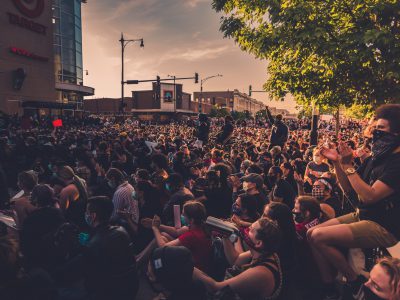
Three years later, while driving across the United States with my mother and writing a piece about social media and the Egyptian revolution, I turned on the hotel television one night and saw on the news that police in Ferguson, Missouri had shot an 18-year-old Black man, Michael Brown, sparking protests that drew a disproportionate militarized response.
The parallels between Egypt and the United States struck me even then, but only in 2016 did I become fully aware. That summer, a police officer in Minnesota pulled over 32-year-old Philando Castile—a Black man—at a traffic stop and, as he reached for his license and registration, fatally shot him five times at close range.
Castile’s partner, Diamond Reynolds, was in the passenger’s seat and had the presence of mind to whip out her phone in the immediate aftermath, streaming her exchange with the police officer on Facebook Live.
Almost immediately, Facebook removed the video. The company later restored it, citing a “technical glitch,” but the incident demonstrated the power that technology companies—accountable to no one but their shareholders and driven by profit motives—have over our expression.
The internet brought about a fundamental shift in the way we communicate and relate to one another, but its commercialization has laid bare the limits of existing systems of governance. In the years following these incidents, content moderation and the systems surrounding it became almost a singular obsession. I worked to document the experiences of social media users, collaborated with numerous individuals, and learned about the structural limitations to changing the system.
Over the years, my views on the relationship between free speech and tech have evolved. Once I believed that companies should play no role in governing our speech, but later I shifted to pragmatism, seeking ways to mitigate the harm of their decisions and enforce limits on their power.
But while the parameters of the problem and its potential solutions grew clearer, so did my thesis: Content moderation— specifically, the uneven enforcement of already-inconsistent policies—disproportionately impacts marginalized communities and exacerbates existing structural power balances. Offline repression is, as it turns out, replicated online.
The 2016 election of Donald Trump to the U.S. presidency brought the issue of content moderation to the fore; suddenly, the terms of the debate shifted. Conservatives in the United States claimed they were unjustly singled out by Big Tech and the media amplified those claims—much to my chagrin, since they were not borne out by data. At the same time, the rise of right-wing extremism, disinformation, and harassment—such as the spread of the QAnon conspiracy and wildly inaccurate information about vaccines—on social media led me to doubt some of my earlier conclusions about the role Big Tech should play in governing speech.
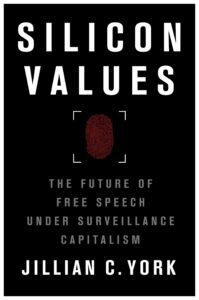
That’s when I knew that it was time to write about content moderation’s less-debated harms and to document them in a book.
Setting out to write about a subject I know so intimately (and have even experienced firsthand), I thought I knew what I would say. But the process turned out to be a learning experience that caused me to rethink some of my own assumptions about the right way forward.
One of the final interviews I conducted for the book was with Dave Willner, one of the early policy architects at Facebook. Sitting at a café in San Francisco just a few months before the pandemic hit, he told me: “Social media empowers previously marginal people, and some of those previously marginal people are trans teenagers and some are neo-Nazis. The empowerment sense is the same, and some of it we think is good and some of it we think is not good. The coming together of people with rare problems or views is agnostic.”
That framing guided me in the final months of writing. My instinct, based on those early experiences with social media as a democratizing force, has always been to think about the unintended consequences of any policy for the world’s most vulnerable users, and it is that lens that guides my passion for protecting free expression. But I also see now that it is imperative never to forget a crucial fact—that the very same tools which have empowered historically marginalized communities can also enable their oppressors.
[post_title] => Between Nazis and democracy activists: Social media and the free speech dilemma
[post_excerpt] => The content moderation policies employed by social media platforms disproportionately affect marginalized communities and exacerbate power imbalances. Offline repression is replicated online.
[post_status] => publish
[comment_status] => closed
[ping_status] => open
[post_password] =>
[post_name] => between-nazis-and-democracy-activists-social-media-and-the-free-speech-dilemma
[to_ping] =>
[pinged] =>
[post_modified] => 2026-08-06 22:43:16
[post_modified_gmt] => 2026-08-06 22:43:16
[post_content_filtered] =>
[post_parent] => 0
[guid] => https://conversationalist.org/?p=2452
[menu_order] => 216
[post_type] => post
[post_mime_type] =>
[comment_count] => 0
[filter] => raw
)
During the decade prior to the 2011 uprising, Egypt saw a blogging boom, with people from diverse socio-economic backgrounds writing outspoken commentary about social and political issues, even though they ran the risk of arrest and imprisonment for criticizing the state. The internet provided space for discussions that had previously been restricted to private gatherings; it also enabled cross-national dialogue throughout the region, between bloggers who shared a common language. Public protests weren’t unheard of—in fact, as those I interviewed for the book argued, they had been building up slowly over time—but they were sporadic and lacked mass support.
While some bloggers and social media users chose to publish under their own names, others were justifiably concerned for their safety. And so, the creators of “We Are All Khaled Saeed” chose to manage the Facebook page using pseudonyms.
Facebook, however, has always had a policy that forbids the use of “fake names,” predicated on the misguided belief that people behave with more civility when using their “real” identity. Mark Zuckerberg famously claimed that having more than one identity represents a lack of integrity, thus demonstrating a profound lack of imagination and considerable ignorance. Not only had Zuckerberg never considered why a person of integrity who lived in an oppressive authoritarian state might fear revealing their identity, but he had clearly never explored the rich history of anonymous and pseudonymous publishing.
In November 2010, just before Egypt’s parliamentary elections and a planned anti-regime demonstration, Facebook, acting on a tip that its owners were using fake names, removed the “We are all Khaled Saeed” page.
At this point I had been writing and communicating for some time with Facebook staff about the problematic nature of the policy banning anonymous users. It was Thanksgiving weekend in the U.S., where I lived at the time, but a group of activists scrambled to contact Facebook to see if there was anything they could do. To their credit, the company offered a creative solution: If the Egyptian activists could find an administrator who was willing to use their real name, the page would be restored.
They did so, and the page went on to call for what became the January 25 revolution.
A few months later, I joined the Electronic Frontier Foundation and began to work full-time in advocacy, which gave my criticisms more weight and enabled me to communicate more directly with policymakers at various tech companies.
Three years later, while driving across the United States with my mother and writing a piece about social media and the Egyptian revolution, I turned on the hotel television one night and saw on the news that police in Ferguson, Missouri had shot an 18-year-old Black man, Michael Brown, sparking protests that drew a disproportionate militarized response.
The parallels between Egypt and the United States struck me even then, but only in 2016 did I become fully aware. That summer, a police officer in Minnesota pulled over 32-year-old Philando Castile—a Black man—at a traffic stop and, as he reached for his license and registration, fatally shot him five times at close range.
Castile’s partner, Diamond Reynolds, was in the passenger’s seat and had the presence of mind to whip out her phone in the immediate aftermath, streaming her exchange with the police officer on Facebook Live.
Almost immediately, Facebook removed the video. The company later restored it, citing a “technical glitch,” but the incident demonstrated the power that technology companies—accountable to no one but their shareholders and driven by profit motives—have over our expression.
The internet brought about a fundamental shift in the way we communicate and relate to one another, but its commercialization has laid bare the limits of existing systems of governance. In the years following these incidents, content moderation and the systems surrounding it became almost a singular obsession. I worked to document the experiences of social media users, collaborated with numerous individuals, and learned about the structural limitations to changing the system.
Over the years, my views on the relationship between free speech and tech have evolved. Once I believed that companies should play no role in governing our speech, but later I shifted to pragmatism, seeking ways to mitigate the harm of their decisions and enforce limits on their power.
But while the parameters of the problem and its potential solutions grew clearer, so did my thesis: Content moderation— specifically, the uneven enforcement of already-inconsistent policies—disproportionately impacts marginalized communities and exacerbates existing structural power balances. Offline repression is, as it turns out, replicated online.
The 2016 election of Donald Trump to the U.S. presidency brought the issue of content moderation to the fore; suddenly, the terms of the debate shifted. Conservatives in the United States claimed they were unjustly singled out by Big Tech and the media amplified those claims—much to my chagrin, since they were not borne out by data. At the same time, the rise of right-wing extremism, disinformation, and harassment—such as the spread of the QAnon conspiracy and wildly inaccurate information about vaccines—on social media led me to doubt some of my earlier conclusions about the role Big Tech should play in governing speech.
That’s when I knew that it was time to write about content moderation’s less-debated harms and to document them in a book.
Setting out to write about a subject I know so intimately (and have even experienced firsthand), I thought I knew what I would say. But the process turned out to be a learning experience that caused me to rethink some of my own assumptions about the right way forward.
One of the final interviews I conducted for the book was with Dave Willner, one of the early policy architects at Facebook. Sitting at a café in San Francisco just a few months before the pandemic hit, he told me: “Social media empowers previously marginal people, and some of those previously marginal people are trans teenagers and some are neo-Nazis. The empowerment sense is the same, and some of it we think is good and some of it we think is not good. The coming together of people with rare problems or views is agnostic.”
That framing guided me in the final months of writing. My instinct, based on those early experiences with social media as a democratizing force, has always been to think about the unintended consequences of any policy for the world’s most vulnerable users, and it is that lens that guides my passion for protecting free expression. But I also see now that it is imperative never to forget a crucial fact—that the very same tools which have empowered historically marginalized communities can also enable their oppressors.
[post_title] => Between Nazis and democracy activists: Social media and the free speech dilemma
[post_excerpt] => The content moderation policies employed by social media platforms disproportionately affect marginalized communities and exacerbate power imbalances. Offline repression is replicated online.
[post_status] => publish
[comment_status] => closed
[ping_status] => open
[post_password] =>
[post_name] => between-nazis-and-democracy-activists-social-media-and-the-free-speech-dilemma
[to_ping] =>
[pinged] =>
[post_modified] => 2026-08-06 22:43:16
[post_modified_gmt] => 2026-08-06 22:43:16
[post_content_filtered] =>
[post_parent] => 0
[guid] => https://conversationalist.org/?p=2452
[menu_order] => 216
[post_type] => post
[post_mime_type] =>
[comment_count] => 0
[filter] => raw
)