
WP_Post Object
(
    [ID] => 10985
    [post_author] => 15
    [post_date] => 2026-09-04 01:15:56
    [post_date_gmt] => 2026-09-04 01:15:56
    [post_content] => 

For many in the African and Caribbean diaspora, oral tradition is a survival tool passed down through generations. It is also largely sustained by women like my great-aunt Nerissa.

I credit much of how I live my life to the wisdom of the women in my family. From my grandmother’s tip to drink chamomile tea after dinner ahead of an early morning, to my mother’s insistence on cleaning chicken with vinegar and lemon juice; from learning to grow aloe vera at home to heal wounds in an emergency, to knowing that blowing air into an infant’s face will stop them from choking. All this is part of my inheritance.

While the benefits of chamomile are easily found on the internet, in my family, such knowledge was passed by word of mouth. In some ways, that’s still common today: For many in the African and Caribbean diaspora, oral tradition is a survival tool that is sharpened, exercised, and passed down through generations. Encompassing stories, songs, beliefs, and customs that preserve history, memory, and cultural practices, this tradition influences the choices we make and how we navigate the world. 

In Jamaica, where my family comes from, oral tradition was as much an old practice taken from enslaved Africans as it was an act of survival, because they were forbidden from reading and writing. “During slavery, enslaved people were denied literacy and formal education, so oral tradition became the most crucial tool,” says Mickayla Whyte, a library assistant at the African Caribbean Institute of Jamaica in Kingston. “Oral tradition is the oldest form of traditional preservation, and it allows communities to remember who they are, where they come from, and even where they're going."

These traditions from West and Central African nations blended over time with Indigenous Arawak practices on the island. The survival of folklore like Anansi the Spider—about a mischievous spider who creates and escapes trouble with his wit—alongside the use of herbal remedies, like cerasee tea to lower blood pressure, exemplify the intergenerational strength of oral tradition and the syncretism found across diasporas. Across the diaspora, as in my own family, this tradition is largely sustained by matrifocality.

“In its most simplistic form, matrifocality means mother-focused,” Dr. Leighan Renaud, University of Bristol lecturer and author of Mothering and Matrifocality in Contemporary Caribbean Literature, tells me. “What that means is that women in their roles as mothers—not necessarily biological mothers—are central to the organization of families and therefore the organization of communities.”

Unlike patriarchy, matrifocality subverts modern ideas of familial and cultural hierarchy. Dr. Renaud notes that women are not so much at the top of a structure, but are instead the nucleus around which society operates. 

In my family, this tradition was led by my late great-aunt Nerissa. She was witty, generous, and supportive, with a deep passion for sharing her faith with friends, family, and strangers. Born the fourth of 14 children and a mother to six of her own, Great-Aunt Nerissa was as beloved for her caretaking as she was for passing on family and cultural lore, like knowing not to whistle after dark for fear of attracting ghosts. Before she passed away this spring at 76, she took pride in knowing and sharing our history, and would always wrangle our large family together to tell us stories during holidays. She did this with little complaint, but now, in her absence, I recognize the enormous responsibility she held in carrying our family’s legacy for as long as she did. 

Because of her, I learned how much my family sacrificed when they journeyed to the United States. I attended her naturalization ceremony when I was in middle school and remember hearing about all the preparation and studying she did in order to pass the interview and test. She was asked questions about American presidents, laws, and wars that I admittedly still don't know the answers to. As a first-generation American citizen, it left me with a profound understanding of the legal and cultural challenges so many immigrant families face as they attempt to embrace a country that doesn't always return the sentiment. 

In the aftermath of grieving her, I also realize the important task of preserving tradition and passing on memory has now fallen to my mother, myself, and the rest of the younger women in my family. This is not a role that I take lightly: In the Caribbean, women like my great-aunt Nerissa are simultaneously regarded as family, community, and cultural pillars. 

While they are revered as leaders inside the home, however, women and girls across the Caribbean still experience objectification in both pop culture and daily life, as well as violence, fewer leadership roles, and unequal power relations. Still, misogynistic and sexist ideals often clash with the values taught in many Caribbean homes, where maternal figures are respected for nurturing families. Through her research on child socialization in the region, Dr. Renaud found this paradox exists because “girls are socialized to become mothers, and boys are socialized to stay boys.” 

“Even though there is this patriarchal ideology that's kind of pervasive everywhere, girls are being raised to parent,” Dr. Renaud says. “Not just to parent children, but also to parent everybody.”  

This caretaking role has been thrust upon Caribbean women for centuries, persisting during slavery and beyond. As Dr. Renaud points out, for enslaved Africans, nuclear families couldn’t exist due to labor divisions that frequently separated men from their wives and children in the home. But the expectation that women should take on a more significant role in preserving and implementing cultural values and practices likely predates transatlantic enslavement altogether. 

According to Dr. Renaud, some theories suggest that these truncated traditions derive from West Africa. “So much of who we were as Africans culturally was outlawed in slave plantations,” she says. “What that meant was that so much of the culture happened in the house, and if for whatever reason it's women who are in the house with the children, then it's the women who become responsible for making sure that the culture passes on.”

Whyte agrees, adding that historically, women’s sharing of a family’s oral traditions built community and combated oppression. Our ancestors persevered through stories, songs, and proverbs, using them to transmit lessons on survival, intelligence, and resistance. These practices have continued long after emancipation: When slavery was outlawed across the Caribbean by 1873, we still retained our oral traditions. Like other women across the region, my own foremothers bore the responsibility of remembering health needs, birthdates, and anniversaries, along with preserving skills like foraging, gardening, and cooking. All things necessary for remembrance and survival. 

Take my mother’s mother, Grandma Carmen, Great-Aunt Nerissa’s immediate younger sister. Born in the south-central Manchester parish, she was raised in Kingston before emigrating to New York in the 80s at 30 years old. Like my great-aunt, Grandma Carmen has passed on adages like, “Make a friend before you need a friend,” instilling in me the importance of sustaining relationships. She also has shared stories about her childhood pet goat, inspiring me to imagine a slower, “country” life, which eventually led me to buy a pig that was raised on my grandfather's farm in Jamaica. Simultaneously, I’ve often noted her discomfort when telling stories about her childhood. Her life wasn’t an easy one: Grandma Carmen was raised apart from some of her siblings, and in addition to the oral traditions they inherited, they had to create their own form of play, teaching themselves most of the skills they needed to thrive despite limited resources and an unconventional upbringing.

After Great-Aunt Nerissa’s funeral earlier this year, I spent time with my grandmother and her sisters as they pieced together family stories I’d never heard of before, relying only on their memories to corroborate events. I was surprised to learn that some of my family members’ legal names were apparently misspelled on their registration documents when they were newborns. In a couple cases, the names I know them by turned out to be nicknames—my Great-Grandaunt Madgie is actually “Margarita” and my great-aunt Nerissa was legally “Norissia.” I also learned that my great-grandmother died of kidney failure and high-blood pressure around the age of 44 (though nobody seems to know how old she was for certain). It struck me how vital this information is to our family’s medical history, especially considering the ways we’ve combated illnesses since, often following tradition and our ancestors’ wisdom.   

“When you live in the Caribbean, usually instead of going to the doctor most of the time, they just practice what they learn from their foreparents,” my grandmother Carmen says. She is 74 years old and lives in New York. “Each generation, they look at life from a different point of view. But then, because you, as a parent, know what works for you, you try to pass it on to your children.”

Oral tradition is a living tradition. As culture evolves alongside technology and other discoveries, so can the ways we document our memories, giving each new generation space to adjust according to our own experiences. I realize now that some advice passed onto me was not always given in the name of custom. In some cases, they were suggestions based on lived experiences that were not mine, leaving me with the choice to take what I needed for my own life and leave the rest to our family’s collective memory. 

Still, new technology and methods of documentation could disrupt oral tradition and storytelling as we’ve known it for centuries, potentially causing it to become obsolete. Women’s roles in communities have also changed, as has women’s labor, altering traditional storytelling avenues and frameworks that were once central to family and community life. But Whyte argues we’re still engaging in oral tradition when we use technology, we’re just doing it differently.

“I think we're still sharing stories, because I think social media is still a form of preserving stories,” Whyte says. “If you're to create a video and put it out there, the internet is forever, it's everlasting. That video is going to always be out there, the story is still being preserved, so regardless of women having to work more, we're still connecting.” 

Growing up, my great-aunt Nerissa and Grandma Carmen did not foresee a reason to document their experiences beyond word-of-mouth in their small, tight-knit community in Manchester, where traditions were passed vertically. As the family grew and dispersed, my mother’s generation embraced analog recording methods, exchanging Polaroids with those who lived far away and making home videos on VHS tapes that were stored away for years at a time. My generation obsesses over documenting big and small moments with our smartphones and sharing them online instantaneously, with the hopes that others might relate or take interest. We may have a tendency to overshare, but I believe it is fueled by a desire to build community beyond physical limitations, giving more opportunity to spread oral traditions horizontally. 

I may be living a vastly different life from the women who came before me, yet we are mirrors of each other. And as long as we keep finding ways to pass on tradition from one generation to the next, our memories and principles, and those of the many ancestors who came before us, will live on.

[post_title] => My Family's Wisdom Is My Inheritance [post_excerpt] => For many in the African and Caribbean diaspora, oral tradition is a survival tool passed down through generations. It is also largely sustained by women like my great-aunt Nerissa. [post_status] => publish [comment_status] => closed [ping_status] => closed [post_password] => [post_name] => oral-tradition-family-wisdom-matrifocality-african-caribbean-diaspora-storytelling-survival-tool-motherhood-personal-essay [to_ping] => [pinged] => [post_modified] => 2026-09-04 01:30:50 [post_modified_gmt] => 2026-09-04 01:30:50 [post_content_filtered] => [post_parent] => 0 [guid] => https://conversationalist.org/?p=10985 [menu_order] => 0 [post_type] => post [post_mime_type] => [comment_count] => 0 [filter] => raw )
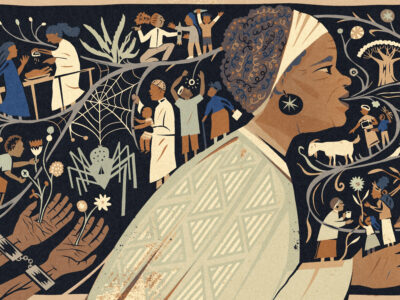
An illustration of an older woman surrounded by her family's history.

My Family’s Wisdom Is My Inheritance

WP_Post Object
(
    [ID] => 8183
    [post_author] => 15
    [post_date] => 2025-05-06 17:11:49
    [post_date_gmt] => 2025-05-06 17:11:49
    [post_content] => 

How South Asian rappers are honoring the diaspora—and hip hop’s roots.

Four gunshots and the sound of a cash register: In her 2007 hit “Paper Planes,” British-Sri Lankan rapper and singer M.I.A. (a.k.a., Maya Arulpragasam) interpolated these sounds between sharp lyricism that satirized Western perceptions of third world immigrants and the xenophobia that became especially rampant after 9/11. Against all odds, the world couldn’t help rapping along. 

Later, the song would be named one of the top five best of the decade by Rolling Stone, one of the most-streamed of the decade by Apple, and the greatest song by any 21st century woman+ by NPR. Its success was as much due to its catchy refrain as it was to its unexpected content, especially at the time: The song was arguably the first rap song from the South Asian diaspora to articulate the increasingly politicized identities of South Asian migrants and second-generation immigrants to a mainstream global audience.  

While the artist behind the song has since become a somewhat controversial figure, the impact of “Paper Planes” remains. And nearly two decades later, rappers from all over the South Asian diaspora have become a testament to the increasing globalization of hip hop, a subculture rooted in resistance, and its power as a language of global protest.

Founded in the Bronx during the 1970s, hip hop was born as a form of expression and resistance in Black and Latino communities, and as a genre, it’s only grown exponentially since. Throughout the 80s, as production and sampling technology became more accessible, hip hop began gaining traction on a wider scale, and eventually, was no longer limited to live performance, thanks to the popularity of shows like Yo! MTV Raps. By the 90s, it had broken into the mainstream, due to the meteoric rise of MTV, BET’s Rap City, and albums like Public Enemy’s “Fear of the Black Planet” achieving commercial success. This mainstream eruption of hip hop also coincided with South Asian Americans using rap to articulate their own immigrant identity for the first time—and now, in the streaming age, the subgenre has only boomed. 

Last August, South Indian rapper Hanumankind, who spent his early childhood in Houston, Texas, went viral for his roaring hit “Big Dawgs,” a song about defying cultural stereotypes. The music video, which has over 218 million views on YouTube, features riders on motorcycles zipping around a “well of death,” a spectacle common in Northern India—the video at times feeling like an homage to the stunt driving in the controversial but iconic music video for M.I.A.’s 2012 hit “Bad Girls.” 

Hanumankind’s success is the most recognizable contemporary example of the popularity and success of hip hop from the Indian diaspora, a success that feels inherently political due to the thematic explorations of his music. “He's able to use hip hop commercially to make himself successful, while also drawing on cultural and religious symbols that make his identity very much part of Indian and Hindu culture,” says Dr. Mirali Bulaji, a professor in race, global media, and nationalism at the University of Pennsylvania and co-editor of the 2008 book Desi Rap: Hip Hop and South Asian America

With the myriad of backgrounds and identities that South Asian diaspora rappers have, the politics that they intentionally or unintentionally convey is dependent on not only the lyrical content of their music, but the way they market themselves. This is something Hanumankind is clearly conscious of: His visuals draw on Indian and Hindu imagery, while his music style feels distinctly American (he has cited Texan rap group UGK as one of his biggest influences). But this approach isn’t unique to Hanumankind. For his album “The Long Goodbye,” for example, British-Pakistani rapper and actor Riz Ahmed (who goes by Riz MC) released a short film that played as metaphor for the wrought relationship between South Asian Muslims and the rise of the far right in Britain. Although the visuals and lyrical content of hip hop for the diaspora varies, the thread that connects the genre is the use of cultural and religious symbols to inspire representation as a means of empowerment in the face of oppression, both for commercial reasons and not. 

In an essay for Desi Rap, filmmaker and activist Raesham Chopra Nijhon writes that hip hop became a place for the broader spectrum of South Asian identity because it facilitated an accurate image of a more nuanced community than what mainstream Western culture had fabricated. As a genre, it offered a way for the South Asian diaspora to illustrate the nuances of racialization and how white supremacy functions in contexts independent from the racial dynamics that exist between white and Black people. The charged lyricism and dynamic cadences also offered a new way for South Asians, specifically in the U.S., to articulate their identity outside of the Black and white paradigm.

“It was a generation of young people who truly were looking for some way to express their identity, their angst about being othered, and finding ways to communicate that they were explicitly American yet global at the same time,”  Balaji says.

It was these elements, along with similarities in the syncopation of both Punjabi music and hip hop, that drew Punjabi Canadian Taj Bhangu, who goes by the name Lioness Kaur, to become a rapper. “When the West really looks at South Asian music, they really just see it in this really cliched way and I feel like hip hop's such a great art form for bridging those gaps,” says Bhangu. Defying these cliches, she believes, shouldn’t be wholly dependent on its visuals, but also the music itself. 

In an Instagram caption promoting her latest single, “Long Lost Brother,” Bhangu writes she wanted to fuse South Asian sonics with hip hop in a way that wasn’t orientalist. For her, this led to both a blending of sounds and culture: Most of Bhangu’s music intersperses exuberant strings with twangy sitar. In “Long Lost Brother,” this sitar doubles as the cyclical rhythm she raps over while she details memories of her childhood, with nods to both her Sikh Punjabi and Canadian upbringings: “Eating McDonald's, Roseborough Centre / Adventures and pulling pranks / Pulling Biji′s old crutches out / From under the bed.” 

In her song “Politics at Home,” Bhangu further details her experience living in a joint family home, something common amongst South Asian families. Throughout the song, Bhangu talks about the misogyny that many Indian Canadians witness growing up, and connects the struggle her mother’s family faced going back home to the “pind” (“the village” in Sikh) with issues of class and the neglect of certain areas due to government corruption: “The pind could be the hood at times / They grinded to make it here, only to return / Put their dreams in an urn / They yearned for their daughter, my mother.”

Watching one’s mother deal with the loneliness and helplessness of generational misogyny isn’t an experience unique to the South Asian diaspora, but rather, a ubiquitous one—which is part of why her music has found a broader audience. But for those within the diaspora, Bhangu’s music articulates that emotional isolation in a way that is uniquely familiar, combining the linguistics of Western hip hop with South Asian instrumentals. 

We see this use of more traditional instrumentals as a tool for blending cultures across the genre, including use of the dhol and chenda drums, traditionally played at religious ceremonies and cultural gatherings to bring communities together. Their exhilarating reverberation and almost unadulterated pace resembles that of the rapid yet succinctly meaningful rhythms fundamental to hip hop. In this way, the steady bass intrinsic to the sounds of both genres incites an intoxicatingly invigorating and empowering feeling that can be and has been used to rally and mobilize movements, political or otherwise. (Something producer Timbaland clearly appreciated in the ‘90s and early aughts, when he sampled South Asian instrumentals in multiple chart-topping hits like Missy Elliott’s “Get Ur Freak On” and The Game’s “Put You on the Game.”)

Of course, the South Asian diaspora isn’t homogenous, and South Asian hip hop isn’t either. It encapsulates countless subgenres, from the Punjabi hip hop that inspires Bhangu, which uses both the language and traditional instruments like the sitar and the dhol; to Desi hip hop, which encapsulates a combination of influences from the South Asian diaspora, including that of Indian Americans. 

Hip hop also isn’t the first or only form of protest music within the diaspora. South Asian protest music can be traced back to the independence movement during British colonial rule across the continent in the late 19th and early 20th centuries. According to Stanford ethnomusicologist Anna Schultz, the kirtan, a call-and-response form of singing and chanting Hindu mantras, was crucial in prompting protests against British rule and leading to political reform. “Through performance, they [kirtan performers] use signs in finely attuned ways to bring politics and religion together so that they are just one tightly bound unit of meaning,” Schultz said in an interview with Stanford Arts. 

What was once resistance against British colonial rule, however, eventually evolved into Hindu nationalism; and this evolution of revolutionary politics packaged into the commercialization of empowerment has not spared South Asian hip hop. For both genres of music, directly combating and even angering the systems that encourage whiteness, colonialism, and capitalism are central to their origins. But as contemporary identity politics prioritize the optics of representation, it's easy for rappers from marginalized communities to fall into the trap of using their art to partake in shallow representation politics rather than engage in the tangible interest of their communities. 

The obfuscation of hip hop’s political roots isn’t unique to the South Asian diaspora; however, its rising popularity within the diaspora coincided with the broader genre more generally becoming an asset for the commodification of resistance politics, something that has affected South Asian rap and hip hop today.

Balaji notes that despite many South Asian activists and rappers proclaiming hip hop as their tool of resistance, many don’t seem to demonstrate it in action. Last September, for example, Hanumankind performed “Big Dawgs” at a venue in Long Island in which Indian Prime Minister Narendra Modi was present, and was later pictured hugging him in front of the crowd. Modi has long been criticized for his Hindu nationalist statements and policies, barring Muslims from extensive citizenship and revoking the Kashmir region’s autonomous status.

While Hanumankind hasn’t been explicitly critical of Modi or his party, the Bharatiya Janata Party (BJP), in his 2021 single “Genghis,” the rapper, whose given name is Sooraj Cherukat, discusses the tribulations of street life in South India and attributes violence to the complicity of the Indian government: “But what you partying for? / We got issues in our nation 'cause there's parties at war / When our leaders aren't leading at the heart and core / And they tamper with evidence when you gon' file a report.” 

Still, none of this has stopped South Asian rap’s momentum, or its resonance. The subgenre also feels especially powerful for many South Asians today because of its mainstream popularity—giving voice and a platform to a diaspora that has long suffered from intergenerational trauma amongst the many ramifications of whiteness and British imperialism. It’s also unlikely to die down any time soon. According to Business Insider, the rise of South Asian talent from all over the diaspora, and the increasingly popular mashup of South Asian artists making music over Western beats, can be credited in large part to the rise of platforms like YouTube and TikTok. Consequently, Balaji predicts the ever-increasing popularity of these streaming platforms, combined with the ability for anyone to create their own audiences on social media and the effects of migration on immigrant identities, will only lead to South Asian rap becoming an increasingly globalized genre. 

“Artists in their respective countries are going to be able to articulate identities that are unique to their cultural and political circumstances,” says Balaji. We’re already seeing this today: Whether it’s Riz MC, Raja Kumari, or Yung Raja, rappers and artists across the diaspora are finding ways to honor their roots without straying from hip hop’s own. 

Bhangu is one of these artists, merging the lyrical syncopation and metrical soul that is found in both hip hop and South Asian music, to give voice to being a Sikh Punjabi woman in Canada.  

“I'm breaking a lot of barriers. As a girl, people don't really see that many female South Asian rappers, so it’s a shock for so many people,” she says. “But there are a lot of people who do support and dig deeper into the art and they feel heard.”

[post_title] => The Diverse Politics of Desi Hip Hop [post_excerpt] => How South Asian rappers are honoring the diaspora—and hip hop’s roots. [post_status] => publish [comment_status] => closed [ping_status] => closed [post_password] => [post_name] => south-asian-hip-hop-rap-desi-diaspora-global-music-genre-hanumankind-lioness-kaur [to_ping] => [pinged] => [post_modified] => 2026-08-03 22:52:28 [post_modified_gmt] => 2026-08-03 22:52:28 [post_content_filtered] => [post_parent] => 0 [guid] => https://conversationalist.org/?p=8183 [menu_order] => 19 [post_type] => post [post_mime_type] => [comment_count] => 0 [filter] => raw )
An illustration of various colorful characters honoring different aspects of the broader South Asian diaspora. They all appear to be marching towards the right side of the image, some holding signs with instruments (a sitar).

The Diverse Politics of Desi Hip Hop