WP_Post Object
(
    [ID] => 11126
    [post_author] => 15
    [post_date] => 2026-10-08 20:19:47
    [post_date_gmt] => 2026-10-08 20:19:47
    [post_content] =>
Why you should pay attention to Alabama's Statewide Amendment 3 this election.


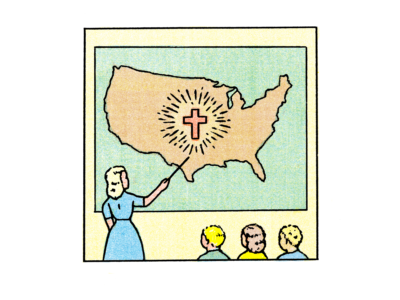
On the ballot in Alabama this November is a proposed constitutional amendment to policies on prayer and the Pledge of Allegiance in public K–12 schools.


Statewide Amendment 3 would compel local school boards to adopt rules requiring the Pledge of Allegiance at the beginning of each school day and allow student-initiated and student-led prayer. However, the amendment would not require students to participate in either the Pledge or prayer. If passed, students would have the right to opt out based on their beliefs and would be allowed to leave the classroom during either.


On February 5, 2026, the U.S. Department of Education issued updated Guidance on Constitutionally Protected Prayer and Religious Expression in Public Elementary and Secondary Schools, replacing previous guidelines from 2023. The update states that students, teachers, and school employees retain their constitutional rights to freedom of speech and expression, which includes engaging in personal, visible prayer. Although the United States Supreme Court previously determined that public schools and their employees (including teachers, coaches, and principals) cannot lead, organize, prescribe, or endorse prayer or religious exercises during school activities, Alabama has leaned into the Department of Education’s newest recommendations, which have created a voluntary religious expression loophole.


Back in May, the Alabama legislature approved the proposed amendment by attempting to explicitly enshrine student-led prayer into their state constitution to shield it from future legal challenges. Since April, Alabama law has required public K-12 schools to conduct the Pledge of Allegiance at the start of each school day. Additionally, students are permitted to “pray or engage in religious activities or religious expression before, during, and after the school day.”


The bill was introduced by Republican State Representative Reed Ingram, who says the United States was founded on Christian principles. He also says that today, there are families who don’t have time to implement faith-based activities, like prayer at home, because they are too busy working. (Though he notes he doesn’t personally know a family struggling with this.)


Both Republicans and Democrats  in the Alabama House of Representatives and Senate have expressed support for the proposal.


“This is an opportunity, not mandatory; it's a voluntary basis, student-led only,” Ingram explains. “Nothing is going over the PA, and it’s nothing that’s going to be led by a teacher or principal. The student only prays if they stand up and tell the teacher they want to pray this morning, and the class will have that option.”


Ingham adds that student-led prayer can be led by students of all religions and faiths, not limited to just Christianity, but that’s not clearly written into the bill.


Following the 2024 presidential election, Baptist News Global reported that the conservative thinktank, the Heritage Foundation, does not propose a mandatory federal school prayer program. However, its conservative framework aligns with efforts like this one to expand and protect individual religious expression in public schools. (The Heritage Foundation wrote the infamous Project 2025, a conservative blueprint to transform the federal government and social structures of the country at large.)


Other people of fath, including Christians, are against implementing this type of bill into state law, like Rev. Julie Conrady, Minister at Unitarian Universalist Church of Birmingham and Tuscaloosa. She says that this kind of amendment imposes or forces a religion onto individuals who may not believe in the faith being practiced during student-led prayer.


“Alabama has plenty of churches. If folks are not getting what they need on Sunday morning, Wednesday night, and all the other opportunities they have for religious freedom and expression during the week, then they need to choose a different school for their children,” Conrady says. “Because Alabama public schools should remain available for every student to be themselves, without being coerced to subjective practices, including this bill.”


About 25% of Alabamians do not identify with Christianity, according to a  Pew Research report from 2025. Conrady says this amendment  dismisses that figure.


“The Universalist Church is included in the fourth of [Alabamians of other faiths], which also includes Jewish, Muslim, Buddhist, Hindu, nuns, and the atheist, and the humanist,”  she says.


The minister adds she’s been talking with other religious leaders who oppose this type of bill in other red states, and they are planning to take action up to the Supreme Court if the bill passes in November.


“There will never be a separation between church and state,” says Zareen Dodwad-Khan, 46, who lives in Leeds, Alabama. Khan is Muslim and has three kids in public schools. “If the majority of people want prayer in school, I’m not gonna fight it and say I'm totally against it, because I’m a minority. And I teach my kids about their religion and identity at home.”


However, Khan also says she will likely vote “no” for the amendment in November.


Christy Johnson, 43, a mother of three kids who also lives in Leeds, says the amendment is all part of the growing Christian nationalist movement and MAGA.


“I’m a Christian, who believes in Jesus Christ. We pray every night before dinner. It’s like church, politics, and school have all been mashed together and rolled into one. Instead of the way it was intended to be, which is all separate things and separate parts of our lives,  they’re trying to make it all part of the same,” she says.  “As a parent and a Chrisitian, I think that’s very concerning, and even for people who don’t believe the same way I do.”


Alabama voters will decide if they agree on November 3, 2026.

    [post_title] => "There Will Never Be a Separation of Church and State"
    [post_excerpt] => Why you should pay attention to Alabama's Statewide Amendment 3 this election.
    [post_status] => publish
    [comment_status] => closed
    [ping_status] => closed
    [post_password] =>
    [post_name] => 2026-election-united-states-midterms-down-ballot-alabama-statewide-amendment-3-pledge-of-allegiance-student-led-prayer-church-religion
    [to_ping] =>
    [pinged] =>
    [post_modified] => 2026-10-08 20:20:34
    [post_modified_gmt] => 2026-10-08 20:20:34
    [post_content_filtered] =>
    [post_parent] => 0
    [guid] => https://conversationalist.org/?p=11126
    [menu_order] => 0
    [post_type] => post
    [post_mime_type] =>
    [comment_count] => 0
    [filter] => raw
)