WP_Post Object
(
    [ID] => 10457
    [post_author] => 15
    [post_date] => 2026-04-22 17:24:08
    [post_date_gmt] => 2026-04-22 17:24:08
    [post_content] =>
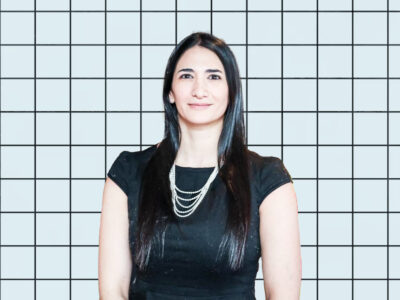
Diana Dajer on community, technology, and the radical work of democratic care.


In a world increasingly shaped by political violence, authoritarian reflexes, and digital harm, peacebuilding can feel abstract—or impossibly distant. But for Diana Dajer, peace is neither theoretical nor inevitable. It is something that must be built carefully, collectively, and often quietly, through democratic practice.


Currently, Dajer is manager of citizen participation with Fundación Corona, a non-profit based in Colombia. We met in Barcelona after Build Peace, an international gathering of practitioners working at the intersection of technology, conflict transformation, and civic life. Among many compelling presentations, Dajer’s stood out—not because it promised technological salvation, but because it insisted on something more demanding: deliberation, care, and faith in people.


From Conflict to Participation


Dajer’s path into democracy work began not with innovation labs or civic tech, but with the social disruption caused by violence and loss. As a lawyer, Dajer worked on human rights cases for victims of Colombia’s armed conflict early in her career. Later, she joined the Ministry of the Interior during peace negotiations with the FARC (Revolutionary Armed Forces of Colombia) guerrilla movement.


While there, she listened closely—to victims, civil society leaders, and government officials. What became clear was unsettling. Violence in Colombia was not only the result of armed actors, but of long-standing democratic exclusion. When local communities lacked meaningful ways to influence policy or solve local problems, violence became one of the few remaining channels for human agency—the capacity to shape their own lives.


“That’s when I understood,” Dajer says, “that participation is the real name of peace in Colombia.”


Rather than focus solely on peace after violence, she turned toward democracy itself: how it is built, who it includes, and how power is shared.


Technology for Care, Not Control


Years later, that commitment would take shape in Bogotá through a rare experiment: a multi-year effort to embed deliberative democratic processes inside city government. Working with the City Council and civil society partners, Dajer helped create a “laboratory of democracy” to test new ways of engaging citizens—especially in a political culture where protest had become the dominant form of participation.


“Protest is essential,” she says. “But when there is no dialogue with institutions, real solutions don’t happen.”


Bogotá’s leaders made a strategic choice to move incrementally. Rather than treating technology as a standalone tool for deliberation, they used it to solve specific process challenges in order to make participation more open, inclusive, and effective. Drawing on behavioral insights to encourage constructive engagement, the team launched a public communications campaign across social media. City Hall’s chatbot, Chatico, helped scale participatory budgeting and created a more transparent, inclusive channel for the civic lottery process. The city also relied on practical, digital tools, which included building websites to support hybrid citizen assemblies and bring in voices beyond those physically in the room. An educational course delivered through WhatsApp prepared participants in advance.


These early pilots evolved into a citywide deliberative process backed by Carlos Galán, a leader shaped by Colombia’s history of political violence. The aim was never speed or one-off spectacle, but trust—built gradually through structured listening and collective reasoning.


In Dajer’s work, technology is never the starting point. It is a tool, carefully chosen, subordinate to context. Used strategically, it can help narrow the distance between governing institutions and citizens, opening new possibilities while respecting its limits. But she emphasizes it should never be the destination.


This ethic traces back to her mentors in the global peacebuilding community, who taught her to ask first: What problem are we trying to solve? And just as importantly: Should technology be part of the solution at all?


Leading as a Woman—with Awareness and Solidarity


Leadership, for Dajer, has always been gendered. “It is more challenging than being a man,” she says without hesitation. Like many women in public life, she learned early to manage others’ perceptions—how she dressed, how she spoke, how authority was read onto her body.


But she is also careful to name her privilege: Gender does not operate alone. Race, class, indigeneity, and access compound exclusion in ways that shape who is heard and who is erased. Conscious of this, Dajer sees her role not just as a leader, but as a bridge—using her position to elevate other women who face even steeper barriers.


What has sustained her is community: women working together across civil society, refusing isolation. Feminist leadership, she believes, is collective by design.


Faith as a Source of Strength


What is less often visible in conversations about democracy and technology—but central to Dajer’s life—is faith.


When asked where she draws strength and clarity, she speaks not of ambition or certainty, but of prayer. One prayer, in particular, guides her: Make me an instrument of your peace.


“I don’t always know where I’ll be needed,” she says. “So I pray for openness. That I can serve—whether the work is big or small.”


Her faith is not about control or moral superiority. It is about humility, discernment, and love—qualities she sees as essential antidotes to polarization. In moments of exhaustion or fear, prayer is a way for her to realign with purpose, especially as she balances leadership with motherhood and family life.


Resisting Authoritarianism with Love and Hope


Dajer is clear-eyed about the global moment. Colombia, the United States, and many other democracies are experiencing renewed threats to the rule of law and separation of powers. For women living through these pressures, she begins with solidarity.


“I see you,” she says. “I see the burden.”


Her advice is strikingly feminist: Resist not only through opposition, but through care. Much of her current work focuses on narrative—how language shapes emotion, and how perceived chaos blends with fear-based messaging to fuel authoritarianism. Facts alone, she notes, rarely counter hate. What does are stories rooted in hope, love, and a shared future.


This extends to digital life. She urges mindfulness about what we consume and amplify online, recognizing how social media can trap us in cycles of rage. The alternative is not withdrawal, but grounding—deep human connection, empathy, and collective action offline as well as on.


Youth, the Future, and Feminist Democracy


Despite everything, Dajer is hopeful, especially about young people. Her organization, Fundación Corona, has shifted its strategy toward youth engagement, informed by research showing that future-oriented democratic narratives can reawaken belief in collective power.


When democracy is framed not as a failing legacy but as a tool to shape the future, young people also respond. Deliberative spaces—especially when designed with care—can help further transform this hope into action.


Building Peace Together


If there is one message Dajer offers to feminists working for democracy, it is this: Do not do this alone. Authoritarianism thrives on fragmentation. Peace, by contrast, is built through collaboration—across differences, across sectors, and across borders.


Agreeing on fundamentals is hard, and deliberation is slow. But isolation changes nothing.


For Dajer, the work continues—not as performance, or branding, but as service. As manager of civic participation at Fundación Corona, she remains guided by faith, sustained by solidarity, and grounded in care. Her work and ethos is a necessary reminder that democracy is not only a system. It is a practice. And women are already doing the work of keeping it alive.

    [post_title] => The Long Arc of Peace Is Built by Women
    [post_excerpt] => Diana Dajer on community, technology, and the radical work of democratic care.
    [post_status] => publish
    [comment_status] => closed
    [ping_status] => closed
    [post_password] =>
    [post_name] => diana-dajer-global-women-peacebuilders-profile-fundacion-corona-colombia-democracy
    [to_ping] =>
    [pinged] =>
    [post_modified] => 2026-08-03 20:52:31
    [post_modified_gmt] => 2026-08-03 20:52:31
    [post_content_filtered] =>
    [post_parent] => 0
    [guid] => https://conversationalist.org/?p=10457
    [menu_order] => 0
    [post_type] => post
    [post_mime_type] =>
    [comment_count] => 0
    [filter] => raw
)