WP_Post Object
(
    [ID] => 6581
    [post_author] => 15
    [post_date] => 2024-02-07 19:39:54
    [post_date_gmt] => 2024-02-07 19:39:54
    [post_content] =>
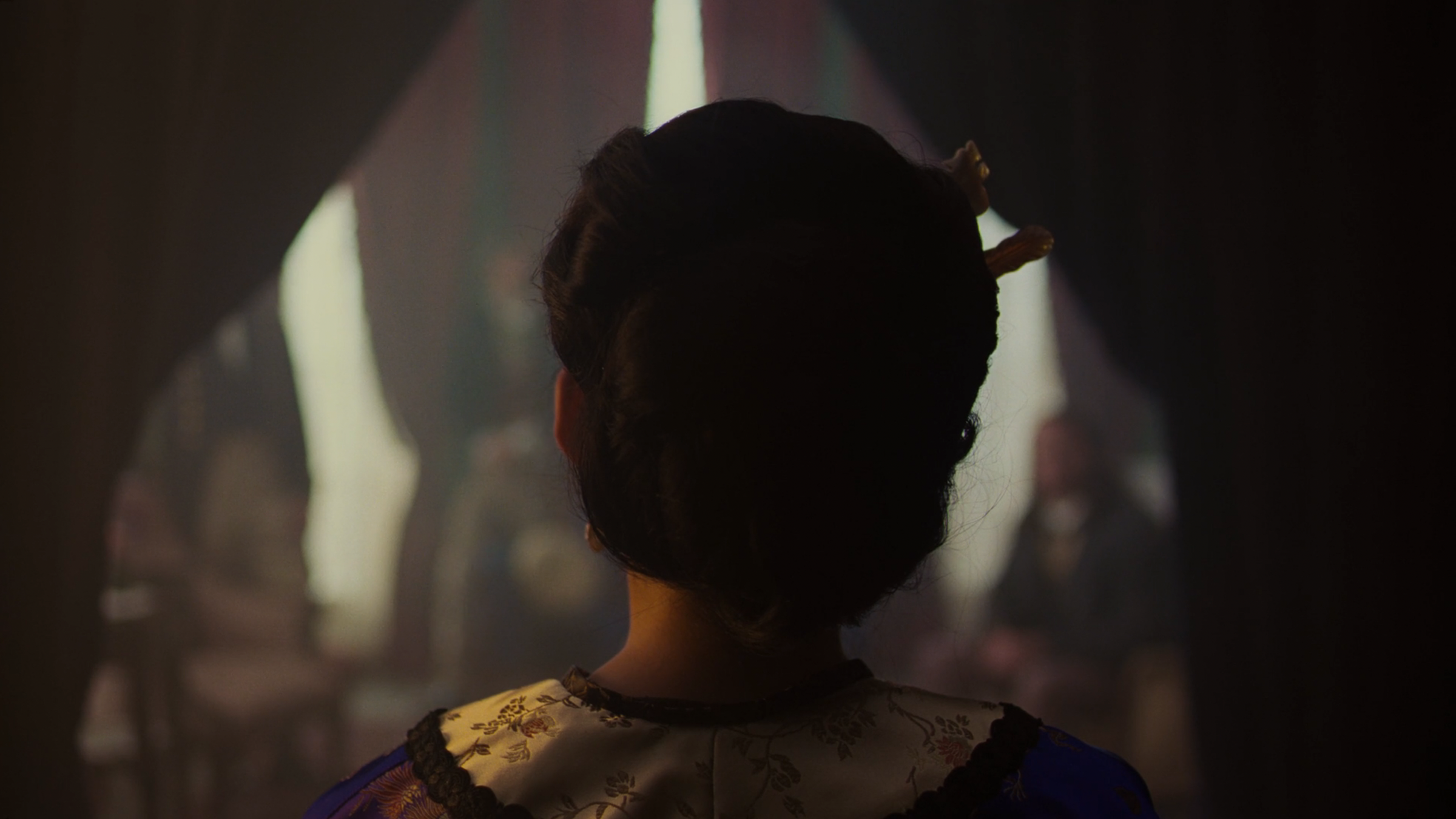
An interview with the writer-director of "Astonishing Little Feet," a short film about the first documented Chinese woman to come to America.


The first documented Chinese woman to come to the United States was told it would be temporary.


Just 19 years old (or 14, or 16—reports vary), Afong Moy was brought to America not as an immigrant, but as a curiosity, sold off by her father to a ship captain who promised he would return her on his next voyage back to Canton in two years. Moy's father wouldn't be the only one to capitalize off of her: Arriving in New York in 1834, Moy's main purpose would be to help two American merchants, the Carne brothers, sell "exotic" goods—essentially acting as a living mannequin, singing traditional songs, demonstrating how to use chopsticks, and, on occasion, walking for short distances on her bound feet as a way to solicit interest in the brothers' imported Chinese wares.


She would never return home.


Moy would go on to become incredibly famous—so famous she eventually met then-President Andrew Jackson while touring around the country. She would also die in obscurity, no record of her existence after 1850. Very little is known about her today, and even less about how she might have felt about her new life and exploitation. But a new short film seeks to capture a glimpse at both: Astonishing Little Feet, written and directed by Maegan Houang, reimagines what Moy's first experience "performing" for potential investors might have looked like—and the result is harrowing, an uncomfortable exploration of complicity, curiosity, and the history of Asians in America.


Below, we spoke with the writer-director about her film—the title pulled from surviving advertisements that bill Moy as the "Chinese Lady" with "astonishing little feet"—and the importance of not looking away from an ugly past.


~


The Conversationalist: How did you first decide you wanted to do a film about Afong Moy?


Maegan Houang: I was reading The Making of Asian America by Erika Lee, and there’s one line in it that mentions her. I just couldn’t believe what I was reading. It really struck a chord with me—I felt so connected to the idea that the first Asian woman most people in the United States saw was there to help someone else sell goods, just because she seemed particularly exotic and strange. I immediately thought there was a movie there.


From what I’ve read, it seems like Afong Moy was treated as a “good” herself, as a commodity.  I only knew the bare minimum about her before watching your film, and then I went down my own wormhole. What struck me is how young she was. Some reports say she was as young as 14—so to even call her the first documented Chinese “woman” is a misnomer.


She was between 14 and 18—max.


What resonated most with you about her story?


It was what you just said, that she was a commodity. That she was commodified to help other people make money, because she was such an interesting, exotic object. To me, there’s no way there’s not an element of hypersexualization there, which was really resonate to how I felt growing up. For context, I’m half Asian, and I grew up in Michigan, where there were mostly white people at my school. I grew up being perceived as Asian; I also grew up understanding that I was being seen as different—but no one was explaining to me why. To me, that’s a deficit in our education as Asian Americans. I think it’s easy to blame the system, but I think it’s our own parents, who are immigrants, who really don’t—understandably—know the history of the country they moved to, and the history of how Asian Americans have been treated, and therefore have no reason to tell us. So we’re thrown into a system where we don’t really understand all this context and all this history.


In high school, when I was being really hypersexualized and sexually harassed, as many young women are, there always seemed to be a layer of cruelty, of dehumanization. I didn’t understand it, and I felt like it was my fault. As anyone who’s a woman of a minority, we all understand that there’s no one reason for everything. I can't sit here and say it's a hundred percent that I'm Asian. I don't know. But I think what I wanted in this film was—if other people know her story, maybe they'll better understand their own context as young women in our country. Because there’s no way that kind of introduction to Asian women—which continued throughout the 1800s with P.T. Barnum, with different circus acts [including Moy]—doesn’t impact our present day understanding of what and who an Asian American woman is.


Obviously, my life is not nearly as horrific as Moy's. I’m not trying to create a false parallel of trauma, because I actually really despise that. But at the same time, I think it's really important to know that there might be things about our existence and the way we're treated that really have nothing to do with us, so we don't internalize them. And that's why I wanted to make the movie, and why I wanted it to be hard to watch. Because the other thing is, I don't think there's anyone watching the film, including myself, who kind of doesn't want to look at her foot.


I was going to ask—you made the decision to show Moy's bound foot. Why give in to the curiosity of the viewer?


I think we're all ultimately quite complicit in the systems of exploitation and capitalism of even our own bodies and people. As a filmmaker, it was instinctual to some degree. But also, people feel bad at the end of the movie, because they did participate in it. I think that's fine. It's okay to feel bad. It's okay to have to question your own role in the way that we live our lives. I'm not trying to create a false equivalency. Objectively, things are better than they were then. You and I are not people who were trafficked from Asia to make people money.


It's not that our experiences are equivalent, but it is shining a light on the historical origins to certain narratives and how they're baked into Western and American culture on some level. Even though it's not nearly as bad, or as surface level.


Yeah, totally. I do believe in historical consciousness. It was only forty years ago, Stanley Kubrick's Full Metal Jacket. That's not very long ago.


Talk me through what was important to you in portraying the other characters in the film, especially Captain Obear and the Carne brothers.


Sometimes, I think we over-intellectualize, or—it's not a real word, but—evil-ize people, trying to prescribe more evil intention to certain things that I fundamentally don't think is there. All of them just want to rise in class. And it has an abhorrent result. But none of them think they're a bad person. None of them think they're doing something wrong. They're just operating within the rules of our society and our system. I was happy when I would screen it and people would laugh at certain things because that shows a discomfort with the absurdity of the past; we can't imagine being that way. But I think people were. So I wanted them to be realistic, but hopefully inspire people to think about the parallels that we might still have—which is also why I wanted to show the foot from their point of view, because sometimes, when you finally get what you wanted, it's really horrible, but it doesn't change the fact that you wanted it. And that's an uncomfortable space.


So much of what you're talking about is complicity and capitalism; that if you're conditioned to believe that this is the only way to succeed in life, then you become blinded by what you're sacrificing morally or otherwise in the process to achieve it.


Yes.


Which, going back to the choice to show the foot—I do want to discuss the very intense and visceral scene of the unwrapping in a second, but first, I was really struck by your choice to switch back and forth between perspectives in the film, almost as if we're both being perceived and also the perceiver.


In early screenings, I actually got notes from people that it should be more in her perspective. And I was so bummed out by that note—because that's the easy way out. Because if you're aligned with her, you are like, "I'm aligned with the victim, I'm aligned with the person being oppressed." And I think that's trauma porn, a little bit. If it's fully from her perspective, we get to feel okay, and I think that's dishonest.


It was interesting the extent to which this note would mostly come from men. I'm like, why do you need me to spell this out for you? Why is that something you need?


That's interesting, given the scene where her foot is being unwrapped—there are very obviously a lot of parallels to assault, to rape. It feels like a rape, I think, to the viewer. And that felt very intentional. I wanted to just talk a little bit more with you about your decision to approach it that way, and her translator Atung's place in all of it as the one who actually unwraps her foot while the other men watch.


All he does is unwrap her foot, and it feels like assault. I would imagine that's what it feels like to her.


Yes.


It's horrible, but it's also obviously what the men want to see, and then they're also a little bit stunned by it. With the translator, he is trapped. He just has to do what they say—this is how he eats, this is how he lives. Now, it's not enslavement, but it's imprisonment through capitalism, it's imprisonment through just needing to survive. So he doesn't want to do it, but it's what he has to do. Those are just the terms that you accept sometimes when you immigrate to a new country where you're a minority, and they're unpleasant, but they're also just reality. Unfortunately, people don't really stand up to power—but he tries. She tries. Meanwhile, [the merchants] aren't doing their own dirty work. They're observing it.


The voyeurism of it was really striking to me.


Not to be lame, but I'm a student of Hitchcock. And his whole thing was that everyone has a dirty little mind. I was trying to play with that idea, which, again, doesn't work if you're only in her perspective. You have to feel like, oh, I am sort of drawn in to this act, but I know I shouldn't be.


I really loved that the film was in Cantonese, and how that added another layer to her isolation within it.


My family is from Hong Kong, they speak Cantonese.


Mine, too.


It's really painful because Cantonese is the oldest spoken Chinese language, and when going back thousands of years to characters that we don't know how to read anymore, it's Cantonese that helps guide you, not Mandarin. It's also accurate—they would've spoken Cantonese.


It's also another way of feeling othered, being disconnected from the language around you. She couldn't speak English, which means she couldn't understand what was being said if it wasn't translated for her.


A lot of people say, well, women didn't have agency [back then], and that's something I just don't agree with. Women had agency within the confines of their circumstance, and they did employ their agency however they could. It's a myth that we have about women in the past, that they're just sitting there while things happened around them. Moy is deploying whatever agency she has. It just may not work, but that doesn't mean that she doesn't have it and that she doesn't try to use it and that she doesn't feel proud of where she's from in her culture. I imagine her dad was like, you're going to go show people what China's really like; that she was told she was going to help educate Americans. That he told her some kind of fable, because that's what people do to survive. And ultimately, she met Andrew Jackson—which, there's no way when that was happening, she wasn't like, "I'm a badass." That's just the reality of power. It's better to be an oppressed person with status than to be an oppressed person without it.


What do you think Afong Moy dreamed of?


I think she dreamed about home. There are moments even I dream about this, and I am obviously born in America, but I still dream of going back home. It's not to live there, but it's to touch and feel the culture that I don't have as easy access to. It's why I would want to go get dim sum, or why I would want to get Hong Kong breakfast, or—my family's also Vietnamese—why I sometimes just really want a bowl of pho. And I imagine in that time period, all those kind of home comforts, particularly food, would be so out of reach and so inaccessible that I would probably, if I were her, really yearn for some of those things.


On the flip side, I also think if I were her, I would dream of other types of fame, of success within the system that she's trapped within. Or freedom, which in that situation, might have been someone marrying her. I don't know.


Of course, we can't know. I was just curious what you imagined when trying to get in her headspace.


No, no, I love that question. It's so interesting. I mean, you just try to think how it would feel to be so far from home, and so poor—and disabled, which is a whole other thing. Women with bound feet were trapped in their houses basically, because they couldn't really walk. It was a status thing, and people were proud of it, but it's still really fucked up. We've tolerated a lot from the way men have tried to disempower us, and she really embodies a lot of those longstanding trends.


It feels fair to say Moy wasn't just commodified for her ethnicity, she was also commodified for her disability. Although there's overlap between the two.


Yeah. Well, it's clearly stemmed from a fetish in Chinese culture that it was more attractive to have a really small, tiny foot, to the point where everyone was maiming themselves—or each other, with the help of older women—to achieve this strange fetish. You could argue foot binding in China was also a commodification of women, because you're making women into an object that's appealing to men. I think it's a pretty abhorrent custom, in that it limited women's ability and mobility to do so many things. Now the tricky thing is not exceptionalizing or exotifying that custom as morally better or worse than other customs that other people have done to women in other cultures all around the world. It's disgusting, but I also would argue that there's a lot of disgusting things we do to ourselves to make us interesting to men that we'll all look back on in different ways, to different degrees, that become more or less acceptable depending on what's in fashion. You could argue weight loss and disordered eating is a different version of self harm and mutilation for men. Or attempting to stay young. And some people hurt themselves to do that.


I was going to say, binding feet in an attempt to keep them as small as when you were a child—could also be a means of sexualizing youth, in an extreme way.


Yeah, totally. I just view it as another norm that was really brutal, but that still has parallels to norms that we live in at the moment.


What else do you hope people take away from the film?


I just hope people think about Asian Americans in history, and how that pertains today. And also their complicity within a capitalist system of exploitation, and not in a self-flagellating way. There's a bit too much of that in our current society, and I don't think acting out of shame for the past or the present is going to resolve how our system works. We have to shine a light on things that are horrible, but also have empathy for ourselves, and for people in the past—that they're doing the best they can because of systemic factors instead of trying to look at everything so individually. That's not going to be how any of our current crises get solved. Climate change, for example, won't be solved by one person. It's going to require and necessitate collective action to fight back against the system that we live in, and it's going to require sacrifice from a lot of people that don't want to sacrifice, and questioning why do we place some lives above other lives?


I don't know. Those are just the things I thought about while making it, but I'm also fine with people taking away whatever they want, because I do think as artists, we aren't able to really control how our work is interpreted, and we have to let that go. White men love the movie, actually—I get the most compliments from white men, weirdly.


But I mean, I made it for us. People are like, "Who did you make it for?" Other Asian American women.


You can stream "Astonishing Little Feet" on Vimeo here. This interview has been edited and condensed for clarity.

    [post_title] => What Did Afong Moy Dream About?
    [post_excerpt] => An interview with the writer-director of "Astonishing Little Feet," a short film about the first documented Chinese woman to come to America.
    [post_status] => publish
    [comment_status] => closed
    [ping_status] => closed
    [post_password] =>
    [post_name] => afong-moy-first-chinese-woman-america-astonishing-little-feet-short-film-maegan-houang-interview
    [to_ping] =>
    [pinged] =>
    [post_modified] => 2026-08-04 17:49:01
    [post_modified_gmt] => 2026-08-04 17:49:01
    [post_content_filtered] =>
    [post_parent] => 0
    [guid] => https://conversationalist.org/?p=6581
    [menu_order] => 65
    [post_type] => post
    [post_mime_type] =>
    [comment_count] => 0
    [filter] => raw
)