
WP_Post Object
(
    [ID] => 6915
    [post_author] => 15
    [post_date] => 2024-05-10 18:37:13
    [post_date_gmt] => 2024-05-10 18:37:13
    [post_content] => 

In hiring a babysitter of my own, have I become the mother I used to nanny for?

When the young woman appeared at my door, braless, pink-haired, and smelling faintly of cigarettes, the only thing I could think about were my shoes. 

My daughter had recently gone from being a baby to a toddler, and for the first time in her short life, I’d landed a dream job that would require me to return to the office after a year off. As preparation, I’d spent hours looking for a specific pair of clog boots, the exact shoes I believed I needed to walk into my new office as a new(ish) mom, newly 40, finally in her power era. They had to be either Swedish Hasbeens or from the No. 6 Store—the ones with the shearling on the inside that came to the top of the ankle. Even though I couldn’t really justify spending $400 on a pair of shoes, I was obsessed. Something deep inside me told me these boots would complete a vision of myself that I had been fantasizing about for over a decade: practical but stylish, sophisticated but understated. I felt a primal need to have them. 

Then, this manic pixie dream babysitter, complete with the prerequisite tattoos and dyed hair that changed color every week, knocked on my door, and showed me all at once where my girl boss fantasy had come from. I hadn’t put it together until that moment, but my new shoes were the exact same clogs that belonged to the mother I used to nanny for when I was my sitter’s age. Instantly I was transported back to the long oak table in their dining room, the one where I’d linger after my duties for the day were completed. For years, I’d watched this mom strut around Brooklyn in those clogs, living the life I’d desperately wanted. And somewhere in my subconscious, the boots had buried themselves as a symbol—of adulthood, of success, of stability. All the things that seemed so far away from me in my early twenties, when I first started working for her. 

And in a way, they were. Fresh out of drama school in London, I had moved to New York at 23 with hopes of becoming a working actress, but instead had become what I call a “professional auditioner.” On average, I would go to something like four auditions a week, but nothing ever stuck. I was terrified of failure, terrified of everything—but more than anything else, paralyzed by what I would do if I actually got any of the parts I went in for. 

Like most struggling actors, I was also broke. To make rent, I worked as a babysitter for a family in Brooklyn Heights, watching their two boys over the course of three years. Really, I was their nanny, but that word was verboten in the wealthy creative enclave that I worked under. The title would have legitimized my work, and no one—not the parents who paid me under the table, not the children I watched, and especially not me—wanted to admit that it was an actual job. 

To be honest, the kids and I were never a great match; they were devoted to sports, obsessed with talking about soccer and basketball, while my athletic acumen was limited to a two hour yoga class. This didn’t seem to matter much, and the kids didn’t seem to mind, either. I would shepherd them from whatever practice they’d begged to sign up for to whatever music lesson they were being forced to take, make them dinner, give them their bath, kiss their scraped knees—and the whole time, I’d wait for her to come home.

Whenever I babysat, whether I was making broomsticks for a quidditch match in the park or listening to the same joke for the hundredth time, I was mentally elsewhere; rehearsing lines, begging my agent to get me an audition, texting some boy. But the moment Mom walked through the door, I was present; and suddenly, I never wanted to leave. At seven each night, she would swoop in from her job as a commercial producer, dressed in clothes that were always subtle but expensive, on trend but never tacky. She’d kiss the tops of her boys’ heads, take her coat off, and start telling me about her day. 

Her stories about office life, about school meetings, her gossip about other parents, left me enraptured. I would study her with a mix of curiosity and fear; I wanted a version of her life, and at the time, it felt painfully unattainable. 

When she was at work and the boys preoccupied, I’d spend my days gazing at the awards on her shelves, the artwork on her walls, the beautiful crown molding in her apartment. But it was more than that. As she showed me the secret corners of an adult woman’s existence, I in turn revealed my own desires, not only to her, but to myself. She listened to my ideas with respect and responded to my opinions with interest, allowing me the space to begin to think I might have some big potential I hadn’t yet realized. That maybe I, too, was in possession of the same exceptionality that I saw in all the parents at pick up at her children’s fancy alternative elementary school: the playwrights, the performance artists, the Pulitzer winners. I wanted to make something that mattered to the world—because I wanted to matter, and felt like I didn’t. 

It was in those thrilling ten minutes that I spent with her each night, trying to soak up everything, that I felt like my life could finally have direction. In those brief interludes between her taking off her coat and me putting on mine, she was a confidante, a mentor, a hopeful oracle giving a glimpse of my future—and, I realize now, a mother to me, as well, in a time where I needed it. 

Even so, I found myself battling a dark depression for about a year, flailing and miserable, grappling with the fact that my career wasn’t going anywhere. Eventually, it began bleeding into my work. There was a devastating moment when the nine-year-old, home sick with a stomach bug, caught me crying over yet another rejection. I thought he’d been asleep, and when he walked in on me, it seemed so taboo, I told him I was only practicing for an audition. I felt guilty, like I might have introduced something dark and scary into his perfect childhood—but truthfully, I was humiliated. I could have been so many things, and in that moment, I was a failed actress who wasn’t even allowed to call herself a nanny.

Eventually, I decided to go back to school, to change course. I gave up on acting at the same time I stopped working for the family. Leaving was fine, healthy even, for all of us. The kids, their parents—especially Mom and me—had quickly discovered that we had outgrown the need for each other.

Still, she left her mark. Eleven years later, I’d walk into my new job as a TV producer, in a secondhand version of her clog boots; in a way, a secondhand version of the woman I believed I was supposed to become. I’d amassed my own awards, my own crown molding—but it hadn’t really hit me how much I’d replicated my former boss’ life until my own babysitter showed up, a mirror image of my younger self, now reflecting back who I’d become on the other side. 

I was working from home when our sitter first started with us, and watching her sleepy, wrinkle free eyes gaze upon my child was jarring. Not only because it’s always strange to watch someone else mother your baby, but also because I’d only ever played the babysitter’s part, and now, I’d been cast in the titular role, the one I’d always wanted. I suddenly found myself performing a kind of character, speaking a little too loudly when I was on a work call, hoping to impress the 22-year-old rocking my daughter to sleep in the next room. 

Each night, before she left, I began to ask her about her life. How long had she been with her boyfriend: Several years, and they planned to get married. What did she want in the future: To work with kids in a small town away from the city. She told me she couldn’t wait to live without roommates and asked my opinion on her next tattoo. Once she gave me a handmade bracelet made of special crystals she had sourced herself. They’d help me through my next big pitch meeting, she said. I almost cried at the thoughtfulness. (She never gave my husband anything.) Was I becoming to this young woman what my former boss was to me, I wondered? Did I even want that? 

While I mostly feel grateful towards my previous employer, I still harbor some resentment towards her, too. It was clear to me that while she’d likely had her own salaried caretaker when she was little, the mother I’d worked for had never taken on that job herself. She hadn’t needed to. As such, she’d never given a second thought to the intricacies of my well-being once I stepped foot outside of her apartment, and hadn’t ever really cared for me beyond those ten minutes she gave me each night. I made $20,000 a year working for her, and never had health insurance the entire time. She never offered it to me, and I couldn’t afford it. She trusted me with her children’s safety, with their lives—and yet there was no one I could trust with mine, no one to cover my urgent care bill when I got the flu, no one I could turn to when I needed someone to take care of me.   

Of course, my relationship with my sitter is imperfect in its own ways. Like all 20-somethings, she’s subjected to her own hardships; friends let her down, great apartments pass her by, she works a second job catering while her peers all seem to get full time jobs with benefits. Sometimes she arrives at our home with a cloud of sadness that I know too well. Once settled, however, the fog disappears, replaced with a supernatural ability to be present with our baby; then, the next week, she’ll be wishy-washy, often canceling right before she’s supposed to come over. 

Recently, she flaked on us again during a stressful moment when she was very much needed. My mother in law told me that there was always something a little off, something a little “unreliable about the kinds of girls drawn to these jobs.” Even though in part, I agreed with her, I was also offended—not only on her behalf, but on behalf of my younger self, too. I knew intimately how precarious this time in a young person’s life could be; how, for me, being “the babysitter” was fun and easy at first, then slowly became a twisted reflection of the life I didn’t have, the life that felt so far away, no matter how hard I tried to get to it.

So I try to extend some grace to the girl who has come to look after my child. Whenever she’s late, I remind myself that this is not what she felt put on this earth to do, that for all of us, this is temporary. While I can’t give her the opportunities she’s chasing, the life she’s running towards, I hope to give her the same ten minutes a day that, with enough accumulation, might make their own kind of guidance, draw their own kind of map, like the one that had been given to me. Sometimes I wonder if one day she might go through the same thing I’m experiencing now, and hire a babysitter of her own, continuing this cycle of nannies and mothers, mothers and nannies. 

Often I find myself surprised by the largeness of these maternal feelings—how far they can extend out from my daughter towards everyone around me, how they extend to her, too. Once, I came home and found the babysitter asleep on our bed, the baby tucked against her, both of them breathing peacefully, their eyes flickering back and forth beneath their lids. I was almost dizzy looking at her, a vision from my past come to sleep in her future self’s bed. All these versions of who I was, who I am, and who I have yet to become, were suddenly in the room with me, asking me to take off my clogs before finding a way to nestle against these tender bodies. But of course, I did not do that. Instead, I covered them both with a blanket, closed the door gently behind me, and let them sleep.    

[post_title] => The Babysitters Club [post_excerpt] => In hiring a babysitter of my own, have I become the mother I used to nanny for? [post_status] => publish [comment_status] => closed [ping_status] => closed [post_password] => [post_name] => babysitter-nanny-mother-mom-relationship-childcare-motherhood-care-work-labor [to_ping] => [pinged] => [post_modified] => 2026-08-04 17:10:42 [post_modified_gmt] => 2026-08-04 17:10:42 [post_content_filtered] => [post_parent] => 0 [guid] => https://conversationalist.org/?p=6915 [menu_order] => 58 [post_type] => post [post_mime_type] => [comment_count] => 0 [filter] => raw )
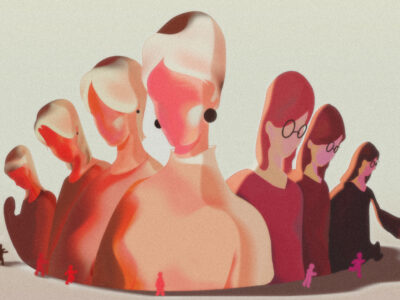
An illustration of seven different illustrations of the same woman through different stages in her life, in a color gradient of reds and burgundies. They are all looking down at a semi circle underneath them, where tiny children toddle around.

The Babysitters Club

WP_Post Object
(
    [ID] => 5446
    [post_author] => 15
    [post_date] => 2023-01-28 08:44:15
    [post_date_gmt] => 2023-01-28 08:44:15
    [post_content] => 

As if the gig economy wasn’t exploitative enough, it’s now filling a gap in another exploitative industry that values profits over human lives—both the lives of those needing the service and the lives of those providing it. 

When I was in college, I worked with California’s In-Home Support Services (IHSS) as an aide in the homes of disabled people. My job was to support people in completing activities of daily living (ADLs): I swept and mopped, did dishes and laundry, dusted blinds, decluttered bedrooms, grocery shopped, picked up medication, gave rides to doctor’s appointments. I was proud of my work; I made it possible for people to stay in their homes, rather than having to enter long-term care. I liked my work. I was also paid low wages for my work. 

But even at minimum wage, the people I worked for would never have been able to afford to pay me, relying instead on state assistance. Today, ten hours of “homemaker” services like those I provided would be around $1,127 a month. The average monthly disability payment—for those who manage to qualify—is $1,234. Not all disabled people qualify for Social Security disability programs or for state programs like IHSS, however, and those that do often do are often not assigned enough hours to meet their needs, if they can even find workers. People do not like the pay, the hours, the conditions; it’s hard work. 

Because society does not provide disabled people with the support they need to live independently and safely, many people have been forced to fill the gaps for themselves via services that weren’t designed for them, but have become a lifeline. As a result, gig economy workers, such as rideshare drivers and shoppers, are now inadvertently assisting with ADLs and entering the care and support workforce. An Instacart driver is buying supplies someone can’t access because they’re bedbound, can’t go to the store, and don't have a support worker or a social network to help. A Taskrabbit worker is putting a mobility device together because it wasn’t delivered assembled, and the client can’t do it independently, even if she could get it up the two flights of stairs to her apartment. A Lyft driver takes someone to the doctor because there’s no public transit, and no paratransit service. 

Technology has already profoundly destabilized labor. It’s changed the way we eat, access medical care, interact, and lead our daily lives. But nowhere is this destabilization more striking than in the form of an army of gig workers across the globe meeting our every conceivable need, including, inevitably, care for elders, children, and disabled people. The gig economy has been a tremendous boon for the disability community, opening pathways of connection, communication, resources, and employment to people who are more at risk of being socially, economically, and medically isolated. But while the rise of the gig economy has expanded access to society for disabled people, it has become a double-edged sword: that access has been at the expense of gig workers, some of whom are disabled themselves. As if the gig industry wasn’t exploitative enough, it’s now filling a gap in another exploitative industry that values profits over human lives—both the lives of those needing the service and the lives of those providing it. 

For the time being, it is necessary to recognize that among its many functions, and in the midst of an inherently exploitative and harmful business model, the gig economy can assist some people with ADLs in a way that is not currently replicated by any other usable option. In some cases, the gig economy itself has problematically replaced those other options, such as stores relying on Instacart instead of staff to shop for customers, or Uber and Lyft pushing out the taxi industry, including legally required accessible cabs—often claiming this will result in lower costs for consumers while actually increasing pricing via surge metrics or simple rate increases once they choke out the competition. We must engage with this understanding in order to effectively criticize the gig economy and the way people use it: If a disabled person orders groceries from an app, taking advantage of a discount to make them affordable, telling them to “order directly from the store” is useless if the store no longer offers delivery, or doesn’t take SNAP for delivery orders, or has additional charges that make the groceries too expensive. The question is not “why are you ordering via app when you know it’s bad” but “what are the barriers to alternatives, and can we solve them.”

Conversation about the gig economy’s role in the disability community often ends up highly individualistic, targeting people rather than the system and implying that disabled people are uniquely exploitative or unwilling to look for alternatives. But talking about app-based end issues (e.g., Uber exploits people) rather than the problem that needs to be solved (e.g., people need to be able to get around) elides the option of discussing whether better solutions exist, and if they do not, whether it is possible to make them happen as a community, acknowledging a collective social responsibility rather than blaming individuals for forced choices. 

These conversations also notoriously sour very quickly, and tend to skirt the larger implications of what it means to become part of the care economy, one designed to generate profits for a few at the expense of many, and one where disregard for disabled and elder lives makes that profit possible. The collapse of one exploitative industry into another should be decried, but the problem is not the people who need these services. Some disabled people need support to lead full lives, and that support requires workers who deserve justice and respect. 

According to a 2021 Pew poll, nine percent of workers in the U.S. were current or recent gig workers, and while not all were involved in care, a not insignificant portion were, or were using their gig jobs to support unpaid care work. These workers join 3.6 million health and personal care aides as well as other care professionals, a number that is projected to grow with an aging population. Among them are many disabled people taking advantage of the “convenience” of gig work—flexible days, hours, and tasks that come, of course, with the same exploitation, including harsh ratings and penalty systems, abuse from customers, and being forced to use their own equipment for work. 

Both traditional and gig care workers are underpaid, expected to work long hours, provided with minimal benefits, and not offered protections from workplace hazards such as harassment or abuse. On-the-job injuries are very common in traditional care work and a serious risk for gig workers, as well. These workers lack access to health insurance, disability insurance, paid leave, sick leave, and other benefits that might help them manage existing or work-acquired disabilities, unless they are unionized, which is rare. They are treated as disposable. The gig economy’s entry into this field is a feature, not a bug, for shareholders and executives, another source of throwaway labor they can charge a premium for.

This exploitation is also bound up in racism; Black people, Southeast Asians, and Latinx workers are more likely to be employed in these economies, where they are paid less and treated worse than their white colleagues, viewed again as a source of cheap, easy come/easy go workers. Wage theft is rampant across the care industry, even as gig apps constantly change payment policies to cheat workers. In New York State, for example, more than 100 care workers won a historic $450,000 wage theft judgment in 2021, after working 24-hour shifts that could extend over as many as five days at a time. Poor working conditions, abuse, and low pay are also driving a home health worker shortage

This is an entire economy of capitalist abuse, enabled because society does not view disabled people as worthy of dignity, and therefore does not respect the workers who support them. This includes workers who are indirect care workers and who would not necessarily describe themselves as such if asked.

Historically, there has been a resistance within the disability community to talking about exploitation in this context. Even as workers organize and some disabled clients support them, there’s a lingering hesitancy and fear to engage with an unavoidable tension: If you agree that gig workers, home health providers, and others who assist with ADLs are being exploited, and you use these services, you are admitting that you contribute to that exploitation. That’s a sobering and uncomfortable statement to make, but it is a necessary one to engage with when considering solutions to this problem—especially since worker exploitation does not begin or end with disability services, illustrating a broader social issue that requires a response from everyone. 

This issue is also largely not within the control of disabled people themselves. Unless disabled people are independently wealthy, the hours and wages of people such as in-home care providers are generally set by the state or an agency, if they are available at all—forcing disabled people to choose between accepting exploited help, or accepting no help at all, and potentially going into a long-term care facility, where workers are notably not treated well, either. All of this—lack of access to formalized care workers, poverty that constrains options, and few available resources—is pushing people toward the gig economy. 

Sometimes, there is no good choice, because of decisions society has made about whose life has value and should be accommodated. This is a no-win exploitation situation, and it’s one many disabled people who need these services find profoundly unjust. Some people like to evoke “no ethical consumption under capitalism” here, misusing the phrase to suggest there’s nothing to be done and we should all throw up our hands. But perhaps people who commonly opine on how we are collectively trapped in capitalist systems that we can only escape through collaboration should acknowledge that when they are targeting disabled people for being trapped in, and relying upon, those systems. The focus specifically on disabled people who use these services rather than other clients is also…striking. Especially when the move instead should be to discuss what collective action one could embark upon to secure independence for disabled people AND justice for workers. 

People who benefit from these services are not powerless to change care workers’  circumstances when they work collectively. Disability mobilizations in solidarity with home care workers and aides calling for better pay, benefits, hours, and working conditions have proven effective. Caring Across Generations, for example, has modeled a collaborative approach to fighting exploitation in caregiving settings. Similarly, disabled service users can and have mobilized to support gig workers, as when Instacart shoppers called for an app boycott in 2021. Many are eager to live in a world where their liberation is not dependent upon others’ oppression, but they can’t get there by themselves. 

All workers deserve fair pay, safe working conditions, and dignity, and that should be a common goal that unites all of us. The notion that there is inherent opposition between disabled people and the workers (many likely to be disabled themselves) who provide them with the services that they need to survive is predicated on the incorrect belief that these two groups aren’t on the same side, and it is a deep distraction from the real enemies: Capitalism, disablism, and racism, and their relentless consumption of humanity for profit. 

While working with IHSS, many of my clients didn’t like having to ask for help, especially those who were newly disabled; our intake conversation was often one of push and pull, what’s available, what’s imaginable, and what the two of us could improvise together regardless of what the state said was possible. The act of helping my clients was not exploitative, and their desire to get that help was not wrong. A just world for workers requires an end to capitalism, not disabled people: My state-determined wages and hours were the real enemy, and ultimately exploited us both. 

Disabled people are worthy. The people who help them are not automatons. Disabled people collaborating to meet their needs will lift everyone up, but they also need to be listened to and respected when they express their needs and ask for sustainable and just help with meeting them. When those needs are unfamiliar, rather than pushing back, it’s an opportunity to learn, grow, and collaborate—with both sides equally valued. Neither care workers nor disabled people are at fault for the system they are trapped in, and they are better served by fighting that system together than they are apart.

[post_title] => When Gig Workers Inadvertently Become Care Workers [post_excerpt] => As if the gig industry wasn’t exploitative enough, it’s now filling a gap in another exploitative industry that values profits over human lives. [post_status] => publish [comment_status] => closed [ping_status] => closed [post_password] => [post_name] => gig-economy-care-work [to_ping] => [pinged] => [post_modified] => 2026-08-04 19:35:16 [post_modified_gmt] => 2026-08-04 19:35:16 [post_content_filtered] => [post_parent] => 0 [guid] => https://conversationalist.org/?p=5446 [menu_order] => 96 [post_type] => post [post_mime_type] => [comment_count] => 0 [filter] => raw )
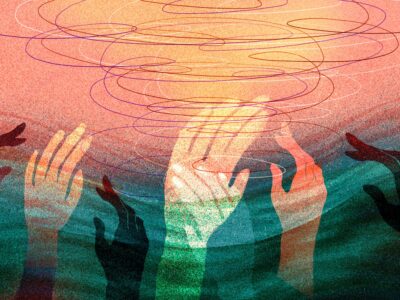
An illustration of a variety of hands reaching upwards from a turbulent body of water, clearly drowning. Above the water is a frazzled spiral of sky. No one is coming to their aid.

When Gig Workers Inadvertently Become Care Workers