
WP_Post Object
(
    [ID] => 9828
    [post_author] => 15
    [post_date] => 2025-12-12 10:00:00
    [post_date_gmt] => 2025-12-12 10:00:00
    [post_content] => 

An essay about fibroids, and the time I bled on the floor at work.

Several years ago, I had an operation to remove eight uterine fibroids. One was roughly the size of a grapefruit; another, an orange.

Despite the hour-long cardio kickboxing class I was then taking five times a week, I had been putting on weight—probably just muscle mass, I’d deludedly thought at the time. But my abdomen was noticeably protruding, and I had gone from having heavy periods to bleeding uncontrollably at times that were unconnected to my usual menstrual cycle. I looked and felt like I was four months pregnant, minus the motherly glow: all of the eerie, alien sensations of pregnancy with none of the compensations of a yearned-for baby. I could feel the fibroids’ taut mass when I woke up in the morning, like a brick in my belly, and I had to pee constantly—so much and so often that I was afraid to go anywhere without knowing where the nearest bathroom was. I knew, as you often do, that something was wrong.

Fibroids are uterine muscle cells that grow in a ball or clump. They can be as small as a pea, or as large as a full-term baby. They can grow inside or outside of the uterus, directly on the uterine wall, or from a “stalk” made of smooth muscle cells.

They’re also incredibly common: Many women have them, but you wouldn’t necessarily know unless you had symptoms. Black women are more likely than other women to get them, and more likely to need treatment. Larger fibroids and those that grow at the end of the vaginal tract can make penetrative sex painful—something I never experienced, though they did shrink my once prodigious libido, as neither the word “fibroids” nor the thing itself is a known aphrodisiac.

In rare cases, fibroids can resolve on their own. Mine had to be surgically removed because they were causing me to bleed as suddenly and copiously as if I’d been stabbed—including one time when I bled through a super-plus tampon onto the floor at work. A male coworker had pointed out the small puddle of blood forming beneath my desk, wondering aloud where it had come from: Was the ceiling weeping blood, like something out of a horror movie? I pretended I had cut my leg and fled to the ladies’ room, eventually returning, mortified, to mop up the blood with a Lysol wipe. My coworkers were kind enough to accept, and even pretend to believe, the bizarre claim that I had somehow injured my leg, when both were visibly bare and intact.

It wasn’t the first time my fibroids had made themselves known. Several months earlier, I’d bled through an ultra-absorbent tampon at a movie theater while watching a documentary about Ruth Bader Ginsburg. It was summer; I was wearing pale green shorts. When I stood up, rivulets of blood poured down the backs of my legs and pooled in my sneakers.

Another time, despite the presence of another super-plus tampon and a gigantic, diaper-like maxi pad, I ruined a set of white sheets on a bed in a house my parents were renting. My sister-in-law—a social worker who’s seen worse—helped me change the sheets.

Then there was the time I started bleeding heavily while waiting in line for an international flight. The floodgates opened just after an airline employee summoned me, by name, to the check-in desk, where I was asked to produce my passport for a random extra security check. As I boarded the flight, I squeezed my legs together and prayed. During takeoff, I pressed a scratchy airplane blanket into my lap like a tourniquet.

It was in a period of painful transitions that my symptoms were most acute: six failed job interviews and three funerals, two for grandparents and one for my parents’ oldest and closest friend. All the black clothes came in handy. When it got hot again, I bought a hideous, tent-like maxi dress made of thick black cotton. I hated how it looked—too funereal for summer—but loved that it was ankle-length and absorptive. 

After months of heavy bleeding and diagnostic tests—CT scans and ultrasounds and endless consultations—I had a myomectomy. At some point I started looking into what causes fibroids; as with so many medical problems women suffer, the answer was a combination of, “We don’t know” and “Try losing some weight.” Being overweight or obese is a risk factor, as is consuming red meat and alcohol, especially beer. Nulliparity, or never having given birth, is another. I am neither sylphlike nor fat. My weight has fluctuated over the years, but rarely by more than 15 pounds. As far as I know, I have never been pregnant. I have often consumed red meat and alcohol, including beer, though I’ve attempted to rein in these vices as I’ve gotten older. While I don’t blame my love of beer and bacon for my fibroids, it was hard to read about the risk factors without feeling indicted—and, in my case, mulish and defiant. (“Especially beer?” I muttered to myself while researching. “Who came up with this list, my mom?”)

Thinking it might shrink my fibroids to a manageable size or keep them from growing back, and liking the idea of grandkids, my sweet-natured, supportive dad once gently floated pregnancy as a possible solution. I’ve always been ambivalent about motherhood and resent pressure and unsolicited advice of any kind. But it wasn’t a crazy suggestion. I am in a stable and happy long-term relationship with a man who is also ambivalent about parenthood, but would have done his best to knock me up if I’d asked.

Getting pregnant wouldn’t necessarily have solved the problem, either. Pregnancy, with its wild hormone fluctuations and variable uterine blood flow, can shrink fibroids, but it can also cause them to grow. Fibroids can also increase the risk of a miscarriage, premature birth, breech birth, or placental abruption, a serious condition in which the placenta separates from the inner wall of the uterus, potentially causing the person giving birth to bleed heavily and/or cutting off the baby's supply of oxygen and nutrients. In other words, an unexpected pregnancy could shrink my fibroids—or kill me and my baby. And regardless of what I want, part of being a woman is knowing that millions of people around the world would find either scenario acceptable.

After the surgery, I was out of commission for six weeks. It took me a week to have a normal bowel movement again, and more for my energy and strength to return. I was forbidden to engage in any physical activity more strenuous than walking. Just out of the operating room and still doped up, I’d slurred that I was from a family of nurses and social workers (I didn’t mention the lawyers), and that I thought that nurses were underpaid saints. The nurse on duty said, “I like you! I’m gonna put you in one of the good rooms.” It was a private room on a high floor with a stunning view of the East River. My partner folded his large frame onto a tiny couch-bed in the corner and slept there for several nights.

On the first night, two nurses helped me drag my body out of the hospital bed so I could pee. One of the incisions opened up, sending a hefty splash of pooled blood shooting out of my side. It wasn’t painful and I was too out of it to be frightened, but my partner looked like he’d seen a baby get hit by a car. The nurses muscled me back into bed. It turned out I needed a transfusion, which meant lying still for several hours while feeling the prickly, itchy, ghostly sensation of being pumped full of a stranger’s blood. When I moved the wrong way, I’d inadvertently tug on the IV catheter, sending a hot, throbbing ache skittering across the surface of the skin where they’d stuck the needle.

When I was discharged, a kind but stern nurse with a mellifluous Caribbean accent told me not to do any heavy lifting for at least three weeks. “That means no housework—no mopping or vacuuming, nothing like that,” she said. My partner and I grinned at each other. “I mean it, now!” said the nurse, misinterpreting our amusement and sending us into a fit of laughter. She seemed to think I was the kind of woman who can’t stand to keep a filthy house no matter what the doctor says, rather than the kind who lived, for years, alone and happy in a tiny, dusty, book-filled bachelor pad I almost never cleaned.

Fibroids can grow back, and mine did, necessitating another procedure just one year after the first, and another one after that. Each time, I was newly amazed by my body’s fragility and resilience: the skin, so easily pierced, slowly knitting itself back together again; the scars, so angry and ropy and red, fading to pale pink, sliver-like threads over time.

Harder to quantify was the return of my strength and confidence after years of feeling conspicuous and out of control. The fibroids heightened my anxiety—unless or until I get a hysterectomy or undergo menopause, they can always recur. Not knowing how my own body is going to behave at any given moment makes it difficult to stay sanguine. But maybe because I am close to a number of women who regard their own bodies with shame and ambivalence, I’m determined not to be ashamed of mine. I take a certain amount of perverse satisfaction in telling the story of the Time I Bled on the Floor at Work. When it happened, I was profoundly embarrassed but not ashamed, and I still find the whole episode deeply, darkly funny.

A friend once said that he hates bodies and wishes we could exist as pure spirits, free from the constant, undignified labor of keeping our corporeal forms healthy and strong. I often feel this way. At the same time, I am in awe of my body and consider its restoration a minor miracle. I may never be able to master it fully, but I’m grateful I could rebuild and transcend it.

[post_title] => Female Trouble [post_excerpt] => An essay about fibroids, and the time I bled on the floor at work. [post_status] => publish [comment_status] => closed [ping_status] => closed [post_password] => [post_name] => uterine-fibroids-myomectomy-personal-essay-womens-health-bodies [to_ping] => [pinged] => [post_modified] => 2025-12-14 00:58:10 [post_modified_gmt] => 2025-12-14 00:58:10 [post_content_filtered] => [post_parent] => 0 [guid] => https://conversationalist.org/?p=9828 [menu_order] => 0 [post_type] => post [post_mime_type] => [comment_count] => 0 [filter] => raw )
An illustration of a woman's lower legs. She's wearing black heels and blood is dripping down her leg, forming a puddle on the floor beneath her.

Female Trouble

WP_Post Object
(
    [ID] => 6921
    [post_author] => 15
    [post_date] => 2024-06-24 12:23:28
    [post_date_gmt] => 2024-06-24 12:23:28
    [post_content] => 

Two years after Roe v. Wade was overturned, an honest assessment of how things could get worse.

Nine months before the 2016 presidential election, I declared in an op-ed that if a Republican were to win in November, Trump would be “the best-case scenario for American women, not the worst.” Having covered politics and abortion rights for years, I’d been wrong in my predictions before—but never quite as spectacularly as I was about that.

It’s not that I thought the plainly misogynistic Trump would be good for women, but rather that Senators Ted Cruz and Marco Rubio—two of the highest-profile GOP alternatives to Trump at the time—would be worse. I wasn’t alone in thinking so: That February, a left-leaning columnist for Glamour had labeled Trump the “Best Republican Presidential Candidate on Women's Health Issues” because he was noncommittal on abortion and had taken less extreme positions overall than other Republicans in the race. Trump was and remains amoral and unprincipled, but, at the time, he was considered somewhat of a wild card, whereas Cruz and Rubio were running as ideologues with carefully cultivated right-wing brands. Both wanted to force women to carry their rapists’ babies to term, and Cruz vowed to prosecute Planned Parenthood if elected president. I was surprised that Trump—who was pro-choice for years and never cared about abortion, except as a means of shoring up support from the religious Right—turned out to be the most ruthlessly effective of the three at rolling back women’s rights nationwide.

Two election cycles later, I’m relieved that that op-ed was never published. But being so wrong about the former president taught me an important lesson: What Trump believes, says, or avoids saying has little bearing on what he does—and countless people will suffer as a result of his whims. He is a creature of impulse, guided by an outsized ego and often sharp political instincts. Barring some unforeseeable and extraordinary event, he will be his party’s nominee in November. But what matters far more than “who” leads the GOP ticket is how life would change for abortion seekers with a Republican in the White House next year.

We already know the consequences of anti-abortion laws and policies because we’ve been witnessing them for years, more commonly but not exclusively in red states. Thanks to our shockingly inadequate healthcare system, millions of pregnant people are already suffering—and not just those who need abortions. States with the cruelest abortion bans have the highest maternal and infant mortality rates in the country: Give birth in Alabama, for example, and you are more than four times as likely to die during or shortly afterward than you would be in California. In states like Idaho, Missouri, and Texas, abortion is a felony in nearly all circumstances; and with Roe overturned, healthcare providers across the country must now weigh their responsibilities to their patients against the risk of being sued, stripped of their medical licenses, or jailed—a choice with deadly consequences for patients. A 2022 survey of medical students found that a majority, around 58 percent, were unlikely or very unlikely to apply to residencies in states that restrict abortion, meaning we’re on the brink of a serious shortage of qualified OB/GYNs in the states where they’re needed the most. We’ve already seen the consequences of this play out: A January New Yorker story posed the question, “Did an Abortion Ban Cost a Young Texas Woman Her Life?”—and, as the author’s extensive reporting makes clear, the answer is a resounding “Yes.” Yeniifer Alvarez-Estrada Glick, the young woman in question, died while pregnant in 2022. After trying and failing to save Glick’s life, a doctor attempted to deliver her baby prematurely via C-section. The baby died, too.

Glick’s health problems, coupled with the poor care she received as a low-income, uninsured, undocumented Mexican woman in a small rural town in Texas, all contributed to her death. But according to the four outside experts The New Yorker asked to review her medical file, doctors likely could have saved her life by explaining how risky it was to continue her pregnancy and, if she wanted one, performing an abortion. Texas’ cruel abortion law made them afraid to do so.

If a Republican wins the presidency in November, the landscape will be even bleaker. While Congress is unlikely to pass federal legislation banning abortion nationwide, a Republican presidential administration wouldn’t need a law to accomplish that goal. As with the repeal of Roe, anti-abortion activists have been laying the groundwork for a backdoor ban for decades. And while Trump recently claimed that he would not support a federal abortion ban (a stance he’s likely to waffle on), anti-abortion activists don’t need him to. Below are the three main strategies they are pursuing—despite stiffening opposition from a passionate but fragmented pro-choice movement—to make a national ban a reality:

  • A Republican HHS Secretary could override the FDA’s approval of mifepristone, one of the two drugs most often used to induce abortion. Mifepristone was first approved by the Food and Drug Administration (FDA) in 2000; but in 2022, anti-abortion activists, hoping to curb access to the drug, filed a lawsuit challenging the FDA’s approach to regulating it. The Supreme Court’s June ruling in that case preserved access to mifepristone for now, but left the door open to further challenges down the road. And the next president’s Health and Human Services (HHS) Secretary could still override the FDA’s approval of the drug, effectively ending what has become the most common method of abortion nationwide.
  • An anti-abortion administration could resurrect the Comstock Act. Comstock is a 150-year-old anti-obscenity law which prohibits using the mail to send or receive “obscene” items, potentially including anything that could be used to perform an abortion. Under the Telecommunications Act of 1996, Comstock applies to the internet, as well, meaning that even discussing abortion online could lead to up to five years in prison, $250,000 in fines, or both. Medical abortions performed via telemedicine, wherein providers consult with patients online and send the necessary pills by mail, are just as safe and effective as those performed in person; but Comstock would prevent doctors from sending the pills at all, severing a lifeline connecting women in red states and remote, rural areas to needed care. (Between April 2022 and August 2022, around 4 percent of total recorded abortions in the U.S. were performed via telemedicine; as of May 2024, that figure had risen to 19 percent.) Because Comstock is a federal law, it would most likely invalidate state laws, which means a Republican Department of Justice could federally prosecute doctors and drug companies nationwide. It could also shut down all U.S. abortion clinics by barring them from receiving any abortion-related materials via mail.     
  • An anti-abortion Republican president could reinstate the global gag rule. The rule bars foreign nongovernmental organizations (NGOs) from using any funds, including non-U.S. government funds, to provide abortion services, information, counseling, referrals, or advocacy, effectively forcing NGOs outside of the U.S. to choose between receiving U.S. global health assistance and providing comprehensive healthcare. It has largely been in place under Republican administrations since 1984, but the Trump administration expanded it to apply to an unprecedented range of agencies and public health programs, many of which serve poor women in rural areas. When women desperate to end a pregnancy are kept in the dark about their options, they have more abortions, not fewer—and many end up dead or seriously injured as a result. The International Women’s Health Coalition wrote in a 2019 report that the rule “contributes to arbitrary deaths by impeding the provision of life-saving care.” Marie Stopes International, one of the largest global family planning organizations, estimated in 2017 that Trump’s expanded gag rule would increase abortions in Nigeria by 660,000 over four years, and that 10,000 women would die as a result. Precise figures are difficult to come by, but it’s clear that women have, as predicted, died as a consequence of this cruel and pointless policy. (Healthcare providers also expect the repeal of Roe to continue harming women worldwide.)

Whether or not the above scenarios come to pass—and there is little doubt that, if a Republican wins the White House in November, the last one will—the harm already caused by state abortion bans shows that a national ban would be an unmitigated disaster. Nor would it stop people from getting abortions. Women end pregnancies for a myriad of reasons, some more common than others. They do so whether it is safe, legal, and accepted, or dangerous, criminal, and condemned. And they do it whether or not their parents, lovers, spouses, friends, neighbors, religious leaders, strangers, or elected officials approve. The only difference is how many will get the quality care they need, and how many will suffer and die.

Forcing a person to carry a pregnancy to term and give birth against their will is a brutal act under any circumstances. But in a country like the U.S., with its threadbare social safety net and policies that vary wildly by state and region, it often means forcing them into poverty, as well. As Bryce Covert explained in 2023, “The states that have banned abortion are the same ones that do the least to help pregnant people and new parents make ends meet.” Most states with abortion bans offer little help to pregnant workers; none guarantee any control over work schedules, paid family leave, or paid sick days. When Lationna Halbert of West Jackson, Mississippi, found herself unexpectedly pregnant in 2022, she told In These Times, she cried and cried. She was earning just $8.50 per hour and already had a four-year-old son. She and her partner were not ready for another baby, nor could they afford to raise one. When Roe was overturned, an abortion ban automatically went into effect in Mississippi, shutting down the state’s last remaining clinic. By the time Halbert realized she was pregnant, it was too late: She couldn’t afford to travel to another state to get an abortion, and it was impossible to get one safely and legally in Mississippi. She delivered her second baby in a hospital with no hot water.

As I have written for The Conversationalist before, the same officials who worked so tirelessly to      overturn Roe have also fiercely resisted using public funds to help vulnerable women like Halbert. This is because the same politicians who romanticized her fetus have nothing but contempt for Halbert herself, and for all the other people—who are, not coincidentally, mostly women—being forced to have babies they do not want and cannot provide for. That contempt is matched only by their sociopathic indifference to the children who make it out of the womb—the kind who already exist, only to be routinely denied housing, healthcare, and basic nourishment by their state governments. (Nor do these politicians have any empathy for living, breathing children facing crisis pregnancies of their own.)

If pregnant women are the primary and intended victims of U.S. abortion policy, which is rooted in a desire to control and punish them, their children, partners, and families are collateral damage. It is bad for babies to be unwanted; bad for already existing children to be deprived of needed resources; and bad for the couple experiencing an unexpected pregnancy to be forced to have a baby that one or neither wants. It is delusional and insulting to pretend otherwise. Anti-abortion zealots’ cozy fantasies of domestic fulfillment have nothing to do with the daily lives of women forced into motherhood.

Even under a Democratic administration, women are already being investigated, prosecuted, and punished for various pregnancy outcomes, including miscarriages. In 2023, Brittany Watts, a 33-year-old Black woman in Ohio whose water broke prematurely, leading to a miscarriage, was charged with abuse of a corpse—a felony punishable by up to one year in prison and a $2,500 fine. Doctors told Watts her fetus was nonviable, and she spent a total of 19 hours in a local hospital over the course of two days, begging for supervised medical help. Concerned about the potential legal ramifications, the hospital repeatedly delayed her care. Watts ultimately gave up and miscarried alone in her bathroom. When she returned to the hospital for follow-up care, a nurse rubbed her back and told her everything would be okay—then called the police at the behest of the hospital's risk management team. As Watts was lying in the hospital recovering, police searched her home, seized her toilet, and broke it apart to retrieve the remains of her fetus as “evidence.” Watts’ charge was dismissed after a grand jury declined to indict her: Her prosecution was meant to shame and punish her, not protect her fetus. But prosecutors have always been more inclined to target women of color, immigrants, and/or poor women in these types of cases—because it’s easier to win against someone who can’t fight back. Watts’ experience also specifically demonstrates how little our healthcare system values the health and well-being of Black women, who are three times more likely than white women to die from a pregnancy-related cause.

One of the bitterest ironies of conservative reasoning on abortion is that, followed to its logical conclusion, it will impede tens of thousands of people who desperately want to become parents or expand their families from doing so. When the Alabama Supreme Court ruled in February that embryos created through in vitro fertilization (IVF) are children, three of the state’s IVF providers suspended their services, fearing legal repercussions. (Alabama voters in a longtime Republican stronghold were so alarmed that they elected a pro-abortion rights Democrat to Congress a few weeks later.) A number of prominent Republicans, including Trump, have since affirmed their support for IVF, but that hasn’t stopped many of them from co-sponsoring the Life at Conception Act, a piece of federal legislation that would ban nearly all abortions nationwide and does not include a carveout for IVF. Nor has it stopped those same Republicans from blocking a recent bill that would have protected the procedure. Leaders of the nation’s largest Protestant denomination, Southern Baptists, have recently voted to condemn the use of IVF, as well.

While Republicans’ support of openly fascist and deeply unpopular abortion policies has become a political liability for the GOP, it’s simultaneously become a human nightmare for the rest of us. Trump’s failed attempt to contain the political fallout from Arizona’s recent revival of an 1864 ban is an object lesson in locking the barn door after the horse has bolted. If abortion is the same as infanticide, as most anti-abortion activists insist that it is, then no person seeking one would be exempt from prosecution, whether you’re 9 years old and a man rapes you, 11 years old and your grandfather rapes you, 12 years old and a man rapes you, 33 and desperate to end your pregnancy, 33 and suicidal, a married mother who doesn’t want another child, or unexpectedly pregnant at 45. Even white, married, heterosexual moms are not exempt. The state of Texas recently forced lifelong Texan Kate Cox to travel out of state for an abortion she needed to protect her life and fertility. Cox, a married mother of two who wants more kids, was told that her third pregnancy was nonviable: The fetus was unlikely to survive, and the best-case scenario was that she might give birth to a baby who would live in anguish for a week or less. Alternatively, she could experience a life-threatening uterine rupture and need a C-section and/or a hysterectomy, potentially losing the ability to have more children in the future. Forced sterilization, which is one outcome Texas’ barbaric denial of care could have imposed on Cox had she lacked the means to travel out of state, is internationally recognized as a human rights crime. No wonder she fled.

It’s a sad truth that things can always get worse, even for relatively privileged Americans. Until it did, many legal experts considered it highly unlikely that the Supreme Court would overturn Roe, upending nearly 50 years of precedent and stripping American women of a right guaranteed to us for half a century. But many U.S. residents, particularly in rural areas and throughout the South and Midwest, have been living under de facto abortion bans for at least the last decade. A right is only guaranteed when it can be freely and easily exercised by all; for many U.S. residents, the cost of abortion—the procedure itself, the travel, the lodging, the childcare costs, the ability to request and take time away from paid work—is too high. One in five U.S. women must travel more than 40 miles one way to access care; in some rural areas, that distance is 300 miles or more. Under a national abortion ban, the situation will only grow more dire. People have taken and will continue to take risks that range from reasonable but frightening (crossing the border to buy pills from a pharmacy in Mexico) to desperate and potentially fatal (shooting themselves in the stomach). Denying care to women who need it permanently alters their lives, most often not for the better.

There is no reason to believe that the proudly anti-democratic GOP will uphold democratic norms or respect the popular will, and little reason to trust the Democratic Party, which has, in recent years, canceled elections, failed to defend abortion rights, and repeatedly defied its own voters. But focusing on how abortion politics are hurting the GOP or improving Biden’s chances misses the point. Like miscarriage, abortion stops an embryo or a fetus from becoming a baby. Restricting it tortures women, children, and families and rips holes in communities. Policies that harm actual, living people must be stopped, and those who promote them held to account. Voting is one fragile, inadequate tool. With so many lives at stake, we’ll need more.

[post_title] => The Reality of a National Abortion Ban [post_excerpt] => Two years after Roe v. Wade was overturned, an honest assessment of how things could get worse. [post_status] => publish [comment_status] => closed [ping_status] => closed [post_password] => [post_name] => national-abortion-ban-republican-gop-president-election-roe-v-wade-womens-rights-united-states-policy [to_ping] => [pinged] => [post_modified] => 2026-08-04 17:06:13 [post_modified_gmt] => 2026-08-04 17:06:13 [post_content_filtered] => [post_parent] => 0 [guid] => https://conversationalist.org/?p=6921 [menu_order] => 54 [post_type] => post [post_mime_type] => [comment_count] => 0 [filter] => raw )
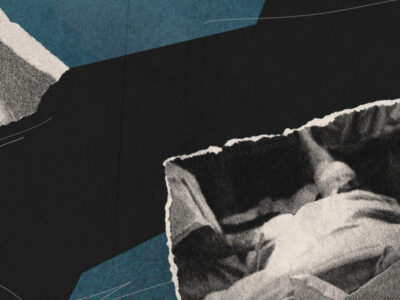
A collage with a black background and flashes of deep blue. In the top left corner, a fragment of a black and white photo of a woman seemingly naked, her hand to her mouth. In the right bottom corner, a black and white photo of a surgery room. The black running through the center conveys a rip between the two.

The Reality of a National Abortion Ban

WP_Post Object
(
    [ID] => 5461
    [post_author] => 15
    [post_date] => 2023-01-17 08:00:00
    [post_date_gmt] => 2023-01-17 08:00:00
    [post_content] => 

Nearly seven months later, a case for why some healthcare providers in Nigeria are getting nervous.

Rose sits in the waiting room of a Planned Parenthood clinic in Isolo, Lagos, waiting to receive her prescription for oral contraceptives. While her husband supports her decision, her family does not, and she is here despite their insistence on her having more children before trying them, believing that they can take away her fertility. That she’s even able to get these contraceptives would have been unthinkable just a few years ago: Rose has never heard about Roe v. Wade, but she remembers when it was impossible to consider family planning at all, let alone have access to it, and fears returning to those times.

Before organizations like Planned Parenthood Federation Nigeria (PPFN), sexual and reproductive agency were impossible for most women in the country. “Many women who visit Planned Parenthood defy their husbands to get contraceptives, secretly making choices that save their lives despite facing consequences if they are ever found out,” says Zainab Mukhtar, Communications Officer for PPFN. "We advocate method by choice and exercising free will, not only for married women but sexual and reproductive health choices for young people." 

In Nigeria, many women cannot access reproductive health services without spousal permission, and if unmarried, they are shunned for considering it. Even health workers cite God's omniscience when refusing care: While trying to obtain birth control, one unmarried woman recalls her male doctor condescendingly telling her, "Ah, madam, do you want to test God? Where is your husband? Go and bring [him]." This provider bias, where health workers lead with disapproval when consulted for reproductive and sexual health care, has only made it harder for many women in Nigeria to access the care they need—a bias that becomes far more severe when it comes to abortion. 

This bias is likely to only get worse: Sani Mohammed, a sociologist, activist, and the executive director of the Bridge Connect Africa Initiative, says the repeal of Roe v. Wade last summer has had ripple effects beyond the U.S., and creates justification for more limits on women's rights worldwide, often detering advocacy efforts and slowing momentum behind progressive bills. “It sends a signal to anti-abortion advocates in Nigeria that if the U.S. can do it, why not us?” Mohammed says. “It will take longer for Nigeria to make abortion services open and legal because it sets a precedent and justification, rescinding all the work done today and making it harder to make a case in favor of sexual and reproductive rights.”

Sani was careful in choosing his words, so as not to risk the little progress made, adding that it took a long time to even get this far. Bridge Connect Africa Initiative focuses on women’s rights and reproductive health rights, pushing for policies and campaigns around gender-based violence, and access to education for young girls to help inspire more informed social and reproductive health choices, especially in northern Nigeria. But it’s been an uphill battle. 

Except in situations where having the child puts the mother's life at risk, Nigeria is governed by two laws that criminalize abortion: the penal code in the north and the criminal code in the south. When discussing restrictive sexual and reproductive laws in Nigeria, people often think of the north, associating it with Sharia law and terrorism, but southern Nigeria is predominantly Christian, comprising of Catholics and evangelical Christians, and their stance toward abortion and sexual reproductive rights is similar to hardliners in America. In Enugu State, in southeastern Nigeria, for example, a coalition of civil society organizations claimed that the comprehensive sexuality education (CSE) in the public school curriculum equates to pornography and demanded to stop sex education in schools.

While abortion is a crime in Nigeria, it is also a cause of shame to be pregnant out of wedlock, regardless of the circumstances of the pregnancy. In northern Nigerian culture, a girl is considered old enough to be married and have children at 11 years old, but an 11-year-old girl is not allowed to seek out family planning methods. Young girls who get pregnant from rape still have to carry it to term, and to avoid scorn and ostracism, often find unsafe means to hide their shame. Without legal recourse, these girls either neglect the children after they are born or resort to unsafe abortions, regardless of the risks. Sani recalls witnessing two cases of hysterectomies performed on 14-year-old girls. "It is already difficult to have access to safe abortion, and other reproductive health devices that help girls as young as 12 to 14 stay safe and live healthy lives." 

According to a report by the Population Reference Bureau (PRB), about two million women and girls aged 15 to 45 have abortions in Nigeria every year—a staggeringly high number over three times the estimated number of abortions in the U.S. Of these women and girls, 6,000 die, and 500,000 live with complications from unsafe abortions, despite some doctors risking their licenses to provide off-record/off-book abortion care. It is also the fourth leading cause of death for lower and middle income women, according to the Academy for Health Development (AHEAD), a not-for-profit health research agency in Nigeria.

Organizations like PPFN—which is a member of the International Planned Parenthood Federation (IPPF)—are doing their best to combat this, but similar to America, misconceptions about their services abound. Like in the U.S., the majority of Planned Parenthood Nigeria’s services are preventive, especially against HIV/AIDS, cervical cancer, and malaria. They provide maternal and child care through malaria prevention and treatments, especially intermittent preventive treatment (IPT) for pregnancy malaria, which is a critical public health problem in Nigeria. Also like in the U.S., PPFN provides post-abortion care for women and girls having spontaneous abortions or miscarriages, and those who attempt incomplete abortions using crude objects to remove an unwanted pregnancy “by any means necessary.” Sometimes these objects are found still inside the women. 

Would PPFN provide abortions in uncomplicated cases? Zainab, with a careful laugh, says they would, but that it’s “tricky.” They are damned if they do and damned if they don’t. If they don’t help, the patient could seek an unsafe abortion elsewhere that could lead to death; if they do, it could mean breaking the law. Nevertheless, PPFN will not turn away a patient in need, and will perform abortion services within legal exceptions—that is, when the birth of the child directly puts the life of the mother in mortal danger.

Perhaps if Nigerians were more open about abortion, it could inspire a legislative debate similar to the one in Ireland, and allow a platform to discuss the benefits of legalizing abortion, providing safer choices for women and girls through government funding and training for health care providers. But with the Nigerian health sector being one of the most underfunded in the world, it does not leave much hope.

While Zainab believes it is too early to say what the real effects of the overturning of Roe v. Wade will be on Africa, she predicts the heightening of fear and possibilities of regression. “It is difficult to work in this field in Nigeria; these things happening here have existed a long time but signaling from the U.S. can make things worse.” Shortly after the repeal of Roe v. Wade, the Lagos Government proposed new abortion guidelines on the safe termination of pregnancy. They were quickly rejected after the governor, Babajide Sanwo Olu, who is running for re-election, received backlash from Christian and Muslim religious organizations in the state. 

But even before the overturning of Roe v. Wade, it’s been an especially difficult time. For more than 50 years, the United States has supported global family planning and reproductive health rights in Nigeria, but when countries like America, which have historically provided aid, start taking them away in their own countries, the idea of choice for women in oppressive societies is erased forever. Most notably, the global gag rule on abortion during the Trump years reduced reproductive health funding and setback the work being done independently on sexual health rights both locally and abroad. 

There is progress, however, no matter how slow. Planned Parenthood Nigeria has a more comprehensive curriculum for sexual and reproductive health rights (SRHR) education currently being piloted in private schools, where there is less national control of the curriculum. They also train health workers on sexual and reproductive health rights and how to identify provider bias. Bridge Connect Initiative has been able to get three northern states (Kano, Jigawa, and Bauchi) to recognize the Violence Against Person Prohibition Act (VAPP) and the child protection bill. They also provide psychosocial support to child brides and survivors of gender-based violence while helping many girls complete their education.

The durability of these successes lies in the allyship of progressive nations towards women’s health abroad. This is why the rescinding of Roe v. Wade is so dangerous on a global scale. Women are dying now. Nigerian women are deprived of contraception when they want it or forced by their husbands to take it when they don’t, and even that is considered progressive. What becomes the fate of a woman living in Nigeria when the government takes a more hardline stance on her agency without a powerful ally to help? With the right support from local organizations and international health rights networks, and a renewed interest in Africa from the U.S., hopefully, we never have to find out.

[post_title] => The Overturning of Roe v. Wade Didn't Just Affect America [post_excerpt] => Nearly seven months later, a case for why some healthcare providers in Nigeria are getting nervous. [post_status] => publish [comment_status] => closed [ping_status] => closed [post_password] => [post_name] => roe-v-wade-abortion-reproductive-access-planned-parenthood-nigeria [to_ping] => [pinged] => [post_modified] => 2026-08-04 20:03:10 [post_modified_gmt] => 2026-08-04 20:03:10 [post_content_filtered] => [post_parent] => 0 [guid] => https://conversationalist.org/?p=5461 [menu_order] => 99 [post_type] => post [post_mime_type] => [comment_count] => 0 [filter] => raw )
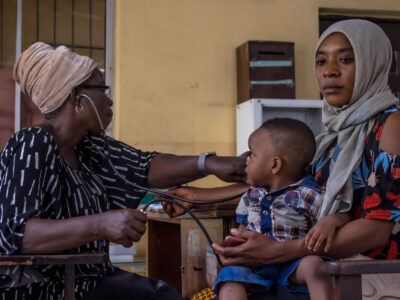
A woman gets her blood pressure checked by an employee at the Planned Parenthood clinic in Isolo, Lagos. A child sits in her lap, curiously watching what is happening.

The Overturning of Roe v. Wade Didn’t Just Affect America

WP_Post Object
(
    [ID] => 3756
    [post_author] => 2
    [post_date] => 2022-01-27 21:13:29
    [post_date_gmt] => 2022-01-27 21:13:29
    [post_content] => Forced sterilizations on detained migrant women is in line with the US's long, sordid history of eugenics.

Last month, the Department of Homeland Security (DHS) briefed House Democrats on allegations concerning several gynecological procedures, including hysterectomies, that a physician performed on migrant women in Immigration and Customs Enforcement (ICE) custody at the Irwin County Detention Center in Ocilla, Georgia—allegedly without their informed consent. The incidents became public knowledge in September 2020, after a consortium of human rights groups filed an explosive report on behalf of Nurse Dawn Wooten, a whistleblower who worked at the detention center.

In a December 3 letter signed by the chairmen of the House Committees on Homeland Security and Oversight and Reform, legislators wrote: “We are concerned that Dr. [Mahendra] Amin may have been performing unnecessary surgical procedures to defraud DHS and the Federal government without consequences.” The letter, which is addressed to DHS Secretary Alejandro Mayorkas, also requested information on the steps the Department has taken to review treatment Dr. Amin provided and ensure migrants receive proper medical care in the future.

The Conversationalist confirmed a December 15 DHS briefing with two committee staffers, both of whom declined to share additional details about the information presented. A staffer from the Committee on Homeland Security clarified that this was a DHS review of the Irwin County Detention Center and not a general review of migrant detention facilities, although Congress requested the Department to brief them on the matter months ago.

The December 3 letter says, “the Committee on Homeland Security requested a briefing on August 10, 2021, on DHS’s efforts to review the suitability of detention facilities. To date, DHS has not fulfilled this request. We ask that you ensure the Committees receive this briefing without further delay.”

On January 3, the DHS released a report that found “the facility’s chronic care, continuity of care, and medical policies and procedures to be inadequate” but did not find that unnecessary or unwanted hysterectomies had been performed. The report does, however, quote an ICE employee who alleges that there is a systemic issue in the ICE leadership that makes the agency “unwilling to listen to concerns or complaints about detention facilities.”

Nurse Dawn Wooten worked at the Irwin County Detention Center (ICDC) for three years. She says that Dr. Amin, who was referred to as the “uterus collector,” had performed hysterectomies on at least 20 women without their consent. Many of these women did not speak English well enough to consent to the procedures or understand what had been done to them. Thirty-five women are now suing ICE over Dr. Amin’s abuse.ICDC, run by a for-profit prison company called LaSalle Corrections, also came under harsh scrutiny for their botched COVID-19 response, which sparked hunger strikes and protests among detainees early in the pandemic.

The Georgia-based advocacy group Project South filed the complaint, which describes a filthy, insect-infested facility with inadequate COVID-19 safety precautions, where staff refused to test symptomatic detainees and fabricated medical records. Detainees who protested the conditions were punished with beatings, pepper spray, and solitary confinement. Nurse Wooten told The Intercept that she was demoted after raising concerns with her supervisors.

“It is deeply concerning that neither DHS nor the private prison company running Irwin have yet to face accountability for the medical abuse that migrant women faced at Irwin,” Azadeh Shahshahani, the Legal and Advocacy Director with Project South said in an email statement to The Conversationalist. “This is setting an awful precedent. Congress and the Biden Administration must act now.”

The joint committee investigation subpoenaed LaSalle Corrections in November 2020 after the company refused to turn over medical records on the procedures Dr. Amin performed. Dr. Tony Ogburn, Department Chair of Obstetrics and Gynecology at the University of Texas Rio Grande Valley, reviewed those records. He concluded that Dr. Amin’s care “did not meet acceptable standards.”

“My concern is that he was not competent and simply did the same evaluation and treatment on most patients because that is what he knew how to do, and/or he did tests and treatments that generated a significant amount of reimbursement without benefitting most patients,” Dr. Ogburn concluded in a November 2021 letter to the Georgia Medical Board.

Following pressure from lawmakers, activists, and advocacy groups, DHS Secretary Mayorkas announced he would sever ties with LaSalle Corrections in May 2021, though migrants were not removed from the facilities until September 2021—a full year after Project South filed Nurse Wooten’s whistleblower complaint with the ICE administration.

While these abuses came to light during the Trump presidency the lack of accountability continues under the Biden Administration, with migrant arrests now at a 21-year high. The current administration has ramped up deportations under a Trump-era health policy that allows the government to expedite the process without giving migrants the opportunity to apply for asylum. The government claims the rushed deportations are a COVID-19 safety precaution.

Under Title 42, the Trump Administration expelled 444,000 migrants. Under Biden, this number has already reached 690,000. COVID-19 still runs rampant in migrant detention centers and in prisons such as New York City’s Rikers Island, where more than one-fifth of the incarcerated population has tested positive.

Immigration advocates have been disappointed with the new administration. Since taking office, Biden has filed 296 executive orders on immigration, 89 of which have reversed actions taken by the Trump administration such as the travel ban on Muslim majority nations and construction of the border wall.

When Dawn Wooten stepped forward to make a whistleblower complaint about the medical abuses at ICDC, international headlines about “mass hysterectomies” sparked outrage and comparisons to Nazi Germany. Others placed the story within a long history of American eugenics that targeted Black, brown, disabled, and indigenous women.

“People with Spanish surnames were disproportionately sterilized during the period of peak eugenics in the 1920s through the 1950s,” says Heather Dron, a Research Fellow at the Sterilization and Social Justice Lab at the University of Michigan.

During the twentieth century, U.S. states subjected over 60,000 people to sterilization without consent, with over 30 states establishing eugenics boards. State governments targeted minorities, the disabled, and others who did not fit into “social norms” for forced sterilization.

From 1929 to 1974 North Carolina ordered as many as 7,600 women sterilized— a majority of whom were Black women from low-income backgrounds. Margaret Sanger and Dr. Gregory Pincus exploited government birth control centers in Puerto Rico to subject one-third of the female population to sterilization procedures, often without their consent, purportedly to address “overpopulation” and poverty on the island. Under the Family Planning Services and Population Research Act of 1970 physicians sterilized an estimated 25 percent of Native American women of childbearing age in a six-year period.

Adolf Hitler writes admiringly in Mein Kampf of eugenics policies practiced in the U.S. “There is today one state in which at least weak beginnings toward a better conception [of immigration] are noticeable. Of course, it is not our model German Republic, but [the United States], in which an effort is made to consult reason at least partially. By refusing immigrants on principle to elements in poor health, by simply excluding certain races from naturalization, it professes in slow beginnings a view that is peculiar to the People's State.”

Heather Dron’s research focuses on eugenic sterilization in California, where roughly 20,000, or one-third, of U.S. sterilizations were performed starting from 1909.

“There was a law on the books between 1909 and 1979 that allowed for the sterilization of institutionalized people housed in psychiatric hospitals, or in homes for what was then called the ‘feeble-minded,’” Dron says. “Sterilization was seen as a solution to all these other social problems. They saw it as a way to keep these people out of institutions.”

While eugenics laws in California have been repealed, sterilizations have continued. A 2013 investigation by Mother Jones revealed that 148 women in two California prisons were sterilized from 2006 to 2010.

“You get a similar dynamic there,” says Dron, referring to the recent ICE cases. “There were a few people who were performing a lot of procedures who seemed like they didn’t have a great ethical practice in general.”

There is no evidence to suggest that Dr. Mahendra Amin was motivated to perform these surgeries for anything other than financial compensation. Last month's letter from House Democrats expressing concerns that Dr. Amin performed these surgeries to “defraud the government” further supports this theory.

“It sounds like there’s some sort of incentive to perform surgical interventions because you’re paid per intervention and some people took advantage of that,” Dron says of Dr. Amin’s case. “But you have to read that with a little bit of skepticism because often we point to these bad actors and say it’s just them as opposed to a system that systematically thinks that people who are incarcerated shouldn’t have kids.”

The breaking news of hysterectomies performed on migrant women in ICE custody barely made it through one news cycle before news of Ruth Bader Ginsberg’s death broke just days later. Her death was followed by a swift Republican push to nominate a third Supreme Court Justice under Trump just weeks ahead of the 2020 election.

The media might choose to remember the hysterectomies performed at the Georgia ICE facility as a particularly egregious act that happened under a uniquely evil administration. That would be a huge mistake.

According to a December 2021 article in The Texas Tribune, the number of immigrants held in ICE detention centers has increased by more than 50 percent since Biden took office. Moreover, the investigation into Dr. Amin’s medical practice has been conducted on Biden’s watch.

Detentions have been accompanied by a spike in border crossings in 2021. Biden has downplayed this as a seasonal phenomenon while Republicans have pointed to plans to offer 11 million migrants a path to citizenship as cause for the surge. Others say the migrants are motivated by growing instability in their home countries. With less attention on the issue of migration, Biden has gotten away with his continuation of the “remain in Mexico” policy by pointing to Title 42, which has been extended twice by the Centers for Disease Control and Prevention, as a matter of public health.

Under the Biden Administration, we no longer hear overtly fascist rhetoric from the White House aimed at migrants, but detainees at ICE facilities continue to suffer from extreme medical neglect and abuse as COVID-19 cases soar.

In order to prevent us from reliving the past, we need to understand the circumstances that led us to where we are today. Ending Trump’s remain in Mexico policies, fulfilling a campaign promise to offer migrants a path to citizenship, and holding Dr. Amin and LaSalle Corrections responsible for their medical abuses would be a great place to start.

 
    [post_title] => The 'Uterus Collector': The surgeon who performed coerced hysterectomies on detained migrant women
    [post_excerpt] => The forced sterilizations are in line with the U.S.'s long, sordid, racist history of eugenics. 
    [post_status] => publish
    [comment_status] => closed
    [ping_status] => open
    [post_password] => 
    [post_name] => the-uterus-collector-the-scandal-of-the-surgeon-who-performed-coerced-hysterectomies-on-detained-migrant-women
    [to_ping] => 
    [pinged] => 
    [post_modified] => 2026-08-05 18:04:55
    [post_modified_gmt] => 2026-08-05 18:04:55
    [post_content_filtered] => 
    [post_parent] => 0
    [guid] => https://conversationalist.org/?p=3756
    [menu_order] => 145
    [post_type] => post
    [post_mime_type] => 
    [comment_count] => 0
    [filter] => raw
)
The ‘Uterus Collector’: The surgeon who performed coerced hysterectomies on detained migrant women