
WP_Post Object
(
    [ID] => 4811
    [post_author] => 15
    [post_date] => 2022-08-31 10:30:00
    [post_date_gmt] => 2022-08-31 10:30:00
    [post_content] => 

A survey of 12-year-olds to early 20-somethings in the US.

This article is a companion piece. If you’re curious to learn how older people feel about the state of the world, click here.

We’re more than two years deep into a pandemic, and if it feels like we’re moving backwards, it’s because in many ways, we are. 

In 2022 alone, there have been over 300 mass shootings in the US. Earlier this summer, in a historic decision, the Supreme Court overturned Roe v. Wade, immediately impacting the reproductive rights of millions. Meanwhile, global temperatures have reached dangerous, record-breaking highs, and if we squint into the horizon, all signs point to an imminent recession, where young people seeking employment will undoubtedly be among those hit the hardest. 

Oh, and did we mention we’re still living amid a deadly virus that continues to take lives each day? 

The Conversationalist asked young people from various parts of the country their thoughts on the state of the world right now. Which issues are overwhelming them the most? What kinds of discussions are they having with their friends? How do they feel about the future? Is it all doom and gloom? 

Here’s what they had to say, in their own words. 

~

“Turning on the news and seeing the violence in this world is not a surprise anymore. It's not even sad because I expect it. What scares me now is going to places where I can't find the nearest exit if I need to flee quickly. My home city of Chicago is now looked down upon by America as crime central. When I tell people I live in the suburbs of Chicago they gasp as if I'm in danger. 

I remember flinching at school when I heard a student squeeze open their chip bag, resulting in a loud popping noise. My heart skipped a beat and my mind immediately thought of the worst. Within seconds I was asking myself, Where is the noise coming from? Is it safe to stay where I am? How did the intruder get into the school? All from a kid’s chip bag making a loud popping noise. I shouldn't be thinking that way. It shouldn't be a habit for me, a 17-year-old, to look for the nearest exit in every public place I go to. 

I just want to be shocked when I turn on the news channels again.”

—Amanda, 17, suburbs of Chicago 

“Not only is there more fear in the world with monkeypox currently, specifically in New York, climate change is also only giving us about eight more years before there is no turning back. This is extremely worrisome because Americans aren’t doing anything about this and we only have so much time before our ecosystems become more fragile than ever. 

Overall, as someone within the generation that has to suffer most from these current issues, this is very concerning for not only our well-being but our physical health. We need to take the appropriate measures to prevent further conflict.”

Juliette, 15, New York, NY

“I’m finishing up my senior year in the fall at Penn State University. From my vantage point, the recent Dobbs decision has stirred up an immense amount of emotion from all sides of the spectrum and both sides of the coin, so to speak. College-aged women and female students that I interact with are overwhelmingly disturbed and frightened—they are fired up and want to help right the ship to protect abortion access for themselves and, in the case of the few pro-life women, for others. I work in local political organizing and one way to communicate with pro-life women in particular is to remind them that while they may not choose to have an abortion, their friends may face situations where they need one—and bringing the hot-button issue to a hyper-personal level really helps some people understand that they should not be so anti-choice. 

For men, a general sense of confusion and passive worrisome behavior is the vibe that I’m getting. My guy friends in particular tend NOT to be split among party lines with abortion—a lot of them think it’s stupid to tell women they can’t do something, while others are afraid that their female partners may not have the birth control/contraceptives they need to continue a sexual relationship. 

My fear is that despite the level of concern and anger at this decision, people my age will not care enough to vote in the large numbers that we need to actually change things. [We] can’t change SCOTUS, but can sure as hell change our state legislatures and Congress. That’s why I’m getting as involved as I can to spread the word to students and folks my age that this election is undeniably the most important of our lifetimes, and that at the very least you need to vote.”

Josh, 21, State College, PA

“With everything happening in our political climate, the one word that can't escape my mind is 'division.’ With all of the constant discord going about through the media, it's hard to ignore. 

I've noticed that the in-person conversations I've shared with people of differing views from me have been much more productive than online ones, whether it be in my classes or at group hangouts. I believe a considerable problem our generation is facing is a lack of personal connection stemming from social media playing a much more significant role in our day-to-day lives. The more that I've realized the adverse side effects of social media, the more attempts I've made to stray away from it. I've deleted Twitter, TikTok, and Facebook with the goal of doing away with it entirely. It's too stressful and time-consuming, and I've also found my mental health to be better in my time away from it. 

I can't help but have my worries about our society's collapse. It's very taxing on me to see so much nonstop negative news.”

Tommy, 18, Worthington, OH

“I’m feeling a bit agitated with how we talk about mental health on the internet and social media lately. I’m not saying that mental health awareness is bad. I just think that with anything that becomes mainstream, it loses any much-needed nuance and seriousness. And that’s what has happened with mental health awareness. You can see it happening in so many forms, whether it’s brands trying to capitalize off of it, down to those stupid ‘Little Miss Whatever’ memes, or any other insert-yourself-here gimmick. All of it totally downplays how serious mental health is and buries any useful resources, turning mental health awareness into another throwaway talking point.”

Margot, 19, Boston, MA

“I live in Jacksonville, Florida but attend school in Ohio. I’m pursuing a degree in fashion and am thankful that most opportunities in fashion do take place in more blue states like New York and California. However, that doesn’t take away my fear of what the future holds. 

While New York, specifically NYC, and California are states that I believe do well in protecting the rights of their citizens, they are also some of the most expensive places to live. Fashion is not one of the best industries in terms of high salaries and affordable wages––at least compared to the cost of living in the places where the industry is best established. 

But even more than that, reproductive rights are a major concern for me. The mere thought of me unintentionally getting pregnant and not even having the option to decide how I want to go about my health has me petrified and runs through my mind constantly. I’m truly at the point where I don’t think I’m even going to consider looking into jobs and companies that are located in red states. To make matters worse, we’re living in a system ruled by a Supreme Court that just took a major blow to combating the climate crisis and agreed to hear a case that heavily impacts voting rights, which would just be another major step in the seemingly decline of democracy. 

I’m very worried about the future, which really sucks because I feel like this is the time that I should be looking forward to it the most.”

Janelle, 21, Jacksonville, FL 

“Over the past few years, the world has felt pretty bad and it’s not getting much better. The government is corrupt; politicians are bad. I’m just resigned to it. I don’t really know how I could change anything. All politicians suck (sorry). It feels like things have been bad forever.”

—Charlotte, 12, Los Angeles, CA

“Everything and everyone right now is so polarized. Most people are arguing for or against things that they don’t know the half about. We are being served all of our information through the media and most of it is altered and incorrect. People form opinions on misinformation and stick to them while being blind to any opposing information. We have to be more open to hearing others' ideas in order to function as a united front.”

Kate, 18, East Lyme, CT

“It's pretty easy to feel despair about the big national issues as it really seems like there is nothing we can do to stem the flow of environmental and human rights catastrophes coming down from a federal and corporate level. That said, I feel hopeful about local politics. 

I hear a lot of talk about urban issues in my peer groups, mainly how to deal with cars-as-default politics in urban planning and policy while promoting alternatives for local transport. While this also feels futile sometimes, there are always silver linings and improvements being made to help bring American cities up to snuff, which in turn seems like a way to help the battle against climate change AND improve quality of life across the board.”

Nicholas, 21, Memphis, TN

“After the events of the last few months I have really felt a crushing fear settle under my skin, wherever I am––at a parade, my school, or the grocery store. It has become harder and harder to listen to the news, to force myself to feel the reality of the crushing headlines, both afraid of the state of the country and afraid of becoming numb to it. 

Being a teen right now is a minefield of double edged swords; between finding comfort in social media and absorbing yourself in saddening discussions, and learning how to become an adult while having massive gaps in the teen experience from the pandemic. I feel young and afraid to grow up in a world where my rights are in question and where there is not a path in sight leading to true freedom. I am as helpless as our elected president, sadly tweeting about what I wish I could fix about our country.”

Carley, 17, Romeoville, IL

“I feel like the world is moving forwards and backwards in different ways. Some things are being improved such as tech and medicine, and some things may be struggling to improve such as plastic in the ocean or people littering. [But] I believe that people should still take precautions with COVID.”

Spencer, 13, New York, NY

“I think it’s impossible not to feel somewhat hopeless at the moment, especially if you’re an activist or politically ‘in-the-know’ circle. I work in education consultancy and research and have done so since I was 15, so I am no stranger to a challenge. Kentucky was not exactly the most conducive environment to the work I was attempting to do. So I guess today's current state of affairs does not strike me as too abnormal. 

I understand this is not the prevailing view amongst my peers, especially in California. But I honed my chops in this work when Kentucky had a governor who openly wondered about drowning teachers, who loosened gun restrictions, and who attempted to gut our teacher pension system. Today's battles are not any different from yesterday’s; they are just as severe and not any more severe. But that assumes you were fighting yesterday’s battles and a lot of my peers weren’t. A lot of them gained political and social consciousness relatively recently and have nothing to compare today's climate to. I would never blame them for that, and I do not think that lessens the importance of their voices. But it does mean these activists need to take a step back from their work to frame it in historical context. 

The Civil Rights Movement, the LGBTQ movement, the fight for Roe; these movements led to large scale social changes in the face of unprecedented challenges. We should be taking strategic guidance from these movements to provide us with that roadmap to social change. It’s like if we were playing chess and constantly losing to the same guy, yet when we stopped and looked at the table next to us, we see the same guy losing to someone else. By taking that step back, we are able to observe a successful strategy to counter that would not have come out of our frustration. If we just keep attempting the same strategies over and over to create social change, without drawing from successful historical examples, we are destined to lose. 

This is why I have hope in the midst of such despair. Because I understand much of our despair has to do not with the particular situation we find ourselves in and more with our outlook on this situation.”

Will, 21, Somerset, KY

[post_title] => How Do Younger People Feel About the State of the World? [post_excerpt] => [post_status] => publish [comment_status] => open [ping_status] => open [post_password] => [post_name] => how-do-younger-people-feel-about-the-state-of-the-world [to_ping] => [pinged] => https://conversationalist.org/2022/08/31/how-do-older-people-feel-about-the-state-of-the-world/ [post_modified] => 2024-08-28 21:11:28 [post_modified_gmt] => 2024-08-28 21:11:28 [post_content_filtered] => [post_parent] => 0 [guid] => https://conversationalist.org/?p=4811 [menu_order] => 124 [post_type] => post [post_mime_type] => [comment_count] => 0 [filter] => raw )
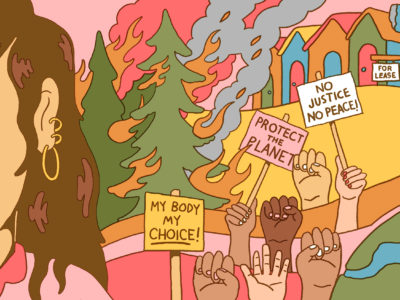
An illustration of a young woman looking out over representations of the state of the world

How Do Younger People Feel About the State of the World?

WP_Post Object
(
    [ID] => 4861
    [post_author] => 15
    [post_date] => 2022-08-31 10:03:00
    [post_date_gmt] => 2022-08-31 10:03:00
    [post_content] => 

A survey of late 60-somethings to 80-somethings in the US (mostly).

This article is a companion piece. If you're curious to learn how younger people feel about the state of the world, click here.

Every day is an exhausting day of dealing with unprecedented events. From multiple pandemics, out-of-control gun violence, the rollback and continued endangerment of human rights and bodily autonomy, and the aggressive creep of fascism, it is valid to feel overwhelmed and hopeless. These issues are enormous and wicked problems. And as a younger generation learns to grapple with them and find a way forward, there is also a growing understanding that these issues are not new, and are built upon the decisions and actions of the generations before us.

In consideration of this, The Conversationalist spoke to numerous people around or over the age of 70 about their hopes, concerns, and feelings regarding the current state of the world. What became apparent is that our collective experience of feeling overwhelmed by unprecedented times is not a new or unique one; and that historical texts and teachings are often a neatly organized version of events that can flatten the truth of living through them. 

The conversations didn’t necessarily provide solutions— but they did offer a sense of meaningful and gritty hope. The kind of hope that suggests a hard push and insistent effort can elicit change over time. Not only of policies, but also of communities and people. 

Here’s what they had to say, in their own words.

~

“Being a kid in the ‘50s, we had duck and cover. We were learning how to duck and cover [in case] a nuclear bomb goes off. [But] even as a kid, I [remember thinking], I don't think that's going to help. When [my family] was first looking for a house, a lot of homes had bomb shelters. I remember being eight or nine years old, some bomb shelter[s] had arsenic in [them], so that if all else failed, you wouldn't suffer. I mean, it's just a weird way to grow up and weird things to think about at that age. Now kids are, you know, learning what to do when there's an active shooter. 

I'm hopeful. Otherwise, the alternative is too horrible. I've seen huge changes in my life, so I feel like change is possible. I just look at it like this: my mother was really homophobic. And then I came out and got a divorce, and had to go through this horrible custody battle and almost lose my kids. It took a few years, she was devastated, [it] was awful. [But] I saw her make these amazing changes. As freaked out as she was when I came out to her, and when my next brother came out, years later, and then my other brother came out, you know, she started to come around. Three out of four of us are gay and she went from being very homophobic and upset to being like a three-star general in PFLAG and she was on the speaker's bureau. I think, because of that, it helps me be more optimistic, because I really do think people can change in drastic ways that you would never imagine. I mean, I would never ever have imagined that I would have a relationship with her and I became very close to her. So that makes me optimistic.”

—Allison Akana, 71, Half Moon Bay, California

“As far as the political climate, [it] was actually much worse in the late 60s and 70s. [In] the 60s, you had [John F.] Kennedy's assassination. You had his brother, [Robert F. Kennedy’s] assassination. You had Martin Luther King's assassination. We had the Mỹ Lai massacre. Nixon was in Cambodia and Laos and wasn't supposed to be there. John Mitchell, the Attorney General of the United States, the chief law enforcement officer was in federal prison. It's really nothing new. There's more information [now]. It's available faster. [But] human behavior hasn't changed at all.

And I would think for young people, they're worse [off] now. I graduated from high school in 1971. In the Detroit area, you could go to work at Ford's Chrysler or GM after you graduated from high school and you could make as much money as your dad. Now, how many kids can do that now? No one, no one. 

[I] used to work the first two weeks of the month, seven days, 10 hours a day. [For] the last two weeks of the month, I would work five days, eight hours a day. Because [I] made so much money in the first two weeks, I couldn't spend it all. My rent was $200 a month, which I split with my friend. I think our electric bill was maybe 12 bucks. My car payment was $190 per month, because I put no money down. The last time I bought gas in high school was 19 cents a gallon. So tell me, who’s got it worse?”

—Robert T., 68, Las Vegas, Nevada

When you go [get] medicinal herbs, you pick a little piece from the east side, pick some from the south side, the west side, the north side, and you say a prayer, you say thank you. With what you've given me, I will get well—that's respect. And what I have seen in the world that we now live in, there is no respect. There is no sense of providing dignity to the things all around us. We don't care about the pollutants that we're putting into the rivers. All we're interested in is how we're going to make additional money, make more profits. I’m now seeing, like in California, all the wildfires are happening. And the water is drying up in Lake Mead and Lake Powell. That's because we did not pay attention. The larger world, the larger society has just totally knocked everything off balance. And now we're sitting with all of these fires that are raging, we have all these polluted waters. We have people that are talking about running a pipeline from Canada down to New Orleans, for this dirty oil that's going to be coming down from up there. And people go, Oh, but they'll provide jobs. They'll give them an income. You can't eat money. You know, and that pipeline is going through a very important aquifer for the Cheyenne and the Lakota people up in North and South Dakota. If that pipeline bursts it is going to pollute that aquifer. And what are they going to drink? They can't drink oil.

What we have been saying for years as Indian people, the outside world [is] finally realizing our relationship as human beings, to the worlds that we live in. We’ve been talking about polluting energy sources for a long time. [The outside world] should have listened to us 100 years ago. They could learn something from us. But we were ‘savages.’ 

But, you know, there is hope. That's my nature. We have all of these negative things that are happening, but there are little flashes of brilliance out there. That's why I'm working where I'm working. I am working with the elderly. I'm one myself. But I look at the elderly as a walking encyclopedia. The elderly still know our language, they know the history, the culture, traditions, customs, the ceremonies, all that keeps us in balance. 

Those elderly people are precious to me. They are the hope for the next generation.”  

—Larry Curley*, 73, Navajo Nation/Albuquerque, New Mexico

“You know, everything I'm seeing, it's just stuff that has happened before. I was a young adult during the Vietnam crisis and now we’ve got the Russian/Ukraine crisis. Every day, you're seeing bombings and body counts, and the news is covering it. [It’s] the same with that civil rights stuff. I mean, it's all the same kind of stuff we were dealing with then. So it'll pass, I guess, eventually. I'll do what I can. But I don't know if I have any power to do anything except vote on November 8, you know? You can go and join marches and protests and write letters and do all that. But I think voting is where people might have some power.

In a representative democracy, voting is the only thing that you can do. Because if you don't vote, you're just throwing up your hands and saying, ‘What the hell, nothing's gonna change.’ But I think it can change, and I think it will change, but you have to have an informed public and you have to have people willing to vote.”

—Barbara Walters, 77, Punta Gorda, Florida

“I remember getting the talk about pandemics and infectious diseases. It may have been kindergarten or first grade, and we all went to the school gym and we got the [polio] shot. It was during World War Two when penicillin came along and antibiotics. And it was kind of this miracle age where all these infectious diseases and dreaded pandemic diseases of childhood and beyond, were kind of behind us.

The 70s were the sexual revolution. It was a time of a lot of sexual freedom, which we hadn't had before. You know, straight people had got it wrong for so long and told us [gay people] all this crap about what we could do, and what we couldn't do, and how we were bad people, and what we did was perverted. [There was] a kind of release, which I think led to a lot of happy, free sex all the time. So when AIDS came in, it really put a damper on things, and shut a lot of people down—it shut me down a lot. 

You’ve lived through Polio, AIDS, and now COVID and Monkeypox. What’s been the experience of living through those moments?

My reaction has been what [is the government] waiting for? Why is it taking so long? There have been many points when it could have been contained. They've been dragging their feet and when will they ever learn? So I find that very discouraging. 

[Overall,] I'm very pessimistic. I mean, there’s always been these fascist elements. I remember the George Wallace campaign, which was quite strong, but it never felt overreaching. The Trump election was a major thing. I guess maybe I was naive. I remember when Obama ran, and I couldn't decide whether I wanted to support him or not, because I didn't think he was progressive enough. Of course, I voted for him and when he got elected I remember the whole thing on TV and crying. I remember thinking, well maybe it’s not as progressive as I like but at least we’re going to get past some of this racial shit, finally. And now I think back at how stupid and naive I was to think that, because it really had the opposite effect and there was a huge reaction to it. I mean, you know, when I was very young, I heard the stories of how it happened in Germany and how it could never happen here in this country. But it's happening.”

—David Lebe*, 74, Upstate New York

“[When I was teaching,] I worked with boys with severe emotional and behavioral problems, they taught me more than I ever could teach them. [Eventually,] I ended up getting a doctorate in technology, studying media and informational technology. And I see a real connection between all the changes, big changes in history, they're very much related to how we communicate. The Protestant Reformation—which was a great movement—started with the printing press when people started learning that they could read these scriptures rather than just look at the pictures in the cathedral. [By reading it] for themselves, [they started] making decisions for themselves. That was all traumatic for the church and the aristocracy at the time because they were in control of everything. Anyway, that's been repeated over and over with the Enlightenment and all this other stuff. Today with the internet, mainly, I think it's the biggest [form of] digital communication. [We’re] learning how to use this new way of democracy and communicating with one another. But we got a lot of learning to do. As we’ve had to do time and time again. I'm very hopeful. The more you give individuals responsibility for their life and for the life of their community, the better things happen.

—Daniel O’Donnell, 77, Chicago, Illinois

“I think the main thing that's different is that for the early part of my life a lot of us got our news from the same places. We watched ABC, CBS, and NBC. And we watched people like Walter Cronkite, or [The Huntley–Brinkley Report]. So we got kind of a similar perspective on what was going on in the United States and the world. And that's good and bad, and probably white supremacy shaped some of those messages. But on the other hand, it was easier to feel like you were part of one fabric of a nation. 

Around the time that Newt Gingrich was elected and became Speaker of the House, and Karl Rove started to shape this slash and burn style of politics that has become the norm, the country bec[a]me increasingly polarized into red and blue silos. Folks just don't trust those that live in the other camp or have any other label, and often self sort themselves so that they don't spend much time with people that are different from them. I think that's the most dangerous thing going on. I'm hopeful that part of what's going on right now is the oppressive system[s] that I grew up with—white supremacy, or patriarchy, or, you know, whatever you want to call it, the status quo—that basically, enough liberation movements have happened that [it’s] kind of in its death throes. And what we're seeing could be considered kind of a death rattle. 

I'd like to believe that liberty and justice and equity are going to prevail, but I don't believe that's automatic. I think we have to make that happen by our choices and by our actions [and] by living responsibly. So I'm hopeful that a more inclusive vision for how to live [and] a more compassionate set of social policies will prevail.

When I was young, I felt a lot of fear. I can remember when I was in seminary, I got anonymous mail from the Ku Klux Klan because I had volunteered with an LGBT organization, and they had a P.O. box. When I picked up the mail, there was a letter from the KKK letting me know that they were watching me and that they knew our organization existed and that they were organizing in our area. And then, when I came out during seminary, a story about me wound up on the first page of the [newspaper] in 1988. I was worried that someone might shoot me because there really was a lot of hate and hostility out there in the world. 

What I've seen has made me perhaps more hopeful than when I was younger. Not only have I changed, but I've also seen things [change]. Legal discrimination [has] become illegal now. I couldn't legally marry when I was younger, I can legally marry now. Black people were having to pay poll taxes and guess how many jelly beans were in a jar [to vote] when I was a child and that's illegal now. Not that [the government] hasn't found [an] incredible number of ways to discriminate against African Americans still. But my own resilience and the things that I've seen change—we've had some wins over the years, some things have happened that are important and good and that at least move[d] the needle somewhat in the right direction.” 

—J-Mo*, 68, St.Louis, Missouri

“There's going to be climate integration. For sure. The number of refugees from Ukraine right now is over 5 million. Can you believe that? That's more than 10% of the population; 15% have already left. Certainly, the wars in the Middle East created millions of refugees. These are just the tip of the iceberg. My understanding—or my belief, is that the Biden Administration is following the lead of the Trump Administration in drastically cutting back the immigration from Central and South America, and looking for technically competent immigrants from South and East Asia and Europe.

It's heartbreaking. It's a crucifixion, because I feel more and more guilty about being a poster boy [of refugees and immigrants] while people who managed to get into this country are working with leaf blowers at $5 an hour.

There are all kinds of things we could do as a country if we had the will to do [it]. And we certainly have the wherewithal to absorb a lot more people. This is still an underpopulated country by almost any standards. And we don't have quite—although Florida will be underwater the day after tomorrow—we certainly don't have the same immediate climate problem. Although we are without any doubt the worst climate criminals in the world.

It’s extremely complicated. I vote in every election, I show up for jury duty. I just returned to the United States, so I have an American passport. I believe that if I accept the citizenship I have certain obligations. But it's terribly confusing.

In terms of the context of this conversation, it’s important to mention that I survived the Holocaust. As a five- and six-year-old boy, this is profound childhood trauma. It's probably helpful for people to understand you as you're talking to somebody who has very severe Post Traumatic Stress Disorder.

[But] I now have, at the age of 84, a four-month-old grandson. He's beautiful. He's gorgeous. One-fourth of him is made of me. As long as there are people there is hope. It's not good to get cynical or bitter. It doesn't help anyone, whatsoever, ever. That's a statement from a very old man who was delighted to have his first grandchild come into the world.”

—Joseph B. Juhász*, 84, Boulder, Colorado

“I have a lot of concerns about how expensive it is to live. That's like a big, big one. That was one of the differences in the 70s, and even the 80s, we weren’t putting all our money towards rent, and all of these gadgets and all this stuff. Towards the end of my teaching—I left Portland in 2006 for Salt Spring Island, and was able to retire with some benefits—I could feel the pressures the students are under with having to work full time, or even work part-time and being so economically challenged, that they wouldn't be able to be as prepared. I don't know how a lot of people do it. And the tendency not to read. I feel like reading is not as valued. And that's a problem. I mean, reading is just, it's one of the life forces for me, and not having to teach has given me a lot of freedom to read. I have some younger friends, [who are a] range of ages and some people have kids—which I don’t have—and they have to devote a lot of time to earning money. That's pretty antithetical to being able to have a lot of time to do other kinds of organizing and community involvement. But I think that people are always going to find ways to do that.”

—Wendy Judith Cutler*, 70, Salt Spring Island British Columbia, Canada

“See, I had seen the police do terrible things. Okay. In the neighborhood [in Philly], I had seen them beat up a playmate of mine, just to beat him up. And then [they] jumped away and said, ‘We beat the wrong n-word.’ I couldn't believe that. To see this and I'm a kid. He's a kid. He had to be about a year or two older than me. We were all kids. So I didn't like the police.

The oligarchs of America do not care about people, or the welfare of common people. Do you understand? [In the 60s,] we were tearing this country apart. And I don't necessarily even mean just physically, you know.

We had Black people, just courageous Black people, who said you know what, these laws are not good for us. They're not even good for the poor working whites. They're not good for any working person in this country. So we aren't going to obey the laws, we're not going to do it, we’re gonna patrol our own communities. And so what would happen? There would be standoffs with the police, shootouts with the police, and people were willing to give their lives, go to jail, or whatever so that we can move forward as a people. And we did. So what I see now is a hesitancy. Now, there are certainly demonstrations of sorts going on now, we know that. But I don't see the kind of strategic cohesiveness that I would like to see, as an extension of what we did in the 1960s. 

I know America is a criminal country. You got to understand that. I was exposed to the despotism of America for so long, that the protests, and the young Black girl filming George Floyd being killed [right] before our fucking eyes—I said, Okay. I'm sorry George was killed that way. But I also knew something like that needed to happen, because the youngsters are too complacent with the crimes of America. When I saw the protests, I watched, and I knew that it was going to be different from what it had been previously. I knew that it would spark, I'll call it a revolutionary thrust, that had not been there before. This is what I knew. And you see this country, it's very good at masquerade and camouflage. It's excellent. We want to spread democracy around [the world]. Really? With all of the homeless that are strewn across this country? But you're spreading democracy? With the inequality that regular Americans are facing?”

—Dr. Regina Jennings*, 72, Philadelphia, Pennsylvania

Interviews have been edited for length and clarity.

~

*The Footnotes

Editor’s Note: At The Conversationalist, we understand that no story exists in a vacuum, and every story is built on the work of others before us, whether in ways big or small. We are likewise dedicated to spotlighting the voices of those who have been or continue to be oppressed, disregarded, and/or otherwise silenced, in an effort to reverse centuries of often intentional erasure. Because of this, we have opted to include “footnotes” on certain stories to give readers additional context and reading material where it feels relevant and beneficial. 

[post_title] => How Do Older People Feel About the State of the World? [post_excerpt] => [post_status] => publish [comment_status] => open [ping_status] => open [post_password] => [post_name] => how-do-older-people-feel-about-the-state-of-the-world-survey [to_ping] => [pinged] => https://conversationalist.org/2022/08/31/how-do-younger-people-feel-about-the-state-of-the-world/ [post_modified] => 2024-08-28 21:11:28 [post_modified_gmt] => 2024-08-28 21:11:28 [post_content_filtered] => [post_parent] => 0 [guid] => https://conversationalist.org/?p=4861 [menu_order] => 125 [post_type] => post [post_mime_type] => [comment_count] => 0 [filter] => raw )
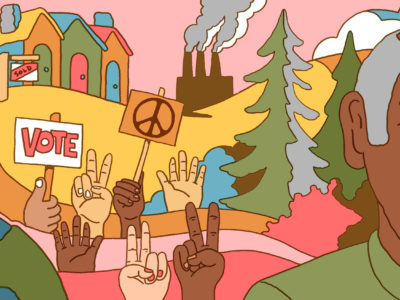
An illustration of an old man looking out across representations of the state of the world

How Do Older People Feel About the State of the World?