WP_Post Object
(
    [ID] => 9891
    [post_author] => 15
    [post_date] => 2026-01-09 00:16:00
    [post_date_gmt] => 2026-01-09 00:16:00
    [post_content] => 

For months, I've tried to make sense of my sudden inability to write about societal collapse. Then, I found out I was pregnant.

I've been promising, and failing, since before the 2024 U.S. election to write about the world on fire, and the arsonists fanning the flames. The essay I'd had in mind was called "Don't Be Fucking Stupid About Dictatorship", a warning I’d been repeating to anyone who’d listen, that felt increasingly urgent as the months went by. There's been plenty to write about since: Just this week, the Trump administration sowed global chaos when it kidnapped Venezuelan President Nicolás Maduro. Unlike Bush's invasion of Iraq, his administration didn't bother with any pretense for regime change beyond dick-swinging dominance and oil. They also don't even have a concept of a plan beyond further threats to invade Greenland, Cuba, Mexico, and Colombia. Yet still, I couldn’t get myself to write about any of it. 

This was unusual. For the last decade, I've written extensively about abusive tyrants and their destructive attempts at control. In that time, they've only gotten more brazen—enough so that arguments that used to get me accused of tin-pot hysterics have now become common sense for the same people who used to do the accusing. The U.S. is, in fact, a corrupt billionaire-backed authoritarian regime staffed by rapists and racists with imperial delusions, in league with a fanatical Supreme Court and a global network of gangster heads of state. The behemoth that is the climate crisis is real and accelerating, as monstrously strong hurricanes hit the Caribbean, and monsoon flooding across South and Southeast Asia kills thousands and displaces millions. Dehumanization continues to lead to countless atrocities: in immigrant detention camps, on Venezuelan fishing boats, for civilians in Gaza, Sudan, Congo, and Ukraine. Meanwhile, the free press is eroding worldwide, and Elon Musk, world's richest man, has killed humanitarian aid for the world's poorest people. Simultaneously, fellow techbro Sam Altman wants us to believe the same chatbots that insist there are two r’s in "strawberry" will solve all of our problems, when so far, they mostly seem to be causing psychosis in users while killing the job market, making bikini pics of children and women without their consent, and stealing people's water

In the midst of all this, I've tried to make sense of my writer’s block. Perhaps it's because I have a hard time repeating myself—my ADHD brain is wired to seek out novelty—or because it's too painful to write about societal paralysis and collapse. 

Then, eight months ago, I found out I was pregnant. 

Suddenly, I had a much better excuse for my inability to focus on all the shitheads ruining everything. But also, something far more welcome: a new surge of hope, and with it, an urge to write again, this time about something slightly different. As I write this, I’m in my third trimester, anxious and excited for my daughter’s arrival, which feels imminent. While this baby wasn't planned, she was very much wanted: I've known I wanted to have a kid ever since my mom died when I was 24. My mom had always mothered me so well, in a way even my adolescent self recognized, and when she died, I felt untethered. The only clarity I got from that awful time was that I was meant to pass on all the unconditional love she'd given me to a child of my own. 

But I also wasn’t sure how or when I’d get there. At the time, I was still stuck in abusive dynamics, and would be for years to come. Like many survivors, I had a lot of grieving and healing to do before I eventually broke the cycle. (As Philip Larkin famously wrote, "They fuck you up, your mum and dad, they may not mean to but they do.")

Luckily, I've been blessed with financial stability, which allowed me to take my time and find my way. But it still took many years of therapy, loving community, and good decisions—freezing my eggs; ending bad relationships, whether familial, romantic, platonic, or work-related; getting blessed by Buddhist monks while cradling a baby-sized wooden penis in a fertility ritual at Chimi Lhakang, the temple of the Divine Madman in Bhutan—to prepare me at forty to become a mom. 

It's a funny fact of modern life to have the old-fashioned way of doing things—meet a wonderful man, fall in love, get pregnant—be the surprise. I had an appointment booked with my fertility doctor and was set to pursue single motherhood with a sperm donor when I met my partner last fall. I joked with my friends, "The minute you light a cigarette, the bus comes." But we’ve both been grateful for the ride. 

I'm also old enough to be immersed in all the doomerism around what until recently was called "geriatric pregnancy", so I was shocked at how easily we got pregnant. (Thank you, Divine Madman of Bhutan!) It took me eight weeks to even realize what was happening—already too late in many U.S. states to make an informed decision about keeping a pregnancy. I'd chalked up the first trimester exhaustion to depression over rising fascism, and spent the night before my blood test googling "pregnancy or perimenopause?”, genuinely unsure which was to blame for making my boobs so sore. The morning after we got the results, I got an email from my fertility doctor asking how I was doing. I thanked him for checking in, and shared the fortunate news that we wouldn't be needing his help after all.

I’d been excited but daunted to undertake parenting alone, and it's been a beautiful gift to go through the process with a partner, especially someone so loving and supportive. Simultaneously, there have been so many aspects of this process that have felt out of our control, and it's scary to be bringing a little girl into a world of rising temperatures and white supremacy. The Trump regime, and RFK Jr. in particular, has a eugenicist fixation on breeding white women to produce more white babies, while simultaneously showing extreme hostility to pregnant people. Our future pediatrician needed to check we still believe in vaccines, and that we understood that Tylenol and infant formula are safe. Meanwhile, my partner was turned away from getting the recommended COVID vaccine because becoming a new parent does not qualify him under the new, absurd restrictions. 

But in the face of this, I'm also confident that our daughter will be well-loved, both by us and the village that supports us, and that we will do what we can to model a better way of life for her in our home and in our community. I hope she always feels that sense of comfort and safety with us, even as the world rages on. And I hope that the strong foundation we’re building together gives her the courage to face the challenges that we know we can't shield her from. Our daughter hit the jackpot with two parents who cannot wait to meet her and surround her with love—something she’s already repaid by kicking her dad hard in the face when he put his cheek to my belly. (He's a soccer player, and a true believer that "football is life!"; so you can imagine his delight.)

I got lucky that I could feel her little flutterkicks super early. This summer, at the beginning of my second trimester, I took a long-planned trip to Berlin with friends. I'd debated trying to get into the nightclub Berghain with them, and even got a pleather raver dress that fit my growing bump for the occasion. Baby had already attended Beyoncé’s Cowboy Carter tour with me, and stayed up to see Cardi B (also pregnant at the time!) perform at Pride, so I was tickled at the thought of us sober dancing together in a warehouse. But I ate too much schnitzel at dinner and my feet hurt, so I stayed in watching Irish murder mysteries instead; probably the wiser choice. That night, I felt little twitches in my tummy for the first time. I thought maybe I was imagining things—but I'm confident now that she was just already saying hello. 

On that same trip, I dragged my friend to the Stasi Museum, converted from their creepy former headquarters. It was easy, and terrifying, to see the parallels to the U.S.: The East German secret police's growth over time reminded me of ICE and Border Patrol's expanded reign of terror, both in terms of mission creep and surveillance techniques. Even the recruitment perks mirrored one another, though the Stasi had much higher standards for who they let in the club. Once again, I was confronted with the dichotomy of bringing new life into the world as other lives are being torn apart. 

It’s been hard not to think of the Stasi murdering border crossers and street protestors when ICE just executed a mother of three by shooting her in the head through her windshield in broad daylight, her wife sitting next to her and neighbors recording the scene on video. Renee Nicole Good was not the first person Trump’s paramilitary thugs have bragged about inflicting violence on, either. After shooting Marimar Martinez in November, a Border Patrol agent reportedly texted his buddies with the line, “I fired 5 rounds and she had 7 holes. Put that in your book, boys.”

As I’m discovering firsthand, having kids nowadays is apparently a never-ending lesson in this kind of cognitive dissonance. I realize, too, it’s both totally natural and a bit crazy to be excited and hopeful about growing this new little human inside me, considering all the horrors I’ve already listed, and the many others I haven’t. Many people I love and respect are foregoing having children entirely, whether because they simply don't want them, because they're too expensive (especially in New York City, where I live), or because ecofascism has robbed them of any hope for the future. My loved ones who do have kids have shared the joys of parenting, but also the struggles, especially during COVID. As their kids grow, they're facing difficult questions about declining prospects, school shootings, and how adults let the world get this way.

I recognize that the aforementioned financial stability takes care of some, though not all, of these concerns. As for those that remain, I think, in spite of everything, here's my vote of confidence for perpetuating the species: Humanity can be pretty awful, but also pretty amazing. There's still so much joy and wonder to be found in this world, something I've witnessed from people who continue to live and love under the direst of the circumstances. I don't agree with people who say that having children is what gives life meaning—my life had meaning and purpose before. But I do think my daughter has already challenged me to remain hopeful on her behalf, and to take action to better myself and my community to create a softer landing for her when she’s here.

She's kicking me as I write this. I'm congested, my joints hurt, I’ve developed gestational diabetes, and I miss carbs. As excited as I am for her to arrive, I'm also terrified of giving birth, and how much I have to do and learn before then. But I also take solace now in all the good news I can find, because it gives me new hope for the future—for her future. Zohran Mamdani won his mayoral campaign with a promise to bring affordable childcare to New York City. CUNY researchers recently discovered a potential universal antiviral that can defeat multiple families of viruses at once, including Ebola, COVID, and SARS. Chicagoans are telling ICE to fuck off, whether that's dads in pajamas or the Pope. Chinese and European solar power technology is moving forward in leaps and bounds, with renewable energy overtaking fossil fuels in most parts of the world, even as the U.S. lags behind. The African Union passed a Convention on Ending Violence Against Women and Girls, lapping many parts of the world with its second regional treaty on women's rights. Trump and Putin won't live forever, and Stephen Miller, RFK Jr., and Pete Hegseth aren't immune from prosecution. Bolsonaro and Duterte are in jail. Elon Musk is the loneliest man on Earth. 

Yes, it's an extremely dark time, but that's not exactly a historical outlier. People have been making babies throughout the worst of them. And nothing motivates me more to build a better future for all of us than this little girl, who, like every child, deserves safety, stability, love, and care, and a world equipped to give it to her.

I can’t wait for her to see it.

[post_title] => The Strange Hopefulness of Growing a Human While the World Burns [post_excerpt] => For months, I've tried to make sense of my sudden inability to write about societal collapse. Then, I found out I was pregnant. [post_status] => publish [comment_status] => closed [ping_status] => closed [post_password] => [post_name] => hope-week-pregnancy-motherhood-children-personal-essay [to_ping] => [pinged] => [post_modified] => 2026-01-09 08:25:27 [post_modified_gmt] => 2026-01-09 08:25:27 [post_content_filtered] => [post_parent] => 0 [guid] => https://conversationalist.org/?p=9891 [menu_order] => 0 [post_type] => post [post_mime_type] => [comment_count] => 0 [filter] => raw )
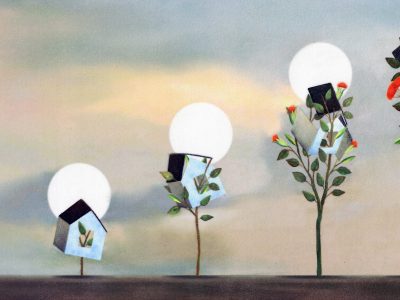
An illustration of a house as a flowering tree gradually grows within it, splitting it open with flowers.

The Strange Hopefulness of Growing a Human While the World Burns

WP_Post Object
(
    [ID] => 9663
    [post_author] => 15
    [post_date] => 2025-10-07 13:50:59
    [post_date_gmt] => 2025-10-07 13:50:59
    [post_content] => 

Season 2 is out now.

We're back!

Conversationalist readers and listeners, after a long hiatus, I'm so excited to share that season 2 of The Conversationalist Podcast (formerly known as Unbreaking Media) is back. Hosting our podcast has been a great professional joy for me, and it’s been an honor bringing the same depth, care, and human connection that we put into every article on our site into honest, informative conversations with our expert guests on the show. At a time when the free press is under attack around the globe—as corporate media increasingly bows under pressure from authoritarian governments—I treasure the space we've created as a feminist, independent nonprofit for stories and conversations that matter.

This season, we're also introducing something new: half our episodes will feature some of our favorite articles, read by the writers themselves. You'll hear their words, in their own voices, the way they were meant to be heard. The other half of the season will feature original interviews with folks working on the front lines of the issues we care about—from climate justice to reproductive health to fighting back against kleptocracy. We can't wait for you to hear them.

Listen to season 2 below, and subscribe now wherever you get your podcasts.

Apple Podcasts | Spotify | Amazon Music | Simplecast | Pocket Casts | RSS Feed

[post_title] => The Conversationalist Podcast is Back [post_excerpt] => Season 2 is out now. [post_status] => publish [comment_status] => closed [ping_status] => closed [post_password] => [post_name] => the-conversationalist-podcast-season-two-announcement [to_ping] => [pinged] => [post_modified] => 2025-12-02 18:26:24 [post_modified_gmt] => 2025-12-02 18:26:24 [post_content_filtered] => [post_parent] => 0 [guid] => https://conversationalist.org/?p=9663 [menu_order] => 0 [post_type] => post [post_mime_type] => [comment_count] => 0 [filter] => raw )
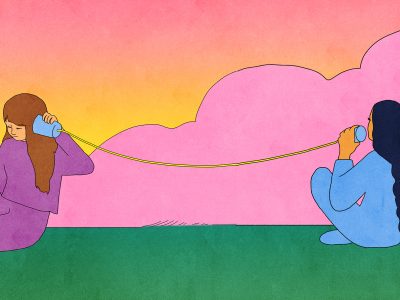
An illustrator of two women in sweatsuits, one wearing a patching purple set (facing towards the viewer) and the other in a matching blue sweatsuit (facing away from the viewer). They're sitting on green grass with a pink cloud and pink-to-yellow sky behind them. Connecting them is a string with cups on each side. The woman in the purple sweatsuit is putting a cup to her ear, the woman in the blue sweatsuit is putting the cup to her mouth.

The Conversationalist Podcast is Back

WP_Post Object
(
    [ID] => 5337
    [post_author] => 15
    [post_date] => 2022-11-24 07:00:00
    [post_date_gmt] => 2022-11-24 07:00:00
    [post_content] => 

Communities directly affected by a mass shooting don't just get to move on when there's another one.

I was a junior in high school when I first imagined dying in a mass shooting. It was 1999 and two young men had murdered 12 of their fellow students and one teacher at Columbine High School in Littleton, Colorado, 1,500 miles from my hometown of Buffalo, New York. A few weeks after the slaughter, a schoolmate burst onstage at an assembly. He was wielding a Super Soaker and wearing a trench coat, the Columbine killers’ signature clothing item. He thought it was funny. Those of us who’d spent that spring mapping out escape routes in our heads were less amused.

On the eve of my 40th birthday, I’ve been thinking about that episode a lot. Columbine stood out in 1999 because it was then the deadliest school shooting in U.S. history, the killers ending more than ten lives at once. Once a grim milestone, it now seems relatively small in scale. While roughly as common as they were in the 1990s, mass shootings have become deadlier and more prominent in the age of social media: Gunmen killed 60 people in Las Vegas in 2017; 49 at Orlando’s Pulse nightclub in 2016; 32 at Virginia Tech in 2007; and 26, including 20 first graders, at Sandy Hook Elementary School in Newtown, Connecticut in 2012. Back when I was in high school, these shootings didn’t seem so sickeningly normal.

I was sheltered enough then that I didn’t think about dying every day. Like lots of other kids, my anxiety spiked when I read about Columbine or heard about it on TV, but I didn’t really believe that something like that could happen where I lived or went to school. People frequently die of gun violence in Buffalo—a fact I was only dimly aware of as a teenager—but I invented all kinds of reasons why my classmates and I were exempt from the kind of random mass killing that had taken place at Columbine: New York has tougher gun laws than the rest of the country; my high school was small and close-knit; and, like most sheltered adolescents, I simply didn’t believe that people my age could die. As one high school friend put it, “I definitely didn’t internalize Columbine as a real risk for us. That was something crazy people in other places did.”

For a long time, it felt as if my friend was right. Our city was scarred by everyday violence, but for decades it escaped large mass shootings of the kind that happened at Columbine. Earlier this month, I was grabbing lunch at a diner in Providence, Rhode Island, when I overheard some customers chatting about a local shooting. “Not too many people get shot who haven’t put themselves in harm’s way,” one guy tut-tutted, expressing a belief many Americans still hold. It’s comforting to believe you can avoid violence by being smart and doing right, even when there’s plenty of evidence to the contrary.

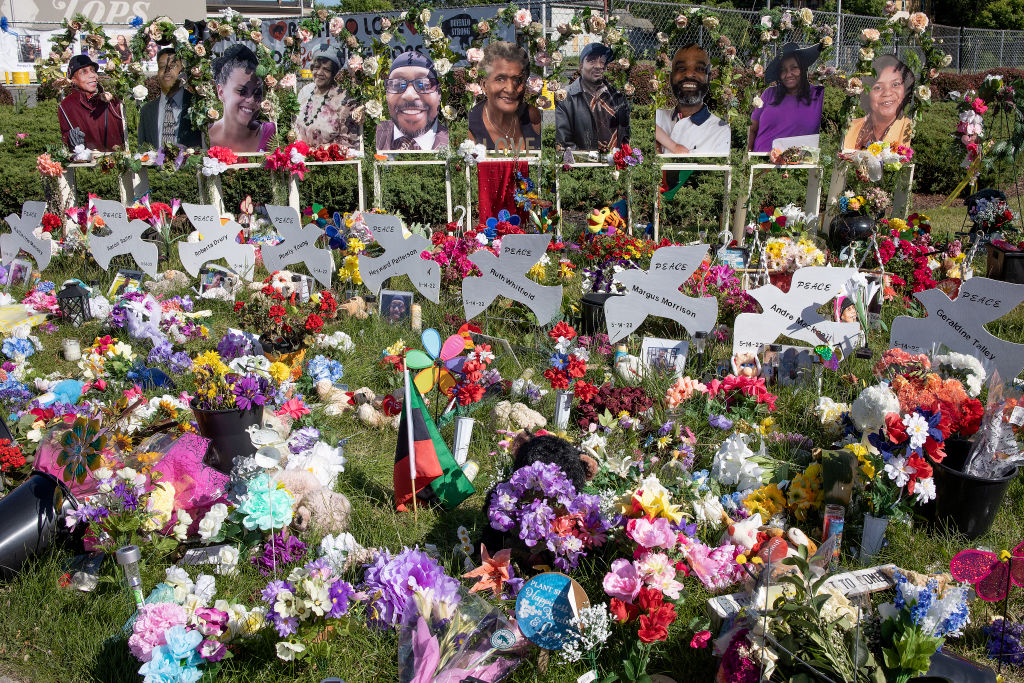
Buffalo’s luck ran out in May, when it became the latest American city to experience a deadly mass shooting, this time at a Tops grocery store in a predominantly Black neighborhood. Ten people were killed, victims of a targeted, anti-Black hate crime. No decent person would suggest that the victims had “put themselves in harm’s way” by shopping for groceries in the middle of the afternoon. But whether an act of violence feels random and haphazardly cruel or personal and targeted only really matters to those left behind. It makes no difference to the dead.

One of the cruelest aspects of the way we live now—always bracing for the next horrific headline, believing this kind of violence is inevitable because we are told over and over again that it is—is the way all of these massacres, no matter how shocking or deadly or racist or cruel, soon become old news to everyone but those most directly affected. Occasionally they reappear in headlines on anniversaries, or as benchmarks to help contextualize the latest mass shooting. Even the phrase “mass shooting” has acquired a leaden deadness; it’s become so common that it has lost the power to shock and horrify. Before those who lost children and parents and spouses and friends can even keep food down again, the rest of us have already moved on.

Andrew Lichtenstein/Corbis via Getty Images

“5/14,” the date of the Tops massacre, has become the equivalent of “9/11” for Buffalonians—a grim shorthand for a community-altering event that few outside of Buffalo would immediately comprehend. When I first heard about the shooting, I cried for two days. My sister-in-law used to shop at that Tops; it’s a mile and a half from my parents’ place. There were vigils and rallies and fundraisers. President Biden showed up to denounce the “poison” of white supremacy. Then we tried to move on. We have come to believe that those not directly affected by a particular mass shooting have to move on; it’s the only way to grasp a few moments of peace before the next one.

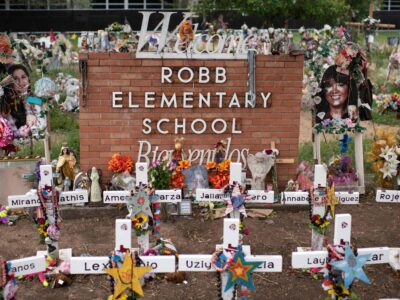
The respite was short-lived. Ten days after the murders in Buffalo, an 18-year-old man killed 19 children and two adults at Robb Elementary School in Uvalde, Texas. In both cases, the shooter was an 18-year-old man, the weapon of choice was a legally purchased AR-15-style rifle, and communities of color were the target. The killer in Buffalo was a young white man who targeted Black people; the killer in Uvalde was a young Latino man who targeted Latinos and was likely inspired by the massacre in Buffalo.

It’s impossible to stop thinking about something that never stops happening.

Six months on, residents of Buffalo and Uvalde are feuding over how much of the money raised by various victims' funds is going to which victims. Some Uvalde families believe that only those who lost children should be entitled to compensation. At a recent meeting in Buffalo, survivors of the Tops massacre made the opposite argument. Several argued that the people who died were at peace now, while they still had bills to pay and trauma-related symptoms that make it difficult or impossible to go back to work. Some former Tops employees shared stories of forcing themselves to return to their workplace, which now doubled as the scene of a shattering crime. Most couldn’t make it through an hour. Many of the children who watched their friends die in Uvalde have found it difficult or impossible to return to school. They suffer panic attacks, scare easily, and have trouble sleeping. Hundreds of U.S. parents have lost the power to give their children safe and normal childhoods.

In Buffalo, survivors have complained of being promised substantial financial assistance from a $2.9 million victims’ fund, then fobbed off with gift cards and meal vouchers. Worse than the inadequate disbursement policies of a particular fund is the abandonment of a community by the institutions meant to serve and protect it. In Uvalde, where the cowardice and incompetence of local police and other law enforcement officers may have cost children their lives, Governor Greg Abbott announced the opening of a center meant to provide the community with long-term mental health services. The mother of a little girl who survived the massacre told The Washington Post that no staffers were there when she stopped by the center to request gas vouchers. “It’s so frustrating,” she said. “Like, I know how this system works. And as an educated person, I see how they’re trying to take advantage of all these families…I knew it was gonna happen. Resources here are so limited. They were limited prior to this. And it was obvious to me this morning that there was no one that could help when we needed it.”

Adding to their trauma is the fact that survivors are now pitted against one another in a Hunger Games-style competition for artificially meager resources. A state government that cares for its people would fully fund its schools and mental health services, ensure families have a basic income, and provide free therapy to traumatized children that parents don’t have to drive for miles to access. A responsibly run charity would seek guidance from the community it is ostensibly serving and be open and transparent about its resources and who can expect what.

Instead, the thousands of people in this country who have been traumatized by a mass shooting—who were there when it happened, who were shot but survived, who lost children and parents and spouses and friends—get thoughts and prayers. They get to talk to high-profile reporters for a few days or a week. Their kids get therapy every other week, sometimes for as little as 15 minutes per session. Maybe they get a couple of gift cards or a meal voucher. After every mass shooting, we vow to support the victims, yet more often than not, what they end up getting is staggeringly inadequate. Meanwhile, the rest of the country moves on. And all these communities are left with is the pain of being associated with the worst thing that ever happened there: “Buffalo” now evokes a brutal hate crime more than football or chicken wings or snow.

On December 14, the Sandy Hook parents, with the exception of those who couldn’t bear to go on living, will have survived a decade without their babies. November 14 marked six months since the Buffalo massacre. The six-month anniversary of the Uvalde shooting falls on Thanksgiving. This year, I am thankful for my friends and family, and the fact that we survived another year in a violent, fraying, heartless country ruled by people who would rather let children smear blood on themselves and play dead than ban assault rifles.

The day this essay was commissioned, there was a mass shooting at the University of Virginia that left three young men dead. Two other students were injured, one by a bullet that went through his back and lodged in his stomach. He is expected to survive, which in this country counts as luck. Two days after I submitted a draft, a 22-year-old man shot up an LGBTQ club in Colorado, killing at least five people and injuring 25 others. The morning after I submitted a final draft, a gunman killed six people and himself at a Walmart in Chesapeake, Virginia.

What is a life worth? What about the lives of three people, or ten, or 12, or 60? We have reached a point where we can’t process the unique horror of any single massacre, let alone deal with the social fallout, before the next one comes along. And until we meaningfully restrict access to guns in the United States, there will always be a next one. That sense of inevitability has led to a pervasive hopelessness that compounds this uniquely American trauma. It is daunting to mourn each life lost, each family broken, each childhood marred, each marriage strained and severed. But that’s what we need to do, and we need to do it while fighting to dismantle the anti-democratic institutions preventing us from ending this carnage. We have to stop moving on from what those who lost loved ones, the use of limbs, or the will to live can never move on from. We have to confront the true cost of these killings: to victims, survivors, society, and every human being with a soul.

[post_title] => Buffalo and Uvalde, Six Months Later [post_excerpt] => Communities directly affected by a mass shooting don't just get to move on when there's another one. [post_status] => publish [comment_status] => closed [ping_status] => closed [post_password] => [post_name] => buffalo-uvalde-shooting-six-month-anniversary [to_ping] => [pinged] => [post_modified] => 2024-08-28 21:11:28 [post_modified_gmt] => 2024-08-28 21:11:28 [post_content_filtered] => [post_parent] => 0 [guid] => https://conversationalist.org/?p=5337 [menu_order] => 102 [post_type] => post [post_mime_type] => [comment_count] => 0 [filter] => raw )
A brick welcome sign for Robb Elementary School. All around it are white crosses with the victims' names written on them, flowers, candles, and toys

Buffalo and Uvalde, Six Months Later