WP_Post Object
(
    [ID] => 11136
    [post_author] => 15
    [post_date] => 2026-10-09 15:48:50
    [post_date_gmt] => 2026-10-09 15:48:50
    [post_content] =>
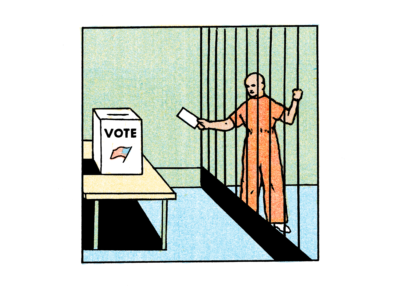
Why you should pay attention to Indiana's Public Question 1 this election.


For 175 years, bail has been a constitutional right for everyone in Indiana awaiting trial, with the exception of anyone charged with murder or treason. The same system is used in most of the country, allowing defendants to live outside of jail while awaiting trial for a crime. It’s imperfect and favors the wealthy, but at its best, bail is meant to balance a person’s liberty—until and unless proven guilty—with the safety of the broader community.


On the Indiana ballot this November, Public Question 1 asks Hoosiers to amend the state’s constitution to narrow that right. If the amendment passes, anyone charged with any crime in the state could be denied bail if “the proof is evident or the presumption strong and the state proves by clear and convincing evidence that no release conditions will reasonably protect the safety of any other person or the community.”


Proponents of the measure, which first had to pass the state legislature, cite public safety concerns. They claim that people who are released from jail on bail too often go on to commit dangerous crimes.


On the other hand, opponents are concerned about preemptively taking away defendants’ liberty, the vague and broad language of the amendment, and the potential for biases in and out of the courtroom.


A High-Risk Proposal for Rare Offenses


Under the current bail system, even if someone is ultimately released on bail, it can take many days for them to be able to walk out. The new amendment would make it easier to hold people in jail while they wait for hearings and other procedures.


“It is a significant disruption on the life of that person if they're being held in custody,” says Ray Casanova, the chief public defender for Marion County, where Indianapolis is located. “I do think [the measure] is going to have a disproportionate impact on low-income folks.”


People held in jail can lose their jobs, potentially resulting in other losses, including housing and custody rights to their children. In jail, they may also not have access to essential medications. All before they have been found guilty of a crime.


Vicki Becker, a prosecutor in northern Indiana’s Elkhart County, told Indiana Capital Chronicle that the amendment was introduced because “so many individuals…were back out in the community without any accountability whatsoever and continuing to commit offenses against other people,” adding that, “it just did not sit well with prosecutors who are much more focused on protecting public safety.”


Others question whether the amendment is really needed to protect communities, including State Senator Rodney Pol, a Democrat from the northwestern corner of the state. “If you can demonstrate that [the accused] are unsafe, there are already avenues” to mitigate that risk, he says.


For example, in many counties, judges have the latitude to set bail high enough so that a defendant will not be able to pay it. Casanova also points to measures such as GPS monitoring, no-contact orders, and situations when bail can be revoked. “Is this provision really providing additional safety or is it just essentially removing a constitutional right?” asks Casanova.


Data shows it’s rare for people released on bail to commit violent crimes while awaiting trial—1.4% of high risk people released before their trial have done so, according to ACLU analysis of data from the Indiana Office of Court Service. Rates of new crimes were even smaller for those deemed moderate and low risk.


When those violent crimes do happen, “it’s a tragedy,” says Zach Stock, who works for the Indiana Public Defender’s Council as a legislative counsel. “It's just natural human nature to say, ‘Gosh, we had that guy confined. And had he remained confined, that wouldn't have happened.’”


“But that’s assuming that we have more power than we do. It's really hard to predict the future,” Stock says, which is what prosecutors are ultimately attempting to do when they try to prove to a judge that a person poses a risk of harm.


Unless you detain everyone, some people who are released ahead of their trial are going to commit a crime. Making those numbers as small as possible “does come down to improving our ability to predict the future,” says Stock.


 A Precursor to Losing More Rights


For State Senator Pol, the amendment lays the ground for the abuse of other rights, like the right to protest or to unionize. Someone could be accused of being a violent protester, for example, and be held without bail, only to end up with a lesser charge of disorderly conduct. “Now I lost a year of my life for disorderly conduct, you know, because I was out at a protest,” Pol says.


Levi Gonzalez, a policy associate at The Bail Project, an advocacy and bail assistance nonprofit, echoed those concerns. He says such proposals are also not just limited to Indiana. In other states across the country, more laws are “looking to ultimately deprive people of their liberty at a moment where there's also a lot of political tension and upheaval,” he says. Given what he refers to as a “creeping authoritarianism” in the country, there could be political pressure “to make an example out of people“ arrested at a protest or demonstration.


The broad nature of Indiana’s ballot measure makes those concerns possible. It's different from the “tough on crime” eras in the 1980s and 1990s when change in the criminal justice system was incremental. “Now it's like, let's just go for everything,” says Gonzalez. This worries him.


Other states, like Tennessee and Alabama, are also broadening the scope of crimes for which people can be held without bail. But other states usually list specific new offenses that will be ineligible for bail. They don’t usually make it as broad as Indiana has, where, “any person who gets arrested for any offense now could potentially be at risk of being detained” without bail, says Gonzalez.


The wide scope of Indiana’s amendment means it doesn't necessarily only affect marginalized communities like the state’s Black and Latino residents, who make up around 18% of the state’s total population, says Gonzalez. “But of course, they're always going to be the ones that are going to face the brunt of this because those communities are ultimately going to be the ones that are going to come in contact with law enforcement more often.“


Protections Vulnerable Under Companion Bill


Should the amendment be approved by voters this November, another related bill passed by the state legislature earlier this year would also take effect.


The companion bill, as it’s called, would provide some protections to people facing charges and pretrial detention. It is “kind of a bright spot in what looks like an otherwise hopelessly contentious political landscape,” says Stock of the collaboration among his agency, prosecutors, judges, and legislators to create the bill.


The bill specifies a 48-hour time limit before a detention hearing and a person’s right to appeal a decision. It asks the state to meet a higher burden of proof, “because we are talking about taking away liberty before proof beyond a reasonable doubt,” says Stock. Judges will also have to document why they're making their decisions.


But because these protections aren’t in the amendment itself, they could easily be overturned by another legislative bill. Changes to the amendment, on the other hand, would require it to pass the legislature in two different sessions and then receive another ballot vote approval. “It's good to ultimately have that companion bill to provide that due process, but it's a lot better when it's enshrined in the actual constitutional language,” says Gonzalez.


Senator Pol is one of the legislators who worked on the companion bill and says it makes the amendment a little bit more palatable with the safeguards for the accused that it puts in place. “But I still don't think it goes far enough, and I still think that it is a dangerous precedent that's being set.”


While Senator Pol did vote to pass the amendment on the Senate floor, he says, “I’m still not a fan of it, and I'm still not going to vote for it on the ballot.”

    [post_title] => Bail On the Ballot
    [post_excerpt] => Why you should pay attention to Indiana's Public Question 1 this election.
    [post_status] => publish
    [comment_status] => closed
    [ping_status] => closed
    [post_password] =>
    [post_name] => 2026-election-midterms-united-states-indiana-public-question-1-amendment-crime-jail
    [to_ping] =>
    [pinged] =>
    [post_modified] => 2026-10-09 15:48:52
    [post_modified_gmt] => 2026-10-09 15:48:52
    [post_content_filtered] =>
    [post_parent] => 0
    [guid] => https://conversationalist.org/?p=11136
    [menu_order] => 0
    [post_type] => post
    [post_mime_type] =>
    [comment_count] => 0
    [filter] => raw
)