WP_Post Object
(
    [ID] => 9639
    [post_author] => 15
    [post_date] => 2025-09-19 12:01:38
    [post_date_gmt] => 2025-09-19 12:01:38
    [post_content] => 

Too many promising breakthroughs in women’s health research stall out due to a lack of funding. I’m trying to remove the roadblock for just one.

I was flat on my back on the cold tile of my bathroom floor, with a wet washcloth over my forehead, when I first learned about Dr. Marlena Fejzo’s work. It was December 2023. I was four months pregnant. While I had experienced some nausea in my first pregnancy, my second was an order of magnitude worse, and the bathroom floor was where I spent most of my time, always within arm’s reach of a toilet.

But scrolling through the headlines that day, I found a surprising glimmer of hope. Dr. Fejzo had cracked the code on understanding severe morning sickness, proving a genetic link between the mechanism of pregnancy nausea and vomiting for the first time. 

As I fought off another wave of my own nausea, reading about her research felt like a lifeline. Someone was figuring this out. And if a scientist had made such a huge breakthrough, surely treatment couldn’t be too far behind. Not for me, of course. But for women after me. 

Right? 

~

It’s important to understand how limited the understanding of pregnancy nausea and vomiting (NVP) was before Dr. Fejzo’s work—and, largely, still is. Nearly seventy percent of women experience some degree of NVP in pregnancy, and yet, before Dr. Fejzo and her collaborators, doctors didn’t know what actually caused it. 

Prior to 2023, the historical hypothesis was that hormones, such as estrogen and HCG, were somehow implicated in NVP—but a causal link to nausea and vomiting had never been demonstrated. Just eighteen months ago, my own OB told me, “We don’t know what gives some women morning sickness. Probably those pesky hormones.” (Pesky hormones is not, to my knowledge, a medically meaningful term.) The current edition of perennial bestseller What To Expect While You’re Expecting, updated in 2024, also states that “no one knows for sure what causes pregnancy nausea.” As if vomiting were just part of the elusive mystery of sacred motherhood, not a biological phenomenon that deserves care and answers. 

Angered by the lack of medical information on the subject, Marlena Fejzo approached NVP research from the perspective of a geneticist, and that of a survivor. In 1999, Dr. Fejzo had herself suffered from hyperemesis gravidarum, or HG, the most severe form of morning sickness—a debilitating condition which can quickly lead to severe malnutrition. Her doctor was dismissive, accusing her of exaggerating her symptoms and attention-seeking, all while she was fully incapacitated and rapidly losing weight. Tragically, despite a last-resort feeding tube and seven different medications, her condition became too advanced and she lost her pregnancy at 15 weeks gestation. 

In the 25 years since, Dr. Fejzo has been committed to researching HG. Her early efforts moved slowly, with little to no funding, carried out alongside her day job researching ovarian cancer. (Complicating her efforts, women vomiting to the point of incapacitation have a hard time participating in research trials.) Dr. Fejzo partnered with the Hyperemesis Education and Research Foundation to set up a web portal, then contacted affected patients individually to obtain DNA samples. 

Her work took a huge leap forward when she partnered with private genetics company 23andMe in 2010 to include a question about HG in their health surveys. From those responses, and the genetic data of 50,000 women, Dr. Fejzo was able to determine that HG had a strong genetic link. The greatest risk factor was in a gene that codes the hormone GDF15—which occurs in all humans, but is produced at the highest levels by the placenta. This finding was immediately exciting to Dr. Fejzo. High GDF15 levels were already known to occur in late-stage cancer patients with cachexia, a syndrome that causes weight loss, appetite loss, and muscle wasting—all similar symptoms to pregnant people suffering from HG. The evidence was lining up. 

Together with international collaborators, in late 2023, Dr. Fejzo released a groundbreaking paper in Nature, titled GDF15 linked to maternal risk of nausea and vomiting during pregnancy. Simply put, Dr. Fejzo and her collaborators had cracked the code on morning sickness. Even better? Their work suggested methods of prevention and treatment. 

When Time Magazine named Dr. Fejzo one of its 2024 “Women of the Year,” they noted, “Fejzo is now applying for funding for a clinical trial to test whether the drug metformin—which is approved to treat Type 2 diabetes but is used off-label for numerous purposes and has been shown to raise GDF15 levels—works as a preventive therapy.”

I was thrilled to hear it. For women who had experienced HG before, or had a family history of it, or who could, hypothetically, take a blood test to gauge their risk—preventative therapy would be life-changing. And, in some cases, life-saving.

The problem, as it turned out, was finding the funding to do it. 

~

Six months after I first read about Dr. Fejzo—this time, attempting to rock a newborn to sleep—I saw a post on a pregnancy message board about an incredible women’s health researcher who could not get funding for a clinical trial. 

I almost scrolled by the post, convinced it couldn’t possibly be about the same researcher I’d first learned about while incapacitated on my bathroom floor. But then, I saw her name—and immediately stopped scrolling.

My first naive assumption: that the great capitalist machine would have a profit motive in preventing a condition that affects millions of women—something those women would do anything to solve. My second naive assumption: that promising research gets funded publicly. The post I was now looking at disproved both—a reality that felt equally disillusioning and enraging. 

Part of the problem, as it turns out, was precisely that Dr. Fejzo’s research was such an outlier. Since Dr. Fejzo is the only full-time HG researcher in the country, grant review boards still don’t have the expertise to properly review her applications. When researchers of under-studied conditions do not have peer scientists to advocate for them and their research, their work often goes overlooked. As Caroline Criado Perez writes in her book Invisible Women: Data Bias in a World Designed for Men, “It’s not always easy to convince someone a need exists if they don’t have that need themselves.” As of writing, Dr. Fejzo has been denied seven different grants. 

Learning this, my vague notions of “science” and “progress” quickly crumbled. I’d previously had some kind of faith that medical problems existed; and then scientists solved them; and then we all benefited. But of course, there is no abstract body of “science,” and scientists are people who require resources to perform their work. It had never occurred to me to question where, exactly, those resources actually came from. 

Scientific breakthroughs do not, on their own, produce follow-up funding. Neither does media attention or critical acclaim. Visibility is important, of course. But it doesn’t automatically turn into dollars. As Time noted, Dr. Fejzo had intended, and still intends, to launch her clinical trial with an existing generic drug, metformin—something already known to have a good safety profile in women trying to conceive, lowering potential risk for participants. But the use of this drug is also why there’s no profit motive for pharmaceutical companies to invest some of the $83 billion—with a B—dollars they put into research and development each year: The drug already exists. 

Moreover, resourcing women’s health research funding, already challenging, faces stiffer headwinds than ever. As of 2020, only 5 percent of healthcare-related R&D efforts are targeted specifically at women’s health issues—and most of that is dedicated to female-specific cancers, leaving only 1% of all medical research dollars invested in all other female-specific conditions, including maternal health conditions, menopause, endometriosis, and the like. 

While the women’s health gap is a global issue, it feels particularly acute in the United States of 2025, where the current administration has also made abundantly clear that they do not consider women’s health a priority. The New York Times reported that terms such as “female,” “uterus,” and “mental health,” painted with the indiscriminate brush of “DEI,” can get a grant submission flagged for further review. According to JAMA (The Journal of the American Medical Association), overall grants disbursed by the National Institute of Health (NIH) are down $1.8 billion in 2025. Recently, NIH funding for a landmark women’s health study of 40-plus years was revoked, before being reinstated due to public outcry. Meanwhile, even research grants for active scientific projects face termination when they “no longer meet agency priorities.” (A quick perusal of these terminated NIH grants includes plenty with “pregnancy,” “breast,” or “ovarian” in the title… and none with “prostate,” “penile,” or “testicular.” Priorities, indeed.)

In just the last eight months, Dr. Fejzo has spoken at the White House, lectured at Harvard and Yale, and won prestigious awards. Her most recent paper in the American Journal of Obstetrics & Gynecology garnered a great deal of attention from the OB-GYN community; and her work has been extensively profiled both in major outlets such as The Guardian, and influential parenting newsletters like Emily Oster’s ParentData. There seems to be a consensus that this work is essential; that it deserves attention and further research. Yet none of this has actually translated to funding. 

This enraged and frustrated me. I found the pregnancy message board post and got in touch with its author—who, it turned out, had been desperately hoping Dr. Fejzo was already conducting clinical trials, and had been devastated to learn they hadn’t even yet begun. She put me in touch with the researcher herself.  “In terms of fundraising, I need all the help I can get,” Dr. Fejzo emailed me. 

Over the course of several conversations, hearing about her difficulties in obtaining funding and the incredible promise of her work, I became convinced that someone needed to be a champion for Dr. Fejzo’s work. And it might as well be me. This is how I—a complete outsider, whose last brush with genetics was MOLBIO 101 twenty-odd years ago—launched myself into fundraising for medical research.

Some familiarity with the nonprofit world was a big help. Since Dr. Fejzo works at the University of Southern California, donations to her work are routed through USC as a 501(c)3 research university, making them eligible for tax deductions, some corporate matching programs, and various other mechanisms that make a donation financially advantageous. (And supporters aren’t writing a check to an entity they’d never heard of.) I also worked with USC to set up an ongoing crowdfunding page so that interested people can donate any amount directly to Dr. Fejzo’s research fund and share within their own networks, GoFundMe-style. 

I’ve made deep connections in incredible women’s funding networks such as Women Moving Millions, whose bold members are dedicated to advancing women’s well-being in every arena. We’ve hosted a number of webinars where anyone interested could hear from Dr. Fejzo directly. I leaned on the advice of friends in the academic and media worlds; I tapped every alumni and professional network I had. I dug around for matching programs through organizations including #HalfMyDAF and Pivotal Ventures that could leverage existing gifts; I got social media boosts from the HER Foundation, which does incredible work supporting and connecting hyperemesis patients and providers. 

And finally, I’ve spent the last 10-odd months talking up Dr. Fejzo’s work to absolutely anyone who will listen. I’ve found that friends and colleagues are pretty interested when you adopt a single-minded crusade against morning sickness. (One stone still unturned: celebrity outreach. I haven’t found a contact for Princess Kate yet, who publicly shared her harrowing experience with HG during all three of her pregnancies. If you happen to know her, put us in touch.) 

We’ve raised nearly $750,000 thus far, a testament to the power of collective action. But we still have a long way to go: Dr. Fejzo needs $1.3 million to go forward with her clinical trial—a sum of money which is both significant, and yet so tiny in the scheme of research dollars. 

As my fundraising has shown me, though, this is completely doable—because I’m not the only one who feels motivated by Dr. Fejzo’s work. There is a true hunger for her research among women who have previously suffered HG. In fact, many individuals have emailed Dr. Fejzo—who, again, is a researcher, not a medical doctor—to ask whether she might help their own doctors suggest a metformin protocol. Essentially, pregnant people are volunteering themselves as studies of one, outside the controls and protections of clinical trials, out of sheer desperation for a better alternative to the pain they’re suffering through. 

I think back to my own experience. I did not have full-blown HG; I had a less severe experience with nausea and vomiting that, while deeply disruptive to my everyday life, was not ultimately dangerous to me or my baby. Yet I still emerged from the experience absolutely desperate for better care. I would have done anything in my power, and paid anything within my means, for the nausea to go away. For women who end up hospitalized, it’s many orders of magnitude worse. 

This is also why Dr. Fejzo’s inability to access followup funding makes me so angry. I’m angry that women’s pain isn’t considered a priority. Angry that women aren’t considered reliable narrators of their own experience. Angry that a primary response to any complication during pregnancy seems to be “suck it up.” That women, and pregnant women especially, are given vague assurances like, “Your baby is fine! It’ll get what it needs,” without any evidence to support those claims. (Oh, you’re vomiting multiple times a day? Well, didn’t you want a baby? What did you expect?)

This anger is motivating. But for those suffering from HG, it’s impossible to harness that rage into action while utterly incapacitated, fearing for the safety and health of your baby and yourself. HG can be dehumanizing—taking away your ability to advocate, fight, or do much more than exist. It’s on the rest of us, then, to rally for those who can’t. 

Where funding goes, and where it doesn’t, communicates something unmistakable about what society values—and clearly, addressing women’s suffering does not rank very high on that list. So what can we do? Well, we can start by crowdfunding one critical clinical trial, then another, and another. Collectively funding public good is a foundation of society, and perhaps it can continue despite the failure of official systems to support it, if we come together to put our dollars where they count. 

Should there be better ways to fund this kind of research? Yes. Are there better solutions than crowdfunding out there? Maybe. But until then, it’s time we reclaim some control, and fund the damn research ourselves.

[post_title] => Let's Fund the Damn Research Ourselves [post_excerpt] => Too many promising breakthroughs in women’s health research stall out due to a lack of funding. I’m trying to remove the roadblock for just one. [post_status] => publish [comment_status] => closed [ping_status] => closed [post_password] => [post_name] => morning-sickness-womens-health-research-pregnancy-funding-science-studies-hyperemesis-gravidarum-marlena-fejzo-fundraising [to_ping] => [pinged] => [post_modified] => 2026-08-06 00:33:05 [post_modified_gmt] => 2026-08-06 00:33:05 [post_content_filtered] => [post_parent] => 0 [guid] => https://conversationalist.org/?p=9639 [menu_order] => 0 [post_type] => post [post_mime_type] => [comment_count] => 0 [filter] => raw )
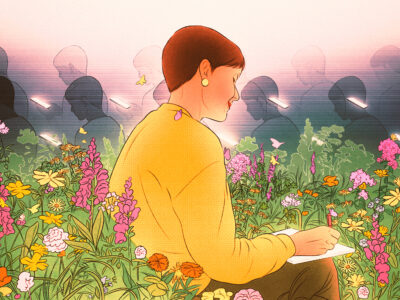
An illustration of three characters in a nature scene, a blue lake surrounded by forest. One person, in a white outfit, is on the shore, looking on at a red canoe filled with research equipment. There is one person paddling the canoe while another person is in the water, putting more instruments into the boat.

Let’s Fund the Damn Research Ourselves

WP_Post Object
(
    [ID] => 7175
    [post_author] => 15
    [post_date] => 2024-09-06 23:15:35
    [post_date_gmt] => 2024-09-06 23:15:35
    [post_content] => 

If we want to restore and preserve abortion rights in the United States, we have to fight harder for the ERA.

U.S. President Joe Biden’s overdue decision to suspend his reelection campaign and endorse Vice President Kamala Harris for the nomination has given the Democratic Party a decent shot at winning in November. It has also freed the Democrats to emphasize an issue they believe will drive voters to the polls: At its recent national convention, the party put reproductive rights and the “power of women” front and center, hoping to capitalize on voters’ very rational fear of a potential nationwide abortion ban if Trump is reelected.

But while the landscape for abortion rights will be less bleak if Democrats retain the White House next year, electing Harris alone will not be enough to restore these rights or prevent them from being ripped away again. Nor will it keep the far-right Supreme Court from laying the groundwork for the next Republican administration to implement the same reactionary social policies favored by the architects of Project 2025, the so-called blueprint for a second Trump term.

Aside from changing the composition of the Court, many advocates believe that passing the Equal Rights Amendment (ERA) is the best and possibly the only way to restore our abortion rights, and, more broadly, to protect the rights of millions of American women and LGBTQ+ people from current and future attacks. First proposed in 1923, the ERA would prohibit gender discrimination and ensure that “equality of rights under the law shall not be denied or abridged by the United States or by any State on account of sex”—something our Constitution does not explicitly guarantee. Most crucially, it would also safeguard these rights no matter which political party is in power. Its passage has rarely felt so urgent; in the wake of Dobbs, Americans cannot afford to leave the ERA’s fate up to the leaders of either party. Congress has already repeatedly failed to pass federal legislation to protect abortion rights: With so much at stake, demanding that the Biden administration immediately publish this badly needed amendment, and, to a lesser extent, joining efforts to add gender equality provisions to state constitutions has become far more crucial to preserving our rights than voting alone.

According to the American Bar Association (ABA) and other experts, the ERA has already achieved the number of state ratifications required to add it to the Constitution. (Conservative activists argue that some states’ decisions to rescind their original ratifications means the ERA never met this threshold, but many legal scholars say those rescissions are legally invalid and can be ignored.) But while Biden has repeatedly affirmed his support for the ERA, he has, to the outrage of its proponents, resisted publishing it for years. Why he is so reluctant is anyone’s guess. Perhaps his administration is taking a conservative approach due to perceived legal issues and a general fear of rocking the boat, despite the ERA’s popularity and legal validity. Or maybe they think it’s in their best interest to preserve threats to equality that double as fundraising tools for the Democratic Party and its allies, which help them retain the support of voters who know today’s GOP will do nothing to publish the ERA or protect abortion rights, but still hold out hope that the Democrats might.

It could also be personal: Biden, who is technically pro-choice, is a notably poor advocate with an appalling record on the issue. By contrast, Harris speaks passionately about abortion and, in March, became the first sitting U.S. president or vice president to visit an abortion clinic in an official capacity. In her convention speech, she declared, “We trust women,” and vowed that when “Congress passes a bill to restore reproductive freedom” she would “proudly sign it into law.” Yet she offered no explanation as to why this didn’t happen when Democrats controlled Congress, no strategy for ensuring that it happens in the next Congress, and no reason why the Democratic administration she is currently a part of hasn’t yet published the ERA. There is also no reason to assume that if Harris wins in November, she will honor her 2019 presidential campaign pledge to pass the ERA in her first 100 days in office, either. In fact, she did not mention the ERA in her speech at all, despite the party’s promise in its official 2024 platform that “Democrats will fight to make the Equal Rights Amendment the law of the land.” Notably, this year’s platform also promised that “Democrats will work to pass the Paycheck Fairness Act”—something then President Obama promised to do over a decade ago—and repeal the Hyde Amendment, which bars federal programs like Medicaid from covering the cost of most abortions, and which Biden supported until June 2019. It did not explain how they plan to do so. (Neither the Biden administration nor the Harris campaign responded to my requests for comment by the time this was published.)

Nicole Vorrasi Bates, Executive Director of the pro-ERA organization Shattering Glass, did not mince words in a recent phone call. “Both parties are playing political football with the rights and lives of 187 million women, girls, and LGBTQ+ people,” she said. Regardless of who is in the White House, the Supreme Court will issue rulings in the next year that could further damage women’s legal standing for decades to come by subjecting claims of gender discrimination to a lower standard of judicial review—something that theoretically could not happen if we could point to language in the Constitution that explicitly guarantees sex equality, rather than relying on what many legal scholars consider an implicit guarantee under the 14th Amendment.

The quickest and most straightforward path to achieving that guarantee is to publish the ERA. As Mrinalini Sisodia Wadhwa explained in a 2020 Columbia Undergraduate Law Review article, “the Court has continually changed the test it uses to evaluate claims of sex-discrimination…Without [the ERA], the Court will continue to evaluate sex-discrimination cases without a steady metric, thereby leaving problems of inequality unsolved.” The fact that sex equality is not clearly guaranteed in the Constitution, Wadhwa wrote, gives the Court “a blank check to decide what test to use” and “how seriously to take challenges against statutes that discriminate on the basis of sex.”

Today, the vast majority of pro-ERA politicians are Democrats. But the ERA continues to enjoy broad bipartisan support among voters. A 2016 poll found that 90% of Republicans support it, which suggests that most non-elite Republicans favor basic equality—and GOP leaders are, on this issue, profoundly out of step with their base. A more recent 2022 poll shows that the vast majority of Americans still support the amendment—and gender equality—across party lines. Conservative activist Phyllis Schlafly derailed the ERA in the 1970s and left it for dead at the dawn of the Reagan era; decades later, fury at Trump resurrected it. Nevada ratified the ERA in 2017, Illinois in 2018, and Virginia in 2020, bringing the total number of state ratifications to the 38 required to make it part of the Constitution.

Twenty-nine states already explicitly guarantee sex or gender equality in their constitutions, which offers stronger and more durable protections for abortion rights than state laws banning discrimination. The ERA would guarantee these protections at the federal level. Such protections are necessary even in blue states with strong anti-discrimination laws for two main reasons: (1) laws are much easier to change and/or repeal than constitutional text and (2) gender discrimination claims are usually subject to intermediate scrutiny, which is a lower standard than the one applied in cases involving explicitly protected categories like race. This is because a minority of Americans with outsized power do not consider abortion a right and do not want U.S. courts to treat gender discrimination as seriously as other forms of prejudice. Once courts are required to apply the same standard to sex-discrimination cases, abortion restrictions, which apply almost exclusively to women, will be much harder to defend.

This is already clear at the state level. In Connecticut and New Mexico, the constitutions of which prohibit sex discrimination, courts have upheld public funding of abortion. The New Mexico Supreme Court is considering striking down abortion restrictions passed by conservative localities because they violate the state’s constitution. The Pennsylvania Supreme Court recently ruled that abortion providers can challenge Pennsylvania’s ban on Medicaid coverage for abortion as sex discrimination under the state’s Equal Rights Amendment and constitutional equal protection provisions. Even in blood-red Utah, the state Supreme Court recently upheld a suspension of the state’s abortion ban, keeping the procedure legal while the ban is being challenged in court. In suing to block the Utah ban, Utah Planned Parenthood argued that it violated several provisions in the state’s constitution, including the right to gender equality.

But as Wendy J. Murphy explained in a recent law review article, amending state constitutions is an imperfect strategy for reasons similar to those put forth by Wadhwa. According to Murphy, only thirteen states enforce their own constitutional gender equity provisions under the highest standard of judicial review. In Texas, for example, the state constitution’s sex equality provision failed to protect Texas women when the state Supreme Court concluded that abortion-related funding restrictions do not deny equality “‘because of’ sex, even though only women [can] become pregnant.” As Murphy argued, “without the ERA, States are free to apply their State constitutional equality guarantees unequally to women.”

This doesn’t mean that states’ efforts are futile. A year ago, abortion rights supporters had reason for cautious optimism: Ballot measures designed to enshrine abortion rights in state constitutions passed, and those intended to restrict such rights failed in all seven of the states, including red states like Kansas, Kentucky, and Ohio, that voted on these measures in the aftermath of Dobbs. In November, New Yorkers will vote on whether their constitution should guarantee equality regardless of gender and reproductive status. (New York’s constitution currently prohibits discrimination on the basis of “race, color, creed or religion,” but not “sex.”) Floridians, too, will have the opportunity to enshrine abortion rights in their constitution. Abortion-related state constitutional amendments are also on the ballot or under consideration in Arizona, Arkansas, Colorado, Maryland, Missouri, Montana, Nebraska, Nevada, and South Dakota.

Yet some recent efforts to protect abortion and other rights via state constitutions have stalled. Despite having approved a resolution calling on Congress to ratify the federal ERA in 2023, Minnesota was unable to pass a state ERA in 2024. Minnesota’s proposed amendment did not include the word “abortion,” but it would have protected Minnesotans’ right to make “decisions about all matters relating to one’s own pregnancy or decision whether to become or remain pregnant.” An effort to enshrine abortion rights in Maine’s constitution similarly failed in April after lawmakers voted against putting the proposal on the November ballot. The Maine proposal, which would have asked whether Mainers wanted their state constitution “to declare that every person has a right to reproductive autonomy,” also omitted the word “abortion,” though supporters did not avoid the word in promoting it.

Even states that have managed to get reproductive rights on the ballot have had to fight to include the word “abortion.” In New York, pro-choice advocates and legislators attempted to revise the language of the upcoming ballot measure to make its primary purpose—protecting abortion rights—clear, after the state board of elections voted to exclude the word “abortion” from the initiative’s description. Democrats challenged that decision on the grounds that the state is obligated to provide easy-to-understand explanations of ballot proposals to voters. A judge recently upheld the vague language, and state Democrats are now squabbling over whether to keep fighting for the broadly popular initiative or retreat in hopes of neutralizing bad-faith GOP attacks on Democrats in swing districts. But allowing an abortion-rights initiative to fail in deep-blue New York would have serious implications for women’s and LGBTQ+ rights nationwide.

Gender equality as a concept is broadly popular in the United States, whether or not it always exists in fact. And as we’ve seen many times in the wake of Dobbs, abortion rights are popular and restricting them is not. That’s why the GOP is working so hard to keep abortion off of state ballots and overrule the will of the voters, and why New York Democrats belatedly tried to tie the word “abortion” to the state’s upcoming ballot proposal: Both parties know that opportunities to defend abortion rights drive voter turnout. But whatever happens in November, our rights would be better protected if Biden simply published the ERA today.

Despite her frustration with the two major parties, Bates remains hopeful that the tide is beginning to turn. “In light of recent events, and given all that’s at stake, the momentum for ERA publication is growing exponentially,” she recently said. Whoever our next president is, one thing is clear: Actions speak louder than words, and we will need to do more than vote to take back our rights.

[post_title] => Voting Isn't Going to Be Enough [post_excerpt] => If we want to restore and preserve abortion rights in the United States, we have to fight harder for the ERA. [post_status] => publish [comment_status] => closed [ping_status] => closed [post_password] => [post_name] => 2024-election-abortion-rights-reproductive-justice-equal-rights-amendment-kamala-harris-dnc [to_ping] => [pinged] => [post_modified] => 2026-08-04 16:50:44 [post_modified_gmt] => 2026-08-04 16:50:44 [post_content_filtered] => [post_parent] => 0 [guid] => https://conversationalist.org/?p=7175 [menu_order] => 48 [post_type] => post [post_mime_type] => [comment_count] => 0 [filter] => raw )
Equal Rights Amendment supporters voice their disapproval of the 22-16 vote against E.R.A. in the Florida Senate as they streamed out of the capitol for a demonstration and shouted "vote them out" in response to the Senate vote, June 21, 1982. It is a black and white photo of women gathered in protest. They appear to be shouting.

Voting Isn’t Going to Be Enough

WP_Post Object
(
    [ID] => 6921
    [post_author] => 15
    [post_date] => 2024-06-24 12:23:28
    [post_date_gmt] => 2024-06-24 12:23:28
    [post_content] => 

Two years after Roe v. Wade was overturned, an honest assessment of how things could get worse.

Nine months before the 2016 presidential election, I declared in an op-ed that if a Republican were to win in November, Trump would be “the best-case scenario for American women, not the worst.” Having covered politics and abortion rights for years, I’d been wrong in my predictions before—but never quite as spectacularly as I was about that.

It’s not that I thought the plainly misogynistic Trump would be good for women, but rather that Senators Ted Cruz and Marco Rubio—two of the highest-profile GOP alternatives to Trump at the time—would be worse. I wasn’t alone in thinking so: That February, a left-leaning columnist for Glamour had labeled Trump the “Best Republican Presidential Candidate on Women's Health Issues” because he was noncommittal on abortion and had taken less extreme positions overall than other Republicans in the race. Trump was and remains amoral and unprincipled, but, at the time, he was considered somewhat of a wild card, whereas Cruz and Rubio were running as ideologues with carefully cultivated right-wing brands. Both wanted to force women to carry their rapists’ babies to term, and Cruz vowed to prosecute Planned Parenthood if elected president. I was surprised that Trump—who was pro-choice for years and never cared about abortion, except as a means of shoring up support from the religious Right—turned out to be the most ruthlessly effective of the three at rolling back women’s rights nationwide.

Two election cycles later, I’m relieved that that op-ed was never published. But being so wrong about the former president taught me an important lesson: What Trump believes, says, or avoids saying has little bearing on what he does—and countless people will suffer as a result of his whims. He is a creature of impulse, guided by an outsized ego and often sharp political instincts. Barring some unforeseeable and extraordinary event, he will be his party’s nominee in November. But what matters far more than “who” leads the GOP ticket is how life would change for abortion seekers with a Republican in the White House next year.

We already know the consequences of anti-abortion laws and policies because we’ve been witnessing them for years, more commonly but not exclusively in red states. Thanks to our shockingly inadequate healthcare system, millions of pregnant people are already suffering—and not just those who need abortions. States with the cruelest abortion bans have the highest maternal and infant mortality rates in the country: Give birth in Alabama, for example, and you are more than four times as likely to die during or shortly afterward than you would be in California. In states like Idaho, Missouri, and Texas, abortion is a felony in nearly all circumstances; and with Roe overturned, healthcare providers across the country must now weigh their responsibilities to their patients against the risk of being sued, stripped of their medical licenses, or jailed—a choice with deadly consequences for patients. A 2022 survey of medical students found that a majority, around 58 percent, were unlikely or very unlikely to apply to residencies in states that restrict abortion, meaning we’re on the brink of a serious shortage of qualified OB/GYNs in the states where they’re needed the most. We’ve already seen the consequences of this play out: A January New Yorker story posed the question, “Did an Abortion Ban Cost a Young Texas Woman Her Life?”—and, as the author’s extensive reporting makes clear, the answer is a resounding “Yes.” Yeniifer Alvarez-Estrada Glick, the young woman in question, died while pregnant in 2022. After trying and failing to save Glick’s life, a doctor attempted to deliver her baby prematurely via C-section. The baby died, too.

Glick’s health problems, coupled with the poor care she received as a low-income, uninsured, undocumented Mexican woman in a small rural town in Texas, all contributed to her death. But according to the four outside experts The New Yorker asked to review her medical file, doctors likely could have saved her life by explaining how risky it was to continue her pregnancy and, if she wanted one, performing an abortion. Texas’ cruel abortion law made them afraid to do so.

If a Republican wins the presidency in November, the landscape will be even bleaker. While Congress is unlikely to pass federal legislation banning abortion nationwide, a Republican presidential administration wouldn’t need a law to accomplish that goal. As with the repeal of Roe, anti-abortion activists have been laying the groundwork for a backdoor ban for decades. And while Trump recently claimed that he would not support a federal abortion ban (a stance he’s likely to waffle on), anti-abortion activists don’t need him to. Below are the three main strategies they are pursuing—despite stiffening opposition from a passionate but fragmented pro-choice movement—to make a national ban a reality:

  • A Republican HHS Secretary could override the FDA’s approval of mifepristone, one of the two drugs most often used to induce abortion. Mifepristone was first approved by the Food and Drug Administration (FDA) in 2000; but in 2022, anti-abortion activists, hoping to curb access to the drug, filed a lawsuit challenging the FDA’s approach to regulating it. The Supreme Court’s June ruling in that case preserved access to mifepristone for now, but left the door open to further challenges down the road. And the next president’s Health and Human Services (HHS) Secretary could still override the FDA’s approval of the drug, effectively ending what has become the most common method of abortion nationwide.
  • An anti-abortion administration could resurrect the Comstock Act. Comstock is a 150-year-old anti-obscenity law which prohibits using the mail to send or receive “obscene” items, potentially including anything that could be used to perform an abortion. Under the Telecommunications Act of 1996, Comstock applies to the internet, as well, meaning that even discussing abortion online could lead to up to five years in prison, $250,000 in fines, or both. Medical abortions performed via telemedicine, wherein providers consult with patients online and send the necessary pills by mail, are just as safe and effective as those performed in person; but Comstock would prevent doctors from sending the pills at all, severing a lifeline connecting women in red states and remote, rural areas to needed care. (Between April 2022 and August 2022, around 4 percent of total recorded abortions in the U.S. were performed via telemedicine; as of May 2024, that figure had risen to 19 percent.) Because Comstock is a federal law, it would most likely invalidate state laws, which means a Republican Department of Justice could federally prosecute doctors and drug companies nationwide. It could also shut down all U.S. abortion clinics by barring them from receiving any abortion-related materials via mail.     
  • An anti-abortion Republican president could reinstate the global gag rule. The rule bars foreign nongovernmental organizations (NGOs) from using any funds, including non-U.S. government funds, to provide abortion services, information, counseling, referrals, or advocacy, effectively forcing NGOs outside of the U.S. to choose between receiving U.S. global health assistance and providing comprehensive healthcare. It has largely been in place under Republican administrations since 1984, but the Trump administration expanded it to apply to an unprecedented range of agencies and public health programs, many of which serve poor women in rural areas. When women desperate to end a pregnancy are kept in the dark about their options, they have more abortions, not fewer—and many end up dead or seriously injured as a result. The International Women’s Health Coalition wrote in a 2019 report that the rule “contributes to arbitrary deaths by impeding the provision of life-saving care.” Marie Stopes International, one of the largest global family planning organizations, estimated in 2017 that Trump’s expanded gag rule would increase abortions in Nigeria by 660,000 over four years, and that 10,000 women would die as a result. Precise figures are difficult to come by, but it’s clear that women have, as predicted, died as a consequence of this cruel and pointless policy. (Healthcare providers also expect the repeal of Roe to continue harming women worldwide.)

Whether or not the above scenarios come to pass—and there is little doubt that, if a Republican wins the White House in November, the last one will—the harm already caused by state abortion bans shows that a national ban would be an unmitigated disaster. Nor would it stop people from getting abortions. Women end pregnancies for a myriad of reasons, some more common than others. They do so whether it is safe, legal, and accepted, or dangerous, criminal, and condemned. And they do it whether or not their parents, lovers, spouses, friends, neighbors, religious leaders, strangers, or elected officials approve. The only difference is how many will get the quality care they need, and how many will suffer and die.

Forcing a person to carry a pregnancy to term and give birth against their will is a brutal act under any circumstances. But in a country like the U.S., with its threadbare social safety net and policies that vary wildly by state and region, it often means forcing them into poverty, as well. As Bryce Covert explained in 2023, “The states that have banned abortion are the same ones that do the least to help pregnant people and new parents make ends meet.” Most states with abortion bans offer little help to pregnant workers; none guarantee any control over work schedules, paid family leave, or paid sick days. When Lationna Halbert of West Jackson, Mississippi, found herself unexpectedly pregnant in 2022, she told In These Times, she cried and cried. She was earning just $8.50 per hour and already had a four-year-old son. She and her partner were not ready for another baby, nor could they afford to raise one. When Roe was overturned, an abortion ban automatically went into effect in Mississippi, shutting down the state’s last remaining clinic. By the time Halbert realized she was pregnant, it was too late: She couldn’t afford to travel to another state to get an abortion, and it was impossible to get one safely and legally in Mississippi. She delivered her second baby in a hospital with no hot water.

As I have written for The Conversationalist before, the same officials who worked so tirelessly to      overturn Roe have also fiercely resisted using public funds to help vulnerable women like Halbert. This is because the same politicians who romanticized her fetus have nothing but contempt for Halbert herself, and for all the other people—who are, not coincidentally, mostly women—being forced to have babies they do not want and cannot provide for. That contempt is matched only by their sociopathic indifference to the children who make it out of the womb—the kind who already exist, only to be routinely denied housing, healthcare, and basic nourishment by their state governments. (Nor do these politicians have any empathy for living, breathing children facing crisis pregnancies of their own.)

If pregnant women are the primary and intended victims of U.S. abortion policy, which is rooted in a desire to control and punish them, their children, partners, and families are collateral damage. It is bad for babies to be unwanted; bad for already existing children to be deprived of needed resources; and bad for the couple experiencing an unexpected pregnancy to be forced to have a baby that one or neither wants. It is delusional and insulting to pretend otherwise. Anti-abortion zealots’ cozy fantasies of domestic fulfillment have nothing to do with the daily lives of women forced into motherhood.

Even under a Democratic administration, women are already being investigated, prosecuted, and punished for various pregnancy outcomes, including miscarriages. In 2023, Brittany Watts, a 33-year-old Black woman in Ohio whose water broke prematurely, leading to a miscarriage, was charged with abuse of a corpse—a felony punishable by up to one year in prison and a $2,500 fine. Doctors told Watts her fetus was nonviable, and she spent a total of 19 hours in a local hospital over the course of two days, begging for supervised medical help. Concerned about the potential legal ramifications, the hospital repeatedly delayed her care. Watts ultimately gave up and miscarried alone in her bathroom. When she returned to the hospital for follow-up care, a nurse rubbed her back and told her everything would be okay—then called the police at the behest of the hospital's risk management team. As Watts was lying in the hospital recovering, police searched her home, seized her toilet, and broke it apart to retrieve the remains of her fetus as “evidence.” Watts’ charge was dismissed after a grand jury declined to indict her: Her prosecution was meant to shame and punish her, not protect her fetus. But prosecutors have always been more inclined to target women of color, immigrants, and/or poor women in these types of cases—because it’s easier to win against someone who can’t fight back. Watts’ experience also specifically demonstrates how little our healthcare system values the health and well-being of Black women, who are three times more likely than white women to die from a pregnancy-related cause.

One of the bitterest ironies of conservative reasoning on abortion is that, followed to its logical conclusion, it will impede tens of thousands of people who desperately want to become parents or expand their families from doing so. When the Alabama Supreme Court ruled in February that embryos created through in vitro fertilization (IVF) are children, three of the state’s IVF providers suspended their services, fearing legal repercussions. (Alabama voters in a longtime Republican stronghold were so alarmed that they elected a pro-abortion rights Democrat to Congress a few weeks later.) A number of prominent Republicans, including Trump, have since affirmed their support for IVF, but that hasn’t stopped many of them from co-sponsoring the Life at Conception Act, a piece of federal legislation that would ban nearly all abortions nationwide and does not include a carveout for IVF. Nor has it stopped those same Republicans from blocking a recent bill that would have protected the procedure. Leaders of the nation’s largest Protestant denomination, Southern Baptists, have recently voted to condemn the use of IVF, as well.

While Republicans’ support of openly fascist and deeply unpopular abortion policies has become a political liability for the GOP, it’s simultaneously become a human nightmare for the rest of us. Trump’s failed attempt to contain the political fallout from Arizona’s recent revival of an 1864 ban is an object lesson in locking the barn door after the horse has bolted. If abortion is the same as infanticide, as most anti-abortion activists insist that it is, then no person seeking one would be exempt from prosecution, whether you’re 9 years old and a man rapes you, 11 years old and your grandfather rapes you, 12 years old and a man rapes you, 33 and desperate to end your pregnancy, 33 and suicidal, a married mother who doesn’t want another child, or unexpectedly pregnant at 45. Even white, married, heterosexual moms are not exempt. The state of Texas recently forced lifelong Texan Kate Cox to travel out of state for an abortion she needed to protect her life and fertility. Cox, a married mother of two who wants more kids, was told that her third pregnancy was nonviable: The fetus was unlikely to survive, and the best-case scenario was that she might give birth to a baby who would live in anguish for a week or less. Alternatively, she could experience a life-threatening uterine rupture and need a C-section and/or a hysterectomy, potentially losing the ability to have more children in the future. Forced sterilization, which is one outcome Texas’ barbaric denial of care could have imposed on Cox had she lacked the means to travel out of state, is internationally recognized as a human rights crime. No wonder she fled.

It’s a sad truth that things can always get worse, even for relatively privileged Americans. Until it did, many legal experts considered it highly unlikely that the Supreme Court would overturn Roe, upending nearly 50 years of precedent and stripping American women of a right guaranteed to us for half a century. But many U.S. residents, particularly in rural areas and throughout the South and Midwest, have been living under de facto abortion bans for at least the last decade. A right is only guaranteed when it can be freely and easily exercised by all; for many U.S. residents, the cost of abortion—the procedure itself, the travel, the lodging, the childcare costs, the ability to request and take time away from paid work—is too high. One in five U.S. women must travel more than 40 miles one way to access care; in some rural areas, that distance is 300 miles or more. Under a national abortion ban, the situation will only grow more dire. People have taken and will continue to take risks that range from reasonable but frightening (crossing the border to buy pills from a pharmacy in Mexico) to desperate and potentially fatal (shooting themselves in the stomach). Denying care to women who need it permanently alters their lives, most often not for the better.

There is no reason to believe that the proudly anti-democratic GOP will uphold democratic norms or respect the popular will, and little reason to trust the Democratic Party, which has, in recent years, canceled elections, failed to defend abortion rights, and repeatedly defied its own voters. But focusing on how abortion politics are hurting the GOP or improving Biden’s chances misses the point. Like miscarriage, abortion stops an embryo or a fetus from becoming a baby. Restricting it tortures women, children, and families and rips holes in communities. Policies that harm actual, living people must be stopped, and those who promote them held to account. Voting is one fragile, inadequate tool. With so many lives at stake, we’ll need more.

[post_title] => The Reality of a National Abortion Ban [post_excerpt] => Two years after Roe v. Wade was overturned, an honest assessment of how things could get worse. [post_status] => publish [comment_status] => closed [ping_status] => closed [post_password] => [post_name] => national-abortion-ban-republican-gop-president-election-roe-v-wade-womens-rights-united-states-policy [to_ping] => [pinged] => [post_modified] => 2026-08-04 17:06:13 [post_modified_gmt] => 2026-08-04 17:06:13 [post_content_filtered] => [post_parent] => 0 [guid] => https://conversationalist.org/?p=6921 [menu_order] => 54 [post_type] => post [post_mime_type] => [comment_count] => 0 [filter] => raw )
A collage with a black background and flashes of deep blue. In the top left corner, a fragment of a black and white photo of a woman seemingly naked, her hand to her mouth. In the right bottom corner, a black and white photo of a surgery room. The black running through the center conveys a rip between the two.

The Reality of a National Abortion Ban

WP_Post Object
(
    [ID] => 5919
    [post_author] => 15
    [post_date] => 2023-06-20 07:53:49
    [post_date_gmt] => 2023-06-20 07:53:49
    [post_content] => 

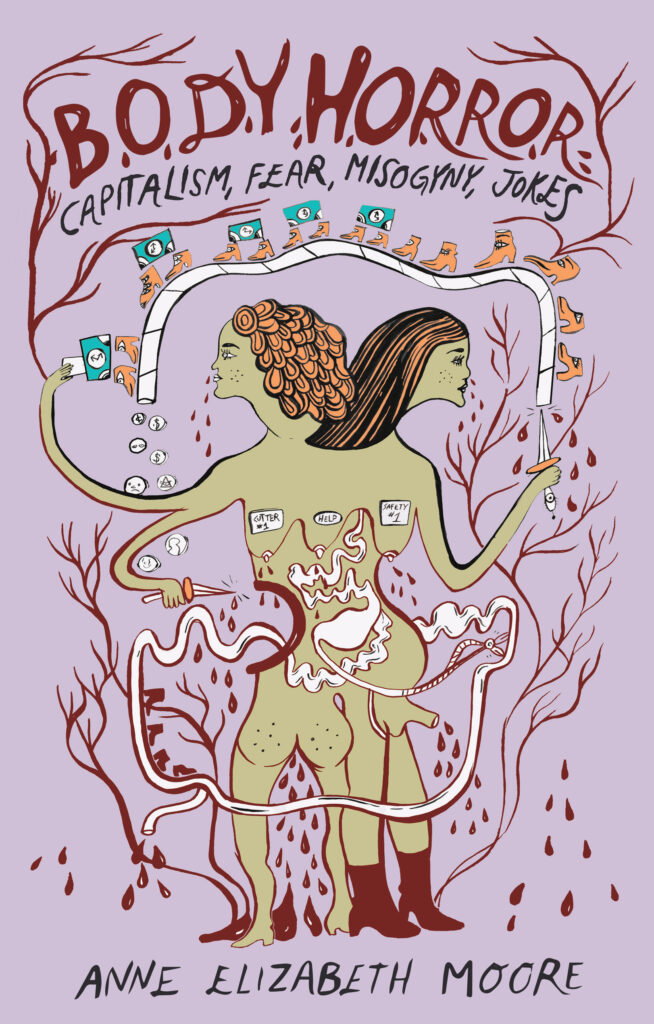
An exclusive excerpt from Anne Elizabeth Moore's "Body Horror: Capitalism, Fear, Misogyny, Jokes."

The Coronavirus. People who aren’t worried about the coronavirus. People who are too worried about the coronavirus. The possibility that I am not worried enough about the coronavirus. Case counts. The reliability of case counts. The vaccines. People who aren’t vaccinated. The reasons people aren’t vaccinated. Getting vaccinated. The mRNA vaccines. My thyroid gland, thrown into disarray by the mRNA vaccine and apparently increasing my blood pressure to dangerous levels. Convincing a pharmacist in a rural red county to give me a booster that is not an mRNA vaccine. Convincing a pharmacist in a rural red county to give me a booster at all. Convincing a pharmacist in a rural red county that the coronavirus is real. Convincing a pharmacist in a rural red county to give me a booster as an immunocompromised person. Explaining to a pharmacist in a rural red county what being immunocompromised means. Convincing my doctor that the mRNA vaccine caused my thyroid disruption, the first I’ve experienced in over a decade, occasioned exclusively and to the day by my second mRNA vaccine booster. A new coronavirus strain. The effectiveness of masks. Buying more masks. Masking at outdoor gatherings. Transmission at outdoor gatherings. Outdoor gatherings. Being around other people. Not being around other people. The large and embarrassing zit that emerged on my cheek a few days back despite the fact that I am an adult, wash frequently, and do not consume sugar. My autoimmune diseases. The medications for my autoimmune diseases. The vitamins and supplements I take to counteract the medications for my autoimmune diseases. The likelihood of accruing more autoimmune diseases. The likelihood of accruing other diseases because of my autoimmune diseases. Being immunocompromised during a pandemic. Buying clothes during a pandemic. Going outside during a pandemic. Remaining inside during a pandemic. My left forefinger, currently swollen. My blood pressure, still high. My concentration, largely shot. Oh man, a buncha stuff. So much stuff!

What comes flooding in when I have a moment to breathe. The dead tree outside my window, and the path it will take when it falls. Mowing the lawn. Trimming the lawn. The survival of the monarch butterflies. What will happen to my cat if I don’t take her to the vet soon. What will happen to my cat if she keeps eating leaves from my fig tree. What will happen to my cat if I have a heart attack. Writing a will. Finding someone to sign my will as a witness who won’t freak out about my impending death. Refinishing my furniture in a pleasing enough manner that the beneficiary named in my will won’t just throw it away. The calcium supplements I have been taking, triple the recommended dosage, which turns out to cause high blood pressure. New lab results. More lab tests. Where to drop my sharps container. Paying for lab tests. My dwindling grant funding. Inflation. Winter heating bills. Utilities costs. Author-website maintenance costs. The cost of a new computer. Word processing software subscriptions. Book prices. Food prices. Cat food prices. Finding time to run. How running will affect my achy right knee. How running will affect my left leg. Not finding time to run. Where I can go to swim. Where I can go to swim during a spike in case counts. Focusing on my personal physical health during a global health crisis. Going out to eat with my food restrictions. Going out to eat during a period in American history where setting boundaries around personal health is unwelcome. Cooking for myself, again. Another new coronavirus strain. A new vaccine. Getting the new vaccine. This sore throat. This persistent cough. This fatigue. This diminished capacity to smell. This negative coronavirus-test result. Coughing in public after a negative coronavirus-test result. Coughing in public for any reason. People casually mentioning that they just tested positive for the coronavirus but feel fine. People who would never test for the coronavirus but clearly do not feel fine. This essay. Other essays. Writing. Not writing. Publishing. Not publishing. The publishing industry. The state of this nation’s democracy, such as it is. The avowed white supremacist who lives down the road. The Civil War reenactor up the block. The guy at the edge of the village with the flag outside his house that reads, “TRUMP 2024 FUCK YOUR FEELINGS.” The guy on the internet who tells me my feelings don’t matter. The guy on the internet who tells me I am stupid. The guy on the internet who responds to every post by telling me how hot I am. The guy on the internet who tells me he knows where I live. That my house sits on a hill that is visibly eroding. The oxycodone manufacturing plant in my village. The environmental repercussions of the oxycodone manufacturing plant in my village. The social repercussions of the oxycodone manufacturing plant in my village. The sheer volume of oxycodone that passes through this village. The sheer volume of guns within a five-mile vicinity of my home. How the vast majority of gun owners in this village fundamentally disagree with me on most basic matters. Not owning a gun. Owning a gun. A civil war. The current Democratic president. Any potential future Republican president. My blood pressure, now both too high and too low. Weaning myself off blood pressure medication. Getting enough calcium in my food without consuming dangerous supplements or dairy. The vitamin D supplements I have been taking too frequently, another cause of high blood pressure. How to get more vitamin D without supplements. Finding time to google every single thing I need to know more about just to survive the week. Remembering to google everything I need to know about to survive the week. Google knowing too much about me. Amazon. Amazon’s influence over publishing. Amazon’s move into housing. Amazon’s move into healthcare. That the calcium supplements I was taking at three times the dose I ordered and which substantially contributed to my high blood pressure were due to an Amazon shipping error. My Amazon rankings. Sales numbers of my current book. Sales numbers of this book. Sales numbers of my next book. Finishing my next book. Finishing this book. Writing books. Reading books. The surprise bill I just got for something that should be entirely covered by my insurance. Calling the insurance company, who tells me to call the billing department. Calling the billing department, who demands I call my RN. My RN, who was fired for refusing to get vaccinated against the coronavirus and then rehired after a couple of months out of desperation and who never got vaccinated. Calling back the billing department, who failed to file my paperwork with the insurance company because they were “too busy” and who asks me to file it myself. That my very complicated disease- maintenance program relies entirely on a medical facility who will charge me three hundred dollars for a fully covered five-minute doctor visit because they’re “too busy” to send the same paperwork to someone else. Dobbs v. Jackson. The women I know who will be affected by Dobbs v. Jackson. The nonbinary and trans people I know who will be affected by Dobbs v. Jackson. All the people I will never meet because of how severely their lives will be affected by Dobbs v. Jackson. Whether my political organizing in response to Dobbs v. Jackson will impact my own political career. Whether or not I can have a political career in a world where people with uteruses have no bodily autonomy. Whether or not I want a political career in a world where people with uteruses have no bodily autonomy. Whether or not I want to live in a world where some people have no bodily autonomy. The kind of people who want to live in a world where some people have no bodily autonomy. Republicans. Democrats. Being told to vote in response to bad policy. Being told to vote by a political party that has more money than god. Being told to vote by the people I voted for. Being told to vote in a world where voting rights are being stripped away from increasing numbers of people. That two out of four times I have tried to vote in this village I have been told I could not. This sudden, inexplicable grief that has no identifiable origin and no end, but some days recedes while I am in the shower and stays in the background for a while, perhaps days, but at other times emerges while I am washing dishes or doing yoga or placing a forkful of salad in my mouth and causes intense chest pain and sudden tears and colors everything gray and that no amount of crying or meditating or talking to friends or sitting in the woods can alleviate in any way. Why my sunflowers have not yet opened. What is going on with my beans. The organic content of the soil in my garden. Why my herb bed isn’t filling out. Why my plum trees keep dying. What to do with all this compost. Where to get more raised beds. Wild parsnip. Buying a chain saw. Using a chain saw. Accidentally killing someone with a chain saw. And then wanting to do it again. Purposely murdering someone with a chain saw. Running for elected office. Running for elected office and then having nude pics unearthed on the internet. The kinds of people who run for office. The kinds of people who will never, ever run for office. The weird tendency my left leg has after I’ve been walking for a mile or so to sort of peter out, to stop performing at peak function, to bend less easily and not lift as high with each step, and how this appears to be a neurological, not a physical, symptom of my medications. Any neurological disease or symptom. Long COVID. Catching the coronavirus as an immunocompromised person and passing along a mutated strain. Accidentally killing someone—oh wait, that’s already listed. Mpox. Pretty much all straight white cis men. Straight white cis men who want to play devil’s advocate. Straight white cis men who just want to ask me one question about feminists. Straight white cis men who assure me they’re not racist. Straight white cis men who speak only to other straight white cis men. Introducing straight white cis men to one another in a professional capacity given the likelihood that they will develop some kind of lucrative project together, leaving me out entirely, often forgetting they ever knew me, that I introduced them, that I used to be their friend. Introducing straight white cis men to music I like. When straight white cis men express interest in my work because they are working on a similar subject. People who too aggressively want to befriend me. Obviously also people who have no interest in me. Engaging with elders in the community during a pandemic. Engaging with elders in the community in a collegial manner and immediately being treated as a sycophant. Becoming an elder in the community. Aging. Trying to behave as normal. Behaving as normal. Trying to remember what normal was. What normal was. The inexplicable knot in my stomach when I wake up every day that takes several hours to dissipate but seems really out of place because actually right now everything is fine, you know, relatively speaking. My dreams, which are often just more of the same. Sleeping, therefore. What will happen next. What will not happen next. How we will recover. Who will recover. Who will not recover.

The book cover for Anne Elizabeth Moore's "Body Horror: Capitalism, Fear, Misogyny, Jokes."

From “Body Horror: Capitalism, Fear, Misogyny, Jokes” by Anne Elizabeth Moore. Excerpted with permission of Feminist Press. Copyright 2023 Anne Elizabeth Moore.

[post_title] => A Partial Recounting of My Current Anxieties [post_excerpt] => An exclusive excerpt from Anne Elizabeth Moore's "Body Horror: Capitalism, Fear, Misogyny, Jokes." [post_status] => publish [comment_status] => closed [ping_status] => closed [post_password] => [post_name] => a-partial-recounting-of-my-current-anxieties [to_ping] => [pinged] => [post_modified] => 2026-08-04 19:09:01 [post_modified_gmt] => 2026-08-04 19:09:01 [post_content_filtered] => [post_parent] => 0 [guid] => https://conversationalist.org/?p=5919 [menu_order] => 80 [post_type] => post [post_mime_type] => [comment_count] => 0 [filter] => raw )
The book cover for Anne Elizabeth Moore's "Body Horror: Capitalism, Fear, Misogyny, Jokes," on a dark red background.

A Partial Recounting of My Current Anxieties

WP_Post Object
(
    [ID] => 5856
    [post_author] => 15
    [post_date] => 2023-05-12 19:32:09
    [post_date_gmt] => 2023-05-12 19:32:09
    [post_content] => 

After my daughter was born, I struggled to produce milk. Why did I feel like I had to keep trying?

When I was sixteen, I went to see my mother in a community theater production of John Steinbeck’s The Grapes of Wrath. Though Mom performed a chilling death scene as Grandma Joad, it was the character at the center of the play, a young woman named Rose of Sharon, who ended up haunting me. In the third act, Rose has just given birth to a still born baby—a particularly cruel fate given what the Joad family had already endured on their journey West. But then, grieving and broken, the family encounters a young boy and his father, who is dying of starvation, in an abandoned barn. Rose of Sharon, with her milk having just come in, unbuttons her blouse and nurses the dying man back to health.

Even as a teenager, I sensed some great superpower, a gift that I couldn’t wait until it was my turn to receive. 

~

A few years later at a coffee shop, I watched a young mother, dressed in a blue tube top with light brown hair hanging down to her waist, wrestle with her hungry baby. I stared transfixed as she casually pulled down her top and popped out a small, perfect breast. Her baby immediately latched on. The woman was sitting in the window, warm afternoon light flooding behind her, and for a moment, she seemed to occupy a holy air: her long hair curtaining them off as the baby nursed with a practiced ease, a profound sense of calm flowing outward from them.

~

In December 2021, a few days before Christmas, I gave birth for the first time. Immediately after cutting the umbilical cord, my daughter was put to my breast; I felt a little pull and suddenly she was working away. I gasped. We stayed like that for about an hour, completely still except for her suckling. Her cheeks and my breasts were both so large at that point it was hard to know where she ended and I began. It would be the last time that breastfeeding was easy for us. 

Two days later, I was told by a nurse that my daughter's weight had dropped and that she probably wasn’t latching correctly. A lactation consultant kindly showed me a better angle to hold the baby while nursing. I adjusted. My daughter latched on. “Everyone thinks the cradle way is easiest,” she said. “But that’s because of what we see in the movies.” And in literature, and plays, and paintings, and in coffee shops, I thought. 

I believed everything was going fine until around 3 AM the following morning, when I was awoken by another lactation consultant, this one much harsher than the last. Standing over my bed, she sported a neon fanny pack and a buzz cut on one half of her head, her vibe much closer to Nurse Ratched than Mother Theresa. I honestly can’t remember most of what she said, except for one phrase that she repeated over and over: “This is an emergency.” She told me that my milk hadn’t come in yet because I’d had a c-section and my body was prioritizing healing. Strike one against mama, the c-section. Strike two, bad nipples. 

My husband and I were directed to feed the baby tiny bottles of formula while I was put on a pumping schedule of every two hours for fifteen minutes at a time. By the time I left the hospital, my nipples were cracked and bleeding, looking like a pair of skinned knees. According to Ratched, the clock began when I started the pump, not when I finished, which, after the obligatory clean up and sterilization of the pump’s various parts, meant that I was sleeping in bursts of an hour to an hour and a half. I started to lose my grip on reality from the sleep deprivation. All the while, nothing was coming out. 

Once we got home, I became obsessed with solving the riddle of my broken breasts. I saw a total of six lactation consultants. According to these experts, I had already done so much wrong: taking Dayquil when I came home from the hospital with a cold, sleeping through a couple of my pumping alarms, not being hydrated enough, not eating enough calories, being too stressed for the oxytocin to release and help the milk flow. So I ate all the lactation cookies, drank all the teas they recommended, and even went to an acupuncturist. I created Excel spreadsheets to track my progress, which I made my husband and mother fill out in detail every time they fed the baby. I continued the relentless pumping schedule that had been prescribed to me.

To make matters worse, I was spending less and less time with my baby. I was still trying to nurse her, still trying to recreate every beautiful feeding scene I’d witnessed, but the reality was that until I started to produce milk, she still needed to eat, and the bottle kept her from being interested in the breast. I’d always heard that newborns were like breathing, dreaming appendages, attached so firmly for the first few months that they don’t feel like separate beings. But whenever I looked down, instead of seeing my baby, there was only a mess of wires, and a buzzing pump always alerting me that I was more machine than mother. Over the constant noise, I’d strain to hear her cooing and crying from the other room, where my husband and my own mother held her, and changed her, and fed her. 

~

One morning, I woke up with a breast infection so painful it made me forget the intense abdominal surgery I’d just undergone to remove my daughter from my womb. 

I’d known about mastitis and blocked ducts, but this felt like broken glass inside my nipples, now shiny and hot as though they each had their own intense fever. One nurse told me she thought it could be thrush, a type of fungal infection, but another was suspicious since my baby didn’t have it in her mouth. A third said I just needed to “toughen my nipples up” and suggested dipping them in black tea. But the more I pumped and tried to nurse, the worse the pain became. I had stopped taking the powerful painkillers prescribed for my c-section recovery, but started taking them again to deal with this new agony. (Later, after I moved to formula feeding exclusively, the pain lessened but still took months to go away altogether.)  It seemed to me that my body was saying something important, something it had long been trying to tell me but that I wouldn’t let myself hear. I walked around in a cloud of such sadness that I felt like my soul had the flu. 

My pregnancy had been difficult. Almost immediately, I’d developed hyperemesis, which is like morning sickness on steroids. It had landed me in the emergency room twice with dehydration, and once at the dentist when a molar, weakened by copious amounts of stomach acid, disintegrated and fell out of my mouth. I had imagined myself as a pregnant glowing earth mama, all supple curves, completely in tune with nature and myself, but there were times the vomiting was so extreme that I just wanted to die. Then, I had a c-section, further cementing the idea that my body wasn’t meant to do this at all. That my breasts could not “correctly” produce milk was the final nail in the coffin. 

The internet, unfortunately, agreed with me. 

At the same time that I was struggling to produce milk, America experienced a terrifying formula shortage after a contaminated batch at an Abbott plant led to a widespread recall, revealing the fragility of the formula supply that so many families depend on. But for every woman who was vocal about how the shortage should be considered a national emergency, there was someone, usually a man, asking why women couldn’t “just breastfeed.” 

Suddenly total strangers from around the world were chiming in to validate my inadequacy. But in the midst of this turmoil, my breasts still vibrating with mysterious pain, rather than feel rage or frustration, I felt a perverse relief. The world seemed to agree with that little nagging voice in the back of my head. I simply wasn’t meant to be a mother.

~

How much of the breastfeeding debate is really about the health of the child, and how much is about the control of women's bodies and, moreover, about the performance of successful womanhood? 

I found myself thinking about this question a lot in my baby’s first months of life. The internet’s unsympathetic reaction to the formula shortage further demonstrated that many believe the difficulty of breastfeeding to be a modern predicament; that as women have gotten more agency, and more rights, they’ve abdicated more of their motherly duties. But breastfeeding has been complicated since the beginning of time. Women have always experienced issues like mastitis, which before the advent of penicillin was an often fatal infection. And babies have always experienced tongue ties, premature births, and trouble latching. Add to that centuries of malnutrition, as well as external traumas like giving birth in famines, war zones, or while enslaved, and the body’s ability to produce milk becomes less and less likely. We’ve always needed alternatives. 

Before formula, parents searched far and wide for methods to replace breast milk. Author Carla Cevasco notes in The Atlantic that early options ranged from cow’s milk to bone broth and nut milk—some of which provided hydration but not necessarily nutrition, and could be deadly due to contamination and poor food preservation capabilities. Historically, the surest way to keep a baby fed was a wet nurse, another woman who had also recently given birth and could breastfeed. Wet nurses were commonly poor or enslaved women who were forced, either by poverty or slaveholders, to feed other’s babies as their own starved at home. 

These women’s experiences should remind us that the history of formula feeding is not a stain against a woman’s ability to mother, but in fact quite the opposite: a testament to the incredible act of keeping one’s baby alive. 

I knew all this, so why couldn’t I let myself believe it? I thought of every poster hanging in every doctor’s office, waiting room, and maternity ward that depicted mother and child in complete harmony with the tagline “breast is best”—a mantra made popular in the 1950s by a group of Catholic women who called themselves La Leche League and believed breastfeeding was “God’s plan.” And I couldn’t stop seeing that young mother in the coffee shop from my twenties, how she had no problem nursing her infant, the two of them a recreation of every painting I’d ever seen of Madonna and child come to life.

Even before getting pregnant, I had already internalized the cultural messages surrounding breastfeeding so deeply, it had become something much bigger than a simple act. It had bloomed into a dangerous omen. 

~

During my maternity leave, my husband and I spent the late nights re-watching the entire seven seasons of Mad Men. In one episode, a pregnant Betty Draper, played by January Jones, gets asked by a nurse whether she intends to breastfeed. Betty answers with a bored “no” and the nurse nods in agreement. My husband was shocked. Here we were, struggling so intensely, and there was Betty, not even intending to try. What’s more, no one seemed to have a problem with it. 

Where my husband saw a kind of permission for formula feeding, I saw something different: an inverse reflection of the very expectations I had failed to live up to, and that are placed on so many birthing parents, regardless of gender. In the 1960s, formula feeding became the norm, with, as historian Amy Bently writes, only 20-25 percent of babies starting their lives being fed breast milk. The primary reason for this shift was the urging of pediatricians who were intent on lowering the infant mortality rate, and saw formula feeding as a more consistent and regimented way to keep babies fed and alive. More women were also working outside the home and needed to be able to leave their infant with a caregiver as they went into the office. 

Little of this was relevant to Betty, a wealthy housewife who didn’t work—and so her reasons for bottle feeding were probably similar to the reasons I wanted to breastfeed: It was a cultural marker of being a “good woman.”

~

After six excruciating weeks, the end of my breastfeeding journey was sudden, unexpected. Eventually, when calling the nurse for the umpteenth time to describe a new pain in my breast—a swelling lump that hurt to touch—I received the kindest advice I’d been given thus far.  “Honey, just give up,” she said. “You don’t need to do this.” Her tone was frank but measured; her South Boston accent rough but comforting. I didn’t know how much I’d needed her permission to stop.

I was free—almost. For a couple more weeks, I still tried to nurse, but then during a blizzard that lasted the weekend, I gave up cold turkey. I made my husband run out into the storm to collect little baggies of snow that I would then sneak into my bra sandwiched between cabbage leaves, an old wives’ remedy for weaning. Lying on the couch, icing my swollen breasts, I thought about how on New Year’s Eve, just a few days after we’d returned from the hospital, my husband and I had waited for the clock to strike midnight, my baby in my arms. While giving her a bottle, I started to cry. “Why can’t I feed my child?” I asked him. “Look at you right now,” he replied. “You are literally feeding your child.”

I glanced down at my daughter, her eyes wide, slowly blinking, and saw her taking in all of me. The Christmas tree lights glimmered behind us, lighting us both up with a starry glow. How long had she been staring at me like that? I wondered. Her tiny hand wrapped around my finger, her skin pressed against my skin. I felt like I was seeing my baby for the first time, and noticed that I was, in fact, feeding her.

[post_title] => A Personal History of Breastfeeding [post_excerpt] => After my daughter was born, I struggled to produce milk. Why did I feel like I had to keep trying? [post_status] => publish [comment_status] => closed [ping_status] => closed [post_password] => [post_name] => breastfeeding-formula-shortage-motherhood-bottle-feeding-baby [to_ping] => [pinged] => [post_modified] => 2026-08-04 19:13:06 [post_modified_gmt] => 2026-08-04 19:13:06 [post_content_filtered] => [post_parent] => 0 [guid] => https://conversationalist.org/?p=5856 [menu_order] => 83 [post_type] => post [post_mime_type] => [comment_count] => 0 [filter] => raw )
A line drawing of a woman's upper torso. Her arms are crossed in front of her, her hands covering her breasts. Underneath them, a pale blue-green aura is emanating from her chest, and pink and red flowers are blooming, further obscuring her breasts.

A Personal History of Breastfeeding

WP_Post Object
(
    [ID] => 5810
    [post_author] => 15
    [post_date] => 2023-04-19 00:32:53
    [post_date_gmt] => 2023-04-19 00:32:53
    [post_content] => 

The first question we ask about complex chronic illnesses shouldn't be whether or not they're real.

Over the last few months, the question of whether long Covid is real has been the subject of lengthy examinations from publications across the political spectrum. These articles are often ambiguous in their conclusions, giving equal weight to the legitimacy of the condition while simultaneously attempting to debunk it.

As anyone who has it will tell you, long Covid is very real, but if you’ve been reading these articles purporting to explore LC’s reality or unreality—questioning if society has it “wrong”—you might think that it is not, or that the people who have it (and illnesses like it) do not have a physical ailment at all, but instead a mental health one. While it’s not surprising that more right-leaning publications have engaged in long Covid denialism, the trend of left-leaning legacy publications like New York Magazine and the New Republic doing something similar is, to me, cause for concern. As a disabled, nonbinary feminist who has dedicated a large chunk of their career to exploring the tangled issues of gender, chronic pain/illness, and the society-wide disbelief of these illnesses, I think the insistence on showing “bo­­th sides” of long Covid is a slippery slope.

“Skepticism” of complex chronic illnesses is nothing new. I and many other chronically ill people have seen “skepticism” of our disabilities play out in media, amongst the general public, and in the medical field plenty of times before. Diseases such as multiple sclerosis (MS), rheumatoid arthritis, and ulcers were all thought to be psychosomatic at one time. In more modern times, chronic fatigue syndrome/myalgic encephalomyelitis (CFS/ME), fibromyalgia, Postural orthostatic tachycardia syndrome (POTS), and many other chronic illnesses and pain conditions have been explained away as mysterious, and therefore Maybe Not Real, too.

Yet time and time again, it’s been shown that they are. After a CFS/ME outbreak occurred in Incline Village, Nevada in the mid-1980s, proving that the illness was seriously impacting patients, the Centers for Disease Control (CDC) pledged $12.9 million to research the condition, only to then quietly move the money they had earmarked to other departments. Meanwhile, CFS/ME remains just as pervasive today: Many long Covid patients have ended up with CFS/ME after battling acute Covid, in addition to experiencing a host of other debilitating, multi-systemic symptoms

As a person who has had lifelong health problems of varying severity, when I first heard about CFS/ME as a high school student, my immediate thought was that it sounded awful. Being tired all of the time and having to deal with muscle pain, cognitive issues, poor sleep, and post-exertional malaise (symptoms getting worse after a patient exerts themselves) sounded like a version of Hell on Earth. It’s not that I didn’t think becoming chronically ill could happen to me—because if I’ve learned one thing as a person with multiple health problems, it’s that your health is not under your complete control, no matter how much willpower you think you have. Rather, even then, I understood that extending a crumb of empathy to people whose health conditions seem weird or mysterious or exaggerated to you is not fucking rocket science.

Just a few years later, however, I would learn not everyone feels the same. When I was a 19 year-old college student, I began experiencing extreme fatigue and muscle pain in my back, neck, legs, and shoulders for no apparent reason one day. It never went away, and I spent over a year trying to figure out what was happening to me. Shortly after my 21st birthday in 2007, I was diagnosed with fibromyalgia by a rheumatologist. It would be another year before fibromyalgia had its media tipping point, but I became familiar with the stereotypes very quickly, mostly via internet comments and a few real-life unsolicited opinions. The people who get it (mostly women, as the gender ratio is very skewed), according to commentors online, tend to be middle-aged or older. They are fat and eat the wrong foods. They’re lazy. They just want prescription drugs. They are mentally ill. They aren’t utilizing positive thinking effectively enough to get better. They just need to exercise more. They are brainwashed by Big Pharma TV ads into thinking they are sick—this one courtesy of popular women’s website Jezebel.

Several of these stereotypes have been projected onto people of all genders with various disabilities, but there’s something about “mysterious” diseases with no single cause that tends to push ableism and sexism to the front—again, most likely because they disproportionately affect women. Unsurprisingly and likely because of this, fibromyalgia tends to be subjected to the “hysteria” argument, too: Per an (in)famous New York Times article titled “Drug approved. Is disease real?” about the fibromyalgia medication Lyrica, “The more these patients are around the medical establishment, the sicker they get.” I am left wondering how soon an “expert” will make a similar argument about long Covid.

Such both-sides claptrap when it comes to illnesses that medical science hasn’t “solved” yet is a thing that some media outlets like to do in the interest of “balance,” and it has been going on for a long time—longer than I have been alive, in some cases. But giving equal weight to opposing perspectives that are not, in fact, equal does not make sense. What, exactly, is the rationale for treating debilitating chronic illnesses, new and old, and those conditions’ reality for millions of people as a neat little thought experiment?

Because I’ve been writing about these issues—and living with them as a chronically ill person—for a long time, I suspect that the answer is multi-faceted. A lack of empathy is one facet; it does not escape my notice that most high-profile articles questioning the “realness” of complex, multi-system chronic illnesses are written by journalists who do not have these health conditions themselves. It also does not escape my notice that it has almost exclusively been chronically ill people, ME/CFS patients, and the journalists, writers, and medical professionals who work with ME/CFS and long Covid patients to call out NYMag, the New Republic, and other publications on bad journalism related to long Covid so far.

But another facet is the broader, ableist pattern of doubting chronically ill people in general, especially those debilitated by contested illnesses. It’s easier to not see ableism, or take it seriously as a mode of oppression, if you don’t deal with it every day. Much like it’s easier to say Well, if I had long Covid, I would just think more positively or If I had CFS/ME, I would at least TRY graded exercise therapy (GET) and cognitive behavioral therapy (CBT) to get better (even though both have been debunked) when you’re not actually going through it. Medical and everyday sexism, too, is another ingredient in this crappy metaphorical pie—doubting and dismissing women and other people who are not cis men who say that yes, they are in debilitating pain, that their fatigue crushes them 24/7, that they really are sick, has been a huge part of how chronic illness has been talked about in the U.S. for decades. Would you be surprised to learn that, like many of these illnesses, long Covid also has a gender discrepancy? Maybe I’m just cynical, but I was not.

Believing people of all genders when it comes to their experiences—of their own bodies—should be an obvious starting point when it comes to long Covid and other post-viral or “mysterious” chronic illnesses. Just because medical science hasn’t discovered the answers to long Covid, CFS/ME, fibromyalgia, and other chronic illnesses so far does not mean that there are not answers—nor does it definitively mean that these illnesses are psychosomatic. As we’ve seen, disbelieving people about their experiences of their own bodies is deeply entrenched in American culture—especially if those bodies are outside of the norm of cisgender, non-disabled, white, thin, young, and male. The long Covid coverage that’s been highly publicized in this current moment is only continuing this callous tradition of doubting, dismissing, and socially gaslighting chronically ill people as they are—yet again—shoved to the margins. It is time for the media, the government, other institutions, and the non-disabled public to do better.

[post_title] => Long Covid Skepticism is a Slippery Slope [post_excerpt] => The first question we ask about complex chronic illnesses shouldn't be whether or not they're real. [post_status] => publish [comment_status] => closed [ping_status] => closed [post_password] => [post_name] => long-covid-cfsme-fibromyalgia-skepticism-chronic-illness-media-both-sides [to_ping] => [pinged] => [post_modified] => 2026-08-04 19:20:59 [post_modified_gmt] => 2026-08-04 19:20:59 [post_content_filtered] => [post_parent] => 0 [guid] => https://conversationalist.org/?p=5810 [menu_order] => 85 [post_type] => post [post_mime_type] => [comment_count] => 0 [filter] => raw )
An illustration of a larger figure contorted and in motion, bending over and arms spread, legs buckling. The person is featureless in the face, smooth and curved. Two smaller figures are grabbing and pulling at the larger figure, one grabbing at its wrist, and the other at its calf. We can just barely perceive an orb of light rising from behind the shoulders of the larger figure. The entire illustration is bathed in dark purple.

Long Covid Skepticism is a Slippery Slope

WP_Post Object
(
    [ID] => 4739
    [post_author] => 15
    [post_date] => 2022-09-01 23:27:00
    [post_date_gmt] => 2022-09-01 23:27:00
    [post_content] => 

Pregnancy and parenting will never "just work out” for everybody.

Nine years ago, I told my mother that the man I was seeing didn’t want children. I wasn’t yet sure what I wanted, and at the time his certainty was both comforting and concerning: I appreciated that he knew his own mind but wanted to keep my options open. “Oh, well,” my mom said. “Sometimes certain people meet, and someone gets pregnant, and—BOOM!—everybody's happy.” She was sort of joking, and sort of not. I knew she hoped that he, and I, would change our minds about becoming parents. Nine years later, for a variety of reasons, we haven’t.

Despite her Catholic education, my mother is fervently pro-choice. Having suffered a difficult miscarriage and carried three pregnancies to term, she is not cavalier about the toll pregnancy and labor take on the body and soul. She recognizes what most people—including anti-abortion activists, who get abortions when they need them—intuitively know: that forcing someone to remain pregnant and give birth is an act of brutality.

Yet, like many Americans, my mother also wants to believe that even unexpected pregnancies can sometimes turn out for the best, especially when those involved are ready, willing, and able to become parents.

It’s not wrong to wish this were always the case. It would certainly be better if it were impossible to make a baby unless you were ready and willing to parent, and always possible when you were; if every pregnancy and delivery were complication-free; and if every baby were painlessly ushered into a stable and functional family unit at birth. But that’s not the world we live in, and pregnancy is not the peaceful, glowing, rose-tinted fantasy so many want to believe it is.

Even under the best of circumstances, pregnancy can be grueling. Some people, including celebrities like the comedian Amy Schumer and Duchess of Cambridge Kate Middleton, experience hyperemesis gravidarum, or extreme, persistent nausea and vomiting. In 2019, Schumer, then in her second trimester, estimated that she’d vomited around 980 times since becoming pregnant. The Duchess, meanwhile, described her own experience with the condition as “utterly rotten.” And while hyperemesis gravidarum is relatively rare, around 70% of pregnant people still experience nausea and vomiting. 

Pregnancy can also lead to a host of other debilitating symptoms, including depression, insomnia, and/or difficulty concentrating. “My body was heavy, tired from the insomnia that kept me awake from three until seven in the morning, exhausted from the constant vomiting, and bloated from all the eating, which fended off the unrelenting nausea,” writer Miriam Foley wrote in an essay for Parents.com. “I felt sick all day and woke up to be sick or eat during the night. I vomited in public on street corners, at roundabouts, beside parked cars, in the bin, in basins, in the toilet, in the sink…emotionally I was even worse; delicate, jumpy, tearful.”

This was Foley’s second pregnancy, one she and her husband had “very much wanted.” Imagine dealing with those symptoms when you don’t want or aren’t ready to be pregnant, give birth, or raise a child.

In the U.S., we force those who undergo childbirth to choose between solvency and recovery. Because the overwhelming majority of people who become pregnant and give birth are women, and we take women’s pain and suffering for granted, we have largely failed to ease it via public policy. Many see pain and danger as inescapable conditions of women’s lives, particularly Black and brown women, as demonstrated by our maternal mortality rates. In 2015, I wrote a column about the shocking number of U.S. women who return to work just two weeks after giving birth, a decades-long problem we lack the political will to solve. I’ll never forget the stories I heard. Two weeks after giving birth, one mom told me, she still looked six months pregnant and felt like her vagina was “inside out.” A then 34-year-old mother of two said her first baby tore her perineum, anus, and sphincter muscles “badly"; it was 10 days before she could even walk. Her legs and feet were so swollen she thought her skin was going to split open, and she developed mastitis in her left breast, which felt like the “jaws of life” were ripping her chest apart. Pregnancy and childbirth may always involve some degree of discomfort. But they could certainly be easier to endure and recover from than they are in the U.S.

The everyday agonies people who choose to be pregnant are expected to tolerate become a form of torture when those who had no choice are forced to endure them, too. A surprising number of well-meaning but clueless Americans join the right-wing religious fanatics in proffering adoption as a seamless alternative to abortion, despite the fact that the former is far riskier, costlier, and more physically and psychologically painful than the latter. As was true before Roe, and will keep happening in the wake of its repeal, many birth parents in states where abortion is illegal are forced to carry pregnancies to term and undergo childbirth against their will—a trauma with potentially life-long consequences for birth parents, babies, and adoptive families.

Even those who want and consciously decide to become parents know how hard it is to raise kids in an atomized, every-family-for-itself country with no universal health or child care, no paid family leave, and no guaranteed income. They suffer near-constant levels of stress, anxiety, and fear, both about big-picture existential threats and everyday survival. There are only four countries in the world where couples with young children who earn the average wage spend more than 30 percent of their salary on child care, and the United States is one of them—along with New Zealand, the U.K., and Australia. (By contrast, the average couple in Austria, Greece, Hungary, and Korea spends less than four percent.)

The same Republican officials who worked so tirelessly to overturn Roe have also fought tooth and nail against providing basic public goods and services to ease the considerable burdens the U.S. imposes on women and families. The states most hostile to abortion rights have no paid family leave and some of the worst maternal mortality rates in the nation. All except Louisiana are run by anti-abortion Republicans; meanwhile, Louisiana’s legislature is Republican-dominated, and its governor, a nominal Democrat, is staunchly anti-abortion, in defiance of his party’s platform. Earlier this year, the state’s lawmakers tried to classify abortion as homicide under state law and allow prosecutors to criminally charge patients. If anti-abortion legislators wanted to make it safer, easier, and more inviting to raise a family, they would have done so. Instead, they’re busy trying to figure out how to jail pregnant people.

When even the willing feel ensnared by the increasingly unmanageable demands of pregnancy and parenting, no one is free. Not every accident is a happy one, nor can it always be made so through sheer force of will. If individuals and families were not buried, alone, under the crushing burdens of pregnancy, childbirth, and childrearing, more Americans might choose to start families. And others still wouldn’t. As New York Magazine reporter Sarah Jones recently wrote, “I am childless because that’s what I’ve chosen for myself...Congress could pass Medicare for All tomorrow, and paid family leave, and all the other policies I support, and if I became pregnant right now I would still have an abortion.” 

And that is her right, whether or not a stranger or a state legislator or a Democratic governor approves it.

[post_title] => "Happy" Accidents [post_excerpt] => [post_status] => publish [comment_status] => open [ping_status] => open [post_password] => [post_name] => happy-accidents-pregnancy-parenting [to_ping] => [pinged] => [post_modified] => 2026-08-04 20:28:16 [post_modified_gmt] => 2026-08-04 20:28:16 [post_content_filtered] => [post_parent] => 0 [guid] => https://conversationalist.org/?p=4739 [menu_order] => 113 [post_type] => post [post_mime_type] => [comment_count] => 0 [filter] => raw )
An illustration of a woman wearing sunglasses, looking down at her stomach. In the reflection, you can see that she's pregnant.

“Happy” Accidents

WP_Post Object
(
    [ID] => 3923
    [post_author] => 2
    [post_date] => 2022-03-03 19:34:29
    [post_date_gmt] => 2022-03-03 19:34:29
    [post_content] => 

Menstrual inequity is not unique to developing nations. It affects all low-income girls and women.

What if someone’s circumstances forced them to experience their period without access to sanitary napkins or tampons? Would they go to school or to work worrying every minute about blood soaking through their underwear, whether the makeshift pad they made with a fistful of toilet paper, a dirty rag, or even cow dung or leaves stayed in place, whether it increased their risk of bacterial infection?

Would you?

Millions of young girls and women experience their monthly periods under these undignified and unhygienic circumstances. They miss school, they miss work, and as a result their earning potential and opportunities for social and financial advancement in their lives are irrevocably affected. In some extreme situations, young women even exchange sex for money to buy menstrual supplies. This is referred to as period poverty.

Period poverty creates poverty

“Imagine not being able to sit through class,” says Jessica Williams, Chief Communications Officer for Days for Girls, a U.S.-based non-profit organization that aims to improve educational and livelihood outcomes for women and girls by “turning periods into pathways.”

“You can’t work, you end up staying home, all these missed opportunities to contribute and make money. Period poverty literally creates poverty.”

The World Bank estimates 500 million women and girls globally lack access to adequate facilities for menstrual hygiene management. That means access to basic needs like sanitary napkins, tampons, toilet paper, separate bathrooms with a door that can safely close behind them and running water to wash their hands and underwear. Half the world’s population in developing and poor countries lacks the fundamental necessities a woman needs to deal safely and with dignity with a bodily function that recurs monthly for 40 years of their lives.

Operating in over 144 countries in six continents, Days for Girls creates washable and reusable menstrual health products and kits that include carry pouches, underwear, soap and washcloths, and a menstrual cup alternative. These products are manufactured and sold locally by women, providing them with a dependable stream of revenue.

Period inequity is our problem, too

While menstrual inequity is far more pervasive in developing nations, it is not unique to far-away countries. Low-income girls and women, women in Indigenous communities, and women experiencing homelessness in western countries—where supermarket and pharmacy aisles are brimming with all brands, colours, sizes, and shapes of sanitary products—are still not able to afford basic menstrual products.

Many countries are now having long-overdue conversations about making sanitary products free or at the very least tax-free and affordable—finally seeing them as medical necessities women don’t have a choice about purchasing. Scotland was the first country in the world to make period products free. It’s perhaps no accident the bill was first introduced by a woman and passed by a government that has a woman at the helm. Countries like Canada and Australia have removed the GST from period products, New Zealand and a handful of U.S. States have already mandated free period products in schools. Recent U.S. studies have shown that about a quarter of menstruating students struggle to access period products, with both anxiety, stigma, and educational barriers cited as the direct result.

Breaking the stigma

Period poverty goes beyond a lack of access to period products. It also refers to taboos attached to menstruation.

“In some cultures, women on their period are considered unclean,” says Williams. “Our job is to help people overcome this, educate them on the subject, teach young boys, their brothers, fathers, husbands, about female bodies so they can be more understanding and supportive of what is essentially a basic human right.”

Nepali schoolgirls holding bags of washable menstrual products.

In Nepal, one of the countries Days for Girls operates in, menstruating women are considered bad luck. The stigma forces them into isolated menstruating huts every month, which makes them vulnerable to rape, animal attacks, and bad weather. Many young girls have died while alone. Aside from the physical dangers involved in forced isolation, superstitions like these also degrade women and position them as inferior in a society that should see them as equals.

The scent of solidarity

Barb Stegemann, founder and CEO of The 7 Virtues, a perfume company, decided to help the Nepali women who are shunted into menstruating huts.

On March 8, International Women’s Day, she’s launching Lotus Pear, a scent that uses sustainably sourced geranium from Egypt, with part of the proceeds helping to advance menstrual equity for 700 young women in Nepal.

“It’s about women and power, the loss of it, and getting it back,” Stegemann says. “Each of us is a potential agent of change.” The entrepreneur says she prefers empowerment over charity because it creates self-sufficiency and confidence in one’s abilities. As a young teenager, she saw first-hand how poverty can undermine one’s potential and self-esteem.

“We fell on hard times when I was a young,” she says. “My mom started having health issues and all of sudden… record scratch. We’re living in a trailer on welfare and mom is in the hospital all the time.”

Stegemann says she knows what period poverty feels like.

“Not to get gross,” she says, “but we were poor, I would often use toilet paper.”

Period kits that Day for Girls distributes.

Women lifting other women

Women helping empower other women is a running theme through Stegemann’s career and overall philosophy. When she launched her business 12 years ago, she worked out of her garage and bankrolled the venture with her credit card. She aspired to support families in war-torn nations by flexing women’s buying power to reverse issues of war and poverty.

Her fragrance collection is made with natural essential oils purchased and often manufactured in countries rebuilding after war or strife, from Haiti to Afghanistan and Rwanda, what Stegemann refers to as “retail activism.”

Impact partners like her are essential to the work non-profits like Days for Girls do.

“Without impact partners like The 7 Virtues, we wouldn’t be able to do our work because they essentially fund the work that we do,” says Williams.

Like Stegemann, the founder of Days for Girls is also a woman whose actions have been shaped by difficult personal experiences.

Celeste Mergens was born in Oklahoma, to a family that faced poverty, spent time living in a car and often went without food. At the age of seven she was raped. When she heard that some North American men were travelling to poor countries with suitcases full of menstrual products these women needed just so they could sexually assault them, she knew she had to do something. Since 2008, her organization’s two-pronged approach to period poverty—the sale and manufacture of menstrual pads and the education to eliminate taboos—has changed countless of lives.

“I was told over 400 women immediately came forward for the program in Nepal,” says Stegemann. “The organization has invested for so long in the community there’s now trust, and I think that’s what’s so exciting, it’s a movement.”

The invisible problem

The global pandemic has only exacerbated the challenges women and girls face. A recent report indicates almost 10 million children worldwide might never return to school. It predicts girls will have a harder time than boys, because many will be forced into early marriage or the labor market as families struggle with extreme poverty. With these obstacles in mind, efforts to tackle period poverty and the limitations it imposes on women worldwide can only be encouraged.

“I think the issue of period poverty should be part of everyone’s political platform,” says Stegemann. “It would be refreshing to hear a candidate say, ‘These are the things that advance a community,’ and find a way for companies to provide them for free.”

Stegemann says she was shocked to learn that a lack of sanitary products in the north of Canada, where a box of tampons can run from $16 to more than $45, remains a huge problem among Indigenous communities.

“Was I living around a rock?” she asks. “Why don’t more people know about these things?”

[post_title] => Why period poverty is everyone's problem [post_excerpt] => The World Bank estimates 500 million women and girls globally lack access to adequate facilities for menstrual hygiene management. That means access to basic needs like sanitary napkins, tampons, toilet paper, separate bathrooms with a door that can safely close behind them and running water to wash their hands and underwear. [post_status] => publish [comment_status] => closed [ping_status] => open [post_password] => [post_name] => why-period-poverty-is-everyones-problem [to_ping] => [pinged] => [post_modified] => 2026-08-04 20:54:07 [post_modified_gmt] => 2026-08-04 20:54:07 [post_content_filtered] => [post_parent] => 0 [guid] => https://conversationalist.org/?p=3923 [menu_order] => 134 [post_type] => post [post_mime_type] => [comment_count] => 0 [filter] => raw )

Why period poverty is everyone’s problem

WP_Post Object
(
    [ID] => 3218
    [post_author] => 2
    [post_date] => 2021-09-27 23:39:32
    [post_date_gmt] => 2021-09-27 23:39:32
    [post_content] => Some assert that the now-disgraced Silicon Valley wunderkind has been singled out for prosecution because she's a woman.

All eyes were on Elizabeth Holmes, founder of the once high-flying Silicon Valley startup Theranos, when her much-anticipated criminal trial kicked off on September 8 in San Jose—the same day, coincidentally, that Fashion Week began in New York. Maybe that’s why it felt like the scene outside the California courthouse was itself a runway, as a throng of paparazzi cameras snapped the slim, tall, blonde Holmes arriving to face a dozen counts of fraud and conspiracy charges. 

Watching the choreographed spectacle of Holmes’s grand entrance, it occurred to me that she might as well have danced her way into the proceedings to the beat of M.C. Hammer’s “Can’t Touch This.” That’s exactly what she did at a 2015 company party, memorable footage of which wound up in HBO’s Holmes documentary, “The Inventor.” Grooving to the music with a distinct white woman’s overbite, Holmes was brazen and undaunted, celebrating an infinitesimally minor victory—the FDA’s approval of a rarely used herpes test—right as the Wall Street Journal’s John Carreyrou published the first of a two-year investigative series that ultimately brought down the company. But there was Holmes, shimmying across the stage to shift the narrative, which is exactly what she is doing now. 

Gone are the black Issey Miyake turtlenecks and the low, messy bun of Holmes’s Theranos days. Bizarrely, the only people who look like the former version of Elizabeth Holmes are the fangirls called “Holmies,” who wear her signature all-black outfits and distressed blonde buns; one reporter spotted a gaggle of them who had queued up at 6 a.m. to snag a spot in the courtroom. Gone are the bodyguards who lent the onetime youngest self-made female billionaire on earth her wunderkind mystique. Now Holmes, 37, is an American everywoman, favoring sheath dresses, sensible pumps, smart suits and a loose hairstyle, with blonde waves framing her face in a style reminiscent of a Midwestern bank VP. Once she had intimidating security guards who carried her bags for her; now she holds a $175 leather diaper bag that is described as “the perfect mama-cessory” on the website of its label, Freshly Picked. 

Holmes hasn’t testified yet, though she’s widely expected to take the stand later in the trial. But her new look speaks volumes about her team’s defense strategy: she will be channeling a new identity, Working Mom, after choosing to have a baby weeks before she was to go on trial on charges that could result in a 20 year prison sentence. 

Holmes has always been an optimist: “I’m too pretty to go to jail,” she once told a Theranos employee, according to ABC’s The Dropout podcast. In many respects, “Can’t Touch This” has been the motto of her life. And, really, why wouldn’t Holmes believe herself to be untouchable? Historically, she’s only ascended higher and higher on the power of her own unblinking self-confidence. 

Even in Silicon Valley, Holmes’s story is legendary: She dropped out of Stanford at 19 to found Theranos with the support of one of her professors, Channing Robertson, the dean of the School of Engineering. Her vision, inspired by a lifelong fear of needles, was to build a machine that could conduct hundreds of diagnostic tests on a drop of blood taken from a finger. The problem, as Stanford medical school professor Dr. Phyllis Gardner told her: this was scientifically impossible. Marker molecules are often present in far lower concentrations in our blood, requiring more than a single drop to get an accurate reading. 

One need not hold a PhD in microbiology to understand this scientific concept, but that didn’t stop Holmes from convincing pinwheel-eyed investors that she’d somehow make it work—and they handed her $700 million to do it. The powerful men—all of them men—who took seats on Theranos’s board included two former secretaries of state, two former secretaries of defense and two former senators. By 2014, Theranos had attained a valuation of $9 billion and the turtlenecked Holmes was being heralded as the second coming of Steve Jobs. 

Besides Holmes, the only board member who worked at Theranos—the only non-white person on the board—was Ramesh “Sunny” Balwani, a former software executive who made millions before the first dot-com bubble burst. Holmes and Balwani met on a Stanford-sponsored trip to China when she was 18 and he was 37. Several years later, Balwani invested $13 million of his own money in Theranos, and in 2009 he became the company’s president and COO. What board members, investors and employees didn’t know was that he and Holmes were involved in a romantic relationship that they kept secret from everyone. 

The romance fell apart in 2016, as the company began unraveling; now Balwani is playing a new role in Holmes’s life: fall guy. The two were originally to be tried together, but Holmes’s lawyers successfully argued to separate their cases, stating that she “cannot be near him without suffering physical distress.” So, in addition to presenting Holmes as a sympathetic new mother, her defense team is planning to cast Balwani as an abuser, claiming that he psychologically manipulated their client to the extent that she didn’t have any agency.  

For his part, Balwani has vehemently denied all allegations of abuse. Like his ex-girlfriend, however, he is not exactly a reliable narrator. The real question for the jury is whether partner abuse could reasonably cause someone to lie to investors, retailers and the press about the efficacy of blood-testing technology. To me, it’s a bridge too far, although Holmes has certainly sold many bridges. This is a woman who managed to find a handsome, wealthy husband eight years her junior—San Diego hotel heir Billy Evans—after she was indicted for fraud. 

Holmes has lied about things both big and small, sublime and ridiculous. She claimed that Theranos’s devices were being used by the military on the battlefield, which was a blatant falsehood. She said that the devices could run hundreds of tests, when in reality they could never do more than a dozen. She said that the product was endorsed by pharmaceutical giants like Pfizer, which was not the case. In 2014 she said revenue was projected to be $100 million when it was in fact $100,000. She lied about her relationship with Balwani, where she lived and whether or not she was in the office. She even lied about the pedigree of her dog, claiming that her Siberian husky was a wolf. 

But the most bizarre misrepresentation is Holmes’s own voice, which she deepened, seemingly in a bid to get (male) investors to take her more seriously. In the boardroom, Holmes wanted to be seen as a man. But now that she’s in the courtroom, backed into a corner, she wants to play the woman card. When she takes the stand, I won’t be surprised to hear her raise her voice a few octaves. 

Tech executive Ellen Pao asserted in a recent New York Times op-ed that the trial is a “wake up call for sexism in tech,” noting that as a rare woman in a world populated by men, Holmes is the first founder to face any real consequences for Silicon Valley hype. She argued that men like Uber’s Travis Kalanick and WeWork’s Adam Neumann should have to account for their exaggerations, too. And they should. But Holmes lied about medical technology. She endangered peoples’ lives with false test results, which is substantially worse. At least Kalanick and Neumann built products that worked. Patients who had their blood tests analyzed by Theranos were led to believe they had cancer and vitamin deficiencies, or that they were miscarrying a pregnancy. Imagine calling an Uber to go to JFK airport, getting picked up by a pedicab and winding up in Times Square. Imagine renting an office in a WeWork and arriving to find an illegal basement apartment in Queens that had been flooded by Hurricane Ida. That’s Theranos. 

Holmes may be a new mom wearing smart suits and carrying an accessible diaper bag. She may or may not have been abused by her former domestic partner. But none of that changes the fact that the core of her business—the core of her entire being—was, and continues to be, bullshit. 
    [post_title] => Elizabeth Holmes's legal strategy: Part Svengali, part 'Can't touch this'
    [post_excerpt] => Once listed by Forbes as the world's youngest self-made billionaire, Holmes claimed Theranos could produce accurate test results from a finger prick of blood. Now she is on trial for fraud and faces 20 years in prison.
    [post_status] => publish
    [comment_status] => closed
    [ping_status] => open
    [post_password] => 
    [post_name] => elizabeth-holmess-legal-strategy-part-svengali-part-cant-touch-this
    [to_ping] => 
    [pinged] => 
    [post_modified] => 2026-08-06 17:26:48
    [post_modified_gmt] => 2026-08-06 17:26:48
    [post_content_filtered] => 
    [post_parent] => 0
    [guid] => https://conversationalist.org/?p=3218
    [menu_order] => 175
    [post_type] => post
    [post_mime_type] => 
    [comment_count] => 0
    [filter] => raw
)

Elizabeth Holmes’s legal strategy: Part Svengali, part ‘Can’t touch this’

WP_Post Object
(
    [ID] => 2872
    [post_author] => 2
    [post_date] => 2021-06-30 22:44:26
    [post_date_gmt] => 2021-06-30 22:44:26
    [post_content] => Living in Berlin, where the obsession with dieting and the pursuit of a perfect body type don't exist, led to a shift in thinking.

Bikini bodies and “hot girl summers”  have been hot topics across social media for the past month or so. Legacy media platforms have been publishing tips for how to lose the weight gained during the sedentary pandemic months, while exercise apps are marketing big discounts to incentivize us to lose weight. I find all this a bit troubling.

Like many other women who grew up in the 1990s, I was brainwashed by an industry that equated healthy with thin—and not today’s thin, but anorexic thin. These were the days of “heroin chic,” of Kate Moss wearing her Calvins below the hip to reveal pubic bones that protruded over her belt loops. My coming-of-age online was at the height of the “pro-ana” madness of the early aughts, and I succumbed to my own disordered habits in college, counting calories in the hope of reaching some absurd “goal weight.”

In the years that followed, my weight fluctuated with moves abroad, job changes, and shifts in eating habits and exercise. In Morocco I was slim, thanks to a vegetable-heavy diet and the fact that I had to walk everywhere. In Boston I joined a gym that I loved and discovered muscles I didn’t know I had. My mind grew healthier, but the culture around me didn’t. The message that there was an ideal body was clear. And though that body changed over time—the heroin chic aesthetic eventually giving way to the slender curves of Gwyneth Paltrow and later the robust curviness, and booty, of Beyoncé—the common denominator was that the ideal body was unattainable.

When I moved to Berlin in my early 30s, my thinking shifted dramatically. Berliners surely have their own ideas of what the perfect body looks like, but the pervasive diet and exercise culture that permeates US society simply doesn’t exist here; nor does the idea that there’s a single, ideal body shape. Going to the sauna, where all genders, ages, and body types mingle—either wrapped in towels or nude—allowed me a glimpse at a much wider range of bodies than I’d ever had the opportunity to see before. And seeing that people here were comfortable with their bodies changed my relationship to my own.

But US culture is pretty inescapable no matter where you are in the world, and for those of us working from home, online at all hours, the pandemic made it even more pervasive. As COVID-19 restrictions began to ease in the US, the talk of “hot girl summer” and the ideal bikini body penetrated my brain’s defenses. Despite all of the progress I’d made over the past decade in how I viewed and cared for my own body, I became increasingly preoccupied with my weight gain.

This is where it’s important to mention the unique circumstances under which I spent most of the pandemic. In 2017, I was diagnosed with a type of chronic leukemia for which the treatment plan is, at first, to “watch and wait.” To those who have experienced acute cancers, this may sound odd, but the logic is that the treatment is often harder on one’s body than the disease, and so it makes sense to wait until treatment becomes utterly necessary.

For me, that moment came just a month before the pandemic. Then, as I began to work with my doctor to make plans for treatment, everything was put on hold for a few months, and I was told to stay at home. 

When summer arrived Germany’s COVID-19 case numbers were low, so we began my treatment. By autumn my health was improving, but the virus was spreading rapidly and the government rolled out strict lockdown measures. Throughout our winter isolation, my body was healing, but my mental health was suffering. To sublimate, I turned to my favorite comfort foods (cheese, baguettes, pizza, and wine among them); and within a few weeks, I gained about 15 pounds. At first it didn’t bother me, but as summer hit with a vengeance and the diet-industrial-complex began its ad campaigns, it (no pun intended) began to weigh on me. I stopped weighing myself years ago and I don’t own a scale, so I judge my body based on how my size eight jeans fit; much to my dismay, they didn’t...at all.

And this is where it was imperative to put to task all of the tools I’d gained over the years, to remind myself that my body had not only survived a once-in-a-lifetime (I hope) pandemic, but had fought off cancer and won. Those extra pounds not only sustained me during a hard winter, but the cheese and wine and chocolate that put them there helped me at the end of long, stressful days stuck at home.

At first it wasn’t easy...but as the rainy spring finally turned to hot vaxxed summer and I began spending more time outdoors—and became more physically active—my mindset began to change. One afternoon shortly after lockdown ended in early June, I met some friends in a park. It was a bright, hot day and I put aside any thoughts of my thighs as I slipped on a favorite pair of short shorts. Later that evening we danced. Our winter-pale thighs jiggled—and not once did I think about mine or compare them to anyone else’s. 

Since the weather warmed, I’ve lost about half the weight without even trying, simply by spending as much time as possible outside and walking and cycling as much as I can. But I have decided that I don’t care anymore. I will go loudly and proudly into my vaxxed girl summer wearing whatever I feel like, not giving a second thought to whether my body fits the advertising industry’s definition of a “bikini body.” And I will be encouraging my friends to do the same.
    [post_title] => How I got over the anxiety of my pandemic weight gain and even had fun
    [post_excerpt] => Like many other women who grew up in the 1990s, I was brainwashed by an industry that equated healthy with thin—and not today’s thin, but anorexic thin.
    [post_status] => publish
    [comment_status] => closed
    [ping_status] => open
    [post_password] => 
    [post_name] => how-i-got-over-the-anxiety-of-my-pandemic-weight-gain-and-even-had-fun
    [to_ping] => 
    [pinged] => 
    [post_modified] => 2026-08-06 20:41:15
    [post_modified_gmt] => 2026-08-06 20:41:15
    [post_content_filtered] => 
    [post_parent] => 0
    [guid] => https://conversationalist.org/?p=2872
    [menu_order] => 192
    [post_type] => post
    [post_mime_type] => 
    [comment_count] => 0
    [filter] => raw
)
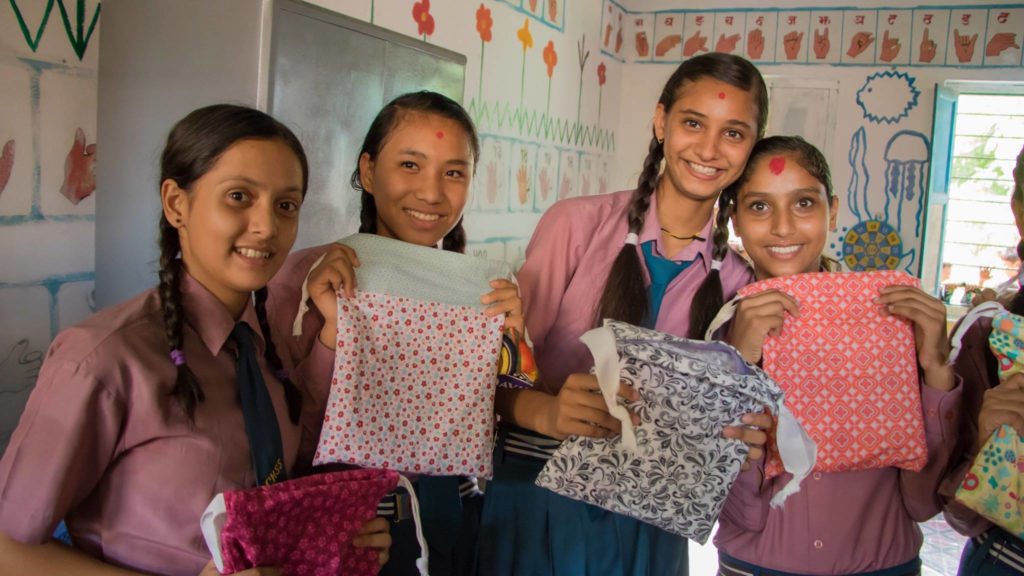
How I got over the anxiety of my pandemic weight gain and even had fun

WP_Post Object
(
    [ID] => 2792
    [post_author] => 2
    [post_date] => 2021-06-17 18:24:09
    [post_date_gmt] => 2021-06-17 18:24:09
    [post_content] => Patients and therapists have suffered from the pandemic, but some have benefited.

Aleena* was halfway through a series of cognitive behavioural therapy sessions at a small NHS clinic in London, where she was finishing her last year of university, when the pandemic forced her to travel back to her hometown in Pakistan. Now she has to sneak off to her bedroom for sessions that, due to the time difference, interrupt her day. The sudden changes in her routine caused a definite setback, with her weekly mood chart showing significantly elevated signs of depression and anxiety.

The impact of the pandemic on mental health has been the subject of much discussion. But more needs to be done to address the needs of those who saw their therapy disrupted by a sudden change in daily routine and geographical location. Like the pandemic, the interruption in access to mental healthcare is a global problem. Aleena has not been able to return to the routines that had started working for her.  She worries that she never will.

Some have had better experiences in navigating a more flexible, hybrid work-life balance that brings together online work and in person experiences. Dr Becky Clark, a licensed clinical social worker and psychotherapist based in New York, said that some of her patients benefited from flexible scheduling and the convenience of remote therapy. 

Dr. Naomi Graham is an occupational therapist and founder of Growing Hope, a Christian charity based in London that provides free services for children with special needs, including therapy. By working with families and school services, the charity created successful hybrid models that have worked for their patients. They expect more families to come in for help as the pandemic’s toll on mental health continues to grow. For families isolated from support networks while living with digital poverty, the pandemic has been particularly difficult, said Dr. Graham, noting that "not everyone has been able to move online the same way."

For some, digital poverty means being unable to afford phones, tablets, computers or the monthly cost of an internet service provider. For others, particularly older people, it manifests in a lack of internet skills. For these reasons, Dr. Clark said, many of her patients had decided to wait out the pandemic and return when in person therapy was possible.

Cultural contexts and experiences vary, but the need for good, consistent mental healthcare remains constant. Even without the complications of the pandemic, therapy still remains a sensitive, and in some cases even taboo, topic. Now it’s become a double edged sword—need is increasing, but access and availability are more complicated than ever.

Dr. Clark said that her experiences with online therapy has varied greatly from patient to patient. An additional challenge for those in the United States is the constantly changing and often confusing status of federal and state regulations governing teletherapy. This has been an issue for people who had been seeing a therapist in one state but were sheltering in place in another. 

Angela, a recent high school graduate in Canada, was one of those who managed to continue with her therapy sessions, but she says online therapy came with its own challenges—chiefly, a loss of privacy and fear of being overheard. This, she said “...significantly impacted the quality” of her sessions.

For those who are in therapy to deal with domestic problems, a therapist’s office can be a safe haven. Switching to home sessions often means that young people like Angela find themselves self censoring for fear of being overheard. According to digital privacy expert Jo O’Reilly, “this type of environmental privacy concern is something that patients and therapists must discuss to ensure that sessions are carried out in as much seclusion and privacy as possible, using headphones, or code words when required.”

But these adjustments are not always sufficient for many, particularly for those in the most difficult and precarious domestic situations. 

Palwasha lives in the city of Peshawar in Pakistan. She has been in therapy for both depression and grief counselling for more than four years and was already familiar with online sessions, since her therapist is based in Islamabad, which is over two-and-a-half hours away by car. But being unable to visit Islamabad at all during lockdown— previously she had visited as frequently as once a week when needed—made therapy that much more difficult. “In person [therapy] is much better because it allows you to leave home and come out of your shell. This is especially important for someone like me who feels trapped by her circumstances and is a survivor of domestic abuse. COVID has been particularly hard for me,” she said. 

Therapists have also suffered. According to Dr. Clark, many of her colleagues chose to close their practice, while those  who stuck it out, as she did, have been paying full rent for empty clinics. The reliance on digital communication has also had a negative impact on her own mental health. “Extended meetings can cause physical and mental fatigue from sitting and working on a computer screen for five to eight hours per day with patients,” she said. She misses the intimacy of in-person therapy, adding: “Nonverbal cues are [more] limited online than in person.” 

Unsurprisingly, patients and therapists in countries where the pandemic has subsided somewhat have celebrated the return to in-person sessions. After six months of teletherapy, Angela was in her comfort zone, opening up and connecting in her therapist’s office in ways she hadn’t been able to online.

Others have observed an upside to online therapy. Dr. Graham of Growing Hope explained that certain children, particularly those with special needs, have actually responded better to remote therapy sessions from home. For these children, “online therapy meant they were in their home environment which made them feel safer and more comfortable.” While they still prefer in-person sessions, she and her fellow therapists are now planning to be more flexible, adjusting to the use of online therapy for those who prefer it, even as their clinics have started re-opening. 

Jen, whose autistic son is non-verbal, decided for his safety to continue with at-home therapy through Growing Hope. “Although this was the right decision, it was really hard for Jen having to care for her son 24/7 without any support,” said Dr. Graham. But it was during those online sessions that her son learned to eat with a spoon unaided. Growing Hope stayed in touch virtually with the young boy’s school as it reopened, which made his transition back to the classroom much easier. By managing the boy’s therapy and relationship with his school online, Jen and Growing Hope opened productive new avenues to help him. 

The past 15 months have provided some positive lessons. “We have seen that digital support can be beneficial, but we also know it doesn’t work for everybody. We want to first and foremost tailor our therapy to what the individual and their family needs,” said Dr. Graham. As patients return to in-office sessions, it’s important that these more flexible arrangements become better defined and that patients are kept informed of their options, whether they be in-person or remote. Now they must begin the work of healing from the trauma of the pandemic year.

*All the patients’ names have been changed to protect their privacy.
    [post_title] => Now comes the mental health pandemic
    [post_excerpt] => For many struggling with mental illness, the COVID-19 pandemic exacerbated their condition by disrupting in-person therapy.
    [post_status] => publish
    [comment_status] => closed
    [ping_status] => open
    [post_password] => 
    [post_name] => now-comes-the-mental-health-pandemic
    [to_ping] => 
    [pinged] => 
    [post_modified] => 2026-08-06 20:55:42
    [post_modified_gmt] => 2026-08-06 20:55:42
    [post_content_filtered] => 
    [post_parent] => 0
    [guid] => https://conversationalist.org/?p=2792
    [menu_order] => 195
    [post_type] => post
    [post_mime_type] => 
    [comment_count] => 0
    [filter] => raw
)
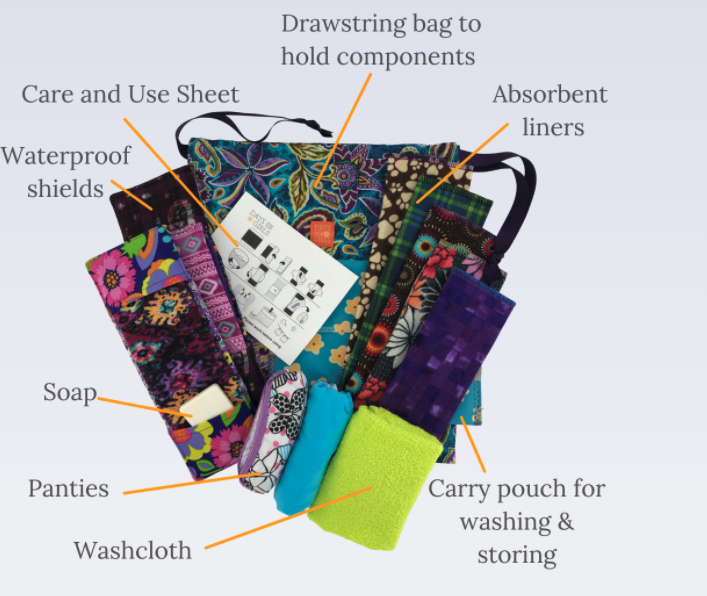
Now comes the mental health pandemic

WP_Post Object
(
    [ID] => 2686
    [post_author] => 2
    [post_date] => 2021-06-01 17:56:08
    [post_date_gmt] => 2021-06-01 17:56:08
    [post_content] => The true bulwark against Trumpism is at the state and local level.

In the eyes of many locals, Nate McMurray’s campaign was a fool’s errand. He was running for Congress as a Democrat in New York’s 27th congressional district, where a greater percentage of residents voted for Trump in 2016 than in any other district in the state. District 27 is vast: it includes Orleans, Genesee, Wyoming, and Livingston counties, parts of Erie, Monroe, Niagara, and Ontario, suburbs of Buffalo and Rochester, and farm country; altogether, it is home to over 700,000 people. Around 42 percent of voters are registered with the Republican or Conservative parties.

McMurray is a fierce critic of former president Trump; he champions Medicare For All, gun control, and legalizing marijuana. When he first ran, he lost narrowly to Republican Chris Collins, who was then under federal indictment; Collins later resigned from Congress and pled guilty to conspiracy to commit securities fraud. Celia Spacone, a retired psychologist who was a McMurray campaign volunteer, told me in 2019, “Collins was indicted on felony charges, and people still didn’t want to hear about a Democratic candidate.”

After Collins resigned, McMurray ran against Republican nominee Chris Jacobs in a June 2020 special election to fill Collins’ seat, and again lost by a relatively narrow margin. When McMurray challenged Jacobs in the November 2020 general election, he lost by a much wider margin. (The presidential election boosted turnout across the board, leading to a surge of Republican voters.)

Recent research suggests that the Democratic Party might have benefited from McMurray’s willingness to run in a race that he was all-but-predestined to lose. The mere fact that a forceful, energetic candidate ran a high-visibility campaign in the district mobilized volunteers, energized Democrats, and might even have boosted Joe Biden’s vote share.

According to election data compiled by the Daily Kos, Trump beat Hillary Clinton by 25 points in District 27 in 2016. District voters went for Trump again in 2020, but the margin narrowed significantly, from 25 to 16 points. There are a number of possible reasons for that shift, including the pandemic and/or local voters’ preference for Biden over Clinton. But the fact that a Democrat put up a fight was good for democracy—and good for the party. (Collins faced a Democratic challenger in 2016, too, but her campaign didn’t attract as much attention as McMurray’s, in part because her platform wasn’t as bold and Collins wasn’t yet under indictment; as a result, the race wasn’t as close.)

As a candidate, McMurray worked hard and made a point of courting supporters in often-overlooked rural counties. Rural Democratic county committee chairs were especially supportive of his campaign. “Nate brought a lot of energy and passion to his races that really excited a grassroots following,” Judith Hunter, chair of the Livingston County Democratic Committee, told The Conversationalist. “That was a very impressive thing and surely helped candidates up and down the ballot.”

Hunter also chairs the Democratic Rural Conference of New York State, which represents New York’s 47 rural counties (the state has 62 counties in total). It can be tough to get people to show up to volunteer and vote for down-ballot candidates, she said, and it was easier to recruit campaign volunteers for McMurray because he was running for Congress. Still, she added, “Once people understand what a campaign needs in terms of volunteer power, it’s something a certain proportion respond to, and they’re not going to go away.”

Recently, the progressive organization Run For Something partnered with data firms Kinetic21 and BlueLabs to analyze the effect of down-ballot races on Biden’s performance in the 2020 presidential election. They found that contested state legislative races—those in which both Democrats and Republicans ran, rather than just Republicans—yielded a small but notable (0.3-1.5 percent) boost for Biden. Even when a down-ballot Democrat loses, the fact that they bothered to run can benefit a presidential candidate. This is known as the “reverse coattails” effect—the reverse happens when a down-ballot candidate rides the “coattails” of a popular presidential candidate.

Ross Morales Rocketto, co-founder and chief program and recruitment officer of Run For Something, explained during a phone interview why progressive candidates should run, even in places where they are likely to lose. One reason is that doing so could boost the candidate at the top of the ticket. Another big reason, he said, citing an old sports adage, is that “You miss 100 percent of the shots you don't take.” Given how unpredictable the results of redistricting can be, the Democratic Party doesn’t know which races may turn out to be competitive. And given that the most recent census likely undercounted Latinos, Rocketto said, Democrats should rethink their tendency to avoid running candidates in deep-red areas.

“What ends up happening is that people who live in these areas only see Democrats as the caricatures they are on Fox News or Parler or Infowars or other conservative media outlets,” he said. “But when you have a candidate there, going to their door, they get to see one of their neighbors—somebody who actually lives in their community and likely shares some of their values—talking about another way [to address local problems].” It’s especially effective, Rocketto noted, when candidates stay focused on local issues. Rocketto sees ensuring that Democrats run for local office even in districts where they have little chance of winning as part of the long-term work necessary to reverse “some of the polarization that we currently see.”

In 2016, Leah Greenberg cofounded the progressive organization Indivisible, which she now co-directs, to help counter Trump’s agenda. Greenberg, whose family is from small-town Alabama, has also spoken about how powerful it can be for residents of red and/or rural areas to encounter self-identified progressives in their communities. Democrats who live in red states sometimes compare the experience of revealing their politics to friends and neighbors to LGBTQ peoples’ experience of “coming out.” As Hannah Horick, who chairs the Ector County Democratic Party in Texas, told Politico in 2020, a number of West Texas Democratic organizers are also openly LGBTQ. According to Horick, a friend once told her it was harder to come out as a Democrat in West Texas than it was to come out as gay.

Running as a Democrat in places that have historically been hostile to Democrats is less quixotic than it used to be. This is partly because voters of color have grown as a share of the electorate in recent years, while white voters, who are likelier to support Republicans, have declined. Hispanic voters account for increasingly large shares of the electorate, particularly in battleground states like Arizona, Florida, and Nevada, and red states like Texas. And thanks to the extraordinary efforts of local organizers and pro-voter registration, anti-voter suppression groups like Fair Fight, around 130,000 more black people registered to vote in Georgia in 2020 as compared with 2016.

The GOP has sought to counteract demographic shifts and efforts to expand the electorate by making it harder to vote. Since the record turnout of the 2020 election, Republican legislators have proposed over 250 laws that would limit mail-in, early, and Election Day voting in 43 states throughout the country. In March, Georgia’s Republican governor made it a crime to distribute food or drink to voters as they wait in line to cast their ballots. A recent Washington Post analysis characterized Republican efforts to restrict voting as “potentially…the most sweeping contraction of ballot access in the United States since the end of Reconstruction.”

Steve Phillips, a senior fellow at the Center for American Progress, has long argued that the key to making Democratic gains in Republican strongholds is to register and mobilize voters, specifically black and Latino voters, most of whom vote Democratic. Millions of eligible voters, including many people of color, did not vote in 2016 or 2020. Youth turnout “surged” in 2020—53 percent of eligible young voters (ages 18 to 29) voted in 2020, versus 45 percent in 2016—but that still means nearly half stayed home. A perennial fight within the Democratic Party is whether to focus on winning over swing voters or mobilizing eligible voters who never or rarely vote, most of whom would theoretically vote Democratic.

Yet it would be short-sighted to assume that a diversifying electorate will eventually ensure that the Democrats remain in power indefinitely. In a country as large, diverse, and gerrymandered as the United States, the Party cannot rely on voters of color and/or young voters alone. Political demographer Ruy Teixeira recently reflected on a book he cowrote with John Judis in 2002, in which the two analysts posited that demographic changes in the U.S. would benefit the Democratic Party. “Democrats should take advantage of a set of interrelated social, economic and demographic changes, including the growth of minority communities and cultural shifts among college graduates,” he wrote of the book’s central argument, adding, “But we also emphasized that building this majority would require a very broad coalition, including many voters drawn from the white working class.”

That crucial nuance, Teixeira said, was lost. Instead of cultivating support among multiple groups at once, including working-class people of all races, “many Democratic pundits, operatives and elected officials have falsely come to believe that demographics are destiny.”

Ideological, ethnic, and generational differences within communities of color make it unwise to take these voters for granted. Just over a third of Asian American and Pacific Islander (AAPI) voters backed Trump in 2020, with the former president also gaining support among Latino and Black male voters. Conversely, as Nate Cohn noted in a recent analysis for The New York Times, Democrats have made gains among white voters in recent years, and Republicans can no longer take that constituency for granted.

None of these shifts happened overnight. That’s why dedicated and appealing candidates, especially those running for local office, can gradually increase Democratic viability in conservative areas. Even if they lose the first time, or the first couple of times, their campaigns can make a difference. In local races, if a candidate is known, trusted, and has a plan to improve their neighbors’ daily lives, that often matters more than their stance on national issues. Run For Something asks candidates seeking its endorsement whether or not they agree with a series of statements on racial justice, income inequality, immigration reform, LGBTQIA+ and gender equality, climate change, and gun violence. But candidates who emphasize local issues, Rocketto said, “tend to do better than folks who allow their races to become nationalized.”

Marché Johnson lost her first city council race in Montgomery, Alabama by just six votes, then ran again and won by 174 in April. At the end of the day, she told me, it’s everyday issues that matter the most. “Everyone needs their trash done on time, everyone needs their roads cleaned, everyone needs their lights up,” she said. “So I focus more on the problems and getting viable solutions.”

Raising money is one of the main challenges progressive candidates face in places where the Democratic Party is virtually nonexistent. “The issue this always comes down to is resources,” Rocketto said, “and competition for those resources.” The money, he said, is there, but it tends to go to high-profile candidates in widely watched races, rather than to local candidates whose races cost less and who are better-positioned to win with adequate support.

“If the Party had been treating state legislative elections with the same level of priority that we treated the U.S. Senate over the last 10 years, we probably wouldn't be struggling with [state-level voter suppression bills] today,” Rocketto said. It’s easy to convey the urgency of beating Trump, he added, acknowledging that doing so was equally critical to the Democratic agenda. It’s harder to explain that the true bulwark against Trumpism is at the state and local level. “People actually do care about this work,” he added. “They just don't always care about it with their money.”

Strong local candidates, he said, tend to be “super-charged organizers,” which brings its own set of benefits. He mentioned a candidate who lost a race in a small town in Missouri in 2017, and later harnessed the energy and contacts he had cultivated during that campaign to advocate for environmental issues before the city council. “It’s good for the civic health of a place to have these folks running,” Rocketto concluded, “even if you know they're going to end up losing.”
    [post_title] => How a political candidate can help their party win—by losing
    [post_excerpt] => Even when a down-ballot Democrat loses, the fact that they bothered to run can benefit a presidential candidate. 
    [post_status] => publish
    [comment_status] => closed
    [ping_status] => open
    [post_password] => 
    [post_name] => how-a-political-candidate-can-help-their-party-win-by-losing
    [to_ping] => 
    [pinged] => 
    [post_modified] => 2026-08-06 21:00:45
    [post_modified_gmt] => 2026-08-06 21:00:45
    [post_content_filtered] => 
    [post_parent] => 0
    [guid] => https://conversationalist.org/?p=2686
    [menu_order] => 200
    [post_type] => post
    [post_mime_type] => 
    [comment_count] => 0
    [filter] => raw
)
How a political candidate can help their party win—by losing