
WP_Post Object
(
    [ID] => 11119
    [post_author] => 15
    [post_date] => 2026-10-07 22:16:20
    [post_date_gmt] => 2026-10-07 22:16:20
    [post_content] => 

Why you should pay attention to Virginia's Question 1 this election.

This article is a part of Down-Ballot, a weeklong series highlighting state measures worth watching in the 2026 United States election.

Sara Sanatkar learned firsthand how important it is to have the freedom to make decisions over her own body when she faced an unexpected pregnancy at 19 years old.

This was in 2019. Sanatkar was in an unhealthy relationship, and knew she wasn’t ready to be a mother. But, unfamiliar with the laws regarding reproductive care in her home state of Virginia, Sanatkar wasn’t sure if she could have an abortion, so she Googled it and learned about Roe v. Wade. Back then, she felt immense relief. “I can have access to care. I can have access to legal care. I can have access to safe care,” she remembers her 19-year-old self saying. 

Sanatkar says she was “geographically lucky” to have gotten pregnant in Virginia. Born and raised in Tehran, Iran, Sanatkar grew up in a country where, even though her family and the general population supported the right to abortion, the government did not. Leaving Tehran at age 15 wasn’t easy; despite some of the drawbacks women face, such as the threat of death penalty for illegal abortions, it was the only home she’d known. The year before she moved, she remembers sitting in the back of a taxi with her mother, whose words altered her perspective of home and family. While holding her hand, Sanatkar’s mother told her, “I'm so happy that you get to live in a country where you get to make decisions about your own body.” 

In 2022, the Supreme Court overturned Roe v. Wade—the ruling that had provided Sanatkar relief just three years before—ending the federal constitutional right to abortion, once again leaving the authority with individual states. Since then, 20 states have either severely restricted abortions or established total bans, including West Virginia, Kentucky, and Tennessee.

As the Field & Canvass Manager at REPRO Rising, a grassroots political organization working to guarantee comprehensive reproductive healthcare information and services to all Virginians, Sanatkar now works alongside the Virginians for Reproductive Freedom coalition, which includes ACLU of Virginia, Virginia League for Planned Parenthood, and the National Women's Political Caucus of Virginia, to protect the right to reproductive freedom within their state constitution. Since August 2024, REPRO Rising has been organizing awareness around Virginia Question 1—one of three proposed amendments to the state constitution on the ballot this November. 

In her organizing work so far, she has seen an overwhelmingly positive attitude towards the amendment. According to Sanatkar, many people view it as “very reasonable,” which has resulted in “a sense of pride for me as a Virginia voter,” she says.

“Across Virginia, we’ve heard a consistent message from voters,” she adds. “Regardless of their personal beliefs or experiences with reproductive healthcare, Virginians believe these deeply personal decisions should remain between a patient, their family, and their doctor, not politicians.”

For Virginians, the outcome of Question 1 will determine whether the state establishes a fundamental right to reproductive freedom, following a complicated, multi-year process to add the amendment to the state constitution. 

The constitutional amendment was first introduced in January 2023. The General Assembly subsequently passed the amendment in January 2025. The state process requires an intervening election, and a House of Delegates election was held in November 2025. Then, the General Assembly passed the amendment for the second time in January 2026. 

Now it is up to voters to vote yes or no. A “yes” vote means Virginians will have a constitutional right to make their own decisions on reproductive care, including abortion. (However, not without some potential restrictions: The proposed amendment would still allow the Virginian government to pass laws regulating abortion care in the third trimester though with decreased barriers.) A “no” vote will mean the status quo is maintained, including the same restrictions  to abortion care in the third semester that require approval from three physicians. What’s more, abortion rights in the future could eventually be restricted with a change in office. 

The issue has been a key part of Virginia Governor Abigail Spanberger’s platform since her electoral victory over Glenn Youngkin last November. In June, half a year after taking office, Gov. Spanberger joined the Reproductive Freedom Alliance (RFA), a nonpartisan coalition of governors dedicated to protecting reproductive freedom across the nation.

“Virginia is the only state in the South where a woman has the same freedom to make her own healthcare decisions as she did before the fall of Roe v. Wade. Today, we are taking a step to reaffirm those freedoms,” Gov. Spanberger said in an RFA press release last June.

In effect, a “yes” vote means Virginia law won’t change, says Executive Director of Virginia ACLU Mary Bauer. “Our goal is not to change Virginia law. Our goal is to enshrine reproductive freedom into our constitution because we know that these rights can be taken away with a flick of a politician’s pen,” she says. “We want to make sure that our rights don’t depend on who happens to be in office at any given moment.”

Prior to the 2022 Dobbs v. Jackson Women’s Health Organization decision, which eliminated the federal constitutional right to abortion, roughly 3% of patients accessing abortion care in Virginia came from out of state. After the Supreme Court overturned Roe v. Wade, and more Southern states limited access to abortions, the percentage of out-of-state patients jumped to 30%, according to the Virginia Independent. This means the results of Amendment 1 will affect more than just Virginians. Arguably, the state is the last stronghold for abortion care in the South.

“To see Virginia as a leader in this space is really a beautiful thing,” Bauer says.

If the amendment fails to pass, there is a risk that Virginia will transform into a state banning abortion, says Dr. Kimberly Chernoby, a physician and reproductive rights lawyer. “Virginia is a state that is not very clearly Democratic or Republican,” she says. “Our legislature has gone both ways, and so there is a real risk that in the future, and it could be near future, that we could lose access to reproductive healthcare.”

Amendment 1 also holds implications for practicing physicians. “It means that when my patient is miscarrying and I have to offer them an abortion to treat their miscarriage, that I'm not worried. ‘Am I going to go to jail? Am I going to lose my medical license? Am I going to be fined $10,000?’ The idea that any physician is asked to weigh those things at the bedside is really incredible,” Dr. Chernoby says. “Abortion is routine healthcare, and you cannot affect all other aspects of reproductive healthcare. When you limit abortion care, you are by definition going to limit all other aspects of reproductive healthcare, and you can't have one without the other.”

It’s exactly this full span of reproductive healthcare that Sanatkar is advocating for, and that she’s encountered broad support for through her organizing. “It's a very simple question: Do you want to have access to bodily autonomy, and do you want to be able to make decisions independently with your doctor without being scared that the state is going to punish you or your provider? And I think [the] majority of Virginians are going to say ‘yes’ to that,” she says.

[post_title] => When the Future of Bodily Autonomy Is in Question [post_excerpt] => Why you should pay attention to Virginia's Question 1 this election. [post_status] => publish [comment_status] => closed [ping_status] => closed [post_password] => [post_name] => 2026-election-down-ballot-virginia-question-1-abortion-bodily-autonomy-healthcare-womens-rights-voting [to_ping] => [pinged] => [post_modified] => 2026-10-07 22:16:23 [post_modified_gmt] => 2026-10-07 22:16:23 [post_content_filtered] => [post_parent] => 0 [guid] => https://conversationalist.org/?p=11119 [menu_order] => 0 [post_type] => post [post_mime_type] => [comment_count] => 0 [filter] => raw )
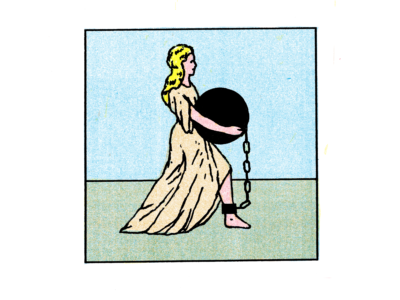
An illustration of a woman with a ball and chain attached to her ankle as she carries the ball at her stomach.

When the Future of Bodily Autonomy Is in Question

WP_Post Object
(
    [ID] => 5941
    [post_author] => 15
    [post_date] => 2023-08-22 21:01:16
    [post_date_gmt] => 2023-08-22 21:01:16
    [post_content] => 

People who lead lives in “deviant” bodies are familiar with the state’s attempt to control them. Finding commonality is how we fight back.

At age six, “Ashley X” was subjected to a series of invasive, irreversible medical procedures. Without her consent or understanding, her breast buds were removed, along with her uterus, and she was placed on hormone therapy to limit her growth. These procedures were performed at the behest of her parents, who insisted they were for her own good.

Today, Ashley’s story conjures up the nightmare of the “trans agenda” that is being advanced in conservative circles: a vulnerable young person unable to make decisions for herself, forced into procedures that will profoundly shape the trajectory of her physical, sexual, and social development. It’s easy to imagine it as the subject of mass outrage, the center of a think piece in a conservative gossip rag running on Substack or in the Daily Mail. But it wasn’t, because of one important detail: Ashley was subjected to these procedures not because she was trans, but because she was disabled.

Ashley’s case rose to public attention in 2007, when her parents wrote a detailed explanation, justification, and treatise on their “pillow angel” in a viral blog post, claiming they wanted to keep her smaller and easier to care for. Their disregard for her humanity was perhaps most apparent in the argument that the removal of her uterus would prevent potential pregnancy, “which to our astonishment does occur to disabled women who are abused,” a very odd way to address the shockingly high rate of sexual assault in developmentally disabled women—estimated to be 80 percent. Still, many agreed with them. Doctors at Seattle Children’s Hospital received ethical approval to perform these procedures, which were written up in medical journals and widely praised. Because Ashley had “severe disabilities,” the modification of her body was deemed appropriate and necessary, with one ethicist commenting “a step too far, or not far enough?” Another ethicist, notorious for his negative commentary about the disability community, praised the Ashley treatment for The New York Times.  

As the attack on trans rights continues to escalate, I have been thinking of Ashley X, and wondering how she is faring—the last update on her parents’ blog is from 2016, and she would be in her mid-20s by now if she is still alive. Much like the war on the trans community today, her “treatment” drew upon centuries of practices that use the medicalization of marginalized bodies to control them, with the free and open permission and sometimes active approval of society at large. In the process, she joined a long list of disabled people, many of whom are not even named in records, who have endured abuses such as coerced sterilization, brain surgery, and forcible medication, all for the convenience of others around them, and to protect society from their existence. It’s a familiar playbook: This demand for bodily conformity is also (and has been) experienced by the trans community, often in lockstep—laws designed to target one inevitably harm the other—inclusive of practices like “conversion therapy” in a goal to eradicate transness, alongside denials of care or gatekeeping by authorities who control access to social, medical, and surgical transition.

Through this lens, the overlap between both communities might seem obvious. But understanding the deeper connection between the lives of people like Ashley and the trans community is an important step in building solidarity through the shared experience of medicalization as a tool for dehumanization—and is key in working towards dismantling it. Both communities experience a very specific form of somatic oppression rooted in fear and hatred of their bodies. Sometimes, this is used to pit them against each other, causing a tension between these two communities and trapping those who are a part of both in the middle. In some instances, this includes rejection of the similarities between the harm caused to both groups, or refusal to make common cause. But this is by cultural design: Keeping two communities with much in common apart makes it harder for them to team up and push back against oppression.

Harmful attitudes and policies targeting disabled people are not issues of a faint and distant past, and many in fact have laid the grounds for restricting the freedoms of trans people today: Most states have some version of a law that allows for the forcible treatment and often medication of mentally ill people, especially of note in a world where transness is treated as mental illness or a social contagion. (It wasn’t until 2019 that being trans was delisted from the World Health Organization’s ICD-11.) Deaf people are increasingly pressured to get cochlear implants, especially in the case of children, whom, some people rationalize, can learn to “speak normally” if they receive an implant early in life, an echo of the oralism of the 19th century, when educators attempted to force d/Deaf people to learn to speak and read lips rather than use sign language. (Both offer limited, if any, benefit and in fact have caused harm, fracturing Deaf culture and communities for the convenience of hearing people.) Meanwhile, other young disabled people may be encouraged—or “encouraged,” without consent—to get IUDs, again for “convenience” and avoidance of menstruation while also making it impossible to get pregnant; if Britney Spears was not exempt, how is an ordinary person supposed to fight back?

These practices aren’t new, hearkening back to policies such as 19th and 20th century “ugly laws,” which targeted “unsightly” people with fines if caught “begging,” and contemporary sit/lie laws, which effectively criminalize being unhoused on the sidewalk, again pushing unwanted bodies out of view. Rather than progress, newer policies have only widened the net: Contemporary drag bans, for example, echo historic laws designed to erase queer people to ease social discomfort. Policies that prevent trans people from accessing necessary medical care do the same, an extension of historic trends including policing that specifically targeted Black and Latinx trans people during the Stonewall Inn and Compton’s Cafeteria raids of the ‘60s.

Because of this overlap, it is important to understand the shared legacies that span both communities, because they are ultimately one fight, and collaboration makes it easier to share both strength and tenderness when needed, to be vulnerable and ferocious, to work toward a shared right to autonomy. Disabled people have been fighting for centuries against coerced treatment that targets bodies and minds deemed monstrous, wild, and unacceptable, in contexts that are often heavily racialized as well, such as Black disabled women deemed “promiscuous” and in need of sterilization. Trans people have been fighting forced detransition and denial of access to care they need to lead full, active lives for centuries, as well. As the contemporary fight extends to trans adults, with a growing number of states including Missouri and Florida moving to undermine or ban gender-affirming care for people of all ages, the stakes are even higher.

The maliciousness and cruelty of this legislation is designed to put trans people in their place, under the guise of “protecting” people from harm; precisely the same kinds of arguments used to justify the mutilation of people like Ashley, and the irreparable harm done to intersex infants and children—who are often subjected to similar forced surgeries and hormone therapies—in a “for their own good” paradigm. The goal is eliminationism. The same people who conjure up myths of trans kids being coerced into irrevocable procedures by overeager parents and doctors are very comfortable supporting those same abuses when they involve disabled people and measures to wipe out trans people altogether, betraying where their true concerns lie. Notably, legislation targeting gender-affirming care for trans youth often has specific carveouts for intersex children, a reminder that this legislation pursues normative and desirable bodies, not evidence-informed care. The purpose is not safety. It is compliance.

This tension and hypocrisy highlights the common cause between the trans and disability communities—not least because trans people are more likely to be disabled. Multiple court cases have illustrated how powerful that common cause could be, with incarcerated trans women successfully leveraging the Americans with Disabilities Act (ADA) to argue that housing them with men and denying them access to gender-affirming care is a civil rights violation, for example. Not because being trans is a disability, but because gender dysphoria may be, and as such should be entitled to legal protections, particularly in a country where many Black trans women are incarcerated in the first place because of crimes of survival.

People who lead lives in othered, “deviant” bodies are familiar with the state’s attempt to control them, and with the cultural pressures that lead people to challenge their right to exist as they are. In a culture where trans and disabled people are medical problems to be solved, thereby erasing them from society, working in solidarity with each other is extremely important, and is the best way forward in a hostile climate that uses medicalization as a tool of power and control. Issues of pressing concern to both communities can and should be common sources of organizing power. If the trans community sees applications for the ADA, for example, it also recognizes the power of legal protections against healthcare discrimination on the basis of sex and gender. The disability community is familiar with coerced care or denial of treatment, and can support the trans and intersex communities in the pursuit of their legal rights. This is a mutual struggle of survival that becomes more pressing by the day under the growing weight of the state, and its abandonment of responsibility to care for those most at risk of abuse and exploitation.

Solidarity includes thinking about the myriad ways in which medicalization is used to oppress vulnerable communities, and how to push back on these practices beyond the obvious. Mental illness is a major factor in police shootings, for example, while Black and Brown kids disproportionately experience school pushout, often on the grounds of the criminalization of behaviors that may be associated with disability, or because they are LGBTQ. Similarly, treating transness as a mental illness is used as a tool for social and institutional discrimination targeting trans people, while ignoring the mental health impacts of untreated gender dysphoria.

Many are already doing this work. Works such as Health Communism (Verso, 2022) push at the boundaries of understanding how medicalization has become such a sinister tool for suppressing marginalized groups. Similarly, abolitionists such as TL Lewis and the creators of Captive Bodies (AK Press, 2011) highlight the profound connections between disablism and larger social structures—including transphobia — while We Want It All (Nightboat, 2020) invites engagement with radical trans culture through anthologized poetry.

In a just world, humanity would not be calibrated against a medicalized status, and people’s personal health needs would not be used against them to deny full access to society. Until we live in that world, however, it’s vital to collaborate as co-conspirators in a hostile world, unpicking the threads of the tapestry someone else has knit.

[post_title] => When Medicalization Becomes a Tool for Dehumanization [post_excerpt] => People who lead lives in “deviant” bodies are familiar with the state’s attempt to control them. Finding commonality is how we fight back. [post_status] => publish [comment_status] => closed [ping_status] => closed [post_password] => [post_name] => medicalization-dehumanization-transgender-disability-rights-autonomy-solidarity [to_ping] => [pinged] => [post_modified] => 2024-08-28 21:14:01 [post_modified_gmt] => 2024-08-28 21:14:01 [post_content_filtered] => [post_parent] => 0 [guid] => https://conversationalist.org/?p=5941 [menu_order] => 78 [post_type] => post [post_mime_type] => [comment_count] => 0 [filter] => raw )

A black and off-white illustration, split in half in the center by the silhouette of a neck, torso, and arms. On one side, there's a white silhouette of the side profile of someone's face on a black background; on the other side, there's a black silhouette of the side profile of someone's face on a white background. Various surgical tools overlap on the image, appearing to stab into the body and faces.

When Medicalization Becomes a Tool for Dehumanization