WP_Post Object
(
    [ID] => 9993
    [post_author] => 15
    [post_date] => 2026-01-29 23:07:30
    [post_date_gmt] => 2026-01-29 23:07:30
    [post_content] => 

A memoir that grapples with changing ambitions and the myth of having it all.

Many millennials (or non-millenials, for that matter) will be familiar with the overarching plight of Amil Niazi’s Life After Ambition, her "good enough memoir": the experience of being stuck in the rat race of chasing one dream after another, only to find yourself on a never-ending grind. In this race, there’s always one more goal to achieve—one more professional hurdle to overcome, one more career ambition to attain—before the dream can be realized. For women especially, relentlessly pursuing a profession, while ensuring all other aspects of your life are left unscathed, becomes an ever-shifting goalpost; the quintessential “having it all”.

As the book’s title implies, Niazi unfolds the futility of this chase, made especially futile given the instabilities accompanying her career of choice—journalism and writing. But the memoir is as much a personal unfolding as it is a professional one. In it, we learn of Niazi’s parents' almost romcom-like origins before she disabuses the reader of the myth of their marriage and the prospect of an idyllic childhood. There are the anticipated working-class migrant struggles, the family never having quite enough, which takes them across oceans to seek a better life in England, where the author was born, and eventually, to Canada, where the author has spent most of her life. There’s also the abuse between her parents, which Niazi touches without ever quite expounding on, even as she informs of their eventual divorce and sketches her own experience of intimate partner abuse later in life.

In Niazi’s childhood, adolescence, and early adulthood, there’s a persistent feeling of lack. There’s little romanticizing of her circumstances, and she admits her personal rat race was likely born from this instinct: Storytelling—reporting and writing—was the one endeavor that allowed her to make sense of the world. In distressing but humorous episodes, she depicts a life of underemployment before eventually landing a job that sets her on a viable career path. Amid all the instabilities, she moves from Vancouver to Toronto with a boyfriend who physically abuses her—and there, the violent ending of their final contact results in a hard-to-shake addiction to prescription drugs. Through all of this, Niazi continues to work, uncertain of who she can trust with the vulnerable parts of her life, but finding stability through her ambitions—learning along the way, her calculus won’t always pay off.

There are bright spots throughout Niazi’s ordeals, despite the numerous and varied difficulties. There is a dog she loves and cares for, friends who intervene, and a reliable boyfriend who eventually becomes her husband. Yet her career ambitions remain the driving force that shapes her life, until suddenly, it isn’t; and for Niazi, a large part of this shift happens when she becomes a mother. After a period in London—chosen, of course, for her career ambitions—she ultimately returns to Toronto with her family when she realizes those ambitions have changed. 

Indeed, in the final analysis of Life After Ambition, I wonder if the author doesn’t slightly betray the title. She gains fresh perspective through her choice to pursue having a third child, and by attempting the kind of writing career she’s always longed for, one less defined by output, and instead, by balance. For her, motherhood and writing are intertwined and related; one aids the other, and though she must make sacrifices to have both, neither can be forfeited. 

Perhaps less than delineating what life looks like after ambition fades and falters, what the author concludes is what becomes of us—especially of many women—when our ambitions include more than the careers we set out to have. In so doing, what Niazi offers in her debut book is not only a re-think of our lives as she unravels her own, but a re-defining of ambition entirely, demanding we consider the whole of our lives, and not just the parts we keep separate in the name of career.

[post_title] => January Book of the Month: "Life After Ambition" by Amil Niazi [post_excerpt] => A memoir that grapples with changing ambitions and the myth of having it all. [post_status] => publish [comment_status] => closed [ping_status] => closed [post_password] => [post_name] => book-of-the-month-botm-january-pick-life-after-ambition-amil-niazi-memoir [to_ping] => [pinged] => [post_modified] => 2026-01-29 23:09:45 [post_modified_gmt] => 2026-01-29 23:09:45 [post_content_filtered] => [post_parent] => 0 [guid] => https://conversationalist.org/?p=9993 [menu_order] => 0 [post_type] => post [post_mime_type] => [comment_count] => 0 [filter] => raw )
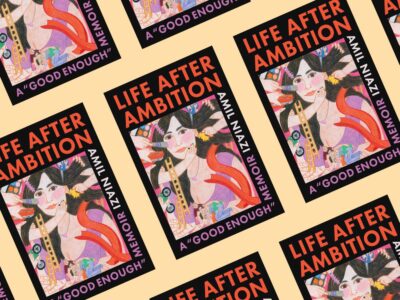
The book cover for "Life After Ambition" by Amil Niazi.

January Book of the Month: “Life After Ambition” by Amil Niazi

WP_Post Object
(
    [ID] => 9811
    [post_author] => 15
    [post_date] => 2026-01-13 18:45:25
    [post_date_gmt] => 2026-01-13 18:45:25
    [post_content] => 

With my veganism and other important belief systems in my life, I've decided that being imperfect is better than abandoning my morals altogether.

Three months ago, I ate a cheese pizza. This isn’t exactly headline news, but it mattered to me, because it broke a streak of many months, maybe years, since I’d last eaten dairy. I had been traveling and felt exhausted and defeated, and for whatever reason, the only thing that would soothe me in that moment was a real cheese pizza. I ate it, my tummy hurt, I felt bad. Then, I woke up in the morning and went on calling myself a vegan. 

It wasn’t the first time I’d faltered. Although I don’t make a habit of it, since going vegan seven years ago, I’ve eaten dairy a few times, including once, when a Shinto priest offered my husband and I two small cakes during a trip to Japan. (Vegan or not, it felt both rude and disrespectful to refuse.) 

These minor incidents could have been opportunities for me to give up my veganism entirely; proof that I’d “failed” or that my efforts were meaningless. But surprisingly, they've instead shifted my perspective: While I’ll never formally reintroduce dairy back into my diet, I’ve decided that being imperfect is better than abandoning my morals altogether.

Recently, I’ve begun trying to apply this grace to other guiding principles and belief systems in my life. There are so many things I care about that it can be difficult to do everything justice: the environment, disability, animal rights, poverty. Because of this, sometimes, it can feel as if living by any kind of set belief system is pointless, that our individual choices make no difference in the much larger fight. We are up against capitalism, war, the meat industry, violence, and some of the most anti-planet government policies we have ever seen. When you feel as if the world is crumbling around you, how much damage is an errant cheese pizza or Starbucks drink or Shein skirt really going to cause? But I believe this absolutism completely dismisses the power of our collective efforts to enact meaningful change, and how much we lose when we abandon our principles altogether. 

For me, my mistakes have become a recentering reminder of why I became a vegan in the first place: as a commitment to limiting any damage to the earth and its living things, beginning with what I eat. While I ate fish until I was 10, I have never eaten meat, something that used to shock people more than it does now. My mother was a vegetarian, and when I was four or five years old, I was given the choice to add meat to my diet, but I said no. By then, I understood that it came from the same animals I liked so much, making a stance of ethical vegetarianism feel easy: I loved pigs, refused to watch Bambi, and had never even killed a bug

Throughout my teens and twenties, as I gained new knowledge and autonomy, my beliefs continued to evolve. I donated to animal charities regularly and started to learn more about the environmental issues we are collectively facing, including how the meat and dairy industries are accelerating climate change. I gave up eggs at 13 and dairy at 19. After seeing a plaice at an aquarium, I vowed to never eat seafood again. This was in the ‘90s and ‘00s, when being a vegetarian (let alone a vegan) was far more limiting than it is today, and not exactly a popular stance. Even within my family, my mother’s choice to raise me as a vegetarian was controversial. During these years, I was ostensibly quiet about my vegetarianism, and took a similar approach when I became a vegan in my twenties. Luckily, Leicester, my hometown in the UK, has a large Hindu and Sikh population, so there were many vegetarian restaurants and supermarkets where I could eat and shop. But elsewhere, I often found myself defending my dietary choices, even when I tried my best not to bring them up.

Over the years, when asked why I ate the way I did, I’d simply say that I did not want to eat animals. But inevitably, people would push back, probing, for example, whether I would eat grass-fed beef or free-range chicken, assuming that if animals had better living conditions for their short lives, I’d agree their consumption was more “acceptable.” But their logic always posited the rights of nonhuman animals in opposition to the rights of human animals, and to me, they’re inextricable: To reject violence and exploitation means to reject it against all living creatures.

My vegan philosophy is continuously changing, but this core belief has not, even as its parameters progress. Lately, for example, I’ve been worried that eating mushrooms might be cruel because of the growing evidence of their intelligence. I’ve also become increasingly aware that other animals such as insects die as a consequence of crop agriculture. It’s difficult to know where my boundaries are, because my veganism is about minimizing harm, which means as I garner information, I reassess my choices. Still, I’m not perfect, because nobody is—especially when our food and agricultural systems make it near impossible to make faultless ethical choices. But my imperfection is also what allows my beliefs to evolve and adapt: Without room to falter, we can’t have space to grow.

Of course, I didn’t always see it this way. In fact, knowing just how difficult and conflicting our moral offerings can be, for a long time, despite mostly living as a vegan, I shied away from the label. I didn’t think I could live up to its standards and I didn’t want to feel any more cast out than I already had as a vegetarian. I couldn’t imagine giving up certain foods like cheese and chocolate for the rest of my life, and I felt embarrassed at the idea of falling short. But as my vegan philosophy evolved to leave room for faltering, I realized that my veganism could be an ideal to aim for, rather than a set state that binds me to guilt when I fail to meet it. Soon after, I encountered a Vox article titled “Vegans Are Radical. That’s Why We Need Them,” that both illustrated and illuminated this very point. 

The piece touched on something I have known my whole life: Vegans are unpopular. Part of the reason is because we shine a light on much of the general population’s cognitive dissonance when it comes to animals and food, which can be a slippery slope to exposing an individual’s broader moral hypocrisy. It also explains why, growing up, I pretended to be cool and apolitical about my vegetarianism, and later my veganism—despite both being inherently political. On the outside, I acted as if I didn’t care what anyone else ate or did, but I was lying. On the inside, I cared very much, and still do. 

The Vox piece also refers to veganism as an act of solidarity, which it is. By taking the stance that “animals are sentient beings with lives of their own” and imbuing “it into one’s body and everyday practice,” veganism relies on one of the most universal activities we all participate in to enact its politics: eating. But this stance of solidarity can put you at odds with those who ultimately don’t want to feel bad about what they do or eat—especially if you forgo quiet veganism, as I now have. The louder you are about your beliefs, the more you identify yourself with them, and the more shameful it is when you misstep. When I was quietly vegan, I had no one to answer to if I ate a chocolate bar in a moment of weakness. 

There is an assumption that, because I am loud about my ethical beliefs, I think that I am perfect and that everyone else should be, too. But this isn’t the case. Furthermore, this aspiration to an ideal while accepting your own shortcomings applies to other values or choices people may aim for, like eschewing fast fashion or boycotting particular brands or corporations. It’s also why our mistakes can so often inspire nihilism: If we can’t change the world on an individual level, why aspire to ethical principles at all? In the end, maybe it’s because our morals are personal, and when we stray from them, we have ourselves to answer to. 

When you care deeply about something, as I do, you want to solve the problem completely. And while I do not expect everyone to be vegan, I do want everyone to do what they can to reduce our collective suffering, whatever form it may take. This can feel insurmountable against the tidal wave of people, corporations, and governments that not only do not care, but seem to be actively campaigning to make the world worse than it is. But the good news is that even when you feel defeated or nihilistic, holding steadfast to radical beliefs is how we can push back. Because for every corporation lobbying against our collective well being, there is an organization or movement gaining ground or a small group of people somewhere fighting to make it better. Consider the huge wins achieved by activists against odds that once seemed impossible: improving factory workers’ conditions, regulating Big Tobacco, banning CFCs, and so many more. Small actions build into bigger and bigger wins.

Within my movement, I am inspired by those running small animal rescues and large organizations alike, from World Animal Protection and WWF to Sea Shepherd and the Animal Justice Project. Following and supporting the everyday work of farm rescues like Edgar’s Mission in Australia and Coppershell closer to home always fills me with pride. The work is often thankless, even when these movements achieve big wins, like banning animal testing in certain countries, recognizing animal sentience in the UK or ending whaling for profit. But the love that humans can have for a single lamb rescued from a slaughter auction, despite knowing they cannot save them all, always stops me from giving up. 

Reflecting on my own activism over the last 32 years, while I’ve never had the stomach to hold vigil at a slaughterhouse or put my body on the line in a protest, I have stood with people who do. Veganism is, at its simplest, an act of political boycott. I put my money where my mouth is, donating regularly to vegan charities and organizations and frequenting vegan restaurants, supermarkets, and brands. I’ve also co-founded an agency that supports vegan brands and non-profits with branding and copywriting. While it never feels like enough, it’s the only way I know to live my life. 

These acts of resistance against the system may be small, but they’re also part of a larger global movement to enact change. The meat and dairy industries have needed to reimagine their advertising to reflect customers’ consciousness, sometimes even tapping celebrity sponsors to polish their image. Some companies have also released plant-based alternatives and reduced their meat offerings. Many others offer buzzwords like “grass-fed” or “regenerative” beef, attempting to tap into diligent meat consumers, despite evidence that it isn’t any better for the cow or the planet. Still, these changes reveal a transformation in societal thinking, and hopefully, there will be more to come. 

When I take the long view, even of my own life, there are many more vegetarians and vegans today than there were when I was a child. What’s more, there are more vegan friendly options at restaurants and bars, and fewer eyerolls when you request something plant-based, because even non-vegans might enjoy their morning coffee with oat or soy milk more than they ever did with a cow’s. It isn’t only the availability of options, but shifting attitudes. It has been years since I have sat with a group of people in a restaurant and endured a probing about why exactly I’m ordering a plant-based burger. My choices just aren’t weird or interesting anymore, and that’s a wonderful thing.

When the world isn’t changing as fast as you’d like it to, and when you know the powers that be are against you and your politics, it can be so hard to try, and to keep trying. But the combination of relinquishing perfection, alongside pursuing community and solidarity with like-minded individuals, is how we fight on, slowly and clumsily, knowing there will be missteps. Staying on a path of reducing harm and aspiring to live by our ideals does far more for our individual and collective well-being than giving up after we’ve faltered. This is how we refuse to give into nihilism. This is how we refuse to let the corporations and militaries and lobbyists win. They want, or rather, need you to believe you can’t make a difference, and so you shouldn’t even try. But before we can begin or continue persevering in any radical change in earnest, we must first reject this lie, and continue to aspire to our ethics, each and every day.

[post_title] => Practice Not Perfection [post_excerpt] => With my veganism and other important belief systems in my life, I've decided that being imperfect is better than abandoning my morals altogether. [post_status] => publish [comment_status] => closed [ping_status] => closed [post_password] => [post_name] => morality-imperfection-practice-veganism-vegan-diet-lifestyle-belief-systems-guiding-principles-individual-collective-choice-food [to_ping] => [pinged] => [post_modified] => 2026-01-14 22:38:55 [post_modified_gmt] => 2026-01-14 22:38:55 [post_content_filtered] => [post_parent] => 0 [guid] => https://conversationalist.org/?p=9811 [menu_order] => 0 [post_type] => post [post_mime_type] => [comment_count] => 0 [filter] => raw )
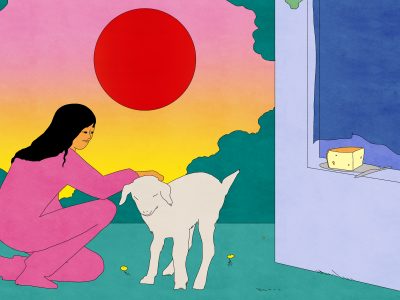
An illustration of a girl petting a goat, with a hunk of cheese sitting in a window behind them.

Practice Not Perfection

WP_Post Object
(
    [ID] => 9891
    [post_author] => 15
    [post_date] => 2026-01-09 00:16:00
    [post_date_gmt] => 2026-01-09 00:16:00
    [post_content] => 

For months, I've tried to make sense of my sudden inability to write about societal collapse. Then, I found out I was pregnant.

I've been promising, and failing, since before the 2024 U.S. election to write about the world on fire, and the arsonists fanning the flames. The essay I'd had in mind was called "Don't Be Fucking Stupid About Dictatorship", a warning I’d been repeating to anyone who’d listen, that felt increasingly urgent as the months went by. There's been plenty to write about since: Just this week, the Trump administration sowed global chaos when it kidnapped Venezuelan President Nicolás Maduro. Unlike Bush's invasion of Iraq, his administration didn't bother with any pretense for regime change beyond dick-swinging dominance and oil. They also don't even have a concept of a plan beyond further threats to invade Greenland, Cuba, Mexico, and Colombia. Yet still, I couldn’t get myself to write about any of it. 

This was unusual. For the last decade, I've written extensively about abusive tyrants and their destructive attempts at control. In that time, they've only gotten more brazen—enough so that arguments that used to get me accused of tin-pot hysterics have now become common sense for the same people who used to do the accusing. The U.S. is, in fact, a corrupt billionaire-backed authoritarian regime staffed by rapists and racists with imperial delusions, in league with a fanatical Supreme Court and a global network of gangster heads of state. The behemoth that is the climate crisis is real and accelerating, as monstrously strong hurricanes hit the Caribbean, and monsoon flooding across South and Southeast Asia kills thousands and displaces millions. Dehumanization continues to lead to countless atrocities: in immigrant detention camps, on Venezuelan fishing boats, for civilians in Gaza, Sudan, Congo, and Ukraine. Meanwhile, the free press is eroding worldwide, and Elon Musk, world's richest man, has killed humanitarian aid for the world's poorest people. Simultaneously, fellow techbro Sam Altman wants us to believe the same chatbots that insist there are two r’s in "strawberry" will solve all of our problems, when so far, they mostly seem to be causing psychosis in users while killing the job market, making bikini pics of children and women without their consent, and stealing people's water

In the midst of all this, I've tried to make sense of my writer’s block. Perhaps it's because I have a hard time repeating myself—my ADHD brain is wired to seek out novelty—or because it's too painful to write about societal paralysis and collapse. 

Then, eight months ago, I found out I was pregnant. 

Suddenly, I had a much better excuse for my inability to focus on all the shitheads ruining everything. But also, something far more welcome: a new surge of hope, and with it, an urge to write again, this time about something slightly different. As I write this, I’m in my third trimester, anxious and excited for my daughter’s arrival, which feels imminent. While this baby wasn't planned, she was very much wanted: I've known I wanted to have a kid ever since my mom died when I was 24. My mom had always mothered me so well, in a way even my adolescent self recognized, and when she died, I felt untethered. The only clarity I got from that awful time was that I was meant to pass on all the unconditional love she'd given me to a child of my own. 

But I also wasn’t sure how or when I’d get there. At the time, I was still stuck in abusive dynamics, and would be for years to come. Like many survivors, I had a lot of grieving and healing to do before I eventually broke the cycle. (As Philip Larkin famously wrote, "They fuck you up, your mum and dad, they may not mean to but they do.")

Luckily, I've been blessed with financial stability, which allowed me to take my time and find my way. But it still took many years of therapy, loving community, and good decisions—freezing my eggs; ending bad relationships, whether familial, romantic, platonic, or work-related; getting blessed by Buddhist monks while cradling a baby-sized wooden penis in a fertility ritual at Chimi Lhakang, the temple of the Divine Madman in Bhutan—to prepare me at forty to become a mom. 

It's a funny fact of modern life to have the old-fashioned way of doing things—meet a wonderful man, fall in love, get pregnant—be the surprise. I had an appointment booked with my fertility doctor and was set to pursue single motherhood with a sperm donor when I met my partner last fall. I joked with my friends, "The minute you light a cigarette, the bus comes." But we’ve both been grateful for the ride. 

I'm also old enough to be immersed in all the doomerism around what until recently was called "geriatric pregnancy", so I was shocked at how easily we got pregnant. (Thank you, Divine Madman of Bhutan!) It took me eight weeks to even realize what was happening—already too late in many U.S. states to make an informed decision about keeping a pregnancy. I'd chalked up the first trimester exhaustion to depression over rising fascism, and spent the night before my blood test googling "pregnancy or perimenopause?”, genuinely unsure which was to blame for making my boobs so sore. The morning after we got the results, I got an email from my fertility doctor asking how I was doing. I thanked him for checking in, and shared the fortunate news that we wouldn't be needing his help after all.

I’d been excited but daunted to undertake parenting alone, and it's been a beautiful gift to go through the process with a partner, especially someone so loving and supportive. Simultaneously, there have been so many aspects of this process that have felt out of our control, and it's scary to be bringing a little girl into a world of rising temperatures and white supremacy. The Trump regime, and RFK Jr. in particular, has a eugenicist fixation on breeding white women to produce more white babies, while simultaneously showing extreme hostility to pregnant people. Our future pediatrician needed to check we still believe in vaccines, and that we understood that Tylenol and infant formula are safe. Meanwhile, my partner was turned away from getting the recommended COVID vaccine because becoming a new parent does not qualify him under the new, absurd restrictions. 

But in the face of this, I'm also confident that our daughter will be well-loved, both by us and the village that supports us, and that we will do what we can to model a better way of life for her in our home and in our community. I hope she always feels that sense of comfort and safety with us, even as the world rages on. And I hope that the strong foundation we’re building together gives her the courage to face the challenges that we know we can't shield her from. Our daughter hit the jackpot with two parents who cannot wait to meet her and surround her with love—something she’s already repaid by kicking her dad hard in the face when he put his cheek to my belly. (He's a soccer player, and a true believer that "football is life!"; so you can imagine his delight.)

I got lucky that I could feel her little flutterkicks super early. This summer, at the beginning of my second trimester, I took a long-planned trip to Berlin with friends. I'd debated trying to get into the nightclub Berghain with them, and even got a pleather raver dress that fit my growing bump for the occasion. Baby had already attended Beyoncé’s Cowboy Carter tour with me, and stayed up to see Cardi B (also pregnant at the time!) perform at Pride, so I was tickled at the thought of us sober dancing together in a warehouse. But I ate too much schnitzel at dinner and my feet hurt, so I stayed in watching Irish murder mysteries instead; probably the wiser choice. That night, I felt little twitches in my tummy for the first time. I thought maybe I was imagining things—but I'm confident now that she was just already saying hello. 

On that same trip, I dragged my friend to the Stasi Museum, converted from their creepy former headquarters. It was easy, and terrifying, to see the parallels to the U.S.: The East German secret police's growth over time reminded me of ICE and Border Patrol's expanded reign of terror, both in terms of mission creep and surveillance techniques. Even the recruitment perks mirrored one another, though the Stasi had much higher standards for who they let in the club. Once again, I was confronted with the dichotomy of bringing new life into the world as other lives are being torn apart. 

It’s been hard not to think of the Stasi murdering border crossers and street protestors when ICE just executed a mother of three by shooting her in the head through her windshield in broad daylight, her wife sitting next to her and neighbors recording the scene on video. Renee Nicole Good was not the first person Trump’s paramilitary thugs have bragged about inflicting violence on, either. After shooting Marimar Martinez in November, a Border Patrol agent reportedly texted his buddies with the line, “I fired 5 rounds and she had 7 holes. Put that in your book, boys.”

As I’m discovering firsthand, having kids nowadays is apparently a never-ending lesson in this kind of cognitive dissonance. I realize, too, it’s both totally natural and a bit crazy to be excited and hopeful about growing this new little human inside me, considering all the horrors I’ve already listed, and the many others I haven’t. Many people I love and respect are foregoing having children entirely, whether because they simply don't want them, because they're too expensive (especially in New York City, where I live), or because ecofascism has robbed them of any hope for the future. My loved ones who do have kids have shared the joys of parenting, but also the struggles, especially during COVID. As their kids grow, they're facing difficult questions about declining prospects, school shootings, and how adults let the world get this way.

I recognize that the aforementioned financial stability takes care of some, though not all, of these concerns. As for those that remain, I think, in spite of everything, here's my vote of confidence for perpetuating the species: Humanity can be pretty awful, but also pretty amazing. There's still so much joy and wonder to be found in this world, something I've witnessed from people who continue to live and love under the direst of the circumstances. I don't agree with people who say that having children is what gives life meaning—my life had meaning and purpose before. But I do think my daughter has already challenged me to remain hopeful on her behalf, and to take action to better myself and my community to create a softer landing for her when she’s here.

She's kicking me as I write this. I'm congested, my joints hurt, I’ve developed gestational diabetes, and I miss carbs. As excited as I am for her to arrive, I'm also terrified of giving birth, and how much I have to do and learn before then. But I also take solace now in all the good news I can find, because it gives me new hope for the future—for her future. Zohran Mamdani won his mayoral campaign with a promise to bring affordable childcare to New York City. CUNY researchers recently discovered a potential universal antiviral that can defeat multiple families of viruses at once, including Ebola, COVID, and SARS. Chicagoans are telling ICE to fuck off, whether that's dads in pajamas or the Pope. Chinese and European solar power technology is moving forward in leaps and bounds, with renewable energy overtaking fossil fuels in most parts of the world, even as the U.S. lags behind. The African Union passed a Convention on Ending Violence Against Women and Girls, lapping many parts of the world with its second regional treaty on women's rights. Trump and Putin won't live forever, and Stephen Miller, RFK Jr., and Pete Hegseth aren't immune from prosecution. Bolsonaro and Duterte are in jail. Elon Musk is the loneliest man on Earth. 

Yes, it's an extremely dark time, but that's not exactly a historical outlier. People have been making babies throughout the worst of them. And nothing motivates me more to build a better future for all of us than this little girl, who, like every child, deserves safety, stability, love, and care, and a world equipped to give it to her.

I can’t wait for her to see it.

[post_title] => The Strange Hopefulness of Growing a Human While the World Burns [post_excerpt] => For months, I've tried to make sense of my sudden inability to write about societal collapse. Then, I found out I was pregnant. [post_status] => publish [comment_status] => closed [ping_status] => closed [post_password] => [post_name] => hope-week-pregnancy-motherhood-children-personal-essay [to_ping] => [pinged] => [post_modified] => 2026-01-09 08:25:27 [post_modified_gmt] => 2026-01-09 08:25:27 [post_content_filtered] => [post_parent] => 0 [guid] => https://conversationalist.org/?p=9891 [menu_order] => 0 [post_type] => post [post_mime_type] => [comment_count] => 0 [filter] => raw )
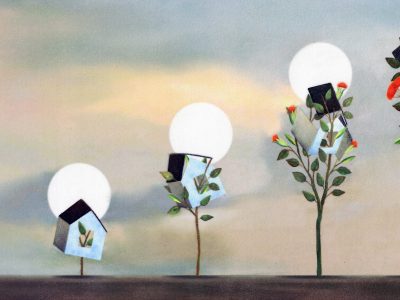
An illustration of a house as a flowering tree gradually grows within it, splitting it open with flowers.

The Strange Hopefulness of Growing a Human While the World Burns

WP_Post Object
(
    [ID] => 9582
    [post_author] => 15
    [post_date] => 2025-11-11 01:01:14
    [post_date_gmt] => 2025-11-11 01:01:14
    [post_content] => 

Three trans service members speak out on the military ban, and the rise of transphobia in the United States.

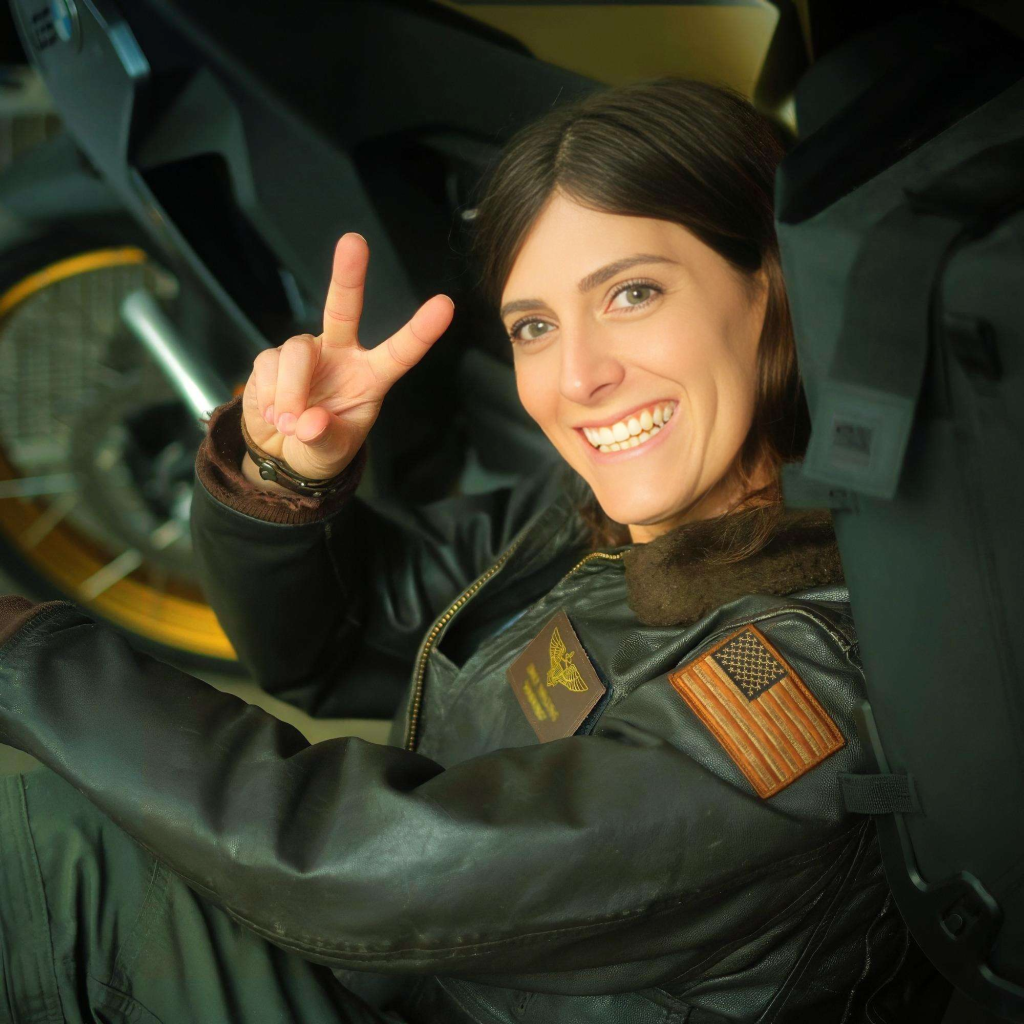
I met Commander Emily Shilling in April 2024 during a Lesbian Visibility Week panel celebrating LGBTQ+ women in leadership. I immediately found her both warm and intriguingly different. When I asked if she had ever flown upside down, the absurdity of posing such a question to a Navy test pilot sparked laughter, and a friendship.

After Trump’s reelection and his vow to reinstate a ban on transgender military service, my filmmaking partner Rivkah Beth Medow and I knew we had to respond. The growing anti-trans narrative wasn’t just a culture war skirmish, it was a symptom of something deeper and more dangerous: a coordinated effort to undermine democratic norms by turning vulnerable groups into political targets. We reached out to Emily, who saw our project as a way to turn a dark moment into a new mission: protecting her troops. When she shared that she’d voted for Trump in 2016 before coming out as trans, we all recognized how potent—and powerful—her story arc could be. 

We initially intended to make a short film centered on Emily’s experience, but it became clear that there was a bigger story to be told. Emily has always understood the power of storytelling, and through her leadership role and deep respect in the trans military community, she connected us with several compelling voices across all branches of service. 

Alongside Emily, we cast Navy Petty Officer Paulo Batista and Army National Guard Chief Warrant Officer Jo Ellis for a feature documentary, Fighting Forward. The film follows these three trailblazing transgender service members as they continue to navigate career threats, legal battles, and rising political hostility. And yet, despite this constant onslaught, one of our most interesting discoveries as the project has progressed is that each of our heroes remains completely committed to serving their country. Each, too, has taken a completely unique path in moving forward. 

This kind of service—steadfast, principled, and often invisible—is precisely what democracy requires to survive. But the attacks on LGBTQ+ rights, especially within government institutions like the military, are not isolated. They are part of a broader attempt to consolidate power by eroding the rights of those who don’t conform to a narrow, exclusionary vision of America. Efforts to push trans people out of public life, out of service, and out of legal recognition are not just discriminatory—they are anti-democratic. They chip away at the very idea of equal citizenship.

Equally chilling is the growing political rhetoric around using the U.S. military to "fight crime" in so-called "Democrat-run cities." Deploying the military against our own citizens, especially in diverse urban areas that overwhelmingly vote for progressive policies, is a direct threat to democratic governance. It weaponizes fear to justify the erosion of civil liberties and the silencing of dissent. This is precisely why it matters who serves in the military, who leads it, and whether or not they believe in the rights of all Americans: When the military is redirected to silence dissent at home, it stops defending democracy, and starts dismantling it.

Rivkah and I believe wholeheartedly in everyone’s right to belong. While we chafe at the military’s hierarchical system, feel appalled by their budget allocations, and are devastated by the environmental and human cost of war, if we have a military, then we want it to be representative of the country that military is fighting for. Not because of “woke ideology,” but because inclusion reflects democracy; and without it, we risk losing the very principles this country claims to defend.

The best way we know to shift culture is through telling nuanced stories amplified through impact campaigns that spark transformative conversations, policy change, and solidarity. While making this film, we’ve been surprised to find a strain of patriotism rising in us. It’s of an abolitionist and civil rights provenance, aligned with hope of what our democracy can possibly be. With the world around us on fire, both literally and figuratively, Fighting Forward has offered us a concrete way to challenge stereotypes, clarify misconceptions, and seed the culture we want for the United States.

~

Disclaimer: These interviews have been edited and condensed for length and clarity. The opinions expressed reflect the personal views of those interviewed, and do not necessarily reflect those of the U.S. Military or Department of Defense.

Navy Commander Emily "Hawking" Shilling

Photo courtesy of Emily Shilling.

Why did you first enlist?

The Navy’s motto at the time was “A Global Force for Good,” and I believed it, wholeheartedly. I believed in service, in being part of something bigger than myself. I couldn’t imagine sitting on the sidelines when I had the ability and the drive to make a difference. So I chose adventure, to stand and fight for all those who couldn’t. Maybe it was naive, or self-aggrandizing for the scrawny nerd I was, but I believed the worst sin of all is to do nothing in the face of evil.

What does it signal more broadly that trans people are now banned from joining the military?

It’s a betrayal of the very ideals the military claims to uphold. We say we’re a merit-based force, one where what matters is your capability, your integrity, your commitment. When we start disqualifying people simply because of who they are, we’ve abandoned that principle. If identity, not performance, is grounds for exclusion, where does that line stop? It's not just unjust. It's dangerous. The military must be made up of the people it swears to protect; otherwise, those that are different tend to become the unprotected.

What do you want people to know about the ban, how it’s impacting you, and what it means for the U.S.?

I want America to understand this isn’t abstract, it’s affecting real people, with real lives, families, and responsibilities. I’ve worn the uniform for over two decades. I’ve deployed in combat. I’ve led teams and flown missions that mattered. And now, people like me—qualified, capable Americans, patriots—are being told we’re not welcome, not because of performance, but because we were brave enough to say who we are. That should alarm every citizen. This ban doesn’t just hurt trans people, it undermines the strength of our military and the values we claim to defend. A country that believes in liberty and justice for all shouldn’t be in the business of telling patriots they’re not allowed to serve if they don’t match the reigning political party’s “perfect mold”.

Emily (foreground) with her wife, Amanda. Photo courtesy of Emily Shilling.

What, if anything, is giving you hope right now?

I find hope in those who refuse to accept silence as safety. People are organizing, speaking out, pushing back against the narrative that some of us are less worthy of dignity or service. Your voice matters.

I find hope in my fellow service members and veterans, who are standing together in solidarity. Many of them have seen what leadership really means, and they know it has nothing to do with gender or politics and everything to do with integrity, skill, and trust.

I find hope in how many people outside of uniform are waking up to what’s happening. They’re realizing this isn’t just about trans people, it’s about whether we will be a nation that honors its promises, and continues to fight for the dream of a more perfect union. 

And personally, I find hope in simply still being here, able to speak the truth out loud, to show up for others, and to remind people that we’ve been through dark times before and when we have organized, when we have stayed loud and connected and human, we have never lost. And, if we have the moral courage to fight, we will win this time, and every time.

What can readers do to support trans service members?

1. Raise your voice. Contact your elected officials. Let them know you oppose discrimination in the military and support open service. They do pay attention to public sentiment, and silence helps no one.

2. Challenge misinformation. Whether at your dinner table or your workplace, don’t let transphobia or fear-mongering go unchecked. Educate yourself, then share accurate, humanizing stories, especially about those who serve.

3. Support organizations doing the work. Groups like SPARTA, Modern Military Association of America (MMAA), and Minority Veterans of America (MVA) are fighting daily for the rights, recognition, and safety of LGBTQ+ service members and veterans. Donations, signal-boosting, and volunteering all help.

4. Connect and care. If you know a trans service member, reach out. Let them know you see them, support them, and appreciate their service. It’s not always about grand gestures; sometimes, the quiet affirmation that we’re not alone gets us through.

Army National Guard Chief Warrant Officer Jo Ellis

Photo courtesy of Jo Ellis.

Why did you first enlist?

I wanted to serve my country. Service is in my blood. I’m a patriot and I come from a family of military service.

What does it signal more broadly that trans people are now banned from joining the military?

It means our country will lose out on patriots like me who volunteered to sacrifice for the country. It means instead of a military based on meritocracy, it’s now a military based on political ideology. Instead of selecting the best person for the job, we are excluding an entire category of people for no justified reason. It’s pure animus. Service members were told they could serve openly and now we are being punished for coming out under a previous administration. 

What do you want people to know about the ban, how it’s impacting you, and what it means for the U.S.?

Thousands of deployable service members are being purged from the military without regard to readiness, cost, or experience. Service members are being sent home from deployments, command positions vacated without replacements, and no plan to recoup qualified personnel. We can’t shortcut a decade-plus of military experience.

Photo courtesy of Jo Ellis.

What, if anything, is giving you hope right now?

I believe in the great experiment that is the United States. We can be better. It’s not big percentages that make the difference in this country. It’s in the margins. 1%. 1% better each day. It’s the aggregation of marginal gains that lead to exponential results. Maybe that’s quixotic, maybe I’m the greater fool. I’ll wear those as a badge of honor. This country was founded by greater fools.

Navy Petty Officer 2nd Class Paulo Batista

Photo courtesy of Paulo Batista.

Why did you first enlist?

I enlisted because it was a dream since high school to serve in the military, inspired my by older brother who served for 20 years in the Air Force. Due to the "Don't Ask, Dont Tell" policy and me becoming my father's caretaker after high school, I could not join right away and had to wait until later in life. 

What does it signal more broadly that trans people are now banned from joining the military?

It means military readiness will be affected. Many transgender military service members play a vital role in all branches. We are enlisted to officers, and removing us from our jobs will leave gaps in many areas, including deployments. The military will lose great leaders with experience in their areas of expertise that cannot be replaced easily. 

What do you want people to know about the ban, how it’s impacting you, and what it means for the U.S.?

That being transgender in the military does not affect military readiness. We meet the requirements and standards implemented to service our country. However, more importantly, transgender service members have been serving for decades in the military, making our military more effective.

Unfortunately, per the new policy, thousands of effective service members, including non-transgender members, will be affected. It's a domino effect when the gap is created. Pulling a transgender service member from their job means that other service members will have to cover down for that unmanned position, ultimately causing more stress on the other service members by making them work longer or go on longer deployments, thus taking service members away from their families and causing more strain on other service members and their families, declining military readiness instead of increasing it.

Furthermore, the ban causes harm to all the transgender service members due to the DD214 [Certificate of Release or Discharge from Active Duty] rating that the policy implements, giving a rating that ultimately labels transgender service members a national security threat, thus affecting our futures and ability to continue our careers, even though we all served our country with honor, courage, and true bravery.

Photo courtesy of Paulo Batista.

What, if anything, is giving you hope right now?

The one thing that gives me the greatest hope is my community and trans siblings. Seeing others standing tall and seeing the ones who tell me they get hope from seeing me stand loud and proud against the current environment instead of going quiet. 

What can readers do to support trans service members and veterans?

If allies and friends are looking to help, the best ways start with reaching out to their representatives and congressional offices. Helping influence their decisions is vital, as that is the way to make the changes we need. Otherwise, I would say be a voice for transgender service members when we cannot speak. We are a limited number of voices, and need a vast audience to spread the correct information and hopefully educate the ones who are willing to listen.

[post_title] => "I Find Hope in Simply Still Being Here" [post_excerpt] => Three trans service members speak out on the military ban, and the rise of transphobia in the United States. [post_status] => publish [comment_status] => closed [ping_status] => closed [post_password] => [post_name] => transgender-military-ban-lgbtq-trans-rights-equality-veterans-service-members-interview-emily-hawking-jo-ellis-paulo-batista [to_ping] => [pinged] => [post_modified] => 2025-11-11 05:38:38 [post_modified_gmt] => 2025-11-11 05:38:38 [post_content_filtered] => [post_parent] => 0 [guid] => https://conversationalist.org/?p=9582 [menu_order] => 0 [post_type] => post [post_mime_type] => [comment_count] => 0 [filter] => raw )
Photographs of Emily Shilling, Paulo Batista, and Jo Ellis.

“I Find Hope in Simply Still Being Here”

WP_Post Object
(
    [ID] => 9722
    [post_author] => 15
    [post_date] => 2025-11-04 14:12:36
    [post_date_gmt] => 2025-11-04 14:12:36
    [post_content] => 

Queer relationship visibility isn’t good enough if all it does is replicate heteronormative approaches.

Soapbox is a series where people make the case for the sometimes surprising things they feel strongly about.

Like any faithful reality TV fangirly, I dutifully invest many hours of my brief and precious human life into my little shows. I dwell unabashedly in the cult of reality standom: My housecleaning rituals include day-long marathons of shows like Vanderpump Rules or 90 Day Fiancé, where I empty my closets and scrub my floorboards to the tune of a full season, filling my home with the sounds of strangers’ arguments, diary cam thoughts, and curated confessionals. 

For me, this isn’t just entertainment. I am endlessly fascinated by human relationship dynamics, and the belief systems that shape them. Much of reality television serves as my personal laboratory for examining these phenomena in action—and I absorb every minute with rapture. This is especially true within my favorite subgenre of all, reality romance, which I find particularly compelling because of the ways it reveals the ubiquity of heteronormativity in our collective consciousness. It’s also why I think we are long overdue for more queer reality romance—including shows that actually explore queer relationship frameworks, rather than just LGBTQ+ casting.

From classics like The Bachelor and Rock of Love to contemporary hits like Love is Blind, shows where total strangers form attachments to one another and make legally binding commitments in intense, pressurized, and unnatural situations are canonical. They’re also historically very heterosexual, something that hasn’t changed even as casting has diversified. 

Accurate, dynamic queer representation across all media is essential, and desperately overdue. Thanks to LGBTQ+ reality shows like Tampa Baes, The Real L Word, and the I Kissed a Boy franchise, we’ve finally been able to see a variety of sexualities and genders normalized in a dating context. And thank goodness! But as entertaining as these programs might be, queer relationship visibility isn’t good enough if all it does is replicate heteronormative approaches—and when it comes to relationships where personal autonomy and romantic intimacy are successfully balanced, these shows are falling short. 

With its second season out last summer, breakout hit The Ultimatum: Queer Love might be the most popular of the LGBTQ+ reality romance genre, both for queer and straight viewers alike. It’s also a strong (and, for better or worse, incredibly entertaining) case study in the pitfalls of dropping queer contestants into heterosexual dating frameworks, especially on a global stage. The plot features five couples on the lesbian spectrum who have reached an impasse in their relationships—one partner wants to get married, the other does not, and the former has issued the latter an ultimatum: Marry me, or we’re breaking up. 

The show aims to “help” castmates gain clarity about their present dilemma by presenting them with an opportunity to explore partnership with someone new. But not just anyone new: Castmates date each other. 

In front of the partners they arrived with. 

Participants have one week to select a new partner, and then immediately move in with that person for a three week “trial marriage,” which some of the new couples consummate. They then each move back in with their original partner for another three week “trial marriage” before decision day. 

The end goal is either for castmates to leave the show engaged—whether to their original partner, or to someone they just met under fast, furious, and fantastical circumstances—or, if they’re still not ready to commit, to walk away single. And of course, things go off without a hitch, everyone is super mature about everything, and no one ends up brokenhearted or publicly humiliated.

Now, maybe this plotline conjures images of the chaotic, toxic, and mysteriously elusive “U-Haul lesbian”. Yet that instinct would be misguided: In reality, The Ultimatum: Queer Love is a spin-off of The Ultimatum: Marry or Move On, a pre-existing show with the exact same premise, but a heterosexual cast. 

When the main focus of a show is for participants to “find love,” however, especially when the premise pressures them into making quick decisions about marriage or monogamy, the ghastly, unflattering light of patriarchy spares no one—something the landscape of LGBTQ+ reality romance makes clear. This is also one reason why copy-pasting heteronormative relationship frameworks onto a queer cast is particularly dangerous. On the whole, as a society, we are not trained to recognize misogyny when it doesn’t come from cis men, something that can quickly translate into queerphobia: When queer folks embody patriarchal values, people around them may be tempted to blame queerness, rather than patriarchy, for any ensuing problematic behavior. Queer people struggle enough with this inside our own communities already; something that compounds when media about us continuously reiterates stereotypes about gender, power, and control. This is particularly visible in reality television, from the lesbian sex scenes that border on soft porn, to the queer fuckbros whose predatory behavior towards femmes goes largely unconfronted, to cis women whose emotional abuse of their femme, masc, and genderqueer partners does not ring alarm bells the way it would if a cis man were behaving the same way.

The entire Ultimatum franchise is part of a robust and patriarchal legacy within the genre, where marriage is treated as an achievement, especially for women and femmes, and prioritized over everything, even at the expense of healthy bonds and connections. But to simply recycle the plotlines of heteronormative reality shows and transpose them onto a queer cast is not only creatively lazy; it exposes the errors of these shows’ premises at their core. 

“[R]eality television…has created a falsified account of how certain people are meant to behave, communicate and love, and the majority of the victims to these production tactics are women,” wrote Lindsey Spencer in a 2022 article for the Michigan Daily.

Where patriarchal marriage is the prize, women and LGBTQ+ folks will always get the short end of the stick, even when they “win.” I’m not knocking marriage as an institution—big fan, actually—but patriarchal marriage? One where gender is, whether consciously or unconsciously, viewed as binary, and where partners and/or traits perceived as “feminine” are subjugated to partners viewed as “masculine”? Where the praxis of the relationship itself eliminates the possibility of true intimacy? Where my partner and I are beholden to monogamy, rather than deciding whether we want to choose it anew, as the seasons of our lives unfold? 

Ew, no.

This is also precisely why I believe we’d all benefit from some more queering of reality romance. What if, instead of watching people wrestle their partners into making high-stakes commitments, audiences were offered a window into a cast of queers exploring alternative frameworks and modalities for love and connection? Reality fans would still get to absorb all the juicy human drama we hold so dear, but we’d also get to witness people grow and change in ways for which current plotlines don’t allow. 

In the current season of The Ultimatum: Queer Love, for example, an interesting situation cropped up during the initial re-shuffling of couples that might have played out very differently outside of the show’s rigid framework. A mutual attraction developed between one participant, Pilar, and both halves of one original couple, Kyle and Bridget. When, independently of one another, the pair learned that Pilar was interested in them both, they each encouraged her to explore the other, vouching for each other’s radness.

The show’s most visibly genderqueer couple so far, Kyle and Bridget already stood out from the pack. But they were also, in my opinion, the most mutually respectful couple the show has seen—something made clear throughout the season. Eventually, Pilar and Kyle selected one another for the trial marriage, and Bridget ended up with someone else. After Pilar and Kyle shared a kiss during their time together, Kyle quickly disclosed it to Bridget once they were reunited for their own “trial marriage.” While Bridget was visibly miffed, she and Kyle continued to have productive, open, and tender communication as they worked through a difficult conversation. 

It was an intriguing plot line, for sure, and played out as healthily as it could have within the scope of the show. But how much more interesting would it have been to watch Pilar, Kyle, and Bridget explore what it might be like to date as a trio? Or to watch them even have that discussion? I wonder how they may have all impacted each other’s lives differently, and whether stronger friendships or romances could have blossomed if they hadn’t been confined to the show’s rules.

Something as simple as that could have changed not only the trajectory of the contestants’ lives but, arguably, perhaps the trajectory of a viewer’s life, too. Witnessing couples undertake that type of exploration, safely and from a place of mutual trust, could be the very representation that some viewers need, queer or straight. It could also be a gateway for them to learn about their own relationship preferences, or even expose them to the fact that alternatives are possible. 

Beyond that, this more expansive approach would bring us closer to true representation, not just its bare minimum. The reality romance industry profits greatly from our identities, and queer viewers deserve something beyond an “LGBTQ+” label on the dropdown menu of our favorite streaming sites. After decades of witnessing countless reality stars run the hamster wheel of heteropatriarchy, I, personally, am ready for something a bit more nuanced—and, frankly, a lot more queer.

[post_title] => Why Isn't LGBTQ+ Reality TV More... Queer? [post_excerpt] => Queer relationship visibility isn’t good enough if all it does is replicate heteronormative approaches. [post_status] => publish [comment_status] => closed [ping_status] => closed [post_password] => [post_name] => lgbtq-reality-television-tv-dating-shows-the-ultimatum-queer-love-representation [to_ping] => [pinged] => [post_modified] => 2025-11-04 14:12:40 [post_modified_gmt] => 2025-11-04 14:12:40 [post_content_filtered] => [post_parent] => 0 [guid] => https://conversationalist.org/?p=9722 [menu_order] => 0 [post_type] => post [post_mime_type] => [comment_count] => 0 [filter] => raw )
An illustration of a wedding cake with a rainbow of colors in the background. At the top of the cake is a cake topper with a queer couple, both wearing suits, leaning towards one another for a kiss; both holding bouquets behind their back. In their shadow, we see a heteronormative couple, with one wearing a wedding dress.

Why Isn’t LGBTQ+ Reality TV More… Queer?

WP_Post Object
(
    [ID] => 9713
    [post_author] => 15
    [post_date] => 2025-10-22 17:42:39
    [post_date_gmt] => 2025-10-22 17:42:39
    [post_content] => 

Why eating disorders are so prevalent in Latinx and AAPI communities in the U.S.

It was a summer morning in 2001 when 11-year-old Elizabeth Moscoso realized her body was growing in width "unlimitedly." Before puberty, her figure had been slim, smooth, and long. But in recent months, it had become almost unrecognizable, as if it did not belong to her; her body suddenly covered in thick, black hair, and curves where there had once been straight lines. She desperately wanted to get rid of them. “This body…isn’t mine,” Moscoso, now 35, thought. That morning, she shared these thoughts with her mother, a Guatemalan immigrant who had moved to the United States decades prior. Leaving the kitchen, her mother returned and handed Elizabeth a solution: a dark gray faja.

A faja—a type of girdle that wraps tightly around the abdomen—is supposed to shape people’s, usually women’s, bodies to make them appear slimmer, giving them an hourglass figure. It’s also meant to increase sweating, and eventually, help with weight loss. Elizabeth wanted to feel pretty, and to her, that meant having a small waist, so she accepted her mom’s help and let her wrap her body in the faja. It was immediately uncomfortable; and soon, she began to sweat. Still, she felt determined: Elizabeth continued wearing the faja every day for the next month. 

“I hoped that this would work, like a cocoon, and that after a while, I would come out beautiful and different, more like I'd always wanted to be,” she says. 

Growing up, Elizabeth would watch Mexican telenovelas after school, enraptured by the beautiful women portrayed on screen. She also noticed a pattern: The women who found true and eternal love on these shows were usually pale, thin, and clean-shaven, their hair always perfectly curled. “Do I need to be like them to be loved?” she asked herself. But she wasn’t sure. Growing up in Southern California, in a Guatemalan and Ecuadorian household, she was surrounded by contradicting beauty standards. Her grandmother said beauty meant having curvy calves; her mom believed it was having hips and breasts, with a slim waist; her classmates believed it meant being extremely thin. Confused and desperate to fit in, it was around this time that Elizabeth began wearing the faja. 

Soon after, she also developed an eating disorder. Within a matter of months, Elizabeth had begun an extreme dieting regime, and would hide herself in baggy clothes—even in summer. She began using hair removal creams on her arms, and later began bleaching the hair blonde.

“I was feeling uncomfortable and confused because I didn’t see my white peers experiencing the same,” Elizabeth says. “But I wasn’t sure what was going on with me; I did not have the language. I wanted to stop restricting and exercising compulsively but I couldn’t.”

Unfortunately, Elizabeth’s experience struggling with Western beauty standards isn’t an uncommon one. A study by Florida International University found that Latinx and Asian American and Pacific Islander (AAPI) communities have the highest rates of eating disorder (ED) symptoms in the United States. The main reason is that ethnic minority women who acculturate to Western society are at an increased risk of experiencing body dissatisfaction, due to contradicting beauty standards between their primary and assimilated cultures. In other words, people who come from non-American cultures—or were raised with traditions from other countries, like Elizabeth—often experience stress when trying to adopt the beliefs, attitudes, and behaviors of Western society in order to fit in with its dominant culture.

“For young people who need to feel like they belong to this country, physical appearance is often an element that provides a concrete way of knowing that if they lose weight, get thinner, and look like a white girl, then they will feel like they fit into this culture and be more accepted,” says Mae Lynn Reyes-Rodríguez, clinical psychologist and Associate Director of the Center of Excellence for Eating Disorders at University of North Carolina-Chapel Hill.

This is especially common in first-generation Americans, like Elizabeth, and immigrants who have lived more than 70% of their lives in the U.S., as highlighted in a study published by the International Journal of Eating Disorders. 

This pressure has only been exacerbated with the rise of social media in recent years, as beauty standards continuously shift at a lightning pace. In the late 2010s, the growth of the wellness industry, influencer culture, and beauty/fitness content shaped women's beauty ideals towards toned bodies achieved through exercise and "healthy" eating. But more recently, the rise of conservative aesthetics and the popularization of weight-loss medications like Ozempic have been shifting beauty standards again—this time toward bodies that are ultra-thin. 

Today, Western beauty ideals promote a teenage—even prepubescent—body, despite the reality that even during their teenage years, people often feel insecure about their bodies and want to change them.

Because thinness is the goal, disordered eating habits that result in dramatic weight loss often don’t raise concerns from clinicians, often delaying diagnoses and care for those who are suffering. In fact, when patients lose weight, many say they are praised for prioritizing their “health.” 

Clinicians also aren’t always able to see—nor do they actively look for—disordered eating symptoms in young women of color. 

“Providers are trained to look for eating disorders through a white, Western lens,” says Ana Gardner, a Latina clinical supervisor and therapist at Equip, an organization that provides ED treatment in the U.S. “So if somebody doesn't meet the typical profile, their symptoms might not be identified. There's research that primary care doctors are less likely to screen BIPOC patients for eating disorders, even when there are very clear symptoms present.”

Shikha Advani, 25, an Indian American woman who grew up in Michigan, experienced this firsthand: After she rapidly lost weight at 15 years old, her doctors began congratulating her at every routine check-up. 

Prior to that, growing up, Shikha had always had a larger body. Her family used to call her mota, the Hindi word for fat, and constantly gave her advice on why she needed to lose weight. Her classmates made fun of her in gym class because she couldn’t run, and taunted her with things like, “Why are you so slow?” or “You’re too big to keep up.” Sometimes it was more subtle: eye rolls, laughter, or whispers when she lagged behind. 

“It wasn’t constant, but it stuck with me because it singled me out and made me very aware of my body in a way that felt shaming,” Shikha says.

When she saw her classmates start dating in middle school, Shikha didn’t want to be left out. So she decided she would lose weight—no matter what. She joined the cheerleading team and became a flyer, started running, and restricted her food intake. As she lost weight, the people around her took notice. But despite her efforts, she wasn’t asked to the school dance and was unable to find a significant other—something that only reinforced her idea that she needed to make herself literally and figuratively smaller.  

Shikha had witnessed her mother go through a similar cycle of disordered eating when she was still just a baby. After 9/11, the "Global War on Terrorism" led to widespread racial and religious profiling of individuals perceived to be of Middle Eastern or South Asian descent. Her family was targeted.

“My mom wanted to stay small and take up less space, so she could assimilate to society and look like the white folks,” she says. “It was like that for me, as well. We wanted to matter less and to be seen less after all the trauma of 9/11.”

Now, Shikha has a tattoo on her right arm that says “take up space,” a reminder that the only way to help other people of color who experience EDs is by being visible and outspoken, something she tries to practice in her work today as an anti-diet nutritionist.

Shikha was initially drawn to this work because she wasn’t able to access the necessary resources for her own ED recovery—something common for many young people of color. In addition to prohibitive costs, ED recovery treatments in the U.S. also usually follow a Western approach that may reinforce the racism and sexism that contribute to these disorders in the first place. Gloria Lucas, founder of Nalgona Positivity Pride, an organization supporting people of color affected by ED, emphasizes that colonialism is deeply tied to the development and persistence of disordered eating in marginalized communities. It leads to food insecurity, the disruption of traditional food systems, the imposition of Eurocentric beauty standards, medical violence, and trauma from discrimination.

But even those who might accept a Westernized ED treatment often can’t access it. Most U.S. health insurance plans don’t cover the full cost of treatment. Medicaid is accepted by only a few ED clinics, and Medicare offers limited coverage and doesn’t include nutritional counseling.

“An eating disorder can be very expensive, especially depending on its severity,”  Reyes-Rodríguez says. “Treatments require a team-based approach; there must be a doctor, nutritionist, therapist, and often a psychiatrist. The later it is diagnosed, the more expensive it becomes as people would need more effort and resources.” 

For those who choose to pay for treatment out of pocket, the costs can quickly become prohibitive. Malena Román Giovanetti, 20, born and raised in San Juan, Puerto Rico, experienced this firsthand. Most of her childhood, she remained very healthy, but at 14 she began to struggle with disordered eating. At home, she watched as some of her relatives followed strict diets to modify their bodies; at school, she barely had any friends. Her ED became a coping mechanism to regain a sense of control. After four months, she told her mom, who quickly found the only clinic in San Juan—and the only clinic on the entire island of Puerto Rico—that offers ED treatment. It didn’t accept insurance, so her family paid out of pocket. Malena regained some weight, but continued to struggle with body dissatisfaction and intrusive thoughts. When the COVID-19 pandemic hit, she relapsed. Her family had to pay even more for online therapy.

“My parents went into a lot of debt and stuff to try to pay for my treatment,” Malena says. “It made me feel really bad.”

Guilt is one of the most common feelings shared amongst people experiencing an ED: guilt over expenses, guilt for breaking food rules, guilt for losing control, guilt for not meeting unrealistic standards, guilt for worrying others, and guilt for not being able to share joy with loved ones over food. 

This guilt is multiplied across many AAPI and Latinx cultures because, despite the diversity and heterogeneity between them, they share one thing in common: Food is central to family, and to social life. Food is celebration, love, community, and care. Rejecting a dish prepared by a relative is often perceived as rejecting their love and effort. These cultures are the vivid proof that food is more than just a biological need: It is a way to celebrate culture. But while joyful, these gatherings are also rife with body shaming and unfiltered commentary on physical appearance.

For Anoova Sattar, a 17-year-old Bangladeshi American, attending family gatherings became difficult when she developed her ED, because of her self-imposed food restrictions. Rice, for example, is a staple in Bangladeshi cuisine, but Anoova avoided it.

When eating with other Bangladeshi families, she felt anxious about being exposed to triggering foods and the inevitable comments about her weight. Everyone seemed happy that the once-chubby Anoova was now slender. But this didn’t stop them from commenting on what she was or wasn’t eating; and there was no space to talk about how she truly felt about any of it, or how much she was struggling.

“I've never been comfortable with the thought of seeking therapy,” Anoova says. “It's just never been something comfortable for me, because I don't really like sharing so much personal information with one person to help myself. If it helps others, then it's fine.”

To that end, Anoova recently founded a social media initiative called Shuno to raise awareness about EDs in the South Asian community. Through this project, she is working on a directory of South Asian ED providers in the U.S. But despite encouraging others to seek help, she continues to manage her ED on her own.

“Something common both in the AAPI and the Latinx communities is that there's a lot of stigma towards mental health,” says Gardner. “It's not always encouraged to seek out help or talk about it with others, and sometimes, depending on spirituality or cultural beliefs, it could be believed that it's that person's fault.”

For Anoova, visiting Bangladesh while dealing with her ED also brought a new layer of guilt.

“People there are concerned about getting access to food, because it controls whether or not they live or die,” Anoova says. “It’s a matter of life and death for them, but for me, here, appearance also becomes life or death, because eating disorders [anorexia] have the highest fatality rate among psychiatric illnesses.”

In the Global South, even those seeking help may quite literally lack the language to do so: The words for “eating disorder” simply do not exist in their mother tongue. Sometimes, however, this inability to translate it can be a means of self-protection, too. 

Julia, who requested we not include her last name for privacy reasons, moved from China to Nevada with her mom when she was four. As an only child, the only English speaker in her household, an Ivy League graduate, and someone who quickly landed a good job after school, Julia was her mother’s pride. But eventually, that burden started to grow heavy for Julia, as her mother’s expectations for her often extended beyond her accomplishments. 

Growing up, Julia's mother frequently commented on her appearance: Her skin wasn’t pale enough, her body wasn’t slim enough, her eyes needed to be wider. Her mother embodied the Chinese beauty standard and expected Julia to mirror it.

“It wasn’t malicious, but there were so many comments,” Julia says. “So in high school, I became super aware of my size. My mom said that as I was growing into a woman, I needed to be pretty to attract men.”

When Julia moved to New York City to study Sociology and Global Liberal Studies, living on her own meant she could make her own choices for the first time, without supervision. She began working out at the gym, purging, compensating, and dieting. When her mother saw her again, she congratulated her, saying she was finally learning to take care of herself. Her friends praised her, as well, admiring her discipline.

Julia has had an ED for nearly 10 years now, but only received a diagnosis five years ago—by accident. She had been struggling with ADHD and had sought medication and support. During an appointment with a therapist, she mentioned her eating habits, which is when she was formally diagnosed. 

“My doctor didn’t notice or ask anything about my eating habits—I told her,” Julia says. “I wasn’t expecting them to notice, because unless I was severely underweight or had abnormal bloodwork, I [didn’t] see why they would ask.”

Julia has shared her story on podcasts and on social media, but her family still doesn’t know about her diagnosis. Since they don’t speak English or use social media, she’s been able to keep it hidden.

“I literally don’t know the word for eating disorder in Chinese,” Julia says. “And honestly, I don’t know how I’d ever bring it up. Culturally, my mom’s response would be like, ‘Oh, why would you do that?’ There would be no productive conversation. At a certain point, you have to accept that there are conversations you’ll never be able to have with them because of a cultural gap. And I’m kind of okay with it.”

Julia wrote her mom a poem—of love and detachment on her expectations on Julia’s appearance, of recognizing her mother while also recognizing herself:

“She says she is waning
That she withers while I blossom
But I’m just barely budding
While she lives in full bloom

I’m not as slender
I don’t share the same curls
Ruby red never suited me
Yet she colors my world
She made me bold and unafraid
Like her, I won’t break nor bend
For I am woven from her threads
Just as strong, from start to end.”

As people constantly reminded that they don’t belong, Latinx and AAPI folks in the U.S. face a mental battle over how beauty, health, food, exercise, medicine, and relationships should look. Trying to preserve their heritage while fitting in, trying to be the fulfillment of the American Dream while being appreciated and seen like everyone else—that burden has never been easy to carry. But through the acceptance of diversity and community building, perhaps we might collectively begin to bend towards a more gentle world, one where people don’t merely focus on their physical appearance, but on the joy that food, movement, and social networks inspire.

[post_title] => A Cocoon for Us to Fit In [post_excerpt] => Why eating disorders are so prevalent in Latinx and AAPI communities in the U.S. [post_status] => publish [comment_status] => closed [ping_status] => closed [post_password] => [post_name] => eating-disorders-prevalence-latinx-latina-aapi-asian-communities-united-states-feature [to_ping] => [pinged] => [post_modified] => 2025-10-27 23:15:27 [post_modified_gmt] => 2025-10-27 23:15:27 [post_content_filtered] => [post_parent] => 0 [guid] => https://conversationalist.org/?p=9713 [menu_order] => 0 [post_type] => post [post_mime_type] => [comment_count] => 0 [filter] => raw )
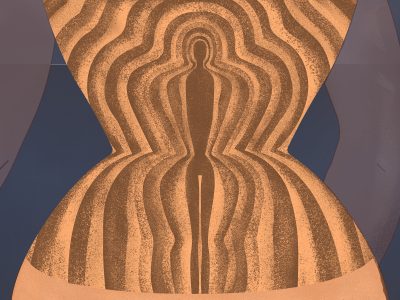
An illustration of an hourglass silhouette, the waist cinched tight, in shades of muted peachy gold. Within it, increasingly smaller versions of the silhouette are contained, leading to a central shadow silhouette. The hourglass is over a dark blue background with arms seen through a filter, as if ghostly.

A Cocoon for Us to Fit In

WP_Post Object
(
    [ID] => 9177
    [post_author] => 15
    [post_date] => 2025-09-02 20:19:11
    [post_date_gmt] => 2025-09-02 20:19:11
    [post_content] => 

How one word has birthed a globe-spanning tradition of resistance.

A few months ago, I was at a protest in Washington, D.C. This was not unusual. Gaza burns. The president deports with impunity. Respect for the rule of law—notably and especially by the government—now seems like the nostalgic artifact of a more innocent era, an era merely months ago. Unsurprisingly, for those of us moved by these simultaneous horror shows, expressing our anger through protest has become almost unremarkable. I’ve lost count of the number of protests I’ve attended, the catchy homemade signs I’ve crafted and seen, and the clever chants I’ve memorized. But at that particular march, something unusual happened: a chant-leader exhorted us to cry a word in my mother tongue, Urdu.

“Azadi!” she called.

“Azadi!” the crowd responded in unison.

Suddenly, the word seemed everywhere: scrawled in chalk across sidewalks and columns; emblazoned across signs. In the heart of the nation, the seat of its power, everywhere, that old watchword of uprising—Azadi.

~

Azadi, or freedom, is a small word. A scant five letters in both English and its original Farsi (آزادی), these five letters have birthed a globe-spanning tradition of resistance, having been shouted by students in Srinagar and Tehran, whispered in prison cells in Ankara, and sung by women in Kashmir and Delhi. A cry familiar to all children of the Middle Eastern and South Asian diaspora, myself included, Azadi is hymn, music, and lifeline. It’s a demand for dignity from its callers and from all those who answer the call. 

This demand is expansive in scope and depth, inclusive of the dignity of life, of identity, and of the ability to govern your own political destiny. Azadi evokes our collective memory that freedom is claimed, not given, while narrating a people’s unified struggle for systemic social change. For those who seek the protection of the most vulnerable while preserving the dignity of all, Azadi is always within reach. 

Still, for all that Azadi is, we must be clear about what it is not. It is not a slogan to be selectively invoked. It is not a justification for state violence. Azadi cannot mean the protection of innocent life only when politically convenient. Moreover, it becomes meaningless when uttered by those who do not uphold a politics grounded in human dignity. Nowhere was this distinction starker than in a recent televised address, in which Prime Minister Benjamin Netanyahu briefly switched from English to Farsi while commenting on Israel’s bombing of Iran. “Women, life, freedom. Zan, zendagi, azadi,” he said—invoking the slogan of the Iranian women’s rights movement. In that moment, the language of liberation was co-opted to justify the machinery of war. It was surreal to hear a feminist chant—professed often by Iranian women defying authoritarian rule—repurposed by the very man overseeing the brutally indiscriminate bombing of thousands of women and girls in Gaza. The slogan, stripped of its radical roots and repurposed as rhetorical cover, stood in direct contradiction to the grassroots movements that had once breathed life into it. 

Creeping autocracy in the United States has for too long been ignored and shrugged off as a dysfunction that happens only in the Middle East and elsewhere in the Global South—the lawless other. But this careless, arrogant posture can no longer be supported, nor can the dangers of autocracy be reduced to a foreign export; and so, Americans chant Azadi now, because America needs it now. The past 100+ days have exhibited what the marginalized in this country have always known: that the greatest repression within America’s borders remains homegrown. Despotism collapses the political distance between nations and times, and just as fascism is rising globally, it has risen here. The myth of American exceptionalism falsely preached that our democracy was immune to the spell of demagoguery. But we know that Americans are just as capable of voting themselves into tyranny as any other people. White supremacy, toxic masculinity, and violent inequalities in rights and liberties were always part of the country’s domestic architectures. Now, from the streets to digital silos, they are plain for all to witness. 

From Hungary to India, Israel to the U.S., authoritarian regimes the world over are in conversation, looking admirably upon each other. They swap notes in class, sharing tactics of repression, like aggrandizing executive power and politicizing independent institutions. But just as authoritarian regimes learn from each other, so too must we build solidarity across movements. The rhymes of history—from the surveillance of Black radicals in the U.S. to the targeting of Kashmiri students in India—demand collective study. And along with any new lessons that may arise, we must continue to echo the lessons of some of our most beloved visionaries. From Angela Davis to Edward Said to Arundhati Roy, we are reminded that global resistance is strongest when deeply rooted in local struggle. 

In fact, therein lies Azadi’s greatest power: It crosses borders, languages, and faiths, moving between nations without itself becoming nationalized. It is a global grammar of defiance.

~

Language lives. It breathes, grows, reproduces. Azadi has done so, too, absorbing every movement and tongue it touches: Farsi, Urdu, Kurdish, Pashto, Punjabi, English. The precise journey of the word is contested; after all, linguistic borrowing is never an isolated event. Still, it carries an expansive genealogy of struggle through its travels: against gendered violence, against settler colonialism, against religious nationalism.

While I heard cries for Azadi in D.C. for the first time this year, in Indian-occupied Kashmir—the most militarized zone on earth—Azadi has been invoked for decades, having been part of the Kashmiri liberation movement since its inception. Yet as Modi’s India forbids conversations about the region and brands it as sedition, as students and organizers are arrested for expressing their desire for freedom, as the indigenous Kashmiri struggle for self-determination persists—Azadi remains the movement’s heartbeat. 

Long serving as the anthem of the Kashmiri separatist movement, now that Azadi can no longer be expressed in the open, it hides itself in art or in niche digital spaces not yet subject to state discipline. Digital speech, however, is increasingly policed. On platforms like X (formerly Twitter), Indian authorities now block, geofence, or suspend accounts that challenge its narrative. Content from advocacy groups like Stand With Kashmir is censored using the same tools of repression that platforms in the U.S. deploy against pro-Palestinian activists—algorithms, shadowbanning, keyword suppression. Surveillance and censorship, previously characterized as exclusive to so-called illiberal regimes, are now a feature of the liberal democracies just catching up. 

As all this occurs, state actors escalate their repression of dissent in the United States. Trumpism has made it clear what can and cannot be said: speech critical of the Trump administration is met with swift retribution; and speech challenging domestic and foreign policy is quickly vilified, as seen by the vicious response to ICE protests in California earlier this summer. Meanwhile, students protesting for Palestine in the U.S. now face the same brutal state retaliation we’ve long associated with authoritarian regimes abroad—even though the U.S. has always had its own archive of violent suppression, from the surveillance and silencing of civil rights activists and abolitionists to the the crackdown on anti–Vietnam War protesters after them. Today, much to Trump’s delight, some of the most prestigious law firms have capitulated to executive pressure, agreeing to perform approximately $1 billion worth of pro-bono labor for Trump’s retributive pet projects. Activists and pro-Palestine advocates have been doxxed, fired, expelled, and/or blacklisted. All the while, institutional liberalism bends the knee: DEI offices that once promised safe harbor for marginalized voices now fall silent or side with power; liberal media outlets fire staff who speak out against atrocities in Gaza. The suppression of speech, criminalization of protest, surveillance of dissent—these are global patterns, and we are not exempt. Arguably, if American exceptionalism matters here at all, it will be in its ability to normalize this authoritarian bent worldwide.

And yet resistance continues. The same dignity Azadi rallies for abroad is now demanded here. On the steps of American universities. In its hallowed institutions. At the foot of the Capitol. 

~

For all that Azadi gives, it demands something of us—namely that we do more than simply bear witness. When we chant Azadi, we are not just echoing other movements, past and present, but entering into dialogue with them, from Kashmir to Kabul to Tehran. This is not mimicry, but lineage, as Azadi reminds us in every generation that our rights are not guaranteed and must be renewed through struggle. 

It is not enough, then, to be the appreciative, passive inheritor of a tradition of resistance; one must mobilize. This means texting rideshares, learning how to administer basic first aid for those whose names you don’t yet know, and tracking jail releases of those who you just met and marched alongside. This means disagreement without collapse, and accountability without exile. This means spending hours in rooms with bad lighting and too many opinions, trying to move toward consensus anyway. 

If Azadi is to continue to mean something lasting, we’ll need to carry it beyond the chants—into policy fights, mutual aid networks, protective kinship, and more. Because Azadi is not metaphor, it is mandate, and requires all of us to answer its call. 

~

Call and Response: 

Hum kya chahte? Azadi!
What do we want? Freedom!

Chheen ke lenge—Azadi!
We will snatch it—Freedom!

Hai haq hamara—Azadi!
It is our right—Freedom!

Zor se bolo—Azadi!
Say it louder—Freedom!

Hai jaan se pyaari—Azadi!
We love it more than life—Freedom!

Tum kuch bhi kar lo, hum leke rahenge—Azadi!
Do what you want, we will still win it—Freedom!

[post_title] => America Needs Azadi [post_excerpt] => How one word has birthed a globe-spanning tradition of resistance. [post_status] => publish [comment_status] => closed [ping_status] => closed [post_password] => [post_name] => america-united-states-azadi-freedom-protest-palestine-gaza [to_ping] => [pinged] => [post_modified] => 2025-09-03 10:27:10 [post_modified_gmt] => 2025-09-03 10:27:10 [post_content_filtered] => [post_parent] => 0 [guid] => https://conversationalist.org/?p=9177 [menu_order] => 4 [post_type] => post [post_mime_type] => [comment_count] => 0 [filter] => raw )
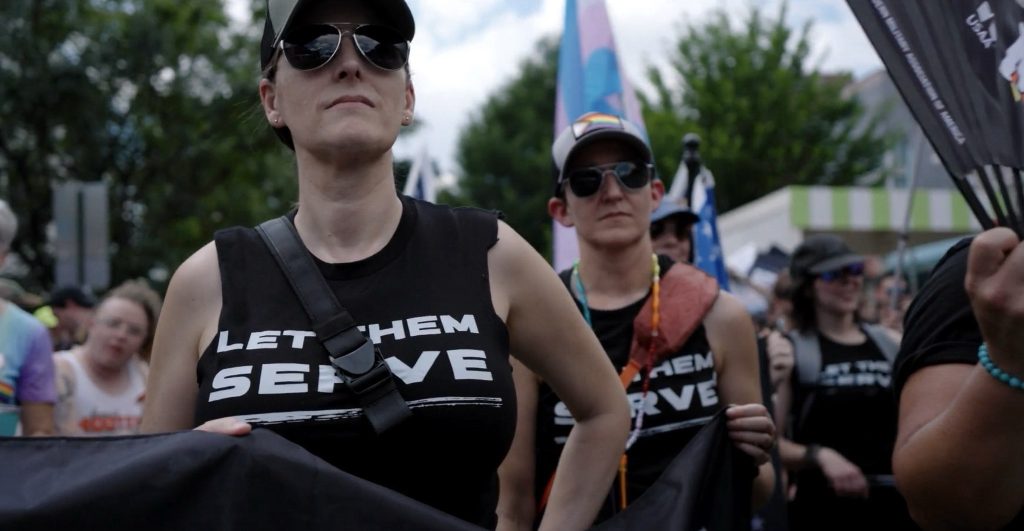
America Needs Azadi

WP_Post Object
(
    [ID] => 9206
    [post_author] => 15
    [post_date] => 2025-08-07 16:43:47
    [post_date_gmt] => 2025-08-07 16:43:47
    [post_content] => 

How one woman's friendship helped guide me to myself.

Old Friends” is an ongoing series exploring the many ways that friendship changes shape in adulthood. 

I met Maryam at an Egyptian dance class in 2009, just outside Boston. We ended up on the same train ride back into the city afterwards, and got to chatting, about dance, about life. I was immediately at ease in her presence. Maryam’s big green eyes peered owlishly at me over wire frame glasses as we talked, and I was struck by the sensation that I was speaking to an elderly cartoon wizard who had transfigured, comically, into a freakishly gorgeous human woman. We also learned we were both students at the same college, and when she got off at her stop, we agreed to meet up on campus the next week.

I’m still not sure why Maryam wanted to hang out with me back then. At 21, I’d arrived to our friendship a myopic, self-centered mess of youthful immaturity. Unrecognized neurodivergence and unaddressed teenage trauma had glazed over my entire life, until everything was blurry. I was totally disconnected from myself beyond whatever my current fleeting hyperfixation, which often included chasing after some dehydrated headache of a man. I had no internal compass or intrinsic motivation to carve a deliberate path forward for my life.

In contrast, Maryam was poised, self-expressive, and independent in ways that awed me. Several years older and light years more adult, she moved through life with an enigmatic grace. Her home was full of art, films, perfumes, and books. Meanwhile, I still lived with my mom, and my room was full of…laundry.

I so desperately wanted to be like Maryam. A trained historian, herbalist, doula, and certified babe, this woman had it together. She taught me about feminist geopolitics, which plants would be good for my period cramps, and how to take care of my skin. She kept her fingers and toes manicured (red, always), and had a standing appointment at the nail salon for a polish change every Friday. It was the first time I’d met someone so devoted to herself; not in an egotistical way, but as a practice in self-respect.   

“I never leave the house without at least a little makeup,” Maryam told me once. "My mother taught me that.” 

Wow, I remember thinking. What a cool mom. 

I haven’t spoken to my own mother much since middle school, but at 21, I was a full-time student who couldn’t yet afford my own apartment. Home, then, was a source of constant anxiety and stress; a gulf of silence, punctuated by unpredictable bouts of my mother’s wrath, a pattern that still defines our relationship today. 

I cherished having an elder femme take me under her wing. I was a shy, only child, and my living situation had left me feeling pretty isolated. Time with Maryam often felt like an escape; like an alternate plot line where I felt a sense of belonging. Over time, I started to realize that I could actually live in that plot line, if I wanted to. 

In the early years of our friendship, Monday nights were ours. Nearly every week, we went dancing in Cambridge, the notorious college town next door. We both had to be up early on Tuesdays, but that didn’t stop us—Maryam may have been responsible and mature, but we were both in our early 20s; still able to party all night and get up at 6 a.m. the next day. Whenever men would try to talk to us, we would start “joke dancing”: lurching and flailing our bodies around to scare away the would-be suitors, purely for our own amusement. When the night was done, I would drop her off and make my way back home in my mom’s Scion.

Maryam quickly became a mother figure to me, and helped me grow strong in ways that I needed, especially when I later stepped into sex work for the first time at 25. Through her, I was also able to see the ways my own mother had inadvertently taught me to hide from myself. My mom, a white woman who adheres to the principles of second wave feminism, raised me to believe that femininity was something that weak women performed for men. She was loud about her disdain, both for men and for femmes. She kept her hair short, never wore makeup, and still rarely wastes an opportunity to let me know she thinks my own femininity is frivolous. 

But for all her convictions, my mother has also never been a confident woman; not when I was growing up, and not today. She is direct, entitled, and bossy in the ways that whiteness allows, but, when presented with everyday opportunities to disrupt things like misogyny, racism, or classism, she often stays silent, choosing decorum over the values she believes she holds. 

The first iteration of my womanhood was steeped in the same temerity as my mother’s, something that required me to subjugate large swaths of my personality. I am, at my core, a belligerent lesbian with a smart mouth who capitulates to no one. I just didn’t know all of that yet at 21, and Maryam’s friendship helped guide me to myself.

In many ways, just meeting her was a revelation. She embodies a multiplicity that my mother’s idea of feminism can’t compute; a multiplicity that, though different from mine, allowed me to better understand my own contradictions, not as shortcomings, but as evidence of the shortcomings of the patriarchal culture around me. Maryam is brave enough to speak her mind, especially when it comes to standing up to men—even though as a mixed race, high femme, feminist hijabi, she faces a unique set of risks that often compound when she does so. Once, as a new mother, she noticed a man following a woman down the street, harassing her. With her infant strapped to her chest, Maryam began loudly heckling him, and he panicked and ducked into a store. She followed him inside and continued to roast him in front of shoppers. 

I wonder if she gets this ferocity from her own mother, Karla, who died suddenly, shortly before Maryam and I first crossed paths. I wonder, too, what it was like for Maryam in the early years of our friendship, to guide me so thoughtfully and patiently through life as she grappled, mostly alone, with her monumental loss. She, like me, is an only child, and she lived with her mom until she died.

I also wonder what it was like to be raised by someone so tough. My favorite story about Karla, who was an artist, is the time that she was working in her studio and accidentally slashed her flesh. She cauterized her own wound with a cigarette, because, according to Maryam, “She couldn’t be bothered with the fuss of the ER.” 

So unlike my own mother’s lip-service, Maryam taught me to hold my ground, go with my gut, and never let a man push my boundaries. Wise, wise advice for anyone to heed, but especially for a young person heading into the sex industry, like I did, just a few short years into our friendship. I am 36 at the time of this writing, and I have been in various types of sex work for over a decade. I started out as a stripper, and Maryam was one of my most supportive friends. She immediately understood the complex web of reasons why sex work may be the best choice for some people; even people like me, who have a college degree and other potential career options. Her steadfast support helped me keep my head on straight when others, including my mom, tried to make me feel bad about myself for dancing. And her support never wavered. During our brief but glorious stint as roommates, she would perform parody dances for me in the living room, twerking in a handstand on the wall to strip club classics, like T Pain’s I’m in Love (With a Stripper). Once, during one of my shifts at the club, the bewildered bouncer came inside to let me know that Maryam had tried to come visit me at work—with her new baby asleep in the carriage. 

In stark contrast, when my biological mom found out through the grapevine that I had been dancing, she lost it. Even though we barely spoke, she used any contact as an opportunity to let me know she was mortified by my choices. She tried to shame me out of my job, eventually using her own mental health as a manipulation tactic, blaming my stripper status for her anxiety and depression.

I don’t resent my mother for this, I don’t hate her. But I also don’t feel known by her. And when I was younger, I needed to feel known, to feel understood—to feel mothered. 

For an off-the-wall autist, pinballing through her early adulthood, Maryam’s care was a lifeline. Her lessons in self respect also helped me shift paradigms in my personal life. Eventually, as I matured, I started to put less attention into toxic relationships and instead focus on building a relationship with myself. I have my own apartment now, full of my own art, music, perfumes, and books. (I’m still locked in a chronic battle with my laundry, though—some things don’t change.) Gradually, as I grew up, my friendship with Maryam changed, too: In the 15 years since we met, she’s had kids, I’ve figured out I’m queer, and we’ve both begun to contend with the ways that time takes a toll on the body; the ways that life shapes the spirit and the mind. 

Part of me will forever feel like a clumsy little kid, chasing after Maryam with a lollipop tangled in my hair, but, in general, I feel pretty well equipped to take care of myself. Now, I’m also someone Maryam calls in a crisis, someone she vents to when she has a problem; not just the other way around. I feel rewarded by having earned her trust over the years; a kind of trust that I still don’t get from my own mom.

I’ve also had my own experiences now, mothering younger friends and relatives, and in those situations I often find myself emulating Maryam, trying to strike a balance of grace and leadership; trying to teach my little ducklings to be strong and brave.

It took a long time for me to see just what it meant for Maryam to show up for me like she did in those early years, especially as she was learning to navigate life without her mom. She was attentive to me in ways for which I previously had no barometer; she validated my dreams, recognized my hard work, and showed me care in simple ways, like learning which foods were my favorites, or reminding me my worth every time some dingus broke my heart. On the other hand, my own mother has asked me twice in the past decade what color my eyes are, refuses to believe that I am autistic, and, just before I started grad school for journalism last fall, decided to tell me why she thinks I’ll never be a good journalist.

Since my own mom is mostly a stranger to me, it’s hard for me to imagine what it’s like to lose a bond I never had. But through mine and Maryam’s friendship, I have caught glimpses of Karla, and have come to love her through Maryam’s eyes—to recognize the woman who mothered the woman who mothered me. 

When I look back at the ways that Maryam helped guide me in my lost, immature years, or when I reflect on what a spectacular mom she has become to her own children, I am awash with the strange sense of missing someone I never had a chance to meet. I can feel Karla’s presence in so much of Maryam’s life, and, by extension, so much of my own. 

It’s been over ten years since Maryam and I lived in the same state. She’s raising a family with her husband in the Midwest, and I’m running around, a gay, sex working journalist in New York. I miss her so much. I keep photos of her and her kids in my studio, along with a pair of Karla’s old boots: a reminder that my best friend is always with me, and of the multigenerational blessings she brings to my world; and of the many mothers, here and gone, who continue to watch over me.

[post_title] => The Cycle of Mothering [post_excerpt] => How one woman's friendship helped guide me to myself. [post_status] => publish [comment_status] => closed [ping_status] => closed [post_password] => [post_name] => old-friends-friendship-mothering-growing-up-self-understanding-personal-essay [to_ping] => [pinged] => [post_modified] => 2025-09-19 12:32:12 [post_modified_gmt] => 2025-09-19 12:32:12 [post_content_filtered] => [post_parent] => 0 [guid] => https://conversationalist.org/?p=9206 [menu_order] => 2 [post_type] => post [post_mime_type] => [comment_count] => 0 [filter] => raw )
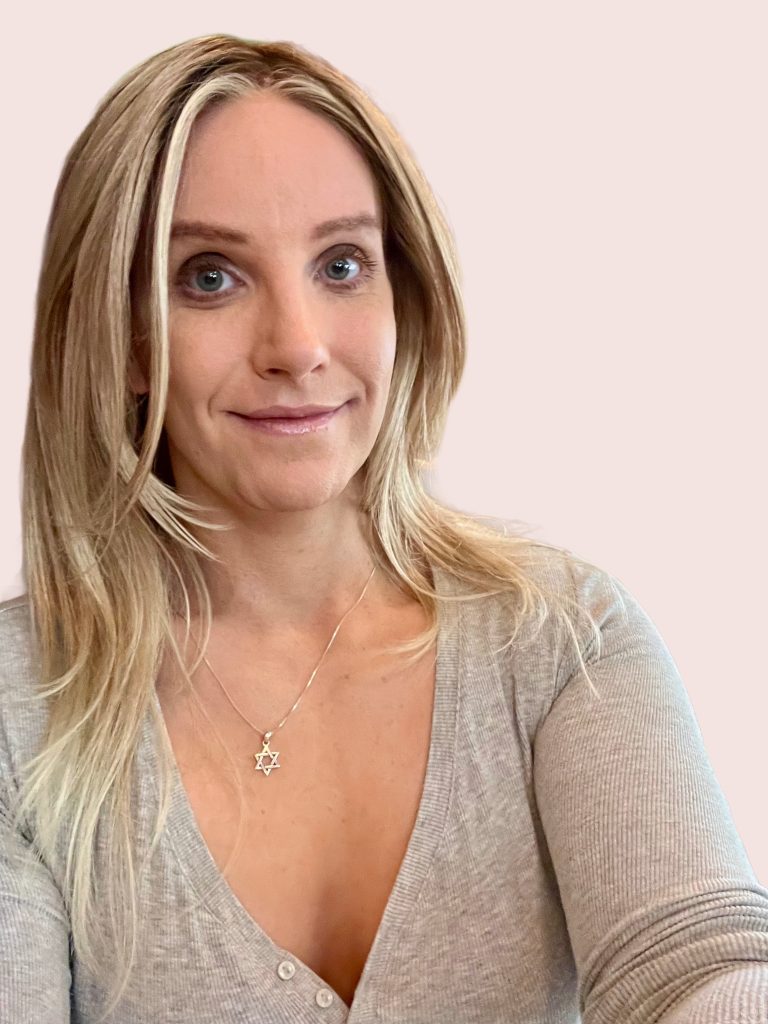
An illustration of a laundry line, with white sheets billowing in the wind. Behind it, we can see the shadows of two women holding paper cut-outs of shoes on sticks, and the silhouettes of the New York skyline. In the foreground, there's a plastic chair with a pair of red cowboy boots.

The Cycle of Mothering

WP_Post Object
(
    [ID] => 8581
    [post_author] => 15
    [post_date] => 2025-05-29 00:10:24
    [post_date_gmt] => 2025-05-29 00:10:24
    [post_content] => 

Stories from my friends still trying to survive.

It begins with a panicked message on Bluesky in October 2024. Someone is messaging me with a link to a fundraiser and stilted English that reads as though it came from a bad translation app. The picture on her GoFundMe shows a young woman with a pale face and shocking green eyes. 

It’s been seven months since the borders of Gaza were sealed. She says she is in Zeitoun, a pocket of north Gaza under siege. I respond in colloquial Arabic, to see if this person can even speak the language, to see if she is real. I ask her for a WhatsApp number. She gives me one. It starts with +972.

She is real. Her name is Hayat. She, along with her husband and children, did not flee south as the siege on north Gaza tightened. Where to go? she says. 

Hayat is pregnant. Eventually she will give birth—by c-section, without anesthesia—to a little girl with blue-green eyes as brilliant as her own. She names her Fatima. Now, I have a namesake in Gaza. 

I meet Mohamed next. A farmer and a teacher, he has lost his sheep and rabbits, but even living in al-Mawasi refugee camp, he persists in growing plants and crops in a little garden by his shelter so there may be something fresh to eat amid the siege. Al-Mawasi, a cruelly named “safe zone,” has witnessed regular attacks and bombardments since Mohamed arrived there in March 2024. 

This same siege today, almost three months since all aid to Gaza has been cut off, has driven people to famine. The cost of flour, if you can find it, careens wildly, swinging from an already farcical $100 USD to an impossible $700 USD. The bread bakeries have shut down. The World Central Kitchen says its warehouses are bare. Children have been dying of malnutrition and under bombs all at once, like fish in an increasingly shrinking barrel. To quote a DC pundit, “The war in Gaza is not really that different than other wars.” A beat. “Well, except I guess they can’t run away.” 

My keeping a bunny as a pet amuses Mohamed. One day, he shares a story about missing his animals, and a farmer in Texas donates $500 to his fundraising campaign. Mohamed is saving every penny for his eventual evacuation from Gaza, now a distant hope. Meanwhile, the cost to survive continues its inhumane inflationary spiral. Funds meant for escape are now hoarded for food, any food, which is becoming harder and harder to find.

After Hayat and Mohamed, I meet Obada. Obada is a lawyer with three children. He considers his youngest, Zain, a gift from God, as his other two children required medical intervention to exist. Zain did not. On Eid, Obada shares a photo of Zain in his little white thobe, a dignified and serious garment for adults that is adorable on a baby. 

The calls for help swirl thick and fast—other families realize they can build lifelines beyond the walls of Gaza, that someone, anyone, is willing to hear out their agony. There are Naser and Amal, with their children Rolan and Omar. Naser currently lies in one of Gaza’s last functioning hospitals with a breathing obstruction, and needs surgery. I try to help them a little. Rolan sends me a thank you photo: a young girl of seven, sitting on a pile of rubble against a blue sky, holding a sign that reads, “My love for you (heart) Fatima Ayub.” 

Before Israel sealed the Rafah crossing with Egypt in March 2024, it cost $5000 USD per adult, and $2500 USD per child, to organize an evacuation from Gaza. Those figures, as extortionate as they were, are meaningless now. No one can leave, and if they do, it will be as part of the deliberate depopulation of the strip. Yet, as my friends in Gaza keep telling me, nothing is left. Virtually no school, clinic, hospital, or mosque in Gaza has been left standing. Gaza has been bombed more heavily than London, Dresden, and Hamburg in World War II, combined. Children keep arriving in the few remaining hospitals with bullets in their heads.

I meet multiple Ahmads. There is Original Ahmad, who braved the migration boat passage under Israeli gunfire to escape Gaza to Europe—but is distraught because his mother and the rest of his family are still in the north. There’s Child Ahmad, who returned to Gaza to marry his lifelong sweetheart Samar, and was trapped when the war came. There’s Other Ahmed, whose siblings are all frantically trying to survive in a tent. Then, comes Another Ahmad, who shares a photo of himself in the rain, barefoot with already too-thin legs. 

There is Suad, who is only 24, and mother to a little boy, Omar. She’s taken to calling me mom, having lost her own mother before the war. I have no maternal experience, but try to hear her story. Among the most common injuries in Gaza unrelated to war wounds are burns—made worse by so many people cooking on unsafe, open fires. She shows me a bad burn that needs medical treatment. Her little boy has broken his leg, an ordinary childhood tragedy compounded infinitely by the horror. 

I meet Malak and Maali, who are sisters. Maali is disabled and needs a new wheelchair and special care. Malak labors hard on an unwelcome internet and on an unforgiving planet to help her sister retain her life and dignity.

Then comes Majd, 17, only just a child himself. Still, he shoulders the responsibility of trying to help his sisters and mother survive. He feels he has no choice.

Moataz is a shy and kind young man whose beloved father is ailing from kidney disease. Moataz doesn’t understand online fundraising, doesn’t understand social media, doesn’t understand this bizarre dystopia where he talks to a woman on the other side of the planet to try and outmaneuver a siege of biblical proportions. 

Rumors circulate in the aftermath of hostage Edan Alexander’s release that food aid will be permitted to enter Gaza. So far, these are only rumors. The siege grinds on. The ground invasion begins in earnest. An Israeli MK tells the world, “Last night, almost 100 Gazans were killed. And the question you asked me just now had nothing to do with Gaza. Do you know why? Because it doesn’t interest anyone. Everyone has gotten used to [the fact] that [we can] kill 100 Gazans in one night during a war and nobody cares in the world.”

Does anyone care? Does caring matter? 

Hayat, too, has burned herself. She tells me a pack of diapers for baby Fatima costs $70. 

Still, no aid comes.

Obada sends me photos of his dear friend, killed just last night with his wife and baby daughter. “My heart hurts, Fatima,” he tells me. “With his baby in his arms. He was only married a year.” 

Still, no aid comes. 

A friend asks me if I can help Hanadi, a still-young woman with eight children. I give what I can. 

Still, no aid comes. 

Even good news comes tainted. Naser is out of the hospital, but now, his neighborhood in Khan Younis is under evacuation orders following the latest assault. He decides not to evacuate. “I’m tired,” he tells me. “Rolan came to me crying asking why we are staying when everyone else is fleeing. It cut my heart.”

Child Ahmad, meanwhile, is fleeing, also pushed into al-Mawasi. He says he will not be online so much. When I do not hear from him for a day, I worry. I think of the al-Hol concentration camp for some 55,000 wives and children of ISIS fighters in Syria.

The US undertakes a farcical “aid delivery attempt,” under the eye of mercenaries who take selfies against a backdrop of starving Palestinians. The effort is about as successful as the floating pier to deliver aid that sank into the sea, a perfect grotesque metaphor, almost as perfect as letting children die while hundreds of thousands of tons of food rots within sight. 

Now that the ghastly end game for Gaza has been laid bare, this is what we—the Western world—have done to the Palestinians. When will it end? my friends ask me. How much more can we be expected to take? they ask. Until when? they ask. 

It is May 28, 2025. I have no answers for anyone. 

If readers wish to help any of these or other families trying to survive in Gaza, they may contact the author on Signal at fatimaayub.01 or by email at fsayub@gmail.com.

[post_title] => To Live and Die in Gaza [post_excerpt] => Stories from my friends still trying to survive. [post_status] => publish [comment_status] => closed [ping_status] => closed [post_password] => [post_name] => gaza-palestine-israel-war-survival-siege-aid-embargo [to_ping] => [pinged] => [post_modified] => 2025-09-16 06:20:48 [post_modified_gmt] => 2025-09-16 06:20:48 [post_content_filtered] => [post_parent] => 0 [guid] => https://conversationalist.org/?p=8581 [menu_order] => 15 [post_type] => post [post_mime_type] => [comment_count] => 0 [filter] => raw )
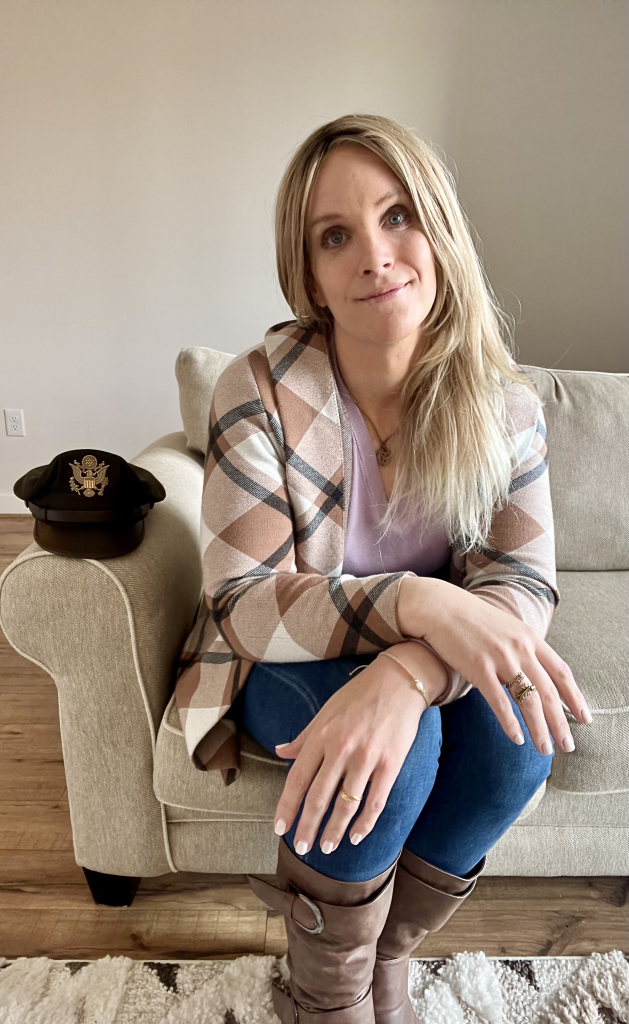
GAZA CITY, GAZA - MAY 17: Palestinians, struggling with hunger due to Israeli embargo, wait in line to receive hot meals distributed by the charity organizations as Israeli attacks continue, in Jabalia Refugee Camp in Gaza City, Gaza on May 17, 2025.

To Live and Die in Gaza

WP_Post Object
(
    [ID] => 8363
    [post_author] => 15
    [post_date] => 2025-05-20 20:08:39
    [post_date_gmt] => 2025-05-20 20:08:39
    [post_content] => 

One would hope that something that happens so frequently would be discussed. But overwhelmingly, it’s not—until, as I learned, you join the miscarriage club yourself. 

Listen to this article on The Conversationalist Podcast. | 12:57 min

For an LA storytelling show in 2009, I wrote and performed an essay called “The Cinderella Instinct,” a piece detailing that cut-and-run gut feeling nearly every woman in her 20s cultivates from continuously escaping predatory men. Easing the audience in with the softball line, “Every man is a potential rapist,” I launched into stories detailing the many times I’d quite literally run away from an uncomfortable situation with a possible predator—from hopping out of a convertible at a rolling stop in Hollywood to sprinting from a shirtless Frenchman through a deserted, deeply unsavory part of Nice. 

At the essay’s conclusion, I reflected on how, while I’d escaped potential assault throughout my life so far, 1 in 6 women do not—including some of my best friends, and my sister, whose story I shared with her permission. Perhaps my “luck” was partly because my stories had involved strangers, whereas assault has always been more likely to occur from someone you know, as it had with my loved ones. “So who that I know is the real potential rapist?” I’d written in the original essay. “Is it you?” 

Granted, they made me cut that final line in my performance, deeming it a bit too much truth telling for a comedy night. Because of this, it wasn’t until some handful of years later, with the advent of #metoo, that I thought we might finally be ready to address the question—and that things might start to shift. 

Reader, we did not cleanse the world of rape culture. But, at least, we began to talk about it, and to me, that felt like progress. 

A decade on, I’d survived the end of my twenties, and spent most of my thirties setting the stage for a deeply healthy marriage (pro-tip: couple’s therapy while dating!). Then, I fell face first into yet another hidden gem of womanhood—a very different pile of bullshit our culture has encouraged women to shovel through in silence.

I had a miscarriage. 

While there’s been a slow thaw towards openly talking about miscarriage thanks to social media, the word itself still contains an air of old-timey superstition and precious shame in most everyday contexts, something I would quickly learn in the aftermath of my own. Even now, chatting with friends or neighbors, I’ve found the word “miscarriage” invokes an involuntary wince, in both myself and others, because it’s just not something we talk about in a casual way.

Meanwhile, in a medical setting, doctors will bluntly inform you of how wildly common miscarriage is, ending 1 in 4 pregnancies, mostly in the first trimester and often before you’ve even realized you’re pregnant. One would hope that something that happens that frequently would be—I don’t know—discussed? But overwhelmingly, it’s not—until, as I learned, you join the miscarriage club yourself. 

I’m not going to get into the public political discourse on pregnancy here—that would require several books, not an article. But with the trend of states legislating a stranglehold on women’s reproductive rights, it feels more important than ever to have open, candid, and clear conversations about the reality of pregnancy—including potential miscarriage. And that means sharing our stories, no matter how uncomfortable, so that we have a realistic, informed, and nuanced view on the many things becoming pregnant can entail.  

So, here’s mine.

I’ve never felt the clicking of my biological clock, but after blissfully devoting my 30s to self-producing edgy physical theater with my co-performer-turned-husband, I realized if we wanted to procreate, we’d better get a move on. So, we survived a global pandemic, got married, and had a year’s worth of unprotected sex—until one day, just like I learned, I peed on a stick and found out I was pregnant. Like magic!

As an information-seeking, newly pregnant woman of advanced maternal age, I’d already worked hard to mentally prepare myself for possible miscarriage. I knew the 1-in-4 statistic, how spontaneous miscarriages are very normal, and that they’re often chromosomal and don’t mean anything negative about a couple’s ability to have children. Still, in the early days of my pregnancy, my mind raced, mapping out the ticking 40-week time bomb of our life. To me, my pregnancy was real the minute that pee stick said so; and I took any advice I could find, whether from doctor friends or the internet, avoiding deli meat and sushi, abstaining from alcohol and Advil, and quitting my nighttime melatonin. At the same time, I tried to hold the simultaneous truth that this pregnancy could be nothing—that I could be one of the unlucky ones—trying to temper my own anticipation until enough time had passed to make it “real.” 

To make matters worse, I’d found out I was pregnant a few weeks before my husband and I were scheduled to shoot pick-ups in Los Angeles for the film adaptation of one of our aforementioned edgy plays. I was dismayed to learn the doctor wouldn’t see me until I was 8 weeks pregnant—right when we were out of town—because of the prevalence of miscarriage in the first trimester. As she explained, it wouldn’t make sense for them to see me until the pregnancy was really viable, so they scheduled my check-up for when I would return to New York, at the top of week 11. 

Lacking a doctor’s guidance, I felt like I needed a master’s in philosophy and a zen Buddhist practice just to navigate the mindfuckery of early pregnancy. This potential baby was both alive and not at the same time. It was Schrödinger’s Cat, but in my womb. During this time, I also had several experiences where I'd cautiously divulge to a trusted friend that I was in my first trimester—always sharing that I knew I was "not supposed to tell anyone." But nearly every time I offered that caveat, people would actually shush me—as if uttering the word "miscarriage" while pregnant would invite it in. They insisted that if I believed things were okay, they would be; and as time continued to pass, I grew more confident that they were right, that I could trust my pregnancy was real. My cautious internal caveat of “I could miscarry” began to lose its footing. In my mind, Schrödinger’s baby was alive. 

Back in New York, my husband and I excitedly went to our doctor’s appointment. The vibe was immediately optimistic and pleasant: We’d just made it to week 11, and after having a discussion about all the nightmare things we’d have to monitor for the next 30-odd weeks, things felt pretty real. Then, we got around to the ultrasound. At first, the doctor couldn’t really “find” the pregnancy visually. Which... seemed bad. Then, once she did, she noted that it looked closer to 7 weeks, not 11. 

The vibe shifted. 

The doctor asked about the timing—could we have mistaken the date of conception? In response, I showed her my overachieving honor student psychopathic period tracking data, and her expression changed. Suddenly, the life-changing timeline that had taken shape over the past weeks started to crumble. The following week’s nuchal translucency, done at week 12, was changed to a "dating sonogram.” Later, in my patient notes, I saw it was actually to check viability: No heartbeat had been detected.

While I was too blindsided to think clearly, my husband luckily had the presence of mind to ask what all of this actually meant. Finally, the doctor explained how the sonogram was to confirm if this was an "abnormal pregnancy." If it was, we'd discuss next steps of how to "remove" it, and we'd be able to "try again" basically right away. 

Since this was a Friday appointment, we would have to wait an agonizing weekend before getting official answers at Monday’s sonogram. During two endless days of a new, unwelcome brand of uncertainty, I sat in my paradigm’s reversal, going from 95% sure I was pregnant to 95% sure I was not. In this purgatory, I tried to catch up to a new reality while still occupying the old truths I’d come to accept. Like a prayer or superstitious tick, I kept avoiding lox, soft cheese, and alcohol when we went out to eat, but I also cried for hours in anticipatory mourning. 

That Monday, the doctor confirmed I had, in fact, miscarried a couple of weeks prior. Turns out there's a thing called a "missed abortion," where you miscarry but it doesn't actually leave your body, and you still feel totally fine. I’d always thought miscarriages were marked by cramping and bleeding and a big event—but no, mine was just straight chilling in my body for weeks, something I found horribly disturbing, but is medically normal. (Yet another thing no one talks about, and something I only learned of after it had happened to me.)

Going through the psychological whiplash of accepting that I was no longer pregnant felt even harder given all those hushed conversations that had preceded it. I felt like this pain was something no one wanted to hear about, or talk about—that I wasn’t allowed to talk about it. But then, something surprising started happening. The minute I would get over the fear of divulging my story—and the fear of making other people feel uncomfortable, sad, or awkward by being truthful about what I’d been through—all of these other stories began emerging around me. Women I’d known for years began privately sharing their own experiences with me—how they’d miscarried both before and after carrying successful pregnancies, how they’d had to endure D&Cs during IVF, how they had held the image of their future child in their heart and had struggled to let it go. Once I learned just how many women around me had carried the same pain, the powerful loneliness around my miscarriage fell away. And while feeling grateful for the empathy and support these shared stories gave me, I also felt sorrow that I’d never heard them before—that these women only now felt like it was safe or acceptable to share them with me because I’d gone through it, too.

It was also through hearing about other women’s experiences that I learned, in at least one respect, I’d been very lucky. One small silver lining of my story was the team of spectacular women doctors who saw me through my miscarriage as quickly and empathetically as possible—something a doctor friend informed me is "very unusual for OBs." They worked to get me seen within the week of my sonogram, and upon noting my distress, the doctor doing my D&C worked to fit me in at the hospital the next day so I could go under anesthesia. When I thanked her for all her efforts—knowing how glacially slow the medical world usually works—she simply said, "1 in 4 of us have been there, we know how important it is to get past this as quickly as possible so you can heal." That same empathy was echoed by virtually every woman who saw me through my care, from both of my doctors to the receptionists booking my appointments to the nurses in the hospital. (Weill Cornell… Thank you.)

Still, it took me nearly a year to feel well enough to write about any of it. This is partly because I had to grapple with my own internalized conceptions of what a miscarriage “means,” even while knowing intellectually that it does not “mean” anything. I was raised on a German workhorse ethic, believing anything I put my mind to I can make happen, so a “failed” pregnancy did not fit into my sense of self. Plus, navigating the term “infertility”—which suddenly gets slapped on you medically after miscarriage—has been far from easy, especially in a culture that seems obsessed with women’s reproductive viability, and how many years past the age of thirty they dare to age. 

But as I’ve worked to come to grips with these many things that lie beyond my control, I hope that sharing my story can help start some necessary conversations. That maybe my sharing will help someone feel a little less alone in the same way so many women helped me feel a little less alone, too. 

I won’t sugarcoat it: Miscarriage sucks. It’s sad. And no one likes talking about sad shit. But based on my own experience, I think we need to talk about it. Because when we don’t—when we carry it alone, when we shush the possibility of its existence—we give it unnecessary weight. So many others are carrying this, have carried it—and it shouldn’t feel so heavy. But to make that possible, we need to catch up culturally to the reality of miscarriage medically: It’s normal. Often, it’s your body resetting from a pregnancy that was not ready to cook. Whatever the root reason, it’s not a failure. It’s just another one of those things that happens. 

When we stigmatize miscarriage by refusing to talk about it or treating it as a tragedy, we’re setting women up to feel isolated and broken, to feel like they’ve failed. I’ve found that, by talking about my own miscarriage openly, without hesitation, I’ve helped redefine what it means to me personally: It’s not a failure, and no one is to blame. It’s just another one of many steps along the road, a moment of sadness I’ve endured and moved beyond. It can feel tragic, but it is not a tragedy. It is normal. You’re normal. And if you need to feel sad, just know: There is a whole world of women out there sharing the weight of this with you, whether you realize it or not.

~

Author's Note: I’ve referred to people who can get pregnant in this essay as “women,” as it is a deeply personal story, written from my perspective as a woman. However, with so much rampant transphobia in culture and politics right now, I want to make clear that people beyond the traditional gender binary can get pregnant, and can also experience miscarriage—and I emphatically believe they should be included in this conversation. 

[post_title] => We Need to Talk About Our Miscarriages [post_excerpt] => One would hope something so common would be discussed. But overwhelmingly, it's not—until you join the miscarriage club yourself. [post_status] => publish [comment_status] => closed [ping_status] => closed [post_password] => [post_name] => miscarriages-pregnancy-reproductive-rights-bodies-personal-essay [to_ping] => [pinged] => [post_modified] => 2026-01-15 08:56:42 [post_modified_gmt] => 2026-01-15 08:56:42 [post_content_filtered] => [post_parent] => 0 [guid] => https://conversationalist.org/?p=8363 [menu_order] => 17 [post_type] => post [post_mime_type] => [comment_count] => 0 [filter] => raw )
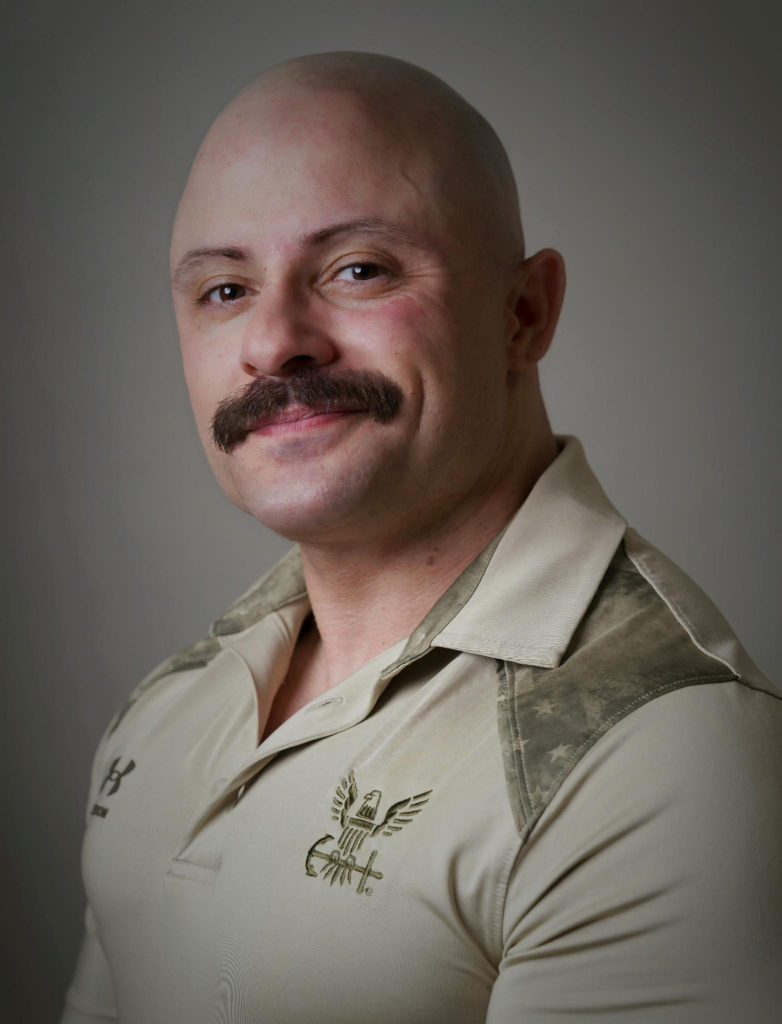
An illustration of three women on a dark fading background. Each has a transparent cloud over their face, representing the weight of the miscarriage they have experienced. The woman in the foreground on the right has dark hair. To her left, there is a pregnant woman with blonde hair; in the background, there is a woman holding the hand of her child.

We Need to Talk About Our Miscarriages

WP_Post Object
(
    [ID] => 8183
    [post_author] => 15
    [post_date] => 2025-05-06 17:11:49
    [post_date_gmt] => 2025-05-06 17:11:49
    [post_content] => 

How South Asian rappers are honoring the diaspora—and hip hop’s roots.

Four gunshots and the sound of a cash register: In her 2007 hit “Paper Planes,” British-Sri Lankan rapper and singer M.I.A. (a.k.a., Maya Arulpragasam) interpolated these sounds between sharp lyricism that satirized Western perceptions of third world immigrants and the xenophobia that became especially rampant after 9/11. Against all odds, the world couldn’t help rapping along. 

Later, the song would be named one of the top five best of the decade by Rolling Stone, one of the most-streamed of the decade by Apple, and the greatest song by any 21st century woman+ by NPR. Its success was as much due to its catchy refrain as it was to its unexpected content, especially at the time: The song was arguably the first rap song from the South Asian diaspora to articulate the increasingly politicized identities of South Asian migrants and second-generation immigrants to a mainstream global audience.  

While the artist behind the song has since become a somewhat controversial figure, the impact of “Paper Planes” remains. And nearly two decades later, rappers from all over the South Asian diaspora have become a testament to the increasing globalization of hip hop, a subculture rooted in resistance, and its power as a language of global protest.

Founded in the Bronx during the 1970s, hip hop was born as a form of expression and resistance in Black and Latino communities, and as a genre, it’s only grown exponentially since. Throughout the 80s, as production and sampling technology became more accessible, hip hop began gaining traction on a wider scale, and eventually, was no longer limited to live performance, thanks to the popularity of shows like Yo! MTV Raps. By the 90s, it had broken into the mainstream, due to the meteoric rise of MTV, BET’s Rap City, and albums like Public Enemy’s “Fear of the Black Planet” achieving commercial success. This mainstream eruption of hip hop also coincided with South Asian Americans using rap to articulate their own immigrant identity for the first time—and now, in the streaming age, the subgenre has only boomed. 

Last August, South Indian rapper Hanumankind, who spent his early childhood in Houston, Texas, went viral for his roaring hit “Big Dawgs,” a song about defying cultural stereotypes. The music video, which has over 218 million views on YouTube, features riders on motorcycles zipping around a “well of death,” a spectacle common in Northern India—the video at times feeling like an homage to the stunt driving in the controversial but iconic music video for M.I.A.’s 2012 hit “Bad Girls.” 

Hanumankind’s success is the most recognizable contemporary example of the popularity and success of hip hop from the Indian diaspora, a success that feels inherently political due to the thematic explorations of his music. “He's able to use hip hop commercially to make himself successful, while also drawing on cultural and religious symbols that make his identity very much part of Indian and Hindu culture,” says Dr. Mirali Bulaji, a professor in race, global media, and nationalism at the University of Pennsylvania and co-editor of the 2008 book Desi Rap: Hip Hop and South Asian America

With the myriad of backgrounds and identities that South Asian diaspora rappers have, the politics that they intentionally or unintentionally convey is dependent on not only the lyrical content of their music, but the way they market themselves. This is something Hanumankind is clearly conscious of: His visuals draw on Indian and Hindu imagery, while his music style feels distinctly American (he has cited Texan rap group UGK as one of his biggest influences). But this approach isn’t unique to Hanumankind. For his album “The Long Goodbye,” for example, British-Pakistani rapper and actor Riz Ahmed (who goes by Riz MC) released a short film that played as metaphor for the wrought relationship between South Asian Muslims and the rise of the far right in Britain. Although the visuals and lyrical content of hip hop for the diaspora varies, the thread that connects the genre is the use of cultural and religious symbols to inspire representation as a means of empowerment in the face of oppression, both for commercial reasons and not. 

In an essay for Desi Rap, filmmaker and activist Raesham Chopra Nijhon writes that hip hop became a place for the broader spectrum of South Asian identity because it facilitated an accurate image of a more nuanced community than what mainstream Western culture had fabricated. As a genre, it offered a way for the South Asian diaspora to illustrate the nuances of racialization and how white supremacy functions in contexts independent from the racial dynamics that exist between white and Black people. The charged lyricism and dynamic cadences also offered a new way for South Asians, specifically in the U.S., to articulate their identity outside of the Black and white paradigm.

“It was a generation of young people who truly were looking for some way to express their identity, their angst about being othered, and finding ways to communicate that they were explicitly American yet global at the same time,”  Balaji says.

It was these elements, along with similarities in the syncopation of both Punjabi music and hip hop, that drew Punjabi Canadian Taj Bhangu, who goes by the name Lioness Kaur, to become a rapper. “When the West really looks at South Asian music, they really just see it in this really cliched way and I feel like hip hop's such a great art form for bridging those gaps,” says Bhangu. Defying these cliches, she believes, shouldn’t be wholly dependent on its visuals, but also the music itself. 

In an Instagram caption promoting her latest single, “Long Lost Brother,” Bhangu writes she wanted to fuse South Asian sonics with hip hop in a way that wasn’t orientalist. For her, this led to both a blending of sounds and culture: Most of Bhangu’s music intersperses exuberant strings with twangy sitar. In “Long Lost Brother,” this sitar doubles as the cyclical rhythm she raps over while she details memories of her childhood, with nods to both her Sikh Punjabi and Canadian upbringings: “Eating McDonald's, Roseborough Centre / Adventures and pulling pranks / Pulling Biji′s old crutches out / From under the bed.” 

In her song “Politics at Home,” Bhangu further details her experience living in a joint family home, something common amongst South Asian families. Throughout the song, Bhangu talks about the misogyny that many Indian Canadians witness growing up, and connects the struggle her mother’s family faced going back home to the “pind” (“the village” in Sikh) with issues of class and the neglect of certain areas due to government corruption: “The pind could be the hood at times / They grinded to make it here, only to return / Put their dreams in an urn / They yearned for their daughter, my mother.”

Watching one’s mother deal with the loneliness and helplessness of generational misogyny isn’t an experience unique to the South Asian diaspora, but rather, a ubiquitous one—which is part of why her music has found a broader audience. But for those within the diaspora, Bhangu’s music articulates that emotional isolation in a way that is uniquely familiar, combining the linguistics of Western hip hop with South Asian instrumentals. 

We see this use of more traditional instrumentals as a tool for blending cultures across the genre, including use of the dhol and chenda drums, traditionally played at religious ceremonies and cultural gatherings to bring communities together. Their exhilarating reverberation and almost unadulterated pace resembles that of the rapid yet succinctly meaningful rhythms fundamental to hip hop. In this way, the steady bass intrinsic to the sounds of both genres incites an intoxicatingly invigorating and empowering feeling that can be and has been used to rally and mobilize movements, political or otherwise. (Something producer Timbaland clearly appreciated in the ‘90s and early aughts, when he sampled South Asian instrumentals in multiple chart-topping hits like Missy Elliott’s “Get Ur Freak On” and The Game’s “Put You on the Game.”)

Of course, the South Asian diaspora isn’t homogenous, and South Asian hip hop isn’t either. It encapsulates countless subgenres, from the Punjabi hip hop that inspires Bhangu, which uses both the language and traditional instruments like the sitar and the dhol; to Desi hip hop, which encapsulates a combination of influences from the South Asian diaspora, including that of Indian Americans. 

Hip hop also isn’t the first or only form of protest music within the diaspora. South Asian protest music can be traced back to the independence movement during British colonial rule across the continent in the late 19th and early 20th centuries. According to Stanford ethnomusicologist Anna Schultz, the kirtan, a call-and-response form of singing and chanting Hindu mantras, was crucial in prompting protests against British rule and leading to political reform. “Through performance, they [kirtan performers] use signs in finely attuned ways to bring politics and religion together so that they are just one tightly bound unit of meaning,” Schultz said in an interview with Stanford Arts. 

What was once resistance against British colonial rule, however, eventually evolved into Hindu nationalism; and this evolution of revolutionary politics packaged into the commercialization of empowerment has not spared South Asian hip hop. For both genres of music, directly combating and even angering the systems that encourage whiteness, colonialism, and capitalism are central to their origins. But as contemporary identity politics prioritize the optics of representation, it's easy for rappers from marginalized communities to fall into the trap of using their art to partake in shallow representation politics rather than engage in the tangible interest of their communities. 

The obfuscation of hip hop’s political roots isn’t unique to the South Asian diaspora; however, its rising popularity within the diaspora coincided with the broader genre more generally becoming an asset for the commodification of resistance politics, something that has affected South Asian rap and hip hop today.

Balaji notes that despite many South Asian activists and rappers proclaiming hip hop as their tool of resistance, many don’t seem to demonstrate it in action. Last September, for example, Hanumankind performed “Big Dawgs” at a venue in Long Island in which Indian Prime Minister Narendra Modi was present, and was later pictured hugging him in front of the crowd. Modi has long been criticized for his Hindu nationalist statements and policies, barring Muslims from extensive citizenship and revoking the Kashmir region’s autonomous status.

While Hanumankind hasn’t been explicitly critical of Modi or his party, the Bharatiya Janata Party (BJP), in his 2021 single “Genghis,” the rapper, whose given name is Sooraj Cherukat, discusses the tribulations of street life in South India and attributes violence to the complicity of the Indian government: “But what you partying for? / We got issues in our nation 'cause there's parties at war / When our leaders aren't leading at the heart and core / And they tamper with evidence when you gon' file a report.” 

Still, none of this has stopped South Asian rap’s momentum, or its resonance. The subgenre also feels especially powerful for many South Asians today because of its mainstream popularity—giving voice and a platform to a diaspora that has long suffered from intergenerational trauma amongst the many ramifications of whiteness and British imperialism. It’s also unlikely to die down any time soon. According to Business Insider, the rise of South Asian talent from all over the diaspora, and the increasingly popular mashup of South Asian artists making music over Western beats, can be credited in large part to the rise of platforms like YouTube and TikTok. Consequently, Balaji predicts the ever-increasing popularity of these streaming platforms, combined with the ability for anyone to create their own audiences on social media and the effects of migration on immigrant identities, will only lead to South Asian rap becoming an increasingly globalized genre. 

“Artists in their respective countries are going to be able to articulate identities that are unique to their cultural and political circumstances,” says Balaji. We’re already seeing this today: Whether it’s Riz MC, Raja Kumari, or Yung Raja, rappers and artists across the diaspora are finding ways to honor their roots without straying from hip hop’s own. 

Bhangu is one of these artists, merging the lyrical syncopation and metrical soul that is found in both hip hop and South Asian music, to give voice to being a Sikh Punjabi woman in Canada.  

“I'm breaking a lot of barriers. As a girl, people don't really see that many female South Asian rappers, so it’s a shock for so many people,” she says. “But there are a lot of people who do support and dig deeper into the art and they feel heard.”

[post_title] => The Diverse Politics of Desi Hip Hop [post_excerpt] => How South Asian rappers are honoring the diaspora—and hip hop’s roots. [post_status] => publish [comment_status] => closed [ping_status] => closed [post_password] => [post_name] => south-asian-hip-hop-rap-desi-diaspora-global-music-genre-hanumankind-lioness-kaur [to_ping] => [pinged] => [post_modified] => 2025-09-16 06:29:57 [post_modified_gmt] => 2025-09-16 06:29:57 [post_content_filtered] => [post_parent] => 0 [guid] => https://conversationalist.org/?p=8183 [menu_order] => 19 [post_type] => post [post_mime_type] => [comment_count] => 0 [filter] => raw )
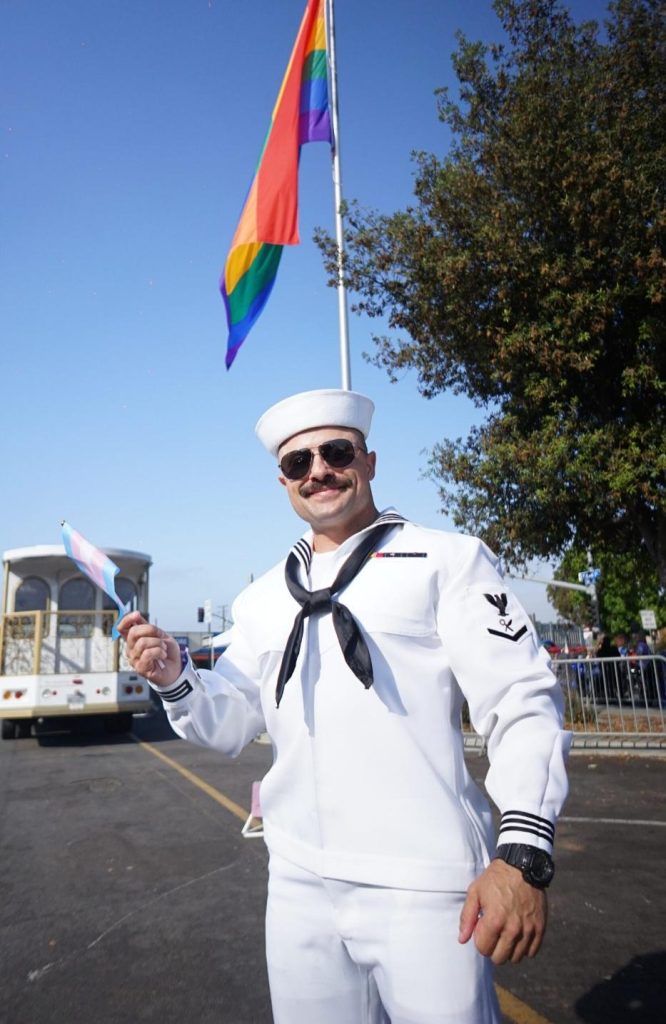
An illustration of various colorful characters honoring different aspects of the broader South Asian diaspora. They all appear to be marching towards the right side of the image, some holding signs with instruments (a sitar).

The Diverse Politics of Desi Hip Hop

WP_Post Object
(
    [ID] => 8116
    [post_author] => 15
    [post_date] => 2025-04-04 16:06:16
    [post_date_gmt] => 2025-04-04 16:06:16
    [post_content] => 

In immigrant families, sometimes your cousins can be your earliest friends.

Old Friends” is an ongoing series exploring the many ways that friendship changes shape in adulthood. 

“You don’t seem like an only child,” people often tell me after I reveal to them that I was raised without siblings. Unsure if this comment is a compliment or a backhanded remark, I usually shrug and reply with something like, “Well, I grew up with cousins…” But what I don’t often say is my cousins didn’t quite feel like siblings, either. They felt like something else. 

The truth is I don’t have an unusual amount of cousins. Five first cousins in the U.S., and one in Estonia, who I’ve never met. A growing number of second cousins once removed (the children of my first cousins). And a scattered few second cousins twice or three times removed (my parents' cousins and their offspring, respectively). It’s my first cousins, though, that I’m closest with—in large part because, as is true for many immigrant families, they were also my first friends. 

As new immigrants from the former Soviet Union, my parents relied on the built-in community of care provided by our extended family: an old-world-style network of grandparents, aunts, uncles, and cousins. But while the adults in my family did play a role in my Los Angeles upbringing, it was my cousins who did the majority of the caretaking. 

Only seven years older than me, two of my cousins in particular were somewhere between my babysitters, part-time siblings, and friends. Together, we would spend long sun-soaked summer days playing outside my aunt and uncle’s apartment. We’d make up elaborate games based on movies we rented from Blockbuster or 20-20 Video, where an older cousin worked. Sometimes, we were the “karate family,” influenced by none other than The Karate Kid. In silent agreement, we’d transform into a group of vigilante karate enthusiasts, climbing parked cars and saving stray cats from danger; cats that my uncle would rescue and bring home from his job as an LAX cab driver. Sometimes we would write our own Nightmare Before Christmas-style songs, practice obsessively, and perform them for the whole family. OOOo spooky, oooo spooky….I see a big fat moon…in the skyyy….a very big fat mooon. Sometimes, we’d be aspiring horror film producers. We would borrow my dad’s precious camcorder and record over family home videos with our very own renditions of the Blair Witch Project, nostrils and all. We even made our own version of the movie Hocus Pocus, which we titled, “The Heart of a Little Girl.” I was the little girl.

Then, the sun would set and my aunt would come home from her job as a cashier at the local grocery store, and my mom and dad would pick me up after a day of English and bookkeeping classes at the community college; or after a day of driving rich kids around. And I would always, without fail, break into tears, grabbing onto the leg of one of my cousins as they would obediently lead me to the door. 

Only other only-children can relate to the loneliness. The pit of despair that formed each time, as a child, you were plucked from a social event and brought back to your parents’ apartment where you were forced to find creative ways to entertain yourself. Before we had the internet (and even after), I would spend long hours talking to the bathroom mirror, pretending my reflection was someone else. When I was with my cousins, the loneliness disappeared. When I left them, it would come back heavier than before. 

The research is shoddy, but it is believed there is a correlation between only-childness and loneliness. In fact, studies have found that, compared to adults who grew up with siblings, only children often become adults who have significantly less interaction with their relatives. This may be true for some onlies, but not for me. I still, to this day, have remained close to my cousins. Even the older ones who had no interest in me when I was a toddler and they were teenagers. The ones who acted more like older siblings than friends by simply ignoring me, or making fun of my unibrow because it would “build character.” The ones who drew sharpie tattoos on my favorite doll’s face in between shifts at the video store, and made up for it by buying me a coveted “Diana’s Parking Only: Keep Out” sign for my bedroom door. And I’m still close with the ones who played “karate family” with me, too. 

Cousin in Russian translates directly to “once removed sibling”; but often, the term is just abbreviated to brother or sister. Same goes for other Eastern languages like Chinese, Japanese, Arabic, Thai, and Korean. This must have something to do with Western Individualism vs Eastern Collectivism. The cultural values placed on the community, rather than the individual, have slowly been eroded from Western society, leading to recent phenomena like the loneliness epidemic. But many immigrant families never fully abandon the cultures they came from, including mine—and ultimately, cousins have an important role to play in keeping it that way. They are role models. They are siblings. They are caretakers. They are friends. They preserve family traditions, like avoiding the aspic and playing Monopoly on Thanksgiving. They step in and help out when a family member is in the hospital; and when you get in a fight with your mom, they are one of the only people on earth that truly understands. Because that’s what families are for. 

Of course, not every American family looks like mine. We are apparently in the middle of The Great Cousin Decline, coined by Faith Hill for The Atlantic. This is due to the usual suspects: U.S. population decline, women choosing to have children later in life, and parents having fewer children in general. As of 2022, about 55% of Americans live an hour away from their extended families, while highly educated Americans live even further. Immigrant families remain the exception. My own very American husband has little interaction with his cousins, mostly due to their geographical distance. But there is much to be lost in living apart. Hill reminds us that the often overlooked reason why cousins are especially important is that “they share something rare and invaluable: They know what it’s like to be part of the same particular family.” Growing up, that’s why the loneliness never stuck around too long: I always knew that my cousins were only a phone call away.  

In the Oscar-nominated film A Real Pain (2024), a pair of cousins, Benji and David Kaplan, embark on a journey to Poland funded by their shared grandmother’s inheritance. It is meant to be a cathartic trip to both honor and witness where she came from and bear the weight of the concentration camp she survived. But the cousins could not be more different. David (played by the film’s writer-director, Jesse Eisenberg) chooses to settle into modern society and accept that life is suffering, while still doing what he can to enjoy it. Benji (played by Kieran Culkin, who won Best Actor in a Supporting Role for his performance) is the more nostalgic feeler, who cannot seem to settle down and process pain in a modern sense. He is overwhelmed by his grandmother’s loss, and, as it’s revealed later in the film, even tried to overdose on sleeping pills a few months before the trip. In Poland, Benji cannot stomach the juxtaposition of privileged American Jews riding first class on a train to tour concentration camps, and lashes out at the group. Eventually, David reaches his limit:

David Kaplan: ...I love him and I hate him and I wanna kill him... and I wanna be him, you know? And I feel, like, so stupid around him, you know, because he is so fucking cool and he just does not give a shit. And then... just, like, being here with him is just so fucking baffling to me, you know? It's just baffling, 'cause it's like: How did this guy come from the survivors of this place, you know?

Diego Alburez-Gutierrez, who studies kinship dynamics at the Max Planck Institute for Demographic Research in Germany, tells Hill in an interview that, “Cousins are essentially peers who can stretch your assumptions—without as much fear of the relationship ending if debates get heated.” In A Real Pain, we watch this play out: Once inseparable as children, the two cousins have since drifted further and further apart. But the cousins are also connected by their shared ancestral trauma and their unique perspectives on how to survive in modern society despite its contradictions. No matter their differences, neither will ever abandon the other. 

My own relationships with my cousins have shifted over the years. I’ve become closer to some and drifted apart from others. There are religious differences, socio-economic differences, and the fact that we are simply in different stages of life. But when times get tough, we always reconnect. Like when my second cousin was diagnosed with Leukemia at a young age and I would visit her at the children’s hospital, or when our maternal grandmother who survived WWII died a few months before the pandemic, or when the most recent wars in the region broke out. 

Cousins have our backs. They are our built-in friends. And from an evolutionary perspective, they have a biological stake in our survival. Our cousins are our companions for all of life’s curveballs. And while sometimes, we don’t get along, like siblings, cousins share both our family secrets and genetics. They share our lives.

I recently got married in Las Vegas by an Elvis impersonator at the famed Little White Chapel. This wasn’t an elopement, although that was our original intent. Once we started telling our friends and family about our plan, however, some insisted on coming. 

Our wedding happened this past January, in the wake of the devastating Los Angeles wildfires that almost burned down my high school and destroyed so many homes of friends and acquaintances, I’ve lost count. My cousin, who was supposed to make a speech at the wedding, was evacuated from her home the night before her flight to Las Vegas. In a last ditch effort, she ended up driving with her husband, young son, and mother-in-law with nothing but the clothes on their back to make it in time for my ceremony, like a true cousin, sister, or friend, or maybe, something even better.

[post_title] => First Friends, Once Removed [post_excerpt] => In immigrant families, sometimes your cousins can be your earliest friends. [post_status] => publish [comment_status] => closed [ping_status] => closed [post_password] => [post_name] => first-old-friends-cousins-immigrant-families-los-angeles [to_ping] => [pinged] => [post_modified] => 2026-01-15 19:22:30 [post_modified_gmt] => 2026-01-15 19:22:30 [post_content_filtered] => [post_parent] => 0 [guid] => https://conversationalist.org/?p=8116 [menu_order] => 24 [post_type] => post [post_mime_type] => [comment_count] => 0 [filter] => raw )
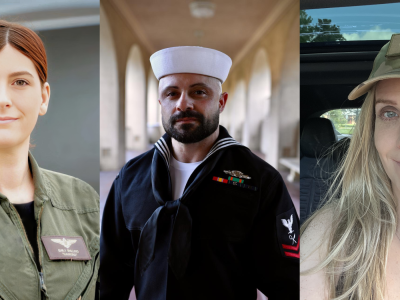
An illustration in colored pencil showing photos taped to a wall. The background photos are muted, but the center photo is in vivid color, showing three children of different ages sitting on top of a white car. One is a young girl wearing a blue shirt and pink socks, and next to her is a boy with a backwards green cap with his arm around her. On the hood of the car, a girl with blonde hair in a pink shirt and green shorts holds a black cat.

First Friends, Once Removed